The Anatomical Heart in Jewellery: Meaning, History and Aesthetics
Introduction: Why Not the Emoji
Ask a child to draw a heart and you get that familiar shape: two rounded humps at the top, a neat point at the bottom. The thing has no anatomical basis whatsoever. A real heart is asymmetrical, with ventricles of different sizes, an aorta curving one way, pulmonary arteries branching off in another direction. It looks nothing like a Valentine's card. It looks biological: powerful, vulnerable, strange.
There is a whole strand of jewellery design that deliberately sets aside the cartoon symbol in favour of the real thing. People who choose anatomical heart pieces offer different explanations: honesty, gothic sensibility, medical background, a particular relationship with mortality. But behind all those different rationales runs a single common thread: a refusal to simplify.
What the Anatomical Heart Actually Looks Like
Before discussing the symbol, it is worth understanding what jewellers and artists actually reproduce when they work with the anatomical heart.
The heart has four chambers. Two atria at the top receive blood; two ventricles below drive it out. The right ventricle sends blood to the lungs; the left ventricle, with walls considerably thicker, pumps blood through the aorta to the entire body. This asymmetry was what led Aristotle to argue that the left side was more important, though in reality both sides work simultaneously.
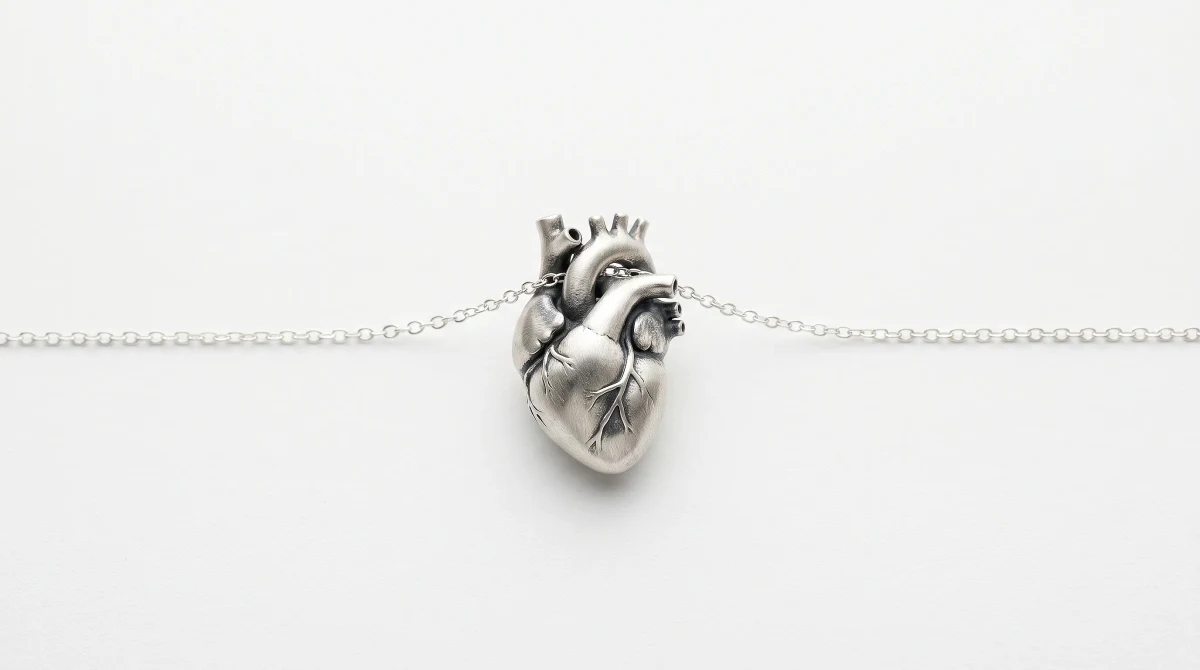
From the top of the heart emerge the great vessels: the aorta, the pulmonary trunk, the superior vena cava. Across the outer surface run the coronary vessels, which supply the heart muscle itself. These are what you see on a detailed anatomical jewellery piece: fine relief lines spreading across the surface like roots.
A jeweller who takes the subject seriously renders not just "an organ with tubes" but a specific topography: the bulge of the left ventricle, the characteristic arch of the aorta, the bifurcation of the pulmonary trunk. That precision is what distinguishes genuinely anatomical work from decorative approximation.
A History of Heart Imagery: From Aristotle to the Twenty-First Century
Aristotle: The Heart as Seat of Reason
Aristotle, writing in the fourth century BCE, considered the heart the centre of both intellect and emotion. The brain, in his account, served merely as a cooling device. This was anatomically wrong, but it shaped Western culture for centuries. We still speak of thinking with the heart, of matters being close to the heart. The heart became the symbol of love because Aristotle placed reason and feeling there, not the liver.
Galen: Blood and the Heart as Pump (Incomplete)
Galen, the Roman physician of the second century CE, understood that the heart pumps blood but described the mechanics incorrectly. He held that blood was produced in the liver, absorbed by the heart, and consumed by the tissues without returning. His anatomical knowledge was far more precise than Aristotle's, nonetheless, and his texts remained authoritative until the sixteenth century. The Galenic framework persisted in European medicine for nearly fourteen hundred years, which is a measure of how slowly scientific paradigms shift even when observations contradict them.
Andreas Vesalius and De Humani Corporis Fabrica (1543)
The Flemish anatomist Andreas Vesalius published his "De Humani Corporis Fabrica" in 1543, a direct challenge to over a thousand years of Galenic teaching. Where Galen had based his anatomy largely on dissections of animals, Vesalius worked from human cadavers, often obtained under difficult circumstances from gibbets and graveyards. He taught at the University of Padua, one of the foremost medical schools in Europe.
The illustrations in his book, produced by artists from Titian's circle in Venice, showed organs as they actually appear. His renditions of the heart were among the most influential: accurate, detailed, and aesthetically remarkable. They were scientific documents that were also beautiful objects. Vesalius showed the difference in ventricular wall thickness, described the valves, mapped the coronary vessels. These images became the source for a tradition of "scholarly heart" imagery in decorative arts that persists to this day.
Leonardo da Vinci and His Anatomical Drawings
Leonardo was drawing hearts before Vesalius published. His notebooks, largely kept private and only made available to scholars long after his death, show a sustained, obsessive attempt to understand not just the form of the heart but its function. He described the valve mechanism and compared it to an engineering device. He was the first to give a reasonably accurate account of cardiac motion, though his understanding of circulation remained incomplete.
In jewellery, the Leonardesque-Vesalian line is what might be called the "scholarly heart": pieces inspired by the anatomical atlases of the sixteenth to eighteenth centuries, their surfaces drawn with the precision of a draughtsman who spent months studying the real thing.
William Harvey and De Motu Cordis (1628)
The modern understanding of the heart as a pump begins with William Harvey, an English physician who trained in Padua before returning to practise in London. In 1628 he published "Exercitatio Anatomica de Motu Cordis et Sanguinis in Animalibus" (De Motu Cordis), the first accurate description of the systemic circulation of blood.
Before Harvey, the dominant framework came from Galen: blood was thought to be made in the liver and consumed by the body. Harvey showed that blood circulates, that the heart is a pump driving it around a closed system. The demonstration was based on meticulous calculation as much as on dissection: he worked out, from the volume of the heart and the rate of the pulse, that the liver could not possibly produce enough blood to sustain the Galenic model.
This discovery changed everything. The heart ceased to be the "seat of the soul" in any metaphysical sense and became a mechanism. Paradoxically, that made the symbol stronger: now it was not a vague mystical centre but a real organ, working without pause, every hour of every day, for an entire lifetime. An educated person in 1650 looked at the heart differently from their ancestors, and that new knowledge fed directly into art.
Harvey was physician to King Charles I and remained associated with the Royalist cause during the Civil War period. He died in 1657, celebrated in the scientific community but somewhat isolated politically, a fitting irony for the man who showed that the heart is not what anyone thought it was.
The Sacred Heart of Jesus: A Parallel Tradition
The anatomical heart and the Sacred Heart of Jesus are two different symbols, but they exist in constant dialogue with each other.
The cult of the Sacred Heart took formal shape in the seventeenth century. The French nun Margaret Mary Alacoque (1647-1690), cloistered at Paray-le-Monial in Burgundy, described visions of Christ pointing to his own heart, surrounded by flames, crowned with thorns, marked with the lance wound, and surmounted by a cross. These visions generated an iconography that became one of the most recognisable in the Catholic world.
In 1956 Pope Pius XII consecrated the entire world to the Sacred Heart, giving the cult renewed impetus. The Basilica of the Sacred Heart on Montmartre in Paris, built between 1875 and 1914 as an act of national expiation, is the architectural monument of this tradition in Europe.
The iconography is precise: a heart pierced by a lance (sign of vulnerability), crowned with thorns (the passion), surrounded by flames (divine love), bearing a cross (redemption). This is the Catholic visual language of the heart at its most codified. The anatomical heart in jewellery, when it carries any of these elements, is in direct conversation with that tradition. When it strips them away, it is making a secular counterstatement.
The tradition is especially strong in Spanish, Italian, French and Polish Catholic cultures. Anyone wearing an anatomical heart piece in a predominantly Catholic country carries a double reference, whether they intend it or not.
The Victorian Mourning Tradition
The nineteenth century in Britain produced an elaborate culture of mourning, codified by custom and given material form in jewellery. Black enamel, jet from Whitby in Yorkshire, locks of hair set under glass, and occasionally heart-shaped forms all featured in the repertoire. The Great Exhibition of 1851 displayed mourning jewellery prominently, and Queen Victoria's forty years of public mourning after Prince Albert's death in 1861 ensured that the market remained large.
The hair-set locket in a near-anatomical heart shape was a specific object in this tradition: not the cartoon heart, but something with volume, weight, and physical presence. These pieces carried the weight of genuine grief, worn on the body as the heart itself was said to carry love and loss. The connection between the biological heart, grief, and personal memory was made material.
In Catholic communities across Britain, France, Spain and Italy, the ex-voto tradition produced heart-shaped metal objects that hover between the stylised and the anatomical. A small tin or silver heart, brought to a shrine as thanks for a cardiac healing, was pinned to the garment of a saint. Neither precisely anatomical nor cartoon-simple, these objects had thickness, surface, physical presence. They are the direct ancestors of the milagros tradition discussed below.
Milagros: The Votive Metal Heart
Milagros are small votive metal objects brought to churches as thanks for, or petition for, a miracle. Among them anatomical hearts are always present.
People healed of heart conditions bring a small tin or silver heart to a church and pin it to the garment of a saint or to an icon. The tradition is alive in Mexico, Peru, Bolivia, and in Spanish and Italian Catholic regions. It connects British, French, Italian and Spanish Catholic culture in a shared vocabulary of the metal heart as religious offering.
These milagros-hearts have a distinctive form: neither realistically anatomical nor a stylised cartoon. They have thickness and physical presence, often with a small incised flame or ray.
In the past twenty years, milagros have left purely religious contexts and become a fashion element in jewellery. A milagros pendant with an anatomical heart is at once a religious symbol, a piece of folk art, and a beautiful vintage object. It sits in the space between the sacred and the aesthetic without resolving the tension, which is part of its appeal.
Dia de Muertos and the Mexican Heart Tradition
Mexico developed its own distinct language of the heart.
The Day of the Dead, observed on 1 and 2 November, combines Catholic commemoration of the departed with pre-Columbian traditions. The central image pairing is the calavera (decorated skull) and the corazón (heart). They appear together on altars, sugar confections, jewellery, and puppet figures.
This pairing says something specific: death and life are not opposites but simultaneous. The heart here stands not for romantic love but for vitality itself, the fact of being alive, which can be commemorated even after it has ended.
Frida Kahlo wove this tradition into European surrealism. Her painting "The Two Fridas" (1939) shows two figures with visible hearts connected by an artery; the 1944 "The Wounded Deer" uses the heart in a different register. Kahlo survived a catastrophic tram accident at eighteen that left her with a shattered pelvis and approximately thirty surgical procedures over her lifetime. Her anatomical hearts are literal autobiography: the heart as the site of pain, survival, and undiminished life.
After Kahlo, the anatomical heart became part of not just medical but emotional and therapeutic visual language. Kahlo's influence on jewellery aesthetics is difficult to overstate. The combination of Mexican folk art, visible anatomy, and personal suffering became a template for a certain kind of expressive symbolic jewellery that remains influential today.
Damien Hirst and the Late Twentieth Century
The British artist Damien Hirst, working from the late 1980s onwards, made a series of works with real biological objects, including preserved animals and human tissue. His work forced the art world to reconsider organs as aesthetic objects, and contributed to a broader cultural comfort with anatomical imagery that made the anatomical heart jewellery trend possible.
The Twenty-First Century: From Subculture to Mainstream
Today the anatomical heart appears everywhere: jewellery, tattoos, T-shirts, graphic design. This happened unusually quickly, within roughly fifteen years from the mid-2000s onwards. It is no longer a marginal symbol of goths and punks but a widely available aesthetic that spans medical students, dark academia enthusiasts, people who have survived cardiac illness, and those who simply prefer an image with real weight to the ubiquitous cartoon version.
The Stylised Heart versus the Anatomical: A Difference in Meaning
The shape most people call "a heart" has a surprisingly obscure origin. The earliest appearance of the symmetric two-lobed form with a downward point is debated: it appears in medieval European manuscripts from around the thirteenth century, but scholars have not reached consensus on whether it derived from a stylised plant seed, from a schematic rendering of the swan in flight, or from attempts to draw the heart based on descriptions rather than direct observation.
What is certain is that the form bears no relationship to the actual organ. The real heart is a roughly cone-shaped muscle, broader at the top, asymmetric, with its apex pointing downward and slightly to the left. It has four chambers, not two symmetrical lobes. It is wrapped in fat and connective tissue. It looks, in the words of one anatomist, "like a clenched fist in a sock."
The gap between the symbol and the organ is precisely what the anatomical heart jewellery tradition exploits. Choosing the real organ over the symbol is a deliberate gesture. It says: I am more interested in what the heart actually is than in what it has been made to represent. That gesture can be gothic, medical, philosophical, or personal. The common element is the preference for the specific over the generic.
Customer reviews
Zevira is a real jewellery shop. Genuine payments, deliveries and customer thank-yous.
🥰🥰🥰 gracias
Ok, ¡gracias! 🙂
What the Anatomical Heart Symbolises
The anatomical heart works as a symbol in a completely different register from the stylised version. If the classic heart stands for romance and the cartoon heart for cuteness, the anatomical heart stands for depth.
Reality over convention. The central meaning. Choosing an anatomical heart is a way of saying, plainly, "I prefer truth to convention."
Embodied life. A real heart beats, pumps blood, wears down. There is no abstraction in it. The anatomical heart acknowledges that we are creatures of flesh and blood, not romantic projections.
Vulnerability and strength simultaneously. The heart is the most essential and most fragile organ. It sits exposed, without the bone protection the skull gives the brain. And yet it outlasts almost any machine in its tireless labour. A healthy human heart beats about one hundred thousand times a day, about thirty-five million times a year, for decades.
Acceptance of mortality. The anatomical heart appears repeatedly in the memento mori tradition. This is not morbid; it is clear-eyed. An organ that will one day stop is a more honest symbol than one that has been abstracted into a decorative shape.
Sincerity in relationships. "I am giving you my real heart, not a greeting card" is the subtext of certain paired anatomical heart pieces. For a wider survey of how love is expressed in symbolic jewellery, several traditions sit alongside this one.
Medical identity. For cardiologists, surgeons, medical students, and cardiac nurses, it is a professional emblem and a mark of belonging.
Survival. For people who have undergone cardiac surgery, the anatomical heart is frequently chosen as a reminder: this organ was operated on, and it continued. Not triumphalism, but acknowledgment.
Gothic and punk aesthetics. In alternative subcultures it signals a refusal of the mainstream and a willingness to face the physical reality of mortality.
Silver, gold, engagement rings, symbolic pieces and paired sets.
Jewellery with an Anatomical Heart: What to Choose
Pendant
The most popular format by some distance.
- Small pendant (2-3 cm) for everyday wear, minimal in detail. Entry-level segment.
- Medium pendant (4-5 cm) with ventricles, aorta and veins visible. The most common choice. Mid segment.
- Large pendant (6-10 cm) for gothic or punk aesthetics, for stage wear. Mid-to-premium segment.
- Pendant with rubies or garnets: red stones reading as drops of blood. Intensifies the associations. Mid-to-premium segment.
- Enamel pendant: red enamel for a "living" heart, blue for venous. Mid segment.
- Heart with botanicals: an anatomical heart from which flowers or branches grow. Artisan work. Premium segment.
Ring
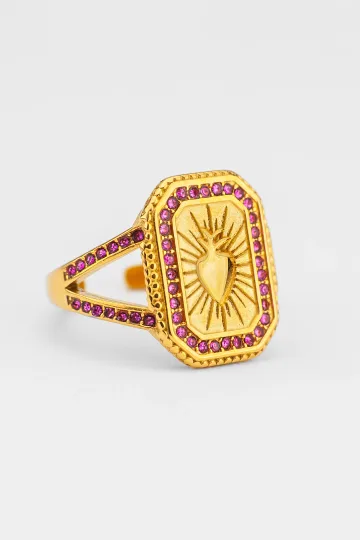
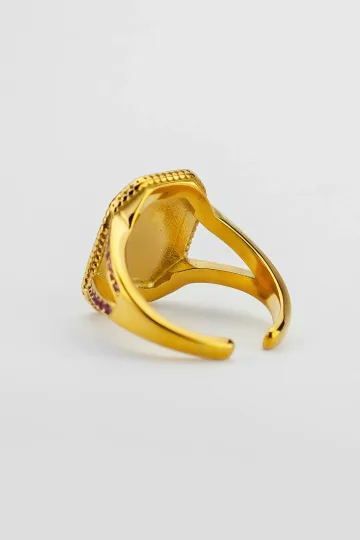
Less common, because an anatomical heart on a finger is inherently strange. It appears in artisan collections, usually small and stylised with additional elements (plants, stones). The signet ring variant with an engraved anatomical heart on a flat shield is more wearable: a date, a name, or simply the heart silhouette in relief.
Earrings
- Small anatomical heart studs worn as a pair.
- Drop earrings for evenings, as a statement piece.
- Asymmetric mismatched pair: one small stud heart, one longer drop. A current trend.
Bracelet
- Single heart charm on a chain for daily wear.
- Several small hearts for a layered look.
- Anatomical heart link bracelet as a focal piece.
Brooch
A returning trend. A large anatomical heart brooch makes a striking accessory on a blazer or blouse, particularly well suited to dark academia and vintage styling. Victorian mourning style in oxidised silver, 4-5 cm, with careful relief work at the ventricles, is the most effective format.
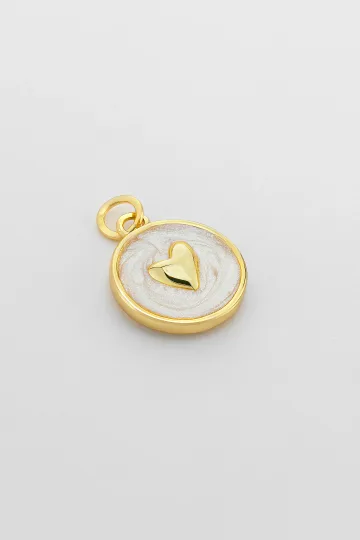
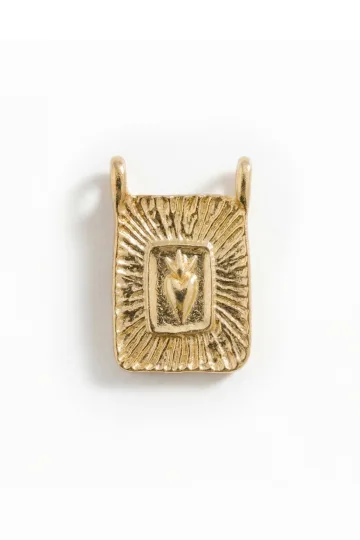
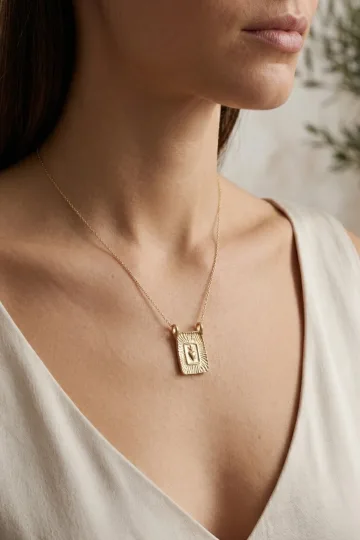
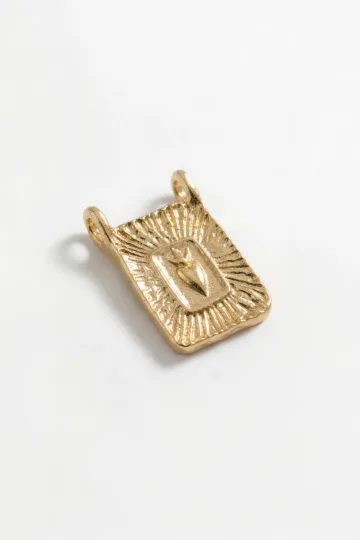
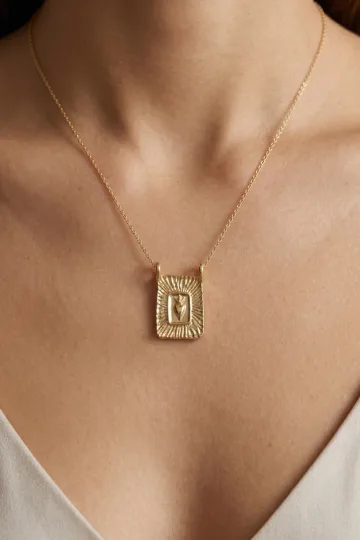
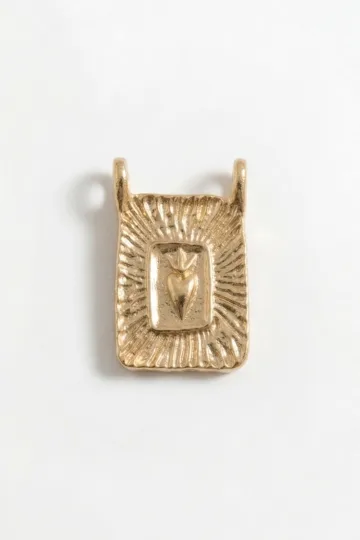
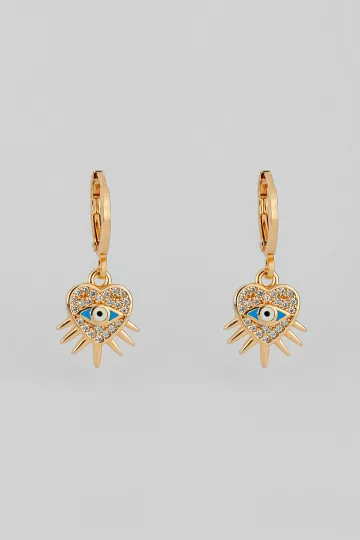
Wear the symbol, don't just read about it. These are in stock:
Materials: How They Change the Piece
An anatomical heart requires some aesthetic coordination. It is not as universally wearable as the stylised version and works best within certain visual frameworks.
Oxidised silver. The classic for gothic aesthetics. Darkened, with ventricles, aorta and veins in sharp relief. Looks like a specimen from an anatomy museum.
Rose gold. An unexpected but popular choice. Rose gold softens what might otherwise read as disturbing, making the heart almost romantic. For those who want depth without darkness.
Blackened steel. Heavy and serious. For men's pieces or strong alternative aesthetics.
Copper with patina. A bronze-green tone, like aged bronze. Works well in dark academia styling.
Plain silver. Lighter, without darkening. Less gothic, more clinical.
With stones (ruby, garnet). Red stones as drops of blood or as accents. Garnet is the traditional choice for its depth of colour; ruby for higher-end pieces.
With enamel. Coloured enamel for different readings of the "living" heart. Champlevé enamel in red gives the most intense effect; translucent enamel over silver gives something subtler.
Aesthetic Variations: From Realism to Filigree
Anatomical hearts in jewellery come in several distinct aesthetics, and the choice affects the meaning.
Realistic three-dimensional. Maximum accuracy of a medical illustration: all four chambers, coronary vessels, aorta with its arch. For those who want literalness.
Stylised silhouette. An outline without internal detail. Recognisable as anatomical but less visually confrontational. More broadly wearable.
Filigree. A heart in which the internal structure is implied through open spaces. The chambers are marked by absence rather than by relief. Light, airy, and precise at the same time.
With personalisation. A name or date engraved on the aorta or ventricle. Turns a general symbol into a personal document.
How to Wear It
Concealed
A small heart pendant worn under a shirt or blouse. A private sign that belongs to the wearer alone.
On show
A medium or large pendant worn over the top. Gothic, dark academia or medical aesthetics.
Layered
Heart plus anatomical brain, or heart plus cross on chains of different lengths. A conceptual set.
With workwear
A small minimal heart works (easily explained as a medical reference). A large gothic piece does not.
With everyday clothing
Any size. Particularly well suited to vintage pieces, dark palettes, tweed, leather.
A real heart goes on black, never on pastel. Save the pink for people who still text the emoji.
How to style the anatomical heart
Over the years the anatomical heart has passed through dozens of my looks, from dark academia to a buttoned-up office. Here is what actually works, occasion by occasion.
What do I wear the heart with day to day? For everyday I recommend a small pendant, 2-3 cm on a fine chain, over a plain tee, a turtleneck or a linen shirt. A dark solid top (graphite, burgundy, emerald) turns the heart into the accent, and oxidised silver reads as a whole against it. Against beige and dusty pink I suggest rose gold, which adds warmth.
Is it office-appropriate? It is, if you choose a restrained version. I recommend smooth silver with no aggressive detailing, a compact size, under a closed neckline or over a medium-weight blouse. It reads as a medical or anatomical detail rather than gothic, and it explains itself in one sentence when it needs to.
How do I build an evening look? For the evening I suggest the opposite logic: a large pendant or drop earrings over a smooth black dress with bare shoulders. When the piece is the only accent, it has nothing to compete with, and the anatomical heart holds all the attention.
How do I layer the heart? For layering I choose long chains of different lengths: the heart higher, an anatomical brain or a key lower. Keep to one metal in the stack so the look does not fall apart. I suggest mixing oxidised silver and rose gold only when that contrast is the point.
Who does it actually suit? Anyone drawn to pieces with weight of meaning: dark academia, alternative aesthetics, the medical world, admirers of Frida Kahlo. Two rules that never fail. First, choose the length to the neckline: a 45 cm chain brings the pendant to the sternum, 50-55 cm drops it lower, over sweaters and coats. Second, one expressive heart beats three small symbols side by side, so give it room.

Turn on your camera, pick earrings, a pendant or a ring, and see the piece on yourself in real time.
Switch items in one tap.
Everything runs in your browser: no photo or video is ever uploaded.
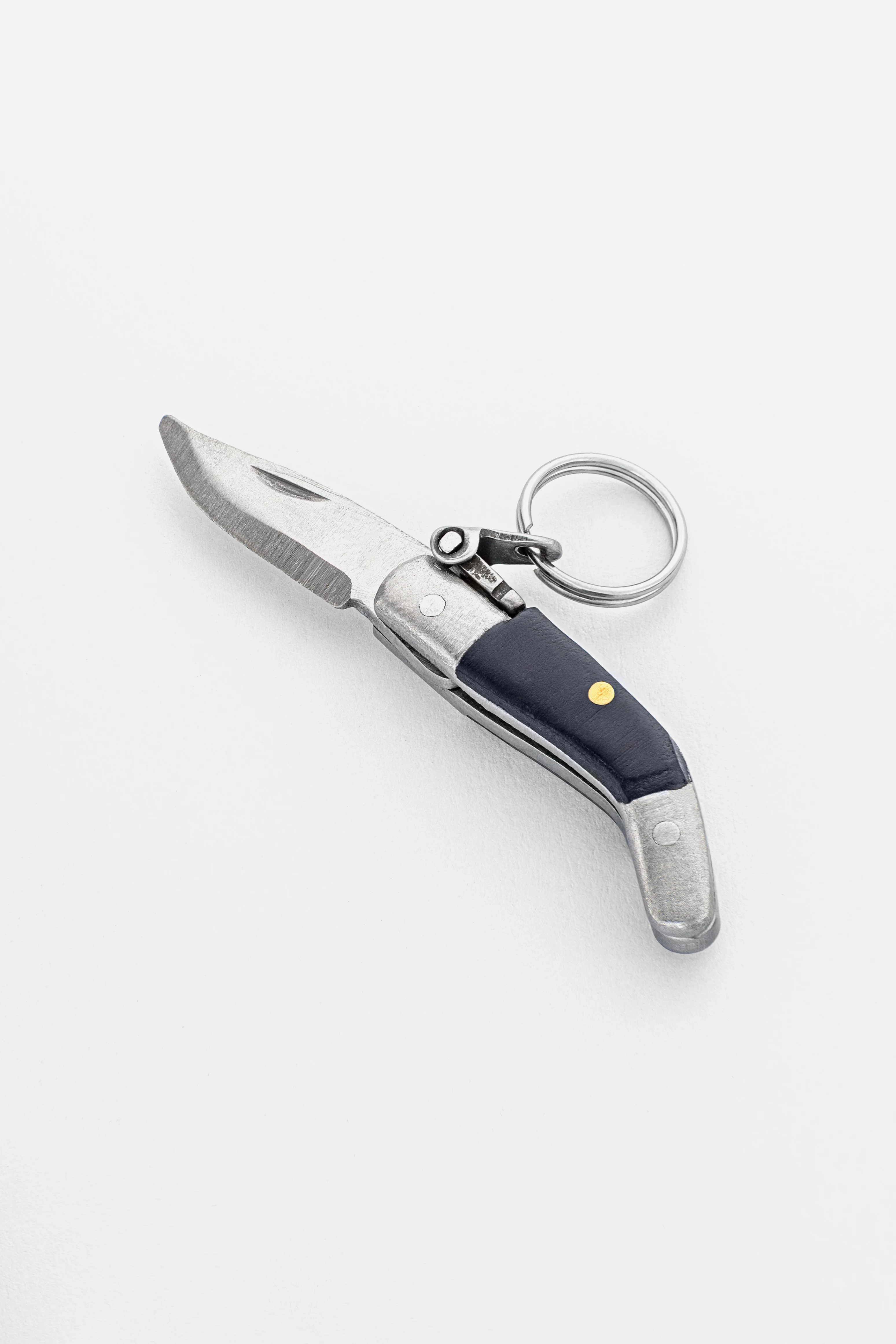
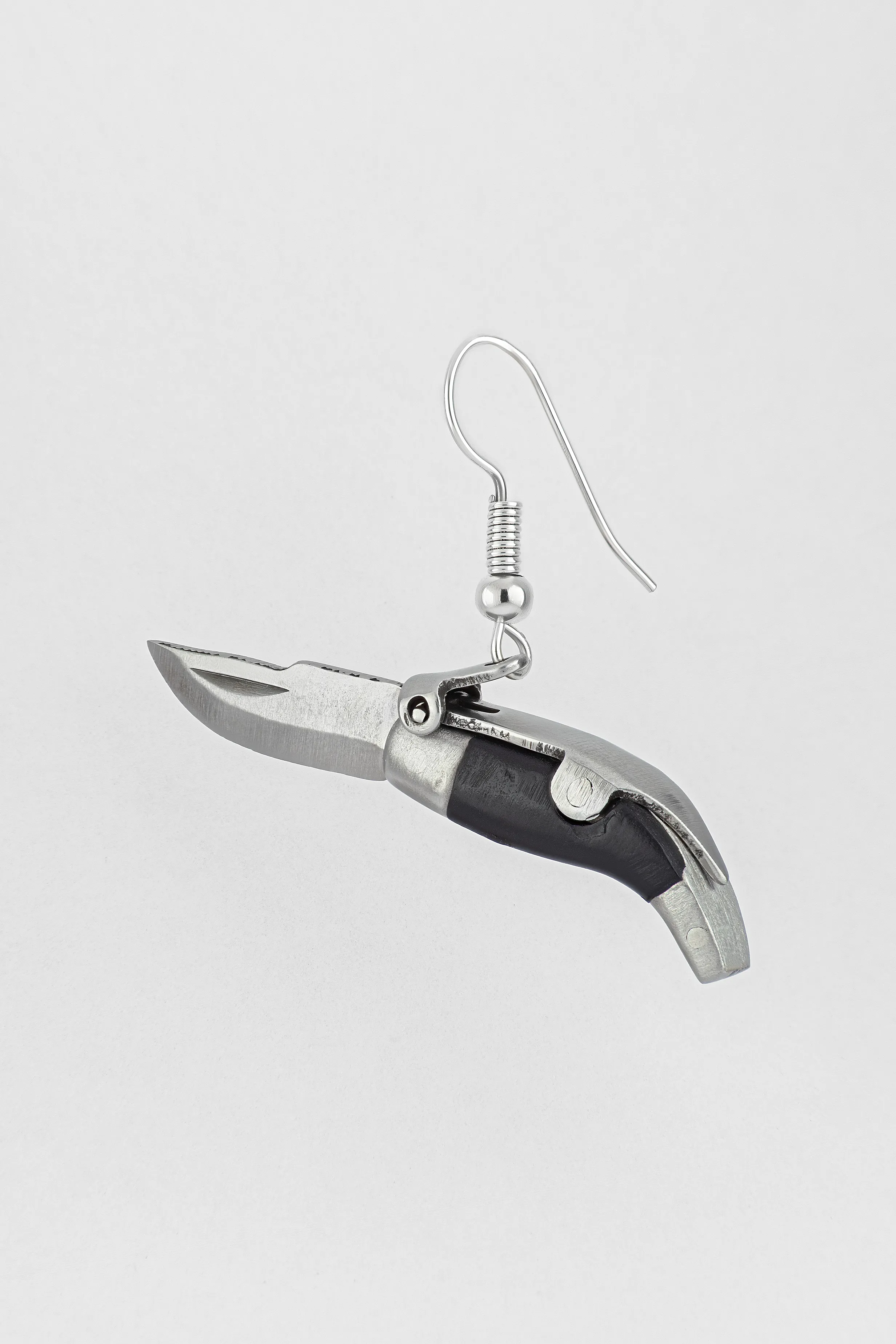
Artisan-crafted CAPAORA navaja pendant
A 40 mm stainless-steel navaja with a real folding mechanism and Palanquilla lock. An affordable gift to remember.
A code for blog readers:
10% off your first order
Authentic · Maker's guarantee · Ships from Spain
Who Wears Anatomical Heart Jewellery
Medical students. An obvious choice: amulet, declaration and first professional jewellery in one.
Doctors, particularly cardiologists. A professional emblem.
Nurses and paramedics. Equally, a professional symbol.
People after cardiac surgery. After bypass, stenting or transplant, the anatomical heart becomes a reminder: my heart survived this.
People with chronic heart conditions. A paradoxical but common choice: not as a victim statement but as an assertion of ownership over one's body.
Gothic enthusiasts. A frequent element of a gothic wardrobe.
Punks and alternative subculture. Likewise.
Admirers of Frida Kahlo and Latin American art. The anatomical heart is strongly associated with Kahlo's work and with the Dia de Muertos iconography.
Scientists and academics. Particularly those working in biology, medicine, anatomy.
People in or through grief. The death of someone close, especially from heart disease, often makes the anatomical heart a personal symbol.
Teenagers and young adults forming their identity. The first "serious" piece of jewellery is often something with weight.
A gift for a partner in medicine. Paired or individual, depending on the relationship.
Anatomical Heart and Romance: Paired Jewellery
Couples do choose anatomical hearts as paired pieces. The register is entirely different from paired cartoon hearts.
Two half-hearts. Each piece is one half of an anatomical heart; together they form the whole. A reference to Aristophanes in Plato's Symposium, where two beings search for their missing half.
Heart with artery. One partner wears the heart, the other the artery. The artery connects them even when they are apart.
Matching hearts with engraving. Both partners wear the same anatomical heart, each with a personal inscription inside (a date, a name, a short phrase).
Heart with lock and key. One partner has an anatomical heart with a lock, the other a key. "The key to my heart."
Heart and anatomical brain. An unexpectedly tender pairing. One wears the brain, the other the heart. "You are my reason, I am your feeling."
Leave your email, we'll send your discount code. No spam, unsubscribe anytime.
The code arrives by email, valid on your first order.
The Anatomical Heart in Subcultures
Gothic
Gothic culture uses the anatomical heart as one of its central images, often in combination with thorned roses, skulls and crosses. Gothic anatomical hearts are typically oxidised silver, sometimes with red enamel "blood" drops or rubies. The connection to Victorian mourning jewellery is direct: in nineteenth-century Britain, mourning pieces made use of black enamel, jet, and occasionally anatomically suggestive heart forms. These were worn openly, as public declarations of grief, under strict social protocols. Contemporary gothic revives that tradition and adds the biological precision that Victorian mourning jewellery only gestured at.
Punk
Punk uses the heart differently: more aggressive. Anatomical hearts in punk contexts often come with spikes, tears or surgical stitches. "I survived regardless" is the message.
Emo
Emo culture is more emotionally explicit than gothic. Anatomical hearts in emo aesthetics frequently feature a missing piece, weeping drops or a piercing arrow.
Grunge
Nineties grunge used the anatomical heart in collage aesthetics: posters, T-shirts, album sleeves. The heart appeared alongside medical diagrams, pharmaceutical imagery, and biological specimens in a visual vocabulary that treated the body as both precious and expendable.
Dark academia
A contemporary aesthetic that emerged from social media. Dark academia is about study, classics, old libraries. The anatomical heart within that context references medieval manuscripts with their anatomical illustrations, Vesalius, scholarly inquiry. The copper-patina or plain-silver version in a chain with a magnifying glass or a key is the dark academia version of this piece.
Medical aesthetics
A specific visual language popular among medical students: anatomy atlases, stethoscopes, X-rays as objects of affection. Here the anatomical heart is worn without irony, as a badge of professional identity.
Boho
Even in ostensibly lighter subcultures the anatomical heart has found a home, often combined with floral motifs: a heart from which flowers grow. The boho version leans into the growth-from-wound metaphor.
The Anatomical Heart in Tattoos
Tattoos featuring anatomical hearts have been among the most searched designs for the past decade.
Simple heart on wrist or chest. Minimalist, usually in black.
Heart with key. A heart with a lock or with a key inside. "My heart is locked" or "whoever opens it."
Heart with rose. A red rose growing from the heart. Love that has passed through pain.
Heart with crown. An anatomical heart surmounted by a crown. "I rule my heart."
Heart with wings. A flying heart. Freedom, or remembrance of someone lost.
Double heart. Often in the manner of Frida Kahlo. Two hearts joined or touching.
Heart in geometric frame. Contemporary graphic aesthetics.
Heart and skull. Strongly gothic. Memento mori doubled.
Torn heart. A heart with a crack or a cut. Symbol of a loss that has been survived.
American Traditional with banner. An anatomical heart with a scroll on which a name is written. Goes back to the Sailor Jerry tradition of the 1940s.
Symbol Combinations
The anatomical heart works well alongside other symbols.
With stethoscope. A direct medical declaration. Cardiologists, medical students, nurses.
With thorns or flames. Reference to the Catholic Sacred Heart tradition.
With rose. Romance meets reality. A rose made of flesh rather than paper.
With skull. Memento mori. Life and death as inseparable.
With crystal. Contemporary aesthetic: a geode-style heart with crystals instead of chambers.
Why Anatomical Rather Than the Heart Emoji
The stylised heart is a cliché. The shape is so ubiquitous it has almost lost its power. An anatomical heart says something different.
Depth over surface. The stylised heart is sentiment without resistance. The anatomical heart asks you to stop, look and think.
Honesty. In an era when everything is filtered, an anatomical heart is a small act of refusal.
Personal history. For many wearers, the anatomical heart carries a specific biography: a cardiac operation, a cardiologist parent, the death of someone close.
Aesthetic allergy to cuteness. Some people simply do not want sentimental imagery.
Heart and Nature: A Contemporary Trend
A specific strand involves anatomical hearts from which flowers, leaves or branches grow. Popular in boho, dark academia and nature-themed collections.
The meaning: life grows from pain. A damaged heart can still produce flowers. The image is metaphorical but visually very powerful. These pieces are often given after difficult periods: divorce, illness, depression. They are among the most consistently commissioned artisan designs in this area.
Send a friend a discount code, they save on their first order.
Care and Maintenance
Oxidised silver. The darkening on oxidised silver is a chemical treatment, not a coating. It resists daily wear but will gradually lighten in areas of friction. Avoid silver polish, which removes the darkening. Clean with a soft, dry cloth. Store away from other metals to prevent scratching.
Rose gold. Most rose gold pieces for everyday jewellery are rose gold plating over silver or brass. The plating wears at contact points over time. Clean with a damp soft cloth; avoid abrasive cleaners and ultrasonic devices. Re-plating is straightforward when needed.
Blackened steel. Durable. Rinse after exposure to sweat or salt water; dry completely.
Enamel details. Enamel is glass and can chip on hard impact. Avoid leaving the piece loose in a bag where it can knock against other objects. Store individually.
Stone settings. Check that the settings are tight periodically, particularly on garnet, which is softer than ruby. A simple test is to press the stone gently with a fingernail: if it moves, the setting needs attention.
General storage. A fabric-lined box or individual pouch is sufficient. Silver will tarnish faster in humid conditions; a small anti-tarnish strip in the storage box slows this.
Heart and Nature: The Living Heart Trend
A specific strand involves anatomical hearts from which flowers, leaves or branches grow. Popular in boho, dark academia and nature-themed collections.
The meaning: life grows from pain. A damaged heart can still produce flowers. The image is metaphorical but visually very powerful. These pieces are often given after difficult periods: divorce, illness, depression.
FAQ
Is it not disturbing?
It depends on context. In gothic or medical environments, not at all. In more conventional settings it may attract questions. But an anatomical heart pendant more often intrigues than shocks. Most people who ask are curious, not alarmed.
Can you give one as a gift?
Yes, if you know the recipient's taste. It is not a universal gift. But for those to whom this symbol speaks, it is very meaningful. Particularly suitable for: graduation from medical school, recovery from cardiac surgery, or a birthday for someone with gothic or medical aesthetics.
Does it work with classic jewellery?
Better with semi-classic or alternative pieces. It pairs well with skulls, roses, crosses, chains and oxidised silver. A very small anatomical heart in plain silver can work alongside classic pieces if the wearer is confident.
What is the difference from the Sacred Heart?
Entirely different symbols. The Sacred Heart is a Catholic devotional image: a stylised heart with a crown of thorns, flames, and a wound from the lance. The anatomical heart is the biological organ, without religious context, though the two can coexist. An anatomical heart with thorns or flames explicitly references the sacred tradition.
Is it necessarily gothic?
No. It can be gothic, dark academia, medical, Kahlo-influenced, or contemporary minimal. The aesthetic is not fixed. Rose gold and plain silver versions exist well outside gothic territory.
Is it a male or female symbol?
Completely unisex. Men and women choose anatomical hearts in roughly equal numbers, particularly in younger audiences.
Does size matter?
Small hearts (2-3 cm) for everyday wear, suitable for almost anyone. Medium (3-5 cm) expressive, for occasions. Large (5-10 cm) for punk or gothic aesthetics.
Can it be worn every day?
Yes, if the piece is comfortable and the fitting secure. A small pendant in oxidised silver or plain silver will survive daily wear without special treatment. Enamel details require slightly more care.
How to explain it to colleagues?
Usually a brief answer suffices: "I'm interested in real anatomy," or "It's a Frida Kahlo reference," or "I work in medicine." In practice, most people who ask do so out of genuine curiosity.
Is it compatible with religious belief?
Entirely. There is nothing in an anatomical heart that conflicts with any religious tradition. Believing medical professionals wear anatomical hearts alongside crosses. A version with thorns and flames directly invokes the Catholic Sacred Heart tradition.
Is anatomical heart jewellery a good gift for medical professionals?
Yes, one of the best. A pendant with detailed coronary vessels is a considered choice for a cardiologist or cardiac surgeon. For a medical student, it works as a graduation piece. For a nurse, a smaller version is more practical for daily wear.
Why did the anatomical heart become popular so quickly?
Several things coincided: the rise of dark academia and gothic aesthetics on social media, the influence of Frida Kahlo's broader cultural presence, a generation that grew up treating anatomy imagery as neither clinical nor taboo, and an artisan jewellery market that could produce these pieces affordably. The shift from margin to mainstream took roughly a decade.
Conclusion
The anatomical heart is a symbol that does not work for everyone, and that is precisely its strength. It does not try to please; it does not soften reality; it does not make itself easy. It simply shows: here is a heart, it is real, it beats, it will one day stop.
Behind that symbol lies a long history. Aristotle placed the intellect there. Galen described its function. Vesalius drew it with the precision of a man who had seen the real thing. Harvey explained circulation, and the centuries of artists, jewellers, and tattoo artists who followed converted that knowledge into aesthetics. The Sacred Heart of Jesus, the Mexican milagros, the Victorian mourning lockets, the punk tattoos, and the cardiologist's pendant: all these are different languages of the same symbol.
Those who choose it generally do not need to explain themselves. For them, it is either the continuation of an already formed aesthetic (gothic, medicine, dark academia) or a private act of personal meaning (a survived operation, a lost person, a particular philosophy).
Zevira makes jewellery by hand in Albacete, Spain. Our collections include both classic symbols and original designs featuring anatomical hearts, for those who prefer depth to simplicity. Open the catalogue
About Zevira
Zevira makes jewellery by hand in Albacete, Spain. The anatomical heart is exactly the kind of subject where the maker's hand matters: the topography of the ventricles, the arch of the aorta and the relief of the coronary vessels only read properly when they are worked by hand rather than stamped out.
Here is what you will find with us on the anatomical heart theme:
- heart pendants in a range of sizes, from minimal 2-3 cm pieces to large gothic 6-10 cm ones;
- versions in oxidised silver for a gothic reading and in rose gold for something softer;
- pieces with garnet and ruby as accents, and with coloured enamel for the effect of a living heart;
- original designs with flowers and branches growing out of the heart, made to give after a hard chapter;
- earrings, signet rings and bracelet charms with an anatomical heart;
- versions with a crown of thorns and flames for those drawn to the Sacred Heart tradition.
Every piece is made by hand, with the option to engrave a name or date on the aorta or a ventricle. Sterling 925 silver and 14-18K gold.