Arrow Jewellery: Meaning, Symbol and How to Wear It
Introduction: A Thin Line That Carries Centuries of Meaning
Few shapes in jewellery are as deceptively simple as the arrow. A straight line, a triangular point, a few small feathers at the tail. Almost pure geometry. Yet behind that silhouette sit thousands of years of accumulated meaning: the hunt, war, love, direction, speed, precision.
In English cultural memory the arrow is inseparable from a handful of powerful figures. Robin Hood splitting another man's arrow with his own shot in the forest of Sherwood is perhaps the most vivid image of accuracy in all of British folklore. The Tudor longbowman at Agincourt, whose volleys darkened the sky, gave England a national identity tied to the bow and its shaft. And then there is Cupid, who appears in English poetry from Chaucer to Shakespeare, sending his arrows through unwitting hearts and making love a matter of sudden, irresistible force.
The arrow is older than any of these stories. Stone arrowheads from southern Africa date to around 64,000 years before the present, making the pointed missile one of humanity's first precision instruments. That extraordinary span of history, from the Stone Age to the tattoo parlours of the twenty-first century, is part of what makes the motif so compelling in contemporary jewellery.
This guide covers what the arrow symbol means in modern jewellery, the main types available, the cultural traditions behind each one, and how to wear the motif in everyday life.
Arrow Jewellery: What to Choose
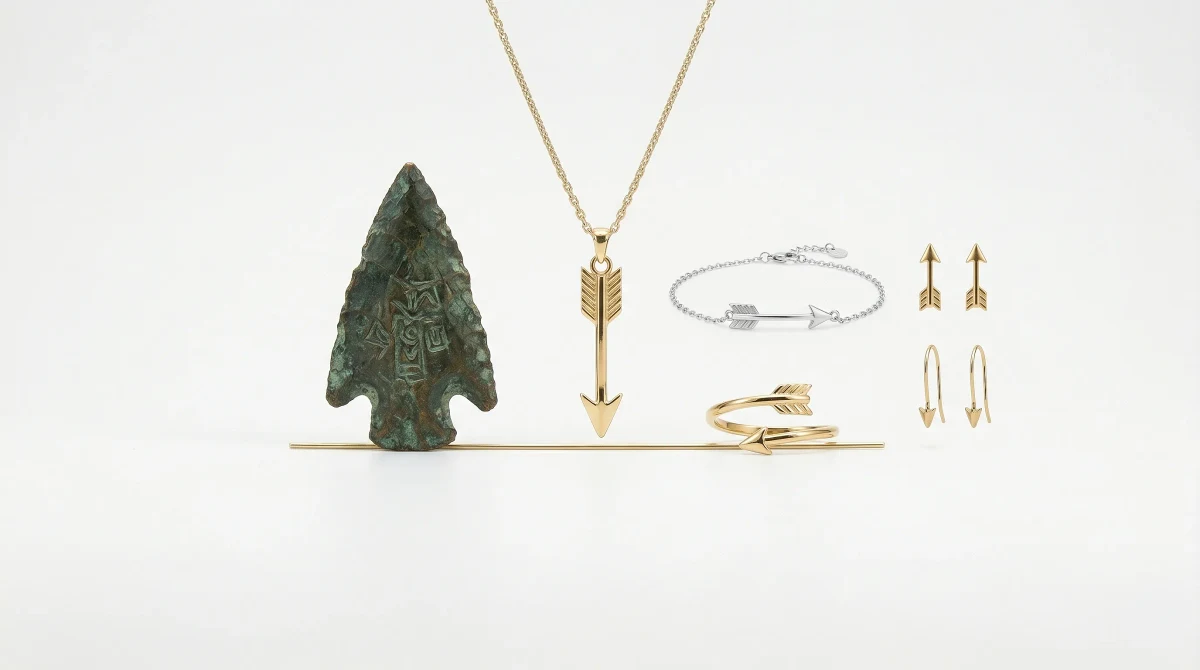
Pendants
The most popular form.
- Slim horizontal, 3-5 cm on a fine chain resting along the collarbone. Pure minimalism. Budget to mid-range.
- Vertical drop with the point facing down. 3-4 cm. An accent without bulk. Mid-range.
- Horizontal slider that moves freely along the chain. Distinctive look. Mid-range.
- Crossed pair forming an X two shafts at angles, symbolising friendship. Mid-range.
- With a stone a small diamond or sapphire set in the tip. Premium.
Earrings
- Small studs worn as a pair. Minimal. Budget to mid-range.
- Bar drop a long thin shaft that passes through the lobe. Contemporary. Mid-range.
- Cuff style follows the curve of the cartilage. Mid-range.
- Asymmetric pair one points up, the other down. Current trend. Mid to premium.
Rings
- Slim band accent minimalist. Budget to mid-range.
- Double band with arrow detail between geometric focus. Mid-range.
- Wrap ring the shaft winds around the finger. Mid to premium.
- Open ring the band curves and leaves the finger partially open. Modern. Mid-range.
Bracelets
- Rigid bangle with arrow motif running the full width of the wrist. Mid-range.
- Cuff wider, more statement-making. Mid to premium.
- Delicate chain with charm everyday wear. Budget to mid-range.
Couple Jewellery
The bow-and-arrow combination is the classic pairing:
- One partner wears the fletched shaft, the other the bow
- Or both wear matching arrows with a shared date engraved inside
- Cupid's arrow as a romantic keepsake
Types of Arrow in Jewellery
Classic
A straight shaft, triangular point, and 2-3 small feathers at the tail. The most recognisable silhouette.
Minimalist
Point and line only, no fletching. A clean geometric form for contemporary taste.
Cupid's Arrow
A stylised heart incorporated into the shaft or the fletching. The universal romantic symbol.
Friendship Arrow
A small heart or cross at the midpoint of the shaft. Represents affectionate friendship.
Historical Native Arrow
A wide flint-style point and detailed feathering. A reference to the historic traditions of the indigenous peoples of North America.
Gothic
Additional elements such as a skull near the tip, thorns, or dark detailing. Gothic aesthetic.
Double-Headed
A point at both ends of the shaft. Bidirectional force, protection from two sides.
Broken Arrow
A crack or split in the shaft. Among many indigenous North American traditions this represents peace, the end of conflict.
Bow and Arrow
The complete set, worn together or combined in one piece.
Arrow in Circle or Wheel
Sagittarius imagery or astrological reading.
Customer reviews
Zevira is a real jewellery shop. Genuine payments, deliveries and customer thank-yous.
🥰🥰🥰 gracias
Ok, ¡gracias! 🙂
What the Arrow Symbolises
Direction and Purpose
The primary meaning. The arrow moves in one direction and knows its target. It represents:
- Clarity of goals
- Focus
- Forward momentum without hesitation
The arrow as a metaphor for personal direction has deepened in the twenty-first century. In tattoo culture, where the arrow is consistently among the top five most chosen motifs, it almost always comes with a personal narrative: a period of difficulty crossed, a decision made, a path taken. Jewellery participates in the same language.
Strength and Will
Drawing a bow requires effort. The arrow held at full draw is a metaphor for gathered energy waiting to be released. You are not merely wishing. You are prepared to act.
There is a qualitative difference between a wish and a readied arrow. The bow pulled back is effort already expended, focus already applied. The symbol carries that preparation. This makes it distinct from softer symbols of hope or aspiration: the arrow is not a wish, it is a decision.
Love (Cupid, Eros)
Cupid draws his bow and strikes the heart. The classical romantic reading:
- Love at first sight
- Being struck by Cupid
- Infatuation
In English Romantic poetry, from Spenser's Faerie Queene to Keats, Cupid's arrow is one of the central images of desire. Plato, writing in the Symposium, described Eros as a force that bypasses rational judgment entirely, which is exactly what the arrow metaphor captures: love does not wait for consent, it arrives.
Friendship
In the traditions of several North American indigenous peoples, crossed arrows represent friendship and alliance. Two directions brought together, each complete on its own, forming something new in intersection. This is a richer reading than most friendship symbols offer: it says not that the two are identical, but that two distinct individuals have chosen to join paths.
War and the Hunt
The arrow's oldest meaning. It is a weapon, and as jewellery it can represent:
- Protection of family
- Readiness to fight
- Martial courage
The hunting meaning precedes the military one. The earliest arrowheads predate organised warfare; they served to bring down game at a distance, making the archer both provider and protector. This dual function, feeding and defending, is part of the symbol's complexity.
Peace (the Broken Arrow)
In many indigenous North American cultures, a broken arrow signals a peace agreement, the end of hostilities. The weapon deliberately rendered unusable. This is a powerful inversion: the same object that represents readiness for conflict becomes, when fractured, a guarantee of peace.
Travel and Mission
The arrow points the way. A symbol of journey, vocation, a path taken with intention.
Protection
An active, armed form of protection, distinct from the passive shield. The arrow strikes back.
A Feminist Symbol
In contemporary readings, the arrow is linked to Artemis as a symbol of female independence, self-sufficiency, and strength on one's own terms. This reading has gained particular traction since around 2015, as the goddess of the hunt displaced Cupid in the symbolism of many wearers who wanted direction and autonomy rather than romantic longing. An arrow without Cupid is an arrow that chooses its own target.
Sagittarius
The zodiac sign. Arrow jewellery is frequently bought as an astrological piece for Sagittarians. The centaur archer of the zodiac embodies restlessness, intellectual curiosity, and a love of travel, which maps onto the arrow's directional symbolism with unusual precision.
History of the Arrow: From Flint Point to Jewellery Motif
The Stone Age: 64,000 Years Ago
Excavations at Blombos Cave in South Africa have yielded stone points estimated at approximately 64,000 years old, among the earliest evidence of composite tool-making by modern humans. Even at that remote date, weapons carried ritual meaning. Rock art across the ancient world depicts the archer in ceremonial contexts, the hunter performing an act that was simultaneously practical and sacred.
Through the stone, bronze, and iron ages, the shape evolved: flint gave way to obsidian, then bronze, then iron. But the silhouette, a triangular point on a straight shaft, remained instantly readable across cultures and millennia. This is not coincidence. The form is functionally optimal: the point concentrates force, the shaft aligns trajectory, the fletching stabilises flight. Nature and physics converged on the same solution in dozens of cultures independently, which is why the arrow is one of the few genuinely universal human symbols.
The Mongol Composite Bow: Twelfth to Thirteenth Centuries
The Mongol bow was an engineering marvel: a composite structure of wood, horn, and sinew capable of sending an arrow 300 to 400 metres. The mounted archers of the Mongol armies could strike targets inaccessible to any other weapon of their era. Their tactics of rapid cavalry advance combined with sustained ranged fire reshaped the military history of Eurasia and demonstrated that the arrow, in skilled hands, could decide the fate of empires.
The Mongol archer also developed the technique of shooting from horseback at full gallop, making the arrow a weapon of speed as well as precision. This combination, accuracy applied at velocity, is an older version of the same metaphor that makes the arrow a symbol of decisive personal direction today.
The English Longbow: Crécy 1346, Agincourt 1415
In Western Europe, the defining episode of archery in battle belongs to the English longbow. At the Battle of Agincourt on 25 October 1415, English archers armed with yew longbows faced a substantially larger French force. Their rate of fire was extraordinary: contemporary accounts describe clouds of shafts darkening the sky. The French cavalry foundered in muddy ground under relentless volleys, and a numerically inferior force achieved a famous victory.
The Battle of Crécy in 1346 and Poitiers in 1356 had already established the longbow's reputation. When the Tudor warship Mary Rose sank in 1545 and was raised in 1982, she yielded hundreds of longbows and thousands of arrows in near-perfect condition, one of the finest archaeological records of medieval military equipment ever recovered.
Robin Hood, the folk hero of Sherwood Forest, embodies the archery mythology of medieval England. His legendary feat of splitting a rival's arrow in the bullseye at a tournament has become a byword for precision and defiance of authority. Tudor monarchs were keen archers, and the bow remained a symbol of English identity long after gunpowder had displaced it on the battlefield.
In English heraldry, arrows appear frequently in coats of arms, often pointing upward or arranged in bundles, signalling martial heritage and the hunt.
Indigenous Peoples of North America
Among many of the indigenous nations of North America, the arrow carried a rich and codified symbolic language:
- Crossed arrows friendship and alliance between peoples
- Broken arrow peace, the laying down of conflict
- Pointing left warding off evil
- Pointing right protection from the opposing direction
- Pointing down peace and rest
- Pointing up movement towards a goal
- Bundle of arrows unity and collective strength
These meanings entered the wider Western consciousness through 19th and 20th century contact and have become part of the bohemian and Western aesthetic vocabularies that influence jewellery design today.
It is worth noting that this symbolic language was not uniform across all nations. Different peoples had different conventions, and the broadly circulated versions represent a simplified synthesis. When wearing a piece that draws on this tradition, the gesture is one of aesthetic homage rather than precise cultural reproduction.
Ancient Greece and Rome
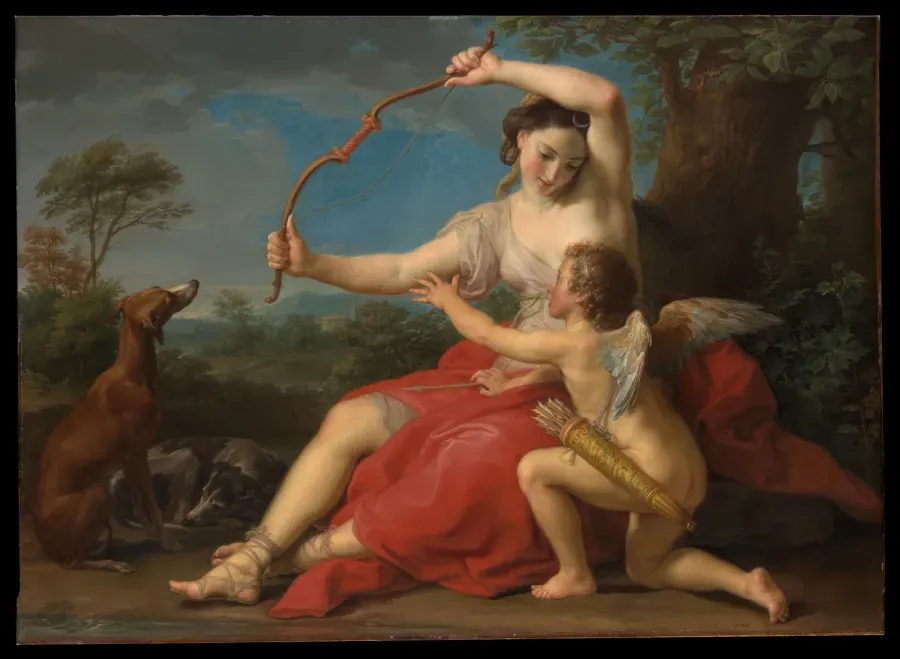
Artemis (Diana) goddess of the hunt, the moon, and the wild. Her bow and arrow represent virginity, independence, and an untamed connection with the natural world. She is always depicted armed and ready, a figure of self-possession who answers to no one. Ancient Greek votive offerings found at her sanctuaries included model bows and arrows: worshippers physically presented the symbol of her power.
Apollo Artemis's twin, also associated with the bow. A healer, poet, and bringer of light. His arrows could wound or heal; he struck the Python at Delphi, cleansing the sacred site. The same object that brings harm can restore order. This ambivalence is unusual in religious symbolism and gives Apollo's arrow a particular complexity.
Eros (Cupid) god of love. According to Plato, he carried two kinds of arrows: golden ones to cause love, leaden ones to cause revulsion. His shafts in Roman poetry, Ovid's Ars Amatoria above all, became the defining image of sudden, overwhelming desire. Ovid was quite specific about the mechanism: the arrow does not inspire a feeling, it implants one, bypassing judgment entirely.
Sagittarius the centaur archer of the zodiac. One of the most recognisable figures in Western astrology.
The Parthian Shot the celebrated military tactic of Parthian cavalry, who fired backwards at full gallop while appearing to retreat. This gave English the lasting phrase "a parting shot," meaning a final cutting remark delivered on departure. The tactic is the origin of the phrase, but the arrow is what made it physically possible.
Mythology: Odin, Krishna, Rama
Odin in Norse tradition is primarily associated with his spear Gungnir, but arrows appear in the sagas as markers of fate. An arrow shot into the sky could signal the gods' choosing. Norse arrow symbolism is tied to destiny and the irrevocable. What has been released cannot be called back; what fate has chosen cannot be undone.
Arjuna in the Mahabharata is celebrated as the greatest archer of the epic, guided by Krishna. The divine arrows, called divya astras, bear the names and powers of gods. The archer's shot is an act of righteousness as much as war. The Bhagavad Gita opens on a battlefield, with Arjuna pausing before releasing his arrow, and Krishna's counsel to him is essentially a philosophy of decisive action over paralysis.
Rama in the Ramayana is defined by his bow, the Kodanda. His arrow carries justice across the cosmos.
Krishna himself in some traditions is depicted with a bow, the Sharnga, which he wields as the preserver of cosmic order.
Medieval Heraldry and the European Tradition
In European heraldry, the arrow appears in hundreds of family coats of arms, often paired with the sword or beneath a crown. Bundles of arrows signalled unity; upward-pointing arrows denoted martial descent; arrows threaded through hearts were used as love tokens by noble families. The symbolic vocabulary was well established long before the modern jewellery industry discovered the motif.
The fasces, a bundle of rods with an axe, and the bundle of arrows share the same underlying idea: individually breakable, collectively unbreakable. This is why both appear in the iconography of states seeking to project unity, from republican Rome to colonial America, where the reverse of the Great Seal famously shows a bundle of thirteen arrows in the eagle's left talon.
Victorian England
Victorian sentimental jewellery frequently featured the arrow as Cupid's dart. A brooch depicting an arrow piercing a heart was among the most popular love tokens of the 19th century, given at engagements or on anniversaries. Victorian arrow jewellery was typically gold, often set with garnets or seed pearls, and was made to be pinned on the bodice, close to the heart it supposedly pierced.
Art Deco: 1920s-30s
Geometric Art Deco embraced the arrow for its linear clarity. Minimal arrow brooches and pins from this period remain collectible. The Deco arrow is stripped of romanticism: no feathers, no curve, just the point and the shaft as a graphic statement. It was the first time the motif appeared as pure geometry rather than a cultural reference, which is the direct ancestor of contemporary minimalist arrow jewellery.
1970s: The Hippie Era and Native Revival
Jewellery inspired by indigenous North American aesthetics, turquoise, silver, arrow motifs, entered mainstream fashion during this decade. The counterculture's interest in non-Western symbols brought the specific vocabulary of Native American arrow symbolism into popular circulation for the first time, and the combination of arrow, feather, and turquoise established a visual language still widely used today.
2010s: Boho and Tattoo Culture
Arrow tattoos became one of the most popular choices for wrist or collarbone placement. Jewellery followed: bracelets and necklaces in a boho register. The tattoo arrow is almost always accompanied by a personal meaning its wearer assigns: forward through difficulty, aimed at a new beginning, remembering someone left behind. The jewellery form absorbs this narrative richness without requiring its wearer to explain it.
2026: Contemporary Rereadings
The motif returns with feminist and astrological associations. Artemis rather than Cupid. Sagittarius rather than Valentine's Day. A more expansive interpretation. There is also a visible interest in the arrow as a symbol of professional ambition in contexts where traditional symbols of success (the crown, the ring, the chain) feel too heavy or too hierarchical. An arrow says: I have a direction. That is sufficient.
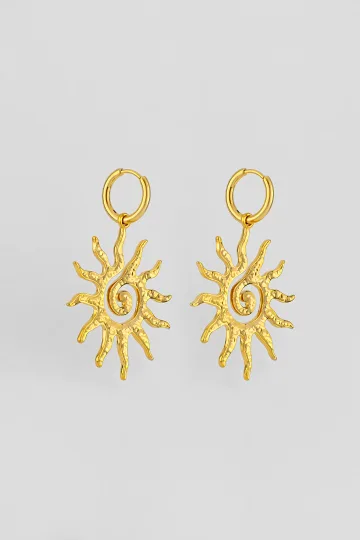
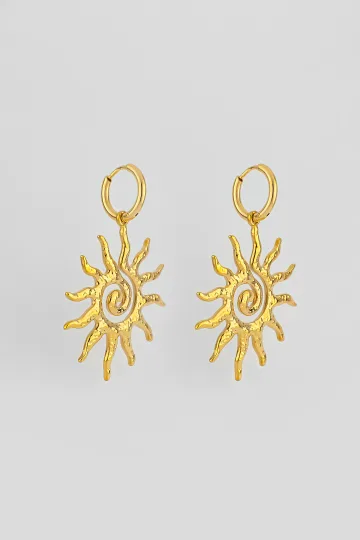
Wear the symbol, don't just read about it. These are in stock:
The Arrow Across Cultures
Indigenous North America
Rich in specific meanings. Arrow motifs in beadwork across many nations including Navajo, Lakota, and Apache traditions. The complexity and variation within this tradition rewards closer study: what reads in contemporary jewellery as a unified aesthetic was in fact a diverse set of practices across hundreds of nations, each with its own conventions.
Japanese
Kyudo, traditional Japanese archery, is a spiritual discipline. The ya (arrow) symbolises concentration, a Zen quality of pure directed action. In kyudo, the correct release of an arrow requires the practitioner to have first achieved a state of stillness: the shot is the visible expression of an interior condition. This gives the Japanese arrow a psychological depth not found in the martial Western tradition.
The ya also appears in Shinto ritual. Hamaya, ceremonial arrows given as New Year's gifts in Japan, are believed to ward off evil spirits. The word itself combines ha (to destroy) and ma (evil), making the arrow's protective function explicit in its name. These ceremonial arrows are kept in homes and shrines, their symbolic power derived from what they point away from as much as what they point toward.
Indian (Vedic)
Rama, the hero of the Ramayana, is celebrated as a great archer. The divine arrow represents righteous action, moral purpose. In Vedic tradition, the arrow is specifically tied to dharma: the shot that is correct, that hits what it should, at the moment it should.
The concept of the ishta (the arrow aimed at the beloved deity) appears in devotional poetry, where the arrow becomes the focused beam of longing directed toward the divine. This transforms the weapon into an instrument of spiritual concentration, with the archer's discipline serving as a model for the devoted practitioner.
Scandinavian
Odin is sometimes depicted with an arrow, though the spear (Gungnir) is his primary weapon. Norse arrow symbolism is tied to fate and the marking of those chosen in battle. The arrow that marks a warrior is one that cannot be deflected: it comes from above, from the gods' will.
In Norse tradition there is also the concept of the ulf-heðinn, the berserker whose rage gave him the accuracy of a man who no longer feared missing. This extreme focus, the arrow as the extension of absolute will rather than calculated aim, is a darker counterpart to the disciplined precision of the kyudo practitioner.
Spanish and Catholic Iconography
Saint Sebastian, martyred by arrows, is one of the most depicted figures in European sacred art. His image appears throughout Catholic culture in southern Europe, a symbol of endurance under suffering. The Spanish word for love at first sight, flechazo, literally means "arrow shot." The language itself preserves the metaphor: to be struck by love is to be struck by an arrow, and the Spanish vocabulary for falling in love carries the arrow's entire symbolic weight.
The arrows in the emblem of the Catholic Monarchs Ferdinand and Isabella, the yoke and arrows, became one of the most recognisable heraldic combinations in Spanish history. The bundle of arrows carries the same message as the Roman fasces: what is bound together cannot be broken. This imagery appeared on coins, royal seals, and buildings across the Iberian Peninsula throughout the sixteenth century.
Chinese Tradition
In Chinese decorative arts, arrow motifs appear in association with good fortune and decisive action. The compound bow was a key military technology in Chinese history, and the archer's excellence was one of the six traditional arts expected of a cultivated gentleman, alongside ritual, music, charioteering, calligraphy, and mathematics.
The Chinese word for arrow, jian, appears in idioms about decisive action and straight-line progress. The phrase yishi zhongde (an arrow hitting the target on the first shot) is still used to describe someone who cuts directly to the point in argument or negotiation.
The Arrow's Physical Forms: What the Design Choices Mean
The same symbolic meaning can be expressed through very different physical forms, and those forms carry their own layer of meaning.
The Fletching (Tail Feathers)
The fletching stabilises the arrow's flight by creating drag that keeps the shaft aligned. In jewellery, the presence or absence of fletching signals aesthetic intent. Detailed fletching references the functional arrow, the actual weapon or hunting tool. Minimal fletching, a few simple lines, is a shorthand that reads as arrow without insisting on the historical context. No fletching at all produces a geometric spear or directional mark that works equally as a compass needle or a pointing device.
The choice of feather style in more elaborate pieces references specific traditions. The split-feather fletching of many Native American designs is visually distinct from the smooth, swept-back vane of European arrows. A skilled jeweller working in this space will render these differences accurately, because they carry different cultural references.
The Point (Arrowhead)
A triangular point is the minimalist universal. A broad, leaf-shaped point references the Stone Age flint or bronze arrowheads found across the ancient world. A barbed point, with backward-facing hooks, is the hunting arrow: designed to stay in. A blunt point was used for small game hunting and target practice. In jewellery, the point shape rarely carries precise historical meaning, but a wider, more dramatic point reads as more archaic or indigenous in reference, while a long, thin geometric point reads as contemporary.
The Shaft
The shaft is usually rendered as a simple line, but its proportion matters. A shaft much longer than the point gives a sense of speed and trajectory: this arrow is going somewhere and has been in flight. A shaft barely longer than the point produces a compact form that reads more as a symbol than a weapon. In wrap rings, the shaft becomes the structural element of the jewellery itself, winding around the finger in a way that connects the design choice to the meaning: direction wrapped around the wearer.
Single vs. Crossed vs. Bundle
A single arrow is personal. It belongs to one person, points in one direction, tells one story. Crossed arrows are a union: two directions that have intersected, two people or two principles that have found a common point. A bundle of arrows (three or more) shifts into collective territory: the symbol of a group, a family, a team, a nation. The visual difference between these forms is immediate and carries genuine semantic weight.
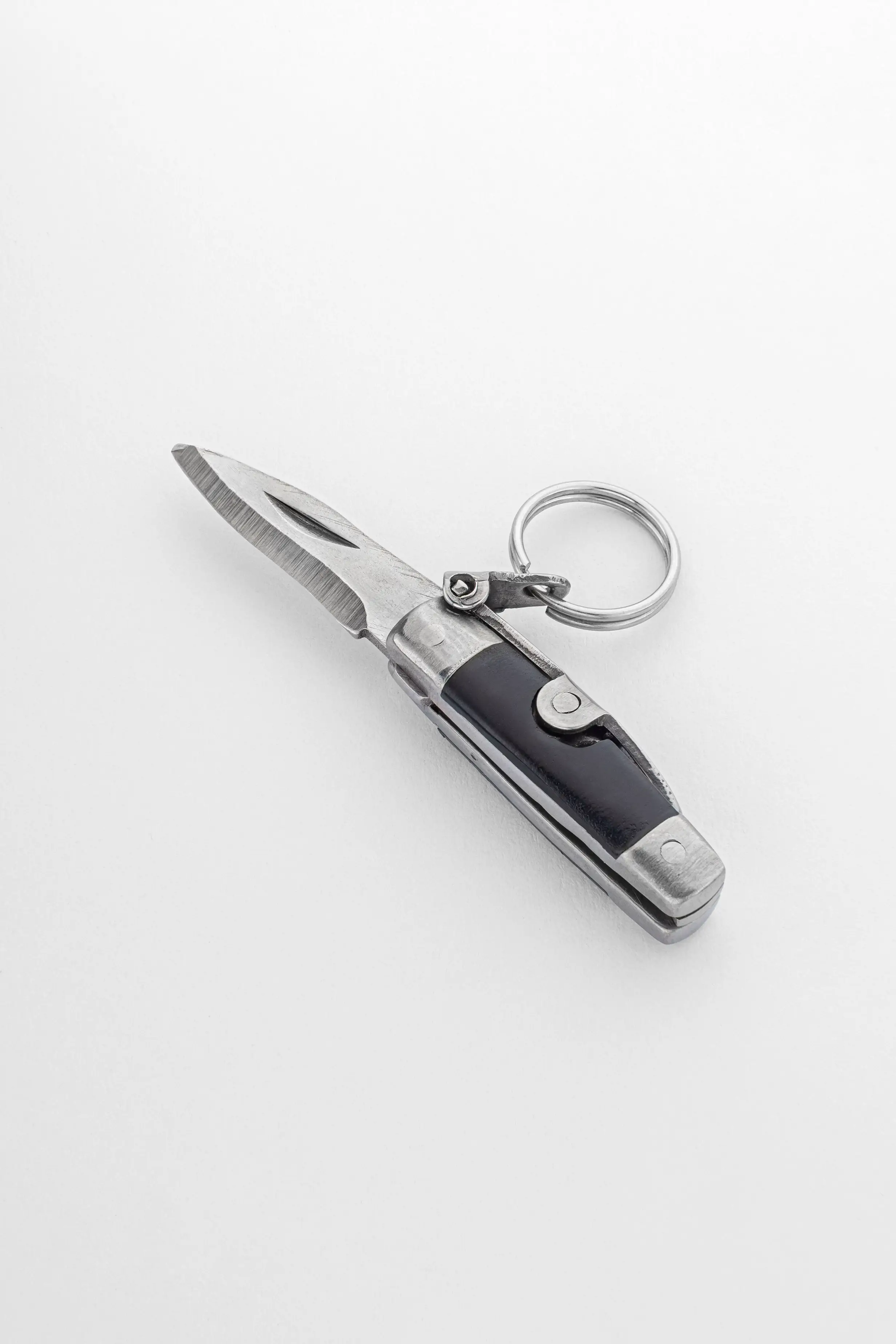
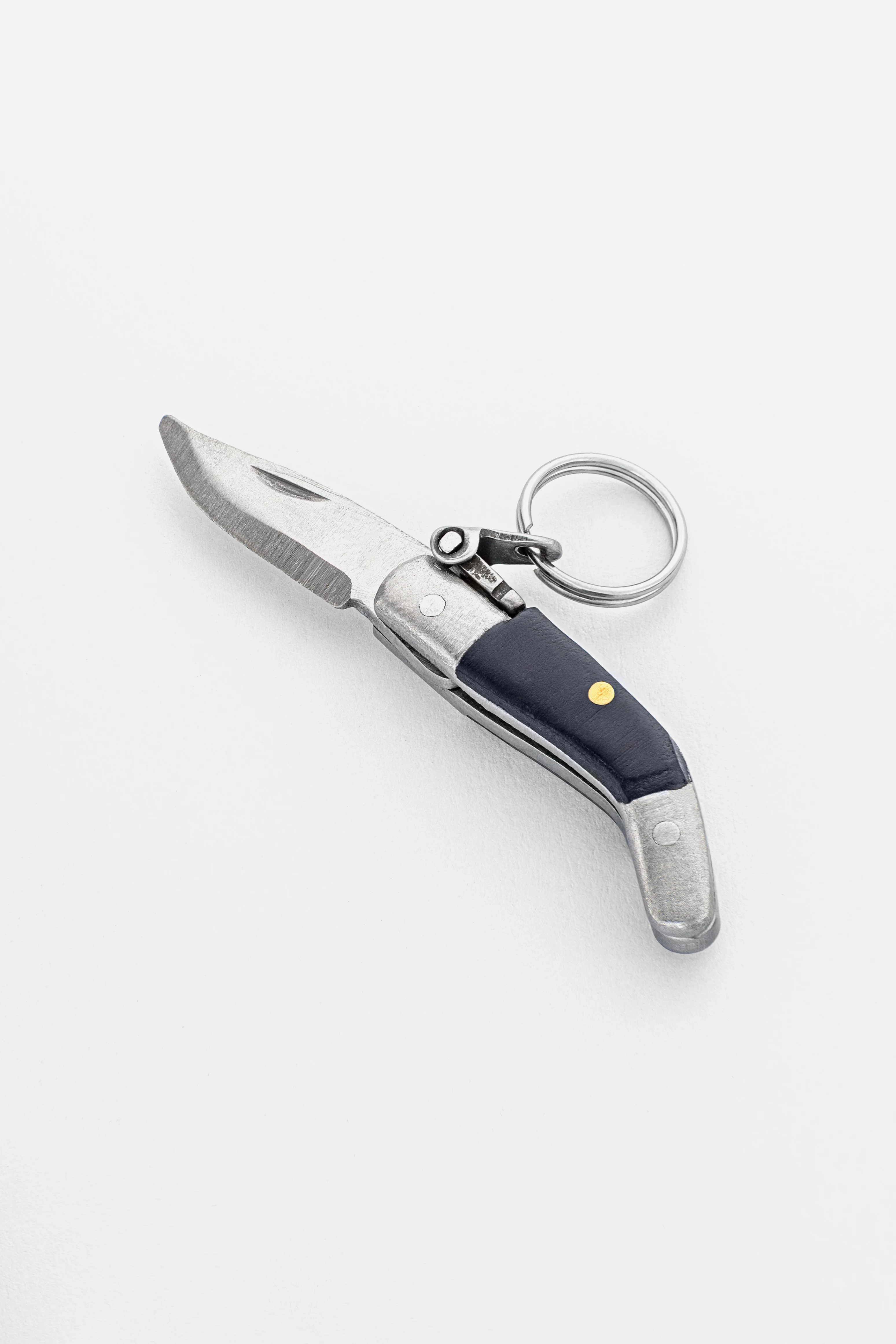
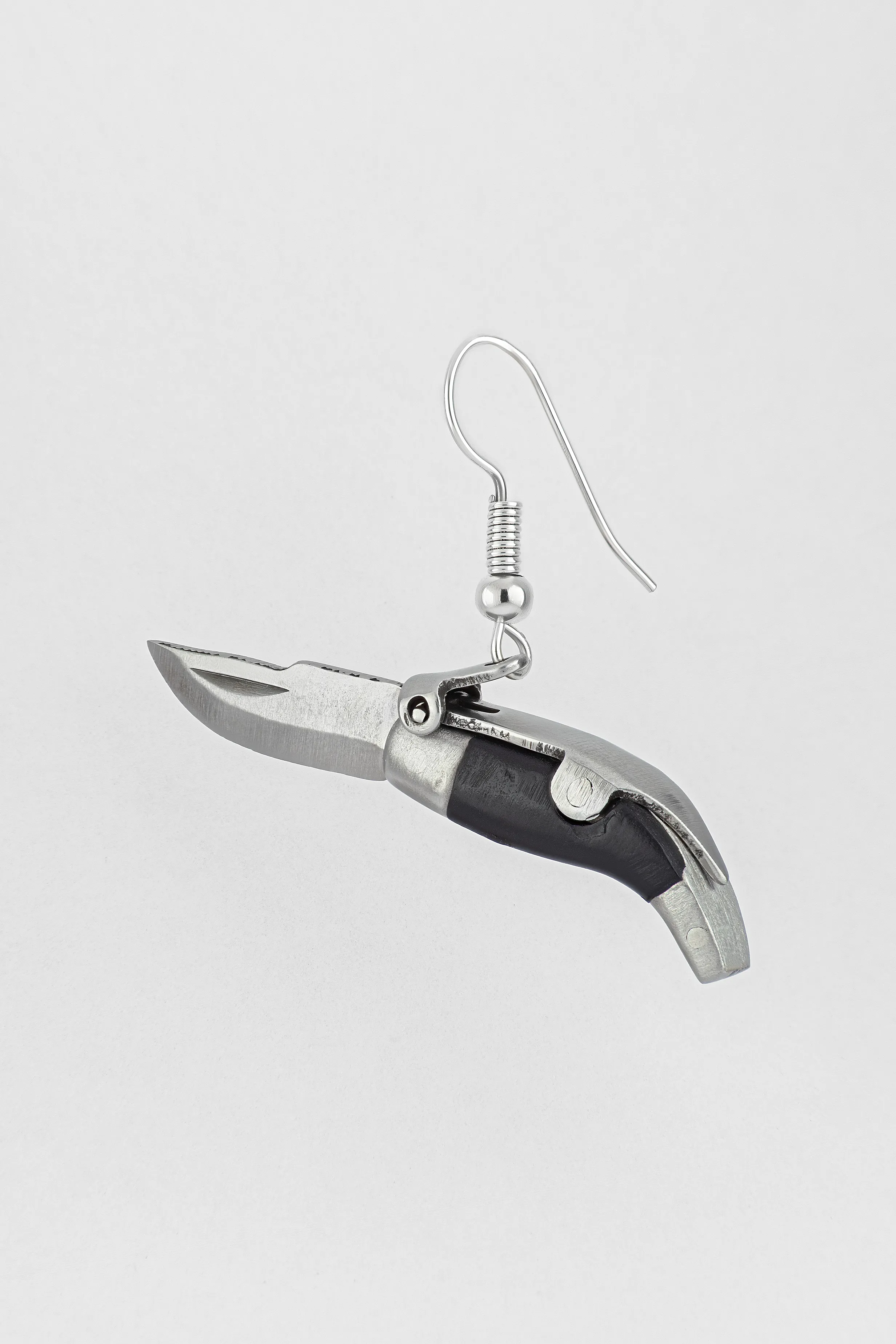
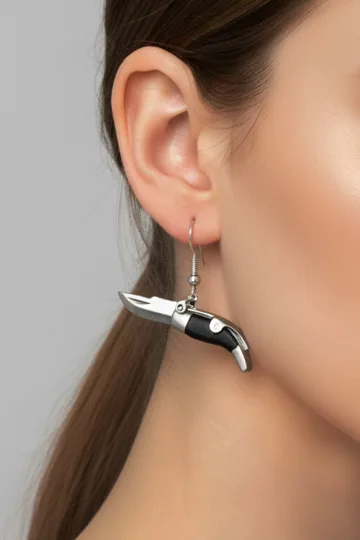
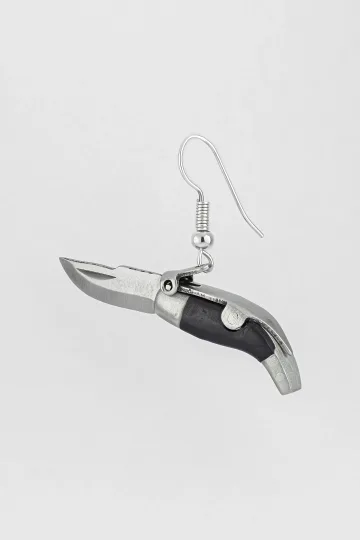
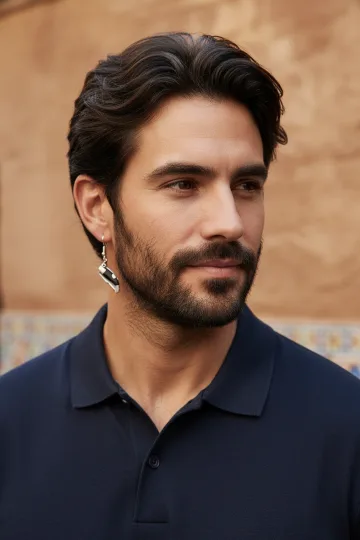
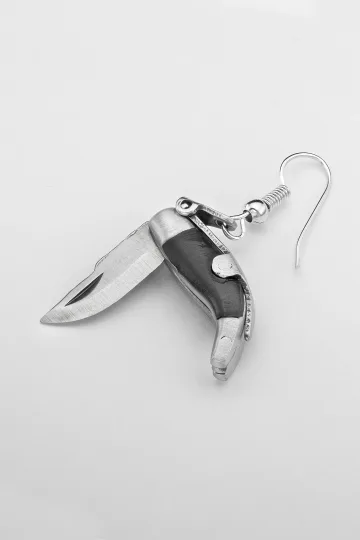
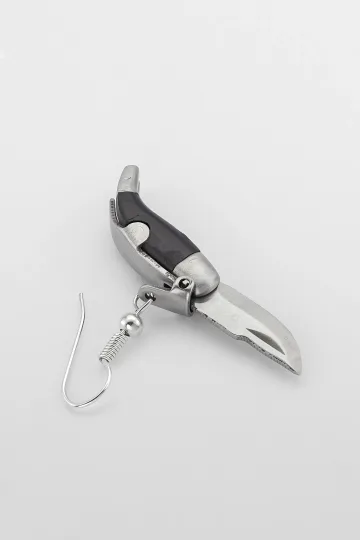
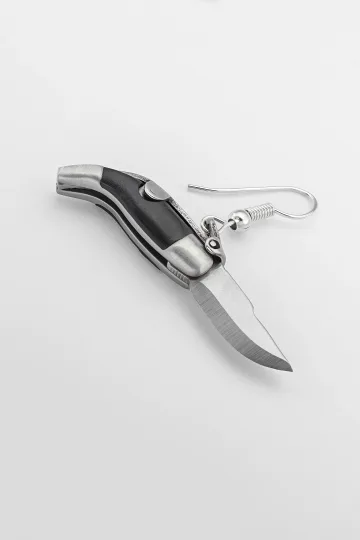
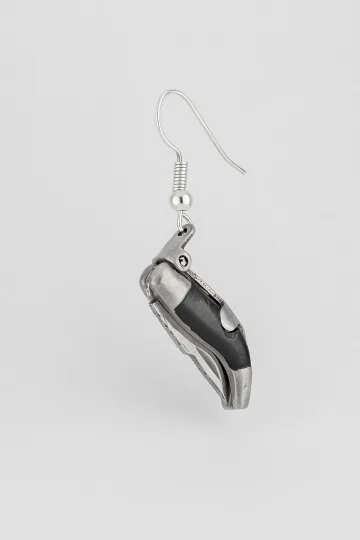
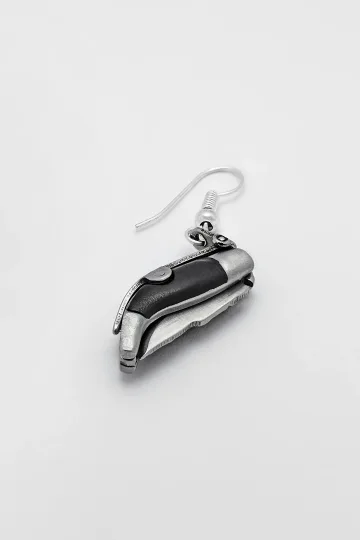
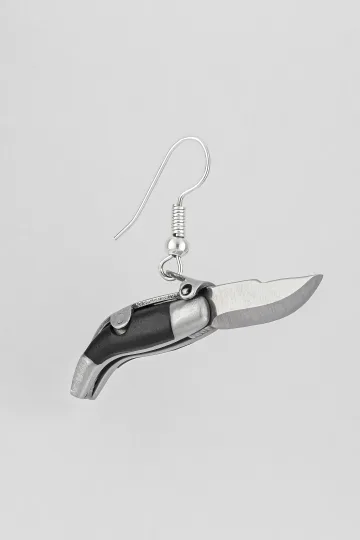
Artisan-crafted CAPAORA navaja pendant
A 40 mm stainless-steel navaja with a real folding mechanism and Palanquilla lock. An affordable gift to remember.
A code for blog readers:
10% off your first order
Authentic · Maker's guarantee · Ships from Spain
Styles of Arrow Jewellery
Minimalist
The thinnest possible line and a simple point. Near-geometric abstraction. Works with any wardrobe, requires no explanation. Best in sterling silver or fine 14K gold. The minimalist arrow is the form most likely to be worn daily, the one that reads as part of the wearer's permanent aesthetic rather than a statement piece.
Realistic
A detailed, fully rendered bow and arrow with visible fletching, notching on the shaft, and a defined point. Usually larger and weightier. For those who want a piece with a clear historical reference. The realistic version asks to be looked at and understood; it is not jewellery for the background.
Symbolic
A single element only: the point without a shaft, or the fletching without a point. Maximum abstraction. Well suited to layered necklace styling where the motif reads as part of a composition rather than a statement on its own. This style presupposes a viewer who knows what arrow fletching looks like and can read the fragment as a reference to the whole.
How to Wear Arrow Jewellery
As a Solo Piece
A slim horizontal pendant on a fine 40-45 cm chain sits along the collarbone and reads clearly without competing with necklines or other jewellery. This is the version that works in professional environments. The arrow is slim enough not to read as costume jewellery, specific enough to be a conversation piece when noticed.
In a Layered Look
An arrow pendant works well in a stack of two or three chains at different lengths: a shorter plain chain at 35-38 cm, the arrow at 42-45 cm, a longer chain with a minimal geometric pendant at 50-55 cm. The arrow provides a clear directional element that anchors the stack. Avoid layering with overly ornate pieces: the arrow's geometry is lost in visual noise.
Rings
An arrow ring worn on the index finger, pointing upward, reads as intentional. On the middle finger it becomes part of a stack rather than a focal piece. The wrap ring, which winds the arrow shaft around the finger, looks best worn alone on its finger.
Earrings
The asymmetric pair, one arrow up and one arrow down, is the most current option. It reads as deliberate and considered. Worn as studs, two small arrows read as clean and unfussy. The bar drop earring, which passes through the lobe as a thin shaft, is the most editorial choice and pairs well with an upswept hairstyle that exposes the ear.
Direction of Wear
The direction an arrow points on the body carries meaning if you want it to:
- Upward aspiration, forward motion, ambition
- Downward peace, grounding, rest
- Horizontal travel, lateral movement, the journey in progress
- Crossed partnership, friendship, two directions united
Many wearers do not assign specific meaning to direction and choose based purely on aesthetic. Both are valid. The meaning is available, not mandatory.
With Business Dress
A small, slim pendant works in almost any professional setting. It reads as personal but not decorative. A boho piece with multiple elements, feathers, and stones signals a different register and is better suited to creative environments or casual wear.
Care
The pointed tip of an arrow pendant or charm can scratch other pieces in storage. Keep each piece separately in a soft pouch or in the divided sections of a jewellery box. When putting on or removing earrings, hold the post or the hoop rather than the decorative element itself. Sterling silver will develop a patina over time; polish with a soft cloth or use a mild silver cleaning solution. Gold does not tarnish but should still be stored separately to avoid scratching.
An arrow points up, at something. Aim it at your shoes and you have already surrendered.
Styling the Arrow: A Stylist's Notes
The arrow has been through dozens of looks on my watch, from office to runway. The shape is geometric, and that is its strength: it picks up the line of an outfit instead of fighting it. Here is what actually works.
How do I style an arrow every day? For daytime I recommend a thin arrow pendant on a 40-45 cm chain over a white tee, a shirt with the top button open, or a round-neck knit. The point sits along the collarbone and reads as clean graphics. Silver is the honest choice here: the cool tone backs up the whole idea of precision. Arrow studs and a slim band ring add the same logic without stealing focus.
Does an arrow work at the office? It does. I suggest a small horizontal pendant under a shirt or a fine roll-neck: restrained enough not to look like costume jewellery, specific enough to become a talking point. Yellow or rose gold softens the angular shape. The larger boho versions with feathers and turquoise I keep for creative or off-duty settings.
How do I build an evening look? For evening I choose a vertical pendant pointing down on an open neckline, or an asymmetric pair of earrings, one up and one down, with the hair swept up. On dark fabric, black, emerald, wine, silver and a tip set with a small stone give a neat glint. The bar drop along the lobe is the most editorial call.
Does the arrow hold up in a layered look? It does, and well. I build layers with a spread of lengths: a short plain chain, the arrow at 42-45 cm, and a longer one with a minimal geometric pendant. The arrow anchors the whole stack as a directional point. One rule I never break: I never park heavy ornate pendants next to it, the geometry drowns in the visual noise.
Does the direction of the point matter? If you want it to carry meaning, yes. Point up I recommend for anyone about forward motion and ambition, down for those who prefer calm and grounding, sideways for the journey and the road. Crossed lines I suggest for paired looks: two directions that chose to meet. If you would rather skip the meaning, choose by how the shape falls on your neckline, that is an honest answer too.

Turn on your camera, pick earrings, a pendant or a ring, and see the piece on yourself in real time.
Switch items in one tap.
Everything runs in your browser: no photo or video is ever uploaded.
Leave your email, we'll send your discount code. No spam, unsubscribe anytime.
The code arrives by email, valid on your first order.
Popular Combinations
Arrow and Heart (Cupid)
The classic romantic pairing. A heart incorporated into the tip or along the shaft. Ideal for couples and gifts at significant dates.
Arrow and Feather (Native Motif)
Detailed fletching, often with a turquoise bead. A reference to boho and indigenous traditions.
Arrow and Bow (Complete Set)
Couple pieces or one single piece combining both elements.
Arrow and Infinity
A direction that lasts forever. A strong reading for couples or for those on a long-term path.
Crossed Arrows
The union of two directions. Friendship, partnership, love. Works equally well for romantic pairs and for closest friends.
Arrow and Compass
Direction plus navigation: knowing where you are going and having the tools to get there. A natural combination for those in a transitional period or embarking on something new.
Arrow and Moon
The crescent moon paired with an arrow references Artemis directly: the hunter goddess, the untamed feminine, the night's purposeful light. This combination has become one of the most recognisable pairings in the feminist-reading strand of arrow jewellery.
Engraving on Arrow Jewellery
Arrow pieces lend themselves naturally to personalisation:
- Coordinates of a significant place: where you met, where you made an important decision, where your journey began.
- A date of a first meeting or a memorable event.
- "Find your way" or another short phrase that carries personal meaning.
- Initials of two people, one on each shaft of a crossed-arrow piece.
- A compass point combined with an arrow for a direction-and-journey reading.
- A word in a non-Latin script Arabic, Hebrew, or devanagari can be engraved on the reverse of a pendant, visible only to the wearer.
Engraving on the inside of a ring or on the reverse of a pendant turns the piece into a private object with specific meaning.
Materials and Finishes
Sterling Silver 925
The most versatile option. Works with minimalist and boho aesthetics equally. Can be oxidised for a darker, more aged surface that suits gothic and realistic styles. Silver's natural cool tone reads as precise and clean, matching the arrow's association with accuracy.
14K Yellow Gold
Classic, quietly luxurious. Particularly well suited to the Cupid version and to pieces incorporating small stones. The warm tone of gold softens the arrow's angular geometry. Victorian arrow jewellery was almost always gold, and modern interpretations in yellow gold carry that heritage.
14K Rose Gold
Warm, contemporary. Suits the romantic and friendship readings particularly well. Rose gold's pink tone reads as more personal and less formal than yellow gold. In a crossed-arrow friendship piece, rose gold intensifies the warmth of the symbol.
Oxidised Silver
Dark surface, distinctive character. Well suited to gothic and realistic arrow styles where the historical or martial reference is foregrounded. Oxidisation also highlights engraved detail, making it a good choice for pieces with personal inscriptions.
Turquoise with Silver
The traditional boho combination. References indigenous North American aesthetics and works best in the feathered or historical-native arrow style. Turquoise has its own long history as a protective stone in many indigenous traditions, adding a second layer of meaning to the combination.
Mixed Metal
Two-tone pieces combining yellow gold and silver, or rose gold and oxidised silver, allow the arrow shaft and point to be rendered in contrasting metals. This creates visual separation between the parts of the arrow and can be used to emphasise the directional element (the point in gold) against the body (the shaft in silver).
Who Arrow Jewellery Suits
Silver, gold, engagement rings, symbolic jewellery, paired sets.
Those who set goals and follow through. The arrow as a metaphor for clear direction.
Sagittarians. The zodiac symbol.
Couples, with a nod to Cupid. The classic pairing: a fletched arrow for one partner, a bow for the other. Or two crossed arrows worn together.
Close friends. Crossed arrows as the friendship symbol.
Fans of boho and South-Western aesthetics. Inspired by indigenous North American visual traditions.
Archers. The direct professional connection.
In periods of transition. "I am moving forward, like an arrow in flight."
Those drawn to Artemis. The feminist, independent reading.
For a graduation gift. The symbol of direction forward into a new chapter.
Tattoo enthusiasts. The arrow is one of the most popular tattoo motifs. Jewellery that echoes an existing tattoo is a natural extension.
Those in creative professions. The arrow's combination of precision and forward momentum resonates in fields where the gap between intention and execution is the central professional challenge.
Those starting a new chapter. A new city, a new role, a new relationship. The arrow says: this is where I am pointed now.
Send a friend a discount code, they save on their first order.
FAQ
Is this a masculine or feminine symbol?
It is universal. Historically it carries masculine, martial associations, but Artemis and the contemporary feminist reading make it equally a feminine symbol. Both men and women wear it in equal numbers.
What does an arrow pointing up mean?
Movement toward a goal, aspiration, ambition. A philosophy of always pressing forward.
What does an arrow pointing down mean?
Peace, rest, grounding. Not a negative meaning. In several indigenous traditions pointing downward specifically signals peaceful intent.
What does a broken arrow mean?
In many indigenous North American cultures, it represents peace, the end of conflict. In wider contemporary use, it can mean the deliberate choice to end a fight.
What is the difference between a single arrow and a pair?
A single arrow speaks to personal direction, your own path chosen and followed. Crossed or paired arrows speak to union between two people or two principles. The choice depends on which reading feels closer to the wearer's intention.
Is it appropriate to give to a romantic partner?
Yes. Particularly the Cupid version with a stylised heart, or crossed arrows for the two of you together. A classic alternative to more conventional Valentine's Day gifts.
Is the Cupid symbol religious?
No. It refers to the Roman mythological figure, but in contemporary use it is entirely secular, a symbol of romantic love.
Do bow and arrow appear together in one ring?
Yes, occasionally. A ring combining both elements, often in a vintage-modern register. More compact than buying two separate pieces.
Which material is best?
Silver for minimalism. Yellow gold for a premium, classic feel. Rose gold for something contemporary and warm. Turquoise with silver for indigenous-inspired boho. The choice depends on overall aesthetic.
Can it be worn to work?
A small, slim pendant, yes. A large boho piece with multiple elements, not in a conservative office. In a creative environment, almost anything works.
Is there an astrological meaning beyond Sagittarius?
Mars, the planet of action and will, is sometimes depicted with an arrow as its symbol. The astrological symbol for Mars is a circle with an upward-pointing arrow, which is also the symbol for the masculine in modern notation. Some wearers choose arrow jewellery during periods when Mars is prominent in their chart, though this is a personal interpretation rather than an established tradition.
How do I know if a piece is correctly sized for layering?
The arrow pendant should hang 3-5 cm below the shortest chain in the stack. If the chains are too close in length, the pieces tangle and the individual motifs lose their definition. A spread of at least 5 cm between each chain in a three-layer stack gives each element room to be read separately.
Does the arrow have the same meaning in different cultural contexts?
The core association, direction and purpose, is genuinely universal. The specific layers, Cupid's romantic arrow, Artemis's independence, the indigenous peace symbol of the broken arrow, the Sagittarian astrology, are culturally specific. When wearing a piece that draws on a specific tradition, the context you bring to it determines which layer sits at the surface.
What makes an arrow different from a sword or a spear as a symbol?
Range. The sword and spear require proximity; the archer strikes from a distance. This makes the arrow uniquely a symbol of long-range intention: what you are aiming at need not be beside you. It also makes the arrow a metaphor for indirect action, sending something toward a goal rather than pressing toward it with your own body. In jewellery terms, this is part of why the arrow feels modern: it corresponds to the reality of working toward goals that are not immediately in reach.
Notable Instances in History and Mythology
Apollo strikes the Python. A symbol of cleansing evil and restoring order.
The Parthian Shot a military tactic that gave English a lasting idiom.
Agincourt, 1415 English longbowmen defeat a larger French force. The defining episode of archery in English national memory.
Robin Hood splitting an arrow in the target. The definitive English image of accuracy and the underdog defying power.
The Mary Rose the Tudor warship that preserved hundreds of longbows and thousands of arrows in near-perfect condition when raised from the Solent in 1982.
Saint Sebastian the Catholic martyr depicted pierced by arrows, an image of spiritual endurance.
Odin's association with fate the Norse arrow as a marker of the chosen.
Arjuna the supreme archer of the Mahabharata, whose divine arrows carry the authority of the gods.
Cupid any shot causing sudden, overwhelming love.
The Great Seal of the United States thirteen arrows in the eagle's left talon, representing the collective strength of the original states, a symbol still used on every dollar bill.
Artemis at her sanctuary in Ephesus one of the Seven Wonders of the ancient world, built for the archer goddess who embodied independence and the wild. Hundreds of thousands of votive offerings were found there, many in the form of arrows.
Hamaya the Japanese ceremonial protective arrows given at the New Year, sold at Shinto shrines, and believed to destroy evil spirits. A reminder that the arrow's protective function has been understood in cultures that never fought a single battle with European longbows.
Conclusion
The arrow is one of those symbols that manages to be simple and deep at the same time. A straight line with a point, but behind it stand Artemis, Cupid, Apollo, the English longbowmen at Agincourt, Robin Hood in Sherwood, the indigenous nations of North America, the kyudo practitioner in stillness before release, and the tattoo culture of the 21st century. Each wearer brings their own interpretation: boho, romance, direction, strength, or a zodiac identity.
As a jewellery form, it is remarkably versatile. Minimal enough to work with any wardrobe, specific enough to carry real meaning, timeless enough not to date. It suits everyday wear, gifting, solo accents, and layered looks alike. Its meanings range from the oldest (the hunt, the weapon) through the classical (Cupid, Artemis) to the entirely contemporary (feminist self-determination, Sagittarius astrology, transitional personal narrative), and none of these layers cancels any other. You wear the one that is yours.
About Zevira
Zevira is based in Albacete, Spain. The arrow is one of the most versatile minimal motifs in the collections, equally at home in a clean modern register and in a fully developed boho layered look.
What you will find with the arrow motif:
- Slim arrow pendants on fine chains
- Crossed arrow pendants representing friendship
- Arrow rings that wind around the finger
- Asymmetric arrow earring sets
- Cupid's arrow pieces for romantic gifts
- Arrow paired with a compass for a direction-and-journey reading
Each piece is handcrafted, with the option of personalised engraving. Made in sterling silver 925 and gold 14-18K.