Earring in the Left or Right Ear: What It Means, from Vikings to Today
The question that won't die
It starts in a school corridor. Or a barbershop. Or a family dinner. Someone, usually a teenager, announces they want to get an ear pierced. And then, inevitably, comes the question: "Which ear?"
Not "does it hurt?" Not "are you sure?" But "which ear?" Because somewhere in the back of everyone's mind is the idea that the choice of ear means something. Left ear says one thing. Right ear says another. And the wrong choice sends the wrong signal.
This idea has been circulating in Western culture since at least the 1980s, and it refuses to die no matter how many times someone explains that it doesn't work like that anymore. But here's what most people don't know: the question of which ear to pierce is actually much older than the 80s. Thousands of years older. And the answers have changed so many times across so many cultures that the only honest response is: it depends on who you ask, and when.
Vikings had earrings. Pirates had earrings. Egyptian pharaohs had earrings. Roman soldiers had earrings (though they'd deny it if you asked). Indian children get their ears pierced in a sacred ceremony before their first birthday. Spanish bullfighters wore a specific earring for a specific reason. And the 1980s invented a code that stuck for exactly one generation before the next generation tore it up.
This is the full story. Every tradition, every myth, every cultural meaning, and what it all adds up to in 2026.
The Ancient World: When Everyone Wore Earrings
Egypt and Mesopotamia
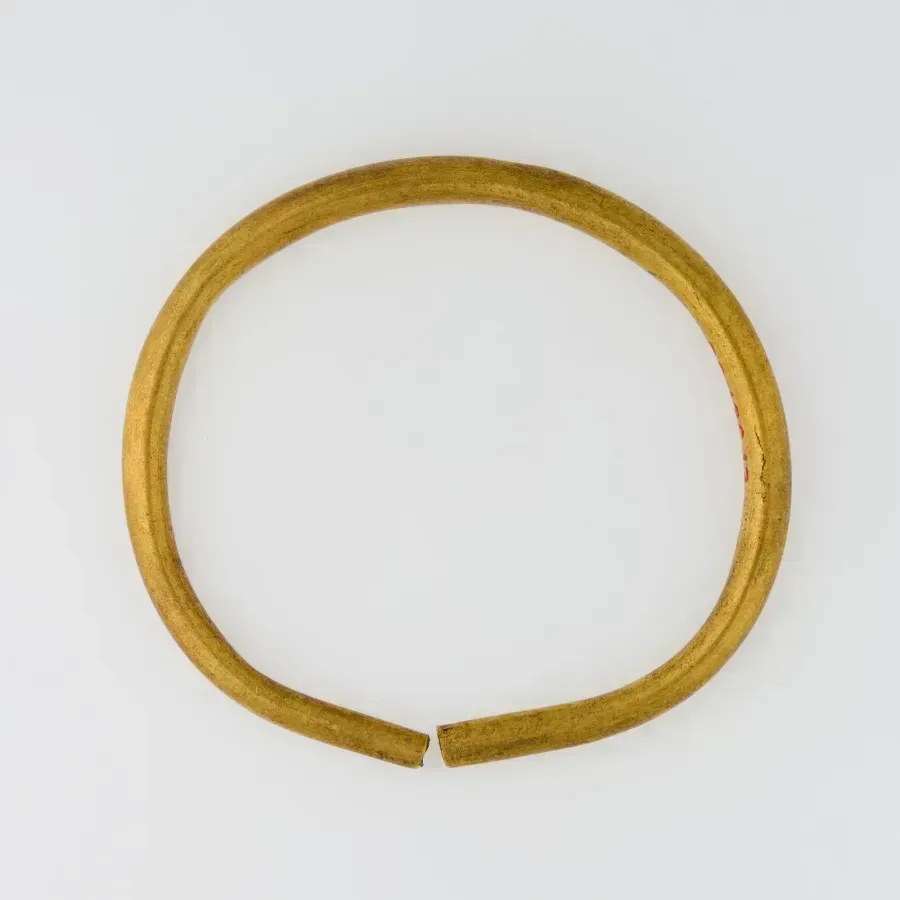
The oldest earrings we've found are roughly 5,000 years old, from Sumerian graves in what's now Iraq. They were gold crescents, worn by both men and women, and they signified status. The bigger and heavier the earring, the more important the person.
In ancient Egypt, earrings went through an interesting cycle. During the Old Kingdom (2686-2181 BCE), they were rare. By the New Kingdom (1550-1070 BCE), they were everywhere. Tutankhamun's death mask has stretched earlobes, indicating he wore heavy earrings regularly. But here's the detail that surprises people: in Egypt, earrings were particularly associated with women and children. Adult men of high status generally didn't wear them. A man wearing earrings in Egyptian art often signals foreign origin or servant status.
This is the first time in recorded history that earring wearing becomes gendered, and it happened differently than most people assume. The rule wasn't "men don't wear earrings." It was "Egyptian elite men don't wear earrings. Everyone else does."
Greece and Rome
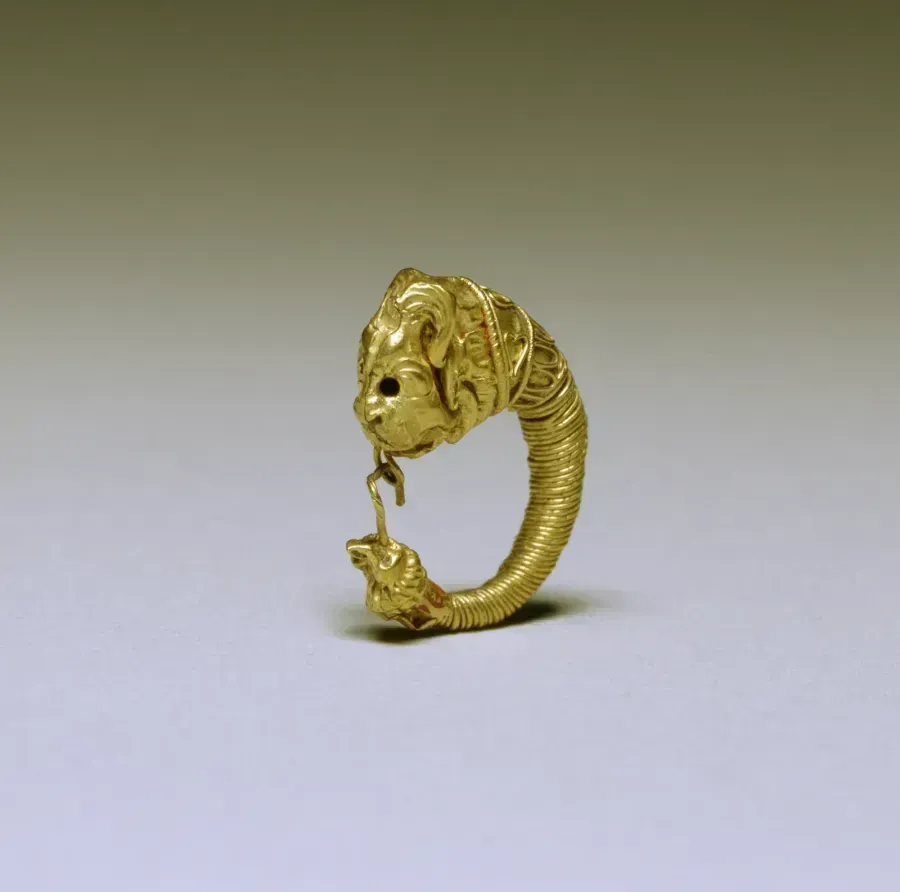
The Greeks had a complicated relationship with earrings. In the classical period (5th-4th century BCE), earrings were considered feminine accessories. A Greek man wearing earrings would be mocked as effeminate. Aristophanes makes jokes about it.
But Alexander the Great changed things. After conquering Persia, Greek culture absorbed Persian fashion, and Persian men wore elaborate earrings. Suddenly, earrings on men became a sign of worldly sophistication rather than femininity.
Rome followed a similar pattern. Early Roman men didn't wear earrings. But as the Empire expanded and absorbed Eastern cultures, earrings appeared on soldiers, gladiators, and eventually ordinary citizens. The Roman writer Pliny the Elder complained about men wearing pearl earrings, which tells us two things: men were doing it, and conservative Romans weren't happy about it.
Roman gladiators sometimes wore a single gold ring in one ear. The meaning was practical and grim: the gold was payment for their burial if they died in the arena. This tradition, as we'll see, echoed through history all the way to pirates.
India and the Ayurvedic ear
Indian ear-piercing tradition is the oldest continuous practice in the world. The karnavedha ceremony (literally "ear-piercing") is one of the sixteen samskaras (sacred rites) in Hinduism, typically performed when a child is three to five years old.
But Indian tradition doesn't just say "pierce the ears." It has specific ideas about which ear means what, rooted in Ayurvedic medicine.
According to Ayurveda, the left side of the body is associated with the feminine, receptive, lunar energy (ida nadi). The right side is associated with masculine, active, solar energy (pingala nadi). Piercing specific points on the ear is believed to activate acupressure points that affect health. The left ear connects to the reproductive system, while the right ear connects to the brain and cognitive function.
In traditional practice, boys get their right ear pierced first (to strengthen intellect), and girls get their left ear pierced first (to support reproductive health). Both eventually get both ears done.
This is probably the oldest "left ear vs right ear" system that still exists in living practice. And unlike the Western 1980s version, it has nothing to do with sexuality. It's about energy balance.
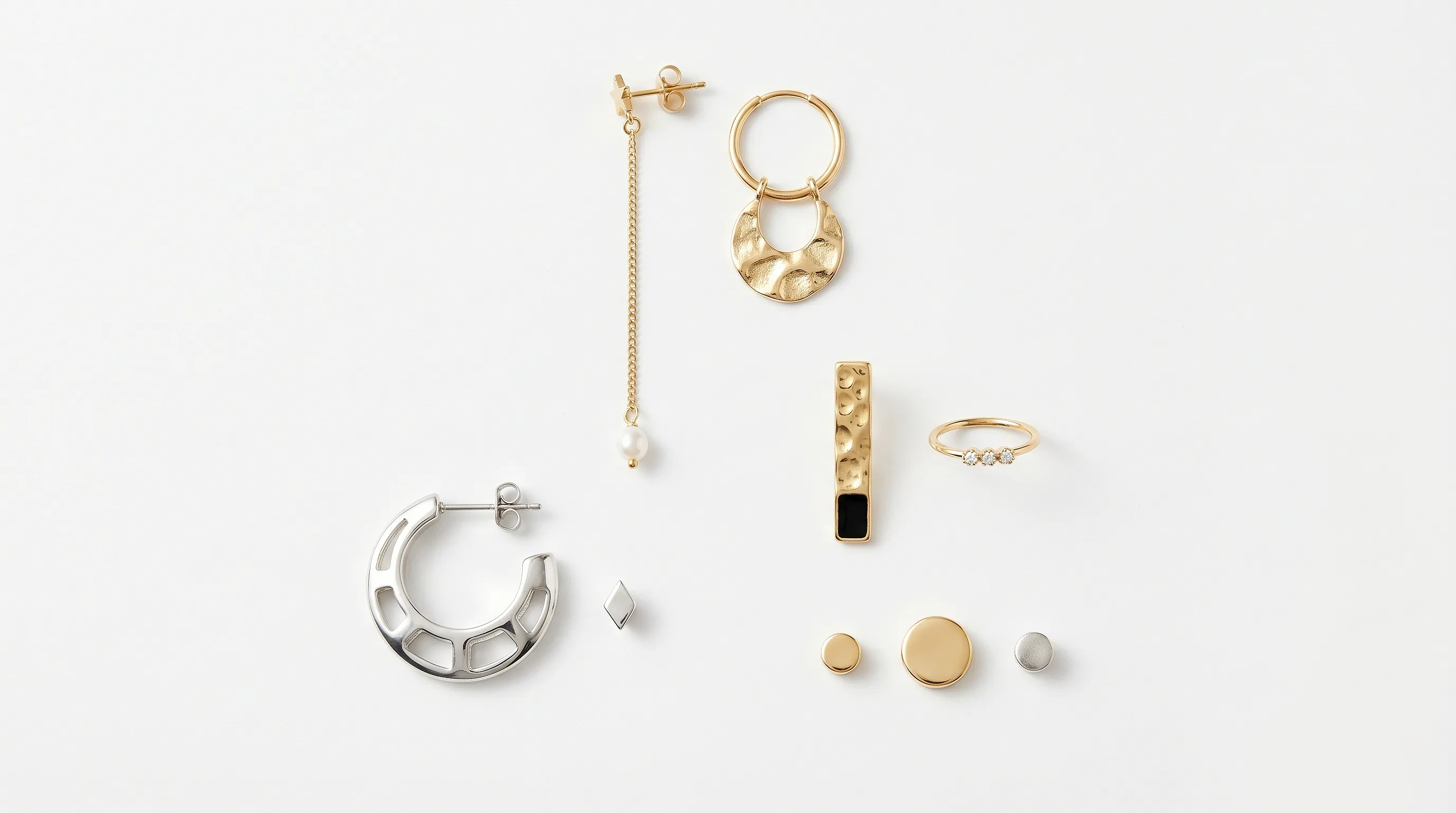
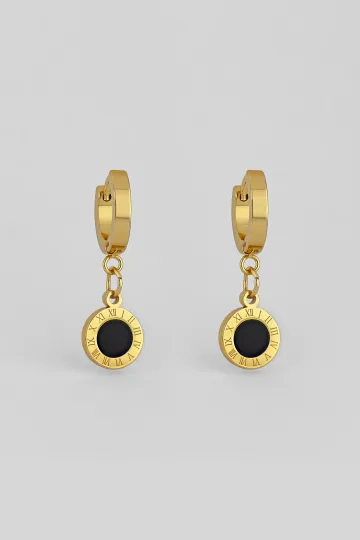
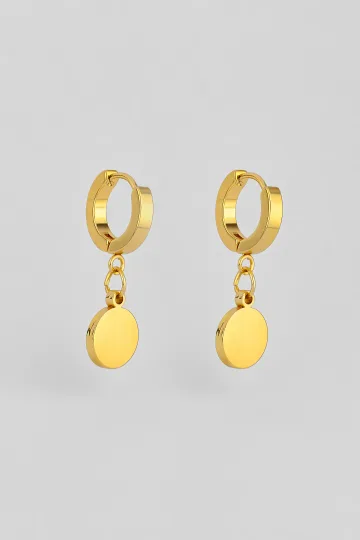
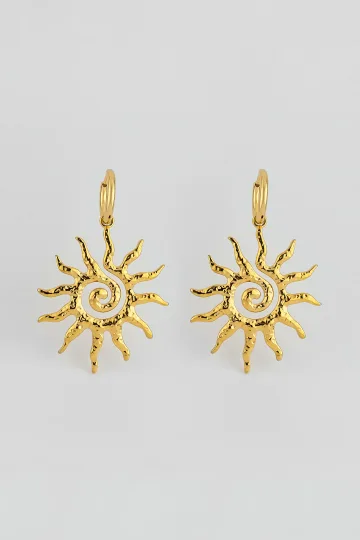
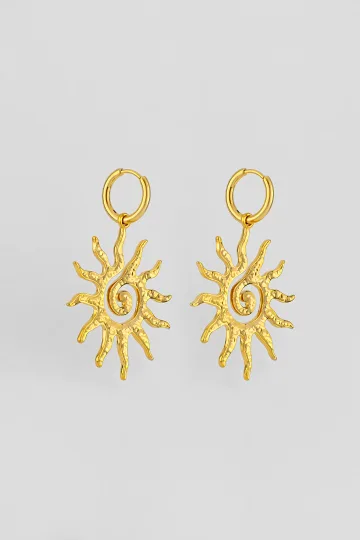
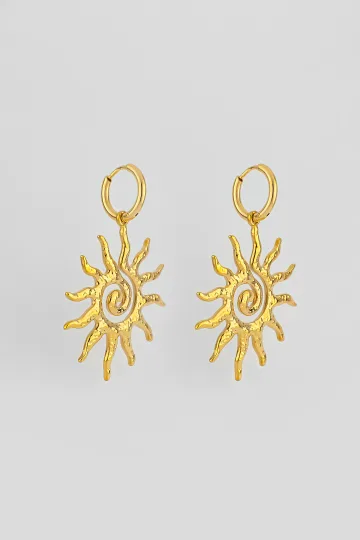
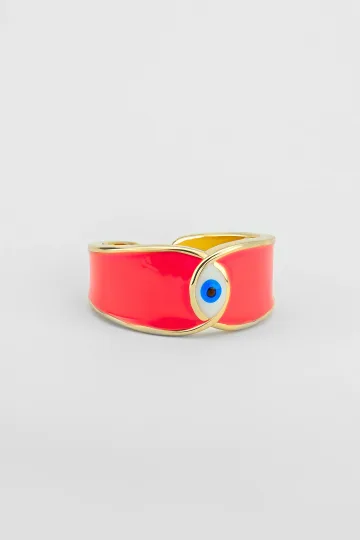
Wear the symbol, don't just read about it. These are in stock:

Vikings, Sailors, and Pirates: Earrings at Sea
The Viking ring tradition
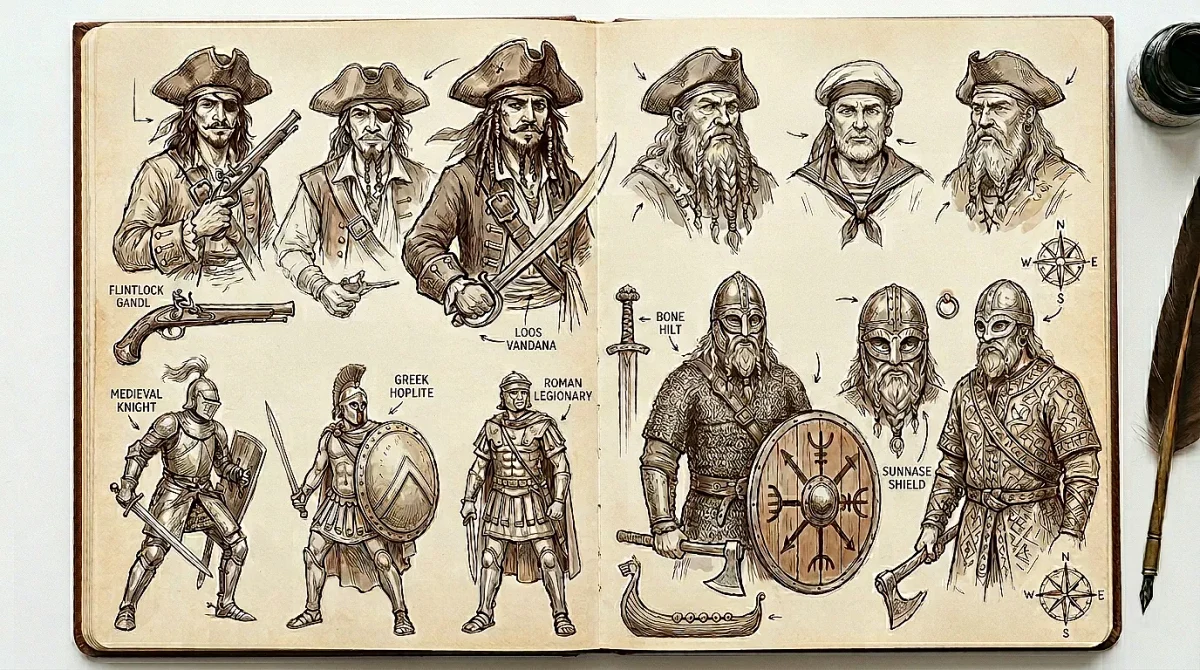
Did Vikings wear earrings? The short answer: probably, but not the way movies show it.
Archaeological evidence from the Viking Age (793-1066 CE) shows that Norse people wore various forms of personal adornment including arm rings, neck rings, brooches, and pendants. Ear rings specifically are less well-documented, but small metal rings that could have been worn in the ear have been found at Viking sites in Scandinavia and the British Isles.
What's better documented is the Viking practice of wearing rings and arm bands that could be cut into pieces and used as currency (called "hack silver" or "hack gold"). A Viking's jewellery was literally their bank account, worn on the body for safekeeping.
The romanticised image of a Viking warrior with a gold earring is largely a creation of 19th-century art and 20th-century cinema. But the underlying idea, that a ring on the body serves as both adornment and portable wealth, is historically accurate. It just probably wasn't in the ear as often as we'd like to think.
Pirate earrings: more than a costume
Pirates, on the other hand, almost certainly did wear earrings, and for very practical reasons.
First, the burial fund. A gold or silver earring was enough to pay for a proper burial if the pirate's body washed ashore among strangers. Some pirates reportedly had the name of their home port engraved inside the ring so their body could be sent home. This echoes the Roman gladiator tradition.
Second, superstition. Sailors in the Age of Sail believed that piercing the earlobe improved eyesight. The reasoning was connected to acupressure (whether they knew the term or not): the earlobe contains points that traditional Chinese medicine associates with the eyes. Whether it actually worked is beside the point. Sailors believed it, and on a ship where clear vision could mean the difference between life and death, they weren't taking chances.
Third, status. A gold earring on a pirate was proof of having survived enough voyages to accumulate wealth. It was a resumé worn on the body.
The famous image of the pirate with a single gold hoop isn't just a costume cliche. It's a compressed symbol of survival, superstition, and practical economics.
The sailor's code: Cape Horn, equator, and beyond
By the 18th and 19th centuries, European and American sailors had developed an elaborate system of earring-based signalling. The details varied by fleet and era, but the general pattern was:
- One earring in the left ear: the sailor had crossed the equator
- One earring in the right ear: the sailor had rounded Cape Horn (the treacherous southern tip of South America)
- Earrings in both ears: the sailor had done both
Other versions of the code included: an earring for surviving a shipwreck, an earring for a certain number of voyages, or an earring in a specific ear depending on which ocean you'd crossed.
None of these codes were universal or officially standardised. They were informal traditions that varied between ships, fleets, and nationalities. But the underlying idea was consistent: an earring marked experience. It said "I've been somewhere dangerous and I came back."
This is important because it sets up a pattern that continues to the present day. An earring, particularly a single earring, became associated with adventure, toughness, and having stories to tell. It was the original "I've lived" accessory.
Customer reviews
Zevira is a real jewellery shop. Genuine payments, deliveries and customer thank-yous.
🥰🥰🥰 gracias
Ok, ¡gracias! 🙂
The 1980s Code: Left, Right, and What People Thought It Meant
Now we arrive at the part everyone actually wants to read about. The code. Left ear or right ear. And what it supposedly signals.
In the late 1970s and through the 1980s, primarily in the United States, United Kingdom, and Australia, an informal code emerged in popular culture: left ear = straight, right ear = gay.
The phrase was: "Left is right, right is wrong." Or: "Right ear, right queer." These phrases circulated in schoolyards, barbershops, and sitcoms. They were treated as absolute fact by an entire generation of teenagers making piercing decisions based on fear of sending the wrong signal.
Here's what actually happened. In the 1970s, gay men in certain urban communities (particularly San Francisco, New York, and London) did sometimes use a right-ear earring as a subtle signal of sexual orientation, at a time when being openly gay was socially and sometimes legally dangerous. It was part of a broader system of subtle signals (including bandana colours, key placement, and other accessories) known as "flagging."
But the code was never universal, never consistent, and never meant what the mainstream thought it meant. In many gay communities, the left ear was the signal. In others, it was the right. In some, it was neither: the type of earring or the number was what mattered. The "rules" varied by city, by decade, and by social group.
What the mainstream took away was a simplified, often homophobic version: right ear = gay, left ear = safe. This oversimplification caused genuine anxiety for millions of men and boys who wanted an earring but were terrified of choosing the "wrong" ear.
The code began breaking down in the 1990s as:
- Both-ears piercing became common
- Hip-hop culture adopted large earrings on both sides
- Openly gay public figures wore earrings in both ears
- The younger generation simply stopped caring
By 2000, the code was functionally dead in most places. By 2010, it was a joke. By 2026, explaining it to a teenager requires context about a world they've never lived in.
But the anxiety it created lingers. People still google "which ear should I pierce" in significant numbers. The code is dead, but its ghost haunts the search results.
Earring Traditions Around the World
Spain: the bullfighter's earring
In Spanish tradition, earrings carry specific meaning in the world of bullfighting. After a particularly impressive performance, a matador may be awarded the ears of the bull as a trophy (one ear for a good performance, two ears for an exceptional one). Some matadors wore an earring in their left ear as a symbol of their profession and their willingness to face death.
Beyond bullfighting, Spain has a long tradition of men wearing earrings, particularly in Andalusia and among Roma (Gitano) communities. A gold hoop in a man's ear in southern Spain carries no sexual connotation. It's a cultural tradition connected to identity, community, and aesthetics. The Spanish navaja tradition carries a similar thread of Andalusian identity through accessories.
India: karnavedha and the sacred ear
As mentioned earlier, the karnavedha ceremony makes ear-piercing a religious act in Hinduism. But the tradition extends beyond the ceremony itself.
In many Indian communities, the specific ear pierced first, the material of the earring, and even the time of day the piercing is performed are all determined by astrological calculations. A Brahmin priest may prescribe that a child's right ear be pierced on a Tuesday during a specific lunar phase, using a gold needle.
The Ayurvedic connection means that earrings in India are not purely decorative. They're understood as therapeutic. Certain earring placements are believed to alleviate migraine headaches, reduce anxiety, and support digestive health. Whether Western medicine validates these claims is secondary. The tradition has been continuous for over 3,000 years.
Africa: status, beauty, and identity
Across the African continent, ear adornment takes forms that go far beyond what Western culture calls "earrings."
The Maasai people of Kenya and Tanzania are known for elaborate beaded ear ornaments and stretched earlobes. For the Maasai, ear modification is a rite of passage. The size and style of ear ornaments indicate age, social status, and whether a person is married.
In West Africa, gold earrings have been a symbol of wealth and social position for centuries. The Akan people of Ghana crafted intricate gold ear ornaments that were part of royal regalia. A chief's earrings were not accessories. They were symbols of authority.
The Fulani women of West Africa wear large gold or brass twisted hoop earrings called "kwottone kange." These earrings are so culturally specific that they serve as an ethnic identifier. You can recognise a Fulani woman by her earrings.
East Asia: from taboo to trend
In traditional Chinese, Japanese, and Korean culture, piercing the body was generally viewed negatively. The Confucian principle of filial piety included maintaining the body given by your parents without modification. Earrings were associated with foreigners, performers, or lower social classes.
This changed dramatically in the 20th century. Japan's embrace of Western fashion in the postwar period brought earrings into mainstream acceptance. Korea's K-pop revolution made male earrings not just acceptable but aspirational. BTS members wearing earrings influenced millions of young men across Asia and beyond to pierce their ears.
Today, South Korea is arguably the world capital of men's earring culture. The gender associations that still linger in some Western countries have been almost completely erased in Korean fashion.

Turn on your camera, pick earrings, a pendant or a ring, and see the piece on yourself in real time.
Switch items in one tap.
Everything runs in your browser: no photo or video is ever uploaded.
What It Means in 2026: The Rules Are Gone
Let's be straightforward about the current state of things. In 2026, in most of the world:
There is no code. Left ear, right ear, both ears: none of it signals sexual orientation, political affiliation, or anything else. It signals that you wanted an earring in that ear.
The only "meaning" is personal. Some people choose the left ear because they sleep on their right side and don't want to crush a new piercing. Some choose the right ear because their hair parts to the left and they want the earring visible. Some choose both because symmetry pleases them. Some choose one because asymmetry pleases them.
Cultural exceptions exist. In traditional communities (certain Indian, African, and Middle Eastern contexts), specific ear-piercing practices still carry cultural or religious significance. These should be respected. But in global urban culture, the rules are gone.
Age matters more than ear. The residual anxiety about "which ear" is almost exclusively found in people over 35 who grew up with the 1980s code. Anyone under 30 generally has no idea the code ever existed and would be baffled by the question.
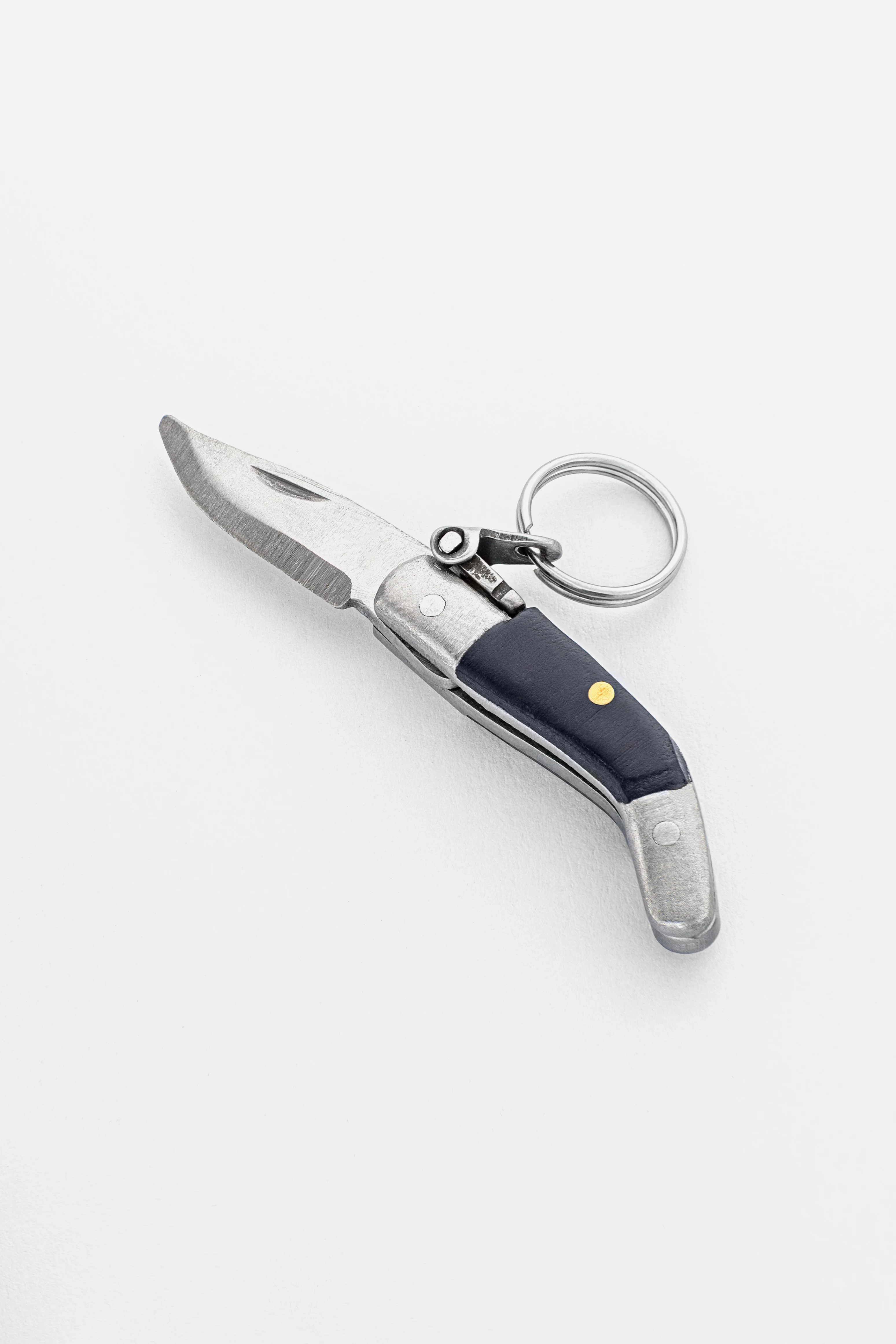
Artisan-crafted CAPAORA navaja pendant
A 40 mm stainless-steel navaja with a real folding mechanism and Palanquilla lock. An affordable gift to remember.
A code for blog readers:
10% off your first order
Authentic · Maker's guarantee · Ships from Spain
Men and Earrings: A Complete Shift
The biggest change in earring culture over the past decade has been the normalisation of men's earrings across all demographics.
Fashion industry. Every major fashion house now shows men's earrings on the runway. Modern pop musicians, actors, and hip-hop artists: the most style-influential men in the world wear earrings as a matter of course.
Professional settings. Earrings on men in corporate environments are increasingly accepted. Tech, creative industries, and media were first. Finance and law are following. The shift isn't complete, but the direction is clear.
The single earring comeback. Ironically, the single earring (the very thing that caused so much anxiety in the 80s and 90s) has come back as a deliberate style choice. The difference is that today, the choice of ear is purely aesthetic. People choose based on their face shape, hair style, and which side they want to draw attention to.
For men's jewellery more broadly, earrings have become a gateway. A man who starts with a single stud often moves to rings, chains, and other pieces. The earring breaks the seal.
How to Choose: Left, Right, or Both
Forget the codes. Here's what actually matters when deciding which ear to pierce.
Your face. Most faces are slightly asymmetrical. An earring on one side may balance features differently than the other. Look in the mirror and hold an earring to each side. See which feels right.
Your hair. If you part your hair to one side, the opposite ear gets more visibility. An earring on the hidden side is a subtle personal detail. On the visible side, it's a statement.
Your daily life. If you spend a lot of time on the phone pressed to one ear, pierce the other one. If you sleep on one side, pierce the opposite. Practical comfort trumps symbolism.
Your existing jewellery. If you wear a watch on your left wrist, an earring on the right side creates visual balance. If you wear a ring on your right hand, consider the left ear. Or ignore balance entirely: asymmetry is its own aesthetic.
Your intention. A single earring in one ear reads differently from earrings in both. Single = deliberate, pointed, slightly rebel. Both = balanced, fashion-forward, committed to the look. Neither is better. It depends on the story you want to tell.
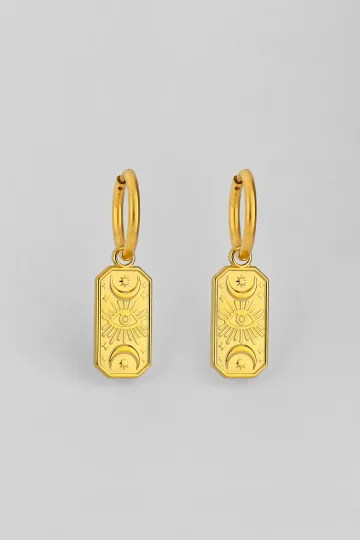
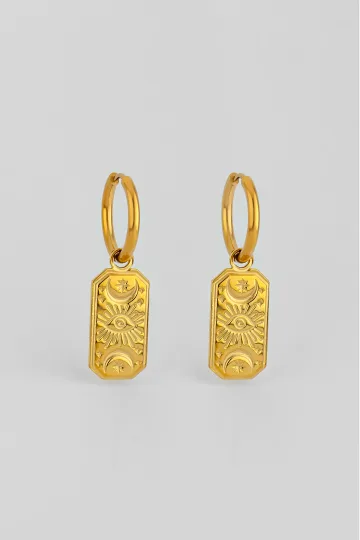
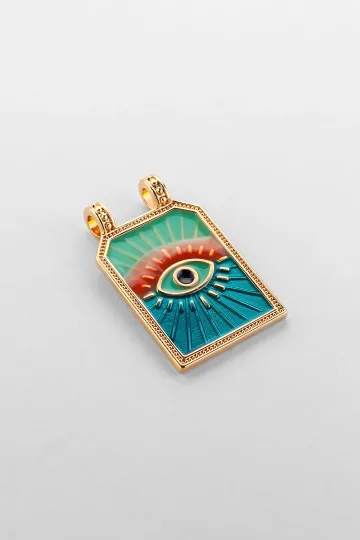
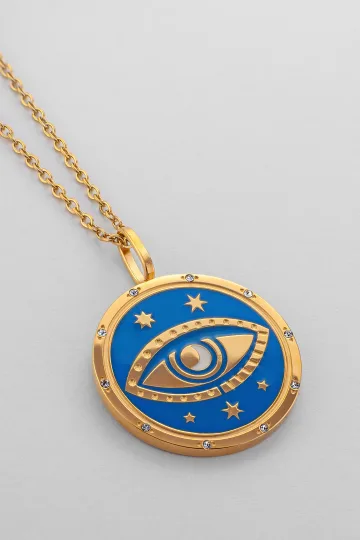
The jewellery itself. Small studs work on any ear in any combination. Larger dangly pieces or hoops make more impact as a single statement. Symbolic earrings (tarot, eyes, celestial motifs) carry meaning regardless of which ear they're in.
Leave your email, we'll send your discount code. No spam, unsubscribe anytime.
The code arrives by email, valid on your first order.
Frequently Asked Questions
Does the left or right ear mean anything in 2026? In mainstream culture, no. The 1980s code ("left is right, right is wrong") is completely dead. Your choice of ear is a personal and aesthetic decision, nothing more. In certain traditional cultural contexts (Indian, African, some religious communities), specific ear-piercing practices still carry meaning.
Which ear do most men pierce? Historically, the left ear was more popular for single piercings, partly because of the 80s code residue. Today, there's no dominant trend. Both-ears piercings have become very common. Among younger men (under 30), both ears is slightly more popular than single.
Did Vikings really wear earrings? The evidence is limited but suggestive. Vikings wore abundant body jewellery (arm rings, neck rings, brooches), and some small rings found at Viking sites could have been ear worn. The big gold hoop of movie Vikings is romanticised, but the idea of portable wealth worn on the body is historically accurate.
Why did pirates wear earrings? Multiple practical reasons: gold for burial costs if they died far from home, superstitious belief that pierced earlobes improved eyesight, and status signalling among crews. The single gold hoop was a symbol of survival and experience.
Is it unprofessional for men to wear earrings? This varies by industry and region, but the trend is clearly toward acceptance. Tech, creative, media, and hospitality industries widely accept men's earrings. Finance and law are more conservative but shifting. In most European countries, men's earrings in professional settings are unremarkable.
What earring style is best for a first piercing? Small studs or simple hoops in quality metal. Avoid heavy pieces until the piercing is fully healed (6-8 weeks for lobes). After healing, experiment freely. The ear can handle anything from tiny studs to elaborate dangly pieces.
Can I wear just one earring? Absolutely. The single earring is a deliberate style choice that many people prefer. It draws attention, creates asymmetry, and often reads as more intentional than paired earrings. There are no rules about which ear. Choose the one that looks better on your face.
Do earrings have spiritual meaning? In Ayurvedic tradition, yes: specific ear points are connected to health and energy flow. In many African and Indigenous traditions, ear modifications carry spiritual and social significance. In Hinduism, the karnavedha ceremony makes ear-piercing a sacred act. In modern Western culture, any spiritual meaning is personal and self-assigned.
The German Version: "Links oder Rechts?"
Germany had its own sharp version of the left-right code, and it carried a particular sting. The playground phrase was: "Links schwul, rechts cool." (Left gay, right cool.) Or was it the other way around? "Rechts schwul, links cool?" That confusion was part of the problem. Nobody knew which ear was "which," but everybody acted as if there was a clear rule. And that supposed rule caused genuine anxiety for an entire generation of German boys and young men in the 1980s and 1990s.
The German version was arguably worse than the English one because of the rhyme. A rhyming rule feels more authoritative than a non-rhyming one, even when both are equally made up. "Links schwul, rechts cool" stuck in people's heads like a jingle, and the fact that you could not remember which way it went only made the anxiety sharper. You could not even get the "right" answer because nobody agreed what the right answer was.
German culture's relationship with men's earrings was also complicated by generational attitudes. Post-war German masculinity was conservative. Visible jewellery on men was uncommon outside specific subcultures (punk, New Wave, artistic circles). A man with an earring in a small Bavarian town in 1987 was making a statement whether he intended to or not. In Hamburg or Berlin, the same earring was unremarkable.
That regional divide has largely disappeared. Today, men's earrings in Germany are common across all demographics, urban and rural, north and south. The K-pop influence has been particularly strong among younger Germans. BTS and other groups normalised men's earrings in a way that no Western musician had managed, because they presented earrings as a neutral, aesthetic choice rather than a "rebellious" or "coded" one.
K-Pop and the Global Shift
South Korea's influence on men's earring culture deserves its own section because it has been transformative. In the span of about a decade, K-pop artists have done more to normalise men's earrings globally than any Western cultural movement managed in fifty years.
The key difference is framing. When Western rock stars wore earrings in the 1970s and 80s, it was positioned as rebellion. When hip-hop artists wore diamond studs in the 1990s and 2000s, it was positioned as status. Both framings accepted the underlying assumption that a man wearing an earring is making a deliberate statement about his identity.
K-pop artists wear earrings as a pure aesthetic choice. No rebellion. No status play. No coded messaging. Just: this looks good, so I wear it. The neutrality of the presentation is what made it so powerful. It removed the entire framework of meaning that the West had built around men's earrings and replaced it with: it is fashion. That is all.
For millions of young people in Asia, Europe, and the Americas, K-pop stars like BTS, Stray Kids, and EXO were the first male role models they saw wearing earrings without any of the baggage. The result is a generation for whom the "which ear?" question is genuinely incomprehensible. They do not understand the question because the premise behind it (that ear choice signals something) has been completely erased from their cultural vocabulary.
This matters because it shows how quickly deep-rooted cultural codes can dissolve. The left-right code lasted about one generation (roughly 1978 to 2000). The K-pop shift happened in about half that time. Cultural norms about jewellery are far less permanent than they feel when you are living inside them.
Send a friend a discount code, they save on their first order.
Earring Types and Their Cultural Associations
Different earring styles carry different associations, and knowing them helps you make an intentional choice.
The small stud. A single diamond, cubic zirconia, or plain metal stud is the most understated option. It says: I have an earring. That is all. It is the choice for people who want the piercing without the conversation. Studs work in every professional context and draw minimal attention.
The small hoop. A thin hoop (12 to 16 mm diameter) is slightly more visible than a stud. It carries a casual, everyday energy. In many cultures, small hoops are completely gender-neutral and unremarkable. This is the style most commonly associated with sailors' earrings, which connects it (loosely) to the maritime tradition.
The thick hoop. A chunky hoop (3 mm or wider) makes a stronger statement. It draws the eye and reads as deliberate. Thick hoops have fashion-forward associations and work particularly well with streetwear and casual styles.
The dangly earring. Anything that hangs below the earlobe demands attention. Dangly earrings are statement pieces. In Western men's fashion, they have been slower to catch on than studs and hoops, but they are gaining ground rapidly, driven by runway fashion and K-pop influence.
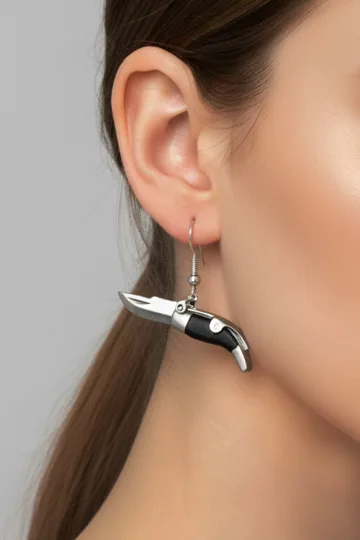
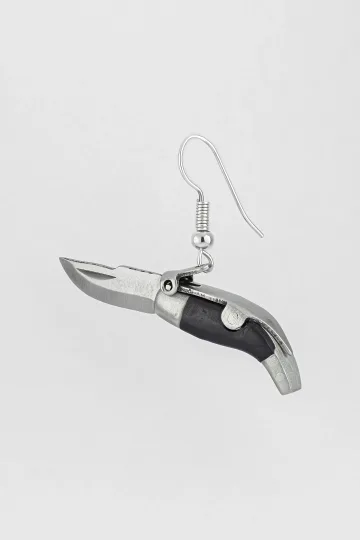
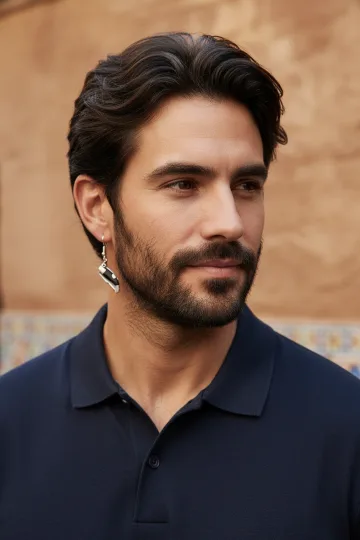
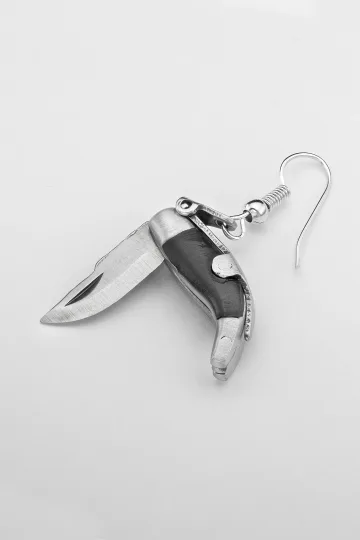
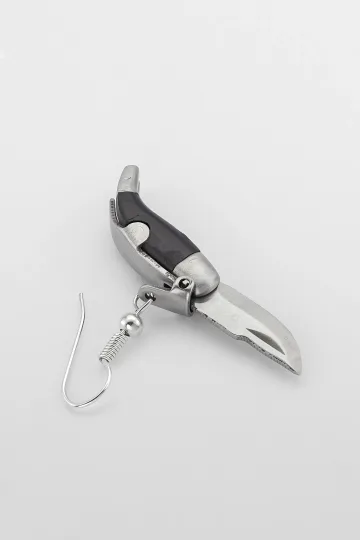
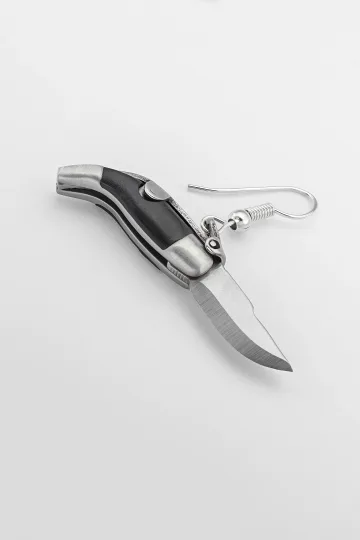
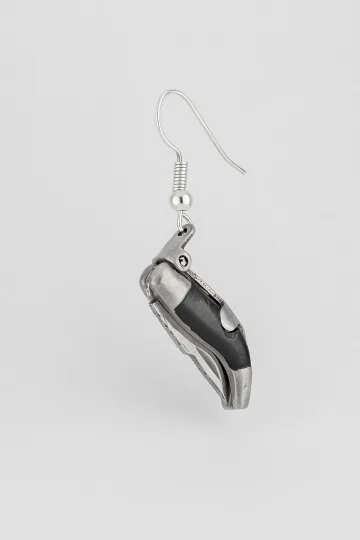
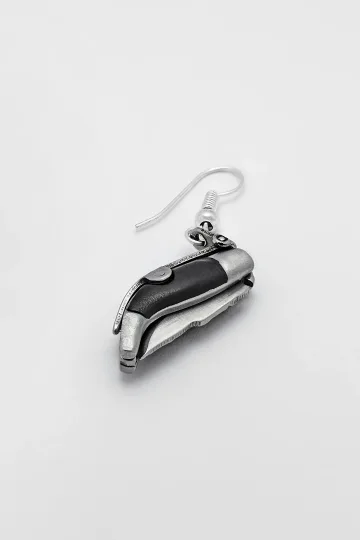
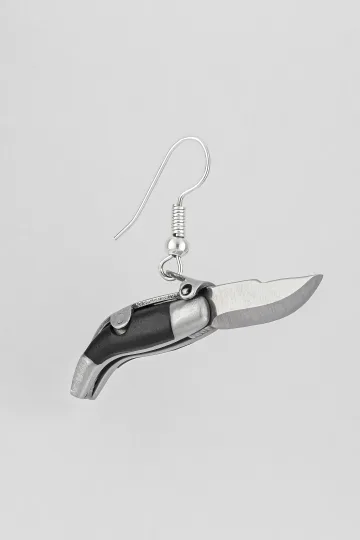
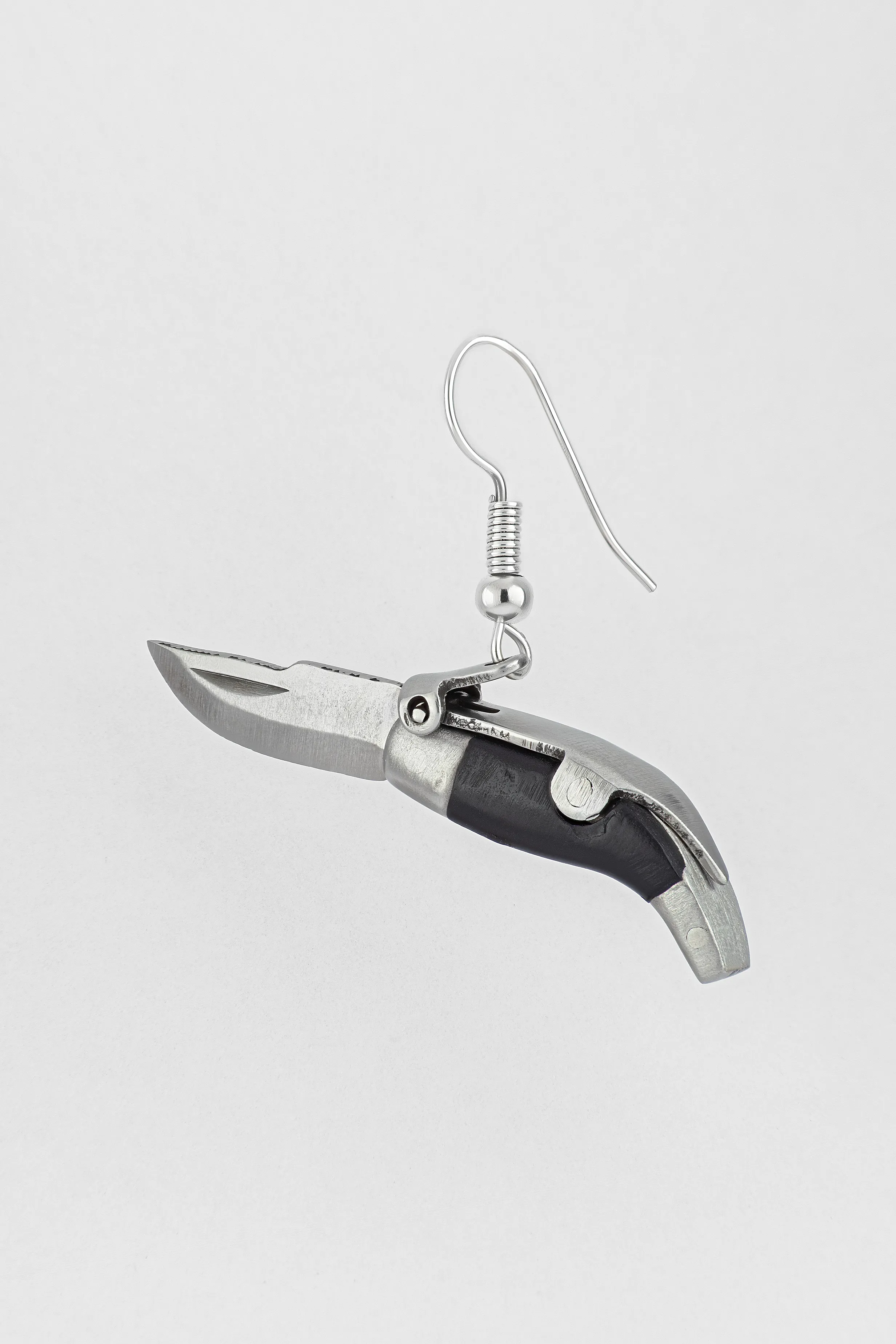
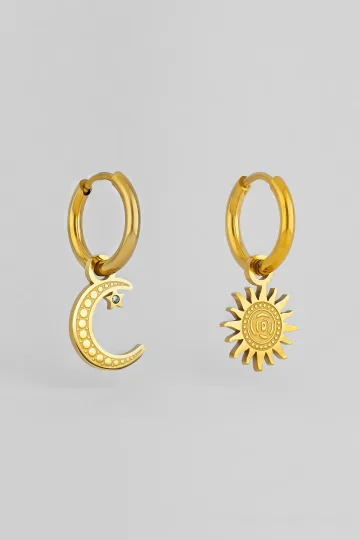
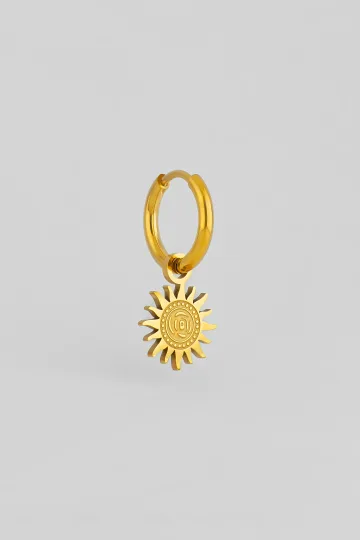
The symbolic earring. Earrings shaped like celestial symbols, eyes, tarot motifs, or cultural emblems carry meaning beyond aesthetics. A sun and moon earring signals an interest in symbolism. A knife earring connects to a craft tradition. These are conversation starters, designed to be noticed and asked about.
Piercing Aftercare: What to Know
Since this article is about earrings, a practical note on piercings is relevant. Getting the earring is exciting. Caring for the piercing afterwards is less exciting but more important.
Healing time for lobes: 6 to 8 weeks minimum. Most piercers recommend 3 months before changing jewellery. During healing, clean twice daily with sterile saline solution. Do not twist the earring (this disrupts the healing tissue). Do not sleep on the freshly pierced ear if possible.
Initial jewellery. Start with implant-grade titanium, surgical steel, or 14K or higher gold. Avoid nickel, which causes allergic reactions in roughly 10-15% of people. Avoid sterling silver for fresh piercings, as it can tarnish inside the wound.
Common mistakes. Touching the piercing with unwashed hands (infection risk). Using alcohol or hydrogen peroxide to clean it (too harsh, slows healing). Removing the earring too early (the hole can close within hours during the first few weeks). Swimming in pools or natural water during healing (bacteria).
When to see a doctor. Redness and mild swelling are normal for the first week. Persistent redness, pus, increasing pain, or warmth spreading from the piercing site after the first week may indicate infection. Do not remove the earring if you suspect infection, as this can trap the infection inside. See a doctor.
After healing, the ear can handle almost anything. Heavy hoops, elaborate designs, different metals. The pierced ear is surprisingly resilient once the initial healing is complete.
Silver and gold jewellery, wedding bands, symbolic pendants, paired sets.
The hole that means everything and nothing
Five thousand years of earring history, and we've come full circle. The Sumerians wore gold crescents because they could afford to. The Egyptians gendered the practice. The Greeks mocked it, then embraced it. The Romans complained about it. The Vikings may or may not have done it. The pirates definitely did. The sailors coded it. The 80s panicked about it. The 2020s stopped caring.
The earring is one of humanity's oldest accessories. It predates writing. It predates cities. It may predate agriculture. And across all that time, the only consistent truth is that people have always, always wanted to put something shiny near their face.
Which ear you choose in 2026 says exactly one thing about you: you wanted an earring there.
Everything else is a story you get to write yourself.
Wear the symbol, don't just read about it. These are in stock:
About Zevira
Zevira makes jewellery by hand in Albacete, Spain. An earring starts in the same place all these traditions did: with a person who wanted something shiny near their face, and a maker who put it there.
Here's what you'll find with us on the subject of earrings:
- Small studs for a first piercing and everyday wear
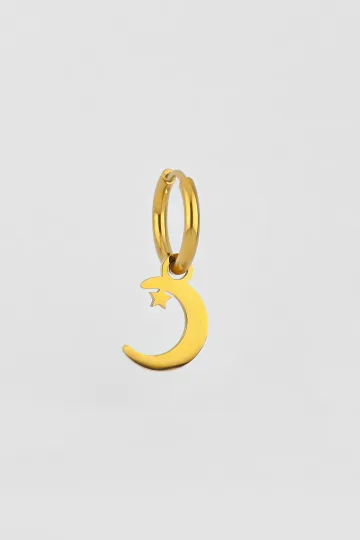
- Hoops and crescent earrings in the spirit of the oldest form of adornment
- Dangly and bold pieces for a single statement in one ear
- Symbolic earrings: tarot, eyes, celestial and maritime motifs
- Paired sets for anyone who pierces both ears
- Options for men, where an earring reads as style rather than a signal
Every piece is made by hand, with the option of personal engraving. Sterling 925 silver and 14-18K gold.