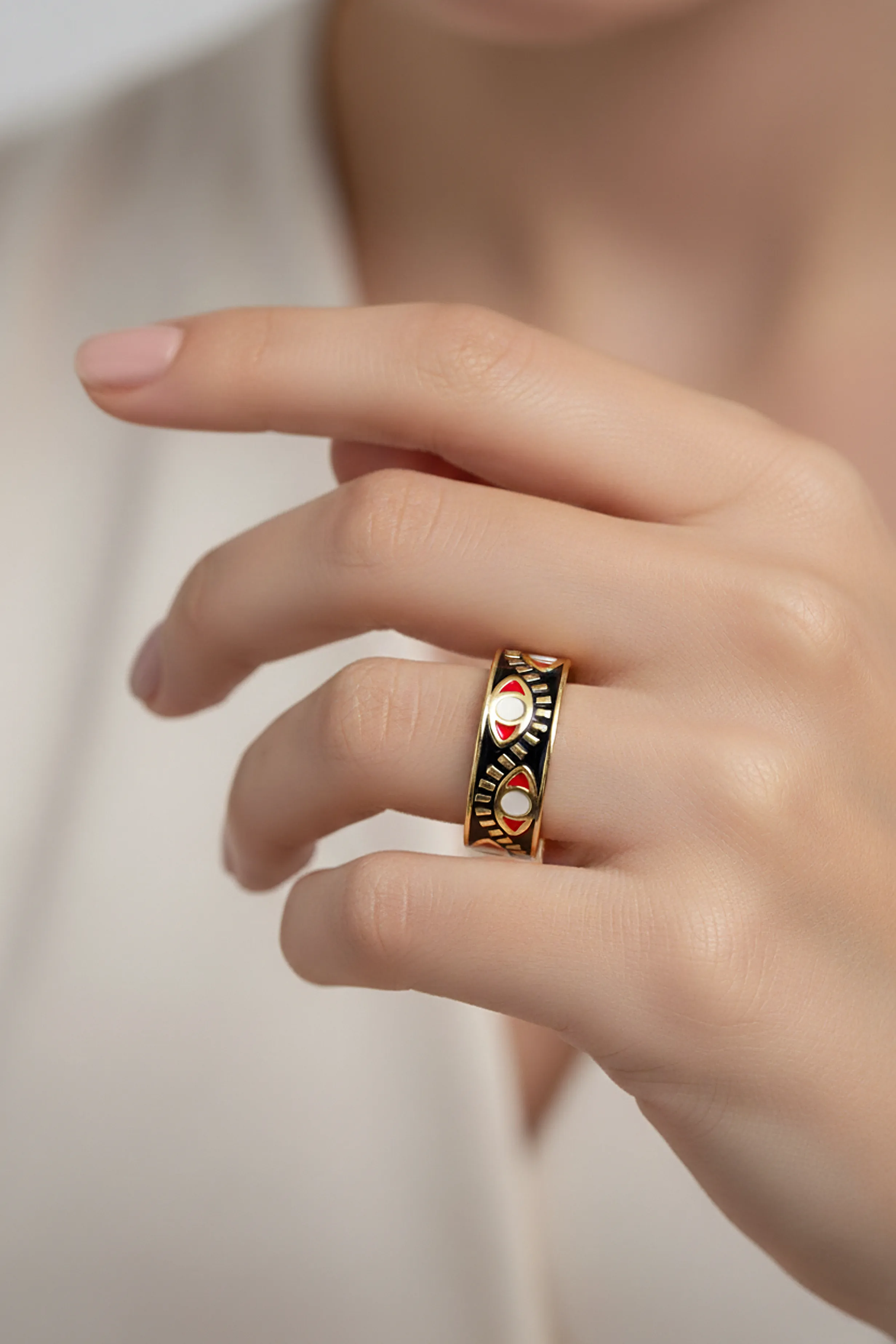
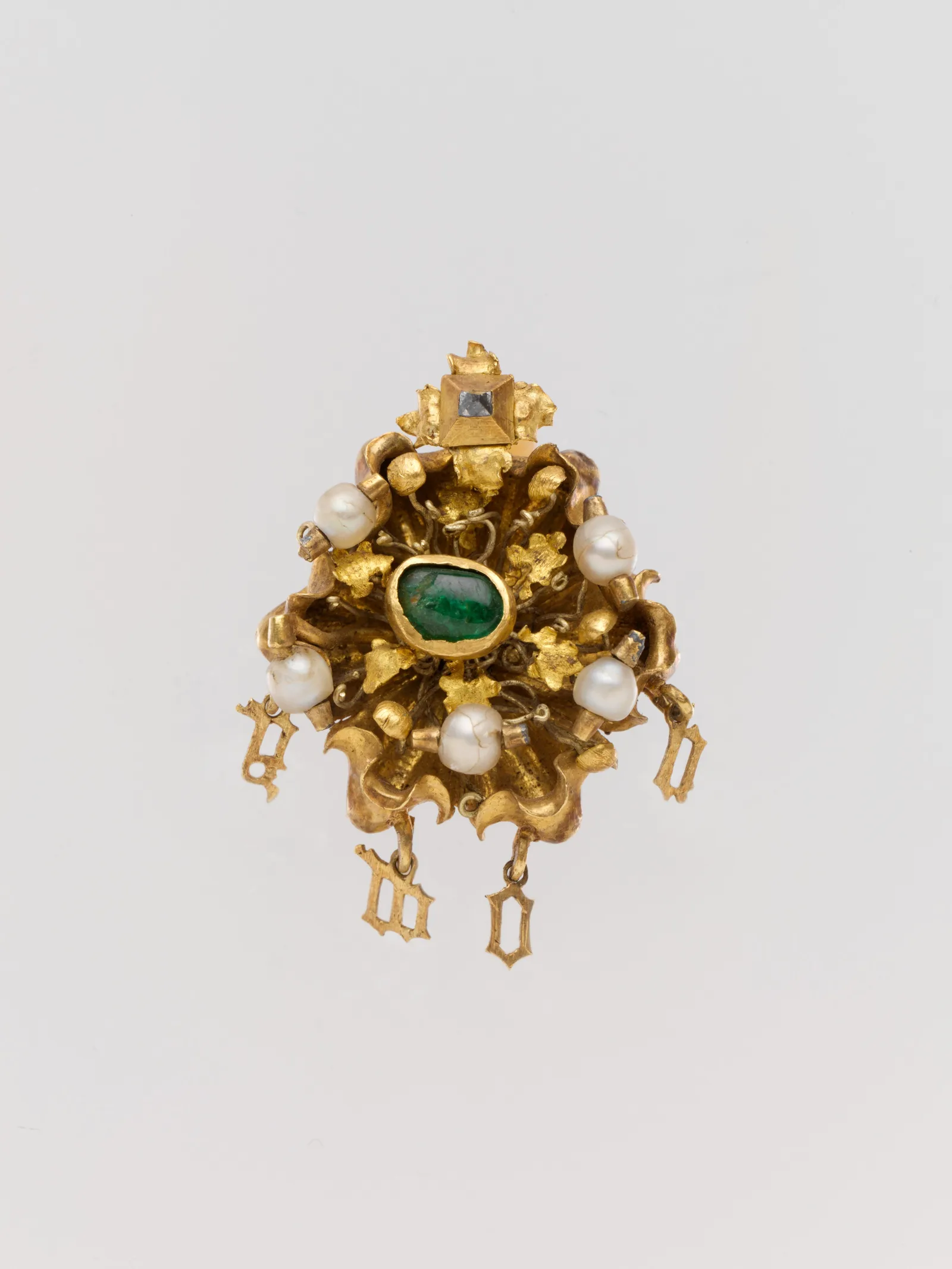
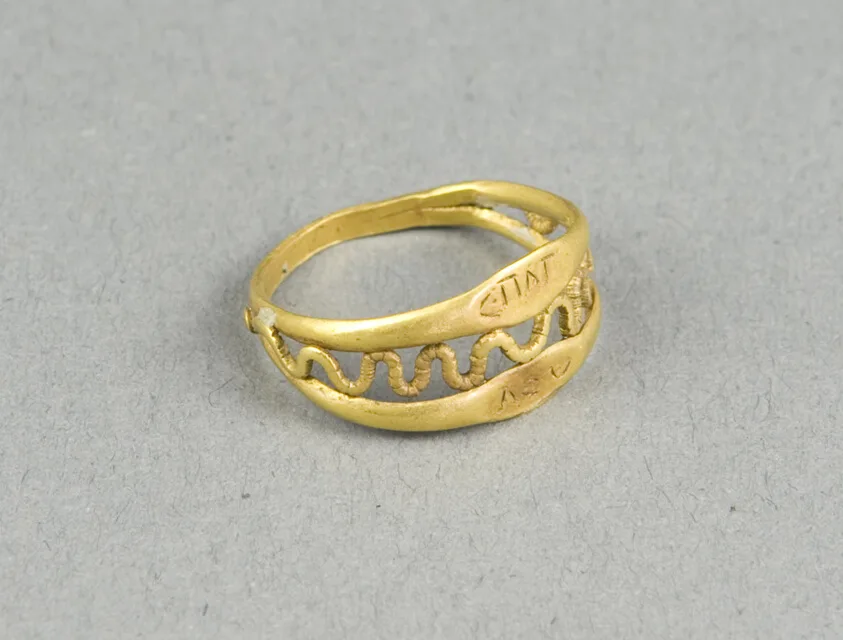
Promise ring: meaning, history and how to choose
Introduction: a ring that says "yes, but later"
A high-school friend in Boston got a thin silver band from her boyfriend at sixteen. Not an engagement ring (they were still kids), not a friendship ring (more than that). Her boyfriend said it meant: "When we are old enough, we will get married." Years later they did marry, and that small silver band still sits in her jewellery box next to the wedding ring she received at twenty-five. Both of them: signs of different stages of the same promise.
A promise ring is jewellery for an intermediate step. Stronger than friendship, weaker than engagement. It signifies an intention without yet a formal commitment. It works for couples not ready for marriage but wanting to mark their relationship; for friends honouring loyalty; for people making a vow to themselves; for memory of someone special. One concept covers many contexts.
This guide gathers everything about the promise ring: types and meanings, history from medieval posy rings to modern stacking styles, which finger to wear it on, how to choose a design, couples' versions, men's versions, etiquette of giving and receiving. The history runs from medieval England through eighteenth-century Ireland (the Claddagh) to the late 1990s American teen renaissance, and finally to the modern global trend.
If you want to read about engagement rings specifically, see the engagement ring guide. For Claddagh, see the Claddagh ring meaning guide. For couples' jewellery in general, see the jewellery for couples guide.
What a promise ring is and what it is for
A promise ring is a piece of jewellery exchanged as a sign of a promise between two people, or as a personal vow. It is not a binding marriage commitment but a tangible expression of intent.
Core function
The ring functions as a constant physical reminder of the promise made. Every time you look at your finger, you remember the words spoken. The ring is the symbol; the promise is the substance.
Why this matters
The need for an intermediate step between dating and engagement appeared with the social shift in relationships of the late twentieth century. People in their teens and twenties realised they were not yet ready to marry but wanted to mark their relationship as more serious than just dating. The promise ring filled that gap.
Who gives a promise ring
- A young couple before engagement
- Long-distance partners marking commitment
- Friends honouring loyalty
- Parents promising support to children
- A person making a vow to themselves
- A person honouring a deceased loved one
What a promise ring is not
- It is not a marriage ring
- It is not a formal engagement
- It does not legally bind anything
- It can be returned without legal consequences
Why the promise ring filled a real gap
For most of the twentieth century the path of a serious relationship had only two milestones a piece of jewellery could mark: the engagement ring and the wedding ring. Both belonged to a single, fast track toward marriage, and both assumed the couple was financially and socially ready to marry within a year or two. That model worked when people married young and quickly. It stopped fitting the lives of people who met in their late teens or early twenties, who wanted to commit emotionally long before they could commit practically.
The promise ring answered that mismatch. It gave couples a way to say, with an object rather than only words, that the relationship was serious and intended to last, without claiming a wedding was imminent. University students separated by different campuses, partners waiting out years of study or early-career instability, couples who simply did not want to rush, all gained a symbol that fit their actual situation. The ring did not replace the engagement ring; it added an earlier, gentler step on the road, and that flexibility is exactly why the concept spread far beyond its original American religious context.
Promise ring vs engagement ring: key differences
The two often get confused, but they are different things.
The promise itself
Engagement ring: a promise to marry soon (usually within 1 to 2 years). A formal step before the wedding.
Promise ring: a softer promise, of various kinds. Can mean future engagement, or stand as a friendship or self vow.
Stone and design
Engagement ring: classically with a central diamond or other precious stone, often elaborate.
Promise ring: can be without a stone (a simple band), with a small stone, with a symbol (heart, infinity, knot). Generally simpler and more modest in design.
Cost
Engagement ring: the historic guideline of "two to three months' salary" is loose, but a substantial cost is implied.
Promise ring: much more affordable. From budget silver to mid-range gold. Cost is not the point.
Finger
Engagement ring: the ring finger of the left hand (in most Western cultures).
Promise ring: any finger. Sometimes the right hand, sometimes the left middle, sometimes a chain around the neck.
Social impact
Engagement ring: signals clearly to family, friends and strangers that the wearer is engaged. It is meant to be seen and understood. People ask about it, congratulate the wearer, and read it as news.
Promise ring: can be discreet and is not necessarily a public announcement. It may be worn on a finger or a chain where it draws no questions, and its meaning is often known only to the two people involved. A promise ring can be public if the couple chooses, but it does not have to be, and that quietness is part of its appeal for people who want to mark a relationship without inviting commentary.
How to tell them apart in practice
The clearest difference is intent, set by the words spoken when the ring is given, not by the ring itself. An engagement ring comes with a question and a date in mind. A promise ring comes with a statement of feeling and intention that deliberately stops short of a wedding plan. Design offers a second clue: an engagement ring usually centres on a prominent stone and a formal setting, while a promise ring tends toward a slim band, a small accent stone or a symbolic motif. But design alone is unreliable, because a simple band can be an engagement ring and an ornate ring can be a promise ring. When in doubt, the meaning is whatever the giver said it was, which is why a clear conversation at the moment of giving matters so much.
Types of promise: what a promise ring can mean
The same ring can carry different meanings.
Pre-engagement
The most common modern meaning. "We are not yet engaged, but I love you and I see a future." Usually given by a partner.
Purity
A vow of celibacy until marriage. Religious context, common in evangelical Christian communities in the United States. The wearer wears it as a sign of an internal commitment.
Friendship
A symbol of long-term friendship. Two friends exchange identical rings as a sign of loyalty.
Self-promise
A vow to oneself: to quit a bad habit, achieve a goal, change one's life. The ring is a personal reminder.
Memorial
A ring as a memory of a deceased loved one. A promise to honour their memory or live out their values.
Sobriety
A vow of long-term sobriety, often given to oneself or received from a supportive family member at a milestone such as six months, one year or several years of recovery. The ring works as a daily anchor: each time the wearer notices it, it recalls both the commitment and the progress already made. Many people in recovery describe the value of a physical token at hard moments, and a ring is discreet enough to wear anywhere without explanation. It also marks the achievement, turning an internal struggle into something the wearer can quietly honour.
Devotion to a calling
A vow tied to a profession, a cause or a creative path rather than to a person. This use is found among artists committing to their craft, among people entering demanding helping professions such as medicine, nursing or social work, and among those dedicating themselves to a long project or mission. The ring stands for a chosen direction in life and a refusal to abandon it when the work gets hard. Like the self-promise ring, it answers to no etiquette: the wearer defines the vow and decides what the ring means.
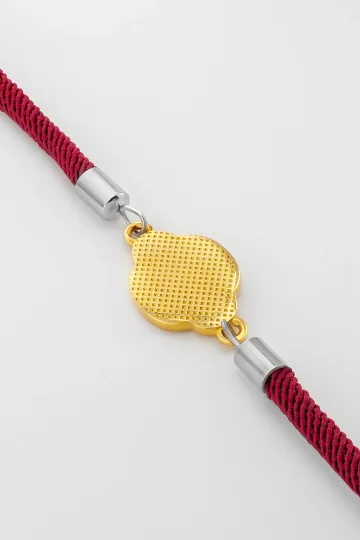
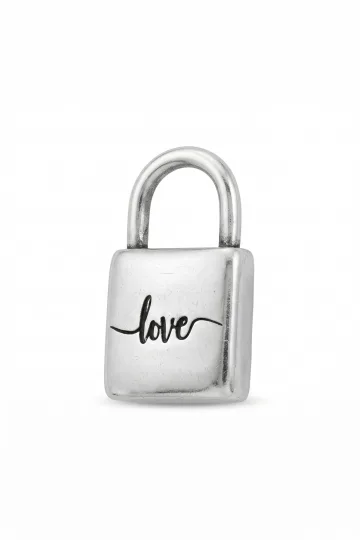
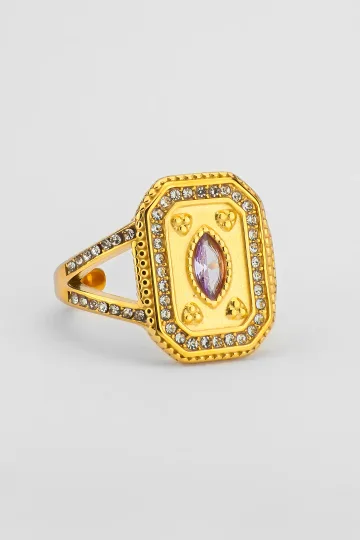
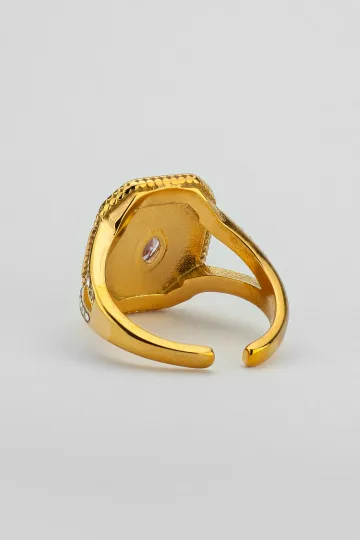
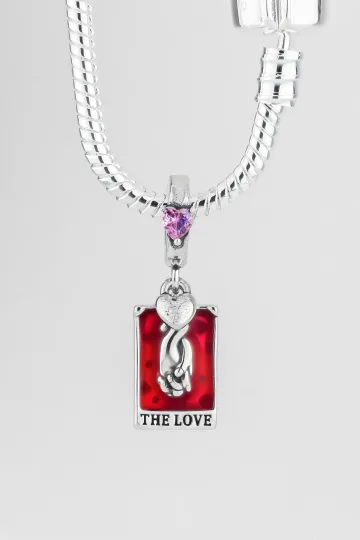
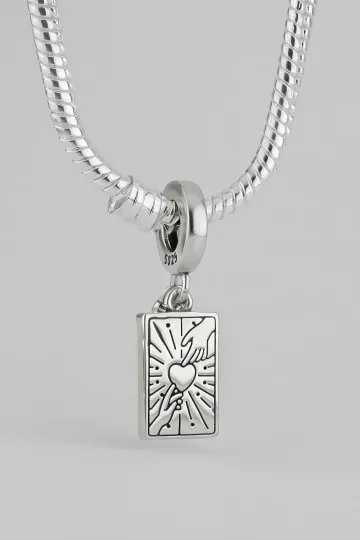
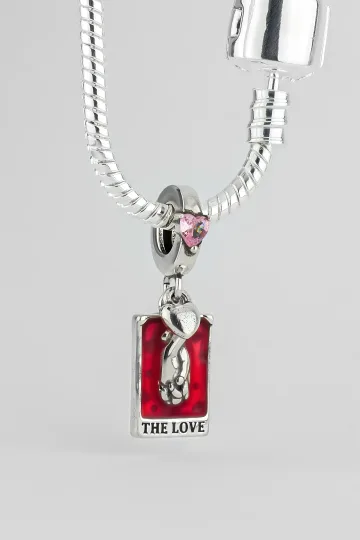
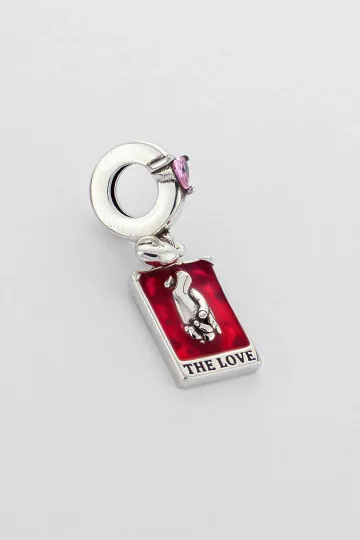
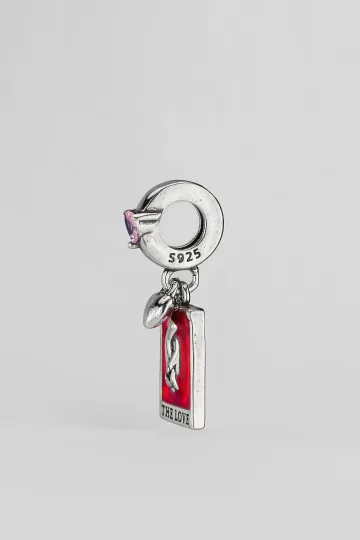
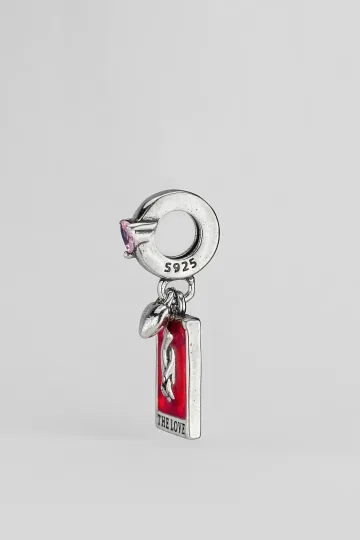
Wear the symbol, don't just read about it. These are in stock:
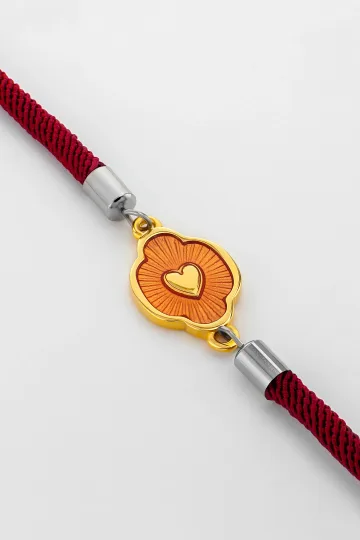
Pre-engagement promise ring
The most common modern type.
The context
A young couple together for one to three years, both wanting a long-term future but not yet ready (financially, by age, or by life circumstances) for marriage. A promise ring marks the seriousness without yet the formal commitment.
How it works
One partner buys the ring and gives it during a meaningful occasion, such as a relationship anniversary, Valentine's Day, a birthday or a personal milestone like a graduation or a move. Historically the man gave the ring, but increasingly women give them too, and couples often exchange matching rings so the gesture is mutual. Spoken words accompany the gift and define its meaning, something along the lines of "I promise I will marry you when we are ready", or a softer statement of long-term devotion if marriage is not yet the explicit plan. The occasion and the words together turn the ring into a marker the couple can look back on by date.
Subsequent path
In most cases, after one to three years of wearing the promise ring, the engagement ring follows. The promise ring is then either:
- Kept as a memento
- Worn together with the engagement ring on another finger
- Reset (the stone reused in the wedding band)
How it works for couples
The pre-engagement promise ring works differently depending on the age and circumstances of the couple. For partners in their late teens and twenties, especially university students or people early in their careers, it functions as a clear transition stage: a recognised step that says the relationship has moved past casual dating but is not yet at the formal engagement a wedding requires. For these couples the promise ring often bridges a specific gap, such as the years until graduation, until a stable income, or until both partners feel ready to plan a wedding.
For more mature couples the promise ring is used less often. People who meet in their thirties or later, who are financially settled and clear about wanting to marry, tend to move straight to engagement, because the intermediate step solves a problem they do not have. There are exceptions: a long-distance couple of any age may use a promise ring before a period of separation, and a couple emerging from a previous marriage may choose a softer, slower path that a promise ring suits. The honest guidance is to match the ring to the real situation rather than to a script. A promise ring is right when the feeling is settled but the timing is not.
Purity ring
A distinct American religious context.
Religious background
In evangelical Christian communities in the United States, the tradition of purity rings appeared in the 1990s. A teenager (more often a girl, but also boys) makes a vow to remain celibate until marriage. Parents give a ring as a sign and reminder.
The ceremony
In some traditions a father-daughter ceremony is held at age 13 to 16: the father gives the daughter the ring publicly during a service or family gathering, and the daughter wears it through her teen years until marriage. The ring is then either returned to the father at the wedding or replaced by the wedding band.
Why a ring
The physical ring works as a constant reminder of the internal vow. In a hard moment the teen can look down at the ring and recall the promise made.
Modern context
Purity rings stay common in evangelical and conservative Catholic communities. Outside these settings the practice is rare. There has been criticism: that the practice puts excessive burdens on adolescents and does not always produce its stated goal. But within the communities that practise it, purity rings remain meaningful.
Designs
Purity rings are usually understated by design, because the message is inward rather than decorative. The most common form is a simple silver band, sometimes in gold for a more substantial gift. Religious symbols appear often: a small cross, the ichthys or fish symbol, or a heart. Engraving is central to many purity rings, and the inscriptions tend to be short and direct, a meaningful date, a Bible reference such as a chapter and verse number, or a single word like "Wait", "Faith", "Purity" or "True Love Waits". Some designs use a knot or a heart motif to soften the band. The restraint is deliberate: the ring is meant to be worn every day through the teenage years, so it is built to be quiet, durable and personal rather than showy.
A note on respect
Whatever one's view of the practice, a purity ring carries genuine meaning for the person who wears it and the family that gave it. For anyone advising on or buying such a ring, the right approach is to treat the wearer's commitment with respect, focus on a comfortable everyday design, and leave the meaning to the family and community that hold it.
Friendship promise ring
Outside the romantic context.
When it works
Long-term friends (especially from childhood, school, university) exchange identical rings as a sign of friendship. Common among teenagers and young adults.
Best-friend rings
Two identical rings (in metal, design, size) worn by friends. A sign that the friendship is bigger than ordinary.
Group friendship rings
A group of friends (4 to 6 people) all wear matching rings. Less common, more often replaced by friendship bracelets.
Distinct from romantic promise
A friendship ring is usually:
- More minimalist, avoiding romantic symbols such as the heart or infinity loop
- Often built around friendship-specific symbols: a knot, a woven or braided pattern, a Celtic design, or shared initials
- Less formal in the giving, with no ceremony and often just an exchange between friends
Why friends choose rings
Friendship is one of the few major bonds in life that has almost no recognised ritual or object to mark it. Weddings, engagements and family milestones all come with ceremonies and jewellery; deep friendship has very little. A friendship ring fills that absence. It gives two people a way to acknowledge that a friendship has lasted, mattered and is meant to continue, which is especially valuable at moments of change, such as friends heading to different universities, different cities or different countries.
Friendship rings are most common among teenagers and young adults, the age when friendships feel intense and life is about to scatter people geographically. They also appear later in life, between long-standing friends marking decades of loyalty. Matching the rings, in metal, design and finish, is the point: the pair worn separately still says the friends belong to the same story. For a group of friends, matching rings can work, though many groups find bracelets or other shared tokens easier to coordinate across several people.
Customer reviews
Zevira is a real jewellery shop. Genuine payments, deliveries and customer thank-yous.
🥰🥰🥰 gracias
Ok, ¡gracias! 🙂
Self-promise ring
A vow to yourself.
Context
A person makes a serious life decision and wants a physical reminder. A self-promise ring serves as that anchor.
Examples
- "I will finish university"
- "I will quit smoking"
- "I will write the book I have planned"
- "I will travel solo to a country I have dreamed of"
- "I will not enter the same toxic relationship pattern"
Why a ring
Daily contact with the ring (sliding it on the finger every morning) keeps the vow active in awareness. After completing the goal, some keep wearing it as a reminder of victory; others remove it as a sign of completion.
Empowerment
Self-promise rings moved into the mainstream in the late 2010s through the broader culture of self-care and self-respect. Buying jewellery for oneself stopped being seen as a consolation and started being read as a deliberate, confident act. A ring bought to mark a personal milestone, a degree completed, a difficult year survived, a career change made, a recovery reached, became a recognised way to honour one's own effort.
For many wearers the self-promise ring is worn on the right hand specifically to distinguish it from the engagement and wedding tradition of the left, and to signal that it represents a relationship with oneself rather than with a partner. The practice is non-traditional but steadily growing, and it has loosened the assumption that a ring on a significant finger must come from someone else. A self-promise ring is accountable to no etiquette: the wearer sets its meaning, chooses its design, and decides whether to keep wearing it as a reminder of a goal reached or retire it once the promise is fulfilled.
Memorial and memory promise rings
A ring as a memorial bond.
Context
After a loved one's death (parent, partner, close friend), a ring may serve as a memory and a promise to honour their values.
Types
- A ring inscribed with the deceased's initials and dates
- A ring with a stone in the deceased's birth month colour
- A ring identical to one the deceased used to wear
- A ring made from melted-down metal of the deceased's ring (most personal)
Meaning
The promise carried by a memorial ring is set by the wearer and can take many forms: a vow to always remember the person, to live out the values they stood for, to finish something they left undone, or simply to keep them present in daily life. Because it is worn rather than displayed, the ring becomes a continuous, private form of contact with memory, available in any moment without explanation. For some wearers it also becomes a way to feel that the person is still, in a small sense, accompanying them, and that quiet companionship is often the point.
How widespread
The memorial promise ring is a niche use, but it is becoming more visible as families look for personal, lasting ways to hold a connection to someone who has died. A growing number of specialist jewellers work specifically in this area, accepting materials provided by the family: a deceased relative's gold ring to be melted and recast, a lock of hair or a small amount of ash to be set into a stone or resin, or a stone removed from the loved one's own jewellery to be reset.
How a memorial ring helps
Grief has few physical anchors, and a memorial ring gives one. Unlike a photograph kept in a drawer, the ring travels with the wearer through ordinary days, and the small act of putting it on each morning becomes a quiet, repeated form of remembrance. The promise it carries is personal and chosen by the wearer: to remember, to carry forward the person's values, to finish something they could not, or simply to keep them close. Because it is worn rather than displayed, a memorial ring also lets a person carry their grief privately, without explanation, which many find a comfort.
A brief history of the promise ring
The idea is much older than the modern term.
Ancient world
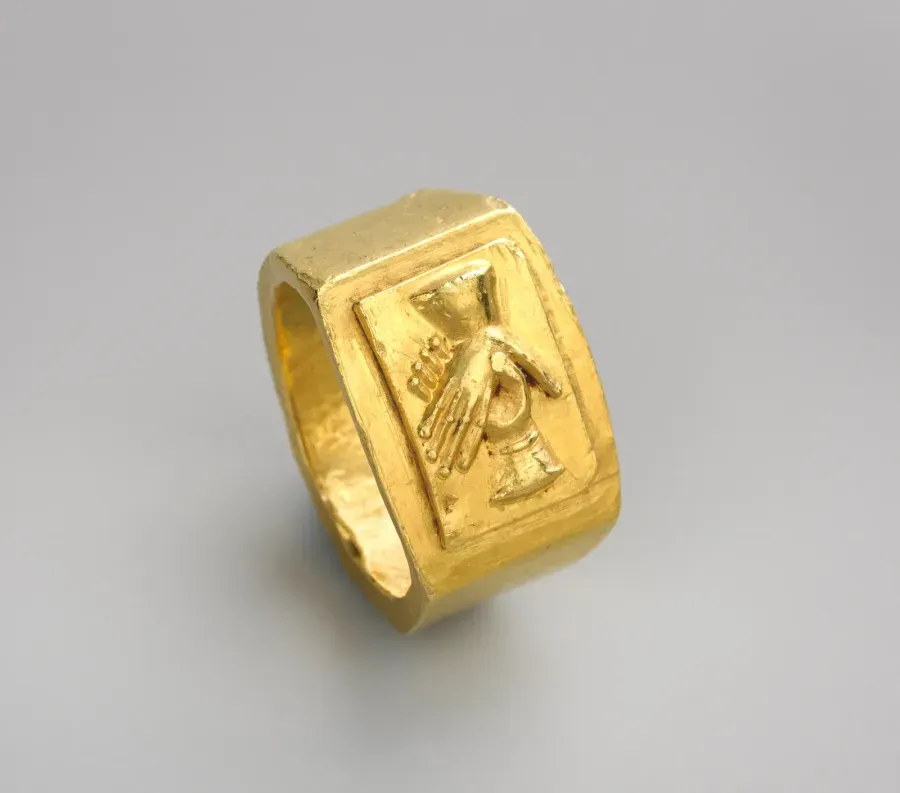
Rings as signs of commitment date back to Roman times. The Roman betrothal ring (anulus pronubus) was the historical ancestor of all modern engagement and promise rings. Iron in early Rome, gold for the wealthy.
Middle Ages
Posy rings (from the French poésie) were popular in medieval England (twelfth to seventeenth centuries). Small bands with engraved phrases or short poems, exchanged between lovers, family, friends. The direct ancestor of the modern promise ring.
Renaissance
Gimmel rings (interlocking double bands) and gimmel fede (with hands joined) were exchanged between fiancés as a sign of promise. The historical ancestor of the Claddagh.
Seventeenth century
The Claddagh ring appeared in Ireland: two hands holding a heart with a crown. The historical Irish version of a promise ring. For more, see the Claddagh ring guide.
Eighteenth and nineteenth centuries
Acrostic rings: rings with letters of gemstones spelling a word. For example REGARD (Ruby, Emerald, Garnet, Amethyst, Ruby, Diamond) or DEAREST. A Victorian coded promise.
Twentieth century
The modern term "promise ring" took hold in the United States in the 1990s, carried by the purity ring movement and its public ceremonies. From that religious starting point the meaning broadened quickly. Couples adopted the ring as a secular pre-engagement symbol, friends used it to mark loyalty, and the word entered everyday speech. The visibility of well-known young public figures wearing promise rings in the 2000s pushed the concept into mainstream culture and, through media and fan culture, out into other countries, often stripped of the religious framing and kept purely as a romantic gesture.
Today
The promise ring is now a worldwide cultural practice with no single fixed meaning. It covers pre-engagement, friendship, self-promise and memorial use, and it appears in a wide range of designs, metals and price levels. Online retail has played a large part in its spread: a buyer anywhere can browse a deep catalogue, compare designs, add engraving and order a ring without a specialist shop nearby. That accessibility has made the promise ring an easy, low-barrier way to mark a relationship, and the concept continues to diversify rather than settle into one form.
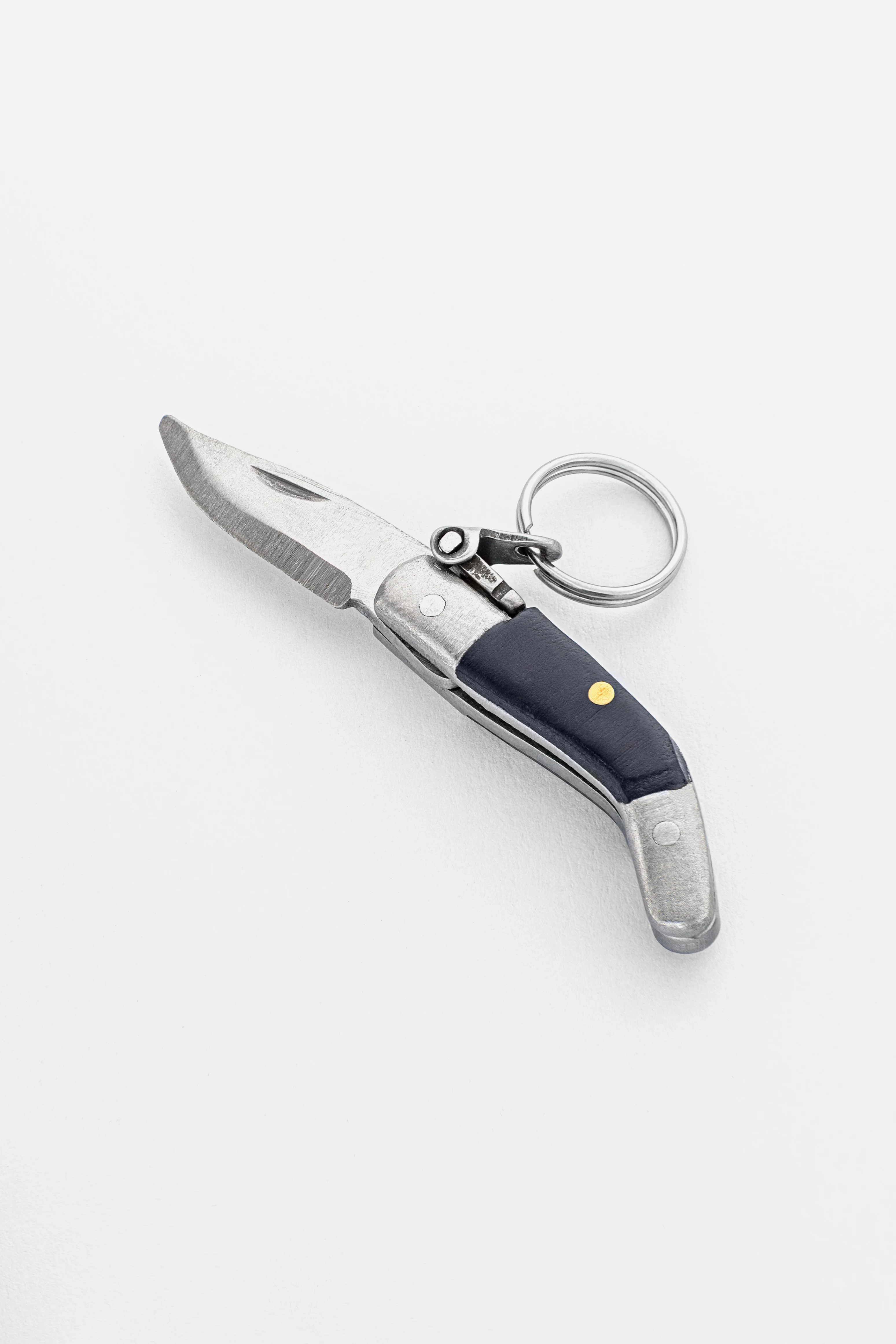
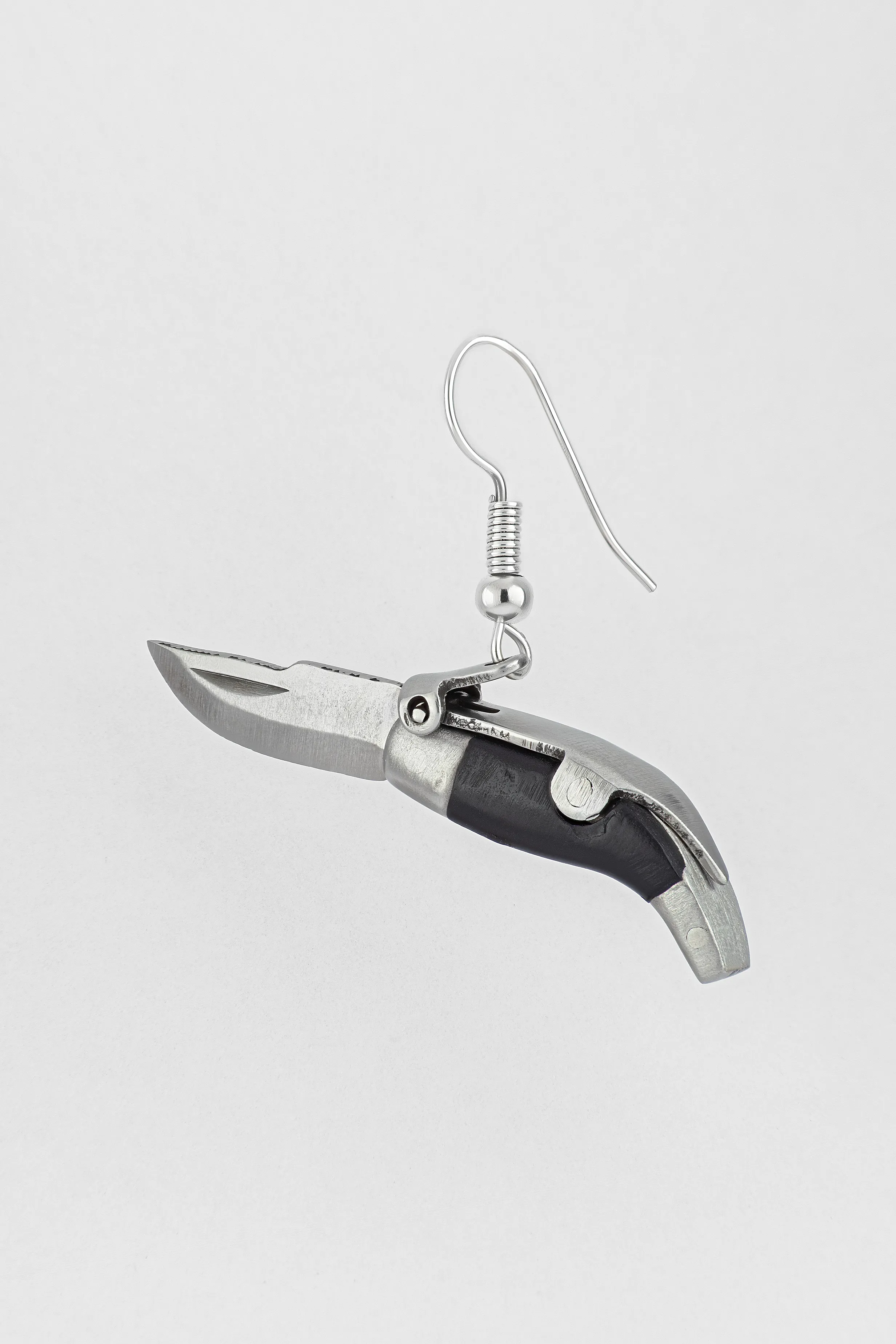
Artisan-crafted CAPAORA navaja pendant
A 40 mm stainless-steel navaja with a real folding mechanism and Palanquilla lock. An affordable gift to remember.
A code for blog readers:
10% off your first order
Authentic · Maker's guarantee · Ships from Spain
The posy ring as medieval ancestor
Worth a closer look.
What it was
A simple gold or silver band, inside (and sometimes outside) engraved with a short phrase. Phrases were in Latin or Middle English, often poetic ("posy" comes from poésie or poetry).
Examples of inscriptions
- "Amor vincit omnia" (Love conquers all)
- "Memento mei" (Remember me)
- "United hearts death only parts"
- "In thee my choice I do rejoice"
Use
Exchanged between lovers, fiancés, spouses, but also between family members and friends. A direct medieval precursor of the modern promise ring.
Survival to today
Posy rings survive in large numbers because they were made of durable precious metal and because so many were produced over five centuries. Major collections in the British Museum, the Victoria and Albert Museum in London and the Metropolitan Museum of Art in New York hold groups of them, and they still turn up in the ground: metal detectorists in England regularly find posy rings, and many are recorded through the Portable Antiquities Scheme. Each one is a tiny preserved sentence of private feeling from a person long gone.
The posy ring as a model
The posy ring matters to the modern promise ring not only as an ancestor but as a model. It shows that for centuries a plain band carrying a few chosen words was considered a complete and meaningful gift, with no stone required. That is precisely the logic of the modern promise ring: the value lies in the intention and, often, in the engraving, rather than in the size of a gemstone. A modern engraved band with a date or a short phrase inside is, in spirit, a posy ring continued. Some contemporary jewellers make this link explicit, producing engraved bands openly styled on the medieval tradition.
The Claddagh ring as an Irish promise
A separate well-known tradition.
Origin
Silver, gold, engagement rings, symbolic jewellery, paired sets.
The Claddagh ring appeared in seventeenth-century Ireland in the village of Claddagh near Galway. According to legend the ring was made by Richard Joyce, an Irish fisherman captured by pirates who learned goldsmithing in slavery and returned home to create the symbol.
The symbol
Two hands hold a heart wearing a crown. Hands stand for friendship, heart for love, crown for loyalty. Together they form the motto "Let love and friendship reign".
How it is worn
The way a Claddagh ring is worn signals relationship status, which makes the ring itself a form of communication:
- Right hand, heart pointing outward: single and open to love
- Right hand, heart pointing inward: in a relationship
- Left hand, heart pointing outward: engaged
- Left hand, heart pointing inward: married
This is a culturally encoded promise. The ring does not need words to say where the wearer stands, and traditionally the position is changed as the relationship moves through its stages. The Claddagh is also a hand-me-down ring in many Irish families, passed from mother to daughter or grandmother to granddaughter, which layers a family promise of continuity on top of the romantic one. That makes it one of the oldest living examples of a ring used as a promise rather than a contract.
For more, see the Claddagh ring guide.
The Victorian acrostic ring as a coded promise
A Victorian-era invention.
What it was
A ring with stones whose initial letters spelled a word. Examples:
REGARD: Ruby, Emerald, Garnet, Amethyst, Ruby, Diamond.
DEAREST: Diamond, Emerald, Amethyst, Ruby, Emerald, Sapphire, Topaz.
LOVE: Lapis Lazuli, Opal, Vermarine (a Victorian-era term), Emerald.
Why this worked
In a Victorian society that was open about feelings only with restrictions, jewellery served as coded communication. The bearer knew what the stones spelled, others read just a pretty piece. A romantic secret.
A modern analogue
The Victorian acrostic ring has a clear modern descendant. Custom rings are made today with a row of small stones chosen so their initial letters spell the recipient's name, or a short word such as LOVE or a child's name. The idea translates well to a promise ring, because it builds a private message into the piece that only the wearer and giver fully read. It also lets a maker work in birthstones: a name spelled in stones can double as a record of meaningful dates. The Victorian principle holds, that a piece of jewellery can carry an encoded message of feeling that looks, to everyone else, simply like a pretty ring.
Why coded jewellery appealed
It is worth understanding why the Victorians loved coded jewellery so much. Theirs was a society that prized emotional restraint in public, especially for women, and direct declarations of feeling were socially limited. Jewellery offered a sanctioned outlet. A ring of stones spelling REGARD or DEAREST let a giver express devotion and a wearer carry it openly, while keeping the actual message private between them. The promise ring inherits this dual nature: it can be a public sign or a personal secret, and the modern fashion for hidden engraving inside the band is the same impulse, a message meant for one reader.
Leave your email, we'll send your discount code. No spam, unsubscribe anytime.
The code arrives by email, valid on your first order.
The modern promise ring: 1990s to 2020s
How the concept grew into a global trend.
The 1990s
The American purity ring movement spread the term widely. Christian community organisations promoted public ceremonies of giving rings to teenagers. The "Silver Ring Thing" and "True Love Waits" programmes had hundreds of thousands of participants.
The 2000s
Hollywood teen stars publicly wore purity rings. The trend went mainstream. Through fan culture young people around the world adopted the practice (often stripped of the religious framing, in a secular romantic version).
The 2010s
The pre-engagement promise ring became fashionable as a separate category. Online jewellers ran "promise ring" as a category in catalogues. Couples in their twenties widely adopted them.
The 2020s
Diversification: self-promise rings, memorial rings, friendship rings. The concept has detached from any single context and become a flexible cultural form.
A global trend
The promise ring is no longer a strictly American practice. In Europe (especially the UK, the Netherlands, Germany), in Australia, in Latin America, in East Asia, similar rings appear with local variations.
Which finger to wear a promise ring on
There is no strict rule, but there are traditions.
Left ring finger
The most common option. The same finger as the engagement and wedding ring (until they appear). When the engagement comes, the promise ring moves to another finger or is replaced.
Right ring finger
A neutral choice that does not collide with the future engagement ring. Common in cultures where the engagement ring sits on the right hand (Germany, Russia, Norway, India), and also as a symbol of independence in cultures where engagement is on the left.
Middle finger
A choice when the wearer does not want to suggest engagement, only marking a relationship.
Index finger
A modern minimalist choice. Often worn by people preferring an "unromantic" style.
Pinky (little finger)
A discreet choice. The ring is small and quiet, the meaning private.
On a chain around the neck
If the ring is given by an underage child of a family that does not approve, or in a long-distance relationship, the ring can be worn on a chain near the heart. Common among teenagers.
Cultural specifics
Finger conventions shift by region and are worth knowing if the ring crosses cultures. In much of the United States, the United Kingdom, Canada and Australia the engagement and wedding rings sit on the left ring finger, so a promise ring placed there reads as closely tied to that path, while the right hand reads as more independent. In Germany, Norway, Russia, India and several other countries the wedding ring is traditionally worn on the right hand, which changes the signal entirely and makes the right ring finger a natural promise-ring position there. In Latin American countries the promise ring is commonly worn on the right hand. In East Asia, couple rings are an established practice with their own customs, and in Korea couples often exchange rings to mark the hundred-day anniversary of a relationship.
The practical lesson is that there is no universal rule, only local conventions and personal preference. If the meaning of the ring matters to the wearer, choosing the finger deliberately, and being aware of what it signals in their own culture, is more useful than following any single tradition. Many wearers simply pick the finger where the ring sits comfortably and looks right, and let the spoken meaning of the promise carry the weight.
Promise ring designs
A few classic patterns.
Simple band
A thin metal band with no ornament, available in silver, yellow gold, rose gold or white gold. This is the most minimalist option and, in spirit, the closest modern relative of the medieval posy ring. It works well with engraving inside the band, a date, initials or a short phrase, which turns a plain ring into a personal one without any change to its clean appearance. A simple band is also the most practical choice if the promise ring is a pre-engagement piece, because a slim, low-profile band sits comfortably beside a future engagement and wedding ring.
Band with a stone
A thin band carrying a small central stone, typically modest in size. The stone can be a diamond, sapphire, ruby, emerald or a coloured semi-precious stone such as amethyst or topaz. This design gives a slightly more engagement-like look while staying simpler and more affordable than an actual engagement ring. A coloured stone offers a way to make the ring personal, for example by choosing the recipient's birthstone or favourite colour, and it visually distinguishes the promise ring from the white-diamond convention of engagement rings.
Heart
A heart-shaped stone or metal heart on the band. A romantic symbol, especially popular for young couples.
Infinity
The lemniscate (lying figure of 8) as the central element. Means "love without end". Modern popular.
Knot
A band shaped into a knot, whether a simple love knot, an interwoven Celtic knot or a sailor's knot. The knot is one of the oldest symbols of an unbreakable bond, because a true knot has no beginning and no end and cannot be undone without being destroyed. That makes it a fitting motif for a promise of lasting connection, and it works equally well for a romantic promise or a friendship one. The Celtic knot in particular carries centuries of associated meaning around continuity and eternity. For more on the Celtic knot, see the Celtic knot meaning guide.
Two interlinked bands
Two bands fused into one (gimmel). Symbol of two souls in unity.
Initials
Engraved initials of the partners (or just one) inside or outside the band.
Birthstone
A stone in the colour of the recipient's birth month. Special and personal. For more, see the birthstones guide.
Couple's coordinated design
Two rings designed as a complementary pair, alike enough to read as a set but not necessarily identical. One may carry a stone and the other be plain, one may be wider and one slimmer, or the two may be made in different metals that visibly belong together. Some couple's designs use a locking or interlocking mechanism, so the two rings physically nest into each other when held together and form one complete pattern.
Choosing a design that lasts
Because a promise ring is worn daily for years, often longer than a couple expects, the most important design rule is to choose something the wearer will love independently of its meaning. Trends pass, and a ring chosen only because a symbol was fashionable can feel dated. A simple band, a small classic stone or a restrained symbol tends to age better than an elaborate motif. It is also worth thinking ahead: if the promise ring is a pre-engagement piece, a slim band sits more comfortably alongside a future engagement and wedding ring than a wide or high-set design. Practical metal choice matters too, with silver suiting a budget and gold or platinum offering more durability for constant wear.
Couples' matching promise rings
A separate genre.
Concept
Two rings (his and hers, or for any pair) that match or complement each other.
Variants
Identical rings. Two completely matching rings. A literal "we are equal" symbol.
Matched rings. Two rings of one design but different details (one with stone, one plain; one wider, one slimmer; one in yellow gold, one in white).
Puzzle rings. Two rings that physically fit together (concave on one, matching curve on the other). Only when joined do they form a complete pattern.
Half-symbol rings. Each ring carries half of a symbol that completes when joined (half a heart, half a sun, half a star).
Engraving
Couples' rings often carry engraving: the date the relationship began, the date the rings were given, the partner's name, a shared phrase, coordinates of a meaningful place.
How to wear
Matching rings tend to work best when both partners wear them on the same finger, with the right ring finger the most common neutral choice because it avoids any clash with a future engagement ring. Some couples wear them on a chain instead, especially during a separation. The physical pairing is part of the appeal: rings designed to interlock can be pressed together when partners meet, and a long-distance couple often treats that small act as a ritual of reunion.
Couple's rings and equality
The rise of couple's promise rings reflects a real change in how relationships are marked. The older pattern was asymmetric: the man gave a ring and the woman wore it, and the gesture flowed one way. Couple's rings make the gesture mutual. Both partners choose, both give, both wear, and the relationship is marked on two hands rather than one. For many modern couples that symmetry is the whole point, a visible statement that the commitment and the effort are shared equally. It also makes the practice fully open to couples of any gender combination, since the design assumes two equal partners rather than a giver and a receiver.
Promise rings for men
A growing trend.
Historical context
Promise rings used to be mostly a female practice. The man gave the ring; the woman wore it. By the late 2010s the practice spread to men: both partners wear matching rings.
Designs for men
Wide band: thicker (5 to 8 mm) than female ones.
Without stones or with a single small stone: minimalist. Possibly black diamond, sapphire, onyx for the colour.
Texture: brushed, hammered, oxidised. A masculine feel.
Metals: silver, white gold, platinum, titanium, tungsten.
What men wear most
- A plain wide silver or white gold band, often with engraving inside
- A black tungsten band (modern, durable)
- A wedding-style band without stones for a man, used as a promise ring
How to give
If a woman gives a man a promise ring, the gesture is modern and may be unexpected, so a little groundwork helps. The first thing to confirm is whether the partner wears rings at all. Some men have never worn one and may find a ring uncomfortable or simply outside their style, in which case a promise ring will sit in a drawer rather than on a hand. A casual conversation about jewellery, or attention to whether he already wears any rings, answers this before the gift is bought.
If he is open to a ring, the gesture lands best when it is presented as a shared commitment rather than a demand. Pairing it with a matching ring for the giver turns it into a couple's exchange and removes any sense of imbalance. Practical fit matters too: men's fingers vary widely in size, and a ring that does not fit is a problem, so discreetly checking his size, or choosing a style that is easy to resize, is worth the effort. Sizing him up with one of his existing rings, or asking a friend or family member, are the usual quiet methods.
When to give a promise ring
Timing matters.
After 1 to 3 years of relationship
The most common timeframe. By this point partners know each other well, feel confident in the long-term, but are not ready for marriage.
Important shared event
Anniversary of the relationship, the partner's birthday, Valentine's Day, Christmas, a personal milestone (graduation, job offer, move). The promise ring marks the event together with the date.
Long-distance
Before a separation (move, study abroad, deployment) one partner gives the other a promise ring as a reminder of fidelity.
After a serious conversation about the future
After both partners have discussed the long-term and agreed on shared plans (children, where to live, careers), one partner gives a promise ring as a tangible confirmation.
Before formal engagement
When marriage is planned in 1 to 2 years, but the engagement is not yet here (often for financial reasons), a promise ring fills the interval.
Spontaneous
Without a special occasion, just because. A pure romantic gesture without a script.
Bad timing
There are moments when a promise ring lands badly even though the feeling behind it is genuine. When a partner is going through a hard time, such as depression, grief, a job loss or a family crisis, a ring can feel less like a free choice and more like a rescue or a pressure, and it can blur a difficult period with a decision that deserves its own clear moment. It is usually better to wait until things have steadied.
A promise ring also reads poorly when it is offered as a way to fix or pause a struggling relationship, or to reassure a partner who has been doubting things. A ring cannot do that work; it tends to postpone a needed conversation rather than replace it. The same applies to giving a ring very early, in the first weeks or months, when the relationship has not yet had time to prove itself. The right moment is one of stability and shared confidence, not crisis or uncertainty. If the impulse to give a ring comes from anxiety rather than security, that is a signal to talk first and shop later.
How to accept and wear a promise ring
A practical guide.
When you receive it
Listen carefully to what is said when the ring is given, because the words define the gift. The promise itself is more important than the ring, and a promise ring can mean very different things, from a clear intention to marry one day to a softer statement of devotion, to a friendship vow. Be sure you understand which meaning the giver intends. If it is unclear, it is better to ask directly, with a question such as "what exactly are you promising me?", than to accept the ring with a private assumption that turns out to be wrong. A misunderstanding discovered months later, when one person believed an engagement was promised and the other did not, is far more painful than a slightly awkward question in the moment.
Accepting the ring is itself a meaningful act, so it is fair to take it seriously rather than treat it as a casual present. If the meaning offered does not match what you want from the relationship, the kind thing is to say so gently at the time, not to wear the ring out of politeness and let a false expectation grow.
How to wear
Daily wear ties the symbol to your life. Wear it constantly except in obvious removal situations (sport, swimming, dishes with harsh chemicals).
Care
Treat it like any precious metal piece. Gold and silver need cleaning every 3 to 6 months. See how to clean tarnished jewellery.
When the engagement comes
If the promise ring was a pre-engagement piece, you decide what to do when the engagement ring arrives:
- Move the promise ring to another finger (often the right ring finger)
- Stop wearing it but keep it as a memento
- Reset its stone into the wedding band (especially if the promise ring had a meaningful stone)
If the promise is not fulfilled
If a pre-engagement promise was made but the relationship did not lead to marriage, because the couple broke up or simply drifted, the ring usually stays with the recipient. Unlike an engagement ring, which carries legal and customary expectations of return in some places, a promise ring is generally treated as a free gift with no obligation attached. Some people do choose to return rings to ex-partners, particularly when the ring is a family heirloom that should stay in its original family, or when the relationship ended in a way that makes keeping the ring uncomfortable. That choice belongs to the recipient, not to etiquette.
Wearing it through a relationship
While the relationship is healthy, the simplest approach is to wear the promise ring consistently, so the symbol stays connected to daily life rather than living in a box. Take it off for the obvious situations, sport, swimming, heavy cleaning with harsh chemicals, but otherwise let it become part of the everyday. A ring that is worn becomes meaningful in a way a stored one never does, and years later it carries the texture of all the ordinary days it accompanied.
What to do with a promise ring after a breakup
A practical problem.
Standard etiquette
In most Western cultures the promise ring stays with the recipient. Returning it is not required, though some choose to.
Options
Keep as memento. A reminder of an experience.
Sell or melt down. Especially if the ring is gold and has resale value. Money or a new piece from it.
Re-gift. Hard option emotionally. Sometimes works when the piece has no strong personal associations.
Reshape. A jeweller can reshape the ring (change the stone, change the design) so it stops being "the ring of that ex".
Return. A polite gesture if the relationship ended on bad terms or the ring is a family piece.
Emotional aspect
The ring is a symbol of a promise that was not kept. Some struggle to take it off after a breakup. Therapeutic methods include rituals: throwing in the sea, burying in the ground, melting at home (under safety conditions), donating to charity. Symbolic letting go.
Legal aspect
In most places the promise ring is treated as an ordinary gift with no legal strings. An engagement ring is sometimes regarded differently: in certain jurisdictions it is considered a conditional gift, given on the condition that a marriage follows, which can in some cases be challenged if the engagement ends. A promise ring carries no such condition. It is a free-form personal gift, given without a contract and without a promise that the law recognises, so there are normally no legal consequences whichever way a relationship goes.
The emotional work of letting go
The legal simplicity does not make the emotional side simple. A promise ring is, by definition, a symbol of a promise, and when a relationship ends the ring becomes a reminder of something that did not happen. Some people find they cannot wear it but also cannot quite discard it. Small rituals help give the ending a shape: people describe taking the ring off deliberately on a chosen day, putting it away in a closed box, having it melted or reshaped into something new, donating it, or, for those who want a clean break, releasing it in a meaningful place. None of these is required. The point is simply that a ring carrying that much meaning often needs an active, conscious goodbye rather than being left to gather weight in a drawer.
Send a friend a discount code, they save on their first order.
Promise rings and cultural differences
How the concept changes by region.
United States
The United States is the home of the modern promise ring, and it shows the widest range of uses anywhere. The concept grew from the religious purity ring movement of the 1990s, then spread well beyond it into secular pre-engagement, friendship, self-promise and memorial use. American jewellers and online retailers list "promise ring" as a standard catalogue category, and the practice is familiar across regions and age groups. Because the term originated there, American usage also tends to set the meaning that other markets adopt.
United Kingdom
In the United Kingdom the promise ring is common, mostly in its pre-engagement form, as a way for younger couples to mark a serious relationship before they are ready to become formally engaged. It carries far less of the religious framing than in the United States; British usage is largely secular. The concept sits comfortably alongside the established British engagement and wedding traditions, occupying the earlier step on the same path.
Continental Europe
Across continental Europe the promise ring is less established as a distinct named concept. Many countries already have their own customs for marking a relationship before marriage, and the gap the promise ring fills in the English-speaking world is often covered instead by engagement itself or by an informal partner ring with no separate pre-engagement stage. Where the idea has spread, it has usually arrived through English-language media and online retail rather than from local tradition, and it tends to be adopted by younger couples in a secular, romantic form.
Latin America
Common as pre-engagement, often called "anillo de promesa". A familiar concept.
East Asia
Couple rings (a similar concept) are extremely common in Korea and Japan. Local traditions: in Korea couples often exchange rings on the 100-day anniversary of the relationship.
Middle East
Rare. Local engagement traditions are robust and the intermediate step is generally not used.
South Asia
Some elements of the tradition exist but in different forms (engagement bracelets and chains rather than rings).
Promise ring trends for 2026
What is popular today.
Minimalism
Thin bands with no stones or with one tiny accent. Style is restraint.
Stacking
Several thin rings worn together, one of which is the promise ring. Modern way to wear several pieces.
Mixed metals
A promise ring in one metal and other rings in another. Yellow plus white plus rose gold.
Symbolic stones
Use of birthstones, the partner's favourite colour, a meaningful gem.
Discreet engraving
Hidden inscriptions inside the band. Only the wearer knows. Modern romantic gesture.
Couples' rings
Promise rings for both partners (not only for the woman). Gender symmetry in the gesture.
Lab-grown stones
Lab-grown diamonds and gemstones have become a leading choice for promise rings. A lab-grown diamond is chemically and physically the same as a mined one, but it costs significantly less, which suits a promise ring where the gesture matters more than the price. It also appeals to buyers who prefer a stone with a clear, traceable origin. The combination of lower cost and a transparent source makes lab-grown stones a natural fit for the promise-ring market, where many buyers are young and budget-conscious.
The thread through the trends
What unites the 2026 trends is a move toward the personal and the restrained. Minimalism, hidden engraving, symbolic stones, mixed metals and stacking all point the same way: away from a single showy statement and toward a ring that is quiet, individual and built around a private meaning. That direction suits the promise ring particularly well, because the promise ring was always more about intention than display. The most lasting choice within any trend is still a design the wearer genuinely loves on its own merits, since the ring will be on the hand for years regardless of what is fashionable.
A promise ring whispers, it never shouts. Save the boulder for the proposal, darling.
How to wear a promise ring
Over years of styling I have put promise rings into everything from jeans to evening silk. Here is what actually works, sorted by occasion.
What do I wear a promise ring with every day? For daily wear I recommend a clean band or a model with a small stone: it does not catch on clothing and sits happily next to a watch and a thin chain. With a shirt, a neutral knit or a turtleneck the ring reads as a considered detail, not a piece saved for going out. A light sleeve lifts the metal, a dark one keeps the ring quiet.
How do I build an evening look? For evening I suggest a ring with an infinity, a knot or a line of small stones: against an open neckline and smooth fabric the shine reads better. Deep tones (wine, emerald, black) work as a backdrop. Support the ring with earrings or a pendant in the same metal, gold to gold, silver to silver.
Can I wear it stacked with other rings? Yes, but with intent. I recommend adding one or two thin bands on neighbouring fingers rather than piling on five at once. The promise ring should stay the lead, and the rest supports it instead of competing.
Should I mix metals or keep to one? Keeping to one is easier: match the metal you already wear most so the ring does not fall out of your set. If you want a mix, I choose one metal as the base and the second as an accent. Deliberate contrast looks composed, random contrast looks like clutter.
Which finger should I wear it on for a look? Do not be afraid to switch fingers. On the ring finger it sounds more serious, on the middle finger more neutral, in a stack more playful. For a work look I choose the right ring finger, for relaxed everyday the middle. The same symbol reads differently each time.
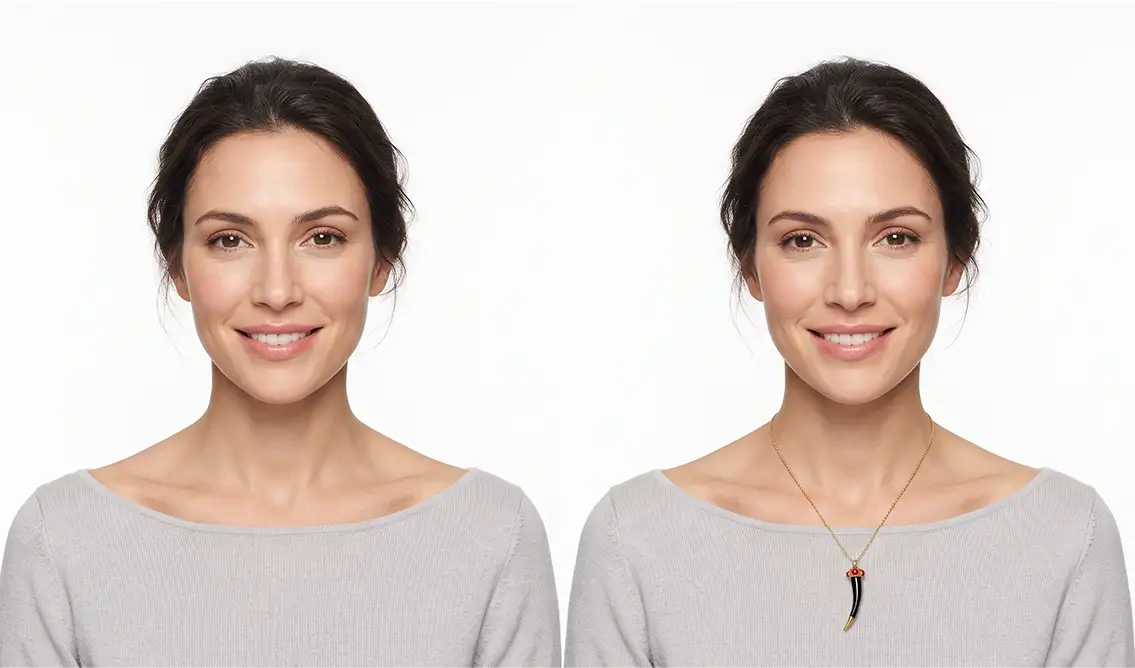
Turn on your camera, pick earrings, a pendant or a ring, and see the piece on yourself in real time.
Switch items in one tap.
Everything runs in your browser: no photo or video is ever uploaded.
Frequently asked questions
Is a promise ring the same as an engagement ring?
No. A promise ring is a softer commitment, may mean various things (pre-engagement, friendship, self-vow), is usually simpler in design and cheaper. An engagement ring is a formal step before marriage.
On which finger do you wear a promise ring?
There is no strict rule. Most often the left or right ring finger. Sometimes a different finger to avoid an engagement-ring association.
Can a girl give a guy a promise ring?
Yes. The modern practice is symmetrical: any partner can give a promise ring to the other.
At what age can you give a promise ring?
Any age. In some cultures (especially the United States) the practice starts among teenagers. In adult relationships it works as a pre-engagement step.
How much should a promise ring cost?
There is no set rule. From budget silver options to mid-range gold. Cost is not the point; the gesture is.
What is the difference between a promise ring and a purity ring?
A purity ring is a religious vow of celibacy until marriage. A promise ring is a broader category that can mean many things including a purity vow but not only that.
Can you wear a promise ring with an engagement ring?
Yes. Often the promise ring moves to another finger when the engagement ring arrives. Sometimes the stone is reset into the wedding band.
What happens to the promise ring after marriage?
The wearer chooses. The ring can be kept as a memento, moved to another finger, reset into the wedding band, or quietly retired.
Is it good to give a promise ring on the first anniversary?
The first anniversary is on the early side for a promise ring. Most often it is given after one to three years together. But there is no strict rule.
Can I buy a promise ring for myself?
Yes. A self-promise ring is a fully accepted modern practice.
How do I propose with a promise ring?
Without the formality of an engagement proposal. Often during a dinner together or a meaningful moment. Words alongside the gift: "I promise that I want to be with you long-term" or in that spirit.
Will a promise ring offend a partner?
If the partner does not want any rings (preference, religion, personal style), yes. Discuss in advance whether a ring is welcome before buying.
Can you re-gift a promise ring?
Yes, but consider whether the previous emotional context will haunt the gift. Often better to buy a new one.
Are couples' promise rings important?
Optional, but symbolic. Two rings of one design reinforce the sense of symmetry in the relationship.
Can a promise ring be used as a wedding band?
Technically yes, especially if the design is right for it. Sometimes the promise ring becomes the wedding band with engraving or a stone added.
Conclusion
A promise ring is a flexible jewellery form for marking various promises: pre-engagement, friendship, a vow to oneself, a memory of someone special. Its strength is precisely that flexibility: there is no rigid format, no fixed meaning, no compulsory etiquette. The choice depends entirely on the relationship between the giver and the wearer.
The three main rules. First: the meaning of the ring is set by what is said when it is given, not by the ring itself. Have a clear conversation. Second: do not turn a promise ring into a substitute for engagement. If you really want to marry, propose engagement; if you want to mark a stage, give a promise ring. Third: pick a design that the wearer will love independently of context. The piece will be on the finger every day for years.
What else to read. On engagement rings overall, the engagement ring guide. On the Claddagh, the Claddagh ring guide. On couples' jewellery, the couples jewellery guide. On the infinity symbol, the infinity meaning guide. On meaningful symbols in jewellery overall, the symbols guide.
About Zevira
Zevira makes jewellery by hand in Albacete, Spain. A promise ring is a piece where the meaning counts for more than the size of a stone, and handwork with personal engraving fits it better than anything: each ring is built for one specific promise rather than stamped out in a run.
What you can find with us for a promise ring:
- Plain bands made for engraving a name, a date or a short phrase inside
- Matching pairs: identical, mirrored and two halves of one pattern
- Rings with promise symbols: hearts, infinity, Celtic knots
- Designs with a small stone or a birthstone instead of a large diamond
- Minimalist neutral bands for men's and self-promise rings
- Sterling silver and gold in 14 to 18K, yellow, white and rose
Every piece is made by hand by a craftsperson, with personal engraving available.