Body Chains: The Complete Jewellery Guide for 2026
Introduction: the piece that goes where no necklace goes
A chain drops from the collarbone, runs between the shoulder blades, wraps the waist. Or it crosses the ribcage without touching the neck at all. Or it sits low on the hips beneath a midi skirt and catches the light only when you move.
Body chains are one of the oldest categories of jewellery on earth, documented across India, Egypt and sub-Saharan Africa for thousands of years. In western fashion they were largely absent for most of the twentieth century. That has changed sharply. Y2K nostalgia, the Glastonbury effect, Notting Hill Carnival summer style and a generation that came of age watching early-2000s pop have pushed body chains from niche to mainstream. You will find them now in every market from fast fashion to fine jewellery.
This guide covers what body chains actually are, the full range of types, how to wear each, sizing (which matters more than with most jewellery), materials, body type considerations, care instructions and who this category genuinely suits.
What is a body chain
Technically: a chain or system of chains worn on the torso, hips, feet or back rather than on the wrist, neck or fingers. The main types are:
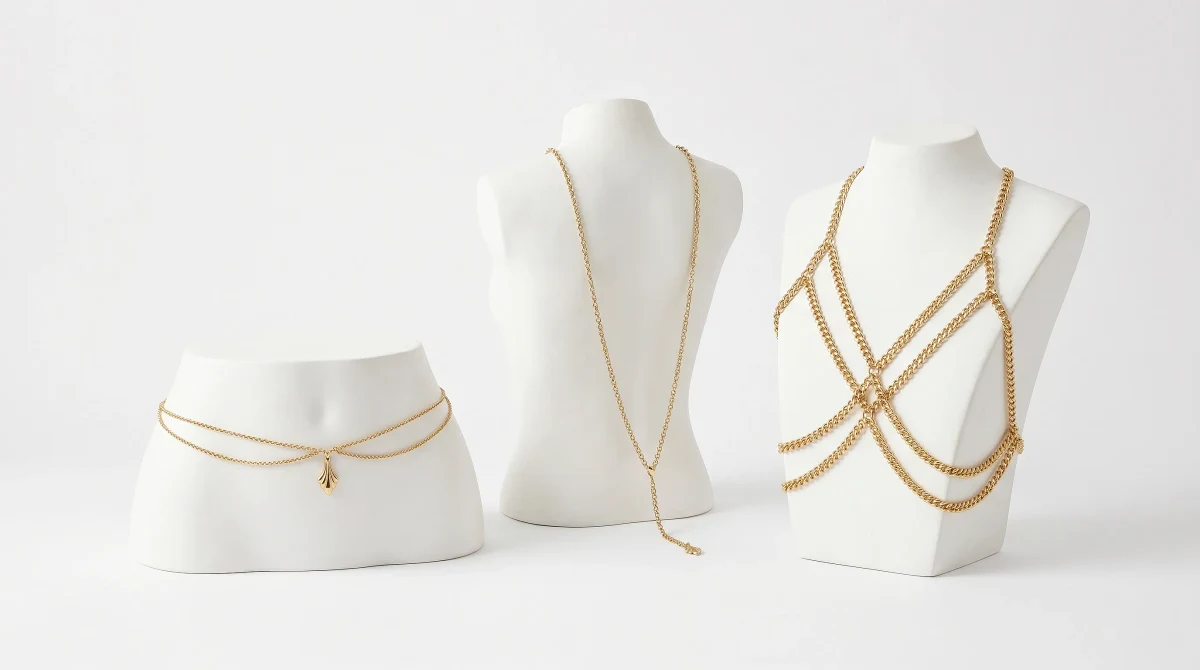
Belly chain (waist chain). Encircles the waist. Can sit directly on skin under clothing or visible above a crop top. The most common and accessible entry point to the category. A thin version (1.5 to 2 mm) is barely noticeable under a t-shirt; a chunkier version with drops is a deliberate statement.
Back chain. Runs from a necklace clasp down the spine. Most impactful with open-back dresses or deep-cut tops. Turns the back into a decorated surface. Attaches at the lower point with a second clasp or to a waist chain.
Hip chain. Sits lower than the waist, across the hip bones, often with drops or pendants. Classic beach jewellery, also strong with tailored trousers cut low. Worn high on the hip or low across the bikini line.
Chest chain or bra chain. Mimics the shape of a bra across the chest. Worn over a bodysuit, under a sheer top, or as the top itself on the right occasion. Over a bikini top at the beach it reads as resort style; under a translucent blouse it reads as editorial.
Shoulder chain. Crosses over the shoulder, connecting front to back. A less common type but very strong for shoots, stage looks and dressed-up occasions.
Harness. A system of multiple chains forming a geometric pattern across the torso. The boldest option. Very editorial, powerful in fashion contexts. Under an open blazer it crosses into wearable territory without becoming costume.
Foot chain. An oversized anklet with a connector running to a toe ring. Beach, resort, barefoot sandal territory.
Customer reviews
Zevira is a real jewellery shop. Genuine payments, deliveries and customer thank-yous.
🥰🥰🥰 gracias
Ok, ¡gracias! 🙂
History of body chains: from the Nile to Glastonbury
These are not a new invention. They are among the oldest forms of decoration found anywhere. Understanding where they come from explains why they keep returning.
Ancient India: the kamarbandh
The kamarbandh (waist chain) has been documented in Indian art and literature for over two thousand years. It was part of bridal jewellery across regions, often made in gold with hanging bells and coins. Every element carried meaning: the coins spoke to prosperity, the bells were thought to deflect harm, the gold announced family standing.
In south Indian tradition a waist chain was worn from childhood through old age and removed only in mourning. It was not an accessory but a mark of being alive in the world. Kamarbandhs passed from mother to daughter, accumulating family history in each link.
Ancient Egypt: pectorals and pharaonic belts
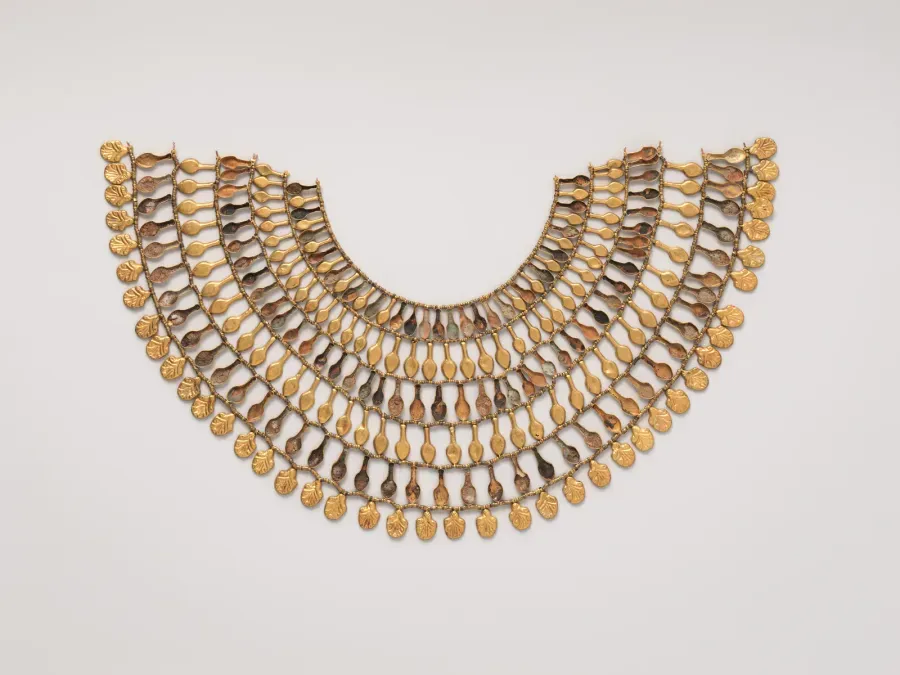
Egyptian tomb findings include body chains worn by noblewomen and royal figures. Pectoral chains covering the chest were among the most elaborate pieces found, incorporating scarab amulets, the ankh, and inlaid turquoise, carnelian and lapis lazuli. These were not only decorative objects but protective ones.
Waist chains from the royal period show heavy gold link construction, central clasps and lateral drops, often marked with cartouches identifying the wearer. Museum holdings from Egyptian digs include waist pieces that read as immediately contemporary.
Sub-Saharan Africa: status encoded in metal and bead
Across Bantu, Zulu and Hausa traditions, body chains and bead waist pieces have marked social status for centuries: girl, unmarried woman, wife, mother. The pieces passed through generations carrying encoded information about identity and belonging. Knowing how to read them was knowing who someone was.
European Renaissance and Baroque periods
From roughly the sixteenth century, elaborate body chains appeared in Italian and French aristocratic dress: chains worn over gowns, often pearl-studded, as much about displaying wealth as decorating the body. Venetian portraiture of this era shows women wearing layered body chains over brocade. These were signals of position as much as ornament.
The twentieth century gap
Body chains effectively disappeared from mainstream western fashion through most of the twentieth century. They were associated with belly dance, burlesque or "exotic" costume, which kept them on the margins of respectability.
1960s: the psychedelic revival
The first flicker of return came with the counterculture of the 1960s, when the hippie movement embraced jewellery from Indian, African and Middle Eastern traditions as symbols of freedom from mainstream conformity. Indian kamarbandhs and African bead waist pieces became part of the psychedelic visual vocabulary.
1990s to early 2000s: hip-hop and Y2K
Hip-hop culture and the R&B aesthetic of the 1990s brought the belly chain back at scale. Thin gold waist chains became an icon of Y2K fashion, part of the low-rise trouser moment that defined that decade's silhouette. The chain was everywhere from roughly 2000 to 2003, then receded again as silhouettes changed.
2010s: Glastonbury and the festival circuit
The festival fashion boom of the early 2010s normalised body chains for outdoor music culture. Glastonbury provided the definitive British context: maximum decoration, minimum clothing, maximum personal expression. Notting Hill Carnival added its own aesthetic, where full body decoration is part of the tradition. In the United States, Burning Man's harness imagery crossed into fashion editorial. Body chains moved from niche to expected.
2018 to 2026: permanent category
The shift from trend to standard. Major retailers now carry body chain sections. The Y2K revival made the belly chain a genuine staple. Burning Man's visual aesthetic seeded the harness into fashion editorial. Body chains are now a persistent category rather than a cyclical moment.
Types in detail
Belly chain
The most accessible type. Encircles the narrowest point of the torso. A fine chain (1.5 to 2 mm) worn under clothing is invisible and purely personal. A thicker chain (3 to 5 mm) with drops worn over a crop top is an overt statement. Both are valid uses of the same category.
For correct positioning the chain should sit horizontally, not angling down at the sides. An adjustable extender allows precise fit across the day as the body changes.
Bralette chain
Crosses the chest in the shape of a bralette. Worn over a swimsuit, bikini top or bodysuit. Under a sheer blouse it creates a visible-lingerie effect. Worn alone over bare skin it requires confidence but produces a strong visual.
Back chain
Runs from the necklace clasp at the front down the spine. Works best with garments that expose the back. Attaches at a lower point via a second clasp, or connects to a belly chain to form a full loop.
Shoulder chain
Crosses over one or both shoulders, linking the front and back of a look. Less common than the other types, used more often in editorial, on stage or as a distinctive occasion piece.
Harness
Multiple chains forming a geometric structure across the torso. Under an open blazer it is wearable for evenings and events. Worn alone as an upper body piece it is full editorial territory.
A body chain lives on bare skin, not over a turtleneck. Hide it under wool and you may as well leave it in the drawer.
How to wear a body chain
I have styled body chains across dozens of shoots, from beach to evening. Here is what actually holds a look together, sorted by occasion.
How do I wear a body chain every day? For daytime I recommend a thin belly chain under a white tee or an oversized shirt. Nobody sees it, it only surfaces as a line above the waistband when you lean over. I suggest matching the metal to your wardrobe: silver for a cool palette, gold for warm, sand and earth tones. With high-waisted jeans this is the calmest way into the category.
Does a body chain work for the office? Only the hidden version. I recommend a fine chain under a blouse or a knit as a private detail that only you know about. If you want it to show, save that for Friday: a waist chain above a pencil skirt, barely visible under a cropped jacket.
How do I build an evening look? For evenings I choose a back chain with an open-back dress. A deep back neckline plus a thin line down the spine reads richer than a heavy necklace. I suggest a plain, quiet fabric so it does not compete with the metal. Keep the earrings small and skip the bracelets this time: there should be one focal point.
And for the beach or a festival? Here I recommend a hip chain over a swimsuit and a foot chain running to a toe ring for bare feet. Under linen and a knit top, boho layers with turquoise and moonstone sit beautifully. You can stack: a waist chain plus a hip chain, two or three fine links instead of one thick one.
How do I avoid overdoing the layers? Two rules that never fail. First, I do not mix metals on the body and on the hands without a reason, silver pulls silver along with it. Second, the bolder the placement of the chain, the quieter the clothing around it. Context decides everything.

Turn on your camera, pick earrings, a pendant or a ring, and see the piece on yourself in real time.
Switch items in one tap.
Everything runs in your browser: no photo or video is ever uploaded.
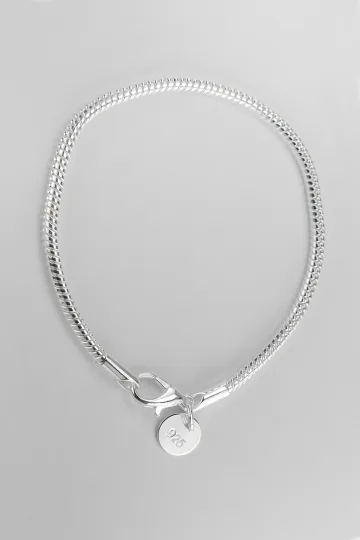
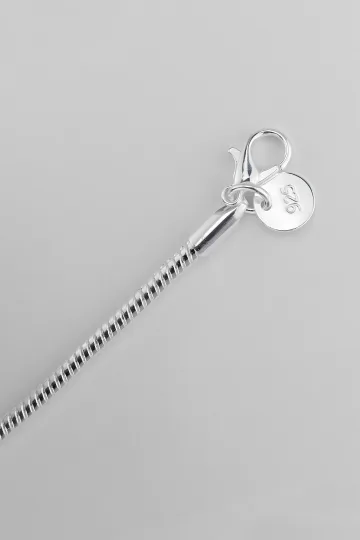
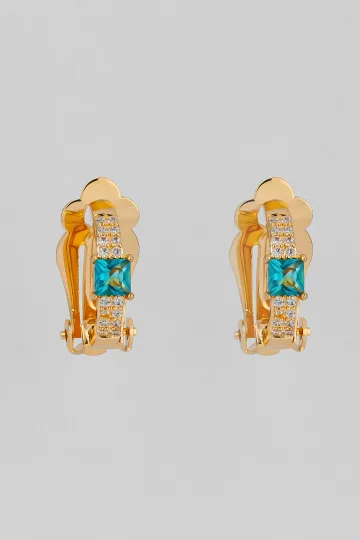
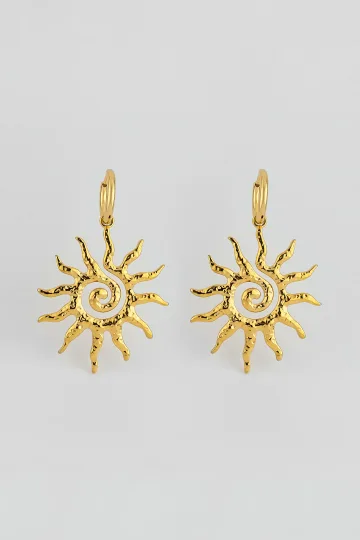
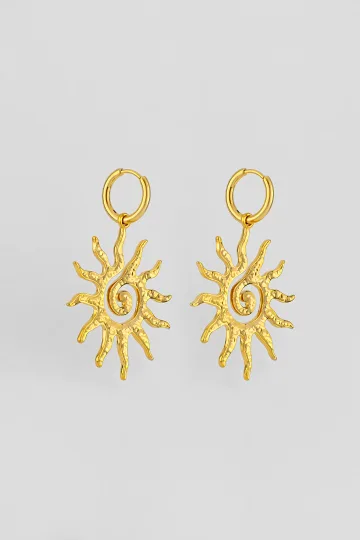
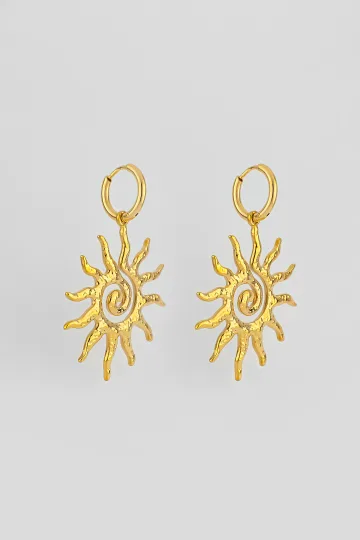
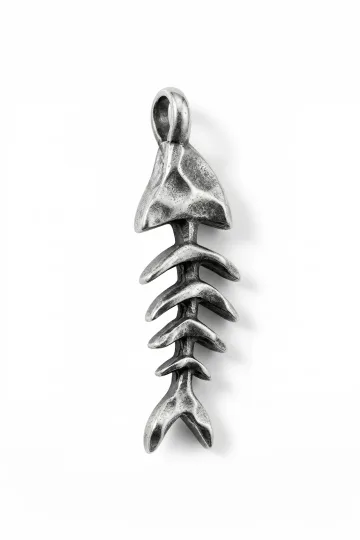
Wear the symbol, don't just read about it. These are in stock:
Styles
Minimalist
A single fine chain in silver or gold with no pendants or decoration. The chain itself is the statement. Works in professional contexts, day-to-night, anywhere that heavier jewellery would be too much. The entry-level choice for someone new to the category.
Boho
Layered chains with semi-precious stones (turquoise, lapis, coral as historical accent stones; labradorite and moonstone as contemporary alternatives), small pendants, wooden or shell beads. Festival-adjacent. Strong with linen, crochet, loose-fit summer dressing.
Y2K
A thin silver chain sitting low on the hip or waist, with small drop pendants: stars, crescent moons, small crystals. The defining aesthetic of early-2000s pop, back with force.
Gothic and alternative
Dark metal or blackened silver chains, harnesses with geometric hardware, padlocks, spike elements. Associated with Burning Man's darker visual vocabulary and with alternative subculture more broadly.
Eastern
Gold chains with hanging coins, small bells (ghungroo), granulation and filigree. Drawn from Indian and Middle Eastern jewellery traditions. Formal, ceremonial, sometimes wedding-specific.
Glamour
Crystal-set chains, freshwater pearl drops, heavy link designs. Red carpet, evening events, occasions where maximum impact is appropriate.
Materials
Sterling silver 925. The quality standard for everyday body jewellery. Hypoallergenic for most wearers, durable, takes detail well. Will oxidise with exposure to water and sweat but cleans easily with a soft brush and mild soap.
Heavy gold plating on stainless steel (gold-fill). A practical mid-range option. A real gold layer over steel base makes it more resistant to wear than brass plating. Check the micron count: anything above 2.5 microns holds well.
14K or 18K solid gold. Premium. For pieces intended to be worn long-term or passed on. The price reflects the material and the craftsmanship.
316L stainless steel (PVD finish). Everyday and athletic use. Fully waterproof, hypoallergenic, does not tarnish. The PVD coating holds colour without peeling if quality is good. The most practical material for active wear or beach use.
Brass with plating. Mass-market baseline. Wears through faster, especially with body contact and sweat. Fine for occasional use. Not the right choice for daily or beach wear.
Leather cord with metal hardware. Boho and alternative styles. Comfortable against skin, not waterproof.
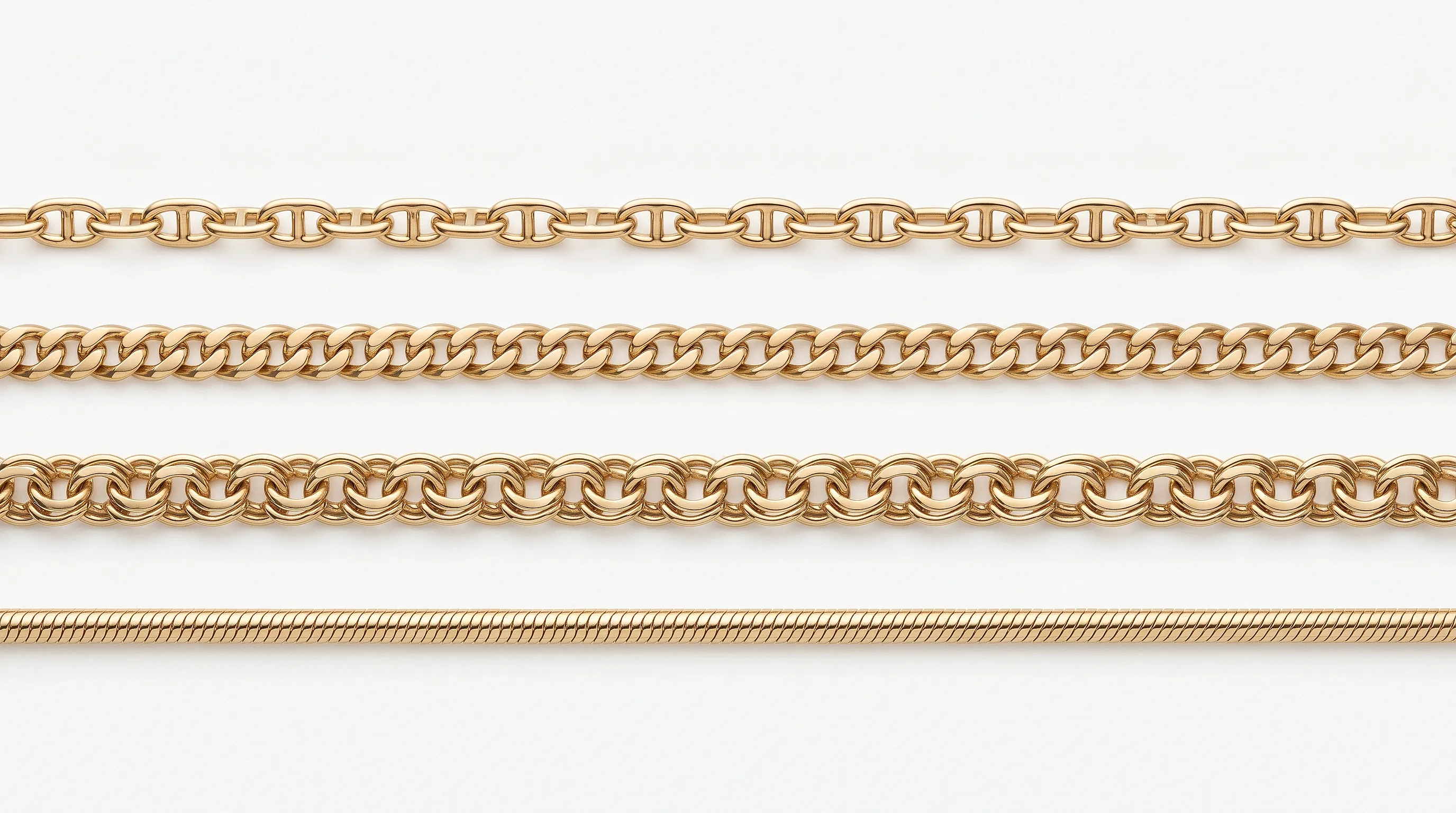
With stones. Turquoise, lapis and coral were the historical accent stones in Indian and Egyptian pieces. Contemporary alternatives: labradorite, moonstone, freshwater pearl. Any of these add colour and texture to a base chain, and the link patterns of the chain itself carry as much weight as the stones.
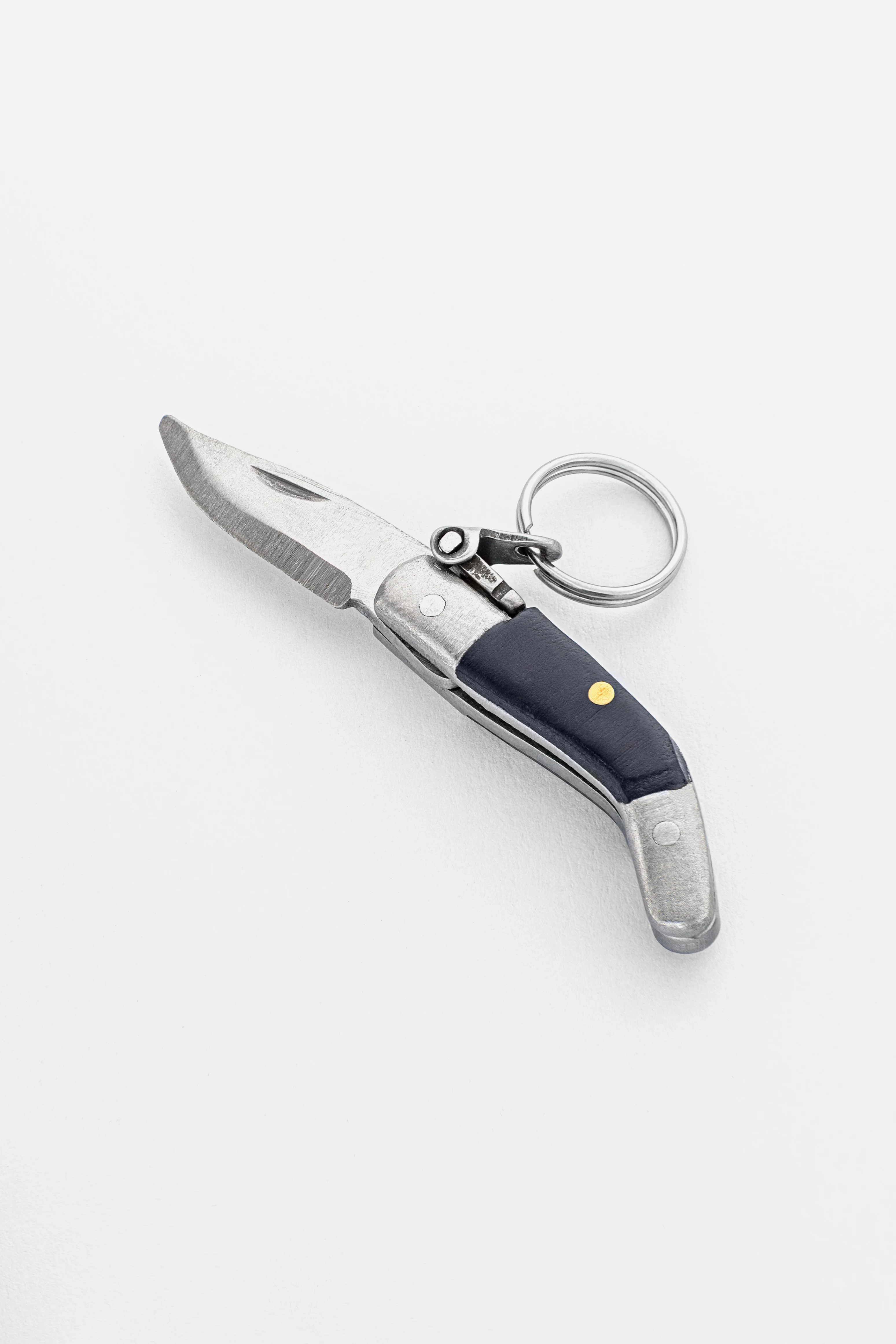
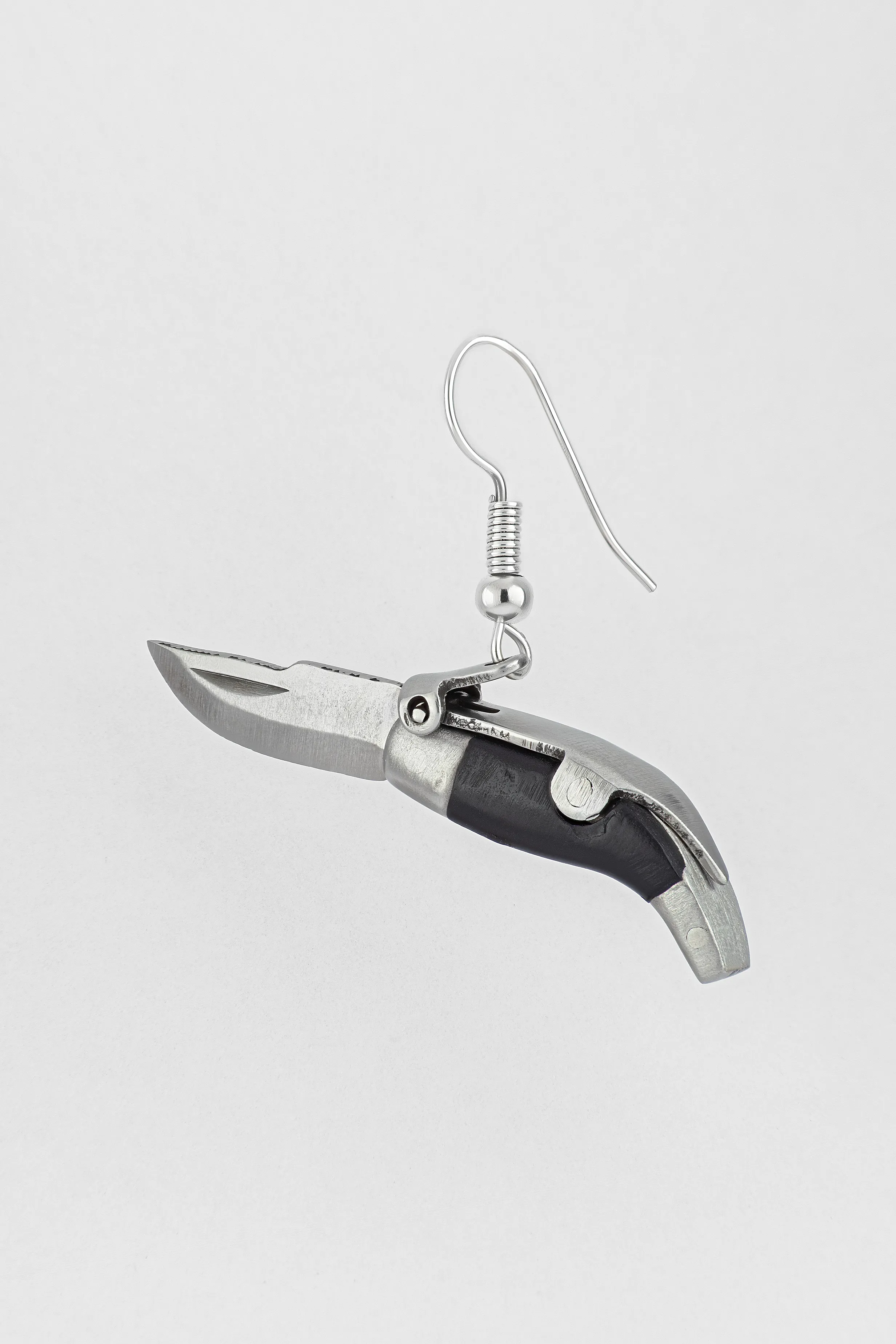
Artisan-crafted CAPAORA navaja pendant
A 40 mm stainless-steel navaja with a real folding mechanism and Palanquilla lock. An affordable gift to remember.
A code for blog readers:
10% off your first order
Authentic · Maker's guarantee · Ships from Spain
Sizing
This is where body chain shopping goes wrong more often than any other category. A ring can be resized. A belly chain that is 10 cm too short cannot be worn. The basic logic is the same as in a regular necklace length guide: a few centimetres change how the piece sits on the body.
Belly chain:
- XS/S: 65 to 75 cm
- M: 75 to 85 cm
- L: 85 to 95 cm
- XL/Plus: 95 to 110+ cm
Hip chain: measure your hip circumference (not waist) and add 5 to 10 cm. Hip chains sit looser than belly chains.
Back chain: most are adjustable through the necklace clasp system. Measure from your collar to where you want the chain to end on your back.
Chest chain or harness: usually sold with multiple adjustment points. Measure from shoulder to shoulder and from collarbone to underbust.
General rule: always choose adjustable where possible. The body changes across the day (swelling in heat, in the evening, across the cycle) and a fixed-length chain that fits at 10 am may feel tight by 8 pm.
Sterling silver, gold, symbolic jewellery and paired sets.
Leave your email, we'll send your discount code. No spam, unsubscribe anytime.
The code arrives by email, valid on your first order.
Body type and body chains
Body chains work on all body types, but what you choose to emphasise changes the approach.
Defined waist. A horizontal belly chain at the narrowest point reads clearly as a waist accent. The chain acts like a belt, underlining the silhouette.
Softer waist. If you want to wear the chain as a personal piece rather than an accent, position it slightly lower toward the hips. It sits around the body without emphasising any particular point.
High-rise versus low-rise. With high-waisted trousers the chain appears only above the waistband, which creates a minimal appearance. With low-rise trousers the chain below the navel becomes the central point of the look.
Bralette chain across all types. Over a swimsuit the bralette chain works on every body type as long as the size is right. A soft adjustable bralette chain adapts without pulling.
Who body chains suit
Women who follow fashion actively. The trend is current and accelerating.
Festival-goers. Glastonbury, Notting Hill Carnival, Burning Man, Tomorrowland: contexts where body jewellery is not just accepted but expected.
Open-back wardrobe owners. If you own open-back dresses and never have a back chain, you are missing the obvious pairing.
Belly dance and burlesque performers. Professional context, professional accessory.
Yoga practitioners. A fine belly chain under yoga clothing is a common choice among those for whom body decoration is part of their practice.
Anyone who wants jewellery for themselves. The hidden belly chain is a purely personal pleasure. No one else needs to see it for it to be meaningful.
Honeymoons and romantic trips. The surprise element of a chain appearing beneath a dress is not accidental.
Beach and resort holidays, festival attendance, photoshoots. Standard equipment for all three.
Who should think carefully
Formal office environments. Body chains read as personal style or fashion. They do not read as professional in conservative settings.
During pregnancy. The waist changes continuously. A chain that fits at one stage will not fit at another.
Those with metal allergies. Many body chains use lower-grade alloys containing nickel. Look for 925 silver, solid gold or surgical steel.
Active sport periods. Chains can tangle with equipment, catch on fabric during runs, or be a hazard in water with others nearby.
Care
Chains with many links collect dirt between them. A few rules:
Clean with a soft toothbrush, warm water and a small amount of mild soap. Work gently through all the links.
Avoid contact with sea salt and chlorinated water. Sterling silver 925 survives but will darken more quickly. Surgical steel handles this better.
Remove before swimming, showering (if the chain is plated), and intense training.
Store in a soft pouch or separately to prevent tangling with other pieces.
Do not use abrasive cloths on plated chains. Soft cloth only.
Send a friend a discount code, they save on their first order.
FAQ
Is a body chain too revealing?
It depends entirely on the type and how it is worn. A thin belly chain under a t-shirt is invisible and conservative. A full harness over a sheer top is bold. The same category covers both.
Can I sleep in a belly chain?
A very fine chain with no pendants is usually comfortable. Chains with heavy drops can leave marks or tangle in bedding. Better to remove before sleep.
Can I put clothing through the wash while wearing the chain?
No. The chain will tangle, stretch or damage the fabric.
Can I wear a body chain every day?
A fine belly chain on good skin: yes. Many people do, for years. Heavier harnesses and statement pieces work better for specific occasions.
Will it show through clothing?
Chains of 1 to 2 mm are not visible through regular cotton or jersey. They can show through silk, chiffon or very fine knits.
How do I measure for a belly chain?
Measure your natural waist (the narrowest point), then add 5 to 10 cm for the fit you want: snug adds 3 to 5 cm, mid-comfortable adds 5 to 8 cm, loose adds 8 to 12 cm.
Can I wear it in the pool?
Chlorine damages plating faster than almost anything else. Sterling silver 925 survives but will darken. Take it off before swimming.
How do I combine a belly chain with a belly piercing?
They work well together. The chain does not interfere with a navel piercing and often frames it. Position the chain above or below the piercing, not through it.
Can men wear body chains?
Yes. The category spans gender. Minimalist chest chains and waist chains appear in menswear editorial and have a specific following in festival fashion spaces.
What is the difference between a harness and a chest chain?
A chest chain is typically one or two chains crossing the upper chest. A harness is a multi-chain system covering more of the torso and creating a structural geometric shape. The harness is the bolder, more complex version.
How does a bralette chain work with a bra?
A bralette chain on straps competes with a bra's straps and clasps. It works best over a strapless bodysuit or bikini top, or worn alone on bare skin. With a regular bra the combination is awkward.
Conclusion
Body chains occupy a genuinely distinct position in jewellery: they decorate parts of the body that most categories ignore, they work hidden or visible, they reference traditions reaching back thousands of years and aesthetics that are urgently contemporary. The belly chain that sits under a daily outfit shares a category with the full harness worn at a festival, which is part of what makes body chains interesting rather than narrow.
If you are new to the category, a fine adjustable belly chain is the right starting point. Wear it under clothing first. Decide whether you want the chain for yourself or as something others see. Then move further in whichever direction makes sense.
About Zevira
Zevira is a jewellery studio based in Albacete, Spain, working by hand with sterling silver 925 and solid gold 14K to 18K. Body chains are one of our made-to-order categories: belly chains in multiple lengths and link patterns, back chains for open-back dresses, bra chains, hip chains, and paired sets. Each piece can be personalised with an engraving.