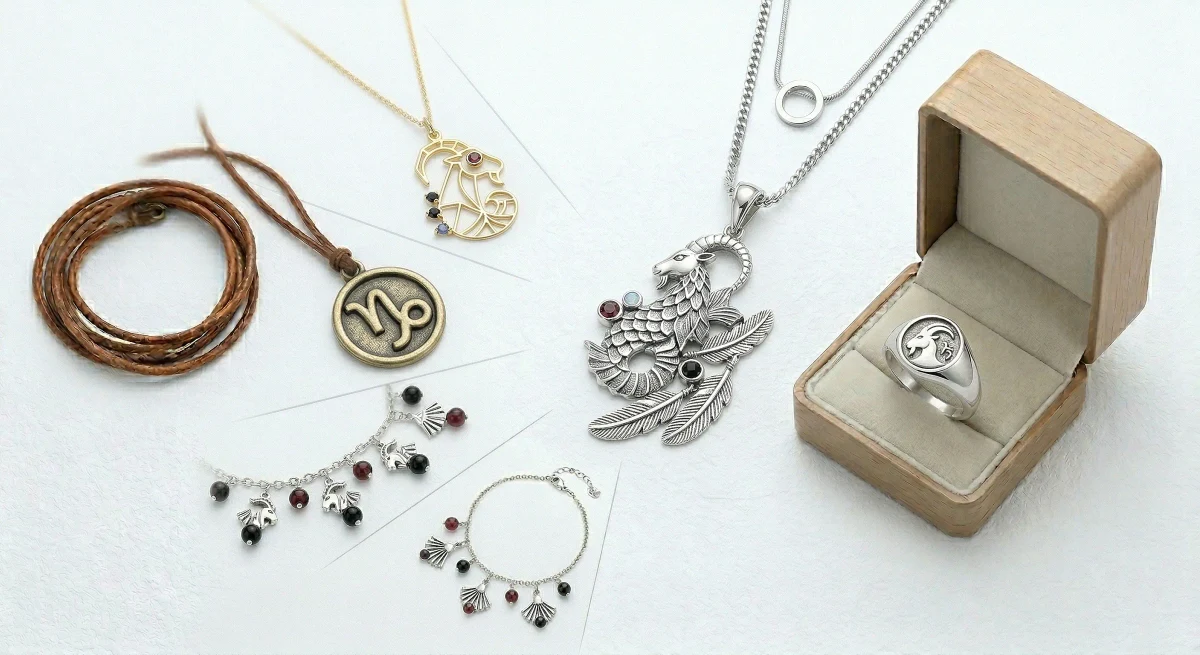
Capricorn Jewellery: The Sea-Goat, Saturn, and the Sign That Plays the Long Game
The sign that was already working while you were still planning
There's someone in your life who had a five-year plan at eighteen, who kept their head down while everyone else was chasing shortcuts, and who is now quietly, undeniably ahead. They didn't announce it. They didn't post about it. They just did the work, day after day, until the results spoke for themselves. That person is either a Capricorn or they should be.
Capricorn runs from December 22 to January 19. It's an earth sign, ruled by Saturn, symbolised by the sea-goat, a mythical creature with the body of a goat and the tail of a fish. If Aries is the sign that starts things, Capricorn is the sign that finishes them. Not quickly. Not loudly. But thoroughly.
We're not claiming your birth date dictates your career path. But the Capricorn archetype, refined over millennia, describes a personality pattern so consistent that people recognise it before you name the sign. The achiever. The strategist. The person who takes the stairs because they know the elevator breaks.
This is the full picture. The myth, the personality, the stones, and what Capricorn looks like when you translate ambition into something you can wear.
The Myth Behind Capricorn: Pricus, Amalthea, and the Goat That Nursed a God
Pricus and the sea-goats
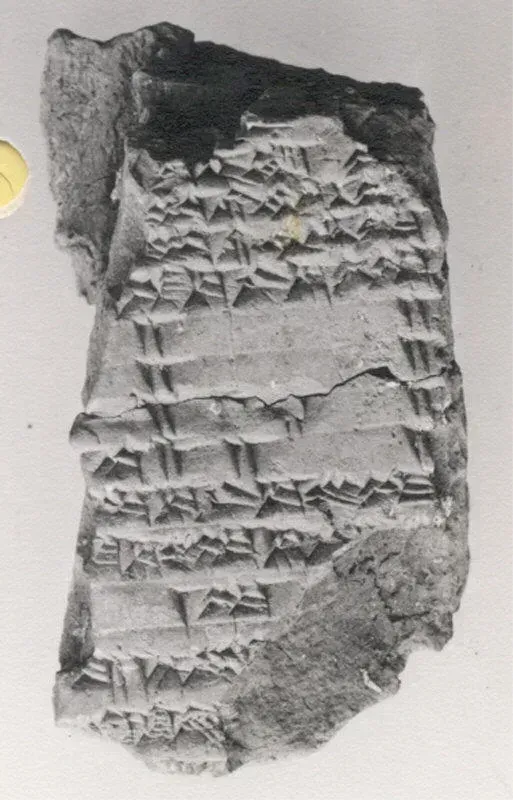
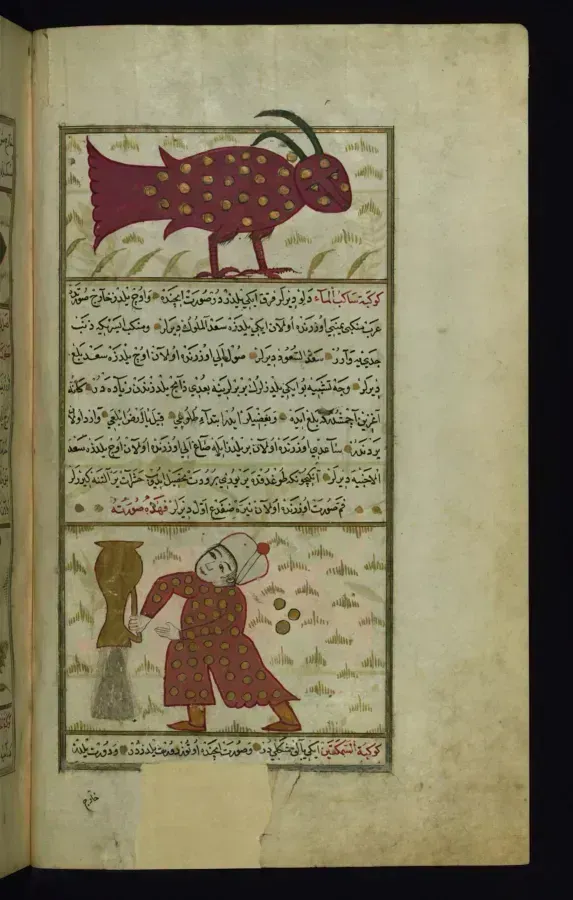
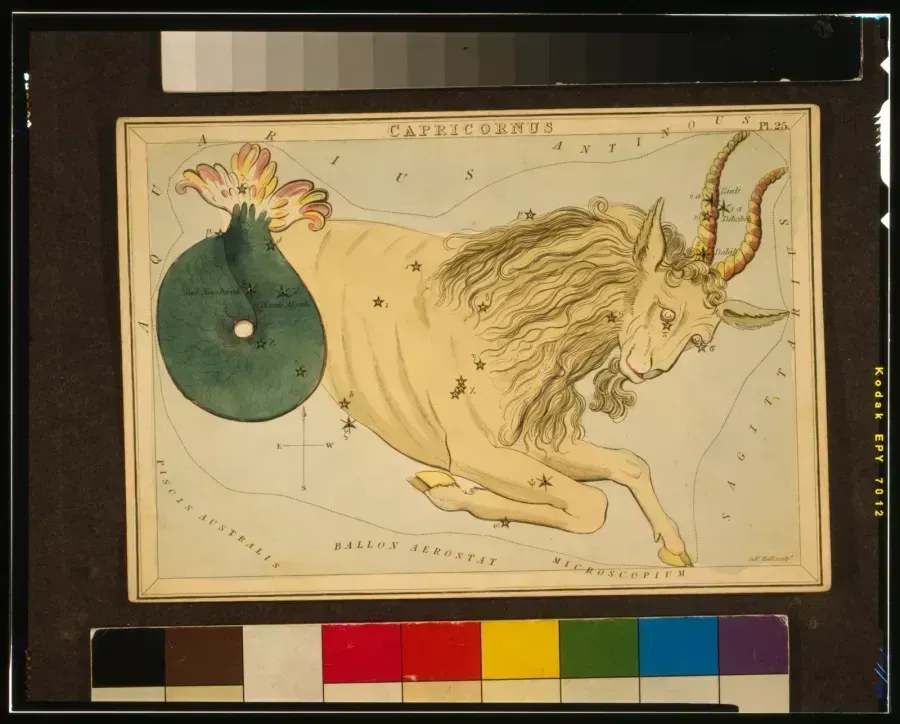
The sea-goat is one of the strangest and oldest symbols in the zodiac. It comes from the myth of Pricus, an immortal creature created by Chronos (Time itself). Pricus was the father of a race of sea-goats: intelligent beings who could think, speak, and lived in the ocean.
The problem was that Pricus's children kept crawling onto land, where they gradually lost their fish tails, their intelligence, and their ability to speak, transforming into ordinary goats. Pricus, devastated, begged Chronos to turn back time so he could prevent it. Chronos obliged, but each time the sea-goats crawled back to shore anyway. Some transformations can't be reversed.
Eventually, Pricus accepted his fate and was placed among the stars as Capricornus. The myth is about the tension between holding on and letting go, between controlling outcomes and accepting that some things evolve beyond your ability to manage them. For a sign associated with control and discipline, it's a surprisingly poignant origin story.
Garnet, Capricorn's primary birthstone, carries a similar weight. Its deep, wine-coloured glow doesn't announce itself from across the room. It rewards attention. Medieval travellers carried garnet as protection, trusting the stone the way Capricorn trusts discipline: quietly, over long distances.
Amalthea and the infant Zeus
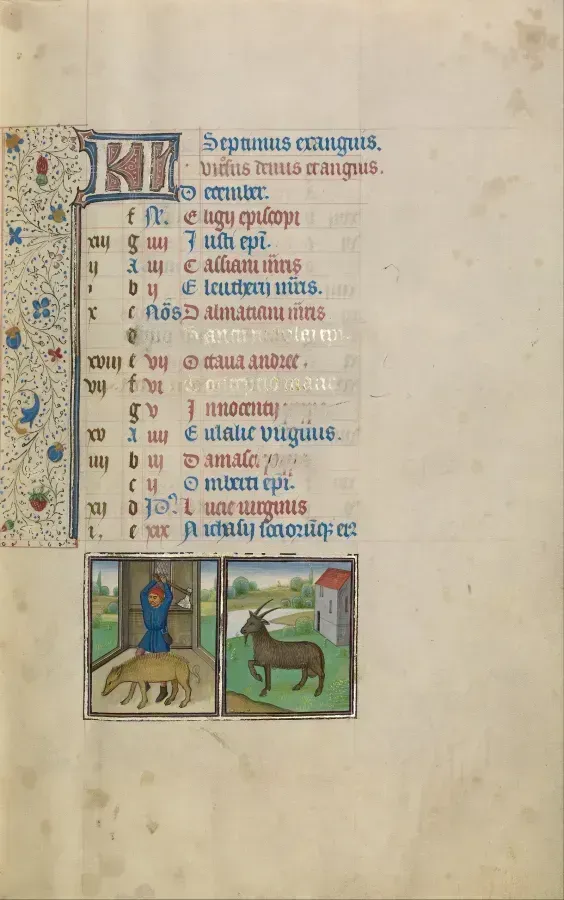
The second Capricorn myth involves Amalthea, the goat (or goat-tending nymph) who nursed the infant Zeus in a cave on Crete while he was hidden from his father Kronos, who was eating his children. When Amalthea's horn broke off, Zeus transformed it into the Cornucopia, the horn of plenty, an inexhaustible source of nourishment.
This myth links Capricorn to nurturing through sacrifice, to abundance earned through care, and to the idea that the greatest providers often work behind the scenes. Zeus became king of the gods. Amalthea became a constellation. The one who does the quiet work doesn't always get the throne, but the throne doesn't exist without them.
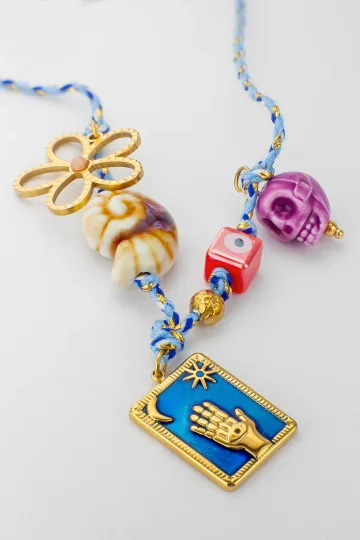
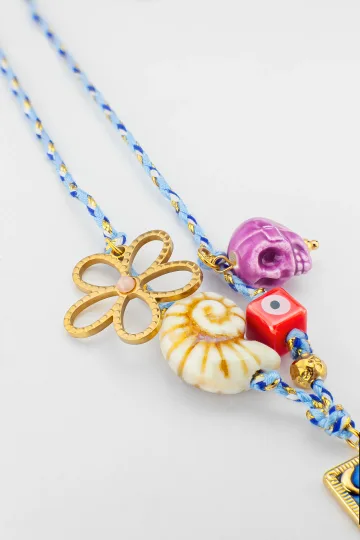
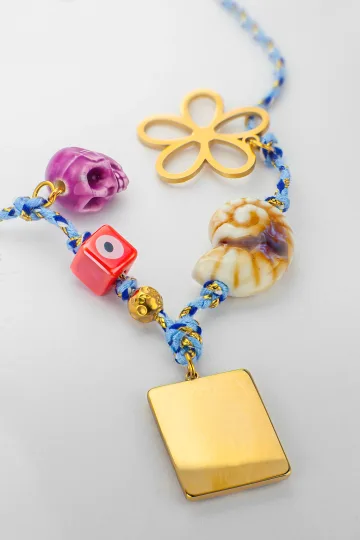
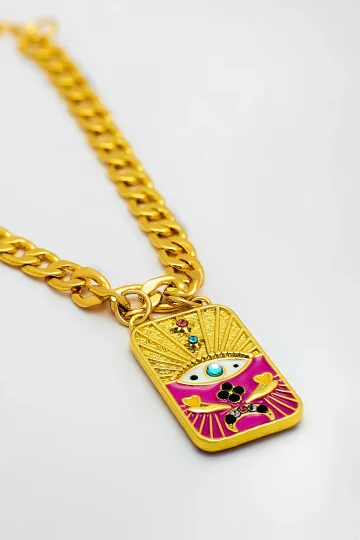
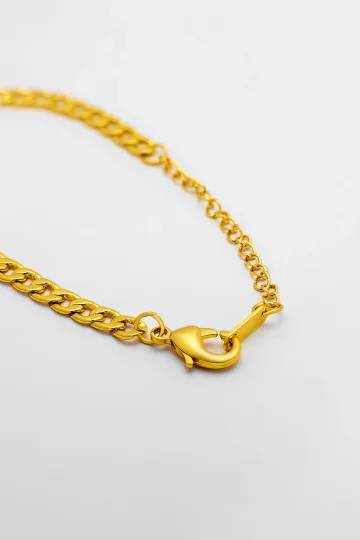
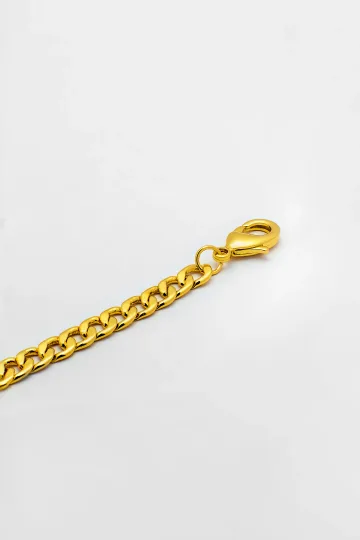
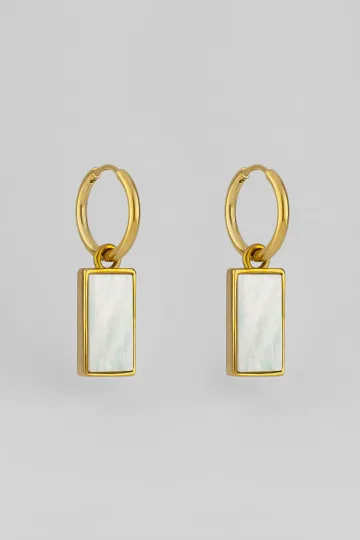
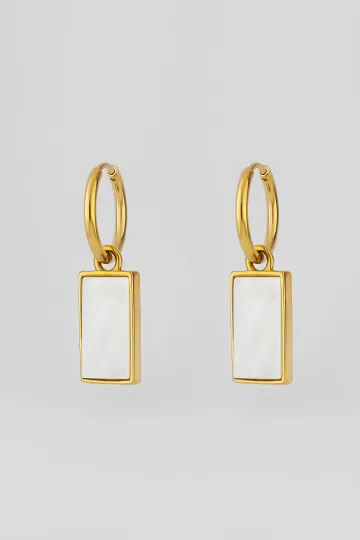
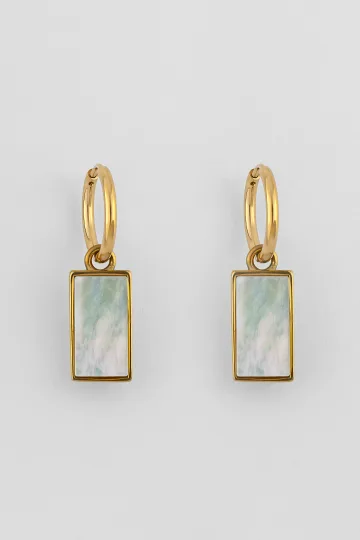
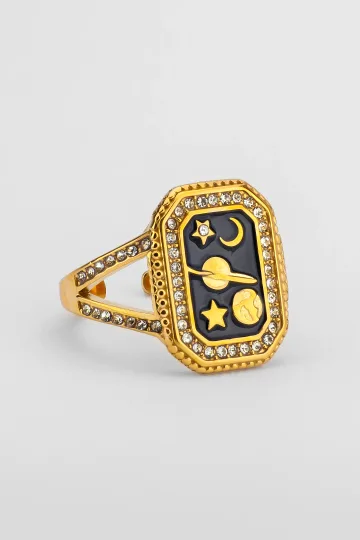
Wear the symbol, don't just read about it. These are in stock:

Capricorn Personality Traits: The Ambitious, the Disciplined, and the Quietly Stubborn
Ambition and patience
The Capricorn personality is built on a simple calculation: effort, applied consistently over time, produces results. Not shortcuts. Not luck. Not talent alone. Disciplined effort, sustained long after everyone else has moved on to the next thing.
Capricorn ambition doesn't look like Aries ambition (loud, competitive, immediate). It looks like someone who arrives early, stays late, learns the system, and then quietly outperforms everyone who was too busy being impressive to be effective. Onyx, the stone of discipline and self-mastery, captures this energy. Its solid black colour represents focus, determination, and the ability to block out distractions. A polished black onyx cabochon in a signet-style ring is one of the most classic pieces in jewellery, and it matches the Capricorn personality: no wasted energy, no unnecessary decoration, pure purpose.
The reserved side
Capricorns are not cold, despite the stereotype. They're selective. They don't waste energy on people or situations that aren't going anywhere. This looks like coldness from the outside, but from the inside it's efficiency. A Capricorn's inner circle is small, carefully chosen, and fiercely protected.
The jewellery that suits this trait is similarly restrained. Dark gold tones, antique finishes, pieces that look like they have a history even when they're new. Capricorn doesn't want bright, flashy, just-out-of-the-box metals. They want something that looks like it was earned. A brushed or satin gold finish reads more "Capricorn" than a high-polish one.
Work ethic and the mountain metaphor
There is a reason Capricorn is associated with mountains. Mountains do not move. They endure. They are patient on a scale that makes human patience look like fidgeting. A mountain does not care about trends, opinions, or shortcuts. It sits there, getting taller by millimetres per century, and it will still be there when everything around it has changed.
The Capricorn work ethic mirrors this. It is not flashy. It is not exciting. It is relentless. A Capricorn at work does not need motivation posters or productivity apps. They need a clear goal and a reasonable timeline. Then they execute. Day after day, week after week, until the thing is done.
This is both the greatest strength and the greatest vulnerability of the sign. The strength: Capricorns build things that last. The vulnerability: they sometimes forget to enjoy the building. The process becomes the point, and the destination recedes. The mature Capricorn learns to pause on the climb and look at the view. Not at the summit. On the way up.
Dry humour and hidden warmth
The best-kept secret about Capricorns is that they're funny. Not the life-of-the-party kind. The deadpan, observational, "I can't believe they just said that" kind. Capricorn humour is dry, dark, and delivered with a straight face that makes you question whether they're joking until you see the tiny smile.
The warmth is real too. It just takes time to access. A Capricorn who trusts you will show a tenderness that surprises everyone who only knows the professional exterior. Ruby, connected to Capricorn through ambition and vital energy, represents this hidden warmth. Its deep red paired with garnet creates a colour palette of dark, rich warmth beneath the composed surface.
Earth Sign, Saturn Ruler: What That Actually Means
Capricorn belongs to the earth element, alongside Taurus and Virgo. Earth signs are associated with practicality, reliability, and material reality.
Capricorn earth is the mountain. If Taurus is the fertile valley and Virgo is the cultivated garden, Capricorn is the peak that requires a long climb. The reward is the view from the top, and the knowledge that you earned every step.
Saturn as ruler adds the dimension of time, discipline, and limitation. Saturn is the planet of structure, responsibility, and consequences. It teaches through restriction rather than reward. For Capricorn, this means that the path to success always involves patience, sacrifice, and the willingness to delay gratification. Mountain motifs in jewellery carry this energy perfectly: a geometric mountain silhouette in metal makes for a clean, meaningful pendant that speaks to the long climb and the view from the top. Saturn also co-rules the next sign on the wheel: Aquarius takes the same discipline and turns it outward, trading the mountain for the water bearer's vision.
Customer reviews
Zevira is a real jewellery shop. Genuine payments, deliveries and customer thank-yous.
🥰🥰🥰 gracias
Ok, ¡gracias! 🙂
The Loneliness of Ambition
A topic often missing from Capricorn descriptions: the loneliness that comes with discipline.
When everyone else is celebrating, the Capricorn is working. When everyone else is enjoying the moment, the Capricorn is planning the next step. That is admirable, but it is also lonely. The Capricorn often stands alone on their mountain, with a magnificent view, but without someone to share it with.
This is not self-pity. It is a structural consequence of ambition. Whoever lives differently from the majority sometimes lives outside the majority. The solution (if you can call it that) is not less work. It is more selective work. The mature Capricorn learns that not every peak needs to be climbed. That some evenings are better spent with friends than with projects. That the five-year plan should also include a section called "enjoy life."
Capricorn and ageing
A fascinating pattern in the Capricorn archetype: Capricorns get better with age. Not in the "ageing gracefully" sense. In the sense that they bloom.
Young Capricorns often seem older than they are. Serious, responsible, restrained. People tell them "you are so mature for your age," and they do not know if that is a compliment.
Older Capricorns reverse the trend. They become lighter. More playful. Funnier. The burdens they carried in youth (responsibility, self-discipline, the pressure to prove themselves) they set down, because they no longer need to prove anything. The results speak for themselves.
David Bowie became more experimental with every decade. Capricorns start as mountains and end as birds.
The Saturn Return
In astrology there is a concept called the "Saturn Return": the moment when Saturn, after about 29 years, reaches its position at your birth. For Capricorns, ruled by Saturn, this is a particularly significant transition.
The first Saturn Return around age 29 often coincides with major life decisions: career changes, serious relationships, the moment when the work of the early years begins to pay off. Historians note that many famous Capricorns had their breakthrough around this age.
Whether you explain this astronomically or psychologically does not matter. What counts: the Capricorn needs time. Their success is not a sprint. It is a marathon that finds its rhythm around 30.

Turn on your camera, pick earrings, a pendant or a ring, and see the piece on yourself in real time.
Switch items in one tap.
Everything runs in your browser: no photo or video is ever uploaded.
Capricorn and Money: A Special Relationship
Capricorns have a relationship with money that other signs often do not understand. It is not stinginess. It is strategy.
A Capricorn reluctantly spends money on things they do not need. But they willingly spend on things that last. A cheap ring that needs replacing in a year is more expensive than a good ring that lasts ten years. The Capricorn calculates in cost per year of wearing, not in purchase price.
This makes the Capricorn the ideal customer for quality jewellery. They buy less, but better. They ask about materials, manufacturing methods, lifespan. They want to know whether the coating lasts five or fifteen years. They do not compare prices. They compare value.
And when the Capricorn buys, they buy once. No returns. No doubts. The decision was carefully made and will not be revised. The piece gets worn for years, cared for, and appreciated. Exactly how the Capricorn treats everything in their life: long-term, systematic, without waste.
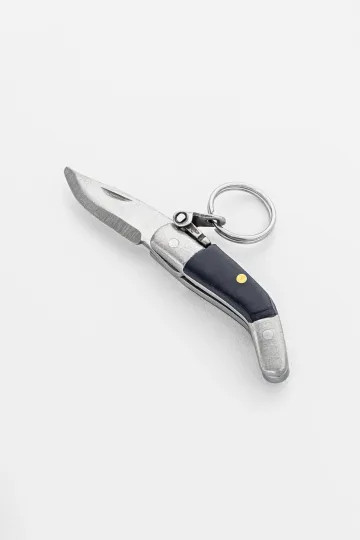
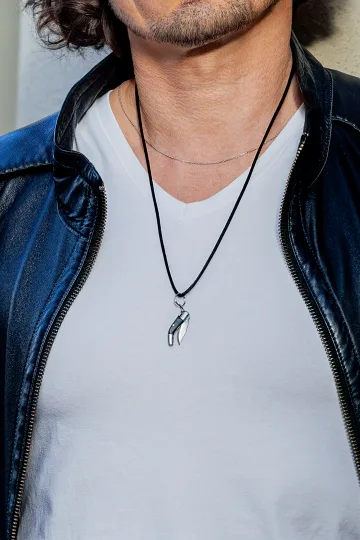
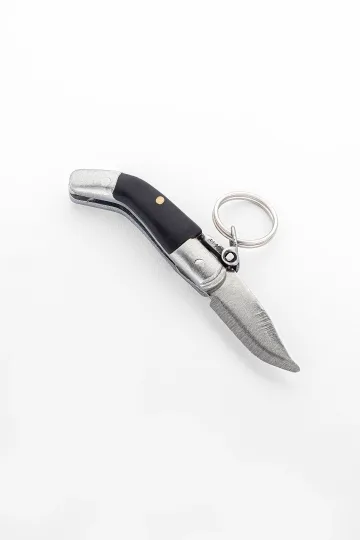
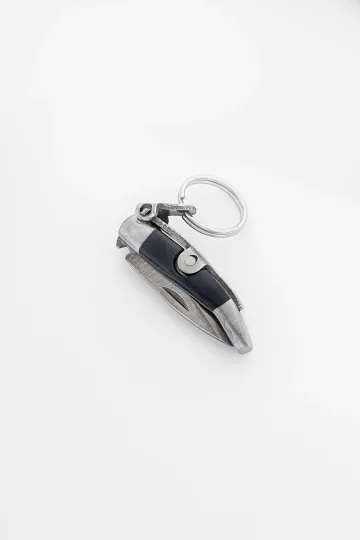
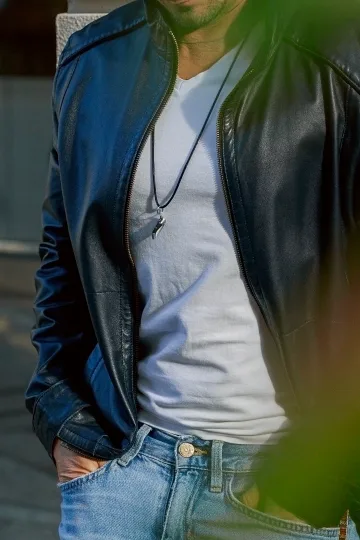
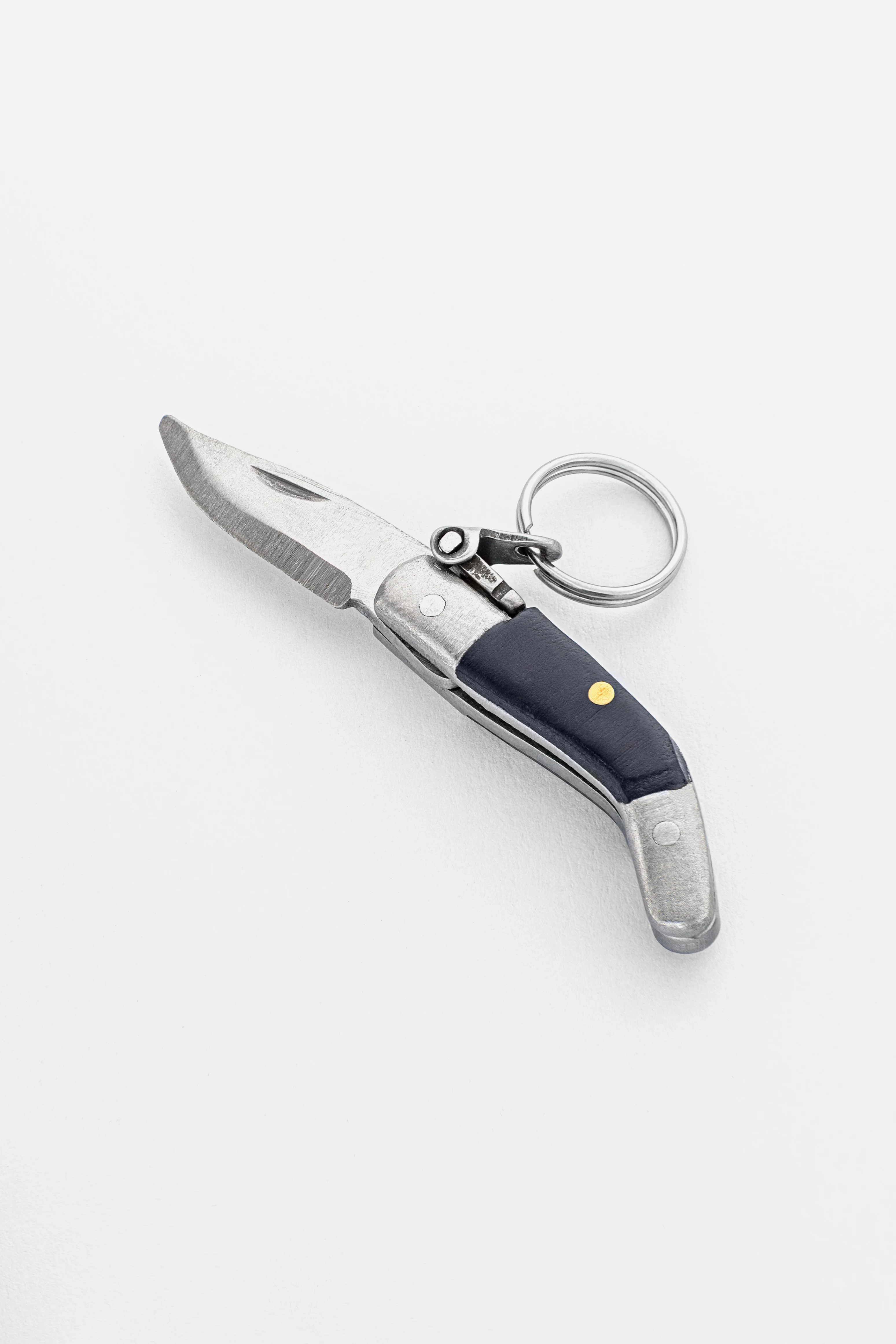
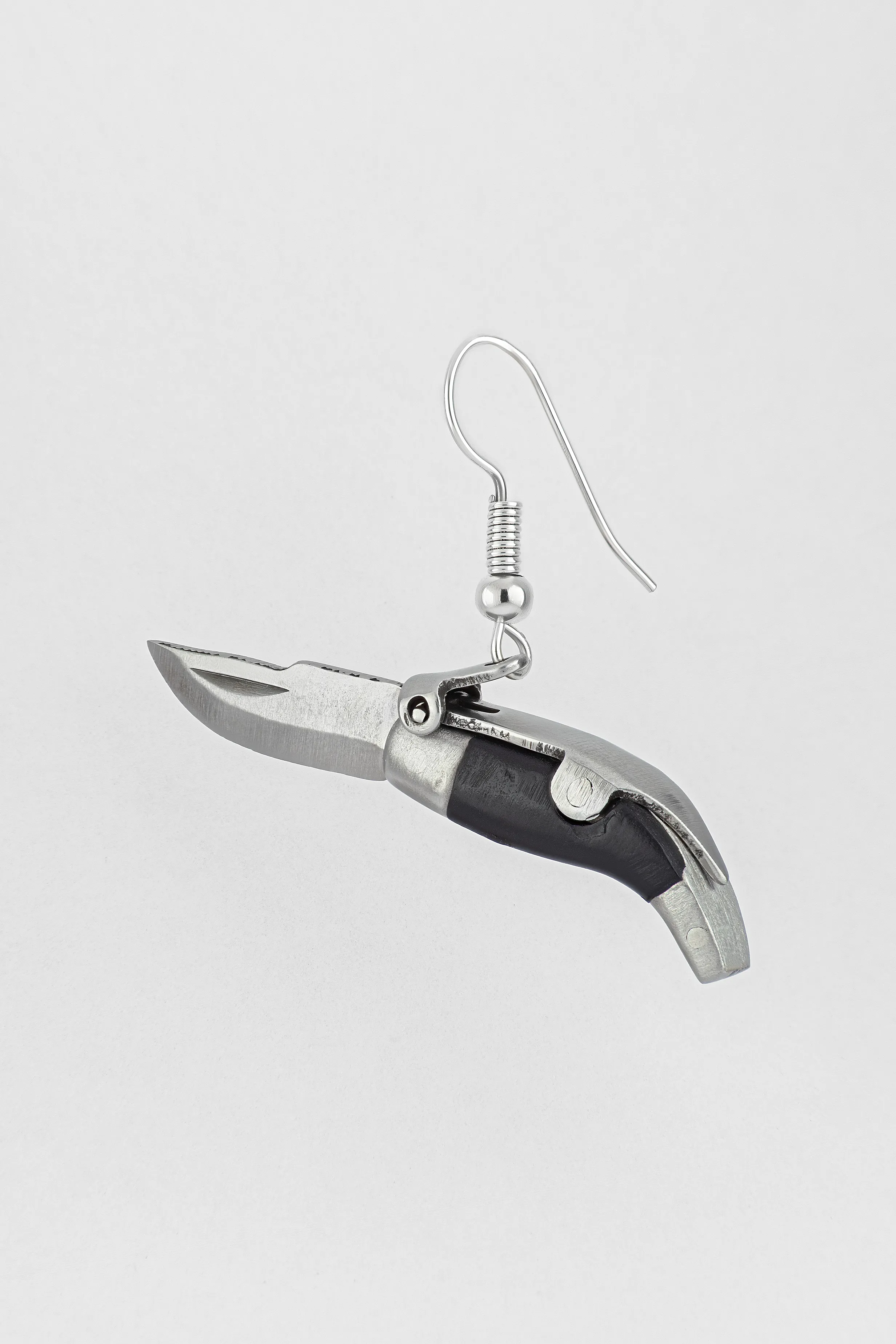
Artisan-crafted CAPAORA navaja pendant
A 40 mm stainless-steel navaja with a real folding mechanism and Palanquilla lock. An affordable gift to remember.
A code for blog readers:
10% off your first order
Authentic · Maker's guarantee · Ships from Spain
Capricorn Rituals: The Power of Habit
Capricorns are creatures of habit. Not in the negative sense (though spontaneity is not their strength). In the positive sense: they build routines that work, and they stick to them.
For jewellery this means: the Capricorn has a morning ritual. Wake up. Coffee. Put on jewellery. Always the same pieces. Always in the same order. The ring first, then the chain, then the watch. Evening: watch off, chain off, ring off. On the nightstand. Always the same spot.
This consistency is the best jewellery care there is. Because the jewellery always sits in the same place, it does not tangle. Because it goes on in the same order, it is not forgotten. Because it is worn every day, it gets regularly cleaned through skin contact (the natural oil film keeps stainless steel shiny).
Capricorn tip for all other signs: choose one or two pieces and wear them every day. Not ten different combinations per week. One ring. One chain. Done. After a month they feel like a part of the body. That is the goal.
Capricorn Compatibility: Who Earns the Goat's Respect
Best matches: Taurus and Virgo. Fellow earth signs share the practical, grounded approach to life.
Strong matches: Scorpio and Pisces. Water signs bring emotional depth that softens Capricorn's edges.
Challenging matches: Aries and Libra. Aries is too impulsive. Libra's indecision frustrates Capricorn's need for decisiveness.
The wildcard: Cancer. The opposite sign. Cancer provides the emotional warmth and domestic anchor. Capricorn provides the ambition and structure. When it works, it's a powerhouse. When it doesn't, they talk past each other. Cancer feels neglected by Capricorn's work ethic. Capricorn does not understand why they need to talk about feelings when they could just solve the problem. But when both learn to listen to each other, what emerges is a partnership with a foundation, a roof, and warmth inside.
Compatibility and jewellery
When gifting Capricorn-compatible partners, consider the dynamic. For a Taurus partner: earthy, sensual pieces with garnet or dark stones. For a Virgo partner: precise, detailed work that reflects their appreciation for craft. For a Scorpio partner: deep, intense colours, something with hidden symbolism. For a Cancer partner: something warm, something with a nurturing quality, perhaps a piece they can wear as a daily reminder of the bond.
Leave your email, we'll send your discount code. No spam, unsubscribe anytime.
The code arrives by email, valid on your first order.
Capricorn in Jewellery: Stones, Metals, and Symbols
The colour palette of Capricorn
Before diving into individual stones, it helps to understand the Capricorn colour world. This is a sign associated with deep, grounded, earned colours. Not bright primary colours. Not neon. Not pastels. The Capricorn palette is the palette of things that took time: aged wine, old leather, dark wood, winter soil.
Deep reds (garnet, wine, burgundy). Solid blacks (onyx, jet, obsidian). Rich metallics (antique gold, aged bronze, brushed silver). Charcoal greys. Dark greens that lean toward forest rather than lime. These are colours that command respect without demanding attention. They work in boardrooms and at dinner tables. They pair with structured clothing and clean lines. They age well, which is the most Capricorn quality a colour can have.
Garnet: the traveller's stone
Garnet is Capricorn's primary birthstone for January. The deep red stone has been associated with safe travel, loyalty, and enduring commitment across multiple traditions. The stone's deep, wine-coloured glow represents the Capricorn approach: rich, understated, and more impressive the closer you look.
In jewellery, garnet works beautifully in both silver and gold settings. A 6-8mm garnet in a gold bezel ring is a Capricorn daily piece: understated, warm, and quietly impressive. Garnet studs in gold or silver are versatile enough for any setting. Choose rhodolite garnet for a slightly purple-red, or almandine for a deeper, wine-coloured tone.
Onyx, black tourmaline, and ruby
Onyx is the power stone for Capricorn. Onyx pendants create a bold, minimal statement. The stone is durable (7 on Mohs), affordable, and its pure black colour works with every outfit and every metal.
Black tourmaline is the grounding stone, associated with protection and the transformation of negative energy into useful focus. A black tourmaline pendant with visible crystal structure creates a piece that's both grounding and visually complex.
Ruby connects to Capricorn through ambition and vital energy. Its deep red colour pairs perfectly with garnet, creating a colour palette of dark, rich warmth.
Metals and motifs
Capricorn gravitates toward classic metals. Sterling silver for everyday. Gold for milestones. Platinum for the long term. The metal should age well, because Capricorn thinks in decades. Structured metals suit Capricorn better than fluid or organic ones. Clean lines, flat surfaces, precise angles.
For motifs, the sea-goat and the Capricorn glyph (which resembles a 'V' with a curving tail) are distinctive. Saturn symbols, mountain motifs, and clean geometric designs read as Capricorn. The design should look like it was engineered, not just designed. Precision in the construction mirrors the precision in the Capricorn personality.
Capricorn in Culture: Duty, Achievement, and the Long Game
No other zodiac sign resonates so strongly with certain cultural values as Capricorn. That is neither coincidence nor flattery. It is an observation.
Duty
The concept of duty as character expression rather than burden sits at the heart of the Capricorn archetype. You do something not because you must. You do it because you believe it is right.
Amalthea in the myth had this quality. She nursed the infant Zeus not because she was rewarded. She did it because it needed to be done. Capricorns understand this intuitively. The work is the prerequisite for the reward, and the reward comes when it comes.
Thoroughness
"Thorough" is another concept Capricorn understands. Not fast. Not superficial. Thorough. When a Capricorn does something, they do it properly. It takes longer. But the result holds.
In the jewellery world, this shows in how Capricorns shop. They research. They compare. They read reviews. They ask about materials, manufacturing methods, lifespan. A Capricorn does not buy jewellery impulsively. They buy it with the intention of wearing it for years.
The Saturn Return
In astrology there is a concept called the "Saturn Return": the point at which Saturn, after roughly 29 years, reaches the position it held at your birth. For Capricorns, ruled by Saturn, this is a particularly meaningful transition.
The first Saturn Return around age 29 often coincides with major life decisions: career changes, serious relationships, the moment when the work of the early years begins to pay off. Historians note that many famous Capricorns experienced their breakthrough around this age.
Whether you explain this astronomically or psychologically does not matter. What counts: the Capricorn needs time. Their success is not a sprint. It is a marathon that finds its rhythm around 30.
Famous Capricorns: The List That Proves the Point
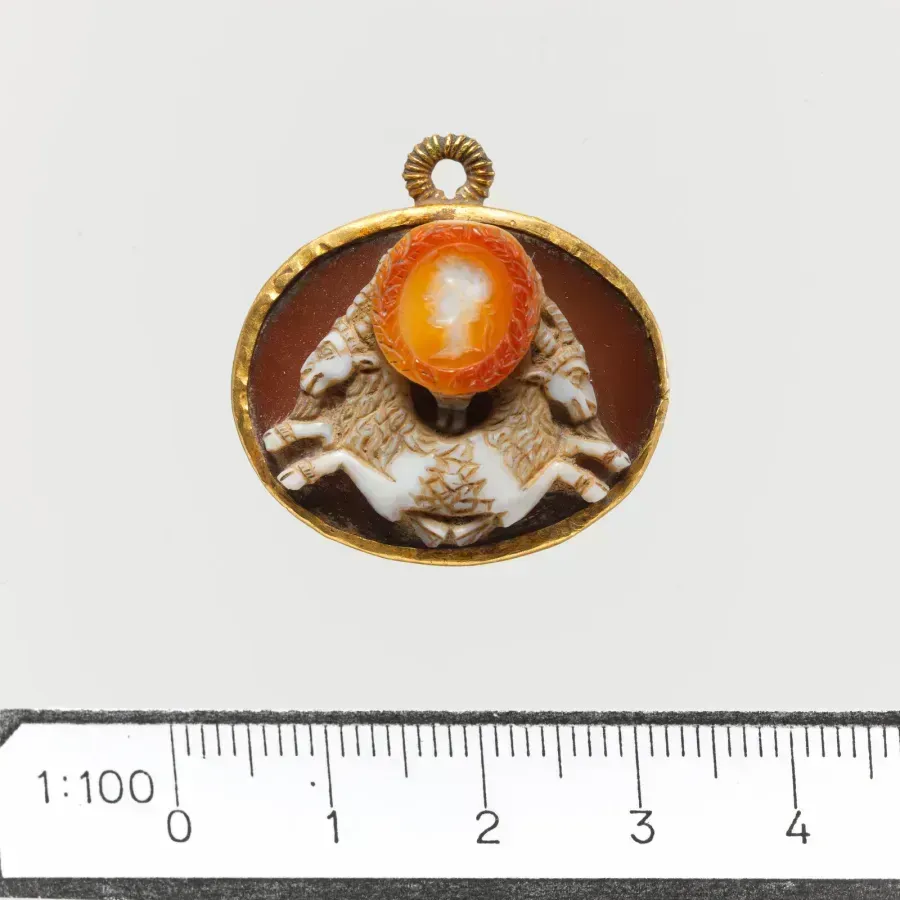
Martin Luther King Jr. (January 15). Built a movement through discipline, strategy, and the patience to play a long game against an entrenched system. Capricorn energy applied to the highest purpose.
Michelle Obama (January 17). Built a career, a platform, and an influence that grew methodically from law school to the White House to global impact. Nothing was rushed. Everything was earned.
David Bowie (January 8). Proof that Capricorn ambition doesn't have to be conventional. Bowie built and rebuilt his career across decades, always strategic, always evolving, always one step ahead.
Muhammad Ali (January 17). The discipline behind the showmanship. Ali's physical preparation was legendary, the Capricorn work ethic in service of a larger-than-life persona.
Isaac Newton (January 4). The man who literally described the laws that govern the universe. Years of systematic work to turn an observation into theory. Quintessentially Capricorn.
J.R.R. Tolkien (January 3). The philologist who did not just write a book but created an entire world, with its own languages, history, and mythology. Decades of work on Middle-earth. If that is not a Capricorn long-term project, nothing is.
The pattern shows across epochs and cultures: Capricorns are the builders. Not the revolutionaries who overturn everything. Not the visionaries who give grand speeches. The people who, after the vision, do the work. Who climb the mountain while others are still planning the route.
Send a friend a discount code, they save on their first order.
Styling Capricorn Jewellery: One Excellent Piece
The Capricorn styling principle: invest in one excellent piece rather than five average ones. Quality over quantity. Always.
Capricorn jewellery should be timeless. A garnet ring in gold that you'll wear for twenty years. A silver chain with clean lines that works with everything. A pair of onyx studs that go from office to evening without changing. Capricorn doesn't follow trends. Capricorn outlasts them.
The colour palette is deep and grounded: dark reds, blacks, charcoal greys, and warm metallics. These are colours that command respect without demanding attention.
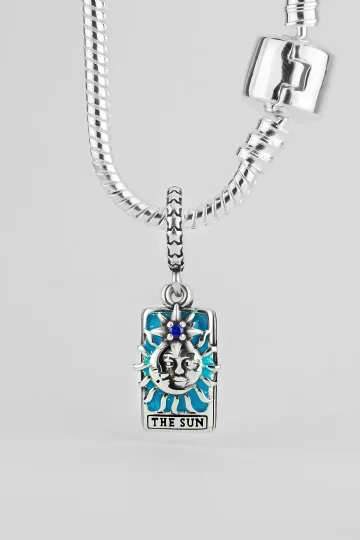
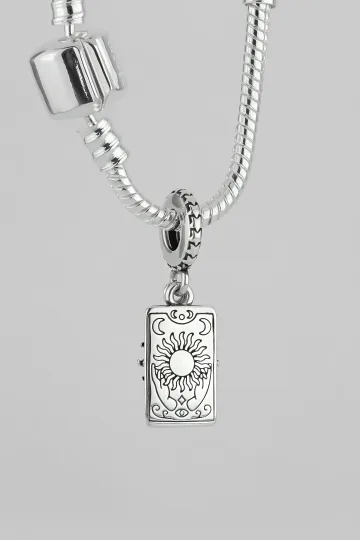
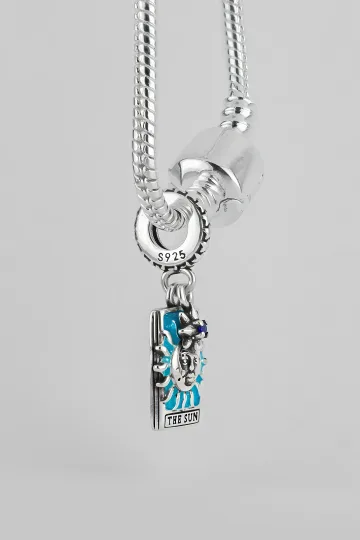
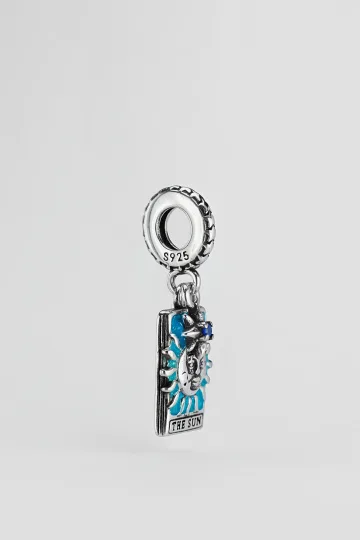
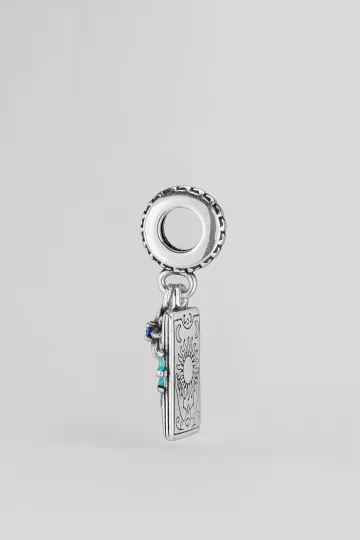
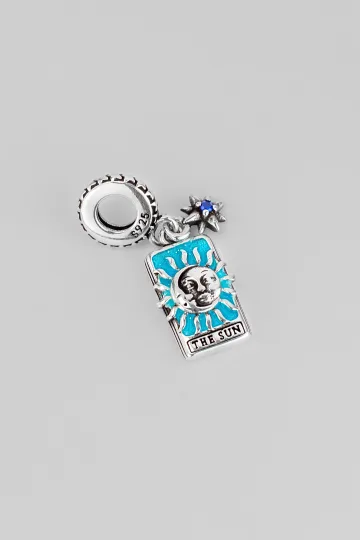
Capricorn layering is minimal. One or two pieces maximum. A single garnet or onyx pendant on a quality chain is often enough. If adding a second layer, a somnium necklace at a longer length adds depth without clutter. For hands, a sun and moon ring or a signet-style onyx ring provides one strong statement. Celestial earrings in silver or dark gold studs keep the ears understated. A sun tarot charm can work if it's treated as the single necklace rather than part of a stack. Capricorn doesn't pile on. Every piece is considered, and the overall effect should be "I'm wearing exactly what I intended to wear, no more, no less."
If you're gifting a Capricorn, invest in quality and keep the design classic. A well-made piece in timeless design. Garnet or onyx in a setting that will look as good in ten years as it does today. If the budget is tight, buy smaller but buy better. A tiny garnet stud in solid gold beats a large garnet pendant in plated brass. If you can say "I chose this because it's built to last, like you," that's a compliment a Capricorn will actually take to heart.
Complete Date Calendar of Capricorn: Day by Day
Capricorn covers 29 days of the year, from 22 December to 19 January. Traditional astrology divides each sign into three decans of about ten days each, with a sub-planet that subtly modifies the sign's base character. For Capricorn, an earth sign ruled by Saturn, the three decans are Saturn (pure Capricorn), Venus (flavour of Taurus), and Mercury (flavour of Virgo). Every Capricorn shares the same disciplined, structured core, but the decan and the exact birthday add nuance worth recognising.
Complete date table
| Date | Decan | Sub-planet | Dominant trait |
|---|---|---|---|
| 22 December | 1 | Saturn | Cusp with Sagittarius, structured optimism |
| 23 December | 1 | Saturn | Pure Capricorn, classic ambition |
| 24 December | 1 | Saturn | Discipline and retreat |
| 25 December | 1 | Saturn | Christmas-day energy, sense of tradition |
| 26 December | 1 | Saturn | Steadiness and planning |
| 27 December | 1 | Saturn | Focus, quiet perfectionism |
| 28 December | 1 | Saturn | Practical realism |
| 29 December | 1 | Saturn | Physical endurance |
| 30 December | 1 | Saturn | Emotional solidity |
| 31 December | 1 | Saturn | New Year's Eve, year-end reflection |
| 1 January | 2 | Venus | Start of the year, aesthetic ambition |
| 2 January | 2 | Venus | Pursuit of lasting beauty |
| 3 January | 2 | Venus | Quiet charm |
| 4 January | 2 | Venus | Sensitivity to detail |
| 5 January | 2 | Venus | Balance of work and relationships |
| 6 January | 2 | Venus | Generous mid-decan warmth |
| 7 January | 2 | Venus | Controlled emotional openness |
| 8 January | 2 | Venus | Loyalty in relationships |
| 9 January | 2 | Venus | Measured generosity |
| 10 January | 2 | Venus | Transition toward the analytical decan |
| 11 January | 3 | Mercury | Analysis and communication |
| 12 January | 3 | Mercury | Precise argument |
| 13 January | 3 | Mercury | Intellectual curiosity |
| 14 January | 3 | Mercury | Mental openness |
| 15 January | 3 | Mercury | Heart of the analytical decan |
| 16 January | 3 | Mercury | Dialogue and exchange |
| 17 January | 3 | Mercury | Strategic adaptability |
| 18 January | 3 | Mercury | Synthesis of Capricorn qualities |
| 19 January | 3 | Mercury | Final day, cusp with Aquarius |
First decan: 22 December to 31 December
The first decan is the pure heart of Capricorn. Saturn rules without modification, and these are the most classic Capricorns, recognisable on sight. Discipline, structure, long-range patience, suspicion of shortcuts. People born on 22, 25, 27, 28, and 31 December tend to embody the Capricorn archetype in its most concentrated form. The 25 December birthday carries a particular bond with family tradition. The 31 December date often turns New Year's Eve into a personal ritual of annual accounting, the Capricorn at the end of December is more likely than any other sign to take stock of the year just lived. The 22 December cusp leans toward Sagittarius and brings a flicker of optimism and love of travel inside the otherwise tightly structured frame. The result is a Capricorn who is less closed and more open to experimenting.
Second decan: 1 January to 10 January
The second decan brings Venus, the ruler of Taurus, the other strong earth sign. Capricorns of this period carry a more pronounced aesthetic instinct. They love durable beauty, noble materials, objects that age well. Their ambition includes the beautiful, not only the useful. Birthdays around 1, 5, and 8 January often produce people who combine Capricorn discipline with a refined, almost Venusian eye. The 1 January date opens the calendar year with the Capricorn pleasure of fresh structure and clear goals. These are Capricorns who find themselves in design, architecture, classical music, or fashion built around timeless pieces. Not the ephemeral, ever. The beautiful, always.
Third decan: 11 January to 19 January
The third decan brings Mercury, the ruler of Virgo. Here Capricorn gains analytical and communicative capacity. These are the Capricorns who write well, who speak in public with calm, who know how to argue with precision. The internal structure of the sign remains, but mental mobility enriches it. Birthdays on 13, 15, and 18 January often combine Capricorn discipline with Mercury-style clarity. The 19 January date is the final day of Capricorn and the cusp with Aquarius. People born here often show Aquarian eccentricity beneath the structured Capricorn facade. The result is a Capricorn who surprises, the one with the unexpected idea when least anticipated.
Cusps: born on the border
People born on 22 December or 19 January sit on the cusps. The 22 December birthday is officially Capricorn (Sagittarius ends on the 21st with the winter solstice), but the Sagittarian traits of expansion, optimism, and travel can stay visible underneath the Saturn frame. The 19 January date is still Capricorn (Aquarius begins on the 20th), but the Aquarian eccentricity can emerge in ways close friends quickly recognise. Modern astronomical astrology calculates sign membership from the Sun's exact position at birth, so cusp births are simply Capricorn with a neighbouring flavour. In practice, people born on these borders often recognise themselves in both signs, and the blend works as a portrait of character.
Frequently Asked Questions
What are the dates for Capricorn? December 22 to January 19.
What is Capricorn's element? Earth. Practical, grounded, and oriented toward long-term results.
What planet rules Capricorn? Saturn. Discipline, time, structure, and earned rewards.
What stones are associated with Capricorn? Garnet (January birthstone), onyx (discipline and focus), black tourmaline (grounding and protection), and ruby (ambition and vital energy). The birthstones-by-month guide places garnet at the head of the calendar, with notes on how it bridges the late-December and January birth window.
Are Capricorns really that serious? They can be, but the stereotype misses the dry humour, the hidden warmth, and the loyalty that Capricorns show to the people they trust. Serious about their goals? Yes. Serious about everything? Not even close.
What's the best gift for a Capricorn? Something well-made, classic, and built to last. Quality materials, timeless design, and the sense that you chose it with care.
Is Capricorn compatibility actually real? Astrological compatibility has no scientific basis. But the Capricorn need for reliability, patience, and shared goals in a partner is a real dynamic, whatever the stars say.
Which material suits Capricorn best? Silver for everyday: classic, restrained, easy to maintain. Gold for milestones: timeless, valuable, durable. Stainless steel for sport and travel: indestructible, maintenance-free. The Capricorn chooses by function, not by flash.
Can I wear Capricorn jewellery without being a Capricorn? Of course. The Capricorn aesthetic (deep colours, classic forms, restrained elegance) works for anyone who places timelessness above trends. Garnet and onyx are universally wearable stones. And the philosophy of "one excellent piece instead of five average ones" is good advice for everyone.
How do I care for garnet? Garnet is relatively robust (6.5 to 7.5 on the Mohs scale). Clean with warm water and mild soap. Do not use an ultrasonic cleaner (some garnets have inclusions that can crack with vibration). Store separately from harder stones (diamond, sapphire) that could cause scratches.
Silver and gold jewellery, wedding bands, symbolic pendants, paired sets.
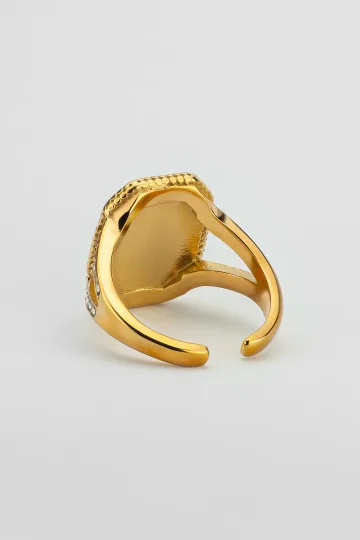
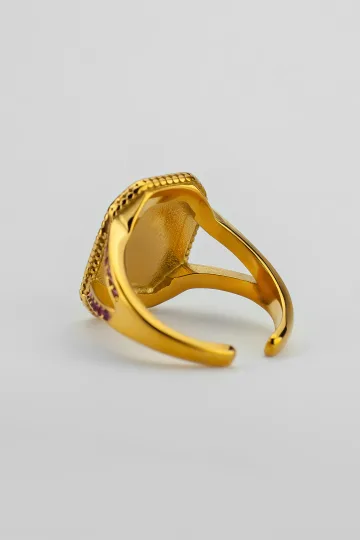
Wear the symbol, don't just read about it. These are in stock:
The sign that plays the long game
Capricorn is the sign that ancient astrologers linked to Saturn, to earth, to the slow, steady climb toward something that lasts. Thousands of years later, the archetype endures. The builder, the strategist, the person who understands that the most valuable things take time.
The aesthetic matches the philosophy. Capricorn's palette (deep garnet red, onyx black, rich metallics) and symbols (the sea-goat, the mountain, the Saturn glyph) create a visual language of understated power and enduring quality.
You don't have to be born between December 22 and January 19 to connect with that. You just have to be willing to do the work, skip the shortcuts, and trust that time rewards patience.
And perhaps that is the deepest Capricorn wisdom: that the most valuable things do not come quickly. That patience is not a passive virtue but an active decision. Waking up every morning and taking the next step, even when the summit is still far away.
Pricus, the immortal sea-goat, accepted his fate and became a constellation. Amalthea nursed a god and became immortal. Both had to let go to become what they were meant to be. For the Capricorn, that is the final lesson: that control has its limits. That some things develop without being steered. And that the greatest achievement sometimes consists in accepting that.
But first: do the work. Climb the mountain. Summon the patience. And once you arrive at the top: pause briefly, enjoy the view, and then look for the next mountain. Because a Capricorn without a goal is like a river without a bed. They need the direction. They need the path. And the path is always upward.
A garnet on the finger. An onyx chain around the neck. A signet ring with the Saturn glyph. These are not just jewellery pieces. They are markers on the path upward. Reminders of why you do what you do. And why it is worth continuing. Tomorrow. The day after. In ten years.
About Zevira
Zevira makes jewellery by hand in Albacete, Spain. The Capricorn rule of quality over quantity is exactly how we work: one carefully considered piece, made properly, instead of a pile of throwaway. Clean lines, precise angles, and materials that age beautifully fit this sign perfectly.
Here is what you will find with us for the Capricorn character:
- Rings and pendants with garnet, the January birthstone, in gold and silver
- Pieces with onyx and black tourmaline for discipline, focus, and grounding
- A celestial and symbolic line: sun, moon, eye, and motifs of Saturn and the stars
- Signet rings and geometric silhouettes for one strong accent
- Understated stud earrings and chains with clean lines for everyday wear
- Paired and symbolic sets that make easy gifts for milestones and anniversaries
Every piece is made by hand by a craftsman, with the option of personal engraving. Sterling silver 925 and 14 to 18K gold.


