Chrysoprase Jewelry: The Apple-Green Stone and Why It Is Rare
Chrysoprase costs more than many stones we are taught to think of as "nobler" than it. And that is despite the fact that, formally, it is just a variety of quartz, the same mineral that makes up ordinary sand. The paradox comes down to one thing: quartz reaches that exact apple-green color, translucency and purity only on rare occasions, and the main Australian deposit is slowly running dry.
This is an article about a stone with real chemistry and geology, not about magic. We will look at what chrysoprase is made of, what gives it color, where it is mined, how to tell the genuine stone from dyed quartz, and how to care for it so it lasts for decades.
What Chrysoprase Is: The Chemistry and Physics of the Stone
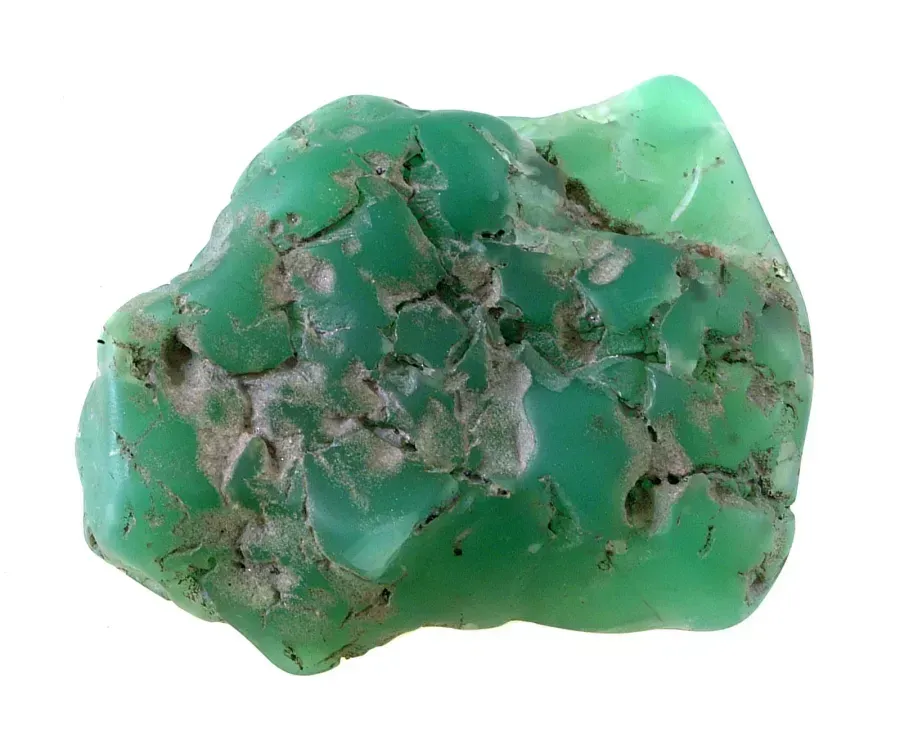
Chrysoprase is a semi-translucent variety of chalcedony, that is, cryptocrystalline quartz. At its base sits silicon dioxide (SiO2), the same substance found in rock crystal, agate and flint. The crystals in chalcedony are so tiny that the eye cannot make them out, so the stone looks uniform and slightly waxy rather than faceted from within like transparent quartz.
Where the Apple-Green Color Comes From
The color of chrysoprase comes from nickel. Compounds of nickel (hydrosilicates and hydroxides) lodge inside the quartz, and it is these that absorb the red and yellow parts of the spectrum while reflecting the green. People often get this wrong: the green of beryl and of many emeralds comes from chromium and vanadium, while the apple-green of chrysoprase comes specifically from nickel. That is why chrysoprase is neither dyed nor irradiated: the color is built chemically into the structure of the stone and cannot be washed off or rubbed away.
This mechanism has a weak spot. Nickel compounds are sensitive to strong heat and to the loss of water. If chrysoprase is boiled for a long time or kept in a sauna, it can fade, because some of the bound water escapes. Sometimes, once it cools and sits in a humid environment, the color partly returns. In direct sun, over years of wear, saturation can slowly drop by 5 to 10 percent, but that is a process measured in decades, not in a month.
The more evenly the nickel is spread out and the more of it there is, the more saturated and even the green. A pale grayish-green stone means either little nickel or impurities. Dark spots and veins are foreign minerals or patches of uncolored chalcedony.
Physical Properties
- Hardness: 6.5 to 7 on the Mohs scale. That is the level of the whole quartz family. Softer than sapphire and diamond, so the stone scratches from sand and dust (which almost always contain quartz) and calls for care.
- Crystal system: trigonal (like quartz), but because of its cryptocrystalline build chalcedony behaves like a solid mass with no visible cleavage planes.
- Density: around 2.58 to 2.64 g/cm3.
- Fracture: conchoidal, like glass.
- Luster: waxy to vitreous once polished.
- Translucency: from semi-translucent to nearly opaque. Semi-translucent stones that "glow" when held to the light are worth noticeably more than cloudy ones.
- Cleavage: absent, which is good for cutting and polishing.
Translucency is the key sign of quality. A good chrysoprase held to the light gives off an even inner glow, like backlit frosted glass. If the stone looks flat and "dead" under bright light, it is either low grade or not chrysoprase at all.
The History of Chrysoprase
The stone has a real history, and there is no skipping it, because it is exactly what explains why chrysoprase kept slipping in and out of fashion.
Antiquity
The name is Greek: chrysos (gold) and prasinos (green, the color of leek), "golden green." Greeks and Romans placed chrysoprase among the green chalcedonies and cut cameos and inlays for signet rings from it. Pliny the Elder, in his "Natural History," describes the green chalcedonies among the prized stones of his day. The color was tied to spring greenery and growth, which is where its lasting reputation as a "stone of youth and renewal" comes from, a reputation that has reached us intact.
The Middle Ages and Bohemia
Chrysoprase is named among the twelve stones in the description of the foundations of the wall of the Heavenly Jerusalem in Revelation, which secured it a place in Christian tradition and church art. In the Middle Ages an important source was Lower Silesia (the Szklary area in present-day Poland). Local chrysoprase went into liturgical objects and jewelry. It is known that green chalcedony from these deposits was used to finish the interiors of Prague buildings from the era of Charles IV.
The 18th and 19th Centuries: Fashion and Australia
Chrysoprase was in vogue at the Prussian court of Frederick the Great in the 18th century; snuffboxes, rings and trim were decorated with it. A fresh surge in demand came in the 19th century, when large, good-quality deposits were found in Australia. The stone entered Victorian jewelry as a restrained green alternative to costlier gems. By the start of the 20th century fashion shifted toward other stones and chrysoprase slipped into the shadows for a long stretch, sharing the fate of so many "out-of-season" gems.
Today
Interest in natural stones with character of their own brought chrysoprase back into the catalogs of small workshops and independent jewelers. The main current source of quality material is Australia, and it is precisely its reserves that the conversation about the stone's rarity revolves around.
Varieties and Trade Names
Several different things are sold under the "chrysoprase" label, and some of them are not chrysoprase. Knowing these names keeps you from overpaying.
Classic chrysoprase: a saturated apple-green, semi-translucent chalcedony colored by nickel. This is the standard the whole article is about.
Lemon chrysoprase (citron chrysoprase). Under this name what usually sells is not chalcedony but nickel-bearing magnesite, or its mix with quartz. It is opaque, yellow-green, often with whitish veining. Gemologically it is not true chrysoprase, and in hardness magnesite is softer (3.5 to 4.5 on Mohs against 6.5 to 7), meaning it scratches far more easily. For an everyday ring that is an important difference.
Prase opal and prase. Prase is a dark, cloudy gray-green quartz that was historically also called "prasinos." It lacks the signature glow of chrysoprase and costs less. If a stone is dull and dark, you are more likely looking at prase than at chrysoprase.
Chrysoprase with matrix. A stone with visible brown or white veins of the host rock. Sometimes it looks decorative, but a clean even color is always valued above the mottled kind.
The practical takeaway: if a description says "lemon" or "citron," ask the seller whether it is chalcedony or magnesite. Both the price and whether the stone will survive daily wear depend on the answer.
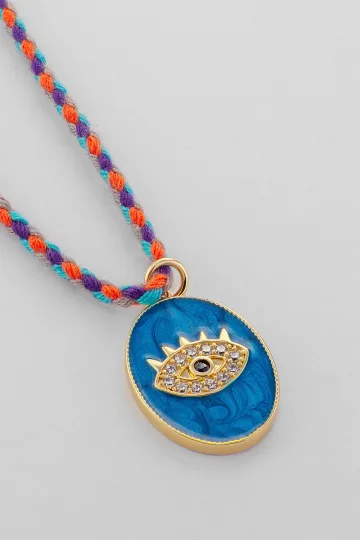
Wear the symbol, don't just read about it. These are in stock:


Deposits
Australia
The main global supplier of quality chrysoprase is Western Australia (the Marlborough region and, more broadly, the Pilbara-Yilgarn craton), along with Queensland. Australia accounts for the bulk of the mining of saturated apple-green, jewelry-grade material. Geologically this is tied to the weathering of nickel-bearing rocks: nickel, once freed, migrates and settles together with silica, coloring the chalcedony. That is why chrysoprase often turns up near nickel laterites.
Reserves are finite. A limited amount of high-quality material remains, and at the current rate of extraction the best grades will grow scarcer. This is not "the end of the world in fifteen years," as is sometimes written, but a real trend toward rising prices for top stones as the best faces are worked out.
Poland and Czechia (Silesia, Bohemia)
The historical deposits of Silesia (the Szklary area) supplied chrysoprase as far back as the Middle Ages. Today they are practically exhausted, so old Silesian and Bohemian material is valued by collectors. For collecting rarity this chrysoprase sits alongside dioptase, the rare blue stone of collectors: both are mined at a handful of deposits, and both are prized not for size but for color saturation.
Other Sources
Chrysoprase is found in Brazil, Tanzania, Kazakhstan, Madagascar and the United States (California, Arizona). Quality and color vary widely: Brazilian and Kazakh material often pulls toward yellow and falls short of the Australian in cleanness of tone. These sources usually yield a more affordable stone for a first acquaintance.
Why Geography Decides Color
Chrysoprase is born where nickel-bearing rocks meet silica, with weathering at work on top. So the stone's color depends directly on the local geology: where nickel is plentiful and settles evenly, the result is a saturated apple-green; where there is less nickel or iron is mixed in, the tone drifts toward yellow and gray. This is what explains why Australian material is consistently cleaner than Brazilian or Kazakh: the matter is not the "magic of a continent" but the makeup of the rocks and the conditions of formation. When you buy chrysoprase, you are in large part buying the specific geology of a specific quarry.
Customer reviews
Zevira is a real jewellery shop. Genuine payments, deliveries and customer thank-yous.
🥰🥰🥰 gracias
Ok, ¡gracias! 🙂
Chrysoprase and Similar Green Stones: How Not to Confuse Them
On the market several green stones are easily taken for chrysoprase. Telling them apart comes down to a combination of color, translucency, hardness and behavior in light.
Chrysoprase and emerald. Emerald (a variety of beryl) is harder (7.5 to 8), its green is deeper and cooler, almost always with internal inclusions, the so-called "garden." Chrysoprase is lighter, more even in color, without those fractured inclusions, and markedly cheaper. Confusion is possible only at a quick glance.
Chrysoprase and nephrite/jadeite. The jades can run a similar tone, but they are usually cloudier, fibrous in structure and very tough. Chrysoprase gives a cleaner inner glow.
Chrysoprase and peridot (chrysolite). Peridot is warm, leans toward golden yellow and plays brighter in the light. A close relative in the palette, peridot, the yellow-green stone of the sun: its warm tone drifts into gold, while chrysoprase stays in a cool apple-green.
Chrysoprase and aventurine. In aventurine you can see a glittering from tiny inclusions of mica or hematite (aventurescence). Chrysoprase has no such sparkle, only even color and a glow when held to the light.
Chrysoprase and chrysocolla. Chrysocolla is also green and also tied to the copper and nickel of weathering, but it is noticeably softer, often more porous, and frequently comes with blue patches. Pure chrysocolla rarely gives the even apple-green glow of chrysoprase, and it feels different to the touch and behaves differently under polish. The two get mixed up in photos but not in person.
Chrysoprase and dyed quartz / glass. The most common substitution. Dyed quartz gives itself away through uneven color, a buildup of dye in the cracks and along the edges, and the absence of a glow when held to the light. Glass gives itself away through air bubbles and a too "perfect," candy-like color.
If green tones appeal to you, it is worth comparing chrysoprase with malachite in jewelry: malachite is denser, opaque and comes with its signature banded rings, whereas chrysoprase wins with clean luminous color.
How to Tell Real Chrysoprase from a Fake
A few checks that genuinely work.
- Held to the light. Bring the stone up to a lamp. Natural chrysoprase gives an even inner glow, with color spread through the whole body. Dyed quartz stays flat, and the dye gathers in the cracks and along the edges.
- Evenness of color. A natural stone is colored throughout its mass. Sharp boundaries, patches of dye, color only on the surface, these are signs of a fake or of treatment.
- Temperature and weight. To the touch the stone is cool and noticeably heavier than plastic. Glass is warmer than stone and often holds bubbles.
- Hardness. Quartz (6.5 to 7) is not scratched by a steel needle and does not leave marks on glass the way soft imitations do. A rough test on an unseen spot is a last resort; better not to risk a finished piece.
- Price. Good Australian chrysoprase cannot cost the same as kiosk costume jewelry. A suspiciously low price is almost always dyed quartz or glass.
- Certificate. For an expensive purchase, ask for a gemological report. Spectroscopy will show the nickel nature of the color and confirm it is natural.

Turn on your camera, pick earrings, a pendant or a ring, and see the piece on yourself in real time.
Switch items in one tap.
Everything runs in your browser: no photo or video is ever uploaded.
Treatments: What to Say Honestly About Processing
Chrysoprase has a reputation as a stone that is not dyed, and for quality Australian material that is true: the color is built in chemically by nickel. But the market does see treatments that sellers do not always mention.
Dyeing of porous chalcedony. Cheap pale or white chalcedony is steeped in nickel salts or green dyes and sold as chrysoprase. To tell it apart, the same glow when held to the light and the buildup of color in the cracks, discussed above, both help.
Impregnation and stabilization. Loose, fractured material is sometimes impregnated with a colorless polymer or wax so it holds a polish and does not crumble. Such a stone feels a touch warmer to the touch than the genuine one and, when heated with a needle, gives off the smell of plastic. For an inexpensive piece this is not a crime, but the price should match.
Doublets. A thin slice of good chrysoprase is glued onto a backing of cheap stone or glass to stretch the size. The glue line shows from the side, especially held to the light at an angle. In a pendant with a closed back it is easy to hide, so large thin stones in a closed setting deserve a closer look.
Natural jewelry-grade Australian chrysoprase needs no treatment, and an honest seller will state plainly whether the stone in front of you is natural or stabilized.
Caring for Chrysoprase
Chrysoprase is softer than diamond and sapphire, so it asks for gentle handling, but with reasonable care it serves calmly for decades.
Everyday Wear
Take the piece off before sport, cleaning with household chemicals, the shower, the bath, the pool and the sea. The quartz itself is chemically stable and water does it no harm, but sudden temperature swings can cause internal microcracks, and a silver setting darkens in water. For a ring meant for constant wear, choose a setting that shields the edges of the stone from chips.
Cleaning
A soft brush, warm water and a drop of liquid soap. Afterward, blot dry with a soft cloth. No abrasives (baking soda, tooth powder), no ultrasonic or steam cleaning: ultrasound is dangerous for the cryptocrystalline structure, and steam and strong heat can lighten the stone.
Storage
Keep chrysoprase apart from harder stones (topaz, sapphire, diamond), which scratch it easily, in a soft pouch or a separate compartment of the jewelry box. For long storage, place a sachet of silica gel beside it: it absorbs moisture and slows the tarnishing of silver. Protect the stone from prolonged direct sun.
Restoration
A surface dulled by microscratches can be brought back by a jeweler with a repolish, but only a master who knows how to work soft stones. A deep crack cannot be removed; a chip can be smoothed at the cost of losing part of the stone.
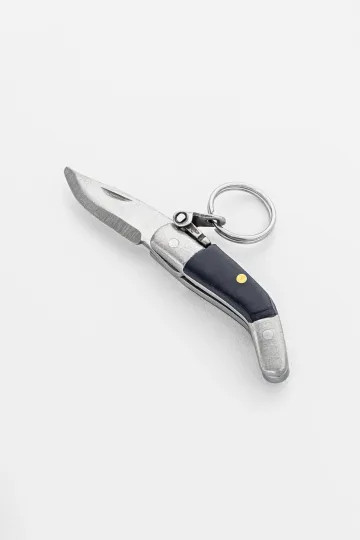
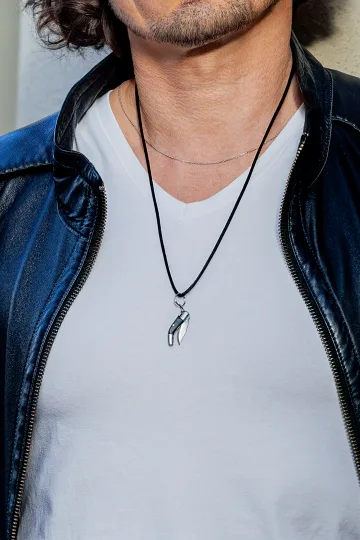
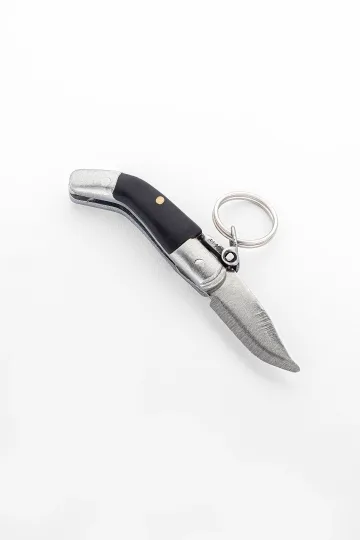
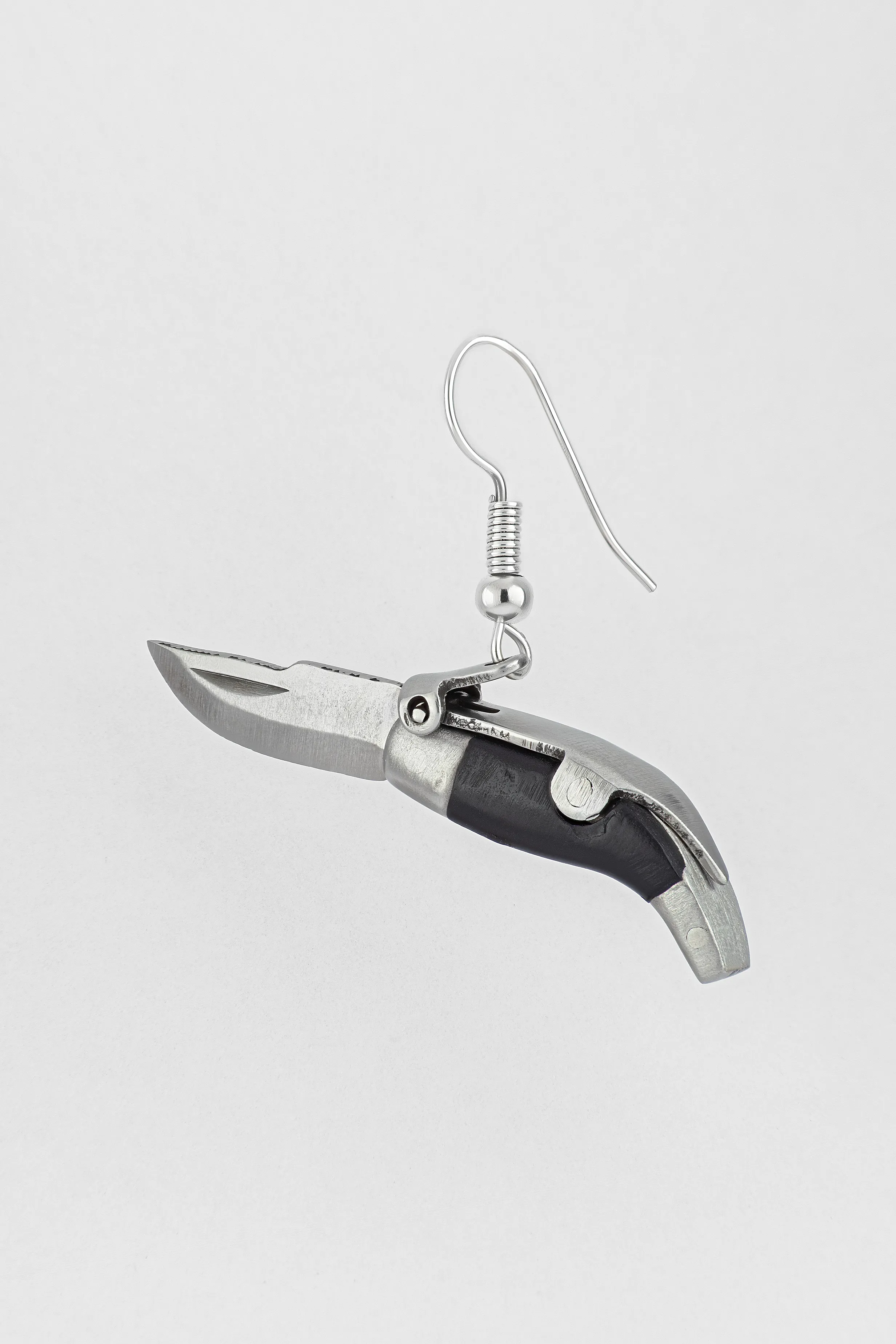
Artisan-crafted CAPAORA navaja pendant
A 40 mm stainless-steel navaja with a real folding mechanism and Palanquilla lock. An affordable gift to remember.
A code for blog readers:
10% off your first order
Authentic · Maker's guarantee · Ships from Spain
Chrysoprase Jewelry: Which Formats to Choose
In big chains chrysoprase barely appears: a scarce stone is not enough for runs of thousands of identical pieces, and chains find it easier to use rock crystal, dyed quartz or synthetics. So chrysoprase is a stone of small workshops and bespoke work.
Pendants are the happiest format. Chrysoprase reveals itself when held to the light, and a pendant catches the light more often. The optimal stone size for a pendant is 1.5 to 2 cm: smaller and it gets lost on the chest and fails to show the glow; larger (from 3 cm) and it weighs more, costs more and demands flawless cleanness without cracks. The oval and teardrop cabochon cuts are the most common: they sit well in a setting and pass light beautifully. A pendant under clothing lasts longest: the fabric protects the stone from blows and sun.
Bracelets: beads or cabochons of chrysoprase, often combined with silver. Wear them loose so the stones do not rub against hard surfaces.
Earrings call for a clean stone without cracks and are usually made to order. Studs with small cabochons are more common than large drops.
Rings for everyday wear should be taken only in a protective setting that covers the edges of the stone; otherwise the soft chrysoprase will quickly chip along the rims.
What to Look at When Choosing
- Color: an even apple-green, without gray or dark spots.
- Translucency: the stone should glow when held to the light, not look flat.
- Polish: smooth, without scratches or roughness.
- Setting: silver 925 or white gold 585 and up, sturdy and not loose. Avoid cheap alloys that oxidize and leave marks on the skin.
- Origin and documents: for an expensive purchase a certificate confirming it is natural is appropriate.
What to Wear Chrysoprase With
The apple-green of chrysoprase is easy to live with because it is calm, not loud. It does not argue with an outfit; it adds one warm note to the look. So it slots easily into both everyday and going-out wear.
In an everyday look chrysoprase shows best against a plain backdrop. A white shirt, beige knitwear, light linen, soft gray, sand, olive: against these colors the apple-green reads especially cleanly. A thin pendant on a chain reaching to the collarbones or under a light V-neck, where the stone rests on the skin and catches the daylight, is a safe bet for any day. A bracelet works well with a rolled-up or short sleeve, when the wrist is bare.
For the office, go for a minimal shape and a cool metal: silver or white gold. An oval or teardrop stone in a thin setting looks restrained, does not distract from the conversation, but adds softness to the face. This is one of those cases where one piece beats three: let chrysoprase be the only accent.
In the evening the logic flips. Against a dark backdrop (graphite, navy, black, wine) the green stone glows more strongly and looks richer. Under an open neckline or thin straps a larger pendant or a short choker chain suits well. For a special occasion chrysoprase gathers gracefully into a small set: a pendant plus stud earrings with the same stone, without overload.
If you want layers, stay with a single metal and pair chrysoprase with transparent or white companions: rock crystal, moonstone, pearls, small diamonds. They do not overpower the green; they set it off. Build a stack of bracelets on the same principle: one chrysoprase and a couple of neutrals, so the color stays the hero.
Two pieces of advice to finish. First: match the chain length to the neckline rather than guessing; with a high collar, shorter; with an open neckline, deeper. Second: do not mix chrysoprase with bright colored stones (ruby, sapphire, emerald) in one look; the warm green prefers neutral company to a contest for attention.
Leave your email, we'll send your discount code. No spam, unsubscribe anytime.
The code arrives by email, valid on your first order.
What Determines the Value of Chrysoprase
The price of chrysoprase is built not from weight, as with diamonds, but from four things in order of importance.
Color. It decides everything. A clean, saturated, even apple-green without gray, brown or yellow casts is the peak. The more the tone drifts toward gray or yellow, the cheaper the stone. A bluish-green with a faint mint note is prized especially high and is the rarest of all.
Translucency. A semi-translucent stone that glows when held to the light costs several times more than an opaque one of the same color. It is the second most important factor: it is the glow that separates jewelry grade from carving grade.
Cleanness. The absence of dark inclusions, whitish spots and cracks. Matrix veins and dots of foreign minerals lower the price even when the main color is good.
Origin and size. Australian material is dearer than Brazilian and Kazakh at equal appearance. A large clean stone climbs in price disproportionately: finding even color and translucency in a big piece is harder than in a small one, so a stone over 3 cm without flaws costs noticeably more than two small ones of the same total mass.
A separate case is old Silesian and Bohemian chrysoprase: it is valued as a collecting object, as a closed deposit, not by the usual jewelry scale.
Chrysoprase as a Gift
It is one of the most meaningful gifts among pieces of jewelry. Chrysoprase carries a long-standing reputation as a stone of renewal and new beginnings, so it makes sense to give at the start of a new chapter: a move, a job change, the birth of a child, the end of studies. The apple-green is versatile and suits most looks without being flashy. A pendant or bracelet with an engraved date or initials turns the gift into a personal thing. The stone's scarcity adds weight to the present: you are giving not a common gem but a mineral whose best grades grow harder to find over time.
Symbolism: Why Chrysoprase Is Called the "Stone of Joy"
Chrysoprase has long held a reputation as a stone of lightness, clarity and good spirits, which is where the folk name "stone of joy" comes from. The roots of this reputation are not mystical but quite earthly: the warm apple-green tone is associated with young grass, spring and the start of a cycle, and the human eye rests on the green spectrum more than on any other. The green of the mid-spectrum strains vision the least, and a calm stone of that tone is taken in as soothing. This is the physiology of perception, not the magic of the stone.
A Stone of Renewal and New Beginnings
The green of growth fixed chrysoprase to a steady link with changes for the better: a move, a new job, recovery, the start of a big undertaking. In that sense the stone reads as a gentle reminder that a new chapter is worth starting without needless anxiety. There is no "magical" action behind this, but the symbol works the way any meaningful talisman works: it keeps the right intention in mind. Wearing chrysoprase as a quiet anchor of calm is an honest, time-tested use without any showmanship.
Green and the Psychology of Color
Interior and clothing designers use a muted green where a sense of calm is needed: in bedrooms, studies, rest areas. A stone of the same tone carries that effect over to a piece of jewelry. A chrysoprase pendant at the collarbones is glimpsed dozens of times a day, and the calm color works as a background without distracting. This explains why people drawn to green return to chrysoprase again: the point is not rare energy but the simple visual comfort of the tone.
What to Say Honestly About "Healing" Properties
In folk traditions chrysoprase was credited with the power to ease anxiety, quell irritation and help with insomnia. The stone has no confirmed medical action, and to promise one would be dishonest. But the sense of calm from a pleasant color and a smooth, pleasant surface is a real, if psychological, thing. Chrysoprase is best treated as a beautiful stone with a kind reputation, not as a medicine.
Chrysoprase in Art and the Art Nouveau Era
The stone left a clear mark on jewelry, on decorative art and beyond, and that mark helps explain what masters valued it for.
Carving and Cameos
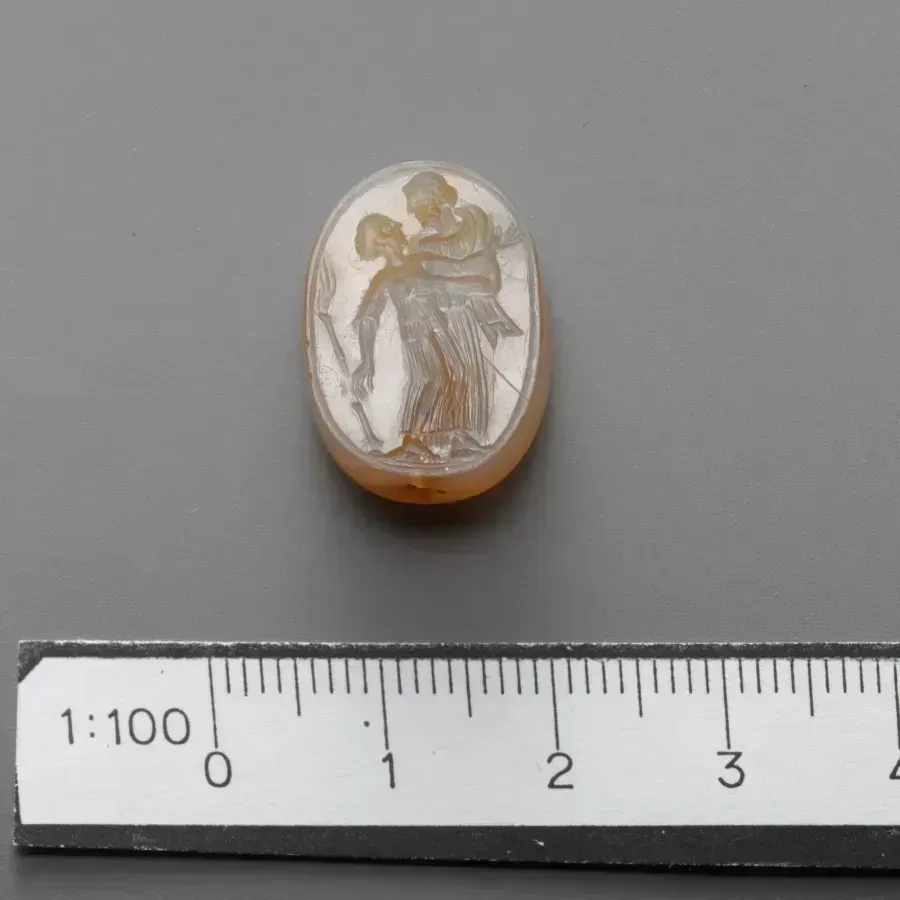
A cryptocrystalline structure with no directions of cleavage makes chalcedony ideal for fine carving: it can be worked in any direction without fear of splitting along a plane. So from antiquity green chalcedonies were carved into intaglios, cameos and signets with a sunken image. The even dense color of chrysoprase served as a good ground for miniature carving, and the waxy luster of the polish added depth. Small carved inlays were valued above large smooth ones precisely for the labor invested.
Art Nouveau and the Love of Natural Lines
At the turn of the 19th and 20th centuries the Art Nouveau style brought living natural forms back into jewelry: stems, leaves, insects, flowing lines. The soft apple-green of chrysoprase fit this aesthetic perfectly, since it is literally the color of young foliage. Jewelers of the era set it into pendants and brooches of plant forms, where the stone stood in for a leaf or a drop of dew. After Art Nouveau waned the stone slipped back into the shadows, but it is the work of that period that today shows chrysoprase in its most flattering role, as part of a living natural motif.
The Stone in Interiors and Church Decor
Silesian chrysoprase went both into jewelry and into finishings. Green chalcedony plates were laid as inlays in the decor of grand interiors, while in church art the stone was valued for its clean, "heavenly" green and for its mention among the foundations of the wall in the biblical text. Such a double role, both personal ornament and architectural decor, is uncommon for a semi-translucent gem and speaks to how even and beautiful the best historical material was.
Send a friend a discount code, they save on their first order.
A Famous Admirer: Frederick the Great and the Prussian Court
Chrysoprase has a concrete historical "ambassador," and that is the 18th-century Prussian king Frederick the Great. The stone was his favorite, and at court Silesian chrysoprase was made into snuffboxes, rings and the trim of everyday objects. Silesia had just then come under Prussia, and its deposits yielded good green material, so fashion and availability met at a single point. This episode matters for two reasons. First, it shows that chrysoprase could be a status stone of the very highest circle, not merely a modest alternative to costly gems. Second, it was the royal fashion of the 18th century that largely set the stone's reputation as a noble green, a reputation that stretched into the Victorian era and down to our own day.
Facts That Surprise
- The same mineral as sand. Chrysoprase is quartz, the most common mineral in the earth's crust. Beaches and glass are made of related material. What makes the stone rare is not the substance but a vanishingly small addition of nickel of the right concentration and evenness.
- Color from a metal more often seen in coins. The green of chrysoprase comes from nickel, the very metal that goes into coin alloys and stainless steel. In quartz it behaves quite differently, coloring the stone a warm apple-green.
- A stone that can "tan" in reverse. Unlike skin, chrysoprase does not darken in the sun but fades very slowly: ultraviolet can, over years, slightly weaken the nickel coloring. A pendant under clothing keeps its color longer than an open bracelet.
- The Australian "jade" that is not jade. Queensland chrysoprase was historically sold under the name "Queensland jade," though it has nothing to do with true jade. It was a pure marketing move for the sake of a pretty green image.
- A name older than most gems. The word "chrysoprase" is Greek and means "golden green." The stone was known by this name back in antiquity, while many gems familiar today got their names far later.
- Glow matters more than size. A small semi-translucent stone that glows when held to the light is valued above a large but opaque one. With chrysoprase, quality is judged not by weight but by the ability to pass light with even color.
- A stone from Revelation. Chrysoprase is named among the twelve gems in the foundations of the wall of the Heavenly Jerusalem, which fixed it a place in Christian symbolism for a millennium and a half to come.
- Rarity is growing before our eyes. The best Australian faces are gradually being worked out, and top apple-green material grows scarcer year by year. This is not a scare story but a calm trend toward rising prices for the best grades.
Frequently Asked Questions
How does real chrysoprase differ from dyed quartz?
The main sign is the glow when held to the light. Bring the stone up to a lamp: natural chrysoprase passes light from within with an even color spread through the whole body of the stone. Dyed quartz stays flat, and the dye gathers in the cracks and along the edges, creating unevenness. The second sign is the price: a natural stone does not cost the same as kiosk costume jewelry. If you have doubts about an expensive purchase, ask for a gemologist's certificate: spectroscopy will confirm the nickel nature of the color that gives the apple-green tone.
What gives chrysoprase its green color, nickel or vanadium?
Nickel. Nickel compounds built into the chalcedony absorb the red and yellow parts of the spectrum and reflect the green. This is a frequent mix-up: the green of emerald and of many beryls comes from chromium and vanadium, while the apple-green of chrysoprase comes specifically from nickel. That is why the stone is not dyed: the color is built chemically into its structure.
Which is valued higher: Australian, Brazilian or Silesian chrysoprase?
The Australian is the standard for cleanness and saturation of the apple-green color, accounts for most of the world's mining of quality material, and costs more than the Brazilian. The Brazilian and Kazakh are more affordable but often yellowish and less translucent, good for a first acquaintance with the stone. The Silesian and Bohemian (historical European deposits) are barely mined, so they are valued as collecting material. If you want the reference color, take the Australian.
Can you wear chrysoprase every day?
Yes, with an allowance for its softness: 6.5 to 7 on the Mohs scale, softer than sapphire and diamond, and the stone scratches from dust. A pendant under clothing lasts longest: the fabric protects from blows and direct sun. Take a ring for everyday wear in a protective setting. Remove the piece before sport, cleaning with chemicals and water activities. With careful handling chrysoprase calmly survives decades of wear.
Is chrysoprase afraid of water and the shower?
The quartz itself is chemically stable; seawater and chlorinated water do it no harm. The danger lies elsewhere. First, sudden temperature swings (a hot shower, then cold) can cause internal microcracks. Second, the setting suffers: uncoated silver dulls and blackens in water. The rule is simple: take the piece off before the shower, the bath, the pool and the sea. If it gets wet, blot it with a soft cloth and let it dry before putting it back in the box.
Does chrysoprase fade over time?
The color is built into the structure of the stone (nickel compounds), so it cannot be washed off or rubbed away. But over many years of wear in direct sun, ultraviolet can very slowly reduce saturation by 5 to 10 percent; it is a process of years, not months. Besides, nickel compounds are sensitive to strong heat: boiling or a sauna could, in theory, lighten the stone. If you wear the pendant under clothing and do not subject it to heat, it will keep its color for decades. A dulled surface can be partly restored by a jeweler with a repolish.
Is chrysoprase a precious or semiprecious stone?
Formally it is classed among the semiprecious: it is a variety of chalcedony, that is, cryptocrystalline quartz. But the classification is arbitrary and took shape for historical reasons. By rarity and price a good translucent Australian chrysoprase not infrequently outdoes some stones in the "precious" category. Quartz is one of the most abundant minerals on Earth, but chrysoprase of the right color and cleanness is extremely scarce: everything is decided by the amount and the evenness of the nickel.
What stone size should I choose for a pendant?
The optimum is 1.5 to 2 cm. A stone too small (under 1 cm) gets lost on the chest and shows the chrysoprase's signature glow poorly. One too large (from 3 cm) weighs more, costs more and demands perfect translucency without cracks. The oval and teardrop cabochon cut is the most common: it holds the stone well in the setting and passes light beautifully. The main thing here is not size but the cleanness of the color and the translucency.
Why does chrysoprase barely appear in ordinary chain stores?
It is a scarce stone with limited mining. Big chains work with runs of thousands of identical pieces, and chrysoprase of the needed quality simply cannot be mined in such quantities cheaply. It is more profitable for chains to use rock crystal, dyed quartz or synthetics. Chrysoprase remains a stone of small workshops, handwork and specialty shops, and it is usually sought out on purpose.
Do I need a certificate when buying?
For an expensive piece, yes. A gemologist's certificate confirms it is natural chrysoprase and not dyed quartz, and often states the origin and quality. The report should be signed and stamped by a laboratory. For an inexpensive small pendant a certificate is not essential, but it is worth asking the seller for a description of the stone.
Is it true that chrysoprase calms you?
The stone holds a reputation as the "stone of joy" and a remedy for anxiety, but it has no confirmed medical action, and to promise one would be dishonest. At the same time the sense of calm from a pleasant green color and a smooth surface is real, if psychological: the human eye rests on the green spectrum, and a calm tone works as a background and does not irritate. Wearing chrysoprase as a quiet anchor of good spirits is an honest use, time-tested, without promises of miracles.
Is it worth investing in old Silesian chrysoprase?
If you mean collecting, yes: the historical European deposits (Silesia, Bohemia) are practically worked out, and old material is valued as a closed source rather than by the usual jewelry scale. Such chrysoprase is linked to names like Frederick the Great and the Art Nouveau era, which adds it history. But this is a field for connoisseurs: provenance and condition matter, so it is worth buying from knowledgeable sellers and with documents. For an everyday piece it is simpler and safer to take a clean Australian stone.
About Zevira
At Zevira we love stones with character, and chrysoprase is one of them. It is no common gem: quartz reaches the apple-green of the right cleanness only rarely, and the best Australian grades grow scarcer over time. For us that is exactly the value: a stone that is not stamped out in runs.
When we select chrysoprase for the collection we look at concrete things: an even apple-green color without gray or dark spots, semi-translucency with an inner glow when held to the light, a clean polish without scratches and a sturdy setting of silver 925 or white gold that protects the edges of the soft stone from chips. Stones with yellowing, cloudy ones or those of unclear origin we do not take.
Pendants and bracelets with chrysoprase look good both for every day and as a gift for a new chapter. If a calm green and a natural stone with history appeal to you, take a look at what is in stock.