Jewelry of the World: National Symbols and How to Tell the Real Thing from a Fake
A small horn and a large markup
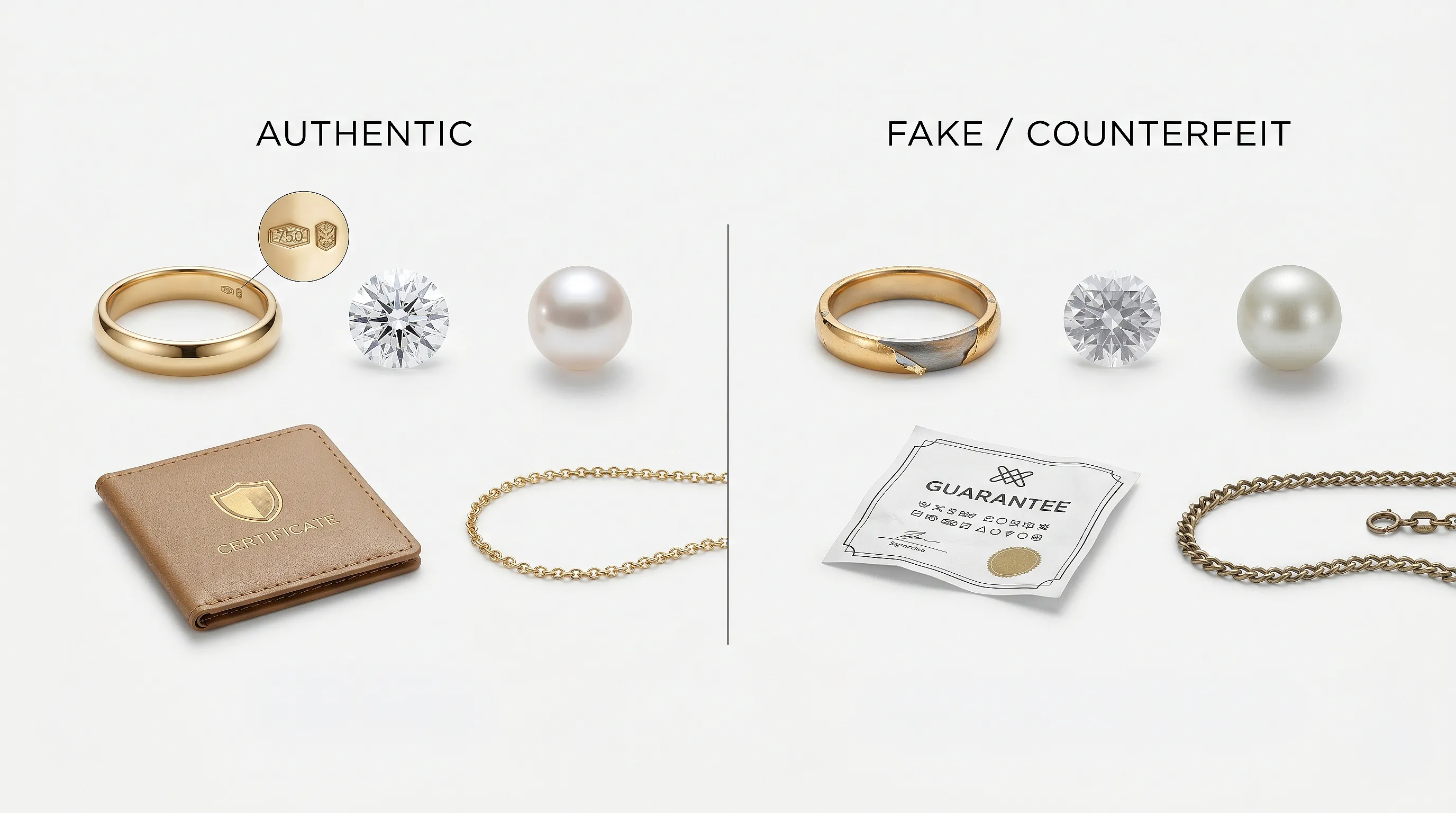
For every genuine piece of national jewelry sold to a traveller, there are roughly ten imitations cast in a workshop the week before you arrived. A Neapolitan cornicello passed off as coral is usually painted plastic. That gap, between an object that tells the truth about a country and one that tells the truth only about a vendor's margin, is what this guide is about.
Jewelry is one of the few things that is beautiful, fits in a pocket, and carries the story of a place all at once. Almost every culture has a symbol that people wore for centuries and that means something specific. The cornicello answers the evil eye with the shape of a young crescent. The nazar does the same with a blue glass eye. Azabache, the black jet worn by pilgrims on the road to Santiago, was carved into charms long before tourism existed.
The trouble is the ratio. Most stalls stack the convincing copy next to the real piece and let the price do the talking. What follows is a way to read material with your hands and your eyes, so you can keep craft and tourist stamping apart no matter which country you happen to be standing in.
How material gives away a fake
Before walking through the countries one by one, it helps to learn the universal checks. They work almost everywhere because they rest on the physics of the material, not on the seller's legend.
Weight and warmth
Natural materials are heavier than an imitation of the same size. Coral, jet, dense wood, glass, silver: all of them have real heft. Plastic feels like nothing. Pick up a piece, then pick up something similar from the next stall, and the difference registers in your palm at once.
Organic materials soak up body heat. Coral, jet, and wood grow warm in the hand. This is not magic, only the low thermal conductivity of biological matter. Glass and stone stay cool far longer. Plastic stays cool and, at the same time, feels suspiciously light, which is the giveaway combination.
Smell and surface
Wood has a scent, especially if you rub it between your fingers, because the friction releases resins and oils. Coral keeps a faint marine, slightly iodine smell. Jet, being fossilised wood, smells of burnt coal when heated, while plastic melts with a sharp chemical reek. Genuine materials are rarely perfectly smooth and uniform: coral scratches, jet shows tiny scuffs, the spirals of hand filigree are slightly uneven. A flawless, glassy gloss is a reason to be careful, not reassured.
The item's story
A real object does not stay silent. Do not ask "is this genuine" (the answer is always yes). Ask instead what it is made of and how many hours of work are inside it. Whoever shaped the piece by hand can tell you about the material, the technique, and where they trained. A reseller knows only the name on the label.
Hallmark and assay
Most countries run a system of hallmarks for precious metals and traditional techniques: an assay stamp on silver and gold, regional marks such as "hecho en Toledo". The mark usually sits on the inside of the piece or on the clasp. Its absence is not a verdict, because a lone craftsman may work without registration, but its presence adds confidence.
Italy: cornicello, coral, and filigree
Italian tradition leans toward soft materials and delicate techniques: gold, coral, fine wire. The recognisable signature is elegant, tactile, and shaped by the history of the sea and the mountains.
The cornicello, the Italian horn
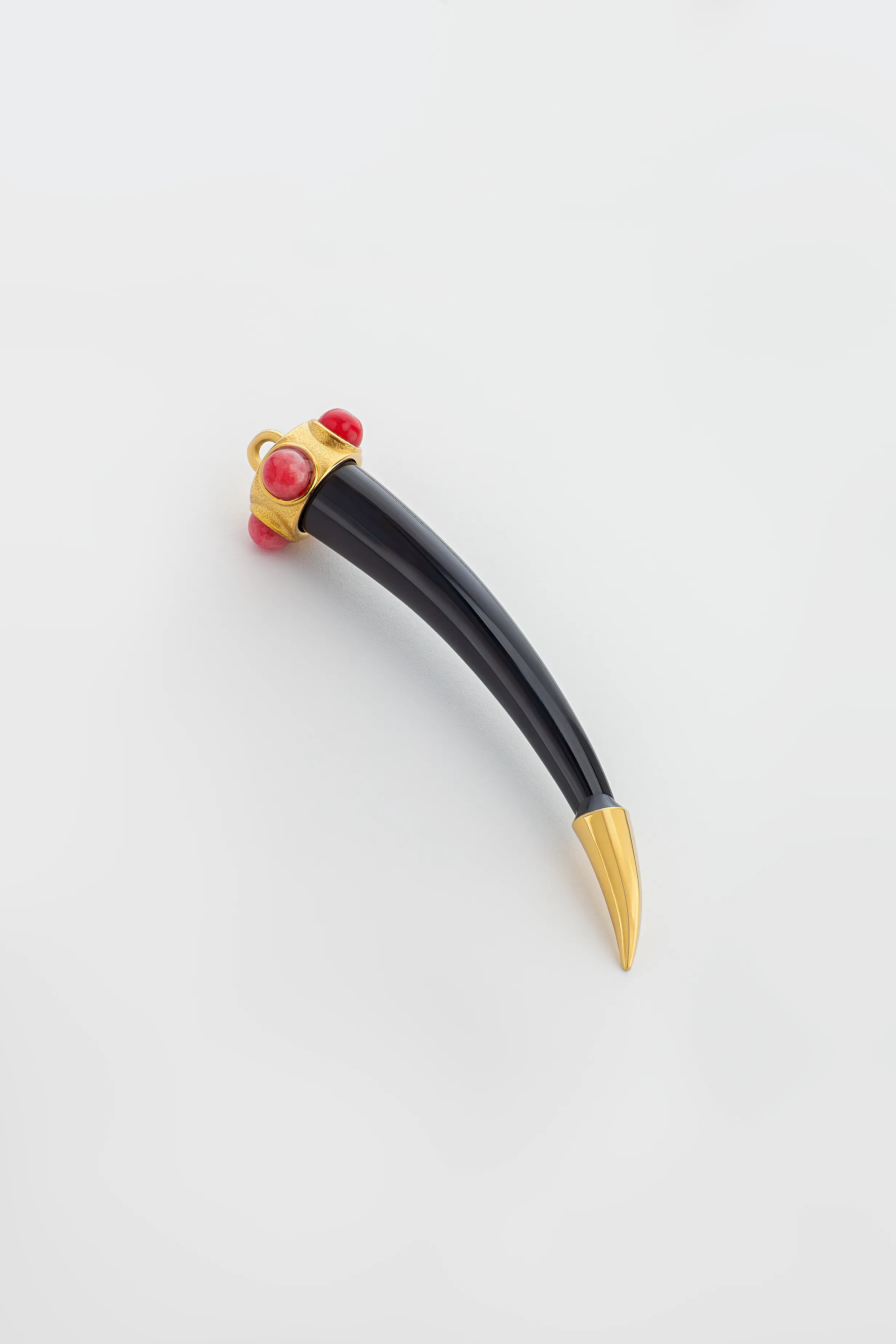
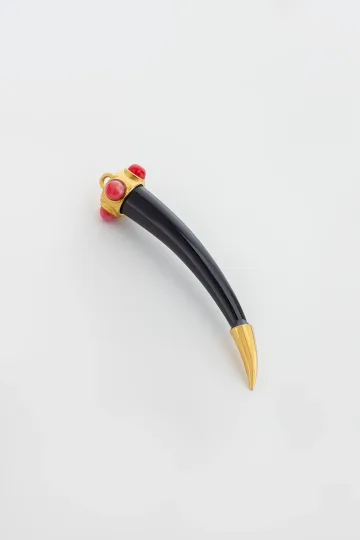
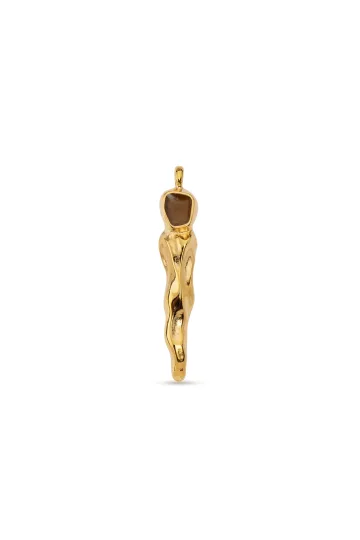
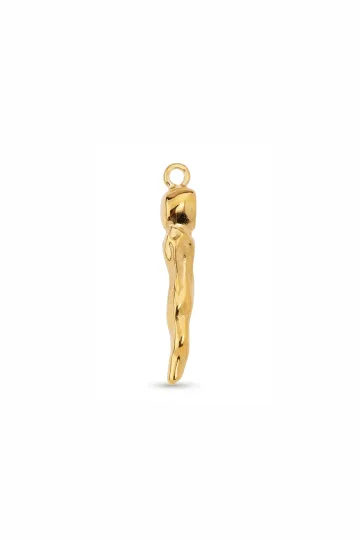
The cornicello is a small curved horn shaped a little like a chilli pepper. The symbol reaches back to pre-Roman Italy, where an animal's horn meant strength and fertility, and its upward point read as a request for protection. Hunters carried it first, then fishermen, because the sea is full of danger, and only later did it pass to townspeople. In Naples it became almost a reflex: hearing bad news, a person reaches for the cornicello and turns it between their fingers. Where the form came from and what meanings people poured into it are covered separately in the piece on the meaning of the cornicello.
The traditional materials are natural coral (red, pink, more rarely black), dark dense wood, jet, and ceramic. A gold mount exists, but that is a later variation. The ceramic cornicello appeared in the twentieth century, when coral grew scarce, and it made the charm affordable.
A fake gives itself away through the same set of signs: a coral or wooden cornicello has weight and warms in the hand, and the wood gives off a scent when rubbed. The plastic version is light, cold, and finished with a perfect gloss.
Red coral
Coral is not an amulet so much as a jewelry material with a geology of its own. It forms from the skeletons of marine polyps: a colony builds up a calcareous trunk at roughly a centimetre per decade. A coral bracelet is the work of nature measured in centuries, which is exactly why harvesting is tightly limited and the material is costly.
Imitations are everywhere: dyed plastic, pressed dust, coloured wax. How to tell them apart:
- The colour of natural coral is even but not perfectly uniform, with no sharp bands. Crisp stripes betray a dyed imitation.
- Coral is relatively soft, scratching and chipping easily. A faultless polish with zero signs of wear should make you suspicious.
- The material is porous: it absorbs moisture and may dull slightly over the years. That is a mark of authenticity, not a defect.
- A faint marine, slightly iodine scent is present. Plastic does not smell of the sea.
Italy keeps a register of artisans who work with coral, plus a "corallo italiano" mark for genuine pieces. For an expensive purchase it makes sense to ask for a document of origin.
Florentine filigree
Filigree is a pattern of twisted fine gold or silver wire, close to sculpture in miniature. Florence has developed the technique since the fourteenth century. The work is slow: an average bracelet takes twenty to forty hours, and the process cannot be rushed. Every coil is twisted by hand.
How to read quality:
- The gold is hallmarked (585 at minimum, 750 is better), with the mark on the inside.
- The pattern is clean and symmetrical yet not machine-perfect: a slight unevenness in the spirals reveals a human hand rather than a stamp.
- Flexibility tells you something too: gold springs back a little, while a thin plating over copper stays stiff and gives itself away by a weight clearly lower than that of solid metal.
Spain: damascene, azabache, and folk silver
If an Italian piece is a whisper, a Spanish one is closer to a shout. You feel the legacy of Moorish culture, the tradition of armourers, and the spirit of flamenco: bold, visible, with a story behind it.
Toledo damascene
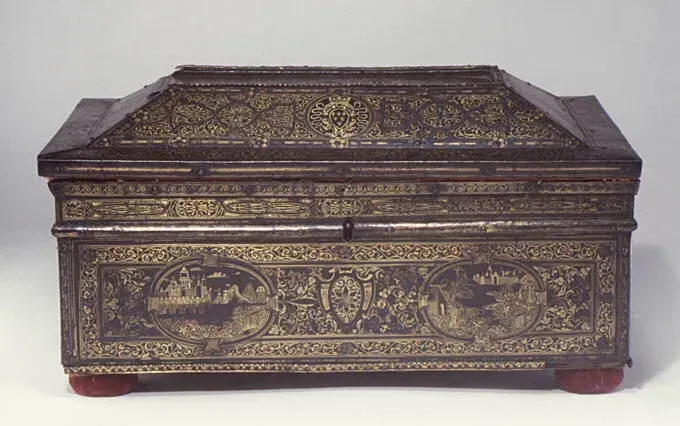
Damascene is the inlay of gold and silver wire into the surface of black oxidised steel. The technique came from Damascus, and Toledo became its European capital. At first it decorated blades and armour; later, artisans carried the method over to jewelry. Damascene demands two different skills at once, metallurgy and goldsmithing, and that rare combination explains why so few workshops remain.
The process runs like this: a pattern is cut into the steel, gold or silver wire is hammered into the grooves, then the surface is polished and the steel is blackened so the metals contrast. No pattern repeats twice.
How to tell handwork from stamping:
- Catch the edge of a gold thread with a fingernail: it should not lift. If the gold peels, you are looking at print over steel rather than true inlay.
- The pattern is alive and complex; a stamped one looks mechanically even and flat.
- The steel is matte and black. A shine betrays a lacquer coat instead of real oxide.
- The "hecho en Toledo" mark confirms the origin.
Galician azabache, black jet
Azabache is true jet, fossilised wood mined in Galicia in the northwest of Spain. On the Mohs scale it is soft (about 2.5 to 4), with a density of only 1.3 to 1.4 grams per cubic centimetre, so it is noticeably lighter than ordinary stone (2.5 and up) yet heavier than plastic. Jet formed from wood under pressure tens of millions of years ago, hence its organic properties: it warms in the hand and, when heated, smells of burnt wood or coal.
Jet was popular in the Victorian era as a mourning material: Queen Victoria wore it for decades after the death of Prince Albert, which gave the stone its status. In Galicia, pilgrims to the cathedral of Santiago de Compostela carved it into charms from early on.
The check is simple physics: jet is soft, warm, and light relative to stone. Plastic, when heated, melts and smells of scorched synthetics, whereas jet smells of coal. An honest maker is usually willing to run the test on a small offcut if the material is genuine.
Sevillian folk silver
Flamenco jewelry is part of the Andalusian costume: large teardrop-shaped crillas earrings, tall peineta combs, expressive pendants. There is none of the delicacy of Italian filigree here; the silver is meant to be seen and to be heard.
A genuine piece carries the 925 or 950 mark and often the maker's stamp, their initials or name. "Sevillian silver" with no marking at all is a pretty story rather than a guarantee. Silver darkens over time: that is oxidation and a sign of real metal, since plastic does not patinate. Weight also gives a hint: silver too light for its size usually turns out to be a thin coating.
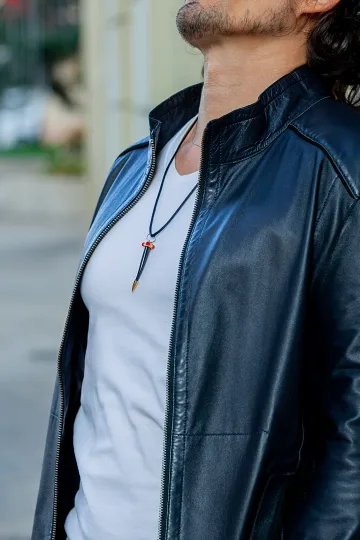
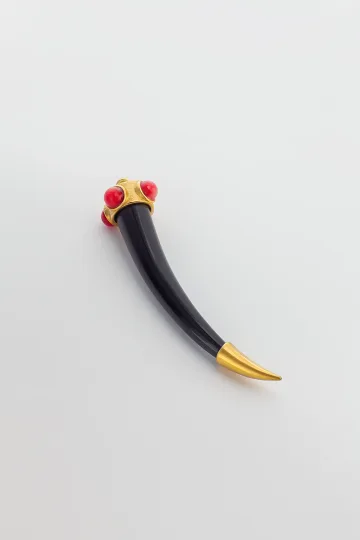
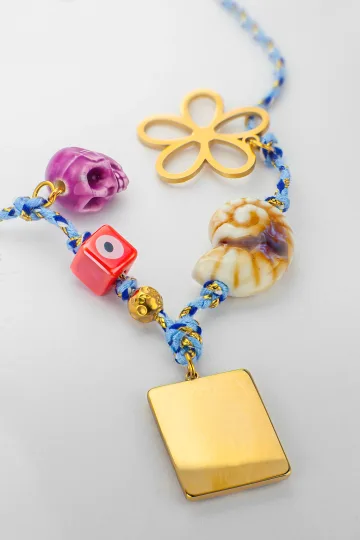
Wear the symbol, don't just read about it. These are in stock:
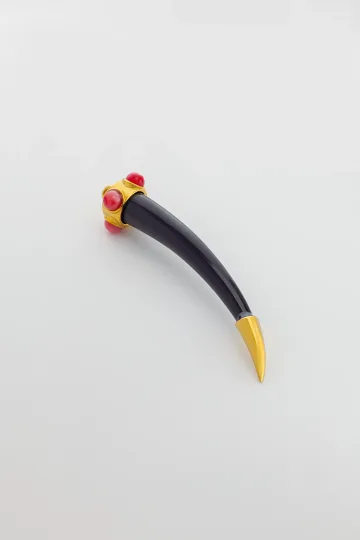
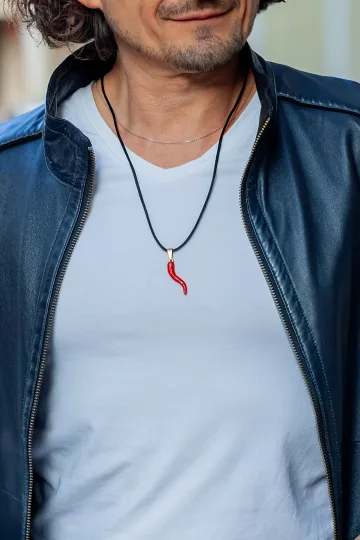
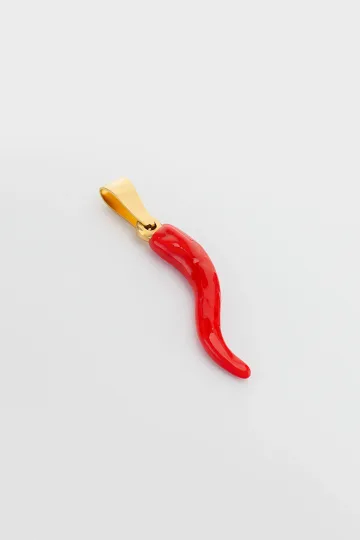
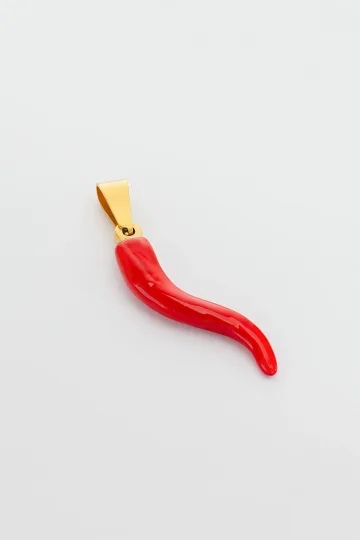
Turkey: the nazar and turquoise
Turkey is a bridge between Europe and Asia, and its jewelry joins the spiritual (amulets) and the material (stones).
The nazar, the blue eye
The nazar (nazar boncuğu) is one of the most recognisable charms in the world: a blue glass eye that, by belief, "looks back" at an ill-meaning gaze. The idea of the evil eye has spread across the whole Mediterranean since deep antiquity; no evidence exists for any "protective force" itself. It is a cultural tradition, not a working mechanism. How the logic of charms works in general is covered in the guide to amulets, charms, and talismans. Glass was chosen because it reflects light, and the blue colour was linked to the sky.
A genuine nazar is made of glass or ceramic, never plastic. The glass version is made by hand, and its colours are clear and contrasting: bright blue, white, light blue, with a black pupil. The main test is against the light: hold it up to a window or a lamp. In real glass you see layering and depth, with light passing through the layers. A flat single-colour fill, or paint on the surface, betrays dyed plastic. Glass is also noticeably heavier.
Turquoise
Turquoise is a soft (5 to 6 on Mohs) and porous stone that Turkey has used in jewelry for centuries. Because of its porosity it is often impregnated with wax or oil to deepen the colour and protect it from cracks.
Natural turquoise is never a perfectly even colour: the natural veining of the matrix (brown, black) and a general unevenness are marks of authenticity. A flawlessly uniform colour points either to a heavily treated stone or to an imitation. Turquoise absorbs moisture, so its tone may shift slightly with long wear. That is normal.
Portugal: Atlantic coral
Portugal is a country of sea voyages, and its jewelry tradition grew out of the ocean. In the north, around Porto, people harvested red coral from the cold Atlantic coast for centuries. A cold and rough sea makes the work harder, which is why Portuguese coral is prized especially highly, and the pieces often become family heirlooms passed down through generations.
The physics and the check are the same as for Italian coral: an even but not perfectly uniform colour; softness and porosity; a faint marine scent; real weight at a small size. For an expensive piece it is reasonable to ask for a document naming the workshop and stating the coral's origin, since Portugal runs a certification system.
Customer reviews
Zevira is a real jewellery shop. Genuine payments, deliveries and customer thank-yous.
🥰🥰🥰 gracias
Ok, ¡gracias! 🙂
Scandinavia: runic amulets
The Scandinavian tradition of charms rests on the runes of the Elder and Younger Futhark and on signs such as the vegvisir, the "wayfinder". Runes were both writing and symbols at once: Fehu meant wealth, Uruz strength, Thurisaz protection, Ansuz wisdom. The Vikings credited them with power and wore them before battle and before a journey. This is part of the culture and faith of that age, not a proven property of the metal; today people wear runes both out of interest in history and as aesthetics.
A genuine Scandinavian amulet is spare: silver (the standard, 925) or bronze, minimal decoration, no gold and no stones, only metal, form, and meaning. The silver should be hallmarked, and the carving of the runes sharp and clear, never blurred. Silver that is too light usually turns out to be a coating.
Baltic: amber of Poland and the Baltic coast
About ninety percent of the world's amber is mined from one small stretch of the Baltic coast: the Kaliningrad region and Polish Pomerania. It is not a stone but the fossilised resin of conifers, set hard forty to fifty million years ago (mineralogists call this variety succinite). Polish Gdansk was the amber capital for centuries, and from there the resin travelled the Amber Road deep into Europe even before the Romans.
Amber is faked more often than almost any other material on this list, because the fakes are convincing to the eye. The substitutes include copal (young resin, thousands rather than millions of years old), pressed ambroid (fine crumbs sintered under pressure, technically real amber but cheaper than solid), epoxy resin, and ordinary plastic. A separate category of trickery is "inclusions": a modern insect set into clear resin or plastic and passed off as prehistoric. A genuine inclusion is usually partial and damaged, with a gas bubble nearby; a perfectly whole, dramatically spread fly has almost always been placed by hand.
Three checks that work with your hands, no laboratory required:
- Salt water. Stir several spoonfuls of salt into a glass of water until saturated. Solid amber floats, while most plastics and glass sink. The method is rough (ambroid floats too), but it screens out cheap resin fills at once.
- Heat and smell. Amber is warm to the touch and light. A heated needle pressed to a hidden spot gives a resinous, pine-like scent; plastic smells of burnt synthetics, and copal melts and turns sticky noticeably more easily.
- Ultraviolet. Under a lamp, genuine Baltic amber gives a bluish or greenish glow, especially along the unworked crust. Plastic and most imitations stay dead under UV. Amber also takes a charge: rubbed against wool, it attracts a scrap of paper (which is where the Greek "elektron" comes from).
Amber is soft (2 to 2.5 on Mohs) and brittle: it scratches easily and fears alcohol, perfume, and hairspray, which cloud the surface. The deeper you go into the types and treatments, the clearer the price becomes; a detailed breakdown is in the guide to amber in jewelry.

Turn on your camera, pick earrings, a pendant or a ring, and see the piece on yourself in real time.
Switch items in one tap.
Everything runs in your browser: no photo or video is ever uploaded.
Greece: silver and classical geometry
Greek silver is the maritime tradition of coastal towns and islands. During Ottoman rule the craftsmen worked almost underground, passing the trade from father to son, which helped preserve a recognisable style: geometry inspired by ancient art, the meander, the spiral, leaves, a cleanness of line without fuss.
Greek silver is often 950, which is purer than the European 925 standard. Look for the "950" engraving and the maker's mark.
India: high-karat gold and intricate work
The Indian school of jewelry is the result of thousands of years of unbroken tradition. Unlike European minimalism, the value here lies in the maximum of detail, pattern, and symbolism; a piece reads as a marker of status, region, and marital state.
The standard here is 22-karat gold (916), higher than the European 585 and 750. The reason is historical: gold was more available in India. The flip side of high purity is softness: 22-karat metal scratches more easily, and that is a feature rather than a flaw. Alongside gold come rubies, sapphires, emeralds, and freshwater pearls.
The main techniques are often combined in a single piece:
- Filigree. As in Florence, a pattern of twisted wire, but denser and richer.
- Repousse and applied work. Details (leaves, flowers) are cut from gold sheet and soldered onto a base.
- Kundan. Stones are held in a gold framework with no glue, only by the precise fit of the shape.
The check: a 22-karat piece is noticeably heavier than a European 18-karat one of the same size; soft gold takes a mark under careful pressure from a fingernail; by law, pieces should carry a "916" or "22K" stamp.
Japan: minimalism, pearls, and precision
Historically, jewelry meant less in Japan than in the West: the kimono and the makeup mattered more, and jewelry was worn for special occasions. After the country opened in the nineteenth century, its craftsmen did not copy the West but ran it through their own aesthetic of restraint.
Characteristic materials and methods:
- Pearls. Japan is the leading producer of cultured pearls: round, with high lustre and a clean surface.
- High-karat gold, often above the common European alloys.
- Enamel (shippo-yaki), a coloured glassy coat fired onto metal with precise temperature control.
- Stones are used sparingly, in favour of minimalism; a cherry-blossom motif is suggested with a single line rather than a lush flower.
Marks of quality: a flawless polish without scratches or unevenness, perfect symmetry (unless asymmetry is intended), real weight as a sign of genuine high-karat gold, an official assay stamp.
When buying pearls, people look at lustre, surface cleanliness, size in millimetres, and roundness; a quality pearl comes with a certificate and an appraisal.
Turn on your camera, pick earrings, a pendant or a ring, and see the piece on yourself in real time.
Switch items in one tap.
Everything runs in your browser: no photo or video is ever uploaded.
The Middle East: gold and geometry
Jewelry here was traditionally a way to store wealth and pass it on, so gold is used generously, 18 to 22 karat, and silver almost not at all. The ban on depicting living beings in Islamic culture developed geometric ornament to the highest level; stones (rubies, sapphires, emeralds) were historically more available than in Europe, thanks to trade routes from India and Afghanistan.
The check: mandatory hallmarks (their absence is a warning sign), substantial weight, certificates for large stones, a flawless polish. The price of gold is often quoted per gram, so it makes sense to fix it at the moment of purchase.
Mexico: silver and indigenous motifs
Mexican jewelry is the meeting of two worlds: silver arrived with the Spanish in the sixteenth century, and local craftsmen joined the European technique to Aztec and Maya motifs. The centre of the craft became the town of Taxco, still regarded as the country's silver capital.
The standard here is 925 silver, with a "925" or "ley.925" mark plus the maker's initials. The motifs are recognisable: the serpent Quetzalcoatl, the sun and the moon, geometry, figures of animals and plants. Silver patinates over time; a perfectly "new" shine may mean a coating rather than solid metal.
Six fast checks, no tools. Leave your email, we'll send the PDF and a discount code.
No spam, unsubscribe anytime.
Morocco and the Berbers: desert silver
The Berber tradition is the opposite of European gold. Silver reigns here, and not out of poverty but out of conviction: among the nomads of the Atlas, gold was held to be the metal of vanity and the evil eye, while silver was the metal of purity and protection. A woman wore what amounted to a family bank: heavy chest plates, fibula clasps, brow pendants. In the event of divorce these pieces stayed her own property, so the value of the silver was, quite literally, insurance.
Berber fibulae and tazra
The fibula (in Berber, tizerzai) is a pair of triangular or disc-shaped clasps joined by a chain, used to pin a cloak at the shoulders. The shape is not random: the triangle read as a charm against the evil eye, and its sharp point turned evil away. A genuine fibula is massive, its silver of low or middling purity (nomads often melted down old coins, so the composition wandered), with a surface covered in chasing, engraving, and inlays of enamel or coloured glass.
The check is simple. Old Berber silver darkens unevenly, with deeper patina in the hollows of the ornament and lighter tones on the raised parts worn by friction. An even grey film over the whole surface betrays artificial ageing. The weight is real, and the fibula pulls down in the palm. A light, shiny copy in nickel silver is cold and ringing, while real silver answers with a duller voice.
Tiznit enamel and Sahara amber
In southern Morocco, in Tiznit and the southeastern Atlas, silver is combined with bright cloisonne enamel: green, blue, yellow. The colour is poured into cells fenced off by thin wire, then fired. A separate story is "Sahara amber": large yellow beads that the nomads prized as a charm and as a dowry. Some of them are genuine fossil resin, but most old beads are phenolic resin from the early last century (so-called African amber) or pressed copal. This is not a fraud in the modern sense: the material has itself become an antique and is valued as part of the tradition, but it should not be confused with Baltic succinite. Real ancient amber under a heated needle smells of pine resin, while the phenolic imitation gives off a sharp carbolic, medicinal smell.
The hand of Fatima (hamsa)
The hamsa, a hand with five fingers, is a charm against the evil eye common across the whole Maghreb. The Berbers chase it onto silver, often with a small eye at the centre of the palm. The logic is the same as the nazar: the symbol "looks back". How this theme of protection is built is covered in more detail in the guide to the hamsa and the hand of Fatima. A genuine hamsa is known by its raised hand chasing: the lines are slightly uneven, and the back keeps the marks of the tool. A cast tourist copy is smooth on both sides and identical down to the millimetre.
China: jade, cloisonne, and Miao silver
Chinese tradition is built around a stone credited with more meaning than gold: jade. "Gold has a price, jade is priceless", runs the saying. The stone was tied to virtue, immortality, and protection; a jade bi disc was placed in tombs as far back as the Neolithic.
Nephrite and jadeite
The word "jade" hides two different minerals: nephrite proper (softer, tough, more often white, grey, or greenish, called "mutton fat") and jadeite (harder, brighter, with the emerald-green "imperial" jadeite prized above all). Both are real, but the market is flooded with fakes: dyed glass, dyed quartz, pressed crumbs, and treated jadeite etched with acid and impregnated with polymer (so-called grade B).
On-the-spot checking without a lab is limited, but a few things are within reach. Jade is cold to the touch and warms slowly, while glass warms faster. A real stone is heavier than glass of the same volume. The sound of a jade piece hung on a thread and lightly struck is clear and ringing, whereas glued crumbs sound dull. Under a loupe a natural stone shows a fibrous or grainy structure, while a dyed imitation shows pools of colour along the cracks. For an expensive purchase, ask for a certificate stating which grade the jadeite belongs to (natural A, treated B, or dyed C).
Cloisonne enamel, jingtai-lan
Jingtai-lan (cloisonne in the West) is a technique in which partitions of thin wire are soldered onto a copper base to form cells, the cells are filled with coloured enamel, then fired and ground many times. Its peak came when craftsmen achieved the famous deep blue ground. A genuine piece is heavy (the copper base), the partitions show as thin metal lines between the colours, and the surface, tilted, reveals tiny pores from the firing. A printed imitation "in the cloisonne style" is a drawing under lacquer: the lines are flat, the surface is smooth to the touch, with no metal ridges.
Silver of the Miao people
The mountain peoples of southwest China, the Miao above all, wear phenomenally voluminous silver: horned crowns, breastplates, dozens of pendants that chime as they walk. For a wedding a young woman may carry several kilograms of metal. Miao silver is of low purity (often from melted coins), but the technique of openwork soldering and chasing is masterful. Authenticity shows through the handwork: every pendant differs slightly, the solder joints are visible, the surface is alive.
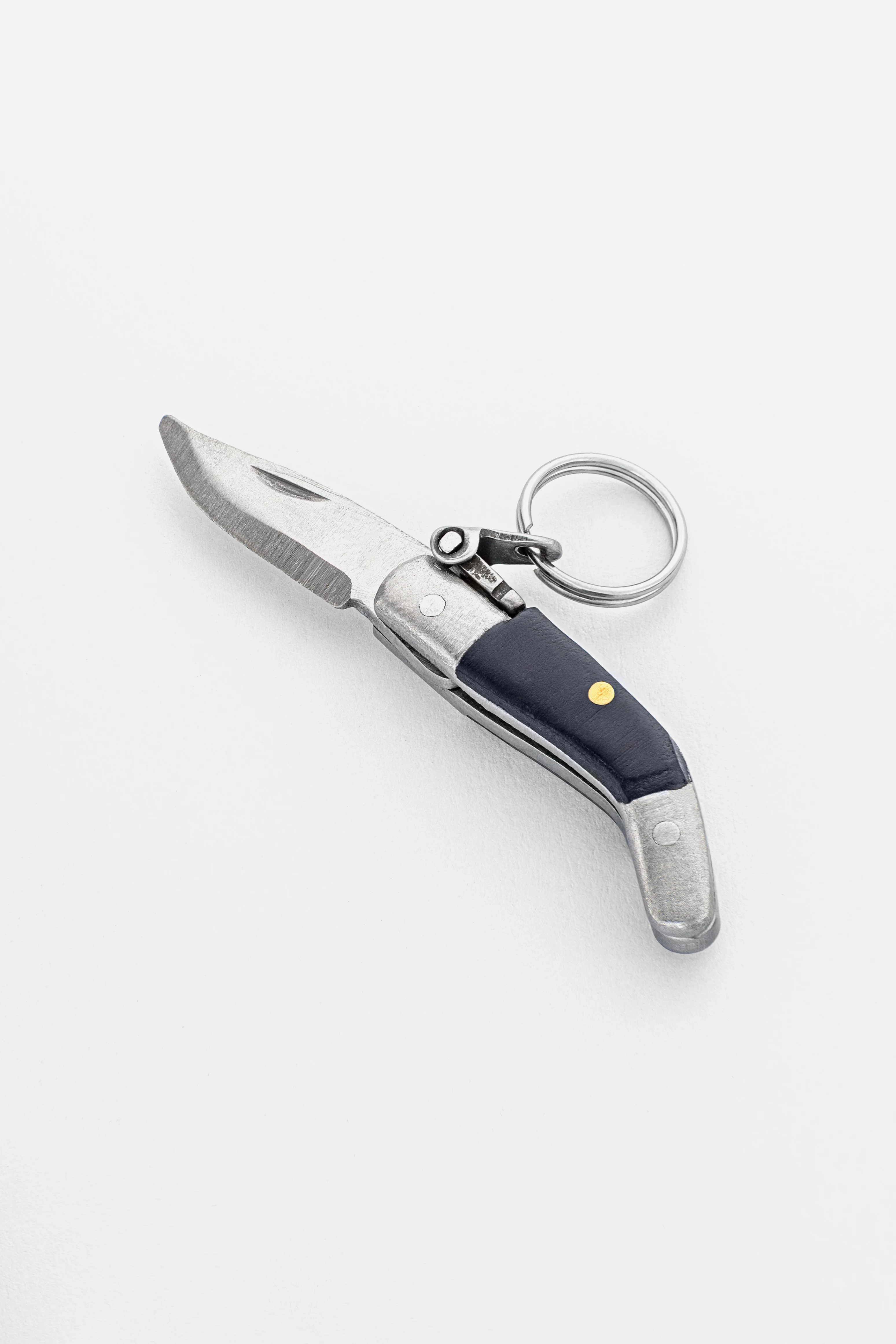
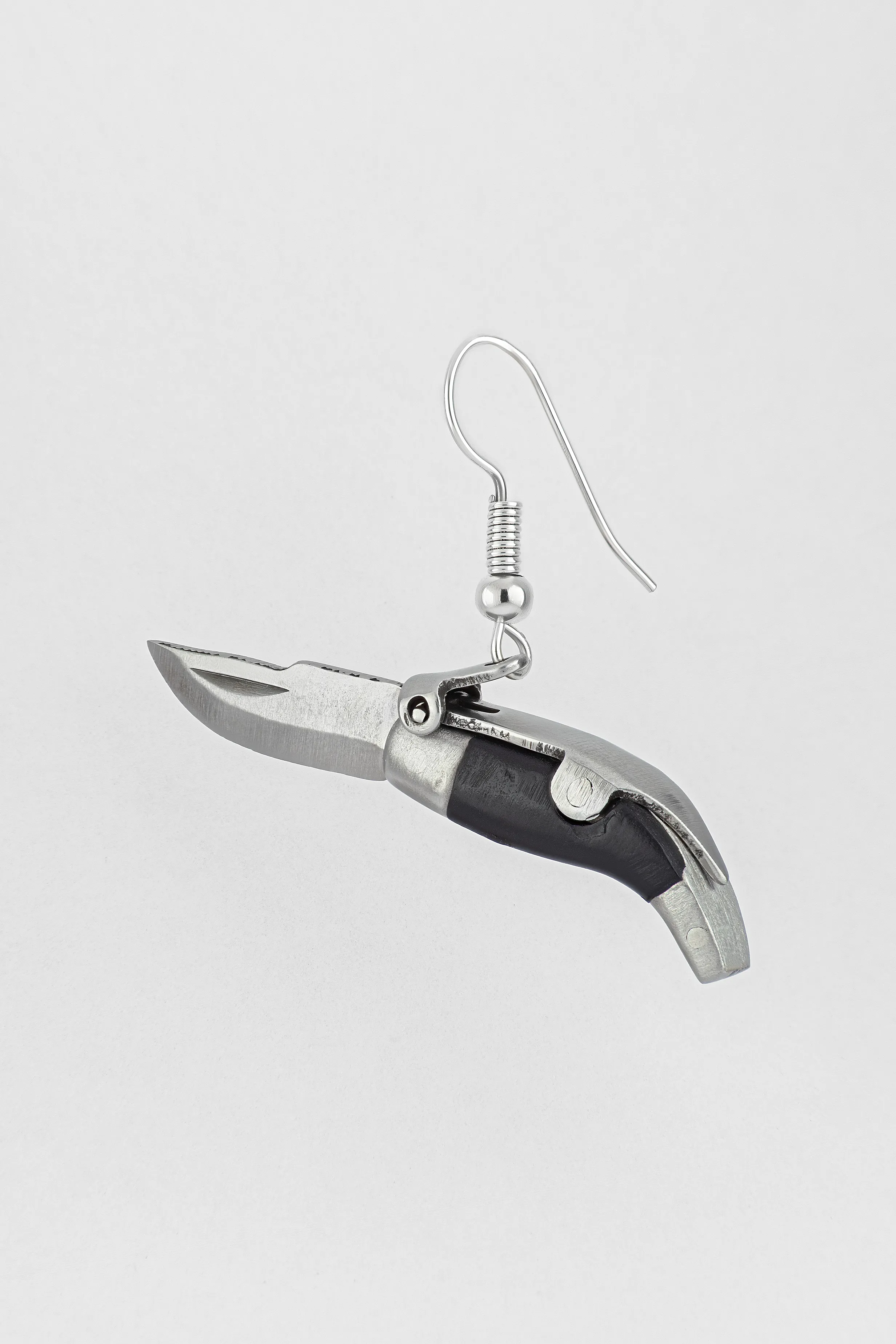
Artisan-crafted CAPAORA navaja pendant
A 40 mm stainless-steel navaja with a real folding mechanism and Palanquilla lock. An affordable gift to remember.
A code for blog readers:
10% off your first order
Authentic · Maker's guarantee · Ships from Spain
Ethiopia and the Horn of Africa: crosses and silver
Ethiopian Christianity is one of the oldest in the world, and its chief jewelry symbol is the Coptic cross. Ethiopian crosses do not repeat: each region (Lalibela, Aksum, Gondar) gave its own form with an endless weaving of lines in which, by belief, evil loses its way. They are cast from silver by the lost-wax method, so every cross is unique from birth.
The Ethiopian cross and the telsum
The chest cross is worn on a cord as a sign of faith and a charm. Alongside it exists the telsum, a silver amulet case into which a rolled scroll with a prayer or an incantation was placed. A genuine cross is cast in one piece, the back shows traces of casting and of hand finishing, and the silver darkens in the hollows over time. A tourist stamping is flat, light, with the same drawing every time.
Tribal silver and amber
Among the peoples of the Horn of Africa, as in the Sahara, large amber and silver beads are in use, serving as dowry and savings. The same rule applies here as in Morocco: a large share of the "amber" is old phenolic resin, valuable as an ethnographic object but not fossil succinite. The silver is often low in purity; what matters is not the assay but the age and the authenticity of the handwork.
Russia: scan, finift, and northern niello
The Russian school of jewelry grew out of a Byzantine inheritance and several strong crafts, each of which gave its own technique. Unlike the generic "Russian style" of souvenir shops, the real crafts are tied to specific towns and known by their handwriting.
Scan and granulation
Scan is the Russian name for filigree: a pattern of twisted silver or gold wire. It is often combined with granulation, tiny metal beads soldered along the pattern. Genuine scan is openwork and holds its shape through the soldering rather than a backing; held to the light, you see the gaps between the coils. Machine stamping imitates the relief by casting, but the "holes" in it are painted as shadow, and the wire does not separate from the background.
Rostov finift
Finift is painterly enamel: refractory paints are laid on a convex copper or silver plate and fired several times, producing a miniature picture that does not fade for centuries. The centre of the craft is Rostov Veliky. Genuine finift is always hand-painted: under a loupe you see brushstrokes, fine transitions of colour, a slight unevenness. A printed transfer picture under lacquer is flat, with a raster grid of dots under magnification. Real enamel is cold, glassy, and ringing when flicked.
Veliky Ustyug niello
Niello (chern) is a dark alloy of silver, copper, and sulphur used to fill an engraved drawing on silver, creating a graphic black-and-silver contrast. Veliky Ustyug made this technique famous. Genuine niello sits firmly in the hollows and does not crumble out, the drawing sharp and matte against a shining ground. A fake imitates the contrast with black paint or with oxidation that wipes off under a fingernail. A separate northern tradition is the Orenburg down shawl, not metal, but part of the folk wardrobe and a frequent companion to jewelry in one look.
The Baltics and Finno-Ugric peoples: solar signs and sakta brooches
To the east and north of the Germanic world lies the world of Baltic and Finno-Ugric peoples with their own symbolism. Latvian and Lithuanian sakta brooches, Estonian conical pendants, Karelian and Mari breastplates are built around solar and lunar signs. The Latvian sakta is a round brooch-clasp, often with sun-rays; it is still worn with the national costume and given on coming of age. The metal is usually silver or bronze, the surface chased and set with glass. Authenticity shows in the weight, the patina in the hollows, and the hand-made unevenness of the rays.
Southeast Asia: Bali gold and Thai niello
In Indonesia, on Bali, the granulation technique is highly developed: thousands of tiny gold or silver beads are soldered onto the surface, creating a grainy, almost velvety relief. Balinese silver is known by this dense granulation and its plant motifs. Thailand is famous for the niello of Nakhon Si Thammarat (Thai: thom), the same black-alloy method on silver as Russian niello, but with local ornament. In both cases authenticity reads through the handwork: the granulation is slightly uneven, the joints are visible, and the drawing does not repeat by machine.
How to wear ethnic jewelry with respect
The line between interest in a culture and appropriation is thinner than it seems, and it runs not through a ban but through context and knowledge. A few markers help keep a charm from turning into tastelessness or offence.
Tell jewelry apart from a sacred sign
Most of the traditional pieces in this guide are secular folk costume or a commercial charm: the nazar, the cornicello, the hamsa, the Baltic sakta, the Greek meander. They are worn and sold precisely as part of an open culture, and there is no problem here. Caution is needed with objects of a living religion and closed communities: ritual regalia of indigenous peoples, sacred feathers, objects that belong to a specific wearer by status or initiation. Such things are not souvenirs, and wearing them as an accessory is tactless.
Buy from the bearers of the tradition
The most honest form of respect is for the money to reach the maker and their community. Miao silver bought from a Miao workshop, a Berber fibula from a cooperative in the Atlas, finift from a Rostov studio: all of these support the craft. An anonymous factory copy from an airport takes both the image and the income away from the culture.
Know what you are wearing
Respect begins with being able to say what hangs at your neck: where the symbol came from, what it meant, who made it. A charm worn with understanding reads as interest and esteem. The same object worn "because it is exotic" reads as ignorance. The difference lies not in the jewelry but in the head of the person wearing it.
Do not pile everything on at once
A nazar, a hamsa, a rune, and a cornicello on one neck are not a "maximum of protection" but a souvenir jumble. One cultural motif at a time reads as a deliberate choice. When there are three, the look says only that the person made a tour of the souvenir stalls.
Send a friend a discount code, they save on their first order.
A modern reading of traditions
Folk techniques have not frozen in a museum. Today's craftsmen rethink them, keeping the essence and changing the form. A Berber fibula is made into a compact pendant with no clasp function. Scan moves away from lavish settings toward graphic, minimal earrings. The nazar is set into a slim ring instead of a bulky medallion. Japanese restraint shaped the whole global jewelry language, and now "less is more" sounds in Scandinavian and Russian design alike.
The key to a successful modern interpretation is to keep the recognisable symbol or technique and remove everything extra. A good piece reads at once as "this comes from that tradition" and as "this can be worn today with jeans". A poor one loses either the recognisability (the symbol dissolves) or the wearability (a museum exhibit on the neck). The best modern makers hold both sides: a rune stays a rune, but the chain and the proportions work for an everyday look.
Facts that surprise
Folk jewelry is full of things that do not fit the familiar logic of "pretty and expensive".
- Silver was valued above gold. Among the Berbers of the Atlas, gold counted as the metal of the evil eye and of vanity, while silver was the metal of purity. A woman's wealth was measured by the weight of silver on her, not gold.
- Jewelry was a divorce settlement. In the nomadic culture of the Sahara, whatever hung on a woman stayed her own property in a divorce. Heavy silver breastplates were quite literally a personal bank and an insurance policy.
- Sahara "amber" is often younger than grandmother. The famous yellow beads of the nomads are mostly not fossil resin but phenolic plastic from the early last century. Even so, they have become a valuable antique in their own right.
- Jade outranks gold by cultural logic. In China the saying puts jade directly above: "gold has a price, jade has none". The stone was tied to immortality and buried with its owner.
- Jet is petrified wood, not stone. Spanish azabache and Victorian mourning jet are wood compressed over tens of millions of years, which is why it is warm and smells of coal when heated.
- No two Ethiopian crosses are alike. Each is cast from a wax model that is destroyed in the pour, so a repeat is physically impossible, and the woven pattern is meant as a labyrinth for evil.
- Amber can glow and carry a charge. Under ultraviolet, Baltic amber gives a blue glow, and rubbed against wool it attracts paper. The very word "electricity" comes from the Greek "elektron", meaning amber.
- A Miao wedding outfit weighs like a kettlebell. The bride carries several kilograms of silver on her: a horned crown, a breastplate, and dozens of chiming pendants whose sound, by belief, drives off evil spirits.
What to wear travel jewelry with
A common mistake is to hide a piece brought home in a box, because it is unclear what to pair it with. Yet it is exactly the combinations that turn a souvenir into something you wear every week.
An everyday look likes calm. A nazar on a thin cord, a Scandinavian rune in silver, a ceramic cornicello sit well on plain linen, cotton, and knitwear in neutral shades: cream, sand, grey, navy. An open shirt collar or a V-neck gives a pendant room. Silver and steel are friends with cool clothing tones, while warm gold and coral look better next to beige, terracotta, olive.
For the office, the rule of one accent works. Greek silver with a meander, or Toledo damascene on dark steel, looks formal and fitting with a shirt and a jacket: one noticeable piece, everything else muted. Damascene is especially convenient because black with gold reads as restrained luxury.
An evening out asks for contrast and volume. Sevillian crillas earrings, Indian gold with inlay, Florentine filigree come alive against smooth fabric and the dark ground of a dress. Silk, velvet, bare shoulders, or a deep neckline work as a stage. Layers are welcome here: a thin gold chain under a larger pendant, two or three chains of different lengths. The main rule of layering is different lengths and one dominant metal, so the look does not fall apart.
By type: warm materials (coral, wood, jet) suit those who love texture and wear a piece almost without taking it off. Geometric silver and minimal gold are closer to a restrained, graphic style. If you doubt the chain length, take 45 centimetres, a universal middle that sits both under a collar and over a light sweater. And do not mix more than two cultural motifs in one look: a nazar with a rune and a cornicello turns the neck into a souvenir stall at once.
What can get stuck at customs
Authenticity is not the only risk of an expensive purchase abroad. Some of the most beautiful materials fall under nature protection, and bringing them home can be harder than buying them.
Red coral (genus Corallium) is listed in the international convention on trade in endangered species and in European rules. In practice this means that whole pieces of precious coral may require a permit when imported into the EU, and customs has the right to seize them without papers. An honest workshop has a document on the origin and legality of the material; asking for it when buying coral is the norm, not nitpicking. The same goes for pieces of tortoiseshell (sometimes sold as "jet" or "horn") and any ivory.
A few practical habits. Keep the receipt and certificate until the end of the trip, do not throw them away on the spot. Carry a large stone with a laboratory appraisal together with that appraisal, otherwise at inspection you will have to argue its value by word of mouth. Silver and gold with an assay stamp usually raise no questions; the problem is almost always with organics: coral, bone, shell, feathers, certain kinds of wood. If a seller cannot explain where the material came from, that is a reason not to buy even apart from customs, because silence about origin almost always means a living reef or poaching.
Care by material
Different materials ask for different handling, or the piece quickly loses its look.
Coral. Store separately in a soft pouch (it scratches easily), clean only with a dry soft cloth. Keep it away from soap, perfume, and any chemicals, since the porous structure absorbs them. A slight dulling over time is normal.
Jet (azabache). Soft and brittle, it fears high heat and drying out. Clean with a soft cloth, store away from radiators and direct sun. Cracks are hard to repair, only by a specialist.
Wood. Keep in a dry place, away from moisture (it swells) and heaters (it dries). Once a year you can wipe it with a drop of oil to bring back the shine.
Rubies and sapphires. Hard and wearable stones. Clean with warm water, mild soap, and a brush. Avoid ultrasound: invisible cracks may sit inside.
Emeralds. Noticeably softer and often cracked, frequently oil-treated. Only dry soft chamois, no water and no chemicals, which wash the oil out.
Turquoise. Porous, it absorbs moisture and changes colour from oil and chemicals. Only a dry soft cloth, stored in a dry place.
Amber. Soft and brittle, it darkens and cracks from dry heat and direct sun. Take it off before applying perfume and hairspray: alcohol clouds the surface. Clean with a slightly damp soft cloth without chemicals, and store separately so harder stones do not scratch it.
Pearls. The most delicate of all. Keep them from chlorine and chemicals, clean with a soft cloth, store so they do not dry out. The thread of a necklace stretches over time and is restrung every few years.
Gold. Does not tarnish; darkening is dirt and skin oils, removed with warm water, soap, and a soft brush. Store apart from silver.
Silver. It patinates, and that is normal, cleaned with a paste or a special cloth. Store in a dry place.
Damascene (steel with inlay). It fears moisture (the steel rusts), so only a dry soft cloth. A slight darkening is part of the character of the technique.
Enamel and filigree. Fragile: enamel cracks from a knock and from temperature swings, and elements can break off filigree. Store in a hard box, protect from pressure; repair only by a specialist.
Amulets, charms and jewelry with the symbolism of peoples around the world: protective signs, handmade silver and gold.
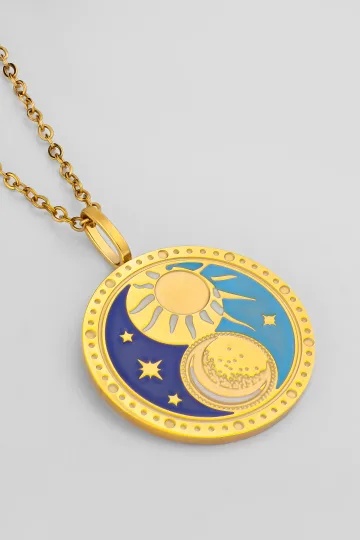
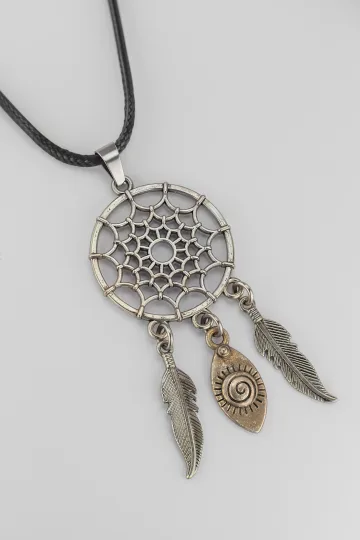
Wear the symbol, don't just read about it. These are in stock:
About Zevira
Jewelry is a language in which cultures speak to one another. Choosing a genuine piece from a given tradition, you choose not only beauty but history, craft, and respect for the maker.
The Zevira catalogue holds jewelry inspired by the traditions of the world: from protective amulets that people wore for hundreds of years to modern readings of ancient symbols. Each is made with honesty toward the material.
Three principles from this guide are worth keeping in mind:
- Material tells the truth. Coral warms in the hand, wood has a scent, gold is heavy. Trust the sensations rather than the seller's words.
- Look at the hallmark and the assay. Silver 925, gold 585, 750, or 916, regional marks: all of these are verifiable facts, not legends.
- Authenticity continues at home. A piece's story does not end at the purchase; it lives in how you store and wear it.
Frequently asked questions
How can I identify a national style of jewelry without documents?
By the characteristic signs of material and technique. Italian work gives itself away through living material (coral warms, wood has a scent). Toledo damascene is gold soldered into steel, not printed over it. Azabache is jet, lighter than stone but heavier than plastic. The Turkish nazar is glass with layering visible against the light. Mexican silver carries a 925 mark and the maker's initials. Japanese work is known by its perfect polish and a weight higher than expected. Indian work by the high purity of the gold (916) and dense inlay.
How do I spot a fake if I am not an expert?
Check the material with your hands: weight, warmth, smell, hardness. Then ask the seller four questions: where it was made, how many hours of work it holds, what the material is, and whether there is a document. Clear answers to all four are a good sign; evasive or contradictory ones are a warning.
Can a piece like this be worn every day?
It depends on the material. Gold and well-set hard stones (ruby, sapphire) handle daily wear. Silver does too, but it will patinate. Coral, jet, pearls, and enamel are too soft or fragile for constant wear, and are kept for special occasions.
How should I store it so it does not get damaged?
In soft pouches, separately, in a dry place at room temperature, away from direct sun and heaters. Silver is kept apart from gold. Once a year it makes sense to inspect pieces for damage and to check the firmness of stone settings.
How do I tell whether gold or silver is solid rather than plating?
The main markers are the assay and the weight. Solid metal is noticeably heavier than plating of the same size. High-karat gold is soft and takes a slight mark under fingernail pressure; silver patinates over time, while plating does not. The assay mark should be engraved, not printed.
Is it worth investing in an expensive piece?
It makes sense when the material is rare (coral, pearls, precious stones) or the technique demands dozens of hours of handwork (filigree, damascene, inlay). Such a piece often becomes a family heirloom and passes from generation to generation. If what you face is stamping from a cheap alloy, or plastic with a country name on the label, the markup is not justified.
Is coral ethical?
Coral is rare and protected by law in a number of regions. It is sensible to ask about origin: material from historical harvesting or aquaculture is preferable to that taken from a living reef.
Why do the Berbers prefer silver to gold?
Among the nomads of the Atlas, gold was historically linked with the evil eye and vanity, while silver was linked with purity and protection. Silver pieces served a woman as personal capital that stayed with her in any circumstances. So a genuine Berber piece is almost always silver and massive, and gold is a rarity in this tradition.