Pyrite Jewelry: The Story of Fool's Gold, Style and the Magic of Abundance in 2026
Her grandmother saved up a single carat of diamonds over an entire lifetime. The granddaughter inherited a box that glinted with a metallic sheen, not gold, not silver, yet undeniably beautiful. When she showed the piece to a friend, the friend gasped: "That's gold!" No, the heir answered. That's pyrite. And it is far older than any gold a human being has ever held.
The story of this mineral does not begin in a jeweler's workshop but in the dark depths of the earth, where iron sulfide crystallizes into perfect cubes, a geometric wonder of nature that alchemists mistook for gold, that poets praised as earthly treasure, and that people today value for its price and its surprising energy. Pyrite is back in fashion: in articles about abundance, on the shelves of crystal shops, in jewelry for anyone who wants brilliance at the cost of a good dinner rather than a small car.
Why pyrite and not gold? Not because the two get confused. Because the beauty of its natural form is enough that no imitation is needed.
The History of Pyrite: From Alchemy to Gold Plating
Fool's Gold and the Mistakes of the Ancients
Fool's gold is not an insult. It is the folk nickname for iron sulfide, and it stuck because Renaissance miners kept confusing it with the real thing. That happened most often in the poor light of underground tunnels, where pyrite's cubic crystals throw back the light almost the way gold does. The mineral's scientific name, pyrite, comes from the Greek pyr (fire): the stone strikes sparks when struck against steel.
But pyrite shone in the hands of the alchemists. They believed this mineral was the key to the philosopher's stone. They burned it, ground it, mixed it with mercury, dead insects and human blood in search of the formula for eternal life. Nothing came of it, yet the name fool's gold caught on because of that overblown optimism: the fool was the one who believed he held real gold in his hands.
In truth the fool here was whoever coined that name. Because pyrite was never useless. European folk healers turned it into protective talismans. And the peoples of Scandinavia used pyrite and marcasite as firestone: a strike against flint drew a spark to start a fire.
From Raw Mineral to Gilded Jewelry
The shift came in the late medieval period, when craftsmen learned to treat pyrite not as a substitute for gold but as a material in its own right. Cubic crystals drew the light differently from the rounded crystals of quartz or amethyst. They flashed with a cold, slightly dangerous brilliance, like the lit side of a full moon.
In the jewelry of the eighteenth and nineteenth centuries, marcasite was reached for more often to get that golden glint, since it is close to pyrite in composition: it was cut into tiny rose facets and set into earrings and pendants. The Victorian era adored its austere sparkle ringed by silver and black enamel. The jewelers of Toledo, masters of damascene work and gilding, added pyrite to mixed pieces to heighten the impression of wealth.
Gold plating takes its start right here: the first pyrite was gilded precisely to intensify the golden reflection. A layer of gold a few microns thick (usually 2 to 3 microns) created the illusion of a wholly golden piece, when in fact it was a coating over pyrite or over silver. Cheap, handsome and long lasting, provided you care for it.
Pyrite in Human History: Fire, Mirrors and Fashion
Firestone: How Pyrite Gave People Fire
Before matches and lighters, fire was won by friction or by spark, and pyrite was one of the main sources of that spark across Europe and the north. A lump of pyrite or marcasite was struck against flint or a steel striker, the chips heated by the blow and showered onto dry tinder, a smouldering tinder fungus or charred cloth. Archaeologists find paired flint-and-pyrite kits in Bronze Age graves and even earlier ones. The famous Alpine iceman, a mummy more than five thousand years old, carried a piece of pyrite as part of his fire-making kit. The very Greek word that gave the mineral its name means fire, and that is no poetic metaphor but the stone's literal job in the daily life of ancient people.
The Mirrors of the Inca and Pre-Columbian Cultures
In South and Central America, pyrite was polished into mirrors long before the Europeans arrived. Craftsmen of the Andean and Mesoamerican cultures selected large plates of pyrite, polished them to a mirror sheen and assembled mosaic discs from the tiles. Such mirrors turn up in the tombs of the nobility: they were used in divination and ritual, catching the light of the sun and studying the reflection as a window into another world. Polished pyrite gave back an image that was not perfectly sharp but slightly shimmering and golden, which only sharpened the sense of magic. For cultures that knew no glass, polished iron sulfide was the best mirror to be had, a prized object of power and rite.
Victorian Marcasites: Pyrite Under a Borrowed Name
The glittering black-and-silver pieces that antique dealers call marcasite jewelry are almost always made of faceted pyrite. The craze for these tiny sparkling stones flared up as early as the eighteenth century at the European courts, when diamonds were within reach of a few but the wish for sparkle was shared by many. Pyrite was cut into the smallest rose facets, set into silver in rows and laid out into whole patterns. The Victorian era carried this fashion to its height: mourning jewelry with black enamel and a pyrite glint, brooches, tiaras, buckles. The stone gave a cold steely shine that suited the restrained taste of its time, and it cost a fraction of true gemstones, which is exactly what made it the ornament of the rising middle class.
The Alchemist's Laboratory and the Apothecary
Beyond its life in jewelry, pyrite had a reputation as a substance of power. Alchemists prized it for the sulfur it held, which they counted among the prime elements of metals, and they burned pyrite to draw off sulfurous fumes for their experiments. From roasting pyrite, later, in the industrial age, people learned to obtain sulfuric acid, and deposits of iron sulfide became the raw material of chemical works. In folk medicine, powdered pyrite went into remedies; it was credited with stopping bleeding and driving off illness. Most of those uses failed any honest test, but they show how varied the stone's role was: lighter, mirror, reagent, charm and ornament, all in a single mineral.
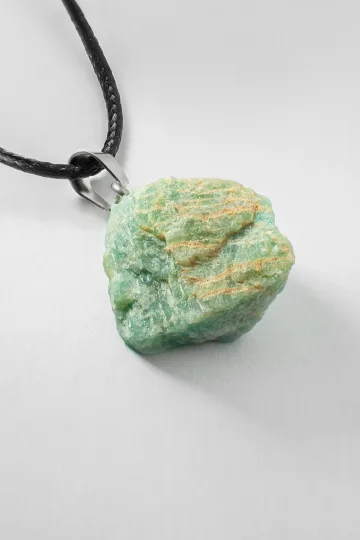
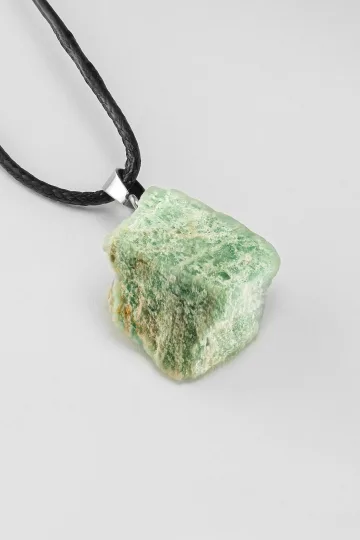
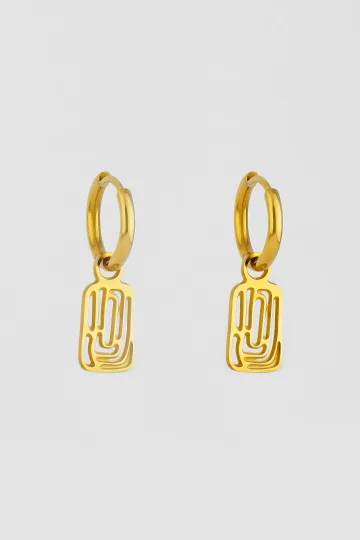
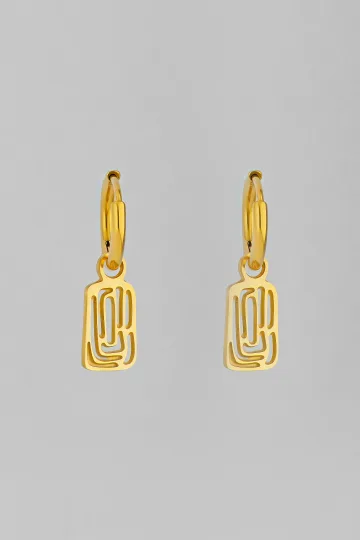
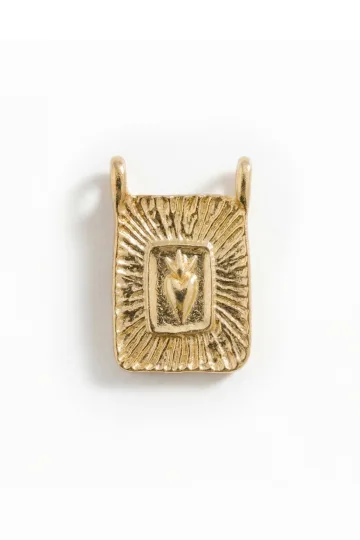
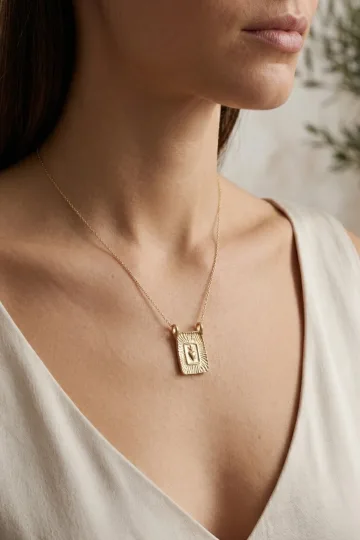
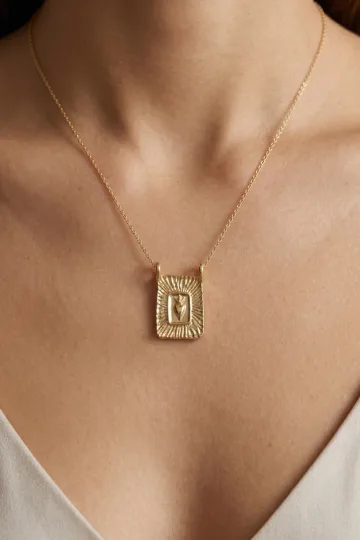
Wear the symbol, don't just read about it. These are in stock:




The Geometry of Beauty: Why Pyrite's Cubic Crystals Are Lovely
Cubes as Nature's Minimum of Design
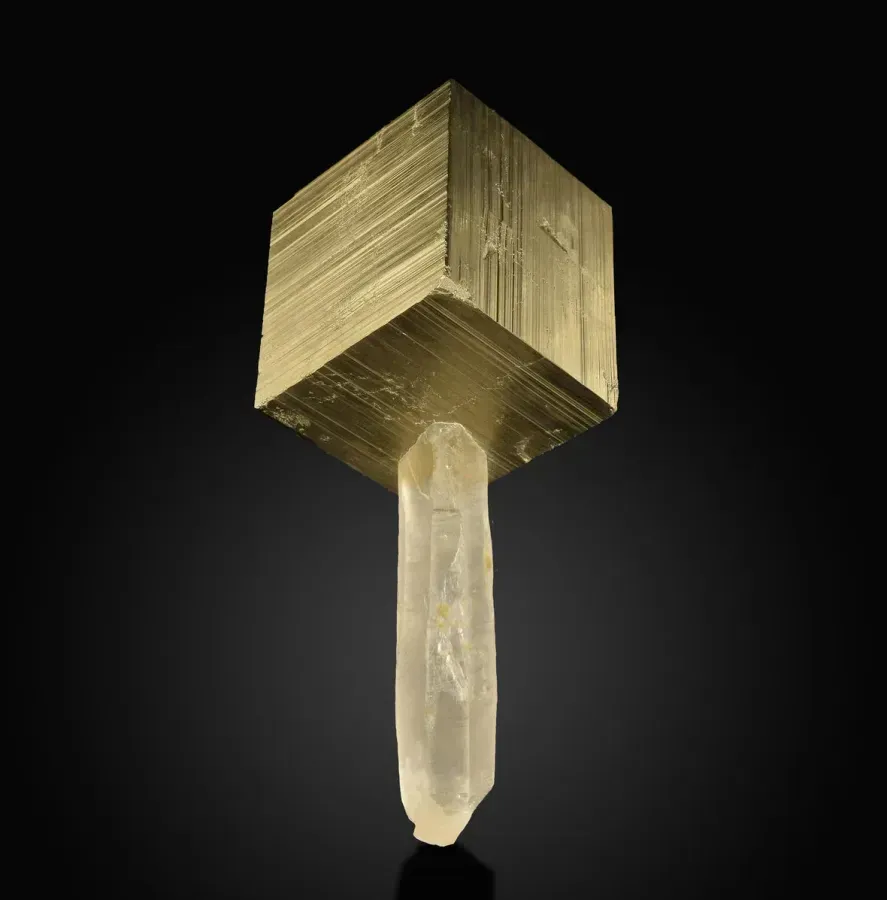
The most striking thing about pyrite is its shape. Not every mineral grows into perfect cubes. Quartz prefers prisms. Amethyst loves hexagons. But pyrite is an ode to the cube, as if nature had decided that geometry as an art form is already perfect enough and should not be complicated. If pyrite rests on form, there are stones that rest on color instead: take apatite, the universal stone of every shade, where what matters is not the geometry of the face but the tone itself.
A cube has six faces, and they meet at a right angle, at 90 degrees. When light falls on a cube of pyrite, it reflects off all six faces at once. That produces a brilliance that is cold, hard and unbending. Not soft like gold. Not iridescent like opal. Just pyrite. That is the whole of it.
In a piece of jewelry the cubic pyrite sits so that the edge of the cube acts as an axis of rotation. When you move, the little cube turns, the faces shift in the light, and you get something like a small glowing cinema on your chest.
Why Form Matters More Than Size
Craftsmen prize pyrite not for sparkle in general but for the geometry of each particular cube. The closer a crystal comes to a perfect cube, the dearer it is. The benchmark is the cubes from Navajún in Spain's La Rioja: those deposits yield crystals close to mathematical perfection, with smooth faces and exact right angles.
A piece is set with either one face of the cube (which reads as a square) or the whole cube, if the size and shape of the piece allow it (men's rings, lockets). On a bracelet or an earring the pyrite is held in either silver or gilded copper-brass. The setting grips the cube by its edges and leaves the faces open to the light.
Customer reviews
Zevira is a real jewellery shop. Genuine payments, deliveries and customer thank-yous.
🥰🥰🥰 gracias
Ok, ¡gracias! 🙂
Where Pyrite Comes From: Deposits and Origin
Iron Sulfide FeS₂ and the Chemistry of Beauty
Pyrite is iron disulfide. Its chemical formula is FeS₂. One atom of iron embraces two atoms of sulfur. Most often pyrite forms right inside sedimentary rock at low temperature, roughly between 25 and 125 degrees, when hydrogen sulfide reacts with iron in the mud of the sea floor.
The process of formation takes millions of years. Carbonaceous sediments and iron-manganese ores warm up. Hydrogen sulfide reacts with iron. Crystallization begins slowly, almost the way a tree grows, ring by ring, only in mineral time.
When tectonic plates collide and lift the pyrite beds to the surface, they lay bare a multitude of cubic crystals, like an underground mineral city suddenly set out under the sun for the first time in millions of years.
The Largest Deposits: Peru, Spain, Brazil
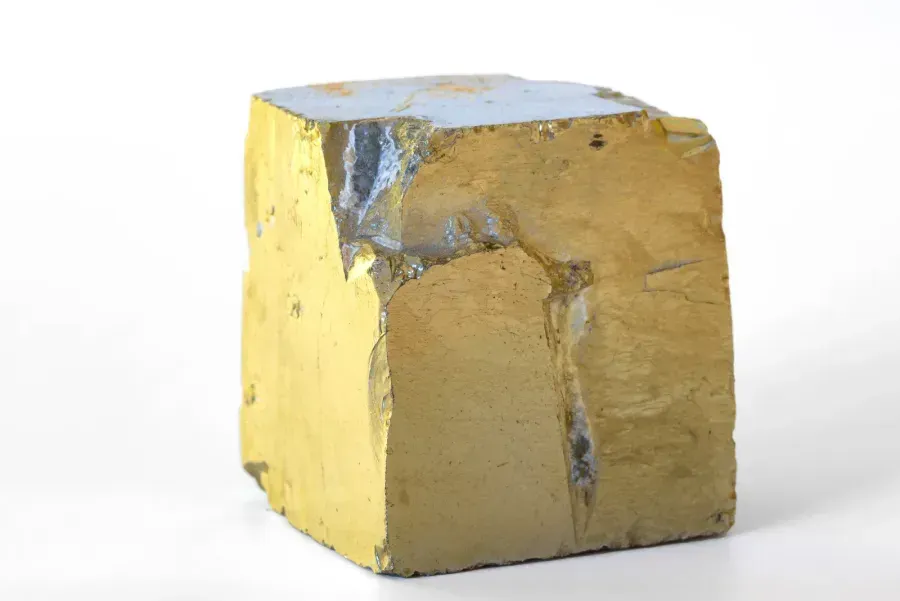
Peru is the world leader by sheer quantity of pyrite. The deposit in Áncash supplies most of the jewelry-grade pyrite, because there the crystals grow larger and lovelier. Cubes between 2 and 8 mm are the norm for Peruvian pyrite. They are hard, golden, with clean faces.
Spain historically supplied pyrite for the Toledan and Valencian craft. Spanish pyrite is finer (1 to 3 mm), but it was used in mosaics and inlays of damascene work. When a Spanish jeweler made a gilded piece, he often combined silver (the base) plus gold plating (the layer) plus pyrite (the inset). Three metals in a single piece.
A chapter of its own is Navajún, in La Rioja. There the most regular pyrite cubes in the world are mined, with mirror faces, and they are used often in collections and high-end jewelry where every cube is unique. Such pyrite can cost more per gram than the Peruvian sort, because the quality of crystallization is higher.

Turn on your camera, pick earrings, a pendant or a ring, and see the piece on yourself in real time.
Switch items in one tap.
Everything runs in your browser: no photo or video is ever uploaded.
The Science of Pyrite: Hardness, Streak, Weight and How to Tell It From Gold
Mohs Hardness: Why Pyrite Will Not Scratch With a Fingernail
The chief scientific difference between pyrite and gold hides in hardness. On the Mohs scale pyrite scores a little above 6, the level of feldspar, slightly softer than quartz. Real gold is soft, only 2.5, and you can scratch it with a copper coin or even a fingernail if you press. A fingernail will not touch pyrite at all. If a cube scratches easily under a steel blade and the metal stays bright in the groove, you are holding gold or soft brass. If the blade slides and the pyrite itself crumbles and dusts, it is iron sulfide. Hardness works as the first filter in the field, with no lab and no reagents.
Streak on the Biscuit: Pale Black Against Gold
Mineralogists identify pyrite by its streak, that is, by the color of the powder the stone leaves on an unglazed porcelain plate (called a biscuit). Pyrite gives a greenish-black or brown streak, almost coal-like. Real gold leaves a yellow streak the same color as the metal itself, because gold does not oxidize and does not change its tone in powder. This test is ancient and never fails: just draw the cube across the back of a ceramic tile or the unglazed base of a mug. A dark trace betrays pyrite instantly, and no plating on top can deceive, because under the thin layer the powder is dark all the same.
Weight and Density: Heavy, But Lighter Than Gold
Weight deceives twice over. Pyrite is noticeably heavier than an ordinary stone of the same size, because it contains iron: its density is about 5 grams per cubic centimeter. A beginner weighs a cube in the palm and concludes he is holding metal. But next to gold, pyrite is light: the density of gold tops 19 grams per cubic centimeter, nearly four times as much. A piece of gold the size of a bean weighs like a small coin, while pyrite of the same volume feels markedly lighter. The old-school jewelers caught a swap exactly this way: they took two specimens that looked alike and compared them in the hand, and the difference was felt at once.
The Smell of Sulfur and Behavior in Fire
Pyrite has a signature that neither gold nor brass shares. Under strong heat or when crushed it gives off the smell of sulfur, that same rotten-egg whiff. Prospectors would heat a suspect lump and sniff the smoke: gold smells of nothing, pyrite smells of a struck match head. Struck against steel, pyrite throws sparks, hence the Greek name of the fire stone, while gold merely dents. These signs add up to a simple check with no instruments: sniff under heat, scrape against steel, watch for the spark.
Pyrite, Chalcopyrite and Marcasite: Three Lookalikes
Pyrite is confused not only with gold but with its close kin. Chalcopyrite is a sulfide of copper and iron, softer (3.5 on Mohs), easily scratched, and brighter in color, a brassy yellow often with an iridescent tarnish on the faces, like an oily film on water. Marcasite is, chemically, the same iron disulfide as pyrite, the formula matches, but the crystal lattice is different: marcasite grows in plates and spear-shaped clusters rather than cubes, and it breaks down in the air even faster than pyrite. In the jewelry of the eighteenth and nineteenth centuries faceted pyrite was sold under the name marcasite, a historic paradox of terminology. To keep it straight: a cube with mirror faces is pyrite, iridescent brass is chalcopyrite, silvery needles and tablets are marcasite.
Why the Mix-Up With Gold Endures
The likeness of pyrite and gold rests on three coincidences: a near-yellow tone, a metallic luster and a heft compared with a plain stone. In the dim light of a mine, by candle or kerosene lamp, the human eye could not tell the shade apart, and there was nothing underground to test hardness or streak. Hence the dramas of the gold rushes, when prospectors hauled sacks of shiny cubes believing in riches. The modern eye is harder to fool: in bright light you can see that gold glows softly from within, while pyrite gives off a cold, almost steely flash. But in a shop, without experience, it is still easy to slip, which is why the simple tests for hardness, streak and weight stay useful.
Why Pyrite Is Cheaper Than Gold, Yet Beautiful
The Price of Beauty: A Coin Against a Day of Gold
A kilogram of gold costs about as much as a cheap car. A kilogram of pyrite costs about as much as dinner for two at a restaurant. The difference in price is not in beauty but in rarity and in universal portability.
Gold is portable: it can be melted, sold or exchanged in any country in the world. Pyrite cannot. It is jewelry. Break it and it becomes an oddly shaped lump no one will want to buy. Gold is investment. Pyrite is style.
That is why a piece with pyrite costs less: you pay for the beauty of the moment, not for a future melt. It is an honest price.
Affordability as a Strategy of Style
When a piece costs little, you can afford several. A pyrite pendant, pyrite earrings, a pyrite bracelet, a pyrite ring. You can swap them by mood, by outfit, by occasion. You can give them to friends. You can lose one and not grind your teeth for two weeks.
This is the psychology of fashion: when a thing is affordable, people wear it more boldly. A gold bracelet is worn carefully, like a treasure. A pyrite bracelet is worn like an ornament that might drop into the sand or catch on a door, and that is fine, because the cost of the loss does not crush you.
That affordability widened the audience for pyrite. Men began to buy pyrite jewelry because it was handsome enough for daily wear and cheap enough to experiment with. Young women use it as a first step into the world of jewelry with stones. Anyone unsure of their style can try it out on pyrite before investing in gold. It is worth recalling here what a carat is and how much gold really costs: when you see the figures side by side, the affordability of pyrite stops looking like a compromise and reads as a deliberate choice.
To make the difference between pyrite, gold and gold plating plain to see, let us gather the key parameters in one table.
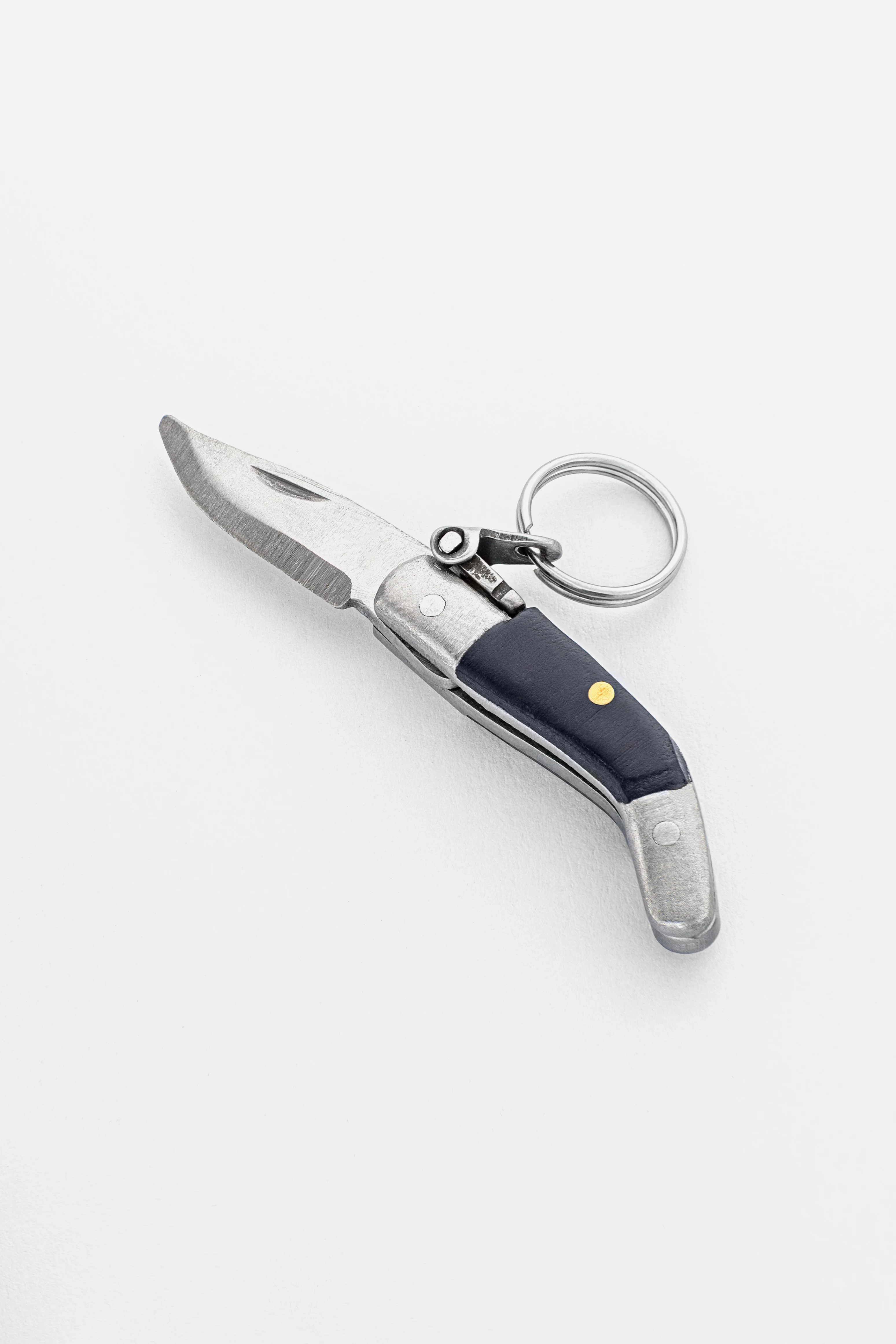
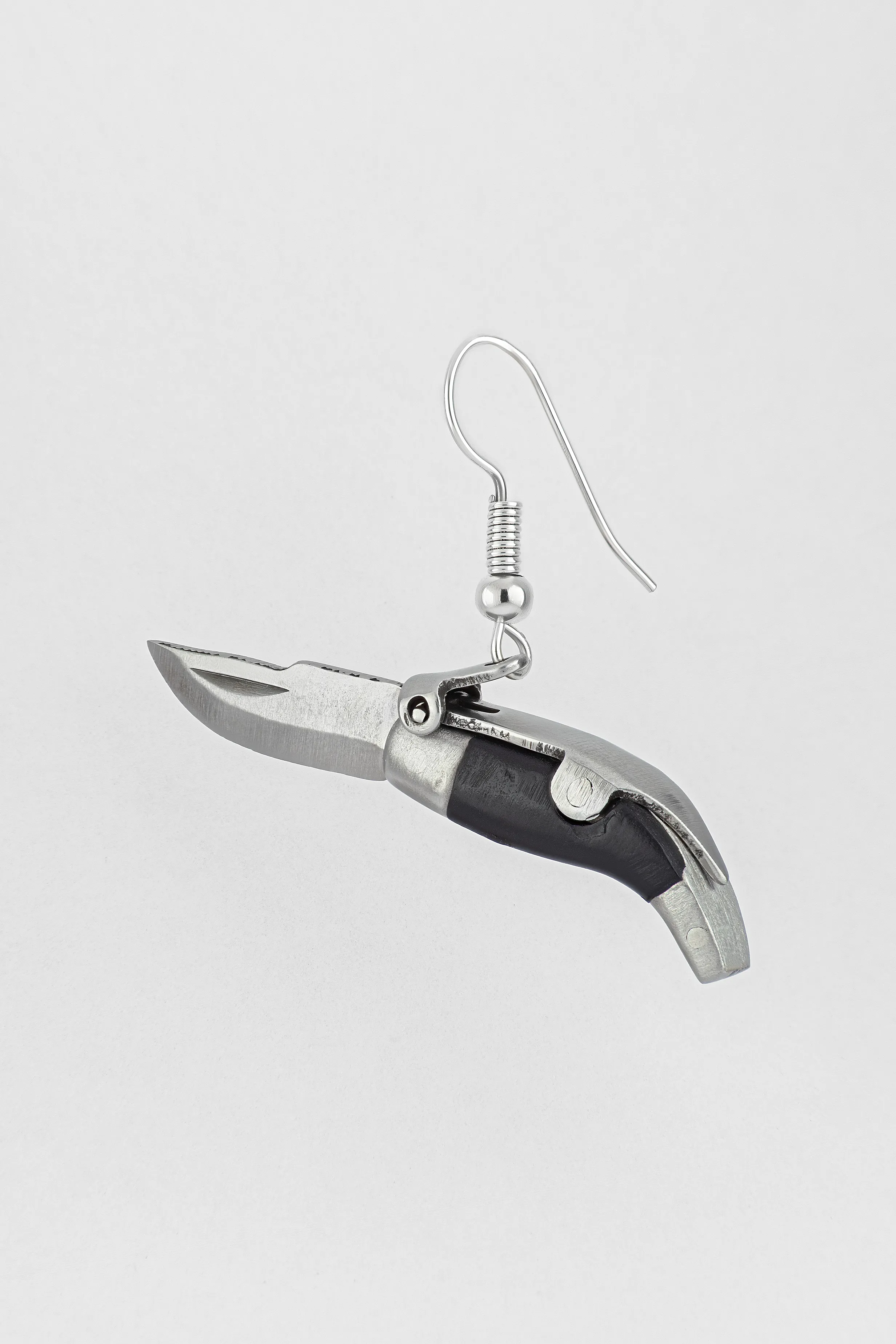
Artisan-crafted CAPAORA navaja pendant
A 40 mm stainless-steel navaja with a real folding mechanism and Palanquilla lock. An affordable gift to remember.
A code for blog readers:
10% off your first order
Authentic · Maker's guarantee · Ships from Spain
The Energy of Abundance: Why Pyrite Attracts Money
From Alchemy to Esotericism: Saving Has Returned
When the alchemists burned pyrite trying to manufacture gold, they were looking for money in the wrong direction. The esotericists of the 2000s reframed it and decided: pyrite is not a substitute for gold but its magical twin. If gold is accumulated wealth, then pyrite is the attraction of wealth.
In crystal healing (a practice science does not recognize, but which enjoys popularity) pyrite is counted among the stones of prosperity. Its golden color is linked to the sun, to abundance, to energy. Its cubic form is taken as a symbol of stability and grounding. Together they compose an image: a stable source of energy that does not run, does not fly off, does not crumble.
People carry pyrite in a wallet, set it on a desk, keep it in the left pocket (the side of the heart and intuition) or the right pocket (the side of action). It is believed that pyrite should be kept close when making money decisions, signing a contract, launching a project or choosing an investment.
The Psychology of Attracting Money
But there is a rational explanation for why people who carry pyrite win more often. It is not magic, it is the psychology of confidence.
When you wear a piece of pyrite, you remember your intention to improve your finances. Each time you see the pyrite's glint, the area of the brain that attends to money is switched on. You begin to notice opportunities you used to miss. You say "yes" to projects that once seemed risky. You invest not in games of chance but in your own abilities.
It is like athletes who wear an amulet before a match. The amulet adds no extra strength, but it gives confidence. Confidence improves technique. Technique wins the match.
With pyrite it is the same: the piece is a reminder of the goal, a confidence in one's own ability to reach it and, as a result, a more active conduct toward that goal. People who wear pyrite usually tell stories not of miracles but of coincidences that helped them. "An unexpected bonus," "a friend offered me a project," "I ran by chance into the right person." But the coincidences happen because you are paying attention to them.
A great many misunderstandings have gathered around pyrite: some expect instant riches, some confuse it with real gold, some fear it is dangerous. Let us go through the most stubborn myths in order.
Leave your email, we'll send your discount code. No spam, unsubscribe anytime.
The code arrives by email, valid on your first order.
Pyrite Jewelry: From Pendants to Men's Rings
Pendants: A Medallion for Energy at the Neck
The pyrite in a pendant should be either a small cube (5 to 8 mm) or a slice of a large cube (a cube face of 1 cm). If the pendant is heavier, it presses on the neck and can chafe the collarbone.
Pyrite looks best in silver, the cold metal contrasting with the stone's golden sheen. Or in gold plating, if you want the full golden effect. A pyrite pendant sits well on a long chain (70 to 75 cm), the cube hanging a little below the solar plexus, like a small magnet for energy.
Men often choose the pyrite pendant on a short chain (50 to 55 cm), so it shows with the shirt unbuttoned. Women prefer it long, so it looks lovely against a neckline.
The price of a pyrite pendant runs from the cost of a coffee (if it is a composite pendant) to the cost of a dinner (if it is silver with a quality cube).
Bracelets: Tactile Beauty on the Wrist
A pyrite bracelet can be made two ways: either several pyrite cubes between silver beads (like a string of beads, but a handsome one), or pyrite as a charm on the bracelet.
On the beaded bracelet the pyrite works by touch. When you turn the bracelet on your wrist, your fingers rub the cubes. That creates a sense of connection with the stone. People who wear such bracelets to meditate on money say they turn them when worried about financial decisions.
The charm bracelet looks more elegant. A pyrite cube on a chain or a cord swings as you move your arm, with a pendulum effect.
Earrings: Light Reflected in Motion
Pyrite earrings are rare, because the cube is rather heavy for the earlobe (if it is a large cube). But with small cubes (3 to 4 mm) or cube slices, something interesting comes out.
Tiny pyrite studs suit daily wear. As you move, the light bounces off the cubes and creates an effect of little suns in the ears. It is especially lovely in motion, on video or while walking.
Pyrite drop earrings look more dramatic. The cube falls below the lobe, swings more, shines more.
Men's Rings: A Symbol of Strength and Stability
The men's pyrite ring is one of the most popular forms of jewelry with this stone. A wide silver or steel band (8 to 12 mm) with a set pyrite cube of 7 to 10 mm looks manly and is cheap enough that there is no fear in wearing it with work gloves or in a contact sport.
The pyrite cube in a ring stands for stability (the cube) and wealth (the color). Men often choose a pyrite ring when they enter a new project or change jobs, as a personal talisman of action. Anyone drawn more to the theme of courage and resolve should also look at pyrope garnet, the blood-red stone of valor: it covers the same need for support, but through an intense red rather than a golden sheen.
What to Wear Pyrite With
Pyrite rests on a single quality: it gives off its golden sheen coldly, without the soft warmth of gold. That dictates the pairings too. For everyday, a cube set in silver works with any plain top in a neutral color: white, gray, graphite, navy. Against a calm fabric the sheen reads as an accent, not a shout. For the office, wear the minimum: one fine pendant on a long chain or restrained studs. Too much metal in a work outfit turns pyrite from a detail into noise.
An evening out changes the rules. A deep neckline, black or wine, a smooth fabric like satin or a dense knit give pyrite a stage. A large cube slice on the chest catches the light in motion and works better than any showy jewel, because it plays with geometry, not with color. For a special occasion, build the look on a contrast of cold tones: silver, steel, smoky quartz beside the stone's golden sheen. Warm gold in jewelry is better not mixed with pyrite in the same row, or the metals will start fighting for attention.
Layers suit pyrite, but in a single metal. A stack of silver rings with one pyrite cube, two or three cool-toned bracelets, a long chain and a short one together: that reads as a whole. Pyrite favors those who prefer restrained strength to sweet finery, and it is worn most happily by people with a direct style and a calm palette in the wardrobe. Two practical tips. First: for the day take a cube of 5 to 6 mm; for the evening a cube slice from a centimeter up, since small pieces are lost in the dark. Second: one pyrite piece in a look works harder than three, so let the stone be the only golden spot and it will do all the work itself.
Caring for Pyrite: It Fears Moisture and Oxidizes
The Enemies of Pyrite: Water, Humidity, Oxygen
Pyrite is a temperamental stone. At its core is iron, which oxidizes. When pyrite meets moisture, a chemical transformation begins. The iron oxidizes, the sulfides break down, the luster fades.
That is why pyrite jewelry is not worn in the shower, the pool or the sea. That is why it cannot stand sweat. That is why you must not wash it with the laundry or soak it in soapy water.
The oxidation process may take months or years depending on the humidity of the air. In a dry climate pyrite lasts longer. In a wet climate it can blacken in a single season.
Pyrite Disease: What It Is and Why Museums Fear It
The decay of pyrite has a name of its own, pyrite disease, and it strikes not only jewelry but museum collections around the world. The process is chemical: iron sulfide reacts with the oxygen and moisture of the air, turning into iron sulfates and sulfuric acid. The cube gradually takes on a rusty or whitish bloom, loses its shine, cracks along the faces and, in an advanced stage, crumbles to powder. The acid released in the process eats into neighboring materials, which is why pyrite disease is especially dangerous to fossils and old specimens lying nearby. Curators use sealed cases with moisture absorbers and keep the humidity below forty percent, because it is moisture that starts and speeds the reaction. For the owner of a piece the lesson is the same: dry air lengthens the stone's life, damp cuts it short.
Signs of Oxidation That Has Begun
To recognize the disease at an early stage is to save the piece. The first signal is a fading luster: the mirror face clouds over, as though fogging up. The second is a smell, a faint sulfurous whiff that appears on decaying pyrite. The third is a bloom: rusty specks of a corroded shade or whitish salt crystals on the surface and in the cracks. The fourth is the behavior of the setting and the skin: a dark mark under a ring or a greenish trace often says the metal and the stone have begun to oxidize together. Catch the process at the stage of a light haze and it is enough to dry the item thoroughly and put it away in dry storage. A rusty bloom and crumbling at the edges mean the reaction has gone far and the cube will soon need replacing.
How to Care: A Minimalist Approach
Caring for pyrite is simple: avoid moisture. Store it in a dry place. If the piece gets dirty, wipe it with a soft dry cloth or an optics wipe.
Do not use commercial cleaning products (they contain moisture). Do not use ultrasonic cleaning (it can loosen the cube in the setting). Do not use chemical cleaning (it oxidizes pyrite even faster).
Once a month, wipe the piece and recheck the setting, see whether the pyrite has shifted in the ring or pendant and whether cracks have appeared in the stone.
If the pyrite does darken or oxidize, you can try to bring back its shine. A craftsman can polish the cube with fine abrasive sandpaper (very carefully) or with a polish made for jewelry. But after polishing the luster will never be as perfect as in a new piece.
When Pyrite Loses Its Point
A pyrite piece has a service life. With good care that is 2 to 3 years of vivid shine, then a slow darkening. After 5 years pyrite usually looks the worse for wear. But that is not the end of the piece.
Many people remake the piece: the craftsman extracts the blackened pyrite (it grows brittle and breaks easily) and sets a fresh new cube. Or remakes the whole piece, using a new silver setting.
This is part of the magic of pyrite: it is not eternal, but it is renewable. Like money.
Send a friend a discount code, they save on their first order.
Pyrite Facts That Surprise
Nature Itself Cut the Perfect Cubes
Most crystals grow as they please, crooked and uneven, and a human gives them their cut. Pyrite breaks the pattern: it forms almost flawless cubes with right angles and no intervention at all. The lapidary is left only to polish a ready-made face. The cubes from Spanish Navajún are so regular that they are sold uncut, as natural sculpture, since any attempt to improve their mathematical precision would only spoil the wonder.
Strange Patterns Grow on Pyrite, and It Is No Fake
On some faces of pyrite you can see thin parallel grooves, as if someone had scratched lines. This is natural striation, a consequence of twinned crystal growth, and mineralogists use it as an identifying mark: a brass imitation never has such grooves. The grooves on neighboring faces run at right angles to one another, forming a characteristic pattern that cannot be mistaken for anything else.
Pyrite Shines Not by Itself, But With Stolen Light
It seems the cube radiates a golden glow, yet there is not a drop of its own light in it. All of pyrite's shine is reflection: six mirror faces catch the outside light and fling it into the eye from several sides at once. In total darkness pyrite is dead and gray. That is exactly why it comes so alive in motion and under bright light, and dims so under an overcast sky or in a pocket.
Pyrite Made Sulfuric Acid for a Whole Industry
The humble stone of abundance was the raw material of heavy chemistry. When roasted, pyrite gives off sulfur dioxide, from which sulfuric acid is obtained, one of the most sought-after substances in industry. For long decades it was iron sulfide ores that fed the acid works, before other sources of sulfur edged them out. So the ornament on a neck and the reagent in a tank turned out to be kin by chemistry.
Real Gold Sometimes Hides Inside Pyrite
The irony of fool's gold is that in certain deposits it really does contain gold, scattered through the crystal lattice in microscopic grains. Such pyrite is called auriferous, and it is processed precisely for the hidden metal. The prospector who tossed aside a shiny cube as waste rock sometimes threw away a tiny share of real treasure.
The Iceman Carried Pyrite Five Thousand Years Ago
In the gear of the Bronze Age Alpine mummy a piece of pyrite was found, and it was no ornament but a tool of survival. The stone was part of a fire-making kit: a strike against flint gave a spark. The find proves that people valued pyrite for its function long before they learned to cut it, and that without this mineral, drawing fire on the road was far harder.
Grandmother's Marcasite From the Jewelry Box Is Renamed Pyrite
Antique pieces scattered with tiny sparkling stones are almost always labeled marcasite, although true marcasite is too brittle to cut. In reality, faceted pyrite was set into the silver. It is a centuries-old confusion of terms: the dealers of the eighteenth century fixed the pretty word and it stuck, even though the stone in the piece is a different one.
The Cubic Form Made Pyrite a Symbol of Stability
In the symbolism of stones, form means no less than color. A sphere rolls, a prism topples, but a cube stands on any face and cannot be turned into an unstable position. That is exactly why the cubic pyrite became, in esoteric thought, an image of support and grounding: the geometry suggested the meaning before people thought it up. The stone of abundance rests both on its golden tone and on this unshakeable form.
Frequently Asked Questions
Is it true that pyrite attracts money?
The mineral itself attracts nothing: it is iron sulfide, not a financial instrument. But pyrite works as an anchor of intention. When a person wears a piece with a concrete goal, they recall that goal more often through the day, look at opportunities more attentively, take on more projects. Psychologists call it the reminder effect. The energy people attribute to pyrite is, at bottom, their own enterprising drive and readiness to act. That is why stories of attracting money almost always come down not to a miracle but to an opportunity seen in time. Pyrite makes the golden accent visible, the visible keeps the goal in focus, focus changes behavior. In that sense the stone really does help, but not by magic, by attention.
Who is pyrite for: men, women or both?
Pyrite is universal and not tied to gender. Its symbolism rests on two ideas: the cube as stability and the golden sheen as abundance, and both read the same on anyone. Men more often choose pyrite in massive rings and short-chain pendants; women prefer long pendants, beaded bracelets and earrings. For younger people pyrite is convenient as a first stone: they can experiment with style without investing in a costly metal. It is worth choosing by the form of the piece and the way of life, not by sex. If your work involves moisture or knocks, take a small cube in a firm setting. For going out and for a quiet office a large cube slice works well, catching the light gracefully in motion.
Pyrite and gold: can they be combined?
They can be combined, and historically they were. The classic Toledan scheme: a silver base, a thin layer of gold plating and a pyrite inset, three metals in one piece to heighten the impression of wealth. A direct pairing of pyrite with solid gold is rare, because in a costly setting the inexpensive stone looks disadvantaged and loses its own character. Pyrite looks far better with silver or stainless steel: the cold metal creates a contrast with the stone's warm golden sheen and underlines the geometry of the cubes. If what you want is the golden tone throughout, it makes more sense to take a gold-plated setting with pyrite than real gold. Then the piece reads as a whole, stays affordable and raises no dissonance between the price of the stone and that of the metal.
How long does pyrite last in a piece of jewelry?
The life of pyrite depends directly on care, because at the core of the stone is iron, prone to oxidizing. With gentle wear and protection from moisture the vivid shine holds for about two or three years, and an acceptable look lasts five to seven. After that the stone darkens little by little, the faces cloud, the surface loses its mirror effect. But if you wear the piece in the shower, the pool or the sea, do not take it off in the heat and do not dry it after contact with sweat, pyrite can blacken in half a year. The good news is that the piece is almost always renewable: the craftsman extracts the darkened cube and sets a fresh one, or remakes the whole setting. So a pyrite piece is best seen as a renewable thing, not a stone for a lifetime.
Pyrite or gold plating: which is cheaper and which lasts longer?
These are two different ways to get the golden effect, and it is useful to compare them. Pyrite in silver usually comes out cheaper than good gold-plated silver, because plating demands high skill from the craftsman and a consumption of metal, while pyrite needs only a good cube and a careful setting. On durability the picture is mixed: the thin layer of plating wears off at the friction points in two or three years and needs renewal, whereas pyrite, with dry storage and gentle wear, keeps its shine longer. But pyrite has its own weakness, moisture: gold plating survives a chance contact with water more calmly. The conclusion is simple: for active wear with a risk of moisture, plating is closer; for a dry climate and going out, pyrite. On the price of entry pyrite almost always wins.
Can you wear pyrite in summer?
Summer is the hardest season for pyrite. The higher humidity of the air, the heat and the sweat speed up the oxidation of the iron in the stone, so constant summer wear shortens the life of the shine. That does not mean the piece must be hidden away until autumn. It is enough to keep a couple of rules: take pyrite off before the shower, the pool and the sea, do not wear it to the beach or on long walks in the heat, and after a day of wear wipe it with a soft cloth. In an air-conditioned room the risk drops sharply, because the air is drier. If active rest by the water is planned, the sensible thing is to leave the pyrite at home and put on a piece of silver or steel. With careful handling pyrite serves in summer too, it just asks for a little more attention than in winter.
Pyrite and money meditation: how does it work?
Money meditation with pyrite is a tool of concentration, not a ritual with a guarantee. The scheme is simple: for fifteen or twenty minutes a day you hold the cube in your left hand, focus on a concrete financial goal, feel the weight and temperature of the stone. The tactile contact and the visual shine give the mind a point of support on which it is easier to hold attention. A mind focused on the goal begins to find paths toward it: it notices opportunities, formulates steps, discards the surplus. Pyrite plays here the part of a physical reminder, just like prayer beads in breathing practices. There is no magic in the stone itself, the effect comes from regularity and focused intention. If you remove the pyrite and keep the practice, the result holds, only the convenient tactile cue disappears, the one that helps many people not to get distracted.
How do you tell real pyrite from a fake or another mineral?
Pyrite is often confused with chalcopyrite and with plain brass findings, but there are reliable signs. The first is form: natural pyrite tends toward crisp cubic faces with right angles, which is almost nonexistent in imitations. The second is weight: real pyrite is noticeably heavy for its size, because it holds iron. The third is the color of the fracture: in pyrite it is pale yellow with a greenish cast, while in real gold it is bright yellow and soft. Pyrite is hard and brittle, you cannot draw a fingernail across it, and gold scratches easily. Besides, pyrite throws sparks when struck against steel, hence its old name of fire stone. If the cube is too light, perfectly even in color and lacks the natural micro-irregularities, you are looking rather at painted plastic or a metal imitation.
Pyrite crumbles and stains the skin: is that normal?
A slight darkening of the skin under a piece is common and is usually due not to the pyrite itself but to oxidation of the setting metal or to the fact that the stone has already begun to break down. Fresh, well-set pyrite does not stain the skin. If a dark mark stays on the skin and a rusty or whitish bloom appears on the stone's surface, it is a signal of oxidation that has begun: iron sulfide breaks down and releases compounds that leave the mark. Crumbling, too, is a sign of age or of contact with moisture; in old pyrite the faces grow brittle and shed at the edges. The solution depends on the stage: early on it is enough to dry the piece thoroughly and store it in a dry place; later, better to change the cube with a craftsman. That contact does no harm to health, but the look is best restored by replacing the stone.
Conclusion: Pyrite as a Philosophy
Pyrite is jewelry for someone who understands that beauty and affordability can coexist. It is the stone of the alchemist whom it disappointed as gold, but rewarded with something better: the indisputable beauty of its own natural form. The pyrite cube is perfect not because a master cut it. It is perfect because nature spent millions of years creating it.
When you put on a piece of pyrite, you put on the history of alchemy, the history of mineralogy, the history of Spanish gilding and of today's affordability. You put on a stone that reminds you that wealth is not always the expensive thing, but often the thing that is noticed, valued and kept safe like a treasure.
Pyrite shines not because golden energy is stored inside it. It shines because its cubic faces catch the light and return it to your eye. And in that second, when the light of the cube touches the eye, your brain understands: I have seen something beautiful. I have seen something valuable. I have seen myself in that shine.
About Zevira
Every stone in our jewelry is chosen with the same care with which alchemists once chose pyrite. We believe beauty and affordability can live in a single piece. Open the catalog and find your pyrite.