Selenite in Jewelry: The Soft Lunar Stone for Meditation and Peaceful Sleep
Introduction: Why Selenite Feels Like a Prayer in Your Hand
Hold a piece of selenite up to the light. It glows from within, not like quartz, not like amber, like milk that has learned to shine. It's soft, almost delicate. Its name comes from Selene, the Greek goddess of the moon. But this isn't moonstone (that's adularite, something completely different). Selenite is gypsum, and it's so fragile that dropping it from a table will crack it. That's why people hold it like a prayer: slowly, carefully, as if the stone itself is teaching you gentleness.
In our distracted world, where meditation has moved from yoga studios into the daily routines of high-performing professionals, selenite has returned. This isn't marketing. Many people wear it not because an influencer suggested it, but because holding it in their hand while meditating feels meaningful to them. As you sense its fragility, your attention can settle into a state of delicacy. For some it feels as if a secondary heartbeat appears inside, one that demands care.
This guide explores what selenite truly is, how to choose it for meditation, how to wear it in jewelry (carefully, strategically), and why its energy is the energy of peaceful rest, deep sleep, and access to your own intuitive knowing.
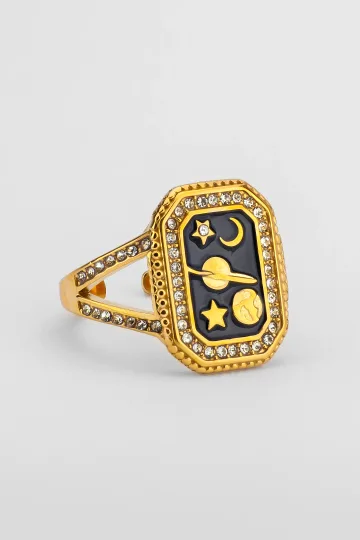
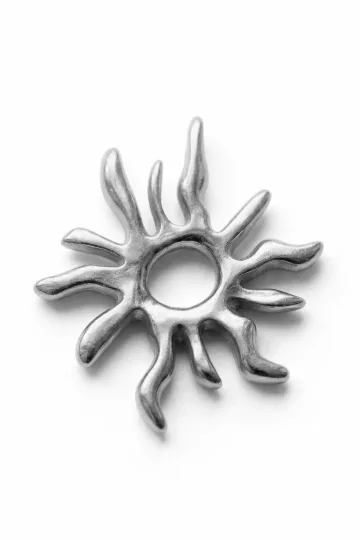
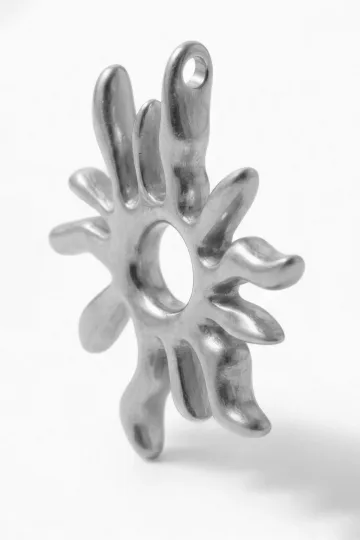
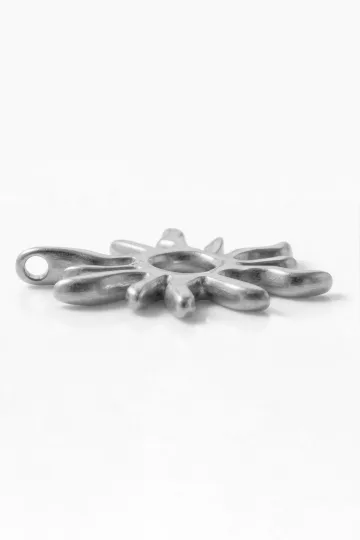
Wear the symbol, don't just read about it. These are in stock:




What Is Selenite: The Crystal Water Inside Gypsum
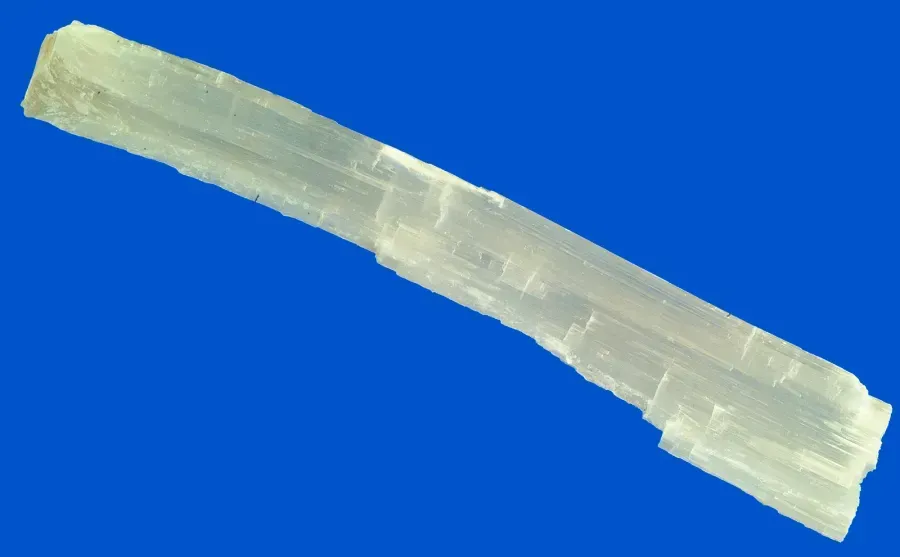
Selenite is a transparent or translucent variety of gypsum (CaSO₄·2H₂O). Yes, it sounds like chemistry class, but wait until you understand what that means for meditation.
Why the Name
The ancient Greeks noticed something: this stone seems to glow in moonlight, not because it's luminescent, but because it transmits light in such a pure, even way that there's an almost spiritual quality to it. They named it after Selene, the moon goddess. Later, "selenite" became the term for all transparent gypsum varieties, regardless of lunar visibility.
The name itself carries philosophy: in lunar symbolism, this is a stone associated with the energy of the moon. The moon governs tides and ocean currents through gravity. Selenite, a form of crystallized water bound into calcium sulfate, has long been linked in tradition to this lunar cycle.
The Geology: How Selenite Forms
Selenite forms in evaporation zones of salt lakes and lagoons, where seawater slowly evaporates over millions of years, leaving mineral layers. First comes denser anhydrite (gypsum without water). Then, in the upper layers, anhydrite absorbs water and becomes gypsum. Under the right conditions, this gypsum crystallizes into large, transparent specimens.
The finest transparent selenite comes from Mexico, especially the Nayarit state. There, deep in the mountains, are mines where workers extract crystals up to a meter long, enormous, ice-like formations frozen inside stone. Smaller specimens come from Morocco, the USA, Ukraine, and Russia.
Hardness and Structure
On the Mohs hardness scale, gypsum rates 2. This means your fingernail or a copper coin can scratch it. For comparison: marble is 3, diamond is 10. Selenite is one of the softest "gemstones." This is why you rarely see it in rings worn daily. You can wear selenite as jewelry, but it requires protection: a setting that shields the stone except for the visible front face.
Selenite is transparent or translucent. Color ranges from milky white (the most "lunar" and prized for meditation) to gray, reddish (from iron), or pale blue. Clarity is key: the most meditative selenite is almost glass-clear, with a soft inner glow.
The structure is monocrystalline and layered. Selenite cleaves easily along its crystalline axis. Drop it, and it won't shatter into sharp fragments, it will split cleanly along natural planes, as if the stone has a built-in safety mechanism.
The History of Selenite: Ancient Meditation Practices and Lunar Rituals
Ancient Egypt: Selenite in Moon Temples
In ancient Egypt, more than 3,000 years ago, priestesses in temples dedicated to the goddess Thoth (moon) held pieces of selenite during night meditations. Why selenite? Because it seemed to contain the moon itself, transparent, luminous, as if the stone was a window into lunar consciousness.
In pharaonic tombs, archaeologists have found selenite amulets strung on silk threads, resting on mummies' chests alongside lapis lazuli and coral. Not as decoration, as tools for the journey into the afterlife. The Egyptian afterlife was the realm of the moon, the kingdom of Osiris. Selenite was the guide.
Mesopotamia: Selenite as a Mirror to the Moon
In Babylon, selenite was called "the stone of Sin," named for the Mesopotamian moon god. Astronomers and mages used it to contemplate lunar eclipses. When the moon entered Earth's shadow and turned dark, they would look through selenite at that shadow and meditate on what couldn't be seen. This practice of observing the invisible, the shadow side of consciousness, became central to their night rituals.
A tablet from the Babylonian library (around 1300 BCE) describes the ritual: a priest holds selenite in his left hand (the side of intuition), gazes at the moon, and repeats a mantra of calm. The practice is described as "sinking into the moon's sleep while awake."
Greece and Rome: Selenite in Philosophical Schools
In Plato's Academy, on a shelf among minerals, sat a piece of selenite. Students practiced "Plato's night meditation", sitting with moonlight and selenite, exploring the nature of ideas and shadows. Selenite was a metaphor: its transparency represented the soul seeing the ideal world; its softness represented the egolessness required for true contemplation.
Roman Stoics, who valued ataraxia (perfect tranquility) as the highest goal, carried selenite in their pockets during long philosophical walks. The stone became an anchor for calm. When the mind grew turbulent, they would hold the stone and feel its coolness, its gentle weight. This tactile reminder of fragility bred self-compassion.
Medieval Times: Selenite in Monasteries
In European monasteries, selenite was a subtle meditation tool. Monks placed small pieces under their pillows, not for sleeping comfort, but for night prayers. The stone was believed to help perceive divine light even in the darkest night. Medieval manuscripts called it "the stone of nocturnal prayer."
Medical texts of the era (like the "Lapidarium" by monk Meinhard, 12th century) describe selenite as a remedy for insomnia: not a tincture or powder, but the stone itself, placed near the sleeping place. "Selenite, night's stone, calls forth sleep as peaceful as the moon's own rest. Sleep with it beneath your pillow, and the moon will guard your dreams."
Victorian Era: Selenite in Drawing Rooms
In 19th-century London, selenite became an elegant accessory in parliamentary salons. Victorian women wore small selenite pendants "for the nerves", nervous complaints were fashionable ailments then, and selenite was considered a refined alternative to medicine.
A Victorian gemological writer of the period put it this way: "Selenite is the stone of tranquility. Its property is to soften sharp emotion, as the moon softens the sun's light. She who wears it acquires that grace which comes not from the absence of feeling, but from its perfect harmony."
Customer reviews
Zevira is a real jewellery shop. Genuine payments, deliveries and customer thank-yous.
🥰🥰🥰 gracias
Ok, ¡gracias! 🙂
The Energy of the Moon and Night Within Selenite
Lunar Cycles and Molecular Memory
The moon governs tides through gravity. This isn't mysticism, it's physics. A massive celestial body moving on a predictable orbit creates gravitational waves in time. All water on Earth responds to this movement.
Your body is largely water, and many traditions imagine this water responding to lunar cycles the way tidal water responds to the moon. Folklore links full moons to lighter sleep, menstrual cycles to lunar phases, and new moons to deeper meditation. These are cultural associations rather than established physiology.
Selenite is gypsum: CaSO₄·2H₂O. Two water molecules are bonded to each calcium sulfate molecule, water built into the crystal itself, unable to evaporate, integrated into the structure. This water resonates with lunar cycles just as the water in your body does.
When you meditate with selenite in your hand, your palm touches the cool surface of the stone. In crystal lore, this contact is described as a kind of resonance between the water in your skin and the water held inside selenite. Whether you read that as symbolism or simply as a calming ritual, the gesture invites you to slow down.
Intuition and the Subconscious
In astrology and ancient traditions, the moon symbolizes the subconscious, intuition, the shadow of conscious mind. Day is logic and sun; night is feeling and moon, the unseen.
Selenite, as a lunar stone, provides safe access to your subconscious. Its fragility protects against aggressive self-examination. When you meditate with selenite, you move slowly. You walk carefully, like in a dark forest with a small light, trying not to startle wild animals. Your subconscious opens not from pressure, but from safety.
Practitioners often describe meditating with a soft, fragile object as a way to feel more reflective and less defensive. People who use selenite this way frequently say it helps them shift, subjectively, from a guarded mood toward a more open, curious one.
Gentleness and the Energy of Ease
In meditative traditions (especially Buddhism), there's a concept of "meek" energy. Not weakness, not passivity, energy that moves without hurry, without strain. Like water polishing stone not through force, but through constancy.
Selenite is the stone of meek energy. Its vibrational frequency (in crystallography, this is the crystal lattice and its harmonic properties) resonates at very low frequencies. Selenite literally vibrates more slowly than denser stones. When you meditate with selenite, this slowness enters your energy field.

Turn on your camera, pick earrings, a pendant or a ring, and see the piece on yourself in real time.
Switch items in one tap.
Everything runs in your browser: no photo or video is ever uploaded.
Meditation and Sleep: Practices with Selenite
Evening Meditation Before Sleep
The practice is called "lunar descent." Twenty minutes before bed, take a small piece of selenite and sit by a window (if the moon is visible, wonderful; if not, the moon is still there). Place the selenite on your chest, over your heart, and simply breathe. No mantras, no formal practice. Just presence.
Over twenty minutes, a quiet wind-down ritual helps you move from the busyness of the day toward rest. Selenite in your hand or on your chest becomes the anchor for this transition. You notice it: I'm slowing down. I'm becoming gentle.
For many people, the result is a calmer, more settled feeling at bedtime.
Morning Intuition Meditation
"The voice of the moon." Right after waking, when consciousness floats between sleep and day, hold selenite in your left hand (left hand accesses right hemisphere, intuition, creativity) and meditate for 10 minutes without asking specific questions. Just silence.
Within 10 minutes, insights emerge from the subconscious work of your sleeping mind. These arrive quietly, like moonlight, solutions to problems that seemed unsolvable, creative ideas, relational clarity.
Result: you begin the day with a clarity that comes not from analysis, but from intuition.
Group Meditation with Selenite
Some yoga studios practice "lunar circle meditation," where a group sits in a circle with selenite specimens in the center. Each person meditates on the stone, watches light pass through it, and feels connection through the stone as intermediary.
The science: when people meditate synchronously, their brainwaves synchronize (phase synchronization). When the focus is on an object with highly ordered molecular structure (a crystal), synchronization strengthens. Selenite, being nearly perfect crystal, creates stronger effects than, say, sand.
Meditation on Fragility and Surrender
Silver, gold, engagement rings, symbolic jewellery, paired sets.
"The touch of selenite." Place selenite in one palm, touch it gently with your other hand so the stone rests between them without pressure. Feel its weight, its softness, its fragility. Meditate on one truth: "This may break. And I will be okay."
Not because you're cold, but because fragile things have the right to be fragile. This meditation works as mental projection: if you can accept the stone's fragility, you can accept your relationships', your plans', your life's fragility. Buddhism calls this "understanding impermanence." Selenite teaches it silently.
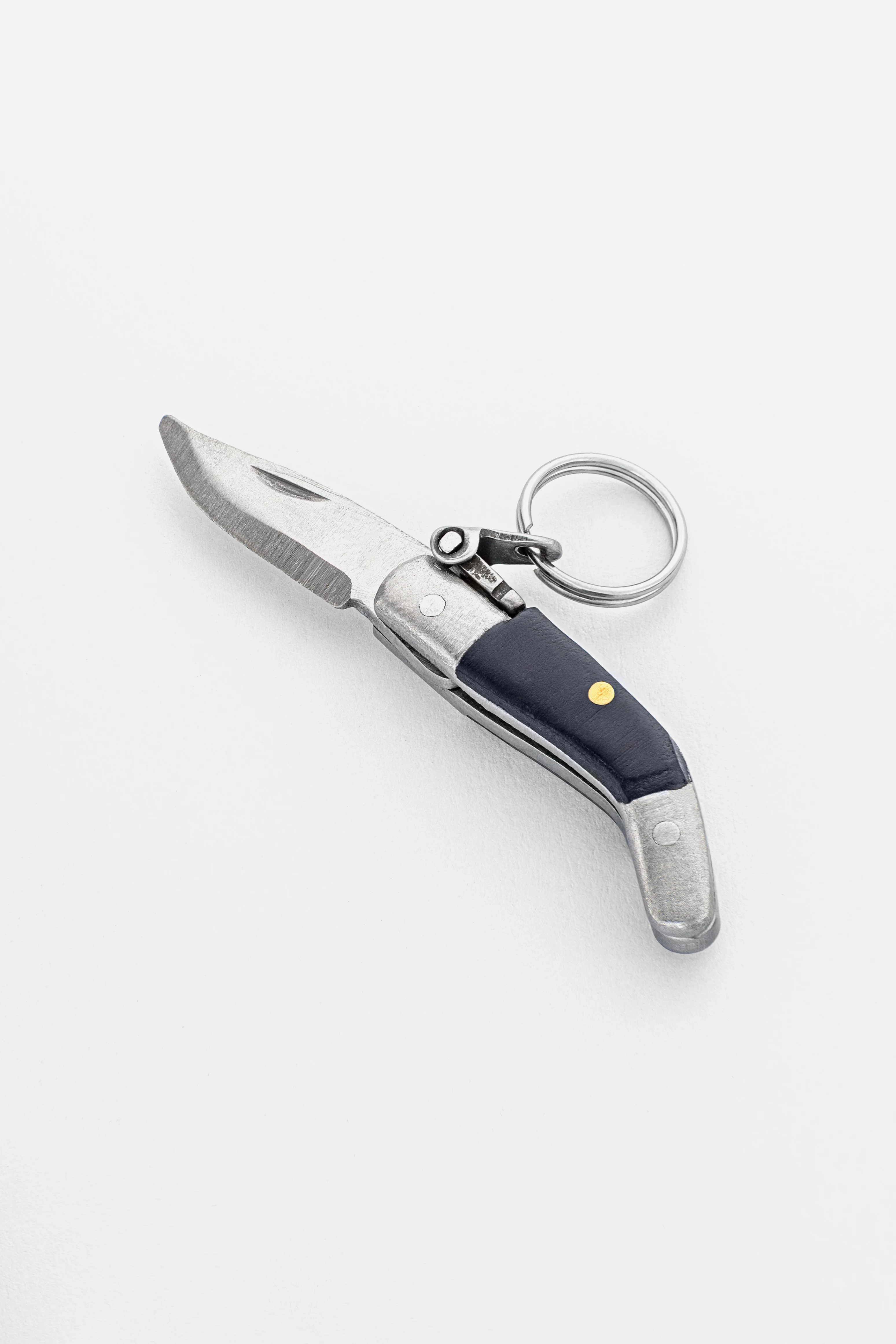
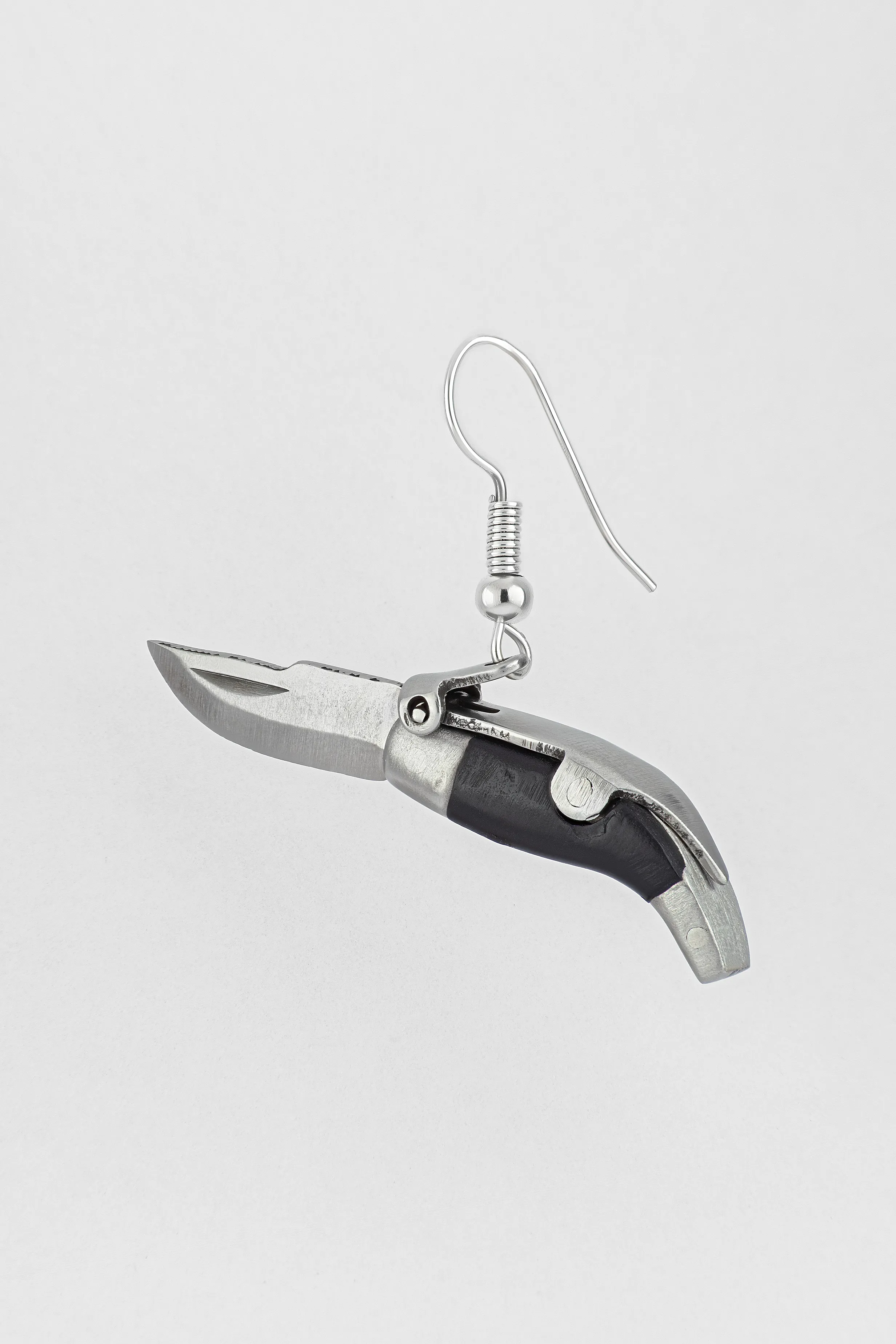
Artisan-crafted CAPAORA navaja pendant
A 40 mm stainless-steel navaja with a real folding mechanism and Palanquilla lock. An affordable gift to remember.
A code for blog readers:
10% off your first order
Authentic · Maker's guarantee · Ships from Spain
Selenite in Jewelry: Pendants, Bracelets, and Meditation Charms
The Meditation Pendant
A small piece of selenite (usually 20-30mm) set in sterling silver, protected on all sides except the front face. The setting is simple, a rectangular frame or moon shape, that allows the stone to be seen but prevents damage.
Worn on a silver or silk chain under clothing, resting directly over the heart. It's not jewelry for display. Throughout the day, your fingers touch it through the fabric, and you remember: calm. At work, when stress rises, your hand finds it and a moment of peace returns.
The pendant works like a portable anchor for meditation.
The Guardian Bracelet
Sterling silver bracelet with 3-5 small selenite inserts spaced evenly around. Each insert is protected at the sides and back, open at the front. Worn on the left wrist (the heart side, intuition side). Sometimes you touch it meditatively; sometimes its presence alone calms you.
Numbers matter esoterically. Three inserts represent meditation's trinity: mind, heart, breath. Five inserts represent the five senses. When you touch the bracelet, you're touching awareness itself.
The Moon Pendant
A crescent moon pendant with selenite inside. The moon shape carries lunar symbolism. The selenite within glows like moonlight. Worn on a ribbon or cord (gentler than metal chain).
A visual metaphor: everyone carries an inner moon, an inner light. You're not bright like the sun, you're calm like the moon. And that's perfect.
Selenite Earrings
Tiny selenite inserts (5-8mm) in silver studs or drops. In Eastern traditions, the ears connect to intuition. Selenite here works as "lunar gates", you listen to yourself, not the world. You hear your own knowing.
Leave your email, we'll send your discount code. No spam, unsubscribe anytime.
The code arrives by email, valid on your first order.
Caring for Selenite: Fragility as Teaching
Why Selenite Demands Gentleness
Selenite isn't like diamond or even moonstone. Its Mohs 2 hardness means copper or sand-filled water can scratch it. Wearing selenite as an everyday ring is risky. But this fragility is the point.
Selenite teaches care. It teaches that valuable things are delicate. Not because the world is cruel, but because precious things are by nature vulnerable. When you handle selenite with tenderness, you're learning to handle your life with tenderness.
How to Store Selenite
Keep selenite in a soft pouch, separate from other jewelry. Remove it before dishwashing, exercise, showering. Why before showering? Selenite is sensitive to temperature shock. The shift from cool air to hot water can create internal stress and cracking.
Ideal storage: room temperature (18-22°C), humidity under 60%. A dry bedroom shelf, away from heaters and direct sun.
Cleaning Selenite
Never use ultrasound cleaners, they will crack it. Clean very gently: a soft microfiber cloth, distilled water (not tap), barely damp. You're not scrubbing; you're coaxing. A soft touch. Leave it on cloth to air-dry; don't rub it dry.
If dust settles on selenite, blow it off like dandelion seeds. No brushes, no abrasives.
Protection from Moisture
Selenite absorbs moisture. If it stays wet for hours, the crystal structure can shift. Don't leave it in the bathroom after a shower. Don't wear it to a sauna. In humid climates, check it twice weekly, ensure no condensation, wipe gently if found.
In dry climates (desert regions), selenite needs almost no care.
Restoring Faded Selenite
Over time, selenite can lose its luminous quality as dust and bacteria create a film. Very gentle brushing in one direction with a soft horse-hair brush helps. Slow, careful, like brushing facial skin.
For heavy clouding: soak 5 minutes in distilled water at room temperature, very gently brush in one direction, air-dry. This is extreme; use rarely.
Combining Selenite with Other Stones: Synergy of Meditation Minerals
Selenite and Amethyst: Moon and Inner Vision
Amethyst, purple quartz, the third eye stone, intuition and clarity. Combined with selenite (subconscious, moon), you access deep knowing. One stone speaks to your unconscious wisdom, the other clarifies what emerges.
Practice: hold amethyst in your right hand, selenite in your left. Meditate 20 minutes. Watch what surfaces, images, insights, visions.
In jewelry: a bracelet with alternating selenite and amethyst pieces, or a pendant with both.
Selenite and Rose Quartz: Moon and Heart
Rose quartz opens the heart; selenite opens the subconscious. Together: your heart can speak its truth without the mind's interference. Self-compassion expressed from deep knowing.
Practice: wear one under clothes (selenite on heart), hold the rose quartz in your palm. Meditate on what your heart needs to say.
Selenite and Black Tourmaline: Moon and Earth
Black tourmaline grounds and protects; selenite opens intuition. Together: you're rooted in reality while accessing subtle knowing. Practical magic.
Practice: hold tourmaline (grounding), wear selenite pendant (intuition). Move through your day centered and aware.
Selenite and Labradorite: Moon and Transformation
Labradorite carries magic and transformation; selenite carries the subconscious where change begins. The stone within where all shifts start.
Practice: meditate with selenite to access the knowing required for change, then wear labradorite as you embody the transformation.
Send a friend a discount code, they save on their first order.
Selenite in Rituals for Sleep, Calm, and Stress
Selenite and a Calming Bedtime Ritual
Many people who keep selenite by the bed say they feel they sleep more restfully with it nearby. There is no medical claim here: the value comes from the ritual itself. Setting the stone down, dimming the lights, and slowing your breath is a wind-down cue that helps the day's tension ease. Some describe it as quieting the mind before sleep.
Practice: place a piece by the pillow and hold a small stone in your hand as you lie down. Over a week of using it as a nightly cue, many people say they feel calmer at bedtime and more rested in the morning.
Selenite and Anxiety
When the mind races ahead into the future, a tactile object can help bring attention back to the present. Selenite's fragility encourages you to slow your hands, and slowing down physically can help the mind settle. This is a personal, subjective experience, not a treatment for anxiety, and it is no substitute for professional care.
Practice: wear the pendant under your clothes. When you feel tense, touch it through the fabric. Sit still for a minute, eyes closed, breathing slowly. For many people the moment of stillness brings a sense of relief.
Selenite and Chronic Stress
Selenite won't remove what's stressing you. What a small ritual can do is give you a moment to pause. For many people, a brief, deliberate gesture before a tense moment becomes a personal cue to take a breath and reset.
Practice: keep a small selenite on your work desk. Before important meetings or difficult conversations, touch it. For some, this tiny gesture is a quiet reminder to slow down. By the meeting's end, you may feel clearer and less reactive.
Selecting, Storing, and Protecting Selenite: A Practical Guide
How to Choose Selenite for Jewelry
Look for:
Clarity. Nearly transparent is ideal. Cloudiness, cracks, or bubbles indicate lower quality. Such selenite will be even more fragile.
Milky whiteness. True "lunar" selenite should be milky-white or pale, not gray or yellow (oxidation). White feels like moon; other colors feel like earth.
Size. For jewelry, choose 15-30mm pieces. Larger = more fragile. Small = stronger structure relatively.
Feel. When holding it, you should feel its coolness and lightness. Your hand recognizes it as something precious requiring care. If it doesn't inspire that feeling, it's not your selenite.
Where to Buy Quality Selenite
Buy from:
- Mineral specialty shops (certified)
- Direct suppliers from Mexico (Nayarit region)
- Established esoteric shops with reputation
Jewelry-quality selenite sits in an affordable, accessible range. Prices well below the going rate often signal inferior material or synthetic gypsum.
Storing Selenite in Your Home
Best locations:
- Bedroom (natural humidity lower due to ventilation)
- Your meditation space
- Under pillow in silk pouch
Avoid:
- Bathrooms (high humidity)
- Kitchens (steam)
- Direct sunlight (can pale the stone)
- Near heaters
Protecting Selenite in Jewelry
Setting must be protective around the stone's sides and back.
Remove before: sports, cleaning, cooking, showering.
Monthly check: inspect setting integrity and stone for cracks.
If cracked: don't discard. Have it reset into a new pendant or put it under your pillow for meditation. Cracked selenite still works, some say it works stronger because the fracture holds intention.
If Your Selenite Breaks
Broken isn't wasted. You can:
Keep as is. Many meditators feel broken selenite holds more power.
Recut and reset. A jeweler can cut it into smaller pieces and reset into new jewelry.
Return to earth. Lay it in a garden or forest. It will become soil again, part of the elemental cycle.
Never throw selenite in trash. It's a mineral that took millions of years to form.
Frequently Asked Questions About Selenite
Q: Why is selenite so soft if it's supposed to be powerful?
A: Softness is its power, not weakness. The water molecules built into gypsum (2H₂O) are what allow it to resonate with lunar cycles. Hard gypsum (anhydrite) doesn't contain water and doesn't work the same way. Softness = aliveness.
Q: Can pregnant women wear selenite?
A: Yes, it's one of the safest minerals during pregnancy. Its calming energy benefits the nervous system, which benefits both mother and fetus. Wear as a pendant on your chest rather than on your abdomen (to avoid breakage from falls).
Q: My selenite looks cloudy. Did it lose its power?
A: No, it just needs cleaning. Dust and bacterial film reduce clarity. Clean with a damp soft cloth and distilled water; the clarity and power return.
Q: Does selenite work if you don't believe in crystal healing?
A: Many people find the ritual helpful regardless of whether they believe in crystal energy. The calm tends to come from the practice itself, taking a pause, slowing your breath, holding something gentle, rather than from any property of the stone you need to believe in.
Q: Can I sleep with selenite if I have nightmares?
A: Some people find a calming bedtime ritual with selenite reassuring. It isn't a treatment for nightmares, and persistent nightmares are worth discussing with a doctor, but a gentle wind-down routine can make going to sleep feel more peaceful.
Q: How do I know if my selenite is real or synthetic?
A: Real selenite has natural variation in clarity, slight imperfections, and will be soft enough to scratch with a copper coin. Synthetic gypsum will be too uniform (plastic-looking) and harder.
Q: Can I wear selenite while swimming or exercising?
A: No. Remove it before any water or movement. Chlorine, salt water, sweat, and impact all damage selenite. Wear it during calm, meditative times.
Q: Is Mexican selenite better than other sources?
A: Yes. Mexican selenite (Nayarit region) has the finest crystal structure, thinner, more uniform molecular layers. This creates stronger resonance. Lesser quality selenite is cloudier, less effective for meditation.
Q: How long does it take for selenite to "work"?
A: For meditation, many people say they feel calmer within minutes of sitting down with it. As a bedtime cue, it tends to feel more natural the longer you keep up the routine. These are personal experiences rather than guaranteed outcomes.
About Zevira: Meditation Jewelry with Selenite
In Zevira's collection, selenite appears as meditation companions, carefully selected, beautifully set, designed for delicate wearing.
Every pendant is a collaboration between our gemologist (who visits Nayarit personally to select the finest transparent specimens) and our silversmith, who creates settings that protect the stone while honoring its inner light.
Each piece carries intention: to be your companion in meditation, your anchor to the moon within yourself, your reminder that gentleness is strength, and that the most powerful things are often the most fragile.
Wear selenite from Zevira as you would wear a prayer, carefully, slowly, with full presence.