Black Tourmaline in Jewellery: Meaning, Properties and How to Wear It
Introduction: the stone that absorbs the bad
Over the past three years black tourmaline has become one of the fastest-growing gemstones in jewellery searches. Search trackers record around 14,800 monthly queries and growth above 120 percent year on year. That is no accident: black tourmaline has become the defining "protective" stone of the modern wellness movement, yoga communities, social-media astrologers and online healers.
Behind the marketing sits a real mineral. Schorl is a specific variety of tourmaline rich in iron, which gives it its deep black colour. Chemically it is a sodium iron borosilicate with the formula NaFe3Al6(BO3)3Si6O18(OH)4, with iron present in two oxidation states (Fe2+ and Fe3+) within the crystal lattice. It is exactly this iron content that renders the crystal opaque black. Hardness 7 to 7.5 on the Mohs scale. It occurs in granitic pegmatites worldwide, including historically significant deposits in Cornwall and Wales, where tourmaline was mined commercially from the eighteenth century.
This guide covers what black tourmaline is, why it sells in enormous quantities in 2026, which jewellery formats work best, and how to tell the genuine article from an imitation.
Geology: what schorl actually is
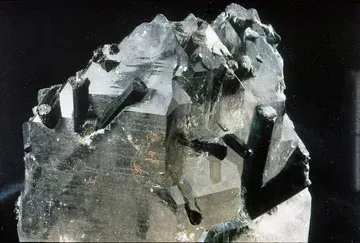
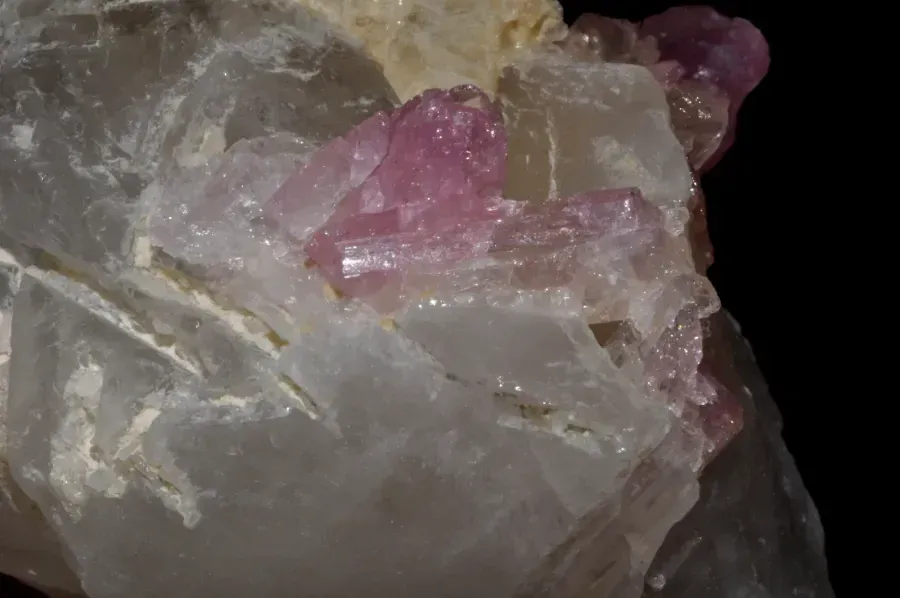
Black tourmaline is not a generic "dark stone." It is a precisely defined mineral species within the wider tourmaline group, which itself encompasses more than thirty related species sharing the same trigonal crystal structure but differing in their chemical composition. The tourmaline family includes elbaite (the colourful gem variety: blue indicolite, green verdelite, pink rubellite), dravite (brown, magnesium-rich), and schorl (black, iron-rich). Of all tourmaline varieties, schorl is by far the most abundant in nature, accounting for roughly 95 percent of all tourmaline found in the Earth's crust. The vivid coloured elbaites that command high prices in jewellery are geologically far rarer.
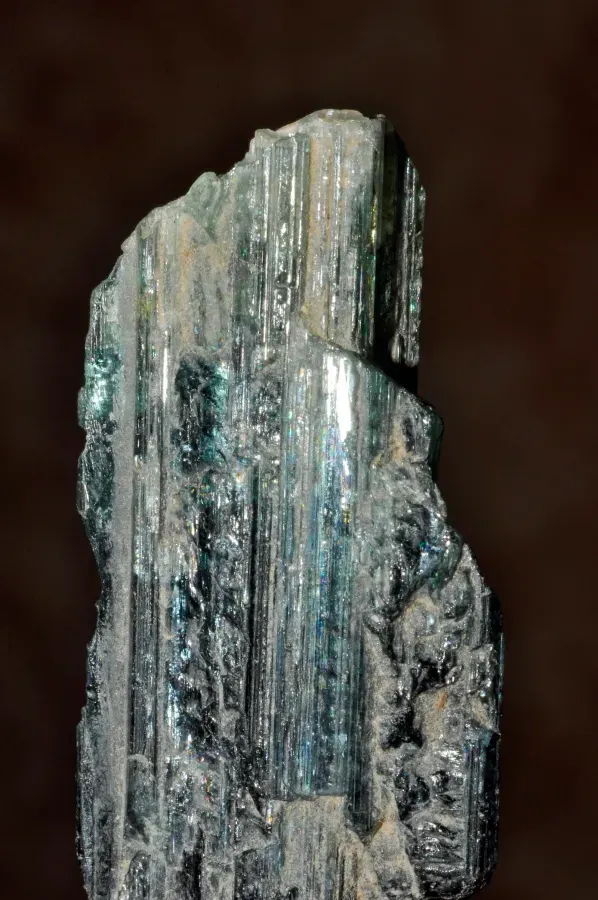
The crystal system is hexagonal (trigonal). The characteristic shape is an elongated prismatic rod with longitudinal striations running along the faces. These parallel grooves are one of the most reliable visual identifiers of genuine schorl and remain visible even after tumbling and polishing.
Schorl forms primarily in granitic pegmatites: coarse-grained intrusive rocks that crystallise slowly from magma, allowing minerals to grow to unusually large sizes. It also occurs in metamorphic and metasomatic rocks. Because the iron-rich composition is common and the mineral is chemically stable, schorl forms in abundance on every continent.
Piezoelectric and pyroelectric properties
Tourmaline as a group, and schorl in particular, possesses two remarkable physical properties that make it genuinely unusual among minerals.
Piezoelectricity. Under mechanical pressure, a voltage difference develops across the ends of the crystal. Press harder and the electrical output increases proportionally. This is not metaphor or esoteric claim: it is a measurable physical phenomenon, verifiable with instruments. Tourmaline was among the first minerals in which piezoelectricity was systematically studied in the nineteenth century.
Pyroelectricity. When the temperature of a tourmaline crystal changes, it develops a charge: one end becomes positively charged, the other negatively charged. This property made tourmaline practically valuable long before synthetic alternatives existed.
During the Second World War, schorl and related tourmalines were used in pressure gauges, hydrophones and military radio receivers. After the war, synthetic quartz and manufactured piezoelectrics displaced natural tourmaline from most applications. Today tourmaline still finds specialist use in pressure sensors and geological sampling instruments.
The electrical properties of tourmaline are real. They simply operate through physics, not through any energetic mechanism described in wellness literature.
Mining sources worldwide
Brazil (Minas Gerais)
Brazil is the dominant source for the global market. The state of Minas Gerais contains the largest pegmatite fields in the world, producing tonnes of schorl annually across a wide range of qualities. Brazilian black tourmaline is characterised by relative cleanliness, good crystal structure and a broad range of sizes: from small bead blanks to decorative crystals 20 to 30 centimetres long. The majority of bead bracelets sold globally originate from Minas Gerais processing.
Pakistan and Afghanistan
Northern Pakistan and Afghanistan produce primarily elongated rod-shaped crystals with pronounced striations. Their clean natural form makes them popular for bohemian pendants and raw crystal jewellery.
Madagascar
Madagascar provides large crystals of good quality, often with inclusions of other minerals. These are widely used for raw pendants and decorative specimens.
Namibia
Namibian schorl is known for consistent quality. It is used primarily for industrial applications and bead manufacturing.
United States (Maine and California)
Maine has historical significance: it contains some of the first tourmaline deposits described in North America, and tourmaline from Newry and other Maine localities has been mined since the nineteenth century. Commercial production today is limited, but specimens labelled "Maine tourmaline" are collected by enthusiasts.
Italy (Elba)
The island of Elba in the Tyrrhenian Sea was one of the historically significant European tourmaline localities. Elba's coloured tourmalines were described by eighteenth-century naturalists, and the mineral species elbaite was named after the island, indicating the importance of this locality in the history of mineralogy.
Cornwall and Wales (United Kingdom)
Cornwall and Wales held active tourmaline mining operations from the eighteenth into the nineteenth century, and specimens from these regions feature in British museum mineralogy collections. The Cornish mineralogical tradition contributed to the early scientific description of schorl in European literature.
Types of Black Tourmaline
By crystal form
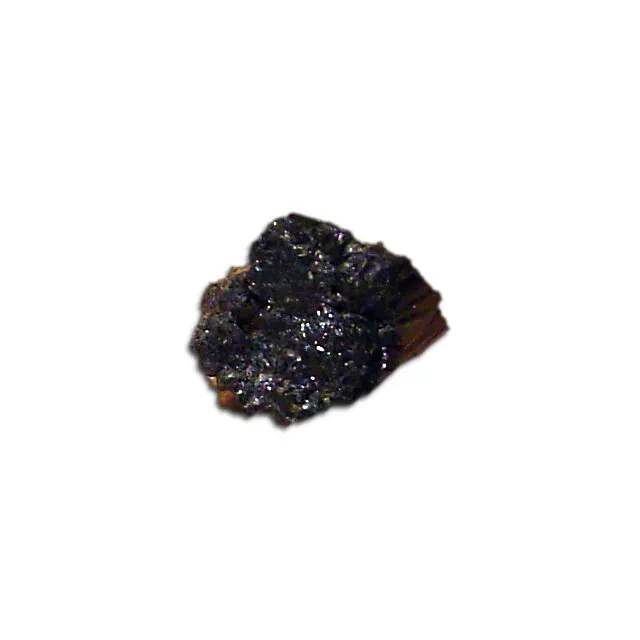
Natural crystal rod (wand). An elongated crystal with the longitudinal striations characteristic of tourmaline. Uncut, only cleaned. The most visually raw and "authentic" form, popular in bohemian jewellery.
Tumbled. Smoothed in a tumbling drum. No sharp edges. Suitable for jewellery and pocket talismans. The matte surface and rounded shape are comfortable to hold.
Faceted. Cut and polished like a gemstone. Black tourmaline is not highly transparent, so faceting is possible but produces less optical effect than with coloured gems. Used mainly for accent pieces.
Cabochon. Polished into a domed shape, flat on the back. Well suited to earrings and rings, where the smooth curved surface shows the mineral's deep black lustre to advantage.
Cluster (druze). Several crystals on a shared matrix. Decorative, not typically set into jewellery.
By quality
Gem quality. Transparent or near-transparent, inclusion-free (rare for black tourmaline). Highest grade, commands higher prices.
Semi-transparent. With inclusions. Standard commercial grade. The most commonly encountered quality in mid-range jewellery.
Opaque. Fully black, no light transmission. Most common in bead bracelets and affordable pendants.
High lustre. Well-polished surface, reflective. An opaque stone can still present beautifully if polished to a high shine.
By origin
- Brazilian the cleanest and highest quality, the world's primary source
- Madagascan large crystals, good quality
- Afghan and Pakistani often elongated rod crystals, valued for raw jewellery
- American (Maine, California) historically significant mines, now smaller volumes
- Cornish (UK) eighteenth and nineteenth century mining heritage; specimens in British museum collections
Customer reviews
Zevira is a real jewellery shop. Genuine payments, deliveries and customer thank-yous.
🥰🥰🥰 gracias
Ok, ¡gracias! 🙂
How schorl is cut and set
Most schorl in jewellery enters one of two production paths. Bead production accounts for the majority of volume: rough stone is tumbled to remove sharp edges, then drilled and strung. The 6 to 10 mm bead bracelet that dominates the protective jewellery market requires minimal processing, which is one reason the material remains affordable.
The second path is cabochon cutting, used for rings, pendants and earrings. The cutter slices a section of rough, profiles the outline, then grinds the dome on progressively finer abrasive wheels before polishing. Because schorl is opaque, the goal is surface lustre rather than light transmission. A well-cut cabochon in sterling silver gains an almost lacquer-like appearance when polished to a high finish.
Setting choices affect the stone's character considerably. Bezel settings (a rim of metal folded over the stone's edge) protect the stone fully and read as minimalist or gothic depending on the metal finish. Prong settings are rare for schorl because the opacity removes the argument for maximum light exposure. Oxidised silver is the most common metal pairing: the dark, intentionally aged finish of oxidised silver complements the stone's own darkness without competing with it. Bright polished silver, rose gold or yellow gold all work, each shifting the overall aesthetic considerably.
Wire wrapping is a third path, used for raw crystals and irregular shapes. It requires no heat and no mould, making it accessible for independent jewellers working with natural forms.
Durability and everyday wear
At 7 to 7.5 on the Mohs scale, schorl sits comfortably above the threshold for safe daily wear. Common materials that might scratch jewellery: sand and dust (quartz, 7), which means schorl is approximately as hard as the ambient environment. Household surfaces, fabrics, and most metals will not scratch it.
The main vulnerability is not surface hardness but internal fracture. Tourmaline crystals form with natural inclusions and micro-fissures. A sharp impact on a large raw pendant or ring stone can propagate a crack along these internal planes. Small tumbled beads are much less vulnerable because their rounded form distributes impact rather than concentrating it.
For rings, the practical rule is to remove them for heavy manual work, gym sessions or any task involving hard impacts. For bracelets, the elastic cord is typically the first component to wear rather than the stone itself. Cord replacement after one to two years of daily wear is normal maintenance.
Chemically, schorl is stable in dilute acids and alkalines. Brief contact with soap and water during normal washing is not a concern. Prolonged immersion in strong household cleaners should be avoided.
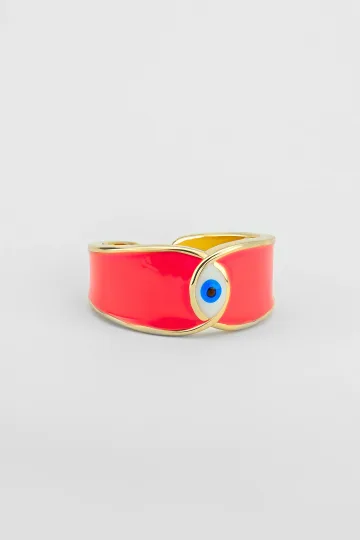
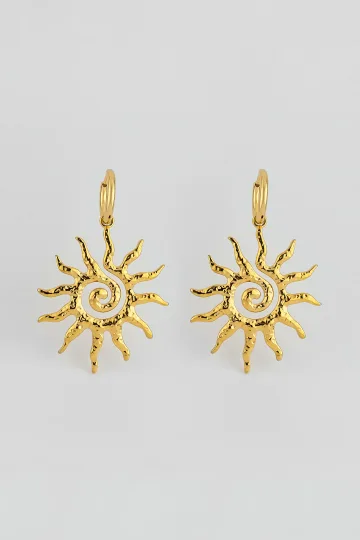
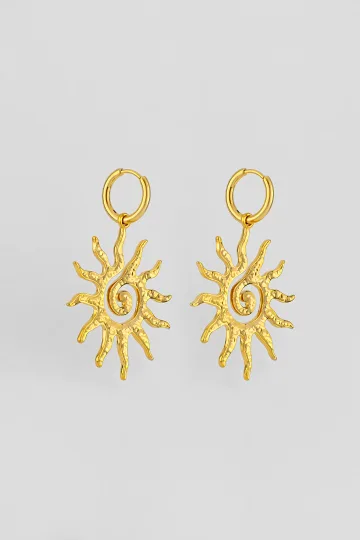
Wear the symbol, don't just read about it. These are in stock:
What Black Tourmaline Symbolises
Protection (the primary meaning)
The core symbolism. In crystal healing and wellness traditions, black tourmaline is regarded as one of the most powerful "protective" stones. This is a cultural belief, not a scientific claim, and it is worth keeping that distinction clear. The belief attributes to it a capacity to absorb negative energy from the environment, shield the wearer from draining interpersonal dynamics, and support healthy personal boundaries.
Within the British crystal healing tradition, Glastonbury has been a gathering point for these practices since the 1980s, and black tourmaline appears consistently in the literature produced there. The stone's transition from occult supply shops into mainstream wellness retail is largely a 1990s to 2010s story, accelerated by social media after 2020.
Grounding
Associated with the Earth element. The grounding symbolism is particularly tied to the stone's colour and weight: black, dense, of the earth. In practice, it is recommended for people who feel anxious, mentally scattered or disconnected from the present. The physical sensation of holding a cool, heavy stone is itself a mild grounding stimulus, independent of any attributed properties.
Cleansing
Said to cleanse the aura and emotional field. Some traditions hold that other crystals can be "cleansed" by placing them alongside black tourmaline. Practitioners often pair it with softer mystical stones such as moonstone, letting the schorl absorb while the adularia harmonises.
Root chakra (Muladhara)
In the Hindu chakra system, black tourmaline is associated with the root chakra at the base of the spine. Themes: survival, safety, physical health. The attribution is contemporary rather than classical: traditional Vedic texts do not list schorl as a Saturn or Rahu stone, though modern Indian astrology has adopted it in this role.
EMF protection
A modern addition to the symbolism: protection from electromagnetic fields, Wi-Fi, mobile networks, electronics. This claim has no scientific basis. The irony is that tourmaline's piezoelectric properties are genuine, but they operate through well-understood physics that has nothing to do with blocking external electromagnetic radiation.
Pluto in astrology
In contemporary Western astrology linked with Pluto: transformation, hidden forces, emergence from depth. The attribution is modern and not drawn from classical astrological texts.
History of Black Tourmaline
Antiquity
The name "tourmaline" derives from the Sinhalese "turmali," a catch-all term for mixed gemstones traded from Ceylon (Sri Lanka). The mineral was first formally described in European literature in the eighteenth century by Dutch traders returning from Ceylon.
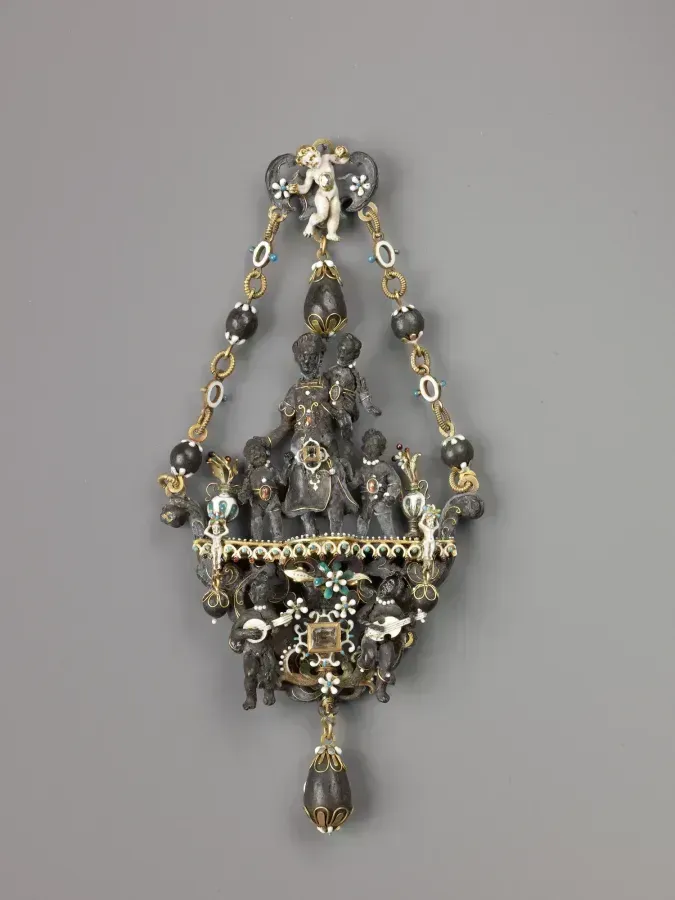
The use of black protective stones, likely including schorl, predates the formal description considerably. Ancient Egyptian ritual texts reference black stones used as apotropaic objects, intended to absorb or deflect harmful forces. African and Indian traditions had long identified certain black crystals as protective materials. The difficulty in tracing schorl specifically is that ancient writers did not differentiate mineralogically between obsidian, jet, schorl and other black minerals, grouping them by colour and purpose.
Medieval Europe
Schorl appears in the writings of Renaissance mineralogists, often under the German dialect term "Schorl" or "Schörl," which was used in mining regions of Saxony to describe an unwanted black mineral found alongside ore deposits. The name stuck and eventually became the formal mineralogical designation. Medieval alchemists used the black stone as a symbol of nigredo, the first stage of the alchemical process: dissolution and darkness before synthesis. This gave schorl an early association with transformation and the absorption of darkness that persists in its modern symbolism.
Nineteenth century: scientific classification
In 1876, the mineralogist William Williams formally distinguished the tourmaline varieties, establishing the classification still used today: schorl (black), dravite (brown), elbaite (multicolour), verdelite (green), rubellite (pink), indicolite (blue). Cornwall and Wales were active mining regions throughout this period. The systematic study of piezoelectricity in tourmaline also began in this century, with the Curie brothers conducting foundational experiments on piezoelectric materials in the 1880s.
Twentieth century: industrial use
The bulk of black tourmaline production in the twentieth century went not to jewellery but to industry. Tourmaline's piezoelectric and pyroelectric properties made it valuable for pressure gauges, sonar transducers and radio equipment, particularly during and after the Second World War. After the war, synthetic piezoelectrics displaced natural tourmaline from most applications, and the economic focus shifted.
1950s: Wicca and Western esotericism
Gerald Gardner, the founder of modern Wicca in the 1950s, included black tourmaline among the classical protective stones of the witchcraft tradition. This systematisation marked the moment when schorl moved from folk amulet to a codified element of Western esoteric practice, laying the foundation for its subsequent popularity in New Age literature.
1990s to 2000s: New Age movement
Black tourmaline became one of the principal stones in New Age and crystal healing literature. Authors such as Judy Hall popularised it as the "premier protective stone." British Mind Body Spirit fairs, particularly those at Olympia in London, helped mainstream the practice.
2010s: wellness boom
Celebrity wellness projects and wellness brands promoted crystal bracelets to a mass audience. Black tourmaline entered the top five best-selling crystals, alongside clear quartz, amethyst, rose quartz and citrine.
2020 to 2026: social media
Witchcraft communities on short-form video platforms and crystal culture accounts made black tourmaline go viral. Search growth exceeded 100 percent year on year in 2023 to 2025. Influencers in the esoteric niche promoted it as the essential first crystal for beginners, which drove enormous retail demand at the budget and mid-range levels.
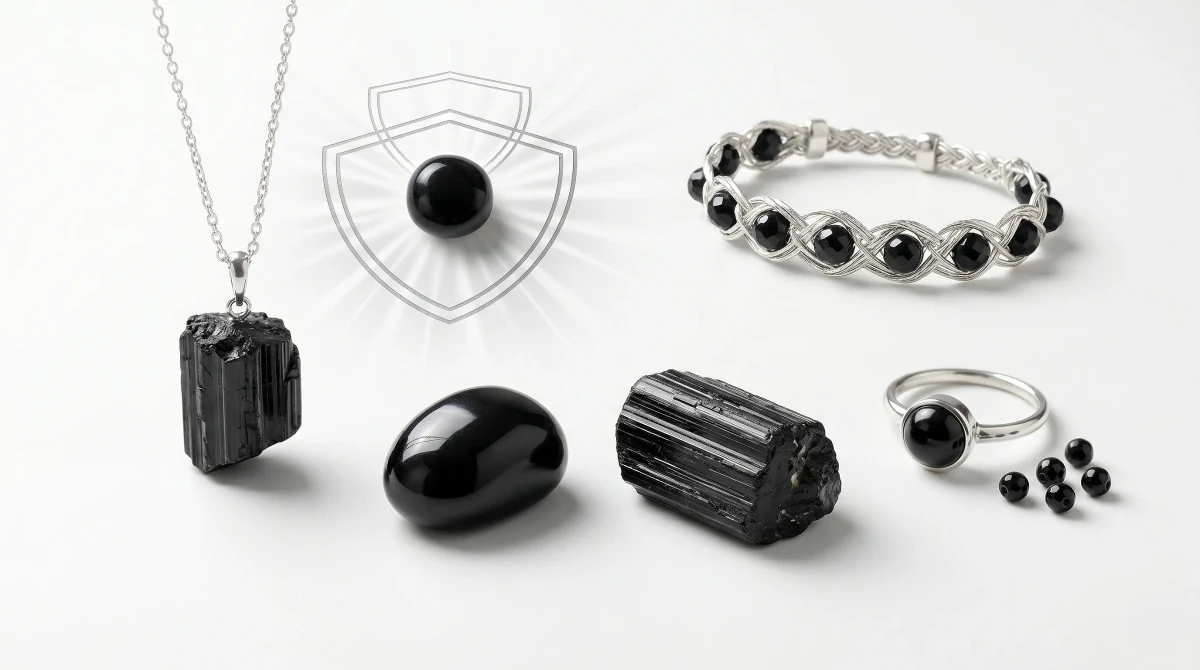
Black Tourmaline Jewellery: What to Choose
Bead bracelet
The most popular format. "Protective bracelet" is the search term that drives most sales.
- 8 to 10 mm beads on elastic cord classic, budget to mid-range.
- 6 to 8 mm beads on cotton or leather cord more delicate, feminine option. Budget to mid-range.
- Beads with silver separators polished look. Mid-range.
- Matte (tumbled) or polished matte reads as "earthy", polished as "clean". Aesthetic choice.
- Oxidised beads mixed with other crystals rose quartz, amethyst combinations. Mid-range.
Black tourmaline pendant
- Raw natural tourmaline on leather cord bohemian aesthetic. Budget to mid-range.
- Faceted black tourmaline in silver setting more refined. Mid-range.
- Cabochon pendant polished oval or crystal in bezel setting. Mid-range. The cabochon form shows the stone's natural lustre and conceals inclusions.
- Crystal wand pendant natural schorl rod in wire holder. Budget to mid-range.
- Wire-wrapped tourmaline on chain handmade boho style. Budget range.
Earrings with black tourmaline
- Cabochon studs 6 to 8 mm paired, minimalist. Mid-range.
- Drop earrings with raw crystals bohemian. Mid-range. Natural crystal forms create slight asymmetry, which reads as organic and intentional.
- Long polished crystal drop earrings elegant gothic. Mid to premium range.
Ring with black tourmaline
- Bezel ring with cabochon simple minimalist setting. Mid-range.
- Statement ring with large crystal gothic aesthetic. Mid to premium.
- Stacking rings with small cabochons layering with other stones. Mid-range.
Raw crystal as talisman
Not jewellery in the classical sense, but frequently carried as an amulet:
- In a pocket
- On a cord around the neck in a small pouch
- In a bag or purse
- On a desk
- Under a pillow at night
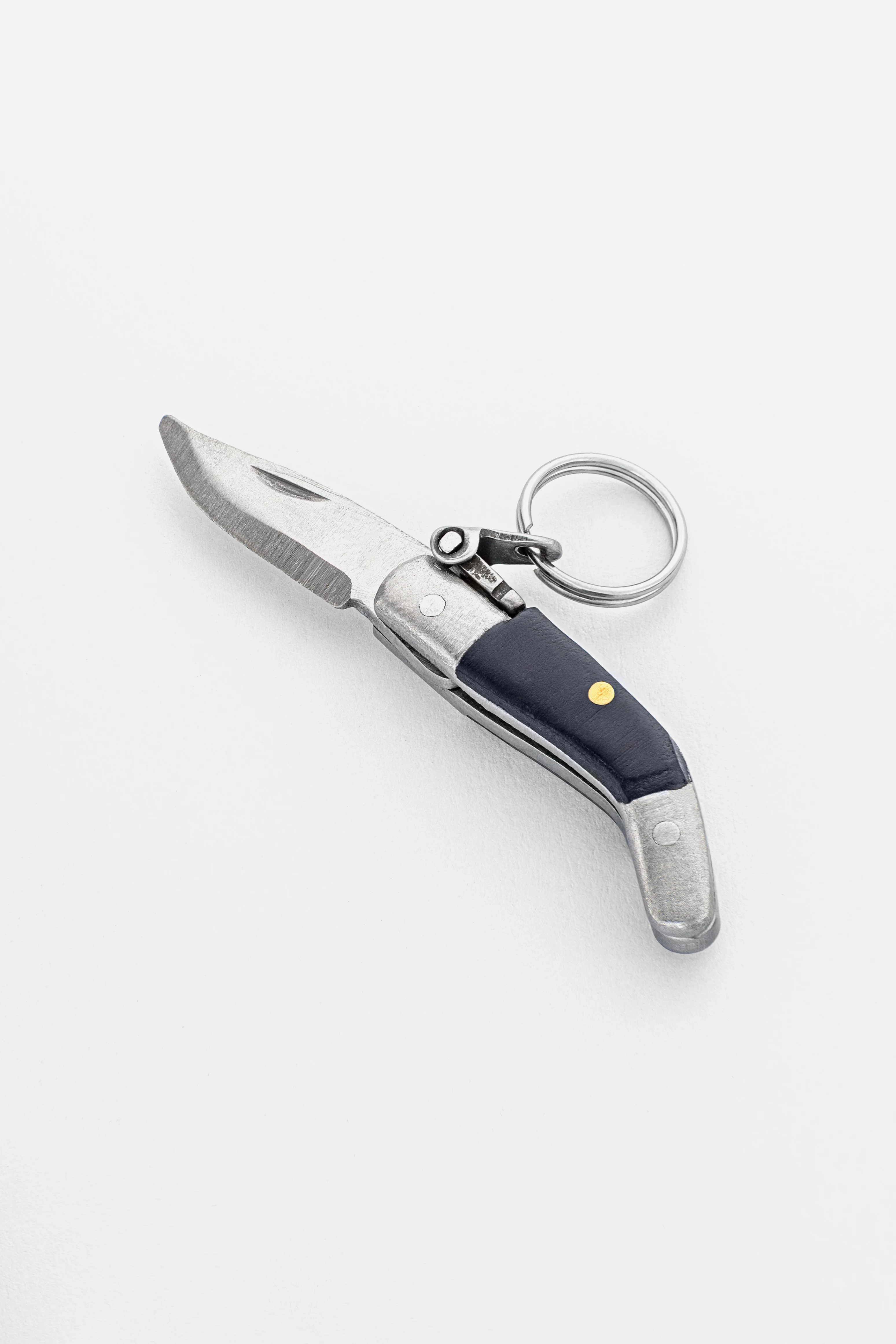
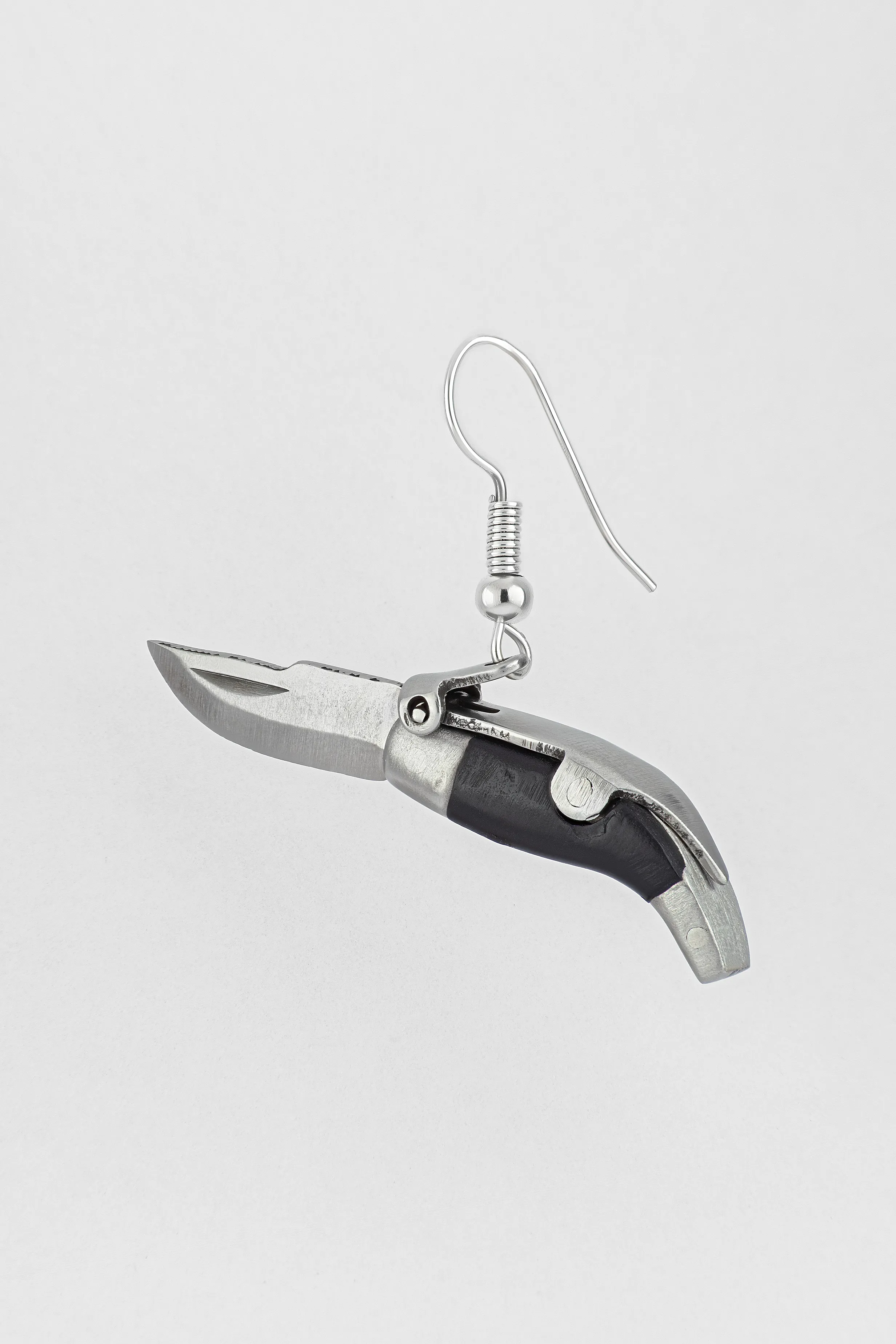
Artisan-crafted CAPAORA navaja pendant
A 40 mm stainless-steel navaja with a real folding mechanism and Palanquilla lock. An affordable gift to remember.
A code for blog readers:
10% off your first order
Authentic · Maker's guarantee · Ships from Spain
How to Use Black Tourmaline
On the body (as jewellery)
Bracelet worn on the non-dominant hand (left for right-handed people), to "receive" protection. An alternative school recommends the dominant hand, to "project" protection outward.
Pendant at heart level the traditional position for protective stones.
In a pocket a tumbled crystal, smooth for comfort.
In a space
At the entrance to a home to meet incoming energy.
In the corners of a room four crystals for a "protective grid".
On a desk to block negativity from colleagues and screens (under the contemporary EMF interpretation).
Under a bed for protection during sleep.
In a bag portable protection for travel.
Cleansing black tourmaline
Unlike some stones, black tourmaline in the crystal healing tradition does not require "cleansing" (it is itself the cleanser). However, practitioners recommend:
- Wiping with a soft dry cloth
- Breathing on it as a brief ritual
- Placing in sunlight or moonlight
- Avoiding prolonged immersion in water (the mineral is stable, but better not to risk it)
Combining with other stones
Common combinations:
- With clear quartz "clarified protection"
- With rose quartz protection plus love
- With amethyst protection plus spiritual development
- With selenite self-cleansing of the set
- With haematite double grounding
- With labradorite the protective pairing favoured in the alternative-bridal and wellness scene of 2026, where the dark flash complements the matte black surface
Silver, gold, wedding rings, symbolic jewellery, matching sets.
Who Black Tourmaline Suits
Sensitive people (empaths). Those who absorb others' emotions. Black tourmaline is the standard recommendation in wellness communities.
People working in high-emotion or toxic environments. Therapists, social workers, office workers in difficult teams.
People with anxiety or panic attacks. Not a medical treatment, but psychologically a physical "anchor" can help.
Those who meditate. For grounding after deep practice.
Travellers. Protection in unfamiliar places.
Beginners in crystal work. The first stone most practitioners recommend.
Teenagers. Particularly those navigating social stress.
As a gift for a "sensitive" friend. Someone who feels they lack protection.
As a complement to a religious tradition. A cross alongside black tourmaline, or prayer with a crystal.
Leave your email, we'll send your discount code. No spam, unsubscribe anytime.
The code arrives by email, valid on your first order.
Metals and settings: what works
The choice of metal changes the stone's register considerably.
Oxidised sterling silver is the most natural pairing. The darkened, antique finish of oxidised silver meets the stone's black surface without competing, creating a cohesive dark-on-dark look that reads as gothic, minimalist or bohemian depending on the form.
Bright polished silver creates contrast: the reflective white metal against the matte or semi-lustrous black stone. The effect is cleaner and more contemporary, with a slight graphic quality.
Yellow gold (14 to 18 karat) is less expected but highly effective. The warm gold against deep black has a long history in decorative arts, from Egyptian jewellery to Victorian mourning pieces. It reads as luxurious rather than gothic.
Rose gold softens the stone's severity, combining well with layered bohemian styles where black tourmaline appears alongside rose quartz beads.
The setting type also matters. Bezel settings fully enclose the stone's perimeter and offer maximum protection for an active lifestyle. Prong settings expose more of the stone's surface, which matters less for an opaque stone than it would for a transparent gem. For rings, a low-profile bezel is the most practical choice for everyday wear.
Pairing with other stones: the full picture
The combinations listed in the symbolism section reflect genuine aesthetic logic as much as any energetic tradition.
Black tourmaline and clear quartz is the classic pairing. The contrast is dramatic: matte black beside translucent white or colourless. In bracelet form, alternating beads create a clean graphic rhythm. In a pendant, a clear quartz point alongside a schorl wand is a recognisable motif in the contemporary crystal jewellery market.
Black tourmaline and amethyst works because both are associated with psychic or intuitive themes in the tradition, and the purple-to-black transition in a beaded bracelet has strong visual appeal.
Black tourmaline and rose quartz is the protection-plus-softness combination, popular with people who want protective symbolism without the purely gothic aesthetic. The pale blush of rose quartz lightens the overall effect.
Black tourmaline and moonstone is a less obvious but visually rich pairing: the adularescence (the inner glow) of moonstone against the flat black surface of schorl creates genuine depth. This combination has grown in the alternative-bridal market.
Black tourmaline and haematite is the grounding combination: both stones are heavy, both are associated with the Earth element, and the metallic mirror surface of polished haematite against black schorl is visually compelling.
Black tourmaline and selenite is the traditional "self-cleansing set": selenite is said to cleanse and recharge other crystals by proximity, which means the combination theoretically needs no external maintenance ritual.
How to Identify Genuine Black Tourmaline
From obsidian
Obsidian is volcanic glass, also black. Differences:
- Texture: tourmaline has longitudinal striations; obsidian is smooth with conchoidal fracture
- Hardness: tourmaline 7 to 7.5, obsidian 5 to 6
- Weight: tourmaline is heavier
- Fracture surface: obsidian shows a glassy, almost mirror-like curved break; tourmaline's fracture is more irregular and matte
From jet
Jet is fossilised organic material, a form of lignite coal from ancient wood. Well-known as Whitby Jet from England, where it was popular in Victorian mourning jewellery. Key differences:
- Jet is noticeably lighter (perceptible in the hand)
- Much softer (Mohs 2.5 to 4)
- Warm to the touch, does not chill the skin as a mineral does
- No longitudinal striations
- At a flame, jet produces a coal-smoke smell; tourmaline is unaffected
From black onyx
Most "black onyx" in the market is dyed chalcedony (agate treated to produce a uniform black). It is hard (Mohs 7), perfectly smooth, without striations, and the black is entirely uniform. Tourmaline by comparison is less homogeneous, with visible crystal texture and, in bead form, often subtle surface variation.
From shungite
Shungite is carbon, almost like coal. Differences:
- Composition: shungite is carbon; tourmaline is a silicate
- Texture: shungite is matte and slightly sooty to the touch; tourmaline can be polished to a high shine
- Hardness: tourmaline is significantly harder
From dyed glass
- Striations: natural tourmaline has characteristic grooves; glass does not
- Inclusions: natural stone often contains them
- Weight: glass is lighter than schorl
- Magnet test: the iron content gives black tourmaline a faint magnetism; quality schorl responds very slightly to a strong neodymium magnet; glass does not
Certification
For high-value jewellery (premium segment) a certificate from GIA or AGL. For standard bead bracelets certification is uncommon; buy from established sellers with clear sourcing information.
Synthetic and Laboratory Stones
Black tourmaline is not produced commercially in laboratories, as there is no economic rationale: the natural material is abundant and inexpensive. However, substitutions exist in the market:
- Dyed obsidian sometimes sold as tourmaline
- Black glass with iron manufactured as an imitation
- Raw shungite substituted because it is also black and roughly hexagonal
For standard market bead bracelets of 6 to 10 mm, the risk of deliberate substitution is low: the cost of producing a fake exceeds the value of the natural stone. For large accent crystals and premium settings, verify the source.
Care
What is safe
- Wiping with a soft dry cloth or soft-bristled brush
- Rinsing briefly with lukewarm water and mild soap
- Storing away from harder or sharper materials (diamonds, sapphires, topaz can scratch it marginally; corundum at Mohs 9 would scratch it easily)
- Daily wear without special precautions
What to avoid
- Prolonged immersion in water, particularly hot water or water with cleaning agents
- Harsh chemicals and bleach-based cleaners
- Ultrasonic cleaning: the sound waves can propagate along natural internal fissures, potentially fracturing a stone with inclusions
- Sharp impacts to large raw crystals or prominent cabochon ring stones
Storage
In a soft cloth or a lined jewellery box. Recommended to store separately from very hard stones (corundum, diamond) that could scratch it, and from very soft stones (calcite, fluorite, malachite) that schorl could in turn scratch.
Send a friend a discount code, they save on their first order.
Black Tourmaline in Astrology
Vedic
Not a classical Vedic stone. In contemporary Indian astrology sometimes used for Saturn (Shani) or Rahu as a supplement to primary Saturnian stones such as blue sapphire. The attribution is modern and not drawn from classical Vedic gem treatises.
Western
Contemporary interpretation:
- Scorpio ruled by Pluto: black tourmaline is considered a match for its transformative, depth-oriented qualities
- Capricorn earth sign, benefits from grounding
- Pisces highly sensitive, benefits from protection
Tarot
Associated with the Hierophant, the Moon and the Tower, cards of transformation through protection.
Black tourmaline wants brushed silver and rough wool. Gold cheapens it, no arguments.
How to wear black tourmaline
A black stone is easy to make dull, or to overload. Here is how I build a look around tourmaline when I dress a client, occasion by occasion.
How do I wear tourmaline every day? For everyday I recommend a bracelet of matte 8-10 mm beads with denim, linen or chunky knitwear. The matte surface of the stone echoes the texture of the cloth, and a pale bead next to it makes the black read sharper. One bracelet keeps the look calm; a full stack tips it into scruffy.
Does it work at the office? For work I suggest restraint: a cabochon in silver on a fine chain, under a shirt or jumper, reads as jewellery and not as an amulet. Cabochon studs of 6-8 mm add neatness without pulling focus. I keep to one metal, since the black already does all the work.
How do I build an evening look? For evening I choose polished tourmaline in yellow gold or bright silver against monochrome black or dark emerald silk. Drop earrings with a long faceted crystal lengthen the line when the hair is up. Gold instead of silver reads warmer and richer.
And for a special occasion? For a big night out I recommend a single large accent: a cabochon ring on the middle finger, or raw-crystal earrings for a bohemian mood. Keep to one metal or the look falls apart. One bold piece, everything else quiet.
Which stones pair with it? I combine by contrast. With clear quartz I get a graphic rhythm of matte and translucent; with labradorite and moonstone I add depth from the flash beside the flat black surface. Rose quartz lightens the look when you want less black.

Turn on your camera, pick earrings, a pendant or a ring, and see the piece on yourself in real time.
Switch items in one tap.
Everything runs in your browser: no photo or video is ever uploaded.
FAQ
Does black tourmaline work for protection?
Scientific evidence for energetic protection does not exist. Psychologically, yes: belief in a "protective amulet" can reduce anxiety and support meditation practice. If it functions for you on a ritual level, there is no reason to doubt it.
Which form of black tourmaline is most powerful?
In the crystal healing tradition a raw uncut crystal rod is considered "stronger" than a faceted or bead form. For everyday wear, however, beads are more practical and more comfortable.
Can black tourmaline be worn every day?
Yes. It is one of the most suitable stones for daily wear. Hard (7 to 7.5 on the Mohs scale), stable, does not fade or bleach in sunlight.
Can I sleep with black tourmaline?
In the tradition this is considered normal. Many people place the stone under the pillow or beside the bed. There are no physical contraindications: the mineral is hypoallergenic.
Is black tourmaline safe during pregnancy?
It is a passive mineral with no known physical risks. The crystal healing tradition sometimes recommends it specifically as a protective stone during pregnancy. This is a personal choice.
Where to buy quality black tourmaline?
Specialist gemstone and bead shops, local crystal stores, independent craft marketplaces under the tag "natural black tourmaline." Avoid anonymous low-price resellers on mass marketplaces without sourcing information.
How much should a bracelet cost?
Natural 8 to 10 mm beads on elastic cord fall into the budget segment. Sterling silver separators or a plated finish on the clasp move it to mid-range. Genuine gem-quality crystals in a fine silver or gold setting are premium.
Can black tourmaline be charged in sunlight?
Yes. Unlike many stones, black tourmaline is considered inherently "cleansing" in the tradition and does not require intensive charging. An hour in sunlight once a month is what most practitioners suggest.
Can it be combined with other stones?
Absolutely. Classic pairings: with clear quartz (protection plus amplification), with amethyst (protection plus intuition), with rose quartz (protection plus warmth). See the pairing section above for detailed notes.
Is it a good gift?
Yes, especially for sensitive people, teenagers, or those going through a difficult period. It does not require compatibility checking in the way some Vedic stones do, and its aesthetic is versatile enough to appeal across styles.
Does black tourmaline break?
It can fracture along natural cleavages and inclusions. Handle large raw crystals carefully. Small beads are generally not a concern during normal wear. Rings take more impact than pendants, so inspect the stone periodically.
Is it safe to wear against skin?
Yes. No contraindications. No known skin reactions. The mineral is hypoallergenic.
How do I clean my jewellery?
Wipe with a soft dry cloth after wearing. For deeper cleaning, rinse briefly under lukewarm water with a small amount of mild soap, then dry thoroughly. Do not use ultrasonic cleaners.
How often should the stone be "cleansed" ritually?
Most practitioners in the crystal tradition do this once a month, often aligned with the new moon, or after a particularly difficult or draining period. The physical cleaning (wiping with a cloth) is separate from this ritual and can be done as often as needed.
How to Build a "Protective" Crystal Set
Minimum: one piece
A black tourmaline bead bracelet, 8 to 10 mm. Worn every day. The baseline option.
Intermediate: bracelet plus pendant
Bracelet on the wrist, pendant at heart level. Enhanced protection. Mid-range.
Full set: for home and person
- Bracelet to wear
- Pendant to wear
- Large raw crystal at the front door
- Crystal in a bag
- Four cabochons in the corners of the bedroom
Mid to premium range in total.
Combinations with other stones
- Black tourmaline plus clear quartz: cleansed and amplified protection
- Black tourmaline plus rose quartz: protection plus love (for a couple)
- Black tourmaline plus amethyst: protection plus intuition (for meditation)
- Black tourmaline plus haematite: double grounding
Conclusion
Black tourmaline is one of those stones that has moved from the crystal healing niche into mainstream wellness over the past five to seven years. What was once "something for esoteric specialists" has become normal: students wear it to university, office workers keep it on their desks, meditators take it into practice.
Whether it works "magically" is a matter of belief. Whether it works psychologically, as a ritual object, as an anchor for anxiety, as a symbol of personal boundaries, yes: this is a well-documented psychological phenomenon. Whether it works aesthetically, as a striking black mineral, absolutely.
Geologically, it is a genuinely interesting material: the most abundant of all tourmaline species, the product of slowly cooling deep-earth magma, a mineral with real electrical properties that were put to practical use in two world wars. That backstory adds substance to what might otherwise seem like a purely trend-driven stone.
In jewellery, black tourmaline is versatile: a bead bracelet, a minimalist pendant, a bohemian raw crystal on cord. Each format finds its audience, across gothic, boho, minimalist and wellness aesthetics alike.
About Zevira
Zevira is based in Albacete, Spain. Black tourmaline is part of our protective jewellery collection, which also includes the nazar, hamsa and azabache figa. It is a mineral that sits naturally alongside traditional Spanish protective amulets.
What you can find with black tourmaline at Zevira:
- Black tourmaline bead bracelets
- Minimalist single-stone pendants
- Black tourmaline on cord for a bohemian aesthetic
- Black tourmaline rings in sterling silver settings
- Protective sets combining tourmaline with nazar and figa
- Tourmaline paired with clear quartz and amethyst
Every piece is handmade by a craftsperson, with the option of personal engraving. We work with 925 sterling silver and 14 to 18 karat gold.