Moonstone in Jewellery: Meaning, Varieties and Feminine Symbolism
Introduction: the mineral that glows
Pick up a polished adularia and tilt it under the light. What you see is not a trick: a soft bluish-white shimmer rolls across the surface like moonlight on still water. That is adularescence, an optical phenomenon produced by alternating layers of feldspar that no other gemstone replicates in quite the same way.
Moonstone is not transparent in the conventional sense. It is translucent, milky-white, alive with inner light. Photographs cannot capture it honestly; it is a mineral you must hold and turn to understand.
In 2026 it sits at the centre of a third wave of popularity, following the Art Nouveau boom of the early 1900s and the bohemian revival of the 1970s. The wellness community, the astrology world, and bridal couples seeking something beyond the conventional diamond engagement ring are all looking to adularia. This guide explains what it is, how to choose a piece, and why it carries a feminine symbolism far richer than its quiet appearance suggests.
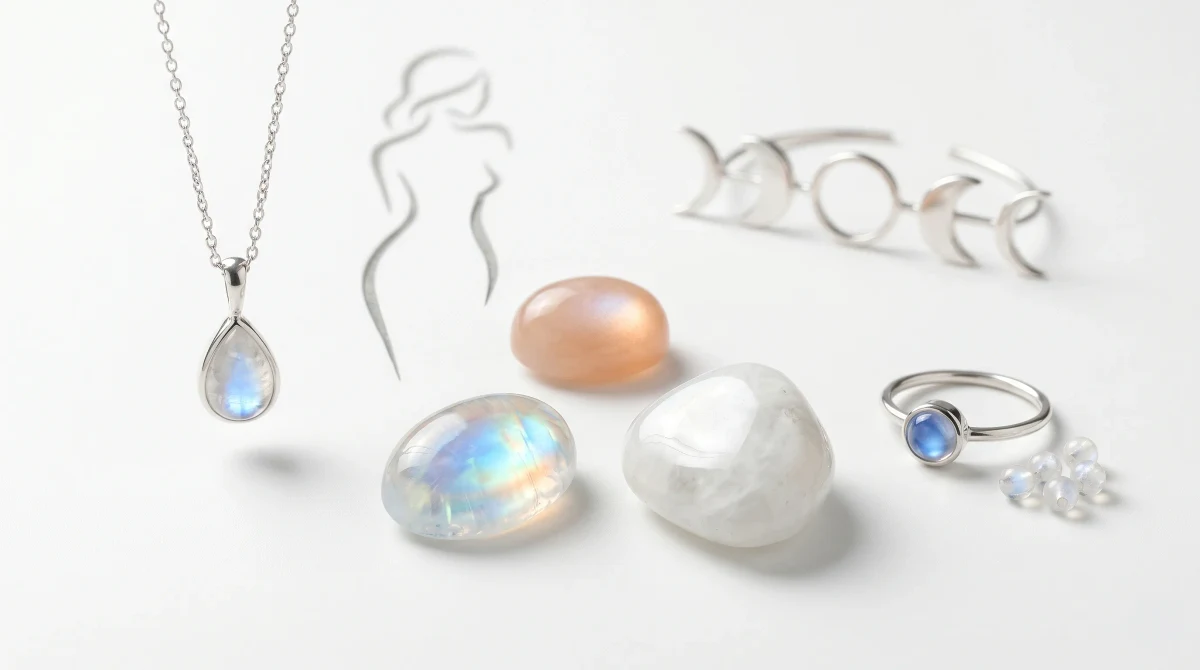
Moonstone jewellery: what to choose
Ring
The most popular setting for adularia.
- Plain bezel with a 10-14 mm cabochon classic, in sterling silver or yellow gold. Boho aesthetic. Mid-range segment.
- Single cabochon solitaire a genuine alternative to a diamond engagement ring. Mid to premium segment.
- Halo setting central cabochon encircled by small diamonds. Premium segment.
- Thin stacking rings with small cabochons in varying cuts. Mid-range segment.
- Art Nouveau-style vintage piece work from 1890-1920. Premium (antique) or mid-range (reproduction).
Earrings
- 6-8 mm cabochon studs paired, minimalist. Mid-range segment.
- Long drop earrings with teardrop cabochons striking for evening wear. Mid to premium segment.
- Hoop earrings with small insets contemporary minimalism. Mid-range segment.
- Chandelier earrings in vintage style Victorian or Art Nouveau. Premium segment.
Pendant
- Simple cabochon on a fine chain everyday boho. Budget to mid-range segment.
- Crescent moon pendant a natural pairing: the moon form with adularia inside. Mid-range segment.
- Victorian locket antique. Mid to premium segment.
- Deep bezel with a large cabochon modern minimalism. Mid-range segment.
Bracelet
- Bead bracelet 8-10 mm cabochons, boho. Budget to mid-range segment.
- Tennis bracelet elegant. Premium segment.
- Charm bracelet with a cabochon drop collector piece. Mid-range segment.
Brooch
Victorian and Art Nouveau brooches frequently feature moonstone insets. Collector value.
The geology of moonstone: what happens inside
Moonstone belongs to the feldspar mineral group, one of the most abundant mineral families in Earth's crust. Feldspars make up roughly 60 percent of the planet's crustal rock, yet the specific conditions required for gem-quality moonstone are far from common. Specifically, it is a variety of orthoclase or, more precisely, an intergrowth of two feldspar minerals: orthoclase and albite. As a feldspar melt cools very slowly deep underground, these two minerals separate into alternating microscopic layers, a process geologists call exsolution. The layers are typically only a few hundred nanometres thick, well below the threshold of naked-eye visibility.
The chemistry of the two minerals is closely related: both are potassium-sodium aluminium silicates, but orthoclase is potassium-rich and albite is sodium-rich. As the melt cools below about 650 degrees Celsius, the two chemistries are no longer stable as a single crystal and begin to segregate. The speed of cooling is everything: too fast, and the layers never form; too slow, and they coarsen into visible bands that destroy the shimmer. Only the narrow range of gradual geological cooling, typically in pegmatite veins or coarse-grained igneous intrusions, produces the paper-thin lamellae responsible for the optical effect.
When light enters the stone, it strikes these layered boundaries and scatters. The scatter is not random: the thin, regular layers diffract the light in a way that concentrates it into a billowing, directional glow. Gemologists call this the Schiller effect, from a German word meaning "play of colour." The same phenomenon is technically known as adularescence, named after the Adula massif in the Swiss Alps, where the stone was first described mineralogically.
The quality of the adularescent glow depends entirely on how thin and uniform the alternating layers are. In the finest Sri Lankan specimens, the layers are so regular that the blue shimmer appears three-dimensional: it seems to float inside the stone rather than sit on the surface. As the layers grow thicker or less regular, the colour of the shimmer shifts from pure blue toward white or silver, and the glow becomes shallower and less compelling.
Heat treatment can artificially alter or intensify the shimmer: heating shifts the intergrowth chemistry and can produce rainbow-like colour plays. Treated stones tend to show an unnaturally vivid, almost electric colour palette that lacks the characteristic depth of untreated material. Natural adularescence forms without human intervention, shaped solely by geological cooling over millions of years.
The stone's name "adularia" has a separate etymology from "moonstone." Adularia is the precise mineralogical term for the low-temperature orthoclase feldspar from Alpine locations. "Moonstone" is the trade and cultural name, used across the jewellery industry worldwide, and it covers both true adularia and the white labradorite sold as "rainbow moonstone."
Feldspar hardness falls between 6 and 6.5 on the Mohs scale, which places it below quartz (7) and well below corundum (9). This relative softness, combined with the presence of two cleavage planes at nearly 90 degrees to each other, means the stone requires thoughtful handling. The crystallographic weakness is the same feature that enables the thin lamellae to form: the layered internal structure is both the source of the optical beauty and the structural limitation a buyer must understand.
Varieties of moonstone
Moonstone belongs to the feldspar mineral group and displays adularescence. Several distinct varieties exist.
Classic white
The most widely available. The adularescent effect presents as a bluish-white shimmer that moves across the surface as the stone is rotated. Named for Mont Adula in the Swiss Alps, where mineralogists first described it formally.
Origin: Sri Lanka, India.
The classic white stone has the broadest appeal and the deepest historical pedigree. Its body colour ranges from near-colourless to a soft, slightly translucent white. The shimmer is typically blue in the finest material, moving toward silver-white in lesser grades. For a buyer new to the stone, this variety is the natural starting point.
Rainbow variety
Strictly speaking, not a classic adularia but a white labradorite that resembles it visually. It displays a full rainbow flash (blue, orange, pink) rather than a simple blue sheen. More visually dramatic.
Origin: Madagascar, India.
The trade term "rainbow moonstone" is technically misleading, as it is labradorite, but the market accepts the name. Both stones belong to the feldspar family, which is why the optical effects share a common origin in alternating mineral layers.
Rainbow moonstone photographs extremely well, which has made it the dominant variety in online marketplaces and short-video jewellery content. The full-spectrum flash is more immediately arresting than the subtle blue of classic adularia. For buyers who prioritise visual impact, it is an excellent choice; for purists who want geological accuracy, the labelling should be understood.
Blue moonstone
The most highly prized variety. An intense blue adularescence (a pure blue, not a rainbow effect) that is rare, particularly in larger sizes.
Origin: Sri Lanka (Ceylon).
True blue adularescence results from layer thicknesses in the range of 100 to 200 nanometres, which scatter light preferentially in the blue wavelength band. As layer thickness increases beyond roughly 250 nanometres, the shimmer shifts toward white. Finding a stone with layers precisely thin enough to produce that clean blue, and with enough of them to create depth, requires a geological coincidence that makes large fine specimens genuinely scarce.
Peach moonstone
An orange-pink body colour. Adularescence less pronounced, but the warm tone is distinctive. Particularly well-suited to yellow gold settings.
Origin: India.
The peach colour comes from traces of iron in the feldspar lattice. The warming of the body colour against a yellow gold band creates an entirely different aesthetic from the cool, silver-and-blue palette of classic adularia. For those who find the traditional white stone too austere, peach moonstone offers the same optical phenomenon in a warmer, more intimate register.
Grey or black moonstone
Dark body colour with a shimmering flash. A more gothic aesthetic. Sometimes confused with labradorite. The dark ground makes the shimmer appear more dramatic by contrast; a flash of blue or silver over near-black is visually arresting in a way that the white version is not.
Star moonstone
A rare variety displaying asterism: a four-rayed star on the cabochon surface. Collector interest. The star forms when needle-like inclusions, aligned along two crystallographic axes, reflect light in crossing bands. Fine star moonstones are rare enough that most jewellers will never handle one in a working lifetime.
Cat's eye moonstone
Chatoyancy producing a vertical band of light on the cabochon. Rare. Requires a parallel alignment of fibrous inclusions or tube-like structures running through the stone, creating a single reflected line rather than the broad rolling shimmer of standard adularescence.
Customer reviews
Zevira is a real jewellery shop. Genuine payments, deliveries and customer thank-yous.
🥰🥰🥰 gracias
Ok, ¡gracias! 🙂
Mining sources and their characteristics
The geographic origin of a moonstone has a direct bearing on its character and quality. Understanding where a stone comes from helps a buyer interpret what they are looking at.
Sri Lanka (Ceylon). Historically the most important source and still the benchmark for blue adularia. Sri Lankan deposits, found mainly in the Meetiyagoda area in the south of the island, yield stones with a strong, clean adularescence on a translucent white or colourless background. The intense, pure blue shimmer that jewellers call "Ceylon blue" remains the most coveted quality. However, Sri Lankan deposits are becoming increasingly depleted; large, high-grade stones of over ten carats are noticeably rarer than they were a generation ago, and this scarcity is reflected in market pricing.
India. The second most significant source, producing several varieties: classic white adularia, peach moonstone from Rajasthan, and the white labradorite sold commercially as rainbow moonstone. Indian material tends toward slightly warmer body tones and a softer, more diffuse shimmer than Ceylon material, making it excellent for mid-range jewellery.
Madagascar. A quality alternative that emerged as a major source in the late 20th century. Madagascan material is often more transparent and shows a soft, multi-coloured adularescence that photographs well. Much of the "rainbow moonstone" currently on the global market originates here.
Tanzania. Produces a distinctive golden moonstone: a warm yellow-gold shimmer on an orange-tinted body. Comparatively rare in European retail, but it appears in specialist collections and is gaining attention among buyers who want something outside the standard palette.
Norway. Small deposits yield high-quality classic adularia, occasionally found in collector jewellery. Norwegian adularia has appeared in Scandinavian museum collections.
Brazil. A commercial source with lower adularescence intensity than Sri Lankan material, but widely available and accessible in price.
How to evaluate moonstone
Adularescence (the primary quality)
The single most important characteristic. Fine examples show:
- Strong flash visible immediately
- Pure colour (blue or rainbow)
- Even coverage, without patches
- Across the full surface
Weak or patchy adularescence significantly reduces value.
Transparency
Classic adularia is translucent. Excessively transparent stones (glassy) lose mystery. Milky stones with no flash are low value.
Ideal: translucency with strong flash.
Cut
Almost always a cabochon (not faceted). Faceting suppresses adularescence.
The cabochon cut is not merely a stylistic choice: it is physically necessary. The convex dome of the cabochon focuses the scattered light into a single rolling glow. If the stone were faceted, each flat face would reflect light in a different direction, fragmenting and destroying the shimmer effect. The lapidary's skill lies in finding the precise orientation of the stone's layering axis and aligning the dome perpendicular to it, so that the shimmer sits centrally and moves symmetrically as the stone tilts.
Oval cabochon most common. Round cabochon for earrings and simple rings. Teardrop for drop earrings. Rectangle less common, suited to vintage styles. Freeform natural shape, boho.
Size
- Small (4-6 mm) for studs
- Medium (7-10 mm) for rings and pendants
- Large (11-15 mm) for statement pieces
- Collector size (15+ mm) for display cabochons
Origin
Sri Lankan blue is traditionally the most highly valued. Indian rainbow is commercially widespread. Madagascan is a quality alternative.
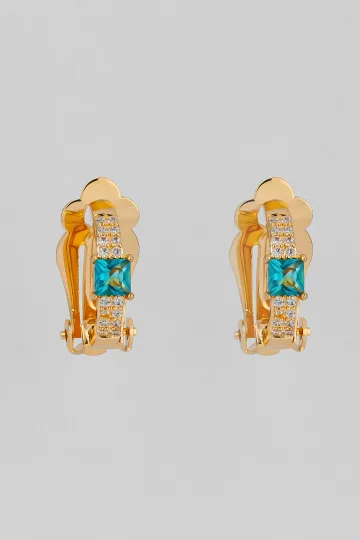
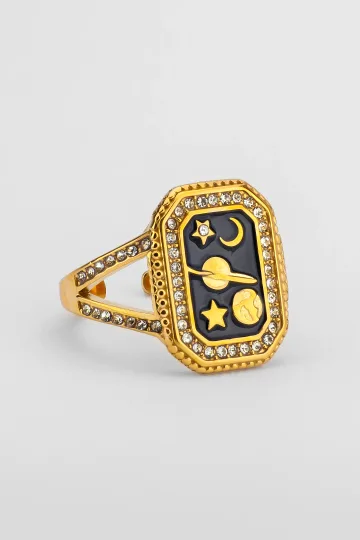
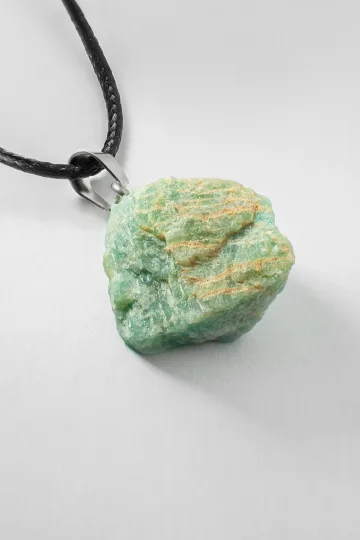
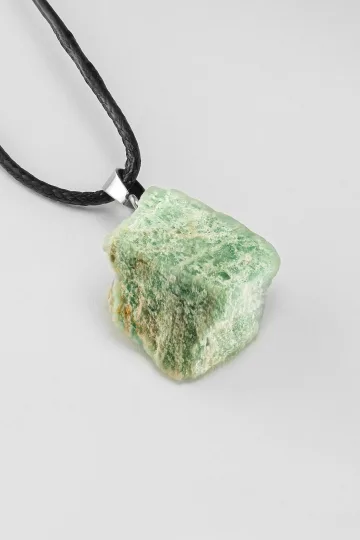
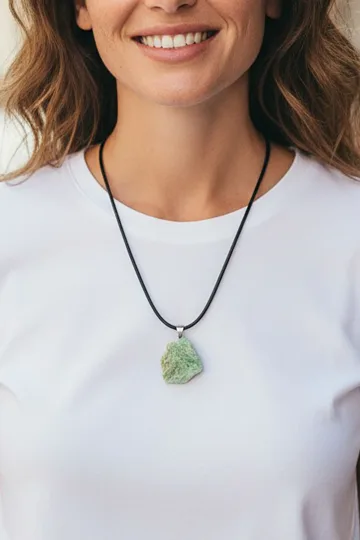
Wear the symbol, don't just read about it. These are in stock:
What moonstone symbolises
Feminine intuition and cyclicality
Its primary meaning. Linked to the Moon and to feminine cyclicality: emotional tides, intuitive perception, and the rhythm of change. Across many unconnected cultures, the same association emerged independently: a stone that holds moonlight should naturally be connected to lunar cycles and to the female body that mirrors them.
Sacred femininity
In many traditions moonstone represents the "inner goddess," not in a religious sense, but as an acknowledgement of femininity as a form of strength. The symbolism runs deeper than decoration: wearing the stone is a statement of attunement with a natural rhythm, not a claim about supernatural powers.
Fertility and pregnancy
In Indian tradition, moonstone is given to brides as a talisman for a successful pregnancy. The connection to the lunar cycle implies a connection to the cycle of birth. This is one of the oldest continuous uses of the stone in jewellery, documented in Indian literature spanning several centuries.
Night intuition and dreams
Placed beneath the pillow for vivid, memorable dreams. An old belief that persists in crystal-healing circles. The medieval European version of this tradition specified that the stone should be placed under a waxing moon before being brought inside.
Emotional balance
Thought to balance emotions, particularly for sensitive individuals. Unlike black tourmaline, which is said to absorb negative energy, moonstone is considered harmonising; the two are often worn together as a paired set, one shielding and the other softening.
New beginnings
The lunar cycle marks endings and fresh starts. Moonstone is associated with initiating new projects, especially at the new moon. The specific connection to the new moon, rather than the full moon, is worth noting: this is symbolism of potential and beginning, not of peak energy or fullness.
Travel talisman
An ancient tradition: protection on journeys, particularly by water (the moon governs tides). Sailors historically wore it. Roman records mention merchants carrying lunar stones when crossing the Mediterranean, and the connection between moonlight, tides, and safe passage at sea is a logical one that multiple maritime cultures arrived at independently.
June birthstone
One of three stones for June (alongside pearl and alexandrite). Less traditional than pearl, but fully recognised.
Wedding anniversary symbolism
In some traditions moonstone is associated with the sixth or seventh wedding anniversary as a gift representing the renewal of a shared cycle. The specific number varies by cultural context, but the underlying idea is consistent: a stone that marks lunar time is appropriate to mark relationship time.
The history of moonstone in jewellery
Ancient India
The oldest documented use. In the Vedic tradition, chandrakanta (moonstone) is linked to Chandra, the moon deity. It was believed to be formed from moonlight crystallised in the earth. Mughal rulers wore it in crowns and turbans; it was, and remains, a traditional bridal gift.
Classical Rome
Pliny the Elder (first century AD) described "astrios," a stone that reflected the phases of the moon. Modern mineralogists believe this was likely adularia. Romans associated it with Diana, goddess of the hunt and the moon.
Ancient Greece
Linked to Selene, the personification of the Moon, and to Artemis. Greek literature described stones that moved light inside them as divine.
Art Nouveau in Britain and France (1890-1910)
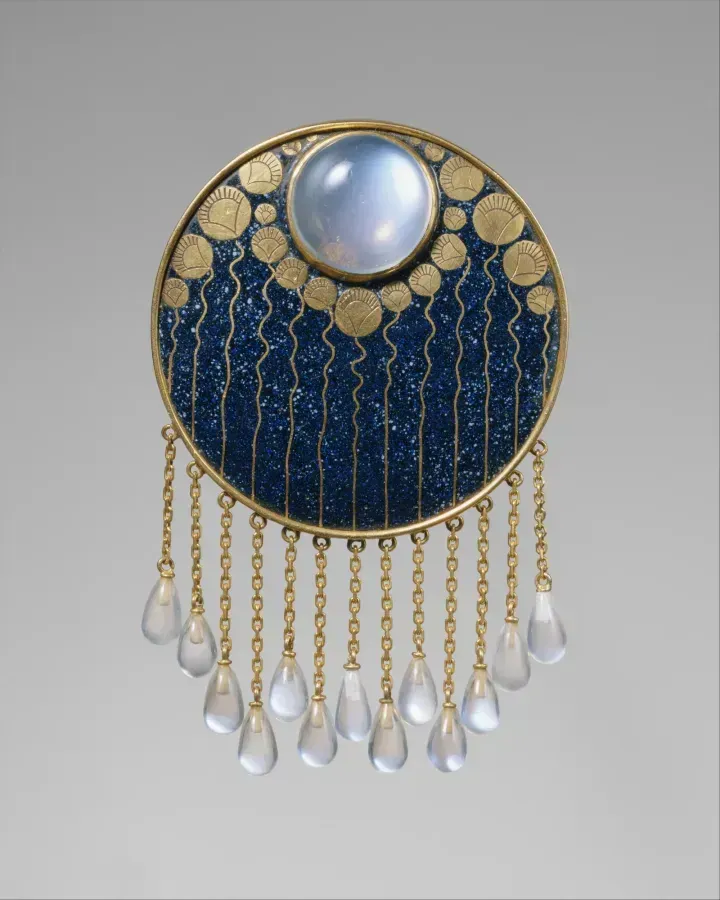
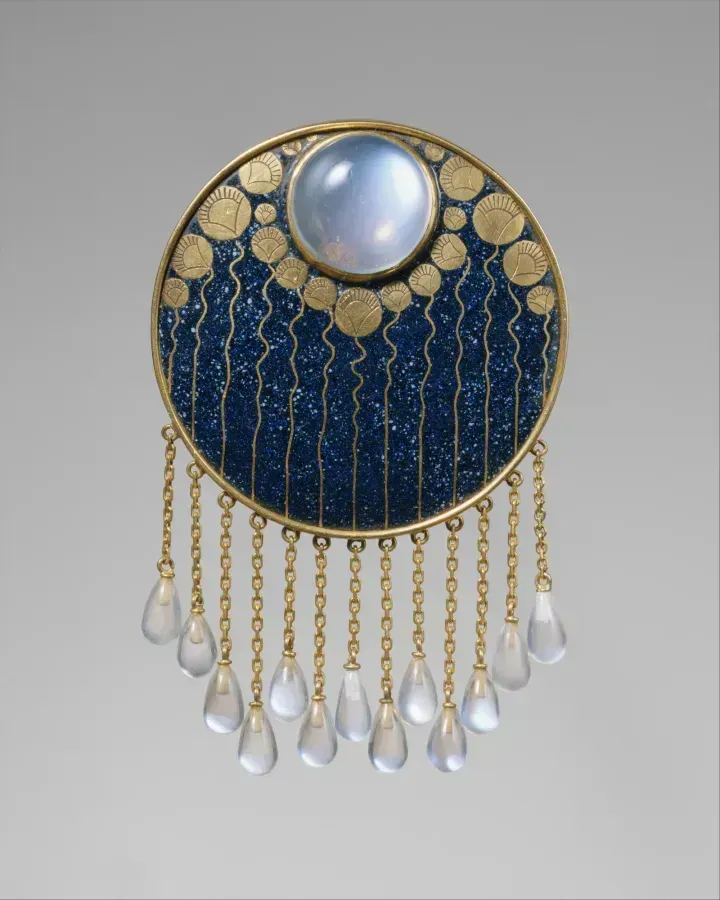
The golden age of moonstone in European jewellery. Charles Robert Ashbee and other Arts and Crafts masters used adularia extensively in silver settings, pairing its cool shimmer with green enamel and organic natural forms. At the same time, René Lalique in Paris set it alongside horn, enamel cloisonné, and plique-à-jour work, producing the dreamlike pieces now held in museum collections.
The London house Liberty and Co. sold its Cymric range of Arts and Crafts jewellery, which frequently featured moonstone in Celtic-inflected silver settings. These pieces, designed in the first decade of the 1900s, are now highly sought by collectors. The combination of adularia with silver, enamel, and flowing natural motifs (dragonfly wings, water plants, female figures) became the defining visual grammar of the era.
What made moonstone so compelling for Art Nouveau jewellers was precisely the quality that makes photography difficult: its light is alive and variable, not static. A stone that changes as you move is more like a living thing than a mineral, and living things were the central metaphor of the movement.
The 1920s and 1930s: Art Deco transition
Art Deco favoured geometric stones: diamonds, sapphires, onyx. Moonstone became less fashionable but did not disappear; it continued in Arts and Crafts-influenced workshop pieces and in the output of smaller studios that had never fully abandoned the naturalist aesthetic of the preceding generation.
The contrast with Art Nouveau is instructive. Art Nouveau placed the irregular, living quality of moonstone at the centre of its aesthetic language. Art Deco prized precision, symmetry, and the bold statement of a hard, facetable stone. A translucent mineral with a soft, shifting glow simply did not fit the movement's visual vocabulary. This is less a judgment on the stone than a reminder that a material's cultural meaning is always shaped by the aesthetic environment surrounding it.
1970s: the bohemian revival
The 1970s counterculture returned moonstone to mainstream fashion. The Woodstock aesthetic, retreats to India, and the early crystal-healing movement all fed its renewed appeal. The stone's association with lunar femininity, travel, and spiritual openness mapped directly onto the concerns of that decade's alternative culture.
1990s-2000s: Celtic and fantasy contexts
A further revival tied to Celtic jewellery design and fantasy aesthetics (Tolkien adaptations, early Pagan communities). Moonstone appeared frequently in silver knotwork settings and in jewellery marketed to people with an interest in historical or spiritual symbolism. This was also the period in which the term "crystal healing" moved from specialist New Age circles into broader popular awareness.
2020-2026: the contemporary mystical wave
Social media, short-video witch communities, and the crystal-collecting world have all amplified moonstone's presence. Rainbow moonstone is especially popular visually (it photographs well). Moonstone engagement rings are a growing segment among couples seeking an alternative to diamonds.
The third-wave interest differs from its predecessors in one significant way: it is strongly visual and market-driven. Short-form video has created a large audience for aesthetically compelling jewellery content, and rainbow moonstone, with its dramatic flash, is well-suited to that format. The stone has migrated from specialist crystal shops to mainstream jewellery retailers in the space of a few years.
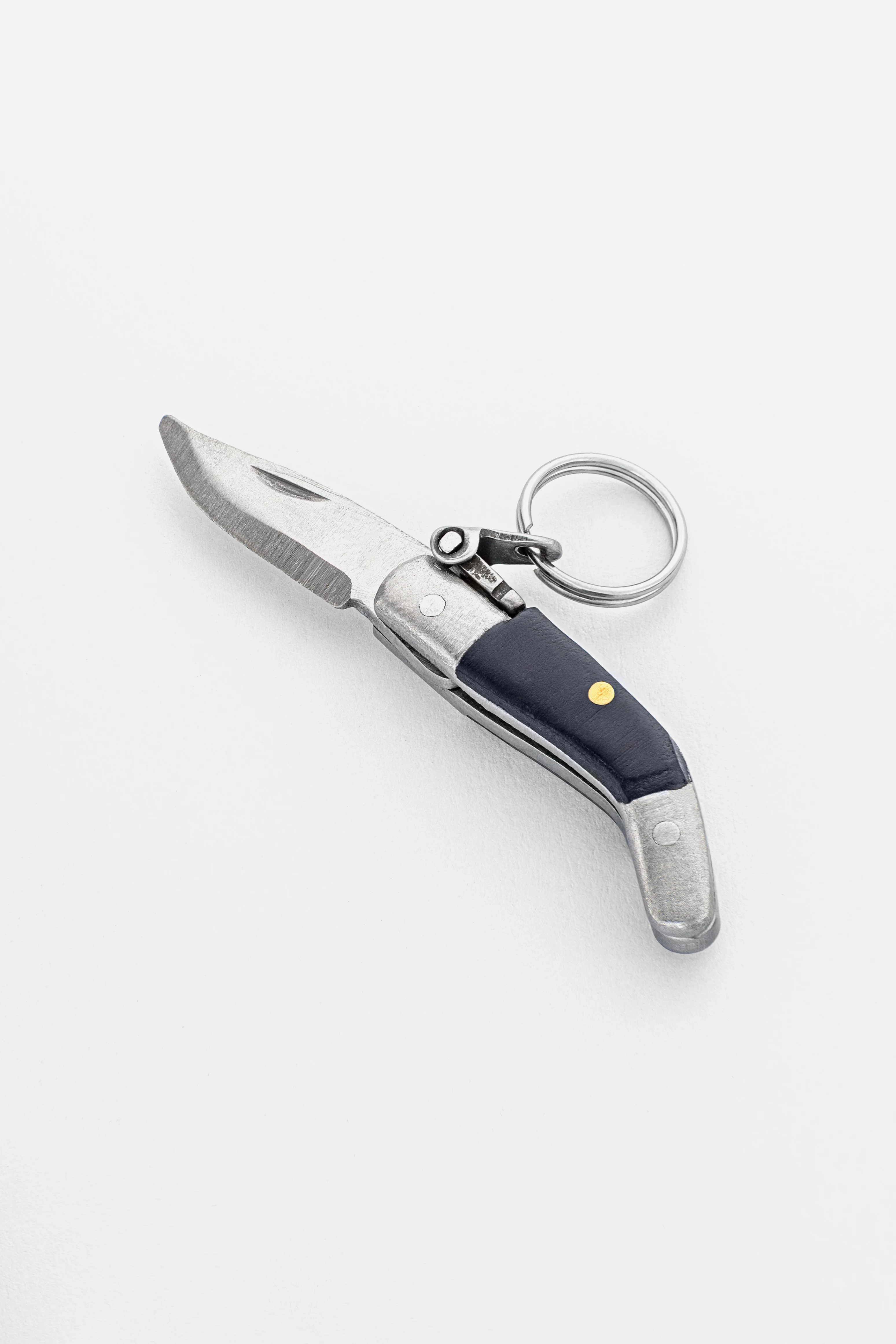
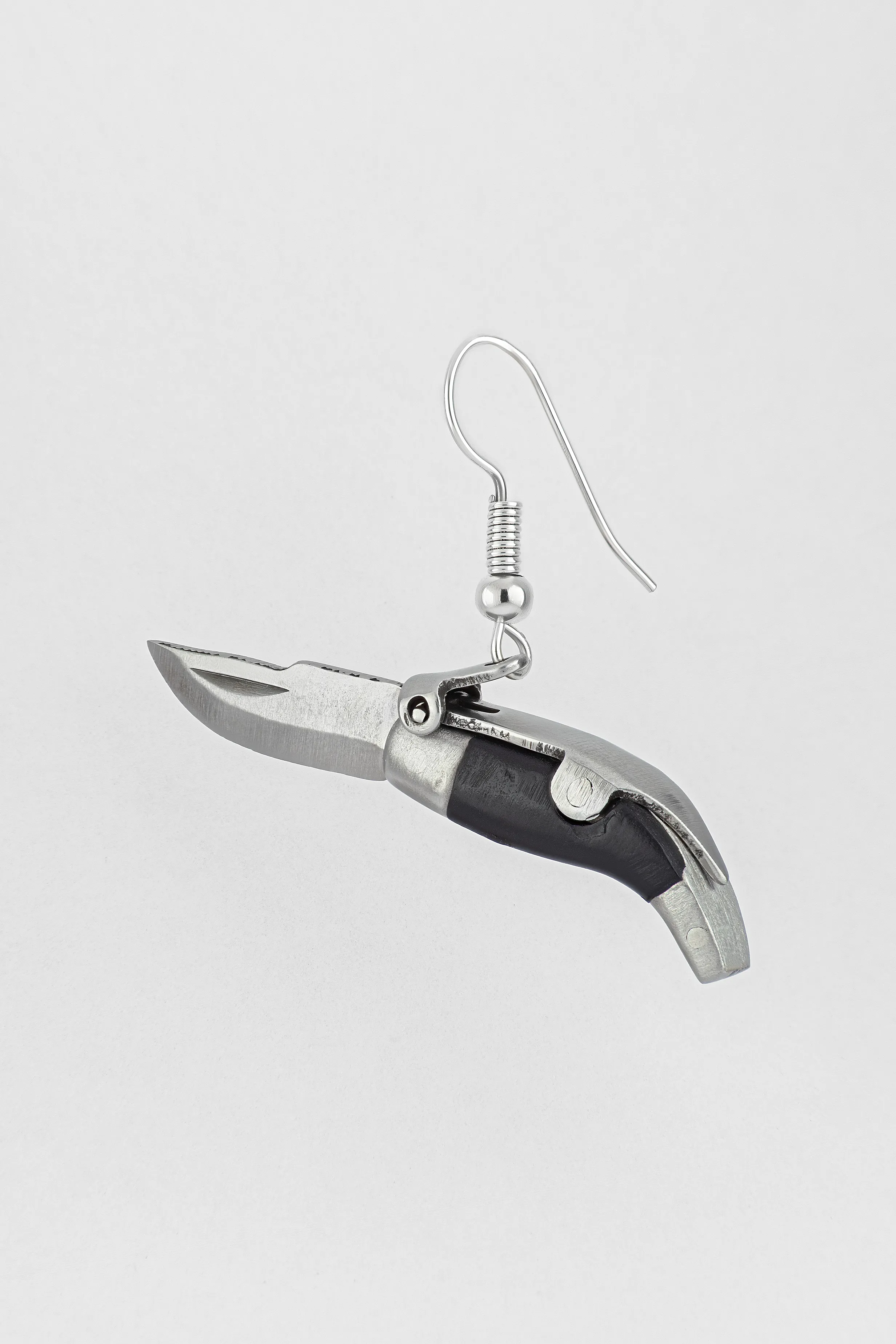
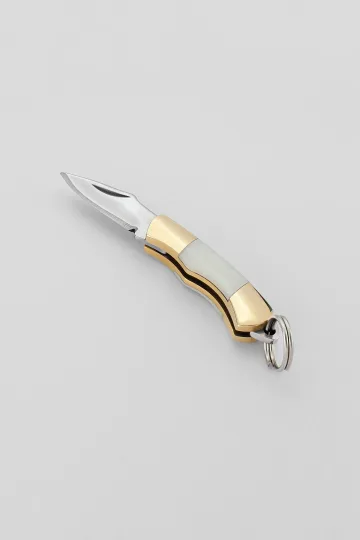
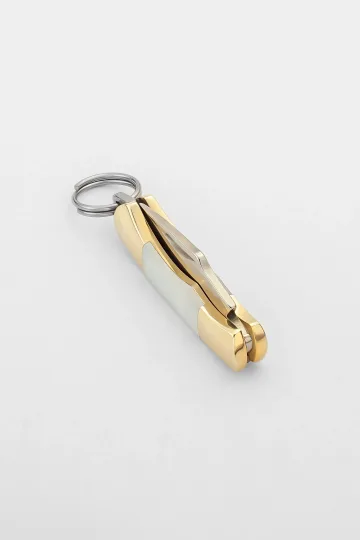
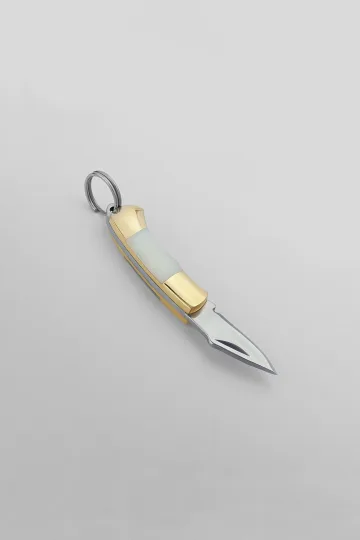
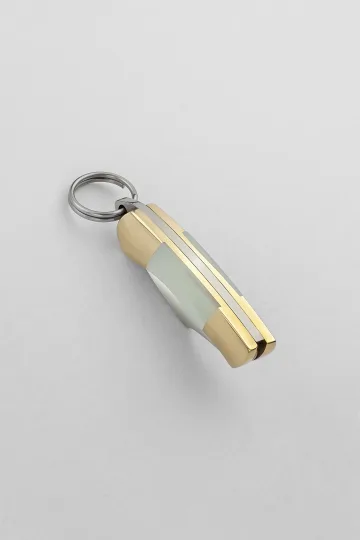
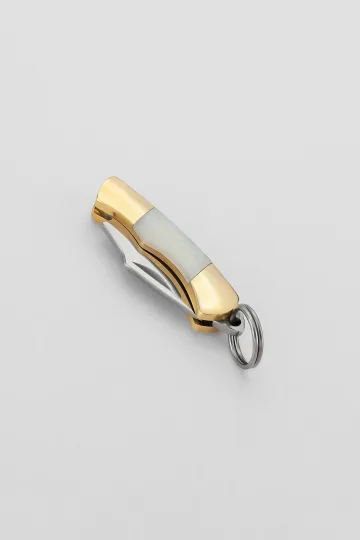
Artisan-crafted CAPAORA navaja pendant
A 40 mm stainless-steel navaja with a real folding mechanism and Palanquilla lock. An affordable gift to remember.
A code for blog readers:
10% off your first order
Authentic · Maker's guarantee · Ships from Spain
Moonstone and the Moon in mythology
The name is more than poetic. Many cultures regarded moonstone as a fragment of the Moon itself. The frequency with which independent civilisations arrived at the same association says something about the stone's visual power: something that glows with a cool interior light, moves when turned, and cannot be pinned down to a single fixed colour invites lunar comparison without any cultural prompting.
India: born from moonlight crystallised into solid form. The Sanskrit term chandrakanta translates as "beloved of Chandra," the moon deity. Vedic texts describe the stone being found where moonlight had touched the earth at night. Mughal emperors wore it in turbans and crowns, and it was presented to brides as an auspicious gift marking both fertility and the beginning of a new lunar chapter in a woman's life.
Ancient Rome: astrios "the star stone," associated with Diana, goddess of the hunt and the moon. Pliny the Elder, writing in the first century AD, described the stone as one that showed a moving reflection of the moon's phases inside it. Whether he was describing adularescence accurately or romanticising what he saw, his account established the association in Roman literary culture.
Greece: linked to Selene, embodiment of the Moon, and to Artemis in her lunar aspect. Greek writers described stones that moved light inside them as sacred to the moon deities. The vocabulary they used, the idea of a stone holding a captured reflection, parallels the Indian origin myth closely despite the geographic and cultural distance.
Celts: a druid stone, used in lunar rituals. Druidic tradition as reconstructed from classical sources and later Irish and Welsh texts treated the moon as central to the agricultural and ritual calendar. Stones that responded visually to light were associated with that cycle.
Medieval Europe: placed under the pillow for vivid dreams; the "lovers' stone" at full moon. Medieval herbals recommended moonstone for dreamwork, and the love-divination use appears in multiple sources from different regions of Europe, suggesting a folk tradition that was widely distributed rather than locally invented.
Native American traditions: a symbol of the moon deity, a protective amulet. Several distinct indigenous traditions of North America incorporated lunar stones into ceremonial practice, though the specific beliefs varied significantly by community and region.
Mesopotamia: associated with Sin, the Sumerian and Akkadian moon god, one of the principal deities of the pantheon. Priests carried lunar stones during religious festivals. Sin was considered the regulator of time itself through the lunar calendar, making a stone associated with moonlight cosmologically significant rather than merely decorative.
Scandinavia: connected to Mani, the personification of the Moon in Norse mythology, regarded as a guide for travellers in darkness. In Norse cosmology, Mani drives the moon across the sky and sets the pace of the months. A stone associated with his light was naturally a talisman for those travelling by night.
Moonstone and feminine cycles
Contemporary women's wellness literature frequently cites moonstone in connection with:
Menstrual cycle: emotional balancing during the premenstrual phase
Pregnancy: a traditional fertility talisman (Indian context)
Menopause: symbolic support during hormonal change
Fertility: an "opening" of reproductive energy
Important: these are not medical claims, but ancient symbolic associations. Modern medicine does not confirm energetic effects. As a psychological tool, however, a ritual object that anchors awareness to bodily cycles, it has genuine relevance for many people.
Moonstone in Vedic astrology
For whom
Chandra (the Moon) in Vedic astrology governs emotions, motherhood, mind, and intuition.
Chandrakanta is recommended for:
- Those with a weak Moon in their natal chart (emotional instability)
- Women seeking menstrual balance
- Mothers and pregnant women
- Those who work intuitively (counsellors, therapists)
How to wear
Classically: a silver ring on the right hand, ring finger, on a Monday (the day of the Moon).
Unlike blue sapphire, moonstone does not generally require complex astrological consultation; it is considered one of the "safe" stones.
Leave your email, we'll send your discount code. No spam, unsubscribe anytime.
The code arrives by email, valid on your first order.
Pairing moonstone with other stones
Adularia combines naturally with stones that share its visual or symbolic register.
With pearl. Both are lunar, both feminine, both associated with water. Pearl is warm and organic; moonstone is cool and luminous. Together they make a soft, natural pairing that reads as unforced elegance rather than deliberate matching.
With labradorite. The sister stone from the same feldspar family. Labradorite is darker and more mysterious; moonstone is lighter and gentler. In a single piece they create a contrast of light and shadow within the same material language.
With aquamarine. The shared theme is water and moon. Aquamarine is transparent and direct; moonstone is translucent and dreamy. A good pairing for maritime symbolism or anyone drawn to an oceanic palette.
With blue sapphire. A more formal, high-contrast pairing. Blue sapphire and blue moonstone address the same vocabulary: night, depth, intuition. The sapphire is precise and structured; the moonstone is soft and shifting. Together they work in formal or halo-style settings.
With rose quartz. For pieces in the register of gentle femininity. Both are pale and soft in tone. This combination suits a romantic rather than a mystical aesthetic.
How to distinguish genuine moonstone
From glass
- Adularescence: genuine stone has rolling flash; glass does not replicate the effect convincingly
- Inclusions: natural stone contains microscopic fracture planes called "centipede" inclusions and tension cracks that form during geological cooling; glass often shows gas bubbles instead
- Temperature: natural stone feels cooler than glass and warms more slowly in the hand
- Price: a smooth white stone at a very low price is likely glass
The feel test is not definitive on its own, but combined with the adularescence check it provides a quick preliminary assessment. Genuine adularescence has a depth to it: the light appears to come from within the stone at a specific internal level, rather than sitting flatly on the surface.
From opalite
Opalite is glass manufactured to mimic adularia. It is the most common imitation encountered in markets and online retail.
Differences:
- Opalite has an overly bright, almost electric blue shimmer; genuine adularia is softer and more organic in quality
- Opalite shows internal bubbles under magnification
- Opalite is lighter and less cool to the touch
- Opalite is significantly cheaper
- Opalite's shimmer does not change depth or position as the stone is rotated; it looks identical from every angle
The electric quality of opalite's shimmer is its primary giveaway. Genuine adularescence moves with the stone's rotation and sits at a specific depth; opalite's shimmer is flat and consistent regardless of angle. Experienced buyers learn to recognise the difference quickly; for a first purchase, it helps to handle a confirmed genuine specimen for comparison.
From heat-treated material
Heat treatment can intensify or alter natural adularescence. Signs of treatment include an unusually vivid or rainbow-coloured shimmer without characteristic depth, and an absence of the natural inclusions (tension cracks, "centipede" inclusions) that form during geological cooling. Natural, untreated adularia has a softer, more organic glow.
Treatment is not necessarily a dealbreaker: the jewellery industry treats many stones, and the practice is widespread. What matters is that the seller discloses it, and that the price reflects the fact that treated material commands less than untreated material of equivalent apparent quality.
From synthetic feldspar
Laboratory-grown feldspar with engineered interlayer spacing has appeared in the market. It can produce a very convincing adularescence, often more regular and intense than most natural material. Distinguishing features include the absence of natural inclusions, an unusually uniform shimmer with no variation across the stone, and a body colour that may be more transparent than typical natural specimens. Gemological laboratory testing is the definitive method for significant purchases.
Rainbow moonstone versus labradorite
"Rainbow moonstone" is technically white labradorite. Differences:
- True adularia is translucent white; labradorite is more commonly dark grey
- White labradorite shows a full rainbow flash; classic blue adularia shows a pure blue
- Trade naming is inconsistent; gemological identification matters for significant purchases
The distinction matters primarily when the seller is pricing the stone as "rare moonstone" and delivering what is essentially common white labradorite. Both stones have merit; the issue is labelling accuracy and proportionate pricing.
Certificate
For expensive pieces, request a certificate from an independent gemological laboratory. A certificate confirms identity, origin (where relevant), and whether heat treatment or other enhancement has been applied. For an everyday mid-range piece, certification is an optional extra; for a significant purchase such as an engagement ring stone, it is the appropriate standard.
Caring for moonstone
Moonstone is a semi-hard mineral that requires careful handling. Hardness: 6-6.5 on the Mohs scale, which means it can be scratched by many everyday objects, including glass.
This is not simply a matter of surface scratches. Feldspar has two good cleavage directions, planes of weakness along which the crystal structure will split cleanly if struck at the right angle. A sharp knock against a hard corner can open an internal crack along a cleavage plane, damaging a stone that appears unscratched from the outside. This is why setting choice matters: a deep bezel that wraps around the girdle and protects the edge is significantly more durable than a claw or prong setting that leaves the stone's sides exposed.
What you can do
- Warm water, a small amount of mild soap, and a soft brush
- Soft cloth for polishing
- Daily wear, with care
What to avoid
- Ultrasonic cleaning (can fracture along internal planes)
- Steam cleaning (thermal shock)
- Harsh chemicals
- Sharp impacts against hard surfaces
- Prolonged direct sunlight (synthetically dyed stones can fade)
Storage
Keep separately from harder stones (diamonds, sapphires, rubies) to prevent scratching. Store in soft cloth or a dedicated compartment in a jewellery box.
Silver, gold, engagement rings, symbolic jewellery, matching sets.
Who suits moonstone
Women at various life stages. The classic feminine talisman.
June birthdays. The stone of the month, alongside pearl and alexandrite.
Brides seeking an alternative engagement ring. A growing trend.
Pregnant women (Indian tradition). Fertility talisman.
Emotionally sensitive people. Thought to harmonise emotional tides.
Travellers. The ancient "wayfarer's stone."
Dreamers and intuitives. For vivid dreams and contemplative practice.
Boho and mystical aesthetic lovers. A short-video witchcraft-community classic.
Astrologically: Cancer and Pisces. Lunar water signs.
A gift for a grandmother. Often read as "the wisdom of generations."
For a hen party or engagement celebration. The stone of readiness for a new lunar phase.
A blue moonstone wants silver and one soft light. Under a fluorescent tube it plays dead, and don't say I didn't warn you.
How to wear moonstone
This stone crosses my table constantly, and it is fussier than it looks under shop lights. Its glow lives on the inside, so I build every look to give that glow room to be noticed. Here it is, occasion by occasion.
What do I reach for with moonstone every day? For daytime I recommend a slim cabochon pendant over a linen shirt, a fine knit or a plain cotton dress. I keep the cool blue sheen against white, grey and dusty blue, where it reads cleanly. A single oval cabochon ring I suggest wearing solo, with no neighbours, or the stone gets lost.
Does it belong in the office? It does. I choose 6-8 mm studs or one quiet silver ring. You need no deep neckline here: the stone reads under a shirt collar and over a thin sweater. If the suit is strict, I pick a peach stone in yellow gold to warm the whole thing up.
How do I build an evening look? For the evening I suggest drop earrings with the hair up and the neck bare. Against a dark dress (charcoal, wine, midnight blue) the glow rolls with every movement. I keep one accent only: the earrings or a large ring, never both at once.
Which metal do I set it in? Classic blue and white I recommend in silver or white gold, so the cool setting hands the whole tone back to the stone. Peach and golden stones I set in yellow or rose gold, where the warm contrast works in your favour. A historic trick I love: oxidised silver, the darkened metal makes the sheen stand out.
Who does moonstone actually suit? Anyone who prefers depth over loud sparkle. It sits on strict minimalism and on soft boho alike. One rule that never fails: keep a stack of rings even in width and let the cabochon be the only colour accent. Cool skin favours blue and white, warm skin favours peach.

Turn on your camera, pick earrings, a pendant or a ring, and see the piece on yourself in real time.
Switch items in one tap.
Everything runs in your browser: no photo or video is ever uploaded.
Send a friend a discount code, they save on their first order.
FAQ
Is it a "magical" stone?
In crystal-healing traditions, yes. Science does not confirm energetic properties. As a psychological object, however (an anchor for ritual, cycles, and meditation), it functions meaningfully for many people.
Why does it appear to change when you tilt it?
This is adularescence, an optical effect produced by alternating layers of orthoclase and albite (two types of feldspar). Light passing through the layers creates the rolling shimmer. Gemologists refer to this as the Schiller effect.
Is it suitable for an engagement ring?
Yes, and it is a growing trend. Bear in mind that it is softer than sapphire or diamond (6-6.5 on the Mohs scale) and requires care. For daily wear, a bezel setting offers more protection than prongs. If you choose a prong setting, make sure the stone's girdle is not left exposed to lateral impact.
Is rainbow moonstone the same as adularia?
Technically, no. It is white labradorite. The trade term is misleading. Aesthetically and symbolically it is frequently treated as a variety of moonstone.
Which colour of flash is most valuable?
A pure blue adularescence in a translucent stone from Sri Lanka is the classic benchmark and the most highly prized.
Can it be worn every day?
Yes, but with care. Remove it before physical work, sport, or washing up. Suitable for office and formal occasions.
Does it fade?
Genuine moonstone does not fade. It can be scratched with careless wear.
What size cabochon for a ring?
An 8-12 mm cabochon is standard. Smaller stones can get lost on the finger; larger ones can look disproportionate.
Can you buy a large collector stone?
Yes. Large stones (20+ mm) are collector pieces. Price rises non-linearly: large stones cost significantly more per carat than small ones.
Is it suitable for a man?
Unconventional, but possible. Grey or black moonstone is more typically masculine in feel. Black suits a bold aesthetic; grey suits minimalism. In historical terms, moonstone was worn by men across multiple cultures, including Mughal emperors and Roman priests, so the contemporary association with feminine jewellery is a relatively recent development.
How does it differ from opal?
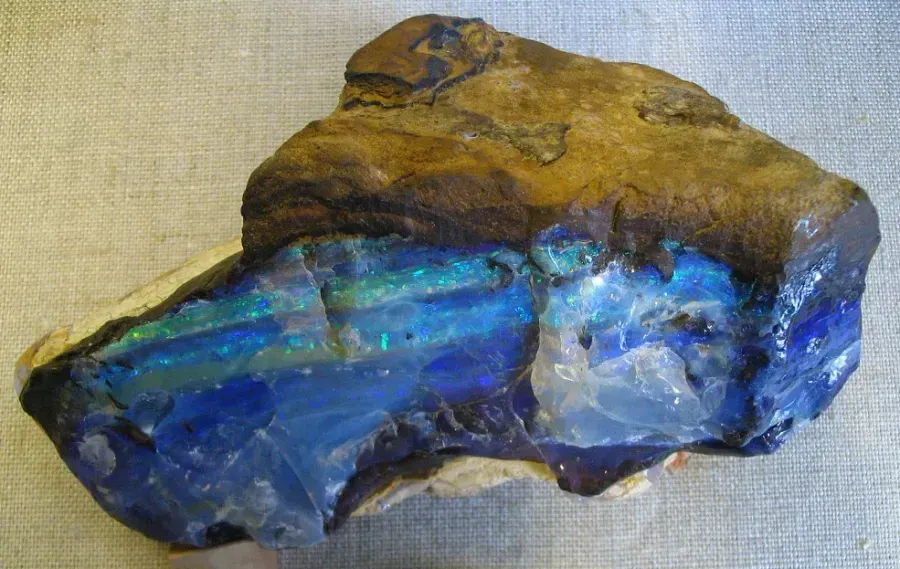
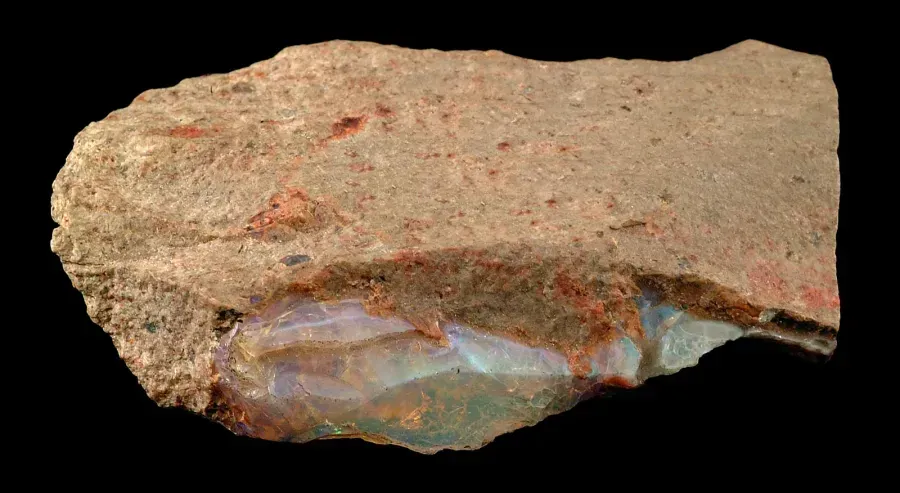
Both shimmer; both are relatively soft. Opal is even more delicate (Mohs 5.5-6.5) and contains water in its structure, making it susceptible to drying and cracking in low humidity. Moonstone shows the Schiller effect: a floating, rolling light that moves across the stone's surface as you tilt it. Opal shows play-of-colour: a full spectral fire that flashes from within, independent of the viewing angle. Gemologically they are completely unrelated minerals. Moonstone is a crystalline silicate; opal is an amorphous hydrated silica. Their similar cultural resonance (both associated with lunar symbolism, both prized for internal light) reflects human pattern-recognition rather than any material connection.
Can moonstone cause an allergic reaction?
The stone itself essentially never causes reactions. Reactions are almost always to the metal setting, particularly nickel in lower-grade silver alloys. If you have a metal sensitivity, choose settings in sterling silver 925 with rhodium plating, or in gold.
What is the difference between Mohs hardness 6 and a diamond at 10?
The Mohs scale is non-linear: the difference between 6 and 7 is far smaller in practical terms than the difference between 9 and 10. Quartz, which is Mohs 7, is present as dust in many everyday environments, including household dust. A moonstone ring worn daily will be exposed to microscopic quartz particles in the air, which can gradually abrade the surface. This is not unique to moonstone: any stone below 7 on the Mohs scale faces the same issue. For rings worn every day, the solution is to choose a bezel or protective setting and to clean gently rather than to scrub.
Does the shimmer diminish with age?
In a genuine, untreated stone, the adularescent layers are a permanent feature of the mineral's internal structure. They do not degrade or wear out. However, surface abrasion over years of daily wear can introduce a haze of fine scratches on the cabochon surface, which diffuses the light entering the stone and reduces the apparent clarity of the shimmer. A professional lapidary can re-polish a scratched cabochon, restoring the surface and with it the full visual effect.
Notable moonstones
The Ceylon moonstone. A 123-carat Sri Lankan stone with blue adularescence, held in the British Museum.
The Hope family moonstone. A family heirloom of the Hope family (the same family associated with the famous diamond).
The Art Nouveau collections of René Lalique. Exemplary use of adularia during the height of the movement.
British royal collections. Several moonstones appear in historic royal pieces.
Building a moonstone collection
Starting out
One simple piece: a cabochon ring, 8-10 mm, in sterling silver or heavily plated gold. Mid-range segment.
Intermediate
- A statement cabochon ring
- 6-8 mm studs
- A crescent moon pendant with a small inset
Mid-range segment overall.
Premium
- A halo ring with a Sri Lankan blue stone
- Drop earrings with teardrop cabochons
- A tennis bracelet
- An antique Art Nouveau pendant
Premium segment.
Collector
- An antique Art Nouveau parure
- A rare star moonstone
- A collection across varieties (white, blue, rainbow, peach)
Collector and luxury segment.
Conclusion
This is one of the rare stones that photography simply cannot do justice to. A photo shows it as milky and dull; in the hand it comes alive, rolling with blue or rainbow fire. It is an intimate mineral that shares its beauty only with those who hold it close.
For brides seeking something beyond the expected. For women attuned to their cycles. For those drawn to the mystical aesthetic. For anyone who values depth over spectacle: this stone is for you.
In 2026 it is experiencing its third wave of popularity (after Art Nouveau and the 1970s bohemian revival). The convergence of wellness culture, short-video mystical communities, alternative bridal, and boho aesthetics has made it ubiquitous once again.
About Zevira
Zevira is based in Albacete, Spain. Moonstone is part of our mystical collection, alongside labradorite, amethyst, and other stones with deep symbolic resonance.
What you can find with moonstone at Zevira:
- Moonstone pendants on sterling silver chains
- Engagement rings with moonstone as an alternative to diamonds
- Drop earrings with moonstone for a boho look
- Moonstone paired with lunar phase motifs
- High-quality rainbow moonstone
- Moonstone set in oxidised sterling silver 925
Every piece is handcrafted, with the option of personal engraving. We work in sterling silver 925 and 14-18K gold.