Citrine in Jewelry: What This Stone Really Is, How to Spot It and Wear It
Ninety percent of the citrine in display cases is not, strictly speaking, citrine at all, but heated amethyst. It sounds like a trick, yet it is an honest and entirely normal practice in the jewelry trade. It simply helps to know what you are holding when you choose a yellow stone.
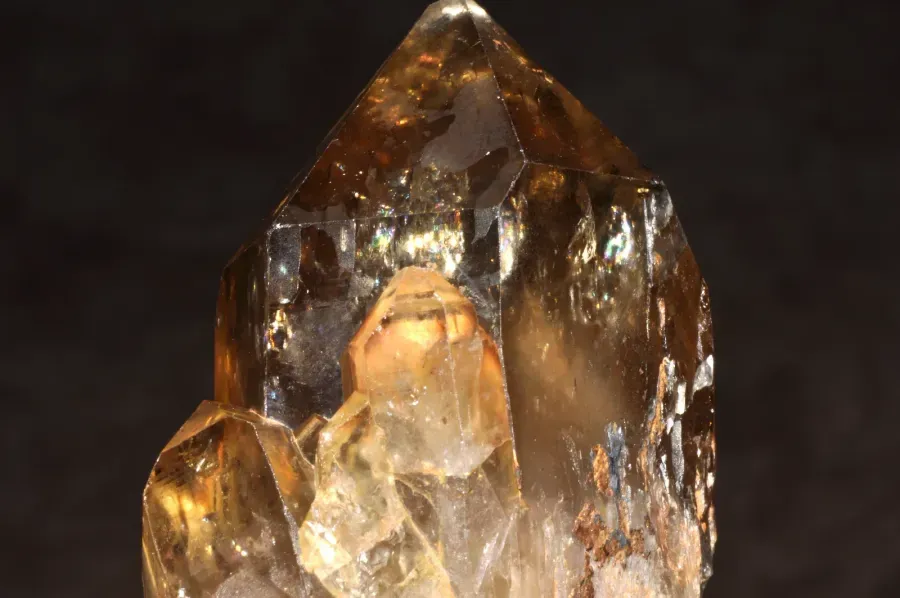
Citrine is the yellow variety of quartz. People keep confusing it with topaz, passing it off as pricier stones and underrating it. And yet it has clear chemistry, an understandable geology, a hardness good enough for an everyday ring, and a couple of simple signs that tell the real stone from dyed glass. Let us go through it in order: what it is made of, where it is mined, how it ended up in crowns and signet rings, and how to care for it.
What citrine is: the chemistry and physics of the stone
Citrine is silicon dioxide, quartz, chemical formula SiO₂. The same mineral as rock crystal, amethyst, smoky quartz or rose quartz. The difference lies in colour alone, and here colour is a matter of an impurity, not of a separate substance.
Composition and the cause of the yellow colour
Pure quartz is colourless. Citrine owes its yellow tone to traces of ferric iron (Fe³⁺) built into the crystal lattice. The iron ions absorb part of the spectrum in the blue and violet range and let the yellow, orange and red through, which is why the stone looks golden in transmitted light. The more iron there is, and the more strongly it has been "activated" by heat, the deeper and warmer the tone, from pale lemon to honey and amber.
An important detail: natural citrine almost always owes its colour to heat. Underground, amethyst (the same quartz, but with a different type of iron-bearing colour centre) can be warmed by geothermal heat to 300 to 400°C, and its violet colour shifts to yellow. Natural citrine, in other words, is essentially amethyst that nature itself has "warmed through". When the same thing is done in a furnace at a workshop, you get the same result in months instead of millions of years.
Hardness, structure and optics
- Mohs hardness: 7. That is harder than glass and the steel of a knife blade, but softer than topaz (8), corundum, ruby and sapphire (9) and diamond (10). The number 7 is the threshold below which a stone begins to be noticeably scratched by ordinary household dust (there is a lot of quartz in it). For citrine this means: wearable every day, but in a ring better protected from knocks and abrasion.
- Crystal system: trigonal (quartz group). The crystals grow in the typical six-sided prisms with pyramidal heads.
- Density: about 2.65 g/cm³. For comparison: glass roughly 2.5, topaz around 3.5. By weight citrine is noticeably lighter than most gemstones and a touch heavier than glass.
- Refractive index: roughly 1.544 to 1.553. A birefringent mineral, though the effect is weak.
- Dispersion: low (about 0.013), which is why citrine has no "play" of fire as a diamond does. Its beauty lies in clean, even colour and lustre, not in rainbow flashes.
- Lustre: glassy.
- Cleavage: none, the fracture is conchoidal. That is a plus for cutting: the stone does not split along planes.
- Pleochroism: very weak, practically invisible in citrine.
How citrine forms in nature
Quartz is one of the most common minerals in the Earth's crust: it accounts for about 12 percent of its volume. Citrine crystallizes in pegmatites (coarse-grained veins related to granite) and in hydrothermal quartz veins several kilometres deep. The yellow colour appears when three conditions coincide: enough iron in the rock, prolonged heating, and time, tens to hundreds of millions of years.
Despite the general abundance of quartz, saturated natural citrine is an uncommon stone. That is exactly why heated amethyst takes up most of the market.
Colour centres: why one quartz is yellow and another violet
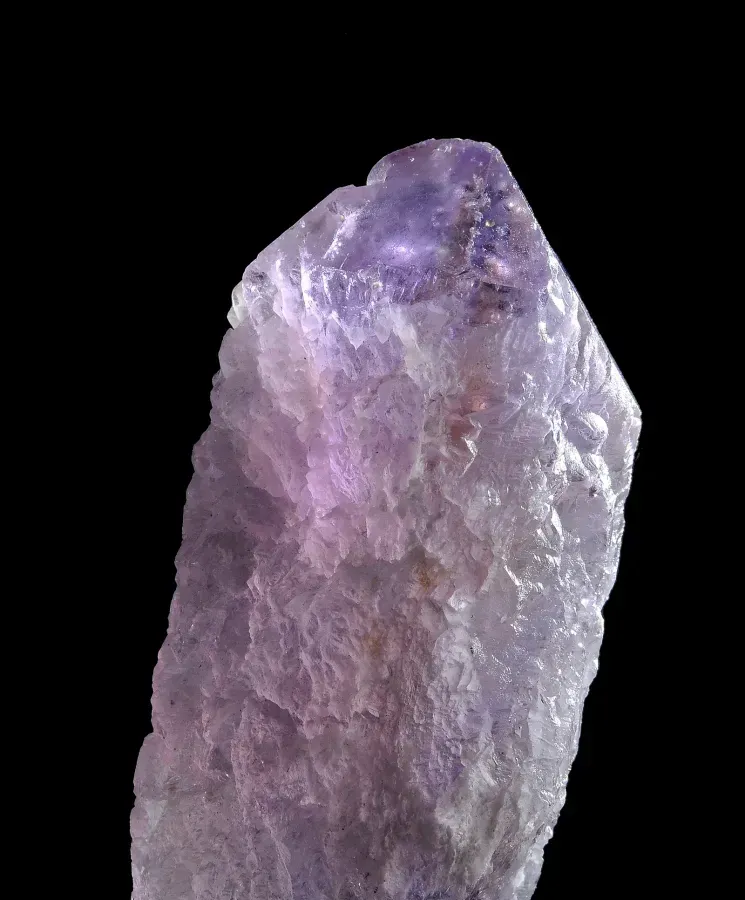
The most curious thing about quartz is that its colour is set not by the amount of impurity but by its state. Iron in the lattice can take different forms and be incorporated in different ways, and that determines which wavelengths of light the stone will absorb. In amethyst the iron forms special centres that give a violet tone, and these centres are unstable under heat. Warm the amethyst, and the centres rearrange, the violet leaves, and in its place comes the yellow-orange colour of ferric iron. So from one and the same stone the furnace makes either amethyst or citrine, depending on temperature, rather than swapping the substance. This is what explains why citrine, amethyst, ametrine and smoky quartz are essentially one mineral in different costumes.
Synthetic citrine and why there is so little of it
Quartz has long been grown in autoclaves by the hydrothermal method, and with iron added you get synthetic citrine, indistinguishable from natural without instruments. The paradox is that there is almost none of it on the market. There is so much natural amethyst, which turns cheaply into citrine through heat, that growing yellow quartz from scratch makes no economic sense. Synthetic quartz is more often made for industry and for colourless or coloured inserts of other shades, while the yellow segment is covered by treated natural material.
The same golden colour appears in nature in heliodor, the golden beryl, although that is a completely different mineral from the beryl group.
Geography: where citrine is mined
The conditions of formation differ at every deposit, and they affect the purity, transparency and tone of the stone.
Brazil, the main source. The states of Rio Grande do Sul and Espírito Santo account for the lion's share of world output. Brazilian material stands out for good transparency and a wide range of tones: from almost colourless to dense gold. Here too they mine the amethyst that is later heated into citrine, along with large druses for collections.
Madagascar yields an intensely yellow stone with an orange or reddish undertone, a warm, saturated shade that often goes into rings and pendants.
Uruguay is known for light, clean material with a pale lemon tone, a restrained colour prized for its clarity.
Spain is historically linked with honey-gold natural citrine from Andalusia. Such a stone was sometimes called Spanish topaz in old texts, which only added to the confusion over names.
The Ural region and Scotland supplied citrine in the past; today these are mostly historical or small deposits. Citrine is also found in the USA (Colorado, North Carolina), rarely and in small quantities.
The history of citrine in jewelry
The name came from the French citron (lemon) and attached itself to yellow quartz in the 18th century. As a material, though, it has been known since antiquity.
In Ancient Rome, yellow quartz was carved for seals and set into rings. Pliny the Elder described yellow transparent stones of this kind in his Natural History, although ancient authors often did not distinguish citrine, topaz and other golden stones; they grouped them by colour. This confusion of names held for centuries: what old documents call topaz often turns out to be citrine, and the other way round.
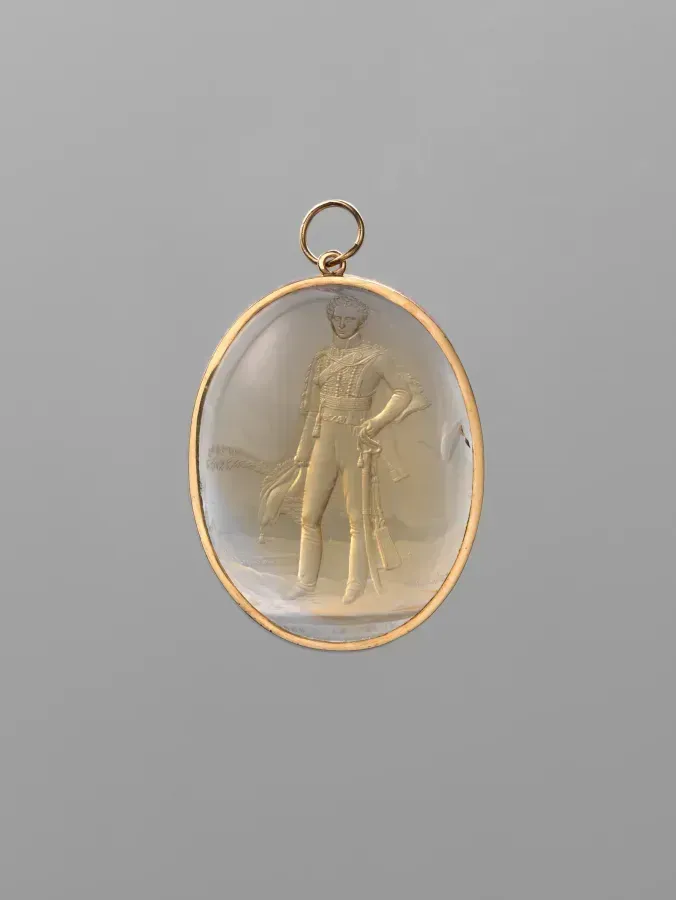
In the Renaissance, gems, miniature portraits and scenes were carved on citrine, like the Beltrami pendant in the photo above. The transparency and uniformity of the stone suited fine carving well.
The 18th and 19th centuries brought citrine wide popularity. As the Brazilian deposits opened up, the stone grew cheaper and became available not only to the nobility. In Scotland, citrine was traditionally set into Highland jewelry and the hilts of dirks. In the Victorian era (1837 to 1901), yellow quartz came into fashion on a par with other coloured stones: it was combined with pearl and enamel in daywear. In the 1920s and 1930s, at the peak of geometric jewelry taste, large step-cut citrines became a conspicuous material in rings and brooches; they looked good in a severe cut and cost considerably less than diamonds of the same size.
So the citrine's reputation as an "affordable yet noble" stone took shape historically, not in marketing.
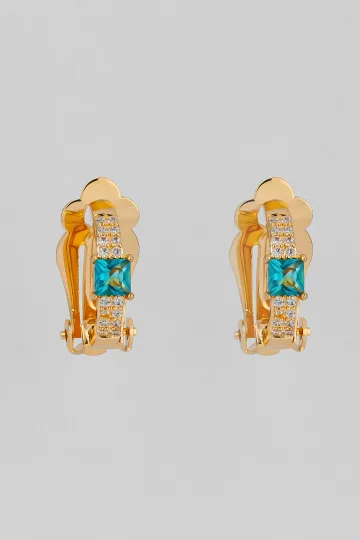
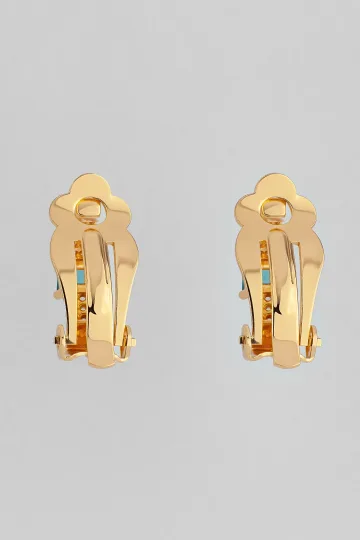
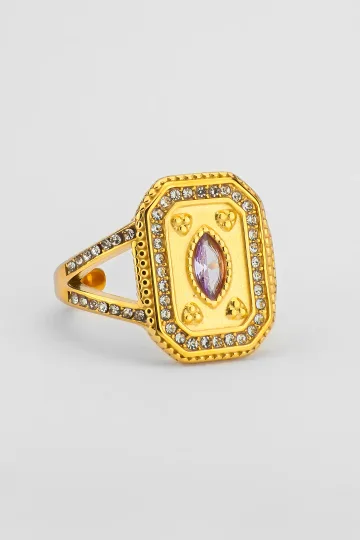
Wear the symbol, don't just read about it. These are in stock:



The colour of citrine: from lemon to honey
Behind the shared name hides a whole range of shades, and the trade gives each its own name.
- Lemon, pale yellow, a light, transparent, cool tone. Often this is Uruguayan material or a lightly heated stone.
- Golden, the classic saturated yellow, the most recognizable citrine.
- Honey, amber, a warm, dense tone with an orange undertone.
- Madeira, reddish-brown, the darkest tone, named for the colour of the wine of the same name. Most often this is strongly heated amethyst.
Nature sometimes grows both a yellow and a violet zone in a single crystal at once, producing ametrine, the violet-yellow quartz, where the borders of citrine and amethyst are visible right inside the stone.
Customer reviews
Zevira is a real jewellery shop. Genuine payments, deliveries and customer thank-yous.
🥰🥰🥰 gracias
Ok, ¡gracias! 🙂
Natural citrine and heated amethyst: what the difference is
This is the main practical question when buying. Let us go through it honestly.
Natural citrine got its colour deep underground over millions of years. Its tone is more often soft, golden or honey, and a very dense colour is rarer. It is dearer simply because there is less of it.
Heated amethyst is amethyst calcined in a furnace to 300 to 400°C, so that the violet colour shifted to yellow or reddish-orange. The process is stable and irreversible, the colour holds. In chemistry, hardness, density and durability it is exactly the same material. Heating amethyst is a standard, recognized treatment, and there is nothing shameful about it.
The difference for the buyer comes down to two things: price and rarity. In wearability and beauty there is no difference at all. The only requirement is honesty: the seller must call things by their names and not pass off heated amethyst as rare natural citrine at the latter's price.
A few pointers on how to tell:
- A very bright, deeply orange or reddish-brown tone (Madeira) almost always means heating; in nature such a dense colour is rare.
- In a heated stone the colour sometimes concentrates closer to the crystal's tip, in a natural one it is more evenly distributed.
- A reliable answer comes only from a gemological laboratory. For an expensive stone it makes sense to ask for a certificate.
How to tell citrine from similar stones and fakes
Citrine is confused with several things, and each has its own check.
Glass. The most common fake. Yellow glass gives itself away easily: it warms up quickly in the hand, while quartz stays cool longer. Inside the glass there are often round air bubbles, which never occur in a natural stone. Glass is softer (hardness about 5 to 6), lighter for the same size and not infrequently too "perfectly" transparent, without a single inclusion.
Topaz. Yellow topaz is heavier (density about 3.5 against 2.65 for citrine) and harder (8 against 7). By eye they are hard to tell apart, but by weight at the same size it is easier.
Synthetic citrine. Lab-grown quartz is identical to the natural in its properties and almost indistinguishable without instruments. On the mass market it appears rarely, because natural and heated material is already in abundance.
Simple home checks:
- Temperature: hold the stone, quartz is cooler than glass and plastic.
- Inclusions: a natural stone may have fine growth lines, light "wisps", tiny natural dots. Perfectly sterile clarity at a low price suggests glass.
- Weight: a stone noticeably light for its size is suspect.
- Hardness: real citrine is not scratched by steel.
For a large purchase the best argument is a laboratory certificate stating whether it is natural citrine or heated.

Turn on your camera, pick earrings, a pendant or a ring, and see the piece on yourself in real time.
Switch items in one tap.
Everything runs in your browser: no photo or video is ever uploaded.
What affects the price of citrine
Citrine has no single scale like the four "C"s of a diamond, but the price factors are understandable and verifiable by eye.
Colour decides almost everything. The dearest is a saturated golden-orange tone without brown murkiness and without a grey undertone. Very pale lemon and, conversely, dark red-brown are valued below mid golden. A natural dense colour is rare, so it is precisely that, confirmed by a lab, which lifts the price most.
Clarity. Citrine is counted among the so-called "type one" stones for clarity: from quality material one expects the absence of inclusions visible to the eye. Quartz grows large and clean, so cloudy or cracked citrine in cut form is cheap; such material more often goes into beads and cabochons.
Cut and size. There is plenty of quartz, so a large size by itself hardly drives the price up: a stone of ten carats and more is ordinary for citrine, whereas for a ruby that is a rarity. A precise, symmetrical cut that brings out the colour rather than the weight is what is prized. A careful hand cut tailored to the specific stone costs more than a calibrated mass cut.
Origin and treatment. A laboratory report with the words "natural, no heat" adds noticeably to the price. Standard heated amethyst, by contrast, keeps citrine in the affordable segment, and that is an honest market norm, not a flaw.
Caring for citrine
Hardness 7 makes citrine sturdy enough for constant wear, but not invulnerable. A few simple rules will extend the stone's life.
Cleaning. Warm water, mild soap and a soft cloth or an old toothbrush with soft bristles. That is enough. Rinse afterwards and wipe dry.
What to avoid:
- Ultrasonic and steam cleaning: sudden heating and vibration are dangerous for stones with internal stresses or inclusions.
- Sharp temperature changes: do not put a cold piece into hot water and the other way round, quartz dislikes this.
- Abrasive powders and aggressive chemicals (chlorine, bleach, solvents), they harm both the stone and the setting.
- Long, harsh ultraviolet. The colour of citrine is stable in everyday life, but years of lying in full sun can theoretically weaken the tone of a heated stone slightly. In practice this is almost never seen, but jewelry is better kept in the dark.
Storage. Apart from harder stones (topaz, sapphire, diamond), which will scratch the quartz. A soft pouch or a separate slot in a box is ideal.
How hardness affects wearability. In earrings, pendants and brooches citrine is safe, there is no constant friction. In an everyday ring the stone is worth protecting with the setting: a closed or half-closed bezel covers the edges of the stone, while high open prongs leave the facets vulnerable to knocks against tables and door handles. This is no reason to give up a citrine ring, just choose a design with protection.
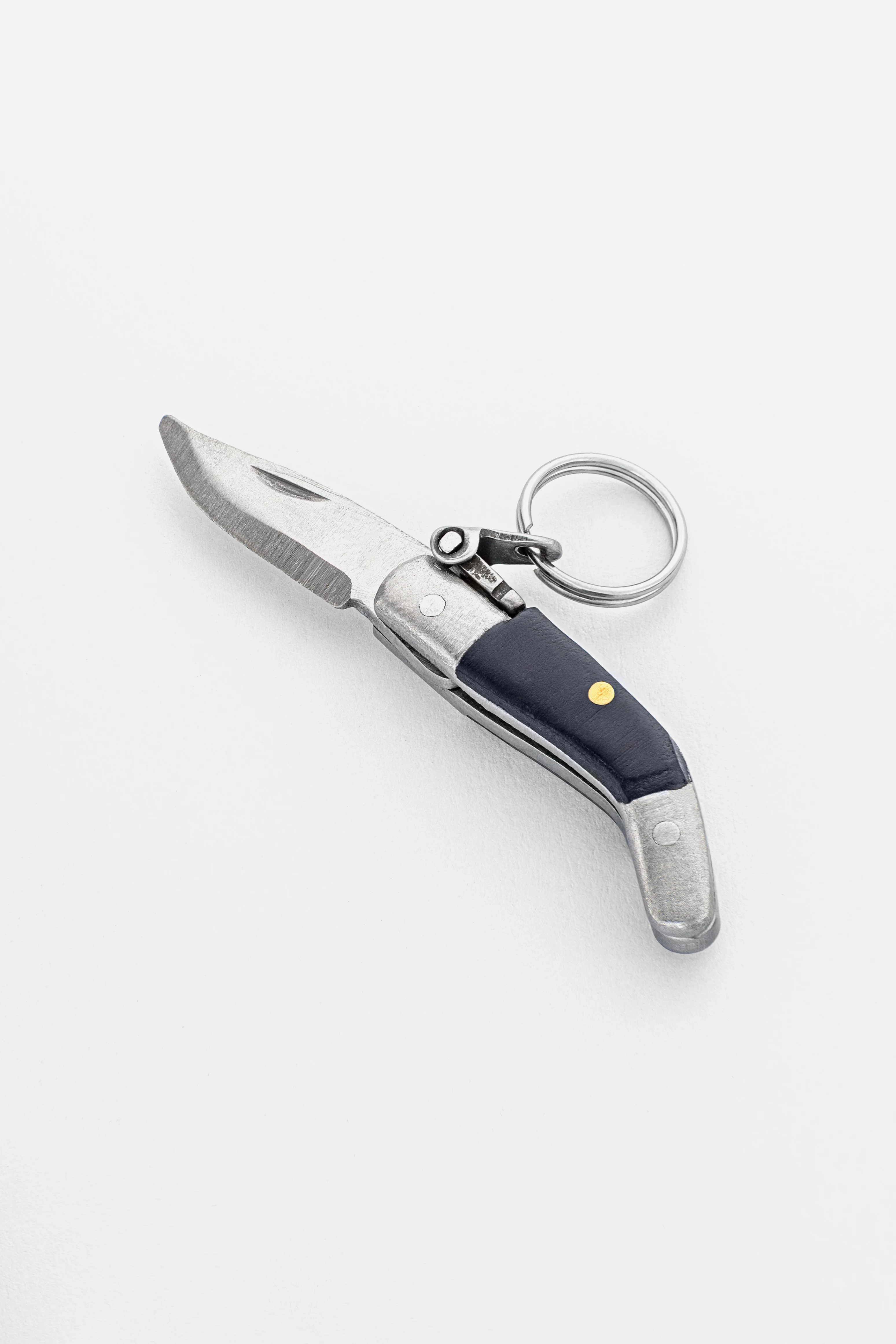
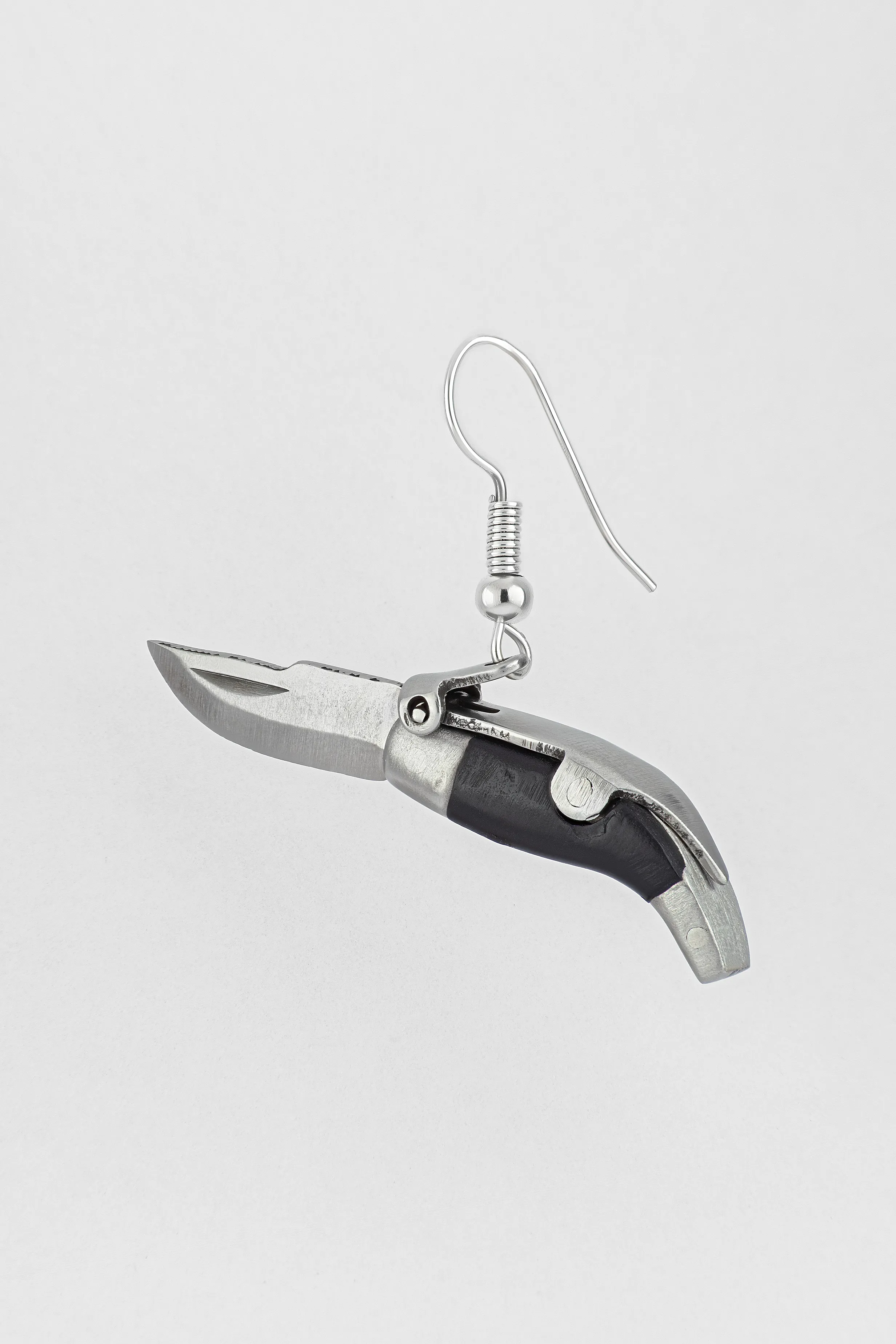
Artisan-crafted CAPAORA navaja pendant
A 40 mm stainless-steel navaja with a real folding mechanism and Palanquilla lock. An affordable gift to remember.
A code for blog readers:
10% off your first order
Authentic · Maker's guarantee · Ships from Spain
The November stone and an anniversary gift
Citrine has a fixed place in the calendar of gifts, and that is a handy practical reason to choose it.
Citrine is officially considered the birthstone of November alongside topaz, by a list jewelers have used since 1912. So yellow quartz is a logical birthday gift in November, especially when you want a warm colour against the grey of late autumn.
Citrine is also traditionally given for the thirteenth wedding anniversary. In the English tradition there is a separate attachment of citrine to the seventeenth anniversary as well. The colour works for the idea here: a sunny stone as a wish for warmth and prosperity for the home. This is not magic, just a pretty piece of gift logic that is easy to play on in a card.
Another frequent role for citrine is as a partner stone. Its warm yellow sits well next to the cool violet of amethyst (a related quartz) and the transparent rock crystal, so from this trio it is easy to assemble matching sets in a single metal tone.
Druses, geodes and green quartz: what else citrine is confused with
Besides glass and topaz, three things turn up in display cases that are worth recognizing.
"Citrine" geodes and druses. Striking hollow stones with a cap of golden crystals inside, sold as decor. Almost all of them are amethyst geodes (usually from Brazil), calcined in a furnace until yellow. That is fine, but calling them natural citrine is incorrect. A sign of heating in such druses: a saturated, even yellow-orange colour across the whole cap and sometimes a slight reddish bloom on the tips.
Prasiolite, "green quartz". It too is obtained by heating or irradiating a certain amethyst, and in shops it sits next to citrine, sometimes under the name "green amethyst". It is the same quartz, just a different result of treatment, and a green natural colour in quartz is extremely rare.
"Smoky" transitions and smoky quartz zones. If in one stone yellow sits next to a greyish or brown smoke, you have before you either unevenly heated material or the border between citrine and smoky quartz in one crystal. This pulls the price down, but for lovers of the natural look such a stone is often more interesting than a perfectly even one.
Leave your email, we'll send your discount code. No spam, unsubscribe anytime.
The code arrives by email, valid on your first order.
Symbolism: what is attributed to citrine
Let us frame this at once: everything below is tradition and belief, not proven effects. Science records no confirmed influence of the stone on health, finances or mood.
In the European tradition citrine was linked with the sun, warmth and prosperity, chiefly because of its yellow colour. For its reputation as a "merchant's stone" that supposedly brings luck in trade, it was prized by travellers and traders of the past. A similar "money" reputation, by the same logic of golden shine, is carried by pyrite, the stone of abundance.
In systems like feng shui or Ayurveda, yellow stones are also assigned the role of symbols of flourishing and energy. This is part of cultural heritage, and one can meet it with interest, but without the illusion that the stone changes anything on its own. Jewelry is good because it is beautiful and because it is pleasant to wear, and that is enough.
Where the fame of the merchant's stone came from
The nickname merchant's stone stuck to citrine for a reason. Yellow shine recalled gold and coins, and traders and travellers of the past readily invested in the stone a hope for a lucky deal and the safekeeping of their takings. The logic here is purely associative: the colour of gold drags the thought of wealth behind it. For the same reason other shiny minerals acquired a golden reputation. The stone has, of course, no mechanism for influencing trade, but the pretty association has outlived the centuries and still feeds the legend.
Why yellow in particular became the colour of abundance
The link of yellow with prosperity occurs among very different peoples, and the reason is simpler than it seems. Yellow is the colour of the sun and ripe grain, that is, of warmth and harvest, on which survival directly depended. From there it is a short step to the idea of flourishing and generosity. Citrine turned out to be a convenient carrier of this symbolism: transparent, warm, inexpensive and accessible, it let anyone wear a piece of sunny colour, not only those who could afford gold or rare gems.
How to treat the symbolism without naivety
The sensible position is simple: value the meanings as culture, but expect no miracles from the stone. Citrine does not heal, does not bring money and does not change mood by itself, and an honest seller will not keep quiet about it. At the same time a pleasant warm colour really does lift the spirits of those who like it, and there is nothing mystical in that. Jewelry works through aesthetics and the personal meaning you invest in it, and that is quite enough to wear it with pleasure.
What to wear citrine with
Citrine loves light and movement, so it is equally good on a weekday and for going out. The main rule is simple: the warmer your look in colour, the louder the stone sounds.
For everyday wear take one small pendant or studs on the skin. Citrine on a 40 to 45 cm chain settles in the area of the neckline and enlivens plain linen, white cotton or a simply cut tee. With jeans and a cream blouse such an accent looks easy, does not distract and works from morning to evening. For the office a restrained option suits: the stone in a smooth silver or white-gold setting under a closed or V-shaped neckline, without a scatter of small details. This is the case where one piece, but a precise one, is better.
An evening out allows more. Large drop earrings, a ring with a stone in a cushion cut, a golden bracelet on a tanned arm. Citrine catches the light of restaurant lamps just as it catches the sun, and on warm skin it looks dearer than its price. For a special occasion assemble a set: earrings and a pendant in one metal tone, preferably warm gold, and leave the rest of the hands and neck free so that the stone can breathe.
For combinations, citrine gets on with white, cream, sand, olive and deep blue. Yellow gold strengthens its sunniness, silver and white gold give a fresh contrast, rose gold adds softness. In layers it sits well next to transparent rock crystal or pearl, and it enlivens a stack of rings with a warm spark without pulling attention. It suits almost everyone, but especially those who like clear, optimistic looks and are not afraid of colour. One piece of everyday advice: keep the chain length at neckline level and do not mix more than two metal tones in one look, then citrine stays the hero rather than an extra.
Which metal suits citrine
The metal sets the mood of the stone more than it seems. Yellow gold strengthens warmth and sunniness, stone and setting merge into one golden chord, the most traditional choice. White gold and silver give the opposite effect: cool metal sets off the yellow, and the stone reads brighter, fresher, younger. Rose gold adds softness and works well on warm skin. A universal rule: for a dense honey tone take warm metal, for a light lemon the cool contrast wins.
Citrine in sets and stacks of jewelry
Warm yellow gets on perfectly with other stones of the quartz family. Next to transparent rock crystal it looks cleaner, with cool violet amethyst it gives the classic warm-cool contrast, and with smoky quartz it makes a calm natural range. From this kinship it is convenient to assemble sets in one metal tone, because the hardness and lustre are the same in all. In a stack of slim rings one citrine adds a warm spark without pulling attention, and in layers of chains a small pendant works as a soft accent at the neckline.
Cuts and the shape of the stone
- Round and oval cuts give maximum lustre and suit pendants and solitaire rings.
- Cushion gently underlines the warm honey tone, a classic for vintage looks.
- Step, emerald cut puts the accent on the purity of colour, looks good in large stones.
- Cabochon (smooth, without facets) and the rough crystal give a calm, natural look for minimalism and a bohemian style.
In an everyday ring a medium-sized stone in a protected setting is handier. A very large stone is effective but catches more and gathers wear on its edges faster.
Ametrine: when citrine and amethyst are in one stone
Nature can grow both colours at once, and the result deserves a separate conversation, because it is precisely this that best explains the kinship of citrine and amethyst.
What ametrine is and where it comes from
Ametrine is quartz in which a violet amethyst zone and a yellow citrine zone coexist in one crystal, divided by a visible boundary. This happens because different parts of the crystal grew at slightly different temperatures and in slightly different conditions, so that the iron colour centres in one zone give a violet tone and in the neighbouring one a golden tone. The border between the colours is sometimes sharp, like a line, sometimes soft, with a transition through a colourless or smoky band.
The Bolivian source and why it is almost the only one
The overwhelming bulk of natural ametrine in the world comes from one place, the Anahí mine in eastern Bolivia, in marshy country near the Brazilian border. The geology there came together so luckily that two-coloured quartz grows in quantity, whereas at other points on the planet it is the rarest accident. Because of this tie to a single source, ametrine long remained a little-known stone and reached the wider market only in the second half of the 20th century, when mining at the deposit was set up.
How cutters reveal the two colours
The main task in cutting ametrine is to show both tones honestly and beautifully. Most often the stone is cut in a rectangular step cut, setting the colour boundary along the axis, so that half the stone glows gold and half violet. Fancy cutters go further and angle the facets so that inside the stone the colours mix in the transition zones and create the illusion of a third, peachy-pink shade. There is a separate breakdown of two-coloured quartz: ametrine, the violet-yellow quartz.
Citrine among different peoples and in different eras
The history of the stone does not boil down to Europe. Yellow quartz was noticed and valued in many cultures, and each had its own emphasis.
Antiquity and Ancient Rome
In the Greco-Roman world, yellow transparent stones went mostly into intaglio seals and signet rings. The carver cut a mirror image into the stone, and an impression in wax or clay certified a document or sealed a letter. Citrine was ideal for this: hard enough to hold fine carving and transparent enough for the image to read. Ancient authors, including Pliny the Elder, described golden stones in general terms and rarely separated citrine from topaz or yellow beryl; for them the main marker was colour, not chemistry.
Scotland and Highland jewelry
A distinct and vivid page is Scotland. Local citrine was set into the hilts of sgian-dubh daggers, into the brooches that pinned a plaid, and into chest ornaments. The warm golden stone looked well against the dark wool of tartan and silver, and gradually became part of a recognizable Highland style. The Scottish tradition of working with local agates, smoky quartz and citrine lasted into the 19th century and strongly influenced the Victorian fashion for coloured quartz.
The East: China, India and feng shui
In Eastern traditions, yellow has long been linked with wealth, power and the sun. In China yellow was the colour of the emperor, and golden stones fitted into this symbolism of prosperity. In practices like feng shui, yellow quartz is given the role of attracting abundance, hence the popularity of citrine "money trees" and figurines. In the Indian tradition, yellow stones are linked with energy and warmth. It is worth keeping in mind that all this is cultural meaning, not confirmed properties of the stone, but as part of heritage it explains why yellow quartz so often ended up in the role of a symbol of abundance.
The Victorian era and the geometric style of the 20th century
The Victorians loved colour and sentimental jewelry, and citrine fell into this wave: it was combined with pearl, garnets and enamel in daytime brooches, bracelets and locket pendants. The next surge came in the 1920s and 1930s, when severe geometry and large step-cut stones came into fashion. A big golden citrine in a clean cut gave that effect of luxury the era demanded, and at the same time cost incomparably less than a diamond of the same size. So the stone cemented its reputation as noble yet affordable.
Send a friend a discount code, they save on their first order.
Citrine in art and stone carving
Yellow quartz served both as an insert in a ring and as an independent material for stone artists.
Gems and intaglios
For centuries, cameos (relief in the round) and intaglios (a sunken design) were carved from citrine. The uniformity of quartz, without layers or cracks, let the master lead a fine line without fearing a chip. The Beltrami portrait on citrine, shown above, is just such an example: the stone was turned into a miniature sculptural portrait, and a gold loop made a pendant of it. The transparency of citrine added depth to the carving, the image seemed to hang inside a golden volume.
Carved vessels and objects
Large clean pieces of quartz went into bowls, flasks and handles. Citrine in such things worked as a warm coloured counterpart of rock crystal: the same noble material, but with a sunny shade. Workshops that specialized in carving hard stone valued it because it has no cleavage and does not split under the chisel, unlike many other gems.
Facts that surprise
A few things about citrine that rarely make it into ordinary descriptions.
- Natural citrine is heated amethyst, only the earth heated it. Geothermal heat deep underground does to violet quartz exactly what the furnace does at a workshop, just over millions of years. The line between natural and treated is thinner here than it seems.
- Almost all two-coloured ametrine in the world comes from one Bolivian mine. Because of this the stone was long an exotic and reached the mass market only in the second half of the last century.
- The word topaz in old documents often means citrine. For centuries golden stones were not distinguished by chemistry, so Spanish topaz often turned out to be Andalusian citrine rather than topaz at all.
- Citrine is one of the few fist-sized stones that nonetheless stays inexpensive. Quartz grows large and clean, so a stone of tens of carats is ordinary for citrine, whereas for a ruby that is a sensation.
- Yellow glass gives itself away by bubbles and warmth. Round air bubbles inside do not form in natural quartz, and glass heats up noticeably faster in the palm.
- Green quartz from the display case is also treated amethyst. Prasiolite is obtained by heating or irradiating certain raw material; natural green quartz occurs extremely rarely.
- Citrine shares November with topaz. In the birthstone calendar that jewelers have used since 1912, November has two official stones, and yellow quartz is one of them.
- Citrine has almost no dispersion, that rainbow play of fire. Its beauty rests on clean, even colour and a glassy lustre, not on flashes as in a diamond.
Frequently asked questions about citrine
Is citrine a natural or an artificial stone?
A natural mineral, a variety of quartz. But on the market most citrine is natural amethyst heated in a furnace until yellow. This is a legal and widespread treatment, the material remains the same quartz. Fully synthetic (lab-grown) citrine also exists, but it is rarely met in retail.
Can citrine be worn in a ring every day?
Yes. Mohs hardness 7 allows it. For an everyday ring choose a setting that covers the edges of the stone (a closed or half-closed bezel), and avoid high open prongs, so the stone is protected from knocks and wear. In earrings and pendants it is completely safe.
Does citrine fade in the sun?
In ordinary life no, the colour is stable. Theoretically a very long exposure to strong ultraviolet can slightly weaken the tone of a heated stone, but this is a slow process that most owners do not notice. To be safe, keep jewelry out of direct sun.
How do you care for citrine?
Warm water with mild soap, a soft brush, wipe dry. No ultrasound, steam, aggressive chemicals or sharp temperature changes. Store apart from harder stones so it does not get scratched.
How does citrine differ from topaz?
They are different minerals. Topaz is heavier (density about 3.5 against 2.65) and harder (8 against 7). Visually yellow citrine and topaz are alike, historically they were even confused in their names, but by weight at the same size topaz is noticeably denser.
How do you tell citrine from glass?
Glass warms up faster in the hand, often contains round air bubbles, is softer and lighter. Quartz stays cool longer, is not scratched by steel and at the same size is a little heavier than glass. For an expensive purchase take a laboratory certificate.
Why is citrine cheaper than ruby or sapphire?
Quartz is widespread, citrine is mined in large quantities, and it is softer (7 against 9 for corundum). Ruby and sapphire are rare and harder, hence the difference in price. This has no bearing on the quality and beauty of citrine, it is simply in a different price category.
Is there fake citrine?
Yes: most often dyed yellow glass is passed off as it, less often synthetic quartz. Telling them apart is helped by the temperature to the touch, the presence of bubbles, the weight and the hardness. Most reliable of all is a gemological certificate.
Which shade of citrine should you choose?
A matter of taste. Light lemon looks fresh and cool, golden is the universal classic, while honey and reddish-brown (Madeira) are warm and saturated. Dense dark tones almost always mean heating, light ones are more often natural.
Does citrine suit men?
Yes. In signet rings, rings with a large stone in a severe cut and in bracelets, yellow quartz looks restrained and fitting. Calm shapes and protected settings work here.
What is Madeira citrine?
That is the name for the darkest, reddish-brown tone, whose colour recalls the fortified wine of the same name. Almost always this is strongly heated amethyst: nature gives such a dense red-orange extremely rarely. The stone is beautiful and durable, you just need to understand that the saturation here is the result of heating, not a rare natural colour.
How does citrine differ from ametrine?
Citrine is a single-coloured yellow quartz. Ametrine is the same quartz but with two colour zones in one crystal, a yellow citrine one and a violet amethyst one, divided by a visible boundary. In chemistry and hardness it is one material, the difference is only that in ametrine nature grew both colours at once.
Is it necessary to charge or cleanse citrine?
No. All the rituals of cleansing and charging are tradition and personal preference, not a requirement of the stone. Physically, citrine needs only careful storage and ordinary cleaning with warm water and mild soap. There is no confirmed influence of rites on the stone's properties, and the jewelry works no worse for their absence.
The main points in brief
Citrine is the yellow variety of quartz, SiO₂, whose colour is given by traces of iron. Hardness 7, density about 2.65, no cleavage, with a conchoidal fracture, a durable material convenient for cutting. Heated amethyst takes up most of the market, and that is a normal, honest option, physically identical to the natural stone. The main thing when buying is to know exactly what you are being sold.
This is a stone with a long and real history: it was carved in antiquity, set into Highland jewelry and Victorian fashion, and loved for its warm colour in the era of geometric cutting. It is easy to care for, suits every day, and holds that rare combination: a noble look at a reasonable price.
Rings, earrings and pendants with citrine and warm yellow stones, 925 silver and gold, with an honest statement of the stone's treatment.
About Zevira
Zevira deals with stones honestly: we say plainly whether you have natural citrine or heated amethyst before you, because for wear and beauty there is no difference, while for price there is. We like citrine for its warm sunny colour, its sturdiness under daily wear and the rare combination of a noble look with a reasonable price.
Every piece with citrine in the catalogue comes with information about the stone and the treatment. If you are choosing a yellow stone and want to work out the shade and setting for your purpose, we will help you compare the options.