Earring Types Guide: Every Style, Face Shape, and How to Choose
12 types of earrings and only one is yours
Earrings are the only jewellery that works right next to the face. A pendant sits on the chest, a ring on the hand, a bracelet on the wrist. All distant. An earring sits beside the face. It changes how features are perceived, draws the eye, creates a frame. The right earring makes a face more expressive. The wrong one makes it heavier.
The problem is that there are more than a dozen types, and each works differently. A stud and a chandelier are two different pieces for two different purposes. A hoop and a cuff are two different sensations. A clip-on and a push-back are two different fastenings.
This guide breaks down each type: what it is called, how it looks, how it fastens, who it suits, and what to wear it with.
Earring types: the full catalogue
1. Stud
A small element on a post that passes through the lobe and locks at the back with a butterfly (clutch). The simplest type. The most versatile.
Size. From 2 mm (a dot, nearly invisible) to 10 mm (a noticeable accent). For men, typically 3 to 5 mm. For women, 4 to 8 mm.
For which faces. Any. A stud is so small it does not affect proportions. Safe choice if you do not know your face shape.
When to wear. Always. Office, gym, sleeping (if comfortable), swimming pool (if stainless steel). Studs do not snag, do not swing, do not interfere.
In the Zevira catalogue. Paw studs for a small, animal-inspired, everyday option.
2. Hoop
A ring that passes through the lobe. From thin (1 mm wire, 12 mm diameter) to thick (3 mm, 40 mm). The most ancient earring type. Sumerians wore hoops 5,000 years ago.
Size. Mini (10 to 15 mm): delicate, almost like a stud. Medium (20 to 30 mm): classic, visible during conversation. Large (35 to 50 mm): a statement.
For which faces. Round face: elongated oval hoops visually lengthen. Square: round hoops soften angles. Elongated: large hoops add width. Oval: any.
When to wear. Daily (mini, medium), evening (large). Not for sport: hoops snag.
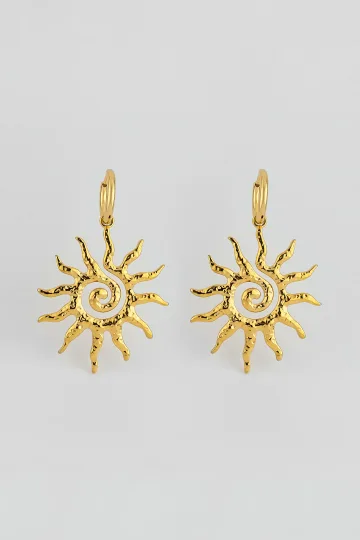
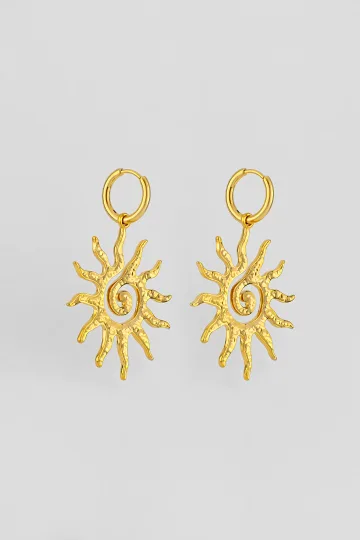
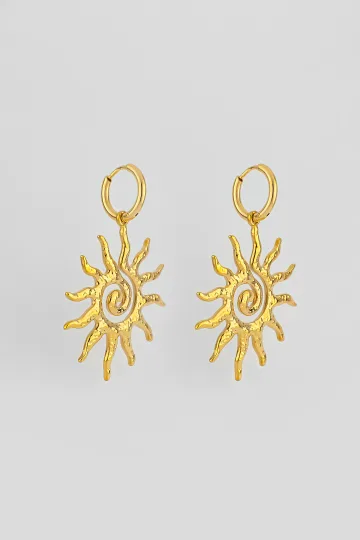
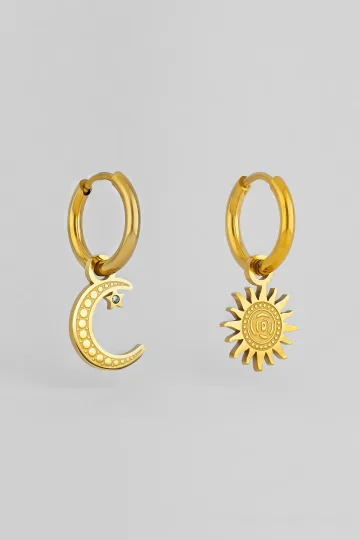
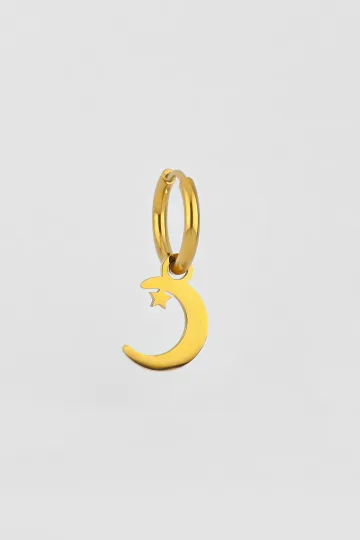
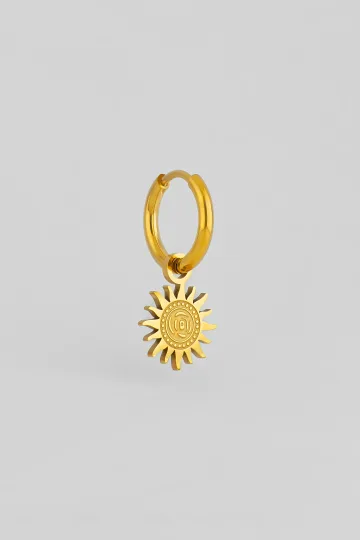
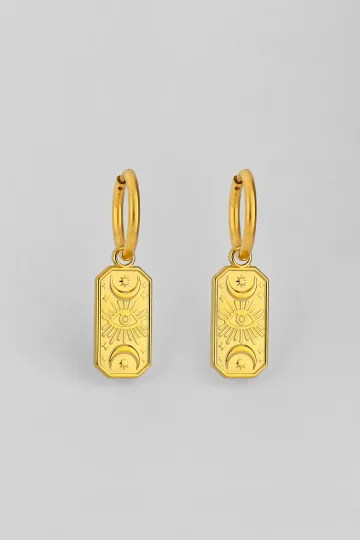
In the Zevira catalogue. Tarot Sun hoop earrings, Tarot Moon hoops: hoops with a dangling card, two types in one.
3. Drop
An element hanging below the lobe by 1 to 3 cm. Attached via a post or hook. Moves, catches light. More noticeable than a stud, less dramatic than a chandelier.
For which faces. Round and square: the vertical line of the drop elongates. Elongated: careful. A long drop will lengthen further.
When to wear. Daily and evening. Lightweight drops are comfortable all day. Heavy ones, for a few hours (the lobe tires).
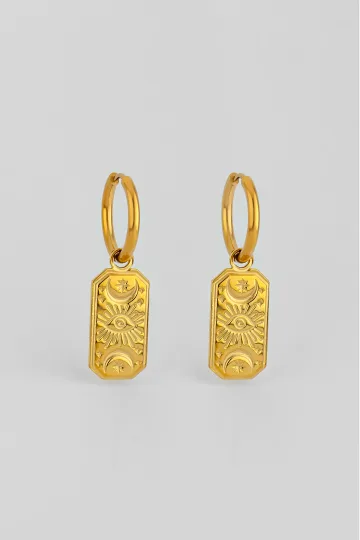
In the Zevira catalogue. Tarot Sun and Moon drop earrings: paired drops with different cards.
4. Chandelier
A multi-tiered construction hanging 4 to 8 cm below the lobe. Several elements, often with moving parts. The most dramatic type.
For which faces. Elongated: ideal. The width of the chandelier balances narrowness. Oval: good. Round: careful. If the chandelier is wide, it can emphasise roundness. Square: rounded chandeliers soften.
When to wear. Evening, events, occasions. Not daily: heavy, interferes with movement, snags on hair and clothing.
In the Zevira catalogue. Sun chandelier earrings: sun rays in chandelier format.
5. Ear cuff
Clips onto the outer edge of the ear (cartilage), no piercing required. Grips the ear like a clip. Looks like a cartilage piercing but painless.
For whom. For those who want the effect without the piercing. For men starting with jewellery and not ready for a piercing. For an additional accent to existing earrings.
When to wear. Whenever, but check the fit. Cuffs can slip during vigorous movement. The full anatomy of placements, formats, and styling is in the dedicated ear cuffs guide.
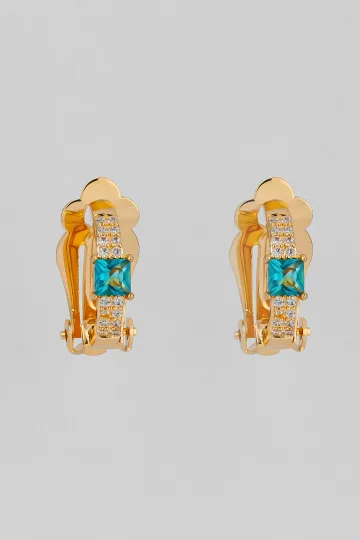
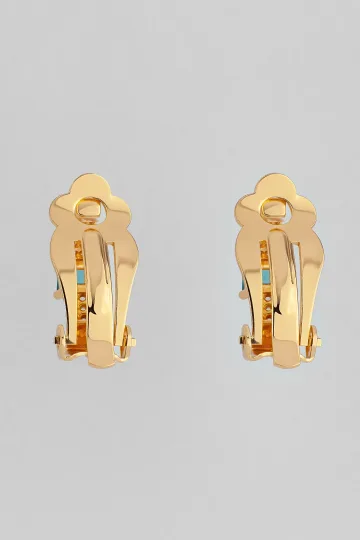
6. Clip-on
Fastens to the lobe with a spring clamp. No piercing needed. Looks like a stud or drop, but without a hole in the ear.
Pros. No piercing. Can be swapped daily. Safe for children.
Cons. Presses the lobe (after 2 to 4 hours can become uncomfortable). Can slip off. Fewer design options compared to pierced earrings.
In the Zevira catalogue. Winter Gem clips for those not ready for a piercing.
7. Hook (french wire)
A thin wire in a hook shape, threaded through the lobe. The pendant hangs from the end. The lightest fastening type: barely felt in the ear.
Pros. Light, comfortable, ideal for long pendants. Easy to put on and remove.
Cons. Can fall out during vigorous movement (no locking mechanism). Not for sport.
8. Threader
A thin chain threaded through the lobe. One end hangs in front, the other behind. Length adjustable: thread more or less. Minimalist, modern look.
9. Navaja earring (Zevira special)
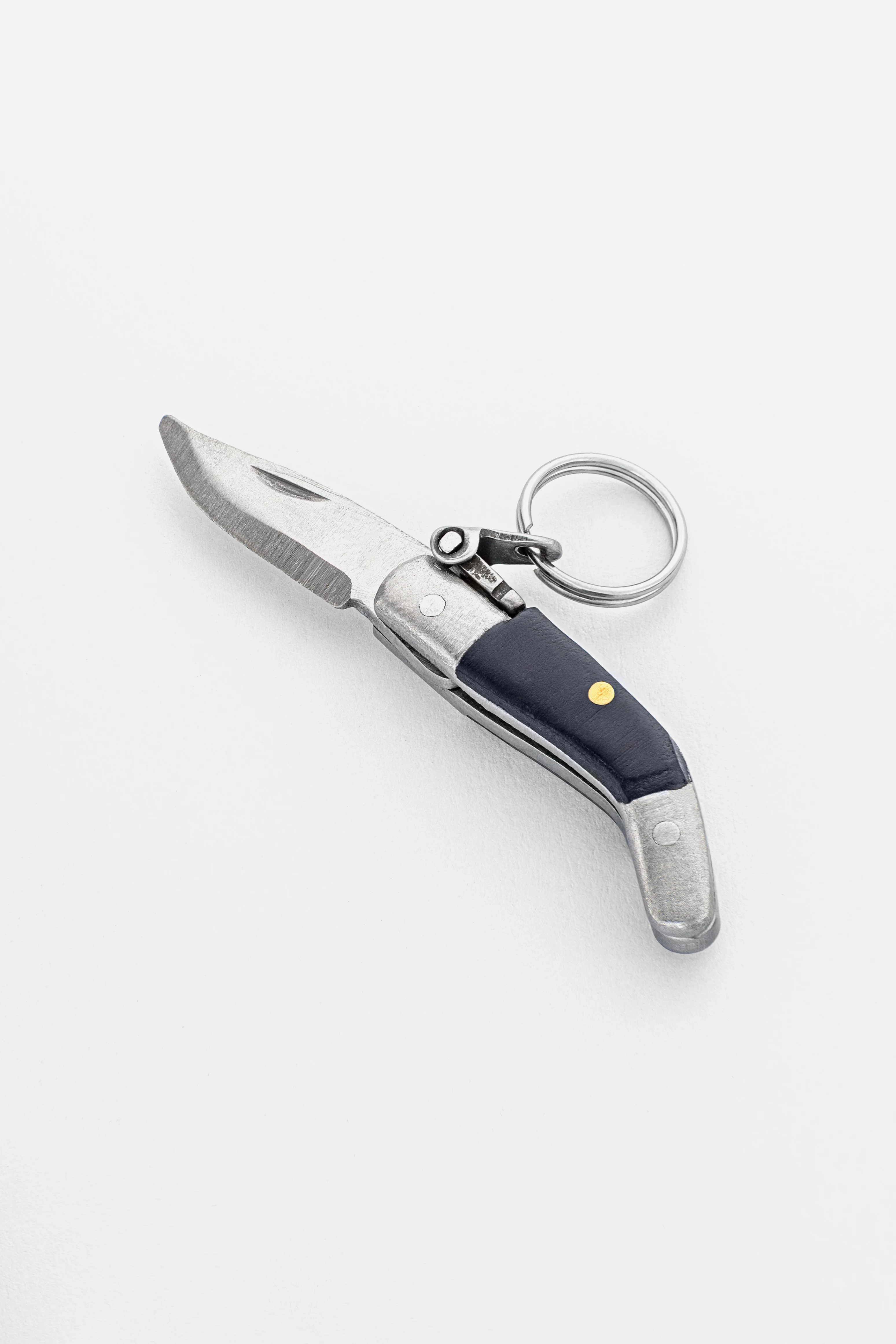
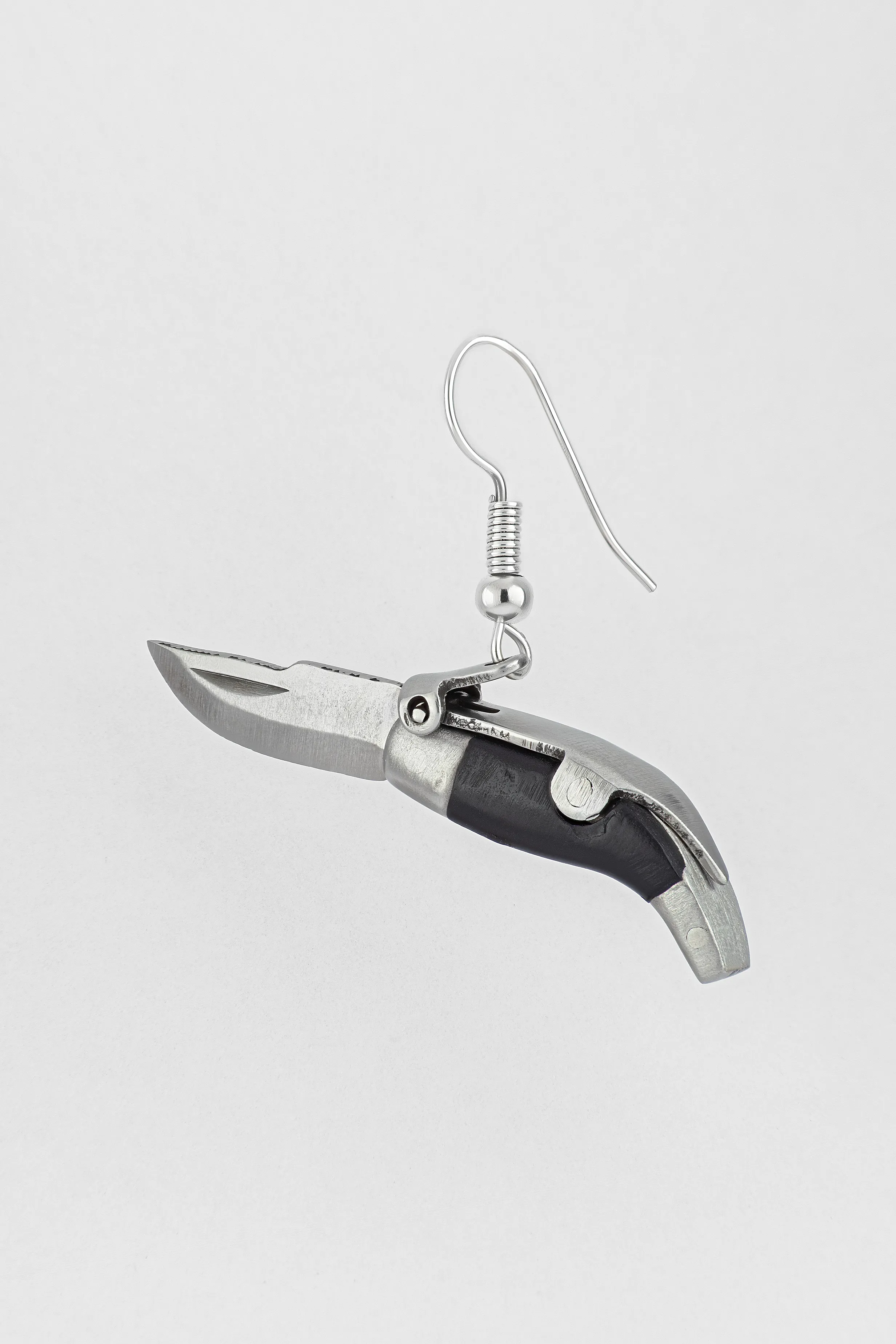
A separate category. An earring in the shape of a navaja that actually folds open. Closed: a compact silhouette. Open: a miniature knife. An interactive earring where every opening gesture is a performance.
For whom. For the bold. For those who want every second person to ask "what is that in your ear?" For navaja collectors, Spain enthusiasts, people who are bored by standard earrings.
How to wear. One earring, one ear. Asymmetry. Other ear: empty, or a small stud for balance.
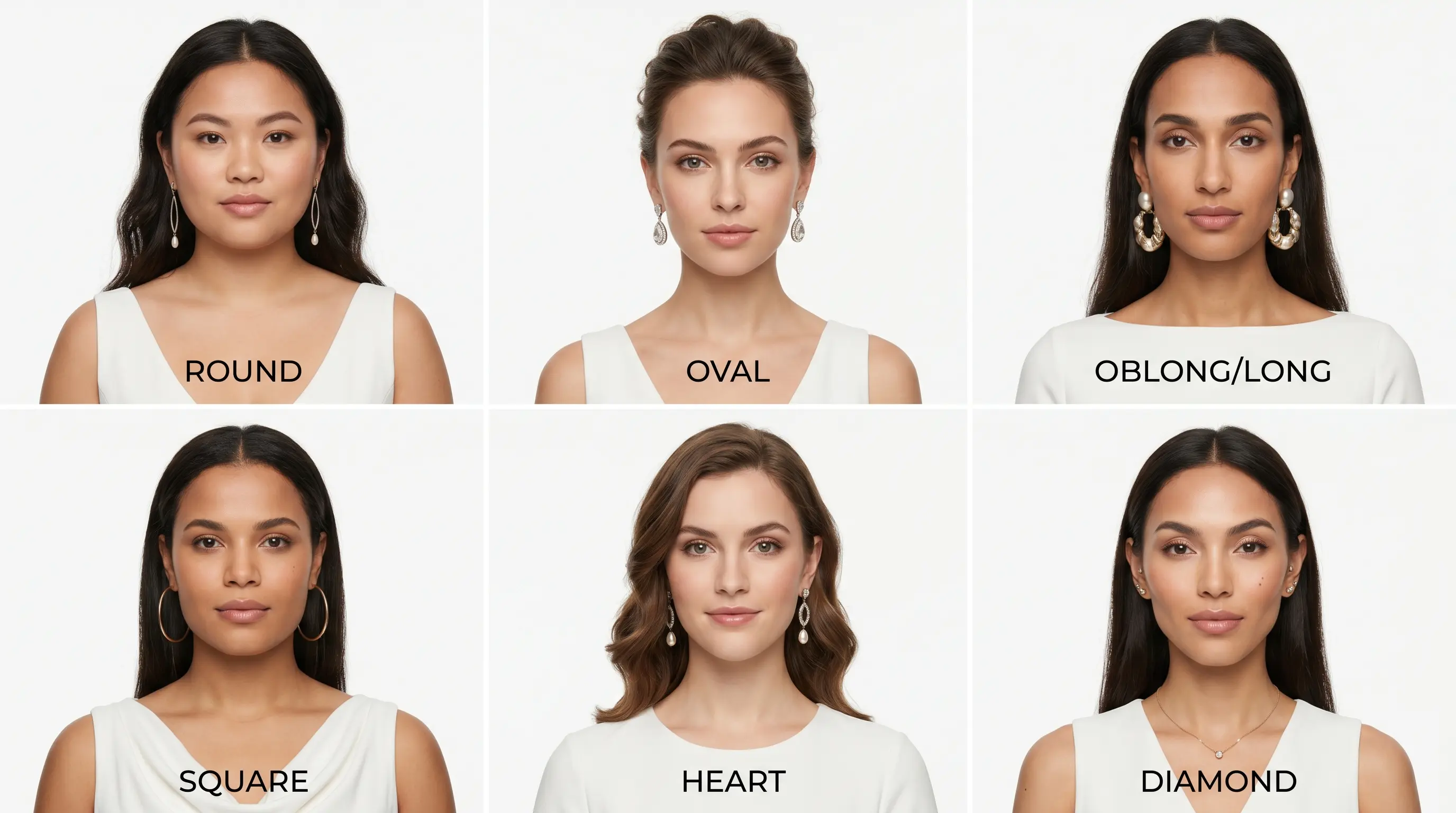
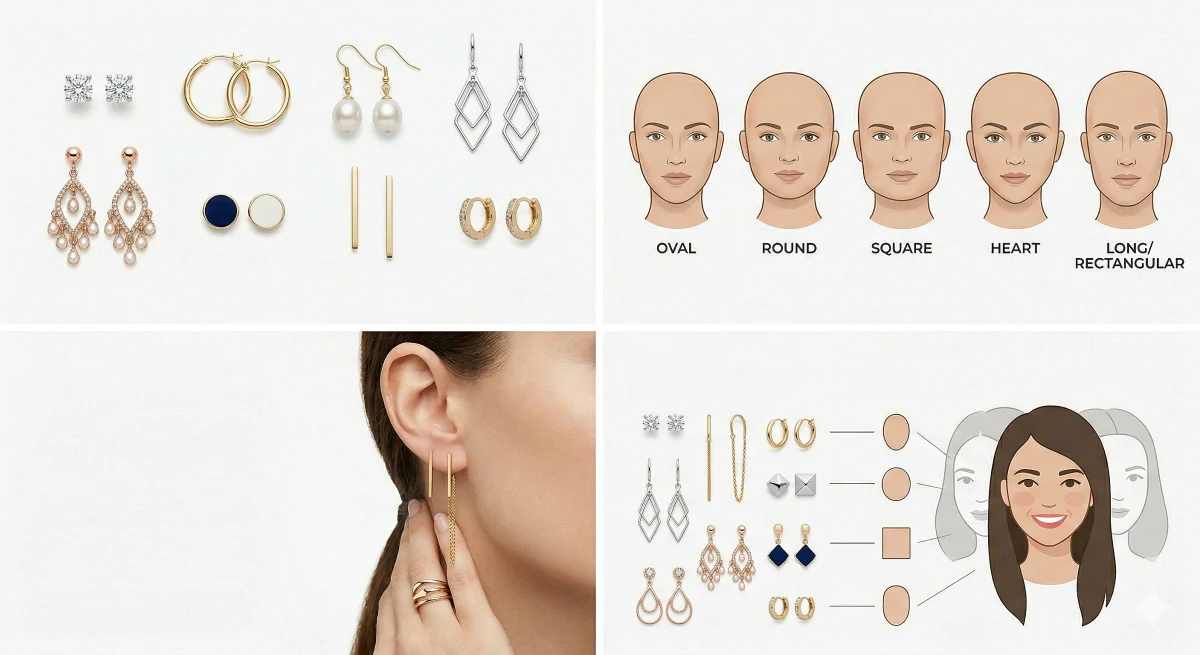
Earrings by face shape
Round face
Goal: visually elongate. Yes: long drops, elongated hoops, vertical pendants. Anything creating a vertical line beside the face. No: large round hoops (emphasise roundness), wide studs (add width).
Oval face
Goal: do not ruin perfect proportions. Yes: everything. Seriously, ovals suit any type. Only advice: not too long (more than 3 cm below the chin elongates). No: no restrictions.
Square face
Goal: soften angles. Yes: round hoops, oval drops, earrings with flowing lines. Anything round softens square jawlines and foreheads. No: square and geometric earrings (square plus square equals too much). Sharp angles in earrings highlight angles in the face.
Elongated or rectangular face
Goal: add width, shorten visually. Yes: large hoops, wide chandeliers, medium-sized studs. Horizontal accents. No: long drops and pendants (lengthen further).
Heart-shaped (triangular) face
Goal: add width to the chin. Yes: earrings widening towards the bottom (triangle point up). Chandeliers, wide drops. Medium hoops. No: earrings narrowing downwards (echo the face shape).
Diamond-shaped face
Goal: soften cheekbones, add volume top and bottom. Yes: studs (volume at the lobe equals volume at the lower face), short drops. Thin hoops. No: earrings emphasising the cheekbone level (widen further).
| Face shape | Best types | Avoid |
|---|---|---|
| Round | Long drops, elongated hoops | Large round hoops |
| Oval | Everything | Very long |
| Square | Round hoops, oval drops | Square, angular |
| Elongated | Large hoops, chandeliers | Long pendants |
| Heart | Widening downwards | Narrowing downwards |
| Diamond | Studs, short drops | Cheekbone-level accents |
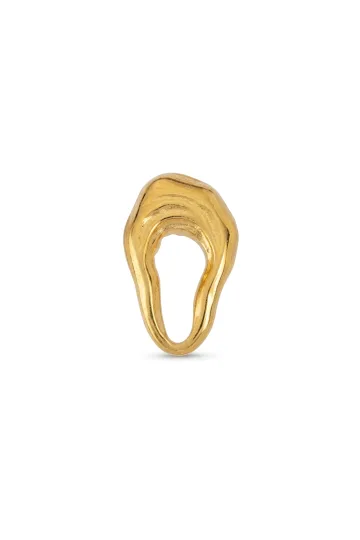
Wear the symbol, don't just read about it. These are in stock:
Earrings by occasion
Office or business meeting. Studs or mini-hoops. Nothing dangling, nothing glittering. The earring should be noticeable but not distracting. Metal matching your watch (if you wear one).
Date. Drops or medium hoops. Earring movement draws the eye to the face. This literally works: during conversation, the other person's gaze follows the moving element and returns to your eyes. Attention physics.
Party or concert. Chandeliers, large hoops, a navaja earring. The bolder the better. In the evening, light catches metal, and earrings work at 100%.
Gym. Studs or nothing. Hoops and drops snag on towels, helmets, hair. Small rubber studs exist for sport, but they look unimpressive. Better to remove.
Beach. Stainless steel studs. Nothing dangling (sand plus salt plus wind equals tangled hair plus tangled earring). A small nazar stud or a mini shell.
Job interview. Studs or mini-hoops. Classic. Nothing provocative. The earring should say "I pay attention to detail," not "look at my ears."
Asymmetry: one earring or mismatched pairs
One earring
One earring in one ear is a statement. Popular with men, increasingly with women. Creates asymmetry, draws attention to one side of the face. Which side to choose: detailed in the earring and ear guide.
Mismatched
Different earrings in different ears is a trend that has become a norm. Tarot Sun plus Moon earrings are a classic mismatch: two complementary symbols, one set, different earrings. Compass plus anchor. Nazar plus hamsa.
Rule: earrings must be from the same "universe." Sun plus Moon is logical. Navaja plus lotus is chaos.
Three or more piercings
Lobe plus lobe plus cartilage. Or lobe plus lobe plus lobe. Rule: decreasing size. Closest to the face (first piercing) gets the most noticeable earring. Further away: smaller. Stud, stud, cuff is a classic combination.
Customer reviews
Zevira is a real jewellery shop. Genuine payments, deliveries and customer thank-yous.
🥰🥰🥰 gracias
Ok, ¡gracias! 🙂
Earring weight: when the lobe says "enough"
The earlobe can handle a surprising amount, but not endlessly.
Up to 5 grams: comfortable all day. Studs, mini-hoops, lightweight drops.
5 to 10 grams: comfortable for 4 to 6 hours. Medium hoops, drops with elements. Fine for an evening. All day: the lobe will tire.
10 to 15 grams: 2 to 3 hours. Large hoops, chandeliers. For events, not daily life.
Over 15 grams: event only. Serious chandeliers, large ethnic earrings. The lobe stretches with regular heavy wear. That is irreversible.
Test: weigh the earring on kitchen scales. Or hold it against your ear for 10 minutes. If comfortable after 10 minutes, it will last 4 hours. If it pulls after 10 minutes, it is not your format for extended wear.
Earrings plus pendant: how not to clash
Earrings and a pendant are visible at the same time. If they "argue," the eye bounces and finds no focus.
Contrast rule. Noticeable earrings equal a modest pendant. Noticeable pendant equals modest earrings. Not both loud.
Theme rule. Earrings and pendant from the same "story." Tarot earrings plus Tarot pendant equals a set. Navaja earring plus a different navaja pendant equals a collection. Heart earrings plus skull pendant equals a conflict.
Distance rule. At least 15 cm between the bottom of the earring and the top of the pendant. In practice: stud earrings plus a pendant at 45 cm always works. Chandelier earrings (5 cm long) plus a pendant at 42 cm is too close, everything merges. Chandeliers plus a pendant at 50-plus cm works.
More on chain length.
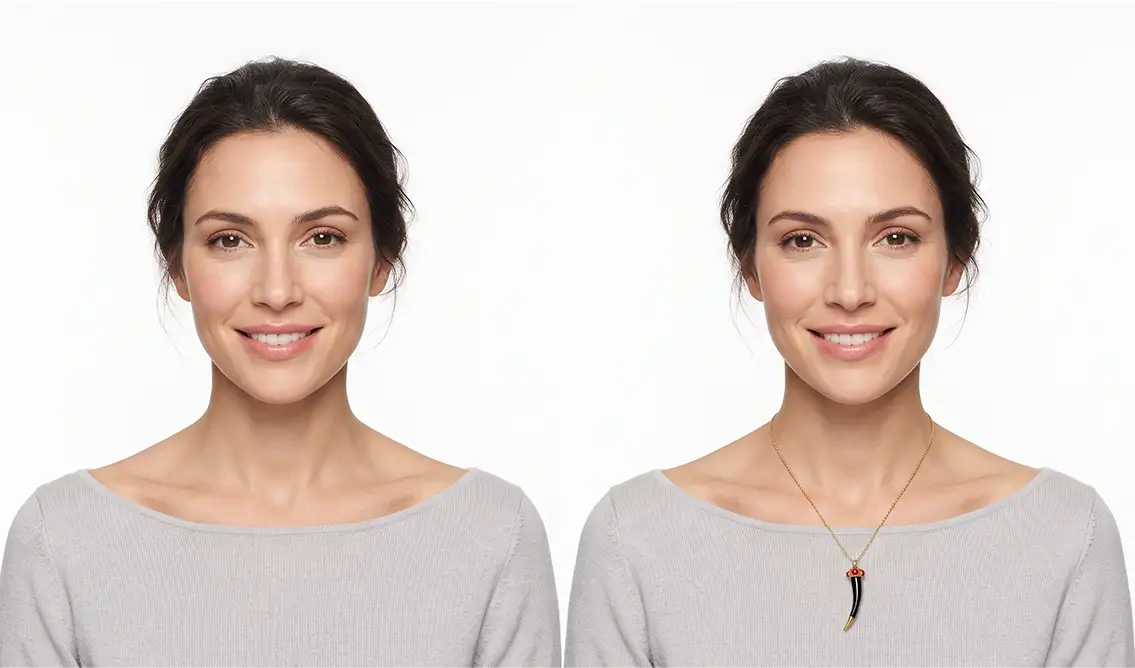
Turn on your camera, pick earrings, a pendant or a ring, and see the piece on yourself in real time.
Switch items in one tap.
Everything runs in your browser: no photo or video is ever uploaded.
Earring care
After each wearing. Wipe the post and clutch. Skin oils and bacteria accumulate on them. Especially if the piercing is fresh (under 6 months).
Once a week. Soak earrings in warm soapy water for 5 minutes. Brush the post hole with a soft brush. Dry.
Storage. Separately. Drop earrings tangle worse than earphone cables. Use an organiser with holes or a soft pouch for each pair.
Fresh piercing. First 6 weeks: surgical steel or titanium only. Not brass, not silver. The piercing is healing, and any irritant will slow the process. After 6 weeks: any hypoallergenic metal.
Earrings and hair: practical tips
The basics
Hair length and earring type need to work together. The most stunning earrings disappear if hair covers them. And the boldest earrings look even bolder when nothing hides them.
Short hair
Short hair shows earrings to maximum effect. Every type is visible: studs, hoops, drops, cuffs. With a pixie cut, earrings become the dominant face accessory. Statement earrings hit hardest with short hair because nothing competes.
Medium hair
Earrings appear and vanish between the strands. This peek-a-boo effect works particularly well with drops and hoops that move. With a bob, earrings become visible when you turn your head, creating a dynamic effect that draws attention naturally.
Long hair
Long hair can completely hide earrings. Studs disappear. Hoops get tangled. Drops catch in strands. Solutions: tuck hair behind the ears (classic), wear a side part (one ear free), or put hair up (evening look, both ears free).
Warning with long hair plus hook earrings: individual hairs wrap around the hook and pull when you move. It hurts and can damage the hair. Butterfly clasps or clip-backs are safer choices.
Artisan-crafted CAPAORA navaja pendant
A 40 mm stainless-steel navaja with a real folding mechanism and Palanquilla lock. An affordable gift to remember.
A code for blog readers:
10% off your first order
Authentic · Maker's guarantee · Ships from Spain
Earrings for men
The attitude toward men's earrings has changed dramatically. In the 1980s, an earring on a man was still a provocative statement. In the 1990s it became normal in certain subcultures: punk, techno, hip-hop. Since the 2010s, a small stud or mini-hoop on a man is completely unremarkable in most cities.
The first earring for men: 3-4 mm stainless steel stud. One ear. Minimal effort, maximum safety. If he likes it, he can upgrade later to a mini-hoop or a navaja earring. More in the guide for men.
Leave your email, we'll send your discount code. No spam, unsubscribe anytime.
The code arrives by email, valid on your first order.
Earrings by season
Spring/Summer: Lightweight materials, maritime themes, colour. Small hoops with enamel, drops with nazar motifs, studs with stone accents. Summer festivals are the time for maximum earring expression.
Autumn/Winter: Warm metal tones, larger pieces (because hair and scarves cover the rest of your head). Gold hoops, statement drops for holiday parties, dark metals for November.
History of earrings: 5,000 years in five minutes
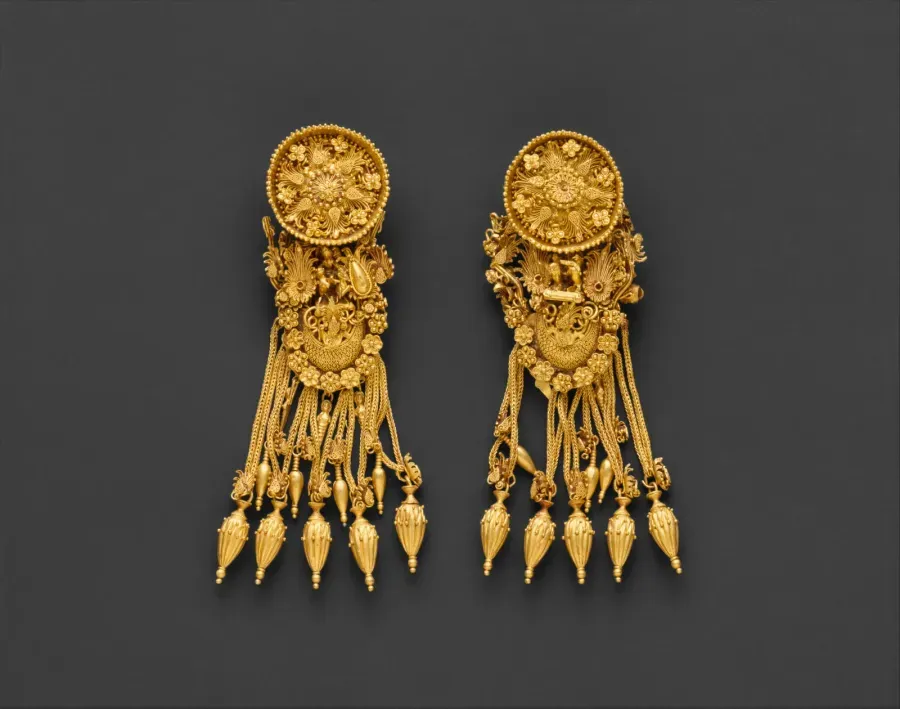
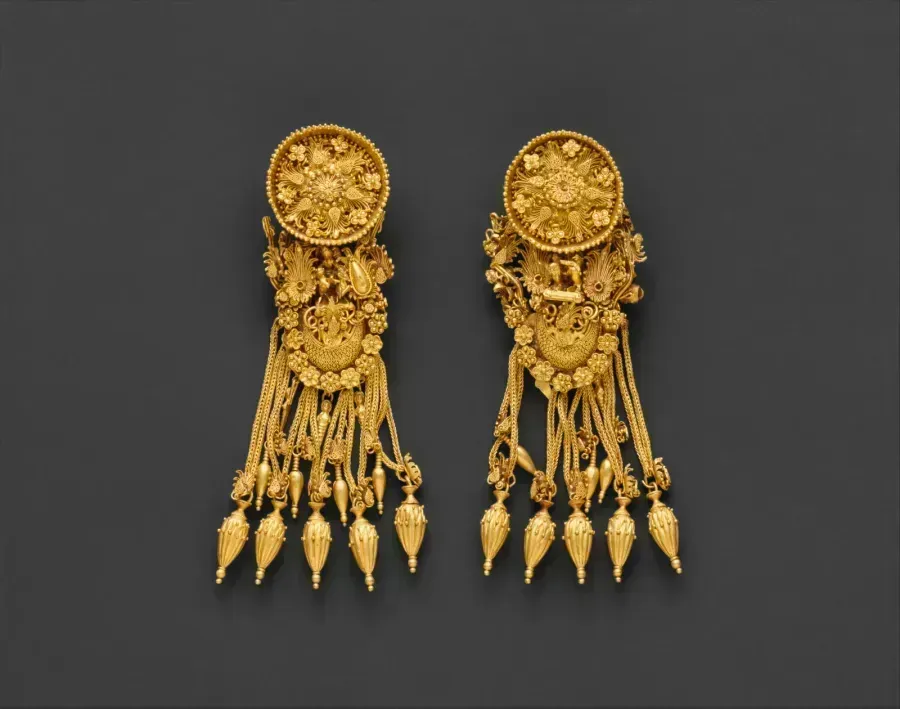
Earrings are older than writing. The earliest known earrings come from Mesopotamia, around 2500 BCE. They were gold hoops, worn by Sumerians of both sexes. The Egyptians perfected the art: Tutankhamun's grave treasure contains earrings of astonishing refinement.
In Greek and Roman antiquity, earrings were primarily women's jewellery. Men wore them less often, though pirate and sailor legends suggest otherwise. In the Middle Ages, earrings nearly vanished because tall hairstyles and head coverings concealed the ears. Why decorate what nobody sees?
The Renaissance brought earrings back. As hairstyles changed and necklines dropped, ears became visible again. Pearl earrings became status symbols. Queen Elizabeth I wore them. Shakespeare mentioned them.
In the 18th and 19th centuries, styles exploded. Chandeliers for evening. Cameos for day. Diamond studs for the wealthy. Jet earrings (black amber) for mourning. Queen Victoria made jet jewellery popular when she mourned Prince Albert.
The 20th century brought the biggest change: ear piercing became generally acceptable from the 1950s onward. Before that, many women wore clip-ons. After that, pierced ears became the norm. And from the 1970s, men started wearing earrings again, first as a subculture statement (punk, New Wave), then as mainstream.
Today there are no rules. Men, women, non-binary people, everyone wears what they want. Multiple piercings are normal. Asymmetry is trend. And a navaja earring that actually folds open would have been just as fascinating to a Sumerian 5,000 years ago as it is today.
Earring trends: what stays, what goes
Trends come and go. What stays are basic forms.
Will stay: Studs (the perennial classic), mini-hoops (universally wearable), mismatched pairs (now a norm, no longer just a trend).
Currently strong: Statement earrings with symbolism (Tarot, nazar, celestial motifs). Personal meaning beats pure aesthetics. People want jewellery that says something, not just glitters.
Coming back: Chandeliers for evening. After years of minimalism, some people want opulence again, but targeted: one dramatic earring, the rest understated. Also hoops with pendants (like Tarot hoops) are a growing category: the hoop as a base, the pendant as personalisation.
Going away: Single-colour acrylic earrings that hang in every fast-fashion shop for a few euros. They break, they discolour, they end up in the bin. Quality beats quantity, even with earrings. Three good pairs that last years beat thirty cheap ones that gather dust in a drawer after three weeks.
Choosing earrings as a gift: the complete guide
Earrings are one of the most popular jewellery gifts, but also one of the trickiest. Unlike a pendant (one size fits all) or a ring (risky without size info), earrings sit directly next to the face. What looks good is very personal.
When you know the taste
Observe what the person already wears. Stud wearer? Give them more interesting studs, not suddenly chandeliers. Hoop wearer? Give hoops with symbolism (Tarot, nazar). Drop wearer? Room for creativity here: a navaja earring for the bold.
When you do not know the taste
Studs. Always studs. Small (5-7 mm), high-quality studs in stainless steel or coated brass. They suit every style, every face, every occasion. Universal and safe.
Material choice for gift earrings
316L stainless steel for sensitive ears (hypoallergenic, no nickel). Coated brass for warmer skin tones. When in doubt: stainless steel is always right. No allergy risk, no maintenance, no green marks.
Send a friend a discount code, they save on their first order.
Earring prices: what you get for your money
The price range for earrings is enormous. A pair from a street stand costs a few euros. A pair from a jeweller costs hundreds. What is the difference?
Under 5 euros: Fashion jewellery. Zinc alloy, thinly coated, often with nickel. Lasts weeks, maybe months. Will turn green, flake, and possibly trigger allergies. Not for daily wear.
5-20 euros: Mid-range. Stainless steel or decently coated brass. Lasts years with minimal care. No allergies. No green marks. The optimal price-to-performance ratio for everyday wear.
20-100 euros: Quality jewellery. 925 silver, coated brass with artisan craftsmanship, or stainless steel with elaborate designs. Here you pay for design, detail work, and symbolism. A navaja earring that actually folds open falls in this category.
Over 100 euros: Gold jewellery or designer pieces. 14K or 18K gold, gemstones. For special occasions or as investment. The price difference from stainless steel lies in the material, not necessarily the craft.
The honest recommendation: for daily wear, you do not need gold. A 15-euro stainless steel stud looks just as good from two metres away as a 150-euro gold piece. The difference shows in the hand, not on the ear. If the material matters to you, invest. If the design matters to you, there are excellent options at every price point.
The navaja earring: a world of its own
The navaja earring deserves special mention because it represents a completely unique category. An earring that folds open, like a real Spanish knife. Closed: a compact, elegant silhouette. Open: a miniature navaja with a visible blade.
Why it is different. Standard earrings are static. The navaja earring is interactive. Every opening and closing is a small performance. During conversation, while waiting, while thinking: the deliberate unfolding becomes a ritual, similar to playing with a lighter or a pen.
For whom. For people who understand jewellery as expression, not decoration. For Spain enthusiasts, navaja collectors, anyone who finds standard earrings boring. For men and women alike.
How to wear. One earring, one ear. The other ear: empty, or a small stud for balance. The asymmetry is part of the design. Two navaja earrings in both ears: possible, but opulent. Start with one.
Earrings and health: what the science says
Nickel and regulation
Nickel allergy is the most common contact allergy in Europe. It affects 10-15% of women and about 3-5% of men. Regulations have strictly limited nickel content in jewellery that has prolonged skin contact. Products from reputable sellers are generally safe. But imported goods from cheap marketplaces do not always meet these standards. If you have sensitive ears, ask about the material before buying.
Earrings and headaches
A common myth: earrings cause headaches. The reality is more nuanced. Heavy earrings (over 10 grams) can create tension in the lobe after hours, which can spread through the jaw up to the temple. This is not an allergy and not a mystical phenomenon. It is mechanics. Lighter earrings or shorter wearing times solve the problem.
Acupressure theory claims that certain points on the ear connect to the head. Scientific evidence for this is thin. But some people report fewer migraines after getting a daith piercing (inner cartilage). Placebo? Possibly. But it does not hurt.
Metals ranked by sensitivity
For sensitive ears, sorted by tolerance:
- Titanium: the safest material. Used for medical implants. Zero reaction in practically all people.
- Niobium: similar to titanium, but rarer in jewellery. Can be anodised for colour effects.
- Stainless steel 316L: surgical steel. Minimal nickel release, safe for most people.
- 14K+ gold: safe, as long as the alloy is low-nickel. Yellow gold tends to be safer than white gold (white gold often contains nickel).
- Sterling silver 925: generally safe, but may contain trace nickel. Not the first choice for very sensitive ears.
- Brass: not for sensitive ears. Contains copper and zinc, can cause discolouration and irritation.
Earrings and piercings: what you need to know
The first piercing
Go to a professional piercing studio with needle technique rather than a piercing gun. The needle is more precise, causes less tissue damage, and heals faster. Beyond the simple lobe, an entire vocabulary of placements (helix, conch, tragus, daith, industrial) exists; the ear piercing types guide walks through each location with healing times and jewellery shapes.
Healing time for earlobes: 6 to 8 weeks. During this time, wear only surgical steel or titanium. No brass, no silver, no gold under 14K.
Healing time for cartilage: 3 to 12 months. Longer, more sensitive. Only with professional guidance.
Care during healing: Clean twice daily with saline solution. Do not twist, do not touch (except when cleaning). No swimming pool, no sauna.
Allergies and material choice
If you already know you react to nickel: only titanium, 316L stainless steel, or 14K+ gold. No silver 925 (may contain nickel traces). No brass. No fashion jewellery.
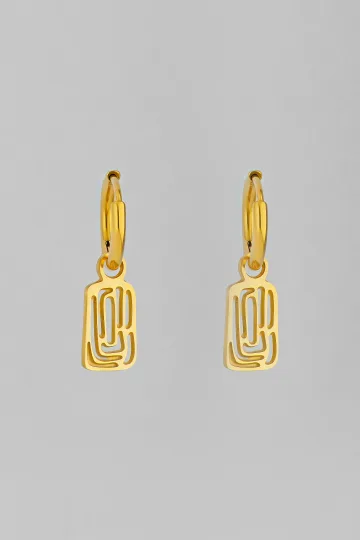
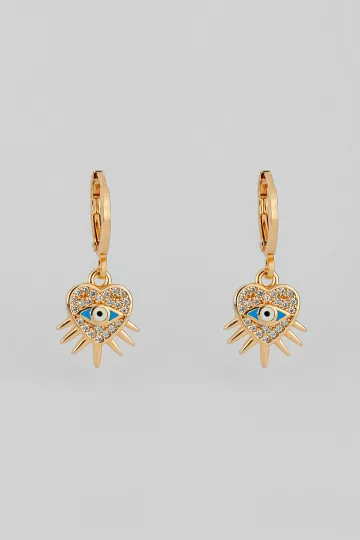
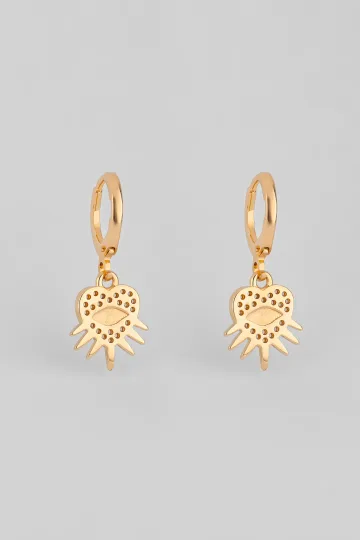
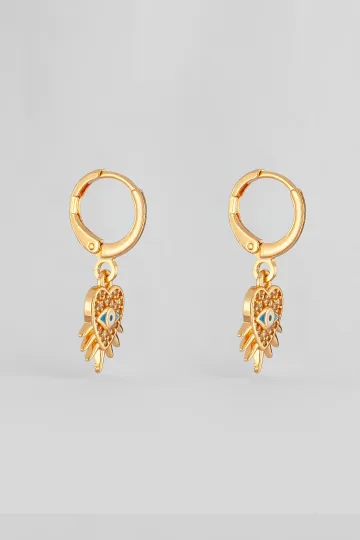
Wear the symbol, don't just read about it. These are in stock:
Additional common questions
Can I mix different metals in both ears? Yes, if it looks intentional. A gold stud in the left ear and a silver stud in the right: looks deliberately mismatched. Same shape, different metal. Mixing works as long as the shapes match.
How long does it take to get used to earrings? Studs: 1-2 days. Hoops: 3-5 days (the weight is unfamiliar). Drops: 5-7 days (the movement is irritating at first). After a week you do not notice the earring any more. After a month you miss it when it is gone.
Are expensive earrings better than cheap ones? Not automatically. A 5-euro fashion jewellery earring will turn green within a week and possibly trigger allergies. But a 20-euro stainless steel earring can look and last as well as a 200-euro gold piece, just in a different material. The price-quality relationship is not linear. Beyond a certain point, you pay for the material (gold vs steel), not the craft.
Should I remove my earrings during my skincare routine? Yes, before applying creams, serums, and sunscreen. These products leave residue on the metal that can attack coatings. Especially relevant for brass and silver. With stainless steel it makes less difference, but residue on the post can irritate the piercing site.
What earrings for the sauna? None at all. The combination of heat, sweat, and humidity stresses every type of jewellery. Silver tarnishes faster. Brass discolours. And hot metal on the ear can become genuinely uncomfortable. Remove everything before going into a sauna. Even stainless steel, which survives the material test, simply gets too hot at 90 degrees against the ear.
Do I need to remove my earrings at airport security? Small studs: no, they do not trigger the detector. Large hoops or chandeliers: possibly, especially if you are wearing multiple metal pieces. When in doubt: take them off before the scanner and put them in the tray, then put them back on afterwards.
How do I store earrings so they do not get lost? The biggest problem: single earrings that lose their partner. Solution: always store earrings as a pair, ideally on an organiser with holes or in small pouches. Whoever tosses earrings individually into a drawer will eventually find only half-pairs.
Silver and gold jewellery, wedding bands, symbolic pendants, paired sets.
Common questions
Which earrings for every day? 316L stainless steel studs. Small (3 to 6 mm), light, hypoallergenic. Put them on in the morning, take them off at night (or do not). Safe for showers, sport, sleeping.
Do hoops stretch the lobe? Small and medium (up to 25 mm, up to 5 grams): no. Large and heavy with daily wear: yes, gradually. Alternate with lightweight earrings.
Can you sleep in earrings? In studs: yes (if small and flat at the back). In hoops: no (they press, catch on the pillow). In drops: absolutely not.
Which earrings for men? First: stud 3 to 4 mm or mini-hoop 12 to 14 mm. One earring, one ear. More in the guide for men.
How to choose earrings as a gift? If you do not know the taste: studs. Universal, suit everyone. If you do: hoops with symbolism (Tarot, nazar). If you want to surprise: a navaja earring.
Earrings and glasses: how to match? Frames compete with earrings for attention. Thick frames: small studs (do not overload). Thin or frameless: any earrings. Frame colour and earring metal are best in the same tone (gold-toned frames plus gold-toned earrings).