First Jewellery for Men: A Guide for Those Who Never Wore Any
You have decided. Now what?
You have never worn jewellery. No chains, no rings, no earrings. Maybe a watch. Maybe a wedding band. But jewellery for the sake of jewellery? Never.
And then something shifted. You spotted a pendant on someone and it stuck with you. Or a partner bought you something that sits in a box. Or you simply reached a point, 30, 40, 50, and you want something beyond a plain shirt.
This guide is for you. No "ten trending men's accessories for 2026." No lists of 50 items. Specifics: what to pick first, how not to look like you are wearing a costume, and how to stop wondering "is this actually fine for a bloke."
Yes, It Is Fine
Men have worn jewellery throughout history. Egyptian pharaohs in gold pectorals. Roman legionaries in silver torques. Vikings with arm rings and brooches. Samurai with netsuke. Cowboys with turquoise-and-silver bolos. Tudor kings dripping in rubies. Mughal emperors in layered pearl necklaces. Rock stars with crosses and skulls.
The "men without jewellery" period is the anomaly, not the norm. Roughly from the 1950s to the 2000s, in Western culture, jewellery on men was considered suspicious. Before that and after it, perfectly normal. The anomaly lasted about two generations. The tradition lasted about five thousand years. The maths is clear.
Today modern pop musicians, film icons, and sport figures wear jewellery as part of their look. Not because of a trend. Because men have always done it, and one generation just forgot.
If anyone says "men shouldn't wear jewellery," point them to a Viking earring or a Thor's hammer. Then ask if Vikings are masculine enough for them.
First Choice: Pendant, Ring, or Earring?
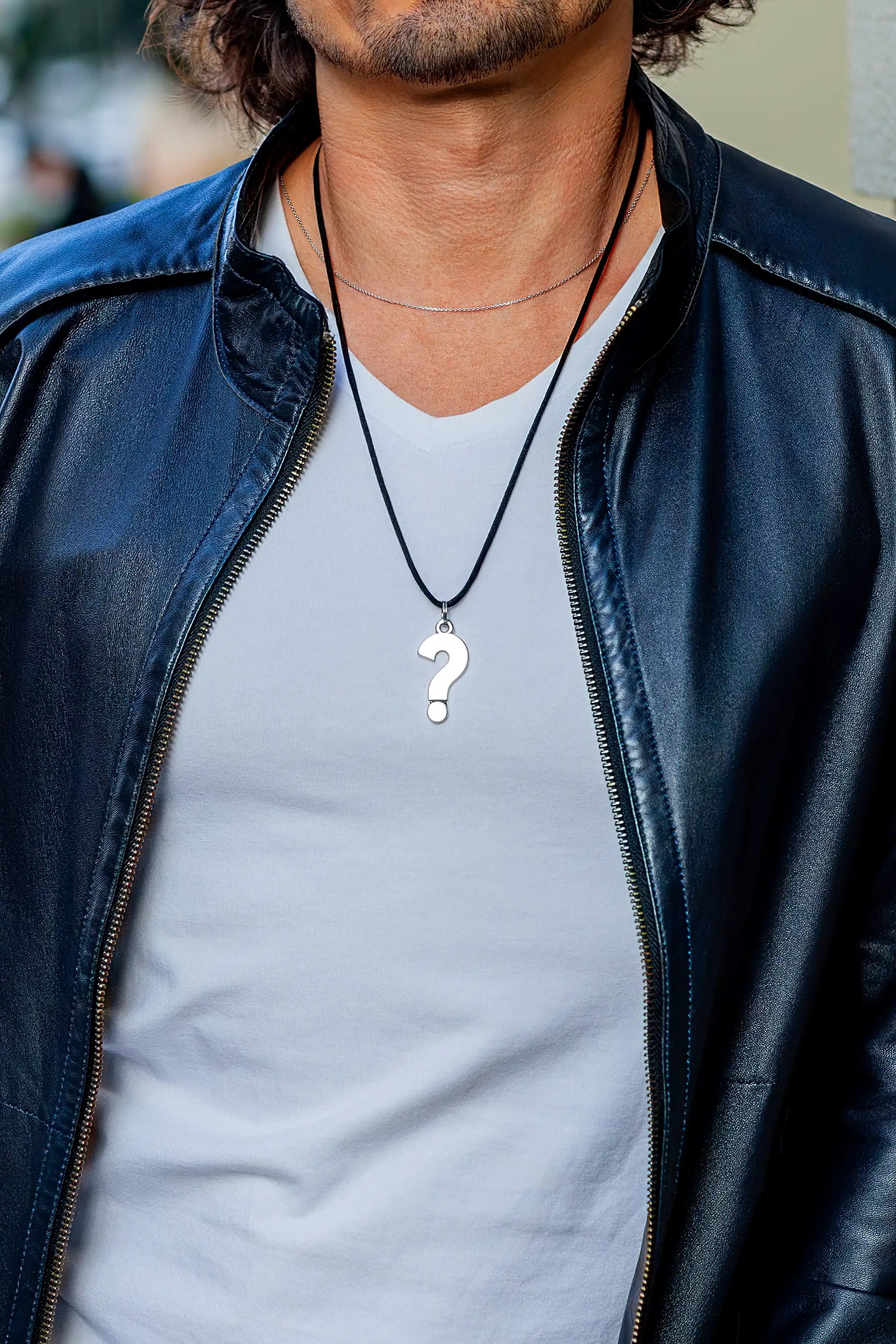
Pendant on a chain (the safest start)
Why first. A pendant hides under clothing. Visible when you want. Invisible when you don't. That gives you control: the first week, wear it under a shirt, get used to the feeling. Then unbutton the collar, and the pendant starts doing its job.
Which pendant. Not abstract. One with a story. Because the first question people will ask is "what is that?" And you need an answer.
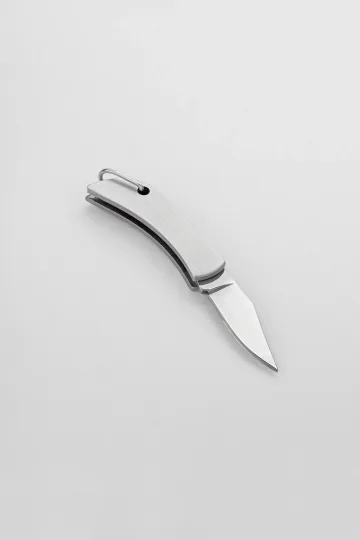
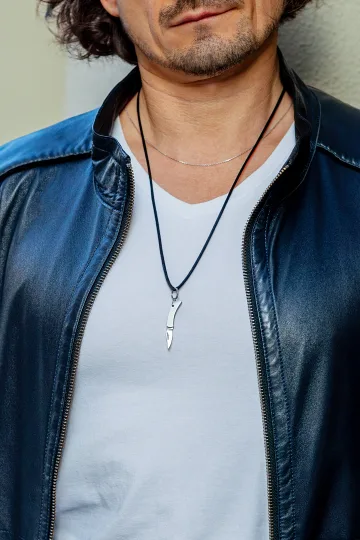
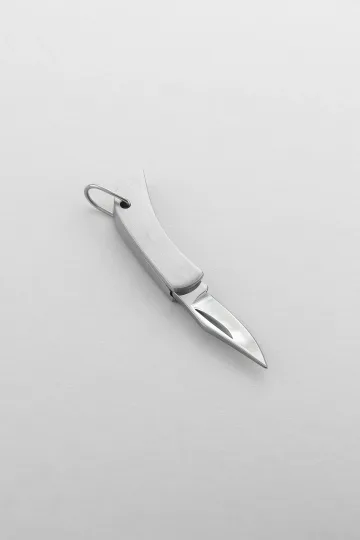
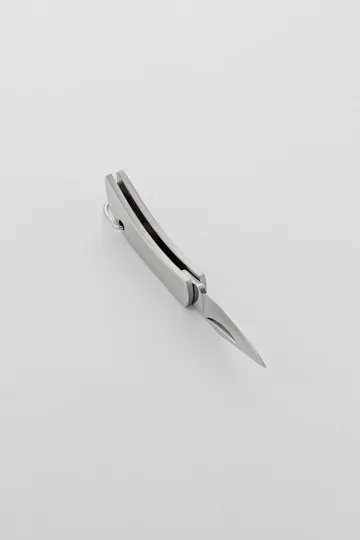
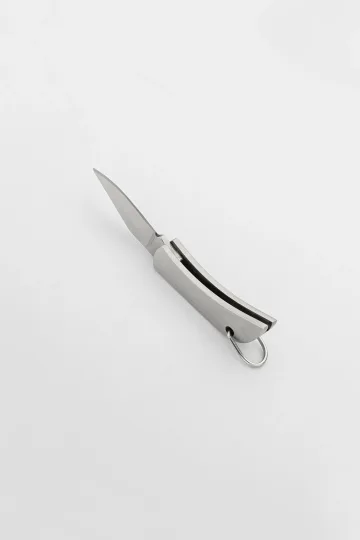
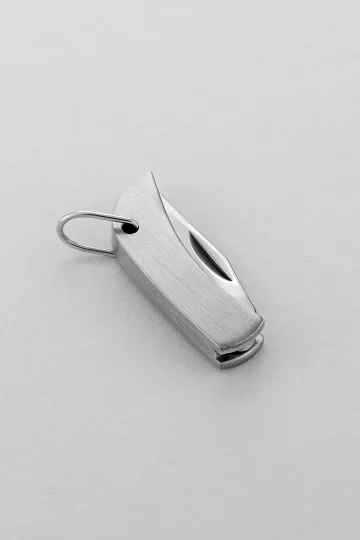
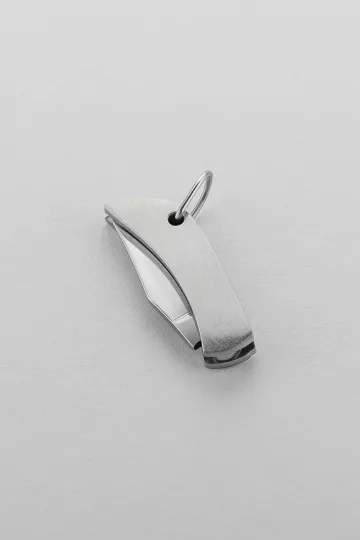
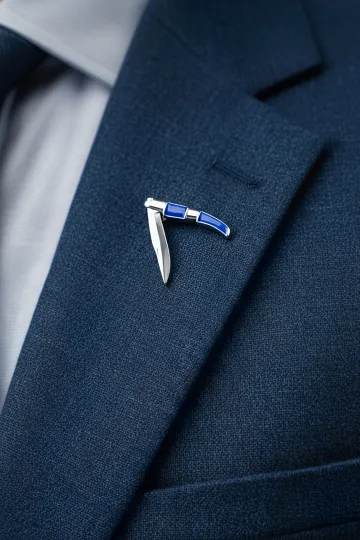
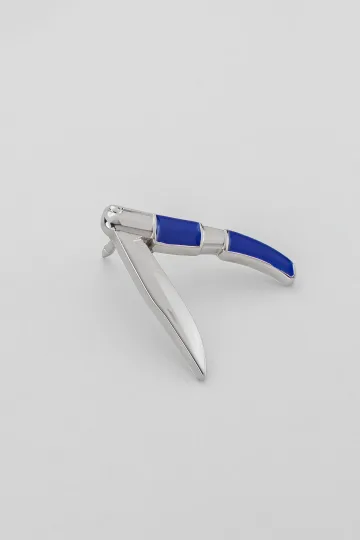
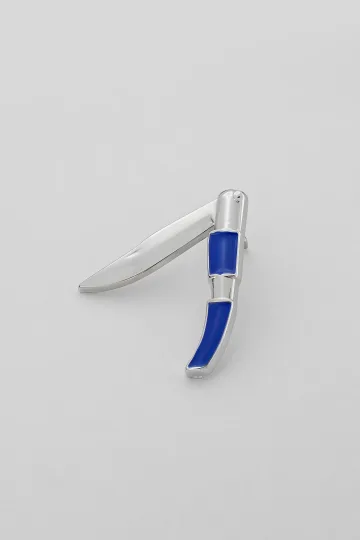
Bad answer: "oh it's just... a thing... someone gave it to me." Good answer: "it's a navaja. A Spanish folding knife, 500 years of tradition. Made in Albacete."
Or: "it's a compass. A wind rose. Sailors wore them as talismans." Or: "an ouroboros. A snake eating its own tail. Symbol of eternal return. Alchemists drew it, Jung analysed it."
A pendant with a story is not decoration. It is a conversation tool. For men who are not used to compliments about their appearance, it is easier to start a conversation about a symbol than about an accessory.
Which chain. Anchor link, 50 cm, thickness 2 to 2.5 mm. Stainless steel. Not thin (looks fragile on a male neck), not thick (looks like a mob extra). Medium. More on choosing chain length.
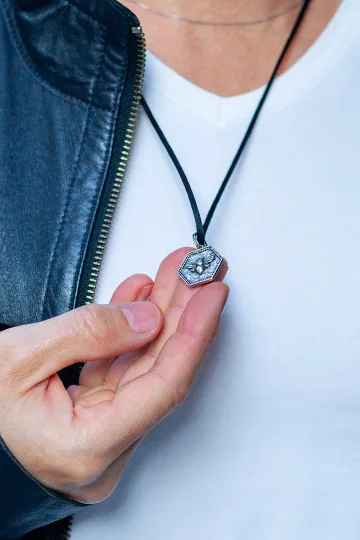
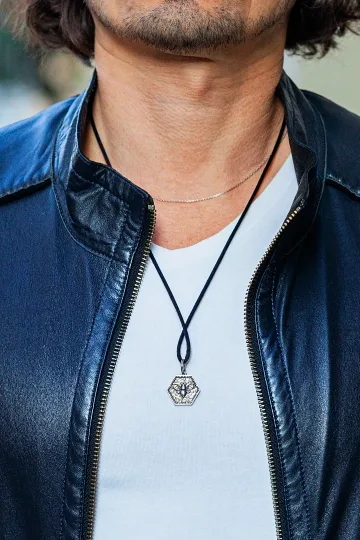
How it looks. Picture this: a dark crew-neck T-shirt, the chain visible at the neckline, the pendant resting just below the collar bone. From a distance, it is a glint of metal. Up close, the person notices the shape, the detail, the story. That is the ideal first-pendant experience. Subtle at a distance, interesting up close.
Ring (step two)
Why not first. A ring is visible at all times. You cannot hide it. For a first piece, that can be too much. Also: a ring on your hand draws attention to gestures. If you gesture a lot, a ring amplifies that. If you gesture little, it can look static.
Exception. If you already have a wedding band, you are used to the sensation of metal on a finger. A second ring (on the other hand or another finger) will feel like a natural continuation. In that case, a ring can be first.
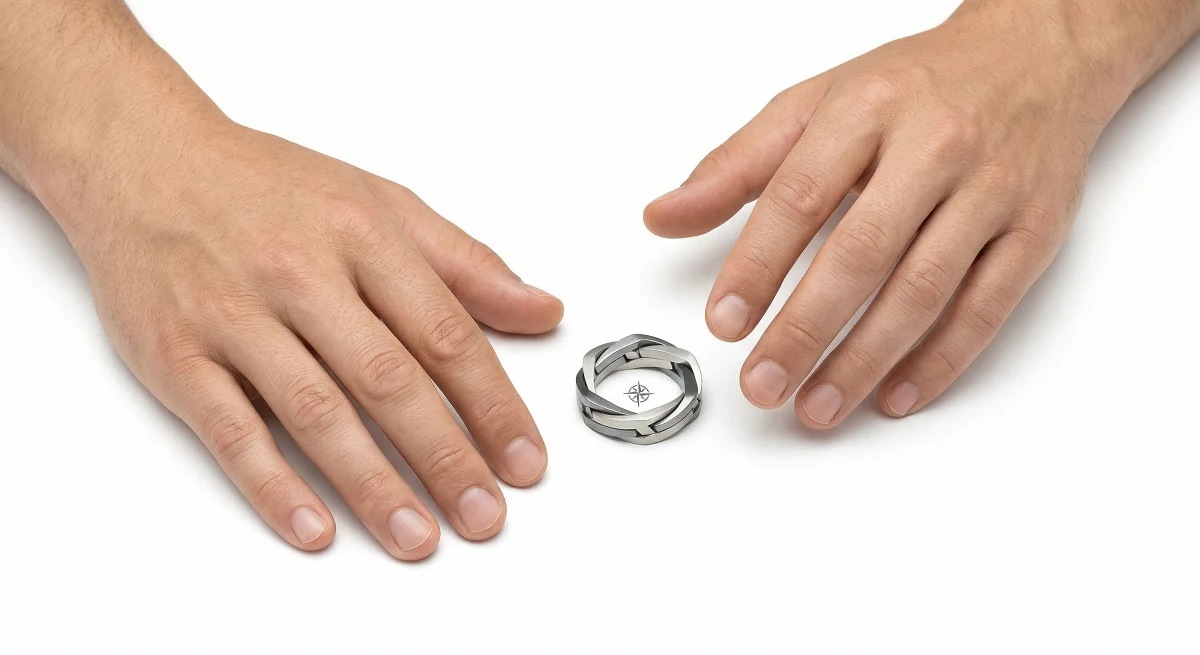
Which ring. Simple. No stones, no engraving, no skulls (yet). A wide metal band on the index or middle finger. 6 to 8 mm width. Stainless steel or brass. Minimalism. Get used to the feeling, then add complexity.
Finger meanings: pinky means independence, index means ambition, middle means balance. Ring finger: leave that for the wedding band. More on ring sizing at home.
Earring (the bold move)
Why some start here. An earring is the most visible piece of men's jewellery. It is seen immediately, impossible to hide. For men who want to make a statement rather than "try something," an earring goes first.
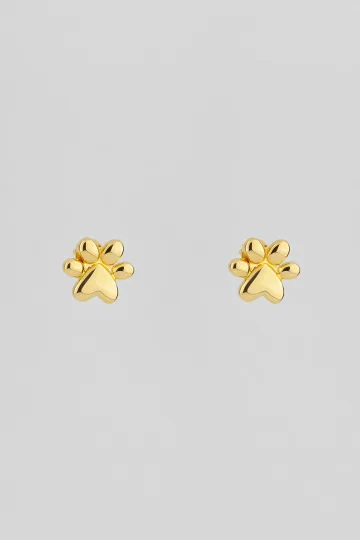
Which earring. A small stud, 3 to 4 mm, in one ear. Or a small hoop, 12 to 14 mm. Not a cross, not a dangling pendant, not a chandelier. Those are for the second or third piece. Start small. Then scale up.
Want to combine statement with story? A navaja earring folds open like a real knife. Guaranteed conversation at every introduction.
Which ear. Either. The 80s code ("left for straight, right for gay") is dead. Choose whichever ear is more visible (depends on your hair parting). Or both. More in the earring guide.
Bracelet (a parallel track)
A bracelet is a solid parallel option. Visible, but more familiar than a pendant (men wear watches, the wrist is "lived in"). Leather or steel, 18 to 20 cm, with a simple clasp. Not beads, not string, not "shamballa." Metal or leather. Clean.
Seven Archetypes: Finding Your Style
Most men do not start from "what looks good" but from "what feels like me." Here are seven common starting points.
The Pragmatist
Logical, rational, evidence-based. Likes tools that work.
First piece: compass. A navigational instrument turned metaphor. No mysticism, no esoterica. A concrete object with a concrete function. Engineers, developers, analysts, scientists appreciate this. The compass does not ask you to believe in anything. It just points.
The Historian
Drawn to tradition, craft, heritage. Reads about the past, visits museums, respects old things.
First piece: navaja. Any type: jerezana (elegance), punta de espada (severity), capaora (raw power), curva helada (unusual curve). 500 years of Spanish tradition in a pendant. A story you can tell endlessly, and the listener will actually be interested.
The Philosopher
Thinks about big questions. Reads widely, not just about his field. Enjoys conversations that go deep.
First piece: all-seeing eye. The eye in the triangle. 5,000 years of symbolism: from Horus to the Freemasons to the dollar bill. Or an ouroboros, the eternal cycle. Or the tree of life, a symbol that appears in every major culture on Earth.
The Norse Fan
Loves mythology, whether through books (Neil Gaiman's "Norse Mythology"), games (God of War, Assassin's Creed Valhalla), or TV (Vikings).
First piece: vegvisir (Icelandic compass), Thor's hammer (strength and protection), or Aegishjalmur (helm of awe). Norse themes are the most popular with men buying first jewellery. The combination of mythology, masculinity, and visual impact is hard to beat.
The Minimalist
Less is more. Clean lines, no decoration. Prefers function to ornamentation.
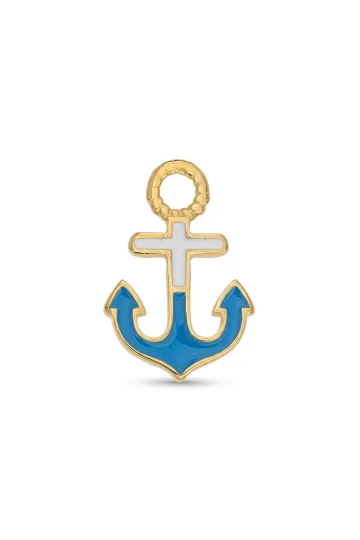
First piece: anchor. Small, clean, universally understood. Or punta de espada: a straight line, zero ornamentation, just form. On a thin steel chain at 50 cm, it is barely there but noticeable.
The Dark Romantic
Drawn to darker aesthetics. Likes black, leather, and things with edge.
First piece: skull. Memento mori. Or a raven. Or a machete on a leather cord. Dark symbols on a dark background. This archetype rarely hesitates, the decision is about which dark symbol, not whether to wear one.
The Couple
Not an archetype but a situation. You and your partner want to wear something that connects you.
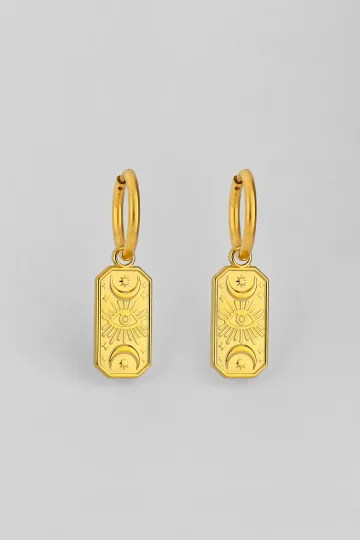
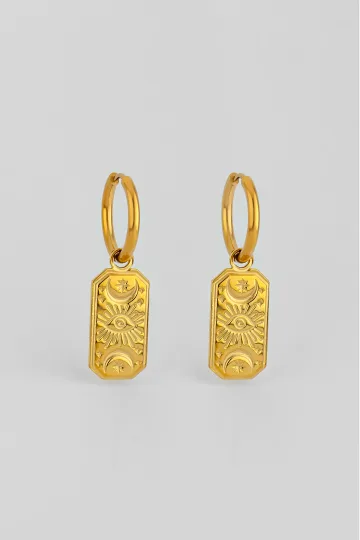
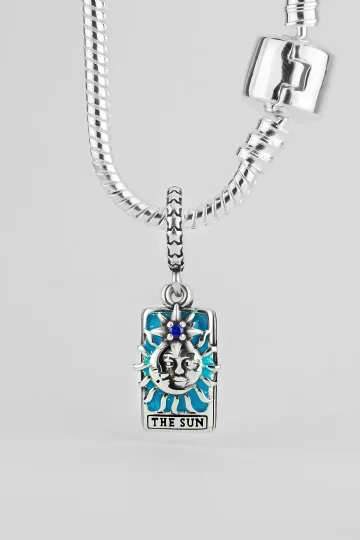
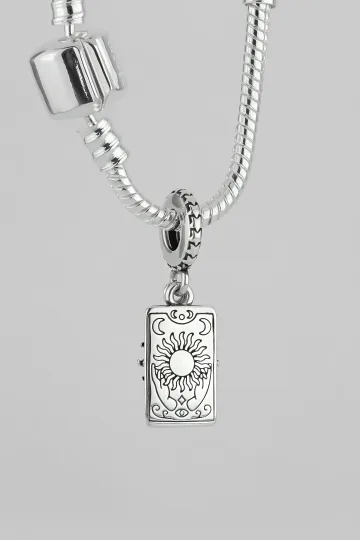
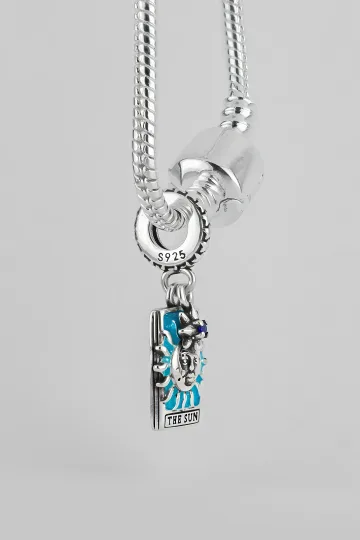
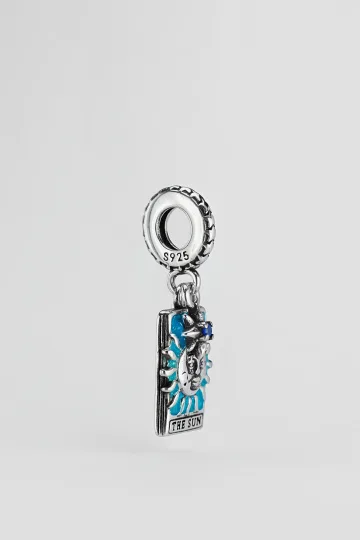
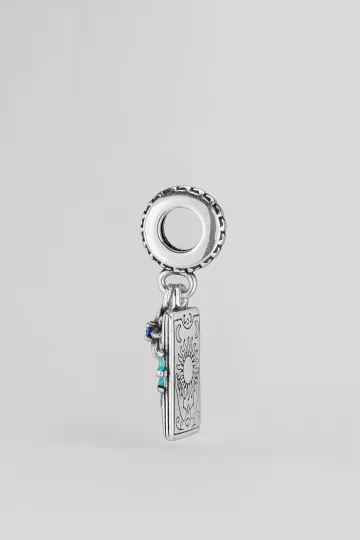
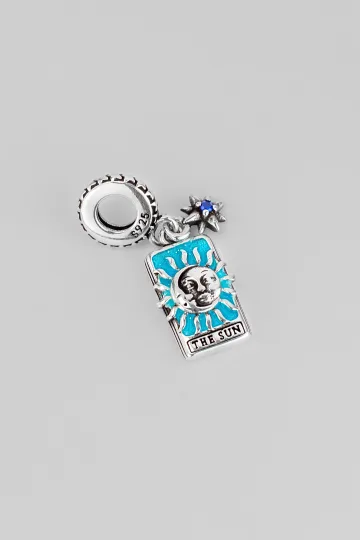
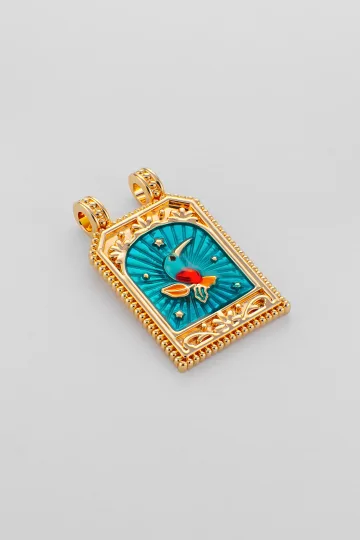
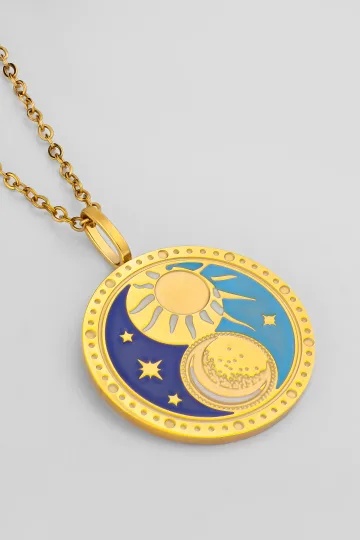
First piece: matching symbols in different styles. Sun and Moon from the Tarot collection. Or two different navaja types, one for each. Or the same compass in different metal tones (steel for one, gold for the other). The connection is in the symbol, not in identical items.
Five Rules for Beginners
1. One piece at a time
Do not buy a pendant plus a ring plus a bracelet plus an earring all at once. Start with one thing. Wear it for a week. Get used to the sensation, the looks, the questions. Then add more.
A man who wore nothing yesterday and turned up today in five accessories does not look stylish. He looks like he raided a costume box. Gradual is key.
2. Choose by story, not by looks
Men and women often choose jewellery differently. A pendant that is "pretty" may not be enough. You want a reason. "What is this for?" is a perfectly normal question.
The answer: because this symbol means something. Navaja stands for dignity and craft. Compass stands for direction. All-seeing eye stands for awareness. Vegvisir stands for finding your way.
Jewellery with a story is not decoration. It is a tool for self-identification. Like a favourite band T-shirt, only quieter and forever.
3. Start with stainless steel
For a first piece, stainless steel. Does not tarnish, does not turn green, does not cause allergies, requires zero maintenance. Put it on and forget about it. You have enough new sensations without thinking about polishing.
Brass and silver are for the second and third pieces, when you are comfortable and ready for minimal upkeep.
4. Do not explain or apologise
"Why are you wearing a chain?" is a question you will hear. Answer: "I wanted to." Not "my girlfriend gave it to me" (shifting responsibility), not "it is fashionable now" (hiding behind a trend), not "it is like, a symbol of something" (hesitating).
"Wanted to. Like it. Wearing it." Full stop. Confidence in a simple answer is more convincing than a long explanation.
5. Size matters (proportion)
A large pendant on a large man: fine. A large pendant on a slim man: like a medal on a child. A small pendant on a large man: invisible.
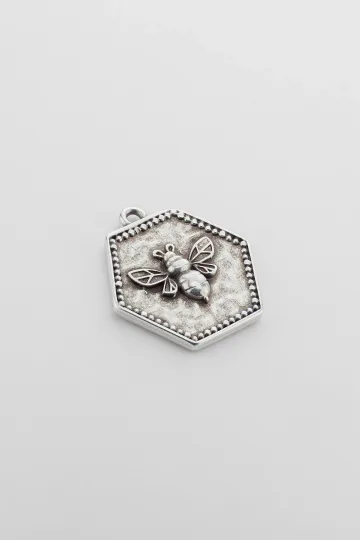
Rule of thumb: a pendant roughly the size of your thumbnail. Give or take. For a smaller frame, a bit less. For a larger one, a bit more. Chain: the wider the neck, the thicker the chain. Proportion. If you are unsure, err toward smaller. Understated reads as confident. Oversized reads as trying.
The First Week: What to Expect (Day by Day)
Day 1. Unfamiliar. You feel the pendant with every movement. You touch it with your hands every five minutes. You check the mirror. You adjust the chain. You wonder if people are looking. They are not. Normal.
Day 2. Still aware of it. You notice the weight when you lean forward. You feel the chain against your neck when you turn your head. You adjust it less often. You start to forget about it for ten-minute stretches.
Day 3. First comment from someone. "Oh, you have a chain? Since when?" Answer briefly. Do not over-explain. "Got it recently. It's a compass." Move on. The less you make of it, the less anyone else will.
Day 4. You stop touching it every five minutes. You still notice it when it shifts (sitting down, bending over, lying on your stomach). But it is no longer the main event of your day.
Day 5. Second or third comment, probably from someone different. "That's cool, what is it?" Tell the story. This is the reward for choosing a pendant with meaning: you have something interesting to say.
Day 6. You forget to take it off before showering. (If stainless steel, no harm done. If brass, wipe it afterwards. More on water and jewellery.)
Day 7. You wake up, put it on without thinking, and leave the house. It is part of you now. Like a watch. Like your phone in your pocket. Not a decision, just a habit.
Month 1. Cannot imagine yourself without it. You feel undressed without it. You are eyeing a second piece. The funnel has opened.
Workplace Tips: Navigating Jewellery by Job Type
Corporate office (finance, law, consulting)
A pendant at 50 to 55 cm, worn under a shirt. Nobody sees it. Nobody knows. It is your private thing. During lunch or after work, unbutton the collar and it becomes visible. This is how most men in conservative offices start.
A watch is the only jewellery that is universally accepted in formal corporate settings. A pendant under a shirt breaks no rules because nobody knows it is there.
Business casual (tech, marketing, media)
A pendant visible in an unbuttoned collar is perfectly fine. Most tech offices have no dress code restricting jewellery. In fact, in creative and tech spaces, a distinctive pendant is a conversation starter at meetups, conferences, and team events.
A ring on the index or middle finger is also accepted. Earring: depends on the specific company, but most business-casual environments are fine with a small stud.
Trades and physical work (construction, manufacturing, mechanics)
Safety first. Chains and rings can catch on machinery. Ring avulsion (a ring catching on something and degloving the finger) is a real occupational hazard. If you work with your hands around machinery:
- Remove rings during work, or wear a silicone band instead of metal
- Tuck the chain tight against your body (short chain, 42 to 45 cm) so it does not swing
- Consider wearing the pendant on a rubber cord instead of a metal chain (breakaway safety)
After work, switch to your regular chain and ring. Two modes: work mode and life mode.
Creative fields (design, art, music, hospitality)
No limits. Jewellery in creative fields is part of the professional image. Layer chains, stack rings, wear the navaja earring. If your job is to be interesting and creative, your appearance should reflect that.
Remote work and video calls
On camera, jewellery at the neckline is visible. A compass at 45 to 50 cm will appear in a standard laptop camera frame. It adds visual interest to the usual "head and shoulders" Zoom box. Choose deliberately: you are curating your video presence. More on this in the dress code guide.
Celebrity Examples (Expanded)
Jason Momoa. Thick chains, stacked rings, leather and bone. His style says: I am large, I am comfortable, I wear what I want. Key lesson: scale matters. Momoa is a big man, and his jewellery matches his frame. Proportionality.
Johnny Depp. Layers of everything: chains, scarves, rings on every finger, bracelets stacked to the elbow. His style is maximalist and deeply personal, every piece has a story. Key lesson: there is no "too much" if every piece is meaningful. But this is an advanced move, not a starting point.
Modern pearl revival icons. Pearls, colourful stones, vintage brooches. Gender-bending and unapologetic. Key lesson: jewellery does not have rules. If you want pearls, wear pearls. The full case for pearls on men, from Mughal courts to current style, is its own dedicated read.
David Beckham. Clean and considered. One or two pieces at a time, always matching the outfit. Key lesson: coordination matters. Beckham treats jewellery like any other element of his wardrobe.
Pedro Pascal. Simple gold chain, occasionally a ring. Understated. Key lesson: less is more. One good chain on a man who carries himself well is more striking than ten pieces on someone uncertain.
Modern hip-hop fashion icons. High fashion meets street: diamond-encrusted pieces, statement rings, pearl necklaces. Key lesson: confidence is the real accessory. Wearing things that "should not work" and making them work through sheer conviction.
Idris Elba. Minimal. A chain, a ring. Nothing loud. Key lesson: the man wears the jewellery, not the other way around. If you carry yourself well, a single piece is all you need.
Jewellery and Video Calls: The New Reality
In the age of remote work and video calls, the area "head and shoulders" is your visual stage. A pendant on a 45 to 50 cm chain appears in a standard laptop camera frame. It adds visual interest to the usual Zoom box.
This is not a coincidence. Since 2020, many men have discovered that a pendant at the neckline makes the camera image more interesting. Not a big statement. But a compass or a navaja in an open shirt collar on screen gives character. You are curating your video presence the same way you curate your background. A bookshelf says something. A pendant does too.
Jewellery on the Body: More Practical Notes
Proportionality details
A pendant roughly the size of your thumbnail is the starting rule. But proportionality goes further. Consider the chain width relative to your neck. A 1.5mm chain on a muscular neck looks like a thread about to snap. A 3mm chain on a slim neck looks heavy. Match the chain to your frame.
For rings, width matters more than most beginners realise. A 6mm band on a large hand looks proportionate. The same band on a smaller hand can dominate the finger. Try different widths before committing. Most jewellery shops will let you try display models.
The touch factor
Something nobody warns you about: you will touch your pendant constantly. Most men develop this habit within the first week. It is not a nervous tic. It is tactile comfort. The feel of metal under your fingers becomes grounding. Some men report it helps with focus during meetings or stressful moments. This is why pendant shape and texture matter more than you might think. A smooth compass feels different from a textured navaja. Both are good. But the tactile experience is part of what makes you keep wearing it or leave it in the box.
What Comes Next: Second and Third Pieces
After the pendant has settled in (give it at least two to three weeks), the natural progression:
Second piece: ring. On the index or middle finger, simple, wide (6 to 8 mm). Stainless steel or brass. A ring complements a pendant without competing: they occupy different zones of the body (chest versus hand) and are visible in different situations.
Third piece: bracelet. Steel or leather, 18 to 20 cm. Worn on the wrist opposite your watch (or on the same wrist if you want a stack). The bracelet-plus-watch combination is one of the most established men's jewellery looks.
Fourth piece: second pendant. For layering. First pendant at 50 cm, second at 42 or 58 cm. Different lengths prevent tangling. Different symbols create a personal narrative: a compass and a navaja, direction and tradition.
Fifth piece: earring. If you have not already. By this point, you have enough experience with jewellery to know whether an earring is for you. If yes, start with a small stud or hoop.
Do not rush the progression. Between the first and second piece, wait at least two to three weeks. Let yourself adapt. Each new addition changes the overall look, and you want to live with each change before adding the next.
Common Questions
I am 40, 50, or 60. Is it too late to start? No. Men over 40 look better in jewellery than 20-year-olds. More character in the face, more confidence in the gestures. A silver chain on a 50-year-old with grey at the temples is authoritative. On a 20-year-old, it is experimental. Both are fine, but the older version carries more weight.
Colleagues will make fun of me. For a week. Then they get used to it. If the pendant is under a shirt, nobody notices. If they do notice and comment: tell the story. Within a month, there is nothing left to joke about. Some of them will be asking where you got it.
What if I do not like it? Take it off. A pendant is not a tattoo. Didn't like it? Put it in a box. You lost nothing except the cost of a couple of dinners.
Can I wear jewellery at work (office, building site, factory)? Office: pendant under a shirt, nobody sees it. Building site or factory: rings and chains can be hazardous (snagging). On physical jobs, remove them or wear on a short rubber cord tight to the body.
Is one piece too little? No. One right piece is stronger than five random ones. Minimalism works better for men than layering, especially at the start. One item, one meaning, zero excess.
What budget for a first piece? About the price of two nights at the pub. No more. A first piece is an experiment, not an investment. If it works out, the second can be pricier. Quality matters (avoid costume jewellery that turns green in a week), but you do not need to spend a fortune.
Is stainless steel cheap? Stainless steel 316L is a surgical alloy. It is used for medical implants and Swiss luxury watch cases. It is not a "cheap substitute for silver." It is a different material for a different job: stronger, more water-resistant, more hypoallergenic than silver. More details in the metal comparison.
My partner wants me to wear jewellery but I am not sure. Start with a pendant under a shirt. You will barely notice it. Give it a week. If you hate it after seven days, tell her honestly. If you are surprised by how quickly you got used to it (most men are), tell her that too. The gift guide for partners is here.
Can I sleep in my jewellery? A stainless steel pendant on a smooth chain: yes, no damage to the piece. But some people find it uncomfortable, and the chain can get tangled in sheets or hair. Brass and silver: remove before bed to extend the coating life.
Jewellery and Dating: The Honest Answer
Short answer: yes, it helps. A pendant with a story is a conversation starter. On dating app profile photos, a pendant adds character. On a first date, it provides something to talk about. And research from the University of Hertfordshire showed that men with visible jewellery were perceived as "more creative and more confident." Not because the jewellery changes anything, but because it signals: "I thought about my appearance."
This does not mean: buy a pendant to look more attractive. It means: if you are already considering wearing jewellery, the worry "will it look weird on a date" is unfounded. It does not look weird. It looks deliberate. And deliberateness is attractive.
Do not overdo it though. One piece is enough. A man who shows up to a first date wearing three chains, two rings, and an earring is not signalling confidence. He is signalling costume.
Jewellery on the Body: Practical Notes
During sport
On a short rubber cord (40 cm, tight against the body): fine. On a metal chain swinging freely: no. The chain can catch on equipment, and the pendant swings when running. Stainless steel survives sweat and water without damage. The question is not the material but the safety.
In water
Stainless steel: no problem. Pool, ocean, shower, everything goes. Brass: wipe after water contact. Silver: polish after salt water. Gold: generally water-resistant, but chlorine can attack alloys. When in doubt: take it off before swimming and put it back on after. Takes ten seconds and saves hassle. More details in the shower and jewellery guide.
Silver and gold jewellery, wedding bands, symbolic pendants, paired sets.
Men's Jewellery and Self-Identity
Jewellery for men is less a fashion question than an identity question. Men often define themselves through values: reliability, competence, quality. A pendant that mirrors these values (a concrete symbol with concrete meaning, made from a high-quality material, with a story worth telling) fits perfectly into that self-image.
The pendant becomes a shorthand. A compass says: I know where I am going. A navaja says: I value tradition and craft. An ouroboros says: I think about the big questions. The symbol is not the whole identity, but it is a visible fragment of it. And sometimes a visible fragment is enough to feel more fully yourself.
The men who wear jewellery most convincingly are the ones who do not overthink it. One piece, chosen with intention, worn with ease. No costume. No explanation needed. Just a man who knows something about himself and decided to make it visible.