Curva Helada: The Frozen Curve, a Navaja Inspired by the Moorish Blade
The line that refused to be straight
In 1236, when Ferdinand III took Cordoba back from the Moors, his soldiers found something in the workshops of the defeated city. Not gold. Not manuscripts. Curved blades. Hundreds of them, in every stage of completion. Scimitars, daggers, folding knives, all sharing one trait: the edge curved like a crescent moon. The soldiers melted down some and kept others. The form survived. Seven centuries later, it still hangs around necks in Albacete as the Curva Helada, the frozen curve, a navaja whose blade bends like a wave caught mid-break and turned to steel.
"Curva helada" translates as "frozen curve" or "ice bend." The name describes what it looks like: a smooth arc, as though someone bent a strip of steel and flash-froze it in that position. Nothing straight. Nothing angular. Just a line flowing from handle to tip. Among all navaja types, this is the one you recognise by silhouette alone, even at pendant scale, even from across the room.
What a Curva Helada looks like
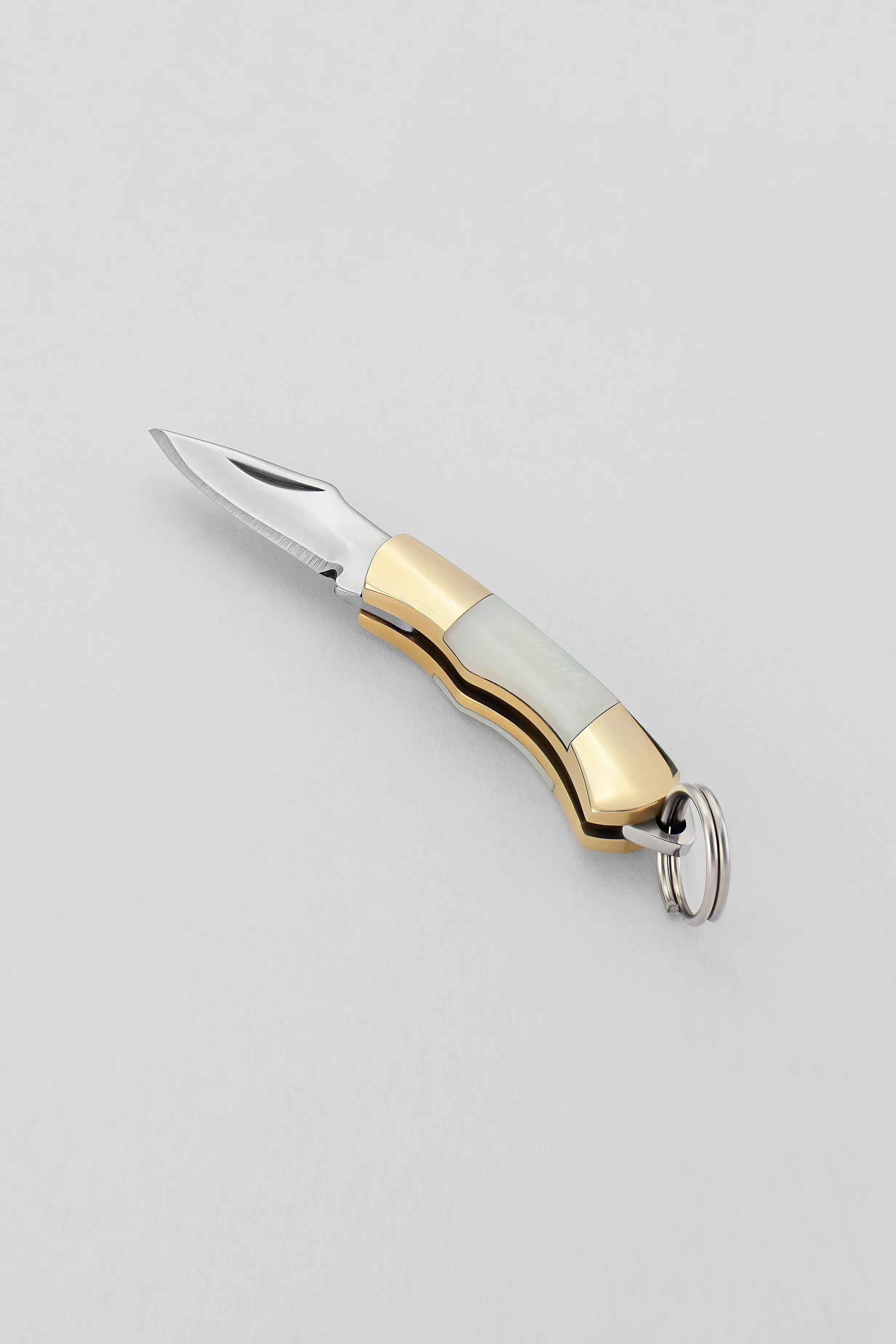
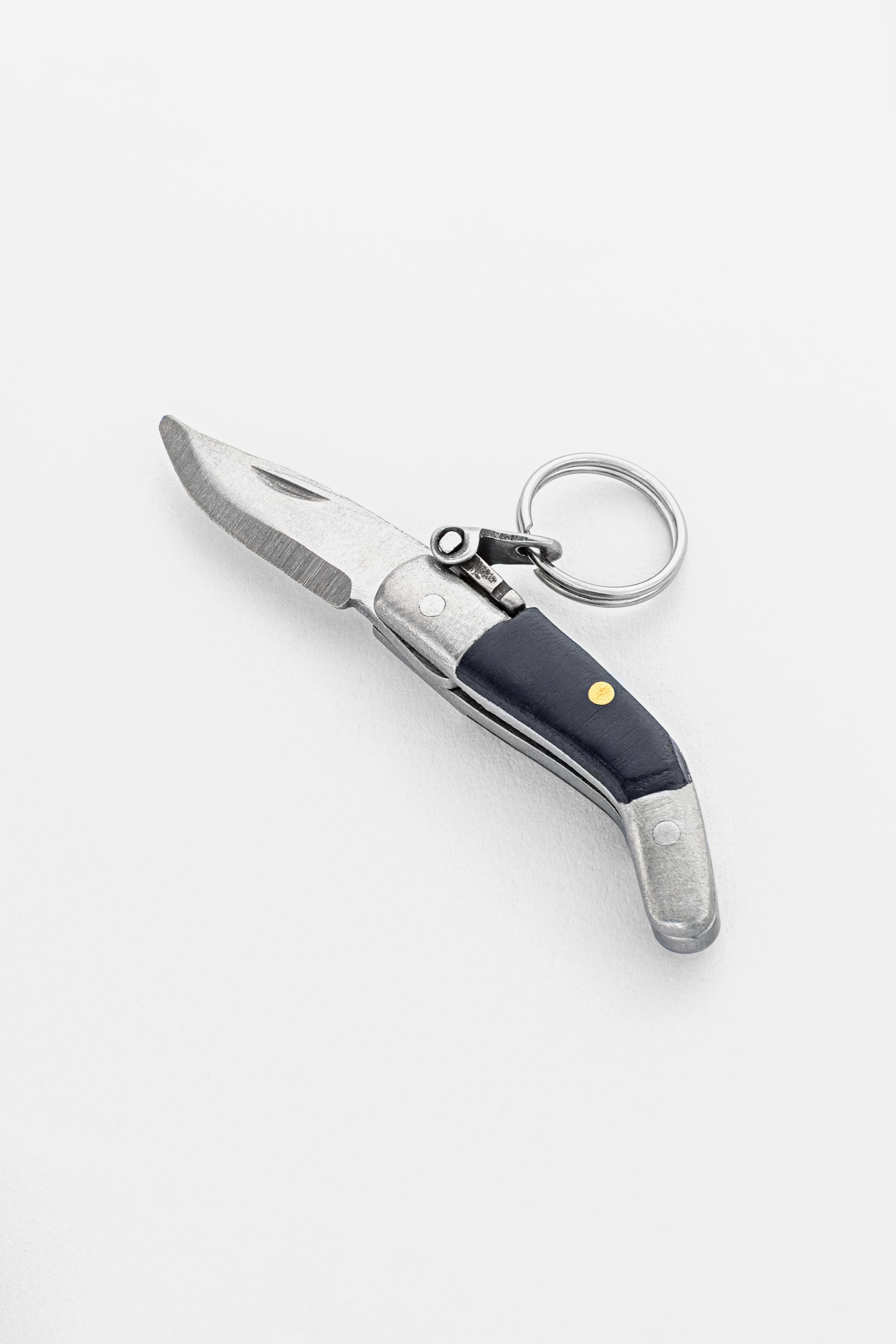
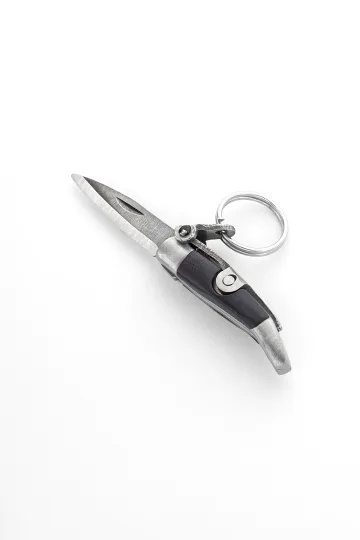
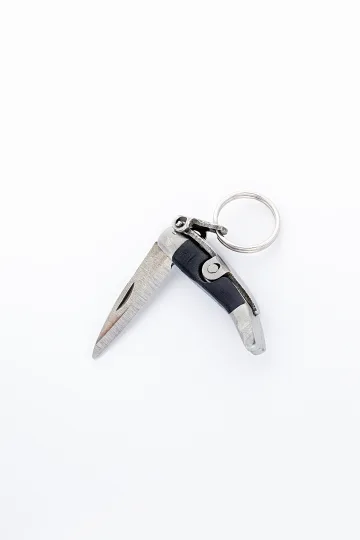
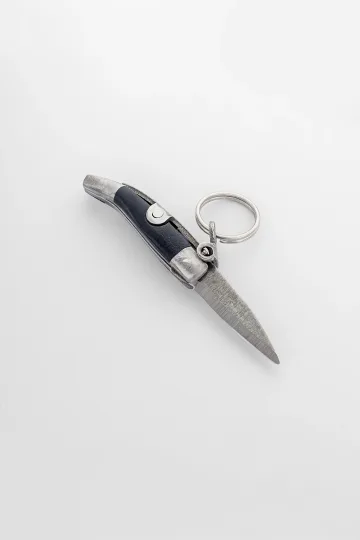
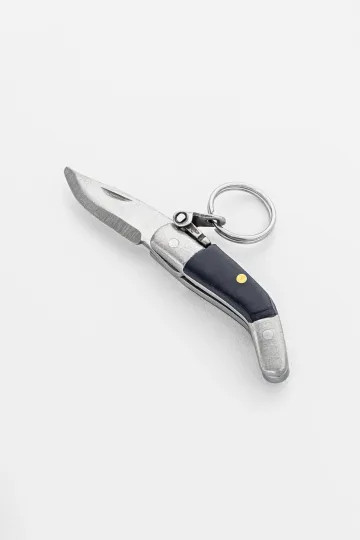
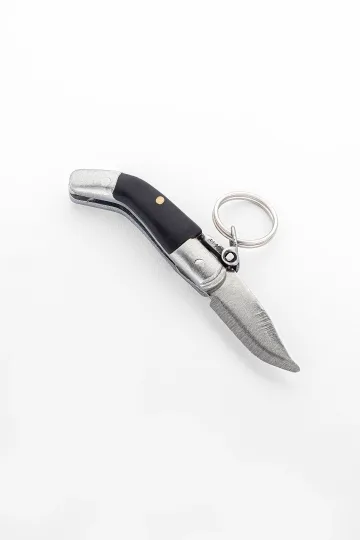
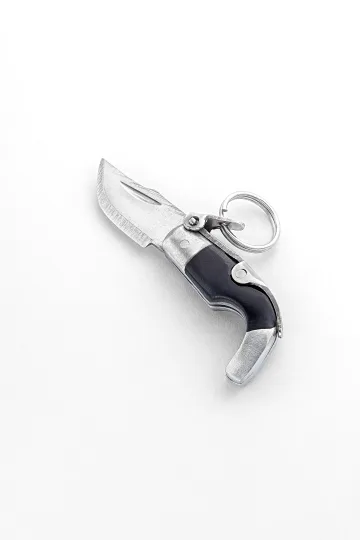
The blade is the whole point. A smooth S-curve or a simple crescent, depending on the smith. No two Curva Heladas bend identically; each master finds his own arc. The spine follows the edge, creating parallel curves that taper toward the tip. The curve is not decorative. It is structural. A curved blade concentrates cutting force at the bend, the same physics that makes a sawing motion more effective than pressing straight down.
Forging a curved blade is harder than forging a straight one. A straight blade can be corrected on the anvil. A curved one must be shaped during forging, controlling the arc with every hammer strike. Overbend and the steel cracks when you try to correct. Underbend and it reads as a wonky jerezana rather than a Curva Helada. The smith who makes a good one controls the metal on instinct.
The hardening process adds another layer of difficulty. A straight blade quenches evenly: plunge it into oil or water and the steel cools uniformly. A curved blade cools unevenly, because the outer edge of the arc dissipates heat faster than the inner. This creates internal stress in the metal. A poorly hardened curved blade can crack under the first load. Mastering the hardening of a curved blade is its own discipline, one Albacete smiths practiced for centuries and passed through apprenticeship, never through manuals.
The handle is typically straight, contrasting with the curved blade. This creates visual tension: vertical meets curve, like a question mark when the knife is open. Some smiths allowed the handle to curve slightly in the opposite direction, creating an even more dynamic silhouette, but the classic formula is straight handle, curved blade.
Handle decoration on Curva Heladas often followed Moorish patterns: geometric ornament, arabesque inlay, copper-wire tracery. This is not incidental. If the blade carries Arab heritage in its form, logic says the handle carries it in its ornament. The aesthetic commitment ran through the whole object.
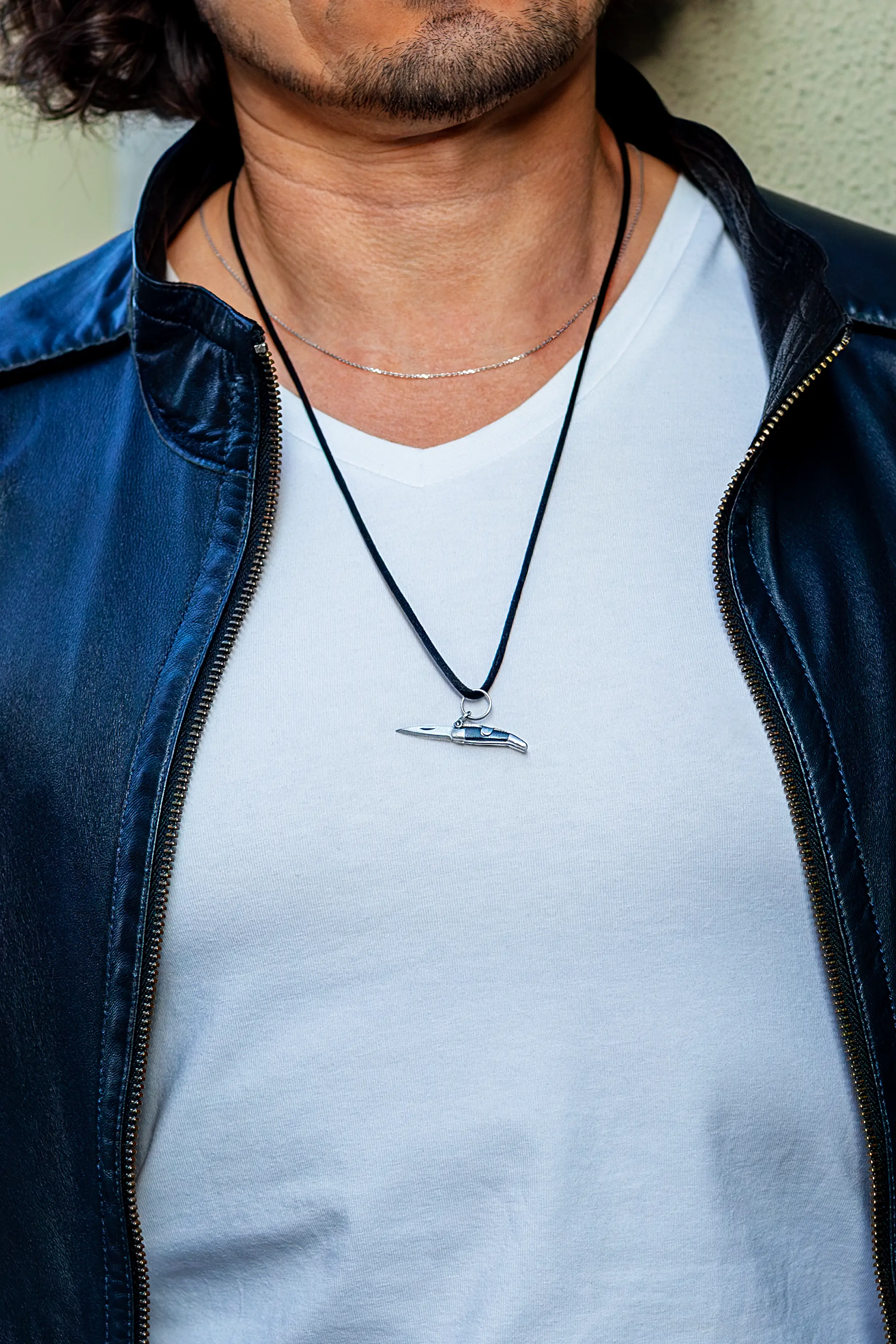
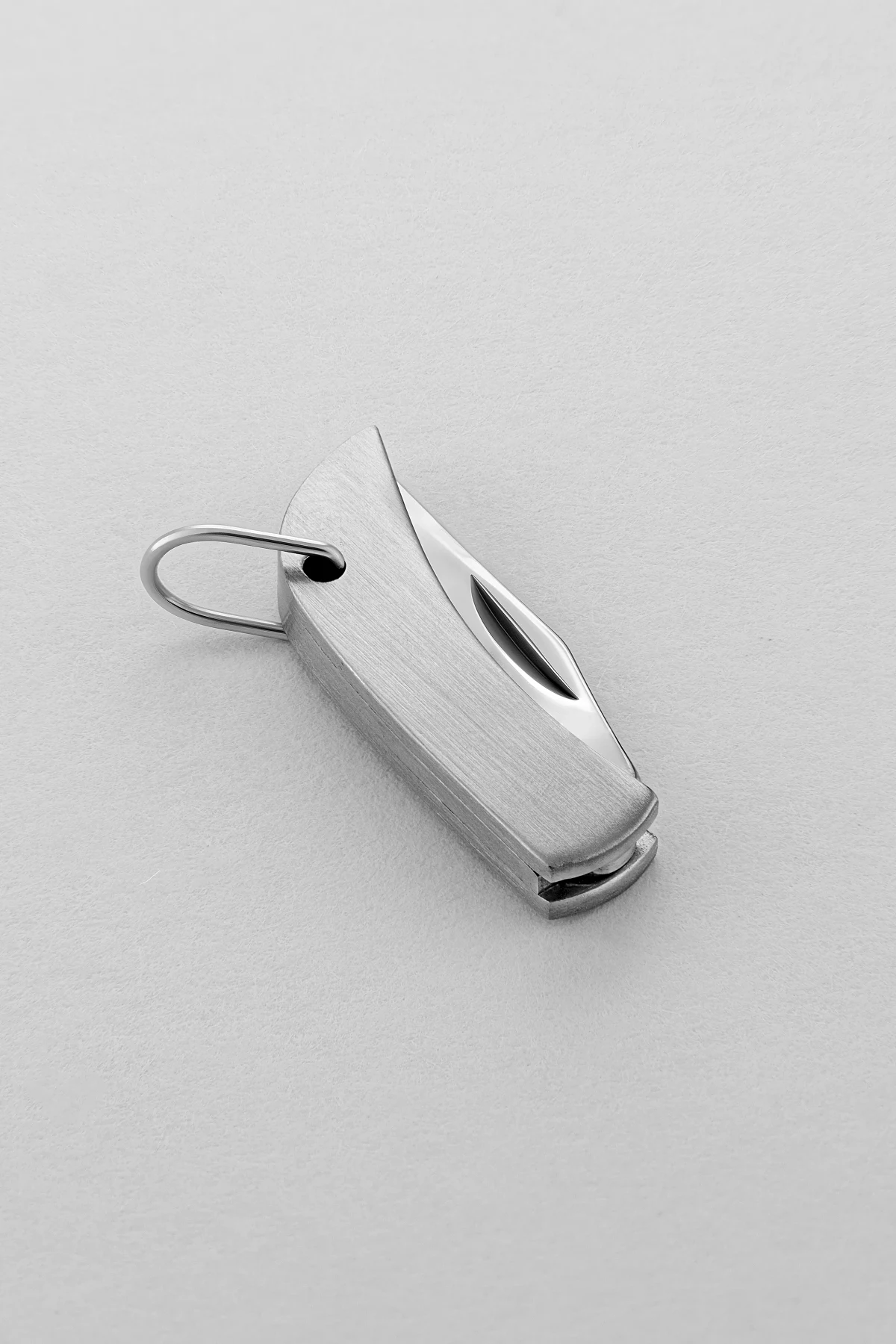
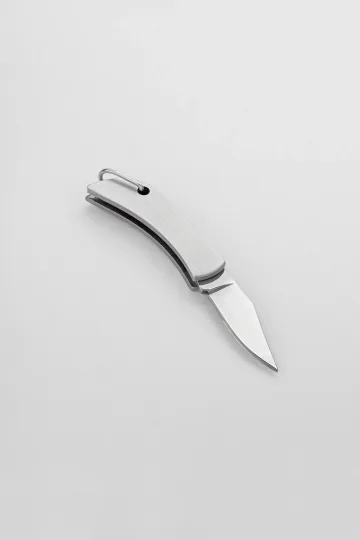
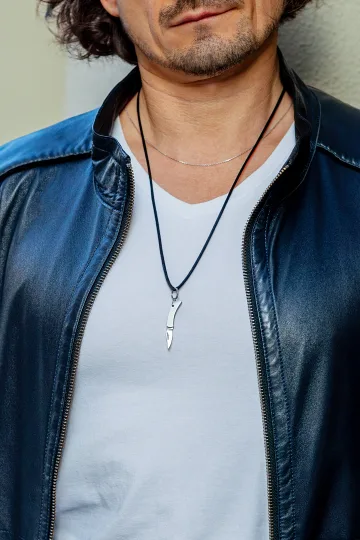
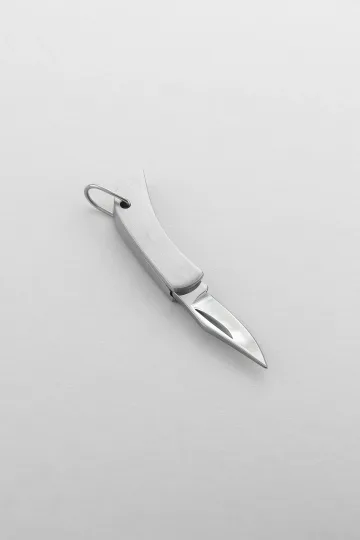
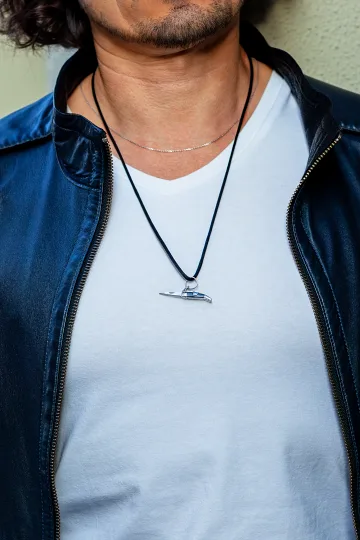
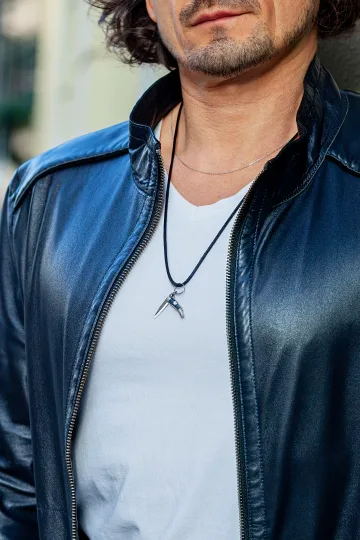
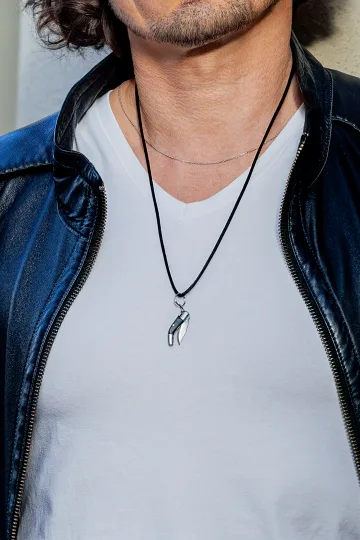
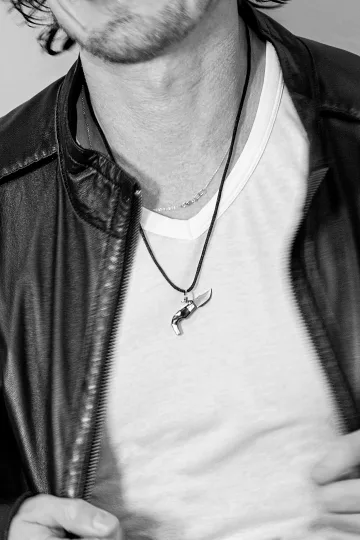
Size context. A full-size Curva Helada runs 15-25 centimetres open, roughly the length of a dinner knife. As a pendant, about the size of your thumb's last joint: small enough to sit between the collarbones, large enough that the curve reads clearly. On a chain against a white shirt, the arc catches light and shadow differently along its length, the way a crescent moon does.
The carraca (lock mechanism) on a Curva Helada works differently from straight navajas. The curved blade presses the lock at a different angle, so the smith must calculate the spring position specifically for the bend. Some specimens place the carraca at the blade base rather than the handle, an unconventional solution dictated by geometry.
Handle materials. Albacete smiths used what the land offered: olive wood, dried cattle bone, antler, and occasionally horn from the local merino sheep. Each material behaves differently under the file. Bone is fine-grained and takes decoration well, accepting arabesque inlay and copper-wire tracery without splitting. Olive wood has a natural figure that shifts under light, giving even a plain handle visual interest. Antler, the rarest choice, has a slightly rough texture that creates grip without a deliberately roughened surface. In modern reproductions and miniatures, stabilised wood and resin-impregnated bone mimic the originals while tolerating the humidity changes a daily-worn pendant experiences.
The blade cross-section. A full-size Curva Helada blade is not flat: it has a distal taper (thicker at the spine, thinning toward the edge) and a longitudinal taper (thicker at the base, finer toward the tip). Both tapers work together to give the blade its feel of lightness despite being solid steel. When you hold a quality specimen to the light and tilt it, you can see the cross-section change along the length. This is not easy to achieve in forging. The hammer must do more than push the curve outward; it must thin and taper simultaneously, a three-dimensional shaping problem that cannot be broken into separate steps.
Who the Curva Helada is for
People who choose by form, not by story. Curva Helada needs no context. It is beautiful on its own, an abstract line that happens to be a knife. If someone asks "what is that?", you can say "a pendant" and leave it there. Or you can mention Moorish smiths, and the pendant becomes even more interesting.
Women. Of all navaja types, Curva Helada sits most naturally on a woman. Smooth curve, no aggressive angles, a flowing line closer to jewellery tradition than to weaponry. Where a capaora declares itself with raw force, Curva Helada persuades with beauty.
Moorish aesthetics enthusiasts. If Alhambra arches, Arabic calligraphy, and eastern ornament draw you in, Curva Helada comes from the same world. The blade curve speaks the same visual language as a Nasrid arch. Same cultural impulse, different material.
Musicians and dancers. The Curva Helada line is a line of movement. It does not stand still; it flows. For people whose art lives in motion, this is an intuitive symbol. A guitarist sees the curve of a soundboard. A dancer sees an arm's gesture.
First-time navaja buyers. If you have never worn a knife pendant and do not know where to start, Curva Helada is the safe entry. Beautiful without aggression. Recognisable as a knife, but not intimidating. Works with a dress and with a T-shirt. After Curva Helada you can decide if you want something stricter (punta de espada), rougher (capaora), or more mystical (lunar knife).
Couples. Curva Helada and punta de espada as a pair: the curve and the straight line, Moorish and Castilian, flowing and austere. Two views of one object, two characters in one tradition.
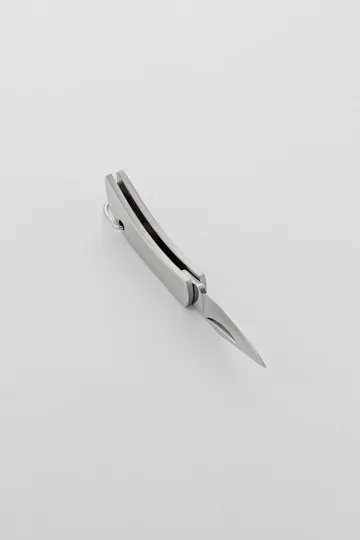
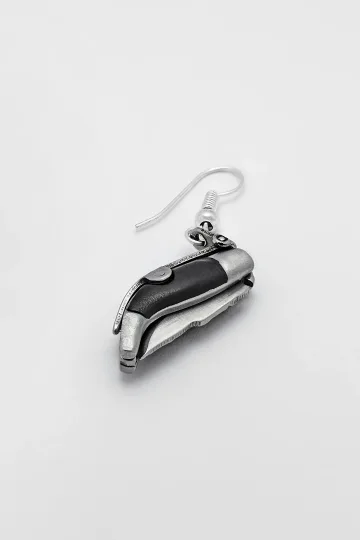
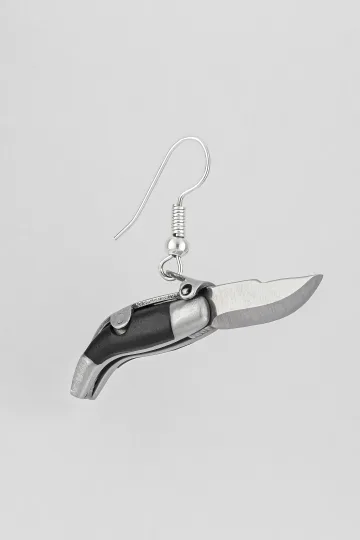
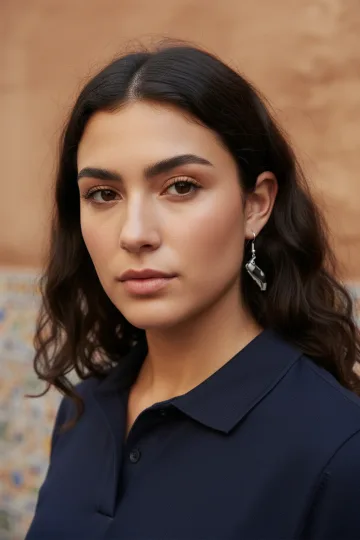
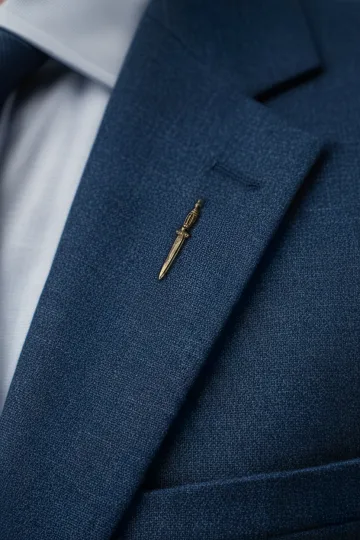
Wear the symbol, don't just read about it. These are in stock:
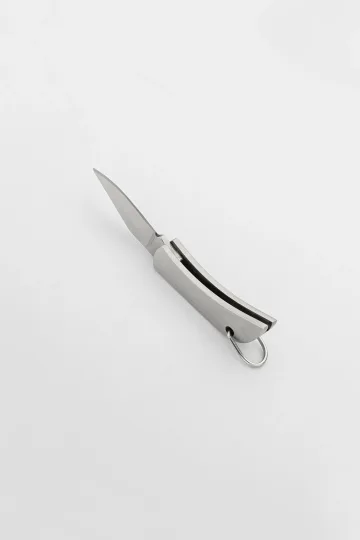
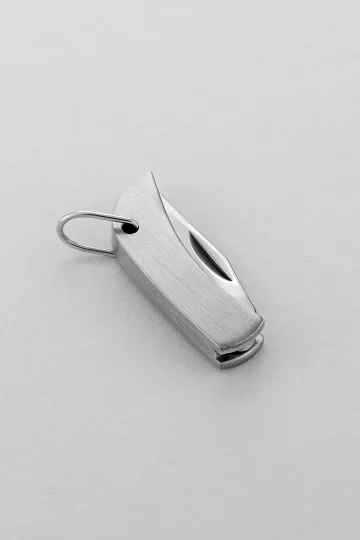
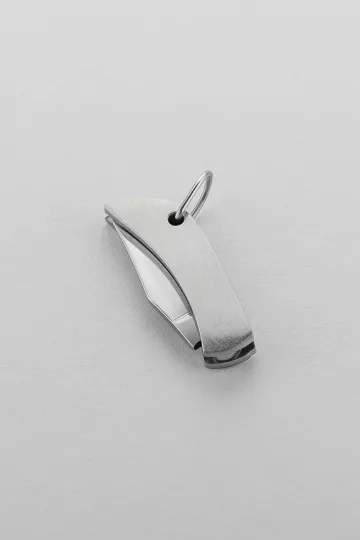
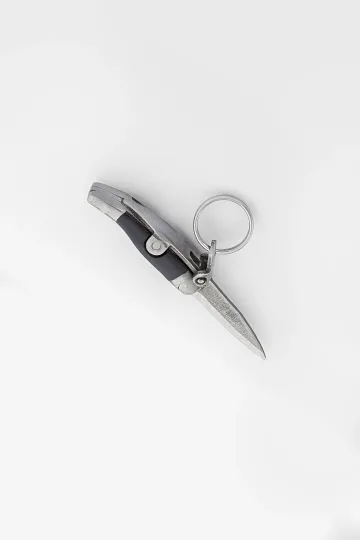
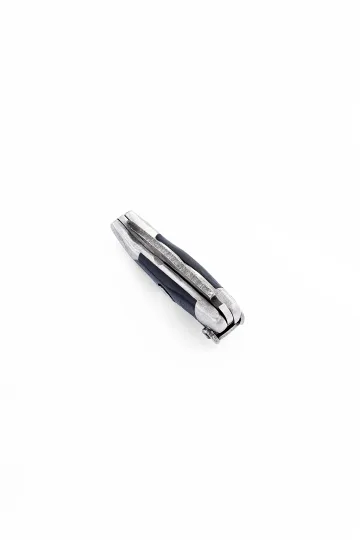
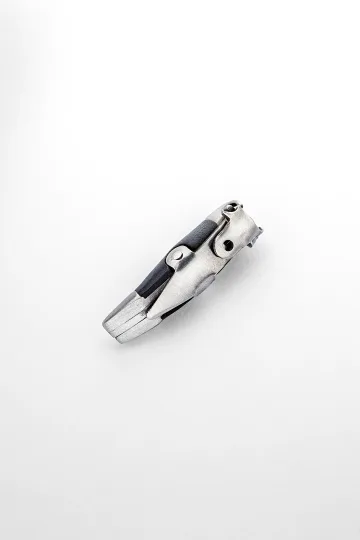
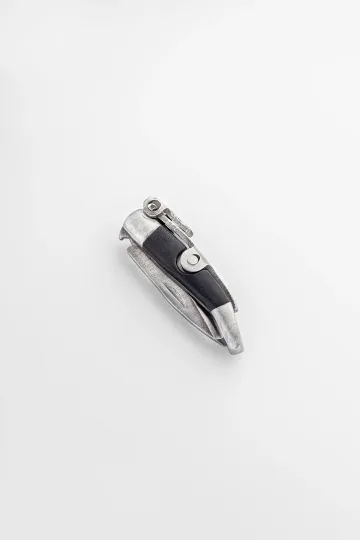
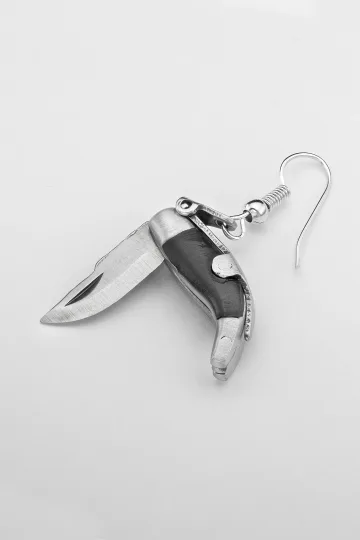
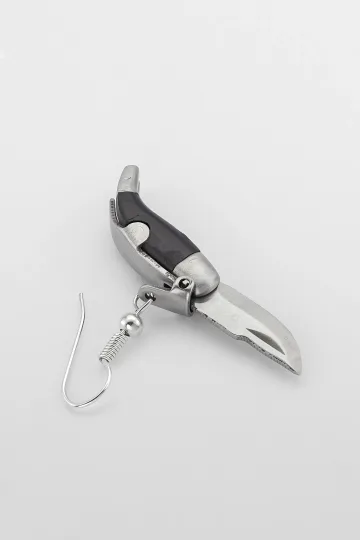
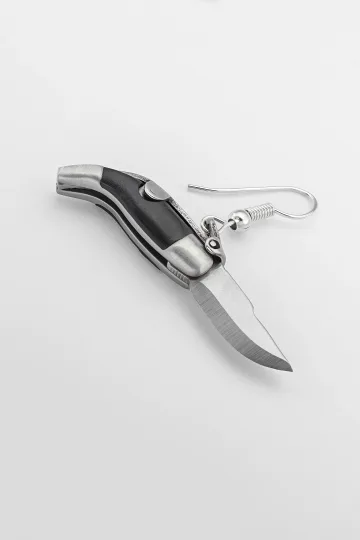
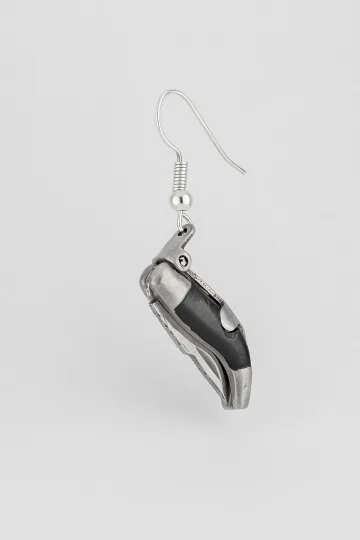
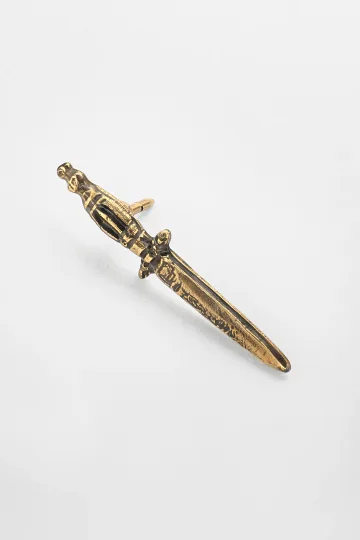
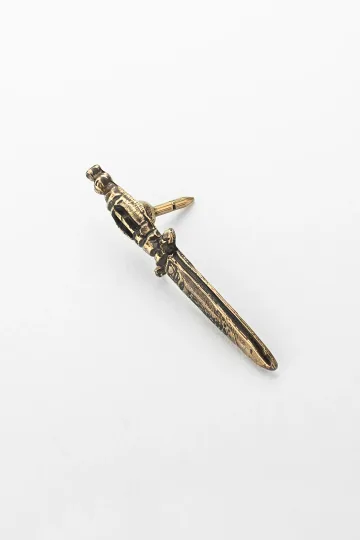
The sword ban and why the navaja existed at all
The curved blade reached pocket-knife scale partly because of law. In 16th and 17th-century Spain, the Crown repeatedly banned the carrying of swords and short swords (espadas cortas) in cities. The ban hit working men hardest: a sword was a gentleman's weapon, but a working man needed a blade for daily tasks. The navaja, explicitly designed as a folding utility tool rather than a weapon, existed in a legal grey zone. Authorities argued; smiths kept making navajas.
The Curva Helada emerged from this environment. Its curved blade was obviously a tool, not a replica of any prohibited straight sword. The fold made it a compact object, not a drawn weapon. The aesthetics came from Moorish heritage, but the practical logic was Spanish legal ingenuity: give a working-man's blade a form different enough from a sword that it could not be classified as one.
This history is visible in the design. The curved blade, the folding mechanism, the compact proportions: each feature has a rational explanation beyond pure aesthetics. The beauty of the Curva Helada is not incidental to its history. It is inseparable from it.
History: where the curve came from
Moorish roots
The Moors arrived on the Iberian Peninsula in 711 and brought curved blades with them. Scimitar, shamshir, kilij: all share a curved edge. Arab smiths knew what Europeans learned later: a curved blade cuts better than a straight one. The physics are straightforward: the curve concentrates force at the contact point, the way a sawing motion works better than a press.
When Moorish forging techniques merged with the Spanish knife tradition, navajas with curved blades appeared. Curva Helada is one of them. The Moors left Spain in 1492. The curve of their blades stayed forever.
Damascus steel, Spanish hands
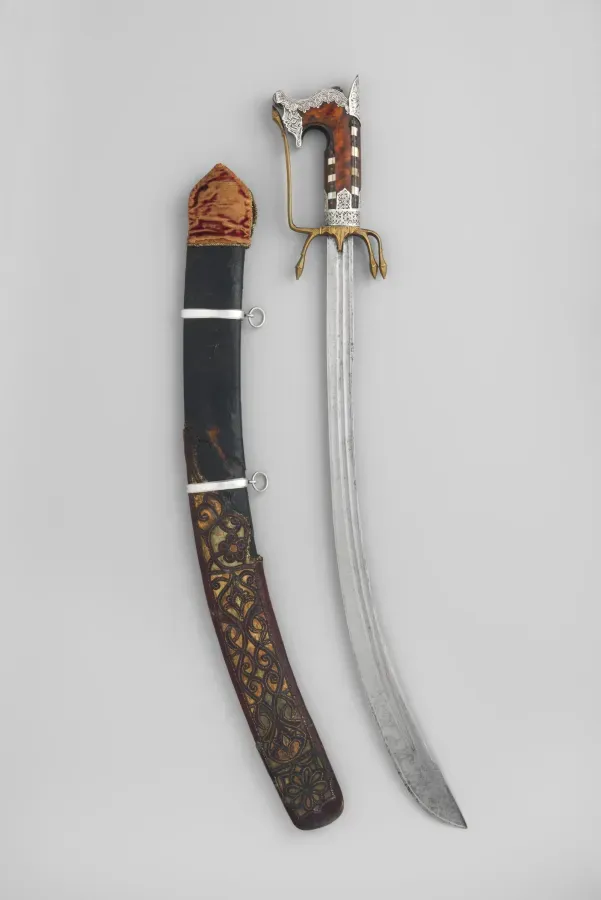
The Moors did not just bring a shape. They brought technology. Damascus steel, produced by Arab smiths from Indian wootz, was the best in the medieval world. Moorish smiths settling in Spanish cities carried knowledge of tempering, annealing, multi-layer forging. That knowledge mixed with local traditions.
Albacete, sitting at the crossroads between Andalusia and Castile, became the meeting point of Arab and Christian smithing schools. The city's masters absorbed the Moorish love of the curved line and joined it to Spanish folding-knife mechanics. The result: navajas with curved blades that could fold and tuck into a belt. Curva Helada is the purest expression of that synthesis.
The synthesis was not instant. Early attempts to fit a curved blade into a folding mechanism produced awkward designs: handles too wide, locks unreliable, knives uncomfortable. Generations of smiths worked to find the right proportions, a curvature that preserved the Moorish character while allowing the knife to fold compactly. The best solutions, as usual, came from Albacete.
In the Museo de la Cuchilleria in Albacete you can watch this evolution unfold. Early pieces with rough curvature, where the smith was still searching for the line. Later pieces from the 18th and 19th centuries, where the arc has been refined to a standard. It is not a leap but a gradual convergence toward an ideal curve, each generation of smiths narrowing the range.
The guild system in Albacete formalised this refinement. By the 17th century, Albacete's knife-makers had an organised trade structure with inspections, quality marks, and apprenticeship rules. A young smith served years under a master before touching a Curva Helada blank; the curved blade was considered an advanced piece, not a starting exercise. Masters kept their proportion secrets within the workshop, passing them orally, which is why surviving specimens from different workshops in the same era still show distinct interpretations of the arc.
The curved blade in cinema and culture
The curved blade is one of the most recognisable visual codes in cinema. "Aladdin" (both the 1992 animation and the Will Smith version) fills the screen with curved Arab swords. "Prince of Persia" builds its entire aesthetic on curved blades spinning through the air. "Assassin's Creed" in its Middle Eastern setting does the same: hidden blades, curved daggers, the entire visual palette built on arcs and bends.
Arabic calligraphy works with the same curved-line aesthetic as the Curva Helada. Letters flow, bend, no right angles anywhere. When you place a fine calligraphic scroll next to a Curva Helada blade, you see the same principle: beauty lives where the line refuses to be straight.
Gaudi in Barcelona, a Spaniard himself, took the natural curve to its architectural absolute. Art Nouveau and Moorish smiths work with the same lines: no right angles, everything flows. Casa Batllo and Curva Helada come from the same world, just at different scales and in different materials.
On Instagram and TikTok, navaja jewellery with curved blades lands in the boho, eastern-style, and art-jewellery aesthetics simultaneously. The #knifependant and #navajajewelry hashtags overlap with #bohojewelry, and Curva Helada feels at home in that intersection.
Customer reviews
Zevira is a real jewellery shop. Genuine payments, deliveries and customer thank-yous.
🥰🥰🥰 gracias
Ok, ¡gracias! 🙂
A difference between curved navajas
Curva Helada is not alone among curved blades. The lunar knife is also curved, but differently. Curva Helada curves outward (like a sabre). The lunar knife curves inward (like a sickle). Visually the difference is enormous: Curva Helada reaches forward, the lunar knife pulls inward. As pendants, Curva Helada reads more "Moorish," the lunar knife more "mystical."
There are also S-curve specimens, where the smith combined both directions of bend, creating a blade that curves one way near the spine and the other near the edge. These are rarer and prized by collectors. As a pendant the S-curve looks like a frozen serpent: simultaneously fluid and tense.
For comparison: the jerezana has a nearly straight blade with a gentle curve. Punta de espada is straight as an arrow. Capaora is also straight but wide and short. Curva Helada is the only navaja where the bend is the defining feature. Without the curve, it is not a Curva Helada. With the curve, it cannot be anything else.
The machete is the polar opposite: a straight cleaver, the antithesis of Curva Helada. Place them side by side and you see two poles of Spanish blade-craft: absolute straightness and absolute fluidity.
Owner's story
A calligrapher from Istanbul, living in London. "I bought Curva Helada because it looked like a letter. Not any specific letter, but the gesture of writing. The curve of the blade follows the same path my pen takes on paper. I wear it when I work, under my collar. Nobody sees it. But I feel the line against my chest, and it reminds me that everything beautiful curves."
What to pair it with
Curva Helada loves smooth, rounded forms beside it. With the lunar knife on a separate chain: two curves, two bends, the Moorish sabre and the night sickle side by side. With a nazar: Mediterranean set, a Moorish blade curve and a Turkish eye, both from the shores of the same sea. With punta de espada on a second chain: curve and straight line, the contrast that tells the story of two Spains.
Avoid pairing with geometric, angular pieces. Curva Helada gets lost next to squares and hard lines. It needs a rounded environment.
With a dress. Curva Helada on a long chain over a plain dress, the pendant's curve echoes the fabric's drape. Gold tone for evening, silver tone for day.
Layered. Curva Helada works well on top, a shorter chain close to the neck where the bend is immediately visible. Lower layer: something with a different character, a straight punta de espada or a compact capaora. Curved over straight, light over heavy.
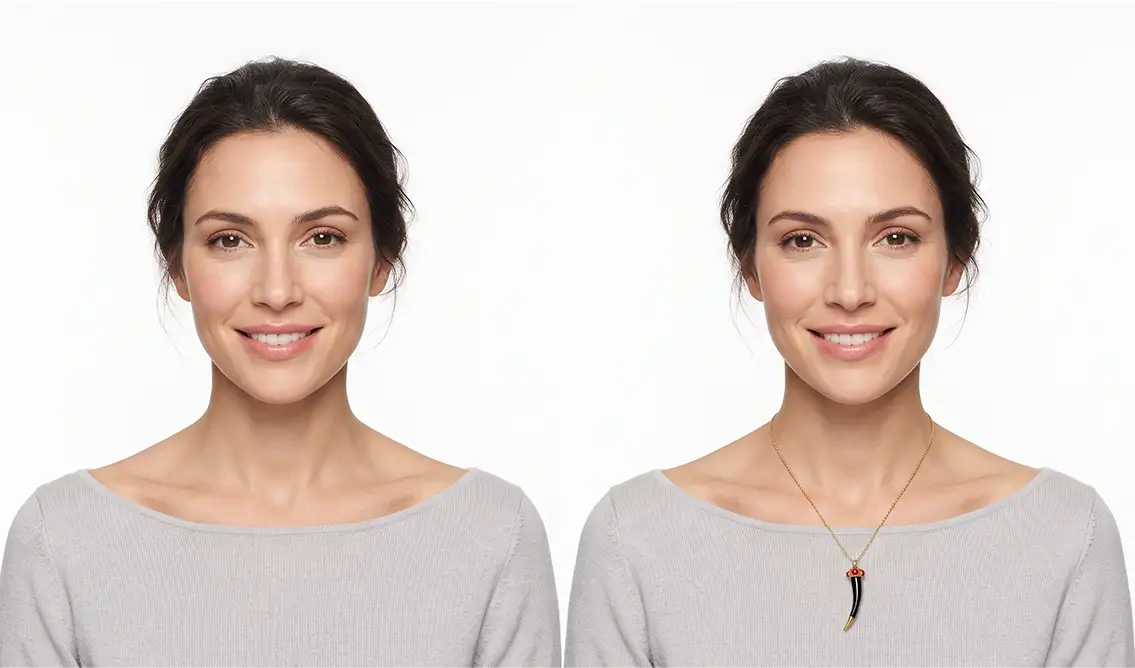
Turn on your camera, pick earrings, a pendant or a ring, and see the piece on yourself in real time.
Switch items in one tap.
Everything runs in your browser: no photo or video is ever uploaded.
As a gift
Curva Helada in a gift box works differently from other navajas. It requires no explanation. No need to tell the story of Spanish knives, of Albacete, of the sword ban. Just open the box. The curve speaks.
For the woman who wants edge without aggression. The one who pairs a leather jacket with a silk dress. Who wants character without roughness. Curva Helada curves, flows, and carries exactly enough danger to be interesting.
For the person in love with Arab aesthetics. The one who stood under Alhambra arches or hangs Arabic calligraphy on their wall. Curva Helada comes from the same world. Moorish heritage in miniature.
For a musician or dancer. The line is movement. A guitarist sees a soundboard curve. A dancer sees a hand gesture. The form speaks their language.
As a paired gift. Curva Helada and punta de espada on two chains: curve and straight, Moorish and Castilian. For a couple who value contrasts.
For someone who values form over symbol. Who chooses objects by shape, not meaning. Who does not need a legend, just a beautiful line. Curva Helada is for that person.
Seasonal note. Curva Helada works for Valentine's Day as a paired set with punta de espada. For a birthday, as a solo piece that needs no context. As a graduation gift, for the person starting a new chapter with a new aesthetic. Christmas, wrapped in tissue paper, catching tree lights on its curve.
What to write on the card? Nothing. The curve says everything.
Behind the scenes: from forge to chain
Miniaturising a Curva Helada seems simpler than other navajas. The curved line is inherently decorative, and the silhouette reads at any scale. But there are traps.
In a full-size knife, the blade curve creates a sense of movement: the line flows from handle to tip, and the eye follows. In a small pendant, that sense must be preserved, which means the ratio of curve to length must be exact. Too shallow and the pendant looks like a slightly bent stick. Too steep and it loses elegance, starts resembling a fishhook.
There is also the question of cross-section thickness. In a full-size knife, the blade is thin relative to its length, which creates a sense of lightness. In a miniature, if the blade is proportionally as thin, it becomes too fragile. The smith thickens it, but does so with a tapered cross-section: thicker at the base, finer toward the tip. This preserves the illusion of delicacy while giving the piece structural integrity.
The smith in the Zevira workshop in Albacete solves this with the originals in front of him. The Museo de la Cuchilleria is a five-minute walk away. Behind the glass stand Curva Heladas from different eras and different smiths, each bending differently. The master knows these curves not from photographs but from hand and eye memory. Full production cycle inside the workshop. The difference between a pendant made in this tradition and a mass product is the same as between a sherry from a Jerez bodega and "sherry" from a supermarket.
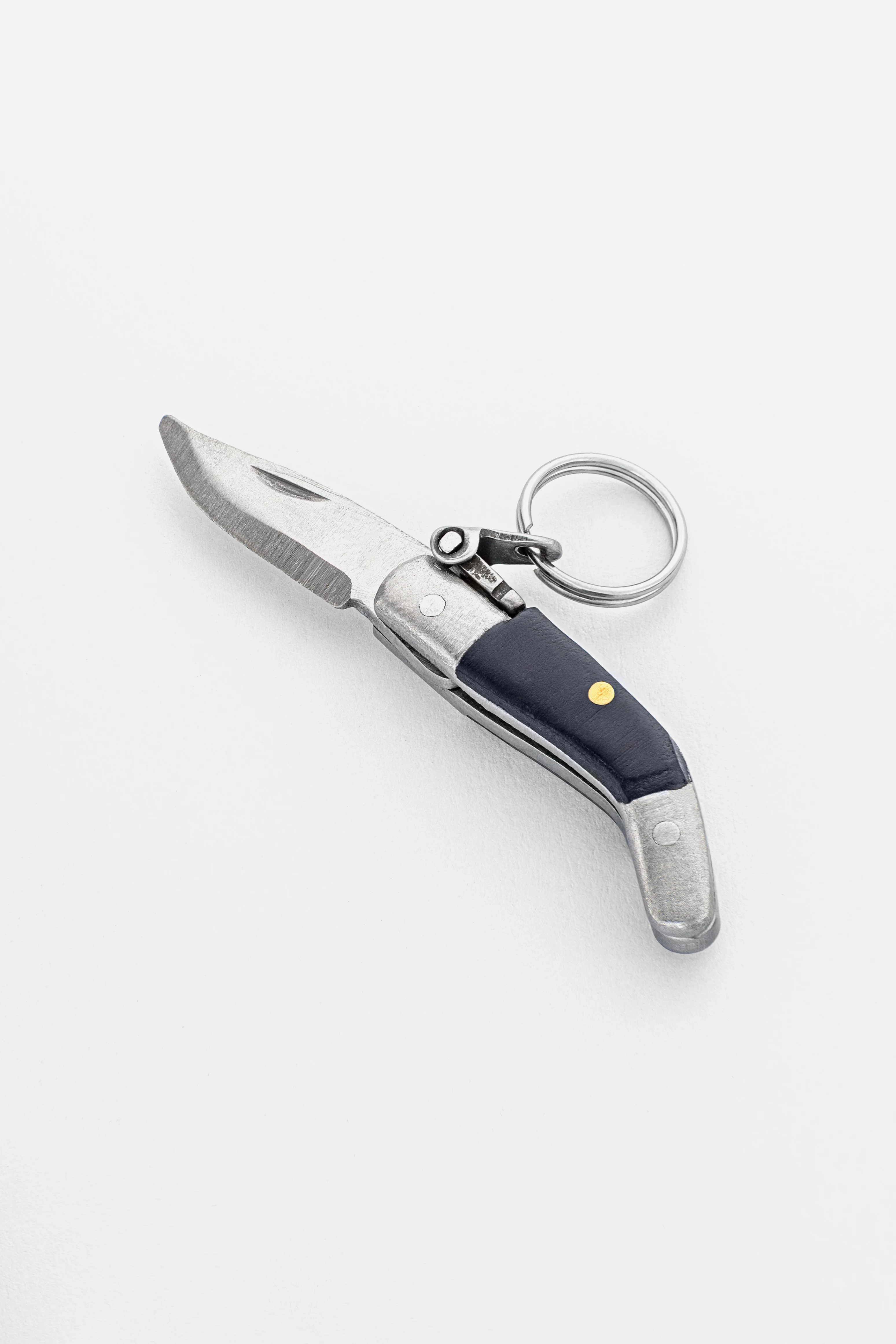
Artisan-crafted CAPAORA navaja pendant
A 40 mm stainless-steel navaja with a real folding mechanism and Palanquilla lock. An affordable gift to remember.
A code for blog readers:
10% off your first order
Authentic · Maker's guarantee · Ships from Spain
Albacete: where all lines converge
All navaja types, straight punta de espada, elegant jerezana, wide capaora, sickle-shaped lunar knife, and curved Curva Helada, converge in one place: Albacete. This city on the La Mancha plateau has been Spain's knife-making centre for centuries. Not the only centre, but the main one.
Every September, during the Feria de Albacete (running since 1375), master cuchilleros display their work. Curva Helada always draws attention at these exhibitions: its curve is a test of skill. Any smith can forge a straight blade. Not every smith can forge a curve that looks natural, as though the steel wanted to take that shape.
At the fair you can watch different masters solve the same problem. One Curva Helada has a gentle, wide arc, restrained and austere. Another bends steeply, dramatic and expressive. A third uses the S-curve. Each smith considers his version correct. This competition between interpretations has been driving the tradition for generations.
The Zevira workshop operates in Albacete, in the same city where original Curva Heladas were made, in the same city where the Museo de la Cuchilleria houses navajas of every type. The pendant on your chain was made 200 metres from the museum where the full-size prototype sits behind glass. Same city, same tradition, same hands that know how metal behaves on the bend. In 2017, the knife-making tradition of Albacete received BIC status (Bien de Interes Cultural), government-recognised cultural heritage.
How to spot quality
Proportions. The blade curve is the defining feature. If the pendant looks like a slightly bent stick, the maker did not understand the form. The curve should be smooth, continuous, without breaks or flat spots.
Weight. A quality miniature has heft. Hollow stampings feel weightless.
Details. The spine follows the edge line, the tip tapers to a point, the handle contrasts with the blade. If what you see is just a bent wire, it is not a navaja.
Finish. Even coating, no burrs, smooth edges. Chain loop neat and proportional, not a ring the size of the pendant itself.
The arc test. Hold the pendant at arm's length and tilt it slowly under a single light source. A good Curva Helada arc catches the light at a single point that travels along the curve as you tilt. If the light catches at multiple points, or flatlines across a section, the curve has inconsistencies. Professional collectors at the Feria de Albacete do exactly this: they lift the piece to eye level and sight along the spine the way a carpenter sights along a plank. The line must flow without interruption from handle to tip.
The handle-to-blade contrast. On a quality piece, the handle material and the blade material read as two distinct things: different texture, different reflectivity, different visual weight. When both elements merge into one uniform surface, the design has lost what makes a navaja a navaja.
Leave your email, we'll send your discount code. No spam, unsubscribe anytime.
The code arrives by email, valid on your first order.
Care
Wipe with a soft cloth after wearing. Store separately from other jewellery to prevent scratches. Avoid contact with perfume, creams, chlorine. Brass may darken over time; this is normal patina. For shine, rub gently with baking soda. Open and close navaja earrings periodically to keep the mechanism smooth.
On the skin over time. A Curva Helada worn daily for months develops a subtle warmth where it rests against skin. The arc shape means it lies at a slight angle on the chest rather than lying flat like a straight pendant; the contact point shifts with movement, which is why it rarely leaves a tan line or impression. Stainless steel warms to body temperature within minutes and stays there; brass takes a little longer but holds the warmth more intensely. This is a tactile quality that flat, uniform pendants do not share.
Polishing the arc. If you polish a Curva Helada by rubbing a cloth along the length, you will polish the high points of the arc more than the low. This creates a natural highlight along the outer curve and a slightly more matte inner curve, which actually deepens the visual three-dimensionality of the piece. No special technique required: normal polishing cloth, normal motion, and the geometry does the rest.
| Feature | Curva Helada | Lunar Knife | Punta de Espada | Jerezana |
|---|---|---|---|---|
| Blade shape | Outward curve (sabre) | Inward curve (sickle) | Straight (sword tip) | Straight with clip point |
| Character | Flowing, Moorish | Mystical, nocturnal | Austere, Castilian | Elegant, Andalusian |
| Best for | Form lovers, first navaja | Night people, ambiguity | Minimalists, structure | Culture lovers, history |
| Origin | Arab curved blades | Sickle tradition | Sword-point navajas | Jerez de la Frontera |
| Pairs well with | Lunar knife, nazar | Moon Tarot, Curva Helada | Capaora, compass | Sacred heart, nazar |
The Physics of the Curved Blade
Why do smiths curve blades at all? The answer is not just aesthetics. There is mechanics behind it.
A straight blade cuts through pressure. You press the edge into the material. A curved blade cuts through pull. The curve creates a sawing motion during the cut, because the contact point travels along the edge. The same principle as a saw: the teeth engage one after another, not simultaneously. That is why curved blades cut more efficiently than straight ones.
Arab smiths knew this a thousand years ago. The shamshir, the Persian curved sword, was not bent because it looked beautiful. It was bent because a rider with a pulling motion on a pass-by does more damage than with a straight thrust. Cavalry plus curved blade equals tactical advantage.
In a full-size navaja, the curve meant: the cut goes deeper with less force. In a pendant, it means: the silhouette has dynamics. It does not stand still. It moves, even when hanging motionless.
The Curvature and the Golden Ratio
Some collectors and historians see in the Curva Helada's curvature a proximity to the golden ratio. That is hard to prove and easy to romanticize. What is true: the best Curva Heladas have a curvature that feels "right," neither too flat nor too steep. The masters in Albacete have no ruler for this. They have experience. After hundreds of forged blades, the hand knows when the arc is correct.
In design tradition, from modernism to contemporary industrial design, there is a similar concept: the form that emerges from function. With the Curva Helada, the function is cutting. The form that results is the arc. And the arc is beautiful, not because someone wanted to make it beautiful, but because it is functionally optimal. Good design is universal. Whether in a design studio or in Albacete.
The Curva Helada and Arabic Calligraphy
There is a visual kinship between the Curva Helada and Arabic calligraphy that goes beyond mere resemblance. Both emerge from the same aesthetic tradition. Both reject the right angle. Both seek beauty in the flowing line.
Arabic calligraphy has six fundamental styles. The best known, Naskh, uses soft arcs and flowing connections. No letter stands alone. All flow into each other, like water, like music, like the arc of a Curva Helada.
The Alhambra in Granada is the monumental example. Its walls are covered with calligraphic inscriptions that are simultaneously text and ornament. The lines bend, cross, repeat in geometric patterns the eye cannot fix. You must follow the flow. That is exactly what the eye does when it traces the curve of a Curva Helada.
Place a fine calligraphic scroll next to a Curva Helada blade and you see the same principle at work: beauty lives where the line refuses to be straight. The shared DNA runs deep. Both traditions emerged from a culture that valued flowing forms over rigid geometry, that saw the right angle as a limitation rather than a foundation.
Why "Helada"? The Meaning of Freezing
"Helada" means "frozen" or "icy." The name describes not the temperature but the moment. A curve that was frozen mid-movement. Like a photograph of a wave, a split second before it breaks. Like a dancer who freezes mid-gesture.
This concept of the frozen moment has a long tradition in Spanish culture. In flamenco, there is the "momento de verdad," the moment of truth, when everything stops before the action explodes. In the bullfighting tradition (whether you admire it or not), the decisive moment is the one where human and animal freeze for a second.
The Curva Helada captures that moment. It is not static. It is movement that has been paused. That is why it looks alive despite being steel. It suggests that the line could continue if you let it. That behind the freezing, a force waits.
As a pendant, this is particularly effective. A straight pendant hangs. It is finished. A Curva Helada hangs and simultaneously suggests movement. It is a promise, not a statement.
Send a friend a discount code, they save on their first order.
Curved blades across cultures
The curved blade is not a Spanish monopoly. Across the world, different cultures developed curved edges, each with their own logic and starting point.
Kukri (Nepal). The Gurkha kukri curves inward, with the weight toward the tip. It functions more as a chopper than a slicer. The curve serves the swing, not the draw-cut. Visually compact and heavy. The Curva Helada is the opposite: light, flowing, elegant.
Karambit (South-East Asia). A small sickle-shaped knife from Indonesia and Malaysia. The curvature is extreme, nearly a semicircle. Originally a rice-harvesting tool. Visually aggressive. As a pendant a karambit would be difficult to read: too much curve on too small a surface. The Curva Helada has exactly the curvature a miniature needs.
Falcata (Iberian Peninsula). Here the story gets interesting. The falcata was an Iberian weapon that predated the Moors. Celts and Iberians used it against the Romans. Its blade curves inward, similar to the kukri. The Moors did not bring the first curved blade to Spain. They brought a different direction of curve: outward, like a sabre. The Curva Helada is heir to the Moorish curvature, not the Iberian one. Two traditions, two directions, one peninsula.
Shamshir (Persia). The ancestor of all Moorish blades. The shamshir has a smooth, even curvature along its entire length. Persian cavalry swung it at the gallop. The Curva Helada is the shamshir's descendant: reduced to pocket format, folded into a handle, now a miniature on a chain. From the Persian steppe to someone's neck in London, by way of eight centuries of Arab presence in Spain.
Styling Details: Context and Combinations
With a black turtleneck. Silver Curva Helada on black: a classic. The arc reads with maximum clarity against the dark background.
With a white shirt. Gold-toned Curva Helada on white: the Mediterranean look. The warm colour of the brass contrasts with the cool white. At the open collar, the pendant rests between the collarbones.
With a summer linen shirt. On a rubber cord, with an open collar. The curve catches the summer light. Sand, salt, sweat: all fine on a rubber cord. The perfect travel companion.
Layered with contrast. Curva Helada on the shorter chain close to the neck, where the bend is immediately visible. Lower layer: something with a different character, a straight punta de espada, a compact capaora. Curved over straight, light over heavy. The contrast tells a story about duality.
Not for everyone
Curva Helada is not for someone who wants a straight, no-nonsense blade. If you prefer geometry over flow, hard angles over soft lines, the Curva Helada will feel too fluid, too ornamental. For that person, the punta de espada exists. Straight, severe, Castilian. No curves. No ambiguity. Just a line and a point.
Wearing the Curva Helada: Day, Night, Season
The Curva Helada is one of those rare pieces that works across contexts without adjustment. But understanding how it reads in different settings helps you get the most from it.
Daily wear. On a rubber cord at 45-50 cm, the Curva Helada sits comfortably for a full day. The rubber absorbs sweat, does not tangle in hair, and survives showers if you forget to take it off. The pendant rests quietly under a T-shirt or sits visibly at an open collar. Either works.
Evening. On a metal chain in gold or silver tone, the pendant catches candlelight along its curve. The arc creates a play of light and shadow that flat pendants cannot match. One side catches the light while the other falls into shadow, creating a sense of depth that looks deliberate even when it is accidental.
Summer. The Curva Helada is a natural warm-weather pendant. Its flowing line echoes the movement of water, the drape of light fabrics, the curves of sunlit landscapes. On a beach, the brass catches sunlight and warms to skin temperature within minutes. It becomes part of the body.
Winter. Against a dark sweater or scarf, the pendant's silhouette reads with maximum clarity. Silver tone on black is a classic combination that works year-round but hits hardest in cold-weather layering.
At work. Under a shirt on a longer chain, the Curva Helada is invisible to colleagues but present for you. At creative workplaces, visible at the collar, it starts conversations without demanding them.
Silver and gold jewellery, wedding bands, symbolic pendants, paired sets.
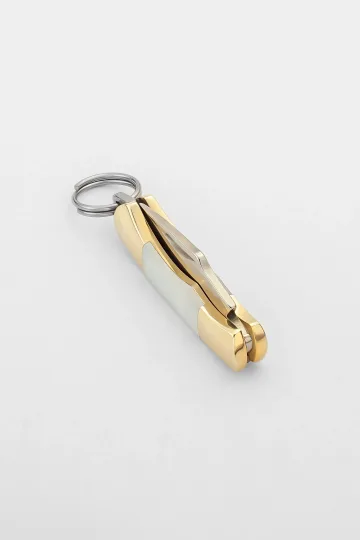
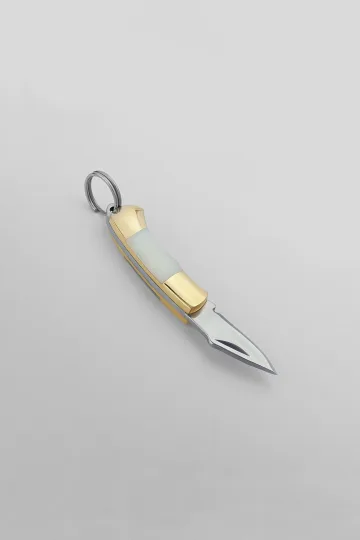
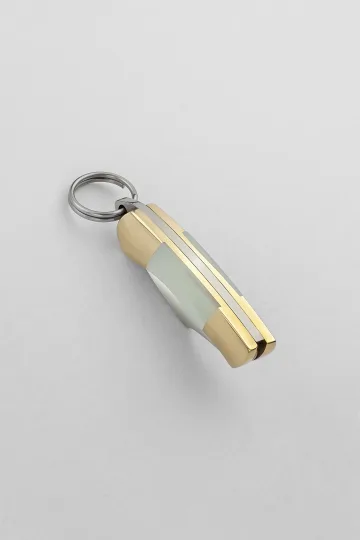
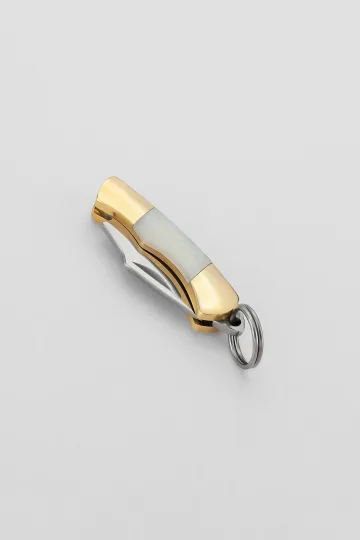
Wear the symbol, don't just read about it. These are in stock:
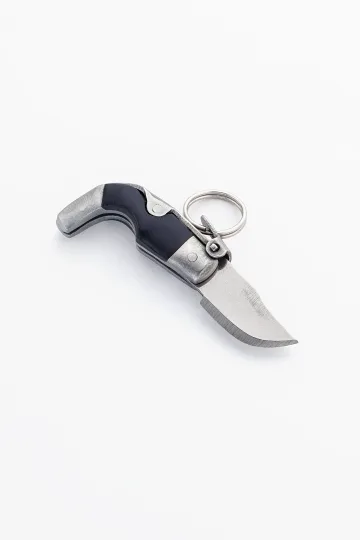
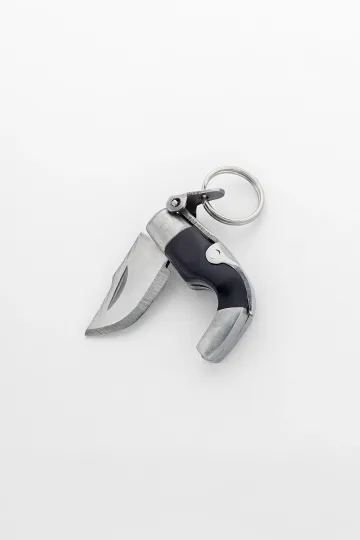
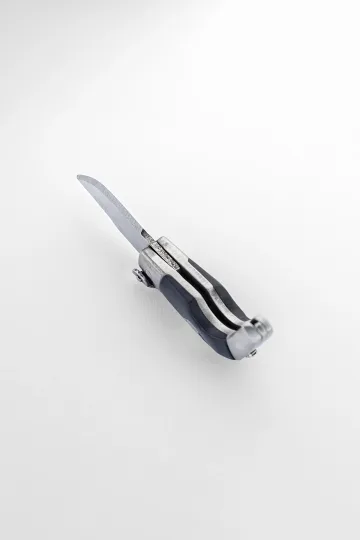
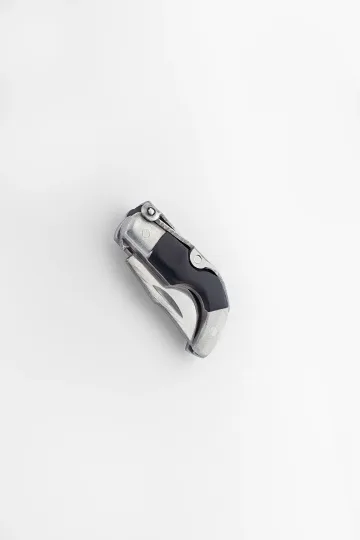
Frequently asked questions
What does "Curva Helada" mean? "Frozen curve" or "ice bend" in Spanish. It describes the blade shape: a smooth arc, as though frozen in steel.
Why is the blade curved? Moorish weaponry heritage. Arab smiths working in Spain from the 8th to the 15th century brought the curved-blade tradition. A curved blade cuts more effectively than a straight one due to the sawing effect at the bend.
Is Curva Helada a specific model or a type? A type. It refers to navajas with characteristically curved blades. Each master makes his own version, and no two curves are identical.
How does Curva Helada differ from the lunar knife? By curve direction and character. Curva Helada bends outward (like a sabre). The lunar knife bends inward (like a sickle). Curva Helada reaches forward, the lunar knife pulls inward. As pendants, Curva Helada is more "Moorish," the lunar knife more "mystical."
Where is the Curva Helada pendant made? In Albacete, Spain, a city with a 500-year knife-making tradition recognised as government cultural heritage (BIC since 2017). Full production cycle inside the workshop.
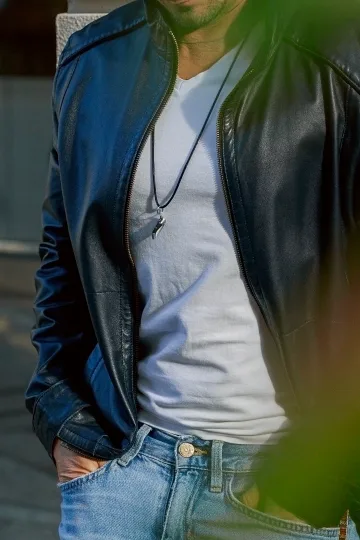
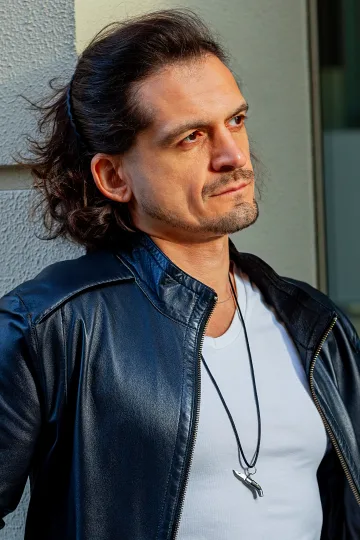
Does Curva Helada suit men? Yes. Though the smooth silhouette often associates with feminine jewellery tradition, the Moorish blade heritage is a distinctly masculine story. On a leather cord or thick chain, Curva Helada reads as weaponry, not jewellery.
What are Zevira pendants made of? Stainless steel and coated brass. Full production in Albacete, Spain.
Are these real knives? No. Jewellery miniatures. Not sharp, not weapons. Decorative, not a functional blade. Rules differ by country, school, and venue, and airline and security policies vary, so check local rules and your carrier's or venue's policies before travel.
What is the difference between a Curva Helada and any other curved navaja? The Curva Helada is not simply "a navaja that got bent." It is a defined type with specific proportions: the curve must be smooth and continuous, the spine must follow the edge line, and the tip must taper to a point. A navaja with a random, uneven bend is a defective navaja. A Curva Helada with a perfect arc is craftsmanship.
Where can I see a real Curva Helada? Museo de la Cuchilleria, Albacete, Spain. Open year-round. The full-size knife that inspired the pendant sits behind glass, five minutes from the workshop where the pendant was made.
Can I wear it in the shower? On a rubber cord and in stainless steel: yes. On a leather cord: no, leather swells and deteriorates. The pendant itself handles water without issue.
Which chain length works best? 42 to 50 cm for most wearers. The Curva Helada has a flowing silhouette that works at different heights. Shorter (42-45 cm) places the curve at the collarbone, where it sits between the shirt and the skin. Longer (50+ cm) gives a more relaxed, bohemian feel.
How does the Curva Helada sit on the body compared to a straight pendant? A straight pendant hangs plumb, parallel to the sternum. A Curva Helada tilts slightly with the arc and rests at an angle, which changes how it catches light during movement. When you walk or breathe, the pendant shifts fractionally, and the arc creates a moving highlight. This is not a flaw. It is the arc doing what it was designed to do.
Does the curved shape make it more fragile than a straight pendant? In brass or stainless steel at miniature scale, the curve actually distributes stress more evenly than a straight piece of the same length would. A straight pendant bends most easily at its thinnest point. A curved pendant distributes any bending force along the arc. The practical difference is small, but the curved piece is, if anything, slightly more resistant to accidental bending.
Can the gold tone develop patina differently on the curved sections? Yes, slightly. The outer arc of the curve gets more friction contact with clothing and fingers, so the coating there can wear fractionally faster. Over months this creates a natural gradient: the apex of the arc develops more exposed brass, while the concave inner edge retains more coating. Many wearers find this attractive: the piece becomes more individual with time.
About Zevira
Zevira makes jewellery by hand in Albacete, Spain. The same city where navajas have been forged for five hundred years, and where original Curva Heladas sit behind museum glass. We take the curve of a Moorish blade and turn it into a pendant you can wear every day.
What you will find from us in the world of navajas and the curved line:
- Navaja pendants: Curva Helada, punta de espada, jerezana, capaora
- The lunar knife with its inward sickle arc, a counterpoint to the outward bend of the sabre
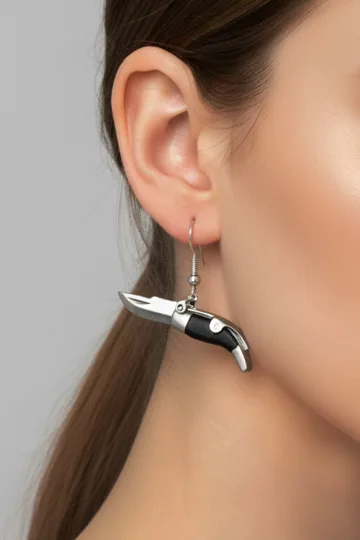
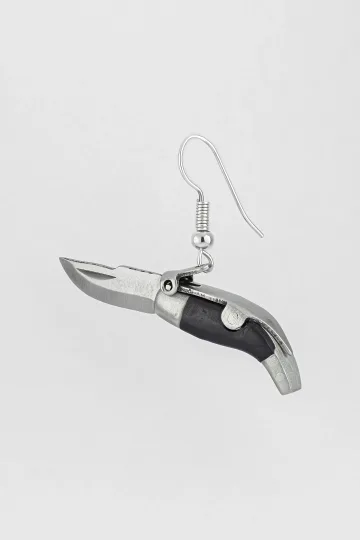
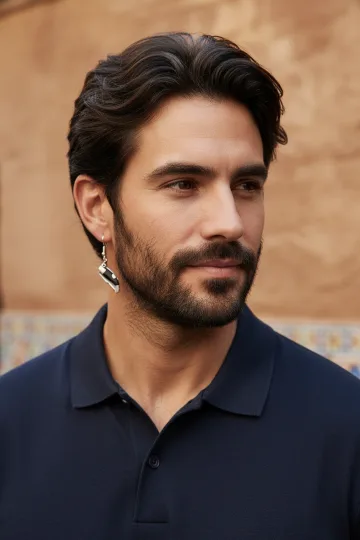
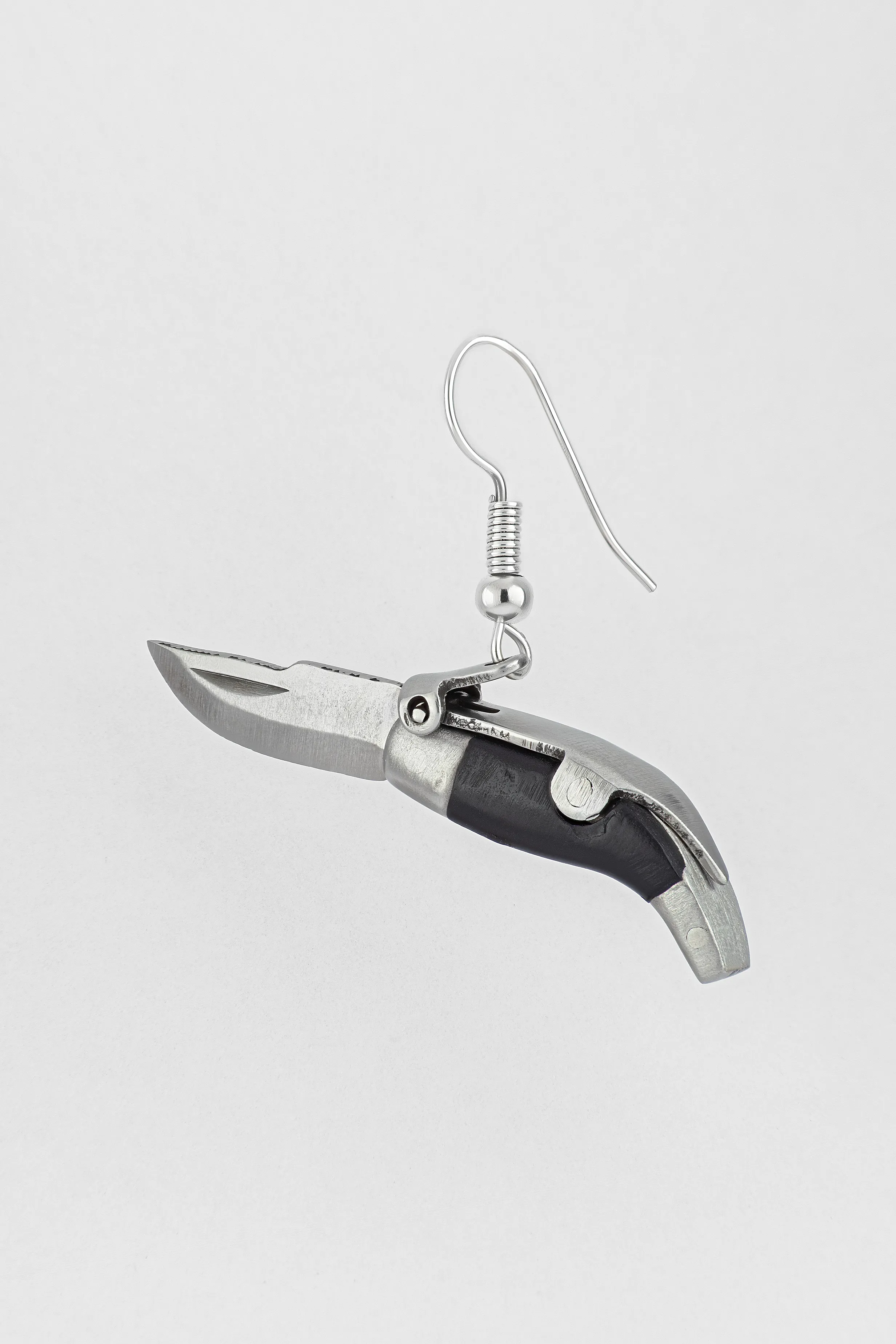
- Navaja earrings, where the blade's curve comes alive as it sways
- Paired sets built on contrast: curve and straight line, Moorish and Castilian
- Chains and rubber cords in different lengths to suit the flowing silhouette of the arc
- Sterling 925 silver and brass with a silver or gold-tone finish
Every piece is made by hand, with the option of personal engraving. Sterling 925 silver and 14-18K gold.