Bracelet Types: Every Style From Chain to Cuff and How to Wear Each One
The piece you forget you are wearing (until someone compliments it)
Bracelets are strange jewellery. Rings sit still. Earrings frame the face. Necklaces fill a neckline. But bracelets live on your wrist, in constant motion, visible every time you reach for a coffee, gesture during a conversation, or check your phone. They are the most casually visible piece of jewellery you own.
And yet, most people choose bracelets by impulse. Something looks nice, it goes on the wrist, done. No thought about whether it is the right type for their wrist size, their lifestyle, their wardrobe. No consideration of how it will behave during a workday, whether it will scratch a laptop, or whether it will survive a shower.
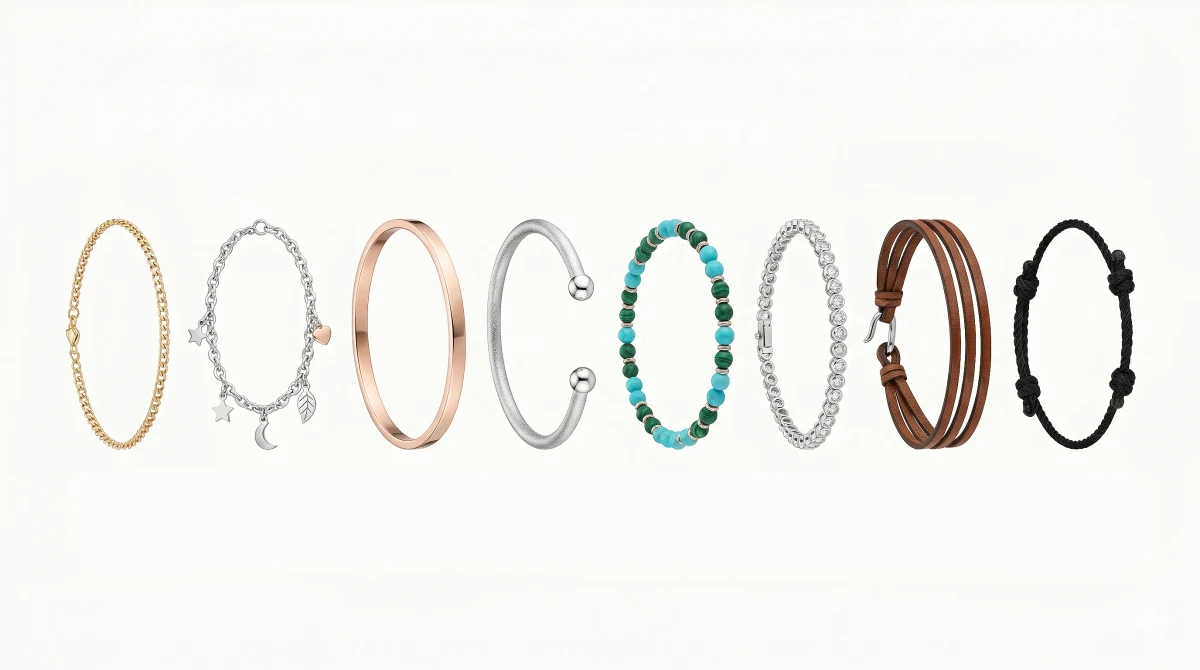
There are at least ten distinct bracelet types, and each one behaves differently on the wrist. This guide covers all of them: what they look like, how they fit, who they work for, and what to pair them with.
Bracelet types: the complete catalogue
1. Chain bracelet
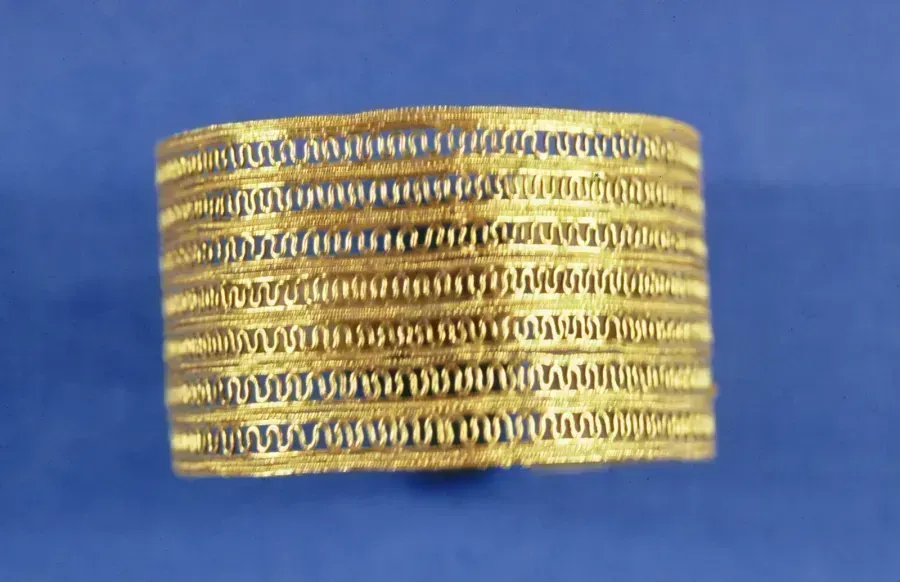
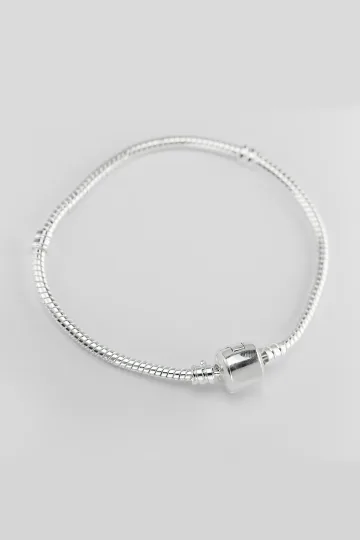
A series of interlocking metal links, fastened with a clasp. The most common bracelet type and the most versatile. Chain bracelets drape around the wrist, move with the hand, and feel almost weightless in thinner gauges.
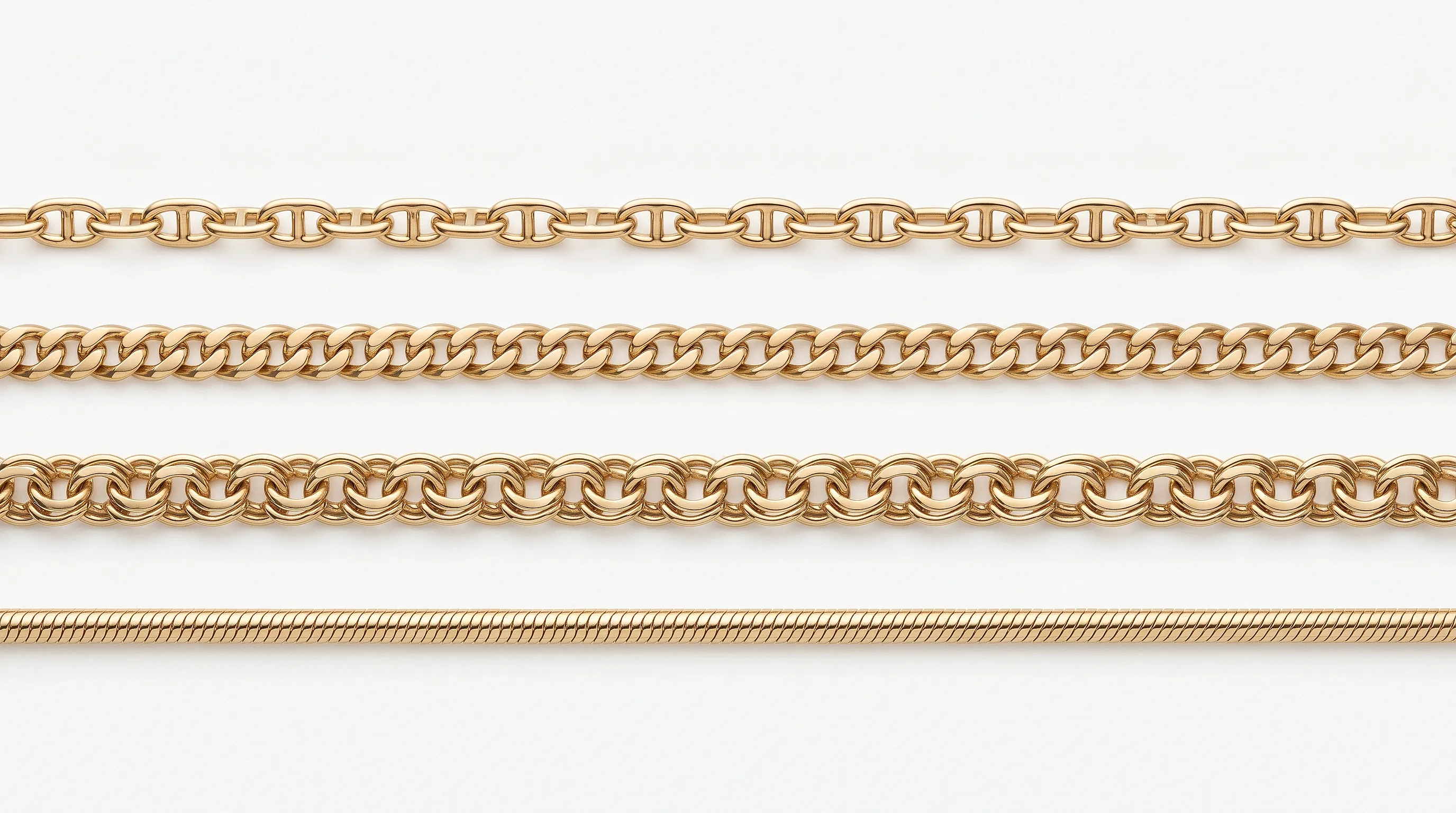
Link styles. Cable (round links, alternating orientation), curb (flat, twisted links that sit flush), figaro (alternating short and long links), rolo (round, uniform links), box (square links). Each creates a different texture. Cable is classic. Curb is bold. Figaro has rhythm. Rolo is clean. Box is geometric.
For a deep dive into link styles, see our chain types guide.
Width. Thin (1-2 mm): delicate, subtle, disappears into the wrist. Medium (3-5 mm): the sweet spot for everyday. Visible, not overwhelming. Thick (6 mm+): a statement. Works best on larger wrists or as a solo piece.
How it sits on the wrist. A chain bracelet drapes, meaning it conforms to the shape of the wrist and moves with every gesture. It does not restrict movement in any meaningful way. You will notice it most when typing or writing, where the links brush the desk or keyboard. This is usually minor but worth considering if you do fine precision work with your hands.
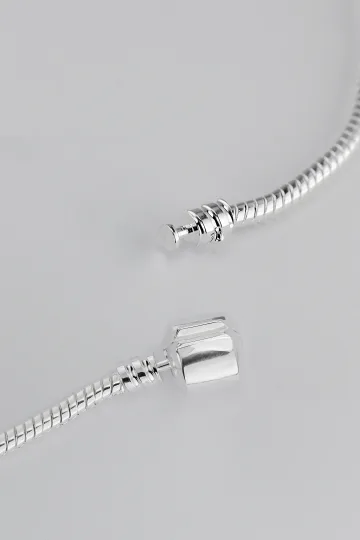
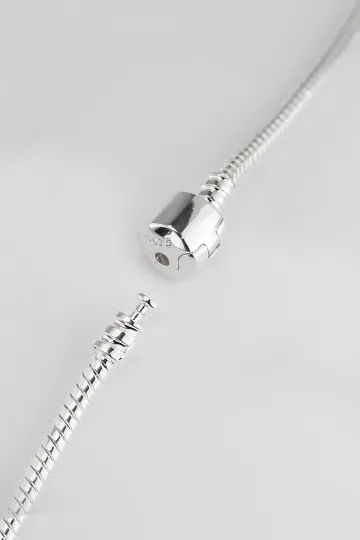
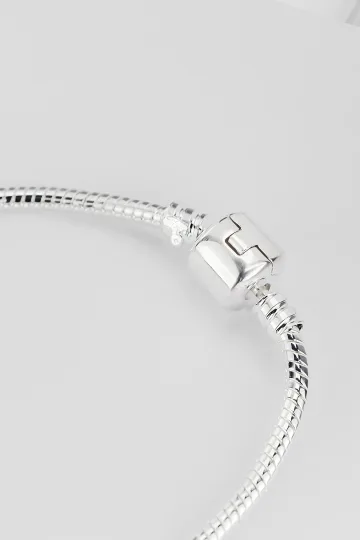
Clasp types for chain bracelets. Lobster clasp: the most secure, requires two hands to open but stays put. Spring ring: smaller and less secure, better for lightweight chains. Box clasp: common on wider chains, requires a push-button release. Toggle clasp: decorative and easy to open one-handed, but less secure on heavier chains. If you tend to lose jewellery, always choose a lobster or box clasp over a toggle.
Who it suits. Everyone. Chain bracelets are the safest starting point for anyone new to wrist jewellery. They do not restrict movement, they sit flat under sleeves, and they come in enough variations to match any style from minimalist to maximalist.
In the Zevira catalogue. The Astral Chain bracelet is a chain bracelet with celestial charm elements, bridging the gap between a plain chain and a charm bracelet.
2. Charm bracelet
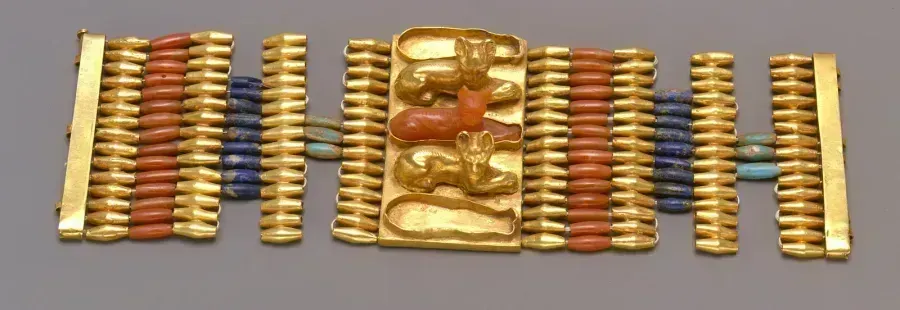
A chain bracelet with decorative elements (charms) attached at intervals along the links. Each charm can represent a memory, a milestone, a personality trait, or simply a design the wearer likes.
The appeal. Charm bracelets are wearable scrapbooks. A traveller adds a charm from each country. A parent adds birthstones for each child. A graduate adds a mortarboard. Over time, the bracelet becomes a physical autobiography. No two are identical.
How charms attach. Jump rings (simple metal loops that open and close) are the most common method. They are secure if properly closed but can open if snagged. Lobster claw clasps on individual charms are more secure. Fixed charms (welded or soldered directly to the chain) are the most permanent but cannot be rearranged.
Practical notes. Charm bracelets are noisier than other types: the charms clink together. This is either charming or annoying depending on the setting. In a library or a quiet meeting, it is annoying. On a Saturday in a cafe, it is charming.
They are also heavier and bulkier than plain chains. A fully loaded charm bracelet with 10+ elements has genuine weight. This is fine for occasional wear, but all day every day can tire the wrist. Consider a bracelet with a safety chain: a secondary clasp that catches the bracelet even if the main clasp opens.
Who it suits. Sentimental collectors. People who enjoy building something over time rather than buying a finished product. Also excellent as an ongoing gift: the bracelet is the first gift, and each subsequent birthday or holiday adds a new charm.
3. Bangle
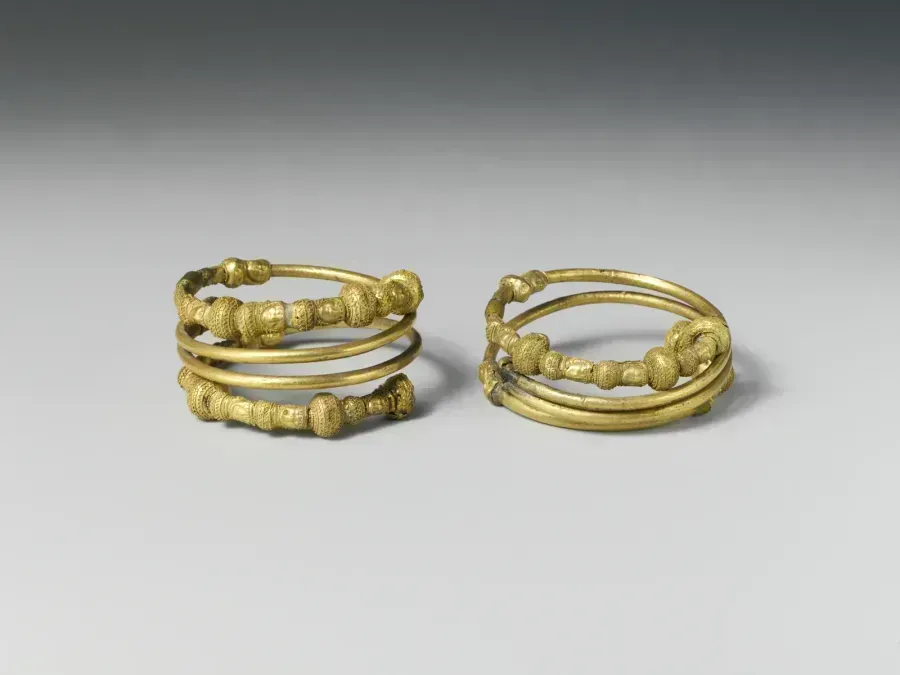
A rigid circular bracelet that slides over the hand and sits on the wrist without a clasp. The shape is fixed. It does not bend, flex, or drape. It is a circle of metal.
Sizing. This is where bangles get tricky. Because there is no clasp, the bangle must be wide enough to pass over the knuckles. Measure the widest point of your hand (thumb tucked in, fingers compressed) and add 5-10 mm. Too tight and it will not go on. Too loose and it slides to the forearm or falls off when you lean over.
Material matters. Solid metal bangles are the traditional form. Stainless steel is practically indestructible. Sterling silver dents if dropped repeatedly. Gold-plated bangles show wear at the edges where they contact surfaces.
Profile options. Bangles come in different cross-sections: round (a simple wire-like profile, sits lightly on the wrist), flat (a band, more surface contact, can feel more substantial), D-shaped (flat inside, rounded outside, the most comfortable profile for extended wear because the flat interior sits evenly against the wrist rather than rolling).
Sound. Multiple bangles stacked together produce the classic bangle "jingle." In Indian, Middle Eastern, and African traditions, this sound is part of the jewellery's purpose. In Western minimalist contexts, one or two bangles worn silently is more typical. Neither approach is wrong. It depends on what you want the bracelet to do.
Who it suits. People who like clean lines, structured jewellery, and a geometric look. Bangles are architectural. They look intentional in a way that chain bracelets do not always achieve.
4. Cuff bracelet
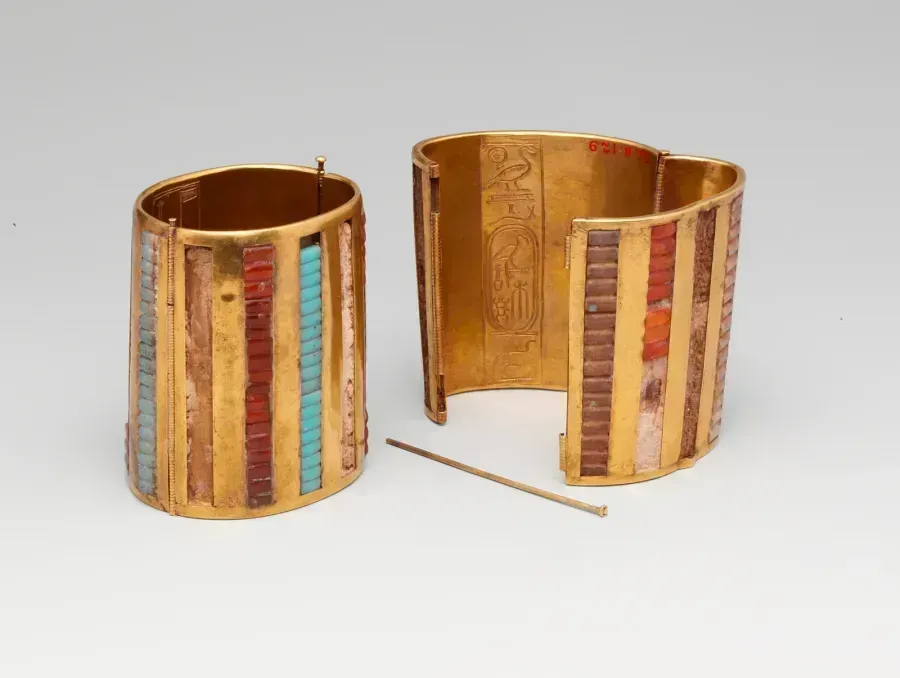
An open bangle. Instead of a complete circle, a cuff has a gap (usually at the inner wrist) that allows it to be squeezed onto the arm. No clasp, no sizing problems. The gap makes it adjustable within a range.
Width. Cuffs range from narrow (5-10 mm, barely wider than a bangle) to wide (30-50 mm, covering a significant portion of the forearm). Narrow cuffs are subtle. Wide cuffs are armour.
How it fits. The cuff rests on the wrist bone. The gap sits against the inner wrist where it is least visible. A well-fitted cuff stays put without squeezing. Too tight and it digs in. Too loose and it rotates and slides.
How to adjust a cuff. Hold the cuff in both hands with the gap facing you. Gently bend the two ends toward or away from each other to tighten or widen. Do not flex it repeatedly in the same spot: metal fatigue is real, and a cuff bent back and forth many times will eventually crack at the flex point. Adjust once to fit your wrist, then leave it.
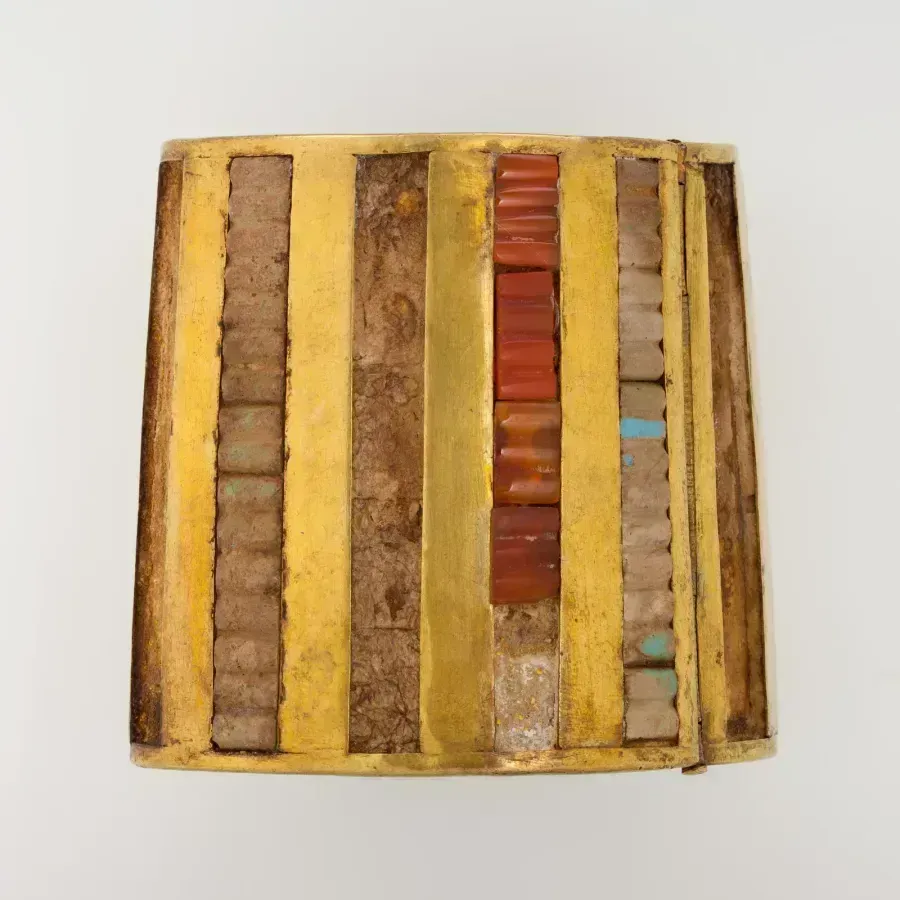
Decorative variations. Plain cuffs in brushed or polished metal are the most minimal. Hammered cuffs have a textured surface that catches light differently. Engraved cuffs carry patterns or text. Wide cuffs sometimes feature inlaid materials: turquoise, enamel, or resin, which adds colour and visual weight without adding actual mass.
Style notes. Cuffs have a bolder personality than chains or bangles. They do not move, they do not jingle, they sit and make a statement. A wide metal cuff says "I chose this deliberately." It is warrior jewellery, Viking jewellery, art jewellery. Not background decoration.
Who it suits. People who want presence without fuss. No clasps to fiddle with, no sizing to agonise over. Put it on, bend it slightly to fit, done. Also works well for people with larger wrists who find bangles too tight: the adjustable gap solves the sizing problem.
5. Beaded bracelet
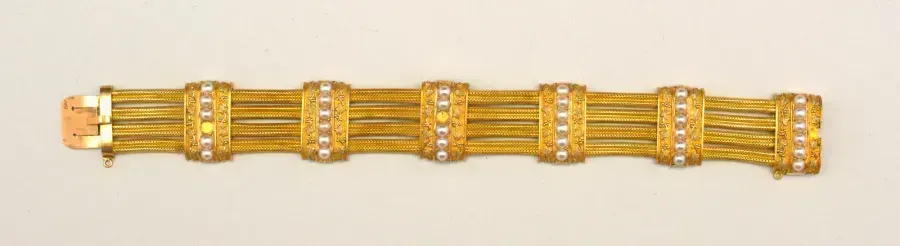
A string of beads (stone, glass, wood, metal, crystal, or plastic) threaded on elastic cord, wire, or chain. The most casual bracelet type and the one with the most material variety.
Bead materials. Natural stone beads (lava rock, tiger eye, onyx, turquoise) are popular in men's jewellery and wellness-adjacent fashion. Glass beads range from Murano art pieces to mass-produced colour pops. Wood beads are the most casual, suited to beach and outdoor settings. Metal beads (including daisy spacers and smooth rounds) add weight and shine to otherwise matte designs.
Bead size and proportion. Small beads (4-6 mm) read as delicate and are suited to narrower wrists. Medium beads (8 mm) are the most versatile. Large beads (10 mm+) create presence and look better on wider wrists where they have room to breathe. Mixing bead sizes within a single bracelet adds visual rhythm and prevents the flat, uniform look of all-same-size beads.
Elastic vs clasp. Most beaded bracelets use elastic cord. Easy on, easy off, no clasp fiddling. But elastic wears out. It stretches over time and eventually snaps, usually at the worst possible moment. Beaded bracelets on wire or chain with a clasp last longer but lose the easy-on convenience.
Who it suits. Casual dressers. People who prefer organic materials to metal. Festival, beach, and weekend wardrobes. Also popular as "intention" or "meditation" bracelets with specific stone choices, though the therapeutic claims around crystal bracelets are more tradition than science.
6. Tennis bracelet
A flexible line of individually set stones, connected by a thin metal articulation. Named after Chris Evert, who stopped a US Open match in 1987 to retrieve her diamond bracelet from the court. Before that, it was called an "in-line" or "eternity" bracelet. Marketing history made in a tennis break.
Appearance. The most refined bracelet type. A continuous line of sparkle that flexes with the wrist. Nothing jangles, nothing swings. It sits close and catches light with every movement. Elegant in a way that few other bracelet types achieve.
How the articulation works. Each stone sits in its own setting, connected to the next by a tiny metal hinge. This hinge system is what makes the bracelet flexible while keeping it close to the wrist. The number of hinges determines how freely the bracelet moves. More hinges mean smoother movement but also more potential failure points over years of wear. Quality construction means each hinge is tight and precise without being stiff.
The safety clasp. Tennis bracelets should always have a box clasp with a secondary safety latch. A regular lobster clasp is inadequate for a bracelet this valuable and this close-fitting. The box clasp clicks shut and the safety latch must be deliberately pushed in before the clasp can open. This is the piece Chris Evert was missing in 1987.
Stones. Traditional tennis bracelets use diamonds. Modern versions use cubic zirconia, moissanite, or lab-grown stones at a fraction of the price with identical visual effect at arm's length. The setting and articulation matter more than the stone type for the overall look.
Who it suits. People who want quiet luxury. The tennis bracelet does not shout. It glitters. It works with formal and business-casual wardrobes and looks equally at home with jeans and a white shirt. One of the few bracelet types that transitions seamlessly from day to evening.
7. Wrap bracelet
A long cord, chain, or leather strip that wraps around the wrist two, three, or more times. Creates a layered look with a single piece.
Materials. Leather wraps are the most common: a strip of leather with a button or hook clasp, sometimes studded with metal elements. Cord wraps use waxed cotton, nylon, or silk. Chain wraps use a very long, thin chain that loops multiple times.
Fit. Wraps should sit snug but not tight. Too loose and the layers separate and slide around chaotically. The wrap count depends on wrist size and cord length. Most wraps are designed for two to three loops on an average wrist. If your wrist is narrower than average, a wrap designed for two loops may give you three, and vice versa. When buying, check the total length of the cord or leather against your wrist circumference to estimate loop count.
Converting to other formats. Many wraps can be worn as a single-loop bracelet (worn without wrapping, using a longer clasp extension), or even as a necklace, though the look changes significantly. Versatility is one of the wrap bracelet's genuine advantages.
Who it suits. People going for a bohemian, layered, or artisanal look. Wrap bracelets read as handmade and organic even when they are mass-produced. They are particularly popular in men's casual jewellery.
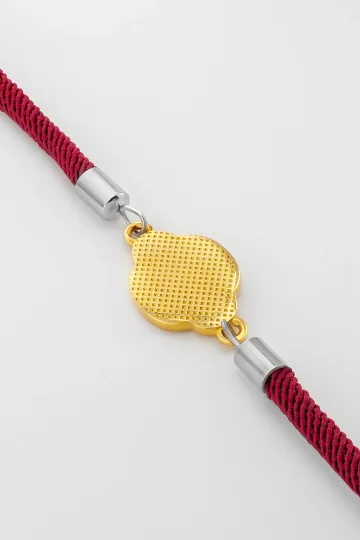
8. Sliding knot bracelet
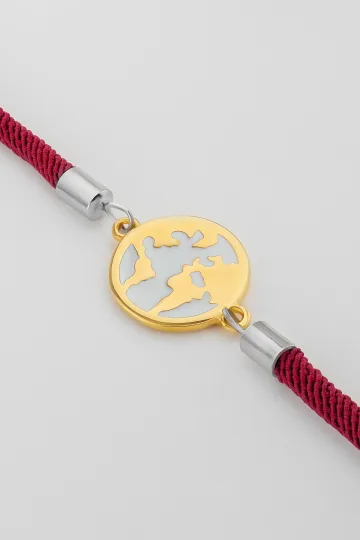
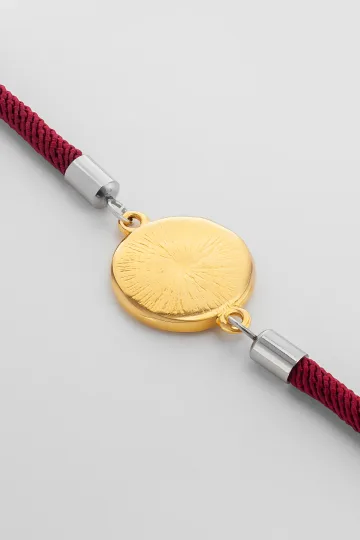
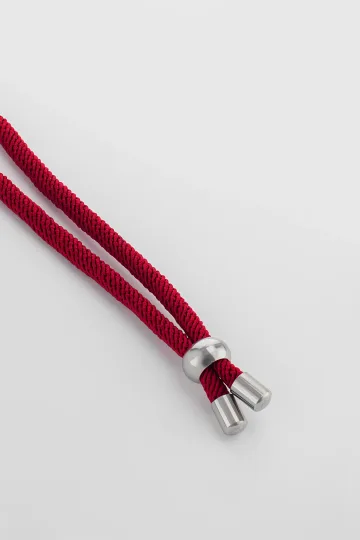
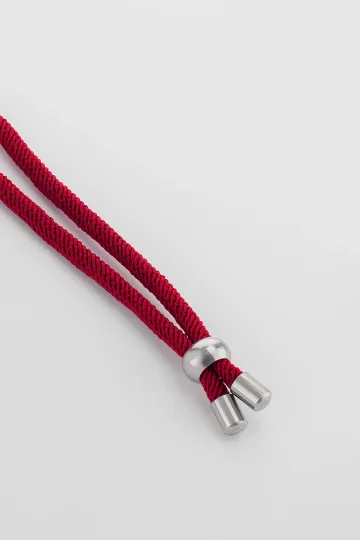
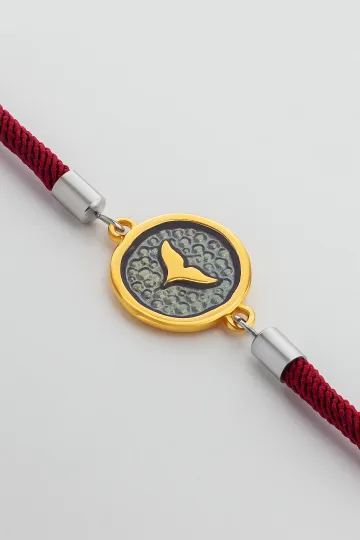
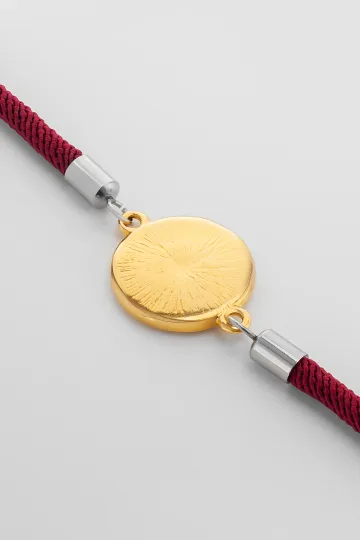
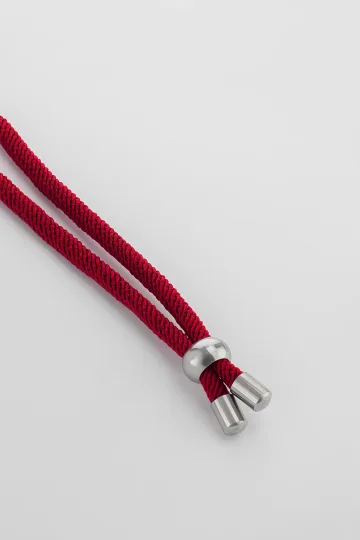
A cord bracelet with an adjustable closure: two knots that slide along the cord to tighten or loosen the bracelet. No metal clasp. Often features a central element (a bead, a pendant, a symbol) on the cord.
The practical genius. One size fits all. Literally. The sliding knots adjust to any wrist circumference. This makes sliding knot bracelets the ideal gift when you do not know the recipient's wrist size (which is most of the time, since nobody memorises their wrist circumference).
How the knot works. The closure consists of two overhand knots, each threaded through the loop of the other cord. Pulling the knots apart loosens the bracelet; pushing them together tightens it. The knots grip the cord through friction rather than mechanical locking, so they hold their position unless actively moved.
Durability. The cord is the weak point. Nylon and waxed polyester last years. Cotton and silk fray. The knots can loosen over time and need retying. Not a permanent jewellery piece, but a comfortable, casual one.
Who it suits. Casual wearers, surfers, travellers, and anyone who finds clasps annoying. Also popular as friendship bracelets in an upgraded form.
9. ID bracelet
A chain bracelet with a flat metal plate (plaque) at the centre, traditionally engraved with a name, date, or medical information. Originally a military identification piece. Now a fashion and personalisation staple.
History. Soldiers wore ID bracelets so they could be identified if their dog tags were lost. The practice moved to civilian fashion in the 1940s and 1950s, when returning soldiers kept wearing theirs. By the 1970s, ID bracelets were mainstream accessories.
Modern use. Engraved with names, coordinates, dates, or short messages. Medical alert versions carry critical health information (allergies, blood type, conditions). The flat plate also works as a canvas for minimalist design: a small symbol, a single word, a meaningful number.
Engraving options. Traditional machine engraving cuts clean, uniform lines. Hand engraving produces softer, slightly irregular marks that read as more artisanal. Laser engraving allows for very fine detail, including signatures and small illustrations. The choice of engraving style affects how the bracelet reads: machine engraving is more formal, hand engraving is more personal.
For more on personalising jewellery through engraving, see our engraving guide.
Who it suits. Anyone who wants personalised jewellery with a clean, unisex look. ID bracelets are one of the most gender-neutral jewellery types. The same design works on any wrist.
10. Hinged bracelet
A rigid bracelet with a hinge on one side and a clasp on the other. The bracelet opens like a door, the wrist goes in, and it clicks shut. Combines the clean look of a bangle with the easy closure of a clasp.
Advantage over bangles. No need to squeeze over knuckles. The hinged opening makes it accessible to people with larger hands or arthritic joints who cannot force a solid bangle past their fingers.
Hinge quality. A good hinge is the critical component. It should move smoothly without wobbling or sticking. Test by opening and closing multiple times. A stiff hinge will either be difficult to use or will loosen excessively over time. A loose hinge will cause the bracelet to open at unexpected moments.
Appearance. Hinged bracelets often feature a wider, more decorative design than bangles because the hinge allows for complex shapes that would be impossible in a complete circle. Ornate patterns, inlaid stones, and enamel work are common.
Who it suits. People who love the bangle aesthetic but need practical access. Older wearers who find solid bangles physically difficult. Anyone who wants a rigid bracelet without the sizing anxiety.
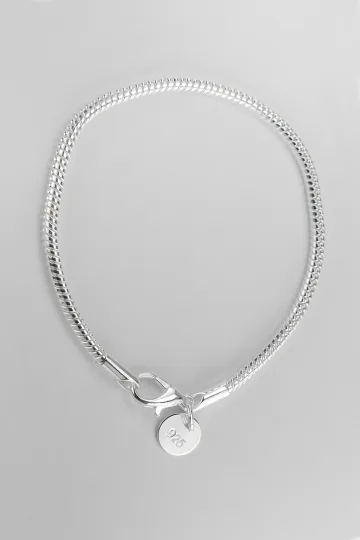
Wear the symbol, don't just read about it. These are in stock:
Clasps and closures: a guide to the hardware
The clasp is the most frequently handled part of any bracelet. It opens and closes every time you put the bracelet on or take it off. It is also where most bracelet failures happen. Understanding clasp types helps you choose one that suits your dexterity, lifestyle, and security needs.
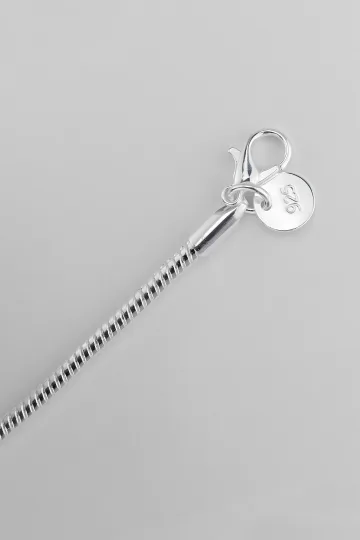
Lobster claw clasp. The most common and most reliable clasp for everyday jewellery. A spring-loaded mechanism that requires you to pull back a small lever to open. Secure under normal conditions. Requires two hands, which is a genuine inconvenience when the bracelet is on your dominant wrist. Available in sizes from 6 mm (minimal, for delicate chains) to 20 mm (substantial, for heavier pieces).
Spring ring clasp. Similar mechanism to the lobster claw but in a circular form. Generally less secure because the spring weakens over time and the opening lever is smaller and harder to operate. Better suited to lightweight necklaces than bracelets, where they are subject to more movement stress.
Box clasp. A rectangular or square clasp with a tab that clicks into a box. Common on tennis bracelets and wider chain bracelets. The best versions include a secondary safety latch that must be disengaged before the clasp can open. More complex to operate than a lobster clasp but significantly more secure for valuable pieces.
Toggle clasp. A T-bar on one end and a ring on the other. The bar is threaded through the ring and rests across it. Very easy to open one-handed. The weakness: the T-bar can work its way through the ring with movement, especially if the ring is too large relative to the bar. Suitable for casual bracelets that will not be worn during active use.
Magnetic clasp. Two magnetic halves that snap together. Extremely easy to use, useful for people with limited hand dexterity. Unreliable for anything other than light, casual bracelets: magnets can open unexpectedly. Avoid on bracelets you cannot afford to lose.
Sliding adjustable clasp. Found on wraps and some chain bracelets. Allows the length to be changed without removing the bracelet. The bracelet slides freely through the clasp channel and is held at the desired length by a locking mechanism. Practical but introduces a weak point: the lock can slip under pressure.
Bracelet sizing: how to measure
The paper strip method
Cut a strip of paper. Wrap it around your wrist where you want the bracelet to sit (usually just below the wrist bone). Mark where the strip overlaps. Measure the distance from the end to the mark. That is your wrist circumference.
For chain bracelets, add 15-20 mm to your wrist measurement. This provides comfortable slack. Too tight and the bracelet digs in when you bend your wrist. Too loose and it slides over the hand.
For bangles, measure over the knuckles (hand compressed, thumb tucked) and add 5 mm.
For cuffs, wrist circumference is enough since the gap provides adjustability.
Common wrist sizes
| Wrist circumference | Bracelet size | Typical fit |
|---|---|---|
| 14-15 cm | 16-17 cm | Small (petite women) |
| 15.5-16.5 cm | 17.5-18.5 cm | Medium (most women) |
| 17-18 cm | 19-20 cm | Large (most men) |
| 18.5-20 cm | 20.5-22 cm | X-Large (larger men) |
Fit by bracelet type
Chain bracelets need 15-20 mm of ease beyond wrist circumference. Less than 10 mm feels tight and restricts movement. More than 25 mm looks sloppy and moves excessively.
Bangles must clear the knuckles when the hand is compressed. Once on the wrist, they sit loosely but should not slide over the hand when the arm is raised.
Cuffs should sit on the wrist bone without needing to grip tightly. When you rotate the cuff, it should move slightly but return to position with the gap at the inner wrist.
Wrap bracelets should feel snug through all layers. If the outermost layer pulls away from the wrist, the wrap is too long for your wrist size or needs an extra loop.
Tennis bracelets should drape with about 5-10 mm of ease. Too tight and it feels constricting; too loose and it moves erratically during wear and is more vulnerable to snagging.
Customer reviews
Zevira is a real jewellery shop. Genuine payments, deliveries and customer thank-yous.
🥰🥰🥰 gracias
Ok, ¡gracias! 🙂
Wearing bracelets: which wrist?
There is no rule. None. Wear it on whichever wrist feels right.
That said, there are practical considerations.
Watch wrist vs bare wrist. If you wear a watch on your left wrist, a bracelet on the same wrist will clink against it constantly. Some people love this. Others find it scratches both items. Metal on metal is not gentle. If you want to protect both, wear the bracelet on the opposite wrist.
Dominant hand. Your dominant hand moves more, writes more, types more. A bracelet on the dominant wrist gets more attention (people see it during gestures) but also more wear and more interference with tasks. For desk workers, a bracelet on the typing hand can be distracting. For people who work with their hands, it can be a genuine hazard.
Cultural traditions. In some cultures, the left wrist carries symbolic weight (receiving side, heart side). In others, the right wrist is for jewellery, the left for watches. These are traditions, not laws. Follow them if they resonate, ignore them if they do not.
For a deeper look at placement and meaning, see our guide on ring finger meanings.
Stacking bracelets: the layering guide
The odd number rule
One bracelet is clean. Two bracelets are balanced but can look planned. Three bracelets are a stack. Five is a statement. Even numbers (two, four) tend to look symmetrical and deliberate. Odd numbers (one, three, five) create more natural, relaxed groupings.
This is a guideline, not a commandment. If four bracelets look good on your wrist, wear four.
Mixing types
The best stacks mix textures and types. A chain bracelet next to a cuff next to a beaded bracelet creates visual interest through contrast. Three identical chain bracelets in different widths create interest through variation. Three beaded bracelets in the same material create a bohemian uniform.
Rules of thumb for mixing:
- Mix metals carefully. Gold and silver together is fine if it is intentional. One gold piece lost among four silver ones looks like a mistake. Commit to mixed metals or commit to one tone. For guidance on metals and skin tones, see our metal and skin tone guide.
- Vary width. If everything is the same thickness, the stack looks like a uniform. Mix thin chains with medium bangles.
- Keep weight balanced. One heavy cuff plus three thin chains puts all the visual weight on one side. Distribute interesting elements.
For more on layering techniques, see our jewellery layering guide.
Building a stack from scratch
Start with an anchor piece: one bracelet that defines the aesthetic. A wide cuff is an anchor. A tennis bracelet is an anchor. A thick chain is an anchor. Then add supporting pieces that complement rather than compete.
Layer outward from the wrist. The thinnest, most delicate pieces sit closest to the wrist. Heavier or bulkier pieces sit toward the outer side of the stack. This creates a gradient of weight and visual complexity.
Leave breathing room between pieces. Bracelets should move independently, not be pressed together so tightly that they form a solid mass. Space allows each piece to be seen separately.
What not to stack
- Multiple tennis bracelets (too formal for stacking, they need breathing room)
- A watch plus more than two bracelets on the same wrist (cluttered, restrictive)
- Wide cuffs plus anything else (the cuff is the statement, adding more dilutes it)
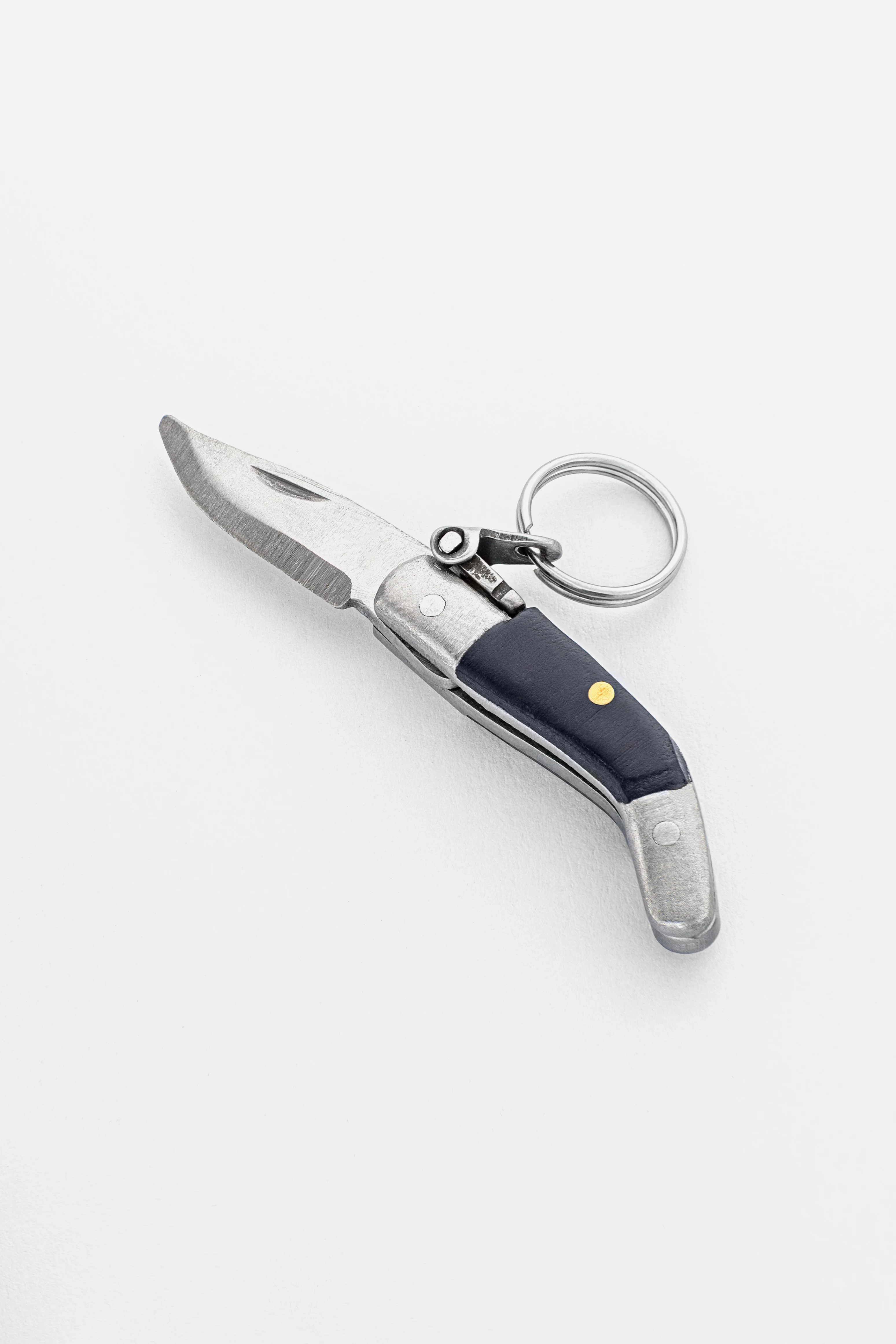
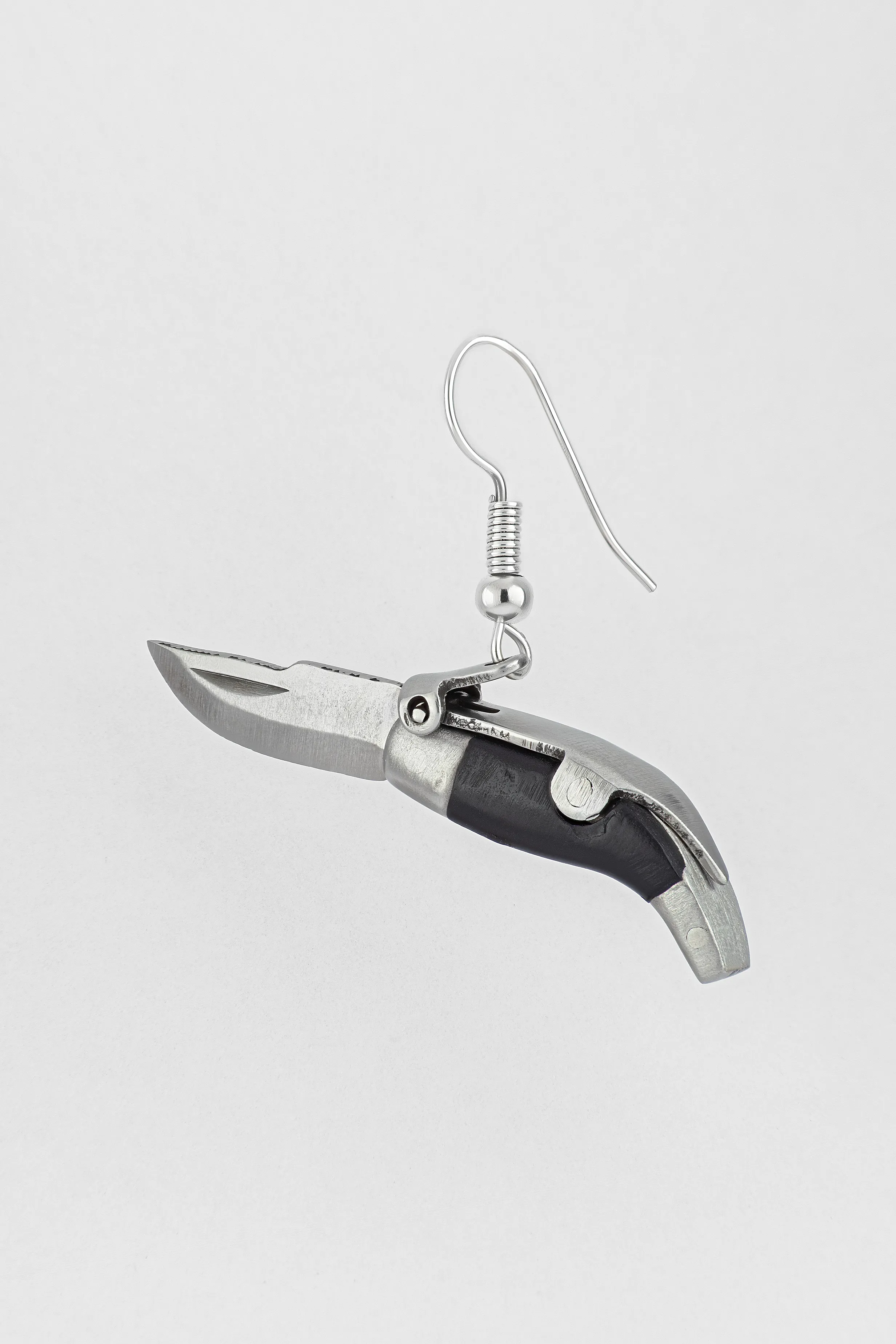
Artisan-crafted CAPAORA navaja pendant
A 40 mm stainless-steel navaja with a real folding mechanism and Palanquilla lock. An affordable gift to remember.
A code for blog readers:
10% off your first order
Authentic · Maker's guarantee · Ships from Spain
Bracelets by occasion
Daily office wear. Chain bracelet, thin bangle, or a discreet cuff. Nothing that clinks on the desk or catches on keyboard edges. Nothing with charms that jingle during meetings. Stainless steel handles daily wear without showing it.
Date night. Tennis bracelet, delicate chain with a pendant element, or a polished bangle. Something that catches candlelight. Something that moves when you reach across the table. Bracelets are romantic jewellery because they are visible during intimate gestures: holding hands, touching a face, reaching for a glass.
Casual weekend. Beaded bracelets, wrap bracelets, sliding knot designs. Leather, cord, natural stone. This is where relaxed materials shine. A stack of three beaded bracelets with a weekend outfit is effortless.
Formal event. Tennis bracelet or a single polished bangle. Minimalism wins at formal events. One refined piece communicates more than a stack of five.
Beach and water. Stainless steel chain or silicone. Nothing with leather (salt water destroys it), nothing plated (water accelerates plating loss), nothing with elastic (sand and salt weaken it). For details on what survives water, see our jewellery and water guide.
Gym. Nothing. Seriously. Bracelets catch on equipment, scratch during lifting, and harbour bacteria in sweaty crevices. Remove before training. If you insist, a slim silicone band or a very thin chain tucked under a wristband.
Bracelets for men
Men's bracelet culture has exploded in the last decade. Where once a watch was the only acceptable wrist accessory for men, now chain bracelets, beaded stacks, leather wraps, and cuffs are standard.
Starting points for men new to bracelets. A single chain bracelet in stainless steel, 3-5 mm wide. Or a leather wrap with a metal clasp. Or a set of stone beaded bracelets in dark tones (black onyx, lava rock, tiger eye). Start simple, build from there.
What works. Clean lines, heavier gauges, darker materials. Men's bracelet designs tend toward the architectural rather than the decorative. A 5 mm curb chain says more on a male wrist than a delicate 1 mm cable chain.
Proportion and wrist size. Men generally have larger wrists than women, which changes what reads as appropriate. A chain bracelet that looks substantial on a 15 cm wrist looks thin on a 19 cm wrist. When buying bracelets intended for men, check that the width is proportionate to the wrist it will sit on.
What to avoid starting out. Charm bracelets (read as feminine in most men's fashion contexts), thin tennis bracelets (require confident styling), multiple thin chains (can look accidental rather than intentional).
For a full guide, read first jewellery for men.
Leave your email, we'll send your discount code. No spam, unsubscribe anytime.
The code arrives by email, valid on your first order.
Materials and durability
| Material | Daily wear | Water safe | Tarnish | Hypoallergenic | Maintenance |
|---|---|---|---|---|---|
| Stainless steel 316L | Excellent | Yes | No | Yes (most people) | Wipe occasionally |
| Sterling silver 925 | Good | Avoid | Yes | Usually | Polish regularly |
| Gold plated | Moderate | No | Plating wears | Depends on base | Gentle care |
| Solid gold | Excellent | Yes | No | Yes (14K+ yellow) | Minimal |
| Titanium | Excellent | Yes | No | Yes | None |
| Leather | Moderate | No | N/A | Usually | Condition regularly |
| Elastic cord | Low-moderate | Avoid | N/A | Yes | Replace when stretched |
| Stainless + PVD | Excellent | Yes | No | Yes | Wipe occasionally |
For a more detailed metal comparison, see our brass, steel, and silver comparison.
Care by material
Stainless steel. Wipe with a soft cloth and warm water when visibly dirty. Dry completely before storing. The material does not tarnish, does not react with sweat or water, and maintains its finish for years without any treatment. If you want to restore shine to a brushed finish, a jeweller can re-brush it.
Sterling silver. Silver tarnishes through oxidation, accelerated by humidity, sweat, and contact with sulfur compounds (rubber, wool, some foods). Clean regularly with a silver polishing cloth or the aluminium foil and baking soda method. Store in an airtight bag or a lined jewellery box when not wearing. Remove before swimming, showering, and exercise.
Gold plated. The plating layer is typically 0.5-5 microns thick. Friction, water, and chemicals wear it through to the base metal beneath. Clean gently with a soft cloth, never with abrasive cleaners. Remove before water exposure. Apply perfume and hand cream before putting the bracelet on. Replating is possible when the original plating wears through.
Leather. Natural leather stiffens and cracks without moisture. Condition with a leather balm every few months. Never immerse in water. If the bracelet gets wet, let it dry at room temperature away from direct heat. Salt, chlorine, and sweat break down leather faster than anything else.
Elastic cord. Elastic loses its tension over time, especially with regular stretching, exposure to water, and contact with skin oils. When a beaded bracelet starts sliding around the wrist more than it should, the cord is failing. Replace before it snaps. Most jewellers and craft shops carry replacement cord.
Common bracelet problems and fixes
Bracelet keeps spinning. The bracelet is too loose. Chain bracelets need to sit snug enough that gravity does not rotate them. Options: remove a link (a jeweller can do this), add an extender chain and wear it shorter, or use a small rubber gasket to add friction.
Clasp migrates to the top. The clasp is the heaviest point on the bracelet, so gravity pulls it to the lowest point (the underside of the wrist). When you move your hand, the clasp swings to the top. Solution: add a small counterweight (a charm, a bead) opposite the clasp, or choose a bracelet where the clasp is integrated into the design.
Green wrist from bracelet. This is a copper reaction, not an allergy. Copper in brass or bronze reacts with skin acids and moisture, leaving a green deposit. Not harmful, but not attractive. Solution: switch to stainless steel, or apply clear nail polish to the inner surface. More in our green skin guide.
Allergic reaction. Redness, itching, or rash under the bracelet, especially where the clasp contacts skin. Usually nickel allergy. Solution: switch to nickel-free materials (316L steel, titanium, solid gold). Full details in our nickel allergy guide.
Tarnished bracelet. Sterling silver turns dark over time. Normal. Fix with a silver polishing cloth, or use the baking soda method from our tarnish restoration guide.
Clasp that will not stay closed. Usually a worn spring (lobster claw) or a bent tab (box clasp). A jeweller can replace the clasp for the cost of the hardware plus a few minutes of work. On an inexpensive bracelet, it may be more practical to replace the bracelet.
Bracelets and watches: the coexistence question
The most common bracelet styling question is whether bracelets and watches can share a wrist. The short answer: yes, with care.
A thin chain bracelet next to a watch works if the metals are compatible (silver bracelet with silver-toned watch, gold with gold). A leather wrap bracelet next to a leather-strap watch creates a cohesive look. A thick bangle next to a watch creates clutter.
The practical concern is scratching. Metal bracelets will scratch watch faces and cases over time. If your watch is a treasured piece, wear bracelets on the opposite wrist. If you do not care about surface marks, stack freely.
Some people solve this by wearing the watch on the dominant hand and bracelets on the non-dominant hand, or vice versa. There is no rule. There is only what works for you and what your tolerance for surface wear happens to be.
Bracelets as gifts
Bracelets are one of the safest jewellery gifts. Unlike rings (sizing nightmare) and necklaces (neckline dependence), a bracelet works on nearly any wrist with minimal guesswork.
For someone who wears no jewellery: a single chain bracelet in stainless steel, thin and understated. It is the least intimidating entry point. If they wear it, you have opened a door. If they do not, a thin chain is easy to store and forget about.
For a partner: matching bracelets. Both of you wearing the same piece is a quiet declaration. It does not need to be explained. People notice, or they do not. Either way, you both know.
For a friend: a sliding knot bracelet with a symbolic charm. The adjustable sizing eliminates guesswork. The symbolism makes it personal. An infinity symbol for lasting friendship, a compass for someone starting a new direction, or a tree of life for someone who values roots.
For a parent: a bracelet with birthstones or initials. This category crosses into deeply personal territory and requires knowing the parent's style. A chain bracelet with small charms tends to work across ages and tastes.
For more ideas, see our gift guide for girlfriends or gift guide for boyfriends.
Silver and gold jewellery, wedding bands, symbolic pendants, paired sets.
Five bracelets on a conference call is not confidence, it is a percussion section. Wear one, and behave.
How to wear a bracelet
Hundreds of wrists have passed through my hands on shoots, and it is rarely the bracelet that decides the look. It is what sits next to it: the sleeve, the watch, the tone of the outfit. Here is what actually works, sorted by occasion.
What do I wear a bracelet with every day? For plain clothes I recommend a 3-4 mm chain or a single thin bangle. A light top lifts the metal, a dark one turns the bracelet into the accent. The simpler the tee and jeans, the bolder the wrist can go: tiger's eye beads or a leather wrap add interest where there is none otherwise.
Is it right for the office? I suggest silence over sound. A thin chain or a smooth bangle under a shirt and knitwear, nothing that taps the desk or rattles on a call. One tidy piece reads composed, a stack of five distracts. Stainless steel takes daily wear and shows no fatigue.
How do I build an evening look? For evening I choose shine and movement. A tennis bracelet or a polished bangle catches the light, a charm chain glints when you reach across the table. With a sleeveless dress the wrist is fully open, so one expressive piece beats a crowd. Silk and dark tones love cool silver, warm knits go with gold.
How do I stack bracelets? I build from thin at the wrist to bulk on the outside and vary the width, or it turns into a uniform. Mix metals on purpose: one gold link among silver looks like a slip, a deliberate mix looks like intent. Leave room between pieces so each one moves on its own.
Which type suits whom? For a slim wrist I suggest delicate chains and small beads, for a broad wrist larger bangles and a heavier gauge with room to carry it. If you like clean lines, take a cuff or a bangle. If you lean toward softness and movement, choose a chain or a wrap. Caught between two sizes, I recommend the larger: shortening is easier than stretching.

Turn on your camera, pick earrings, a pendant or a ring, and see the piece on yourself in real time.
Switch items in one tap.
Everything runs in your browser: no photo or video is ever uploaded.
Send a friend a discount code, they save on their first order.
FAQ
How tight should a bracelet be? You should be able to fit one finger between the bracelet and your wrist. Tighter restricts blood flow and digs in during movement. Looser and it slides, spins, or catches on things.
Can I wear a bracelet in the shower? Stainless steel: yes. Sterling silver: avoid (accelerates tarnish). Gold plated: never (water destroys plating). Leather: never (warps and cracks). Elastic: avoid (weakens the cord).
Which wrist should I wear my bracelet on? There is no rule. Practical advice: opposite your watch if you want to avoid scratching. On your non-dominant hand if you want less interference with tasks.
How many bracelets is too many? When they restrict wrist movement or interfere with activities, you have too many. For most people, three to five is the comfortable maximum on one wrist.
Should men wear bracelets? Yes. Men's bracelet culture is well established. A single chain or leather bracelet is the modern equivalent of a tie clip: a small detail that shows you pay attention to how you present yourself.
What is the best bracelet for everyday wear? A stainless steel chain bracelet, 3-5 mm wide, with a secure lobster clasp. It handles water, sweat, friction, and daily abuse without showing wear. It looks equally good with a suit and a t-shirt.
Can I sleep in a bracelet? Chain bracelets: generally fine (they flex with movement). Bangles and cuffs: uncomfortable and can press into the wrist during sleep. Beaded: risk of snapping elastic under pressure. For daily wear pieces you never want to remove, chain is the safest type.
Are bracelet sizes universal? No. Sizing varies between brands. Always measure your wrist and check the specific brand's size chart rather than ordering "medium" and hoping.
What bracelet type is best for small wrists? Delicate chain bracelets (1-3 mm) and thin bangles. Avoid wide cuffs and chunky beaded designs, which can overwhelm a small wrist and look like they belong to someone else.
Why does my clasp keep opening by itself? The spring mechanism has weakened (common in lobster clasps after heavy use) or the clasp is too small for the weight of the bracelet. Take it to a jeweller for clasp replacement. This is a minor repair on most bracelets.
What is the difference between a bangle and a cuff? A bangle is a complete circle with no opening or clasp. A cuff has a gap in the circle that allows it to be put on and adjusted without sizing constraints. Bangles require the right diameter to pass over the knuckles; cuffs do not.
Can bracelets be resized? Chain bracelets can be shortened by removing links or lengthened by adding an extension chain. Bangles cannot be resized easily. The size is fixed by the circumference of the circle. Cuffs can be adjusted by bending the gap wider or narrower. Wrap bracelets are inherently adjustable within their cord length.
Wear the symbol, don't just read about it. These are in stock:
The bottom line
Bracelets are the most functional piece of jewellery. They move with you, they are visible during every interaction, and they require almost no effort to wear once you find the right type and fit. Unlike earrings (which need piercings), rings (which need sizing), and necklaces (which need neckline consideration), a bracelet just goes on the wrist and works.
Start with one piece in a material that matches your lifestyle. Wear it for a week. If you forget it is there, you chose well. If you keep adjusting it, try a different type. The right bracelet is the one you stop noticing.
About Zevira
Zevira makes jewellery by hand in Albacete, Spain. Bracelets are one of our biggest categories, from slim cable chains to substantial cuffs that rest on the wrist bone.
What you can find with us:
- Chain bracelets in cable, curb, and figaro links
- Charm bracelets you can build up over time
- Bangles and cuffs with engraving
- Leather wraps with metal elements
- Matching sliding knot bracelets for gifts, when you have no idea what wrist size to buy for
Every piece is made by hand by a craftsperson, with the option of personal engraving. We work in 925 silver and 14 to 18K gold.