Jewellery Gift for Your Boyfriend or Husband: What to Choose When He Never Wears Any
The Hardest Gift to Get Right
He does not wear jewellery. Never has. A watch, maybe. A wedding band if he is married. But a pendant, a ring, an earring? No. And you want to change that.
Maybe because you saw how good Momoa looks with a pendant. Maybe because you want to give something personal and you are tired of aftershave and socks. Maybe because he once said "that's cool" about someone else's necklace but would never buy one for himself.
This guide is for you. Not for him. He is not reading articles about jewellery. You are. And you will make the right choice.
Why Men "Don't Wear Jewellery"
Three reasons. All solvable.
"I wouldn't know where to start." The choice is overwhelming. What metal, what symbol, what chain length. Women learn this from childhood (first pair of earrings at 7, first bracelet at 12, first chosen ring at 16). Men do not. The confusion hides behind "I don't need any." You solve this problem by making the choice for him.
"It's not masculine." A stereotype from roughly 1950 to 2000. Before and after that window, men wore jewellery constantly. Vikings with arm rings, legionnaires with torques, kings with rubies, pirates with gold hoops, rock stars with crosses and skulls. Your gift is not an attack on masculinity. It is a return to the norm. More history in the men's jewellery guide.
"It wouldn't suit me." He has not tried, so he does not know. The right first piece, chosen properly, changes that opinion within a day. The task: choose properly.
What to Choose: By Personality Type
If He Is Practical and Rational
He likes things that work. He reads reviews before buying. He appreciates function over form.
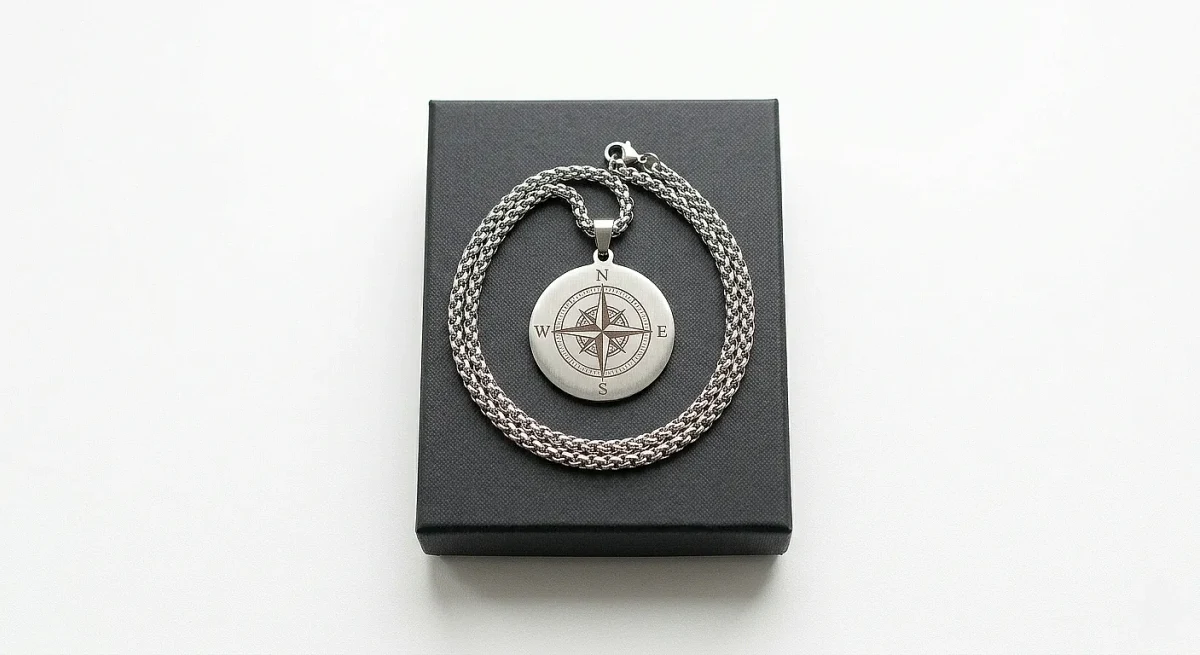
Your pick: a compass. A navigational instrument turned symbol. No mysticism, no esoterica. A concrete object with a concrete function, translated into a metaphor. Engineers, programmers, analysts appreciate this. The compass does not ask him to believe in anything. It just points.
Why it works as a gift: "I think you always know where you're going" is a compliment wrapped in a symbol. He can explain it to anyone without feeling awkward.
If He Values History and Tradition
He watches documentaries. He visits museums. He likes old things, well-made things, things with a backstory.
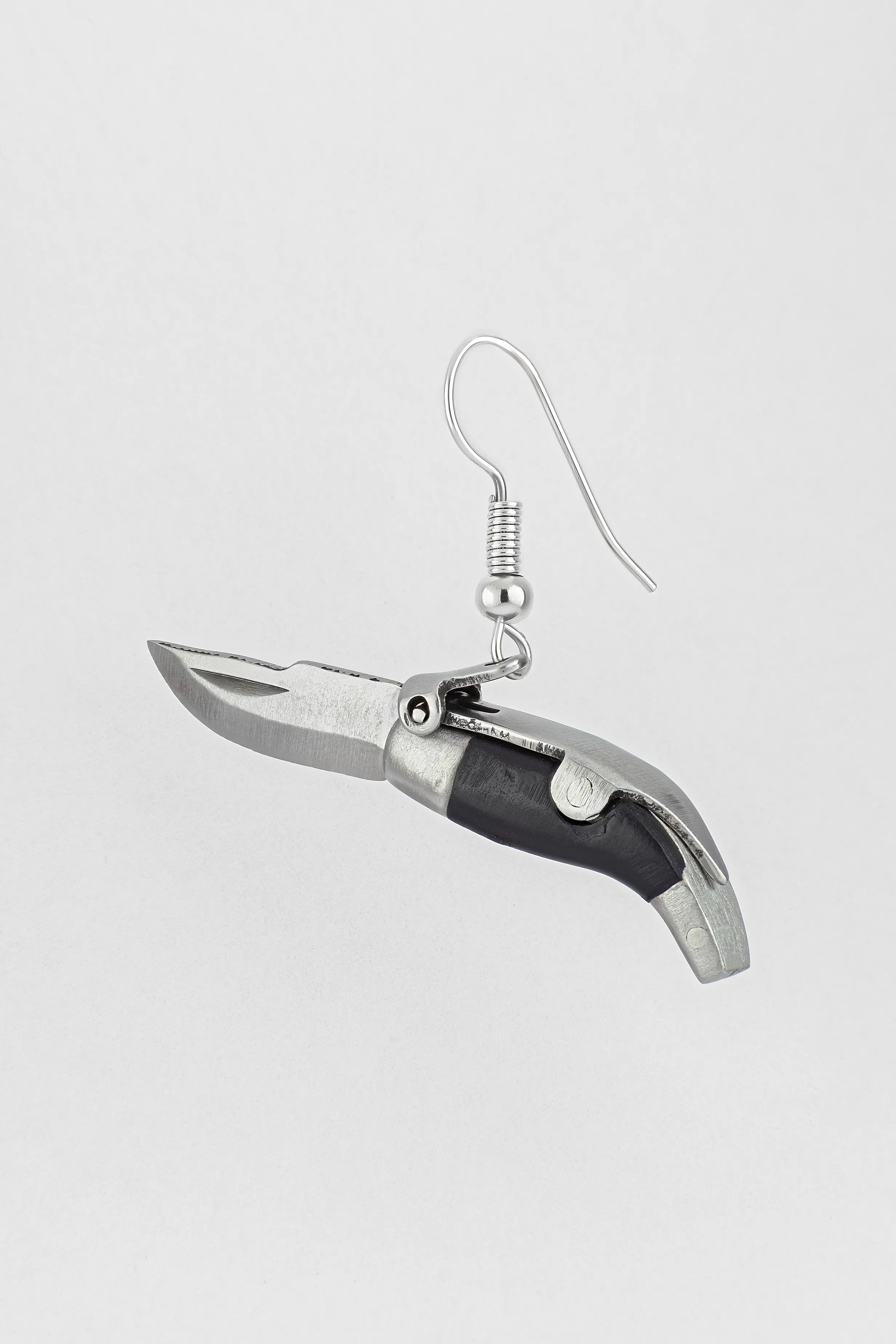
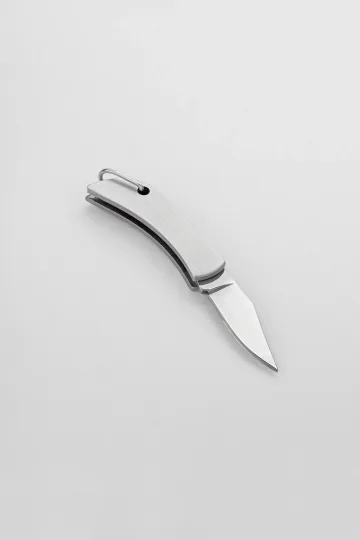
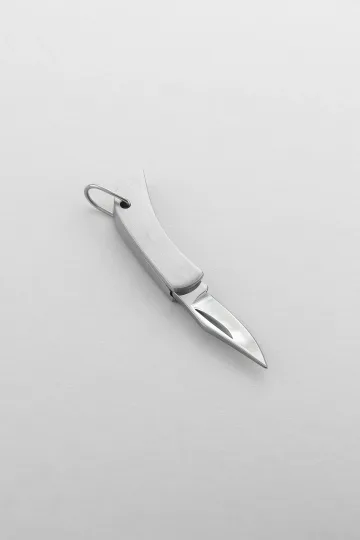
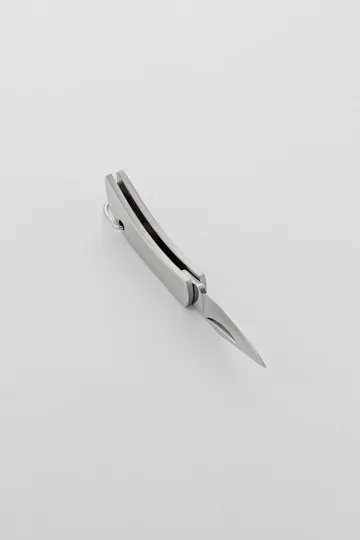
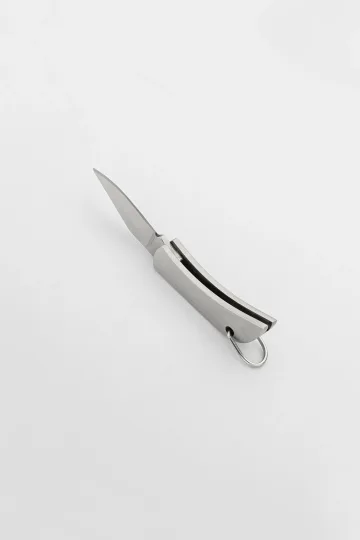
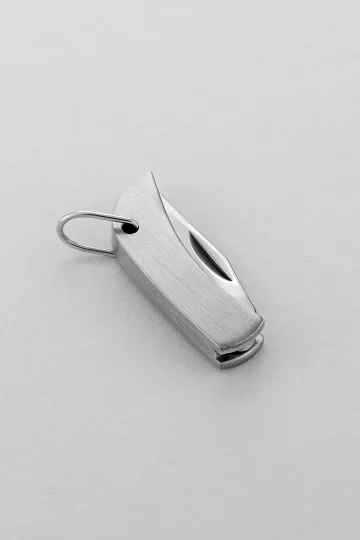
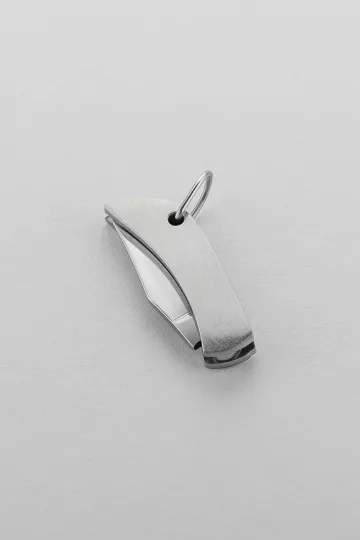
Your pick: a navaja. Any type. Five hundred years of Spanish tradition. Tell the story when you hand it over: the sword ban of 1563, bandoleros, flamenco, Albacete. A gift with a story is remembered forever.
Specific types: jerezana for elegance, punta de espada for severity, capaora for raw power, curva helada for something unusual.
A navaja earring is for the brave. It unfolds like a real knife. If he appreciates it, this will be the best gift he has ever received. If he is not ready for an earring, start with a pendant.
If He Is Thoughtful or Philosophical
He thinks about big questions. Reads broadly. Enjoys deep conversations.
Your pick: the all-seeing eye, five thousand years of symbolism from Horus to the Freemasons. The ouroboros, the serpent of eternity. The vegvisir, the Icelandic compass: "find the way even when you do not know the road."
If He Loves Film, Gaming, or Mythology
He has watched every Marvel film. He plays God of War or Assassin's Creed. He reads Neil Gaiman.
Your pick: Thor's hammer, Marvel meets Norse mythology in one pendant. The Aegishjalmur, the helm of awe, for Skyrim and God of War fans. A skull, memento mori, for those drawn to dark aesthetics.
If He Is a Minimalist
Less is more. Clean desk. Neutral colours. No clutter.
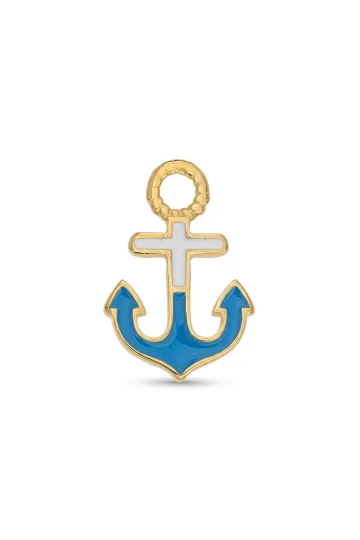
Your pick: an anchor, small and clean. A punta de espada, a straight line, zero decoration. A simple ring on the middle finger. The minimalist does not want a symbol that requires explanation. He wants something that sits quietly and looks right.
If He Is Outdoorsy or Sporty
He hikes, surfs, climbs, cycles. He cares about durability and dislikes fuss.
Your pick: stainless steel, always. A compass (navigational relevance). An anchor (maritime). A whale tail (ocean). On a rubber cord, not a metal chain: waterproof, will not tarnish, survives salt water, showers, and sweat. He can put it on and forget it exists.
If He Is a Creative or Artist
He works in design, music, art, or any field where self-expression is part of the job.
Your pick: something bold. A Tarot card pendant. An ouroboros. A raven. Creatives are not afraid of symbols and are less likely to worry about "what will people think." Choose the most interesting design rather than the safest.
If You Have No Idea What His Style Is
A compass on a 50 cm (20-inch) steel chain. Works for roughly 80% of men. Not too mystical, not too rough, not too delicate. The safe universal choice. "I believe you know where you are going" is a solid message in any context.
Technical Parameters (So You Do Not Get It Wrong)
Chain Length
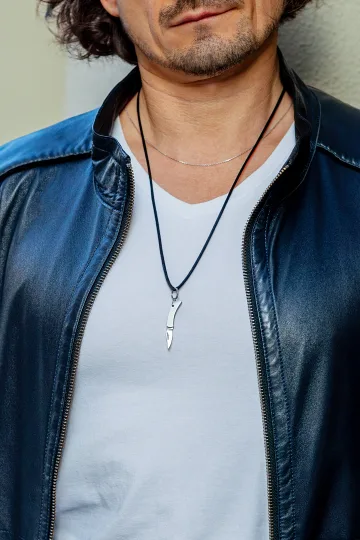
50 cm (20 inches). Do not overthink it. This is the men's universal. It places the pendant just below the collar bone, visible in an open collar, hidden under a buttoned shirt. There is a detailed chain length guide if you want precision, but 50 cm works for 80% of men.
If he is particularly tall (over 190 cm / 6'3") or broad, consider 55 cm. If he is slim and average height, 50 cm is perfect.
Chain Thickness
2 to 2.5 mm cable or anchor link. Not thin (looks fragile on a male neck), not thick (looks aggressive). Medium. The chain should be visible but not the main event. The pendant is the star.
Material
Stainless steel for a first piece. Does not tarnish, does not turn green, requires zero maintenance. He will not be polishing silver. He will not be removing it before showers. Steel forgives neglect. It is the material for men who do not yet have a jewellery care routine.
If you know he cares about aesthetics and would maintain it, brass with gold-toned coating is warmer and richer. But for a safe first gift, steel.
Pendant Size
About the size of a thumbnail. No larger. A large pendant on a man who has never worn anything is too much. Small, neat, noticeable only up close. He can always upgrade to something larger later. For now, subtle is better.
Metal Tone
If you know his skin undertone, match it. If not: stainless steel (silver tone) is the safe bet. It works on most skin tones and most wardrobes. More on metal and skin tone matching.
Budget Tiers
Tier 1: casual/experimental. About the price of a nice dinner out. A single stainless steel pendant on a basic chain. This is the "let's see if he wears it" tier. Low financial risk, high potential reward.
Tier 2: meaningful gift. About the price of two to three dinners. A pendant with a quality chain, possibly in brass with coating for a warmer look. This says "I thought about this" without creating a sense of obligation.
Tier 3: special occasion. About the price of a weekend away. A pendant plus a ring, or a premium chain, or a combination set. For birthdays, anniversaries, or Christmas. This is a statement gift.
The principle across all tiers: price and impact are not related. A steel navaja with the story of Albacete will create a bigger impression than a silver chain with no context. People remember stories, not price tags.
How to Give It: Presentation Matters
When and where
Not in public. If he has never worn jewellery, handing it over in front of people creates pressure. Friends watching, family commenting, him feeling like he has to react a certain way. In private. No audience. Just you and him.
Not buried in other gifts. If it is Christmas and he is unwrapping ten things, the pendant gets lost in the pile. Give it separately, before or after the main event. Make it a moment.
Not "here, I bought this." A gift of jewellery to a man who does not wear jewellery is a gesture. Treat it like one.
The story matters
"This is a navaja. A Spanish knife that is five hundred years old. Made in a town that has been forging blades since the 15th century." The story makes the gift meaningful, not just attractive.
"I picked the compass because you always seem to know where you're going. Even when things are confusing, you find a direction."
"This is a vegvisir. An Icelandic compass. Vikings believed it would help them find their way home, even in storms."
The story transforms a metal object into a personal message. Without the story, it is a pendant. With the story, it is a statement about how you see him.
Without pressure
"Try it. If it's not your thing, no worries." Give him a week. Do not ask every morning "are you wearing it?" Do not comment if he does not put it on immediately. Some men need to sit with the idea for a day or two. Others put it on instantly and never take it off. Both are normal.
Do not explain how to wear it. He will figure it out. You already chose the right chain length. He will intuitively work out where it sits, how it looks under a shirt versus over one, whether he likes it visible or hidden. Trust the process.
Wrapping
A small, quality box. Not a plastic bag. Not a gift card envelope. A proper box, even a simple one, signals that this is jewellery, not a trinket. If the piece comes in its own box, that is enough. If not, a small velvet pouch or a clean jewellery box from a craft shop works.
Do not over-wrap. A bow, maybe. But do not bury it in tissue paper, then a bag, then more paper. He should open it and immediately see what it is. The "what is it?" moment should happen when he sees the pendant, not when he is still fighting through layers of wrapping.
What NOT to Give
Costume jewellery from a fast-fashion shop. It will turn green within a week. He will decide all jewellery is like that and never put anything on again. First impressions are everything. Quality matters for a first piece more than for any subsequent one.
A cross (unless you are certain about his faith). A religious symbol without context is awkward. If he wears a cross already, a nicer cross is a great gift. If he does not, do not assume.
Matching heart halves. Too "cute." A man who has never worn jewellery will not wear half a heart. He might wear it once, to please you, and then it goes in a drawer. If you want a couple's set, try Sun and Moon from the Tarot collection. Or two different navaja types. Symbols that work independently but have a connection when together.
A beaded bracelet. Shambala, lava stone, agate: niche taste. If he has not asked for it specifically, it is a gamble with poor odds. These bracelets work for men who already have a developed jewellery style. For a first piece, metal or leather only.
Something engraved with your name or initials. If you split up, he cannot wear it. A symbol is timeless. A name lasts as long as the relationship. If the relationship lasts forever, he will love it. If it does not, the pendant is unwearable. Choose a symbol.
Something you would wear. This is the most common mistake. You choose something you find attractive, something that matches your aesthetic. But he is not you. A delicate rose gold chain with a tiny heart is beautiful, and it is for you, not for him. Think about his wardrobe, his personality, his size. Not yours.
A ring without knowing his size. Unlike a chain (which has a standard men's length), a ring must fit. A ring that does not fit is a disappointment, not a gift. If you do not know his size, stick to a pendant. If you must give a ring, read the ring size guide for stealth measuring methods.
What Happens After: Week by Week
Week 1. He puts it on. Fidgets with it. Checks the mirror. Might take it off once or twice. Might sleep in it. Might forget about it and then notice it mid-afternoon with a small shock. "Oh right, I'm wearing a pendant." All normal.
Week 2. Gets used to the weight. Stops noticing the chain on his neck. Forgets to take it off before a shower for the first time (if it is stainless steel, no harm done). First compliment from someone else: "cool, what is that?" He tells the story you told him.
Week 3. The pendant is part of his morning routine. Put on, like a watch. He misses it if he forgets it. He starts noticing other men's pendants in public, on screen, in meetings.
Month 1. Cannot imagine going without. The pendant has become part of his identity, not just his wardrobe. He touches it without thinking when he is concentrating or stressed. It is a comfort object disguised as jewellery.
Month 2 to 3. He asks about a second piece. Or he starts browsing on his own. Or he mentions "that ring looked cool." The funnel has opened. You did this.
Month 6. He buys you something from the same brand. Because now he understands the language of jewellery, and he wants to speak it to you.
This timeline is not universal, but it is remarkably consistent. The first two weeks are adaptation. By week three, the piece feels like it was always there.
The Long-Term Effect
Giving a man his first piece of jewellery changes more than his appearance. It changes how he thinks about self-expression. Up to this point, his options were: clothes, haircut, and maybe shoes. Now there is a new channel. A quiet one, a personal one, one that works even on days when everything else is the same old shirt and jeans.
A pendant with meaning becomes a touchstone. He touches it when he is thinking. He notices it in the mirror and remembers the story, the moment you gave it to him, the symbolism. It becomes a small, constant, physical reminder that someone chose something specifically for him.
That is why the gift matters more than the object. A compass is a compass. But a compass given by someone who said "because you always find the way" is a talisman. Not because of magic. Because of memory.
The Psychology of the First Piece
There is a reason the first piece of jewellery for a man works differently than the second, third, or tenth. The reason is not aesthetic. It is psychological.
A man who has never worn jewellery has built an identity without it. His self-image does not include metal on his body. The first piece changes not just his appearance. It changes his self-concept. That is a significant step, even when it consists of nothing more than a small pendant.
The adjustment runs in three stages.
Stage 1: Awareness. He feels the piece constantly. The weight of the chain, the pendant on his chest, the ring on his finger. Every movement reminds him that something new is there. This is normal and passes within a week.
Stage 2: Habituation. He forgets he is wearing it. It becomes part of the body, like a watch or glasses. He no longer notices it consciously, but he notices when it is missing. He reaches for the pendant in the shower when he realizes he took it off. That is the moment the piece becomes part of his routine.
Stage 3: Identity. He sees himself in the mirror and the piece belongs. Without it, something looks wrong, incomplete. He begins noticing other men's jewellery. He thinks about a second piece. Not because you suggest it. Because he wants it himself.
These three stages take between two and six weeks. For some men it happens faster. For introverts or men working in conservative environments, it can take longer. Give him time. Do not ask daily. Comment when it looks good, but do not make it a topic.
The Meaning of the Story
A piece of metal on a chain is jewellery. The same piece of metal with a story is a talisman.
The story does not need to be long. It does not need to be poetic. It just needs to be real.
"I saw the compass and thought of you, because you always know where you're going." That is enough. Ten words. But he will remember them. Every time he touches the pendant, he will think of them. Not of the compass. Of you. Of the moment. Of the meaning.
That is why a symbol works better than an engraving. A symbol has an open meaning. It grows with the relationship. A name or a date is fixed. It fits a specific moment. A compass fits every moment when he needs a direction.
Jewellery and Male Identity in Transition
The idea that jewellery is "unmanly" has an expiration date. And that date has already passed.
Look at the men who serve as role models today. Modern pop musicians wear pearls. Action film icons wear bone. David Beckham wears rings. Keanu Reeves wears a simple pendant. Timothee Chalamet wears earrings. None of them looks less masculine for it.
But it is not about celebrities. It is about the recognition that masculinity is not defined by the absence of jewellery. Vikings wore arm rings that weighed more than some modern chains. Roman legionaries wore signet rings with family crests. Samurai wore elaborate sword knobs as wearable art. Men in nearly every culture before the 20th century wore jewellery as a natural part of their identity.
The jewellery-free phase, roughly 1950 to 2000, was the exception, not the rule. It was a side effect of post-war austerity and the industrial-age masculinity ideal: functional, unadorned, efficient. That era is over.
This does not mean every man must immediately wear a pendant. It means the question "is jewellery okay for men?" is no longer a real question. The answer was always yes. Four thousand years of human history confirm it.
Care: What He Needs to Know (and What He Does Not)
If the first piece is stainless steel, he needs to know nothing. Stainless steel requires no care. No polishing, no removing before showers, no drying off. He can put it on and forget it. That is the entire point.
If the piece is coated brass, three rules are enough:
- Remove before swimming.
- Do not let perfume or cream contact it directly.
- Wipe with a soft cloth after wearing.
That is all. Explain these three rules once, briefly, without a lecture. He will remember. And if he forgets and the coating wears after three years instead of five, a jeweller can renew it. It is not a crisis. It is metal.
The Right Moment
Timing matters almost more than the piece itself when gifting jewellery to a man. A birthday always works. Christmas too. But the best moments are the unexpected ones.
New job. Passed exam. A difficult year survived. In moments like these, a pendant says something a card cannot: I see what you accomplished. Here is something that stays.
Valentine's Day is uncomfortable for many men. Not because they dislike gifts, but because the occasion feels forced. A piece of jewellery on February 14 feels like an obligation. The same piece two weeks later, just because, feels like a choice. The difference is subtle, but it is there.
Anniversaries work when you emphasize the story. "One year together. Here is something you can wear." The piece becomes a marker in the shared timeline. Every time he touches it, he remembers that moment.
And then there is the moment that works best: no occasion at all. Just because. "I saw this and thought of you." That is the strongest sentence a gift can carry. No date behind it. No expectation. Just the information: you were on my mind, and this is the proof. No calendar triggered it. No sense of duty. Just affection, materialized in a piece of metal he will wear every day from now on.
Silver and gold jewellery, wedding bands, symbolic pendants, paired sets.
Common Questions
He'll say "I don't need it." Probably. And he will probably put it on. "I don't need it" means "I don't know how to start." You started for him.
Which symbol is guaranteed not to offend? A compass. Neutral, not religious, not mystical, not aggressive. "You know where you're going" is a good message for anyone.
Is an earring too bold? Depends on him. If he has ever said "maybe I should get my ear pierced," that is a signal. If he has never mentioned it, start with a pendant. Do not ambush someone with a piercing gift.
Is stainless steel too cheap for a gift? 316L stainless steel is a surgical alloy. Swiss luxury watchmakers use a related grade for their watch cases. It is not a "cheap substitute for silver." It is a conscious material choice for someone who will not maintain silver. For a first gift, it is the smartest choice, not the cheapest.
What if he doesn't like it? A pendant is not a tattoo. If he does not like it, it goes in a box. You are risking the cost of two dinners, nothing more. And the gesture, the fact that you thought about him, chose something, and told a story, that he will remember regardless.
Should I get matching pieces for both of us? Only if both pieces work independently. A compass for him and a compass for you: yes, both are beautiful alone. Half a heart for him and half a heart for you: no, because half a heart looks incomplete on its own. Choose symbols that are connected but self-sufficient.
He already wears a watch. Will a bracelet clash? Not if it is on the opposite wrist. Or if it is on the same wrist but different material (leather bracelet plus metal watch, for example). Most men who wear watches adapt to a bracelet quickly because the wrist is already "inhabited."
What about a personalised piece with a date or coordinates? Coordinates of where you met, engraved on a pendant: romantic and wearable regardless of relationship status. A date: same. These are more personal than a name but less relationship-dependent. Good options for a meaningful gift.
His birthday is next week and I don't know his style. Compass on a 50 cm steel chain. Works for 80% of men. Worst case, he has an elegant pendant with universal symbolism. Best case, it is the beginning of a collection.
Can I give him jewellery if we've only been together a short time? Yes, but keep it light. Tier 1 (a pendant on a simple chain). No engraving, no "forever" symbol. A compass or anchor says "I find you interesting," not "I'm planning our wedding." The gift should match the stage of the relationship.
He is over 50. Is it strange? On the contrary. Men over 50 often look better in jewellery than 25-year-olds. More character in the face, more confidence in the gestures. A pendant on a mature man looks like a conscious decision, not a trend. Especially in environments where understatement is valued, a simple pendant on an older man fits perfectly.
What does a good first piece actually cost? A quality stainless steel pendant with chain sits in the range of 40 to 80 dollars. That is the price of two cinema visits with popcorn or a good bottle of wine. Not more. And unlike wine, it does not empty, and unlike the cinema, it is not forgotten.