Mjolnir: Thor's Hammer, What It Really Means, and Why People Still Wear It
A weapon with a manufacturing defect that became the most popular symbol in all of Norse culture
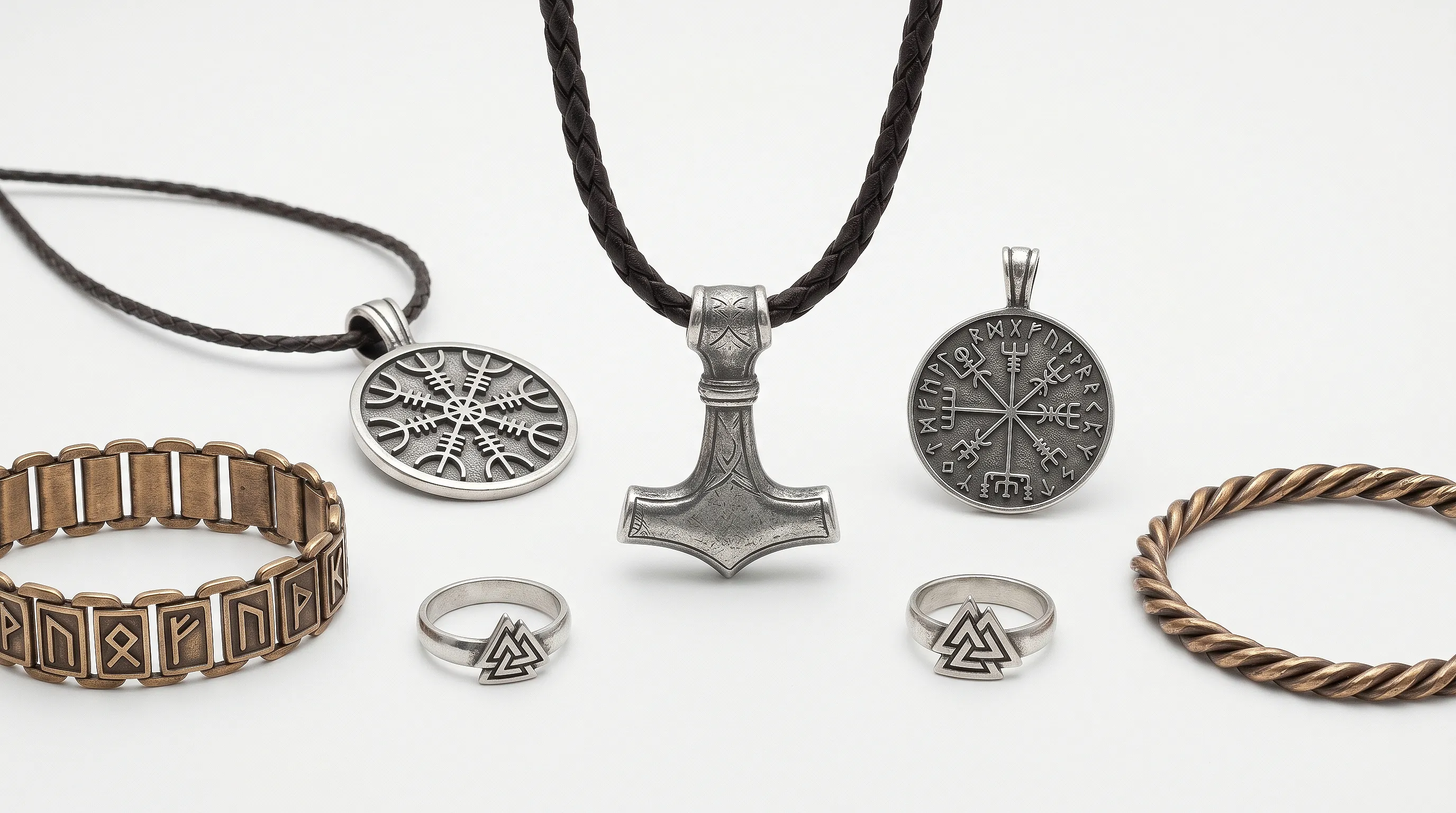
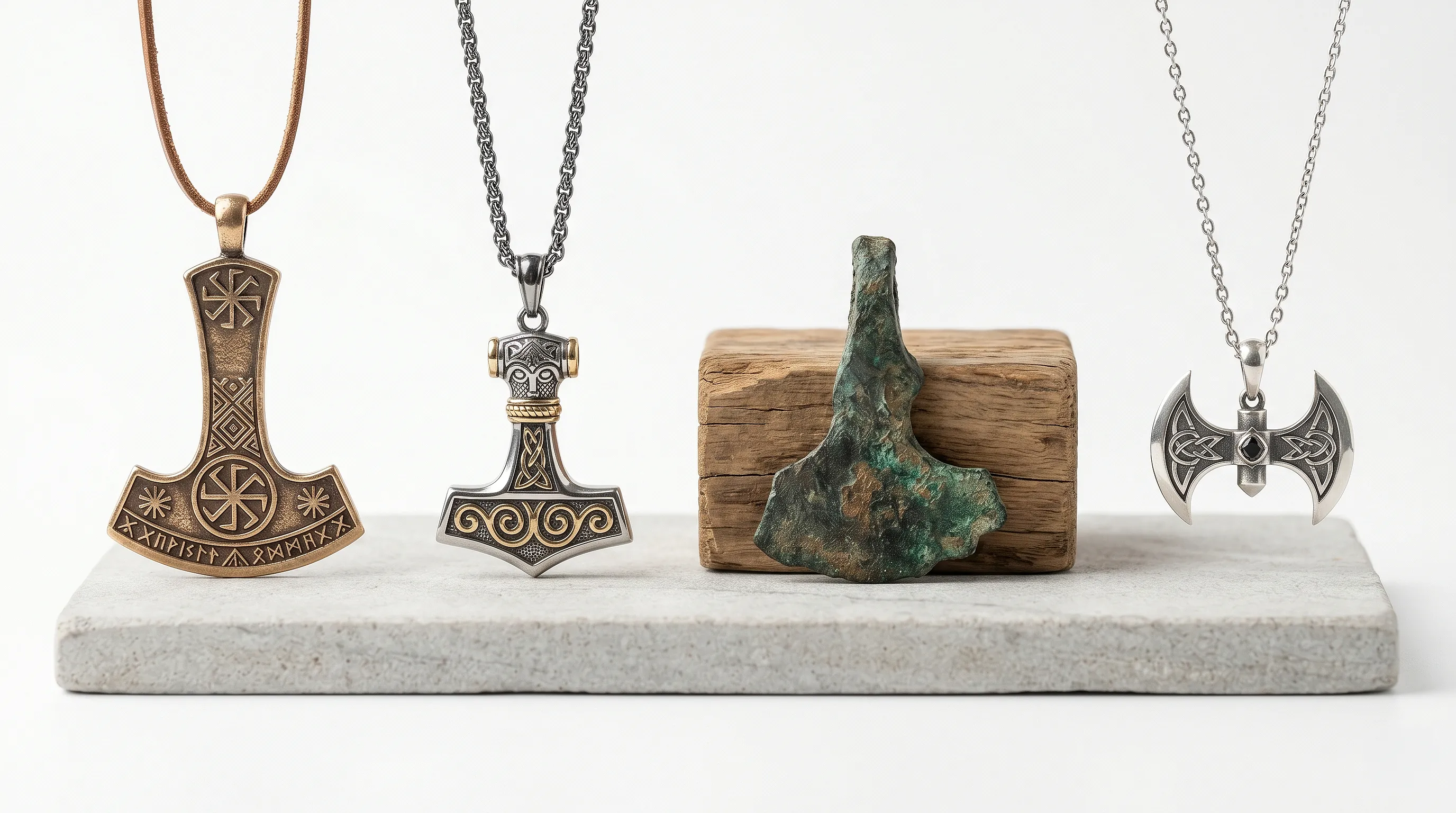
You can walk into almost any jewellery shop that sells anything vaguely Nordic and you'll find it. A squat, heavy-looking hammer pendant on a chain. Sometimes simple, sometimes elaborately knotworked, sometimes with runes etched into the face. Mjolnir. Thor's hammer. The single most replicated artefact from the entire Viking world.
And here's what makes it interesting: unlike a lot of popular "Viking symbols" that turn out to be modern inventions or post-medieval Icelandic additions, Mjolnir is the real deal. We have hundreds of physical hammer pendants pulled from Viking-age graves and hoards across Scandinavia. We have the myths in the Eddas describing how it was made. We have the archaeological evidence of people wearing it as a statement of identity during one of the most turbulent religious transitions in European history.
This isn't a symbol that scholars debate the authenticity of. It's a symbol they debate the meaning of, because Mjolnir carried so many layers of significance that even the Vikings themselves probably didn't agree on a single interpretation.
This article covers all of it. The myth of how Mjolnir was forged (and why it has a short handle). What Thor actually used it for (spoiler: not just smashing things). The Eddic literary sources. The archaeological evidence. The fascinating period when people wore both Mjolnir and the Christian cross simultaneously, hedging their spiritual bets. What the symbol means across its many dimensions. The modern Heathen revival. And why, in 2026, people are still wearing it.
How Mjolnir Was Made: The Myth
Loki's bet with the dwarves
The origin story of Mjolnir is one of the best tales in Norse mythology, and it starts, as so many Norse stories do, with Loki doing something stupid.
In the Prose Edda, compiled by Snorri Sturluson around 1220, the story goes like this. Loki, the trickster god, had cut off the golden hair of Sif, Thor's wife. This was not a prank. In Norse culture, a woman's hair carried serious social significance, and cutting it was a profound insult. Thor was predictably furious and was about to do something violent to Loki when Loki promised to fix it. He'd go to the dwarves, the master craftsmen of the Norse cosmos, and commission replacements.
Loki went to the Sons of Ivaldi, a group of dwarven smiths, and they created three extraordinary things: new golden hair for Sif that would grow like real hair, the ship Skidbladnir (which could be folded up and put in a pocket but unfurled to carry all the gods), and the spear Gungnir (Odin's weapon, which never missed its target).
Now, here's where Loki's ego got him in trouble. Flush with success, he wagered his own head with two other dwarves, the brothers Sindri (also called Eitri in some sources) and Brokkr, that they couldn't make three objects as fine as the Sons of Ivaldi had made. The stakes were literal: if Sindri and Brokkr won, they got to cut off Loki's head.
Sindri, Brokkr, and the fly
Sindri went to work at the forge while Brokkr operated the bellows. Sindri was clear: Brokkr had to pump the bellows without stopping, no matter what happened. If the airflow was interrupted, the work would be ruined.
Loki, realising he might actually lose this bet (and his head), transformed into a fly and began biting Brokkr to make him stop pumping.
For the first creation, a golden boar called Gullinbursti (Golden Bristles), the fly bit Brokkr's arm. Brokkr kept pumping. The boar came out perfectly, glowing, able to run across sky and sea, its bristles lighting up the dark.
For the second creation, the golden arm ring Draupnir (which dripped eight equally heavy gold rings every nine nights, basically an infinite gold generator), the fly bit Brokkr's neck. Brokkr kept pumping. Draupnir came out perfectly.
For the third creation, the hammer, the fly bit Brokkr on the eyelid so hard that blood ran down into his eye. Brokkr couldn't see. For just a moment, he lifted his hand from the bellows to wipe the blood away.
That moment was enough.
The short handle: a perfect flaw
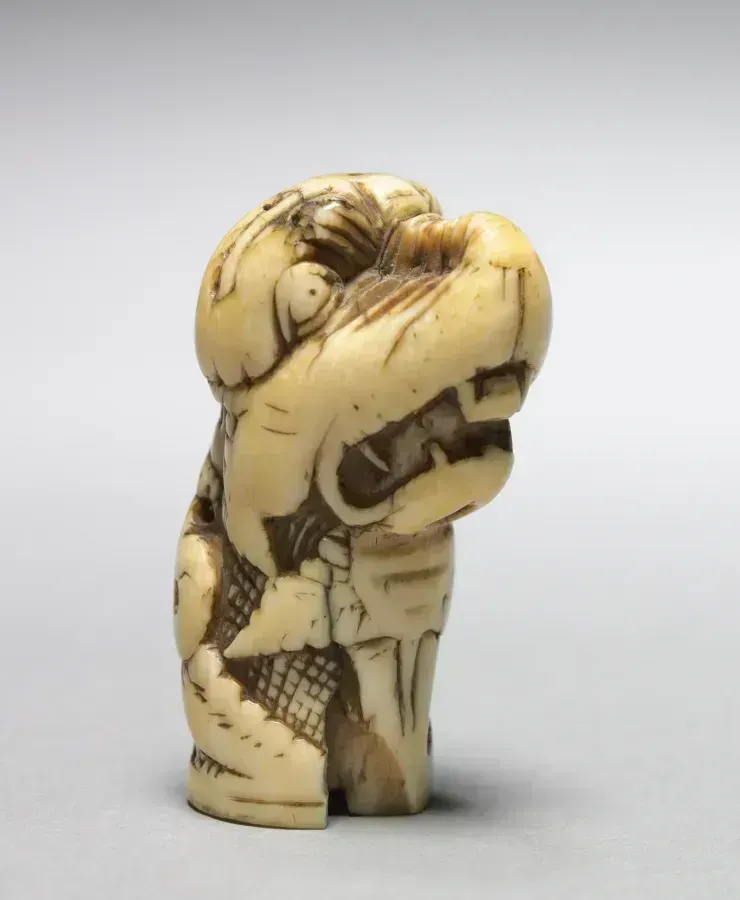
When Sindri pulled the hammer from the forge, it was magnificent in every way except one: the handle was too short. The brief interruption in the bellows had left the iron in the forge a fraction too long, and the handle hadn't formed to full length.
Sindri said it was a flaw. A small one, but a flaw.
The gods judged the contest. Despite the short handle, they declared Mjolnir the greatest treasure ever made, because it could "strike as firmly as he wanted, whatever his aim, and the hammer would never fail, and if he threw it at something, it would never miss, and no matter how far it was thrown, it would return to his hand."
A weapon that never misses, never fails, and always comes back. With a handle that's a bit too short. The gods gave the win to Sindri and Brokkr.
Loki, being Loki, weaselled out of losing his head on a technicality. The bet was for his head, he argued, but cutting it off would require cutting his neck, and his neck wasn't part of the deal. Brokkr settled for sewing Loki's lips shut with a leather thong instead. (They didn't stay sewn for long.)
The story is brilliant because Mjolnir's defining flaw, the short handle that makes it look like a mallet rather than a war hammer, isn't a weakness. It's proof that even the greatest things are imperfect, and that imperfection doesn't diminish power. There's something deeply human about a culture that gave their most important god a weapon with a manufacturing defect, and loved the weapon more because of it.
Wear the symbol, don't just read about it. These are in stock:
The Eddic Sources: What We Actually Know
The Prose Edda and the Poetic Edda
Norse mythology doesn't come from a single ancient text. It comes primarily from two Icelandic compilations created in the 13th century, centuries after the Viking Age proper. Understanding where the Mjolnir stories come from matters, because it affects how we read them.
The Prose Edda was written around 1220 by Snorri Sturluson, an Icelandic chieftain, historian, and poet. Snorri compiled existing mythological traditions, probably drawing on oral sources and older poetic material. His Skaldic background shaped his presentation: he was as interested in preserving the kennings and poetic forms used by Norse skalds as in the stories themselves. The story of Mjolnir's forging comes from the Skaldskaparmal ("the language of poetry") section, where it appears partly as an explanation of why certain kennings exist for Thor.
The Poetic Edda is an older collection, compiled around 1270 in a manuscript called the Codex Regius, though the poems themselves are older, some possibly dating to the 9th or 10th century. This is where the Thrymskvida appears, the poem that gives us the most detailed account of Mjolnir as a ritual object (laid in the bride's lap to consecrate the marriage). The Poetic Edda's poems often feel rawer and less mediated than Snorri's polished prose.
The problem of Christian-era sources
The critical gap in Norse mythology scholarship is that virtually all the written sources were produced by Christian Icelanders recording pre-Christian traditions. Snorri himself was a Christian, and scholars debate how much he shaped, rationalised, or softened the older material. He occasionally comments on the stories from a Christian perspective, explaining them away as misunderstood historical events (a concept called euhemerism: treating mythological figures as deified humans rather than actual gods).
This means we can't read the Eddas as direct windows into what Vikings actually believed in the 9th century. They're more like what a scholarly medieval Italian would produce if he compiled Roman mythology from memory 400 years after Rome's fall. Valuable, probably largely accurate in its broad outlines, but filtered through a very different worldview.
Archaeological evidence, runestones, skaldic poetry, and place names help fill in the gaps. The hammer pendants themselves are contemporaneous sources: objects actually made and worn by people who believed in Thor, not stories written about those people 300 years later.
What the sagas add
Beyond the Eddas, the Icelandic sagas contain scattered references to Thor and Mjolnir that flesh out everyday religious practice. In Eyrbyggja saga, a man named Thorolf Mostrarskelgr brings a high-seat pillar from a Thor temple in Norway to Iceland and throws it overboard, allowing Thor to choose the settlement site. In Njals saga, characters swear oaths "by Thor" in legal contexts. In Vatnsdaela saga, Thor is invoked for safe journeys.
These references establish that Thor was present in practical, everyday religious life, not just in grand mythological narratives. The hammer pendant on a man's neck wasn't abstract theology. It was a working relationship with a deity who was expected to actually show up.
Thor's Weapon: More Than a War Hammer
Lightning and thunder
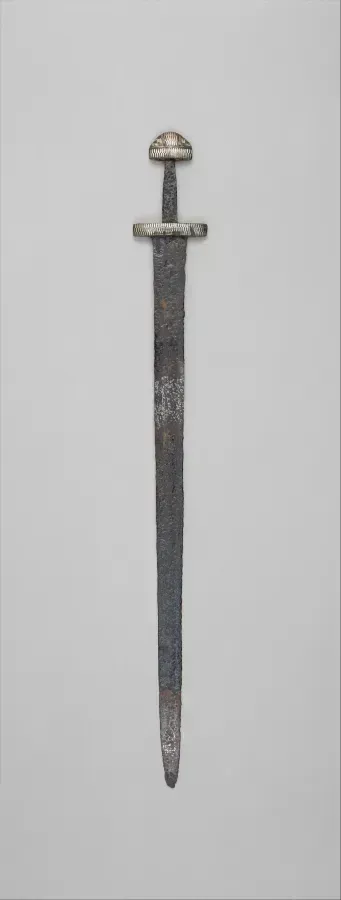
Thor is the god of thunder, and Mjolnir is the instrument of it. When Thor threw Mjolnir, lightning cracked across the sky. When it struck, thunder followed. The Old Norse name "Mjolnir" is debated etymologically, but most scholars connect it to words meaning "lightning" or "to crush/grind." Some link it to the Proto-Norse *meldunjaz, meaning "the crusher." Others connect it to the Russian word molniya (lightning) and the Welsh mellt (lightning), suggesting a deep Indo-European root.
The connection between hammers and thunder isn't unique to Norse mythology. Across Indo-European cultures, the thunder god carries a striking weapon: Indra has his vajra, Zeus has his thunderbolts, Perun (the Slavic thunder god) has his axe or club. Thor's hammer fits into a pattern that may be thousands of years older than the Viking Age itself.
But the Norse version has a distinctive personality. Thor doesn't just command weather from a distance. He's in the middle of it. He rides across the sky in a chariot pulled by two goats (Tanngrisnir and Tanngnjostr), and the rumbling of the chariot wheels is the thunder. He's not a remote sky god. He's a working-class deity who gets his hands dirty.
The goats deserve a note: in the myth, Thor can slaughter and eat the goats at night, then resurrect them from the bones each morning, provided the bones are left intact. This points to a Thor who is connected to the cycles of nature, growth, and renewal, not merely to destruction. The same god who can revive his own slaughtered goats is the right god to bless a wedding or a newborn.
Consecration: weddings, births, funerals
Here's what the films don't tell you about Mjolnir: its most important function wasn't combat. It was consecration.
In Norse religion, Mjolnir was used to bless things. To make them sacred. To mark transitions.
Weddings. The most famous example comes from the Thrymskvida (the Lay of Thrym), one of the poems in the Poetic Edda. In the story, the giant Thrym steals Mjolnir and demands Freyja as his bride in exchange. The gods dress Thor up as Freyja (yes, the biggest, most masculine god in the pantheon, in a bridal gown) and send him to the wedding. When Thrym brings out Mjolnir to "lay it in the bride's lap" to consecrate the marriage, Thor grabs it and kills everyone.
The detail that matters: Thrym placed Mjolnir in the bride's lap to bless the marriage. This was apparently a known ritual. The hammer consecrated the union. Without the hammer, the marriage wasn't properly sanctified.
Births. There are references in Norse sources to placing a hammer or hammer-shaped object in the lap of a newborn, or making the sign of the hammer over a baby, to claim the child for the community and place it under Thor's protection. This parallels the Christian practice of baptism so closely that some scholars believe the Norse ritual influenced early Scandinavian Christian practices, or vice versa.
Funerals. Hammer symbols appear on Viking-age runestones, and miniature hammers have been found in burial sites. The hammer was used to consecrate the funeral pyre and the grave, marking the transition from life to death and ensuring the dead person's safe passage. In the story of Baldr's funeral, Thor consecrates the pyre with Mjolnir.
This consecration role is why Mjolnir wasn't just a warrior's symbol. It was everyone's symbol. Farmers, merchants, women, children. You didn't need to be a fighter to want Thor's blessing on your marriage, your newborn, or your dead.
The protector of Midgard
Thor's primary job in Norse cosmology wasn't fighting other gods. It was protecting Midgard (the human world) from the giants (jotnar) who represented chaos and destruction. He was the defender of the ordinary world against forces that would tear it apart.
This made Thor the most popular god among ordinary Norsemen. Odin was for kings and poets and warriors seeking glory. Thor was for everyone else. He was the god who kept the frost giants from freezing the fields, who kept the sea monsters from swallowing the fishing boats, who stood between humanity and the things that go wrong.
Wearing Mjolnir, then, wasn't primarily about aggression. It was about being under protection. "I'm under Thor's shield. The chaos stays out." That's a very different message from "I'm tough and I'll fight you," which is how modern culture sometimes reads the symbol.
Thor's tools: the iron gloves and the belt of strength
Mjolnir came with supporting gear. To wield the hammer safely, Thor required two things the Prose Edda describes explicitly: Jarngreipr (iron gloves) and Megingjord (a belt of strength). The gloves were necessary because Mjolnir generated tremendous force on the wielder's grip; without them, even Thor's hands would be damaged. The belt doubled Thor's already formidable strength.
This detail is interesting because it means Mjolnir was genuinely dangerous without its proper handling. The hammer wasn't just a weapon handed to whoever picked it up. It had requirements. The combination of hammer, gloves, and belt formed a complete system, which may be why the Norse saw it as an object of particular power rather than just a lump of iron.
Customer reviews
Zevira is a real jewellery shop. Genuine payments, deliveries and customer thank-yous.
🥰🥰🥰 gracias
Ok, ¡gracias! 🙂
The Archaeological Evidence
Hundreds of hammer pendants across Scandinavia
Mjolnir pendants are the single most common type of Viking-age religious jewellery. Archaeologists have found over a thousand of them across Scandinavia, the British Isles, Iceland, and the Baltics. They show up in graves, in hoards, in settlement sites, in river deposits. They were made in iron, bronze, silver, gold, and lead. Some are crude lumps of cast metal. Others are exquisitely detailed masterpieces.
The sheer numbers tell you something about how central Mjolnir was to Viking-age identity. This wasn't a niche symbol. It was the necklace. The thing you wore to say "I follow the old gods" or simply "I am Norse." Finding this many of a single pendant type in the archaeological record is extraordinary. It's like finding crucifixes across medieval Europe, but concentrated in a period of about 200-300 years.
Most Mjolnir pendants date to the 9th-11th centuries, which is interesting because that's the late Viking Age, the period when Christianity was arriving in Scandinavia. The pendants may have become more common precisely because they became a statement of identity. When your neighbour starts wearing a cross, you put on a hammer.
The Bredsatra pendant
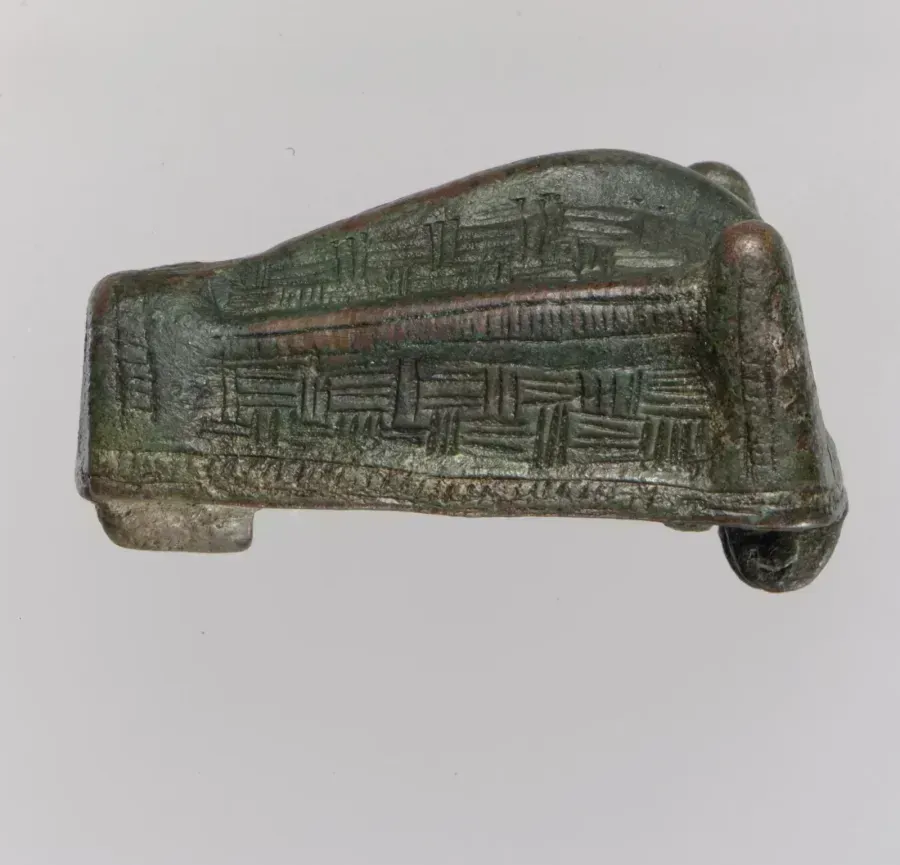
The most famous Mjolnir pendant is the Bredsatra find from Oland, Sweden. It's a silver pendant, elaborately decorated with filigree and granulation, dating to approximately the 10th century. The craftsmanship is exceptional. The hammer head is broad and stylised, with intricate knotwork patterns covering the surface and a beast head (possibly a wolf or dragon) at the terminal of the handle.
The Bredsatra Mjolnir shows that these weren't just folk amulets knocked out by village blacksmiths. Some were high-status luxury objects made by the same silversmiths who created jewellery for jarls and kings. Wearing Mjolnir could be a display of both faith and wealth.
The design of the Bredsatra pendant has become iconic. If you've ever seen a "classic" Mjolnir pendant in a jewellery shop, it probably draws on this find. The proportions, the broad T-shape, the animal head at the base, those all trace back to Bredsatra.
The Koping pendant: 'This is a hammer'
For years, there was actually a scholarly debate about whether these T-shaped pendants really represented Mjolnir or were just decorative forms. The debate ended in 2014 when archaeologists examined a pendant found near Koping on the island of Oland in Sweden (sometimes also referred to in the context of the broader Laby/Roskilde area of finds). The pendant bore a runic inscription that translated simply as: "This is a hammer."
That's it. No poetry. No invocation. Just a label. "This is a hammer." As if the maker knew, a thousand years ago, that someone would eventually wonder what it was and decided to settle the question in advance.
The inscription also confirmed that the pendants were understood by their makers and wearers as representations of Mjolnir, not abstract decorative motifs. They were worn with intention and identity.
Other inscribed hammer pendants exist, though they're rarer. Some bear the name "Thor" or abbreviated versions of it. A few have what appear to be owner's names. The inscriptions, when they exist, are almost always short and practical, consistent with the Norse approach to runic writing, which valued efficiency over elaboration.
What the variation in pendant types tells us
Not all hammer pendants look alike. The range is striking. Some are tiny, barely a centimetre across, and look almost abstract. Others are large, heavily decorated, clearly made as display objects. Some have suspension loops oriented to hang hammer-head down; others are designed to hang flat. A few appear intentionally ambiguous, the handle and head in proportions that could read as a cross if you tilted them sideways.
This variation reflects a practice that was widespread across different social classes, geographic regions, and decades. A wealthy merchant in Birka wore a very different Mjolnir from a farmer in Norway, but both wore Mjolnir. The symbol was flexible enough to work across contexts, and the range of materials and execution matched the resources of whoever was wearing it.
Hammer pendants from non-Scandinavian contexts
The reach of Mjolnir pendants extends beyond Scandinavia proper. They've been found in Viking trading settlements in Russia and Ukraine, along the old river trade routes that connected Scandinavia to Constantinople. They turn up in Norse settlements in Ireland and Scotland. There are finds from Viking-age graves in England, both from areas of Scandinavian settlement and from sites where Norse and Anglo-Saxon cultures mingled.
What this distribution tells us: Mjolnir travelled with its wearers. A Norse merchant in Kiev, a Norwegian farmer who relocated to the Orkney islands, a Dane living in the Danelaw territory of eastern England -- they all wore the same hammer. The symbol was portable identity.
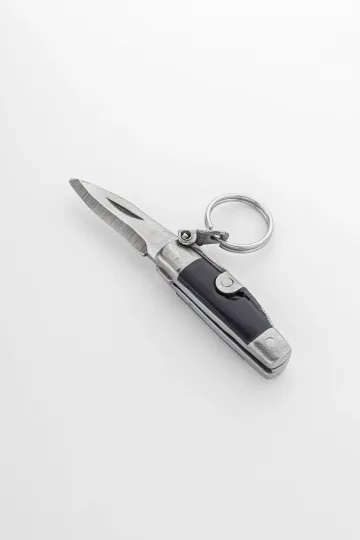
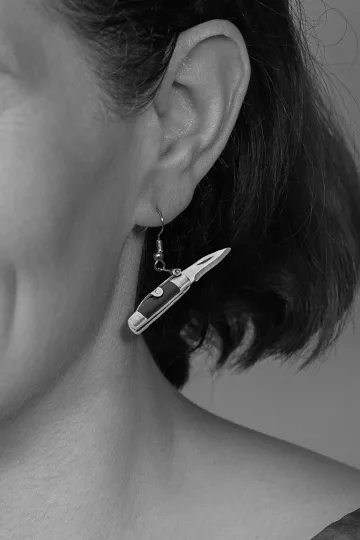
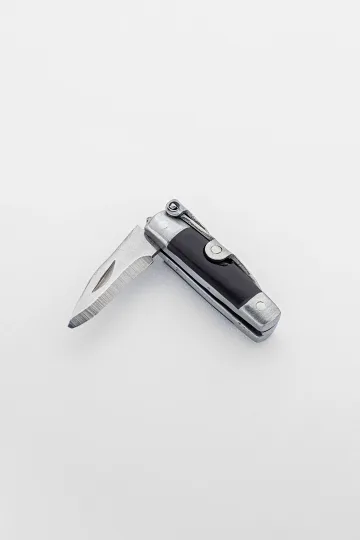
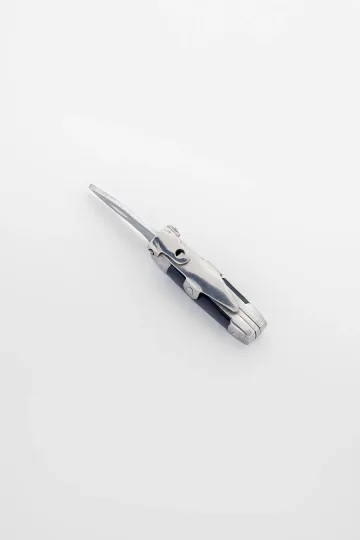
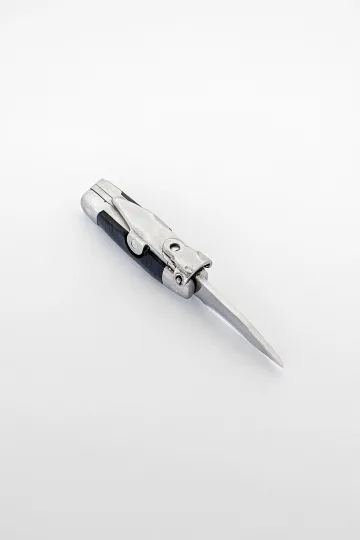
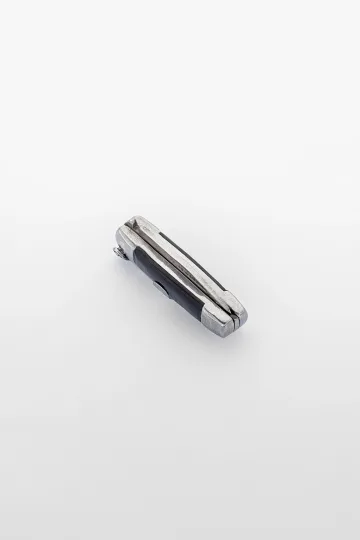
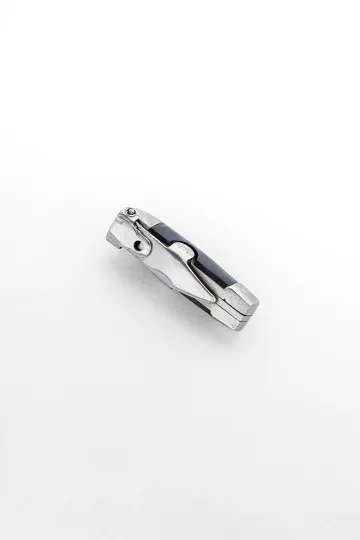
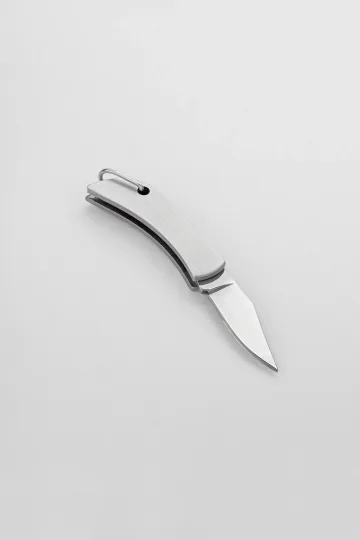
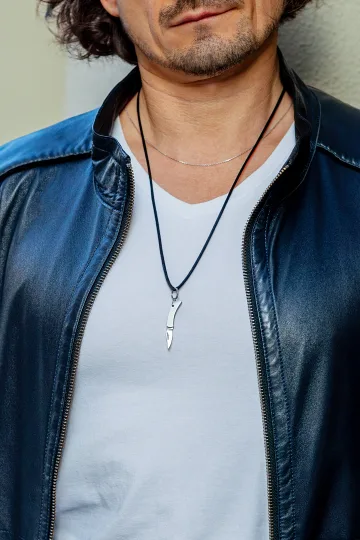
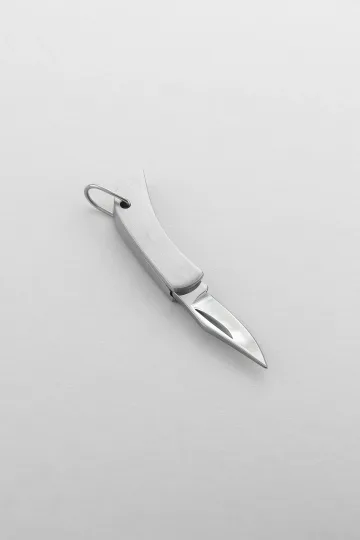
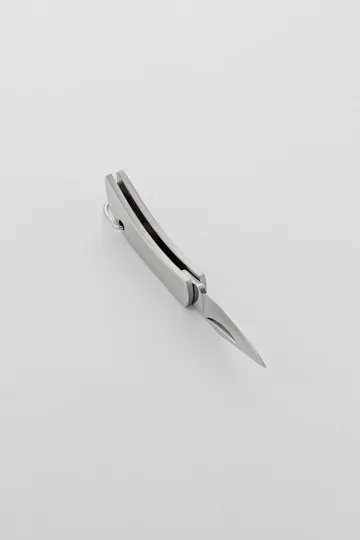
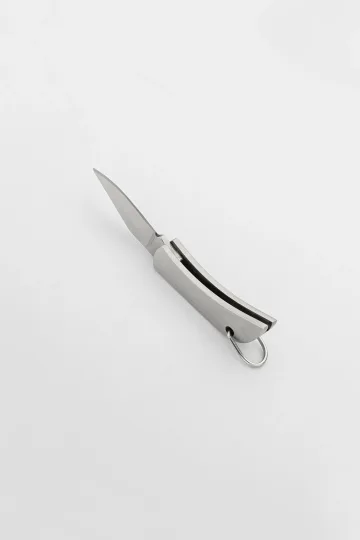
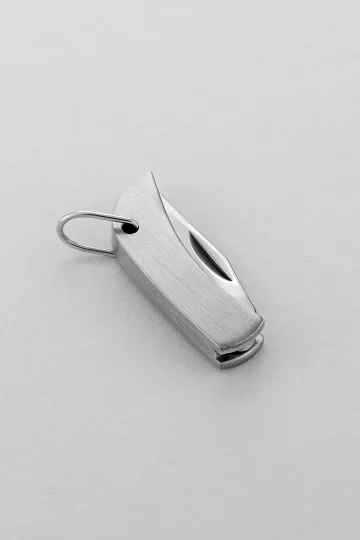
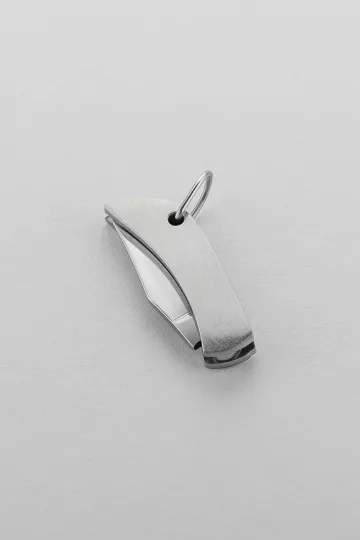
Artisan-crafted CAPAORA navaja pendant
A 40 mm stainless-steel navaja with a real folding mechanism and Palanquilla lock. An affordable gift to remember.
A code for blog readers:
10% off your first order
Authentic · Maker's guarantee · Ships from Spain
Hammer and Cross: Hedging Your Bets
The dual-faith period
The conversion of Scandinavia to Christianity wasn't a single event. It was a messy, multi-generational process that unfolded differently in each region. Denmark converted officially around 960 under Harald Bluetooth. Norway followed around 1000 under Olaf Tryggvason (through considerable force). Sweden was the holdout, with pockets of paganism persisting into the 12th century. Iceland voted to convert in 1000 CE at the Althing, in what may be the most democratic religious conversion in history.
During this transition period, which lasted roughly from 900 to 1100, many Scandinavians practiced a blend of old and new faith. They attended church but kept their household gods. They were baptised but still made offerings at the old sacred sites. And they wore both symbols.
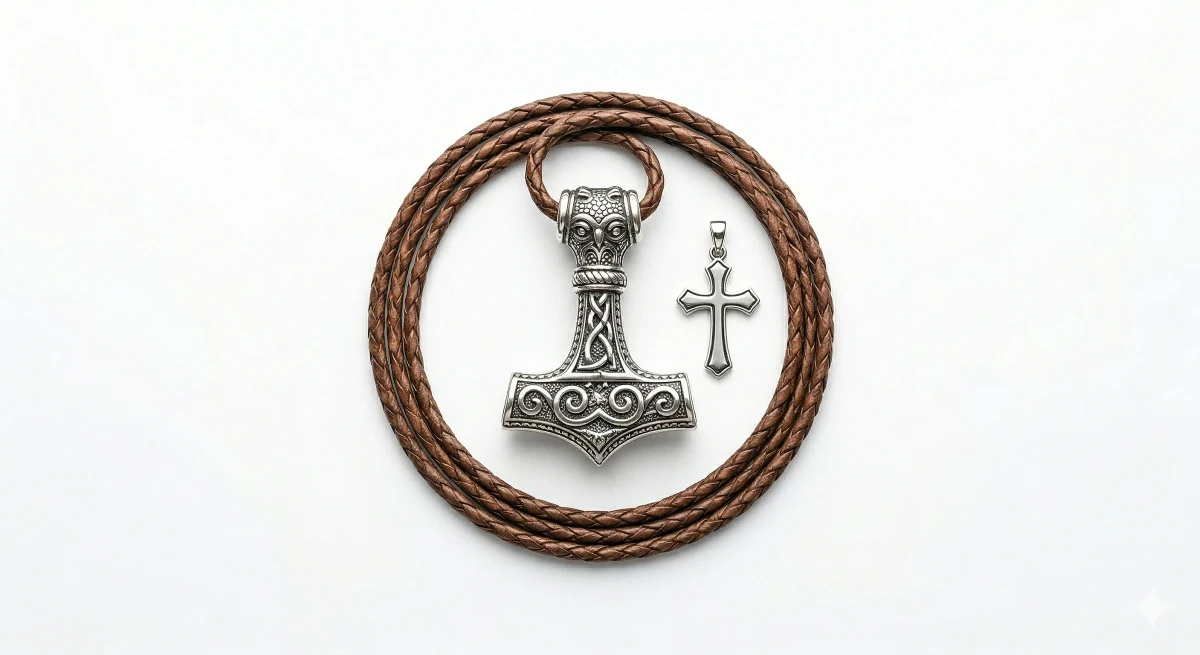
Archaeological evidence confirms this: graves from the transition period contain both crosses and hammer pendants. Some people were buried with both. Some were buried with hybrid objects that combine elements of both symbols. This wasn't confusion. It was pragmatism. If you weren't sure which god was going to judge you after death, it made sense to cover both bases.
Moulds that cast both symbols
The most striking evidence of dual faith comes from soapstone moulds found at sites like Trendgarden in Denmark. These are casting moulds, tools used by metalworkers to mass-produce pendants. And some of them have cavities for both cross pendants AND hammer pendants in the same mould.
Think about what that means. A single craftsman, using a single tool, was producing symbols of both religions simultaneously. Not because he believed in both, but because there was a market for both. His customers included Christians, pagans, and people who wanted one of each. The moulds are evidence that the transition wasn't a clean break between old and new. It was a gradual shift where both symbols coexisted, sometimes on the same workbench.
Some scholars have noted that certain transitional pendants are deliberately ambiguous, shaped so they could be read as either a cross or a hammer depending on which way you held them. These hedging pieces are rare but fascinating. They suggest that some wearers wanted plausible deniability: "It's a cross" when the priest asks, "It's a hammer" when your pagan uncle asks.
What the transition tells us about belief
The dual-faith period reveals something important about what Mjolnir meant to the people who wore it. It wasn't purely religious in the way a crucifix is religious. It was also cultural. Ethnic. It said "I am Norse" as much as "I follow Thor."
When Christianity arrived, the cross replaced the hammer's religious function (consecrating marriages, blessing newborns, sanctifying the dead), but it couldn't replace the cultural function. Wearing Mjolnir was a way of holding onto an identity that was older than any particular faith.
This is relevant to modern wearers because it establishes a precedent: people have been wearing Mjolnir for cultural rather than strictly religious reasons for over a thousand years. If you wear it today without practicing Asatru, you're actually doing what your ancestors did during the transition period. Carrying the symbol for what it represents about who you are, not necessarily what you believe about the divine.
What Mjolnir Means: Layer by Layer
Protection
This is the most straightforward layer. Thor protects Midgard. Mjolnir is his instrument of protection. Wearing it places you under that protective umbrella.
In the Viking Age, this was understood quite literally. People believed that wearing the hammer kept malicious spirits, trolls, and giants at bay. The practice of making the sign of the hammer (similar to the Christian sign of the cross) over food, doorways, and sleeping children was common enough that Christian missionaries specifically complained about it.
In modern terms, wearing Mjolnir for protection is less about trolls and more about carrying a reminder that you're tougher than whatever is coming at you. It's a psychological anchor. And whether you believe in Norse gods or not, the psychological function of protective symbols is well documented. People genuinely feel safer when they carry something that represents safety. Psychologists call it a transitional object or a security cue. Vikings just called it a hammer.
Strength and resilience
Thor is the strongest of the gods, and Mjolnir is the focus of that strength. But Norse strength is a specific kind. Thor isn't strong in the way of a king or a conqueror. He's strong in the way of a farmer who works the field in bad weather. He's reliable strength. Show-up-every-day strength. The giants keep coming, and Thor keeps fighting them. Not because he wants glory, but because someone has to.
Wearing Mjolnir as a symbol of strength is about endurance, not dominance. It's "I keep going" rather than "I win." That's why it resonates with people going through difficult periods. It's not a victory symbol. It's a persistence symbol.
Consecration and fertility
The blessing function of Mjolnir connects it to fertility, growth, and new beginnings. Thor was associated with agricultural fertility because rain (his domain) makes things grow. The consecration of marriages with the hammer was partly a fertility blessing: may this union produce children, may the fields be fruitful, may life continue.
This layer is almost entirely lost in modern pop culture, which focuses on the combat aspects. But for Viking-age Scandinavians, a pregnant woman wearing a Mjolnir pendant was probably thinking about healthy harvests and healthy babies, not about smashing frost giants.
Weather and nature
Thor controls weather. Specifically storms. He's the god you pray to when you need rain and the god you pray to when you need the storm to stop. For a culture of farmers and sailors, weather control was arguably the most important divine function of all.
The weather connection makes Mjolnir a nature symbol. It represents the power and unpredictability of the natural world, and the idea that there's a conscious force behind the storm, one that can be petitioned, respected, and occasionally bargained with.
For people who work outdoors, sail, or feel a deep connection to weather and landscape, this layer of Mjolnir's meaning still resonates. It's about acknowledging that nature is powerful and you are small, but also that there's a relationship between humans and the forces around them. Not a controlling relationship. A respectful one.
Justice and order
A layer that gets less attention is Thor's role as an upholder of oaths and social order. He witnessed the swearing of oaths, and invoking Thor as oath-witness gave those promises divine weight. This is connected to his role as hammer-blesser: the hammer that consecrated marriages also consecrated promises made at the altar.
Mjolnir therefore carries a dimension of integrity. It's not just power. It's power in service of keeping the world honest. A sworn oath was one of the most serious acts in Viking society. Thor's presence at its taking wasn't ceremonial. It was a guarantee that violation would have consequences.
Leave your email, we'll send your discount code. No spam, unsubscribe anytime.
The code arrives by email, valid on your first order.
Mjolnir in Modern Asatru and Heathenry
Who practices Heathenry
Asatru (literally "faith in the Aesir") and broader Heathenry are modern reconstructionist religions based on Norse pre-Christian beliefs. They're practiced by an estimated 40,000-100,000 people worldwide, with the largest concentrations in Scandinavia, Germany, the UK, and the United States. Iceland officially recognised the Asatru faith in 1973, and there's a major Asatru temple in Reykjavik.
For practitioners of these faiths, Mjolnir is a religious symbol in the same way that the cross is for Christians, the Star of David for Jews, or the crescent for Muslims. It's not decorative. It's devotional. Many heathens wear Mjolnir daily and consider it a visible marker of their faith.
The practice varies considerably among individuals and communities. Some heathens maintain elaborate home altars (harrows) with offerings to Thor. Others keep their practice private and personal. The religion has no central authority, no pope, no binding creed, which means the expression of heathen faith looks different from household to household.
Official recognition
In 2013, the United States Department of Veterans Affairs added Mjolnir to its list of approved emblems of belief for government-issued headstones. This means American soldiers who followed Norse religion can have Mjolnir carved on their graves at Arlington National Cemetery and other VA cemeteries. It's official recognition that Mjolnir is a legitimate religious symbol, beyond any cultural motif.
This context matters for anyone wearing Mjolnir because it means the symbol carries genuine religious weight for some people. Not everyone wearing a hammer pendant is a heathen, and heathens generally don't gatekeep the symbol (it was widely worn by non-religious people even in the Viking Age). But being aware that for some people this is sacred, not just cool-looking, shows respect for the living tradition.
The appropriation question
The Asatru community has had to contend with the appropriation of Norse symbols by white supremacist groups. Organizations like The Troth and the Asatru Community have explicitly rejected racism and worked to reclaim Norse symbolism from extremist association. Wearing Mjolnir in the context of genuine Norse interest, historical appreciation, or spiritual practice is completely different from its misuse by hate groups, and the Heathen community is vocal about making that distinction clear.
The Anti-Defamation League classifies Mjolnir as a symbol that is "primarily non-extremist" but sometimes misused. Context, as always, determines meaning. A hammer pendant worn by someone who reads the Eddas and knows who Brokkr was carries a very different signal from the same shape used as a badge in a hate context.
Blot and sumbel: how modern heathens practice
Modern heathen practice centres on two main ritual forms: blot (pronounced approximately "bloat") and sumbel. Blot is a ritual offering to the gods, often involving a shared drink or food. Sumbel is a formal toasting ritual in which participants make boasts, oaths, and dedications over a shared cup.
In both contexts, Mjolnir plays a role. Thor is invoked in blot as protector of the community. Mjolnir pendants may be used to symbolically consecrate the space or the offering, a direct continuation of the ancient practice of making the sign of the hammer. In sumbel, oaths sworn to Thor and witnessed by the community have the same weight they did in the Viking Age: the community collectively holds you to what you've promised.
Pop Culture and the Worthiness Question
From the page to the screen
Let's be honest: more people in 2026 know Mjolnir from modern superhero films than from the Prose Edda. And that's fine.
Twentieth-century comics turned Thor into a superhero who split time between Asgard and Earth, drawing loosely on Norse mythology. Mjolnir was central from the start, but the comic tradition added its own twist: a worthiness enchantment, the idea that only someone worthy could lift the hammer and command Thor's power.
That idea doesn't exist in Norse mythology. In the Eddas, Mjolnir requires iron gloves (Jarngreipr) and a belt of strength (Megingjord) to wield, but there's no moral test. Giants steal it. Dwarves forge it. The only thing special about wielding it is physical capability, not ethical character.
Once Thor reached the big screen and the hammer travelled through a long run of blockbuster films, Mjolnir became globally recognisable. Scenes built around characters trying, and mostly failing, to lift the hammer became some of the most talked-about moments in those films, and the eventual payoff when an unexpected character finally raised it landed as a major crowd-pleaser in cinemas.
The 'Are you worthy?' phenomenon
The worthiness concept did something interesting to Mjolnir's cultural meaning. It shifted the symbol from "protection and consecration" (the Norse meaning) to "earned moral authority" (the modern screen meaning). When someone wears a Mjolnir pendant today, some people read it as a Norse mythology thing and others read it as a pop-culture thing, and the meanings are quite different.
The worthiness question has become a cultural shorthand. "Are you worthy?" gets asked at conventions, on dating profiles, in gym culture, and in motivational contexts. It turned Mjolnir into an aspirational symbol: not just something you carry, but something you have to earn the right to carry.
This is entirely a modern invention, but it's a powerful one. And it doesn't conflict with the Norse meaning so much as add a layer on top of it. The Norse version says "this protects you." The screen version says "you have to deserve the protection." Both are compelling stories.
What the screen versions got right and wrong
Right: Mjolnir as Thor's defining attribute. The visual design (broadly T-shaped, short handle). The sense that the hammer is a force of protection and creation as well as a weapon. The cosmic scale of its significance. The emotional weight of the object.
Wrong: The worthiness enchantment (a modern invention). Mjolnir as a flight mechanism (in the myths, Thor's chariot and goats provide transport). The idea that Mjolnir is primarily a combat tool (its consecration function is far more important in the sources). The sleek, clean aesthetic (real Mjolnir pendants are rough, organic, textured).
Interestingly omitted: The short handle origin story (one of the best myths in Norse literature). The consecration of marriages. The fertility associations. Thor in a wedding dress. Basically, all the weird, funny, human parts that make Norse mythology more interesting than any superhero movie.
Mjolnir in Tattoo Culture
Mjolnir is consistently one of the most requested Norse designs in tattoo shops worldwide. Its visual properties make it almost ideal for tattooing: the compact T-shape works at virtually any scale, from a small wrist piece to a full chest panel. The interior of the hammer head offers a canvas for knotwork, runes, or other Norse patterns. The handle can extend into arm-length designs. It combines well with other Norse imagery like ravens, wolves, the Vegvisir, and Yggdrasil.
Popular Mjolnir tattoo styles include:
Traditional/blackwork. Bold outlines, heavy black fill, inspired by the actual archaeological finds. These tend to look the most "authentic" and carry the most visual weight.
Knotwork-filled. The hammer head filled with intricate Celtic or Norse knotwork patterns. Visually complex and rewards close inspection.
Realistic/3D. Mjolnir rendered as if it were a physical object sitting on the skin. Often includes cracks, weathering, and lightning effects.
Minimalist line art. Clean single-line designs, often small. Popular as first tattoos or complement pieces.
Film-inspired. Based on modern movie prop designs. Distinctly different from archaeological Mjolnir (more polished, symmetrical, with leather wrapping on the handle).
The relationship between Mjolnir tattoos and Mjolnir jewellery is strong. People who get the tattoo often want a pendant to match, and vice versa. The two forms complement each other: the tattoo is permanent and always present, the pendant is removable and versatile.
A steel hammer belongs on a cord over denim. Silver under a suit, and you are a viking in fancy dress.
How to style Mjolnir
Mjolnir wins on a plain background. The form is squat and dense, so it needs room rather than a fight for attention with prints and texture. Here is what I actually recommend, sorted by occasion.
What do I pair Mjolnir with every day? For daily wear I recommend a steel or bronze hammer on a leather cord or a solid chain over a plain tee or henley, dark or grey knit. Keep an open neck or a button placket so the hammer rests on the fabric instead of hiding. It reads cleanly with denim, cotton and coarse linen, and it carries from morning to night without effort.
Does Mjolnir work at the office? Yes, as long as you keep it restrained. I suggest a mid-size silver hammer under a shirt, visible only at the collar, for a quiet accent with no challenge. The stricter the room, the smaller the head should be. Leave the pendant over the shirt only when the dress code is soft.
How do I build an evening look? For evening I choose a dark roll-neck, a black shirt or leather, and let the hammer come out and grow. Silver with darkened recesses in the pattern reads richer than a mirror shine, and it adds the northern character the piece is built on.
And for a festival or a themed event? For a gathering, a festival or a themed event I let the hammer become the lead: a large pendant, blackened silver, a rune on the back if you like. That is where scale earns its place and the piece looks more expensive than any polish.
Who does it suit, and how do I layer it? It suits anyone drawn to quiet strength over show. I recommend keeping one theme in a stack: the hammer plus a vegvisir or a compass rose on different lengths gives a layered Norse look. Keep metals in one family, silver to silver, bronze to leather. One rule that never fails: one or two pieces with meaning is a statement, ten at once is a costume. A length of 50 to 55 cm sets the hammer at chest level, visually the best spot. Let the hammer speak for itself.

Turn on your camera, pick earrings, a pendant or a ring, and see the piece on yourself in real time.
Switch items in one tap.
Everything runs in your browser: no photo or video is ever uploaded.
Materials, Forms, and What to Look For
Historical materials
Viking-age smiths worked in whatever materials they had access to. The simplest Mjolnir pendants were cast in iron or lead, functional objects with little decoration. Mid-range pieces were bronze, sometimes with surface detail. The finest were silver, with filigree, granulation, and occasionally gilding. A handful of gold examples exist, almost certainly made for high-status individuals.
The quality range tells us that Mjolnir wasn't restricted to any social class. A farmhand could afford a lead hammer. A jarl's wife might wear a finely wrought silver one. The symbol was the same. The execution reflected the wearer's means.
Modern material choices
For contemporary pendants, the most practical choice for everyday wear is stainless steel. It doesn't tarnish, reacts to neither sweat nor salt water, and takes detail well. A stainless hammer can go to the gym, the beach, and the shower without issue.
Bronze gives weight and a warmer tone. It develops a natural patina over time, which many people find adds character rather than degrading the piece. Bronze has the closest material connection to historical pendants, since much of the archaeological record is bronze.
Silver is the traditional choice for fine jewellery. A silver Mjolnir will darken with time, but a polishing cloth restores it in minutes. The darkening in the recesses of knotwork or rune-carved detail can actually enhance the visual depth. Some wearers deliberately leave their silver hammer unpolished for the aged effect.
What to look for in a pendant
Weight matters. A Mjolnir that's too light feels like a toy. The hammer was never a delicate object, and a pendant that carries some heft feels more honest to the original.
Detail matters. The best pieces show craftsmanship in the texture: knotwork that's actually detailed rather than stamped-out approximations, a hammer head with genuine proportion, a handle that matches the squat, substantial look of the archaeological finds.
Authenticity of form matters. The short handle is the authentic detail. A Mjolnir with a long, elegant handle like a war hammer looks wrong to anyone who knows the myth. The short handle is the point. The flaw is the story.
Care and Maintenance
Stainless steel is virtually indestructible for daily wear. It won't tarnish, won't react to sweat or water, and needs only an occasional wipe with a soft cloth to look clean. Wear it wherever you go without concern.
Bronze develops a natural patina. If you want to maintain the original shine, dry the pendant after contact with water and keep it away from perfume and lotions. If you prefer the patina, simply wear it. The colour shift from bright bronze to a deeper, warmer tone takes months of normal wear.
Silver will darken over time. A polishing cloth returns it to full brightness in about two minutes. Many Mjolnir wearers intentionally leave silver pendants slightly darkened, since the contrast between bright raised surfaces and darker recesses brings out the detail in knotwork and runic inscriptions.
Gold-plated pieces need more attention than solid metals. Avoid prolonged contact with water and perfume. Wipe with a soft cloth after wear. The plating typically lasts two to five years with normal use, after which a jeweller can re-plate it.
Chain length affects how the pendant sits. A 50-55 cm chain places Mjolnir at chest level, which is visually correct and comfortable for daily wear. Shorter chains push it too high. Longer chains may tuck the pendant under clothing. On a leather cord, check the cord every few months; leather degrades with sweat and water faster than metal chain.
Storage. Keep your hammer pendant separate from other jewellery, particularly softer pieces like gold or pieces with gemstones. The cast edges of a Mjolnir pendant can scratch softer materials. A small individual pouch is sufficient.
Send a friend a discount code, they save on their first order.
Frequently Asked Questions
What does Mjolnir mean in Old Norse? The etymology is debated. Most scholars connect it to words meaning "lightning" or "the crusher/grinder." The Proto-Norse reconstruction *meldunjaz suggests a grinding or crushing function. Others link it to the Russian "molniya" (lightning), pointing to a shared Indo-European root for thunder-weapon words.
Is Mjolnir a religious symbol? It functions as a religious symbol for practitioners of Asatru and Heathenry, and the US Department of Veterans Affairs officially recognises it as an emblem of belief. For many other wearers, it's cultural or mythological rather than religious. Both uses have historical precedent.
Can anyone wear Mjolnir? Yes. In the Viking Age, Mjolnir was the most widely worn symbol across all social classes, genders, and ages. Modern Heathens generally don't gatekeep the symbol. Wearing it with awareness of what it means (both historically and to modern practitioners) is the respectful approach.
What's the difference between Mjolnir and the modern film version? The Norse Mjolnir has no worthiness enchantment, requires special gloves and a belt to wield, has a short handle due to a forging accident, and is primarily a consecration tool rather than a combat weapon. The screen version is a moral litmus test that grants flight. Both are great stories.
Is Mjolnir associated with white supremacy? Mjolnir, like several Norse symbols, has been misappropriated by some extremist groups. However, it's primarily and overwhelmingly a symbol of Norse heritage, mythology, and Heathen faith. Major Heathen organisations actively reject racist appropriation. Context matters: a Mjolnir pendant worn with other Norse jewellery by someone interested in mythology is very different from its use in extremist contexts. The Anti-Defamation League lists it as a symbol that is "primarily non-extremist" but sometimes misused.
Why does Mjolnir have a short handle? Because Loki, disguised as a fly, bit the dwarf Brokkr's eyelid while Brokkr was working the bellows during forging. The brief interruption caused the handle to form shorter than intended. The gods still judged it the greatest treasure ever made, short handle and all.
What material is best for a Mjolnir pendant? The design works in virtually any metal. Historical pendants were made in iron, bronze, silver, and gold. For modern wear, stainless steel and bronze give a weighty, substantial feel that suits the symbol. Silver-toned finishes have a traditional Scandinavian look. Gold-plated versions add a contemporary edge.
Can I wear Mjolnir with a cross? Absolutely. You'd be continuing a tradition that's over a thousand years old. Viking-age people wore both simultaneously during the Christian transition period. Some even wore hybrid pendants that could be read as either symbol.
Is there a right way to wear Mjolnir? Hammer head up or down? Historical pendants were typically worn with the hammer head pointing downward, suspended from the handle. This is the most common orientation in archaeological finds and modern reproductions. Some people wear it hammer-head-up (handle down), which echoes the inverted cross aesthetic and looks slightly more aggressive. Neither is "wrong," but head-down is historically accurate.
Did women wear Mjolnir in the Viking Age? Yes. Mjolnir pendants have been found in female graves, male graves, and graves where the sex of the deceased is uncertain. The hammer wasn't a gendered symbol. Given its connection to blessing marriages and newborns, there may have been specific reasons why women wore it that had nothing to do with warriors or combat.
What's the connection between Thor and the Slavic god Perun? Both figures are thunder gods with striking weapons, both protect humanity from chaos, both are associated with oak trees, and both are the "people's god" compared to more elite deities (Odin and Veles, respectively). Most scholars believe they share a common Proto-Indo-European ancestor, a thunder deity who predates both Norse and Slavic mythology by thousands of years. The parallels are too close and too consistent to be coincidental.
How old is the tradition of wearing hammer pendants? The Viking-age pendants cluster in the 9th-11th centuries, but hammer-shaped amulets appear in Germanic contexts earlier than this, including on Migration-period bracteates (thin gold medallions) from the 5th-7th centuries. The Eddic mythology that explains the hammer's significance was clearly established by the time these pendants were being mass-produced, suggesting the tradition has roots well before the classic Viking Age.
What is Asatru and how many people practice it? Asatru is a modern reconstructionist religion based on Norse pre-Christian belief. Estimates suggest 40,000-100,000 practitioners worldwide, with the largest communities in Scandinavia, Germany, the UK, and the US. Iceland officially recognised Asatru in 1973. The US Department of Veterans Affairs recognises it as a legitimate faith for government purposes. The religion has no central hierarchy; practice varies significantly between individuals and groups.
Silver and gold jewellery, wedding bands, symbolic pendants, paired sets.
Wear the symbol, don't just read about it. These are in stock:
The hammer that keeps swinging
Mjolnir has been worn continuously for over a thousand years. It survived the conversion of Scandinavia to Christianity. It survived centuries of obscurity. It came back through the Romantic revival of Norse mythology in the 19th century, through the counterculture movements of the 20th, through the superhero-film explosion of the 21st. No other symbol from Norse culture has this kind of staying power.
And maybe the reason is the myth itself. A weapon forged by dwarves under impossible conditions, damaged by sabotage, imperfect in a way that everyone can see, and still declared the greatest treasure ever made. Mjolnir doesn't pretend to be flawless. It carries its flaw openly. And it works anyway.
That's a story people can wear. Not perfection. Not invincibility. Just the idea that you can be imperfect and still be powerful. That the short handle doesn't matter if the aim is true. That the thunder comes regardless.
Whether you're wearing it for Thor, for the films, for your Scandinavian grandmother, or just because you like the way it looks around your neck, you're participating in something that's been going on for a very long time. People reaching for a symbol that says: I'm still here, and I'm not done yet.
About Zevira
Zevira makes jewellery by hand in Albacete, Spain. Norse symbolism holds a special place in what we do: we recreate Thor's hammer, axes, runes, and protective charms by looking at actual archaeological finds rather than random stylisations.
Here's what you'll find with us around the theme of Thor's hammer:
- Hammer pendants with the short handle, true to the proportions of the archaeological originals
- Versions with Elder Futhark runes and Norse knotwork across the head
- Paired sets where Mjolnir sits alongside an axe or a runic mark
- Pieces in 925 silver, bronze, and gold, made for everyday wear or as a statement gift
- Pendants you can have personally engraved on the back
Every piece is made by hand, with the option of personal engraving. 925 silver and 14-18K gold.