Jewellery Tarnished? Why It Happens and How to Fix It at Home
Do not panic. It is chemistry, not a catastrophe
You pulled a pendant out of a box and it is dark. Or a chain that gleamed a month ago is now matte. Or a ring is coated in something that was not there before. First thought: it is broken, ruined, you were cheated.
Second thought, the correct one: the metal reacted with its environment. That is normal. It is reversible. And it happens to every metal, including real gold and silver. The only question is how fast, and what to do about it.
Why Jewellery Tarnishes: By Material
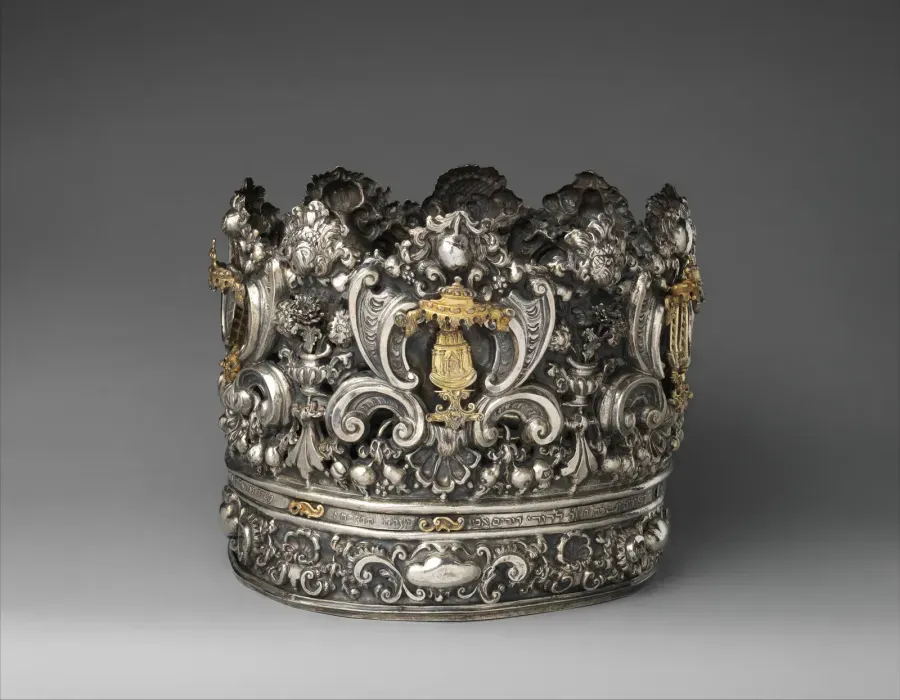
Sterling silver 925: blackening (tarnish)
Silver reacts with sulphur. Sulphur is everywhere: in the air (exhaust fumes, industrial emissions, volcanic regions), in food (eggs, onions, garlic), in water (tap water, especially hot), in cosmetics (creams, perfume), and even in your sweat (sulphur-containing amino acids).
The product: silver sulphide (Ag2S). Colour: from yellow (early stage) through brown to black (advanced). It is not rust, not decay, not destruction. It is a film a few microns thick on the surface. Underneath: untouched silver.
Speed. Depends on the environment. In a dry, cool room, silver tarnishes in 2 to 3 months. In a humid, hot climate, 2 to 3 weeks. In a bathroom (humidity plus sulphur from hot water), even faster. Near the coast (salt air), faster still.
Accelerators. Perfume (alcohol plus chemicals), hand cream, chlorine (swimming pool), hot springs (sulphur), rubber gloves (sulphur in rubber), air near a gas stove (combustion products), wool (lanolin), and even some foods on your hands (cutting onions and then touching a silver ring).
Brass: darkening and greening
Brass (copper plus zinc) reacts with oxygen and moisture. Two distinct processes:
Darkening. Copper oxide (CuO). Brown to dark brown colour. This is "classic" patina: the same thing that covers antique door handles, ship's wheels, and navigational instruments. Does not destroy the metal. Sits as a thin layer that can be removed or kept.
Greening. Copper carbonate (Cu2(OH)2CO3). Green. The same process as on the Statue of Liberty and copper roofs across Europe. Appears with prolonged contact with moisture plus carbon dioxide. More on green marks on skin.
Coating (PVD or galvanic) on brass protects from both processes while it is intact. When the coating wears off (through friction, water exposure, or chemical contact), brass begins to react.
Stainless steel 316L: does not tarnish
Does not dull, does not blacken, does not turn green. The chromium in its composition forms a self-repairing oxide film that protects the metal indefinitely. If your stainless steel piece has darkened, it is not metal tarnish. It is contamination (soap, oil, dust, dried lotion). Wipe it with a cloth and it looks new.
This is why stainless steel is the ideal first jewellery material: zero maintenance, zero tarnish, zero worry.
Gold plating: wearing off
Gold plating is a thin layer of gold (0.5 to 3 microns) on a base metal. Gold itself does not tarnish. But the layer wears away from friction, water, and chemicals. When it wears off, the base (usually brass or copper) is exposed and begins to darken or turn green.
This is not "tarnishing" in the classic sense. It is coating wear. The solution is replating (applying a new layer). No home remedy can restore worn gold plating, only professional replating.
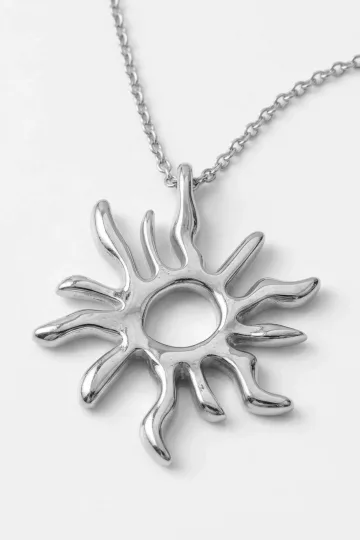
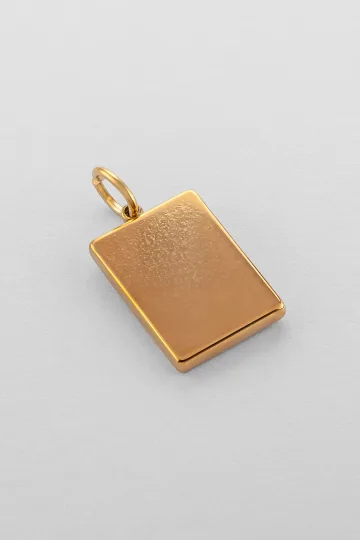
Wear the symbol, don't just read about it. These are in stock:
How to Restore the Shine: Home Methods
Silver: six methods from gentle to aggressive
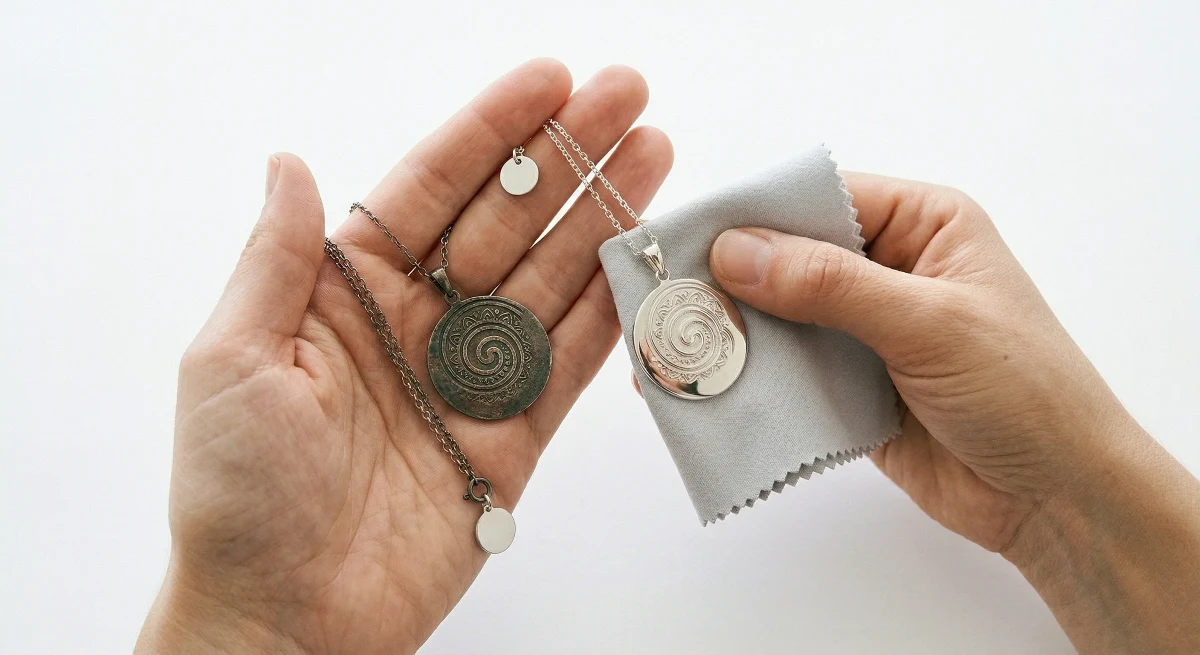
Method 1: Polishing cloth (gentlest). A silver polishing cloth, impregnated with a cleaning compound. Available from jewellery shops, pharmacies, and online. Wipe and the shine returns. Best for light tarnish and daily maintenance. Keep one in your jewellery box and give the piece a quick wipe after every wearing. Prevention is easier than cure.
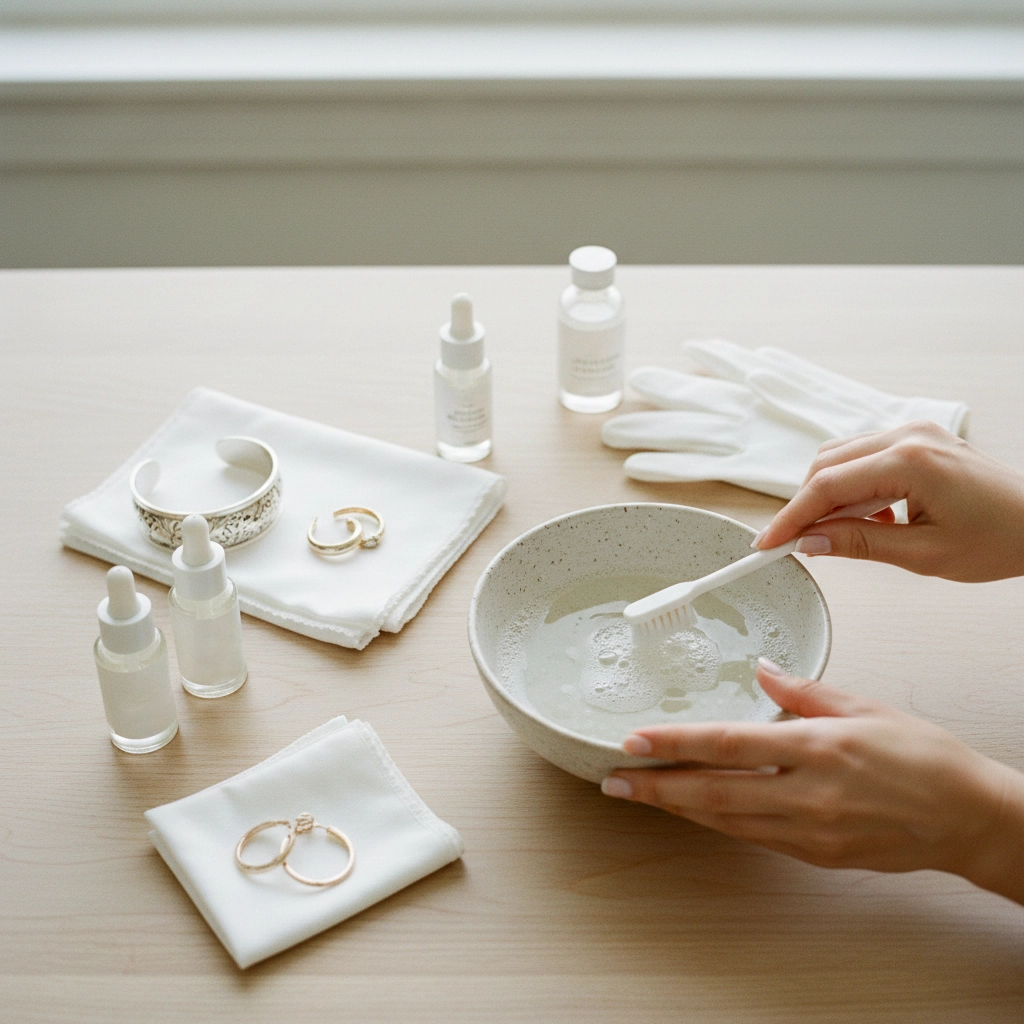
Method 2: Foil plus baking soda (electrochemistry). The most effective for moderate to heavy tarnish. Line a bowl with kitchen aluminium foil, shiny side up. Place the silver on the foil (it must touch the foil). Sprinkle with baking soda (1 tablespoon). Pour in boiling water. Wait 3 to 5 minutes. Remove, rinse with cold water, wipe dry.
What happens: the aluminium in the foil "pulls" the sulphur from the silver through an electrochemical reaction (aluminium has a higher affinity for sulphur than silver does). Silver sulphide converts back to pure silver. Nothing is scraped, nothing is scratched, nothing is removed. Chemistry, not mechanics. The silver you started with is the silver you end with.
Method 3: Toothpaste (mild abrasive). Use a mild, white toothpaste (not whitening, not gel, not charcoal). Apply to a soft cloth, rub gently, rinse. Works as a very mild abrasive. For light tarnish. For heavy tarnish, use method 2.
Method 4: Baking soda paste. Mix baking soda with a few drops of water to form a paste. Apply with a soft cloth, rub gently, rinse. Slightly more abrasive than toothpaste. Good for moderate tarnish.
Method 5: Ammonia solution. 1 part household ammonia to 10 parts water. Soak for 5 to 10 minutes. Rinse. Wipe. Works quickly and effectively, but smells strongly. Use in a well-ventilated area.
Method 6: Commercial silver cleaner. Products like Goddard's, Hagerty, or Wright's Silver Cream. Effective and formulated specifically for the job. Follow the instructions on the product. Usually involves applying, waiting, rinsing. More expensive than home methods but less effort.
What NOT to do with silver. Harsh abrasives (sandpaper, stiff brushes, steel wool): they scratch the surface and create micro-grooves that actually accelerate future tarnishing. Bleach or chlorine: corrodes and pits the metal. Vinegar for extended periods (more than 15 minutes): can damage. Lemon juice on its own (too acidic without a buffering agent).
Brass: five methods
Method 1: Lemon plus baking soda. Squeeze a lemon, add baking soda to make a paste. Apply, scrub with a soft brush (a toothbrush works). Rinse. Instant shine. The citric acid dissolves the oxide, and the baking soda provides gentle abrasion.
Method 2: Ketchup. Not a joke. The acid (acetic plus citric) in ketchup dissolves copper oxide and carbonate. Spread on, wait 5 minutes, rinse. Wipe. This is a well-known method among antique dealers and museum conservators (though they use more refined versions of the same chemistry).
Method 3: Vinegar plus salt. Soak in a solution (1 tablespoon salt plus half a cup of vinegar plus a cup of water). 10 to 15 minutes. Rinse. Wipe. Very effective on heavy patina.
Method 4: Worcestershire sauce. Similar chemistry to ketchup (vinegar-based acid). Apply, wait 5 minutes, rinse. Works well on green patina specifically.
Method 5: WD-40. Apply, wipe with a soft cloth. Removes the oxide layer and leaves a thin protective film. Works, but the jewellery will smell slightly of oil. Best used as a temporary measure.
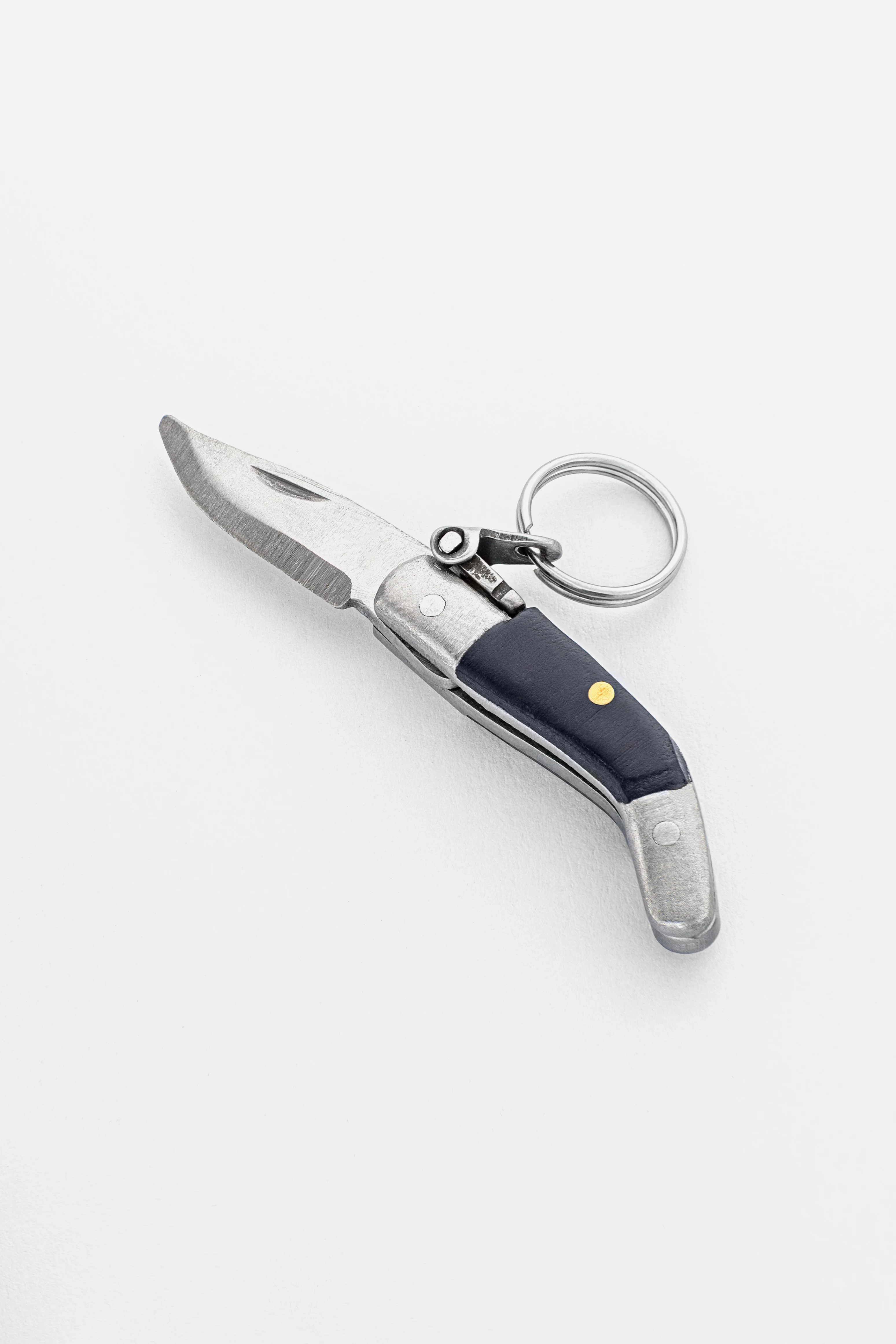
Option: embrace the patina. A capaora with patina looks like a working knife with history. A tree of life with a darkened background gains depth. Not every darkening is a problem. Sometimes it is aesthetics. More on this below.
Stainless steel: simple
Does not tarnish, but gets dirty. Fingerprints, soap film, grease, dried lotion.
Method. Warm water plus a drop of washing-up liquid plus a soft cloth. Wipe. Rinse. Dry. Done. Five seconds. This is the entire care routine for stainless steel. Forever.
For stubborn marks (dried cream, construction dust, adhesive residue): isopropyl alcohol on a cotton pad. Wipe: clean.
Gold plating: handle with care
Dulled: wipe with a soft dry cloth. That may be enough. Worn off: replating only (new layer applied by a jeweller). Home methods for brass and silver are NOT suitable for gold plating. They will strip the remaining gold layer along with the dirt.
If the gold plating is intact but dull, a gentle wipe with a damp cloth and thorough drying is the maximum intervention. Do not scrub, do not soak, do not apply chemicals.
Prevention: A Deep Dive
Preventing tarnish is easier than removing it. Every tarnish-removal method, no matter how gentle, removes a microscopic layer of metal. Over decades of heavy polishing, this adds up. Prevention preserves the piece for longer.
The "last on, first off" rule
The single most important habit. Jewellery goes on AFTER perfume, cream, hairspray, makeup, sunscreen, and deodorant. Comes off FIRST: before washing, before showering, before bed. This way, cosmetic chemicals never reach the metal.
Why this matters: perfume contains alcohol and aldehydes. Hairspray contains lacquer and solvents. Sunscreen contains zinc oxide and chemical UV filters. All of these accelerate tarnishing on contact. A silver chain that survives months in a dry box can tarnish in days if sprayed with perfume.
Storage: the complete guide
Dry location. Not in the bathroom (humidity accelerates oxidation). Not on a windowsill (sun plus heat). Not in a gym bag (sweat, moisture, chemicals). In the bedroom, in a box, in a drawer. If you live in a humid climate, consider silica gel packets in your jewellery storage.
Separate. Each piece on its own. Silver next to brass will oxidise faster (galvanic couple effect: when two different metals touch in the presence of moisture, the more reactive one corrodes faster). Chains tangle. Pendants scratch each other.
Zip-lock bags. The cheapest and most effective way to store silver. Small zip-lock bag, squeeze out the air, seal. Without contact with air, silver does not tarnish. At all. This is how museums store silver artefacts that are not on display. Add a piece of chalk or silica gel (absorbs moisture) for extra protection.
Anti-tarnish strips. Available from jewellery shops. Small paper strips impregnated with a compound that absorbs sulphur from the air. Place in the box and silver tarnishes up to 10 times slower. Replace every 6 to 12 months.
Anti-tarnish cloth bags. Fabric pouches treated with an anti-tarnish compound. Store each piece in its own pouch. More elegant than zip-lock bags, equally effective.
Chalk. A piece of white chalk in the jewellery box absorbs moisture and sulphur compounds. Old-fashioned but effective. Replace the chalk every few months.
Daily habits that make a difference
Wipe after each wearing. Soft cloth (microfibre from glasses is ideal). 10 seconds. Removes sweat, oils, and cosmetic residue that trigger the tarnishing reaction. This single habit extends the life of any finish by months.
Remove before water. Showers, pools, the gym, cooking, cleaning with chemicals, washing up. Every contact with water and chemicals is a blow to the coating and the metal. Make removal a habit, not a decision.
Rotate your pieces. If you have multiple pendants, rotate them. A piece that is worn continuously tarnishes faster than one that spends half its time in storage. Rotation also reduces coating wear on brass pieces.
Do not fiddle. Fingerprints contain acid and oil. If you constantly fidget with a pendant (a habit many have), the metal tarnishes faster where you touch it. Mindless fiddling plus acidic fingers equals localised tarnish in weeks. For constant-contact people, choose stainless steel. It does not care how much you touch it.
Customer reviews
Zevira is a real jewellery shop. Genuine payments, deliveries and customer thank-yous.
🥰🥰🥰 gracias
Ok, ¡gracias! 🙂
When to Visit a Jeweller
Home methods cover 90% of tarnishing situations. But some problems need professional help.
Silver heavily blackened and home methods did not fully work. A jeweller will polish professionally using ultrasonic cleaning plus polishing compounds. The result is better than new because they can also smooth out micro-scratches accumulated over years of wear.
Coating worn off. Replating: applying a new PVD or galvanic layer. Not expensive, takes 1 to 2 days. The piece comes back looking factory-fresh.
Stone dulled or clouded. Stones (except diamonds) can cloud from chemical exposure, heat, or impact. A jeweller cleans them with appropriate solutions without risking damage. Do not attempt to clean stones with brass or silver cleaning methods: the chemicals that clean metal can damage stone.
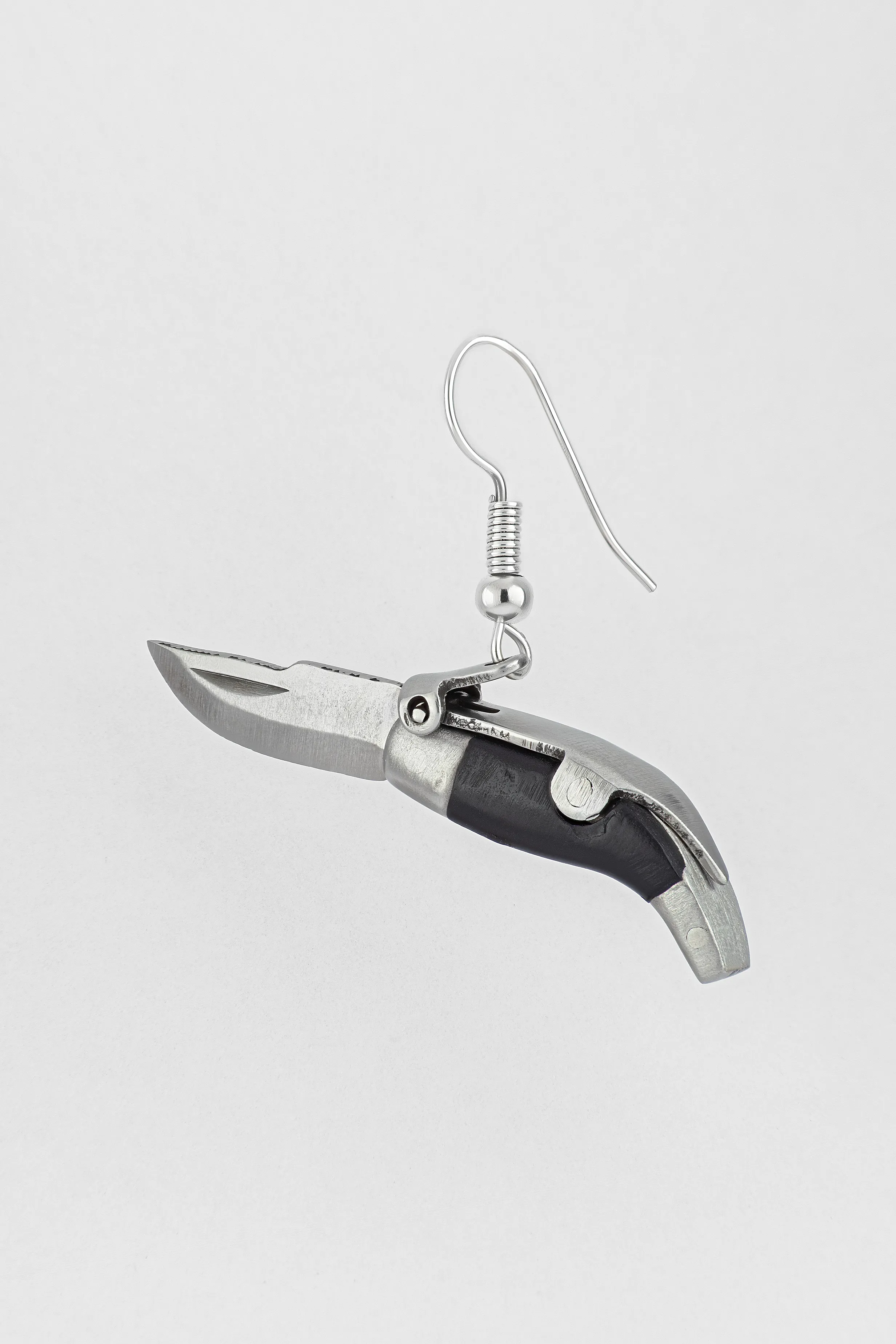
Mechanism jammed. A navaja earring that stopped folding: sand got in, the hinge oxidised, or debris is blocking the mechanism. A jeweller will clean and lubricate it. Do not force a jammed mechanism, as you risk breaking the hinge.
Deformation. Silver (soft) can bend if sat on or caught on something. Brass too. A jeweller straightens it without stress marks. Stainless steel does not deform under normal wear.
Sentimental pieces. If the piece has significant emotional value (grandmother's ring, a meaningful gift), take it to a professional rather than experimenting at home. The cost of professional cleaning is trivial compared to the risk of damaging something irreplaceable. For broken clasps, missing stones, worn plating, and other repairs that go beyond cleaning, the dedicated jewellery restoration guide covers what is realistically saveable.

Turn on your camera, pick earrings, a pendant or a ring, and see the piece on yourself in real time.
Switch items in one tap.
Everything runs in your browser: no photo or video is ever uploaded.
Table: Problem to Solution
| Problem | Material | Cause | Home fix | Professional |
|---|---|---|---|---|
| Blackened | Silver | Silver sulphide | Foil plus soda plus boiling water | Ultrasonic |
| Darkened | Brass | Copper oxide | Lemon plus soda or ketchup | Polishing |
| Turned green | Brass | Copper carbonate | Vinegar plus salt | Polishing |
| Dulled | Any | Soap film or oil | Soap plus soft cloth | Not needed |
| Worn off | Gold plating | Coating wear | Nothing (do not scrub) | Replating |
| Spots | Any | Chemicals (chlorine, perfume) | Clean by material type | Polishing |
| Green mark on skin | Brass | Copper plus sweat | Wipe skin, wipe pendant | Replating |
| Lost shine | Stainless | Contamination | Soap plus water | Not needed |
| Cloudy stone | Any setting | Chemical exposure | Not recommended | Jeweller cleaning |
Patina as Aesthetics: When Not to Clean
Not all darkening is a problem. This deserves its own section because many people automatically clean tarnish without considering whether they should.
Patina on brass is like wear marks on a leather jacket. Like the faded spine of a well-read book. Like the scratches on a vintage watch case. A sign of life. Of use. Of time passing.
Some collectors and enthusiasts deliberately speed up patination. Methods include: vinegar fumes in a sealed container (hours), egg yolk applied and left overnight, a damp chamber (a sealed box with a wet cloth for 24 hours), or commercial patination solutions (liver of sulphur for silver, ammonium chloride for brass).
Where patina works best
Navajas. A navaja pendant is a miniature of a working knife. Working knives have patina. A capaora with dark patina in the grooves looks like a tool that has lived. A shiny-new capaora looks like it came out of a box yesterday. Both are valid, but the patinated version tells a better story.
Vintage and antique-inspired pieces. A jerezana with light patina in the handle details looks as though it has been stored in an Andalusian great-grandfather's box for decades. That illusion of age is the entire point of patina.
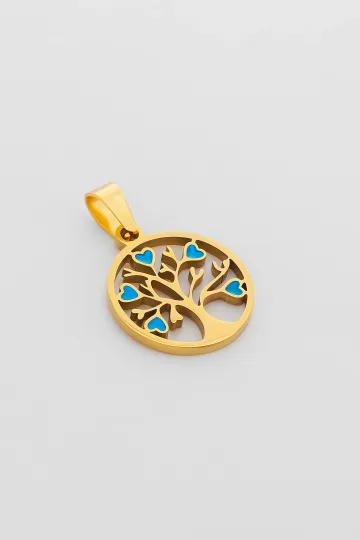
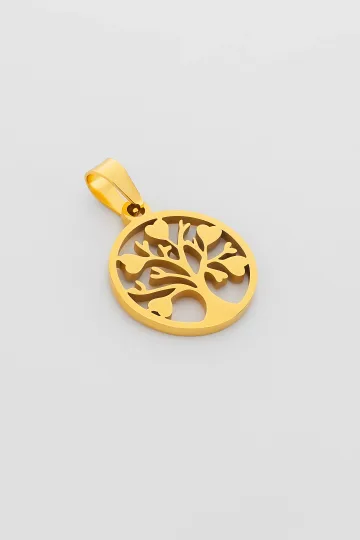
Nature and organic symbols. A tree of life with darkened recesses has depth and dimension. The patina makes the raised details pop against the darker background. Without patina, the same piece looks flat.
Dark aesthetic pieces. Skulls, ouroboros, ravens. Dark symbols benefit from dark patina. It is on-brand.
Where patina does not work
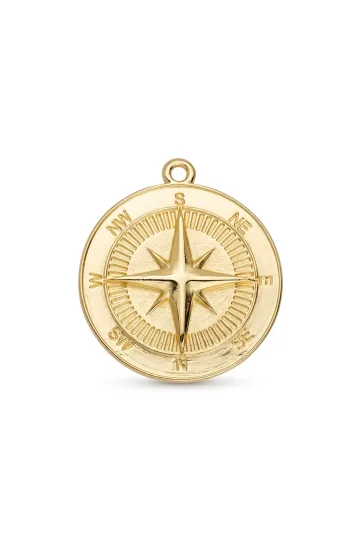
Bright, clean-line pieces. A polished compass needs to be polished. Patina muddles the crisp lines and makes it look neglected rather than aged.
Pieces with enamel. Patina on the metal next to bright enamel (like the blue on a nazar) creates an unpleasant contrast. Clean the metal, keep the enamel vivid.
Gift pieces. If you are giving jewellery as a gift, clean it first. Let the recipient decide whether to patinate it. Nobody wants to receive something that looks dirty, even if it is technically beautiful to you.
The spectrum of patina
A shiny new pendant says: "I was bought yesterday." A pendant with light patina says: "I have been worn and loved." A pendant with heavy patina says: "We have a long history." A pendant with green verdigris says: "I was forgotten in a drawer."
Choose which story you want to tell. And know that you can always reset: clean it back to shine and start the patina process over.
Artisan-crafted CAPAORA navaja pendant
A 40 mm stainless-steel navaja with a real folding mechanism and Palanquilla lock. An affordable gift to remember.
A code for blog readers:
10% off your first order
Authentic · Maker's guarantee · Ships from Spain
The DIY Ultrasonic Cleaner: Worth It?
Home ultrasonic cleaners have become affordable (under 30 pounds). They use high-frequency sound waves to create microscopic bubbles in a cleaning solution. The bubbles collapse against the jewellery surface, dislodging dirt, tarnish, and grime from crevices that a cloth cannot reach.
Worth it if: you own more than 5 to 10 silver or brass pieces and wear them regularly. The machine pays for itself in 3 to 4 uses compared to professional cleaning costs.
Not worth it if: you own 2 to 3 pieces. Foil-and-soda for silver and lemon-and-soda for brass are free and effective. The machine is overkill.
What to put in: silver, stainless steel, most brass (without gemstones). Water plus a drop of washing-up liquid.
What NOT to put in: pieces with soft gemstones (pearls, opals, turquoise, emeralds), pieces with enamel, pieces with glued-in stones, gold-plated items (vibrations can loosen plating). When in doubt, do not ultrasonic.
Leave your email, we'll send your discount code. No spam, unsubscribe anytime.
The code arrives by email, valid on your first order.
The Foil-and-Soda Method: Why It Works
This is the most effective method for silver, and the chemistry behind it is elegant. Aluminium has a higher affinity for sulphur than silver does. When you place silver on aluminium foil and add hot water with baking soda (which acts as an electrolyte), the sulphur migrates from the silver to the aluminium. Silver sulphide converts back to pure silver. Nothing is scraped off, nothing is lost. The silver you started with is the silver you end with.
Important: the silver must touch the foil. Without direct contact, no electrochemical reaction takes place. Lay the pieces so they rest on the shiny side of the foil. Multiple pieces at once are possible, as long as all of them touch the foil.
The smell of rotten eggs (hydrogen sulphide) that arises during the reaction is normal. Open a window. Do not be alarmed. That is the sulphur leaving the silver. It means the reaction is working.
Professional vs Home Methods: When the Jeweller Is Worth It
Home methods cover 90 percent of tarnishing situations. But some problems need professional help.
When silver is heavily blackened and home methods do not fully work, a jeweller polishes professionally using ultrasonic cleaning plus polishing compounds. The result is better than new because they can also smooth out micro-scratches accumulated over years of wear. The cost is minor, typically 10 to 20 pounds per piece.
For sentimental pieces, a grandmother's ring, a meaningful gift, professional cleaning is the safer choice. The risk of damaging something with home methods is small, but with irreplaceable pieces, "small" is already too much.
The Myth: "Tarnishing Means Bad Quality"
The most persistent misconception about tarnishing: "If it tarnishes, it is cheap." Wrong. Real sterling silver 925 tarnishes. Fine jewellery silver tarnishes. 18K gold can darken. Antique museum jewellery tarnishes (which is why museum display cases are equipped with anti-tarnish systems).
Tarnishing is a sign that the metal is real and reactive. Coated cheap jewellery sometimes tarnishes slower than real silver, because the coating creates a temporary barrier. When that coating then peels off, it reveals inferior base metal. That is the real problem, not tarnishing.
Good jewellery is maintained, not discarded. A piece that darkens after years needs 5 minutes of care, not the bin. Regular maintenance, long enjoyment.
Send a friend a discount code, they save on their first order.
Seasonal Tarnishing: When Jewellery Reacts Fastest
Summer. Heat, humidity, sunscreen, sweat: the perfect combination for fast tarnishing. A silver ring that stays shiny for months in winter can visibly darken after two weeks in summer. If you choose only one season for intensive jewellery care, make it summer.
Heating season. Dry heated air indoors in winter. Good for silver (less humidity), problematic for skin (drier sweat, more concentrated). A trade-off. Storage in zip-lock bags is particularly effective in winter because low humidity already works against tarnishing.
Transitional seasons. Spring and autumn are the best times for a thorough clean. Go through all pieces, clean, inspect, store properly. Include jewellery in your spring cleaning routine.
Polishing Cloths: The Underrated Daily Solution
A good silver polishing cloth is the simplest and most effective care method for daily use. The cloth is impregnated with a cleaning compound that removes light tarnish and simultaneously leaves a thin protective layer.
Cost: a few pounds. Lifespan: months. Effort per use: 10 seconds. No other method offers this ratio of effort to result.
Keep a polishing cloth in your jewellery box. Quick wipe after every wearing. This single habit reduces the need for deep cleaning by 80 percent. Prevention beats cure every time.
Nail Polish as a Protective Layer
Clear nail polish as a barrier on brass is a proven household method. Here is the full process:
- Clean and dry the piece thoroughly
- Apply a thin coat to the inside, the side that touches skin, with a fine brush
- Let it dry completely (30 minutes)
- Apply a second thin coat
- Let it dry completely (another 30 minutes)
- Reapply every 3 to 4 weeks
Advantages: cheap (one bottle lasts years), effective, invisible. Disadvantages: needs regular renewal, can wear off faster with heavy sweating.
For a longer-term solution, professional jeweller sealant (ProtectaClear or similar) lasts 2 to 3 months and is more wear-resistant.
Silver and gold jewellery, wedding bands, symbolic pendants, paired sets.
Wear the symbol, don't just read about it. These are in stock:
Common Questions
My silver blackened. Is it fake? No. Real silver 925 blackens. That is a normal chemical reaction with sulphur. Fake silver (plating on a cheap alloy) peels off. Blackening versus peeling: different things. Blackening confirms the metal is actually silver.
Brass darkened. Is the coating ruined? Not necessarily. If the darkening is even across the entire surface: the coating has likely worn away. If patchy (at contact points with skin or friction areas): the coating has thinned locally. Replating is possible and not expensive.
How often to clean silver? With daily wear: wipe with a polishing cloth every few days, deep clean (foil and soda) every 2 to 4 weeks. When stored: clean before wearing if it has been in storage.
Stainless steel darkened. Is that possible? Stainless steel 316L does not tarnish. If it darkened, it is contamination (soap, oil, construction dust, dried lotion). Wash with soap and it comes back. If it does not come back, it is not 316L but a cheaper alloy labelled "stainless."
Does toothpaste really work? For light tarnish on silver: yes. For heavy: no, use foil plus soda. For brass: no, use lemon or vinegar. For stainless steel: not needed. For gold plating: do NOT use (too abrasive for the thin layer).
Can tarnishing be prevented completely? Silver: zip-lock bag plus anti-tarnish strip equals months without tarnish (even in humid climates). Brass: good coating plus careful handling equals years. Stainless steel: does not tarnish at all. Complete prevention requires either the right material (stainless steel) or the right storage (airtight plus anti-tarnish).
Is a home ultrasonic cleaner worth it? If you have more than 5 to 10 silver pieces and wear them regularly: yes, it pays for itself quickly. For 2 to 3 pieces: overkill, foil and soda are enough.
Will tarnish damage my jewellery permanently? No. Tarnish is a surface film. It does not eat into the metal. Silver sulphide sits on top of silver. Copper oxide sits on top of copper. The base metal is unaffected. You can clean a piece that has been tarnished for years and it will look the same as it did when new.
Can I prevent tarnish with clear nail polish? Yes. A coat of clear nail polish on the metal surface creates a barrier against air and moisture. It works, but it wears off in 2 to 4 weeks and needs reapplication. Better than nothing, not as good as proper storage.
My jewellery tarnished inside the box. Why? The box itself may be the problem. Some jewellery boxes use materials (rubber, certain glues, certain papers) that off-gas sulphur compounds. An expensive velvet box with the wrong lining can tarnish silver faster than an open shelf. Test: if silver tarnishes in the box but not on your body, the box is the culprit. Switch to anti-tarnish pouches or zip-lock bags.
About Zevira
Zevira makes jewellery by hand in Albacete, Spain. We work with silver, gold, and stainless steel, so we are honest about how each material behaves over time: silver darkens and cleans up easily, stainless steel never dulls, and gold stays gold.
What you will find with us for care and longevity:
- Hallmarked sterling silver 925 that you can clean with foil and baking soda in five minutes
- Stainless steel 316L for anyone who wants to wear a piece and never think about upkeep
- Gold 14 to 18K that does not dull under normal wear
- Navaja pendants and symbolic pieces that wear their patina well and gain character from it
- Pieces with no glued stones, safe for cleaning at home
- Simple shapes that are easy to wipe down with a cloth after wearing
Every piece is made by hand by a craftsman, with the option of personal engraving. Sterling silver 925 and gold 14 to 18K.