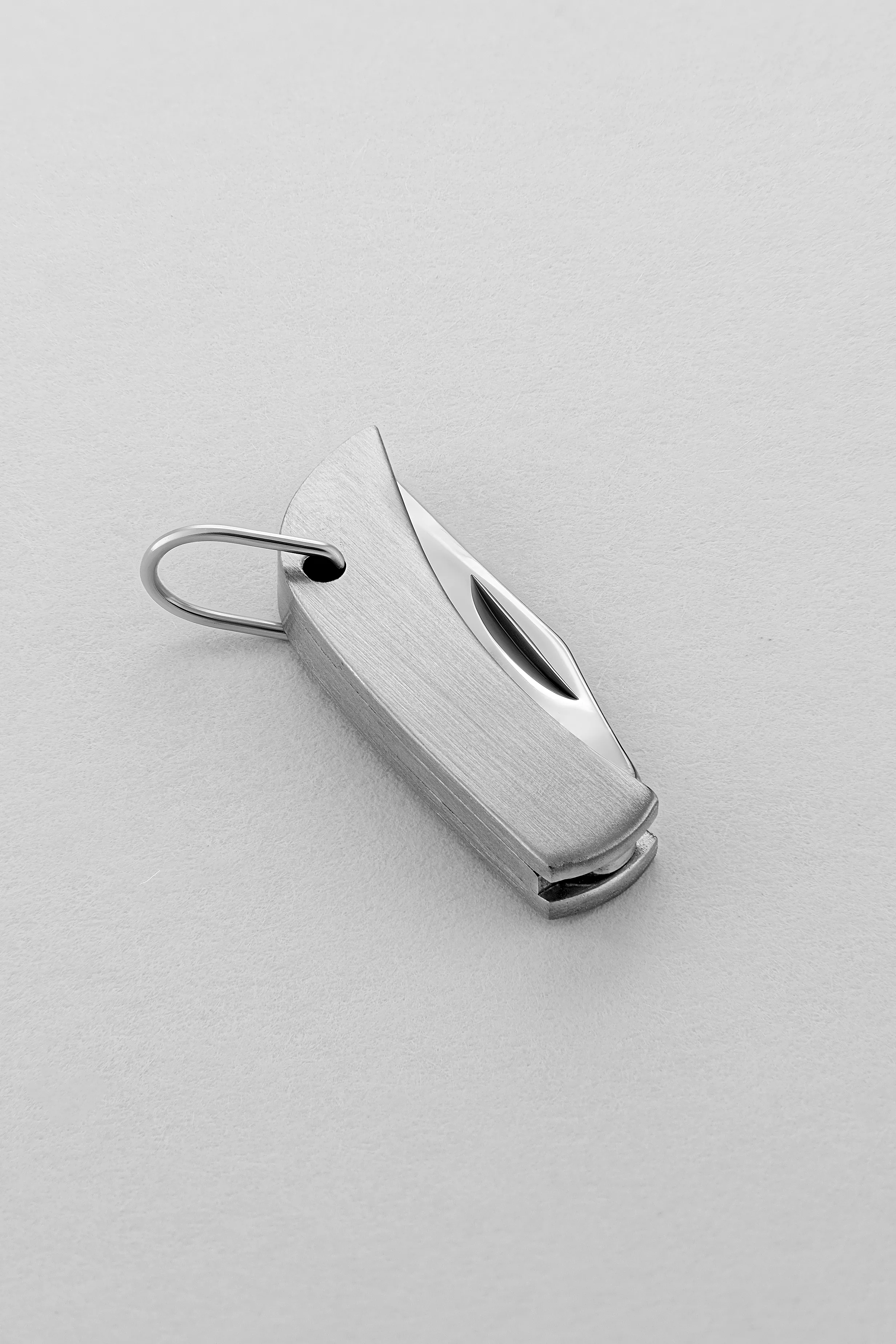
The Lunar Knife: A Crescent Navaja and Its Connection to Night Spain
A knife that came from the darkness
At two in the morning in a Seville bar, the light is different. Not daylight, not lamplight. Something between. The guitar is halfway through a solea, the singer's voice cracks on a note that should not exist, and on the neck of the woman at the next table hangs a pendant shaped like a sickle moon. Not a crescent. A knife. Or both. This is the lunar knife: a navaja whose blade curves inward like a young crescent, like a sickle, like the thing that appears in the Andalusian sky when the rest of the world is asleep.
Garcia Lorca wrote: "La luna vino a la fragua con su polison de nardos." The moon came to the forge wearing a bustle of spikenard flowers. The lunar knife is that image made metal. A blade that is also a moon. A tool that is also a symbol. Jewellery that is also a weapon, or at least the memory of one.
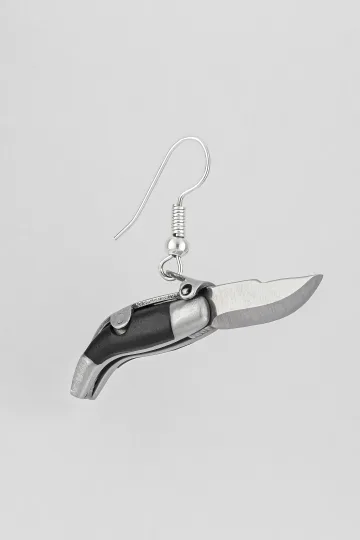
What a lunar knife looks like
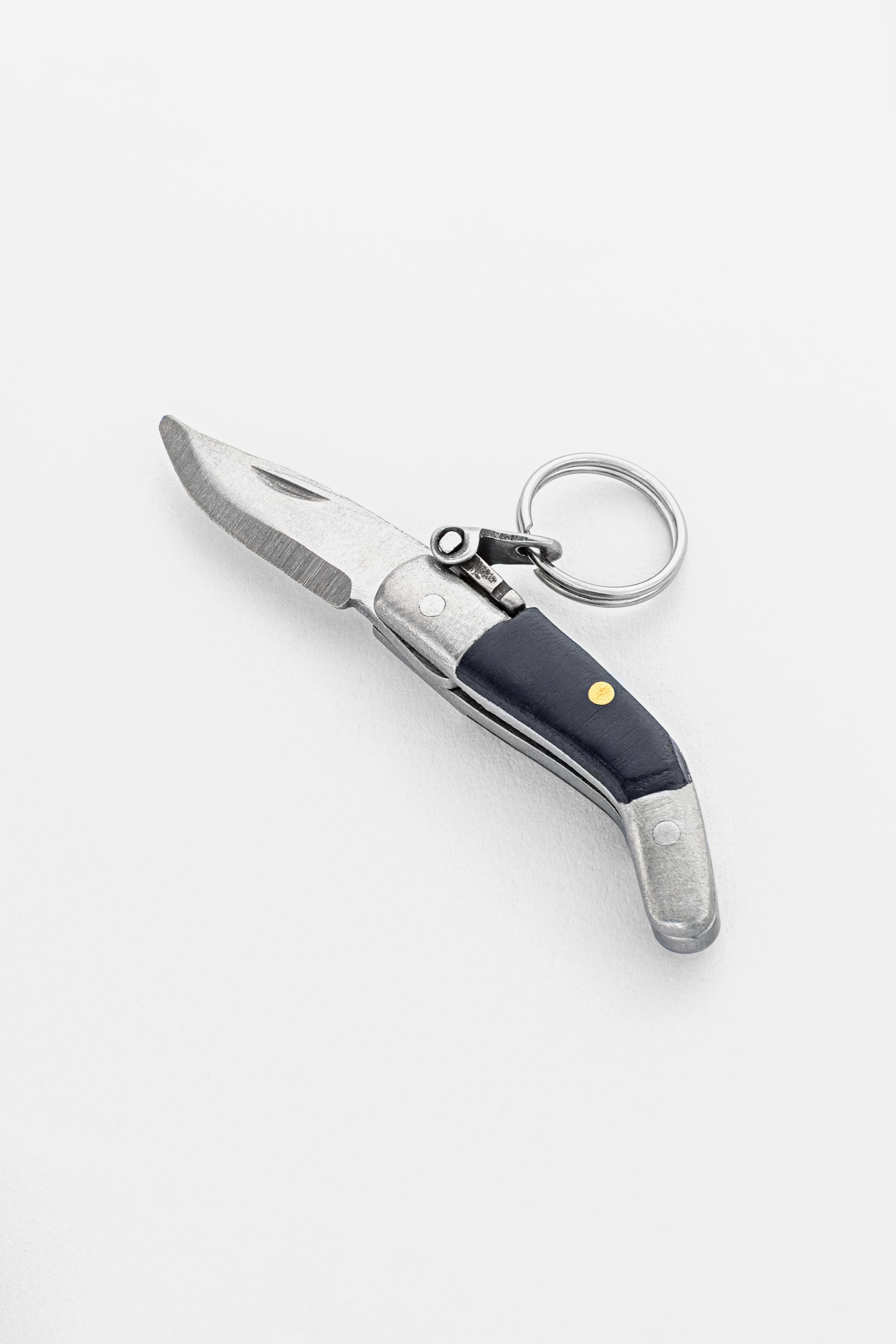
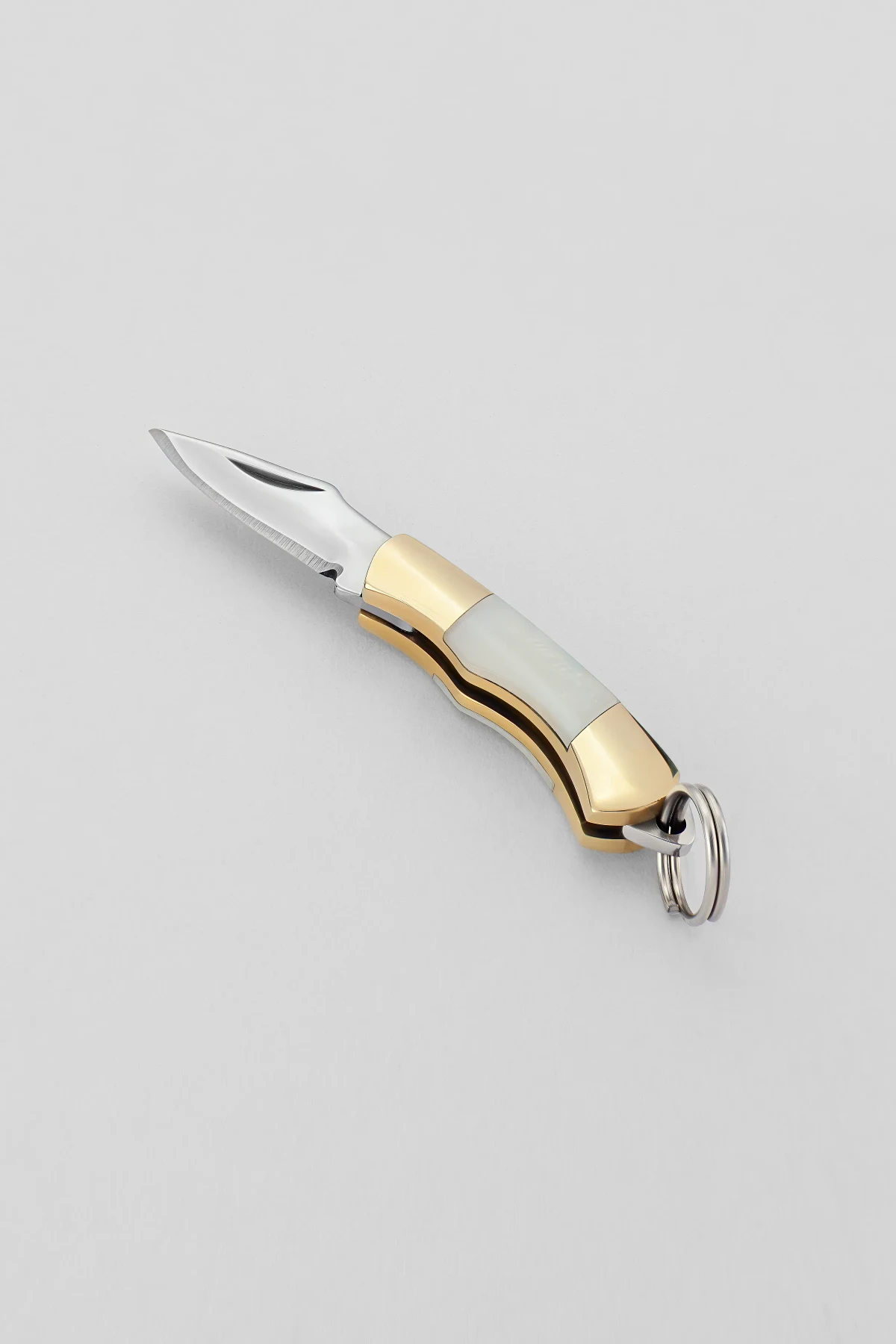
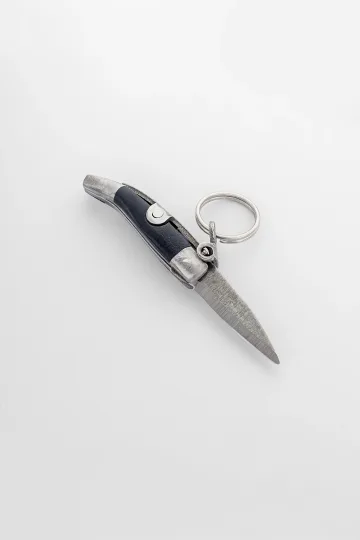
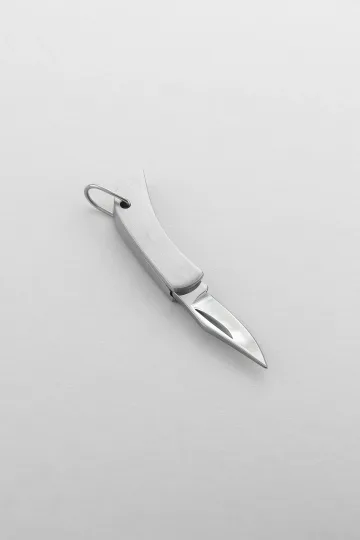
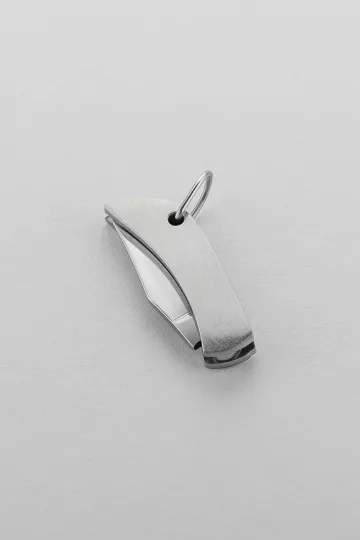
The blade curves inward, concave, like a sickle or a crescent moon. This is the opposite of the Curva Helada, which curves outward like a sabre. The lunar knife pulls inward, the Curva Helada reaches forward. Visually, it is the difference between grabbing and thrusting.
The sickle shape has a practical basis. A concave edge hooks and pulls, useful for rope, leather, nets. Fishermen on Spain's southern coast used similar shapes for repairing tackle. The lunar knife was a compromise: a sickle blade that folds and fits in a pocket.
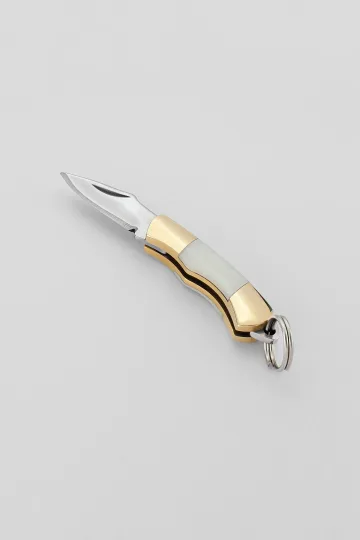
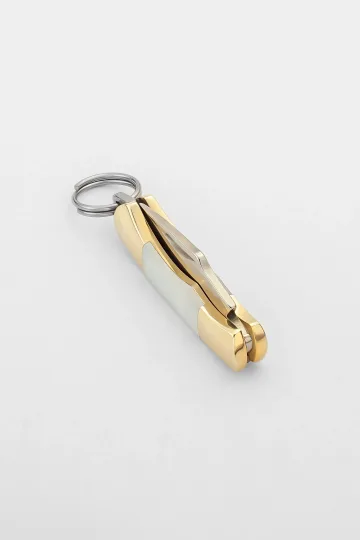
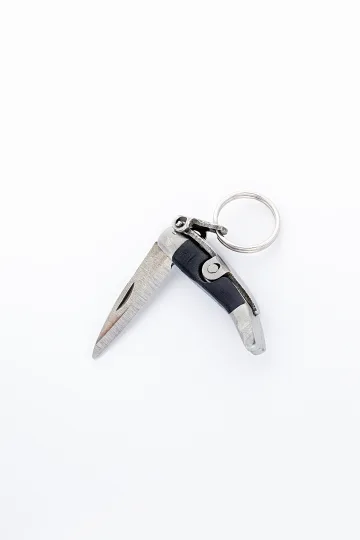
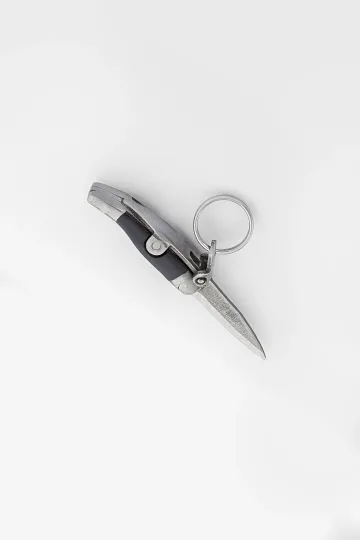
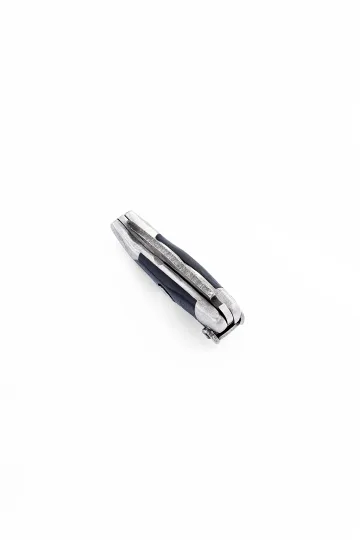
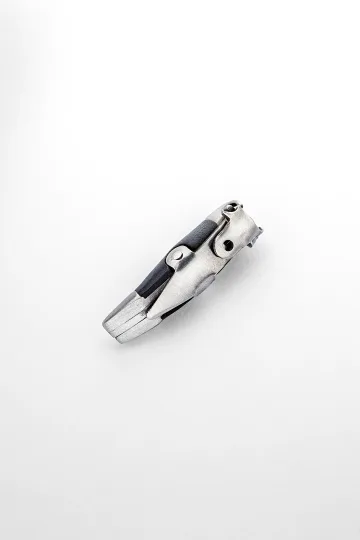
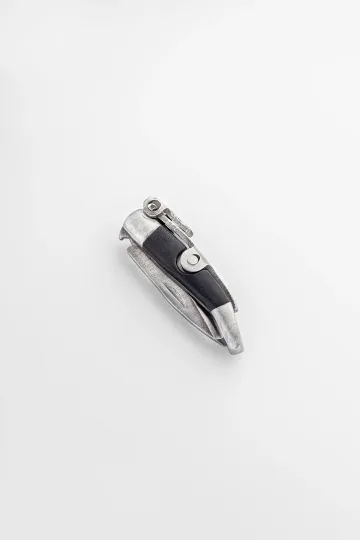
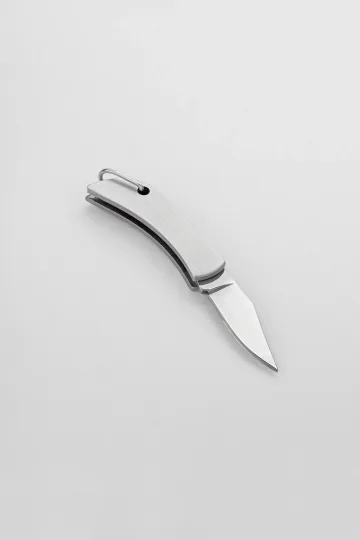
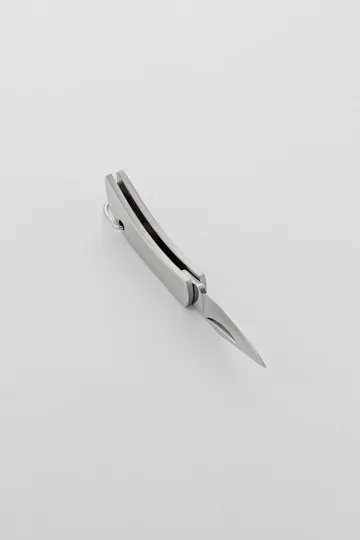
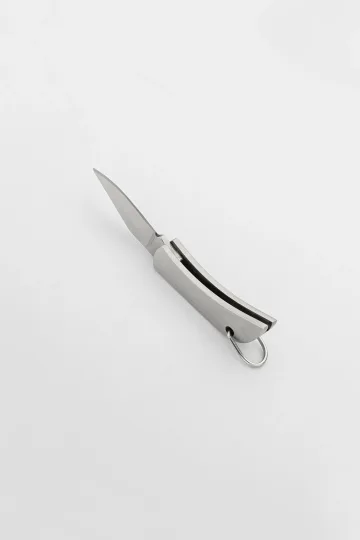
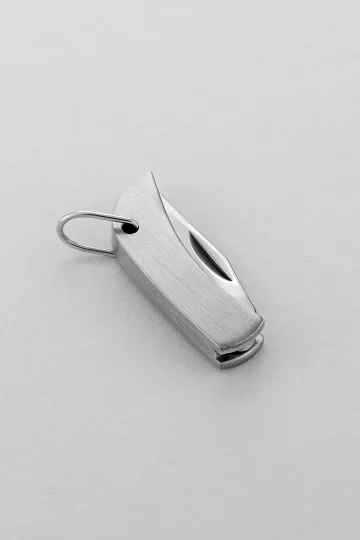
The handle is typically simple, letting the blade shape do all the talking. When folded, the knife is compact. When open, the crescent extends like a smile turned sideways.
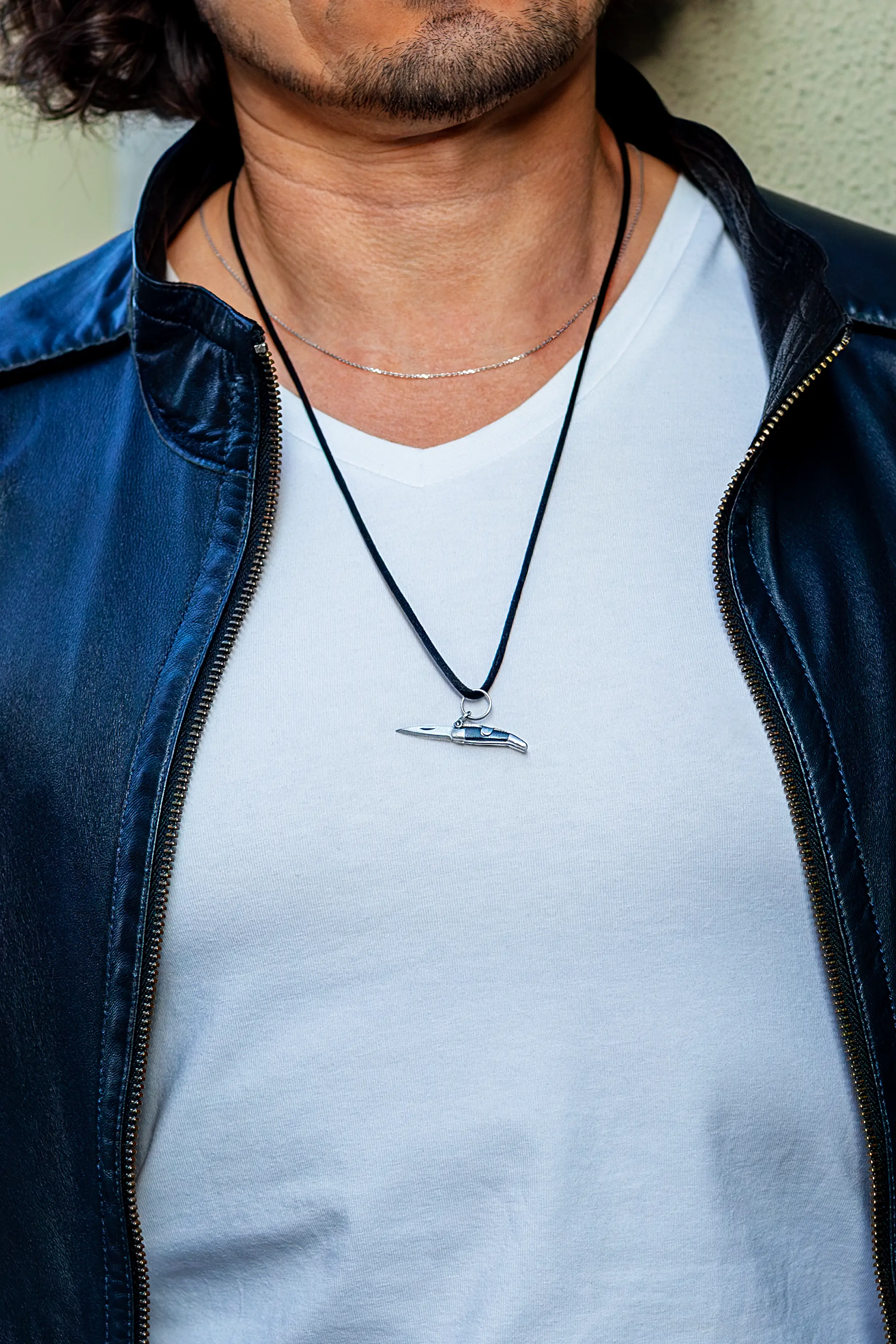
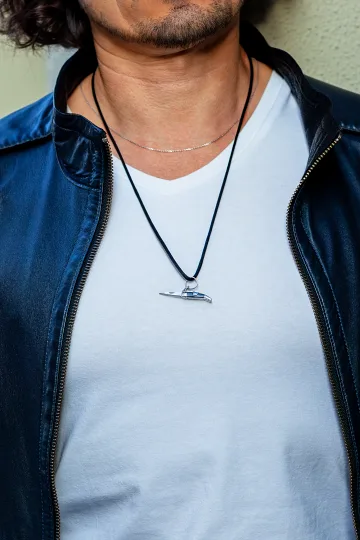
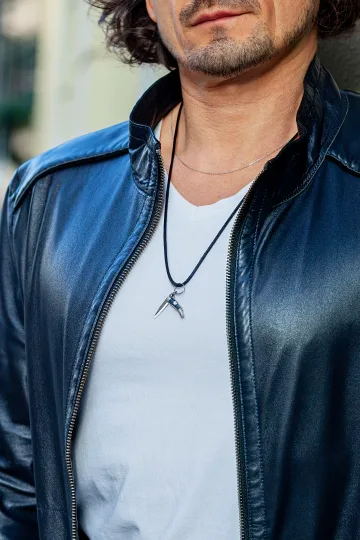
Size context. A full-size lunar knife runs about 15-20 centimetres open. As a pendant, roughly the size of a small coin: the crescent reads clearly even at that scale because the inward curve is such a distinctive shape. Against a dark shirt, the pendant catches light along the inner edge of the curve, creating a thin bright line, exactly like a crescent moon in the sky.
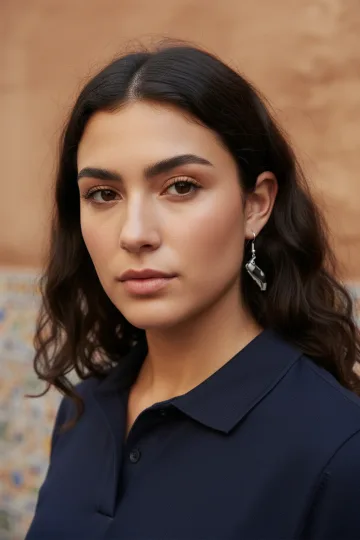
Visualisation. On a chain just below the collarbones, the lunar knife sits in the space between. On a woman, over a V-neck, the crescent points down and catches the eye of anyone who leans in to talk. From across the room, it reads as a moon. Up close, the blade details emerge, the spine, the edge, the handle, and the question begins: is that a knife or a moon?
The engineering of a concave blade
Making a folding knife with a concave blade is harder than it sounds. A straight-bladed navaja folds cleanly along the axis: the blade lies flat in the handle groove. A sickle blade presents a different problem. When the blade curves inward, the tip swings outward as the knife closes, demanding either a wider handle or a repositioned pivot.
Albacete smiths solved this in several ways over the centuries. Some widened the handle asymmetrically, creating a bulge on one side to accommodate the arc of the folding blade. Others moved the pivot point toward the blade's tip rather than its heel, changing the geometry of the fold. The best solutions combined both adjustments: a handle shaped to the sickle's path, with the pivot placed so the blade drops cleanly into the groove without binding or protruding.
The lock mechanism, the carraca in Spanish knife terminology, also required adaptation. On a straight blade the locking notch sits in a predictable position. On a concave blade the notch must account for the curve, or the blade will not lock flat. The sound of the carraca clicking into place on a well-made lunar knife is different from a straight navaja: slightly duller, because the blade is under more mechanical tension at the locked position.
None of this shows when you hold the finished pendant. But it explains why good lunar knives, even in miniature, read as designed objects rather than bent strips of metal. The proportions carry the memory of the engineering decisions behind them.
Who the lunar knife is for
Night people. If your best hours are after sunset. If you come alive when the city goes quiet. If you work late, create late, think late. The lunar knife is the pendant for the hours between midnight and dawn.
Ambiguity lovers. Knife or moon? Both. This is jewellery for people who like objects that are two things at once. Not costume jewellery pretending to be something. An actual dual identity.
Lorca readers. If "Blood Wedding" means something to you. If "Romancero Gitano" sits on your shelf. The lunar knife is the poem in metal. Lorca's Spain of knives and moonlight, compressed into a pendant.
Women. The sickle shape associates with feminine energy in dozens of cultures: moon, cyclicity, intuition. Not because we believe in that literally, but because the association is thousands of years old and visually powerful.
People who want unusual gifts. A knife that does not look like a knife. A moon that is also a blade. The lunar knife sidesteps every cliche.
Couples. The lunar knife and the Curva Helada as a pair: two curves, one pulling inward, one reaching outward. Night and day. Moon and sun. Mystical and Moorish.
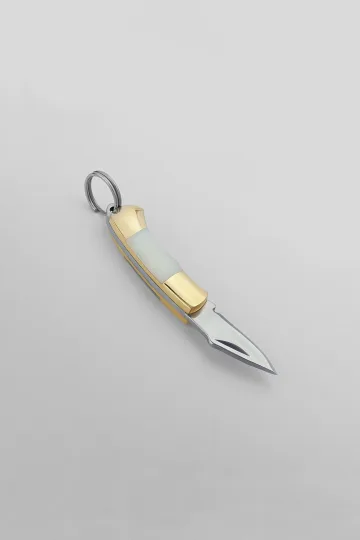
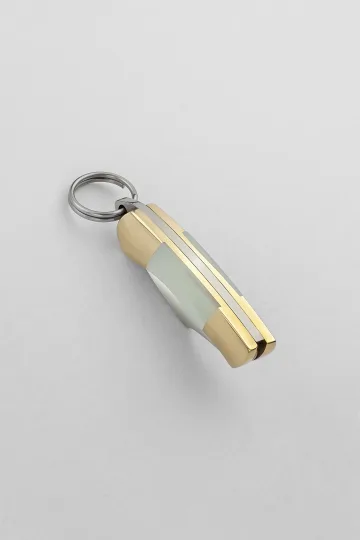
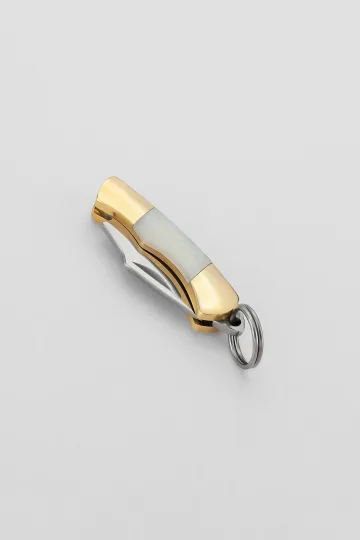
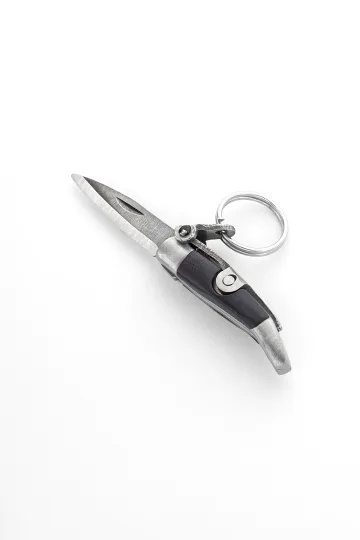
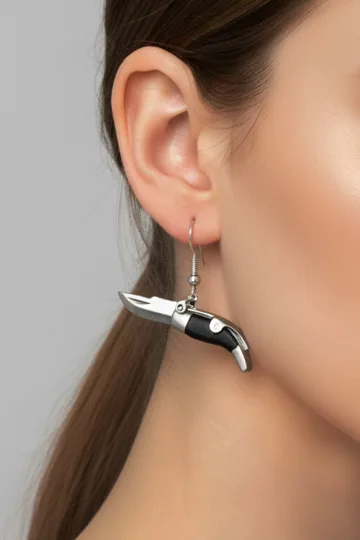
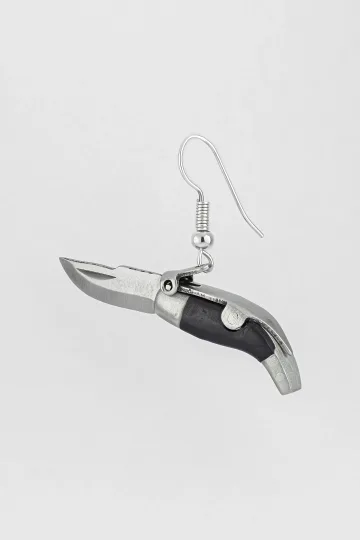
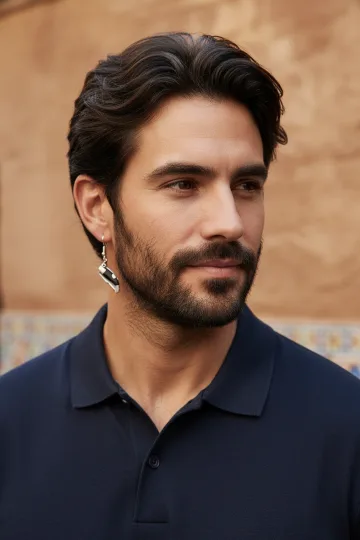
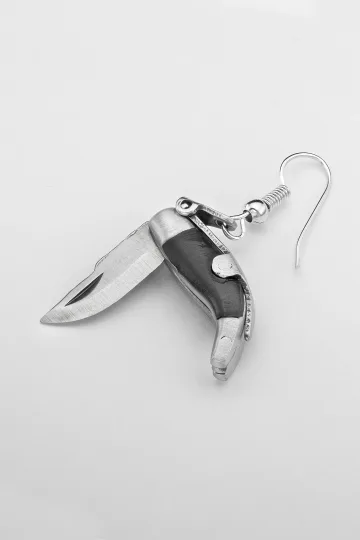
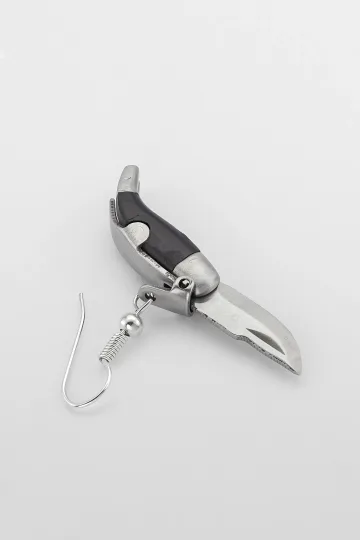
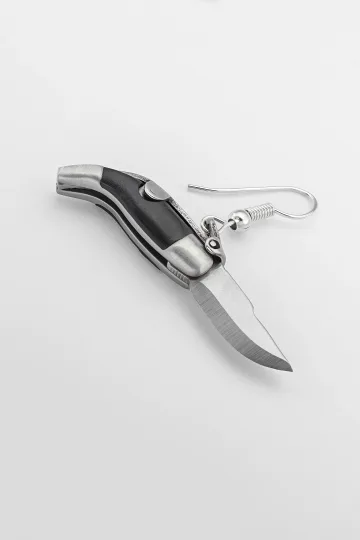
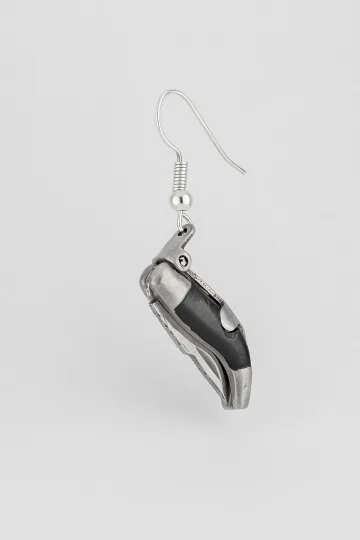
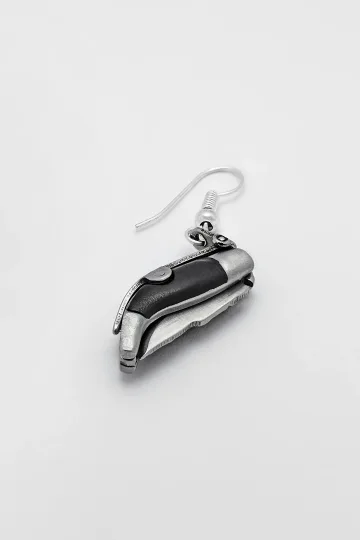
Wear the symbol, don't just read about it. These are in stock:
History: the sickle in the sky
Practical origins
Before the lunar knife was a symbol, it was a tool. Sickle-shaped blades appear across Mediterranean cultures for agricultural work: harvesting grain, pruning vines, cutting rope. The concave edge grabs material and pulls, which is more efficient for these tasks than a straight cut.
Spanish fishermen on the Andalusian coast carried folding sickle knives for mending nets and cutting line. The shape travelled from the field and the sea into the pocket, and from the pocket into jewellery.
The transition from agricultural sickle to folding pocket knife was not instantaneous. Early sickle-bladed navajas from the seventeenth and eighteenth centuries were closer to agricultural tools in proportion: heavy, wide, with the same broad arc as a harvesting sickle. Over time, the blade narrowed and refined. Smiths began to emphasise the lunar quality of the curve, making the sickle thinner and more pronounced. The knife became more beautiful as it became less agricultural, a trajectory typical of how craft tools evolve into cultural objects.
Moon worship and blade craft
The crescent moon is one of the oldest symbols in human history. Mesopotamian cultures worshipped Sin, the moon god. The crescent appears on the flags of at least a dozen modern nations. In Spain, the Moorish crescent decorated mosques, palaces, and weapons for 800 years.
When the crescent shape met the folding knife tradition, the lunar knife emerged. A functional blade that happened to look like the most worshipped celestial object after the sun. Coincidence or intention? Probably both. Smiths knew what shapes sold, and a knife that looked like a crescent moon sold in a culture where the crescent was everywhere.
The Islamic crescent, hilal, predates Islam itself. The Ottomans adopted it as a sovereignty symbol. In Greek mythology, the crescent was the sign of Artemis, goddess of the hunt and the moon. In alchemy, the crescent stood for silver and the feminine principle. All these streams flow together in the lunar knife.
Lorca and the Spanish night
Federico Garcia Lorca is the poet of the Spanish night. "Blood Wedding" (1932) centres on a navaja. "Romance de la luna, luna" opens with the moon visiting a forge. "Romancero Gitano" is soaked in metal and moonlight. Lorca knew the Spain of knives: he grew up in Granada, in the shadow of the Alhambra, in a region where navajas were as common as wineglasses.
The lunar knife is the point where Lorca's two obsessions, the moon and the blade, intersect. Wearing it is not a literary reference exactly. It is closer to wearing the atmosphere of his poetry.
Lorca was murdered in 1936, at the start of the Spanish Civil War. His body was never found. There is something of that unresolved darkness in the lunar knife: a crescent that is also a blade, beauty that is also danger, something that shines in the dark precisely because it belongs there.
In cinema, music, and culture
Every film set in Andalusia at night reaches for the crescent. Bigas Luna's cinema is drenched in night and desire. Carlos Saura's "Blood Wedding" (1981) stages Lorca's text with real navajas glinting under stage lights. Pedro Almodovar's early films pulse with Madrid nightlife where every accessory is a statement.
Flamenco is night music. The cante jondo, deep song, belongs to the hours after midnight. When Camaron de la Isla sang, the room became nocturnal regardless of the time. Paco de Lucia's "Entre dos aguas" sounds like moonlight on water. The lunar knife belongs to that world.
On TikTok, crescent jewellery is a perennial trend. The #crescentmoon hashtag collects billions of views. But most crescent pendants are decorative half-moons. The lunar knife is different: it is a crescent that is also a blade, a knife that is also a symbol. That duality is what makes it stand out in a feed full of generic moon jewellery.
Contemporary Latin artists lean into that same territory: dark, nocturnal, distinctly Spanish. Contemporary flamenco-pop artists have brought Spanish tradition into the global mainstream. The lunar knife sits at the intersection of those currents: Spanish heritage, night culture, modern edge.
Owner's story
A bartender in Barcelona. "I work until four in the morning. Most of my life happens after dark. The lunar knife is the one piece of jewellery that looks right at two a.m. under bar lighting. Everything else I own looks tired at that hour. The crescent catches the light from the bottles behind me and throws a tiny reflection on the bar top. A regular noticed it once and said, 'You're wearing the moon.' I am."
Customer reviews
Zevira is a real jewellery shop. Genuine payments, deliveries and customer thank-yous.
🥰🥰🥰 gracias
Ok, ¡gracias! 🙂
What to pair it with
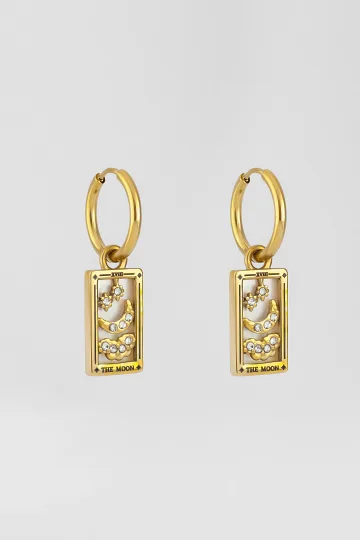
With Moon Tarot earrings: lunar set, doubling down on the night. With Curva Helada: two curves together, one inward, one outward, sickle and sabre. With Somnium necklace: dream and night, a full nocturnal composition.
Solo on a thin chain. Just below the collarbones, on a 40-45cm chain. Self-sufficient. The crescent reads immediately and does not need supporting cast.
With a black outfit. Silver-tone lunar knife on all black: the pendant catches any available light and becomes the focal point. Night jewellery for night clothes.
Layered with other navajas. Lunar knife on the shorter chain, a straight jerezana or punta de espada on the longer chain. Night over day, curve over straight.
As a gift
For the night owl. Who comes alive after sunset. Who works best at midnight. Whose phone has permanent dark mode. The lunar knife says: I see your hours. I respect your rhythm.
For the Lorca reader. Who knows "Blood Wedding." Who highlighted passages in "Romancero Gitano." The poem in metal.
For the ambiguity lover. Who likes objects that are two things at once. Who does not want jewellery that explains itself in one second. The lunar knife unfolds slowly, like a conversation.
For someone going through a transition. The crescent is the moon in its becoming phase, not full, not dark, in between. For someone starting something new, ending something old, figuring out what comes next.
Seasonal note. The lunar knife works especially well for winter gifts: the longest nights, the most crescent moons. For Halloween: a blade and a moon in one pendant, no costume required. For a summer birthday: a crescent that catches golden evening light.
Price context. Costs roughly what you would spend on a good bottle of wine and a book of Lorca's poetry. The wine gets drunk, the book gathers dust. The lunar knife gets worn every night.
What to write on the card? "La luna vino a la fragua." Lorca will do the rest.

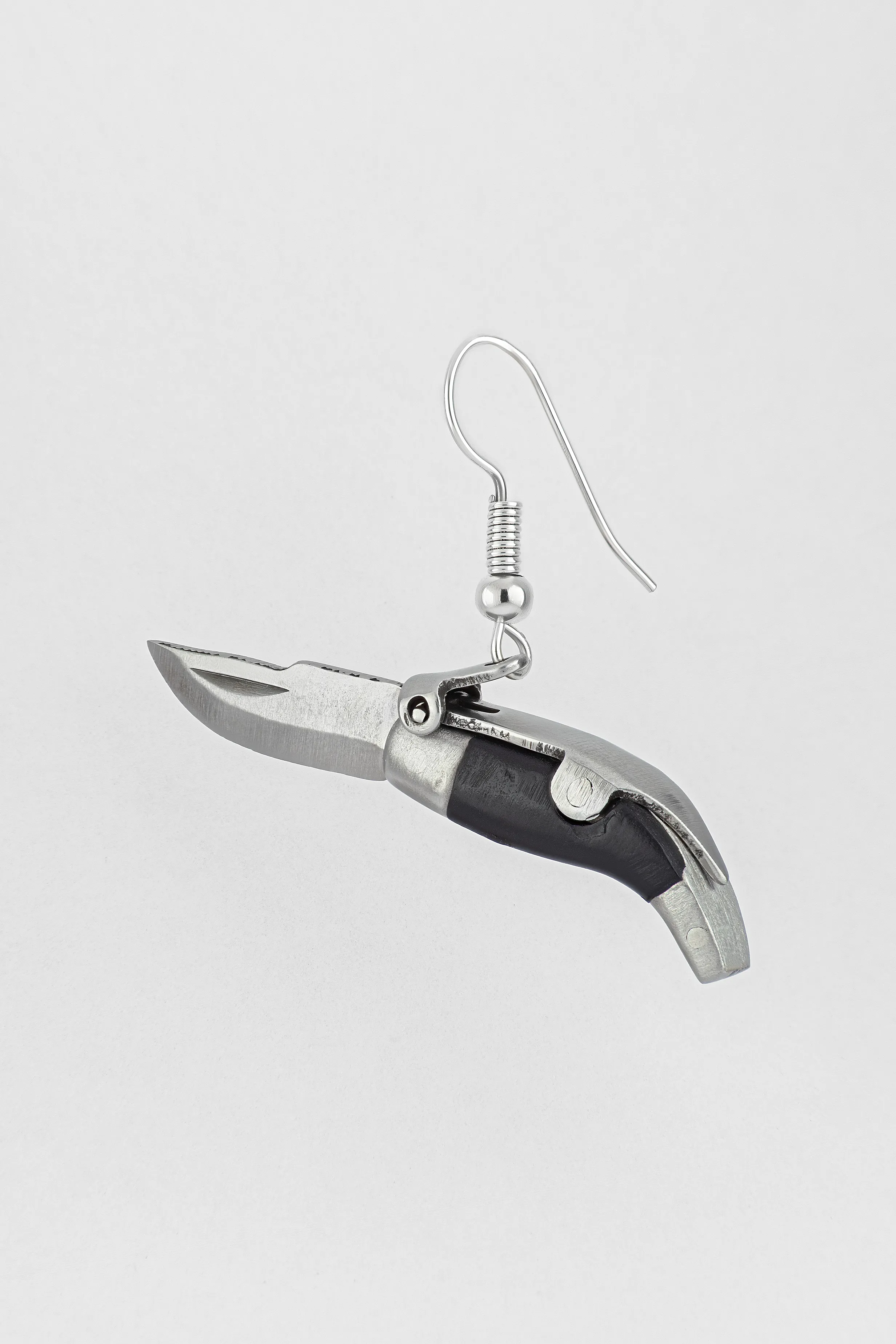
Turn on your camera, pick earrings, a pendant or a ring, and see the piece on yourself in real time.
Switch items in one tap.
Everything runs in your browser: no photo or video is ever uploaded.
The lunar knife and transition
The crescent moon is the moon in its becoming phase. Not full, not dark. In between. This makes the lunar knife a powerful symbol for people in transition.
Starting a new job. Ending a relationship. Moving to a new city. Figuring out who you are after a major change. The crescent does not represent completion. It represents potential. What you are becoming, not what you were.
A full moon pendant says: I am complete. A crescent pendant says: I am in process. For someone who is honest enough to admit they are still figuring things out, the lunar knife is the more truthful piece.
This is also why the lunar knife works as a gift for certain life moments. A friend going through a divorce. A colleague changing careers. A family member recovering from illness. The crescent says: the darkness is not the end. The light is coming back. Slowly, like a new moon growing toward full.
The lunar knife for night workers
Doctors, nurses, police officers, bartenders, DJs, night porters, shift workers in factories, security guards. For them the night is not a choice but a reality. They live on an inverted schedule, sleeping when the world is awake, working when the world sleeps.
The lunar knife speaks directly to these people. It is not a decoration. It is an identity marker. "I am a creature of the night, and I am not ashamed of it." Many night workers report that wearing a night symbol helps them own their schedule rather than fighting it.
A bartender wears the lunar knife under bar lighting at 2 a.m. A nurse wears it under her scrubs on the night shift. A DJ wears it on stage at 4 a.m. In each case, the pendant is more than jewellery. It is an acknowledgment: I belong here, in these hours, when the crescent moon is the only light.
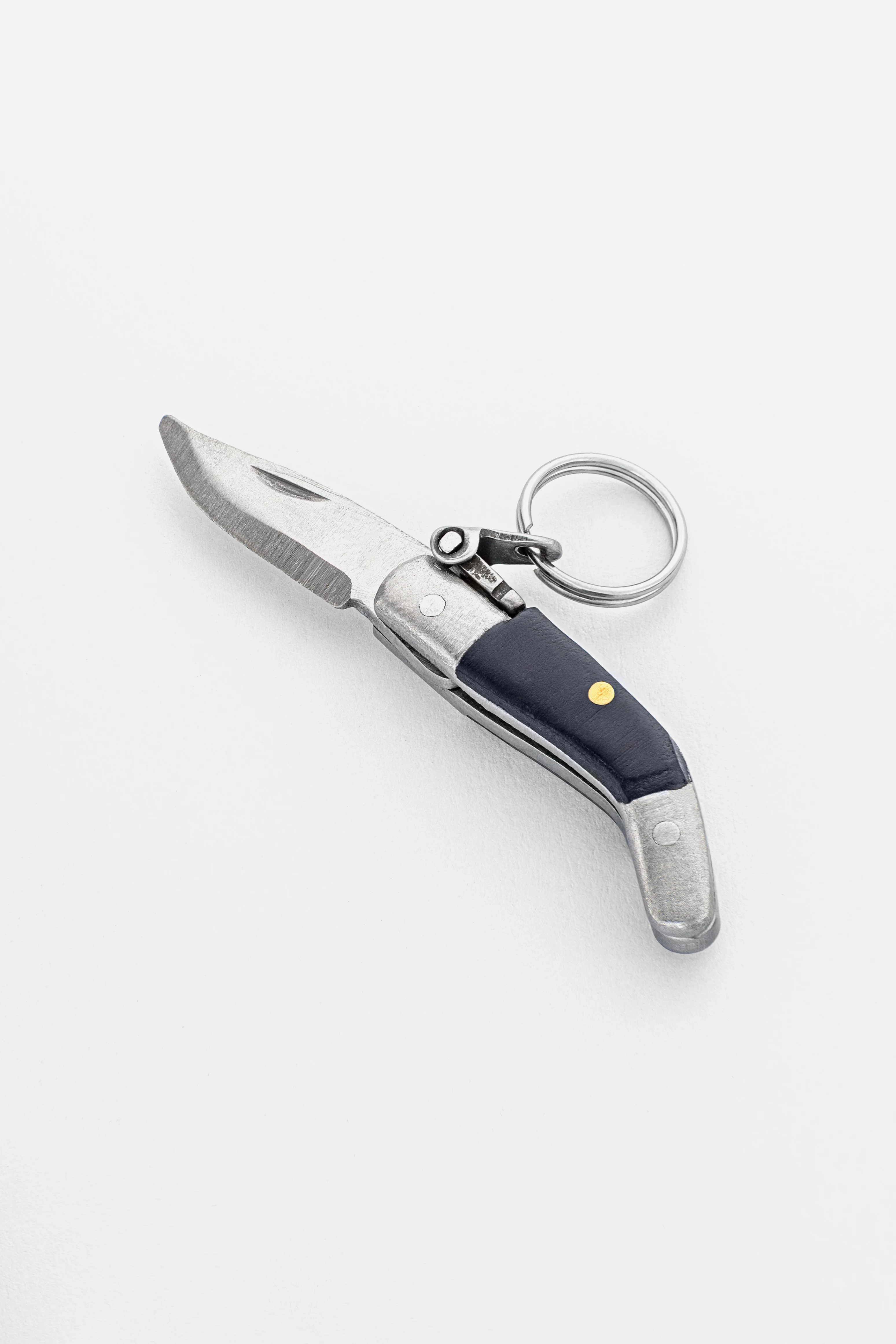
Artisan-crafted CAPAORA navaja pendant
A 40 mm stainless-steel navaja with a real folding mechanism and Palanquilla lock. An affordable gift to remember.
A code for blog readers:
10% off your first order
Authentic · Maker's guarantee · Ships from Spain
Behind the scenes: a crescent in miniature
The sickle curve of the lunar knife is distinctive at any size. But miniaturising it poses a specific challenge: the concave edge. In a full-size knife, the inner curve is where the cutting happens. In a pendant, the inner curve must read clearly without being sharp. The smith thins the inner edge enough to suggest a blade while keeping it smooth to the touch.
The proportions matter at pendant scale in a way they do not in a full-size knife. A full-size lunar knife reads as a knife first and a crescent second. At pendant scale, the crescent reading comes first. The Albacete smith who works on the miniature must preserve enough knife detail, a distinguishable spine, a handle, a sense of the fold, without losing the lunar silhouette that makes it remarkable. The best miniatures achieve both readings simultaneously: from across a room, a moon; from close conversation distance, a knife. Finding that line is craft, not formula.
The Zevira workshop in Albacete produces the lunar knife alongside all other navaja types. The master who shapes the crescent has the Museo de la Cuchilleria five minutes away, with sickle-shaped blades from different centuries behind glass. Full production cycle inside the workshop. The pendant is not an illustration of a knife. It is a knife, miniaturised by someone who makes full-size knives in the same city.
Albacete: where the moon meets the forge
Albacete is the capital of Spanish knife-making. Every navaja type converges here. The Museo de la Cuchilleria, the Feria de Albacete (since 1375), the BIC status (since 2017). The Zevira workshop operates in Albacete, producing the lunar knife pendant 200 metres from the museum where its full-size ancestors sit behind glass. Same city, same tradition, same understanding of how steel bends.
The Feria de Albacete deserves a note for context. Running since 1375, it is one of the oldest fairs in Spain, and knife-makers have exhibited there every year without interruption. Each September, smiths from Albacete and surrounding towns display their work. Lunar knives appear at every fair, and every smith who makes them has a slightly different interpretation of the sickle curve. One grinds the spine thinner. Another makes the handle more pronounced. A third pushes the curve further than seems structurally advisable. This ongoing competitive interpretation is how a tradition stays alive across centuries: the same form, endlessly argued over.
How to spot quality
The crescent. The inward curve must be smooth and continuous, not angular or flattened. A quality lunar knife looks like a crescent moon, not like a bent strip of metal.
Weight. A quality miniature has heft. Hollow stampings feel like nothing.
Edge detail. The inner edge should suggest sharpness without being sharp. If the inner curve is blunt and rounded like a spoon, the maker missed the point.
Finish. Even coating, no burrs, smooth edges. Chain loop proportional.
The fold line. On a well-made miniature, you can see where the blade and handle meet, the hinge point, even though the pendant does not actually open. This detail is what separates a navaja pendant from a generic crescent pendant. If there is no fold line, it is not a navaja. It is a moon shape.
Leave your email, we'll send your discount code. No spam, unsubscribe anytime.
The code arrives by email, valid on your first order.
Care
Wipe with a soft cloth after wearing. Store separately. Avoid perfume, creams, chlorine. Brass patina is normal. Baking soda for shine. Open and close navaja earrings periodically.
| Feature | Lunar Knife | Curva Helada | Jerezana | Machete |
|---|---|---|---|---|
| Blade shape | Inward curve (sickle) | Outward curve (sabre) | Straight with clip point | Straight, wide |
| Character | Mystical, nocturnal | Flowing, Moorish | Elegant, Andalusian | Raw, streetwear |
| Best for | Night people, poets | Form lovers, first navaja | Culture lovers | Latin identity, rebels |
| Mood | Midnight | Afternoon in Granada | Evening in Seville | Street at any hour |
| Pairs well with | Moon Tarot, Somnium | Nazar, punta de espada | Sacred heart, nazar | Anchor, capaora |
The crescent in European symbolism
The crescent moon is one of the oldest and most universal symbols of humanity. Its meaning is so layered that it appears in almost every culture, from Mesopotamia to the modern era.
In Islam the crescent (hilal) is the most recognisable symbol, though it predates Islam. The Ottomans adopted it as a sign of sovereignty, and from there it became the symbol of the Islamic world.
In Greek mythology the crescent was the sign of Artemis, goddess of the hunt and the moon. Roman Diana followed the same tradition.
In Christianity the crescent appears beneath the feet of the Virgin Mary (crescent Madonna), especially in Baroque art. Numerous depictions can be found in churches across southern Europe.
In alchemy the crescent stood for silver and for the feminine principle. The connection moon-equals-silver-equals-feminine is as old as metallurgy itself.
In Celtic tradition the Triple Goddess, maiden, mother, and crone, was associated with the three phases of the moon: crescent, full, and dark. The sickle specifically belonged to the crone phase: the harvesting aspect, the ending that makes the new beginning possible.
The lunar knife unites these traditions in a single object: a blade in crescent form that is both tool and symbol. It is simultaneously practical (the concave edge grabs and pulls) and poetic (the moon came to the forge).
The lunar knife and night in literature
The connection between the lunar knife and night literature deserves deeper exploration because the fit is so remarkably good.
E.T.A. Hoffmann (1776-1822) wrote night stories in which the boundary between reality and dream dissolves. "The Sandman," "The Golden Pot," "The Devil's Elixirs": all night literature, in which objects are more than they seem. The lunar knife is a Hoffmann object: a thing that is both blade and moon, both real and symbolic.
Rainer Maria Rilke wrote: "Whoever has no house now will never build one. Whoever is alone now will stay alone for a long time, will lie awake, read, write long letters, and wander restlessly through the avenues, when the leaves are blowing." Autumn evening, loneliness, wakefulness. The lunar knife is the pendant for that poem.
Hermann Hesse described in "Narcissus and Goldmund" the night as the space where artists see most clearly. Goldmund works at night because daylight is too honest, too sober. The night allows ambiguity. And the lunar knife is an object of ambiguity.
John Keats wrote "Ode to a Nightingale" in a garden at night, listening to a bird he could not see. The ode is full of darkness and beauty co-existing without resolution. The lunar knife could be described in similar terms: something beautiful and dangerous, seen in half-light, understood in full.
This literary tradition gives the lunar knife a depth that enriches the experience of wearing it. A Spaniard sees Lorca. A lover of German Romanticism sees Eichendorff. An English reader sees Keats. All see the night. All are right.
The lunar knife for women: why it fits especially well
The sickle form associates with feminine energy in dozens of cultures: moon, cyclicity, intuition, the Triple Goddess (maiden, mother, crone) in Celtic tradition. Not because we believe this literally, but because the association is thousands of years old and visually powerful.
On a thin chain at 42-45 cm, just above the V-neckline, the lunar knife is a feminine and simultaneously powerful pendant. The sickle suggests both softness (the moon curve) and sharpness (the blade). This duality is what distinguishes the lunar knife from a "normal" crescent pendant: it is pretty, and it has edge.
For women who seek jewellery with meaning beyond decoration, the lunar knife is one of the strongest options. It says: "I am beautiful AND dangerous." Both at once, without compromise.
There is a longer history here. In ancient Anatolia, the goddess Cybele carried a sickle. Artemis hunted with a crescent bow. Hecate, goddess of witchcraft and the night, is often depicted with a crescent. These are not gentle associations. They are associations of power: feminine energy that hunts, that cuts, that transforms. The lunar knife inherits all of that, compressed into a pendant that fits in the palm of your hand.
Send a friend a discount code, they save on their first order.
The lunar knife and night work
Hundreds of thousands of people work at night: doctors, nurses, police officers, bartenders, DJs, night porters, shift workers. For them, the night is not leisure. It is work. The lunar knife is their pendant.
The bartender's story from Barcelona (earlier in this article) is not an isolated case. Many night workers report that a night symbol around the neck helps them identify with their unusual rhythm rather than fighting against it. "I am a night person" is easier to accept when you literally wear it.
In club scenes where nights stretch until Monday, crescent jewellery is a perennial favourite. The lunar knife takes it one step further: it is a crescent that also carries a blade. Beautiful and dangerous. Night and steel. Dancing and cutting. The duality is the point.
The lunar knife and the night aesthetic in film and music
Night is its own genre in film history. Film noir is fundamentally a night aesthetic: sharp shadows, crescent silhouettes, truth only revealing itself after sundown.
Fritz Lang shot "M" (1931) in nocturnal Berlin. Wim Wenders showed angels watching over a night city in "Wings of Desire" (1987). Gothic and animated fantasy cinema has long built its visual language on sickle forms: the moon rendered as a thin crescent, fog and shadow, a world that comes alive after dark. Crescents everywhere, night everywhere.
Carlos Saura filmed "Blood Wedding" (1981) with real navajas under stage lighting. More night than day.
In music, the night is the natural environment for creation. Schumann set Eichendorff's "Mondnacht" to one of the most beautiful art songs in music history. Brahms wrote "Feldeinsamkeit" for twilight hours. Electronic music is fundamentally night music, sometimes lasting until Monday afternoon.
The lunar knife belongs in this canon: a night object that carries both beauty and sharpness, that is both moon and blade.
Not for everyone
The lunar knife is not for someone who wants clean daytime elegance. If you prefer bright, geometric, unambiguous jewellery, if you like things that explain themselves at first glance, the lunar knife will feel too dark, too layered. For that person, the jerezana exists: clear, Andalusian, daytime. An elegant knife for the sun hours.
The lunar knife and the gothic-nocturnal aesthetic
Gothic romanticism deserves special mention because its whole visual language is built on crescent forms. The moon is always a thin sickle, never a full circle: spindly trees, fog, candlelight, a world that wakes after dark. The lunar knife fits naturally into this aesthetic.
For anyone drawn to that nocturnal, faintly haunted imagery, the lunar knife pendant is a Spanish blade and the thin moon that hangs over a sleeping hill. It is the sickle that cuts through the fog. It is the shape that says "this belongs to the night, and the night is beautiful."
Moon worship and blade craft: an ancient connection
The crescent moon is one of the oldest symbols in human history. Mesopotamian cultures worshipped Sin, the moon god. The crescent appears on the flags of at least a dozen modern nations. In Spain, the Moorish crescent decorated mosques, palaces, and weapons for 800 years.
When the crescent shape met the folding knife tradition, the lunar knife emerged. A functional blade that happened to look like the most worshipped celestial object after the sun. Coincidence or intention? Probably both. Smiths knew what shapes sold, and a knife that looked like a crescent moon sold in a culture where the crescent was everywhere.
The Islamic crescent (hilal) predates Islam itself. The Ottomans adopted it as a sovereignty symbol. In Greek mythology, the crescent was the sign of Artemis, goddess of the hunt and the moon. In alchemy, the crescent stood for silver and the feminine principle. All these streams flow together in the lunar knife: a blade that carries millennia of symbolic weight in a form the size of a coin.
Silver and gold jewellery, wedding bands, symbolic pendants, paired sets.
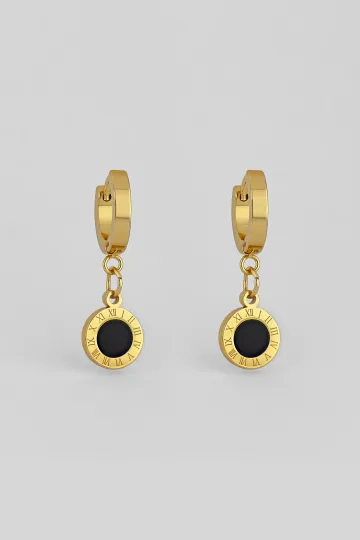
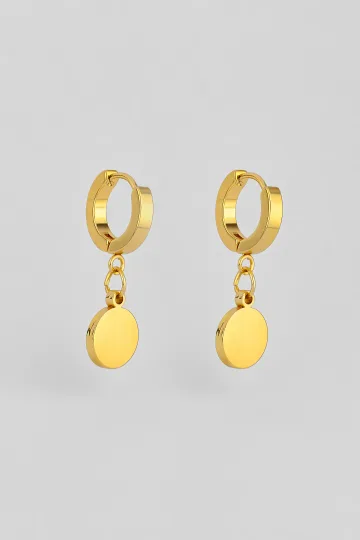
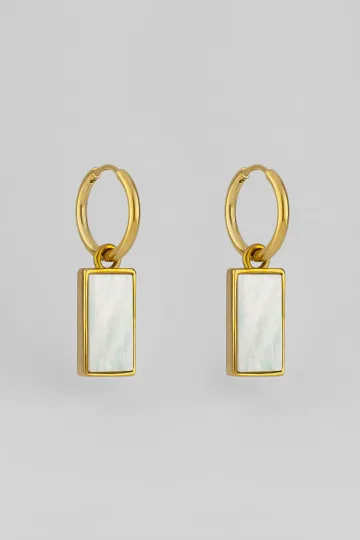
Wear the symbol, don't just read about it. These are in stock:
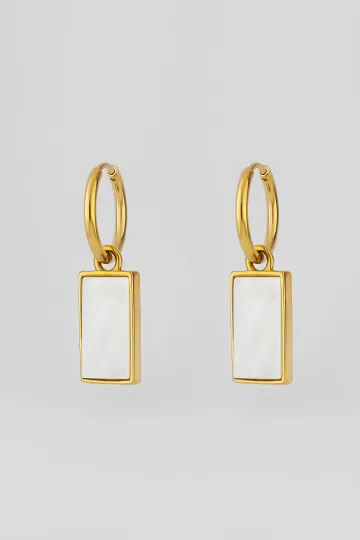
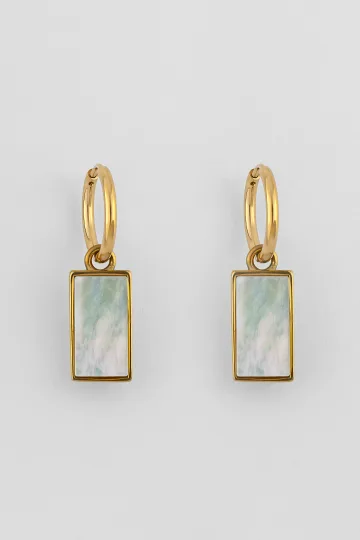
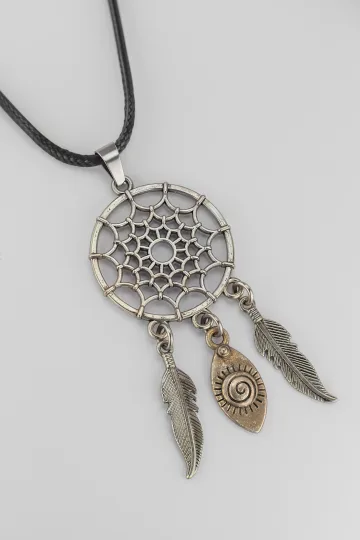
Frequently asked questions
What is a lunar knife? A type of navaja with a sickle-shaped (concave) blade that resembles a crescent moon. Both a functional knife tradition and a symbol of the Spanish night.
Is it related to the moon in some spiritual way? Not literally. The crescent shape is ancient, appearing in dozens of cultures as a moon symbol. Psychologists might call the association a projection. But the association is thousands of years old, and if wearing a crescent makes you feel connected to something, the reason matters less than the result.
How does it differ from the Curva Helada? Curve direction. The Curva Helada curves outward (sabre). The lunar knife curves inward (sickle). As pendants, Curva Helada is "Moorish," the lunar knife is "mystical."
What is the Lorca connection? Federico Garcia Lorca (1898-1936) is Spain's most famous poet of the night. His work is filled with moons and blades. "Blood Wedding" centres on a navaja. "Romance de la luna, luna" opens with the moon visiting a forge. The lunar knife is where his two obsessions meet.
Where is it made? Albacete, Spain. BIC since 2017. Full production cycle in the workshop.
What are Zevira pendants made of? Stainless steel and coated brass. Full production in Albacete.
Are these real knives? No. Jewellery miniatures. Not sharp, not a functional weapon. Rules on carrying any blade-shaped item vary by country and region, so check your local regulations.
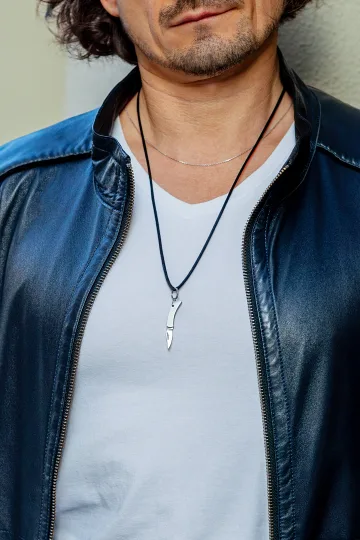
Can men wear the lunar knife? Yes. The crescent is a universal symbol. On a leather cord or thick chain, the lunar knife reads as a blade, not as feminine jewellery.
Where can I see original sickle-shaped navajas? Museo de la Cuchilleria, Albacete, Spain. Open year-round.
Is the lunar knife only for women? Not at all. The crescent is a universal symbol. On a leather cord or thick chain, the lunar knife reads as a blade, not as feminine jewellery. Men who work night shifts, who live nocturnally, or who simply prefer curved forms over straight ones will find the lunar knife speaks to them as clearly as to anyone else.
What is the difference between the lunar knife and a regular crescent pendant? A regular crescent pendant is decorative: a moon shape, often smooth, sometimes with gemstones. The lunar knife is a blade. It has a spine, an edge, a handle, and the proportions of a real navaja. It is a crescent that is also a weapon. That duality is the entire point. A crescent pendant says "I like the moon." A lunar knife says "I belong to the night, and the night has teeth."
How does the lunar knife compare to the Curva Helada? Both are curved navajas, but in opposite directions. The Curva Helada curves outward like a sabre, reaching forward, attacking. The lunar knife curves inward like a sickle, pulling back, gathering. As pendants, the Curva Helada reads as "Moorish," flowing, expansive. The lunar knife reads as "mystical," concentrated, nocturnal. Together they make a powerful pair: sun and moon, thrust and pull, day and night.
Can I wear the lunar knife to work? Depends on the work. In creative fields, absolutely. In traditional corporate settings, under the shirt. The pendant is small enough to be invisible when you want it to be, and distinctive enough to start conversations when you do not. The sickle shape at conversation distance reads as abstract jewellery, not as a weapon. Nobody will mistake it for anything threatening.
Why does the concave blade make a better pendant shape than the convex? Because the inward curve is immediately readable as a crescent. A convex curve, like the Curva Helada, reads as a wave or a sabre arc. The concave curve reads as a moon. That single visual fact is why the lunar knife works as a symbol in a way that a generic curved blade would not. The shape carries meaning before any context is provided.
What chain length works best? 42-45 cm places the pendant just below the collarbones, where the crescent frames naturally in a neckline. At 50 cm it hangs lower, more casual. For layering with another navaja, the lunar knife typically goes on the shorter chain with the straight navaja on the longer one: night above, day below.
About Zevira
Zevira makes jewellery by hand in Albacete, Spain. The lunar knife grew straight out of this city: a sickle blade with Moorish roots, carried over into a jewellery miniature where it reads as a knife and a crescent at the same time.
Here is what you can find with us around the lunar knife and night symbolism:
- Lunar knife pendants: the sickle silhouette that lives on the line between a navaja and a crescent moon
- Other navaja pendant types: Curva Helada, jerezana, capaora, punta de espada
- Lunar and nocturnal pieces: crescent earrings, moon-phase pendants, tarot motifs
- Materials to match the mood: 925 silver, blackened silver, brass with a patina, black PVD, 14-18K gold plating
- Chains and cords: a thin silver chain, leather and silk cords for different looks
- Paired night-aesthetic sets and gift boxes
Every piece is made by hand by a craftsman, with the option of personal engraving. 925 silver and 14-18K gold.