Hoop Earrings: Complete Guide to Round Earrings in Italian Jewelry Tradition
When a circle is not just a shape
In your grandmother's drawer sits a pair of heavy gold earrings. She never took them off. They are a perfect circle, a closed line that returns to its beginning. Seventy years later, when you put them in your ears, the first thing you feel is the weight of history. This is not jewellery. This is language.
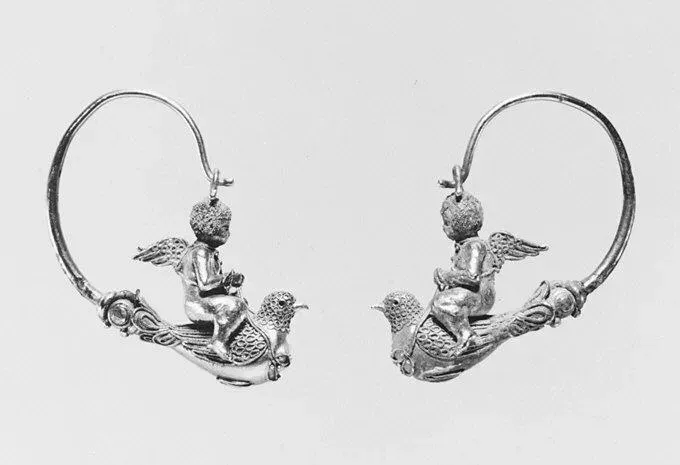
Hoop earrings are not a designer trend. They are a code. From ancient Etruscans who plaited gold wire into perfect hoops, to Italian goldsmiths who make them today. The shape of a circle in jewellery culture means: wholeness, integrity, protection. When you see a round earring, you read symmetry, balance, and continuity.
This guide covers why round earrings work equally well on every face, how to choose them by size and material, and how they travelled from papal courts to your jewellery box.
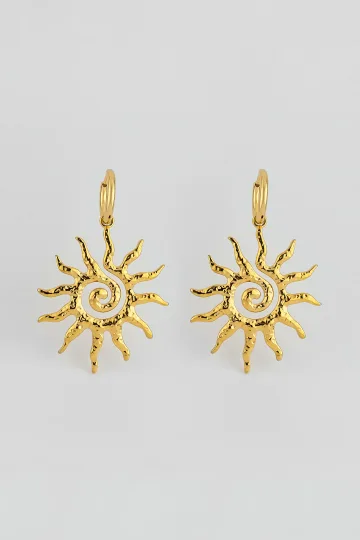
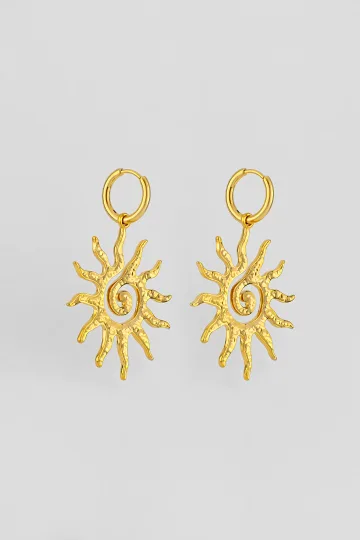
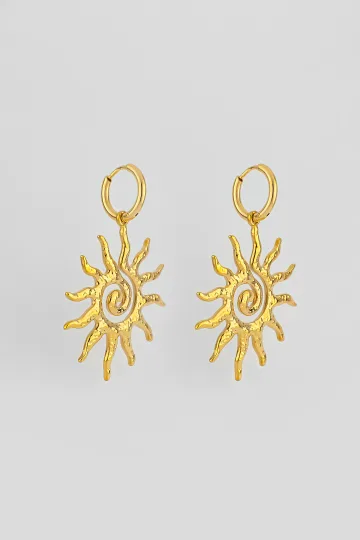
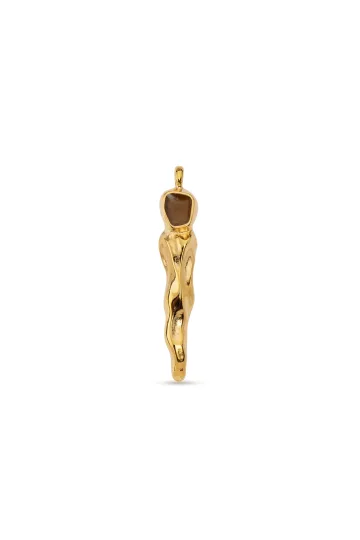
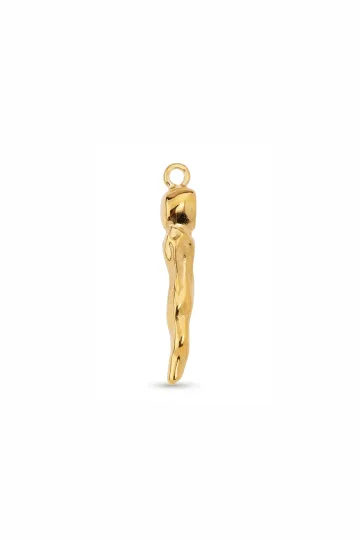
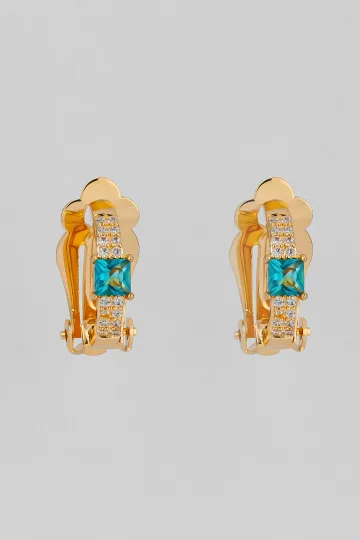
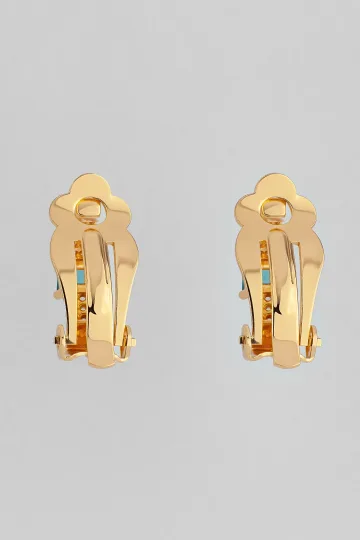
Wear the symbol, don't just read about it. These are in stock:
History of the Round Earring in Culture
Ancient roots: Etruscans and Romans
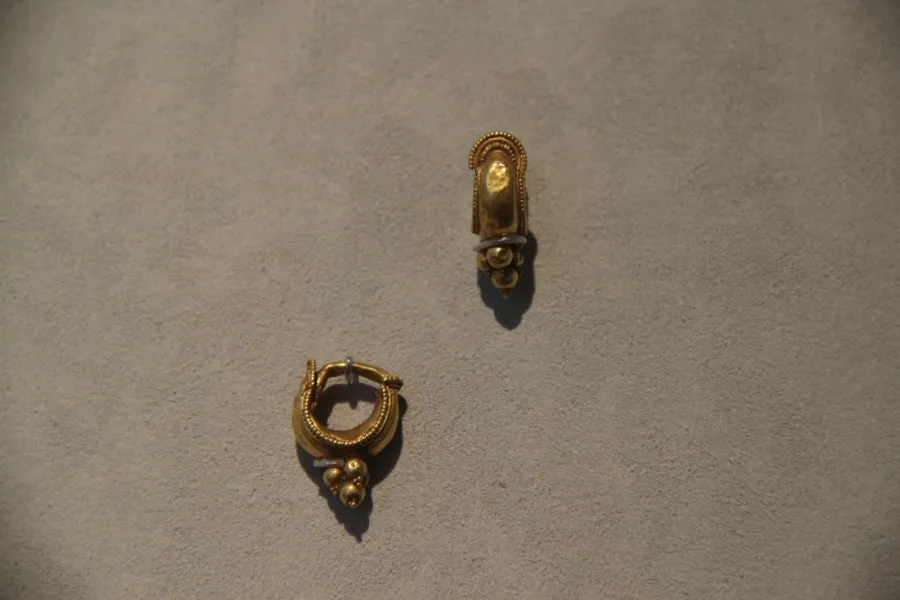
The Etruscans were obsessed with the perfection of a circle. Fourth to sixth centuries BC, and they already had gold earrings in the shape of a perfect circle. Not just a ring. Filigree work: the thinnest wire, twisted into a spiral, faceted by hand. Each turn of gold carried weight of meaning.
The Romans adopted the idea but simplified it. They needed robust, practical jewellery. The round earring in Rome was an engineering solution. A closed ring breaks less often, catches on fabric less, and holds its shape better during movement.
By the first century AD, round ring earrings (called aurei, golden rings) were a mandatory attribute of a wealthy woman. Not decoration. A status symbol.
Medieval and Renaissance: spiritual meaning
In the Middle Ages, a circle becomes a symbol of eternity and perfection, a direct inheritance of Platonic ideals. Round earrings are now worn not just for beauty, but as an amulet. A closed ring protects, holds energy within, keeps evil out.
By the fifteenth century, the Italian Renaissance rehabilitates paganism in art. Round earrings become the primary adornment of a woman patron of the arts. There is no portrait of note without a massive gold round earring in the ear. This symbolised not merely wealth, but education and taste.
Venetian goldsmiths, in a city where money is born from water, bring the technique to perfection. Hollow gold spheres, half-round earrings, enormous hoops, all produced in Venetian workshops and exported across Europe.
Seventeenth to eighteenth centuries: boom of decorative forms
When European courts develop a taste for large jewellery, the round earring evolves. It is no longer just a ring. It is a geometric system. Earrings consist of concentric circles nested inside each other. From the rings hang pendants. The round base holds the entire composition together.
Italian masters from the fifteenth to eighteenth centuries (Venice, Genoa, Florence) specialise in such earrings. They export them to Spain, Portugal, France. Each master signs his style with the size of the ring, the thickness of the wire, the character of the faceting.
Nineteenth century: Victorian paradox
The Victorian era is the age of enormous earrings. Round earrings become not jewellery, but architecture. Weight in the ear is needed to show that you do not work, that you have money for such luxury.
Round earrings with pendants, round earrings with stones, round earrings that dangle to the shoulder. This is the era when fashion for round ring earrings reaches its apex.
Twentieth-twenty-first centuries: from oblivion to revival
In the mid-twentieth century, round earrings become "old-fashioned." Fashion turns to minimalism, to the pressure of a "young and progressive" culture. Stud earrings, chandelier earrings, anything but a commonplace ring.
But in the 1990s comes a turn. High fashion remembers history. "Vintage" becomes relevant. Young designers begin to recalculate the classics. Soon, by the 2000s, round earrings return, but now as a conscious choice, not just tradition.
Today, round earrings are a sophisticated choice. You wear them not because it is expected, but because it works on your face.
The Symbolism of Circle Shape in Jewellery
Circle as a closed line
In semiotics, a circle is the most stable symbol. No beginning, no end. A line that closes upon itself. When you put on a round earring, you adopt this geometry. It becomes part of your silhouette.
In many cultures a circle is read as protective, a closed line with no gap for misfortune to enter. This is folklore and symbolism, not physics. What matters is how widely cultures that wore round jewellery shared this reading of the shape.
Eternity and cyclicity
A circle symbolises infinity. No end, no death. This is why round rings are cherished in cultures where continuity matters. Etruscans, Romans, Italians all understood the circle as a symbol of transmission.
Your round earring can be a family heirloom. It passes from mother to daughter. The circular form makes it timeless. Two hundred years pass, yet the ring still looks contemporary.
Balance and symmetry
A circle is a perfectly symmetrical shape. No asymmetry, no conflict. When you look in the mirror and see a round earring, you see order. It is calming. It centres attention.
It is no accident that people seeking harmony in life usually choose round earrings. They intuitively select a shape that reads as balanced.
Customer reviews
Zevira is a real jewellery shop. Genuine payments, deliveries and customer thank-yous.
🥰🥰🥰 gracias
Ok, ¡gracias! 🙂
Types of Round Earrings and Their Variations
Hoops (hoops, huggie hoops)
Hoops are the most basic form of round earring. Simply a ring passing through the earlobe. Can be thin (2mm diameter), can be massive (5cm). Weight does not matter much because the main support is in the lobe, and the ring itself distributes weight evenly.
Huggie hoops are a compromise between the classic hoop and a stud. Small rings (12-15mm diameter) that sit snugly against the earlobe and look like adornment on the edge. They are comfortable, do not require a large lobe, and look contemporary.
The problem with hoops: if you choose too thick a ring, it stretches the lobe downward. Simple rule: if the diameter exceeds 4cm, choose hollow rings (hollow), not solid.
Rings with pendants (hanging earrings)
A round base (ring or half-ring) with a pendant below. An elaborated version of the hoop. The main load still falls on the ring, but the pendant adds visual interest.
The pendant can be anything: a pearl, a stone, another ring (spiral), a tassel. Eighteenth-century Italian masters made such earrings where a chain with five to seven pearls hangs from the ring.
The problem: if the pendant is too heavy, it pulls the ring downward and it loses shape. So in good earrings, the pendant is lighter than the ring base.
Spirals and twisted rings
A spiral is an evolution of the round earring idea. A ring twisted clockwise (or counter-clockwise). Creates a sense of movement despite the closed form.
Twisted rings (twisted hoops) are rings where the wire itself is twisted along its axis. This gives it texture and visual interest, but makes it less durable (twisted wire is weaker at twist points).
These earring types are popular in minimalist design. They look complex (spiral, twist), yet very clean at the same time.
Half-rings and half-set hoops
A half-ring is not quite a hoop. A ring that only extends half way around (180 degrees). It looks like a horseshoe and is inserted into the ear from the side.
Half-set hoops: hoops where stones or texture are only secured on the visible part of the ring. The back (the part hidden behind the earlobe) is smooth and empty. A successful compromise: sparkle without extra weight.
Oversized statement hoops
From 5cm diameter and up. This is no longer jewellery, but an architectural element of the face. Oversized hoops require proper composition: long hair, an open face, minimal other jewellery.
Italian style greatly loves oversized hoops. It is an inheritance from the Renaissance, when earrings were bigger than the face.
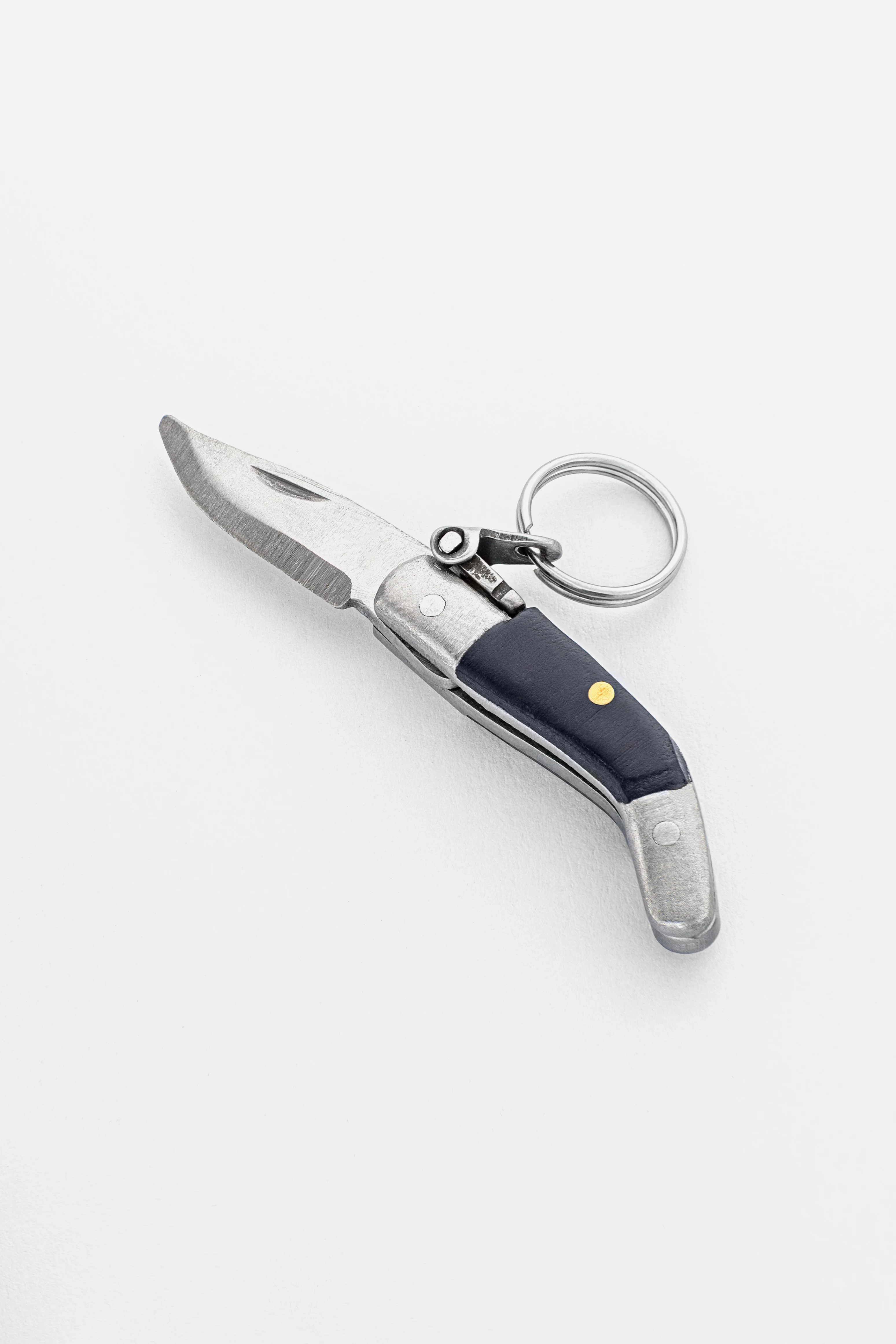
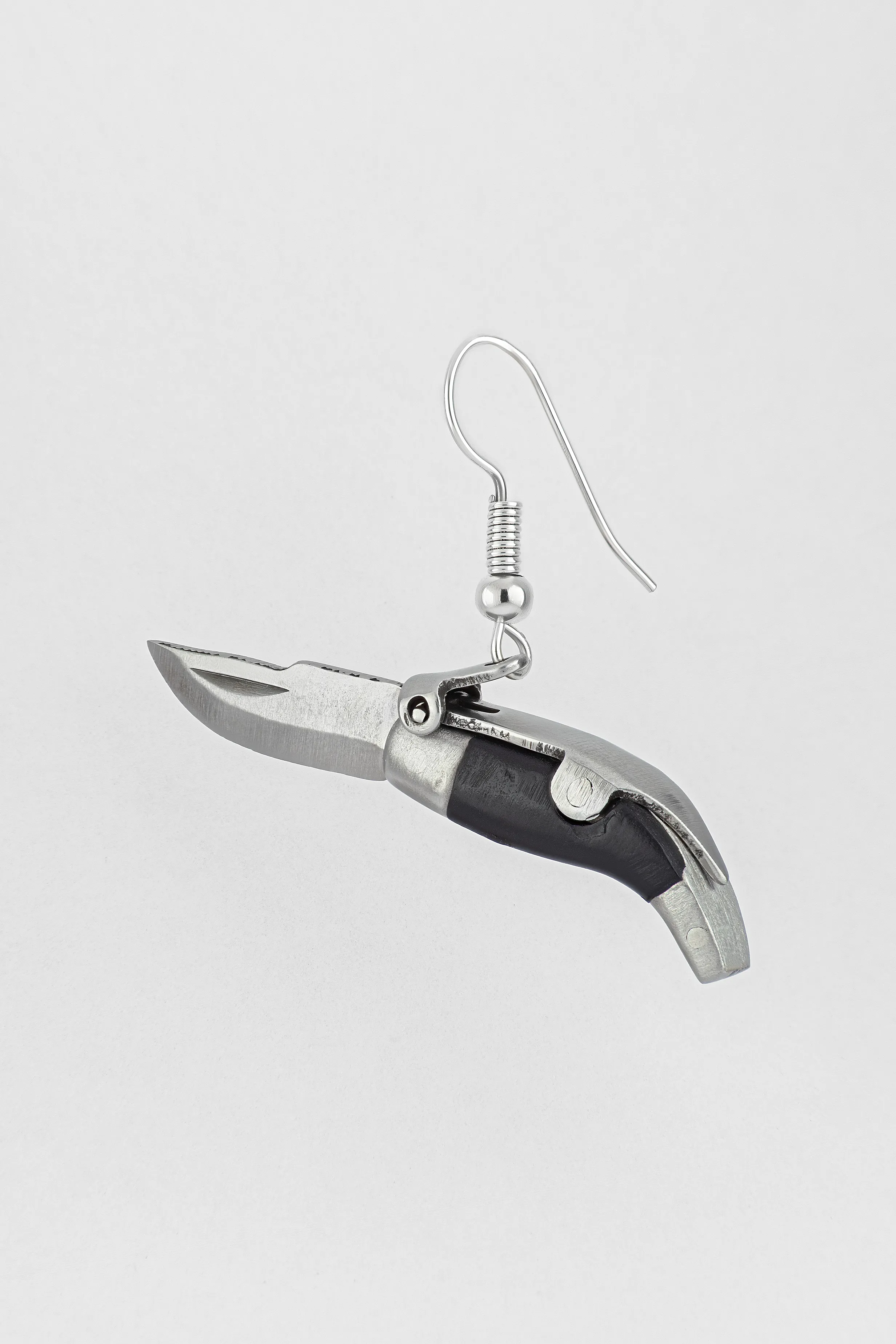
Artisan-crafted CAPAORA navaja pendant
A 40 mm stainless-steel navaja with a real folding mechanism and Palanquilla lock. An affordable gift to remember.
A code for blog readers:
10% off your first order
Authentic · Maker's guarantee · Ships from Spain
Materials and Jewellery Techniques
Gold (14k, 18k, white, yellow, rose)
Gold is the classical material for round earrings. It is plastic, does not oxidise, holds shape for centuries.
14-carat gold is a compromise between purity and durability. 58% pure gold, the rest copper, silver, zinc. For earrings this is optimal. Stronger than 18k, but still softer than 9k.
18-carat gold is softer, more yellow. Better for massive earrings, where every millimetre must be visible. Worst for thin hoops (they deform faster).
White gold is gold with added nickel or palladium. Creates a platinum effect, but much cheaper. Requires rhodium plating every 5-7 years (a thin layer of rhodium to restore shine).
Rose gold is yellow gold with added copper. A trend of the 2000s. In Italian design rarely used (it does not match the classics), but sometimes found in contemporary reinterpretations.
Silver (925 sterling, silver-plated)
Sterling silver (925 purity) is pure silver with added copper for durability. A classical material, especially in Scandinavia and Eastern Europe.
Problem: it oxidises. Silver darkens in contact with air and moisture. Earrings need cleaning every month or two if worn often.
Silver-plating is silver coating on a copper or brass base. Cheap, looks good for the first six months, then the coating wears off and copper shows through. For round earrings, silver-plating is a poor choice.
Titanium and niobium (hypoallergenic materials)
Titanium is very durable, hypoallergenic, does not oxidise. Ideal for people with sensitive skin. But in classical Italian earrings, titanium is not used. It is a neo-classical material.
Niobium (titanium-based alloy) is a marketing name. Actually a titanium alloy. Same as titanium, but cheaper.
Copper and brass (budget options)
Copper oxidises to green, requires constant care. Brass (copper + zinc) is more durable, but also requires cleaning.
For round earrings this is not recommended if you want them to last more than a few years.
Techniques: casting, forging, hollow vs solid
Casting is when a jeweller makes a mould (usually in wax), then melts metal and pours it into the mould. Fast, cheap, but quality depends on the jeweller's skill. Cast earrings often have cavities (bubbles) inside, which make them fragile.
Forging is when a jeweller takes wire and manually bends it into a ring shape with a hammer. Slow, expensive, but reliable. Cold forging strengthens metal, making it more durable.
Hollow hoops are two sheets of metal joined at the edges. Air inside. Minimal weight, looks like a massive earring, but weighs like a feather. Perfect for large diameters (from 4cm).
Solid hoops are one piece of metal bent into a ring. Heavier than hollow, but more reliable and longer-lasting.
Leave your email, we'll send your discount code. No spam, unsubscribe anytime.
The code arrives by email, valid on your first order.
How to Choose Round Earrings by Face Shape and Size
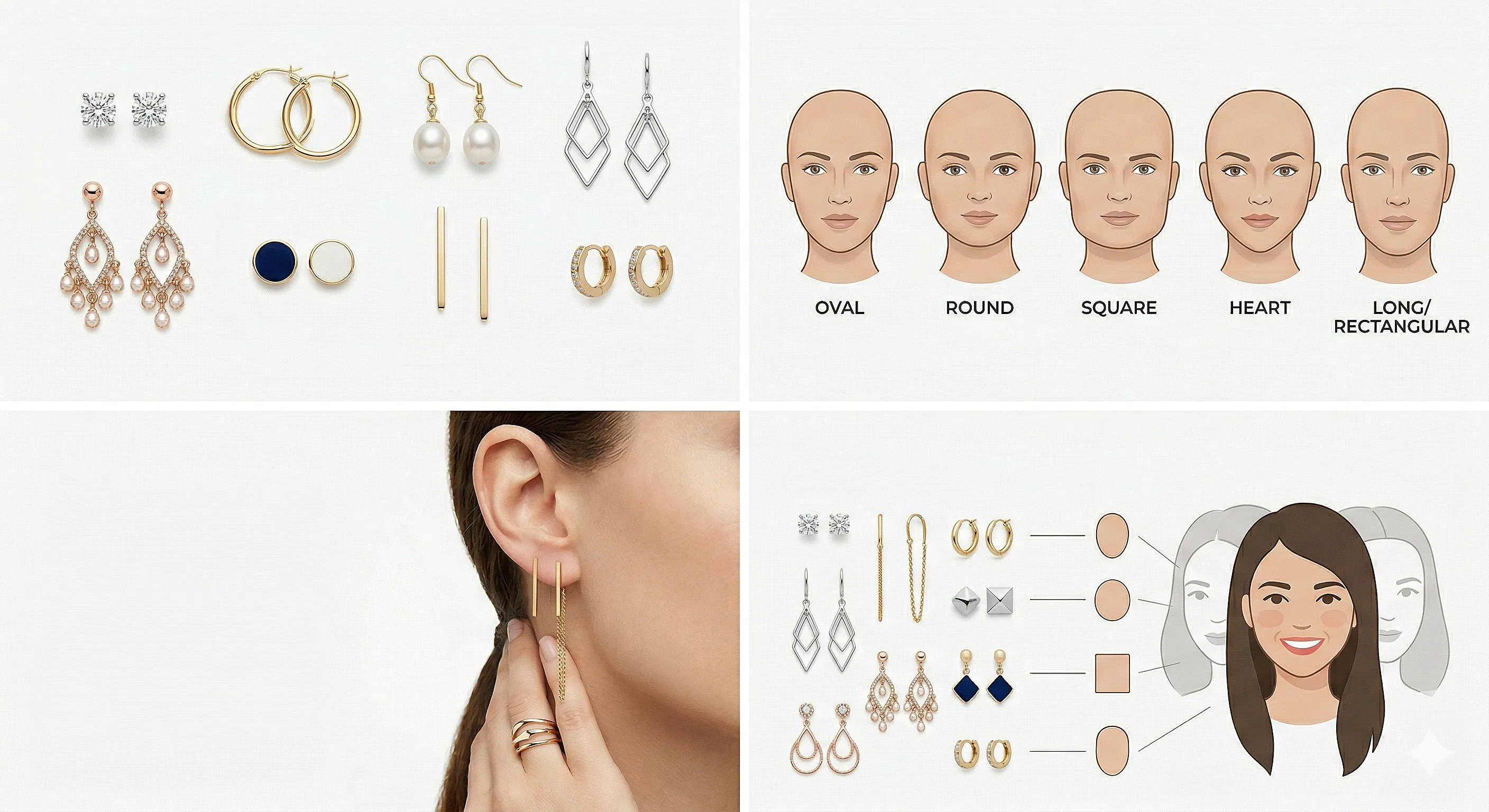
Round face
For a round face, you need hoops that visually elongate the face. This means:
- Vertical ovals instead of perfect circles. If choosing a hoop, pick one slightly elongated upward.
- Large diameters (from 4cm). Paradoxically, large earrings make a round face look slimmer.
- Hanging pendants add verticality.
Avoid: small hoops (they emphasise round cheeks) and thick hoops (they weigh the face down).
Oblong/elongated face
For an elongated face, you need hoops that visually widen. Ideally:
- Horizontal ovals instead of circles. If choosing a hoop, pick a wide one, but not deep.
- Medium-sized diameters (3-4cm). Too large will look disproportionate.
- Flat hoops (no hanging pendants). They add width.
Avoid: very large hoops and vertical spirals.
Triangular face (wide forehead, narrow chin)
For a triangular face you need hoops that balance the wide top. Ideally:
- Large hoops (4-5cm). They balance the wide forehead.
- Half-rings or horseshoe-shaped earrings. They sit lower, visually widening the bottom of the face.
- Hanging pendants with weight at the bottom.
Avoid: small earrings and too-light hoops.
Heart-shaped face (wide forehead, narrow jaw, pronounced chin)
Similar to triangular, but with a more pronounced chin. You need:
- Medium-sized earrings (3-4cm). They balance the wide forehead, do not overpower the narrow jaw.
- Hoops with decoration below (stones, pearls). This draws attention away from the chin.
- Slightly elongated vertically.
Square face (wide cheekbones, square jaw)
For a square face, you need hoops that soften the angles. Ideally:
- Large round hoops (from 4cm). They contrast with the angles of the face.
- Hanging earrings with soft lines.
- Inverted triangles as pendants (wide at top, narrow at bottom).
Avoid: sharp angles, geometric pendants, small earrings.
Materials and Skin Sensitivity
Nickel allergy
Many gold alloys contain nickel for durability. Many people have nickel-induced skin irritation.
Solution: look for earrings marked "nickel-free" or "hypoallergenic." Ideally 18k gold (usually has no nickel) or titanium.
Infections in piercings
If you have sensitive skin or a recently made piercing, choose:
- Earrings made from 18k gold or higher
- Titanium
- Surgical stainless steel (only 316L grade, not 304)
Any jewellery made from copper, brass, or silver-plating can cause infection.
Care for earrings if you have allergies
- Wear earrings only on clean skin
- Remove at night
- Clean earrings with alcohol once a week
- Do not sleep in them
A big hoop wants a bare neck and hair swept up. Bury it under a turtleneck and you've missed the point.
How to wear hoop earrings
Over years on shoots and runways, hoops have passed through hundreds of looks with me. Here is what actually works, sorted by occasion.
What do I wear hoops with every day? For daily wear I recommend a thin 25-35mm hoop in silver or yellow gold over basic knitwear and jeans. I suggest tucking your hair behind the ear or back so the curve stays visible, otherwise the hoop disappears. If you already wear a lot of small pieces, keep the earrings the lead and pick something quiet for the hands.
Are hoops right for the office? Yes, as long as you keep it restrained. I recommend a smooth hoop without stones, 25-40mm, ideally in yellow gold: it warms a cool tailoring palette and reads as put together. A shirt with the top button open, or a fine blouse, gives the hoop exactly the room it needs. I watch one thing: the earrings must be clean, with no patina.
How do I build an evening look? For evening I choose a large hoop of 40mm and up and a bare neck: a deep neckline, a bare shoulder, a smooth fabric in a rich colour. I suggest sweeping the hair up or setting a sleek parting so the line of the neck stays clear and all the attention travels to the face. The darker and simpler the outfit, the more the gold reads at the face.
How do I combine hoops with other jewellery? Hoops are usually the lead piece, so I keep everything else to a minimum. Under a large hoop I do not recommend a necklace at all, at most a thin weightless chain. I keep the metal in one tone: gold with gold, silver with silver. Mixing metals next to a bold hoop only argues, so one metal per look.
Who do hoops suit, and how do I pick the size? They suit almost everyone, the question is size against the face. A round face I steer toward elongated or medium hoops that add length; a long or narrow face carries large circles comfortably. Two rules that never fail. First: the bigger the earrings, the freer the neck, while a closed collar asks for smaller hoops. Second: one expressive pair beats earrings squeezed between a pile of other jewellery.

Turn on your camera, pick earrings, a pendant or a ring, and see the piece on yourself in real time.
Switch items in one tap.
Everything runs in your browser: no photo or video is ever uploaded.
Care, Cleaning and Storage
Cleaning gold earrings
Once a month:
- Soak in warm soapy water for 15 minutes
- Gently scrub with a soft toothbrush
- Rinse in clean water
- Dry with a soft cloth
Every six months, book a professional ultrasonic cleaning at a jewellery workshop.
Silver care
Silver tarnishes. If not worn often, store in a closed container with a desiccant sachet.
Cleaning: silver polish or baking soda + water. Do not use harsh abrasives.
Storage
- Wrapped in soft cloth
- In a separate compartment of a jewellery box
- Not with other jewellery (they can damage each other)
- Away from moisture and direct sunlight
Polishing and repair
If a ring deforms or tarnishes, a jeweller can:
- Re-polish (costs 20-50 EUR)
- Restore shine (25-40 EUR)
- Repair a crack (30-80 EUR)
Do not clean with ultrasound yourself if unsure about the alloy composition. Ultrasound can destroy delicate connections.
Frequently Asked Questions
Why do round earrings look youthful if they are so ancient?
They look youthful because they were "forgotten" for much of the twentieth century. Fashion for them returned in the 1990s with high fashion. Now they read as a choice, not an obligation. This makes them feel fresh.
Which side of the earlobe should the clasp be on?
The clasp (clip, screw, or post) is at the back of the lobe (the side the mirror sees from behind). The front (the visible side) is empty and smooth.
Can a massive round earring be worn in pierced ears?
Depends on weight and diameter. If the diameter exceeds 4cm, choose hollow earrings. They look massive but weigh like a feather. Solid rings over 50 grams will pull the lobe down and deform the piercing.
Can you sleep in round earrings?
Not recommended. When you sleep on your side, all the weight of the ring falls on one side of the lobe. This creates a risk of infection and stretching the piercing. Remove them at night.
At what age can you first pierce ears for round earrings?
No medical restriction. Jewellers recommend waiting until after age 12. The piercing should fully heal (6-12 weeks) before wearing heavy jewellery.
What size hoop is considered classic?
For everyday wear, 25-35mm (nearly fills the ear but not quite). For evening, 40-60mm. For minimalism, 15-20mm.
Should both earrings be made from the same material?
In classical Italian tradition, yes. Even if left and right look slightly different, the material is the same. But in modern style you can mix: one gold, one silver. This will look like a conscious choice, not a mistake.
How long does a round earring last?
With proper care, forever. Gold and silver rings are almost indestructible. The main thing is not to lose one earring.
Is there a size that suits everyone?
No. But the universal option is hoops 25-35mm in diameter made from yellow gold or silver. They work on 80% of people regardless of face shape or age.
Why are some round earrings expensive and others cheap if the shape is the same?
The difference is in:
- Wire thickness (thin wires deform faster)
- Manufacturing method (forging vs casting)
- Metal purity (14k vs 18k)
- Finishing (polished vs matte requires different skills)
Cheap earrings often break within a month. Expensive ones last for years.
Send a friend a discount code, they save on their first order.
Conclusion: why round earrings are eternal
Round earrings are not a trend. They are an archetype that has survived two and a half thousand years and is not going anywhere. From Etruscan fibula to Italian Renaissance, from Victorian luxury to modern minimalism.
You choose round earrings not because it is fashionable now. You choose because it works. Because a circle is a perfect shape. Because it balances facial features. Because it reads as seriousness, education, and good taste.
A pair of good round earrings is an investment not for a season, but for a lifetime. Choose gold, choose silver, choose a size to suit your face. Time will do the rest.
Silver, gold, engagement rings, symbolic jewellery, paired sets.
About Zevira
Zevira makes jewellery by hand in Albacete, Spain. The round earring is one of the longest-living shapes in jewellery, and we keep several readings of it across our collections, from a slim minimal hoop to a heavy Italian one in the Renaissance spirit.
Here is what you can find among our hoop earrings:
- Classic 25-35mm hoops for everyday wear
- Huggies that sit snug against the lobe and suit multiple piercings
- Hollow hoops in larger diameters that look bold but weigh almost nothing
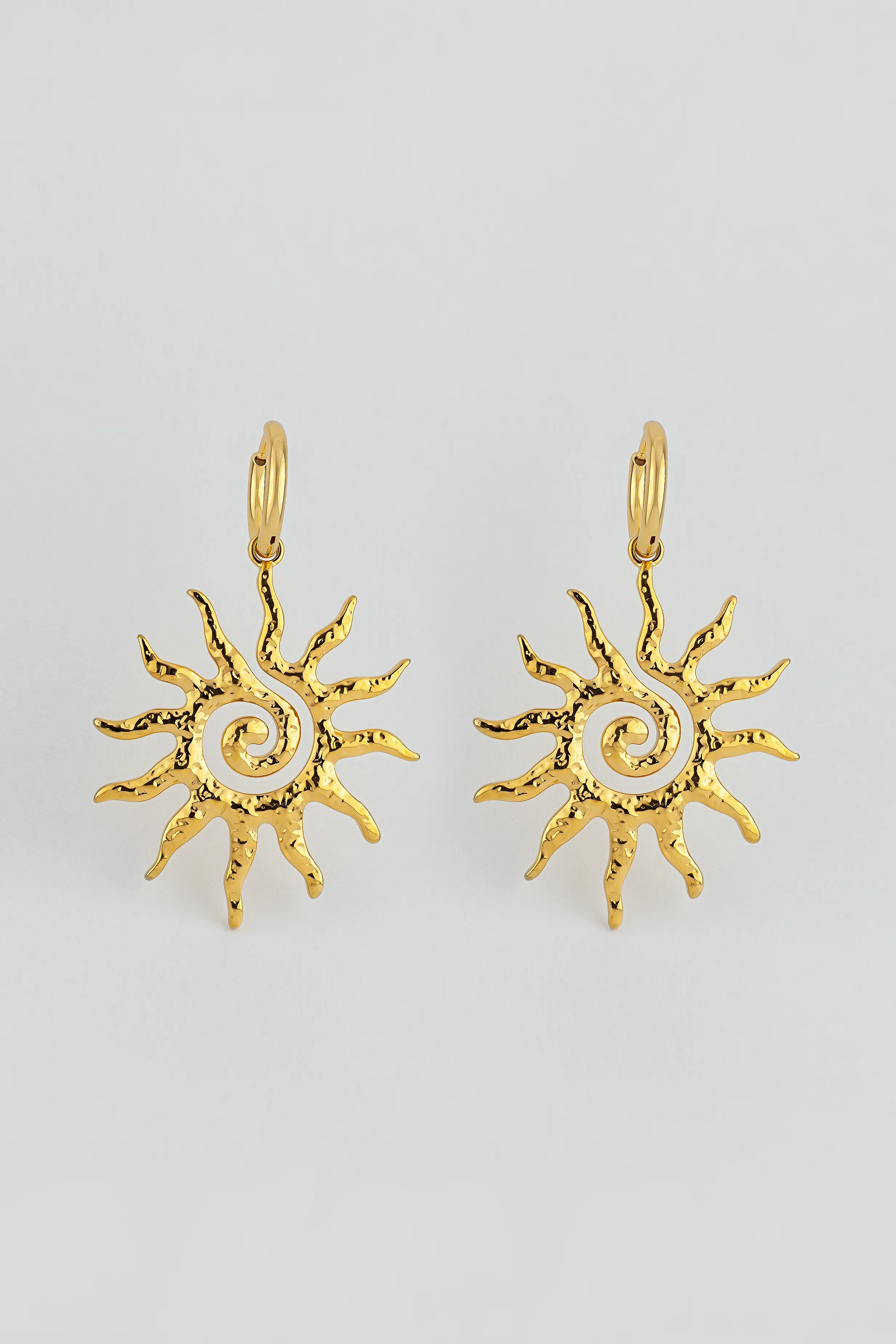
- Twisted and spiral hoops with wire texture
- Hoops with pendants: pearls, stones, extra rings
- Hypoallergenic options for sensitive skin and fresh piercings
Every piece is made by hand by a single maker, with personal engraving available. Sterling silver 925 and 14-18K gold.