Jewellery for a 40th Birthday: the Gift That Fits the Milestone
Forty: a moment that demands a different kind of gift
Sarah spent three weeks deciding what to give her husband for his fortieth birthday. She went through watches, a whisky set, concert tickets, a trip to the mountains. Nothing felt right, not because he is hard to please, but because forty is no ordinary birthday. It is something different in scale. A moment when a person takes stock of themselves. And the gift needs to understand that.
She chose a silver locket engraved with the coordinates of the place where they first met. No long explanations, no elaborate card. He opened the box, paused for a second and said: "This is exactly what I needed right now."
At forty, a person no longer needs another piece of hardware. This is the first age at which a gadget as a gift fails outright: the function no longer impresses, and meaning matters more than specifications. Carl Jung described this passage as far back as 1933: after forty a person stops building outward and starts looking for something real on the inside. A good gift understands that.
What turning 40 means psychologically
Carl Gustav Jung introduced the concept now widely described as the midlife transition, though he never used the word "crisis" in any pathological sense. He called it the individuation passage: the moment when a person stops living by the programme of the first half of life and begins asking different questions.
Building outward, then turning inward
The first forty years are usually spent building: career, family, status, property. All the energy goes outward. After forty, Jung argued, the movement reverses and turns inward. The questions change. "What have I achieved?" gives way to "Who am I really?". This is not a breakdown and not depression in itself. It is a normal psychological transition that happens in most people between the ages of thirty-five and forty-five. If at thirty a gift tends to celebrate momentum and ambition, by forty the accent shifts toward meaning and a first reckoning with what has been done.
Why symbolic gifts outperform useful ones
The hallmarks of this passage are well known: a revaluation of priorities, an interest in symbols and meaning, a sense that earlier goals have been met or have lost their pull, a desire for something more authentic. This is precisely why gifts for a fortieth birthday that carry symbolic weight work better than purely useful objects. Someone at this age no longer responds to a new device the way they did at twenty-five. Their interest has shifted toward what has meaning, not merely toward function.
The second half of life as a personal choice
The Jungian analyst James Hollis, author of several books on midlife, put it plainly: at forty a person meets their real life. The first half was a rehearsal, an adaptation to what society, parents and culture wanted. The second half is a personal choice. A piece of jewellery with a meaningful symbol or a private engraving fits that context exactly. It tells the recipient: I understand the stage you are at. This object was made for you, for this moment, with this meaning.
Jewellery as a symbolic anchor
Psychologists who work with the midlife passage often speak of a symbolic anchor, an object that helps a person hold on to the awareness of a new stage. A piece engraved with a specific date or symbol does exactly that. Each time the person puts it on, they relive the moment of deciding to begin differently, to rethink, to renew priorities. The transition is not always painful. For many, forty is one of the calmest and clearest periods of life. The anxiety of the twenties is behind, and so is the rush of the thirties. There is experience, there are resources, there is a sense of what one actually wants. A gift that recognises this is not consolation, it is affirmation.
A different relationship to time
One more trait of this age: the relationship to time itself changes. At twenty-five it feels as though there is always more of it. At forty that feeling fades, and another one appears: the value of every choice. A piece worn for years embodies that attitude. It asks to be chosen now. It stays for a long time. It is not a random object.
The generation turning 40 in 2026
The person turning forty in 2026 was born in 1986. This generation grew up on the border between an analogue youth and a digital adult life. They remember cassette players and button phones, but spent their entire professional careers with the internet and smartphones. They process information differently and have a different relationship with objects.
Second career cycle
Many who started working in the late 2000s have by forty either reached a ceiling in their first profession or deliberately changed direction. The shift from employment to one's own project, from a technical role into management, from a corporate structure toward independence: all of this is typical of the age. Jewellery carrying the symbolism of a new chapter, a passage, a beginning of something else, lands precisely, because the person is living that theme themselves. The same logic applies much later on the far edge of a working life: a retirement gift also marks a change of stage rather than the age itself.
Late parents or chosen childlessness
People born around 1986 more often than earlier generations postponed children or chose not to have them at all. Those who do have children frequently had them relatively late, after thirty. This shapes how they read life's milestones: not by a standard timetable, but by their own. Forty for them is neither late nor a crisis, simply another deliberate choice.
Jewellery without gender taboos
This cohort lived through the normalisation of men's jewellery. Earrings, chains and rings on men became ordinary through culture, music and sport. A forty-year-old man in 2026 in many cases already wears or wants to wear jewellery. He does not need to be talked into it. It is part of his style, and that is fine.
Demand for quality and meaning
After years of accumulating things, many forty-year-olds have moved toward mindful consumption. They prefer one good piece with a story over several anonymous ones. Handmade jewellery from solid metal with a personal engraving is exactly what they value, not because marketing told them to, but because they decided it themselves.
Nostalgia and roots
After forty many people start to take an interest in family history, traditions and where they come from. Jewellery with symbolism tied to origins, or with elements that echo family values, takes on particular meaning. A locket marking a birthplace, a ring with a date, a bracelet with an ancestor's initials: these things begin to matter at exactly this age.
Fatigue with the digital
After many years lived inside a phone and a screen, a physical object carries a different weight. Something real, something you can hold, something that serves presence rather than function, reads as rare and valuable.
Jewellery for a man turning 40: what to choose
Giving a man jewellery for his fortieth is a bold and well-judged choice if you understand the logic. Not every piece works. But there are several formats that work very well at this age.
Signet ring
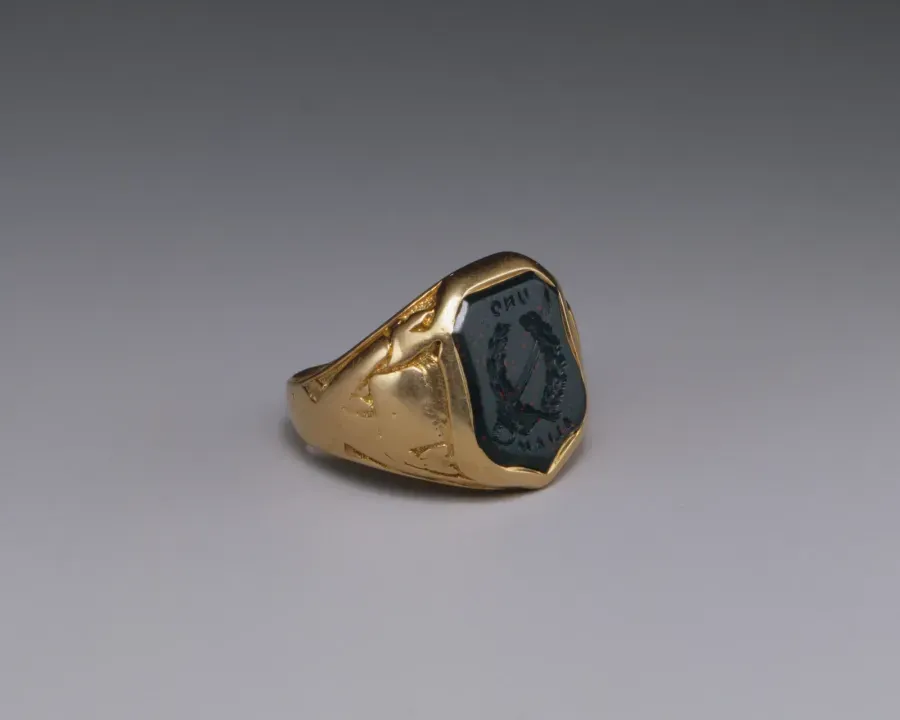
A signet is one of the most historically grounded options for a man at a mature age. Its history reaches back to antiquity, when a ring with an engraved gem served as a personal seal. In medieval Europe a nobleman's signet was a symbol of lineage and authority. Read today, it is a piece that speaks to character, status and personal style without any need for explanation. A signet works at forty because by this age a man already knows who he is. A ring with initials, a family symbol or a quiet date becomes a statement of identity, not a declaration but a calm expression. This is not teenage jewellery and not an office trinket. It is a serious object, worn deliberately. Formats that work well: a gold or silver signet with engraved initials, the most classic version; a signet carrying a birth date or another important date; a signet with a personal symbol such as an anchor, a compass, a moon phase or geographic coordinates; a matte signet with no stone, strict and adult; a signet with a small black stone such as onyx, darker and more expressive. One important detail: the size of a signet should suit the hand. A ring too small on a broad hand looks unserious, and one too large on a narrow hand reads as loud. It helps to try it on or to know the exact size. Read more on formats and the principles of choosing: a signet ring, what it is and how to choose.
Locket
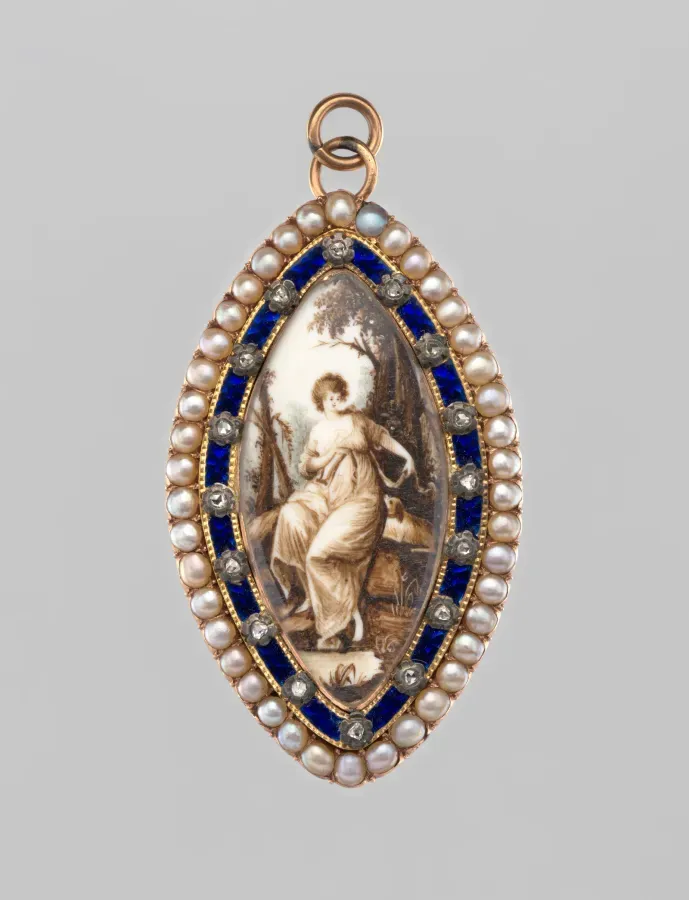
A locket is a pendant with an inner space or a relief image on the face. In the men's version this is most often a substantial oval or rectangular pendant on a medium-length chain. It is not a women's only format: lockets were worn by men across many cultures over the centuries, from Victorian England to modern menswear. At forty a locket works through its content or its engraving. Inside one can place a date, the coordinates of a meaningful place, a short phrase. On the face, a relief symbol: a heart, a compass, a runic sign, an abstract form, a celestial body. A man's locket should feel weighty. A thin light plate does not read as adult jewellery. It needs volume, a good thickness of metal, the sense of a serious object in the hand. Sterling silver 925 or 14K gold in a matte finish suits the occasion. As for the chain: 50 to 55 cm is the standard men's length, and an anchor, curb or Cuban link holds a heavy pendant better than a thin one. More on lockets: the silver locket, a full guide.
Chain with a single symbol
A heavy silver or gold chain with one pendant, a single symbol, is perhaps the most contemporary option for a man at forty. Not overloaded, not too neutral. Spare and still meaningful. Symbols that work well for this age and this moment: an anchor for stability, roots and a point of support; a compass for a path, orientation and moving forward with a sense of direction; an arrow for movement and purpose; celestial bodies (sun, crescent, star) for a minimalist sky archetype with no single fixed reading; a runic or Celtic symbol for those drawn to a Northern or Celtic aesthetic; a geometric form such as a triangle (direction, force), a circle (completeness) or a square (stability); a sacred heart for those who value depth in their symbols. The pairing that works: matte or oxidised silver with one large symbol on a 50 to 55 cm chain. It reads as adult, without excess, and can be worn under a shirt or over it. More on celestial symbolism: celestial jewellery, sun, moon, stars.
Engraved bracelet
A man's bracelet in silver or yellow gold with a date or phrase engraved on the inner side is an intimate format. The inscription is seen only by the wearer. That is exactly why it suits a gift from a partner or close family: it is something private and undemonstrative. Construction options: a flat plate with a clasp, a leather bracelet with a metal plate clasp, a piece woven from metal cable with capped ends. The width for a man's bracelet is 6 to 10 mm. Narrower starts to look like a women's piece, wider reads as a heavy accessory.
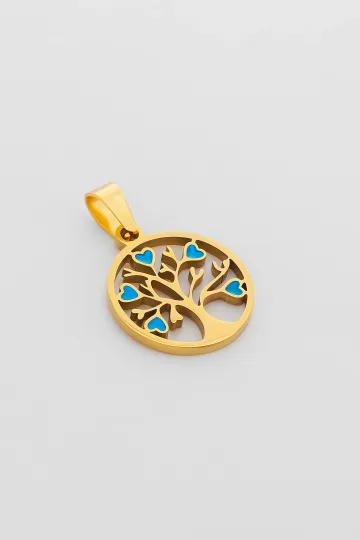
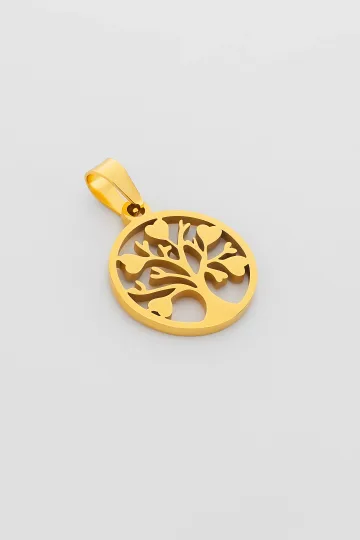
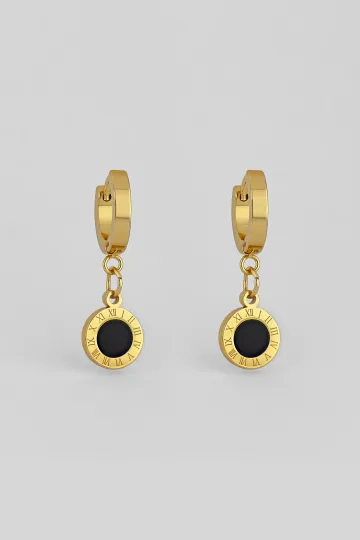
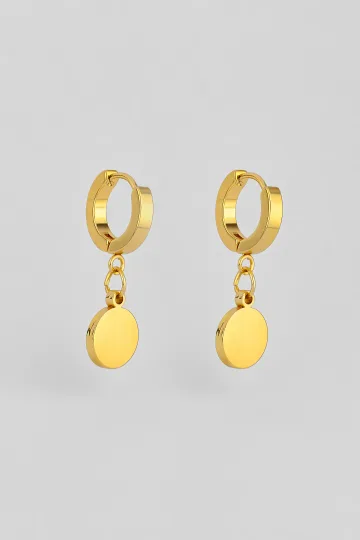
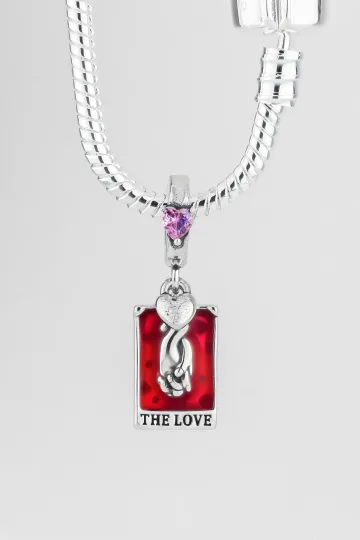
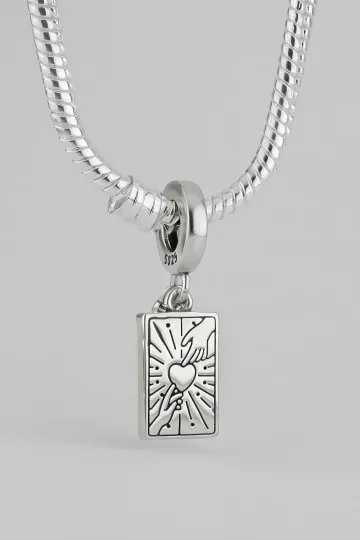
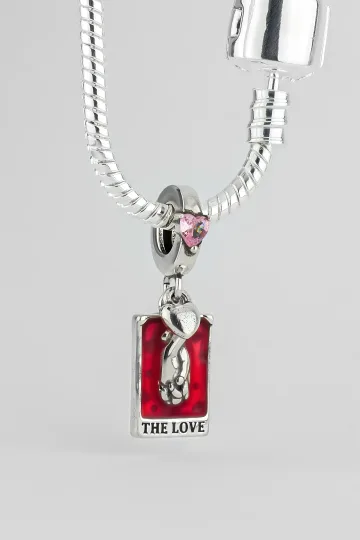
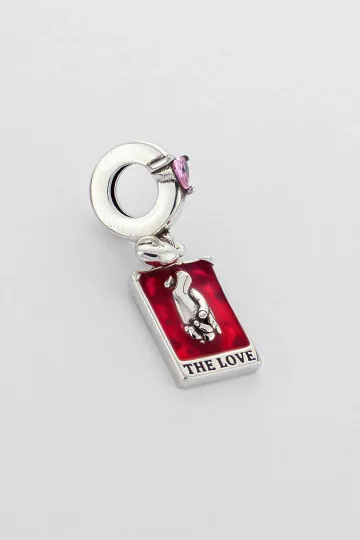
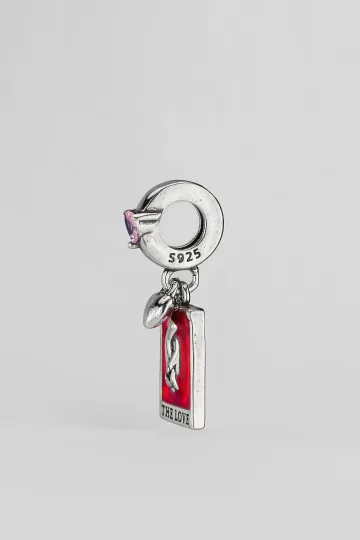
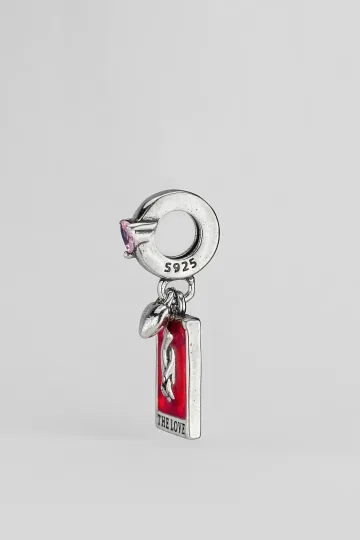
Wear the symbol, don't just read about it. These are in stock:
Jewellery for a woman turning 40: what to choose
For a woman at forty the range of choice is wider, but the difficulty grows with it. By forty a woman generally knows her style precisely, and a gift that does not fit it will be put in a drawer, despite the best intentions of the giver. A few principles hold. Do not give what a woman is supposed to want: not everyone wants diamonds, not everyone loves rose gold, not everyone wears large earrings. Aim at the actual person, not at a marketing image. Give what she already wears, only in a better version. If she always wears silver studs, an unusual pair in the same metal with a fine detail is a direct hit. It says: I see you, I know what you like. At forty, weightier pieces suit better than they did at twenty-five. Something that reads as adult and significant works better than a light everyday trinket. That does not have to mean more expensive, rather more serious in intent.
Earrings: classic with character
Stud earrings with one beautiful stone are a universal and still non-obvious choice. A cabochon of moonstone, labradorite or amethyst makes a piece that looks both spare and refined at once. Moonstone, with its blue shimmer, sets a particular mood that suits this stage of life. Small drop earrings with a delicate ornament suit those who already wear more pronounced jewellery: silver or gold with a symbol that resonates, a celestial motif, a small heart, a minimalist flower. Drops of 2 to 3 cm sit within a range that most styles can carry. Asymmetric earrings are a bolder, more contemporary option: one earring with a symbol, the other plain. That reads as character and confidence.
Ring with engraving
A slim or full ring with a date, coordinates, a short text or a symbol on the inner side. Interior engraving is a private format: no one but the wearer knows what it says, which turns the piece into an intimate message rather than a public statement. At forty, rings with a date (a birth year or the anniversary itself), with the coordinates of a meaningful place, with the initials of loved ones, or with a single motto word work especially well. Three to five words on the inner surface is the ideal amount. As for width: slim (1 to 2 mm) for those who like the delicate; medium (3 to 4 mm) is universal; wide (5 mm and up) for a bold, noticeable version. On what to engrave and how: engraving on jewellery, a full guide.
Statement pendant with a symbol
A pendant with a personal symbol is probably the most flexible option. It works with any style, personalises easily through the choice of symbol, chain and metal, and suits both everyday and more formal settings. Symbols that work particularly well for a woman at forty include the following. The infinity sign: a new cycle, a continuation, life does not end, it carries on at another level, one of the most understated and capacious symbols for this moment. More on the meaning of infinity in jewellery. Celestial motifs: moon, star, crescent, a nod to cycles and intuition, to what is larger than the visible, good for women drawn to natural or astral imagery. The sacred heart: a piece with history and depth, one of the most layered symbols in the history of jewellery, suited to a woman who values meaning. More on the meaning of the sacred heart. A flower, tree or natural symbol for roots, growth and transformation. A geometric form: a triangle (direction, force), a circle (completeness, cycle, wholeness), a rhombus (precision, structure).
Gender-neutral options
Some pieces work equally well for a woman and a man, and in situations where you do not want or need to divide by gender at all.
Paired pendants
If the giver is a partner, or if you want to make a symbol of the bond between two people, paired pendants work very well. Two pendants that form a single whole: two halves of one image, two rings of one chain, two symmetrical symbols. At forty this reads as: we have already travelled a long way together, this object is a reminder of that. One pendant stays with the giver, the other goes to the recipient. The piece becomes a physical embodiment of the connection. More on matching pieces: paired jewellery, halves, heart, key and lock.
Coordinates of a place
Engraved coordinates of a meaningful place suit any piece and any person. A birthplace, the place of a first meeting, somewhere that something important happened, on a bracelet, ring, pendant or locket. This is personalisation that does not depend on gender and works with any style. Coordinates look enigmatic to outsiders, just numbers, but to the person who knows, they are the precise address of an important moment.
Date or number
The number 40, a birth date, a significant year on a bracelet, a ring, the back of a pendant. Spare, exact, in need of no explanation. For someone who dislikes overt symbolism but wants to fix this particular moment.
Bracelet with a geometric detail
A silver bracelet with one small geometric accent, a square link, a triangular drop, a forged element. This is universal across gender and style, and it works well for a group gift when the person's taste is not known precisely.
Gift from a partner: scenarios and formats
A gift from a partner for a fortieth is a story of its own. There is no random choice here and nothing by default. It is a statement about the relationship, about understanding the person, about what binds the two together. Choose well and it becomes one of the strongest gifts of a lifetime. Choose poorly and it stays a piece of jewellery in a drawer.
Scenario 1: renewal of a symbol
If the couple once exchanged rings or jewellery at the start of the relationship, you can give an updated version of that symbol. A ring in the same metal but with new engraving, with the anniversary date. It says: our path continues, this moment matters too.
Scenario 2: jewellery with a private meaning
The partner knows details no one else knows. The coordinates of a first date. A date that marks the beginning of something important only to the two of them. A line from a song that nobody else would recognise. These details on a silver bracelet or pendant become a coded message that only two people can read.
Scenario 3: an upgrade of a beloved piece
If the partner has worn a piece for years but it has worn thin or is simply no longer right, give its grown-up version. The same form, the same symbol, but in better metal, of better quality, with a fine finish. It says: I notice what you wear, and I want you to have the best of it.
Scenario 4: the piece they always talked about
Almost everyone has a dream piece, something they saw and thought one day. If the partner was listening, they know. This is the most precise gift, because the person receives exactly what they wanted.
Scenario 5: a first piece
If the partner has never worn jewellery or wore it very rarely, forty is the right moment for a first serious piece. A signet for a man, a minimalist ring for a woman. The start of a new habit: wearing something that recalls what matters. One caveat: a surprise works better when you are sure of the person's style. If you are not, it is better to choose together. A shared choice can be a ritual in itself, not an admission that you did not know what to buy. "Let us pick together something you will wear for the next forty years" is already a good gift.
Customer reviews
Zevira is a real jewellery shop. Genuine payments, deliveries and customer thank-yous.
🥰🥰🥰 gracias
Ok, ¡gracias! 🙂
Gift from children to a parent
When children give a parent jewellery for a fortieth, the register is different. Not romantic, not professional, but family, and family logic has a symbolism of its own.
From small children
For children aged five to twelve, another adult chooses the piece: the other parent, a grandparent. But the children can be brought into the meaning. A child's birth date on the inner side of a ring. The children's initials on a locket. The coordinates of the place where the family spends every summer. A good practice is to ask the child what they want to say to their mother or father and turn it into the engraving. Even a single word or letter chosen by the child makes the object special.
From teenagers
Teenagers often think about the parent separately from their own taste, which is right. A good strategy: ask the parent about a piece they have long wanted and buy it together, or ask the other parent for help with the choice. Or pick something simple and dependable, a slim silver ring, a bracelet with a single detail. At this age children often worry whether the gift is good enough, and it is important not to let that anxiety drive the choice.
From adult children
Adult children can give something substantial: earrings with a good stone, a ring with engraving, a locket. Perhaps a piece that echoes the family's history, a reproduction of a family symbol or a piece honouring a year or place that matters to the family as a whole. An adult child who knows the parent as a person can choose something very precise.
Office gift etiquette for a 40th
A group gift for a fortieth is a situation that calls for tact. A few principles help. Keep it not too personal: a piece with a name, a birth date or a deeply private symbol is better left to close family. For colleagues, a neutral but well-made choice suits best, something the person could wear to work or in everyday life. Keep it not too utilitarian either: from a shared pot, a piece beats an office set or a voucher. It is remembered and does not look like a quick whip-round, while still not being so personal that the recipient feels awkward.
Read the person's style
Silver or gold? Large or slim? Classic or contemporary? If colleagues know the person well, they can see what is worn every day, and that is the best clue.
Neutral options for a group gift
Good neutral choices: a bracelet with a simple geometric detail, universal and wearable; stud earrings with a small quality stone; a pendant with a neutral symbol such as a star, a crescent or a geometric form; a slim silver ring with no pronounced symbol.
A gift for a manager
Here neutrality plus quality matters most. A cheap piece is worse than none at all. If the budget is limited, one good silver piece beats several cheap ones. For presentation, the moment and the wrapping count: a box from several people with a short note is enough. There is no need for long speeches, but a note should not be left out either.
Giving yourself a 40th birthday gift
Self-gifting is a practice that is becoming more common and more accepted, especially for a significant birthday. It is not selfishness or compensation, but a deliberate ritual. The logic is simple: no one knows you better than you do. You know exactly what you wear, which metal, which symbol, which format. A piece bought for your own fortieth becomes an affirmation: I am marking this moment, I am investing in myself, this matters.
Choosing for want, not for need
A self-gift at forty works best as an intentional choice: not what you need, but what you want. A piece you have long thought about but kept postponing, or something entirely new, a first step into a style unfamiliar to you. A first signet. A first serious pendant. A first pair of earrings with a good stone. More on the practice and how to choose a piece for yourself: a gift to yourself, how to choose jewellery.
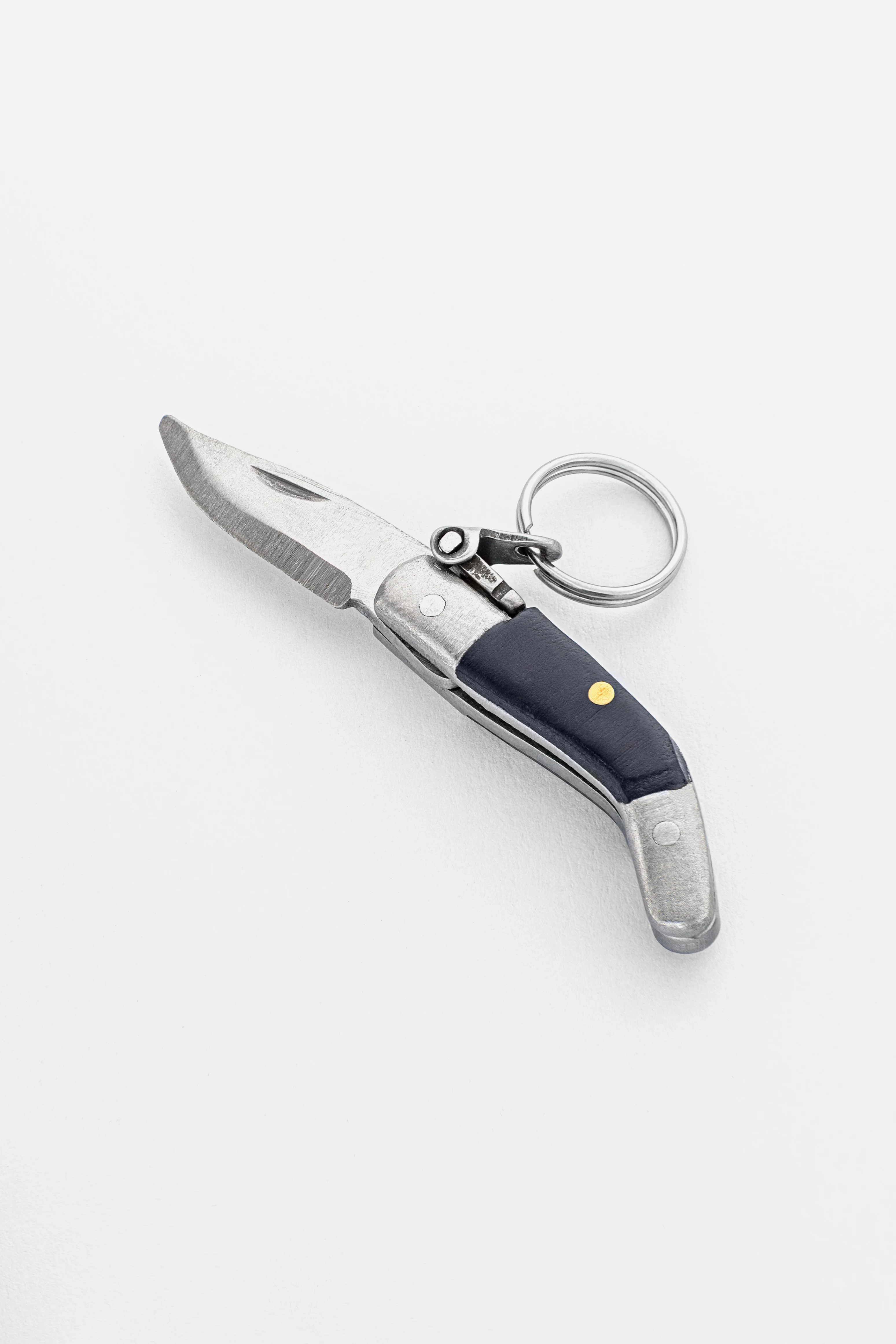
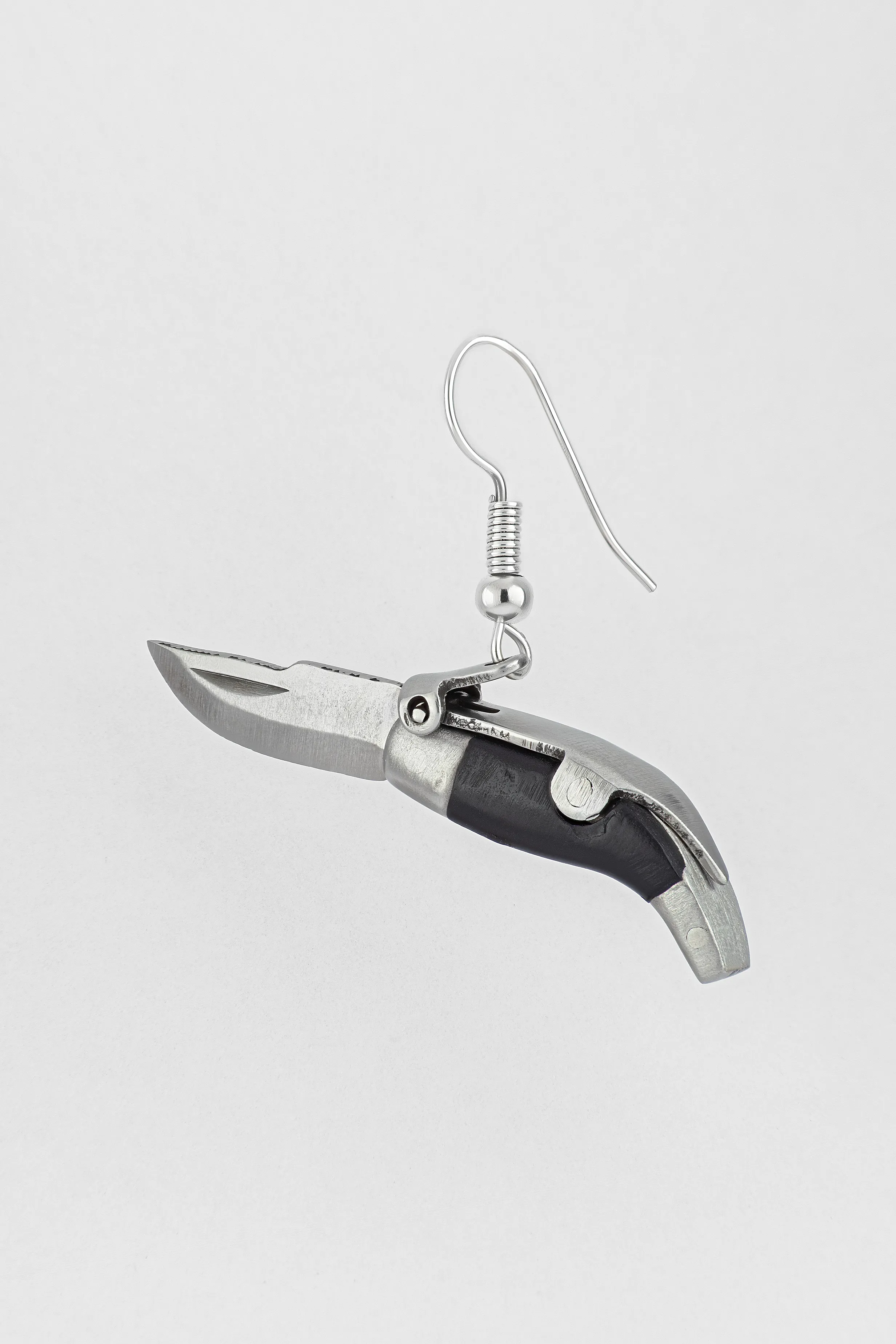
Artisan-crafted CAPAORA navaja pendant
A 40 mm stainless-steel navaja with a real folding mechanism and Palanquilla lock. An affordable gift to remember.
A code for blog readers:
10% off your first order
Authentic · Maker's guarantee · Ships from Spain
Style archetypes: which jewellery suits which person
There is no single correct piece for a fortieth. It all depends on who the recipient is and what their style is. A few archetypes help with orientation.
Classic
A person who values what is proven over time. They prefer yellow or white gold, classic stone cuts, restrained forms, and they hold to the principle of less but better. For a classic at forty: a ring with a small amethyst or sapphire, gold studs, a gold chain with a simple pendant.
Minimalist
Wears one piece, but a very precise one. Values the quality of the metal, the purity of the form, the absence of anything extra. Prefers silver or matte gold. For a minimalist: a slim ring with a perfect polish, studs with a cabochon, a bracelet with one spare detail. The form speaks for itself.
Quiet luxury
The piece does not shout about its value, but its quality is obvious to anyone who knows. Matte or satin surfaces, unusual stones, hidden engraving, a non-standard cut. For this type: earrings with labradorite, a ring with an unusual surface texture, a pendant with a matte finish and a concealed detail.
Symbolist
Wears jewellery with meaning. History, cultural context and personal significance matter. Before buying a piece, this person wants to understand what it means. For a symbolist: a piece with a chosen symbol and an explanation of its meaning, where that explanation is part of the gift. A good note with the symbol's history is worth as much as the piece itself.
Eclectic
Mixes styles and eras, is not afraid of the strange, wears several pieces at once, combines metals and stones. For them: something non-standard in form, with a history, from another time, or with an unusual stone. A piece people point at and ask where you found it.
Beginner
Never wore jewellery before, or wore it very rarely, and at forty decided to try. They need something easy to start with: small, comfortable, with no sharp edges in either sense. A slim silver ring or a small neutral pendant.
Engraving for a 40th birthday
Engraving turns any piece into a personal statement. It is one of the chief advantages of jewellery over other gifts: a piece can be made literally one of a kind, existing in a single copy.
What to engrave: options and examples
A date: "04.04.1986" or simply "1986", spare and exact, and it works on any piece, a ring, a bracelet, a pendant. You can engrave the birth date or the date of the fortieth itself. Coordinates: a birthplace, the place of an important event, the place of a first meeting for a gift from a partner, in the format 40.4093 N, 49.8671 E, enigmatic to outsiders and exact for the one who knows, one of the most contemporary and personal formats at once. Initials: your own or those of loved ones, on the inner side of a ring, on the back of a pendant, and if the gift is from several people, their initials together on one piece. A short phrase or motto: three to five words at most, since more will not fit on most pieces and loses its legibility, for example "always forward", "the best is yet to come", or a short line in another language. A symbol instead of words: a small arrow, star, moon or heart, engraved as an image rather than text, which suits rings and pendants.
Technical notes
Depth and method: laser engraving is precise and durable, while hand engraving is slightly less exact but has character, and both are good. Typeface: an italic looks softer and more personal, an upright is stricter and cleaner, and for a man's piece an upright usually reads better. Lead time: standard engraving takes three to seven working days, complex work up to two weeks, so plan ahead. Limits: a narrow ring (1 to 2 mm) holds three or four characters, a wide bracelet holds a whole phrase, so account for the surface area. More on what and how to engrave: engraving on jewellery, a practical guide.
Zevira pieces for a 40th birthday gift
A few specific directions from the catalogue that work well in the context of this age and this moment.
Locket
A silver pendant with a space for engraving or a relief image. A strong choice for a man for a significant occasion. Formats: oval, rectangular, round. Metal: silver 925, 14K gold. More: the silver locket, a guide.
Infinity
A pendant or bracelet with the infinity sign works as a symbol of a new cycle, for a man and for a woman alike. Its meaning at forty: this stage is not an end but the start of the next. There is a double reading here, since infinity means both continuation and the completion of a cycle. More: the infinity symbol, its meaning.
Sacred heart
A pendant with history and depth, one of the most layered symbolic pieces in the history of jewellery, a rich tradition that carries meaning without explanation. It suits someone who wears jewellery with personal significance and values the cultural context of objects. More: the sacred heart, meaning and history.
Celestial
A series with the sun, moon and stars, working as a pendant, earrings or ring. Minimalist symbolism with no single fixed reading, where each person brings their own. Good for those drawn to natural imagery. More: celestial jewellery, sun, moon, stars.
Signet
For a man at forty, one of the classic choices, or for a woman who values the format. On how to choose: a signet ring.
Paired pendants
If the giver is a partner, or if two people want to mark this moment together, two pendants each carry part of a shared symbol. Paired jewellery, formats and options.
Metals and stones: how to choose for a 40th
The choice of metal and stone shapes the character of a piece as much as its form does. For a fortieth gift this matters, because the piece should suit the recipient's style and be right for regular wear.
Sterling silver 925
A universal choice. Cool, strict, contemporary. It looks good on every skin tone and can be worn with any kind of clothing, from formal to casual, and it needs minimal care. It darkens on contact with air but wipes clean with a soft cloth. Oxidised silver with a dark patina is an aesthetic of its own, more gothic and expressive.
Yellow gold 14K
The celebratory option. Warm, classic, with a sense of status. It looks best on darker or olive skin. For a fortieth, yellow gold reads as an adult and significant piece. It needs almost no care and does not tarnish.
Rose gold 14K
The contemporary, soft option. Warm, less ceremonial than yellow, it looks good on fair skin and reads as more gender-neutral than yellow gold. It is popular in minimalist ranges.
White gold 14K
A silvery tone with the warmth of gold. It needs periodic rhodium plating (once every year or two), since a yellowish cast appears over time. It suits a fortieth if the person prefers a silvery tone but wants gold itself.
Combining metals
Two-tone pieces, yellow and white gold, or silver with gold details, work well for those who already mix metals in their look.
Labradorite
Dark, with an iridescent shimmer, its colour changing under different light, giving the sense of a living gaze. One of the best stones for a fortieth: understated, enigmatic, memorable. It works well in silver.
Amethyst
A noble purple. Traditionally regarded as a stone of calm strength and clarity. It looks good in gold or silver, a little brighter than labradorite, for someone who wants a noticeable but unshowy option.
Moonstone
A bluish-white glimmer, linked to cycles and intuition, particularly fitting in the context of a fortieth and a new cycle. It works well in silver. A cabochon gives a soft glow, a faceted cut a livelier sparkle.
Blue topaz
A clear blue: clarity, freshness, openness. It suits those who want something light and neutral.
White sapphire or white topaz
An alternative to diamond with no extra emphasis on value. Clean, clear, elegant.
Onyx
Black and opaque, the strict, minimalist option. It works well with yellow gold, where the contrast does the work.
No stone
A metal piece with no stone is the sparest option. The form speaks for itself, which suits minimalists and those who prefer pieces with no distracting details.
A short history of jewellery as a milestone gift
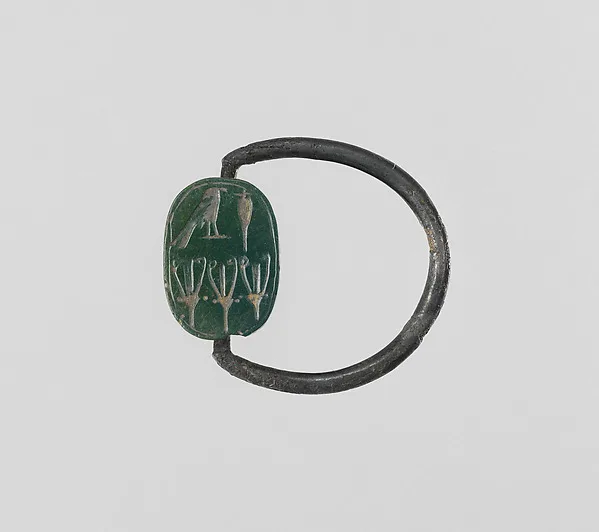
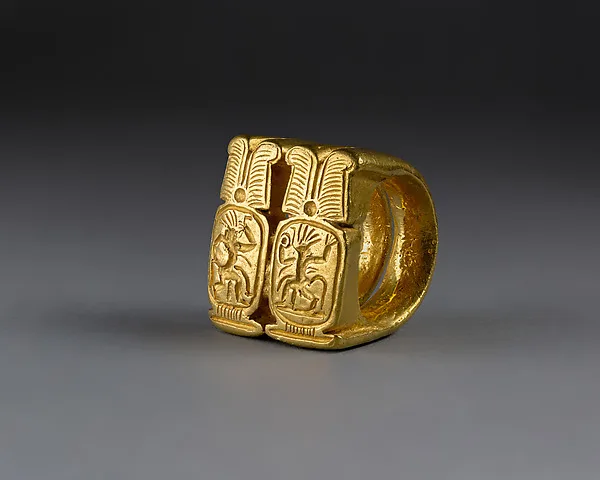
The tradition of giving jewellery for important life passages is as old as jewellery itself. It is not a modern marketing invention. In ancient Egypt, pieces of gold and gemstone were given at rites of passage, initiations, weddings and appointments to high office. They both adorned and served as amulets of a new status. In ancient Rome, an engraved ring was given for important dates: taking up office, reaching a certain age, military victories. It was an object that both confirmed identity and fixed a moment.
In medieval Europe a piece given for an anniversary or a passage carried a protective function too, an amulet for a new stage of life. Rings with the names of saints, lockets with religious symbols, all of this was customary at turning points. In the Victorian era the practice of memorial jewellery took shape, objects that marked the important dates of a life. Locks of hair, dates, initials set in lockets, all of this was the norm rather than the exception, and the piece was a keeper of memory. In the twentieth century commercialisation pushed the tradition aside somewhat, replacing personal choice with standard gift solutions. But in recent years it has been returning, in the form of mindful, personalised pieces with engraving and symbolism, and the cohort turning forty in 2026 is an active part of that return.
Leave your email, we'll send your discount code. No spam, unsubscribe anytime.
The code arrives by email, valid on your first order.
Jewellery and memory: why a physical object can beat an experience here
There is a common view that experiences are better than things. It holds in many situations: a trip really can beat a tie. But for a fortieth the format matters, and here is why a piece of jewellery often outperforms an experience for this particular date. A piece is present continually: the trip ends and the impression fades in memory, but a piece is put on again and again, and each time it reactivates the memory anew. A piece creates a narrative: when someone asks what that ring is, or where that pendant came from, the person tells a story, about the fortieth, about who gave it, about the meaning, and an experience is harder to turn into a story retold over and over.
A piece is a statement about the future
The trip has already happened. The piece will still be worn. It is an object built for years ahead, and that is its strength as a gift for a transitional moment. A piece is also passed on: over the years it may end up with children or grandchildren, and "this ring was given to dad for his fortieth" is already a family story, a material witness of the moment. None of this means experiences are bad gifts. It means that for a fortieth, with its psychological context of reappraisal and the search for meaning, a physical object with a personal history often works more precisely.
Jewellery as a way to mark the second adult stage
Psychologists who work with midlife speak of a second adult stage, the period from forty to sixty, when a person has resources, experience and enough remaining time to pursue what truly matters. The same principle of a meaningful gift carries on later: at a sixtieth a piece becomes a sign of a summing-up and a legacy, and only after that a beautiful object. This stage differs from the first adult one in that it carries less social pressure and more personal choice. Where at twenty-five a person builds a life around what is expected, at forty they increasingly make choices based on what matters to them. That is not selfishness, it is maturity. A piece as a symbol of the second adult stage says: I am beginning a new chapter, with what I already know, with the people who matter, with the intention of doing what truly counts. The symbols that capture this most precisely are the compass (a direction found), the arrow (movement forward), infinity (one cycle complete, the next beginning) and the tree (the roots are there, now grow upward). All of these are at once retrospective, in that they acknowledge the path already walked, and forward-looking.
What not to give at forty: an honest list
There are several categories of gift that work badly in the context of a fortieth, even when they are expensive or made with good intentions. A locket with a photograph for a man is a women's format with a very specific history, awkward for most men, the exception being if the man asked for it himself or it is a long family tradition. A generic gift set, a piece in standard packaging with a stock pendant and no personal choice, is obvious at a glance, and the impersonality reads faster than the piece itself. A piece chosen with no regard for style, large stones for a minimalist or a slim delicate ring for someone who wears maximalist pieces, is a miss. A piece with a name or a zodiac sign as its main message is a gift for a seven-year-old, not a forty-year-old, and if you personalise at all, do it through something with more weight: a date, a symbol, coordinates, text. Overly youthful jewellery, something that looks good at twenty, can look at forty like an attempt to recover lost youth. A hint-jewellery piece, a four-leaf clover for luck, can read as "you need luck", so neutral symbolism beats anything that might be misread as pity or doubt. And the piece you would want yourself is a trap, because "I would like one of these" does not mean they will: a gift is about the recipient, not the giver.
Facts that surprise
A handful of things about milestone jewellery that tend to catch people off guard.
Men wore the most jewellery for most of history
The idea that men do not suit jewellery is a product of a single short period, roughly the 1950s to the 1990s in Western culture. For the thousands of years before, kings, soldiers and merchants wore rings, chains and brooches as a matter of course. The pharaohs of Egypt were buried in gold. Roman patricians wore signet rings as proof of identity. The "default" of plain-handed men is the historical exception, not the rule.
Coordinates are the oldest idea in a modern wrapper
Engraving a place onto a piece feels like a contemporary trend, but fixing a location or a date to an object goes back to Roman rings cut with the year of an appointment. Only the format, latitude and longitude, is new. The impulse to anchor a moment in metal is ancient.
Victorians turned grief and memory into jewellery
Memorial jewellery was a whole industry in the nineteenth century. People wore lockets holding a lock of hair, rings engraved with a date of loss or of a marriage, brooches that recorded a name. Wearing a piece to keep a memory present was completely ordinary, not morbid.
A signet ring was once your signature
Before widespread literacy and printed seals, a signet ring pressed into wax was how documents were authenticated. The engraving was a personal mark, and breaking a dead ruler's signet was a formal act that ended their authority. The ring was, quite literally, a legal identity.
Amethyst once meant sobriety, not luxury
The name amethyst comes from a Greek word meaning "not drunk". Ancient drinkers believed the purple stone could keep them from intoxication, and cups were sometimes carved from it. Its modern reading as a stone of calm and clarity is a softened echo of that older belief.
The "round" birthday is a cultural habit, not a law
The weight we place on 30, 40 and 50 comes from a base-ten counting habit, not from anything inherent in those ages. Cultures that mark different numbers, such as a sixty-first birthday in parts of East Asia, treat those years as the true milestones instead.
Moonstone was thought to be frozen moonlight
Roman naturalists wrote that moonstone was solidified light from the moon, and that its glow waxed and waned with the lunar phases. The shimmer that gives it its name, a soft blue float across the surface, is now known to come from light scattering between thin layers inside the stone.
How to present the gift
A piece for a significant birthday deserves a fitting presentation. A few practical thoughts. The box matters: a cheap plastic case lowers the impression of any piece, even a good one, so if you order separately, choose good packaging, and if the piece arrives in the maker's own box, do not move it, since a good box is part of the experience of opening. A note is not an extra: a few handwritten lines explaining the choice are part of the gift, and "I chose this because" or "this date, because" turns a piece from an object into a story, so even three sentences in the giver's hand are worth more than a printed card with no text. The moment of giving matters: do not hand over a significant piece in a rush or together with several other presents, give it its own time, and if it is a surprise, make a moment for it, apart from the general bustle.
If you are giving a surprise
Make sure the size (for a ring) or the length (for a chain) is right. If you are unsure of a ring size, choose something that does not need an exact one: a pendant, a bracelet with a clasp, earrings. A ring of the wrong size is no disaster if it can be exchanged, but agree on that in advance.
If you choose together with the recipient
This is no less good a scenario. A joint visit to a jeweller or choosing online together can be part of the ritual, and it is sometimes better, because the person gets exactly what they want. "Let us choose together something you will wear" is a mark of respect for the person's taste.
Wearing context: where and how a 40th piece is worn
The right choice depends on the recipient's style and on the setting in which the piece will be worn. This is a practical point that often gets overlooked.
Office and business settings
The piece should be appropriate at work: a slim ring, small studs, a medium-width bracelet, a small pendant. Nothing too large or noisy (jangling bracelets). Silver or white gold reads as more neutral than yellow.
Everyday wear
A piece worn every day should be comfortable and durable, with no sharp edges and no fragile elements that are easy to damage. Sterling silver 925 suits daily use better than gold with enamel or intricate stone settings.
Formal occasions
If the gift is an evening piece, you can choose something more expressive: earrings with stones, a larger pendant, a ring with an accent. Where possible, check what the recipient wears to important events.
Sport and activity
If the person leads an active life, the piece should not get in the way. Rings can be awkward during sport, so a good option is a bracelet with a secure clasp or a small pendant. A piece in silver or gold will take more wear than one with a fragile finish.
2026 style cues: what forty-year-olds wear
In 2026 several trends stand out in how people of this age dress and adorn themselves. Mindful classics: one good piece rather than several mediocre ones, silver rather than gilt metal, handwork rather than mass production. Monochrome looks with a single accent piece: a dark or neutral outfit with one piece that carries the whole, an aesthetic that asks the piece to be self-sufficient and to have character. Men's jewellery as a norm: in 2026 a chain, a ring or a bracelet on a man is not a statement but simply style, needing no explanation. Meta-nostalgia, pieces with a history: people increasingly value objects with a narrative, whether a family heirloom, a piece from a particular maker, or a made-to-order object with personal meaning, which resonates especially strongly at forty. A return to silver: after several years of gold's dominance, silver is gaining ground again, oxidised and matte in particular, reading as independent of fashion and constant.
Forty is not the age for another gadget in a bow. One piece, one metal, a date hidden inside. And bin the gift receipt.
What to wear it with
I have handled hundreds of milestone gifts, and the question is almost always the same: how to keep the piece out of a drawer and inside the wardrobe. Here is what I recommend to clients, sorted by occasion.
What do I pair it with every day? For daily wear I recommend one pendant or a slim ring over calm clothing: a plain jumper, a shirt, a linen tee. The quieter the top, the harder the piece works. I suggest keeping silver on cool tones (grey, blue, white); yellow gold lives better on warm ones (beige, khaki, brown). A pendant on a medium chain sits well in a boat or V neckline.
Is it right for the office? Yes, as long as you keep it restrained. I choose studs, a signet, a medium bracelet or a pendant under the shirt. One metal across the whole look reads as more put-together than a mix. Cool tones feel more formal and neutral than warm gold, which counts in a meeting.
How do I build an evening look? For the evening I suggest leaving one expressive piece: drop earrings, a larger pendant on an open neck, a signet with a dark stone. An open neckline or pinned-up hair gives earrings room, and then I quiet everything else so the details do not argue.
What about the birthday itself? For the celebration I recommend wearing the gifted piece, especially an engraved one. A date or coordinates inside turn the evening into an extension of the moment it was given, and that reads warmer on camera than any sparkle.
One piece or a stack? After forty I almost always choose precision over abundance: one strong piece beats five middling ones. If you want layers, keep them in one metal at varying chain lengths so they do not tangle. On length my advice is simple: 45 to 50 cm suits almost everyone and most necklines.
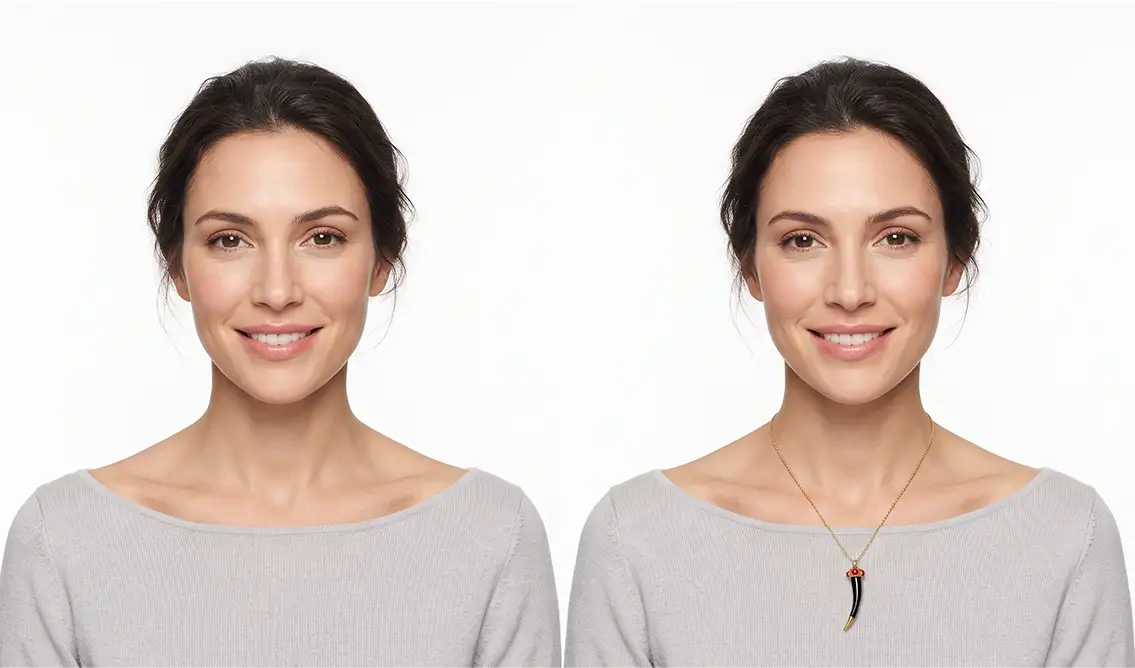
Turn on your camera, pick earrings, a pendant or a ring, and see the piece on yourself in real time.
Switch items in one tap.
Everything runs in your browser: no photo or video is ever uploaded.
Quiet luxury for a 40th
The idea of quiet luxury has grown in recent years, and it is especially apt for a fortieth. Quiet luxury is an aesthetic in which the value of an object is obvious to those who understand but does not shout at everyone else. It is the quality of the material rather than a famous logo, the precision of the making rather than aggressive visibility, objects that look expensive not because a costly name is written on them but because they are genuinely well made.
Quality of making over a name
A handmade piece in sterling silver from an independent maker can look considerably more "expensive", in the good sense, than a piece in the same metal from a mass-market producer.
Restraint of form
A piece that needs no explanation, that speaks for itself through its form, is a sign of confidence. A forty-year-old no longer needs their jewellery to shout. It is enough that it speaks precisely.
Detail that shows up close
Surface texture. The quality of the polish. The precision of the engraving. The weight of the piece in the hand. These things matter more than outward visibility, and neutral, lasting symbols (a star, a moon, a geometric form, a signet with initials) do not date the way a fashionable symbol of the season does. For a fortieth, when a person is no longer trying to impress but simply wants to express themselves, quiet luxury becomes a precise language.
Send a friend a discount code, they save on their first order.
Sizing and length for a surprise gift
One of the main practical difficulties with a surprise piece is the ring size and the chain length. Here is how to handle it.
Ring size
This is the hardest part. If you cannot try a ring on, choose pieces that do not need an exact size: pendants, earrings, bracelets with a clasp. If you really want a ring, there are a few ways: borrow a ring from the other hand to try, trace it on paper, or ask a mutual friend. Most jewellers offer a free resize within the first 30 days.
Chain length
For pendants: 40 to 45 cm (a choker, high on the neck), 45 to 50 cm (standard, at the collarbones), 50 to 55 cm (below the collarbones, more relaxed). For men the standard is 50 to 55 cm. If you do not know the preference, 45 to 50 cm is the most universal.
Bracelet and earrings
A standard bracelet of 18 to 19 cm suits most women with an average wrist, and 20 to 22 cm suits most men, while a clasp lets you correct a small mismatch easily. For earrings the size matters less than the construction: check whether the ears are pierced, and how many piercings there are. For unpierced ears, clip-ons work, though they are less common.
40 across cultures
Attitudes to a fortieth differ across cultures, and that affects which gifts are appropriate. In the English-speaking world, forty is often marked with a wink, the classic "over the hill" jokes about being past the peak. But the irony sits alongside genuinely significant gifts, precisely because the moment is felt as a threshold: milestone birthdays at the round numbers (30, 40, 50) get bigger celebrations than the years in between. In German, Dutch and Scandinavian custom the round dates are likewise marked on a larger scale, with gifts chosen to carry more meaning and weight.
The romance-language tradition
In Spain, Italy and France a fortieth is a grand celebration: family gatherings, long lunches, substantial gifts. Jewellery as a fortieth gift has a long history here.
Curiosities from further afield
A few attitudes worth knowing as curiosities. In Japanese custom a fortieth (yonjussai) has no special standing, since other ages are marked instead: 61 (kanreki, a "return to birth"), 70, 77, 88. In Latin American culture a fortieth is a large milestone, and jewellery is a regular birthday gift, so forty is reason for something special. As an aside, some Slavic folk tradition treats the number 40 as an unlucky, threshold number and holds that a fortieth should not be celebrated at all, though today most people take the superstition lightly and celebrate anyway. The practical point across all of this: if you are choosing for someone with a different cultural background, find out how they themselves feel about the date.
Men's jewellery in 2026: removing the last barriers
It is worth saying a separate word about men's jewellery, because for some the subject still raises questions. The history of men's jewellery runs to thousands of years: the gold rings and bracelets of the pharaohs, the signet rings of Roman patricians, the chains of medieval knights, the gold of the Renaissance, the brooch or locket of a Victorian gentleman. The notion that men do not suit jewellery is the product of one specific period, roughly the 1950s to the 1990s in Western culture, a very short span by historical measure, and it has already ended.
Where things stand now
In 2026, wedding rings are worn by men across all cultures, chains and bracelets are widespread across all age groups, signets are returning as one of the most popular men's formats, and earrings on men have long been normal in most professional and cultural settings. The only real question is the individual's style. There are men who never wore jewellery and never plan to, but there are fewer of them, and forty is a fitting moment for anyone who wanted to try but kept putting it off. To give a man jewellery for his fortieth is to see him as a person with character and style, not to hand him a functional object "for a man". It is respect.
What forty-year-olds say about jewellery
When you ask people who recently turned forty why they began wearing jewellery, or started to feel differently about it, the answers are strikingly similar. "I stopped worrying what others would think. I started wearing what I like." This is the most common type of answer, the freedom from outside opinion that comes after forty, which frees up the choice of jewellery too. "I want things with a story. Beautiful, but above all meaningful." This is the second type: the person no longer buys a piece simply because it is pretty, they choose what says something or reminds them of something. "I need an anchor. Something that reminds me who I am and what matters to me." This is the third: the psychological function of a piece as a point of support during a period of reappraisal. "Forty, and I finally bought myself the ring I had wanted for years." Self-gifting as an affirmation of the right to what one wants, a very common story at exactly this age. These answers show that a fortieth piece works not as decoration but as a statement, about who you are and what stage you are at, and a gift that understands and supports that is remembered for a long time.
Common mistakes
Even with the best intentions you can get it wrong. Here are the typical errors. Choosing what you like yourself: "I love this ring with the big stone", only to find the person wears nothing but slim stoneless pieces, since a gift is always about the recipient. Buying at the last minute: a rushed purchase means fewer options, less time for engraving, more chance of choosing something imprecise, so a good piece is ordered at least two to three weeks ahead. Forgetting the packaging and the note: a lovely piece in a shop bag with a hastily scribbled note loses half its power, since the moment of giving is part of the gift. Ignoring a metal allergy: some people react to nickel, often present in alloys, while sterling silver 925 and 14K gold are hypoallergenic for most, so check if in doubt. Choosing the "safe" option over the precise one: a safe gift is a safety net, not a memory, and if there is a way to make something more precise, through engraving, a symbol or a form, it is better to do so.
FAQ: common questions about 40th birthday jewellery
Can jewellery be given to a man?
Yes. It is normal and appropriate. Men wear jewellery, chains, rings, bracelets, as part of a style or as personal symbols. At forty, formats with personal meaning work especially well: a locket with engraving, a signet, a chain with a symbol. The main thing is to understand whether this particular man wears jewellery and in what style.
Which metal should I choose?
It depends on what the person already wears. If they wear silver, give sterling silver 925. If gold, give 14K gold. If neither, look at skin tone and clothing preferences. Silver is universal, yellow gold is more celebratory, rose gold is contemporary and less neutral.
What budget do I need for a good piece?
A quality handmade piece in sterling silver 925 with engraving starts at roughly what you would pay for a good restaurant dinner for two. Gold 14K is more like a flight to a nearby European capital. These are objects worn for years, so the ratio of value to length of use is very good.
A piece with a stone or without?
It depends on the recipient's style. Without a stone is sparer, more universal, better for a minimalist look. With a stone there is more of a visual focus, brighter, for those who like colour and the play of light. Good stones for a fortieth: labradorite (a magical shimmer), amethyst (a noble purple), moonstone (cycles, intuition), blue topaz (clarity, freshness).
Will the engraving be ready in time?
It depends on the maker and the amount. Standard inscriptions usually take three to seven working days, complex ones longer, so plan with at least two weeks to spare. For a rush order, ask straight away whether it can be done faster.
Is silver suitable for a significant gift?
Yes. Sterling silver 925 is a serious material with a history of use in jewellery going back thousands of years. It is not the cheap option but an aesthetic of its own, which many prefer to gold precisely because it is cooler, stricter, less ceremonial. Good silver from a good maker is a full, significant gift.
What should I give if I have no idea about the person's taste?
The safest choice: a quality silver bracelet with no pronounced symbol and room for a date engraving inside. Minimal risk, hard to reject, easy to wear. A second option: a gift voucher to a good workshop with a note saying "choose what you want, this is from me for your fortieth".
How do I choose between a ring and a pendant?
A ring is worn constantly and visibly, the more public format. A pendant can be hidden under clothing or shown, the more flexible one. For a first piece, or for someone unused to jewellery, a pendant is often easier, while someone who already wears rings will be closer to a ring.
Conclusion
Forty is not half-time in the sense of decline. It is the point from which both backward and forward are seen more clearly. A gift that understands this moment works differently from a standard present.
A fortieth piece is good when it carries something specific: a symbol, a date, a place, a phrase. When it is chosen for a specific person, not bought at the last moment. When the metal and form match what the person wears or would want to wear.
It will accompany the recipient for years. On the next birthday, at a business meeting, on an ordinary Tuesday. Every time they put it on, this moment becomes present again: forty years, this gift, the person who chose it.
Handmade jewellery in silver and gold. Custom engraving. Shipping across Europe.
About Zevira
Zevira makes jewellery by hand in Albacete, Spain. Sterling silver 925, 14-18K gold, engraving on request. We work with milestone gifts and can help with symbol selection, engraving text and piece format.
Related articles: