Silver Locket: Complete Guide to Selecting, Wearing, and Care
Introduction: A Small Treasure Box Around Your Neck
Picture this scene. Late 19th century, London, a quiet street near Hammersmith. A young woman stands before the mirror, fastening a delicate chain with an oval silver locket. Inside, behind a carefully fitted circle of glass, hides a tiny photograph of her husband, away on business in India for half a year. No messages, no video calls. Just this piece of silver, which she puts on every morning and takes off every evening, setting it on the bedside table to look at before sleep.
The locket lives precisely in that space between jewellery and personal diary. On the outside it is beautiful and meaningful, like any good pendant. On the inside it holds what is never shown to strangers: a photograph, a strand of hair, a note on the thinnest paper, a dried petal.
Today silver lockets are going through a genuine revival. This is not nostalgia for its own sake. The appetite for jewellery with personal meaning, for objects that carry something concrete and one's own, has turned out to be steadier than most fashion waves. In an age when photographs live only in the cloud and are almost never printed, the physical photograph inside a silver locket has gained a fresh kind of weight. It is a deliberate choice to keep something material from the digital stream.
This guide covers all of it: what a locket is and how it differs from an ordinary pendant, how its history unfolded, what types and shapes exist, how to choose the right size, how to fit a photograph, what else you can keep inside, how to tell a quality piece from a cheap one, how to wear it, and how to care for it.
What is a locket and how it differs from a pendant
The word locket reaches English through the French médaillon, which traces back to the Italian medaglione and ultimately to the Latin medallia. A locket is a pendant with a hollow interior. It opens like a small book, on a hinge or by a magnet, and lets you keep something personal inside: a photograph, a strand of hair, a note, a small dried flower.
The key difference from a pendant is functional. A pendant is decorative jewellery with no inner space. It is beautiful only on the outside. A locket adds a dimension: it exists at once as jewellery for the eye and as a container for whatever the wearer carries. That double character makes a locket a genuinely different object in meaning and in how its owner treats it.
The confusion arises because lockets are often sold as "pendant lockets" or simply "pendants," and the word locket itself carries several senses in everyday English. In the jewellery context, though, a locket always means an opening pendant with an interior cavity.
There are also pieces that copy the shape of a locket but are solid: they do not open and have no cavity inside. Technically these are plain pendants in locket form, not lockets in the full sense. Sellers sometimes reach for the word locket for the romance of it, without spelling out the function, so always ask one question before buying: does it open?
Another frequent mix-up is the locket and the reliquary or amulet pouch. A pouch is traditionally a small fabric or leather case made to carry religious items, charms, or herbs. That is a different construction and a different tradition. A locket is a jewellery piece with a metal case and an opening mechanism.
A few stubborn beliefs have gathered around lockets over the years. Test yourself: which of these is true and which is a myth.
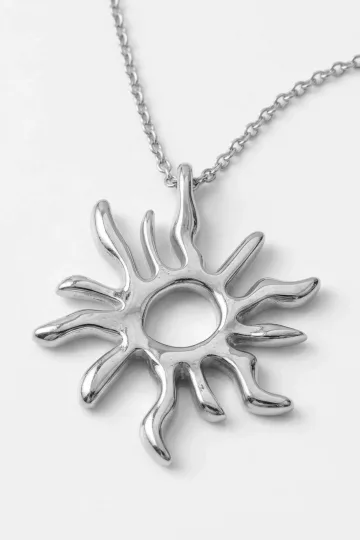
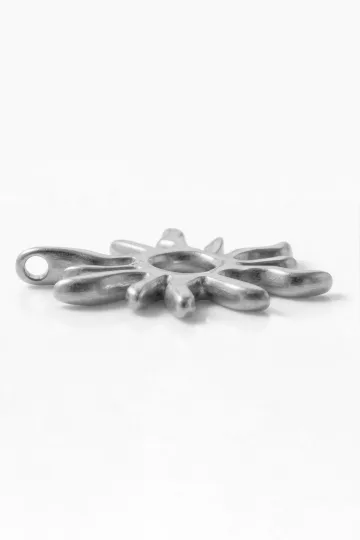
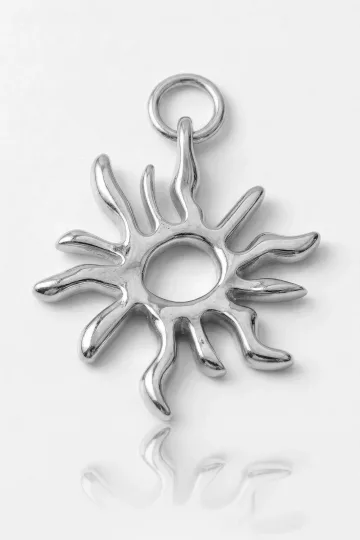
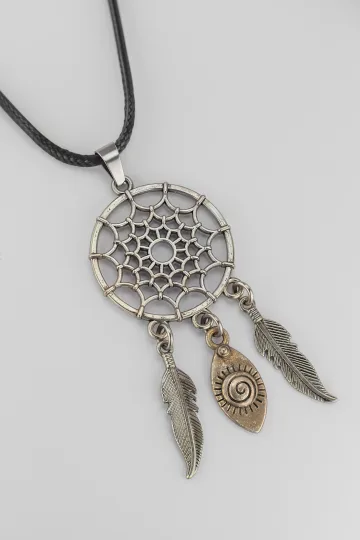
Wear the symbol, don't just read about it. These are in stock:

Brief history: from the Tudors to the 20th century
The first lockets: portraits of kings and queens
The history of lockets as jewellery begins in the 15th and 16th centuries in Europe. The first lockets held not photographs (photography had not been invented) but tiny portraits, painted in watercolour on ivory, parchment, or thin wood. Aristocrats wore them, and the purpose was direct: to keep an image of the monarch or the beloved always at hand.
The English Tudor court was especially fond of such jewellery. Henry VIII gave away lockets bearing his own portrait as a mark of special favour. Elizabeth I, by the accounts of her courtiers, wore until the end of her life a locket with a portrait of her mother, Anne Boleyn, executed when Elizabeth was about three. It is a surviving record of how a locket served to hold on to something lost.
In the 16th and 17th centuries both sexes wore lockets. Men's lockets with the portraits of monarchs were a display of loyalty and court standing. Women's lockets carried images of loved ones or children.
The miniature portrait: art the size of a coin
Alongside the locket grew a particular artistic tradition: the portrait miniature. This is painting on the scale of five to ten centimetres, worked with the finest brushes on ivory or vellum, with detail that rivals a full canvas. Such a portrait went inside a locket and served at once as jewellery, portrait, and private message.
Artists who specialised in miniatures were highly prized at the courts of the 17th and 18th centuries. Whole schools of the craft existed in England, France, and the Low Countries. Nicholas Hilliard in England, Jean-Étienne Liotard in Geneva, Rosalba Carriera in Venice. Their small portraits survive in museum collections around the world.
The Victorian age: the rise of the mourning locket
The true golden age of the locket arrived in the 19th century, above all in Victorian Britain. After the death of Prince Albert in 1861, Queen Victoria began wearing a large dark locket holding his photograph and a lock of his hair. Photography had appeared by then: the daguerreotype from 1839, and by the 1850s paper prints were common enough to fit inside a locket.
Victoria stayed in mourning and wore that locket with Albert for the rest of her life, another forty years. The very public gesture set the tone for the whole era. Mourning jewellery became a full social norm: grief was carried in concrete objects.
Death was woven into ordinary life in the 19th century. Child mortality stayed high. Cholera epidemics swept whole city districts in turn. Men died in wars, at sea, in mines and factories. Mourning jewellery became a way to keep something physical of the person who was gone: a lock of hair, a tiny portrait, a photograph.
The locket let you carry a strand of hair or a small print close. Hair held a special place in 19th-century memorial culture. By mid-century England was importing dozens of tons of human hair a year from the Continent, so high was the demand: the hair of the dead was woven into jewellery, set behind glass as portrait vignettes, and kept in lockets.
Silver in this period was the material of the rising middle class. Gold lockets belonged to the gentry. Silver ones reached a far wider circle: the apothecary's wife, the village schoolteacher, the country parson's daughter. That is what made the locket a genuinely popular object.
The 20th-century photo locket and the wars
By the early 20th century photography had become available to almost everyone. Photo studios offered "locket cards": small prints cut to the right format. Once that service became routine, the photo locket turned from a rarity into an everyday possession.
During the First World War vast numbers of people on every side carried photo lockets. Women wore the photographs of husbands and sons leaving for the front. Soldiers carried lockets with photographs of wives and children, objects that tied them physically to home. The same lockets travelled through the Second World War.
After the middle of the 20th century the locket slipped somewhat out of fashion, giving way to other kinds of pendant. But it never disappeared. It is coming back now precisely because the digital age has created a paradox: there are more photographs than ever, and not one of them is a physical thing.
Locket types: form, mechanism, and material
Lockets vary along three axes that matter when you buy: the outer shape, the way the case opens, and the number of compartments inside. Each choice changes what the locket will hold and how it sits against the neck.
By shape
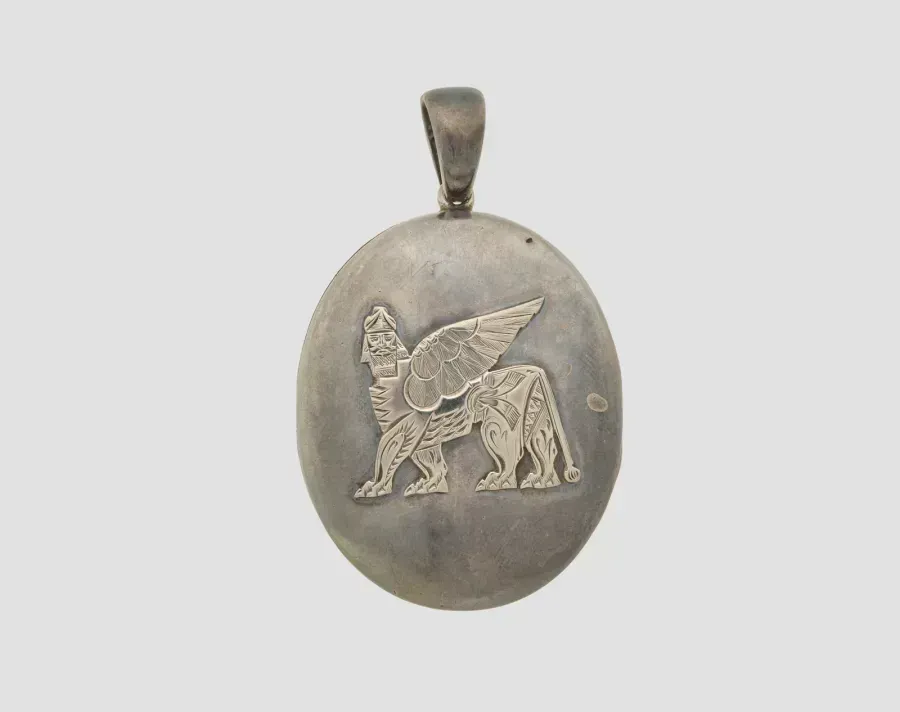
The oval locket counts as the classic. The shape comes straight from the Victorian tradition, takes a vertical portrait comfortably, and looks elegant at any chain length. A vertical oval draws a long line that visually lengthens the neck. A horizontal oval is rarer and suits landscape shots or a pair of photographs side by side.
The round locket is the versatile, understated choice. A circle is neutral in mood: it carries neither romance nor solemnity. It works with any style, from strict office wear to weekend basics. Inside it takes a portrait or a small keepsake easily.
The heart-shaped locket carries an obvious symbolism and traditionally reads as a romantic gift or a token of love. The heart comes in every degree of stylisation, from a soft realistic form to a plain geometric outline. For more on the symbolism of the heart in jewellery, see our piece on pendants with the anatomical heart.
The rectangular and square locket turns up less often and reads closer to a tiny book or photo frame. The shape works well for horizontal photographs and for anyone who prefers a more modern, geometric look. Rectangular lockets appear frequently in pieces designed for men.
The cut-out locket (the so-called open heart or open circle) sits between the styles: a shaped opening lets you see the photograph or contents through the front without lifting the lid. It is striking to look at, but it limits what you can safely keep inside.
Figural lockets in the shape of a flower, a padlock, a book, or a star appeared in the Victorian taste for eclecticism and are popular again. They pair decorative complexity on the outside with the storage function within.
To match a shape to the photo that will sit inside it and to the person it suits, here is a short comparison of the main options.
By opening mechanism
The hinged locket is the most common kind. The lid sits on a pin and opens with one movement. The quality of that hinge decides how long the whole piece lasts. A good hinge, built from white gold or rhodium-plated steel and set into a silver case, will serve for decades. A cheap brass hinge will loosen within a year or two of regular wear. The sign of a good hinge: it moves smoothly and silently, the lid opens without jerks and never sits crooked.
The magnetic locket closes with no visible catch, which gives it a clean, minimal look. Magnets are set into both halves of the case. The upside: it opens at a touch, with no hinge to break. The downside: a hard knock can pull the magnets apart, and very strong magnets can damage the contents (they can smear the image on old photographic paper, for instance). A magnetic case suits relatively light contents rather than a lock of hair, which can stick to the magnet.
The push catch or clasp opens when you press a hidden button or apply a certain pressure. You meet it in genuine antiques and in modern Victorian-style reproductions. The mechanism adds a touch of secrecy: the locket cannot fall open by accident, and you have to know where to press.
The screw locket opens by turning, like the cap of a small bottle. It is rare, and it survives in capsule-style pieces and in the medicinal amulets of earlier centuries, made to hold scented substances or powders.
By number of compartments
Most lockets are double: two compartments, one on each side. You can fit two photographs, or a photograph and a lock of hair, or a photograph and a few words of text. This is the standard for most modern silver lockets.
A single locket has just one compartment, sometimes with a frame or a glass cover for a photograph. You find it in thinner pieces where there is no room for a second section.
The triple locket is rarer. It is wider than usual and holds three separate things. The format is especially typical of antique family lockets from the Victorian era: inside might sit the photographs of several children or several generations of one family.
Customer reviews
Zevira is a real jewellery shop. Genuine payments, deliveries and customer thank-yous.
🥰🥰🥰 gracias
Ok, ¡gracias! 🙂
Locket sizes and how to choose them
The size of a locket is usually given in millimetres, by its largest measurement (height for vertical pieces, diameter for round ones, width for horizontal). That number matters more than the impression a photo on a website gives you.
The small locket (15-20 mm) is delicate and barely noticeable from a distance. The photo inside has to be very small: a face the size of a little fingernail. It suits a minimal style and pairs well with fine chains. The drawback: the photograph is hard to make out without a magnifier, and only a very thin strand of hair will fit. A locket this size is more symbolic by function: what matters is that something is inside, not the detail of looking at it.
The medium locket (22-28 mm) is the most common format. A photograph of about 18-22 mm sits comfortably. A face reads without strain. The piece is visible on the neck without taking over the outfit. This is the sweet spot for everyday wear and for a first purchase.
The large locket (30-40 mm and up) is already a statement piece. It looks good as the centre of a look on a longer chain. Inside you can fit several photos or a larger keepsake. For layering, treat a locket this size as the single large element. A large locket needs a chain to match it in weight and thickness.
The very large locket (45 mm and up) is closer to an art object or an antique. You meet it in traditional or decorative pieces, and it does not always have a mechanism comfortable for daily wear.
The general rule of proportion: the finer and more delicate the chain, the smaller the locket should be. A heavy locket on a thin chain creates a sense of mismatch and, in time, deforms the chain at the point where they meet. The weight of the locket should be in proportion to the thickness of the chain.
For what kinds of chain exist and how they differ in look and strength, see our guide to chain types.
How to insert a photograph into a locket: step by step
This is the part that most often puzzles a first-time owner, though the process is simple.
Step 1. Measure the inner compartment. Open the locket. With a ruler or callipers, measure the inner cavity: width and height (or the diameter for round ones). Write the numbers down exactly. Some makers state the photo size in the product description: use that figure if it is there.
Step 2. Prepare the image. Choose the photograph. Open it in any image editor: the standard Photos app on a phone, Canva in a browser, Photoshop, anything. Crop so the face or the subject sits squarely in the centre. Set the final size to your measurements, then trim 1-2 mm off each side: this lets the photo go in without strain and without buckling at the edges.
Step 3. Print it. The best print resolution is 300 dots per inch (dpi). When you send it to print, give the exact size in centimetres and do not let the printer scale the image on its own. For home printing, matte photo paper works well: it glares less behind glass if the compartment has a glass cover. For tiny prints it pays to print several copies on one sheet, so if one comes out a touch too big or small you have a choice.
Step 4. Cut it cleanly. With small sharp scissors or a craft knife against a metal ruler, cut the photograph to the outline. For a round compartment, cut a circle: lay the locket on the photo paper as a stencil and trace it with a soft pencil. For an oval, cut a rough rectangle first, then round the corners with small snips.
Step 5. Set it in place. Lay the photograph into the compartment. If the locket has a frame, a glass disc, or a plastic plate, press the photo gently with a finger or the blunt end of a thin pencil. Make sure the photo lies flat, does not bubble, and does not stick out past the edges. Close the locket.
A useful tip: if the photo drifts and slips from time to time, use a tiny piece of double-sided tape on the back of the print to hold it in place.
A tip on choosing the photo: pick shots with a close face that fills the centre of the frame, with a little background around it. A full-length shot of a person turns into an unreadable smudge inside a locket. The more of the frame the face takes up, the better the result in a small format.
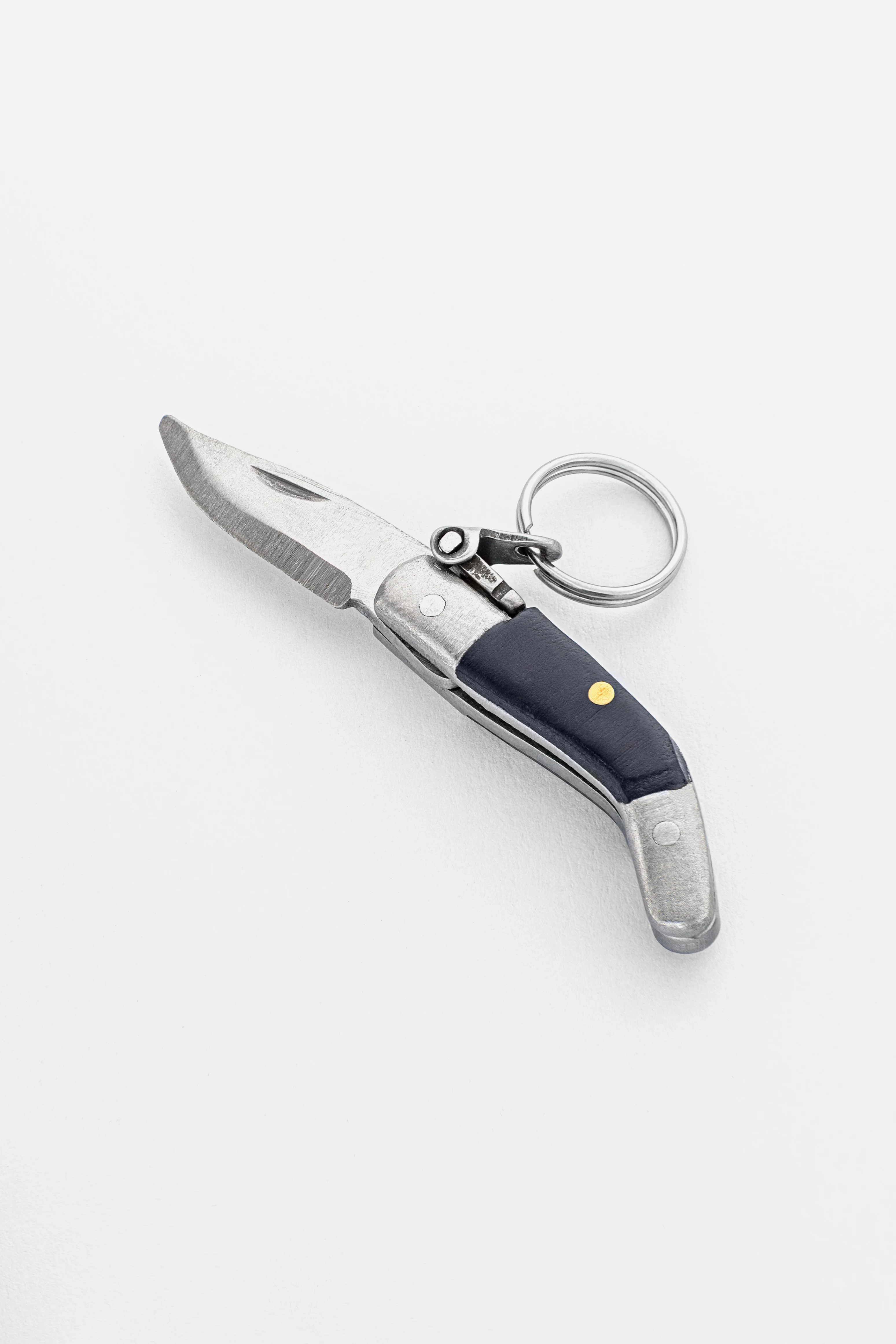
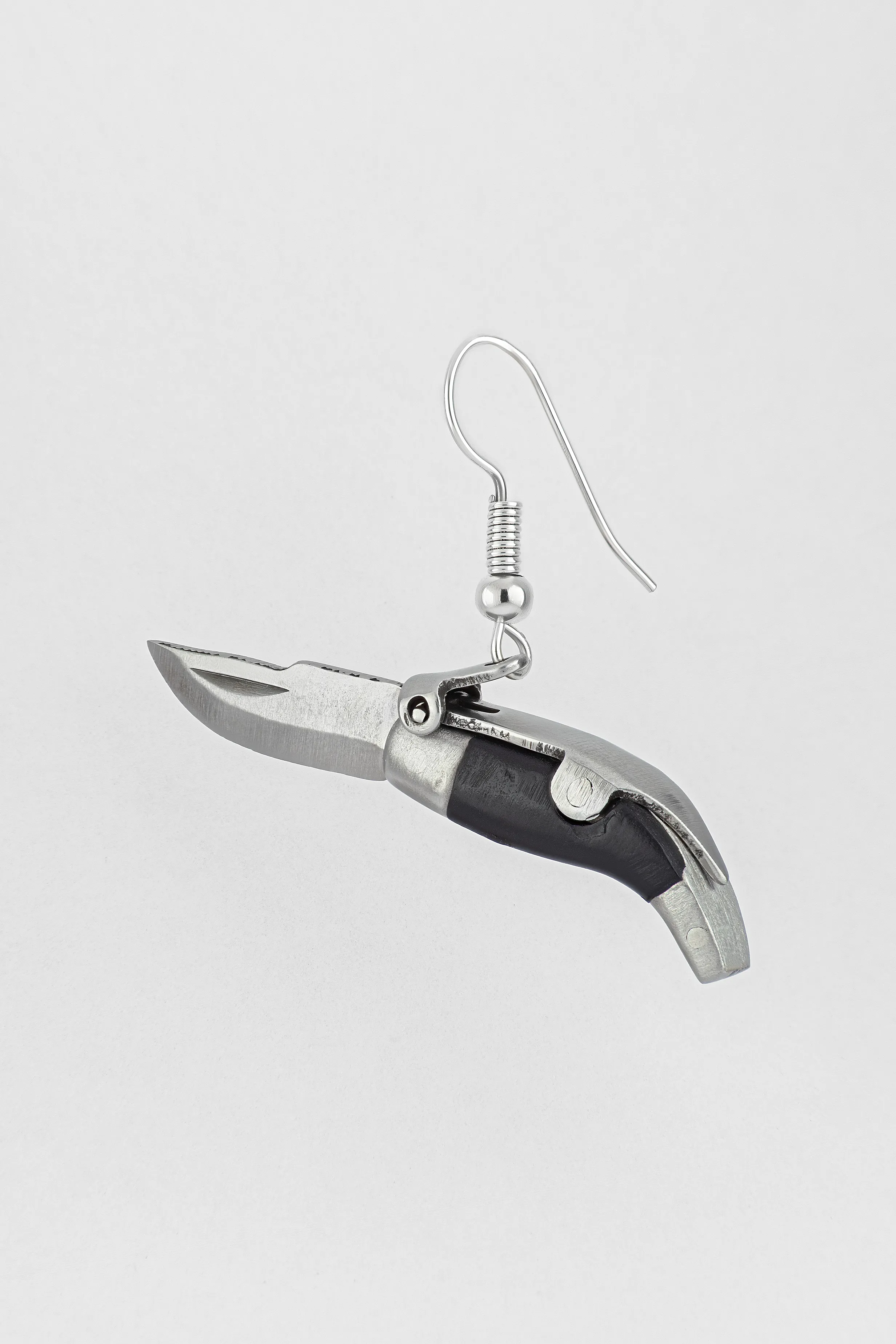
Artisan-crafted CAPAORA navaja pendant
A 40 mm stainless-steel navaja with a real folding mechanism and Palanquilla lock. An affordable gift to remember.
A code for blog readers:
10% off your first order
Authentic · Maker's guarantee · Ships from Spain
What to put inside besides a photograph
A locket holds plenty beyond photographs. Here is what else makes sense.
A lock of hair. Historically the most common content of lockets across several centuries. A small lock, tied with fine thread or a short length of ribbon, fits almost any medium locket. It matters that the hair is dry and clean before it goes in: moisture inside a metal case becomes a focus of oxidation.
A note. A tiny scrap of paper with a few words. It might be a date, a set of initials, the coordinates of a place, an important word or phrase. Fold the note as small as it will go, or write on tissue paper, which takes almost no room. Use durable ink: pencil rubs away over time as the paper shifts inside the locket.
A dried flower or petal. A single petal of a small flower fits a locket if you dry it well first, pressed between the pages of a book. The petal must be entirely free of moisture, or condensation forms inside the case. Dried petals are fragile: before you set one in, check that it does not crumble.
A small piece of fabric. A fragment from something that matters: a scrap of wedding lace, a small piece of a first baby outfit, a strip from a beloved shirt of someone gone. Fabric takes little room and needs no special preparation.
A scented substance. A little dried scented petal or a piece of fragrant resin. The history of jewellery includes a whole class of pomander lockets made specifically to hold scents. People wore them as a guard against illness (in the Middle Ages a pleasant smell was thought to keep contagion away) or simply as a source of a good scent. Modern silver lockets take scents with reservations: liquid perfume can damage the inner surface.
Tiny personal objects. A small coin from a memorable year, a microscopic stone from a place that matters, the head of a pin set with a special bead. Anything that physically fits and means something to you.
If you want to add a personal inscription on the outside of the locket, our guide to jewellery engraving explains in detail what is engraved on silver, how many characters fit on pieces of different sizes, and how the various engraving techniques give different results.
Materials and silver grades
What sterling silver 925 is and why it is the choice
Pure silver at 999 is almost 100% silver and far too soft for jewellery: it bends, scratches, and loses its shape with even careful handling. That is why jewellery uses sterling silver, which is 92.5% silver and 7.5% other metals, usually copper or zinc. That is where the 925 mark comes from, the one you find on quality silver pieces.
Copper gives the alloy strength and spring: a 925 locket keeps its shape under knocks, the hinge works without deforming, the bail does not bend open under the weight of the piece. But copper is also the reason for the slow darkening: it reacts with sulphur compounds in the air, in sweat, and in some cosmetics, forming a dark film of silver sulphide. This is an entirely normal chemical process, not damage to the piece, and it is easily reversed.
For more on the make-up of silver, on what the number 925 means, and on grades such as 830 and other silver alloys, see our piece on silver 925: what it means.
Rhodium plating of silver
Many silver lockets are plated with rhodium: a metal of the platinum group, very hard and resistant to oxidation. Rhodium forms a protective layer on the surface of the silver that slows darkening considerably and gives the piece a bright white shine, close to white gold.
The downside of rhodium plating: the layer wears off over time, especially in places of high friction, on the bail, on the hinge, where the chain rubs against the locket. If a rhodium-plated locket starts to darken unevenly on the hinge while the main surface keeps its even shine, that is normal wear of the plating, not a fault in the piece. Rhodium plating can be renewed by a jeweller: the job is inexpensive and takes a few hours at most.
Gold-plated silver: yellow and rose
Some silver lockets carry a gold surface: a layer of yellow or rose gold of 18 carats and up applied to a silver base. This gives the warm yellow or rose tones at far less cost than solid gold.
A gold-plated silver locket needs gentler care: abrasive cleaners, rough cloths, and long contact with water strip the thin gold layer faster, exposing the silver beneath. The spot where the plating has rubbed through to silver looks uneven. Handled well, a gold-plated silver locket is worn for years with no visible loss of plating.
Silver-plated metal: what it is and why it is not the same thing
"Silver plated" is a fundamentally different thing. Here the base is copper, brass, steel, or an alloy, with silver laid over it as a thin electroplated film. Such a piece is much cheaper and far less durable: the plating rubs away in places of friction within a few months of regular wear, exposing a yellow or reddish base.
On top of that, silver-plated pieces cannot be properly cleaned with silver polishes: the abrasive strips the already thin coating. If you want a locket that will last decades, buy only sterling silver 925, that is, with a hallmark.
Six fast checks, no tools. Leave your email, we'll send the PDF and a discount code.
No spam, unsubscribe anytime.
How to choose a quality locket: what to look for
The bail
The bail is the ring the chain passes through. On small and cheap pieces the bail is often the weakest point. A quality bail should be soldered to the body of the locket: a bent wire loop with no solder straightens under load, and the locket falls.
The width of the bail has a practical meaning: make sure the chain you have chosen passes freely through it with a little room to spare. Too narrow a bail reduces the swing of the locket, creates extra friction, and can wear the chain at the contact point.
The hinge: the most important part
Feel the hinge and work it in person, or ask the seller to show it in a video. It should move smoothly, without catching halfway and without play in the open position. The lid should travel evenly as it opens, with no skew against the body.
A good hinge stays open without support: the locket should not snap shut on its own when you tilt it forward. If the lid closes at once under its own weight, that means either a weak hinge pin or a problem with the balance of the build.
Quality silver lockets often use hinge pins of a harder alloy or of white gold: 925 silver on its own is not hard enough for the long-term work of a hinge through thousands of opening and closing cycles.
The lid catch
The lid should close with a light, definite click and not spring open in a pocket or a bag. If the locket closes too loosely, the contents will fall out from time to time. If the catch is too tight, the metal of the body starts to deform under the constant force of opening and closing.
Wall thickness and weight
Walls that are too thin (under 0.5 mm) make the locket light but fragile: it dents easily on a hard surface. A good silver locket has walls about 0.8-1.2 mm thick. Take the piece in your hand: it should feel like an object with real weight and density, not like stamped foil.
Lightness is not a virtue in a locket. A piece that feels too light is most likely either thin-walled or made of a less pure silver alloy, or simply silver-plated metal.
Hallmark and stamps
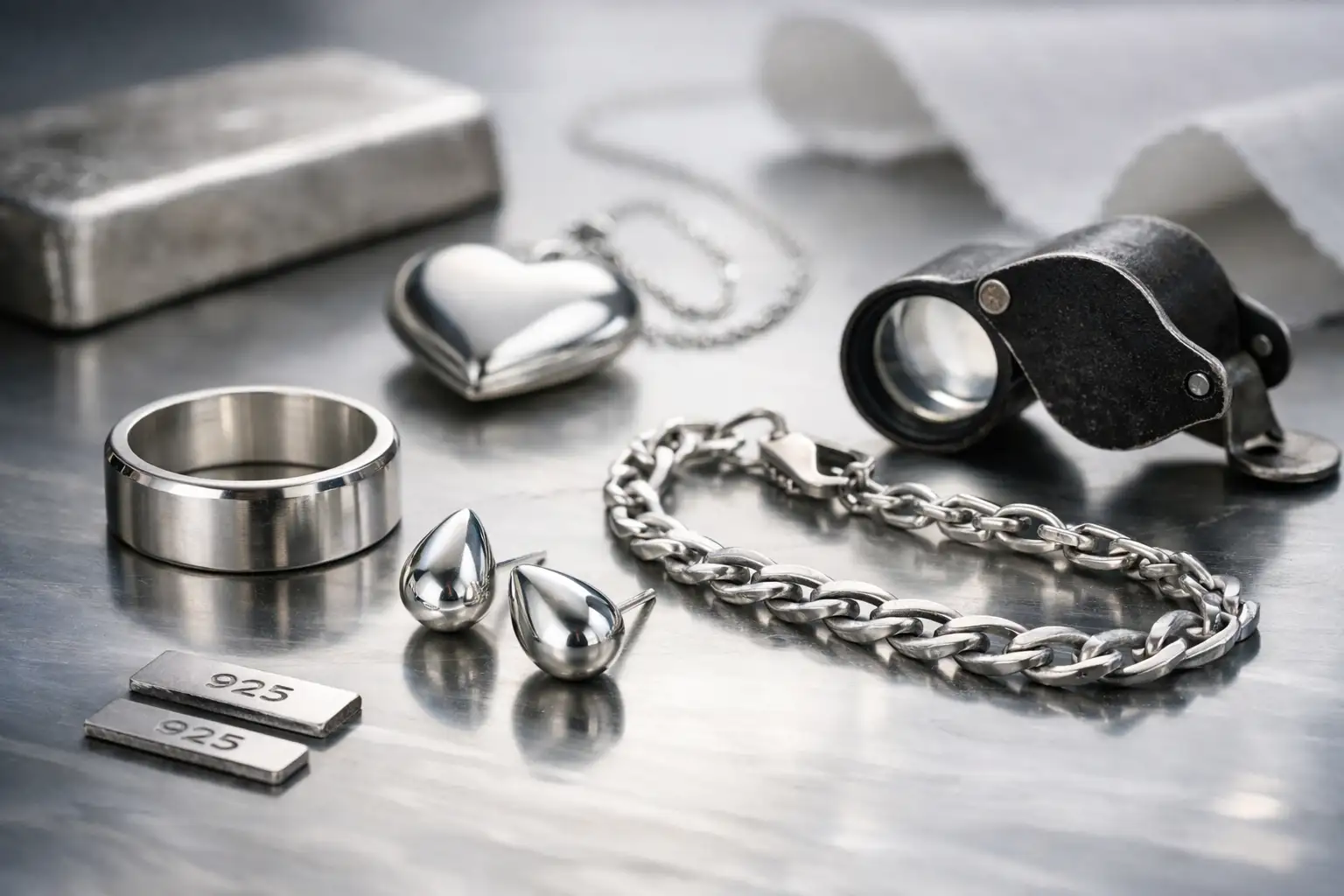
A quality piece must carry a hallmark. On European-made silver this is the mark "925" or "S925," sometimes with a maker's letter code or an assay-office stamp. The mark is struck or engraved on the bail, on the back lid, or inside the locket.
If there is no hallmark, the piece is either silver-plated rather than silver, or it breaks the marking rules of the country where it was made. Either way, it gives you good reason to put a direct question to the seller before buying.
How to wear a locket: chain length and combinations
Chain length and how it sits
The length of the chain decides where the locket rests on the body, and that changes the whole look.
40-45 cm (the classic, at the collarbone) the chain lies at the collarbone or just below, and the locket sits at the top of the neckline. This is the most neutral option, suiting almost any neckline. The locket is clearly visible without standing out too far.
50-55 cm (mid-length, mid-chest) the locket drops to about the middle of the chest. At this height the design on the lid reads well. The length is comfortable for everyday wear under a V-neck or an open collar.
60-70 cm and longer the locket falls to the solar plexus or below. This works well in a layered look, where the locket is the lowest, longest element of a multi-tier arrangement.
When you choose a length, take your height and build into account. A long chain visually lengthens the figure. A short one puts the accent at the collarbone.
How to combine it with other jewellery
A locket works beautifully as the only piece at the neck. But you can fold it into a layered look too. A few tested principles.
When layering, the locket usually sits as the longest element. Above it go shorter, finer chains, with tiny pendants or none at all. This builds a visual gradation from light to more substantial.
If the locket is large and detailed, the rest of the jewellery should be much simpler. The locket already carries the main visual accent, and competing pieces add noise rather than support.
A locket with engraving or a relief design on the lid works well on its own. A locket with a plain lid is open to more combinations: you can wear pieces with richer texture beside it.
Choose small earrings with a locket. If the locket is already the accent, keep the earrings modest: studs, fine hoops, small drops. Large earrings next to a large locket create overload.
If you are interested in jewellery combinations, and especially in matching pieces with a shared symbol for two, our guide to jewellery for couples works through the ideas in detail.
Worn open or closed
This is a personal decision that no rule governs. A deliberately open locket, with the contents on show, turns the piece into a statement: the wearer speaks of themselves through what is inside. A closed locket keeps the secret for the one who wears it. Most people prefer the second, especially when the contents are deeply private.
Wear a locket alone and shut. Don't bury it under chains, the secret inside is no shop window.
What to wear a locket with
I build a locket into a look as its meaningful centre, not just another piece: first I decide what goes inside and for which occasion, then I choose the length and the metal. Here is how it plays out by situation.
How do I wear a locket every day? For an ordinary day I recommend a medium oval or round locket on a 45-50 cm chain over simple knitwear: a fine roll-neck, a round-neck jumper, a basic tee. Against plain fabric in a quiet colour (cream, grey, dusty blue) the silver reads clearly and does not argue with the clothes. I suggest a smooth lid for a piece you wear daily and keep a relief one for the days the locket works as an accent.
Does it work at the office? It does, if you keep it restrained. Under a shirt or a blouse with a shallow neckline I choose a smaller locket on a short chain so it rests at the collarbone and does not peek out of the collar. The closed case looks quiet, with no decorative noise, so under a strict dress code I recommend a locket rather than a pendant set with stones.
How do I build an evening look? For the evening I suggest an open neckline and smooth fabric in a deep colour: silk, velvet, dark tones. With those I choose a longer chain, 55-60 cm, and a larger locket so it works against bare skin. If you want layers, I recommend the locket as the lowest and longest element, with a fine chain and a tiny pendant above it.
A locket with a photo inside, for a special day? For a wedding, an anniversary or a family celebration I recommend wearing a locket with a photo inside as the single pendant. On days like these it becomes the meaningful centre of the look, and extra chains only talk over it. I keep the neck clear and let all the attention land on one piece.
How do I combine it by metal and with other jewellery? Hold to one temperature. Silver and rhodium-plated silver I pair with white stones, pearls and cool fabrics; a gold-plated locket I move toward warm clothing tones. You can mix silver and gold, but on purpose, not by accident. And the rule that never fails: one expressive locket almost always beats several competing pendants.

Turn on your camera, pick earrings, a pendant or a ring, and see the piece on yourself in real time.
Switch items in one tap.
Everything runs in your browser: no photo or video is ever uploaded.
Care and cleaning of a silver locket
Everyday care
Silver reacts to sweat, perfume, hand creams, and household chemicals. A few practical rules go a long way toward keeping the piece looking its best.
Put the locket on last when you get ready: after perfume and creams. Take it off first: before washing your hands, showering, or bathing. Store it in a closed box or a special suede pouch: contact with air speeds the darkening, and contact with other jewellery leaves scratches on the silver.
If you wear the locket every day and only take it off at night, wipe it with a soft cloth once a week. A special silver polishing cloth, sold in jewellery shops and online, does the job well.
How to clean a darkened locket
If the locket has darkened, it is no cause for worry. The dark film is silver sulphide, formed as the metal reacts with the air. It comes off easily by several methods.
A silver polishing cloth (for light darkening). A special two-layer cloth holds a cleaning agent in one layer and a polish in the other. Wipe the locket with a few strokes, turning the cloth to a clean side. The method suits light, even darkening and needs no water.
Soapy water (for moderate darkening). Warm water with a few drops of mild dish soap. First take the contents out of the locket. Dip the piece for a minute or two, then gently work a soft toothbrush over the relief detail and into the corners of the hinge. Rinse in clean warm water and wipe completely dry at once with a soft cloth. Important: do not leave the silver wet, as water with soap residue speeds the return of the film.
Baking-soda paste (for stubborn film). Mix a little baking soda with water into a thick paste. Apply to the locket with a soft cloth, rub gently in circles, rinse thoroughly, and wipe dry with a soft cloth. Important: do not use soda on lockets with rhodium plating or gold plating, as the fine abrasive particles can damage the thin coatings.
For how to bring back the shine of jewellery, what to do about uneven darkening, and how to tell normal oxidation of silver from real damage, see our piece on what to do when jewellery has tarnished.
What not to do
Toothpaste for cleaning silver: a popular tip from the internet that is genuinely harmful. The abrasive particles in toothpaste leave micro-scratches on soft silver that build up and make the surface matte and uneven.
Bleach and chlorine cleaners: aggressive chemicals that irreversibly damage silver and any coating on it.
Ultrasonic cleaning for lockets with thin plating, glued inserts, or glass elements: ultrasound can loosen parts of the build and damage the coating.
Long soaking in water: water gets into the hinge and the bail join and creates focal points of oxidation there.
Locket as a gift: occasions and for whom
Occasions for the gift
A birthday. A locket that can hold a personal photograph makes the gift a named one. You give a piece already filled: with a photo of the person, a shared shot, an image of a beloved pet.
A wedding or engagement. A traditional gift from a mother to a daughter. A locket with a photo of the newlyweds, or with a wedding portrait of the parents, passes on something of the family history. It is a piece that can move on to the next generation.
A birth. A locket with a photograph of a newborn, given to a mother or a grandmother, becomes a keepsake from the first days of the child's life. Many mothers tuck the child's first lock of hair inside.
Memory of someone lost. Here the locket returns to its historical meaning. It is not a gloomy gesture but a way to keep a physical connection. A lock of hair, a photograph, a meaningful date. Such a gift is fitting both as a purchase for yourself and as a sign of care for another person in a time of loss.
A graduation. A locket with a class photo or the date of graduation keeps the memory of an important stage. Ten years on it will be a piece with a story that will not come again.
An anniversary. A locket with a shared photograph, the date of a first meeting, or a small note inside.
No occasion at all. A locket with a photograph needs no special excuse. It is a piece with contents, and it makes sense at any point in life.
For whom a locket suits
A locket is traditionally seen as women's jewellery, but that tradition comes from one particular historical era, Victorian Britain with its strict division of roles. In fact lockets were worn by both sexes throughout history: Tudor courtiers, knights, sailors, travellers.
Today men wear lockets too: usually larger, of geometric or strict form, on a long chain, with a minimal design on the outside. The meaning is the same: a personal object carried with you.
A locket suits people of any age. For the young it is an expression of identity or a symbol of a bond. For older people, especially those who have been through loss, it becomes a physical store of memory.
Common buying mistakes
Buying without checking the size. The most common mistake when buying online. The locket looks large enough on the website, but on arrival it turns out smaller than a matchbox, with a photograph inside under a centimetre across. Always look at the actual size in millimetres and compare it with something you can measure in your hands.
Not checking the quality of the hinge. When buying online, read the reviews specifically on the mechanism: the hinge, the catch, the feel of opening. Cheap lockets often look fine in photos but the mechanism is unreliable.
Buying a pretty locket without a thought for the contents. A locket that is never filled stays a plain pendant. Decide in advance what you want to keep inside. It affects the size, the shape, and the number of compartments you need.
Buying silver-plated metal instead of silver. Check before you buy: a label that reads "silver plated" or "silver coating" means not silver but an electroplated layer on a cheap base. Look for the 925 hallmark.
Using a chain out of proportion. A locket on too thin a chain tears it under the weight. On too thick a chain it loses its swing and looks cramped. Choose the chain with the weight of the piece in mind.
Storing it with other jewellery. Silver is soft: it scratches against harder metals and relief surfaces. A locket kept in a shared box with rings and bracelets will pick up fine scratches within a few months. Each silver piece is better kept in its own slot or pouch.
Not taking it off before water. Silver does not fear the odd splash, but regular contact with chlorinated pool water, sea water, or the hot steam of a sauna noticeably speeds the darkening and slowly wears the hinge from within.
Send a friend a discount code, they save on their first order.
Frequently asked questions about lockets
Can I wear a silver locket every day?
Yes, sterling silver 925 is strong enough for daily wear. One caveat: take the locket off before a shower, a bath, sleep (especially if you move a lot), and work with aggressive household chemicals. Daily wear with no rest and no care speeds the wear of the hinge and the plating, but with regular care the piece serves with no trouble.
How long will a silver locket last?
With proper care, a silver locket lasts for decades. Silver jewellery in good condition stays in families across generations: antique shops sell working Victorian lockets that are 150 years old. The main causes of early failure: a poor hinge in a cheap piece, storage with other jewellery without protection, and regular contact with water and chemicals with no drying afterward.
What do I do if the hinge has seized?
Do not force it: that can bend the body of the locket. Put one or two drops of sewing oil or a good mineral oil straight onto the hinge pin. Let it sit for 10-15 minutes, then ease the lid with the smallest possible force. If that does not help, take it to a jeweller: in most cases the hinge can be cleaned or replaced at little cost.
A locket and a cross: can they be worn together?
Yes. A locket and a cross are different pieces with different meanings, and they do not clash either symbolically or visually. If the wider subject of cross symbolism in jewellery interests you, see our piece on the meaning and symbolism of cross necklaces.
How do I tell how many compartments a locket has?
Open the locket fully. If there is one shared cavity inside, the locket is single. If the lid opens from both sides, or there is a divider inside, or one side has a separate element for a photo, it is a double locket. The product description usually states the number of compartments.
Which chain should I choose for a locket?
For small and medium lockets a fine chain suits (cable, snake, or Figaro weave) of 1-1.5 mm. For large and heavy lockets you need a more substantial chain: 2-3 mm, in a cable or curb weave. The length sets where it sits: 45 cm for the collarbone, 55-60 cm for mid-chest. For more on weaves and chain strength, see our guide to chain types.
Can a locket be engraved?
Yes. Engraving usually goes on the outer face of the lid: initials, a date, a short word or phrase. Sometimes it sits on the inner surface of the lid, so it shows only when the locket is opened. Laser engraving lasts practically forever. Hand engraving cuts deeper and gives a warmer, more living result. For more on what is usually engraved on jewellery, see our guide to engraving.
Can I put something other than paper and hair in a locket?
Yes, with one practical limit: the contents must not press on the walls of the case and deform it. A small coin, a tiny stone, a dried petal, a piece of fabric, all of these are fine. Avoid wet objects: they create a focus of oxidation inside the case. Liquid perfume in more than a few drops can damage the inner surface.
Conclusion
The locket remains one of the few jewellery pieces with a function that cannot be reduced to looks. It stores. A photograph, a strand of hair, a note, a date. Something concrete and one's own, seen only by the wearer or by whomever they choose to show.
Sterling silver 925 is chosen for a locket on practical grounds: it is strong, holds its shape and its engraving well, cleans up easily, and serves for years. It is more affordable than gold, yet more durable and more noble than silver-plated alloys. Chosen well, with a good hinge and proper care, a silver locket will work for decades.
A well-chosen locket of the right size, with a reliable hinge and tested silver, becomes an object with a history. Like those Victorian lockets that still open with a light click and keep something of people gone a century and a half ago.
Sterling silver 925 lockets and pendants: oval, round, heart-shaped, with room for a photo and the option of engraving.
About Zevira
Zevira makes jewellery by hand in Albacete, Spain. For us a locket is a piece with a purpose that goes past how it looks: we build the case from real sterling silver 925, with a hinge that holds up and room inside for whatever matters to you.
Here is what you will find with us for lockets and pendants:
- Sterling silver 925 lockets with an opening case for a photo, a strand of hair, or a small note
- Classic shapes: oval, round, heart, plus geometric options
- Lockets ready for personal engraving: initials, a date, a short phrase
- Pendants and charms that layer well with a locket
- Chains in a range of lengths and weaves to match the weight and size of your locket
- Pieces with rhodium plating and with gold plating for warm yellow and rose tones
Every piece is made by hand by an artisan, with personal engraving available. Sterling silver 925 and 14-18K gold.