Jewelry from Historical Films: How to Wear the Style of the Heroines
When the screen becomes a shop window
A signet ring, a long chain with a medallion, chandelier earrings. Over the last twenty years it is the period drama, not the runway, that has pulled these things back into everyday wear. A costume designer picks one piece for a single scene, millions of viewers see it in close-up, and within a week makers on Etsy are turning out copies.
Historical films taught us to read jewelry as a detail with weight and meaning, not as a faceless product. It does not have to be loud diamonds. Often it is a plain silver ring on the right finger or a chain with a recognisable link. A context of power, romance and status turns it into something larger than metal.
Below we work out which pieces of jewelry from historical films genuinely came back into fashion, how to find them, and how to tell a faithful historical copy from a director's invention.
Iconic jewelry from historical films
Some pieces become iconic because the director picked an object that really existed in the period. Others work because the costume team read the psychology of power and beauty correctly. On screen jewelry plays not as an object in a case, but as part of a gesture, an extension of the body.
Rings from medieval dramas
Medieval cinema adores rings. Signet rings, rings with heraldic charges, plain bands in pale metal. The Tudors, The White Queen and the Wars of the Roses dramas show rings as a mark of power, marriage and command.
The most iconic of them is the signet. It was never an ornament for beauty but a tool. The seal on it stood in for a signature on documents at a time when few could write. A ring engraved with a monogram or symbol descends straight from the Middle Ages: a heavy band with a hollowed upper face where the seal sat.
Signet rings rose noticeably in popularity after the wave of Anne Boleyn dramas. People wore them not for prettiness but as a sign of the right to decide something. Today the signet carries that historical charge of authority that draws people tired of fragile decoration.
How to find: search for "signet ring." The point is the concave upper face and enough mass. Silver looks the most historical, copper reads darker, stainless steel is the most practical.
Pendants from the Renaissance
The Renaissance loaded jewelry with symbolism. Borgia and Medici dramas, and the Tudor court, show amulet pendants: tiny vials shaped like droplets, clasped hands as a token of an oath, charms in the shape of animals. A pendant from that age was a signal: whom a person was loyal to, which gods they believed in. The same logic runs through pendants made from ancient coins: a coin on a chain reads as a personal mark.
The best known is the "clasped hands" pendant, standing for faith, union and love. It is worn on a thick chain so the charm stays clearly visible.
How to find: search for "Renaissance pendant," "clasped hands pendant," "claddagh." Usually silver or gilded copper. A tiny pendant on a chain disappears; you want a figure no less than two centimetres tall for it to work as an amulet.
Earrings from royal portraits
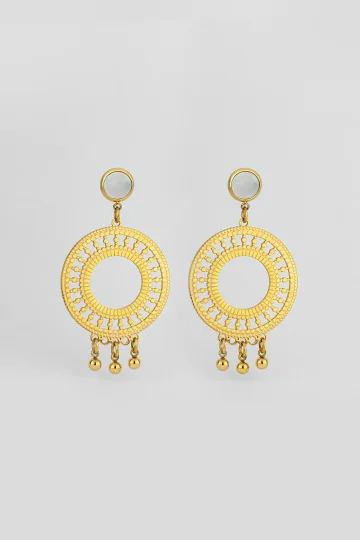
Royal portraits of the 16th to 18th centuries are a storehouse of jewelry. In the portraits of Elizabeth I and Mary Queen of Scots you see earrings that look avant-garde today. Long earrings set with stones that sway gently on the ear, and chandelier earrings with several drops, are the favourites. Dramas show them in close-up: they pull the eye and underline status.
In the Renaissance, royal birth was advertised simply: you hung as many stones from your ears as others could not afford. Today it is aesthetics rather than a show of wealth, but the effect holds, since such earrings make a person more visible.
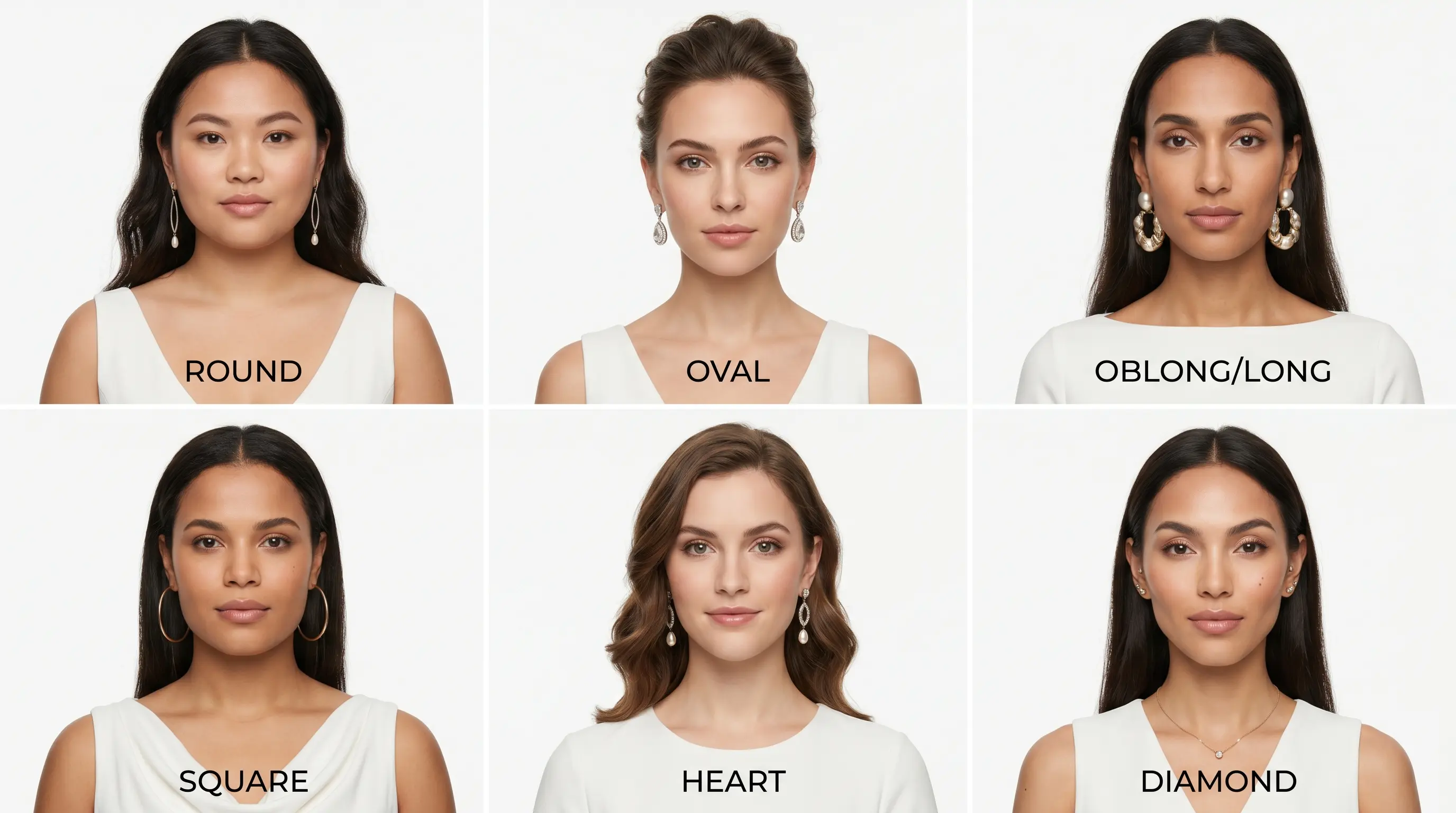
How to find: search for "drop earrings vintage," "chandelier earrings." The silhouette is what counts. Length and shape sit differently on different faces, so look into the guide on jewelry by face shape before reaching for the longest chandeliers.
18th-century necklaces as a badge of status
The 18th-century necklace was a display. Tiered constructions of stones were worn to show the wearer's power. Films about Versailles and the French Revolution flash necklaces that cover half the chest.
The modern reading does without big stones. Often it is simply a form: several layers of chain in different gauges, or a few pendants on one chain. The sense of depth and volume works even in cheap materials.
How to find: look for multi-strand necklaces in several rows. Real stones are not needed; the feeling of depth is what matters.
Brooches as portable power
Brooches in historical films are almost separate characters. A brooch pinned to a gown or cloak announced the family arms, membership of an order, the goldsmith's skill. In everyday life today they have all but vanished, yet cinema brought back the interest: a brooch with a coat of arms, a historical pattern, a stone.
How to find: search for "heraldic brooch," "antique style brooch." Usually silver or gilt. Size matters: the brooch has to be seen, three to four centimetres at least.
Jewelry of ancient Egypt on screen
Egyptian jewelry is one of the most recognisable visual codes in historical cinema. Cleopatra (1963) and the documentary series show gold collars with a rigid line, cuff bracelets, broad pectorals with birds and symbols.
Gold collars with geometric patterns
The Egyptian collar was a breastplate. It covered half the chest, was made of gold or gilded copper, and carried carved symbols: the scarab, the Eye of Horus, the uraeus serpent. On screen it looks like golden armour, which is why the Egyptian style took root in fantasy film: it expresses might with a single symbol.
How to wear it today: there is no need to copy exactly. The point is the rigid line of the collar, a gold or gilded metal, a cuff on the forearm. One or two elements build the look against the contrast of modern clothing.
Cuff bracelets and rings with symbols
Egyptians wore rings on every finger. Curiously, the film version of ancient Egyptian rings often looks plainer than the originals: the camera eats detail, so a complex pattern of twenty elements becomes a simple form with two or three key features on screen.
How to find: search for "Egyptian cuff bracelet," "scarab ring." Avoid the very cheap versions that look like plastic. Even gilded copper works better.
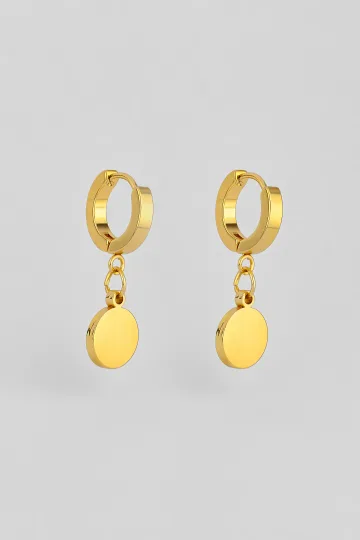
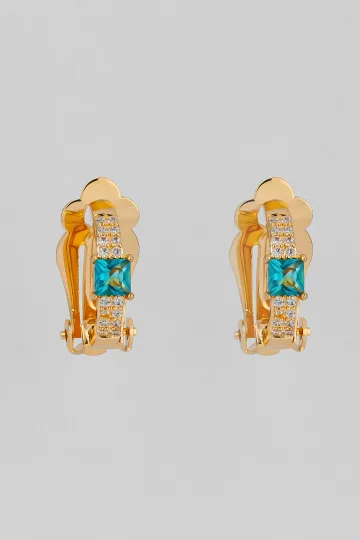
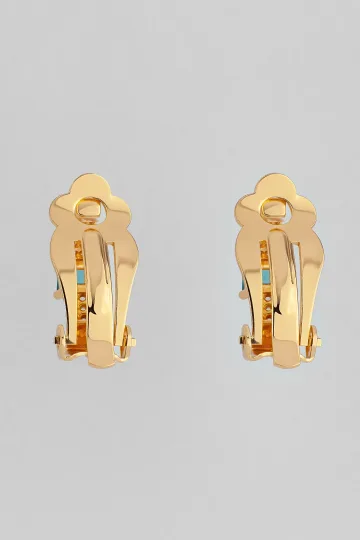
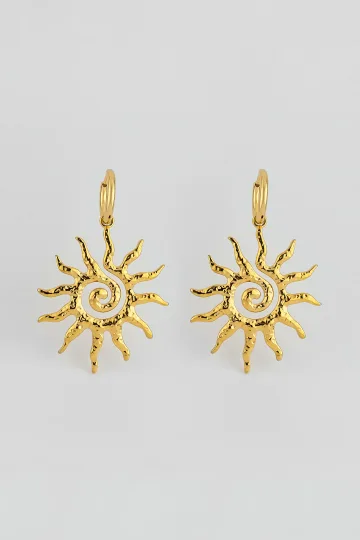
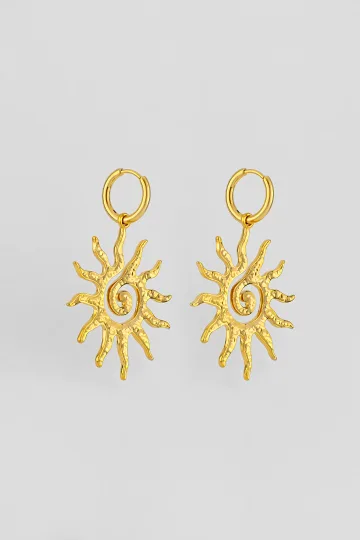
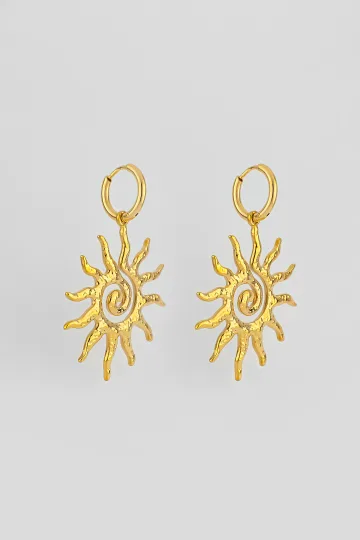
Wear the symbol, don't just read about it. These are in stock:
How cinema simplifies history
When film gained sound in the late 1920s, costume designers began copying jewelry from museums. Not literally, but its spirit and its effect on camera. In silent film the jewelry was huge and plain: the viewer saw it from a distance. Once sound arrived the camera moved close to the face, the pieces could shrink, and they gained detail instead.
There is a paradox: the Hollywood vision of history often looks more historical than reality. A real 16th-century queen wore a mountain of jewelry in clashing styles, often mixing things that did not match. The queen on screen wears pieces that add up to a single image. Copy a piece from a film and you copy not history but a reading of it, one that still rests on history.
Famous pieces from the movies
Some pieces become so famous they get names of their own.
The "Heart of the Ocean" from Titanic (1997)
A large blue heart-shaped stone ringed with diamonds on a fine chain. The piece is invented whole: no real object with that name and story ever existed. Yet it works as a symbol of love and sacrifice, and copies are still sought out. The blue stone in the copies may be glass, crystal or sapphire, and the price runs from a couple of cinema tickets to a decent family dinner.
Daenerys's bracelet from Game of Thrones (2011-2019)
A wide metal cuff with a relief of dragons. A blend of fantasy and history that reads on screen as power and danger. The cuff is good in its own right: a wide rigid band looks modern and historical at once. Search for "dragon cuff bracelet," usually silver-plated or gilded copper; the key is that the cuff stays rigid, not flexible.
Pendants from fantasy series
The Witcher, House of the Dragon and The Rings of Power show jewelry that looks ancient and mystical. The symbol is the heart of it: an amulet, a pendant, a seal. A person looks at the piece and reads that it is beautiful and that it means something. Search for "fantasy pendant," "witcher pendant." Etsy is full of makers, with a price on a par with a couple of restaurant outings.
Customer reviews
Zevira is a real jewellery shop. Genuine payments, deliveries and customer thank-yous.
🥰🥰🥰 gracias
Ok, ¡gracias! 🙂
The Victorian and Edwardian eras on screen
The Crown, Victoria and Downton Abbey showed jewelry of the late 19th and early 20th centuries: tiaras, mourning pieces, long ropes of pearls.
Mourning jewelry
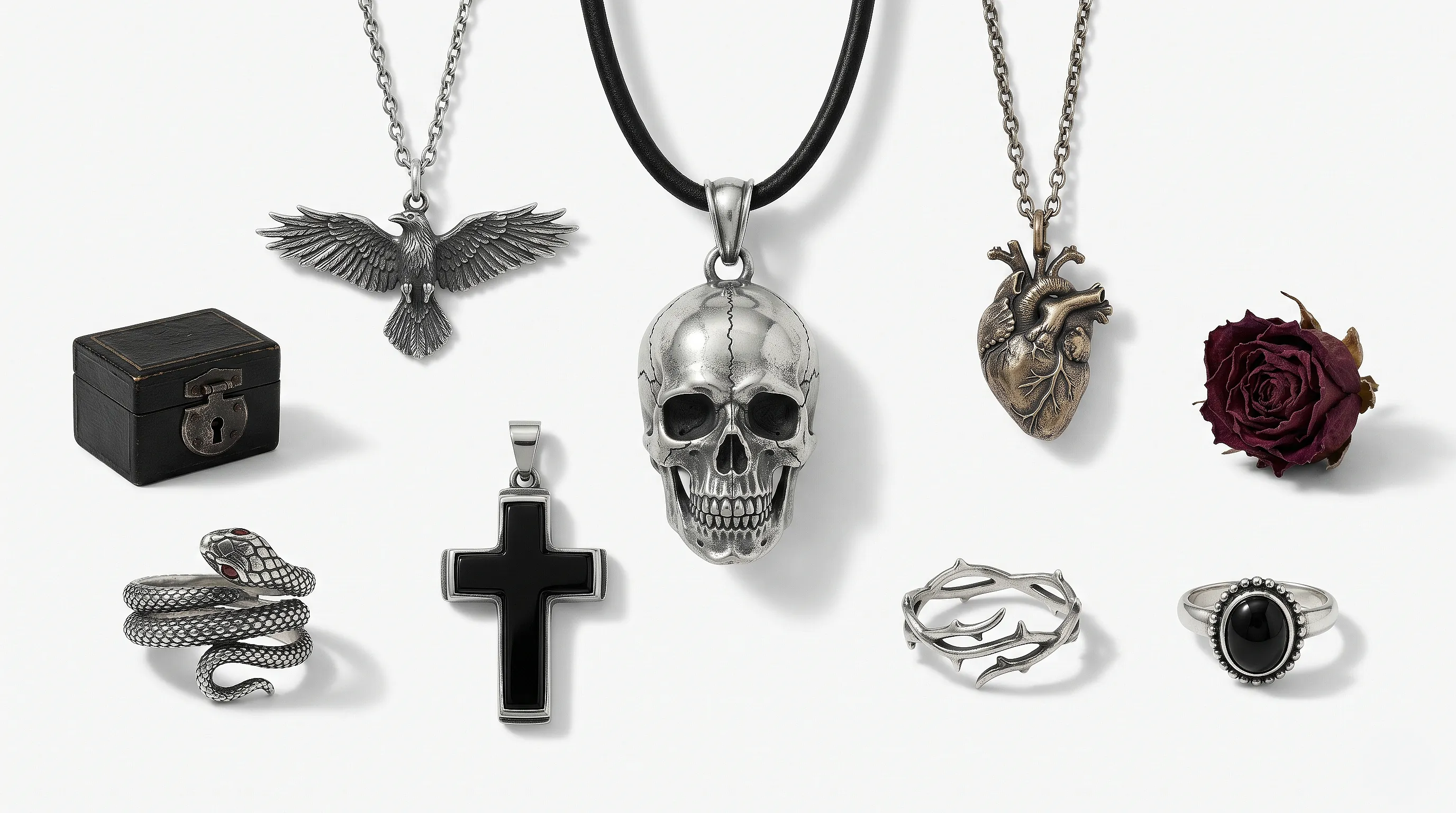
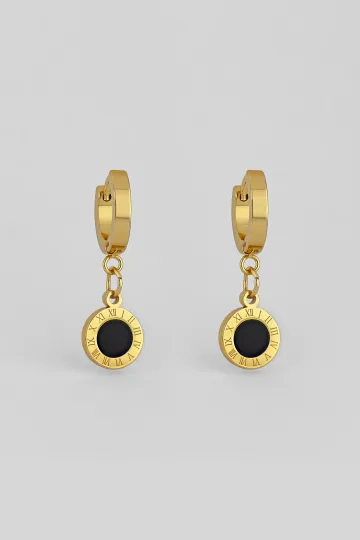
The Victorian age loved mourning. Mourning jewelry was made of black onyx, jet, black pearl, sometimes from the hair of the dead. On screen it looks sombre but beautiful: a black brooch as a sign that says do not trifle with me.
How to wear it today: real mourning is not required, but the aesthetic of black pieces with a historical pattern is current. Black onyx and silver with black enamel look modern and historical at once.
Tiaras
The Crown put tiaras back in fashion. On screen every scene with a tiara is a scene of power: the queen puts on the tiara and becomes a queen, takes it off and becomes a person. People copy tiaras above all for weddings. Amazon and Etsy are full of bridal tiaras in a historical style; the thing is to avoid plastic, since even silver-plated copper looks nobler. A worthy copy most often costs about as much as a few good dinners for two.
Pearls from Downton Abbey
Downton Abbey showed the Edwardian age, the bridge from the Victorian style to art deco. Its great find was long ropes of pearls. They are universal: they suit both a 1920s dress and a contemporary minimalism. Search for "pearl strand necklace vintage," "art deco necklace." Even glass pearls work if the line is good; length is what counts, the rope should fall or coil in several layers.
Chains from The Tudors
The Tudors (2007-2010) showed jewelry so beautifully that the whole internet copied it. Chains are its heart. Long gold chains worn by king and queen over the gown: the longer the chain and the more gold, the higher the rank. The link is ordinary, curb or anchor, but thick, with a medallion or a cross at the end.
How to find: search for "Tudor gold chain," "Renaissance chain pendant." Silver or gilded copper, three to five millimetres thick, no thinner, with a medallion or cross at the end.

Turn on your camera, pick earrings, a pendant or a ring, and see the piece on yourself in real time.
Switch items in one tap.
Everything runs in your browser: no photo or video is ever uploaded.
Authenticity: history or invention
The main question people ask is whether a piece from a film is genuine or made up. There is no single answer, but there are signposts.
Some films use real jewelry from museum collections or exact copies. When Elizabeth: The Golden Age was filmed, the team drew on jewelry of the Elizabethan period. In such cases the object is genuine. You can check through material about the film: museum sites sometimes record which pieces appeared on screen.
More often the director takes creative licence: a historical piece is dull on camera or does not fit the idea. Then a jeweler makes something that looks historical but never existed. The "Heart of the Ocean" is invented yet inspired by real jewelry of the past. There is nothing wrong with that: the piece is authentic in look, invented in substance.
A few rules to tell one from the other:
- If the piece is described in material about the film as historical, look for confirmation in museum sources.
- If it looks too perfect and new, it is probably invented. History is rarely so flawless.
- If the pattern is complex, almost surreal, it is a creative choice.
- If the piece is very plain, it may well be historical. History is often simpler than film.
Documentaries more often show genuine objects because there is no directorial scheme. If you want a guaranteed historical piece, watch documentaries. If you want something beautiful and inspired by history, watch the dramas.
Real thefts that became legends and film plots
The most cinematic stories about jewelry were not invented by screenwriters. History handed them over: daring thefts of crowns and legendary stones, chased for centuries. Here are four without which half the heist films would not exist.
Colonel Blood and the Crown of England, 1671. The Irish adventurer Thomas Blood wormed his way into the trust of the keeper of the Tower jewels, disguised as a clergyman. In May 1671 he knocked the 77-year-old keeper down with a wooden mallet and flattened the imperial crown of Charles II with that same mallet to hide it under his cassock. His accomplice meanwhile was stuffing the orb down his breeches. The runaways were caught at the gates. Then comes the part no screenwriter would credit: Charles II did not execute Blood but spoke with him in person, pardoned him and granted him land in Ireland. Historians still argue over the reason for the mercy.
The French crown and the diamond that became the "Heart of the Ocean," 1792. In September 1792, while revolutionary Paris boiled over, thieves climbed through the colonnade into the Garde-Meuble, the royal store on what is now the Place de la Concorde, on five nights running. They carried off almost everything: the Regent, the Sancy, the Golden Fleece and the huge blue "French Blue" of the crown. The Regent was found a year later hidden in a beam in a Paris attic: the stone was too famous to sell. The blue diamond vanished, was recut and surfaced in London as the Hope Diamond. That they were one and the same stone was only proved conclusively in 2005. It was the Hope Diamond that inspired the "Heart of the Ocean" in Titanic.
The Irish regalia, gone for ever, 1907. Four days before the visit of King Edward VII, the regalia of the Order of St Patrick disappeared from a safe in Dublin Castle. The castle was not broken into: the thief opened the safe with a key, which means it was an inside job. The diamond star with a shamrock of emeralds and a ruby cross, the diamond badge and five ceremonial collars vanished without a trace. The chief suspect was thought to be Francis Shackleton, brother of the famous polar explorer, but the case was quietly closed. The regalia have never been found, the largest unsolved theft in Irish history.
The Dresden "Green Vault," 2019. Proof that the age of great thefts is not over. On 25 November 2019 thieves set fire to a distribution box by a bridge, cutting power to the alarm and the streetlights, broke into the Dresden museum and smashed the cases with a hatchet. They carried off 18th-century Saxon jewels: sets set with thousands of diamonds, valued at around 113 million euros. The culprits, from a Berlin clan, were convicted in 2023, most of the jewelry was returned in 2022 after talks with the defence, but several pieces, including a large white "Saxon" diamond, are still listed as missing.
These stories explain why cinema loves jewelry so much: a real crown carries power, money and risk all at once. The replica on your neck is not worth that drama, but it gestures towards it.
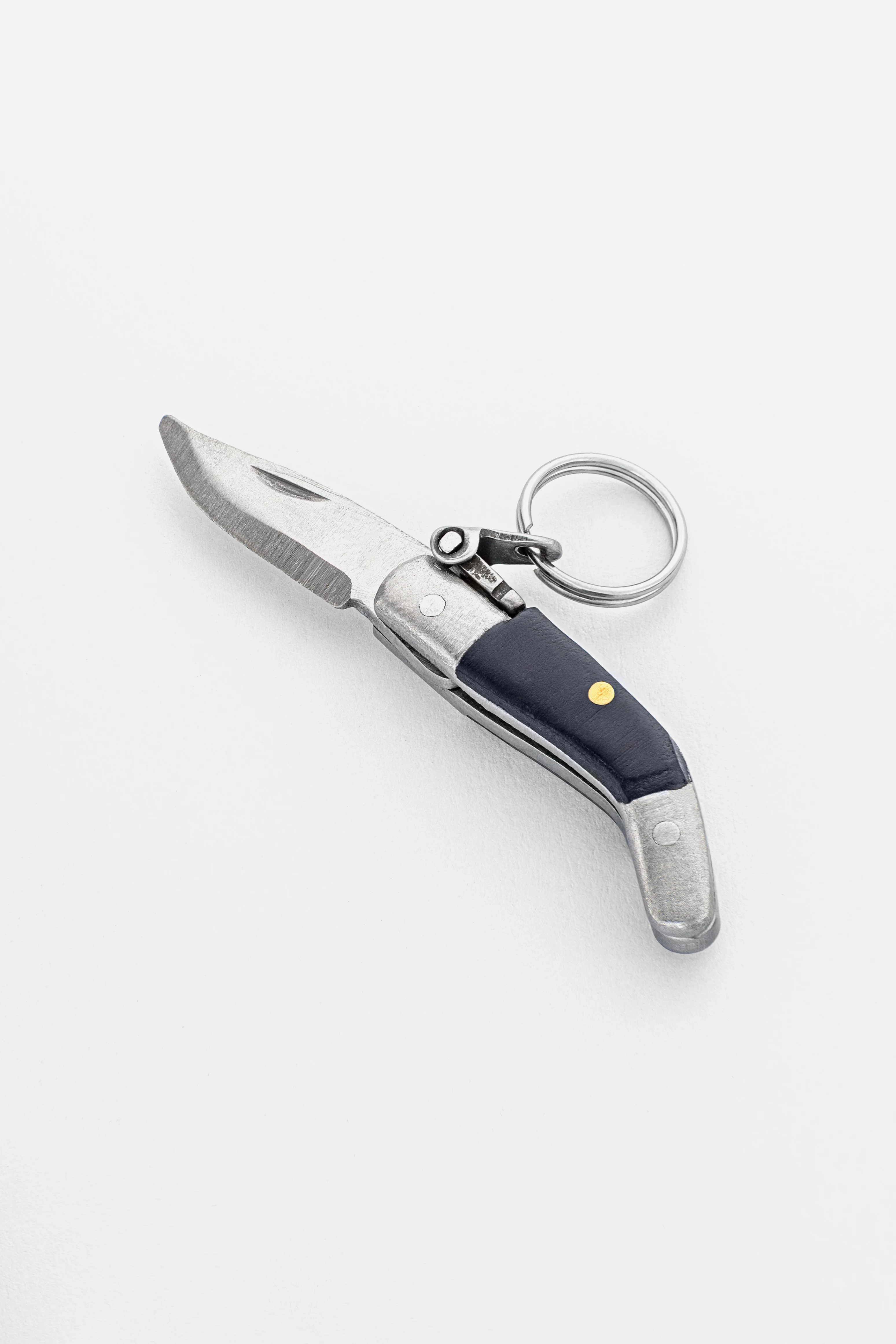
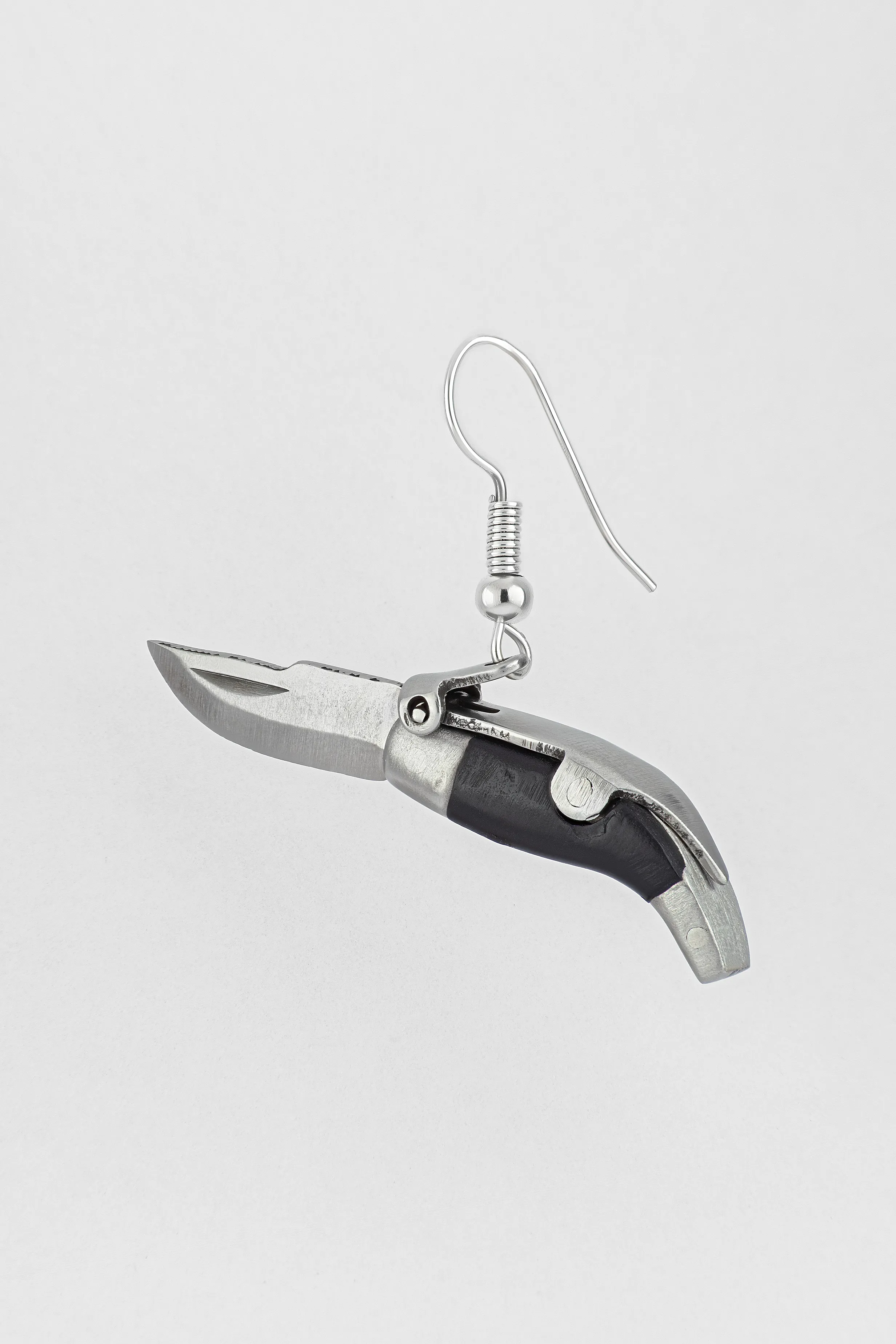
Artisan-crafted CAPAORA navaja pendant
A 40 mm stainless-steel navaja with a real folding mechanism and Palanquilla lock. An affordable gift to remember.
A code for blog readers:
10% off your first order
Authentic · Maker's guarantee · Ships from Spain
How to find and choose jewelry from a film
The search is like a quest: you need to know where to go and what to check.
First work out what exactly you liked. More often it is not the piece itself but what it does in the shot: the queen in the ring looks commanding, the pendant reads as protection. Once you know what grabs you, the search gets easier: look for power and you will find a signet, look for meaning and you will find a charm pendant.
Find the name, or take a screenshot of the best frame with the piece, ideally a close-up. Upload it to a reverse image search: often the same or similar versions turn up. If nothing comes up, the piece is rare or invented, so search by type instead: "signet ring," "medieval pendant."
On Etsy, type the name of the piece or the film and compare what the makers offer. Always check the seller's reviews, photos of finished work on real people, the material description and the delivery time. Do not rush to buy from the first seller. The same logic applies as with jewelry for video calls: the camera kills small detail and dull metal, and a bold form with a readable silhouette is what saves the day.
Check the material. Choose silver (925 or 950), gilded copper, bronze or copper for a historical look. Avoid plastic and cheap alloys that trigger allergies.
Materials: what survives real wear
A historical look and durability rarely coincide, and most post-purchase disappointment starts there. Let us unpack what the words in a product description really mean.
Gilded copper and brass. The commonest material among copy makers. It looks like gold, but the coating is thin: on a signet or a cuff, where friction never stops, the gilding wears off in months and the reddish base shows through. Ask the seller about the thickness of the plating: a household flash coat is a fraction of a micron, while vermeil by the standard is 925 silver with gold no thinner than 2.5 microns and holds for years. For a ring or bracelet take vermeil or solid metal; for earrings or a pendant that rub against nothing, ordinary gilding is enough.
Pure copper and bronze. They give the most honest historical colour and patina, but they oxidise: sweat and creams darken the metal and leave a greenish trace on the skin. This is neither harm nor a fault, just copper reacting with the acids of the skin, and the trace washes off. Still, a bare copper ring or cuff is uncomfortable in the heat. Lacquered copper leaves no trace but loses the living patina.
Sterling silver 925. The best compromise for historical pieces: it does not stain the skin, it darkens predictably, and that darkness in the hollows of an engraved signet or a cuff pattern is exactly what people prize, since it adds depth. It cleans up in a minute. Silver is softer than gold, so a thin chain and an openwork brooch bend over time, while a massive signet lasts for decades.
Stainless steel and surgical titanium. Zero history, a cold colour, but a choice for those with allergies and an active life: it does not darken, does not scratch, takes water. It suits a signet of strict form and looks poor where you want warm shine and patina.
Allergy. The green trace and the itch usually come not from the metal itself but from nickel in the cheap base alloy under the gilding. If your skin reacts to costume jewelry, look for the nickel-free mark or take 925 silver, solid copper or steel.
Leave your email, we'll send your discount code. No spam, unsubscribe anytime.
The code arrives by email, valid on your first order.
Size and fit: where copies let you down
A beautiful shot is no guarantee the piece will sit right. Every type of jewelry on this list has its own fit trap.
Signet ring. It is traditionally worn on the little or ring finger, and the face must lie flat without sliding to the side. A massive signet is heavy, so take it half a size tighter than an ordinary ring: on a loose finger it keeps turning face-down. A jeweler will size solid silver up or down, but a thin gilded ring loses its coating at the joint during resizing.
Cuff and bangle. A rigid cuff does not clasp; it goes on through a gap. Measure your wrist and check the inner diameter and the gap width with the seller: too narrow will not go on, too wide will slide off. A solid brass or copper cuff can be gently squeezed to the arm by hand, but a thin silver-plated one is better left alone, or the coating cracks.
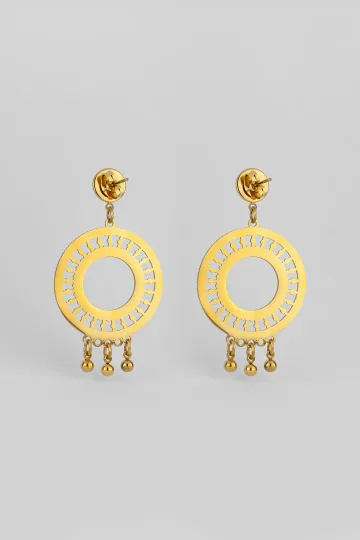
Long earrings and chandeliers. The main problem is not size but weight. A heavy tiered earring drags and over time stretches the piercing, and the lobe tires and reddens by evening. Before buying, ask the weight of the pair in grams: for everyday wear a comfortable ceiling is around four to six grams per earring, anything heavier is for a rare evening out. A hook or a French wire instead of a heavy clasp makes things easier.
Chains and necklaces. Length is measured on yourself, not by the picture. A short necklace to the collar is about 40 to 42 centimetres; for a chain with a medallion to lie on the chest over clothing in the spirit of The Tudors you want 55 to 70 centimetres. A layered look is built from chains spaced three to five centimetres apart in length, or the layers merge into one line. On a thick chain check the clasp: a light spring ring on a heavy link soon works loose, and a massive or screw clasp is more reliable.
What to wear jewelry from historical films with
The main fear is that the jewelry will turn an ordinary day into a costume party. In fact the opposite is true: a historical detail works best against a clean, modern background. The whole question is what to pick for what occasion.
Everyday look. A signet or a single pendant on a thin chain plus a white shirt, jeans, plain knitwear. One historical accent on a minimalist background looks expensive and considered, not dressy. The ideal way in for anyone just trying the style.
Office. Restraint is what works. A plain silver signet without stones, a short chain with a small medallion to the collar, thin drop earrings. Keep to one metal: either all silver or all in a warm gold tone.
Evening out. You can let go a little. Long chandelier earrings or a layered necklace on an open neckline, a dark dress, a smooth fabric that catches the light. A deep neckline suits a larger necklace; bare shoulders and a covered neck suit long earrings.
Special occasion. A wedding, an anniversary, a photo shoot. Here a tiara, a pearl rope wound several times, or a set of two echoing pieces is in place. The look is built around one lead piece, with the rest muted.
A few rules for every day. One historical piece per look, not two from different eras. Build layers on chains of different lengths, not a pile of pendants. And pick the piece to match your mood, not your costume: the brutality of a signet, the romance of pearls, the drama of long earrings.
Styles by era and how to wear them today
Each era has its own language of jewelry.
The Middle Ages. The jewelry is plain and heavy: thick rings, bracelets, necklaces. There is no delicacy, there is might. Today take massive pieces that look imposing and wear one rather than a handful of small ones.
The Renaissance. An age of symbolism: rings with coats of arms, pendants with mystical signs. Today take a piece with a meaning that matters to you, a ring with an emblem, a pendant with a sign you believe in.
Baroque and rococo (17th to 18th centuries). Glitter and complexity: stones larger, patterns more intricate. Baroque is about might and drama, rococo about tenderness. A dramatic person takes baroque, big noticeable pieces; someone closer to tenderness suits rococo, smaller in size but rich in detail.
The 19th century. An age of mourning and sentiment: pieces with symbols of grief and memory. You need not take the darkest, but the Victorian idea of symbolism is modern. Take a piece with a birthstone: that thought still works today.
How a costume designer builds an era from one piece
The viewer rarely notices the costume designer's work, yet it decides whether they believe in the era. Jewelry carries more load here than the dress: cloth flickers past, while a ring or a pendant lands in close-up, where the viewer cannot escape the detail. One slip and the scene falls apart.
Metal colour as a marker of time
A skilled costume designer plays the shade of the metal like a paint. Yellow gold reads as antiquity, power, the church; it is taken for the Middle Ages, the Renaissance, the baroque courts. Cool silver and platinum lead into the early 20th century, to art deco and Edwardian restraint. Dull darkened bronze with a patina speaks of poverty, antiquity, barbarian times. That is why in a shot of an ancient warrior you never see a mirror shine: the object is deliberately aged so it looks dug up, not bought yesterday.
Size to suit the format of the screen
The camera dictates the scale. What looks right in life is lost in a wide shot, while a close-up turns a modest pendant into a mountain. Costume designers keep in mind how a scene will be filmed: for a wide shot they take big brooches and heavy chains, for a close dialogue a thin drop earring is enough, trembling at every word the heroine says. That tremble of living metal brings the face alive better than any line.
Wear and patina as a narrator
A brand-new piece lies. If a heroine has worn a family ring for twenty years, it must show traces: worn engraving, scratches, darkening in the hollows. Props teams age objects on purpose with acids, wax, light sanding. The viewer does not read this in words but feels it: a thing with a history looks truer than one polished to perfection. The same trick works in life, a silver signet with darkened engraving looks dearer than a mirror-bright one.
Send a friend a discount code, they save on their first order.
Eras on screen: a glossary of styles
For many people, period dramas have become the only textbook on the history of jewelry. It helps to know the visual language behind each era, so you understand what exactly you are copying.
Antiquity: gold without stones
Greeks and Romans valued metalwork above the sparkle of stones. Wreaths of gold leaves, fibula clasps, heavy twisted snake bracelets, earrings with tiny amphorae. Films about antiquity convey just that: a minimum of glittering inserts, a maximum of metal texture. Today smooth golden cuffs, snake rings and earrings of plain geometric form without stones work in this spirit.
The early Middle Ages: barbarian might
The age of the great migrations and the Vikings gave jewelry that was heavy, rough, with plaited patterns and animal motifs. Twisted torcs for the neck, massive fibulae, rings of twisted wire. Cinema loves this style for its honest brutality: it is not about money but about strength. The modern reading is blackened silver, thick rings, a pendant with a knot or a rune.
The high Middle Ages: the symbol over beauty
By the height of chivalry the piece had become a sign: a coat of arms, a seal, a cross, a ring of faith. Elegance gave way to meaning. Costume designers in this era bet on the readability of the symbol in close-up, hence the love of signets and heraldic brooches. The lesson for wearing today is simple: one piece with a clear sign works harder than a scattering of small things.
The Tudors and the Renaissance: a display of wealth
Here there is a lot of jewelry and it shouts about status. Layered chains over the gown, pendants with a pearl drop, rings on every knuckle, embroidery with gems straight onto the cloth. The screen adores this excess for its drama. In life one detail is taken from this language: a long chain with a medallion or a large baroque pearl on a pendant.
Baroque and Versailles: glitter and theatre
The 17th and 18th centuries are the height of complexity. Tiered necklaces, girandole earrings with trembling drops, bows of stones. All of it was reckoned for candlelight that splinters in the facets. Films about the French court use it as a symbol of decadence and luxury before the fall. The modern heir of the style is the evening chandelier earring and the layered necklace on an open neckline, with no claim to real diamonds.
The Regency: lightness and corals
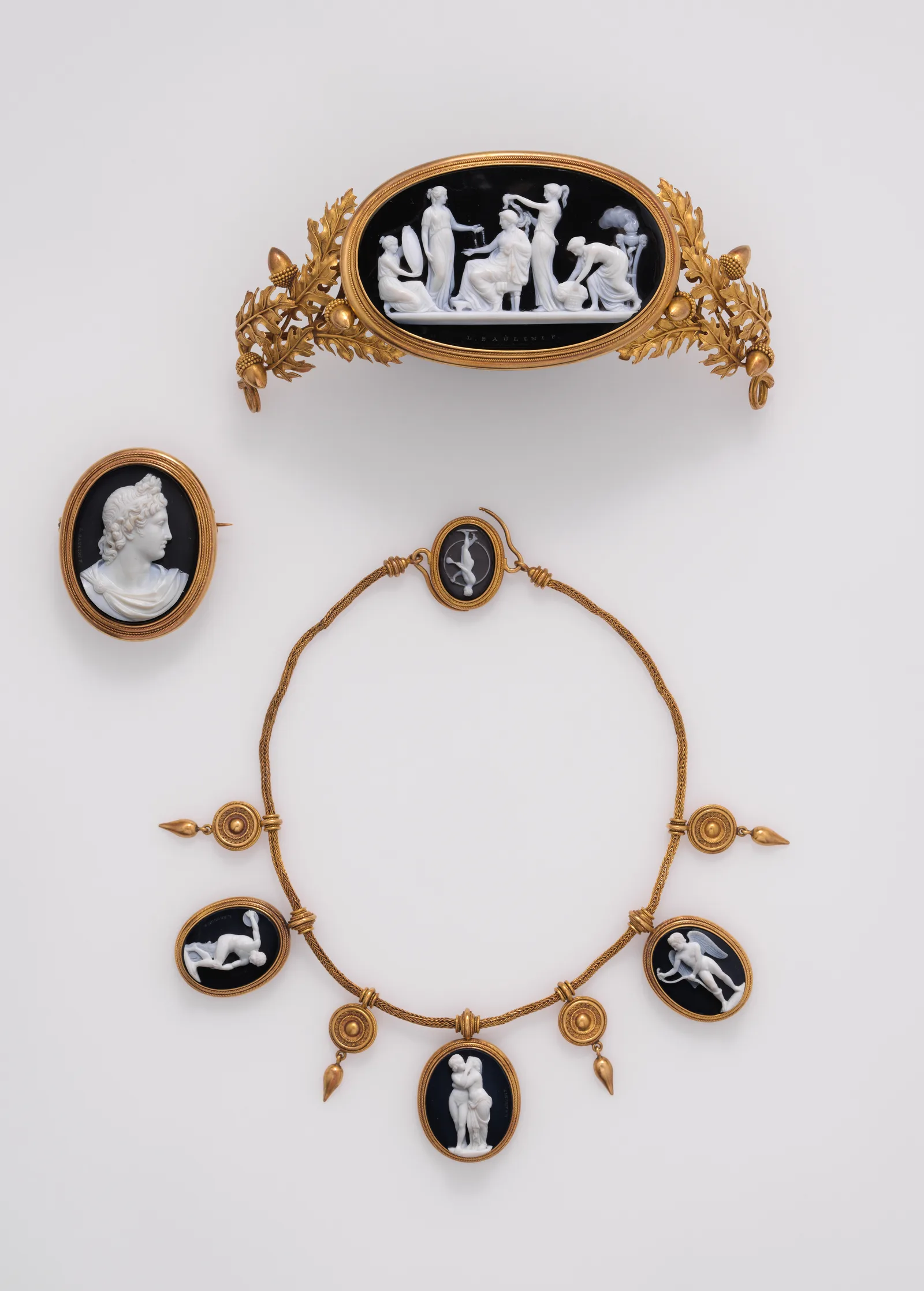
The early 19th century swung from baroque weight to lightness. Thin ropes of pearls, combs, bandeau tiaras across the brow, corals and cameos came into fashion. Period dramas about this age are known by their airiness: the jewelry is small, pale, almost girlish. In this key thin choker necklaces, modest drop earrings and a cameo brooch work today.
Victoriana: memory and mourning
A long era with its own waves of fashion, but in cinema it is above all dark and sentimental. Jet, onyx, black enamel, lockets with a lock of hair, brooches with symbols of memory. This is the language of grief and faith. The modern reading is black pieces with a historical pattern and a locket that can hold a photograph of someone dear.
Art deco: geometry and contrast
The 1920s and 1930s brought sharp lines, symmetry, the contrast of black and white, long sautoir pendants, ribbon bracelets. Films about the jazz age are recognised at once by this graphic quality. The style is surprisingly wearable now: geometric earrings, a long rope with a tassel, a bracelet of strict form sit on a modern wardrobe.
How a historical piece is recreated for filming
Behind the scenes stands a craft the viewer never suspects. Understanding this kitchen helps you look more soberly at "historical" jewelry and not pay for a myth.
The museum as a blueprint
Serious productions begin with the archive. Designers travel to museums, study portraits, order photographs of the exhibits at the right angle. From these materials they make sketches, and only then samples. The higher the budget, the closer the result to the original. But even a meticulous team corrects the form for the camera: the real object is often smaller and duller than the scene needs.
Props that weigh nothing
Heavy gold and real stones are almost never used on set: too expensive, too dangerous, too awkward for an actor who spends shift after shift in the piece. In their place go light alloys, electroplating, glass and crystal, resins with a coating. A crown that presses with the weight of power on screen turns out, in the props team's hands, as light as a toy. That is the main secret: on screen the look matters, not the material.
Doubles, copies and insurance
For a key piece several identical examples are made. One main, the rest in case of breakage, loss, stunt scenes. So "that very" ring of the hero physically exists in several copies, and sometimes differs across scenes if the viewer looks closely. The practice shows once more that screen jewelry is a working tool, not a relic.
Facts that surprise
The sapphire that became a "blue diamond"
The very blue stone that inspired the "Heart of the Ocean" was, in real history, a diamond rather than a sapphire, and it changed several cuts before it became the famous Hope stone. The filmmakers made it heart-shaped and larger than the truth for the sake of the silhouette in the shot.
The signet was not always worn letters-out
A historical signet was cut in mirror image so the impression in the wax read correctly. That is, on the ring itself the inscription looked reversed. Modern copies almost always make the engraving readable "for the eye," not for sealing, and that gives away the decorative nature of the thing at once.
Pearls on screen are more often glass
The long ropes of "pearls" in period dramas are mostly glass or wax. Real pearls of that size and in that quantity would ruin any studio, and besides they are touchy about hairspray and the sweat of the actors. The viewer believes the glass because the viewer believes the scene.
The tiara lives a double life
Many historical tiaras were designed as transformers: they could be taken apart into a brooch, a necklace or several pendants. Costume designers sometimes play on this, showing one set in different guises. In life the idea lives on in detachable pendants and convertible necklaces.
The cameo outlived every era
The carved stone with a profile travels from antiquity into the Renaissance, from there into the Regency and Victoriana, and looks at home in every drama. It is a rare piece not tied to a single century, which is why costume designers take it as a universal historical marker.
Black jewelry was a fashion, not only a sign of grief
Victorian jet was not worn by widows alone. The black shine was thought elegant in itself, and it was worn to balls. Cinema sometimes simplifies this into a sign of mourning, though in reality a black piece was often simply a beautiful choice.
Ageing costs more than polishing
The paradox of props: making a new piece look antique is sometimes harder and dearer than polishing it to a shine. Patina is applied by hand, layer by layer, and clumsy work reads at once as dirt rather than age.
Frequently asked questions
Where can I find jewelry from a particular film? The main place is Etsy: the makers there specialise in copies. Search for "jewelry from [title]" or "inspired by [title]." Always check reviews and photos of finished work on real people. Amazon has plenty of copies too, but the quality can be lower.
How historically accurate is jewelry from films? It depends on the film, the director and the budget. Big dramas bring in historians who check every detail. But a director often takes creative licence for the sake of the effect on screen. If you liked a piece on screen, it is inspired by history but need not be a copy of an original.
Can I mix jewelry from different eras? Yes, but carefully. If you mix different eras, the rest of the look should be either fully modern or fully historical. A 16th-century signet plus an 18th-century pendant plus a modern dress does not work, but a signet plus modern minimalism does.
Which piece of jewelry from historical films is worn most often? Signet rings. After them come symbol pendants and long earrings. They are easy to find, they work with modern clothing and they carry meaning.
Commission a custom piece or buy ready-made? Look for ready-made first; there is plenty in the spirit of historical films. If nothing fits perfectly, then commission to your taste. Etsy makers usually have no minimum order and can adjust a piece to you.
How do I wear a piece from a film so it looks modern, not like a costume? The main rule: one historical element in the look, the rest modern. And the piece must suit you. If you do not feel like a queen, do not put on a queen's jewelry.
How do I choose a piece "in the spirit of an era" if the film is not named? Go by the language of the era, not a particular shot. Drawn to might and the symbol, take the Middle Ages: a signet, a thick ring, a pendant with a sign. If you like glitter and drama, look towards baroque: chandelier earrings, a layered necklace. Closer to severity, choose art deco: geometry and contrast. One clear marker of an era on a clean modern background reads more precisely than a detailed costume.
Why does a screen piece look plainer in life than in the shot? The camera and the light add shine, the close-up enlarges the detail, and the edit shows the thing at its best moment. In ordinary light and at arm's length the same piece is calmer. This is not a deception, it is the difference between a scene and the everyday. So choose by silhouette and texture, not by how the object sparkled in the film.
Conclusion: jewelry as a passport into history
Historical films taught us to see in a piece not a product but a symbol and an extension of our own strength. When you put on a signet, you put on the history of power along with it. When you put on a charm pendant, the history of faith. Not because you believe in magic, but because the symbol changes how you carry and see yourself.
If a piece was in use 500 years ago and is in use again now, that is no longer fashion. It is a classic, one that grows old only if the world stops needing power, faith, meaning and beauty. And it always needs them.
About Zevira
Our catalog holds jewelry in a classic style that works with historical looks. Signet rings, charm pendants, chains of historical link. These are pieces you can wear for decades, because they do not follow fashion but set it.