The World in Tarot: Meaning, History and Jewelry by the Symbols of Arcanum XXI
You have just defended your doctoral thesis. Five years of work, three rewrites, hundreds of pages. The committee has signed off, the corridor hums with congratulations, somebody is carrying flowers. You stand in the middle of all of it and feel something you did not expect: not euphoria, but a strange calm. As if something large that had been walking beside you the whole time has finally settled into place. Finished. Closed.
Or a different moment: twenty five years of marriage. The two of you sit at the table, the children are grown, an autumn evening fills the window. There is no grand ceremony. Just this table, this light, and the knowledge that what you chose a quarter of a century ago turned out to be exactly what it was meant to become. Nothing regretted. Nothing replayed.
Or this: you have finished a large canvas you worked on for two years. The last brushstroke is down. You step back and look. That is the World in Tarot. Not a triumph with fanfares. A state of completeness, when the cycle has closed and you stand inside that wholeness.
Arcanum XXI is the final card of the Major Arcana. After it come only the Ace of Pentacles and the start of the Minor cards. The journey that began with the Fool (Arcanum 0, the careless leap into the unknown) ends here. The dancing figure in the wreath has danced a full circle. This article works through the card completely: its history, its imagery, its archetypal meaning, its cultural parallels, and the concrete symbols you can carry as jewelry.
Arcanum XXI in the structure of the deck: the last card of a long road
The Major Arcana are built like a journey. Arcanum 0, the Fool, takes the first step off the edge of a cliff without fear. Arcanum I, the Magician, finds the tools and the intention. After that come trials, choices, losses, transformations. The Wheel of Fortune turns fate around. Death carries you across the threshold. The Tower tears down what is no longer needed. The Star restores hope. The Moon leads you through the dark. The Sun gives light. Judgement calls you to wake. And at last comes Arcanum XXI, the World.
The numerology of position 21: 2+1=3, the number of synthesis and fullness. Three joins two opposite poles into a third, higher quality. The World closes the circle in which everything that was walked has come together. It is the final card, the one in which all the rest has become a single thing.
An important detail: the Fool and the World form a pair. The Fool stands outside the numbering (0), the World completes it (XXI). The Fool begins the road in innocence, not knowing where he is headed. The World finishes the road in wisdom, knowing the road was necessary. Both hold objects in their hands: the Fool carries a staff with a bundle and a white rose, the World holds two wands. Both stand on a threshold. But the Fool's threshold is an entrance, while the World's threshold is the way out into the next cycle.
Some readers prefer a spiral reading of the deck rather than a linear one. The Fool does not begin a single journey but a series of them. Each time he reaches the World, he starts again, only on a new level of awareness. That explains why the same card turns up for different people in different chapters of life. You can meet Arcanum World as a student finishing a degree and again as a retiree closing a working life, and these will be two different experiences of one and the same card.
The card also differs from the cards of the middle road in that it prescribes no action. The Magician says: act. Strength says: endure. The Hermit says: withdraw. The World says: you are here. Recognize it. This is a particular kind of message: not an instruction but an acknowledgement. The card sees you at this point and calls it by its true name.
The history of the card: from Visconti to Thoth
Visconti-Sforza: Il Mondo
The oldest surviving Tarot cards, from the mid fifteenth century and made for the Duke of Milan, already contained a World card. In the Visconti-Sforza deck it is called Il Mondo, the World. It shows a city or a castle ringed by the heavens, sometimes as a sphere, sometimes as a flat disc, held by an angel or by Christ. The card carried the meaning of a Christian cosmographia: the Lord holds creation in his hands. This is not yet a dancer. It is a theological image.
Another variant of early Italian Tarot showed a figure enthroned above the world. Dominion over a finished creation. In this imagery there is neither movement nor dance. The World as a possession rather than a state.
The Tarot of Marseille: Le Monde
In the sixteenth and seventeenth centuries the French and Italian Tarot of Marseille standardized the image. On Le Monde a central figure appears, surrounded by an oval of wreath or mandorla. The four creatures at the corners are already in place. The figure at the center is most often nude or lightly draped, floating, sometimes dancing. In some Marseille variants the figure is clearly female, in others androgynous. The wreath forms an egg shaped or almond shaped oval. This is already the direct ancestor of the Waite-Smith image.
The Marseille image matters because it freed the card from purely Christian theology. The figure at the center no longer holds the world in its hands. It has become the center itself. The mandorla surrounds it like a sacred space.
Waite-Smith of 1909: the dancing figure
The pivotal image, the one that became the standard, was created by Pamela Colman Smith on the instructions of Arthur Edward Waite in 1909. Smith, a professional artist and a member of the Hermetic Order of the Golden Dawn, drew a nude figure wound in a violet scarf, dancing at the center of a laurel wreath tied with red ribbons. In each hand the figure holds a wand. At the four corners of the card live the creatures of the tetramorph among clouds.
It is a programmatic statement that completion is movement and not a halt. The figure does not stand there as a victor. She dances. That difference is essential.
Pamela Colman Smith deserves a paragraph of her own. She drew all 78 cards of the deck across eight months of 1909. Waite received the main credit, and Smith stayed in the shadows for a long time. Her name returned to the official title of the deck only at the end of the twentieth century: it is now often called the Rider-Waite-Smith. This is recognition that her visual language became the language of modern Tarot. She is the one who drew the dancer in the wreath.
Smith was an artist of Jamaican heritage who grew up in London. She illustrated books, made stage sets, and loved folk tales and folklore. Her work for Waite is notably narrative: each card is a small story. The World card in her hands is not a coat of arms of symbols but a moment of life: a figure who right now, right here, dances in the very middle of the finished.
Crowley and Thoth: the Universe
Aleister Crowley renamed the card in his own system. In the Thoth deck it is called the Universe. The artist Lady Frieda Harris drew it as a complex geometric structure: the figure of Nuit, the principle of space and time in Crowley's system, at the center of planetary and zodiacal symbols. At the corners stand the four figures of the tetramorph. In the background sits Saturn, the planetary correspondence of the card. Crowley stressed the cosmological dimension: the World as the entire Universe, complete and continuous.
Waite-Smith iconography: every symbol in detail
The dancing figure: freedom inside completion
The central figure dances. This is the defining feature of the Waite-Smith image. One leg is crossed over the other, the body is in motion, the arms are flung wide with the wands. It is the same pose that turns up in astrological symbols of Saturn, the planet of the card, and in Egyptian imagery. But above everything else, it is movement rather than stillness.
Completion here is not rest in the sense of stopping. It is rest in the sense of freedom. When the cycle is closed and the duty done, movement turns light. There is no longer the weight of the unfinished. The dancer dances because she can.
The figure is nude. No more masks, no more roles, no more protective layers. Completion lays bare what is true. You are who you are after everything you have walked through.
The wands: a balance of the active and the receptive
In each hand the figure holds a wand or scepter. This refers back to the Magician (Arcanum I), who has a single wand pointed upward. The Magician begins the road with intention. The World finishes it in balance: two wands, one in each hand. The active and the receptive are level with each other. Will and perception, action and acceptance, the masculine and the feminine principles have become one.
The two wands also stand for the two pillars of Solomon's temple, Boaz and Jachin, between which the High Priestess sits at the start of the road (Arcanum II). The World has passed between those pillars and now holds them in her own hands.
The violet scarf: a veil that still conceals
The scarf winds around the figure, shaping a form that resembles infinity (a lying figure eight) or a curling wave. The color violet in Western symbolism is the color of mystery, of the spiritual, of passage between worlds. The scarf does not hide everything, but it does not reveal everything either. A veil between what is already known and what will open in the next cycle.
This is an important detail: even in completion there is mystery. The closing of one circle does not mean the exhaustion of all things. The next cycle will begin with the fresh innocence of the Fool. The scarf is a reminder of that.
The laurel wreath: victory and portal
A wreath of laurel leaves rings the central figure. Laurel in the ancient tradition was a plant sacred to Apollo, god of the sun, the arts and prophecy. Laurel wreaths were placed on victors: generals, poets, athletes. In the imagery of the World it forms an oval shape, a mandorla, an almond.
The mandorla (from the Italian mandorla, almond) in Christian art surrounded the figures of Christ and Mary in moments of glory: the Transfiguration, the Ascension, the Coronation. It is a sacred oval marking a presence between worlds. The wreath in Arcanum World is a portal: closed from outside, open from within. You can pass through it only by completing the cycle.
At the bottom the wreath is tied with a red ribbon. Red is the color of life, of strength, of energy. Completion here is alive, not deadening. The cycle has closed, but life goes on.
The tetramorph: four elements integrated
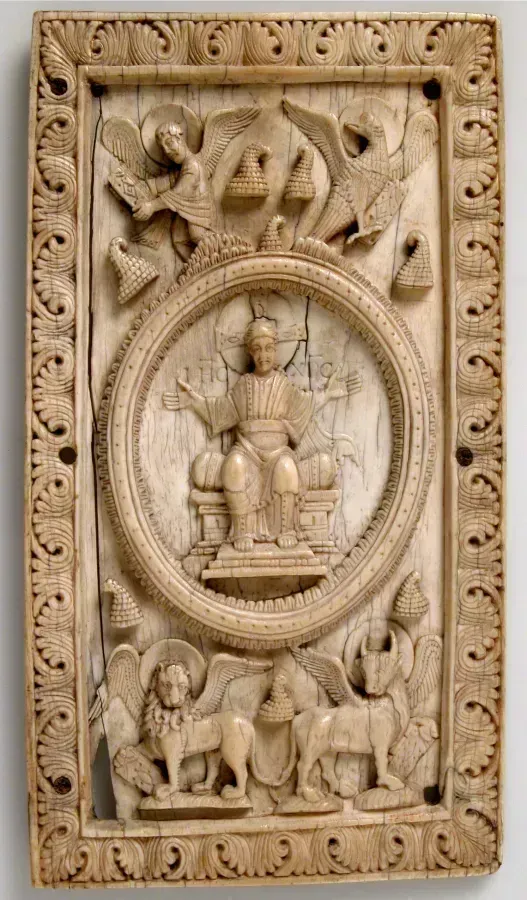
At the four corners of the card, among clouds, you can see four living creatures. This is the tetramorph: the ox (bull), the lion, the eagle, the human. They have already appeared in Arcanum X (the Wheel of Fortune), where they read scrolls at the corners of the wheel. In Arcanum World they watch over the completion.
The tetramorph is one of the most deeply rooted iconographic traditions in the Western world. Ezekiel described four living creatures at the heavenly throne (Ezekiel 1:10). In the Revelation of John they appeared again around the throne (Revelation 4:7). The church fathers tied them to the four evangelists: the ox to Luke, the lion to Mark, the eagle to John, the human to Matthew. A symbolic unity of the whole Gospel.
In an astrological reading these are the four fixed signs of the zodiac: Taurus (earth), Leo (fire), Scorpio (water, shown in old symbolism as an eagle), Aquarius (air, the human). The four elements in their stable, peak quality. To integrate the four elements means to claim every side of reality: the physical, the emotional, the mental, the spiritual. The World completes that integration.
The mandorla oval: an almond shaped window between worlds
The whole figure together with the wreath forms a vertical oval, a mandorla. This symbol exists in many cultures under many names: the yoni in India, emptiness as source in Daoism, the vesica piscis in Christian art. The overlap of two circles, the heavenly and the earthly, creates this almond shaped opening. The figure at the center stands precisely in that overlap: having finished the earthly road, she stands at the point where two worlds touch.
The archetypal meaning: what Arcanum XXI carries
The World describes a specific state, one well known to anyone who has come through something large. Not a result, not a prize, but a quality of being that arises when a cycle has been honestly completed.
Wholeness. The feeling that everything that happened has settled into its place. Achievements and losses, strokes of luck and mistakes, straight roads and turns backward. They are all part of one whole. Wholeness differs from perfection in that it includes everything lived through. The scars belong to it just as much as the victories.
Integration. The journey from the Fool to the World is the path of claiming all of one's experience. The Magician gave the tools. The Priestess opened intuition. The Lovers put a choice in front of you. Death carried you across a threshold. Each card added a layer. The World is the moment when all the layers have become one. It does not mean everything is good. It means everything is real.
Home. This word matters. The World often feels like a return home, but on a new level. Odysseus came back to Ithaca after twenty years. Physically the same place. But he was different. And home was different too, because he had returned a different man. This is not regression. It is a spiral: the same point, a different level.
Peace within. The name of the card is double. The world as a planet, as a universe. And the world as a state of inner peace, the absence of inner conflict. Arcanum XXI is both meanings at once. In English the word "world" carries the planet and the human community, while "peace" carries the inner calm, and the card works on every one of those layers.
The freedom of completion. Unfinished cycles carry weight. The World frees you from that weight. Not because everything became ideal, but because what was begun has been carried through to the end. This freedom is different from the freedom of a beginning: it is not the lightness of the Fool's innocence but the lightness of a person who has walked through everything they walked through and did not break.
The fullness of presence. The dancer in the wreath is not thinking about what was. She is not planning the next thing. She dances here and now in the fullness of what is. Arcanum World describes the state the Eastern traditions call presence: to be fully inside what exists, without splitting it into good and bad, without rushing toward the next thing.
Recognition. The World asks one action of us: to recognize what has been done. Not to tick a box, but to stop and truly see it. That is harder than it sounds. People often move from one achievement to the next without giving themselves time to feel what has just closed. Arcanum World says: wait. Look at what is here.
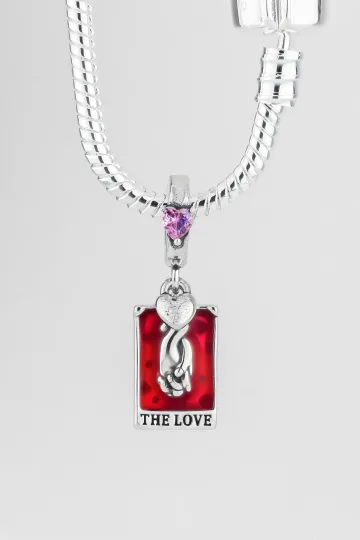
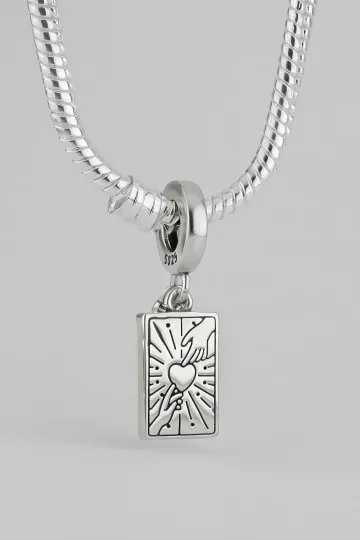
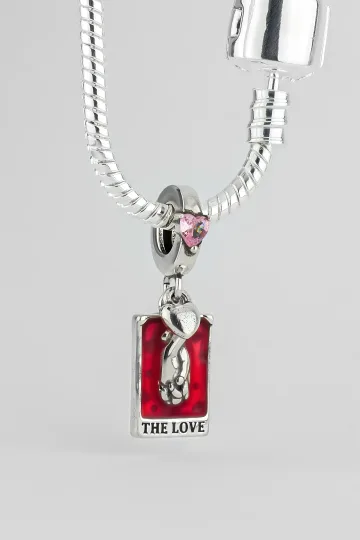
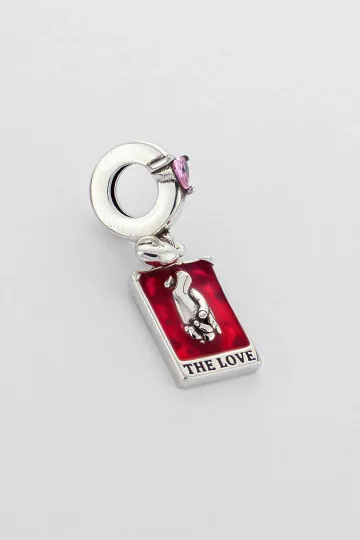
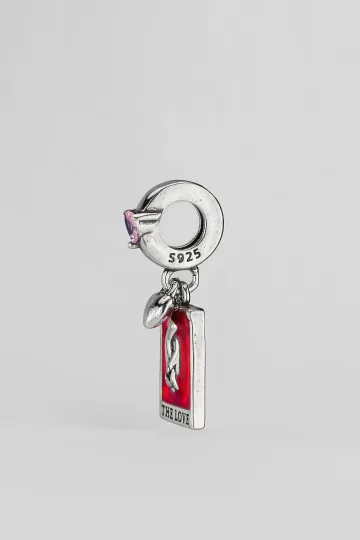
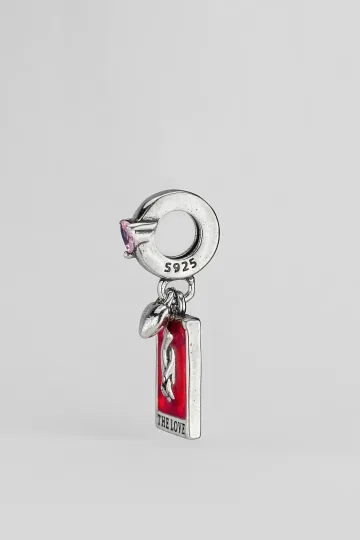
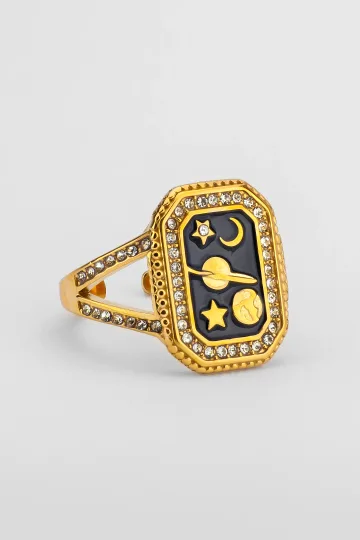
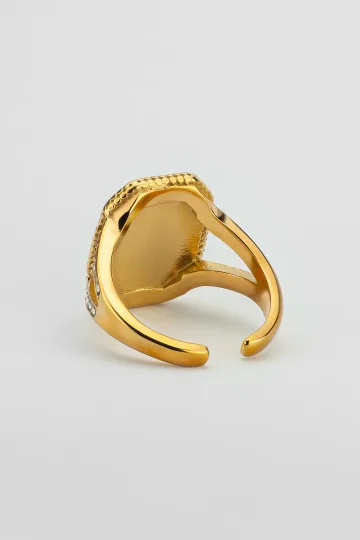
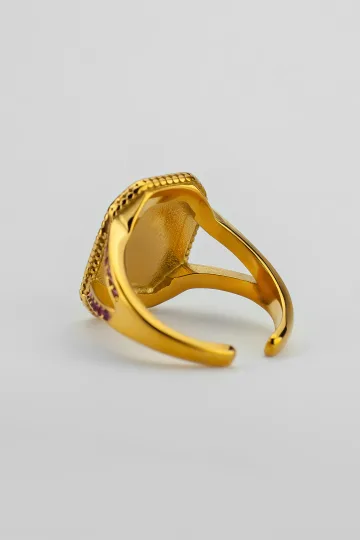
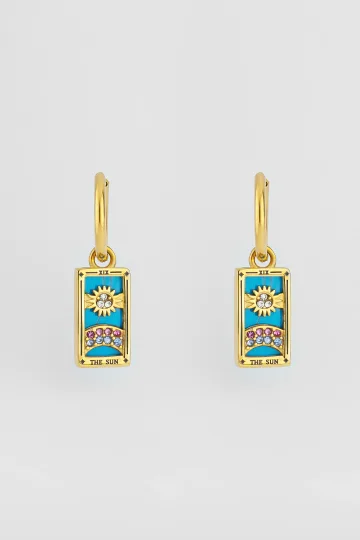
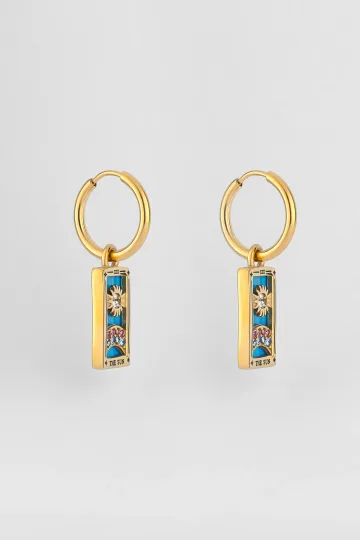
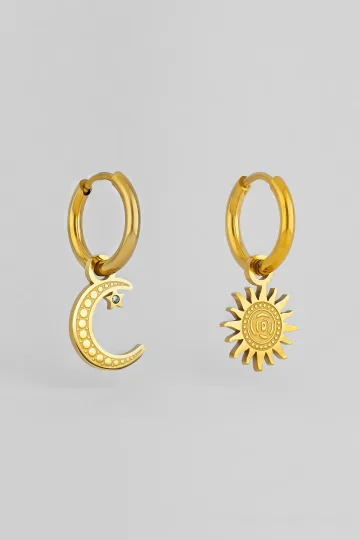
Wear the symbol, don't just read about it. These are in stock:
Upright and reversed: five scenarios for each
Upright: five faces of completion
The first scenario: the completion of a large project. The thesis defended, the book published, the company finally working. The card says: yes, this is exactly what it seems. This is a real completion and not an illusion. Accept it.
The second scenario: a journey or a move that changed you. A year abroad, a trip around the world, life in another city. An experience that started as an adventure and ended as a transformation. You came back a different person.
The third scenario: a relationship that has reached maturity. Not a new romance but a bond that came through trials and survived. A silver or golden wedding. A friendship that is twenty years old. This too is the completion of a cycle begun once in vulnerability.
The fourth scenario: the end of therapy or of a large inner process. When the work with a psychologist comes to a natural close. When the thing you started for has been done. The integration has happened.
The fifth scenario: reaching a long term goal. It does not matter whether the goal is big or small. What matters is that it was real and that it has been reached. A marathon after a year of training. A language you pursued for three years. A skill honed to mastery.
Reversed: five faces of incompleteness
The first scenario: loose ends. Something was meant to close and did not. An unclosed relationship, a project dropped halfway, a move postponed for years. The card points to one concrete unfinished cycle.
The second scenario: fear of completion. A paradox: when the finish is near, resistance shows up. The author who cannot let go of the manuscript. The couple who do not formalize a relationship even though everything is ready for it. The cycle is ending, but inner resistance holds it back.
The third scenario: the sense that something is missing. Everything is done, yet there is no feeling of completeness. An inner voice says: this is not it, not like this, not here. The card invites a question: what exactly is unfinished? What needs to be added or, on the contrary, taken away?
The fourth scenario: putting off the finish. The work is done, but the official ending is not acknowledged. It has become too comfortable to stay in process. Completion asks you to let go of what was familiar. This is the fear of an end, not of the finish itself.
The fifth scenario: disappointment in the finish. You got what you were striving for, but you did not feel what you expected. The reversed card here says: perhaps the completion is not where you thought. Or the expectation outran the reality. Or the real finish is still ahead.
Connections with other cards
The Fool and the World: the full circle of the journey
This pair is the most important relationship in the deck. The Fool leaps into the void with lightness and joy. The World dances at the point where the circle has closed. The Fool carries a white rose, the symbol of innocence and purity of intention. The World carries two wands, wisdom from both sides.
It matters that the Fool does not vanish at the finish. After the World a new cycle begins with a new Fool. This is not one life from birth to death. It is a principle: every new large cycle begins with the innocence of the Fool and ends with the wholeness of the World. The same thing happens within an academic career, within a marriage, within a creative project.
The World and the Empress: abundance at the start and abundance completed
The Empress (Arcanum III) shows a blooming garden at the peak of fertility. This is abundance in process, generosity alive and ongoing. The World is abundance that has become fullness. The Empress sits in the garden, the World dances in a wreath made from that same garden. The difference: in the Empress, life is unfolding. In the World, life has finished unfolding and knows it.
If the Empress falls beside the World in a spread, it points to an especially generous, whole period of life, when creative power and completion have lined up together.
The World and the Wheel of Fortune: stillness against cyclicity
The Wheel of Fortune (Arcanum X) also carries the tetramorph at its corners, and is also about cycles. But the Wheel turns. Fate lifts and lowers, nothing stands still. The World, unlike the Wheel, grants a moment of stillness inside the cycle. The Wheel says: you are in the current of change. The World says: in that current there is a point of rest, and you have reached it.
This pair of cards in a spread: the cycle has closed (the World), but life will keep moving (the Wheel). Take joy in this moment without trying to hold it forever.
Judgement and the World: awakening and embodiment
Judgement (Arcanum XX) comes immediately before the World. Judgement is a call: an angel sounds the trumpet, figures rise from their graves. An awakening. The chance to start with a clean slate. The World is the answer to that call. Whoever has accepted the summons of Judgement and passed through the reassessment completes the road in the wholeness of the World.
If Judgement and then the World fall in sequence in a spread, it is a very powerful sequence: the transformation is complete, its fruit has ripened.
Saturn and the element of Earth: the astrological correspondence
In Waite's system Arcanum XXI corresponds to the planet Saturn and the element Earth. This is an unusual pairing, one that runs against expectations.
Saturn in astrology is the planet of limits, discipline, time and completion. Cronus devouring his children is an image of Saturn as the god of time. Saturn sets boundaries, marks endings, demands responsibility. It is a planet people fear, because it puts down the full stop.
But Saturn is also the planet of mastery. It is precisely under the pressure of Saturn, through discipline and limitation, that real mastery comes into being. The gardener who works one piece of land for decades. The violinist who has played thousands of hours. The marriage that held and so became true. These are Saturnian fruits.
The element of Earth adds materiality and steadiness to all this. The World is not an abstract idea of completion. It is a concrete, tangible, embodied completion. A thesis defense is Earth: physical pages, a physical voice in front of the committee, a physical sheet of signatures. A golden wedding is Earth: a concrete twenty five years of a concrete life with a concrete person.
Customer reviews
Zevira is a real jewellery shop. Genuine payments, deliveries and customer thank-yous.
🥰🥰🥰 gracias
Ok, ¡gracias! 🙂
The tetramorph in detail: four beings at the throne
The four creatures of the tetramorph are an older cultural layer that Tarot inherited through medieval iconography.
The first source: Ezekiel 1. The prophet describes a vision of four living creatures, each with four faces (of a human, a lion, an ox, an eagle) and four wings. They carry the heavenly chariot throne. This is the merkabah, the mystical chariot around which a whole tradition of Jewish mysticism grew.
The second source: the Revelation of John, chapter 4. At the heavenly throne stand four living creatures, each one single: a lion, an ox, the face of a human, an eagle. They cry out without ceasing, "Holy, holy, holy." This is an image of endless presence before God, the completeness of worship.
The third source: the evangelists. The church fathers (Irenaeus, Jerome) matched the creatures to the evangelists: the human to Matthew (whose Gospel opens with a genealogy, that is, with the human nature of Christ), the lion to Mark (whose Gospel opens with the voice crying in the wilderness), the ox to Luke (whose Gospel opens with a sacrifice in the temple), the eagle to John (whose Gospel opens with the highest spiritual flight, "In the beginning was the Word"). Four Gospels as four corners of a single witness.
The fourth source: the four fixed signs of the zodiac. Taurus (the bull), Leo (the lion), Scorpio (the eagle in old symbolism, when Scorpio was shown as an eagle overcoming the scorpion), Aquarius (the human). The fixed signs are the quintessence of each element in its most stable, integrated state. Arcanum World is the card of the integration of all four elements.
The Kabbalistic path Tau: the last letter and the first seal
In Waite's Kabbalistic system Arcanum XXI corresponds to the letter Tau (ת), the final letter of the Hebrew alphabet. Tau means "sign", "mark", "seal". The original form of the letter is a cross or an X. It is a signature, a mark that fixes a completion.
The path of Tau on the Tree of Life joins the sephira Yesod (Foundation, the sphere of the Moon, the world of images and dreams) with Malkuth (Kingdom, the sphere of Earth, the embodied world). It is the last path before the lowest, material level of creation. Tau joins the world of archetypes with the world of concrete reality.
Malkuth, where the path of Tau leads, literally means "Kingdom". It is the sphere of physical embodiment, where everything becomes concrete and tangible. The path of Tau is the final step from the inner to the outer, from image to embodiment. The completion here is psychological and metaphysical at once: to let the abstract become concrete.
A Jungian reading: the Self and individuation
Carl Gustav Jung developed the idea of individuation as the central process of psychological growth. Individuation is the path toward the Self, toward an integrated personality where all parts of the psyche, the conscious and the shadow, the masculine and the feminine, the past and the present, are joined into one whole.
Arcanum World in a Jungian reading is an archetypal image of completed individuation. The mandala, one of Jung's main images of the Self, appears in the form of the wreath mandorla. The four creatures of the tetramorph correspond to the four psychological functions: thinking (the human, Aquarius), feeling (the lion, Leo), intuition (the eagle, Scorpio), sensation (the ox, Taurus). When all four functions are integrated, the personality becomes whole.
Jung described the Self as a center around which the psyche organizes itself. It is not the ego, not the "I" that thinks about itself. It is a deep organizing principle that exists as a potential from birth and unfolds through the experience of living. The dancer at the center of the mandorla is an image of the Self in action.
It matters that individuation, for Jung, is never finished once and for all. It is a process that resumes on a new level. That is exactly why the Fool begins again after the World. Psychological wholeness has been reached, but life goes on, and a new cycle will open new tasks.
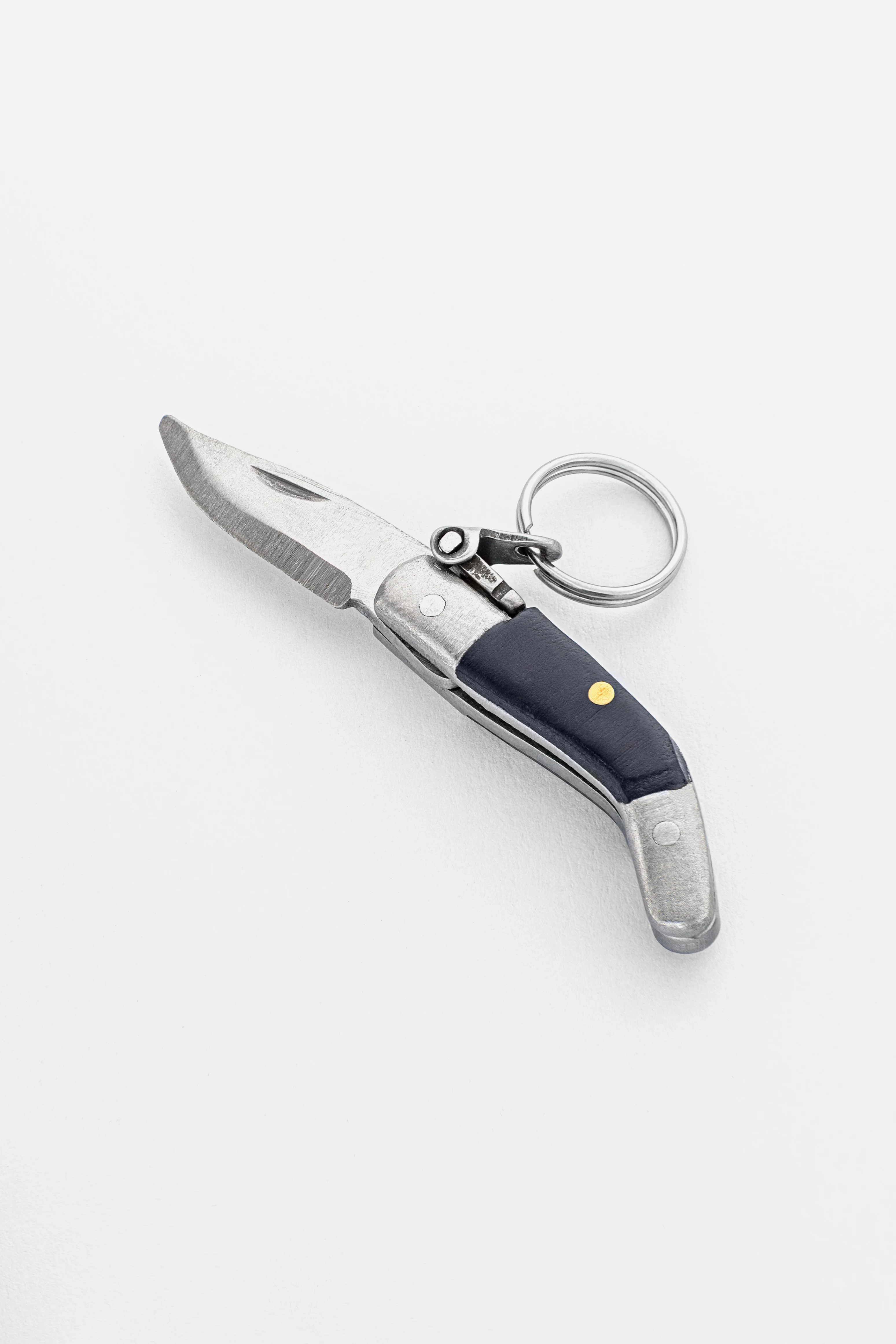
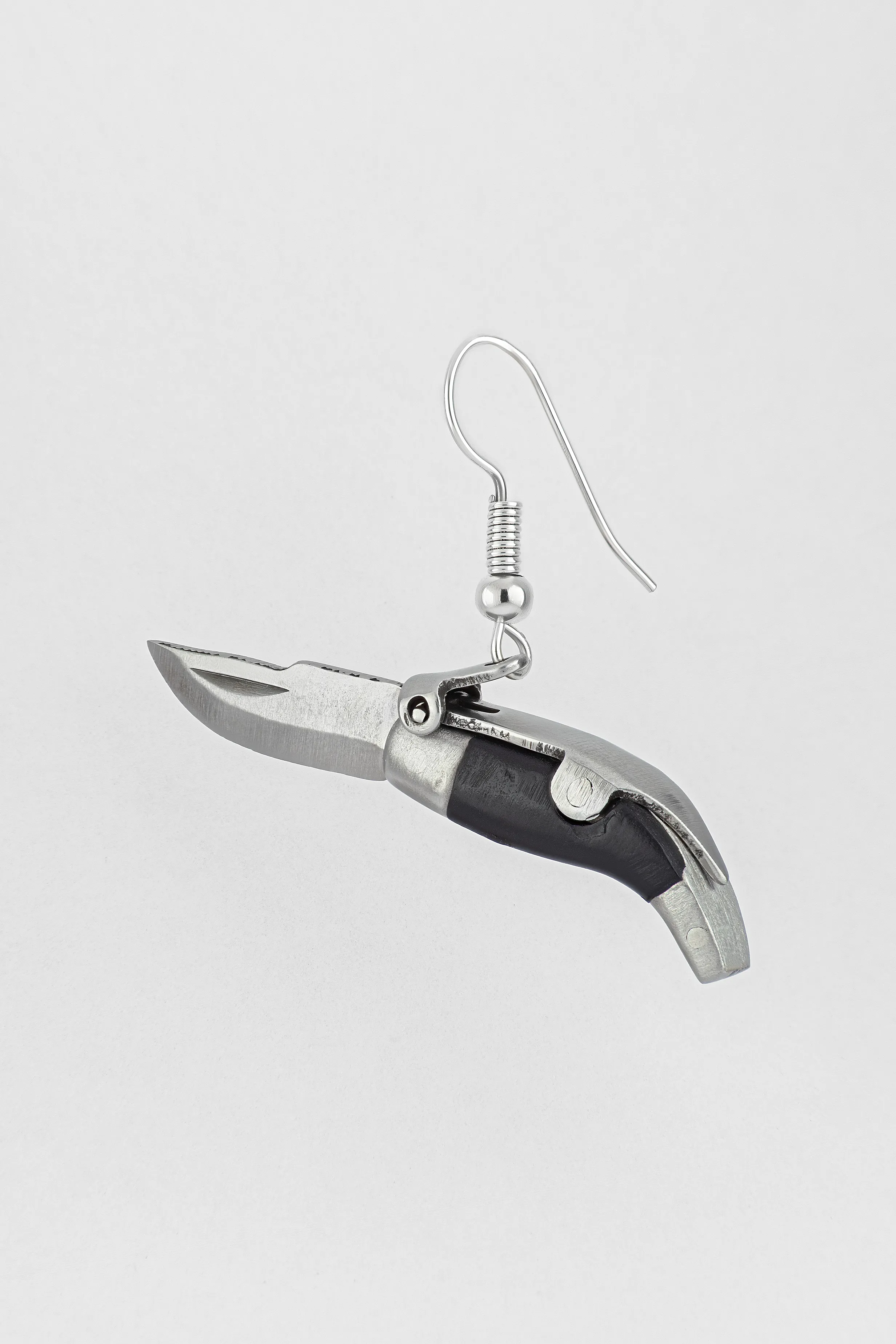
Artisan-crafted CAPAORA navaja pendant
A 40 mm stainless-steel navaja with a real folding mechanism and Palanquilla lock. An affordable gift to remember.
A code for blog readers:
10% off your first order
Authentic · Maker's guarantee · Ships from Spain
The psychology of completion: what the research says
Psychologists have studied the experience of completion for a long time. A few findings hold steady.
Daniel Kahneman described the peak-end rule: people judge a past experience not by its average content but by two points, the peak of intensity and the ending. The ending weighs out of all proportion in our memory of the whole. That is why the way an experience ends shapes how we remember and value it. A bad ending devalues the good that came before. A good ending raises the value of everything that preceded it.
Dan Gilbert, in his work on happiness, showed that what people find hardest of all is predicting how they will feel after an event. We overrate the importance of the final result and underrate adaptation. The moment of completion matters, but life continues with it or without it. From this it follows: what counts is the moment of completion itself and how you mark it. A ritual of completion creates an experience of the finish that memory will keep.
Arnold van Gennep described rites of passage in three phases: separation, liminality, reincorporation. Arcanum World is the phase of reincorporation, the return into the social world with a new status and identity. That is exactly why a thesis defense is a rite and not an exam: you enter it as one person and leave as another. A wedding is a rite of passage into a new status. An anniversary is a rite of recognition of what has been lived.
Viktor Frankl, who founded logotherapy in the concentration camps, wrote about the meaning found in suffering. His observation, that those who saw meaning in what they were going through endured better, applies to completion as well. A person able to see meaning in a finished cycle, even a hard one, comes out of it differently from someone for whom it simply "ended". Arcanum World offers that view: what has closed had meaning.
Clinical experience shows that unfinished cycles are psychologically costly. Unclosed relationships, abandoned projects, words that were never said keep consuming mental energy even when they are physically behind us. Completion frees you. This is not a metaphor but a description of a real psychological dynamic.
The Zeigarnik effect (described by the psychologist Bluma Zeigarnik in 1927): unfinished tasks are remembered better than finished ones. The brain keeps unfinished business "held open", spending working memory on it. Completion literally unloads the cognitive system. Jewelry as a ritual of closing a cycle is not sentimentality: it is conscious psychological hygiene.
Parallels in world traditions
Atman and Brahman: the individual soul equals the universe
In the Advaita Vedanta of Shankara, one of the major schools of Indian philosophy, the highest truth runs: Tat tvam asi, "Thou art that." Atman (the individual soul) and Brahman (the universal reality) are, in the deepest sense, one. Separateness is illusory. The endpoint of the spiritual road is not the destruction of the "I" but the realization that the "I" was never apart from everything.
Arcanum World carries this same meaning. The dancer at the center of the universe has, in a sense, become that universe, has understood that she was always it. The World in Tarot is the point where the subjective and the objective, the inner and the outer, stop being opposites.
The Dao of Lao Tzu: a return to simplicity
The Dao De Jing describes the way of the sage as a return to the original. Not to childish naivety, but to a primal simplicity that was always there yet became visible only after the road. Lao Tzu describes the sage as one who acts without forcing (wu wei), because he is merged with the course of things. This is not passivity. It is a state in which resistance has dissolved, because everything necessary has been understood.
The World in Tarot is the same image: a dance without compulsion, movement without effort, because the road has been walked and understood.
The return of Odysseus to Ithaca
Homer's Odyssey is twenty years of the road home. One complete cycle: the Trojan War, the wanderings, the trials, the losses, the return. Odysseus comes back to the island as a different man. He returns to himself, to his place, to his role, but he comes having passed through everything he passed through.
This is the image of Arcanum World on a narrative scale: a long road that ended in a return on a new level. Ithaca is the same, Odysseus is different. That is exactly what makes the return a true completion and not a return to the starting point unchanged.
Nirvana in Buddhism: an awakening completed
Nirvana in the Buddhist tradition is often misread as a departure into nothingness. The word literally means "extinguishing" or "blowing out", the extinguishing of craving, hatred and delusion. Not death, but release from what created suffering.
Arcanum World is close to this image: not the end of life but the end of a certain kind of striving. When you stop fighting what is and begin to move in agreement with it.
Nataraja: Shiva in the dance of the universe
In Hindu iconography Shiva in the form of Nataraja (the Lord of the Dance) dances inside a ring of fire. This dance both creates and destroys the universe. Each step of Nataraja is the birth and the death of worlds.
The iconography of Nataraja (Sanskrit for "King of the Dance") took shape in the Chola period in South India, roughly the tenth to twelfth centuries. Shiva stands on a defeated demon of ignorance, the right leg raised in the dance, the left treading on illusion. The four hands hold attributes: a drum (creation), fire (destruction), a gesture of protection (abhaya mudra), a gesture pointing to the raised leg (the sign of salvation). The ring of fire around the whole figure is the circle of the boundless universe.
The parallels with Arcanum World are obvious: a dancing figure at the center of a closed ring. But there is a real difference. Nataraja dances without ceasing. The World dances at the point of completing one concrete cycle. Nataraja is endless movement as the principle of the universe. The World is movement as the quality of a fullness that has been reached. Both are right, they describe different scales of one principle.
Samhain and other rituals of completion
Many cultures created rituals specifically for the closing of cycles. The Celtic Samhain (31 October) is the end of the old year and at the same time the start of a new one. On that day it was customary to take stock: what had been done, what had not, what needed to be let go in order to enter the new cycle.
The Japanese ritual of Osoji (the great year end cleaning) literally embodies the principle of the World: to clear the space of everything that has piled up, so the new year enters a clean place. What is not thrown out gets in the way of what comes next.
The Hindu festival of Diwali holds both sides within itself: it is the close of a dark period and an invitation to Lakshmi into a new cycle. The lights are lit precisely because the darkness has been acknowledged and now can end.
In these traditions there is something that modern life often lacks: a conscious ritual of completion. We move from one thing to the next without marking the boundary. Arcanum World reminds us: the boundary matters. The finish deserves recognition.
The World in literature and cinema
Literature: completions that became archetypes
English literature returns again and again to the homecoming as the shape of a finished story. The clearest of all is Tolkien. Bilbo Baggins in The Hobbit goes "there and back again", and the whole title turns on that round trip. After the dragon, the goblins and the Battle of Five Armies, he comes back to the Shire to a cup of tea and a favorite armchair. The Lord of the Rings ends the same way, only deeper: the hobbits return to a Shire that has been scoured and must be healed, and Frodo, who carried the heaviest burden, finds that he cannot fully come home and sails into the West. The same point on the map, a different person standing on it. That is the World in its most domestic and its most bittersweet forms at once.
Homer's Odyssey gives the older blueprint. Twenty years of war and wandering resolve into one man stepping back across his own threshold, recognized at last by his dog, his nurse and his wife. The point of the poem is not the adventures but the return, and the return is real because the one who comes back has been changed by everything between.
The story of the prodigal son works the same structure on a smaller, more intimate scale: leaving, wandering, returning, being received. The painters and poets who reworked it keep reaching for the one frozen moment of completion, the embrace at the door, when the long road finally stops.
Cinema: the finish as an image of completion
Stanley Kubrick's 2001: A Space Odyssey ends on purpose in a way that refuses easy explanation. Bowman passes through the star gate, ages, dies and is reborn as the star child. It is a radical image of Arcanum World: the completion of a cycle as the birth of a new being. The journey that began with an ape and a bone closes with something that is no longer human and is more than human.
Akira Kurosawa's Seven Samurai (1954) ends with the death of most of the defenders and the survival of the villagers. The surviving samurai stands looking at the field where the planting has already begun. The old Kambei says: "Again we have lost. The victory belongs to those peasants, not to us." It is a bitter, clear eyed completion. No triumph, no illusion, but the dignity of a road that was walked to its end.
David Lean's Lawrence of Arabia closes its great desert arc on a man in a jeep, dusty and unsure of who he has become after everything. The completion of the campaign is not a victory parade but a quiet, unresolved drive away from the thing that defined him. The cycle is finished, and the World, in its honest reading, never pretends that a finish always feels like joy.
Leave your email, we'll send your discount code. No spam, unsubscribe anytime.
The code arrives by email, valid on your first order.
Jewelry by the symbols of Arcanum World
For jewelry the World card offers an especially rich vocabulary. Each of its key symbols has its own independent history in the jeweler's tradition.
The tree of life: the fullness of integration
The forest surrounding the dancer, and the mandorla itself as a living oval, point to the symbol of the tree of life. In the Celtic tradition the tree joins three worlds: the roots in the ancestors, the trunk in the present, the crown in the future. In Kabbalah the Etz Chaim structures creation itself. In the Norse tradition Yggdrasil holds nine worlds.
A pendant with the tree of life, for a person who has completed a large cycle, is a piece about rootedness and fullness: everything that was walked has become part of the tree. The full guide to the symbol: Tree of Life: meaning, history and how to wear it.
Celestial symbolism as a cosmic whole
Arcanum World is a card about the universe as a whole. Celestial jewelry with sun, moon and stars together carries this image: not one heavenly object but the whole sky at once. A celestial set is a piece about the World, about the moment when you feel yourself part of a larger whole. More on celestial jewelry: Celestial jewelry: sun, moon, stars.
The infinity sign: the closed circle of the road
The dancer's scarf forms a shape that recalls a lying figure eight, the infinity sign. But this is not infinity as endless continuation: it is a closed circle, a cycle that finishes and begins again. A ring or pendant with the infinity symbol, for a person who has completed a large cycle, carries exactly that meaning: I have walked a full circle. More on the meaning of the symbol: The infinity symbol: meaning.
The ouroboros: completion and a new beginning
The serpent biting its own tail is the most direct image of a closed cycle in the history of jewelry. The ouroboros appears in Egyptian texts, Greek alchemy, Norse mythology (Jormungandr). It is a symbol not of death but of eternal renewal through completion. Arcanum World and the ouroboros describe the same thing: an ending that is a beginning. The history of the symbol: The ouroboros: the serpent biting its tail.
The labyrinth: a road that has been walked
The labyrinth in symbolism is not a trap but a road. The labyrinth of Chartres Cathedral is entered in order to be walked: a meditative route to the center and back. Whoever entered the labyrinth has walked a path. A labyrinth as jewelry, for a person who has completed a large cycle, says exactly that: I have walked my labyrinth. The meaning of the symbol: The labyrinth: symbol, meaning, jewelry.
The compass: a settled direction
A compass points not to a concrete goal but to an orientation. The one who has walked a long road has found an inner compass. Jewelry with a compass, for people who have completed a large journey or a large chapter of life, carries this meaning: now I know where north is. The history of the symbol: The compass rose in jewelry.
The laurel wreath: a rare and precise symbol
A wreath of laurel is a direct symbol of the card. Jewelry with a wreath is rare, but when it appears it carries exactly that meaning: victory, completion, recognition. Paired with another symbol of the World (infinity, the ouroboros), the wreath becomes the central accent.
The history of laurel in Western symbolism runs three thousand years. Apollo, god of the sun and the arts, chose laurel as his tree after the nymph Daphne turned into a laurel tree. The Greeks wove laurel wreaths for the victors of the Pythian Games, dedicated to Apollo. The Romans crowned their generals with laurel at triumphs. The word laureatus (crowned with laurel) marked the one judged best. From this comes the academic word "laureate": a Nobel laureate, a poet laureate. Literally, "crowned with laurel". When a scholar completes a large work and receives recognition, that image still lives in the language. The wreath in Arcanum World is three thousand years of academic and artistic tradition of recognizing finished work.
How to combine the symbolism of the World
For those who want to build a jewelry ensemble around the theme of Arcanum XXI, here are a few working combinations.
The ouroboros plus a celestial pendant. The ouroboros as a symbol of the closed cycle, the celestial object (moon, star, sun) as a symbol of eternity. Together they say: my cycle is complete, and it is part of something larger. This works well for people who have finished a long spiritual road or a large chapter of life.
The tree of life plus a ring with infinity. The tree as a vertical axis, infinity as a horizontal loop. Together they create the image: everything that grew (the tree) will continue (infinity). Good for family anniversaries and jubilees.
The labyrinth as a single pendant. Self sufficient and concrete. It says directly: I have walked my labyrinth. It needs no additions. An ideal gift for the completion of a long, difficult road.
The compass plus the World card. For those who want a direct reference to the Tarot theme. The compass as a practical navigation tool and the World card as the final point of the route. This is a piece that tells a story: a long journey has been completed.
Paired pieces with the same symbol. Two ouroboroses, two labyrinth pendants. For a couple who have completed a large cycle together. Matching symbols say: we walked this together.
Who suits jewelry with the symbolism of Arcanum World
The World card as a personal symbol fits specific situations. Not as a permanent emblem, but as jewelry for a moment or a period.
After a thesis defense or a large academic work. Years of work that ended in official recognition. A pendant with a labyrinth or a tree of life, for a new doctor of science, is jewelry of precise meaning.
For the anniversary of a long marriage. A silver (25 years) or golden (50 years) wedding is the completion of a large cycle begun in vulnerability. An ouroboros or a ring with infinity says exactly that.
After finishing a large creative project. A book, an album, an exhibition. Something worked on for years that went out into the world. A celestial set as the jewelry of release.
After long therapy or serious recovery. When an inner process has closed and a person has come out different. A labyrinth or a tree of life as the jewelry of integration.
After a long journey that changed a person. A trip around the world, a year in another country, a pilgrimage. A compass as the jewelry of a completed road.
For retirement after a long working life. A serious, considered gift: you have completed a great cycle of work. Infinity or an ouroboros says this without pomp.
After reaching a long term physical goal. A marathon, a climb, a swim. The body came through something large. A compass or a labyrinth as the jewelry of a person who has finished a physical journey. The body remembers the road walked, and the jewelry marks it on the outside.
For a parent whose children have grown up. When the last child finishes university or starts their own family. The cycle of active parenting is complete. This too is the World: a long road that ended well. A tree of life pendant says it more precisely than words.
A gift with World symbolism: occasions and options
Jewelry with the symbolism of Arcanum XXI suits as a gift in concrete situations.
A golden or silver wedding. Paired pieces with an ouroboros (two links of one chain) or infinity. One symbol carrying the idea of a completed cycle of love.
Graduation as the close of a large stage. A labyrinth or a compass for a young person finishing university. Not "you finished your studies" but "you walked your road".
A milestone birthday. Forty, fifty, sixty years. An anniversary understood as a completed cycle. Not "you are older" but "you have lived a whole".
Leaving a large professional role. Stepping down after many years. The retirement of a beloved teacher, mentor, leader. Jewelry as recognition of the road walked.
After recovery from a serious illness. The end of treatment. A person came through something large and made it out. A celestial set or a tree of life carries this meaning.
Styling: one strong symbol or a pair
Jewelry by the symbolism of Arcanum World works best in two modes.
The first mode: one central symbol. A pendant with an ouroboros or a labyrinth as the only piece. This symbol speaks for itself and needs no retinue. Wear it close to the heart, on a medium length chain. In this mode the jewelry reads as a personal statement, not as decoration.
The second mode: the Fool and the World pair. The Fool (0) and the World (XXI) as two pendants in one set. The beginning and the end of one road. It suits as a gift to yourself in the moment of completing a large cycle: "I began as the Fool, I finish as the World, and soon I will be the Fool again on a new journey." This pair works especially well for people who understand the structure of the Tarot: in it you can see the whole journey at once.
A third mode, for those who collect meaningful things over a lifetime: a piece that monuments a concrete completion. An ouroboros with an engraved date. A labyrinth bought on the day therapy ended. A compass given at retirement. Each piece carries a concrete date and a concrete meaning. This is not a collection of jewelry. It is a jeweler's biography.
Metal: sterling silver 925 or gold 14 to 18K. For the symbolism of completion, yellow gold works well: the color of maturity, of accumulated warmth. Silver is universal, especially for young completions (a thesis, a graduation). A matte surface adds calm. Oxidized silver with a dark patina underlines the depth of what has been lived.
Chain length: medium (45 to 50 cm) for everyday wear under or over clothing. For a pendant you want to see yourself and not necessarily show others, a little longer (55 to 60 cm). For paired pieces, an equal length creates a visual ensemble.
One ouroboros, in silver, and done. Five loops down your neck is not a closed circle, it is a yard sale.
How to wear World-card jewelry
Over the years I have chosen these pieces for very specific endings: a thesis defended, an anniversary, a graduation, a retirement. Here is what actually works, sorted by occasion.
How do I wear a pendant like this every day? For daily wear I recommend one meaningful pendant (an ouroboros, a labyrinth or a tree of life) on a medium chain, under a shirt or a chunky knit. Calm top colours (grey, sand, navy) keep the symbol in charge instead of fighting it. I suggest sticking to one length and keeping the piece close to the body, so it reads as a private mark rather than decoration.
What should I pick for an anniversary? For a silver or golden wedding I choose a paired Fool and World set or one larger symbol with an engraved date. An open neckline (square, boat) and a smooth fabric in a deep colour bring the pendant onto the skin, where it belongs on an evening like that. I recommend warm yellow gold for a mature milestone, it supports the whole idea of accumulated warmth.
It is a gift for a graduation, what do I take? For a young ending I suggest silver and a symbol of the path: a labyrinth or a compass. Silver sits more easily on a youthful occasion, and the meaning reads plainly, without pathos: this person walked their own road. An engraved date turns the gift into a personal mark of one specific day.
Gold or silver for my skin tone? For a warm undertone I recommend yellow gold, it suits mature occasions and warm colouring. For a cool undertone I suggest silver, especially matte or with a dark patina: it underlines the depth of what was lived. I do not mix metals without a reason: silver with silver, gold with gold.
One symbol, or a pair? Almost always I choose one strong pendant: it speaks for itself and needs no entourage. If you want layers, add a thin short chain with no pendant and let the symbol hang lower, on its own line. The Fool and World pair is the exception: two pendants from one set read as the beginning and the end of a single path.

Turn on your camera, pick earrings, a pendant or a ring, and see the piece on yourself in real time.
Switch items in one tap.
Everything runs in your browser: no photo or video is ever uploaded.
The World in different Tarot traditions: from Visconti to modern decks
Different decks approach Arcanum XXI in their own way, and these differences are telling.
In Aleister Crowley's Thoth deck, as already noted, the card is called the Universe. The renaming was deliberate. Crowley widened the meaning beyond a human completion: for him the card described not a personal finish but a cosmological principle. For anyone working with the symbolism of the World in jewelry, it helps to keep in mind: the "World" in classic Tarot is the universe from a human point of view. The "Universe" in Thoth is the universe in itself. Two different scales of one image.
In modern feminist decks the card is often reread as an image not of completion but of presence. The dancer has not "finished the journey" in the sense of reaching a finish line. She is present completely, without remainder. This is a subtle but important shift of emphasis: not "I have done everything I had to" but "I am fully here".
In some modern author decks, instead of a dancing figure, the card shows scenes of nature at the moment of fullness: an autumn garden with ripened fruit, dawn over a mountain, an ocean at rest. The essence is the same, the form is different. The artists search for an image that conveys that quality of finished, peaceful fullness which Arcanum XXI carries.
Visconti-Sforza presents the World as a theological system, the Tarot of Marseille as a neutral image of completion, Waite-Smith as a personal triumph in motion, Thoth as a cosmological principle. All these layers exist at the same time, and a good piece of jewelry with the symbolism of the World can carry them all.
The World as a single card and in pairs
When the World card comes up as a single card to the question "where am I now", it is a rare and precious moment. The card says: you are at the point of completion. Not in process, not at the start, not in the middle. At the point where something large has come together. This is not a reason to relax forever. It is a reason to stop, to recognize and to feel.
If the World comes up to the question "what should I do", the answer is unexpected: do not rush to start the next thing. First let this one truly finish. Recognize what has been done. Give yourself time to feel the wholeness before leaping into the next adventure. The Fool will come on his own when the time is right.
If the World comes up to the question "what will help", it says: look for completion in the unfinished. There is something in your life that needs closing, recognizing, a final step. Find it and do it.
As the summary card of a yearly spread, the World says: this will be a year of completion rather than beginning. Or: by the end of the year you will be standing at the point where something large closes. This is a good sign for those who have worked hard on something long.
Materials for jewelry by the theme of Arcanum World
The symbolism of completion embodies well in concrete materials.
Sterling silver 925. A universal metal for symbolic jewelry. It holds detail well: engraving, relief ornament, the fine form of an ouroboros or a branch of the tree of life. For jewelry tied to the completion of an academic or professional cycle, silver works precisely. Matte silver adds dignity without shine. Polished silver speaks of the new beginning that follows a completion.
Gold 14 to 18K. Yellow gold is especially good for anniversaries and jubilees. It is a metal of warmth, durability, maturity. A pair of silver and gold in one piece speaks of the two sides of the World: the completion of the past (silver, the moon) and the opening of the future (gold, the sun).
Stones. For the symbolism of Arcanum World, stones that carry meanings of completion and integration suit well.
Lapis lazuli. Deep blue with golden sparks of pyrite. The stone of the sky and of eternity. In Mesopotamia lapis was the material of gods and kings. A pendant with an ouroboros in lapis speaks of the cosmic scale of the completed.
Onyx. Black, opaque. A stone that finishes things. In old European symbolism of the nineteenth century onyx was associated with mourning and memory. For jewelry on the theme of the World this is not a gloomy choice: it is a choice of memory for the road walked.
Amethyst. Violet, the color of the dancer's scarf. In the European tradition the stone of wisdom and spiritual passage. A pendant with a labyrinth or a tree of life paired with amethyst creates the image of a completed spiritual road.
Mother of pearl. White, glowing from within. A material that is born from a mollusk over long years. Each pearl is literally a completed long process. A bracelet with mother of pearl accents, for a person who has completed a large cycle, carries this biological meaning: time and patience create beauty.
Engraving. For jewelry on the theme of Arcanum World, engraving is especially fitting. The date of completion. A name. A single word. A symbol. Engraving turns a piece into a personal document of the moment. An ouroboros with the engraved date of a thesis defense becomes a jeweler's diary of one concrete day.
The path of Arcanum XXI through the Tarot series
Zevira has built a series of articles on all the Major Arcana. The World closes this series, just as it closes the deck itself. A few neighboring cards matter for understanding the World:
The Fool in Tarot: meaning, history and jewelry opens the road. The World closes it. To read them side by side is to see the full arc.
Judgement: Arcanum XX comes immediately before the World. Judgement awakens, the World integrates the awakened.
The Star: Arcanum XVII brings hope after the destruction of the Tower. The World often appears together with the Star as a sign of a graceful completion.
The Wheel of Fortune: Arcanum X is the middle of the road, a reminder of cyclicity. The World at the end of the road shows that a cycle can be walked all the way through.
The full guide to jewelry with Tarot symbolism: Tarot jewelry: the meaning of the cards.
Send a friend a discount code, they save on their first order.
Arcanum World in different areas of life
In work and profession
The World card in a professional context is a confirmation: what you are doing leads to wholeness. Not to success in the sense of money or rank, but to the sense that your professional life is coming together into something whole and meaningful.
For a person who has spent a lifetime on one craft and is nearing the close of that period, the card resonates especially. The teacher who spent thirty years in the classroom. The doctor who worked decades in one specialty. The craftsman whose workshop became a byword for quality. This is the Saturnian path: through limitation and discipline to mastery.
For a young specialist who has finished a large project, the World says something else: you have walked your first full cycle. Now you know what a completion looks like. That knowledge is valuable in itself.
In relationships
The World in a love context is not the passion of a beginning, nor the heat of a crisis. It is the warmth of a mature relationship in which two people came through trials and stayed together, not because they fear leaving but because they want to be exactly here.
A silver wedding (25 years) and a golden wedding (50 years) are the World card in jewelry form. A piece on such a day says what is hard to put into words: we walked a full circle and became what we were meant to become.
A friendship that is twenty or thirty years old also carries the World. People who have known each other longer than they remember being adults. They saw each other in different phases, in the hard years and the easy ones, and they stayed. This is a completeness of its own kind.
In creative work
For a creative person the World card appears at the moment when a work labored over for a long time goes out into the world. The novel is printed. The album is out. The exhibition has opened. The painting is sold. The film is finished.
It is a strange moment. The work is no longer yours. It exists on its own, without you. This can bring a mix of relief and loss. Arcanum World says: let go. This is good. This is exactly what you made it for. The next thing is already waiting.
A piece of jewelry in this moment can be an anchor: a reminder that the completion happened, even when the doubts come back.
The inner road
For those who practice psychotherapy, meditation or some other inner work, Arcanum World appears in moments of real integration. Not when everything is solved or everything is understood. But when something important has settled into place. When a piece of the puzzle that had long failed to find its spot suddenly fits.
It can be the moment when you understand something about your childhood that explains a great deal. Or when forgiveness becomes real rather than a declaration. Or when you stop waiting for a certain person to come back. Arcanum World describes this quality: not as an achievement but as a state.
Combinations of the World card in a spread
Beside other cards in a spread, the World shifts its emphasis.
The Fool plus the World. The full circle of the journey. One cycle complete, the next beginning. A moment of passage.
Judgement plus the World. A transformation (Judgement) led to wholeness (the World). The awakening bore fruit. A very strong sequence.
The World plus the Star. A completion filled with hope and lightness. A cycle that ended in grace, not in effort.
The Wheel of Fortune plus the World. The cycle has closed, but remember: the wheel keeps turning. Enjoy the moment without clinging to it.
Death plus the World. A transformation (Death) led to wholeness (the World). What had to die has died. What was born from it is now complete.
FAQ
Is the World the "best" card in Tarot?
There is no single best card. Arcanum World describes a concrete state of completion and wholeness. It is a valuable state, but not the only important one. The Fool with his openness, Strength with her endurance, the Star with her hope, each card is valuable in its own context.
Is this the end? What comes after Arcanum World?
After Arcanum World the Fool begins again. This is not the end of everything. It is the end of one cycle and the start of the next. A person who finished a thesis begins a new research cycle. A couple who celebrated a golden wedding go on living. Completion is a portal, not a wall.
How do I tell Arcanum World apart from the Wheel of Fortune?
Both carry the tetramorph at the corners, and both relate to cycles. But the Wheel turns: it is the movement of fate, the rises and falls. The World is still at its center: the dancer dances, but the wreath does not turn. The Wheel is you in the current of change. The World is the moment when you stand at the center of your road.
The World and retirement: is the symbol fitting?
Retirement after a long working life is a classic situation of Arcanum World. A large cycle has closed with dignity. Jewelry with the symbolism of the World (the ouroboros, infinity, the labyrinth, the compass) is a fitting and meaningful gift: not "you have grown old" but "you have completed a great journey".
Is the figure on the World card always female?
In classic Waite-Smith iconography the figure looks female, but the reading varies across traditions. In Crowley's system it is Nuit, the principle of space, beyond gender. In some modern decks the figure is deliberately androgynous. Symbolically it is an archetype, not a biological sex. The World suits everyone.
Arcanum World on a question about love: what does it mean?
In a love spread the upright World points to a mature, whole relationship. Or to the completion of an important stage in a relationship, when two people have come through something large and grown closer. Reversed, there may be incompleteness: a relationship that has not received the form it needed.
Is the tetramorph a religious symbol?
The tetramorph has religious roots (Ezekiel, Revelation, the evangelists), but in the context of Tarot it is a symbol of the four elements and the four aspects of reality. In jewelry the four living creatures appear as a decorative motif independent of any religious interpretation.
Can you wear the symbolism of the World every day?
Yes. The ouroboros, the labyrinth, infinity, the tree of life, the compass all speak of a road walked and can be permanent symbols. It works especially well as a keepsake of a concrete completed cycle: a defense, an anniversary, a recovery. The jewelry remembers along with you.
Conclusion
Arcanum XXI is a card about how a person feels who has honestly completed something large. Not in the sense of perfectionism, not in the sense of being flawless. In the sense of fullness: it was conceived, walked, lived, completed.
The dancing figure in the wreath knows all of this with her whole body. She is not thinking about the past and not planning the future. She dances at this point of the closed circle. The wands in both hands are balanced. The elements are integrated. The road that began with the Fool's reckless leap has ended here.
It is easy to mistake this: the World does not say "now there is nothing left to do". It says "what you did has become whole". That is the difference between a stop and a completion. A stop breaks off. A completion closes. One strips away meaning, the other creates it.
Jewelry with the symbolism of Arcanum World is a way to carry that meaning with you. Not as a lucky charm. As a reminder of a concrete experience that happened, and of the principle that experience describes: large things can be completed. What was walked becomes part of you. The circle has closed. And that is good.
After the World a new Fool will come. A new innocence, a new edge, a new leap. Life does not stop at the point of completion. But it becomes different: a person who has walked a full cycle and recognized it leaps into the next journey with more wisdom. Not with less openness, but with more wisdom.
To wear the symbolism of Arcanum World is a choice to mark such a moment in your life. Or to remind yourself that large cycles exist and each of them can be lived all the way to the end.
Silver, gold, wedding rings, symbols, paired sets.
About Zevira
Zevira makes jewelry by hand in Albacete, Spain. The World is the last of the Major Arcana, and its symbolism (the tree of life, celestial sets, infinity, the labyrinth) suits anniversaries, jubilees and moments of large completions.
What you can find with us for the symbolism of the World:
- Tree of life pendants as the fullness of integration
- Celestial sets as a cosmic whole (sun, moon, stars together)
- Pendants and rings with the infinity sign
- Ouroboros rings as a symbol of the full cycle
- Labyrinth pendants for those who walked the road
- Compass pendants for the completion of a long road
- Paired Fool and World pieces as the full circle
Each piece is made by hand by a master, with the option of personal engraving. We work with sterling silver 925 and gold 14 to 18K.