Labyrinth: meaning of the symbol in jewellery, history and spiritual sense
Introduction: a circle with a single road that always leads where you need to go
Eleanor went to Chartres for the first time on a grey October morning. She had taken the train down from Paris, walked up the hill, and stood at the entrance to the Cathedral of Notre Dame de Chartres. She looked up at the huge rose window, then dropped her eyes to the stone floor of the nave. There it was. A labyrinth. Thirteen metres across, eleven concentric rings, a six petalled rose at the centre. The chairs that usually cover it had been cleared away for Friday pilgrimage. Eleanor walked the path in twenty minutes. When she stepped back out the way she came in, her head felt quiet for the first time in a long while. Later, a friend in London asked her what it had felt like. She answered in one line: "I walked through every road my life has already taken."
The labyrinth is one of the oldest geometric symbols on earth, and in 2026 it is having a second life inside jewellery. Pendants, signet rings with engraved labyrinths, earrings shaped like concentric circles are showing up in workshops from Brooklyn to Edinburgh to Sydney. There is a reason. The world has become loud and fast, and people are looking for symbols that say the road has a shape, that the movement is not meaningless, that the way to the centre will be found.
This guide covers everything you need. What the labyrinth actually means and how it differs from a maze (the puzzle with dead ends). How the myth of the Minotaur is tied to the real palace of Knossos, and why Cretan coins show the labyrinth as a clear graphic from the sixth century BC. How the labyrinth was carried into the medieval cathedrals of Europe as a substitute for pilgrimage to Jerusalem. What a Chartres labyrinth is, a Celtic one, a Roman one, a Scandinavian one. What labyrinth jewellery looks like today, what materials work best, and who the symbol suits.
If you are interested in other ancient symbols of the road and the inner search, read our guide to the compass rose, to the tree of life, and to the Celtic knot. For protective symbolism, see our guide to amulets and talismans.
What the labyrinth symbol means
A labyrinth is a winding road, laid out by geometric rules, that leads from the outer edge to the centre along one single path, without forks and without dead ends. That is the key feature. A true labyrinth has one road. You cannot get lost in it. You can only keep walking, and every turn will eventually bring you to the middle.
Core meanings
Across very different cultures the main meanings of the labyrinth overlap.
The path of life. The road you walk from birth to death, with its bends, its returns, its passages through places you thought you had already left behind. The labyrinth is a map of that road seen from above.
The path to yourself. The search for your own centre, your own spine. The outer edge stands for the world and your social roles, the centre stands for the deeper self underneath all of that.
Spiritual pilgrimage. A metaphorical journey to something sacred, to God, to a higher meaning. Walking a labyrinth has been treated as equivalent to pilgrimage to a holy place since the Middle Ages.
Protection and trial. The oldest labyrinths cut at the entrances of houses and caves were thought to act as a defence. Evil forces or spirits get tangled in the winding road and never reach the centre.
Transformation. Walking a labyrinth changes the walker. You enter as one person and leave as another. It is a symbol of initiation, of crossing between states.
What to keep in mind
Many people today mix up a labyrinth with a maze. They are two different things, and the difference deserves its own section.
Labyrinth vs maze: an important distinction
This terminological tangle is essential for understanding the symbol.
A labyrinth in the classical sense is a structure with a single road that leads to the centre. There are no forks, no dead ends, no choices. If you keep walking you will arrive at the middle every time.
A maze is a puzzle with multiple paths, branching forks and dead ends. You can get lost, take the wrong turn, hit a wall and have to backtrack. The hedge mazes at country houses in England and the corn mazes of American autumn fairs are mazes, not labyrinths.
That distinction matters symbolically. The classical labyrinth says: the road is one, you only have to walk it. The maze says: there are many roads, you must choose. Those are two different philosophies. Jewellery almost always uses the classical labyrinth, because its message of "the path will take you where you need to go" resonates more deeply with what people actually want to carry on their skin.
English uses the words labyrinth and maze interchangeably in casual speech, which creates the confusion. In Greek, Latin and most older European languages "labyrinth" historically meant the single road construction. Modern walking meditation traditions all use the classical labyrinth.
The Knossos labyrinth: myth and archaeology
The most famous labyrinth in history is the one of Knossos on Crete.
The myth of the Minotaur
In Greek legend King Minos ruled Crete and kept the Minotaur, the son of his wife Pasiphae and a bull sent by Poseidon, locked in an underground labyrinth. The Minotaur had the body of a man and the head of a bull, and it fed on human flesh. Every nine years (some versions say every year) the city of Athens had to send seven young men and seven young women as sacrifice.
The labyrinth was designed by the master craftsman Daedalus, who built it so cleverly tangled that he himself had trouble finding the way out. Theseus, prince of Athens, volunteered among the victims so that he could kill the Minotaur. Ariadne, daughter of Minos, fell in love with Theseus and gave him a ball of thread. He tied the thread at the entrance and let it unspool as he walked in. After killing the Minotaur, he followed the thread back out.
Archaeological findings
The English archaeologist Arthur Evans began excavating a Bronze Age palace near the village of Knossos in 1900. The ruins belonged to the Minoan civilisation (3000 to 1450 BC). The palace was vast, several storeys high, with hundreds of rooms, corridors, staircases and courtyards. One hypothesis is that the sheer complexity of this palace fed the myth of the labyrinth.
Cretan coins from the sixth to fourth centuries BC do indeed show a labyrinth. The graphic is the classical seven ring kind. This is the earliest dated graphic image of a labyrinth on the Greek mainland or islands.
The palace at Knossos was never built as a labyrinth in the sense of a circular construction with one road. It was an administrative and religious complex. But in folk memory the tangled palace plan fused with the bull myth and the geometric image of the labyrinth.
The word "labyrinth"
The Greek word labyrinthos probably has pre Greek, Minoan origins. One etymology connects it to the Minoan word labrys, the double headed axe that was a sacred symbol of Minoan religion and has been found in large numbers in excavations. A palace full of labrys axes could have been called the "house of the labrys", which would have given us labyrinthos.
That means the word has an older and richer past than just "tangled place". The labyrinth was tied to a real Bronze Age cult on Crete.
Minotaur, Theseus, Ariadne: the meaning of the myth
The deeper meaning of the Minotaur story goes far beyond an adventure tale.
The Minotaur as the monster within
Most modern readings see the Minotaur as a figure for the dark side of human nature: appetites, addictions, fears, aggression. The half beast half man lives at the very centre of the labyrinth, in the deepest part of the palace. It is an image of what people hide from the world and from themselves in the unconscious.
Theseus as the conscious hero
Theseus walks into the labyrinth on purpose, knowing the monster is waiting. He is the figure of a person who decides to face their own shadow. Not to run from the Minotaur but to walk in and meet it.
Ariadne and her thread
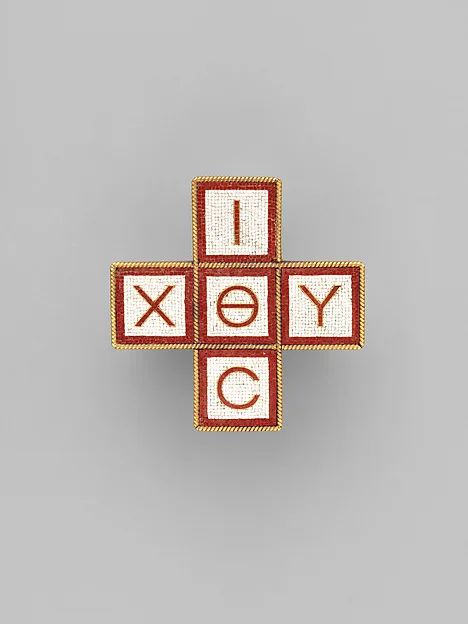
Ariadne's thread stands for connection, love, support, the bond that lets the hero come back from the journey to the centre. Without the thread Theseus would not have made it out. The story is telling us that any deep inner work needs anchors: relationships, tradition, the experience of those who walked before, your own past learning.
The return from the labyrinth
The most interesting thing about the myth is that Theseus does not stay at the centre. He kills the Minotaur and walks back out the same road he came in. The pattern is circular. Enter the labyrinth, reach the centre, return. Transformed, but back into the same world.
In contemporary psychotherapy the Minotaur myth is often used as a metaphor for trauma work or shadow work. Walk into awareness, face the frightening thing, find your way back.
Customer reviews
Zevira is a real jewellery shop. Genuine payments, deliveries and customer thank-yous.
🥰🥰🥰 gracias
Ok, ¡gracias! 🙂
The labyrinth in the ancient world
After the Minoan civilisation the labyrinth spread across the ancient world.
Greece and Rome
Greek coins with the labyrinth motif appear from the sixth century BC. Some of them show the Minotaur or Theseus at the centre, anchoring the image in the Cretan myth.
In ancient Rome labyrinths appeared in floor mosaics. Archaeologists have catalogued more than sixty Roman mosaic labyrinths across the former empire: from Britain to North Africa, from Spain to Syria. Many show the Minotaur or Theseus at the centre.
Roman labyrinths were usually laid in the central reception halls of villas. The function was decorative but symbolic too. A guest entering the villa walked the labyrinth visually as they crossed the threshold.
The labyrinth in Scandinavia and northern Europe
Ancient stone labyrinths are found across Scandinavia, especially in Finland, Sweden, and along the Baltic coast. These are classical labyrinths marked out on rocky ground with small stones, ranging from three to eighteen metres across. The dating ranges from the Bronze Age to the early Middle Ages.
Scandinavian stone labyrinths (in Finnish jatulintarha, "the giant's garden") are usually connected to fishing practice. They were laid out on rocky shorelines before fishermen put to sea. One theory is that the fisherman walked the labyrinth to "confuse" the evil spirits of the sea and cut himself off from them before dangerous work. Another connects them to initiation rituals.
The labyrinth in the Americas
In North America the Tohono O'odham people of Arizona have a sacred symbol called I'itoi Ki, graphically identical to the classical labyrinth. It belongs to a myth about their creator hero I'itoi, who lives at the centre of the labyrinth shaped mountain Baboquivari. The fact that the graphic almost exactly matches the Cretan labyrinth, with no plausible contact across the Atlantic before colonial times, is striking. It suggests that the geometric archetype of the labyrinth appears independently in different cultures.
Celtic and Roman labyrinths
Among historical variants the Celtic and Roman traditions deserve a closer look.
The Celtic labyrinth
The Celts of the British Isles and continental Europe (Gaul, northern Spain, Bohemia) also knew the labyrinth. In Welsh tradition it is sometimes called caer droia, "the city of Troy", which reflects an old European habit of linking the labyrinth with the legend of Troy.
The Celtic labyrinth is usually more complex than the classical one. More rings, a longer and more winding road. It often gets combined with other Celtic ornaments: knots, spirals, interlace. On crosses and slabs from the early medieval period in Ireland and Scotland you find hybrid compositions of labyrinth plus Celtic knot.
In contemporary Celtic jewellery the labyrinth often sits next to the triskele (the triple spiral) and the cross. This forms a kind of "Celtic trinity of symbols": the spiral for the infinite, the labyrinth for the path, the cross for the centre.
The Roman labyrinth
The Roman mosaic tradition produced a specific labyrinth type, clearly divided into four square sectors by a cross of central axes. The road passes through all four sectors in turn, crossing the central area several times.
This type is sometimes called the "labyrinth of the four worlds" or the cruciform labyrinth. It is visually more rigid than the classical round one. In jewellery it appears mostly in premium designer pieces and in reenactor work.
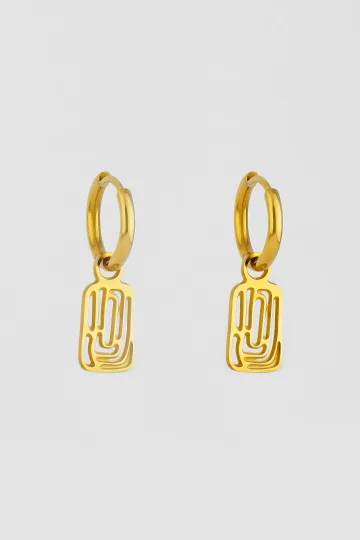
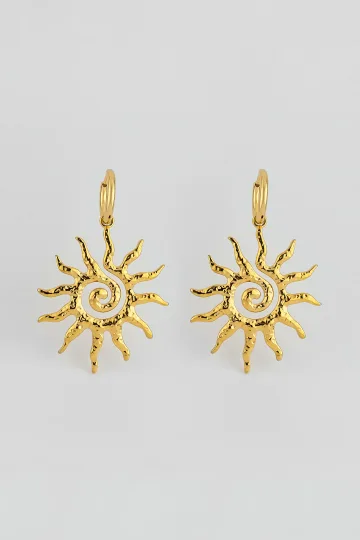
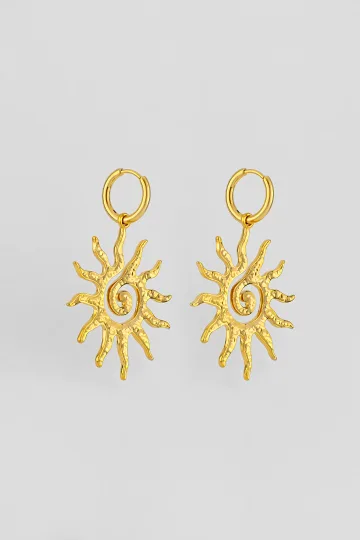
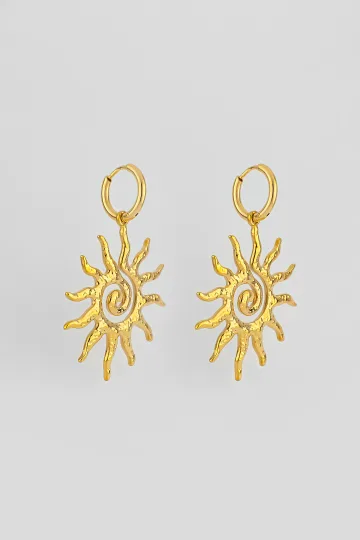
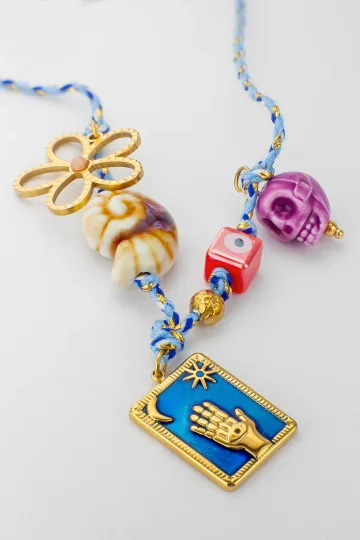
Wear the symbol, don't just read about it. These are in stock:
Medieval cathedral labyrinths
The strongest revival of the labyrinth happened in medieval Europe, particularly in the twelfth and thirteenth centuries.
Labyrinths in Gothic cathedrals
After the First Crusade (1096 to 1099) and the capture of Jerusalem, the theme of pilgrimage to the Holy Land became central to European Christianity. But a pilgrimage to Jerusalem was long, expensive and physically dangerous, available only to the wealthy and the healthy. To give every believer a way to make a symbolic pilgrimage, the Church started to build large stone labyrinths into the floors of the new Gothic cathedrals.
The idea was simple. The believer would come into the cathedral, walk the labyrinth on foot (or on their knees, which made the act more penitential), and this was considered equivalent to a pilgrimage to Jerusalem and the Holy Sepulchre. The labyrinth picked up the name Chemin de Jérusalem ("the road to Jerusalem") in French tradition.
Labyrinths appeared in the cathedrals of Chartres, Reims, Amiens, San Vitale in Ravenna, Saint Bertin, San Michele in Pavia, San Severino in Campania and others. Most of them were the classical Chartres type developed in the twelfth century.
What the cathedral labyrinth meant
Cathedral labyrinths were used for several overlapping purposes.
A substitute for pilgrimage. The main purpose.
A penitential walk. Walking it on the knees was considered especially devout.
A symbol of the soul. The path of the soul from birth through trials toward God at the centre.
An educational role. Priests would explain the labyrinth's meaning to the faithful as part of teaching the spiritual journey.
A decorative function. Also important. A labyrinth is a beautiful and hypnotic pattern on a stone floor.
Destruction and survival
During the Reformation and Counter Reformation in the sixteenth and seventeenth centuries many cathedral labyrinths were destroyed. They were considered "pagan" or "superstitious" elements. Of the dozens of medieval labyrinths, only around ten survive today. The most complete and famous is Chartres.
Chartres labyrinth: the cathedral pattern
The labyrinth of Notre Dame de Chartres (France, built between 1194 and 1220) is the gold standard of medieval cathedral labyrinths.
Dimensions
- Diameter: 12.89 metres
- Area: about 130 square metres
- Concentric rings: 11
- Length of the road to the centre: 261.5 metres
- At the centre: a six petalled rose (a symbol of Mary and of spiritual flowering)
- Material: black and white stone, contrasting inlay
Geometry
The Chartres labyrinth is mathematically flawless. All 11 rings have the same width, the road is exactly symmetrical around the central axis. The geometry is calculated so that a person walking the labyrinth makes exactly 28 turns. That number equals the number of lunar days in a month, a quiet echo of the old connection between the labyrinth and the lunar cycle.
Today
The Chartres labyrinth is in active use as a walking meditation site. Every Friday from April to September the chairs that usually cover it are removed, and the cathedral is open to pilgrims and visitors who want to walk it. Thousands of people walk it every year, many travelling from abroad specifically to do so.
The Chartres graphic has become the most popular labyrinth in modern jewellery design. "Chartres labyrinth" pendants sell worldwide. The image is instantly recognisable: a circle with 11 concentric rings, a single winding road, a six petalled rose at the centre.
Reims and other cathedral labyrinths
The cathedral labyrinth tradition is wider than Chartres alone.
Reims
The labyrinth of Reims Cathedral (thirteenth century) was octagonal rather than round. It was made up of four half bastion shapes around a central platform, with eight radiating roads. At the centre was a portrait of Jean d'Orbais, one of the architects of the cathedral. The labyrinth was destroyed in 1779 during renovation, but it survives in engravings.
Amiens
The labyrinth of Amiens Cathedral (thirteenth century) is octagonal, classical in the sense of one road. It was destroyed in 1828 but reconstructed in 1894 from preserved drawings. Today visitors can walk it.
San Vitale in Ravenna
A sixth century labyrinth, one of the oldest Christian labyrinths. Located in the central nave of the Byzantine basilica of San Vitale. Black and white mosaic, classical graphic. Survives almost intact.
San Michele in Pavia
A twelfth century labyrinth in the northern Italian basilica. Partially preserved. It carries symbolic scenes: a human hero defeating the Minotaur. This is a clear case of the ancient myth being absorbed into Christian context. The labyrinth becomes the soul's struggle against sin.
Each of these labyrinths has its own graphic. Some workshops today reproduce specific historical labyrinths in jewellery, which gives the wearer a tie to a particular cathedral rather than to "a labyrinth in general".
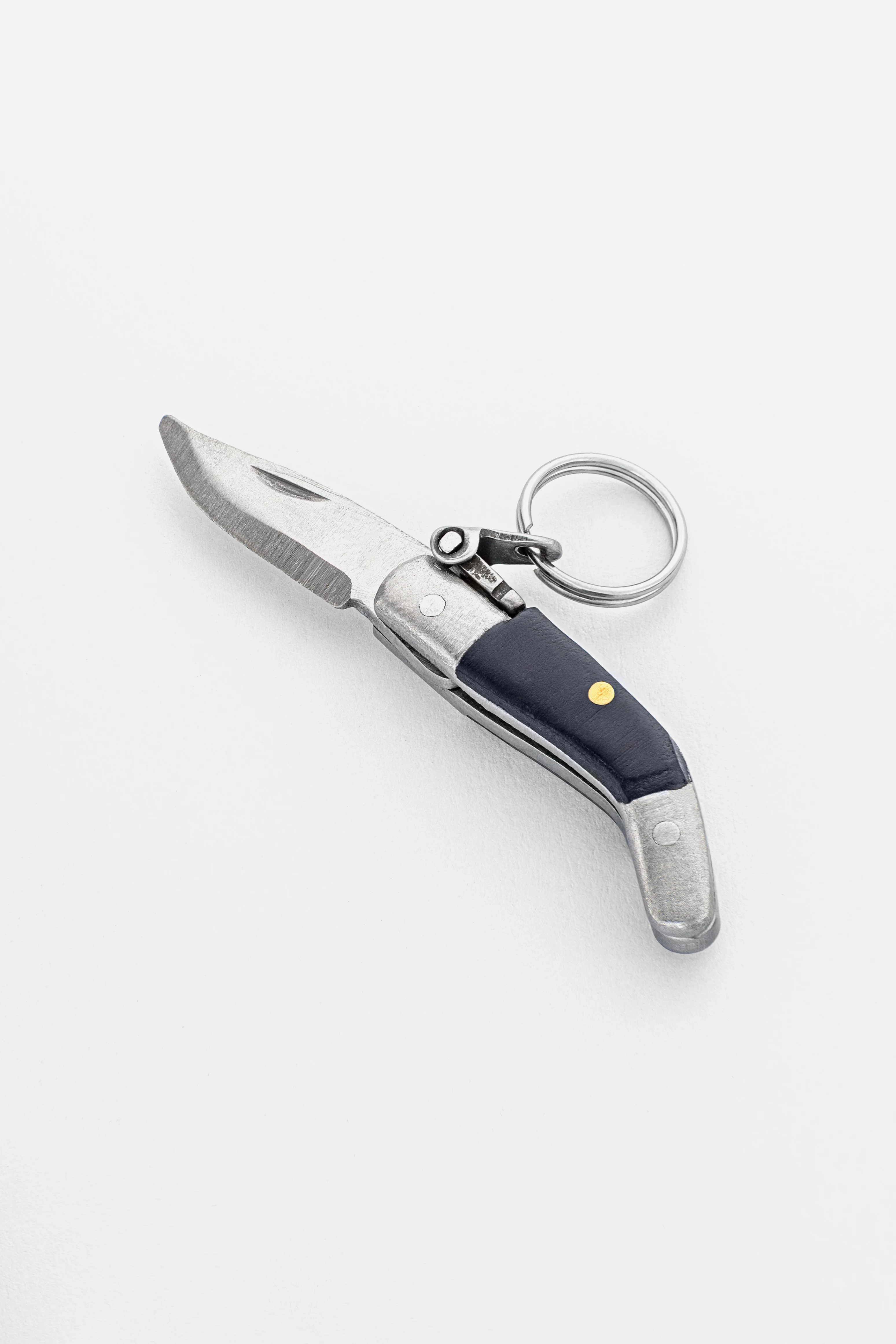
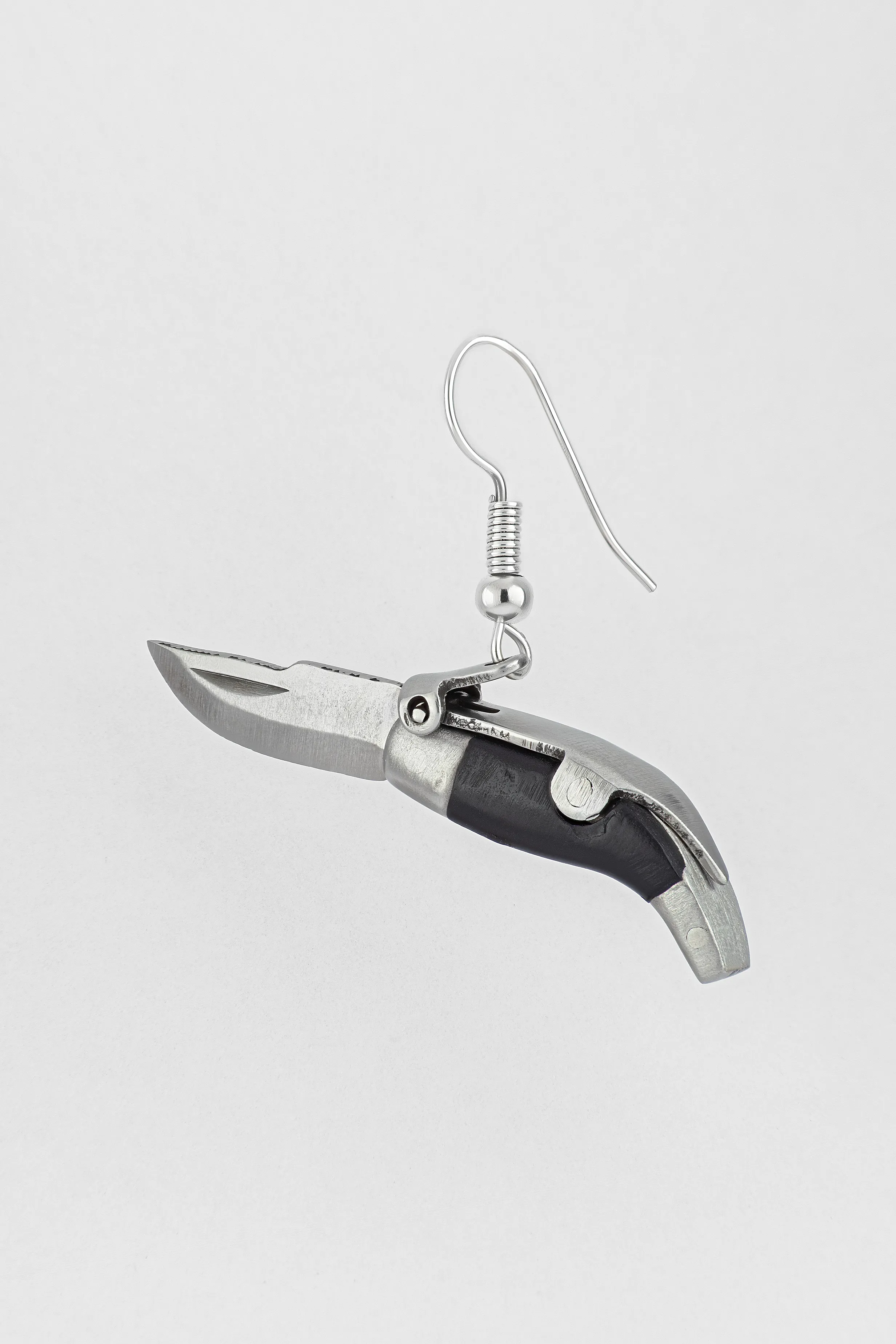
Artisan-crafted CAPAORA navaja pendant
A 40 mm stainless-steel navaja with a real folding mechanism and Palanquilla lock. An affordable gift to remember.
A code for blog readers:
10% off your first order
Authentic · Maker's guarantee · Ships from Spain
Labyrinth as pilgrimage without travel
The idea of the labyrinth as a substitute for real pilgrimage is interesting in its own right.
In medieval Europe a pilgrimage to Jerusalem, Rome or Santiago de Compostela was a serious undertaking. It took months, cost a lot of money and put the pilgrim in physical danger. Many believers could never afford to do it.
Cathedral labyrinths solved this problem with elegance. The believer came into their local cathedral, walked the labyrinth on foot or on their knees, and was considered to have made the pilgrimage. They received the same spiritual benefit as someone who travelled to the Holy Land.
There is a deep idea hiding inside this practice. A sacred journey does not have to be physical movement across space. It is an inner transformation, and an inner transformation can happen anywhere. Twenty minutes of walking a stone floor, an hour of pilgrimage in the soul.
Modern walking meditation in labyrinths rests on this principle. When you walk a labyrinth with attention, focusing on each step, your perception of time and space shifts. Twenty minutes of physical walking can feel like a long inner journey toward your own centre.
The same principle carries over into jewellery. A labyrinth pendant on a chain becomes a material anchor for the idea of the spiritual path. Decorative function is secondary. Touching the pendant in a stressful moment can work as a short meditation on the theme "the road has a shape, I will get there".
The Scandinavian Trojaborg stone labyrinth
The northern European tradition of stone labyrinths deserves its own section.
In Finland, Sweden, Norway, Estonia, and along the White Sea coast in the north, hundreds of ancient stone labyrinths have been found, laid directly on rocky ground. In Finnish they are called jatulintarha, "the giant's garden". In Swedish trojaborg, "fortress of Troy". The Russian word for them is sometimes "Vavilon" (Babylon).
Diameters range from three to eighteen metres. The stones are small to medium, laid on the ground without mortar. The ages range from the Bronze Age to the medieval period.
Purposes
The exact function of these labyrinths is debated among archaeologists. The main hypotheses are these.
Fishing ritual. A fisherman walked the labyrinth before going to sea, "confusing" the evil spirits and securing a good catch. This is supported by the fact that most Scandinavian labyrinths sit on the coast in places of active fishing.
Protective magic. The labyrinth as defence of the settlement, cutting evil forces off from the village. The labyrinth sits between the sea (the source of danger) and the village (the thing to be protected).
Initiation ritual. Walking the labyrinth as a rite of passage. A youth becomes a man, a young woman prepares for marriage.
Play or entertainment. Some researchers think a portion of these labyrinths were simply games, the medieval equivalent of garden mazes.
The Scandinavian stone labyrinth tradition is unique. No other part of Europe has so many preserved ancient labyrinths on open ground. This region had a particularly intense symbolic relationship with the labyrinth.
In contemporary jewellery the Scandinavian labyrinth is still a rare motif, but it shows up in designer collections with a northern theme.
Types of labyrinths: classical, Chartres, Celtic
Contemporary jewellery uses several graphic types of labyrinth.
Classical (Cretan, seven path)
The oldest and simplest type. Seven concentric rings, one road with seven turns. The graphic is lean, easy to read, and looks good in a small size (a one to two centimetre pendant). This is the labyrinth of Cretan coins, of Scandinavian stone labyrinths, of the Tohono O'odham I'itoi Ki symbol.
In jewellery the classical labyrinth is the baseline choice for minimalist work.
Chartres (eleven path)
The cathedral labyrinth. Eleven concentric rings, a six petalled rose at the centre, a complex road with 28 turns. The graphic is denser and more elaborate than the classical one, and it works best at a larger size (two to three centimetres and up).
The Chartres labyrinth is the most recognisable type in contemporary jewellery. It is used in pendants, signet rings, earrings. It suits anyone who wants a specific medieval and Christian reference.
Celtic
A hybrid type that combines the labyrinth with Celtic knots or spirals. The graphic is freer, sometimes asymmetric. It often appears in Celtic collections alongside the triskele, the cross, and the tree of life.
It suits lovers of Celtic aesthetics, Irish or Scottish heritage, reenactors and folk musicians.
Roman (cruciform)
A labyrinth divided by a cross into four square sectors. The graphic is rigid and geometric. It works well in designer jewellery and in compositions where geometric clarity matters most.
Scandinavian (Trojaborg)
The graphic is similar to the classical Cretan but sometimes more elongated, or with a special framed entrance. It suits the Nordic design school and collections with a northern theme.
Contemporary designer
Modern jewellers create their own labyrinth variants: asymmetric graphics, two centred labyrinths, unusual turn patterns. These are designer interpretations of the classical theme.
Leave your email, we'll send your discount code. No spam, unsubscribe anytime.
The code arrives by email, valid on your first order.
Labyrinth in jewellery today
The contemporary jewellery industry is working actively with the labyrinth. The main reasons for this growth are these.
A demand for meaning. In an era of fast trends and disposable fashion, people want pieces with depth. The labyrinth delivers depth. Behind every pendant sit thousands of years of history and a serious spiritual meaning.
Graphic beauty. The labyrinth looks excellent in metal. The lines are clean, the pattern is hypnotic and recognisable, and it does not depend on seasonal fashion. A labyrinth pendant will look right ten years from now.
Gender neutrality. The labyrinth has no fixed masculine or feminine reading. It works on both men and women in the same way. A universal graphic.
Connection to meditation practice. The growing popularity of meditation, mindfulness, and walking labyrinths at spa retreats has created demand for a material symbol of the practice.
An alternative to religious symbols. For people who do not wear a cross or another denominational sign, the labyrinth offers spiritual content without confessional commitment.
The main segments of the jewellery industry working with the labyrinth are these.
Mid range silver workshops. Most mainstream labyrinth pieces are made in sterling silver 925. Accessible price, good graphic, durable.
Designer studios. Original interpretations, often with asymmetric graphic or modern surface treatment. Higher prices, individual work.
Premium ateliers. Labyrinths in 18 karat gold, sometimes with diamond inlay along the lines. The collector and gift segment.
Spa and retreat centres. Many meditation centres, pilgrim trails and retreats sell labyrinth jewellery as a material memory of the visit.
Types of labyrinth jewellery
Pendants on a chain. The most common format. A round medallion with the labyrinth engraved or in relief. Sizes from 1.5 centimetres (minimalist) to 4 centimetres (statement). The graphic is usually Chartres or classical. Sometimes double sided: labyrinth on one face, engraving with a quote or a date on the other.
Open work pendants. The labyrinth is pierced through, and you can run a finger along the road. This is an interactive element that turns the pendant into a tactile meditation tool. Particularly popular as a fidget object for stressful days.
Rings. Signet rings with the labyrinth engraved on the face. Rings with the labyrinth in relief along the band. The most interesting are rings where the labyrinth sits on the top plane so you can trace it with a nail or fingertip.
Earrings. Small studs in the shape of a labyrinth or drop earrings with a labyrinth charm. Symmetrical, paired. They suit a delicate feminine style.
Bracelets. A chain bracelet with a single labyrinth charm. A bracelet with the labyrinth engraved across a wide plate. Leather bracelets with a central metal labyrinth plaque.
Charms. Small labyrinth charms for collector bracelets. Compatible with standard charm systems.
Chokers. A labyrinth on a short choker chain. Brings the symbol forward on the neck.
Watches. A watch face shaped as a labyrinth. An experiment of the 2020s, more collector piece than daily wear.
Body piercing. The labyrinth as a piercing element. Especially ear piercing (helix, conch), where a flat labyrinth disc looks good.
Tattoos and temporary metallic transfers. The labyrinth is a popular tattoo. Some people try the shape first with temporary metallic transfers on the skin, then commit to jewellery or a permanent tattoo.
Accessories. Tie bars, cufflinks, hair clips with a labyrinth pattern.
Materials for labyrinth jewellery
Sterling silver 925. The main material. Affordable, takes the graphic well, durable. Most mainstream and mid premium labyrinth pieces are silver. It takes oxidised blackening beautifully, which gives a contrast between the road and the background.
Yellow gold 14 or 18 karat. The premium tier. Especially beautiful for the Chartres labyrinth with its complex graphic. Does not tarnish, can pass down through generations. Yellow gold gives a warm, noble tone that echoes the colour of medieval cathedral masonry.
White gold and platinum. A contemporary look. The cool shine fits a minimalist style. The labyrinth graphic reads cleaner against the cooler tone.
Rose gold. Romantic. Suits delicate feminine pieces.
Stainless steel. A practical material for daily wear. Does not tarnish or oxidise and is hypoallergenic. Steel labyrinth pendants are popular with men and with people who lead active lifestyles.
Bronze and brass. Warm metals with a vintage tone. They suit historical reconstructions of ancient or medieval labyrinths. They need care (they darken over time).
Stone. A labyrinth carved into black agate, obsidian or marble. The graphic is highlighted by the contrast between the dark base and a light inlay along the lines. A designer technique, rare in mainstream work.
Enamel. Coloured enamel (blue, black, burgundy) fills the road lines and brings out the graphic. A contemporary look.
Mother of pearl. A mother of pearl inset at the centre of a round metal labyrinth pendant. Romantic and gentle.
Stone insets. Amethyst (the stone of spiritual search), lapis lazuli (the stone of wisdom), rock crystal (purity), onyx (the inner centre). Sometimes a tiny stone is set exactly in the centre of the labyrinth, marking the goal of the path.
Wood. Carved wooden labyrinth pendants in yew, oak or walnut. Warm texture, light weight. They suit eco style.
Who the labyrinth symbol suits
People going through a life transition. Divorce, a career change, moving abroad, leaving a long crisis. The labyrinth becomes a material symbol of "the road is long, but it leads to the centre".
People who meditate or practise mindfulness. Especially those who walk labyrinths at retreats. Labyrinth jewellery is an extension of the practice into daily life.
Creative people. Writers, painters, musicians, designers. The labyrinth as a metaphor for the creative process: a tangled path with a centre that is always there.
Teachers, mentors, therapists. The labyrinth as a symbol of guiding others through their own roads.
Pilgrims and spiritual seekers. People who have walked Chartres, Santiago de Compostela, the Camino, an Iona retreat. The labyrinth as a material reminder of pilgrimage.
History and archaeology lovers. People drawn to Minoan civilisation, the medieval period, the symbolism of cathedrals.
People who love geometry. The labyrinth is a perfect geometric object. It suits anyone who values mathematical beauty.
People who want a spiritual symbol without confessional ties. The labyrinth is neutral across religions. It is not Christian, Muslim or Buddhist by default. It belongs to general human heritage.
Romantics and lovers of myth. People who resonate with the story of Ariadne, Theseus, and the Minotaur. The labyrinth as the symbol of a great myth.
Athletes and people working on long term projects. The labyrinth as a metaphor for the long road. It suits marathon runners, researchers, scientists, founders.
The labyrinth has no gender lock, no age bracket, and no requirement of background or religious affiliation.
Combinations with other symbols
Labyrinth and rose. The Chartres labyrinth already includes a rose at the centre. Some jewellery treats this as a separate variation: the labyrinth with a stylised rose as one piece. Meaning: the path to flowering.
Labyrinth and compass. The labyrinth speaks about the shape of the road, the compass about direction. Together they form a strong symbolic pair: "know where you are going, and walk that road".
Labyrinth and cross. The cathedral pairing. The labyrinth as the road to God, the cross as the centre. Common in Christian jewellery.
Labyrinth and tree of life. A metaphysical pair. The tree is the vertical axis of the world, the labyrinth is the horizontal road. Together they give a three dimensional picture of the spiritual path.
Labyrinth and spiral. Graphically related. The spiral is infinite movement, the labyrinth is a finite road to a centre. They complement each other in design.
Labyrinth and moon. Through the 28 turns of the Chartres labyrinth (equal to the lunar cycle) there is a tie to lunar symbolism. Suits feminine pieces on the theme of cycles.
Labyrinth and star. A star replaces the rose at the centre. Meaning: the path toward the light, toward a higher point of orientation.
Labyrinth and key. A metaphorical pair: the key to the labyrinth of life. Romantic.
Labyrinth and anchor. A pair of stillness and movement. Read more in our anchor symbol guide. Suits people seeking the balance.
Labyrinth and Ariadne's thread. A thin thread running through the labyrinth. Some designers add a physical thread (gold or silk) inside the open work of the pendant. A direct reference to the myth.
Send a friend a discount code, they save on their first order.
Meditative practice with the labyrinth
The contemporary practice of walking a labyrinth is serious spiritual and psychological work.
How to walk a labyrinth
You stand at the entrance. You take a few deep breaths. You set an intention: what you want to think about, what question to sit with, what to let go. You start walking. Slowly, with attention, focused on each step.
At the centre you stop. You stand there for a few minutes. You listen. What comes to mind, what you want to release, what you want to bring back with you.
You walk out. No more setting intentions, just receiving what came up at the centre.
The effect
Most people describe the practice as calming and deepening. Twenty minutes of walking a labyrinth gives an effect comparable to an hour of sitting meditation, because the movement helps to hold attention.
Finger labyrinth on a pendant
A tactile mini version of the walked meditation. A pendant or ring with an open work labyrinth lets you trace the road with a finger. It can be used as a thirty second meditation in a stressful moment: a brief pause, a reset.
Labyrinth meditation without an object
You can imagine the labyrinth mentally. Close your eyes, picture a round labyrinth, walk through it in imagination. Short and effective. A labyrinth pendant helps to hold a specific image in memory for this practice.
Labyrinth as a cognitive anchor
Touching a labyrinth pendant in a stressful moment is a form of self soothing. The body learns: I am touching a symbol with a shape, the road has a centre, everything will sort itself out. This works at the psychological level. You do not have to be a mystic to feel the effect.
The labyrinth in contemporary culture
The labyrinth in popular culture is having its second life. A few directions.
Cinema. Guillermo del Toro's Pan's Labyrinth (2006), The Maze Runner series (2014 to 2018), David Bowie's Labyrinth (1986). These films, even when they are technically about mazes, have made the labyrinth visually familiar to mass audiences.
Literature. Jorge Luis Borges in Labyrinths made the symbol a philosophical and literary device. Umberto Eco used the labyrinth of the monastery library in The Name of the Rose as a plot engine. Magical realism often draws on the labyrinth as a motif.
Music. Pink Floyd, Iron Maiden, Tool, and Genesis have all worked with labyrinth themes in albums or tracks. Contemporary neo folk and ambient music return to the labyrinth often.
Video games. The Legend of Zelda, Dark Souls, Bloodborne and many others use labyrinth structures in their level design. Players walk virtual labyrinths and many of them carry the experience into the physical world by buying labyrinth jewellery.
Spa and wellness. Many contemporary spa centres, hotels and retreats now build walking labyrinths on their grounds. It is becoming part of wellness culture. After walking a spa labyrinth, guests often pick up a labyrinth pendant as a material reminder.
Schools and hospitals. In the US and UK there is a slow but growing practice of installing labyrinths in school yards and hospital waiting areas. The idea is to lower stress in children before lessons and in patients before procedures. This is shaping a generation for whom the labyrinth is a familiar part of the built environment.
Tattoos. Labyrinth tattoos are a growing segment. Chartres and Celtic styles are the most popular. Many people get the tattoo first and then buy jewellery in the same graphic.
Trends for 2026
Open work labyrinths with tactile function. A pierced design you can trace with a finger. An interactive element that turns the piece into a tactile fidget object. For people who like to keep their hands occupied.
Micro engraved labyrinths. Laser engraving puts a full Chartres labyrinth at millimetre precision onto a tiny pendant. Minimalist 1 centimetre pendants with a full Chartres pattern are now possible.
Double sided medallions. Labyrinth on one face, personal engraving on the other (a date, a name, a quote, the coordinates of a place you walked).
Paired pieces, labyrinth and thread. One partner wears a labyrinth pendant, the other wears a symbolic thread or spool. A direct reference to the Theseus and Ariadne myth. Romantic.
Labyrinth with an accent stone at the centre. A Chartres or classical labyrinth with a tiny amethyst, lapis lazuli or diamond set exactly in the centre. Meaning: the destination is the jewel.
Family collection sets. A series where each family member has a different labyrinth (classical, Chartres, Celtic). The family as a network of people each walking their own path.
Ceramic and porcelain labyrinths. A return to the materials of floor mosaics. Modern ceramic pendants with a labyrinth, framed in metal.
Biographical custom labyrinths. Made to order: a labyrinth whose road graphically reflects a specific life path (career stages, moves, relationships). Original designer work.
Reflection as a service. Some workshops offer a guided meditation session along with the piece, turning the purchase into a fuller experience.
Pieces with digital extensions. A labyrinth pendant with an embedded NFC chip that opens a guided meditation app or a labyrinth music playlist when scanned with a smartphone. A 2026 experiment.
Mixed style labyrinths. Half Chartres, half Celtic. Designer pieces that play with multiple graphic languages.
Larger statement pendants. Not a small pendant, a substantial 5 to 7 centimetre piece with a detailed Chartres labyrinth. For people who build a strong personal style.
A labyrinth belongs on a bare collar, never lost under three chains. One path does not share the road, and that is that.
How to wear the labyrinth
I build the labyrinth into a look as clean graphic work: it wants a calm background and one clear line of length. The plainer the clothing, the more the road reads. Here is what actually holds a look together, by occasion.
How do I wear a labyrinth every day? For daily wear I recommend a silver or steel pendant around 2 centimetres on a fine 45 centimetre chain over a plain t-shirt, a roll neck or a light jumper. Grey, black, white, deep blue and wine backgrounds carry the graphic best, because the road does not compete with a busy print. The symbol shows without taking over the outfit.
Does it work at the office? It does. I suggest a medium size under a shirt with the top button open, or over knitwear with a clean cut. Length 45 to 50 centimetres, white metal or yellow gold with a clean shine. In a meeting the pendant reads as a quiet detail rather than a loud statement.
How do I put together an evening look? For evening I choose an open neckline, smooth fabric in a rich colour and few other pieces. One larger medallion of 3 to 4 centimetres on a long chain over a black dress or a silk blouse works as a considered accent. A labyrinth with a stone at the centre, amethyst or lapis, adds depth.
How do I layer the labyrinth? I give it the lowest, longest line among several chains. I keep metals at one temperature: silver with steel and white gold, yellow gold with bronze and warm stones. An engraved labyrinth ring I set with slim plain bands, with no clash of texture.
Which length should I choose? If in doubt, take 45 to 50 centimetres for a feminine look and 50 to 60 for a masculine one: at that length the road sits where the eye finds it on its own. And do not overload the look, the labyrinth needs one or two calm neighbours, not a dense stack of chains.

Turn on your camera, pick earrings, a pendant or a ring, and see the piece on yourself in real time.
Switch items in one tap.
Everything runs in your browser: no photo or video is ever uploaded.
Frequently asked questions
What is the difference between a labyrinth and a maze?
A labyrinth is a structure with a single road that leads to the centre, with no forks and no dead ends. A maze is a puzzle with multiple paths, forks and dead ends, where you can take the wrong turn and get lost. Jewellery uses the classical labyrinth, because its meaning of "one road, you will arrive" carries more weight than the puzzle structure of a maze.
Is the labyrinth a Christian symbol?
Not only. The labyrinth predates Christianity by thousands of years. Minoan Crete (3000 to 1450 BC), ancient Greece and Rome, the Celts, the Scandinavians, the Tohono O'odham, all used the labyrinth long before Christianity. Medieval Europe brought the labyrinth into cathedrals as a pilgrimage symbol, but that is only one layer of its meaning. The labyrinth belongs to the shared heritage of humanity.
Should I choose a classical or a Chartres labyrinth?
It depends on style and size. The classical (seven path, Cretan) is graphically simpler and works well at small sizes (1 to 2 centimetres). It suits a minimalist look. The Chartres is more complex and recognisable. It looks better at medium to large sizes (2 to 4 centimetres). Choose Chartres if you want a clear reference to the medieval Christian tradition. Choose Celtic if you love Celtic aesthetics and want to combine the labyrinth with other Celtic symbols.
Can men wear a labyrinth?
Yes, with no caveat. The labyrinth is gender neutral. Men's pieces are usually larger (3 to 4 centimetres), on a steel chain or a leather cord, with a tougher surface finish. They suit daily wear, an active lifestyle, and people working on creative or intellectual projects.
Which metal works best for a labyrinth?
Sterling silver 925 is the universal choice: affordable, takes the graphic well, durable. Yellow gold gives a warm tone that echoes cathedral masonry. Steel is practical for daily wear. Bronze for historical accuracy. Choose by personal preference and use case.
What is the Ariadne thread in jewellery?
A thin gold or silver chain, or an actual silk or gold thread, running through the open work of a labyrinth pendant. A direct reference to the Theseus myth. A decorative element that adds a layer of meaning. Not in every piece, but you find it in designer collections.
How often can I walk a real labyrinth?
No limit. Many practitioners walk a labyrinth daily or several times a week. It is a meditation practice, like a morning run or yoga. You walk specific labyrinths (Chartres, a spa labyrinth, a park labyrinth) when you can. The pendant is always with you.
Are there labyrinths in the British Isles or North America?
Yes. In England, Saffron Walden has a turf labyrinth in active use. In Wales, the Welsh tradition of caer droia preserves some. In the US, Grace Cathedral in San Francisco has a beautiful indoor Chartres labyrinth and an outdoor one. Many American hospitals, retreat centres and parks have built walking labyrinths in the past twenty years.
Can I get a labyrinth tattoo?
Yes. Labyrinth tattoos are popular. They are often paired with other symbols of the road or of spirituality. Common placements include the chest, the upper arm, the back, sometimes the wrist or ankle. Before getting one, decide which type of labyrinth resonates most (classical, Chartres, Celtic) and have an answer ready for the questions people will ask.
What size pendant should I choose?
For daily wear, 1.5 to 2.5 centimetres is universal. For a statement piece or a men's model, 3 to 4 centimetres. For a delicate feminine look, 1 to 1.5 centimetres. Very large (5 centimetres and up) is for specific occasions and not every day. The Chartres graphic is dense, so it does not read well at very small sizes. For very small pendants, choose the classical type.
Can I give a labyrinth pendant to a child?
Yes, with age in mind. Children under three should not wear jewellery for safety reasons. From age five to ten you can give a light silver labyrinth pendant as a symbolic birthday or school year gift. For teenagers and adults there are no restrictions.
What if I do not fully understand the symbol's meaning?
Do not wear it yet. The labyrinth is a symbol with depth, and wearing it without understanding diminishes it. Read this guide carefully, walk a real labyrinth (many spas, parks and cathedrals have them, and the World Wide Labyrinth Locator lists them online), watch a documentary about Chartres. When the symbol starts to resonate, then buy. An impulse purchase of a pretty pendant will not give you depth.
Does the labyrinth combine with other spiritual symbols?
Yes, at the level of aesthetics and through conscious choice. Labyrinth with cross, with tree of life, with compass, with rose, with lotus all appear in contemporary work. The key is that the wearer connects to both symbols, not just one. Random combinations for the sake of looks tend to work less well than thoughtful pairings.
Conclusion
The labyrinth is one of the oldest geometric symbols on earth, and it is having a second life right now thanks to the modern hunger for meaning, mindfulness, and spiritual practice without an obligatory religious frame. A labyrinth pendant on a chain carries thousands of years of history: Minoan Crete, ancient Greece, Roman mosaic villas, the medieval cathedrals of Chartres and Reims, Scandinavian stone labyrinths on the coast, the sacred signs of the Tohono O'odham.
The central idea of the labyrinth is that the road has a shape. However many turns and bends a life passes through, the centre exists, and the path to it is one. You do not have to choose between forks. You do not have to fear getting lost. You walk and you keep walking, and you will arrive.
If you want to continue with symbols of the road and the inner search, read our guides to the compass rose, to the tree of life, to the Celtic knot, and to the Odal rune. For protective symbolism, see our protection amulets and talismans guide and our Algiz rune piece. For symbols of navigation and direction, read the guides to the anchor and to the arrow.
Silver, gold, engagement rings, symbolic jewellery, paired sets.
About Zevira
Zevira makes jewellery by hand in Albacete, Spain. The labyrinth is the symbol of a road that, sooner or later, brings you to the centre, and we render it as a graphic you can wear every day and trace with a fingertip like a short meditation.
What you will find with us on the labyrinth theme:
- Pendants with the classical (Cretan) and Chartres labyrinth, in sizes from minimalist to statement chest pieces
- Open work pendants you can trace with a finger as a brief tactile meditation
- Rings with the labyrinth in relief or engraved across the top plane
- Earrings, bracelets and charms with the labyrinth graphic for collector compositions
- Pieces with an accent stone at the centre (amethyst, lapis lazuli, rock crystal) marking the goal of the path
- Double sided medallions: labyrinth on one face, personal engraving on the other (a date, a name, the coordinates of a place)
Every piece is made by hand by a craftsman, with the option of personal engraving. Sterling silver 925 and gold 14 to 18 karat.