Jewelry at 18: First Adult Piece as a Rite of Passage
The Number You Don't Expect
A piece of jewelry bought at 18 gets worn, on average, until 50. Not because it is expensive. Because 18 is the first age when a person holds sole legal control over what they wear, with no parental sign-off behind it. That single fact makes the gift personal in the most literal way.
A laptop is obsolete in three years. A silver ring with an engraved date never ages.
This article is about how to choose jewelry for an 18th birthday. What it should carry inside, beyond the metal. How to land the right symbol, the right format, the right material. Why a gift from a grandmother and a gift from a best friend work in completely different ways. And why a first adult piece, handed over at the right moment, can stay with someone for decades.
Eighteen as a Universal Rite of Passage
Turning 18 is not just another birthday. It is a line the society draws. Before 18, a person holds one legal and symbolic status. After 18, another. The boundary is so deeply set in Western culture that even people who shrug at anniversaries feel that something shifts here.
Eighteen is not the only line of this kind, though. Different cultures have drawn it in different places, and understanding the other traditions helps explain why a ritual gift exists at all.
Bar Mitzvah and Bat Mitzvah: Thirteen as the Threshold of Responsibility
In Jewish tradition, thirteen for a boy (Bar Mitzvah) and twelve to thirteen for a girl (Bat Mitzvah) marks the moment of religious responsibility. The child becomes a full member of the community, bound by the obligations of an adult. The ceremony is public: it happens in the synagogue before gathered relatives, and the celebrant reads aloud from the Torah.
Gifts at a Bar Mitzvah traditionally include jewelry: pendants with the Star of David, silver bracelets, chains with an engraved nameplate. Things that mark the passage and stay with the person. Nothing here is accidental. The piece carries public recognition. The community says: now you are truly one of us.
Quinceañera: Fifteen in Latin Tradition
In Mexico, Brazil, Argentina, Colombia and across Latin America, a girl's fifteenth birthday is marked with a celebration that rivals a wedding in scale. Quinceañera literally means "the girl is fifteen." It is a full ritual with clearly defined elements.
The classic pieces of a Quinceañera include a tiara, a bracelet, the last doll, and a medal. The jewelry is not a stray inclusion. It is part of the ritual, handed over in public, each element carrying an explained meaning. The tiara stands for dignity, the medal for protection, the bracelet for the bond with family. A jewelry gift at a Quinceañera is not luxury. It is the language of transition.
Sweet Sixteen: Sixteen in American Culture
In the United States, a sixteenth birthday is a milestone of its own for many families, noticeably set apart from an ordinary birthday. The "Sweet Sixteen" often comes with a first serious piece: a pendant with a personal symbol, earrings with a stone, a thin gold bracelet. The logic is the same. Sixteen is another visible marker on the road.
Eighteen in the English-Speaking World: Adulthood as a System
Across the United Kingdom, Ireland, Australia, Canada and most of Europe, eighteen is the official line of legal adulthood. This is a legal fact, not a sentiment. Eighteen means the right to vote, to marry without consent, to sign contracts, to make financial decisions, to do everything that once needed someone else's signature. Symbolically it is the first day a person legally carries full responsibility for their own choices.
That is exactly why a gift at eighteen, in this tradition, has to be different. Not a toy, not a school gadget. Something that fits the new status. Jewelry fits well: it is not for a child, it is for an adult.
In the United States the twenty-first birthday adds a second layer, since it carries its own legal weight around alcohol and full independence. Many American families treat both eighteen and twenty-one as markers, which only widens the window for a meaningful first adult piece.
The Psychology of Coming of Age: What Happens Inside
Erik Erikson, one of the central theorists of human development, named the stage "identity versus role confusion" as the core psychological crisis of adolescence. In this period a person searches for the answer to a single question: who am I? Not someone's child, not someone's student, but a self. A person, not a role.
Eighteen is not the end of this crisis but its symbolic point. The society says: now you are an adult, now you decide. That is an enormous psychological load that arrives at the same moment as the release. New fears and new possibilities appear in one breath.
After eighteen, in Erikson's frame, comes the next stage: intimacy versus isolation. The young adult looks for close relationships, learns to trust in a different register than in childhood. That demands a formed identity. You cannot stand next to someone without first knowing who you are.
In this light, a piece of jewelry with a personal symbol does something concrete. It hands a person an image of themselves cast in metal. A compass for the one choosing a path. An anchor for the one who needs stability inside change. A tree with roots for the one leaving home without cutting the family tie. The piece becomes a visible answer to the invisible question of identity: this is who you are, this is what is in you, this is what the people who know you best value in you.
This is not esoterica. It is a plain psychological function. A symbol helps a person see themselves at a moment when seeing yourself is unusually hard.
A Gift for a Young Man at Eighteen: Formats and Symbols
Men's jewelry for an eighteenth birthday stayed in the shadows for a long time. The assumption was that a young man wanted a watch, money in an account, or something practical. Jewelry read as "not masculine" or as something worn only on rare occasions.
That has shifted. Men's jewelry is no longer the exception. Rings, chains, pendants and bracelets show up in daily life, at work, and on a night out. They are part of the language young men use to speak about themselves, their values, their belonging.
Signet Ring with Initials
One of the oldest formats in jewelry history. The signet ring was worn by aristocrats to seal documents in wax, by soldiers as a mark of belonging, by merchants as a personal trade sign, by sailors as a charm. It survived thousands of years because it has a core: it is the personal mark of one specific person.
A signet with initials at eighteen is exactly that. Not someone else's initials, not a label. Three letters or a monogram that belong to one person alone. The piece says: you have a name, you are a person, you are an adult, you carry your own initials.
The execution can be modest (sterling silver, plain engraving) or more formal (14K gold, a serifed monogram). The shape can be square, oval or shield-form. The size depends on the hand: a heavy ring on a slim finger looks wrong, so it is worth paying attention when choosing. There is more on engraving initials in our guide to initials and monograms in jewelry.
A Chain with a Symbol
A pendant on a leather cord or a silver chain. The most popular men's format at this age and probably the most flexible. The symbol is chosen for the person, and the choice itself says how well the giver understands the recipient.
A compass suits someone who loves travel or is starting an independent life in a new city. An anchor suits someone who needs a fixed point even as everything around them shifts. A tree of life suits someone who values family and roots while moving away from them. There is more on which symbol men wear first in our guide for men.
A neck chain is worn under or over a shirt. A small pendant peeking out of the collar does not overload the look but adds a personal mark. That is exactly the quality you want in a first men's piece. It is present, but it does not shout.
A Bracelet as an Alternative
A leather bracelet with metal elements, or a plain silver one, for someone who does not wear rings or pendants. A bracelet often reads to men as a more neutral entry point into jewelry. Engraving can be added, or a version with a symbol chosen.
A Watch with an Engraving
Not jewelry in the strict sense, but in the culture of a coming-of-age gift, a watch holds a special place. An engraving on the back: a date, a name, a short line. "18.05.2026. We are proud of you." Such a watch is worn not as a status piece but as a reminder. It echoes jewelry in that one way: it carries a story.
A Gift for a Young Woman at Eighteen: From Classic to Symbolic
Young women usually have more experience with jewelry before eighteen: earrings from childhood, bracelets, costume pieces. But a first serious adult piece is still a category of its own. It is a different scale, a different metal, a different intention.
A Pendant on a Gold Chain: the Classic that Stays
A thin gold chain with a small pendant is one of the most worn pieces in existence. It works with work clothes and with an evening dress. It does not get in the way, does not date, asks for no special occasion. Worn every day, it becomes part of the body. After five, ten, twenty years a person stops noticing it the way they stop noticing a freckle, and if it comes off, something feels wrong.
That quality is what makes a pendant on a chain the ideal first adult piece. It is built for a long stretch of wear, not for a single outing.
Earrings with a First Real Stone
Young women often receive their first serious earrings at eighteen. Before that, the pieces are usually plain or costume. At eighteen something with a real stone arrives: a modest topaz, an amethyst, a garnet, a blue topaz. The formats vary. Studs for daily wear, or small drops for evenings.
The stone is usually chosen for the eye color or the favorite color of the recipient. It is not a rule, but it makes the choice more personal.
A Thin Gold Chain Under Clothing: a Constant Symbol
A piece worn almost without taking off. Under clothes on weekdays, visible in a neckline at night. This is jewelry not for display but for wearing. Gold on skin. Constant, quiet, owned.
Such pieces often become the ones worn without a break for years, removed only for surgery or a sauna. They stop being jewelry in the ordinary sense and become part of the body.
A Charm Bracelet as a Starting Point
A format of its own: a bracelet you can add charms to over time. At eighteen the bracelet and one or two charms are given. In the following years new ones are added, each carrying its own story.
A Gift from Parents: Three Approaches
A parental gift at eighteen carries a different weight of meaning than a gift from friends or distant relatives. It is a gesture of handing over. "You have grown up. This is yours now."
A Family Heirloom Adapted for a New Generation
The deepest option: passing on your own piece, something that was part of your own life. A mother gives the chain she wore at twenty. A father gives the ring he got from his own father. Behind the metal and the stone stands a story that continues. The piece gets a new wearer but loses none of its past.
If the piece looks dated or too heavy for daily wear, it can be adapted: melted, reset, given new initials. The point is not the form but the continuity of the gesture.
One of the most moving versions: a mother takes the ring she wore on the day her child was born and hands it over at eighteen. The circle closes.
An Heirloom from the Deeper Past
Close to the previous option, but from a more distant family past. A grandmother's earrings, a great-grandfather's signet, a great-grandmother's brooch. The key here is the explanation at the handover: "This was your grandmother's. Now it is yours." The story travels with the object, and it is the story that makes the piece impossible to buy at any price.
A New Piece Chosen with Intention
If there are no heirlooms, or none suitable to pass on, parents choose something new. But intention matters here. The piece is chosen with one specific person in mind. That changes how it lands. "We picked this especially for you, because you love..." means far more than beautiful wrapping.
Some families order a piece with engraving in advance: initials on one side, the date and a short line from the parents on the other. A little extra work, but it turns the piece into a document.
A Gift from Grandparents: History in the Hands
Grandparents often give jewelry differently than parents. They carry another scale of time. They have a different relationship with objects: they know things live a long time, because they have lived long enough to see it. Their gift is often the very piece with a history.
The best thing they can give is something of their own. A ring from a finger. A chain lived with for forty years. Earrings bought in youth, in the year a parent of the celebrant was born. When a grandmother takes off her ring and slides it onto a granddaughter's finger, the gesture needs no explanation. It reads on its own.
Some grandparents deliberately set a piece aside "for eighteen," telling the child years in advance that a ring or earrings are waiting for their coming of age. That turns the object itself into a promise and an expectation: in a few years, when you grow up. A particular form of patience and love.
If there are no pieces of their own, or none suitable to pass on, grandparents often choose the classics: thin gold, a small stone, nothing too fashionable. Their logic is right. A piece should outlive the fashion. They know that better than anyone, because they wore jewelry for fifty years and watched trends come and go while plain gold stayed.
A Gift from Friends: Knowledge from the Inside
A friend choosing a piece at eighteen stands in a different position than family. They are the same age. They have no family history, no heirlooms to pass on, no parental weight. But they hold something valuable: knowledge of the person from the inside, from their own vantage. They know what the person likes, which symbol will fit, what will actually be worn.
A Charm for a Bracelet
If the recipient wears a bracelet, adding a charm is a precise gesture. Choose one symbol that says: I know who you are. An owl for the reader. An anchor for the calm and reliable one. A compass for the traveler. A small object, but small objects are where attention to a person concentrates.
A Symbolic Pendant Chosen for Character
A pendant with a symbol chosen on purpose. Knowledge gives the best result here: what matters to the person, which symbol will resonate. There is detail on the meanings of symbols in our catalogue: anchor, compass rose, infinity, owl, the Fool from Tarot.
If the friend struggles to choose, bringing someone along when buying, showing two options and asking which one feels more like the celebrant, works better than long deliberation alone.
A Paired Pendant for Best Friends
Paired pieces that split in two: two halves of one symbol, two pendants from one set, or simply matching pendants with the same symbol. One worn by the celebrant, the other by the giver. The piece is both a symbol of transition and a symbol of connection. "We are both adults now. And we are still here for each other."
Paired pieces for friends land especially well when two people are parting geographically: one leaves to study, the other stays. The piece says: the distance is real, the bond is real.
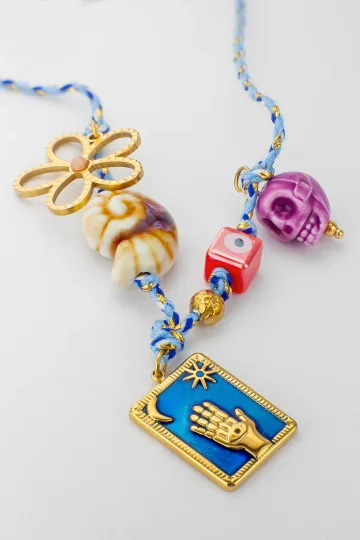
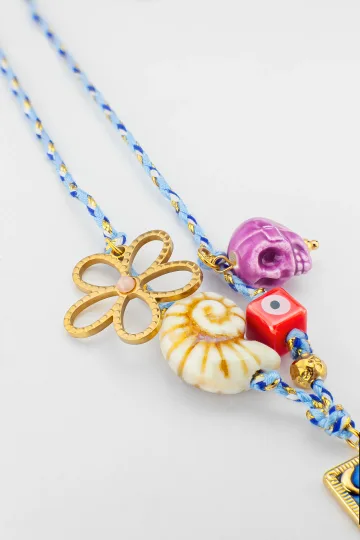
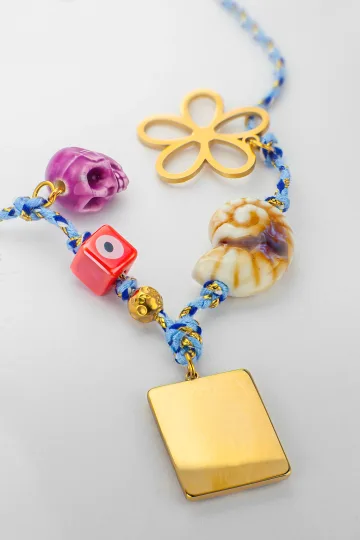
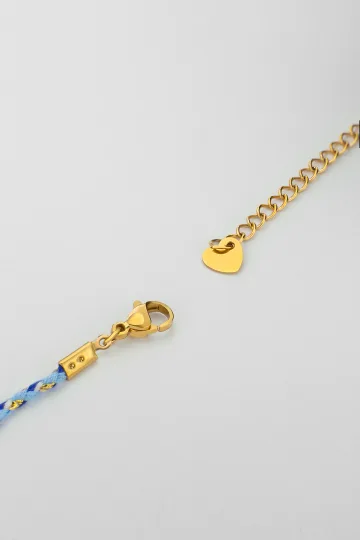
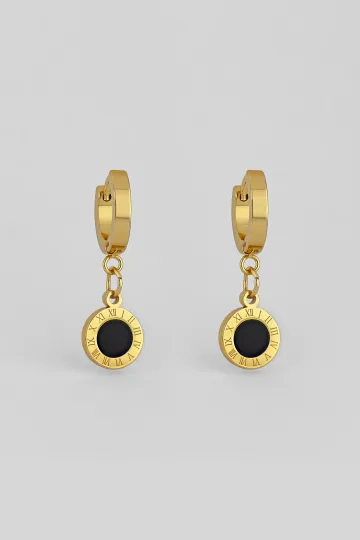
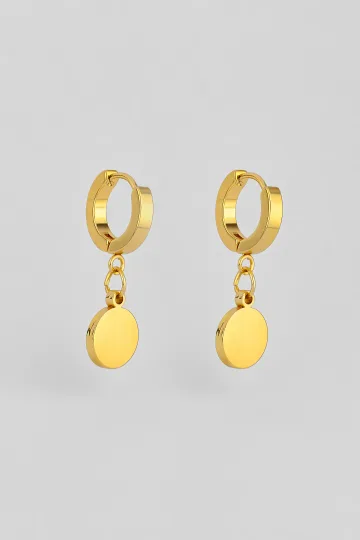
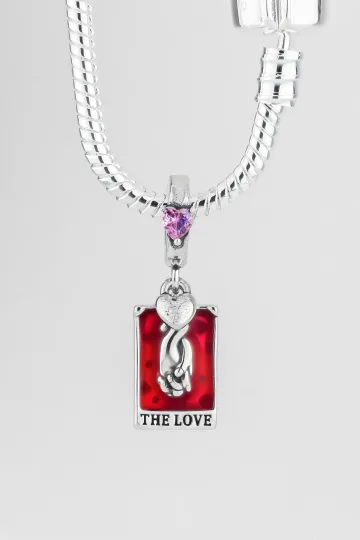
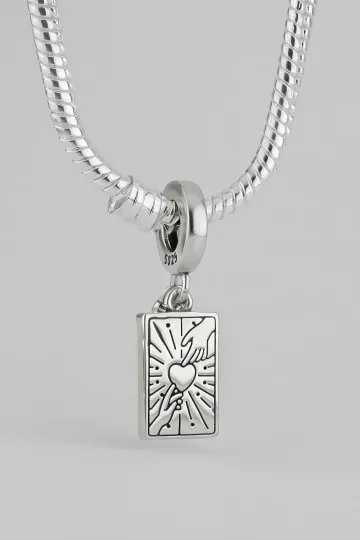
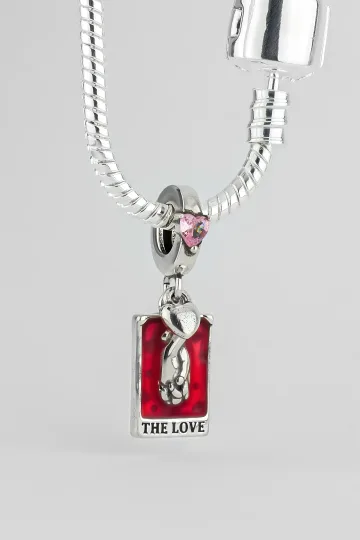
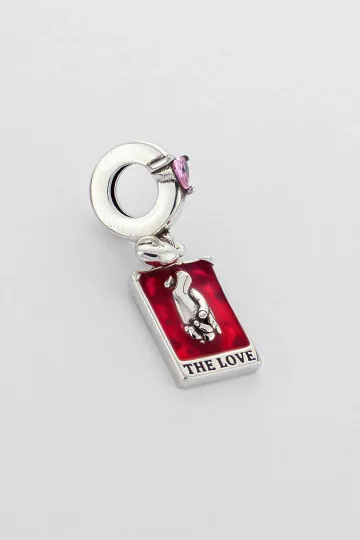
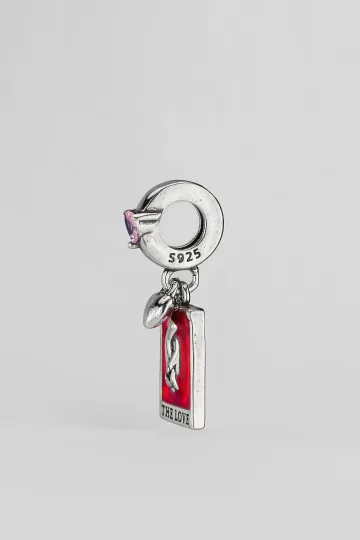
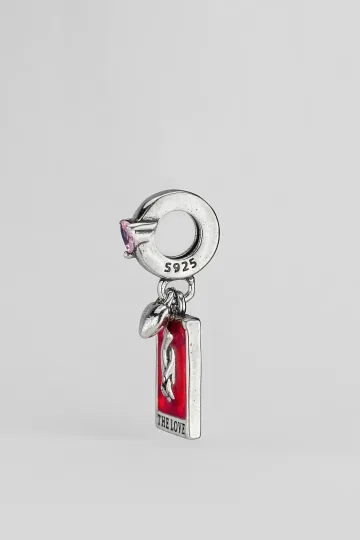
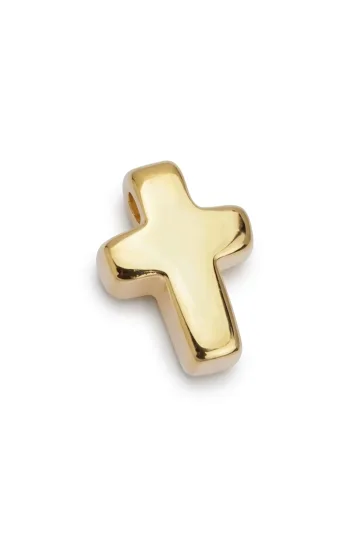
Wear the symbol, don't just read about it. These are in stock:
A Gift to Yourself at Eighteen
Eighteen often coincides with the first money of your own: an allowance, a first job, birthday cash. For some, the chance arrives to buy something for themselves.
Buying yourself a piece at eighteen with your own money is a particular gesture. It is the first independent decision about what to wear. Not what was handed to you. What you chose yourself, because you already know who you are. There is more on this logic in our article about a gift to yourself and in the guide to jewelry from a first paycheck.
The main principle when buying for yourself: not the most expensive piece, but the one that will be worn. A piece with a personal symbol that matches who you are right now. It may be the first conscious jewelry decision of your life, and it already says something about character.
Symbols for a First Adult Piece
Not every symbol fits the moment of coming of age equally. Below are the ones with a direct link to transition, growing up and self-definition.
Tree of Life: Roots and a New Crown
The tree of life is one of the oldest and most universal symbols of humanity. The roots reach deep into the earth. The trunk links two worlds. The crown stretches up and branches out. It is the image of a person who has a foundation, a family, a history, values, and who also has growth: new decisions, new places, new possibilities.
At eighteen the tree of life lands precisely. It says: you do not break with the past, you grow out of it. The roots stay, the crown widens. It is a good way to speak to someone who at eighteen leaves to study in another city or country: distance does not mean rupture. The roots are deep. They hold.
Infinity: the Unbroken Path
The infinity symbol, a horizontal eight, reads as continuity. A path that does not end. Possibilities that are not exhausted. Movement without a finish.
At eighteen it is an image: there is a lot ahead, a great deal, this is only the beginning. It feels like eighteen is a finish line (the end of school, the end of childhood), but it is actually the entry point into a space that is not bounded. Infinity on a piece says exactly that.
Anchor: Values as a Foundation
The anchor became such a popular symbol for a reason. It is about stability in motion. The ship sails into the open ocean, the anchor lets it hold its place. A person develops, changes, moves forward, but they have something that does not change: family, principles, values, a foundation.
At eighteen, when the world starts changing fast and unpredictably, the anchor is a good reminder. It does not say: stay put. It says: you have something that holds.
Compass and Compass Rose: Direction
The compass and compass rose are symbols of navigation and self-definition. Someone chooses their own direction rather than going where they are pointed. A compass does not tell you where to go: it shows where you are and lets you set your own course.
At eighteen this is the image of the first real autonomy. You choose the profession, the place to live, the relationships, the values. A compass on the neck reminds you: you have a reference point, and that reference point is inside you.
The Fool from Tarot: a Leap into the Unknown
The Fool in Tarot stands at the edge of a cliff with a bundle on his shoulder. He looks ahead, not down. A flower in his hand, a dog at his feet. He is not afraid. He sets out on a journey without knowing exactly what lies ahead. It is the zero card: not an end and not a beginning, but the moment of the leap itself.
For someone who is eighteen, this is the most accurate card. Readiness to step into the new without a map. A piece with the Fool, for someone who understands the image, will be deeply personal.
Owl: Wisdom at the Start of a New Stage
The owl is a symbol of wisdom and education. At eighteen, which often lines up with the end of school and entry into university, the owl works on several levels: the start of serious study, watchfulness, academic tradition.
Athena's owl has accompanied academic transitions for three thousand years. To wear it on the neck at the start of university life is to keep a tie to a very long tradition close.
An eighteenth birthday often coincides with leaving school, and the piece for that double moment (graduation and adulthood at once) is covered in our separate article on jewelry for graduation.
Jewelry for Different Kinds of Eighteenth Birthday
An eighteenth birthday is not the same for everyone. One finishes school and goes straight to work. Another leaves to study abroad. A third stays in their hometown. A fourth has just come out of hospital. A fifth has just lost someone close. The gift should fit the actual situation.
The One Who Leaves to Study
Leaving home at eighteen is one of the sharpest transitions there is. A person walks out of a space they knew their whole life into an unknown one. Frightening and exciting at once. Jewelry here does a concrete job: it gets taken along. It is a small piece of home in a strange city.
For this situation the strong choices are: a tree of life (the roots stay, even when you leave), an anchor (something holds, even in the storm of an unfamiliar life), a pendant with the coordinates of home. These are anchor-pieces in the literal sense. They hold a tie to where the person came from.
The One Who Stays
Staying at eighteen takes courage too, when everyone around is leaving. A piece for the one who stays is more about the courage of choosing your own path rather than someone else's. A compass, a compass rose, are symbols about each person having their own course.
The One Who Starts Working
A first job at eighteen is a transition of its own. Jewelry here can become part of the work look. Modest, non-distracting formats are best: a thin chain, a small pendant, a slim ring. A piece that does not interfere with work but is present.
The One in a Hard Situation
For someone whose eighteenth birthday falls in difficult circumstances, what matters is not a "festive" piece but a "supportive" one. It is a subtle difference, but a real one. An anchor says not "congratulations" but "you are steady." Infinity says not "hooray" but "this continues."
Jewelry for a Combined Graduation and Eighteenth Birthday
In many countries, leaving school and turning eighteen fall close together or land within weeks of each other. That makes them naturally linked: one gift for both the coming of age and the end of school.
For a double occasion, a piece with academic symbolism is especially fitting: the owl as a symbol of wisdom and education, the tree of life as an image of a stage completed and a new one beginning. There is more on jewelry made specifically for graduation in our graduation jewelry guide.
For a family that wants to fold both events into one gift, a piece with a double engraving works well: the graduation date and the birthday date, or a name and a date, or a short line about the start of a new stage.
How to Wear a First Adult Piece: Practical Notes
A first adult piece often means the first experience of wearing serious jewelry regularly. A few practical points worth knowing.
Take It Off at Night?
It depends on the piece. Thin chains and pendants can be worn through the night: they do not get in the way or break in sleep. Rings are better removed at night, especially if they have details that can catch. Earrings are worn around the clock by many people for years. That is fine for quality silver or gold.
Take It Off in the Shower or Pool?
In the shower, with ordinary water and shampoo, sterling silver and 14K gold come out fine. In a chlorinated pool, silver is better off: chlorine speeds up tarnish. The same goes for seawater.
What if It Tarnishes?
Silver darkens with regular wear. That is normal oxidation. A soft silver cloth or a dedicated polish restores the shine in minutes. Deliberately oxidized (darkened) pieces should not be cleaned with ordinary polish: it will strip the oxidation.
When Is It Best to Take Off?
During hard contact sports (martial arts, heavy lifting). When working with chemicals. For surgery or medical procedures. Otherwise a piece can be worn constantly.
How to Store It?
Apart from other pieces, to avoid scratches. In a soft pouch or a closed box. Silver tarnishes slower in a closed space without air.
Customer reviews
Zevira is a real jewellery shop. Genuine payments, deliveries and customer thank-yous.
🥰🥰🥰 gracias
Ok, ¡gracias! 🙂
A Jewelry Collection as a Long-Term Project
A first adult piece often becomes the start of a collection. Not a collection in the sense of deliberate hoarding, but a slow accumulation of objects, each of which means something.
At eighteen the first pendant appears. At twenty a ring is added. At twenty-five the first gold. At thirty something with a stone. By forty a person has several pieces, each carrying a specific story. The collection forms not through buying but through living.
That is why the first piece matters. It sets the direction. If a symbol with personal meaning is chosen at eighteen, a person is very likely to keep choosing that way. Symbolic pieces become a language they use to speak about themselves.
If the first piece was fashionable without personal meaning, it usually leaves their life along with the fashion. Pieces with a personal symbol stay.
Jewelry as a Family Tradition
Some families build a tradition: at each child's eighteenth birthday a piece of a certain type is given. Matching bracelets. A ring with a family symbol. A chain that the mother received, and the daughter will too.
That turns the gift into something larger than a personal gesture. It becomes part of the family narrative. The piece says: you are entering a circle that had others before you, and will have others after.
Even if there was no tradition before, an eighteenth birthday is a good moment to begin one. The first generation of a tradition always starts somewhere.
Combining Pieces: How to Wear Several
A first adult piece often comes to someone who already has something: earrings, a bracelet, a ring. How to combine the new with the old?
One metal. The simplest rule: all pieces in one tonal family. All silver or all gold. This always works.
Mixed metals. Silver and gold together is no longer a mistake. There is more on the principles in our guide to mixing metals. The main rule: mix on purpose, not by accident.
A symbolic link. Several pieces with related symbols form an ensemble. An anchor and an infinity worn together say more than each symbol alone.
Different zones. A ring on the hand, a pendant on the neck, earrings. Three different zones complement rather than compete. Overload happens when one zone holds too much.
At eighteen you wear a thin chain every day, not chandelier earrings for one gala. Adulthood keeps its voice down, and I won't hear otherwise.
What to Wear a First Adult Piece With
Dozens of these first pieces have passed through my hands, and the question is almost always the same: how do you wear it so the piece enters a life rather than settling in a box. Here is what I actually recommend.
What do you wear a first piece with every day? I recommend a thin chain with a small pendant over a T-shirt, a sweater or a plain shirt. It peeks out of the collar and does not argue with the clothes. A light top lifts the metal, a dark solid one turns the pendant into an accent. A signet ring I would keep for everyday looks, since it adds character even to jeans.
Which chain length suits which neckline? For an open, boat or V neckline I suggest a mid-length pendant around 45 cm, landing right in the open zone. For a high, closed collar I choose studs and a ring and tuck the chain under the fabric. If you are unsure, 45 cm is the middle ground that works with almost everything.
How do you wear a piece to study or a first job? Here I recommend restraint: a modest pendant under a shirt or blouse, a slim ring, small studs. The piece is present but does not distract or look loud in a lecture hall or an office. The same everyday principle, only quieter.
How do you build an evening look? For the evening I suggest bringing the piece out from under the clothes and making it visible. A pendant over a sweater or in a deep neckline, earrings with a stone that catch the light, a ring as an accent. On dark, solid fabric the metal reads more clearly than on a busy print. I pick one thing as the lead and quiet the rest.
How do you wear several pieces at once? I suggest keeping everything in one metal or mixing on purpose, not by accident. A ring on the hand, a pendant at the neck, earrings: three separate zones that complement rather than compete. Layers of two or three thin chains at different lengths work at any age. The main rule: a piece should match how a person dresses every day.

Turn on your camera, pick earrings, a pendant or a ring, and see the piece on yourself in real time.
Switch items in one tap.
Everything runs in your browser: no photo or video is ever uploaded.
How to Talk About the Symbol at the Handover
The moment of handing over a piece calls for a few words. But the words should be just enough to carry the meaning without overloading the moment.
A good format: one sentence about the symbol and one about the person. "This is the tree of life: your roots are in our family, your crown is already in your own life." Or: "An anchor is what holds in a storm. You know you have it."
What to avoid: a long history of the symbol, a lecture on mythology, a list of every possible meaning. One layer of meaning, delivered simply.
After the handover, let the person hold the piece, put it on, look at it. That matters more than words.
Budget: How to Think About Cost
The cost of a piece at eighteen is a question many ask directly or weigh in silence. A few reference points.
There is no correct sum. A modest silver signet with engraving from a grandmother weighs more emotionally than an expensive piece from a distant relative who chose it at the last minute.
But quality matters. A piece in sterling silver or 14K gold is worn for decades. A piece in cheap plated alloy flakes within a year. On a tight budget, a small quality silver piece beats a large one in poor metal.
Engraving adds to the cost and to the meaning. It is an investment that pays back as the emotional weight of the gift.
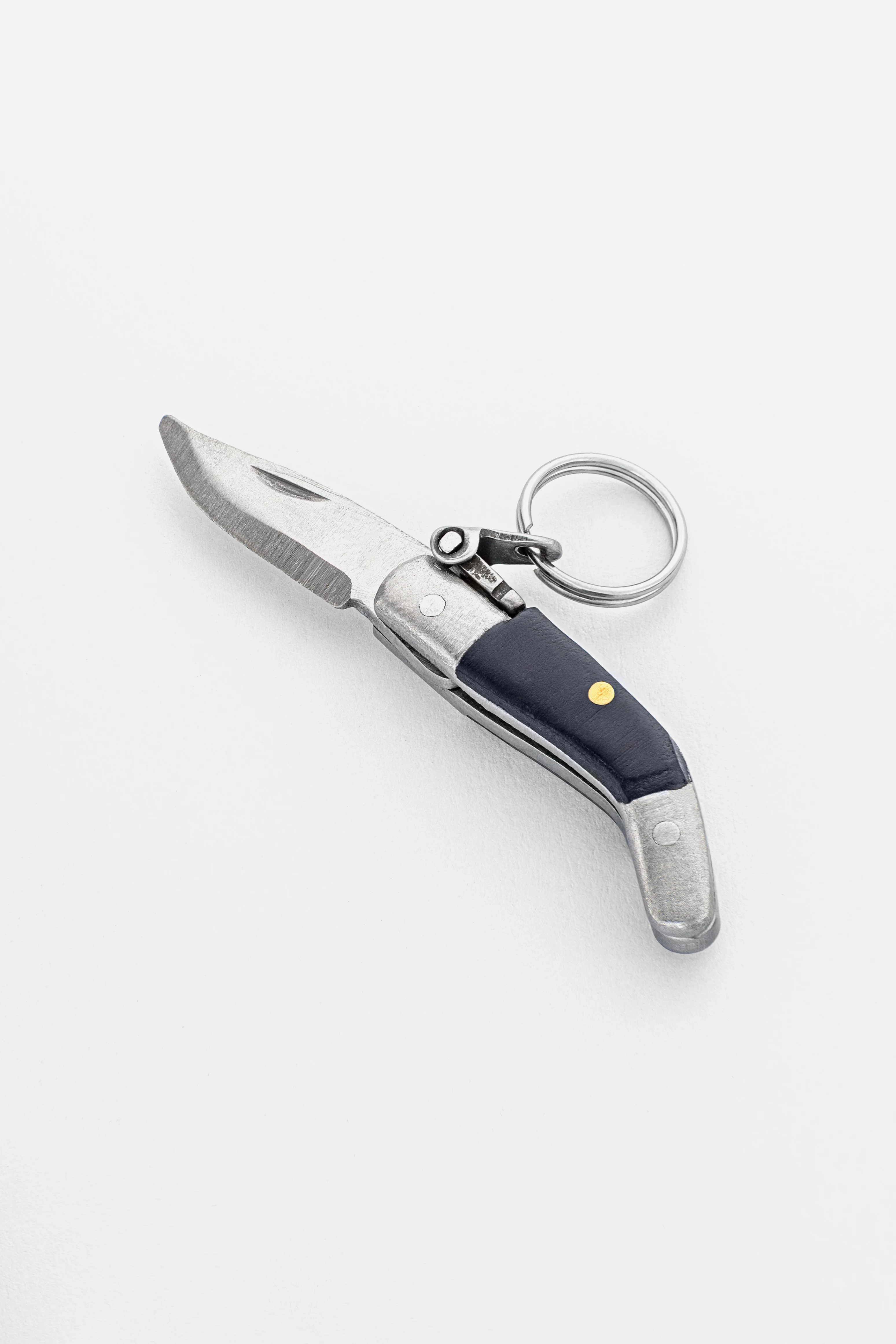
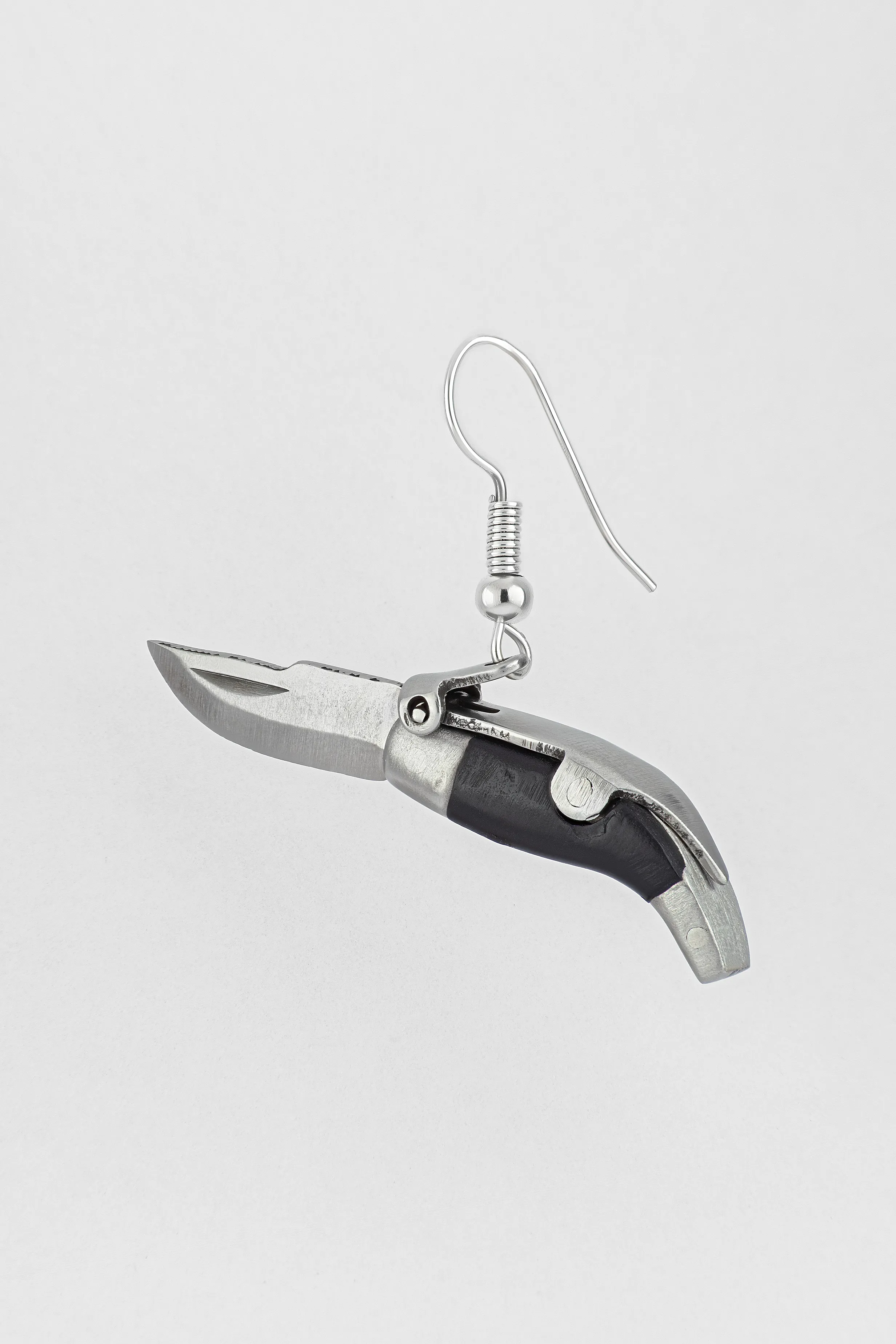
Artisan-crafted CAPAORA navaja pendant
A 40 mm stainless-steel navaja with a real folding mechanism and Palanquilla lock. An affordable gift to remember.
A code for blog readers:
10% off your first order
Authentic · Maker's guarantee · Ships from Spain
Jewelry and Education: When Eighteen Meets University
Across most of Europe and the English-speaking world, eighteen is the year of starting university or vocational training. That transition is no less important than legal adulthood.
A piece tied to education lands precisely at this moment. The owl as a symbol of wisdom and study is direct academic symbolism, recognized without explanation. The compass as the image of choosing your own direction (which profession, which city, which university). The tree of life as the image of growth in a new place.
A gift for starting university can be combined with a gift for the eighteenth birthday when the events sit close together. A double event calls for a piece that speaks of both growing up and the start of an academic path.
Jewelry as the Start of a Conversation About Values
An eighteenth birthday is often a moment when parents want to say something important. A piece can become the occasion for that conversation, not the conversation itself.
If a compass is given, it is a chance to talk about what it means to choose your own path. If a tree of life, about family roots and how they do not break when children leave. If an anchor, about the values that hold in hard situations.
The piece does not replace the conversation. But it creates a natural way in. That matters especially in families where such conversations are otherwise hard to start.
Trends Versus the Timeless: How to Choose Right
Every year new jewelry trends appear. Ultra-chunky chains. Pieces with slogans in the language of pop culture. Accessories in the aesthetic of one subcultural moment. All of it lives a few years, then dates.
For a gift at eighteen it pays to think differently. The question is not "what is trending now" but "what will be worn in twenty years." A different question, and it calls for a different answer.
Classic symbols (tree of life, anchor, compass, infinity) belong to no particular year. They were worn in the 2000s and will be worn in the 2040s. A piece with such a symbol does not give away its time.
Simple forms (a thin ring, a smooth pendant, small earrings) are timeless too. Simplicity does not date.
Personal engraving (a date, initials, coordinates) makes a piece both unrepeatable and eternal. In thirty years it will be a document of a specific moment, not a reminder of a specific trend.
If a family hesitates between "interesting and current" and "classic and lasting," the answer for an eighteenth birthday is almost always the second. The current moment passes. The piece stays.
Three Style Archetypes
A piece at eighteen can be chosen in one of three styles. Each gives a different result, but all three are equally valid.
Classic: a Piece for Decades
A thin gold chain. A smooth ring without pronounced decoration. Modest studs. A piece without a trend, without forced symbolism. It will be worn at twenty-five and at forty the same way as at eighteen. The choice for those who think long-term.
The classic does not date precisely because it was never especially fashionable. It has no particular time. Thin gold at eighteen looks the same as at forty, and the same as it looked at eighteen fifty years ago.
Symbolic: Personal Meaning in Metal
A pendant with an anchor, a tree, a compass, an infinity sign. A piece that has content beyond form. Each time it comes out of the box, it says something. Each time someone asks what it is, there is a story to tell.
The choice for those who want content from a piece beyond its form. Who value the meaning layer of things.
Modern Minimalism: Form Without Excess
Geometry, thin lines, deliberate simplicity. A piece that fits any look precisely because it is not overloaded. One element, one form, nothing extra.
The choice for those who value purity of form and do not want a loud statement. A piece as a stroke, not the center of the look.
Engraving: Words That Stay in the Metal
Engraving turns a piece into a message. A few options that work for eighteen.
A date. Just the number: 18.05.2026. Or the date of birth, or the date of the eighteenth itself as the date of passage. In twenty years a person looks at it and remembers.
Parents' initials. On the back of a pendant or inside a ring: "MV + AV" or "from Mum." Not an inscription for display. The private side, seen only by the wearer.
Coordinates of a place. Where a person was born, or a place that matters to the family. A grandparent's village. The house where they grew up. Coordinates are exact to the meter and yet legible only to someone who knows the story.
A personal message. A short line carried into metal. "You are ready." A name and a date. One word that says it all. A message chosen for one specific person and fitting no one else.
The celebrant's initials. Three letters, theirs alone. A signet with a monogram or a pendant with the first letter of a name. The simplest and at the same time one of the most personal options.
A practical note: engraving takes from a few days to a week depending on the workshop. Worth factoring into the timing of a gift.
Leave your email, we'll send your discount code. No spam, unsubscribe anytime.
The code arrives by email, valid on your first order.
Jewelry Versus Other Gifts at Eighteen
Often the choice is jewelry or something else. Each option has its own logic. A comparison helps explain why jewelry holds a special place among gifts for this occasion.
Tech (a phone, a laptop, a tablet) solves a practical task right now. It dates in a few years, sometimes faster. It carries no symbolic content about the specific person.
A trip gives an experience that cannot be bought any other way. That experience is important and irreplaceable. But it leaves no physical trace. Photos remain; the feeling of the trip does not return.
Money in an account is a pragmatic choice. The person decides where to put it. A respectful gift, but it says nothing about who the person is and what those close to them see in them.
A car, for families with the means, is a large practical gesture. It changes quality of life directly. It carries no intimate symbolic dimension and wears out or changes over time.
A piece of jewelry is small in size. But it has a quality none of the others have: it stays. It is worn every day. It outlives phones, laptops, perhaps cars. In thirty years a person takes out the pendant and remembers who gave it and what they said.
Myths About Jewelry at Eighteen
Eighteen in a Hard Time
Sometimes an eighteenth birthday falls in a difficult season: illness, recovery, a rough transition, the loss of someone close. A gift in such a situation carries an extra load.
Here a piece with a supportive symbol works differently than a festive gift. Not "you are entering the big world" (which can sound frightening to someone in a hard spot) but "you have a foundation" (an anchor), "you will manage" (a compass), "this is not the end, it is a path" (infinity).
It matters not to overdo the spoken explanation. The piece speaks on its own. Words of support are needed, but they should not turn into instruction or a life lesson. Giving the piece with a short explanation and letting the person grow into its meaning is the best approach.
Some parents in a hard season deliberately choose a piece with a specific meaning: "You are strong, like an anchor in a storm." It works not as a slogan but as an object the person holds in their hands.
When and How to Hand the Gift Over
The moment of handing over a piece changes how it is received. The same piece, given in different ways, creates a different experience.
On the birthday itself, among the other gifts. The classic. Everyone together, the table set. The piece appears among the rest. It works, but it slightly blurs into the general flow of gifts.
On the birthday itself, last and separately. The main gifts handed out, and then: "One more thing." A small change, but a significant one. The piece stands out, it is last, it is remembered more strongly.
At the school graduation ceremony. An eighteenth birthday often coincides with leaving school. The piece fits being handed over at graduation, in the moment when both events cross: the end of school and the start of adult life.
At a family dinner, only the close ones. No outsiders. More words, more explanation, a more intimate gesture. Especially suited to pieces with a family history.
One on one, as a separate gesture. A mother and daughter at a cafe. A grandfather and grandson on a walk. No audience, no ritual, just "here, this is for you, I wanted to give it to you in person." Such a handover is often remembered best precisely because there is no ceremony in it, only attention.
A Practical Question: Silver or Gold at Eighteen
One of the most common questions when choosing a gift: which metal? The answer depends on a few factors.
Sterling silver 925. More accessible in price. Universal as a start. Works with most looks. The one downside: it tarnishes with active wear and needs an occasional wipe with a soft cloth. Silver with a dark oxidized patina shows the detail of a symbol better and reads more expressively.
14K gold. More durable, does not tarnish over time. Needs minimal care. Heavier in symbolic terms in a gift context: parents and grandparents traditionally choose gold for serious gifts on an important occasion. A little pricier, but noticeably more practical for long-term wear.
Yellow or white gold? Yellow gold is warmer and more traditional. White is more neutral, closer to silver in color but without the need to polish. Both work; it is a matter of personal style.
A practical recommendation. If a piece is chosen for daily wear over years, 14K gold is more practical. If it is a gift from a friend, or for someone who wears many different pieces and experiments with style, sterling silver is a fine choice. The symbol and the quality of the work matter more than the metal itself.
Long-Term Wear: How a Piece at 18 Becomes a Piece for Life
A piece bought at eighteen can become a constant companion for decades. But that takes a few qualities.
A neutral or deep symbol. A symbol that will not embarrass at thirty-five or fifty. Tree of life, anchor, infinity, compass are ageless symbols. They work at eighteen and at forty and at sixty.
A wearable size. Not too large, not too forced. A piece that combines easily with different looks and asks for no special occasion.
Quality metal and execution. Sterling silver with good care lasts decades. 14K gold needs almost no care. Poor execution breaks or looks cheap within a year or two.
A personal tie. A piece worn constantly usually has a personal story. A gift with engraving or an explained symbol becomes part of that story.
Many people who own such a piece describe it the same way: "I barely notice it, but if it is gone, something is wrong." That is the highest degree of a piece integrated into life.
Case: Parents Postpone the Gift
It happens that parents put off a serious gift. Not because they do not want to, but because they wait: maybe at twenty, maybe when there is a job, maybe when a good university is reached. Or: too young still for gold, too early for a serious piece.
The logic is understandable, but it often means the moment passes. An eighteenth birthday is a specific point with its own symbolic weight. At twenty or twenty-five that weight is different. It is no longer the first adult piece. It is just a piece.
If the doubt is silver or gold, the answer is already above: both are fine, it is a matter of budget and longevity, not a rule. If the doubt is whether it is too early, it helps to recall: Bar Mitzvah at thirteen, Quinceañera at fifteen, Sweet Sixteen at sixteen. Each culture sets its own moment. Eighteen is the official line in the European and English-speaking tradition. Waiting longer means missing a moment that has a name.
A First Piece and the Sense of Self
A first serious piece often changes how a person feels. It sounds like an exaggeration, but it is an observable fact. To put on something that fits you, that expresses something about you, that is made of real metal: that is a different feeling than costume jewelry.
Young people who got a first adult piece at eighteen often describe it simply: "I felt more grown up." Not because the piece made them grown up, but because it matched a new sense of self. It was a witness: yes, you are no longer a child, this piece is for you.
The effect works especially well when the piece is chosen deliberately and handed over with an explanation. Then the object becomes a recognition.
Family History Through Jewelry: Examples
A few real formats that recur across different families.
A mother to a daughter at eighteen. A mother takes off her hand the ring she wore through her whole family life. "It was given to me when I was eighteen. Now it is yours." The daughter understands: this is not a ring from a shop. It is a ring that saw the birth of children, deaths and weddings. It carries time.
A father to a son. A father takes a silver chain out of a box, one he has not worn in years. "Grandfather gave it to me when I was twenty. I did not always wear it, but it was always there. Now it is yours. Wear it." A handover of an object and a thread between men.
A grandmother to a granddaughter. A grandmother at eighty takes off earrings she wore since youth. "I bought them myself, with my first paycheck. At a moment just like yours now. Take them." A story of independence passed from one generation to the next.
A grandfather to a grandson. "This is my compass. I was at sea, it was always with me. Now it is yours. Go where you want, but know where north is." Maybe the grandfather was never at sea and the compass was bought yesterday. It does not matter. The message matters.
These stories are not the exception. They recur because jewelry is one of the few formats that lets you pass something living from generation to generation without words.
Pieces with a Personal Symbol: Why This Is Not "Esoterica"
People sometimes get self-conscious when symbolic jewelry comes up. It can seem mystical or unserious. But symbolic pieces are worn by millions who never gave a thought to the esoteric.
A woman with a small cross on her neck does not think about theology each time she puts it on. A man with an anchor on a chain does not think about sailing ships. The symbol works on another level: it is there, it is present, it says something about who wears it without needing to be explained each time.
A tree of life as a piece at eighteen is not the occult. It is a very concrete image: a person has roots and has growth. If the image matches the reality of a specific person, the piece fits. If it does not, there is no point forcing symbolism.
Choosing a symbol is choosing an image that rings true for one specific person. Not mysticism, but precision.
Paired Pieces for Twins
A special case: an eighteenth birthday of twins. Two people, one birthday, two gifts.
The most natural approach: paired pieces that are linked but not identical. Two anchors of different sizes. Two trees of life in different metals. Halves of one symbol: one wears the left part of an infinity, the other the right.
Or the opposite: deliberately different pieces that underline each one's individuality. One gets a compass, the other an anchor. Different symbols, but both about transition. A recognition that two people raised together are still different.
Case: a First Piece After a Long Absence of Jewelry
Some young people reach eighteen having never worn jewelry at all. The family was not a jewelry culture, or they simply never took an interest. And suddenly at eighteen a first serious object appears.
For such a person, wearability matters most. Not the most beautiful or the most symbolic piece, but the one that will not feel foreign on the body. A first piece for someone who never wore any: thin, light, small. A bracelet on the wrist or a small pendant on a fine chain. Not loud. Simply the arrival of jewelry into a life.
If the first experience turns out comfortable, the next pieces come on their own. If not, jewelry is simply not this person's language, and that is fine too.
What to Do with a Piece That Is Not Worn
Sometimes a gift is received with thanks but not worn. It happens for different reasons: the wrong size, the wrong symbol, the wrong moment in life. What to do about it?
First: do not take offense, if it is a gift. A piece not worn right now may be put on later. Sometimes a symbol starts working not at once but when a person "grows into" it.
Second: if the piece truly does not fit, it can be adapted. Shorten the chain, remake it into another format, add an engraving that makes it more personal.
Third: if a piece is clearly not worn and will not be, the best route is an honest talk. "Do you ever put on that ring?" lets you either learn that it is worn (just not in front of you) or offer to swap it for something better suited.
Reworking a piece is sometimes the right step too: take the old one and melt it into something that fits the person right now.
What Not to Give at Eighteen
A few formats that look like a good idea but in practice do not work as a jewelry gift for this occasion.
Youth trends. Pieces in a very loud, deliberately youthful aesthetic. They date fast, together with the period itself. In three or four years they will look like a reminder of a specific style moment, not of an eighteenth birthday.
Status without meaning. A piece with a big label as a signal of "look, this is expensive." If there is nothing behind a piece except cost, it becomes just an expensive object. The gift turns into a declaration of means, not attention to a person.
Too heavy for daily wear. A piece worn once a year for a special outing drops out of a person's life. The best gift at eighteen is the one worn every day, the one that becomes part of the body.
A piece "for grown-up-ness" unconnected to the person. Massive earrings with large stones that look like "an expensive adult gift" but have nothing to do with the person's personality. The larger and more expensive such a gift looks, the more impersonal it turns out to be.
Send a friend a discount code, they save on their first order.
A History of Coming-of-Age Jewelry Gifts
The tradition of giving jewelry at a coming of age is not new. It has roots in several historical strands.
In Europe, from the Middle Ages on, men of age received a signet ring on coming into their inheritance. It was a literal legal gesture: a sealing ring meant the right to sign documents, to conduct business, to make decisions. No one stamps wax anymore, but the symbolic memory of the gesture survives.
In the English aristocratic tradition, girls received their first piece with a real stone at their coming out. It was an official announcement: here is a young woman, she is entering society. The piece was part of that announcement.
In Jewish tradition, the Bar Mitzvah set the link between the passage into youth and receiving a valued object. A watch, silver, gold are the traditional gifts that accompany the entry into responsibility.
Across many European cultures the practice of setting aside gold "for growing up" existed, less formally ritualized but real. Grandmothers and mothers put rings away "for when she grows up." A form of ritual too, simply a quieter one.
Jewelry and the First Adult Identity
Anthropologists speak of jewelry as a form of "extended body": an object that becomes part of how a person perceives themselves physically. We wear jewelry because it is beautiful, and because it says something about who we are.
A first adult piece at eighteen is the first experience of consciously choosing an external symbol of identity. Before that, jewelry was given by parents or chosen at random. At eighteen something arrives that carries adult meaning.
This experience is rarely neutral. Either the piece becomes part of the person, part of how they see themselves. Or it stays in the drawer of a box, because the symbol or the form does not resonate. The first happens when the gift is made with attention to the person.
Stones in Jewelry at Eighteen
Stones are not required, but when present they add a layer of meaning. A few options that work for this occasion.
A birthstone. Garnet for January, amethyst for February, aquamarine for March, topaz for November. A personal choice tied to the date of birth. A stone in the color of a zodiac sign does the same. Not superstition, but personalization.
A favorite-color stone. The simplest choice: ask or learn which color a person likes, and pick a stone in that color. Blue aquamarine or sapphire, green peridot, violet amethyst.
A stone with a symbolic meaning. Moonstone is linked with intuition and new beginnings. Labradorite with transitions and change. Garnet with energy and courage. If a stone is chosen for meaning, it is worth explaining at the handover.
No stone. A piece without a stone is often worn more easily and longer. It needs no special handling, does not fear a knock, does not fall from a setting. For a first adult piece worn every day, that is sometimes the best choice.
Size and Fit: Practical Points
Before buying, it is worth making sure the size is right. It matters more than it seems.
Rings. Finger size counts. If there is no way to check in advance, go a touch larger: a jeweler can size a ring up more easily than down. For a slim or a fuller build, factor that in. Many pieces can be made to order in the right size.
Chains. The chain length decides where the pendant hangs. 40 to 42 cm holds it at the collarbones. 45 to 50 cm at mid-chest. Over 50 cm lower. For daily wear 40 to 45 cm usually fits. For wearing over an open neckline, longer.
Earrings. If the ears are not pierced, earrings will need to be swapped for clips, or wait. Worth checking ahead. If the ears have been pierced a while, a standard post diameter suits most.
Bracelets. Wrist circumference runs from 14 to 18 cm in adults. A margin of 1 to 2 cm is needed for comfort. An adjustable bracelet is easier as a gift: it does not need exact fitting.
Men's Jewelry at Eighteen: a Separate Look
Men's jewelry deserves its own attention, because choosing for a young man at eighteen often raises more doubt than choosing for a young woman.
The main worry for givers: will he wear it? The answer depends not on gender but on character. There are young men who never put on jewelry and do not plan to. There are those who just need the right occasion and the right object.
How to tell which type the celebrant is? Look at what he already does. Does he watch how his clothes look? Pay attention to his appearance? Take an interest in symbols and history? Or is appearance entirely secondary to him? The answers point better than any general rule.
If a person is potentially open to jewelry but has not worn it: start small. A thin silver chain without a pendant. Or a small pendant with a symbol that is unmistakably his. Less risk than a massive ring or a complex piece.
If a person definitely does not wear jewelry: perhaps another format of gift is better. Or a piece with a very personal meaning, one he will open up to over time.
Jewelry as a Bridge Between Generations
Jewelry is unique among gifts in that it physically moves from hand to hand. A book is passed on too, but a book stays a book. A piece changes its wearer and, in a sense, goes on to live another life.
A grandmother's ring worn by a granddaughter at twenty-five looks different on her hand than it did on the grandmother's at seventy. It is not a copy of the situation. It is the continuation of an object in a new time.
That trait makes jewelry a special instrument for passing something between generations. A photograph shows the past. A story describes the past. A piece of jewelry enters the present, carrying the past with it.
At eighteen this is especially valuable. It is the moment when a person stands on the border between who they were and who they will become. A piece that came from the past, or that is given with the future in mind, stands exactly here, at this point.
Frequently Asked Questions
At what age is a first serious piece appropriate?
There is no single rule, but eighteen in the European and English-speaking tradition is the line at which a serious jewelry gift reads naturally. Earlier (thirteen, fifteen) is practiced in other cultural traditions. What matters more than age is meaning: the piece should match the transition a person is living through.
How to choose a symbol if you do not know the person's taste?
Ask those close who know them well. Or choose a universal symbol: tree of life, infinity, compass. They work for most people, because their meaning needs no special explanation.
Is engraving necessary?
Not required, but it adds depth. If there is time and the wish, an engraving with a date or initials turns a piece into a document. If there is no time, a quality piece without engraving is also a right choice.
Silver or gold?
14K gold is more durable and more practical for long-term wear. Sterling silver is more accessible and suits those who like to experiment with looks. For a gift with family weight, gold is the traditional choice.
Can you give a young man jewelry at eighteen?
Absolutely. Men's jewelry has stopped being a rarity or something that needs explaining. A signet with initials, a pendant on a silver chain, a bracelet. The point is to choose for the specific person's character, not for a stereotype.
What if you misjudged the symbol?
A piece stays a piece. But to hit closer next time, the best way is to ask: "Which symbol feels close to you?" A direct and respectful question.
How long can a good piece last?
Sterling silver with normal care lasts decades. 14K gold has practically no service limit with gentle handling. Pieces bought at eighteen are, in reality, often worn until fifty and beyond.
What chain length to choose for a pendant at eighteen?
It depends on how the piece will be worn. A 40 to 42 cm chain holds the pendant at the collarbones and suits daily wear under and over clothes. 45 to 50 cm drops it to mid-chest, a universal option for most looks. Longer than 50 cm suits wearing over a sweater or an open-collar shirt. If unsure, choose 45 cm: the middle ground that works with almost everything. An adjustable chain removes the fitting question entirely.
Will silver or gold suit someone with sensitive skin?
Sterling silver and 14K gold are tolerated well in most cases, because they are noble metals with minimal reactivity. Irritation is more often caused not by the metal itself but by cheap alloys with high nickel content used in plated costume pieces. That is why, for a first adult piece worn constantly, quality metal matters more than decoration: it reacts less often. If a person had a reaction to earrings or chains before, gold is usually tolerated better than silver, and white gold reduces contact with reactive components. With pronounced sensitivity it is worth checking the alloy before buying.
Conclusion
Jewelry at eighteen works for the same reason all ritual gifts work: it marks a transition. A person was in one status, now in another. That is worth marking with something more than words.
A good piece at eighteen is not necessarily expensive. It fits the person. It carries a symbol that says something important to exactly this person. Or it carries a story: hand to hand, generation to generation. Or it carries an engraved date that, in thirty years, will be remembered more precisely than any other gift.
The best pieces at eighteen are the ones worn every day, not taken out on holidays. The ones that become part of the body. The ones removed at forty with the memory: this pendant was given to me at eighteen. This exact one.
Whoever is choosing a gift at eighteen is looking for exactly that kind of thing. Not expensive, not fashionable, not correct by someone else's standards. The kind that stays.
Jewelry with symbols for a first adult gift: tree of life, infinity, anchor, compass, the Fool from Tarot, owl. Sterling silver 925 and 14K gold. Engraving on request.
About Zevira
Zevira makes jewelry by hand in Albacete, Spain. For an eighteenth birthday gift we work in a few directions.
Symbolic pieces: tree of life, infinity, anchor, compass, the Fool from Tarot, owl. Each symbol fits the moment of stepping into an independent life.
Formats: pendants, signet rings with initials, earrings, bracelets. Sterling silver 925 and 14 to 18K gold. Engraving on request: a date, initials, a personal message.
A piece given at eighteen can stay with a person for life. That is exactly how we make ours.