Jewelry Gift for Your Boss: What to Give a Manager That Gets Worn for Years
A gift for your manager is a political act. Any misstep (too expensive, too cheap, too personal, too impersonal) moves you into the category of "the difficult employee". This guide is about navigating the workplace scenarios where a jewellery gift works rather than backfires.
What follows is the practical mechanics: which occasions open a green corridor, which slam it shut, how to get past the recipient's instinctive "what do they want from me", how to split the budget, who signs the card, what to say at the handover, and the twelve situations that come up more than any others.
When a gift for your manager is appropriate, and when it absolutely is not
Every gift to a boss is read as a small political message. A gift with no occasion, or the wrong occasion, instantly becomes something to interpret. The team watches, HR watches, the manager watches, and sometimes the manager's manager watches too. The ethical zone is narrower than it looks from the outside.
The green corridor: when a gift is safe
There are four occasions where a collective gift to a manager reads as natural and creates no counter-pressure.
First. A career anniversary inside the company. Five, ten, twenty years of service is an objective professional marker, and a gift to mark it is framed as recognition of time rather than a personal overture. The logic is transparent: the number is visible to everyone, the occasion is not in dispute, the budget is easy to justify as proportional to the milestone. Such a gift carries no private subtext. You are congratulating a professional path, not a person.
Second. Leaving the company. When a manager departs for good (retirement, another industry, their own venture), the occasion is unambiguous and final. After departure no instrumental relationship is possible, so the gift cannot be read as a bribe or a bid for favour. It is a closing gesture, and that automatically removes it from the corruption zone.
Third. Promotion or a move up. If your direct manager steps onto the next rung of the hierarchy, a gift from the people below is a form of recognising shared work. Restraint matters here: the gift must not look like the people staying behind asking "take us with you". The best formats are cufflinks or a tie bar with minimal symbolism, or a silver locket with initials and no loud words.
Fourth. Retirement. The cleanest of all. The gift reads as the sum of a shared history. In Northern European corporate tradition the retirement gift is usually modest but substantial in meaning; in Mediterranean cultures it can be warmer and more ceremonial. Either way, a retirement gift is free of any subtext of self-interest.
The red corridor: when a gift is contraindicated
There are occasions on which experienced employees give a manager nothing at all, while newer ones give something and are then surprised by the cool response.
The boss's birthday. It feels natural, which is exactly why it is risky. A birthday is a private celebration, and a gift from subordinates intrudes on personal space. If the manager separates work from life (most seasoned managers do), a collective march with a present reads as a boundary crossing. The best strategy is a collective card, no collection of money, no jewellery. Where a workplace genuinely marks birthdays, keep the gesture neutral: flowers, a cake, a warm card with signatures.
Gendered holidays. International Women's Day, or any occasion built on gender, is a minefield in a corporate setting. A piece of jewellery for a female manager on such a day is instantly read as "we are giving you jewellery because you are a woman", not as professional recognition. A senior recipient reacts coldly: she is being told her role is secondary to her biology. The mirror image holds for a male manager and a gendered men's occasion.
Shared calendar holidays. New Year, the company's founding day, an industry day. The occasion is everyone's, not the manager's. All employees are in the same position, and singling out the manager with a personal gift creates an impression of favouritism.
A wedding or any strictly private event. A team gift to a manager for a wedding oversteps professional bounds. The standard formula is a card from the team and flowers when you meet, with no jewellery and no money collection.
A gift "just because". In a corporate setting "just because" does not exist. Any gift without an occasion reads as a bid: for favour, for advancement, for leniency. It is the riskiest format, and it should be abandoned.
What the law says
A gift to a manager in a large company or a public body is also a legal matter. Across the EU and the UK, public officials may not accept gifts above a defined threshold connected to their official duties. Anything above that has to be declared or surrendered to the organisation.
For private companies there are usually no direct statutory limits, but most large corporations adopt their own codes of conduct that mirror public norms. Banks, insurers and listed companies routinely set an internal ceiling on what a manager may accept from subordinates.
Tax matters separately: in many jurisdictions a gift from an employer to an individual above an annual allowance becomes a taxable benefit. This means a gift from the team (private individuals who pooled their own money) and a gift from the company (a legal entity through accounting) are two different legal cases with different tax treatment.
Anti-bribery codes in large corporations forbid accepting gifts from subordinates above a set value. A breach can lead to disciplinary action up to dismissal. The UK Bribery Act 2010 is among the strictest regimes: any gift that could influence a professional decision falls under the law regardless of size, so a clear occasion and documentation are essential.
The practical takeaway: before collecting money for a collective gift to a manager at a large company, find out the internal limit. It usually lives in the "Ethics and Compliance" section of the intranet. If there is no written limit, ask HR directly. A transparent question before the purchase beats an inquiry after it.
Ethics whose breach ends relationships
Beyond the law there is a thin layer of corporate ethics. Breaking it is not formally punishable, but it quietly destroys relationships.
A gift from one subordinate alone, bypassing the team. It reads as an attempt to stand out, and managers often react sharply. Even if the gift is accepted, the giver picks up the label of someone who curries favour.
A gift out of proportion to the giver's income. If a junior employee gives jewellery that plainly exceeds their usual spending, the imbalance shows. The recipient is cornered: to accept is to acknowledge an obligation, to refuse is to give offence.
A gift hinting at an expected decision. A gift before an annual review, before budget approval, before a promotion decision is not even a grey zone; it is a direct corruption signature. Even with clean intentions, the outside reading is unambiguous.
A gift outside internal policy. Any breach of written rules reads as a deliberate disregard for corporate norms.
The recipient's psychology: the "what do they want from me" barrier
A manager has years of gifts from subordinates, partners and suppliers behind them. Psychologically they learned long ago to tell a gesture from a bid. And they often read a gift as a bid even when the giver meant nothing of the sort.
On receiving a gift, a manager runs through a half-second appraisal. Who is giving. For what occasion. At what value. Alone or from a group. Cleared with the team or not. Within policy or not. The check is automatic, not cynical, built in by years of practice. So a manager's first reaction to a gift is not joy but the inner question "what do they want from me". This is not a bad character; it is professional hygiene.
How to remove this barrier
A few working mechanics. Each lowers the recipient's individual exposure and moves the situation into a publicly safe zone.
A collective gift instead of an individual one. When the gift comes from the team, no personal debt arises. The manager owes nothing to any one person; they accept a gesture from a group of ten or fifteen, and such a group cannot quietly conspire on a collective bribe.
A gift tied to a clear occasion. A career anniversary, retirement, the company's founding anniversary are objective calendar events. A gift to mark them is part of a ritual, not a freestanding gesture. The ritual answers "what do they want from me" in a single phrase: "to mark the date".
Transparency. If HR is aware, the card carries every participant's signature, the budget sits within the limit, and the situation is documented. Documentation removes suspicion.
Restraint in value. A gift in the lower or middle part of the allowed range works better than one at the top. A restrained sum reads as "we respect you, we are not trying to buy you".
Anchoring to shared history rather than private life. An engraving reading "From the marketing team, 2016-2026" is a professional document. "To the most wonderful boss" is a personal compliment that puts the recipient in an awkward spot.
Why a "career anniversary" works and a "birthday" does not
A career anniversary is a shared celebration: the team is marking something too, a common past and a joint journey. A manager's birthday is a private celebration the team has no claim on. A gift for a professional milestone recognises something shared; a gift for a birthday intrudes on the private. An experienced manager almost always accepts the first warmly and the second coldly, even if the outward reaction looks identical.
What to expect from the reaction
Do not expect open delight. A senior manager rarely shows emotion in front of subordinates, and that is normal. Restrained thanks and a short "thank you to the team" is already a good reaction. A clarifying question about the occasion or the engraving is a sign of real interest.
Do not expect immediate wear. An experienced manager often sets the piece aside and wears it for the first time only weeks later. This is not rejection; it is a way of absorbing the gift.
Do not expect a thank-you dinner. Managers rarely respond to a collective gift with individual thanks to each person. At best a short shared "thank you" at the next stand-up. That is an adequate reaction.
Owners and hired directors react differently
The owner. It is their company, money and reputation. A gift is read through the "workers to employer" relationship, and the "what do they want from me" risk is minimal: an owner does not need approval from subordinates. They are more often comfortable with a more valuable gift, because they are not accountable to a board on the matter. Their taste tends to be classic, formed on time-tested symbols of status.
The hired director. More complicated. They answer to a board, to shareholders, sometimes to compliance. Every gift passes the "how will this look in the report" test. So keep the budget in the lower part of the range, treat documentation (card, signatures, register entry) as mandatory, and lean towards a functional piece (cufflinks, signet) over a decorative one.
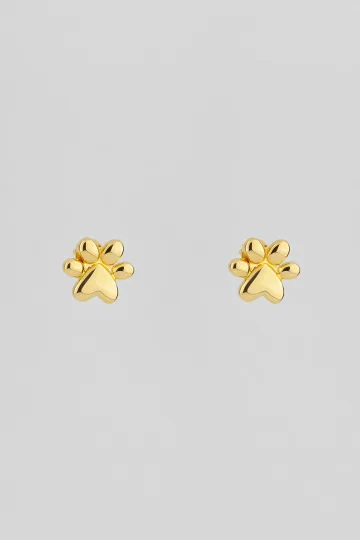
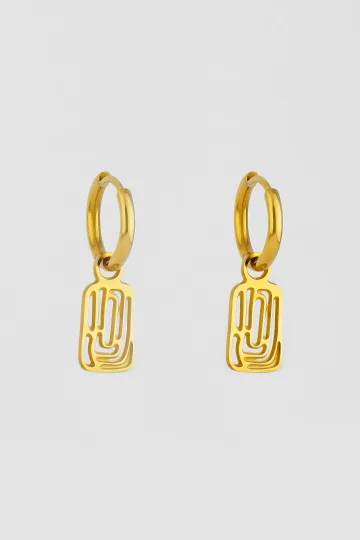
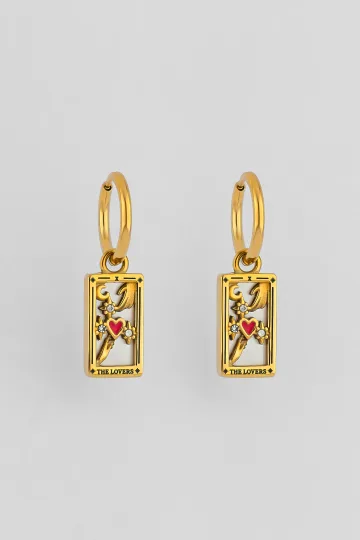
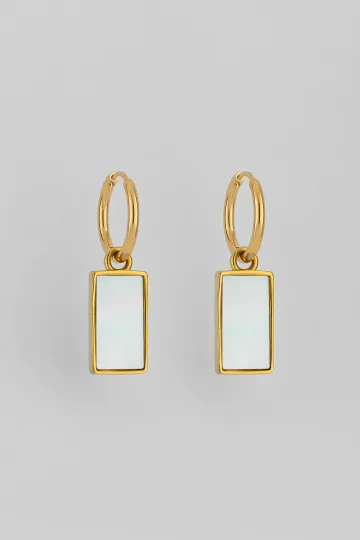
Wear the symbol, don't just read about it. These are in stock:
Twelve scenarios and their solutions
Real corporate practice boils down to twelve recurring situations. Each has a format that works with minimal risk.
Scenario 1. From the team for a company anniversary (5-10 years)
The most common and safest scenario. The date is tied to the official start date or to the move into the current role. The team of direct reports pools for a collective gift.
Format. A silver piece with engraving for five years; for ten years something more substantial, in gold. Engraving: years together ("2016-2026"), the department name, no emotional wording, on the inner side. Names can be engraved only if there are few of them (up to eight); more often names go on the card and only the team name on the piece.
Handover. Public, in front of the team, at the next work event. A few words from the most senior of the reports. Not pathos, but specifics.
Scenario 2. From a subordinate for the manager's promotion
A delicate scenario: the manager moves up a rung and stays in the company. The gift comes from you alone or from a few of the closest reports.
Format. Cufflinks or a tie bar with minimal symbolism. Engraving: initials or year, without the words "from your subordinates" (it sounds like a pledge of loyalty). The gift must not look like a bid of "take me with you". If in doubt, limit it to a congratulatory card. Hand it over privately, in a small circle.
Scenario 3. From a departing employee to the boss
You are the one leaving and want to leave the manager a parting gesture.
Format. Not jewellery. A book, an album of team photographs, a photo project. Jewellery here reads as "make sure you remember me well", not a dignified position. A strong format is a book with a few words from each colleague. Assembled over two or three weeks, it is valued above most gifts. Hand it over on your last working day, in person, without fanfare.
Scenario 4. From the whole company for retirement (35+ years)
The most ceremonial scenario. A gift from the entire company or a large division.
Format. A watch as a symbolic object, or jewellery in 14K-18K gold. Alternatives: a substantial locket, a signet engraved with the years of service, distinctive cufflinks. Engraving: full years of service ("1989-2026, 37 years"), the company name, the role. Restraint is not needed here: the occasion is final and suspicion of corruption is impossible.
Note. The budget here is usually higher than standard, and that is fine. What matters is that it is comparable to what the company gave others leaving in similar circumstances. The handover is public, with speeches, in front of the team; the most senior leader presents the gift.
Scenario 5. For the boss's wedding (if you are not a close friend)
Format. Do not give jewellery. At most flowers when you meet, a card from the team, a shared dinner. A wedding is strictly private, and the team is not family. Jewellery reads unambiguously as an excessive intrusion into private life. Exception: a colleague who is genuinely a close family friend may give an individual gift as a friend, not as a subordinate, but that is their own business.
Scenario 6. For a female boss turning 50
Format. A capsule pendant engraved with the date she joined the company. An object for daily wear with personal meaning. Engraving: the joining date on the front, the department name on the back.
Note. Balance is needed. You cannot tip into excessive "femininity" (hearts, bows), but you also cannot make the gift so technical that it reads as "we forgot you are a woman". A capsule pendant with a neutral engraving lands in the middle: a feminine format, a professional content. Hand it over in public, with a few words from the most senior report.
Scenario 7. For a male boss turning 60
A sixtieth birthday is a significant milestone for a male manager, often coinciding with talk of succession. There is a fuller treatment of this specific date in the separate guide to a 60th birthday jewellery gift.
Format. Cufflinks or a tie bar with a miniature of the company headquarters. An object for formal dress that reads as a professional accessory. Engraving: the office coordinates in GPS format on the back, the company's founding year or the year he took the role. The miniature of the building or an abstract district map is laser-engraved on the front, without sentimentality.
Hand it over publicly, with a speech. If the man wears cufflinks, show him the miniature is engraved on these specific ones and offer to set them into his cuffs straight away.
Scenario 8. From a branch to a regional director
A branch team congratulates the director responsible for the region. These are not direct reports in the strict sense, and the gift is more symbolic.
Format. A map of the branch city engraved on a silver or gold plate: a pendant, a desk plaque, or an insert for an organiser cover. Engraving: the city outline with the branch address marked, the branch founding date, the signatures of department heads around the edge. A city map is associated with the team and geography rather than one person, so it raises no suspicion.
Hand it over during the director's visit to the branch. If there are several branches and each wants its own gift, coordinate the formats in advance, or the director ends up with a dozen identical maps. A good approach: each branch makes a fragment of a shared regional map.
Scenario 9. Inside a department for the boss's birthday
The red corridor, but it comes up too often not to address separately.
The best alternative is not jewellery: a bouquet, a signed card, a cake. If it must be jewellery, then only collective (never from one person), in the lower part of the budget, with a neutral engraving (no birth date, initials at most). A manager's birthday is the most common situation where a team misfires: on the impulse to "do it properly" they buy a piece that then never gets worn. At the slightest doubt, choose a non-jewellery format.
Scenario 10. When the boss relocates to another office or city
The manager moves within the same company. The team wants to see them off.
Format. A pendant or pin with the coordinates of the city being left or the silhouette of the current office. Engraving: the office coordinates in latitude-longitude, the start date and the date of departure. The gift works as a marker of a stage: the manager closes a local chapter, and the coordinates on the metal become a reminder of the place. Hand it over at the farewell meeting with the team.
Scenario 11. At an IPO or a company anniversary
A scenario for start-ups and companies passing a significant milestone.
Format. A commemorative coin with an issue number, set as a medallion or a pin. Each key employee gets a copy with a unique number and the same date. Engraving: a logo or event mark on the front, the series number on the back (for example, 7/50), the recipient's name, the date. This is a gift to both manager and team at once: the number personalises, the series unites. Hand it over at a company ceremony, each person receiving their copy in a box marked with the number.
Scenario 12. At the close of a major project
A scenario for project teams: a product launch, the opening of a division, the delivery of a programme.
Format. Cufflinks or a pin with a miniature of the project's key artefact: the product silhouette, a graphic mark, the launch date. Engraving: the project name or internal code, the start and end dates, the names of core participants on the back. Only participants recognise the artefact; to an outsider it is an abstract pattern. Hand it over at the internal project-close ceremony.
What works in a gift: a unique code, not a standard
Strong gifts to a manager rest on one principle: a gift works when it carries a code that only the participants of a specific story understand. It might be a fragment of a shared past (the company logo, an anthem, the office coordinates), a professional code (a formula the strategy was built on; an issue number), or a physical object with a biography.
A few formats from practice that land precisely:
- A silver pendant with a miniature of the company's first logo. If the first version was drawn by hand at the start and survived, the digitised image on a silver disc becomes a document of the relationship rather than a neutral souvenir. For a creative leader the logic of choice is unpacked further in the guide to jewellery as a gift for an architect or designer.
- Cufflinks engraved with a professional formula or metric the manager's strategy was built on. A technically precise rather than sentimental code suits a pragmatist.
- A series of named pins with issue numbers at an IPO: the founder gets number 1, the other key employees their own. The unique number personalises, the shared series binds everyone into one story.
- A medallion with the coordinates of significant places on a shared journey. For those who know these places by heart, it is no longer an extra object but a document of a biography.
- A pendant carrying a fragment of an institution's history (a bar of an anthem, the founding date, a symbol). In education and culture, where budgets are limited, precision of content compensates for a modest cost; we have a separate look at which jewellery suits teachers.
A standard gift "to a manager as a manager" loses value with every new identical unit. A director of a large company has dozens of generic gifts behind them, and one more in the series provokes no reaction. A gift with a unique code from a shared history cannot be repeated or replaced. What matters is not the sum but the precision of content: a modestly priced piece with the right engraving works harder than an expensive one with a standard message.
Customer reviews
Zevira is a real jewellery shop. Genuine payments, deliveries and customer thank-yous.
🥰🥰🥰 gracias
Ok, ¡gracias! 🙂
Etiquette: budget, who signs, how to present
The etiquette of a manager's gift is a set of living constraints whose breach damages how the giver is perceived or how awkward the recipient feels.
Budget relative to income
The base rule: an individual gift from one subordinate to a manager should not exceed roughly five percent of the giver's monthly income. Beyond that line a gift starts to read as a form of dependence. The logic is that this is a sum a person can spend on a one-off gesture without harming their budget, roughly "one of twenty working days". At different income levels the absolute figures differ, but they are perceived as equivalent gestures.
If the gift is individual and the income share is higher, an imbalance appears: the recipient feels it and automatically asks "what do they want from me". In a collective gift the rule works differently: the budget is split among participants, each contributing within their own five percent, and the combined sum already allows a serious piece.
European norms are stricter. In Germany the tax limit on a gift to a business contact is low, and large corporations set their own limits below the statutory one, which narrows the choice to the lower segment of silver. In Scandinavia similar rules combine with a culture of equality, where even a legal gift above a certain sum draws suspicion. In the UK the Bribery Act 2010 is one of the strictest regimes: any gift that could influence a professional decision falls under the law regardless of size, so a clear occasion and documentation are required.
Who signs the card
The card with a collective gift is both a legal and an emotional document. Legal, because the signatures of all participants fix the collective nature of the gesture and the absence of individual giving. Emotional, because the words the metal cannot speak live there.
In small teams (up to fifteen people), everyone who chipped in signs, each in their own hand, legibly. In large teams the subgroup leaders sign, and a full list of names is attached on a separate sheet. If someone did not contribute but wants to sign, they sign: a signature is a human gesture, not a financial act.
The main text is written by the initiator or by whoever can write with specifics. Not necessarily the most senior, since quality matters more. A template "Dear Mr Smith, congratulations on your anniversary" works worse than three precise sentences from someone who thought about what to write. The optimum is half a page of handwritten text plus signatures.
How to present
The handover is part of the gift. The right piece, presented clumsily, loses half its effect.
Public handover. At a corporate event, in front of the team. Suits large occasions: a career anniversary, retirement, a company anniversary. The downside: the recipient has to react in front of everyone, which is uncomfortable for reserved people. If the manager is emotionally closed, warn them a day ahead.
Private handover. Before or after the event, in the office or a small circle. Suits delicate situations (promotion, relocation, personal milestones) and lets the recipient react honestly.
Compromise. A short announcement to the whole team, with the actual handover in a small circle afterwards. The team sees the moment of recognition, but the recipient is shielded from having to show emotion in public.
The piece is physically handed over by the collection's initiator or the most senior report. If an assistant organised the logistics, it is better for someone from the team to present it: that underlines the collective rather than administrative nature of the gesture.
How to organise the collection
The collection is a separate delicate task. Done wrong, it creates tension before the event even arrives.
An open collection (everyone knows who gave how much) creates social pressure. A closed collection through one coordinator lowers the pressure but requires trust in the organiser. In most cases the closed format is preferable: it preserves each participant's dignity.
Do not insist on those who opt out and do not remind anyone twice. Coercion to participate is an ethics breach that sometimes reaches HR complaints. Collect the money before the purchase: a situation where the organiser pays out of pocket and then chases colleagues destroys relationships faster than any failed gift. After buying, tell the team briefly how much was collected and spent: it builds trust for future collections.
Start the collection two or three weeks before the event. A week is tight: people do not manage to transfer money, the organiser rushes the choice, and the engraving does not make it (usually one to seven working days). If the date has passed, a late gift beats an absent one, but say so plainly: "we did not make it in time, but we wanted to do it right, so we waited". Honesty removes the awkwardness.
What to say at the handover
Words at the handover work harder than the text on the card: they sound in live contact.
Brevity: two or three phrases, no more. Specificity: not "to the best manager", but "for not letting us give up in 2022". A calm tone, no pathos. If the gift carries a meaning code (an engraving, a reference to an episode), state it briefly: the recipient should grasp from the first second what is embedded. Do not list every merit, do not explain at length why you chose this particular thing, do not ask them to try it on right away. After the handover, give the recipient a few seconds of silence: it is their moment.
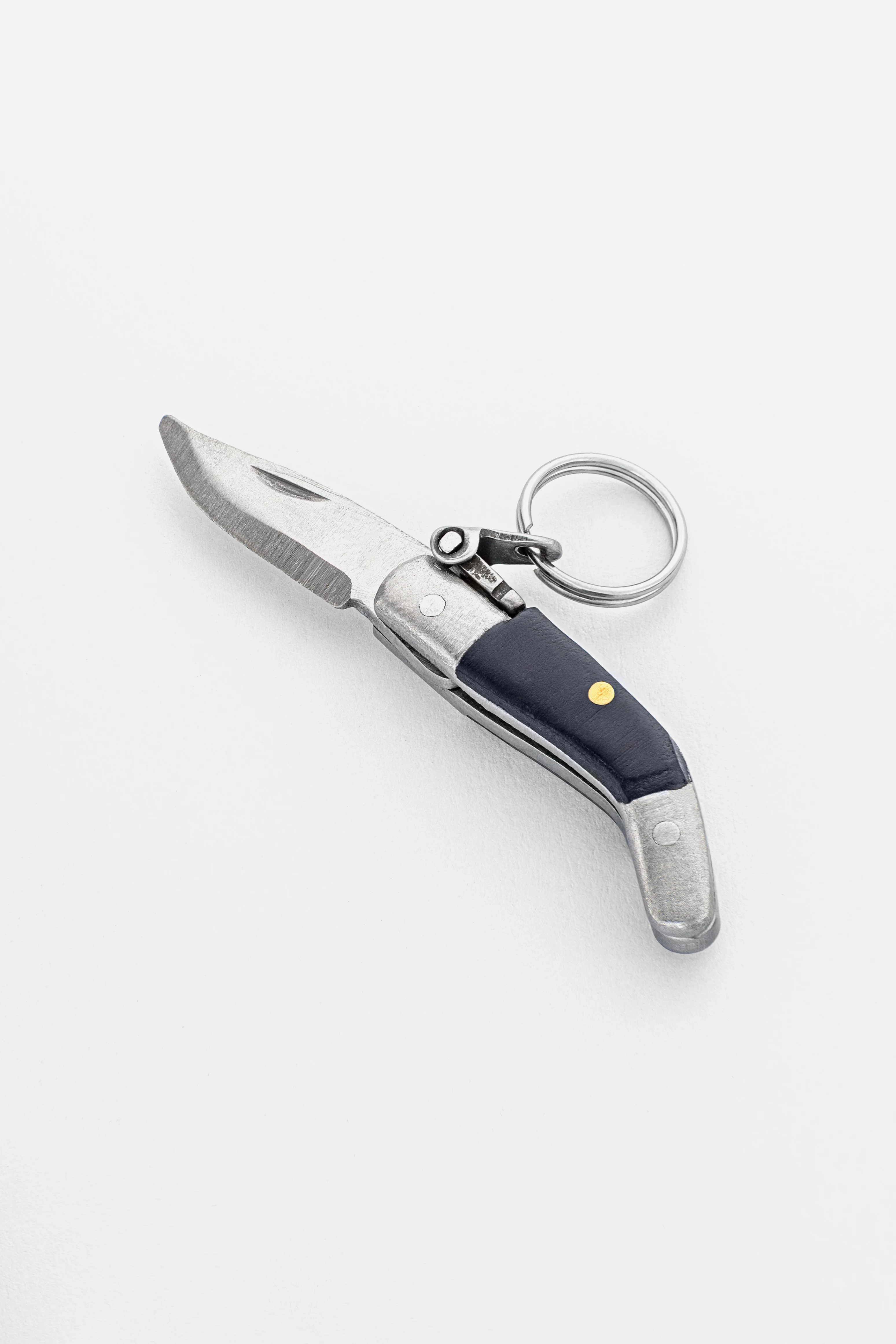
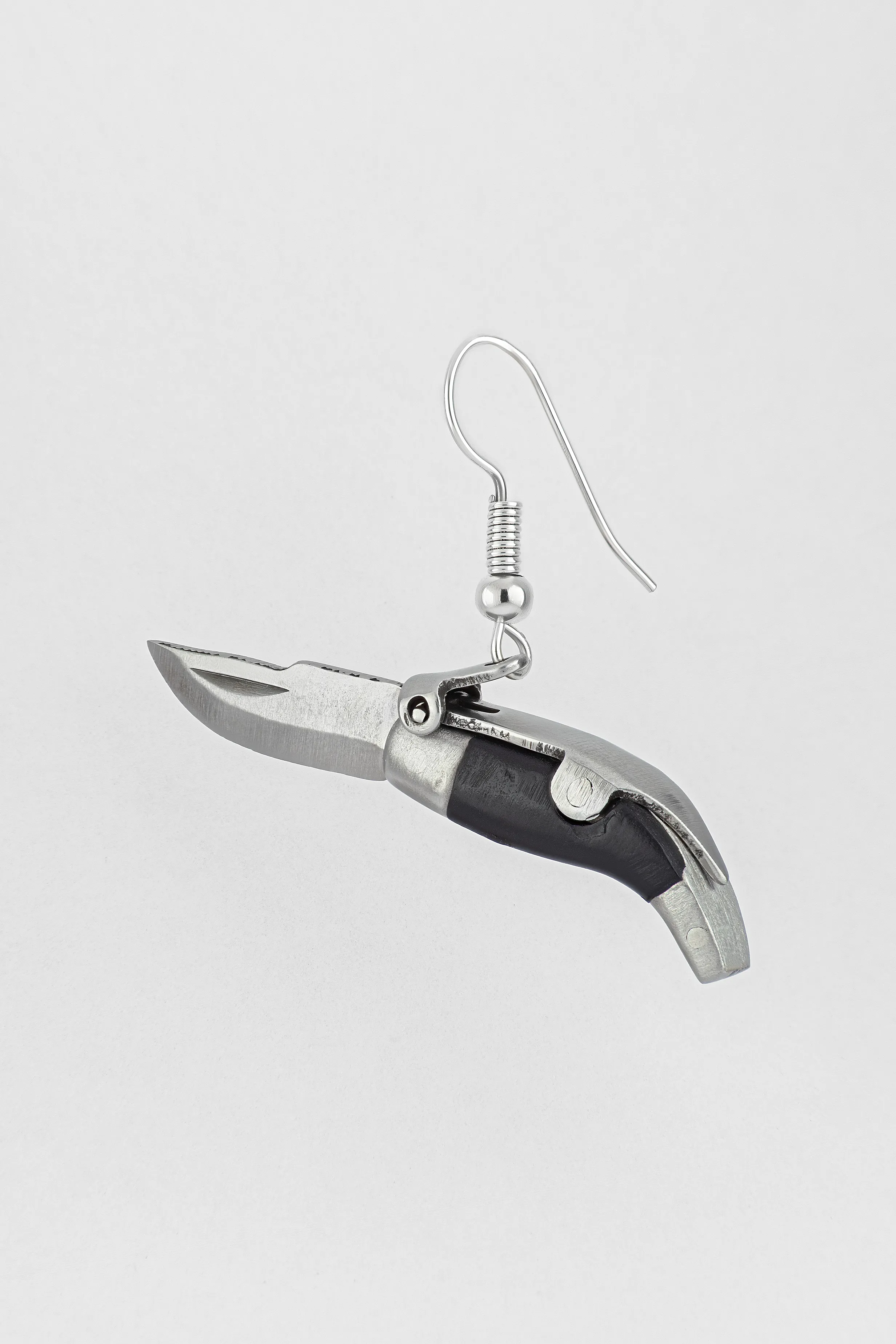
Artisan-crafted CAPAORA navaja pendant
A 40 mm stainless-steel navaja with a real folding mechanism and Palanquilla lock. An affordable gift to remember.
A code for blog readers:
10% off your first order
Authentic · Maker's guarantee · Ships from Spain
The card from the team
The card is half the gift. The metal does not speak; the engraving carries facts only. Emotion and context live on the card.
Three working signature formats. First: the names of all participants ("With respect and warmth, Andrew, Maria, Nathalie, Oliver, Svetlana and Julia") for small teams of up to ten. Second: the department name ("From the marketing team. Thank you for not letting us give up in 2022") for large teams, with names on a separate sheet. Third: a combination ("From the whole department" plus a few lines from those who worked closest) for mid-sized teams.
What to write. Specificity works: "For five years that changed everything" beats "To the best manager in the world". If you cannot think of something specific, write the date, the manager's name and three words about the most important thing in your shared work. The text is handwritten, not printed; if the organiser has poor handwriting, ask someone with a clear hand to write it.
What not to write. Cliches like "to the best boss" or "to an irreplaceable leader" (they read as a downloaded template). Inside jokes that not everyone gets (they offend those out of the loop). Abbreviations. Long text: more than half a page turns the card into a speech nobody finishes.
Format. Heavy white or cream paper without decoration, black or dark-blue ink. No glossy cards with embossed roses. Density of text signals the words were chosen, not entered to fill space.
Anti-patterns: what you absolutely must not do
Specific mistakes that make a gift awkward or relationship-destroying.
An expensive brand. A gift from a famous luxury house reads as "I want a promotion". Brands recognisable by their packaging are especially risky: opening the signature box, the manager reads "the team did not think, they walked into the priciest shop and took something off the shelf". Better a piece that shows effort and individual choice than an expensive one straight off the display.
A personal gift. Perfume, cosmetics, anything intimate is excluded by default. Less obvious: jewellery with emotional symbolism (a heart, a child's or spouse's name), a framed photograph. Any such gift carries the message "we know your private life more than you would like". Lines like "say hello to your spouse from the team" at the handover wreck the frame outright.
Jewellery too bright or too large. Big stones, heavy bracelets, brooches with flowers do not belong in a professional setting. A conspicuous piece forces the manager to choose: wear it (changing their usual look) or not wear it (then the gift is useless). Better restrained formats worn in the office daily without changing style.
A competitor's symbolism. A gift to an airline manager with a miniature of a rival's aircraft, to a banker with the image of another's building. It signals the giver does not follow the industry. Check any visual symbolism.
A joke engraving. In the moment of the handover the joke works; two years later the manager no longer remembers what it meant. A neutral factual engraving (years, coordinates, initials) does not age.
Duplicating a colleague's gift. If several subordinates congratulate independently, there is a risk of identical gifts (cufflinks, a silver watch, a briefcase). If several individual gifts are planned, agree in advance who gives what.
A gift with no card. Without an accompanying card the piece loses context: from whom, for what. In a large company it becomes an anonymous object on a shelf. A card is always needed, even a short note with signatures.
A gift certificate instead of an object. It seems the height of thoughtfulness, but it reads as "the team did not want to think, they paid their way out". Plus the expiry: an unredeemed certificate lapses, and the collective gesture is nullified. Better a specific object, even at the risk of a miss: a miss from a sincere attempt reads better than a flawless certificate.
A rushed handover. A gift handed "on the way" in a corridor is devalued. Plan the handover in advance: a time and place where the recipient is not in a hurry.
An investment gift. The words "in ten years this will be worth twice as much" turn the gift into a financial instrument. The recipient hears "we invested in you, now you owe us". Do not mention investment potential, even if it is real.
Leave your email, we'll send your discount code. No spam, unsubscribe anytime.
The code arrives by email, valid on your first order.
Engraving: what to write and what not to
Engraving turns a piece into a document and makes it unsellable in a good way. A manager has strict boundaries of their own: what suits a friend is out of place for a boss. The main filter is that the text must be factual, not emotional.
"To the best manager" is an emotional claim that makes the recipient wonder whether they live up to the assessment. "From the marketing team, 2018-2026" is a fact. The rule holds even in warm relationships: emotion is expressed through the gift itself, the card and the handover, never through the metal.
Working formats
- The period of work: "2014-2026", "2009-2025". Universal and neutral.
- The department name: "From the finance team", combined with a date "Marketing, 2026".
- Coordinates: the GPS of the office or headquarters in the format "55.7558N 37.6173E". On the back, not the front.
- Role and year: "Director. 2026", "Chief Architect, 2014-2026".
- A Latin quote: "Per aspera ad astra" (through hardship to the stars), "Sine ira et studio" (without anger or partiality, a line from Tacitus, fitting for a manager). Latin is neutral and does not age.
- The sender's signature in miniature: the giver signs a white sheet, the jeweller scans it and transfers it by laser. A personal autograph with no emotional words.
Forbidden formats
- Emotional epithets "best", "irreplaceable", "one and only" (phrases from template cards).
- Full names: a complete "John Edward Smith" on a piece is a lost-property tag. Initials or a monogram are better.
- Jokes: within two or three years they will be lost on the manager.
- Greetings "Happy anniversary", "Happy retirement": that is the format of a card, not an engraving.
- Corporate slogans: they change every few years, and an outdated slogan looks absurd in five. Only what the company has carried through decades.
- Emoji and special characters: on precious metal they look like a typo.
Technical limits
The maximum inner-ring engraving on a band 4-6 mm wide is around 25-30 characters with spaces; on the back of a medallion 50-80 characters; on a cufflink 12-15 characters each. The minimum letter height for clear reading is 1.5 mm for serif and 2 mm for script.
Laser engraving is cut 5-50 microns deep, enough to last for years (longer on platinum and gold, slightly less on silver because of oxidation). Hand engraving with a graver gives a depth of 50-200 microns and outlives the wearer.
Placement: the inner side for private text (only the owner sees it), the outer side for inscriptions everyone sees, the back of a medallion for document text. Typeface: classic serifs (Times New Roman, Garamond) for a business gift, sans-serifs (Helvetica, Futura) for modern companies in tech and media. Italics and script are not used on a gift to a manager.
Ready formulations
These work: "From the [name] department, [year]"; "2014-2026"; the office GPS; "Per aspera ad astra"; "1989-2026, 37 years" (for retirement); "J.K. 2026" (initials and year); "Sine ira et studio"; a miniature autograph of the giver.
These fail: "To the best manager in the world"; "With love from the team" (shifts into a romantic register); "Thank you for everything good" (vague); a long quote of 100+ characters (illegible without a magnifier); "To dear John Edward Smith" (a lost-property tag).
A manager's gift across corporate cultures
The same gesture works differently in different settings.
Public bodies. The strictest setting: anti-corruption requirements are written into law and regulation, the budget is tightly capped. Within an agency a collective gift for an anniversary or retirement is sometimes formalised by an internal order, which softens the limits. Suitable: a silver piece with engraving, a medallion with the years of service, a signet with initials, cufflinks in a neutral metal. Not suitable: heavy gold, precious stones, packaging with an expensive house's branding.
A large commercial corporation. The allowances are wider than in the public sector, but internal policies are written. Financial firms (banks, insurers) set the strictest limits because of regulatory oversight; manufacturing and retail are more liberal; tech companies go by common sense. Suitable are 925 silver or 14K gold with engraving. Registering the gift in an internal register above the threshold and transparency of the collection both matter.
Small and medium business. Formal rules are often absent, unwritten norms apply, and there is more room for individual decisions. Personal relationships in the team are decisive. If the team is close, a gift is accepted naturally; if there is tension, any gift can become a subject of dispute.
Start-ups. The hierarchy is flat, formalities are minimal, and gifts to a manager in the pure sense are rare. More common are collective gestures to the whole team: numbered series with issue numbers, paired pins for the founders, objects carrying fragments of company history. The gift doubles as emotional retention.
Education, healthcare, culture. Gifts to a manager are modest in budget but rich in meaning: salaries do not allow expensive collective gifts. 925 silver with symbolic content, an engraving tied to the institution's specific context. Managers here often work for decades, the bond with the place is deep, so a gift can carry a fragment of the institution's history.
Which piece suits whom
Not every piece suits a gift to a manager. These formats work across most scenarios.
An engraved medallion
A silver or gold medallion is a piece with a history: a closed capsule that carries what is inside. Neutral in symbolism (not a heart, not an anchor, not a name), and that closedness makes it fit for a professional context.
925 silver with a matte surface or light patina reads as class; 14K gold adds a status signal. A size of 20-25 mm for everyday wear, 30-35 mm for formal. Medallions are worn equally by men and women, which removes the question of gender fit. Engraving on the back: a date, coordinates or the team name; inside a micro-photograph or a short note under glass. Suits career anniversaries, retirement, anniversaries, promotion; excessive for everyday occasions.
A signet ring
A signet engraved with initials, a monogram or a date carries a centuries-old meaning of authority: "the person who makes decisions", which makes it natural for a gift to a manager.
925 silver or 14K-18K gold. A plate 12-15 mm across for a man's signet, 9-12 mm for a woman's. Laser engraving for fine lines or graver work for depth. Finger size is the one parameter you cannot fix without a workshop: the manager's assistant often knows it or can ask discreetly; if not, choose an adjustable version or a medallion. Suits career anniversaries, promotions, symbolic occasions in start-ups.
Engraved cufflinks
For a male manager, cufflinks are the most classic choice: functional, status-bearing, personalised through engraving.
925 silver is universal, 14K gold gives a status signal, platinum is for the top segment, dark steel is a modern restrained option. Avoid plastic inserts and mother-of-pearl: that is costume jewellery. The "torpedo" form with a swivel mechanism is the most traditional for a business gift. Engraving: a monogram on the inner side, a miniature or mark on the outer, coordinates on the back. Cufflinks are traditionally a man's piece, but female managers in formal cultures wear them too (shirts with double cuffs). Suit anniversaries, promotions, corporate events.
A pendant with geometric symbolism
A circle, square, triangle or hexagon reads neutrally and universally, with no specific message. Suits any manager regardless of gender or age. An engraving on the back turns the geometry into a personal object, and a chain of 45-50 cm allows wear under a shirt or over a collar. Geometry is not tied to fashion and does not age. Especially for managers with minimalist or conservative taste.
A minimalist bracelet
A steel or silver bracelet with a single accent suits men and women in a business context. It sits between a ring and a pendant in visibility: noticed but not dominant. The engraving goes on the inner side, invisible to others. Especially apt for those who wear a watch: a bracelet on the other wrist creates balance. Suits everyday office wear, a career anniversary or a promotion; for retirement a medallion is better.
A watch as a symbolic object
A special category beyond traditional jewellery. By a widespread corporate tradition a watch is given on the most significant occasions: retirement after 30+ years, a 60th or 65th birthday, a major company milestone. A mechanical watch in a metal case, classic design, engraving on the back (name or initials, occasion, date). The recipient wears it every day, giving the maximum intensity of contact. For a public official or strict compliance a watch requires documentation and a check against limits. Personalisation matters more than the make: a mid-budget watch with engraving beats an expensive one without.
Comparing the formats
Gender universality: the medallion, geometric pendant and minimalist bracelet are universal; cufflinks are traditionally male, while studs and a fine chain are traditionally female. Visibility: signet and cufflinks are noticed by others, the medallion under clothing is invisible, the bracelet is sometimes seen. Engraving: the signet carries the most visible (on the plate), the medallion the hidden (on the back), cufflinks the in-between. Durability: platinum and 18K gold are the most resilient, 14K gold a compromise, silver needs polishing every year or two. By age: medallion and signet suit any age, minimalist bracelets favour the younger generation, classic cufflinks suit everyone.
A designer box on the boss's desk screams 'promote me'. Lose the logo, engrave the year, say nothing.
How to wear a manager's gift
Dozens of corporate handovers have passed through my hands, and the question is always the same: how to make the piece live on the person, not in a desk drawer. Here is what actually works in a working wardrobe.
What should the manager wear it with at the office every day? For weekdays I recommend a fine chain with a medallion under a shirt or jumper: no one sees it, yet the wearer feels it. A silver signet I suggest on the right hand, where it reads as part of the usual look. Keep to one metal, never mixing yellow and white, and one accent on the hand beats three.
Are cufflinks a good gift, and how are they worn? For a male manager I consider cufflinks the cleanest choice. They go under a double-cuff shirt, and in a negotiation, when the sleeve lifts above the table, they emerge and do their work. I suggest a neutral metal and the torpedo shape, no mother-of-pearl or plastic.
What chain length should I choose for a pendant or medallion? For the office I choose 45-50 cm: at that length the medallion sits under a shirt collar. Longer is for wearing over clothing, rarely needed at work. Under a closed neckline I recommend shorter, under an open one you can go easier.
What do I give a female manager without missing? I suggest honouring the role, not the gender: a fine chain with a medallion, small studs, a signet with initials. Hearts, flowers and loud stones I steer clear of. All in one metal, restrained, so it wears in the office without changing the look.
How do I match a format to an evening event? For a corporate dinner or a ceremony I choose a richer metal: gold, platinum, a larger medallion of 30-35 mm. A dark suit or a formal dress asks for one expressive piece, not a set. One strong accent always convinces more than three small ones.

Turn on your camera, pick earrings, a pendant or a ring, and see the piece on yourself in real time.
Switch items in one tap.
Everything runs in your browser: no photo or video is ever uploaded.
Myths about gifts for managers
Send a friend a discount code, they save on their first order.
Frequently asked questions
How much to spend on a gift for the boss?
It depends on the format. For an individual gift, aim at up to five percent of your monthly income: a sum that reads as respectful but not obligating. A collective gift is split among participants, each contributing within their share, while the combined budget allows a serious piece. The key is not to exceed the company's internal limit: exceeding it reads as a deliberate breach and undermines trust in the team.
A collective gift for the boss: how to organise it?
Six steps. Decide the initiator (HR in large companies, a deputy or informal leader in small ones). Agree the budget: name a specific share per person and the occasion, not "whatever you can". Start the collection two or three weeks ahead. Run it in a closed format to lower pressure. Choose the gift collectively or assign a group of two or three to avoid one-sided taste. After buying, report briefly how much was collected and spent. The contributors and the card signatories need not coincide, and that is fine.
Female boss, what to give?
The base principle: a gift to a professional female manager recognises her role, not her gender. Avoid hearts, flowers, bright stones. What works: a fine chain with a medallion, a signet with initials, small classic studs, a pendant with neutral geometry. A young manager will sooner appreciate modern minimalism, an experienced one the classic. For the office keep pieces restrained: small earrings, a fine chain, a ring without heavy accents.
A gift when a manager leaves the company, what to choose?
If the departure is voluntary and positive, the gift takes on the character of a send-off: a piece with journey symbolism (a compass, an abstract mark) or engraved with the year of leaving. If it is retirement, the gift is weightier: a watch or a substantial medallion with the full period of service. If the departure is forced, the format is more delicate, with the team stressing the personal rather than the corporate. If the departure followed a conflict with the team, a gift is not required and a short spoken thanks is enough.
If the boss does not like you, do you have to join a collective gift?
No. Participation is a voluntary gesture. If you decide not to, tell the initiator plainly but without explanation: "I will sit this one out" is enough. You can sign the card or not, as you prefer: a signature is a separate gesture, not tied to money.
Is a gift to a manager corruption?
It depends on the nature. A gift for a clear occasion (anniversary, retirement, milestone), from the team with everyone's signatures, within a reasonable budget and the internal limit, is not corruption. Signs of a problem gift: individual, with no occasion, exceeding limits, timed to a significant business decision (before a review, budget approval, promotion). The law on bribery applies to officials; a gift within ordinary norms is not prohibited, while above it requires documentation and, with the wrong signs, may be treated as a bribe.
What are the tax consequences of a collective gift?
If the gift comes from private individuals (the team chipped in itself), it is a gift between individuals: the recipient does not declare it and pays no tax. If it goes through company accounting as a corporate gift, sums above the annual allowance become a taxable benefit. The practical takeaway: for a large sum it is cleaner to frame the gift as a collective gesture of private individuals rather than a corporate one, which simplifies the tax side.
Can the team give jewellery to a female boss?
Yes, and it is one of the best options. A collective gift removes personal pressure and allows a more meaningful piece within the shared budget. The symbolism should be neutral: an engraving with a date or initials beats a decorative pendant with a flower or a heart.
Which metal to choose for a manager's gift?
925 silver is the universal choice. 14K gold suits significant occasions (retirement, 20 years in the company). The main principle: a real hallmark, which is checkable, and no nameless "jewellery alloys" without a stamp. If the manager already wears jewellery, follow their choice: silver to silver, gold to gold. If they wear none at all, choose the most functional format: cufflinks for a man, small studs or a medallion for a woman.
What to engrave on jewellery for a boss?
For a birthday, initials and the year. For a work anniversary, the years together ("2008-2026"). For retirement, the years of service and "from the team". Avoid text that is too personal, vague phrases ("best boss") and spelling errors: engraving cannot be redone without new work or a replacement.
Conclusion
A gift for a manager is a task with several constraints at once: ethics, hierarchy, unknown taste, corporate rules, tax. Jewellery handles it better than most alternatives precisely because it gets worn. Cognac is drunk at dinner, flowers wilt by Monday, but an engraved piece from the team sits in a box or on a wrist years after the handover.
The logic of choice is simple. A collective gift beats an individual one, neutral symbolism beats personal, quality metal with engraving beats something striking but meaningless. A clear occasion (anniversary, retirement, milestone) beats an abstract gesture. A restrained value within internal policy beats demonstrative generosity.
Start the collection early, choose with an understanding of context, hand it over at the right moment, write specifically rather than from a template. A piece with the right engraving and a card with honest words from the team always beats any expensive but impersonal gift.
If you compress the whole etiquette into one rule: a gift should recognise a person's role, not their private life. Years of work matter more than personal symbolism, initials more than romantic inscriptions, the team name more than the names of every member, the quality of the metal more than the size of the piece. A gift that records the years or names tying a team to this person is a small archive. That is why such things are not thrown away: time is recorded inside, and time is the one thing you cannot buy and cannot re-gift.
How to care for a silver medallion or signet so it does not tarnish?
925 silver picks up a patina from air and skin over time, which is natural. Every year or two wipe the piece with a soft polishing cloth, store it in a closed box or pouch, away from perfume and cosmetics. If the manager wears the gift daily, contact with skin keeps the shine up on its own, and serious cleaning is needed less often.
Can the gift be worn in the shower, pool or at the gym?
Silver and gold tolerate water, but pool chlorine and sweat speed up silver's tarnish, while knocks against equipment scratch soft metal. Better to remove the piece before sport and swimming; the shower is fine. A signet and cufflinks are not worn every minute anyway, so for them the question barely arises.
How to be sure the metal is real and not a "jewellery alloy"?
Look for the hallmark: 925 on silver, 585 or 750 on gold. Nameless "jewellery alloys" without a stamp signal costume jewellery, and you cannot give that to a manager. Buy from a seller who states the metal composition outright and stamps it, so authenticity is checkable without a lab.
How long will such a gift last?
A piece of real silver or gold with engraving outlives the wearer. Laser engraving holds for years, hand engraving for decades. That is why jewellery works better than flowers or cognac: years on it is still on the wrist or in the box, while the others vanish in an evening.
How to find a signet ring size if you cannot ask directly?
Finger size is the one parameter you cannot fix without a workshop. Most often the manager's assistant or a close colleague quietly knows it. If you cannot find out, choose an adjustable version or a format with no size: a medallion, cufflinks or a pendant suit everyone and remove the risk of a miss.
An engraved locket from the team, a signet with initials, cufflinks with a monogram, a pendant in the quiet luxury aesthetic. Sterling silver 925 and 14K gold, engraving included. We handle orders from teams.
About Zevira
Zevira makes jewellery by hand in Albacete, Spain. For a manager gift from the team we make:
- A silver locket engraved with a date or words from the team. It opens and keeps what is inside.
- A signet ring with initials or a monogram in silver or gold.
- Jewellery in the quiet luxury aesthetic: clean lines, noble metal, nothing excessive.
- A pendant suited to a retirement gift for teams marking the end of a long shared journey.
Engraving is included in the price. Lead time for individual engraving is confirmed at the time of order.
For other tricky gift situations, see our guides to a jewellery gift for a lawyer, jewellery for doctors and a 60th birthday jewellery gift.