Jewelry for Teachers: What to Wear in Class and What to Gift an Educator
Why a teacher gift is not a souvenir
Teaching is one of the most emotionally demanding jobs there is, and burnout in the profession is ordinary rather than rare. A gift in that context stops being a polite gesture. It either reminds a person that their work means something, or it does not.
This article is about what to wear in class and what to give an educator. About symbolism that works in a learning environment, about the difference between a primary teacher and a university professor, about engraving that turns a beautiful object into a personal record, and about why one good piece outlasts the 450 bouquets a teacher receives across thirty years.
Teacher dress code: state school, private school, university
Before talking about jewelry it is worth saying a few words about context. A teacher is a profession. It is a visual role that a class reads in the first second. Jewelry is part of that role whether we like it or not.
State primary school
A primary school teacher works with children aged 6 to 10. This is a world of its own. At this age children copy the adult they spend a large part of their day with. They notice everything: nail colour, scent, fabric texture, the glint of earrings.
Dress code in a state primary school is rarely written down strictly, but an unspoken standard exists: neat, restrained, professional. Bright, loud, large jewelry in a primary classroom competes with the lesson, because children's attention drifts from the material to the object. This does not mean a teacher should look anonymous. It means the piece should be quiet enough for the class to hear the words first and notice the pendant second, if they notice it at all.
What works: thin stud earrings, a small pendant on a chain, a wedding ring. All of this reads as "a grown-up who has a life outside the classroom," and that is exactly the right signal. A locket with a family photo under the blouse is a personal detail a teacher can choose to show in a particular moment, or never show at all.
State secondary school
Teenagers read an adult differently from young children. They assess. A teacher's jewelry is a detail of the image through which respect is built or not built. A teenager reads the signal "this person knows who they are" clearly, and a piece with a deliberate symbol sends exactly that signal.
There is somewhat more freedom here. A medium pendant, small earrings with a stone, a thin ring: all suitable. A teacher with an owl pendant is more likely to earn interest and respect from older pupils than ridicule. The main rule: nothing that draws more attention than the teacher's words. When the jewelry is louder than the person, that is a loss, not a win.
Subject teachers in upper secondary often carry a more distinct personal style than primary teachers, especially teachers of literature, history, and art, subjects where the educator's personality is part of the method.
Private school
In a private school a dress code is usually written down explicitly. Sometimes it allows more, sometimes less, than a state school. The principle is the same: jewelry underlines status rather than grabbing attention.
Private schools more often encourage a teacher's individual style, understanding that the teacher's personality is part of the educational offer. Parents who choose a private school frequently pay attention to the educator's image: how they dress, how they carry themselves, what they wear. Here a teacher with an owl brooch or a symbolic ring is seen as someone with character, not as a rule-breaker.
In international private schools working to British or American standards the culture around jewelry is slightly different: freer in form, but with attention to quality. Gold sits comfortably where in a state school it might feel out of place.
University: lecturer and seminar leader
At university almost no rules apply. A professor is an adult with a reputation built from publications, ideas, and manner. Jewelry here is an element of personal style that the audience reads as one detail of a larger image.
Academic environments read symbolism particularly well. An owl, a feather, a book, a lighthouse: all are understood without explanation. A student who sees an Athena owl pendant on a philosophy professor understands the reference instantly. It is a short conversation without words, between people who belong to the same tradition.
A professor with a signet ring carrying a symbol of their field creates the same effect. An archaeologist with a compass locket. A mathematician with an infinity pendant. A literary scholar in a hat with a quill brooch is an image, not an accident.
What works in the classroom: a practical view
Jewelry in the classroom is a functional object. It must not interfere with the work, distract children, or sit awkwardly in a space where the teacher moves, writes, explains, and sometimes bends down to desks. There are several practical criteria.
Earrings
Stud earrings are the ideal choice for most classroom situations. They do not swing when you move, do not catch on a collar, make no sound. A small owl stud, a round stone, a simple sphere: all work. A pair of tiny owl studs reads as a detail of an outfit, not as a declaration.
Modest drop earrings are appropriate in secondary school and at university. Length: no more than two centimetres below the ear. Earrings reaching the shoulder or longer are appropriate only when the teacher consciously makes them part of their image and the audience is already used to them. A first lesson with long earrings in a new class is more risk than opportunity.
Chains and pendants
A thin chain with a small pendant is the best choice for teaching days. A pendant 2 to 3 centimetres in size draws no attention if it does not reflect light excessively. Under the blouse it becomes a private detail. Over it, a professional statement.
A locket with a family photograph is a classic: the teacher stays a person with a private life behind the role. An owl or feather pendant on a thin chain works as a quiet professional statement. The symbolism of education, expressed with restraint.
Long chains and heavy pendants are another story. In the classroom they create visual noise and get in the way of movement. In a university hall it is the professor's own call: if they want to make it an element of their image, the floor is theirs.
Rings
A wedding ring is neutral and always appropriate. A thin ring with a symbol or stone is fine too, as long as it does not get in the way of writing. Large rings with big stones or bulky elements create discomfort when writing on a board and can attract attention. An owl or feather ring looks well when it is thin and does not turn the fingers into a jeweller's window.
Several thin rings in a stack are perfectly acceptable, especially in upper secondary and at university. For how to assemble a stack properly, see our ring stacking guide.
What pulls too much of a class's attention
This is a practical question that is rarely discussed directly. A few types of jewelry create a problem in the classroom, not because they are "improper" but because they compete with the lesson.
Long dangling earrings in primary and secondary school. They move with every turn of the head, and children aged 6 to 12 cannot help looking. This is not mischief, it is the normal child's reaction to a moving object. The teacher loses a fraction of the class's attention. The effect is sharpest in primary, where concentration already takes effort.
Large showy rings. Rings with heavy stones or sculptural elements make writing on a board awkward and feel like a mismatch between the seriousness of the lesson and the festiveness of the piece. A big stone glinting with every movement of the hand pulls focus. It is wonderful at a party. In class it is a problem.
Heavy chains. Large chains with big links create a sense of being out of context. They belong to a different space. At university a professor with a large chain is already an authorial gesture that requires a strong personal position and an established image.
Charm bracelets that jingle when you move. Background sound in a quiet classroom is an irritant that works even when nobody consciously registers it, especially during independent work or a dictation.
Several large pieces at once. The rule "one expressive detail" works in most situations. A pendant plus earrings plus several rings plus a bracelet is already an excess that turns the teacher into a display case. Good for other contexts, not for the classroom.
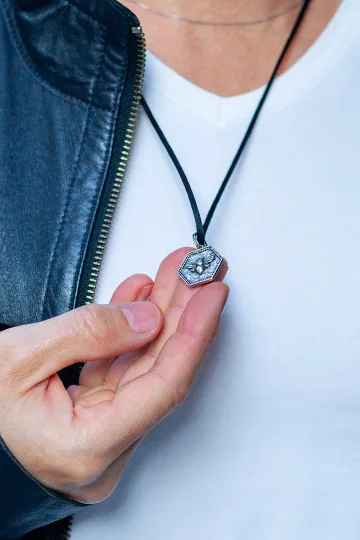
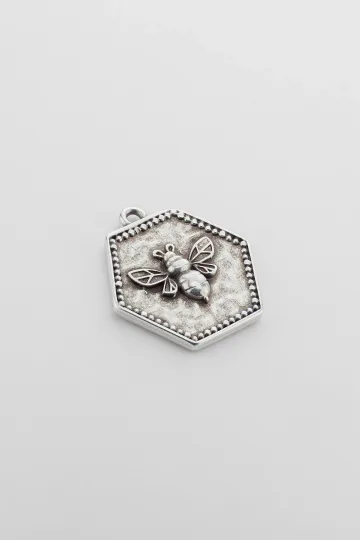
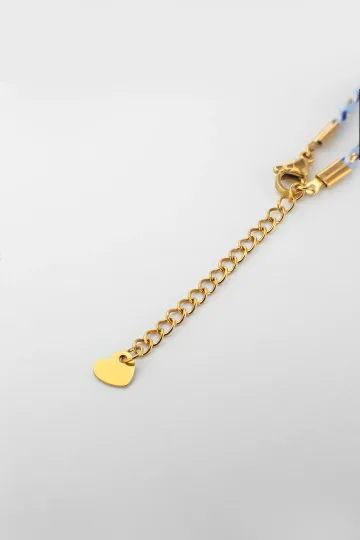
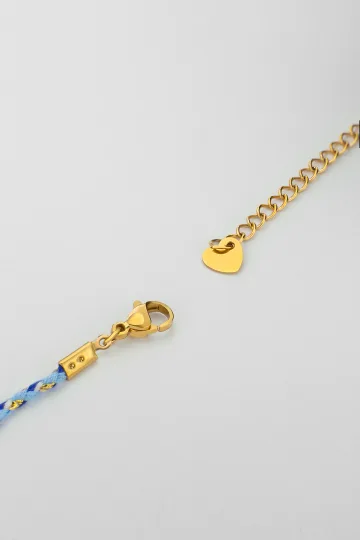
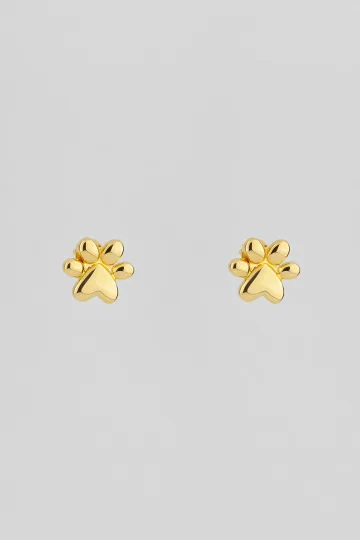
Wear the symbol, don't just read about it. These are in stock:


The teacher as authority figure: psychology and jewelry
Erik Erikson, in his theory of psychosocial development, described the concept of generativity: an adult's need to care for the next generation, to pass on experience, to create something that will outlast them. A teacher is the professional embodiment of that need. Of all professions, teaching is built on this principle most directly: the meaning of the work lies not in personal achievement but in what remains in another person.
Erikson described generativity as a task of mature adulthood, roughly from forty onward. Yet a teacher takes on that task from the first day of work, often at twenty-two. This means the profession demands a psychological maturity that usually arrives later. It is one reason an experienced teacher with twenty years of service teaches differently: they have lived the experience of mentorship deeply enough for it to change them.
A teacher transmits information. They also model a type of person. A child or student who spends years alongside an educator inevitably absorbs both the knowledge and a way of existing in the world: how this person responds to mistakes, how they handle difficulty, how they carry themselves under pressure, how consistent they are.
Jewelry in this context is a detail that says: I treat myself with respect. I perform a function, but I also live. I have a history, symbols, values. This is not narcissism. It is professional maturity. A teacher who wears something with meaning demonstrates a capacity for reflection and respect for their own identity.
The psychologist Jerome Bruner wrote that the best teachers are those who pass on both the subject and a love for it. A piece of jewelry with a symbol from one's field is one way of making that love visible. Not in words, but in an object. A maths teacher with an infinity pendant speaks about their relationship to the subject without a single word. A literature teacher with a quill pendant says that the word is, for them, both a profession and a value.
This matters especially for teachers working with teenagers. An adolescent looks for adults who are not embarrassed by their own identity, who know who they are. A teenager senses uncertainty and inauthenticity easily. A teacher wearing a piece that carries deliberate meaning is a person with a defined position. That commands respect, regardless of whether the teenager happens to like the symbol.
The Polish educator Janusz Korczak, one of the great theorists of childhood, wrote that an adult who respects themselves thereby teaches a child to respect. Not through words, but through how they carry themselves. Jewelry too is part of that carriage.
The German educator Johann Friedrich Herbart, founder of scientific pedagogy in the nineteenth century, spoke of three components of upbringing: governance, instruction, and moral influence. Moral influence happens through example, not command. A teacher who shows through behaviour and appearance that they take the profession seriously is moral influence in action.
A piece carrying a symbol of knowledge is a small visible declaration. It does not shout. It simply is. And children and students notice it, even if they never say so aloud.
Athena's owl: the strongest symbol of the teaching profession
Of all the symbols connected with education and wisdom, Athena's owl occupies a special place. Not because it is pretty, and not because it is conventional, but because the symbol carries three thousand years of unbroken academic tradition, and the profession understands that.
The owl, a symbol of wisdom with three thousand years of history. In the Greek tradition the little owl (Athene noctua, literally named for the goddess Athena) was the companion of the patron of wisdom, knowledge, and craft. On the Athenian tetradrachms of the fifth century BC the owl and Athena formed a pair: wisdom and its embodiment. That coin was the standard of international trade across the Mediterranean, and the owl on it was recognised everywhere.
In 1820-21 Hegel wrote a sentence that has become a classic of Western philosophy: "The owl of Minerva spreads its wings only with the falling of the dusk." The meaning: deep understanding arrives not at once but through time, experience, and reflection. Not the quick answer, but the slow grasp. Not the first glance, but what remains after long observation. That is exactly what a good teacher does: gives information, but more than that helps a person understand, through working over mistakes, repetition, and patient explanation from another angle.
For teachers the owl works on several levels:
- A historical link to Athena and the academic tradition. For three thousand years universities, academies, and educational bodies have used the owl as their emblem. This is not coincidence, it is cultural consensus.
- The image of attentive observation. The owl misses nothing, its huge eyes face forward, it sees in the dark. A teacher too must see what others overlook: the pupil who is struggling but afraid to say so, the moment the class loses the thread.
- A nocturnal bird that works while others rest. A teacher marks books in the evening, prepares lessons at weekends, thinks about children during their own time. The owl is a precise metaphor for that labour, invisible to most.
- A symbol of patient knowledge that arrives surely rather than fast. The owl of Minerva flies at dusk, once everything has already happened. A teacher works in the long run too: the results of the work show not at once, sometimes years later.
An owl pendant around a teacher's neck is not an accidental choice. It is a cultural connection that colleagues, students, and parents all understand. The academic community reads the symbol without explanation.
For more on the history and symbolism of the owl in jewelry, see our full guide: The owl in jewelry: meaning of the symbol of wisdom and night.
The owl on the Athenian tetradrachm: what it means for a teacher
The Athenian tetradrachm is one of the most recognisable coins in human history. One side shows the head of Athena in a helmet, the other a little owl facing forward, an olive sprig, a crescent moon, and the letters AOE. The design barely changed for five hundred years.
The small round owl on the coin is not a random bird. It is a specific species (Athene noctua) that lives in the olive groves of Attica and keeps to the night. The Greeks chose it because it watched the city by night, while people slept. It knew what others did not see. For the educational tradition that is a precise metaphor: a teacher knows what the student does not yet know. They see in the dark of not-knowing.
The tetradrachm was the standard of international trade across the Mediterranean. Traders called these coins "owls," glaukes. Athena's owl was everywhere. It outgrew the frame of a local Athenian symbol and became a universal sign of the educated world of its time.
When a teacher wears an owl pendant in the style of that coin, they wear three thousand years of academic tradition. This is not grandiosity, it is precision. It is for exactly this that the educational community has accepted the owl as its emblem for thousands of years.
Customer reviews
Zevira is a real jewellery shop. Genuine payments, deliveries and customer thank-yous.
🥰🥰🥰 gracias
Ok, ¡gracias! 🙂
Other symbols of education: feather, tree of knowledge, lighthouse, book
The owl is the best-known symbol, but not the only one. For teacher jewelry there are several other images with rich histories. Each carries its own concrete metaphor for the teaching role.
Feather
The feather is one of the oldest symbols of writing, knowledge, and the transmission of information. The quill was the tool of the scribe, the scholar, the chronicler for many centuries. In European tradition the quill is associated with intellectual work: laws, poetry, and philosophy were all written with one. A feather is the instrument by which texts are made that outlive their author.
A feather in jewelry carries this meaning compactly. A small feather pendant is an elegant symbol for a teacher of any subject, especially languages, literature, or history. Light, small, unpretentious. A silver feather on a thin chain fits even the strictest professional wardrobe.
For a language teacher the feather carries an extra metaphor: languages are tools of writing, speech, and thought. A teacher wearing a feather speaks about the profession through the image of its instrument.
Tree of life and tree of knowledge
A tree with an open canopy is one of the universal symbols of world cultural heritage, present in most cultures independently. In the Bible it is the tree of the knowledge of good and evil. In Norse mythology it is Yggdrasil, the World Tree connecting the realms. In Buddhism it is the Bodhi Tree of the Buddha's enlightenment. In Celtic tradition it is the Tree of Life, joining sky and earth.
For a teacher the tree of life carries the meaning of growth, the passing on of experience, the connection of generations. The roots are tradition, the knowledge of the past, what the educator leans on. The trunk is the teacher, joining past to future. The branches are what is passed on to students. Each student is one of the branches grown from a single root.
This is particularly apt for those who have worked in education a long time: teachers with many years of service, honoured educators, head teachers. A tree of life engraved with the year work began is jewelry with a story in the literal sense.
Lighthouse
A lighthouse is a symbol of orientation in the dark. Not the one who leads you by the hand, but the one who shines while others find the way themselves. A lighthouse does not escort the ship, it marks a direction and stays in place. That is exactly what a good teacher does: they do not do the task for the student, they light the road.
The lighthouse works especially well for teachers who see their role in exactly this way: not as the authoritarian transmission of knowledge from head to head, but as the creation of conditions in which the student arrives at understanding. Montessori pedagogy, Dewey's system, constructivism, all describe the teacher as a lighthouse rather than a source of ready answers.
In jewelry the lighthouse appears as a pendant or brooch. A silver lighthouse on a chain is a niche, precise choice. It is not a mass symbol, so those who choose it usually know exactly what they want to say.
The lamp of Nightingale
Florence Nightingale, founder of modern nursing, entered history with a lamp in her hand, walking the wards by night. The lamp became a symbol of care, sleepless attention, presence when it is needed. Educational bodies in many countries use an oil lamp in their emblems precisely because it carries that meaning: to light the dark of not-knowing.
As jewelry, an oil lamp or lantern is a niche but eloquent choice for a teacher with an interest in the symbolism and historical context of their profession.
Book
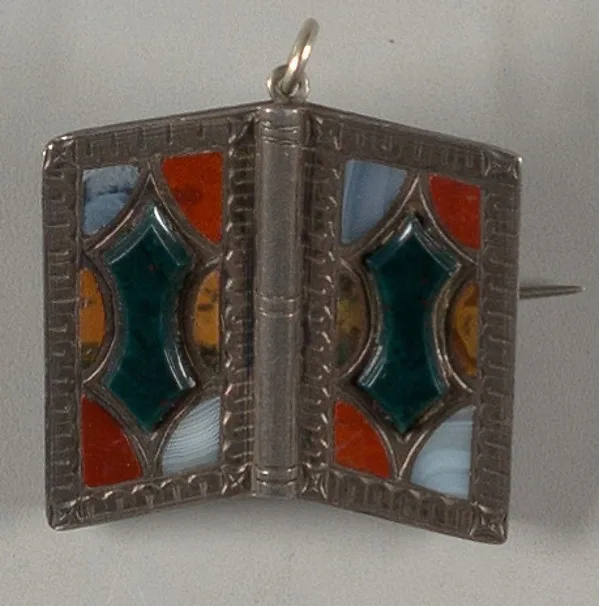
An open book is an obvious symbol, but no less precise for that. In jewelry a book works well as a brooch or pendant. It is often combined with other symbols: a book with a feather (knowledge and the record), a book with an owl (knowledge and wisdom). A book with an owl is an especially eloquent pairing: wisdom and its source side by side.
Jewelry by type: owl, feather, tree, lighthouse, locket
Owl pendant
The most direct and recognisable choice for a teacher. Depending on the execution an owl reads differently:
- A small little owl in the style of the ancient coin: academic, restrained, right for school and university. The most intellectually loaded version: anyone who knows the Athenian tetradrachm catches the reference at once.
- A miniature owl with large eyes: more contemporary, decorative. Broad reach: it works as a symbol and simply as a beautiful object.
- An owl with a book: a direct reference to the profession. For the teacher and the reader at once.
- A larger owl with stone eyes: for a university professor or a teacher with a strong personal style. This is a statement rather than a quiet remark.
- An owl on a ring: for those who prefer rings to chains. An owl ring on the index finger is an academic detail of an outfit.
Silver works best for an owl: dark patina brings out the detail of the feathers and reads as an academic piece rather than a decoration. Gold adds formality, for a professor or a teacher marking an anniversary.
Feather pendant
Elegant, light, suited to any subject. A silver feather on a thin chain fits even the strictest professional wardrobe. A feather engraved with the date of starting at a school is a personal detail known only to its wearer. A feather in gold is the formal version for special occasions.
The feather is slightly less recognisable as a symbol of the teaching profession than the owl, so it works more as a personal statement than as a public signal.
Tree of life
Usually a round pendant with a branching tree. It fits any style: there is a minimalist reading (thin silver branches) and a decorative one (with stones on the branches). It works well as a gift from students: a tree with branches, each one symbolically carrying particular people.
For a teacher with long service the tree of life is especially apt. The roots are everything they have studied and pass on. The branches are everything that has already grown from it.
Lighthouse
In jewelry a lighthouse appears as a pendant or brooch. A silver lighthouse on a chain is a niche, precise choice for a teacher who understands the metaphor. This piece is not for everyone, and that is its value. Whoever chooses a lighthouse makes a deliberate statement about the kind of teacher they are.
Locket
Lockets with photographs have a long history in the jewelry tradition, from Victorian curls to modern snapshots. For a teacher a locket with a family photograph is a personal detail that reminds others: behind the role of "teacher" stands a person with those they love.
A locket can also carry engraving: the date of starting at the school, the initials of a close student. A hinged locket is a way to show something important only to those you choose.
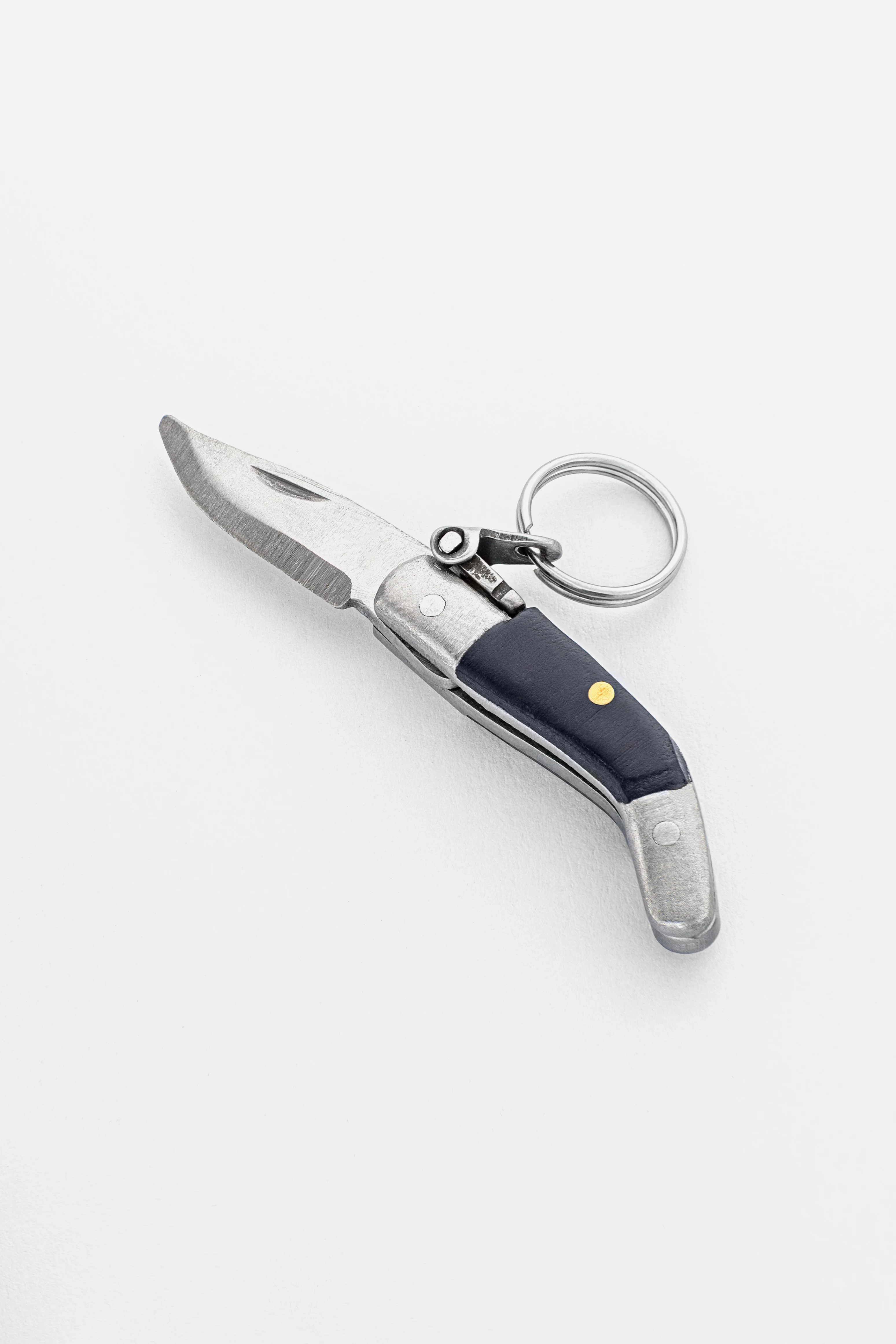
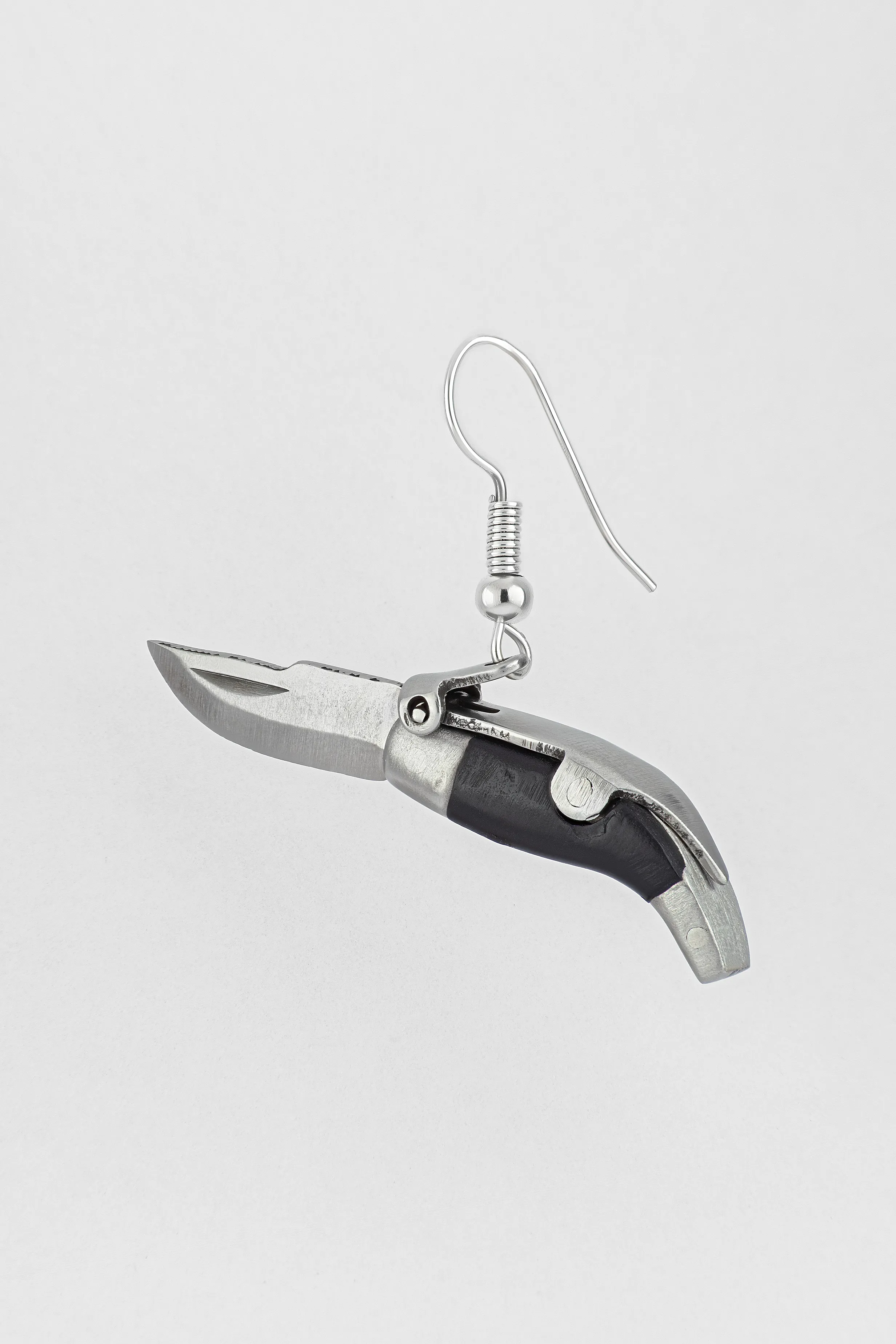
Artisan-crafted CAPAORA navaja pendant
A 40 mm stainless-steel navaja with a real folding mechanism and Palanquilla lock. An affordable gift to remember.
A code for blog readers:
10% off your first order
Authentic · Maker's guarantee · Ships from Spain
Gifts for teachers: occasions and principles
Choosing a gift for a teacher is a task in itself. Jewelry works better than most other options for one reason: it is worn every day. Flowers wilt, sweets are eaten, cards are lost. Jewelry stays, and each time the teacher puts it on, a trace of the moment it was given comes back.
Start of the school year
The beginning of the academic year is a traditional occasion for a small gift. In many countries September marks a new cycle: a new class, new relationships. The teacher meets new pupils who do not yet know them, and a piece of jewelry helps shape that first image.
The best gift for the start of term is small, wearable, and without pretension. A small symbolic pendant, a thin chain, stud earrings with a stone. Not so expensive that the teacher feels uncomfortable, and personal enough not to dissolve among the standard bouquets.
If the gift comes from a whole class, one meaningful object is better than a set of identical things. An owl pendant from a class at the start of the year tells the teacher: we know who you are and what you do. That is a good way to begin a relationship.
Teacher Appreciation Week and Teachers' Day
In the United States the first full week of May is Teacher Appreciation Week, with the Tuesday marked as Teacher Appreciation Day. World Teachers' Day, recognised internationally, falls on the fifth of October. Either is the moment when a gift reads as recognition rather than routine. A teacher receives many gifts and hears many words on such days. A good piece of jewelry stands out precisely because it stays quiet and still says something.
A piece with a consciously chosen symbol works better than any gift set. Giving a teacher an owl pendant for Teacher Appreciation Week is a statement about the profession, not a routine custom, especially with a short note explaining why this particular owl.
Graduation and end of the school year
In much of Europe the end of the school year, in June or July, is one of the main points when students give teachers gifts. Especially the final year, when the relationship with the form tutor has lasted years. It is gratitude for being present, for noticing, for holding the class together.
A gift from a graduating class is usually collective. It might be a piece engraved with the year, a locket with the teacher's initials, or something connected to what was specific about that class. If the teacher is known to love owls, an owl pendant with the year of graduation fits. If the class always remembers one of the teacher's phrases, that phrase can be engraved inside a locket.
For how to choose a piece in the context of graduation, see our graduation jewelry guide.
A career anniversary
25, 30, 40 years of teaching is a special occasion. Behind it stands a life given to a profession. A teacher with thirty years of service is someone who has given the work more than most people give to anything. That length of service deserves a piece that reflects it.
Jewelry for a teaching anniversary should carry the weight of that time. Engraving with the year work began, an owl in gold, a quality locket with room to add text, all work better than a decorative piece with no meaning. It should be an object worthy of being worn for the next twenty years.
If a department or administration marks the anniversary, the logic is close to a gift for any respected leader: the same principle of a meaningful, wearable object is set out in our gift for a manager guide.
A doctoral defense
For a teacher who has written a dissertation alongside their teaching, the defense is a personal academic transition. Especially when it happens years after the teaching career began. It is a double achievement: educator and scholar.
This occasion is described in detail in the article on jewelry for a dissertation defense. An owl, a lighthouse, a signet ring with the year of the defense, all work precisely. After the defense the teacher becomes a doctor, a change of status, and a piece of jewelry can mark that transition.
A gift to yourself: when the teacher chooses for themselves
Most conversations about teacher gifts are framed from the giver's side: the student, the parent, the colleague. But there is another important case: the teacher chooses a piece for themselves.
This happens more often than people assume. Someone who has worked in a school for ten years understands the milestone matters. Without waiting for anyone to congratulate them, they decide: I will buy something that reminds me of this. Not because there is nobody to buy it, but because it is their decision, their symbol, their story.
This is normal and good. A piece a person chooses for themselves often carries a more precise meaning than one given to them. They choose not what is "pretty" or "expensive" but what says something concrete about their path.
A language teacher might buy a silver feather after publishing a first article in a professional journal. A maths teacher, an infinity pendant after twenty years. A philosophy professor, an owl ring after their first monograph. Each of these is a personal transition that deserves a material trace.
Engraving on such a piece is a personal record. A date you remember yourself. Initials that matter only to you. A short word whose meaning only you know.
Engraving: what to write
Engraving turns a beautiful object into a personal record. For teacher pieces there are several classic options, each carrying its own meaning.
The date of starting at the school. "Since 2008" or simply "2008" inside a ring or on the back of a pendant. Simple but meaningful: it is a date the teacher remembers. The start of something that still continues. A starting date is an anchor.
The year of the graduating class. A gift from a year group engraved "Class of 2026" or simply "2026" is a concrete attachment to concrete people. Every time the teacher looks at that year, they remember particular faces. Better personalisation than any neutral inscription.
The teacher's initials plus a close student's initials. A niche option, suited to very close relationships: a tutor and a pupil they worked with for three years, a form tutor and a student with whom something particular existed. Initials on the inner face of a locket, only for those who know.
A short phrase meaningful to that class. A quotation the teacher repeated, or a phrase from a particular lesson. Engraving inside a locket: only those who know, know. This is the most personal thing you can write.
The coordinates of the school. The latitude and longitude of the building where the teacher works, a niche but precise way to fix the place. "My school, this point on the earth."
Engraving technique: what to know
Engraving comes in several types, and the choice depends on the place and the result you want.
Laser engraving is the most precise method. It can reproduce fine fonts and complex designs. The depth is shallow but the clarity is high. Right for long texts and small lettering.
Mechanical engraving is the traditional method, by hand or machine. It leaves a deeper mark. It looks more "alive," less mechanical. For short inscriptions and initials.
Engraving outside or inside differs in meaning. Outside is a statement. Inside is a personal record seen only by the wearer (and whoever they choose to show). For teacher pieces, engraving inside is often more fitting: a private memorial rather than a public remark.
The font sets the mood. Italic is more personal, handwritten. An upright font is stricter and more official. For teacher jewelry italic often works better: it is closer to handwriting, and writing is part of the profession.
When ordering engraving, check the character limit in advance: most workshops work with a limit of 20 to 30 characters for inner ring engraving. Short and precise beats long and vague.
Materials for teacher jewelry: silver, gold, choosing the metal
Sterling silver 925
Sterling silver 925 is the most universal choice for teacher jewelry. It reads as a serious, quality material that draws no extra attention. Silver works in any context: primary school, upper secondary, university.
Oxidised silver is especially good for academic symbols. The dark patina brings out relief detail: the owl's feathers, the veins of a quill, the rings of a tree in a tree of life. Dark silver reads as a serious, uncommon object. Not a festive trinket, but a piece with a history.
Bright polished silver is the more neutral option. It shines, looks contemporary, fits any style.
14K gold
Gold suits special occasions and formal pieces. An owl or feather in gold fits a teaching anniversary, a professor at their department, a formal presentation at graduation. Gold raises the status of the piece, and that is justified when the occasion calls for it.
Yellow gold 14K is the classic, warm and ceremonial. White gold sits closer in look to silver but with greater value. Rose gold is a more contemporary, soft reading.
Stones in teacher jewelry
Stones work in teacher pieces when they are small and do not pull all the attention. Good options:
- Moonstone with a blue-white shimmer. Tied to the moon, the night, intuition. For a teacher it is a metaphor for knowledge that comes through experience rather than at once.
- Labradorite, iridescent, changing colour in different light. The effect of a living gaze.
- Malachite, green, natural. For teachers connected with the natural sciences.
- Garnet, deep red, noble. Good in gold for formal occasions.
- Aquamarine, blue, clear. For language teachers, with a marine or sky theme.
Matching the metal to the teacher's style
If the teacher wears silver, give silver. If gold, give gold. This is the basic principle: the piece should fit an already established style rather than create a conflict.
A young teacher in a contemporary minimalist style suits silver without patina. An experienced teacher with an academic image, oxidised silver or gold. A teacher in a traditional classic style, any quality metal piece.
Leave your email, we'll send your discount code. No spam, unsubscribe anytime.
The code arrives by email, valid on your first order.
Building the look: jewelry and the teacher's clothes
Jewelry does not exist in a vacuum, it works within the whole outfit. For a teacher this means the piece and the clothes should speak the same language.
Formal business style
A strict jacket, a blouse, classic trousers. Here the best fits are: a thin chain with a small pendant (under the blouse or over the collar), stud earrings, a thin ring. Anything more upsets the balance. An owl on a chain under a jacket is a private detail seen only by whoever it is shown to.
Semi-formal style
A cardigan, a roll-neck, a tweed jacket. This is the favourite look of literature and history teachers. Here the jewelry can be a little more expressive: a medium pendant, earrings slightly longer than studs, a brooch. An owl brooch on a tweed jacket is an image that works at once as decoration and as symbol.
Casual style
Knitwear, jeans, light blouses. Many young teachers in city schools work in exactly this style. Here jewelry can sit in any register: from a small minimalist pendant to layered chains. The main thing is that it fits rather than contradicts.
University "scruffy academic"
A large scarf, an old jumper, a creased jacket: an image the academic world accepts as a sign of deep immersion in thought. Here a symbolic piece works perfectly. An owl ring on the hand resting on an open book is precise enough to step into frame.
An owl wears dark silver, never carnival gold. Save the sparkle for the party, not the chalkboard.
How to wear jewelry as a teacher
After years of styling people on shoots and on camera, I have learned that teachers follow their own logic: a piece should sound quieter than the lesson, yet still say something. Here is what actually works, sorted by occasion.
What do I wear on an ordinary teaching day? For everyday I recommend a thin chain with a small pendant over a plain top: a blouse with a shallow neckline or a roll-neck in a calm colour (milk, grey, graphite, dusty blue). I suggest keeping an owl or feather up to three centimetres against a smooth background so the symbol reads instead of getting lost in a pattern. Add stud earrings and one thin ring. One expressive detail, everything else quieter than it.
What do I put on for a staff meeting, an open lesson or a parents' evening? For a formal occasion I suggest tucking the pendant under the shirt collar and leaving studs and a wedding ring on view. I choose the metal in one tone with the glasses frame and the belt buckle, so the look stays collected without noise. A jacket, a high-necked shirt and restrained trousers or a skirt hold the owl as a private detail, not an accent.
How do I build an evening look after work? In the evening I bring the same pendant out over knitwear or a dark silk blouse and add a second shorter chain with earrings slightly longer than studs. This is layering now, not a single detail: after class you can sound louder. I put oxidised silver against dark fabrics and gold against warm colours (wine, emerald, sand).
What do I choose for Teacher Appreciation Week, graduation or a school anniversary? For a special occasion I choose one larger piece with weight: an owl in gold, an engraved locket or a signet ring. A dress or jacket in a deep colour, minimal other details, so the main piece sounds at full strength. Here the symbol works as a gift with a story, so the quality of the metal matters more than the quantity.
Which symbol and metal suit whom? For warm colourings I recommend gold and garnet, for cool ones silver, moonstone, aquamarine. A restrained character suits one symbol and minimalism, a more expressive one suits layers and a stack of thin rings. On length: a chain of 40 to 45 cm sits at the collarbones under a boat neckline, 50 to 55 cm under a roll-neck and a closed top. And do not mix more than two metals in one look, or it loses its cohesion.

Turn on your camera, pick earrings, a pendant or a ring, and see the piece on yourself in real time.
Switch items in one tap.
Everything runs in your browser: no photo or video is ever uploaded.
Teachers in different contexts: who wears what
The profession is one, but the conditions of work differ. A rural school, a city classroom, a private academy, an online lesson and a one-to-one session set different frames for jewelry. Below, a breakdown by context, and before it, a word on how a personal collection forms over time.
A teacher's jewelry collection: building it over time
Most teachers do not have a single "piece for life." Over time a small collection forms, each object with a story.
The first year of teaching: a small pendant, bought or given. Light, neutral, the one that helps you work out what to wear at work at all. Often a gift from a parent or colleague.
A five-year milestone in the profession: a deliberate choice. The teacher now knows who they are and what they value. An owl, a feather, a lighthouse. The first symbolic piece chosen on purpose.
The first graduating class: a gift from students. A pendant with the year of graduation. The first piece tied to concrete people.
A teaching anniversary (ten, twenty, twenty-five years): a gift from colleagues or to oneself. Quality, in gold or with a special stone. A piece carrying the whole span.
A doctoral defense (if it happens): a ring or pendant with the year. Another transition, another trace.
Each of these is a separate story. Together they make a personal collection in which every object says something concrete. Not a display case, not a random set, but an archive in metal.
It is worth keeping such a collection apart from the rest of one's jewelry: a dedicated tray or box where each piece has its place. That makes it possible to choose the one that fits today and this particular context.
Teacher in a small-town school
In a small town or village the teacher is a public figure. They are seen in the shop, in the park, at the local church. Jewelry is read both in the classroom and in the context of the whole community. A teacher in a small place is a bearer of culture in the literal sense: one of the few people with access to knowledge and the tools to pass it on.
This is not a constraint but a characteristic. A small-town teacher who wears a symbolic piece (an owl, a feather, a locket) becomes part of the recognisable image of a person with a cultural position in a community where such people are few. It creates an extra authority, quiet, wordless.
Style of jewelry in this context: quality, restrained, with a story. Not decorative but eloquent. Not flashy but meaningful. In a small place the visibility of a symbol works differently: people here know the person, and the piece becomes part of their image in the community's eyes for years.
Teacher in an urban state school
A large city, a large school, many colleagues. A teacher here is one of many, and jewelry allows individuality to be marked within a shared role.
A young teacher in a city school often has more freedom: contemporary minimalism works well. A thin chain with a small pendant, stud earrings. An experienced teacher accumulates their own style over the years: small personal details, memorial pieces, symbols carrying particular memories.
In an urban state school there are often colleagues who also wear symbolic jewelry. That creates the chance for those short wordless conversations that build the culture of a teaching staff.
Teacher in a private school
A private school, especially in a big city, gives more freedom. Here a teacher with an owl brooch or a symbolic ring is seen as part of the educational offer, a person with character and history.
In elite private schools the standard of jewelry is often higher: gold is appropriate where in a state school it might feel out of place. A teacher in a private school is often dressed as a member of a liberal profession, and their jewelry reflects that level.
In international schools symbolism works differently: Athena's owl, the feather, the lighthouse are understood in any country. Good news for teachers working in a multicultural environment.
Online teacher
Online teaching changed one important thing about jewelry: teachers are now seen only from the shoulders up. Earrings and pendants in the visible zone became more important than anything below. A small owl stud is visible to camera. A thin chain with a pendant too.
For teachers in online schools and tutors who teach online, this creates an interesting opportunity: a piece in the visible zone works as a detail of the image the student sees lesson after lesson. An owl pendant the student notices at the tenth lesson and finally asks about ("What does it mean?") starts a conversation that happened not for its own sake but naturally.
Private tutor
A tutor works one to one. There is no class watching. Jewelry here is a detail of personal contact: the student sees the teacher close up. This is the most intimate format of teaching, and the piece often becomes a starting point for a conversation about something beyond the subject.
This is the freest context. A tutor can wear whatever does not get in the way of the work. A symbolic piece often becomes a topic of conversation with the student, and that is good: a conversation about the meaning of an owl or a feather is a conversation about ideas, about culture, about what matters.
Tutors who work long with one student especially value engraved pieces. A locket with the date of starting with a particular student, or with their initials, is a material memory of a relationship that is often very significant for both sides.
Music, sport, and art teachers
Teachers of practical subjects are in a special position. A music teacher works with their hands, plays, conducts, accompanies. A PE teacher moves. An art teacher often stands at a board or canvas.
For these situations jewelry needs particular attention:
- Music teacher: stud earrings (nothing that gets in the way of headphones or catches the instrument), a thin chain without a large pendant (so it does not interfere when playing keys). A ring with a small symbol is fine if it does not restrict the fingers.
- PE teacher: jewelry in the lesson minimal or absent. Stud earrings of stainless steel or titanium that need not be removed. A thin ring that does not interfere with a grip.
- Art teacher: more freedom here. A brooch, a symbolic pendant, earrings, all fitting. A creative profession earns the right to a brighter personal style.
The logic "jewelry must not get in the way of the hands" is familiar to other professions where the hands are busy all day. Similar practical limits are set out in the pieces on jewelry for doctors and jewelry for chefs: what to take off, what to keep, how to choose a form that does not catch.
A language teacher abroad
A separate case. A teacher of a language abroad is a person passing on language and culture in an environment where it takes particular effort. They are both educator and cultural intermediary, working in the space between two languages, two ways of thinking.
Jewelry for such a teacher carries an extra layer of meaning. Athena's owl is a symbol understood equally in Spain, Germany, the United States. It is a universal academic symbol, not tied to one country. To wear it abroad is to claim the shared cultural tradition to which both the language taught and Greek wisdom belong.
The feather works in this context too: it is a symbol of writing and of language. For a teacher who teaches people to write and speak a language that is not their own, the feather carries a direct and precise meaning.
Owl, feather, lighthouse: how to choose one symbol
The three main symbols for a teacher's piece are the owl, the feather, the lighthouse. They are not interchangeable. Each carries its own concrete metaphor, and the choice depends on how the teacher sees their role.
The owl for the one who values the transmission of knowledge and wisdom in teaching. The owl is the keeper of knowledge, the one who sees further. If a teacher feels their main task is to give the student the tools to understand the world, the owl is their symbol.
The feather for the one who sees themselves first of all as a practitioner of writing and speech. A language teacher, a literature teacher, a teacher of journalism. The feather is the instrument by which what remains is written. If a teacher thinks of their work as the making of texts (lessons, stories, explanations), the feather is more precise.
The lighthouse for the one who sees their role as a point of orientation rather than a source of knowledge. "I do not give ready answers, I help you find the way." The lighthouse for teachers who believe in the pedagogy of discovery, in the student's right to arrive at understanding themselves. A Montessori teacher, advocates of Dewey's system and of problem-based learning choose the lighthouse.
You can wear one. You can wear all three on different chains, as layers of meaning. That is a little harder as a look, but for those to whom all three metaphors matter, it is acceptable.
FAQ
Can teachers wear jewelry at work?
Yes, and they should, with awareness of context. No law or professional code prohibits teachers from wearing jewelry. What exists is professional logic: the piece should support the teacher's authority rather than compete with the lesson. Small, restrained jewelry works in any school. Large and bright pieces require an assessment of the situation. The key criterion: does the piece help the work or hinder it.
What is the best jewelry gift for a primary school teacher?
A thin chain with a small pendant is ideal. A tiny owl, a feather, a heart, no more than 2 centimetres. Stud earrings with a small stone. Nothing large and noisy, since working with young children calls for a calm atmosphere in which nothing distracts.
What works for a university teacher?
A professor is freer in jewelry than a school teacher. An owl ring, a pendant with an academic symbol, medium earrings: all appropriate. Academic environments value symbolism: Athena's owl, a feather, a lighthouse are understood without explanation. A larger piece with a history is read here as a detail of character, not a breach of the norm.
Which metal is best for a teacher's jewelry?
Sterling silver 925 is the universal choice. Oxidised silver with patina is particularly good for academic symbols: dark patina brings out the details and reads as a serious piece, not a decoration. 14K gold suits formal occasions, anniversaries, or someone who prefers gold. An owl in gold is an academic symbol with a ceremonial accent.
Is it appropriate to give jewelry to a male teacher?
Yes. Men's jewelry suited to an academic context exists and works well. A signet ring with a symbol or engraving. Cufflinks. A thin chain with a small, restrained pendant. Avoid overly delicate forms and choose the right register: substantial or minimalist. An owl on a signet ring on a professor is an academic tradition with a history.
What to engrave on a teacher gift?
It depends on the relationship. From a class: the year of graduation, initials or class number. From parents: the teacher's initials, the year work began. From colleagues: a professional anniversary date or simply initials. From a student: something personal that mattered in the relationship. Date, year, and initials are the most universal options. Engraving inside a locket is kept for the most personal.
Is it appropriate to give a class teacher jewelry at graduation?
Appropriate and traditional. Graduation is one of the most significant occasions for thanking a teacher. A piece engraved with the year is a specific, personal gift carrying the memory of that particular class. It is better than something generic with no history. The form tutor will wear it and remember particular faces.
What does an owl symbolise on a teacher's jewelry?
The owl is Athena's symbol, the goddess of wisdom. Three thousand years of academic tradition. A bird that sees in the dark, a metaphor for knowledge that finds a way even where there are no obvious answers. Hegel's owl of Minerva is a symbol of understanding that comes through experience and time rather than at once. For a teacher it is at once a symbol of the profession and the image of an attentive, observant person. That is what most teachers aspire to be.
Send a friend a discount code, they save on their first order.
Facts that surprise
A short collection of things people rarely connect with teaching and its symbols.
- The word "pedagogue" once meant a slave. In ancient Greece the paidagogos was the household slave who walked the child to school and back. The role of guide came before the role of instructor, and the word kept the sense of accompaniment.
- The little owl is named after the goddess, not the other way round. The species Athene noctua carries Athena's name in its scientific title. The bird on the coins of Athens is a real, identifiable species, not a stylised invention.
- Hegel wrote his owl sentence in a preface, almost in passing. The line about the owl of Minerva appears in the preface to the Philosophy of Right, a remark about the timing of understanding rather than a slogan, and it became one of the most quoted images in philosophy.
- An academic procession still wears medieval colour codes. The hoods and gowns of university ceremonies encode faculty and degree in colour and shape, a surviving system of academic identity expressed in cloth rather than metal.
- The lamp in many education emblems comes from nursing. Florence Nightingale's night lamp became a symbol of vigilant care that education bodies borrowed for the idea of lighting the dark of not-knowing.
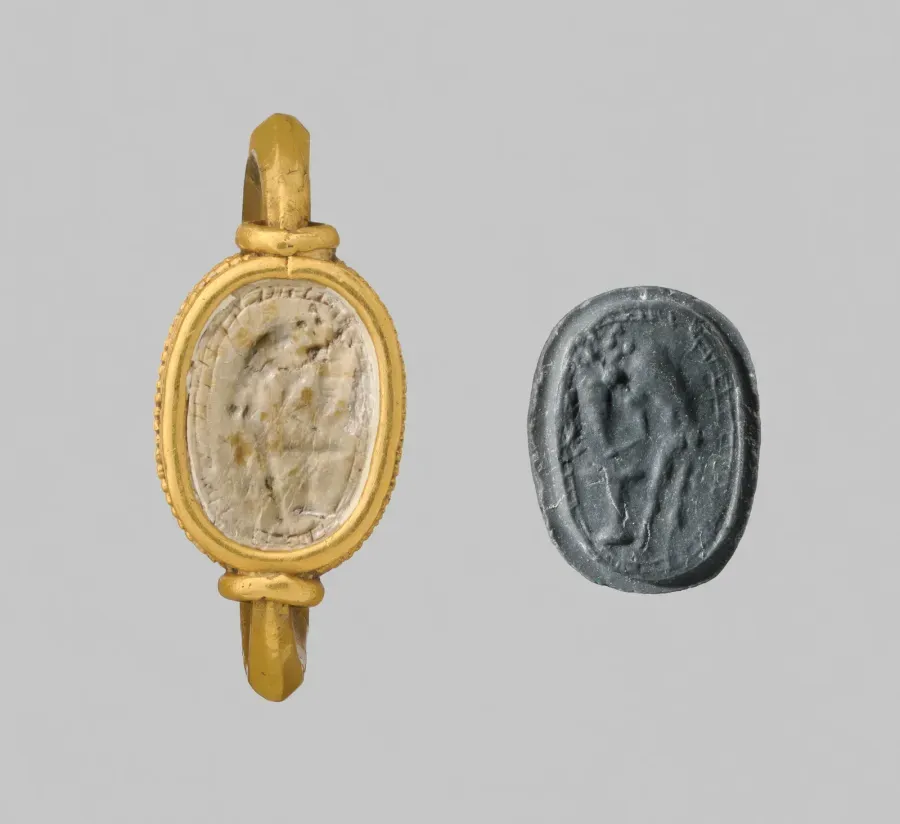
- A signet ring was once a signature. Before widespread literacy a scholar's or master's ring pressed into wax was the legal mark of authorship, which is why a symbol-bearing ring still reads as a statement of identity.
Jewelry as part of teaching memory
There are things a teacher remembers. The first class they led. The student who understood something hard and then said thank you ten years later. The year something important happened in the room. The lesson after which everyone went quiet, not from boredom but because something had happened.
Jewelry can become a material trace of these memories. Not a photograph: photographs live in a phone and are not worn. Jewelry touches the skin every day. It is inseparable from the body of the wearer. And each time the teacher puts it on, the memory activates, quietly, without effort.
A locket with the initials of a first graduating class. A ring bought the year it became clear this was the profession for life. Earrings given by a class that was difficult but became the best in memory. An engraved date you remember and nobody else knows.
Jewelry as memory is not sentimentality. It is a functional part of professional identity. A teacher of thirty years' standing who wears a pendant with the date work began carries that whole history every day. Not a weight, a resource.
For the students who give a teacher a piece, it works the other way too: they know their class left a trace. That somewhere there is a person who puts on a piece with their name or year and remembers.
A short history of the teacher's piece: from awards to symbols
Jewelry has always been given to educators, but the meaning of those pieces has changed over time.
In ancient Greece a teacher-philosopher (didaskalos) wore a signet ring that certified his belonging to a particular school of thought. It was not decoration but professional identification.
In medieval European universities scholars wore rings marking their degree and academic belonging. A doctor had the right to a ring with the symbol of his faculty. This was not a custom of adornment but a system of academic identity expressed in metal.
In the nineteenth century, as the teaching profession grew into a field in its own right, educators in many countries received service medals and badges. These were official symbols of status rather than personal jewelry. Over time, teachers began to choose pieces themselves, as a personal statement.
Today a teacher's piece is a space between the professional and the personal. It is the moment when a person in the role of "teacher" can say something about themselves as a human being. Through a symbol. Through metal. Through an object worn every day.
Jewelry for teachers: the most common searches
When people look for a teacher gift, they usually want one of three things: something to give, something for themselves, or something with a particular symbol. Here is a short navigator.
"Teacher Appreciation gift" is a thin chain with a small pendant (owl, feather, lighthouse) or stud earrings with a stone. From affordable to mid-range. The key: a small size and a deliberate symbol.
"Graduation gift for a form tutor" is a piece engraved with the year of graduation. A locket, a pendant, or a thin ring with the date. A concrete attachment to concrete people.
"Gift for a teacher from the class" is a collective gift, usually a little more significant in budget. An owl in gold or silver. An engraved locket. A lighthouse pendant.
"What to wear as a teacher at work" is a thin chain with a small pendant under or over the clothes. Stud earrings. A wedding ring or a thin ring with a symbol.
"Jewelry for a professor" is a ring with an owl, a pendant with an academic symbol, a brooch. The academic environment reads symbolism (owl, lighthouse, feather) without explanation.
"Jewelry for a literature or language teacher" is a feather. A direct metaphor for the subject. A silver feather on a thin chain speaks of a relationship to the word without extra explanation.
For each of these scenarios one thing matters: the piece should carry meaning rather than only being pretty. It says something concrete about the profession, the path, the relationship between the teacher and the one who gives.
Conclusion
A teacher wears jewelry in a space where every detail is read. In that sense a piece of jewelry for an educator is part of a professional language rather than a simple ornament.
A thin chain with an owl says: I am someone who takes knowledge seriously. A locket with a family photograph says: behind the role is a living person. A feather on a silver chain says: writing and language are my instruments. A lighthouse on the chest says: I am here to shine, not to pull. A tree of life says: I am part of a tradition that continues.
Three thousand years ago the Greeks placed an owl on their coins because they saw in it a precise image of wisdom. Since then the world has changed, but the classroom where one adult passes knowledge to children has not. It remains the same act. And an owl pendant around a teacher's neck is a direct connection to that tradition.
A primary teacher, a university professor, a private tutor: these are different formats of one profession. A profession in which a symbol worn on the body can say more than words. To wear something deliberately is itself a teaching gesture: I think about what I carry and about what it means. That is exactly how a teacher teaches.
Athena's owl, silver feather, tree of life, lighthouse, engraved locket. Sterling silver 925 and 14K gold. Personal engraving available.
About Zevira
Zevira handcrafts jewelry in Albacete, Spain. For teachers and educators we have several consistent symbolic lines:
Athena's owl: pendants, earrings, rings. From a tiny little owl on a thin chain to a larger owl with stone eyes. A direct connection to three thousand years of tradition. More: The owl in jewelry, symbolism and a guide to choosing.
Feather: pendants and earrings. An elegant symbol of writing and the transmission of knowledge. More: The feather in jewelry, meaning of the symbol.
Tree of life: pendants. Symbol of growth, passing on experience, the connection of generations. More: The tree of life, meaning of the symbol.
Lighthouse: pendants. Symbol of orientation. For teachers who understand their role in exactly that way. More: The lighthouse in jewelry, symbolism and meaning.
Silver locket: with engraving options. For memorial dates, graduations, teaching milestones. More: The silver locket, a complete guide.
Every piece is handmade. Personal engraving available: name, date, initials. Worldwide delivery.