Memorial Jewelry After Loss: Modern Mourning Jewelry Guide 2026
Introduction
In 1996 the psychologists Dennis Klass and Phyllis Silverman published research that shifted the way grief is understood. Their continuing bonds theory offered an alternative to the old model of "letting go": instead of severing the tie to the person who died, you reset it in a new form. Memorial jewelry works inside exactly that framework. Not as a badge of sorrow, but as a way to hold on to a connection that has not vanished, only changed.
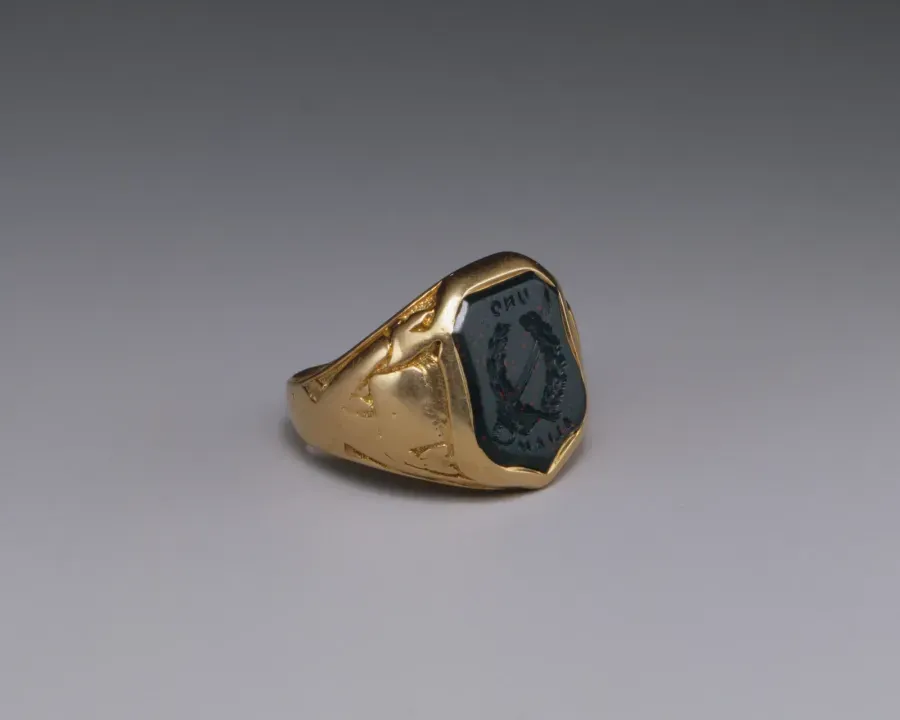
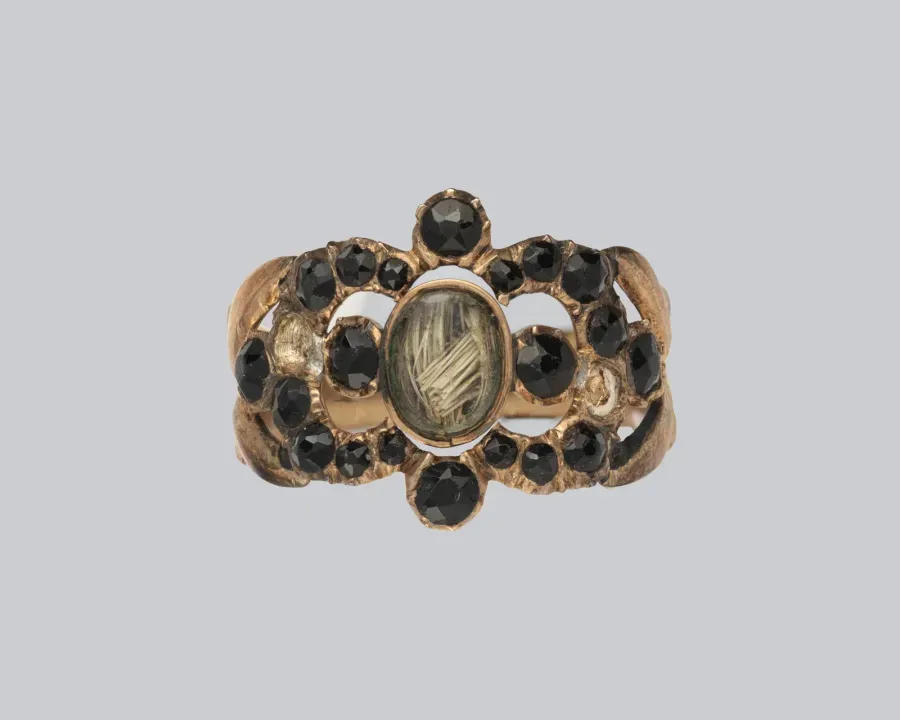
The wish to give memory a shape and a weight is thousands of years old. Egyptians wore images of the dead against the body. Medieval monks kept relics in objects that were jewelry and prayer object at once. After Prince Albert died in 1861, Britain mourned him for forty years, and Victorian mourning jewellery became the high point of the craft of its time: jet, agate, lockets holding a strand of hair.
What follows is an honest account of modern mourning jewelry: what it is, what it is made from, and what grief psychology says about it. No pathos, no promises of comfort.
Mourning jewelry in 2026: the return of a tradition
For most people the words "mourning jewellery" conjure Victorian England: black jet, heavy brooches, weighty chains and portraits of the dead under glass. Something museum-like and faintly unsettling. Yet this corner of the jewelry trade is living through one of its most visible periods of growth in twenty years.
Demand for memorial jewellery has risen markedly over recent years. The pandemic sped up a process that had already begun: people facing mass bereavement and closed borders could not fly to funerals, could not say goodbye in full, and went looking for other forms of farewell. Memorial jewellery became one of them.
The pandemic only accelerated something deeper: a rethinking of how we relate to death and grief. A culture that spent several decades trying to push the subject of death out of public conversation is starting to discuss it openly. The death positive movement, which appeared in Britain and the United States in the 2010s, asked a plain question: why are we so afraid to talk about loss? Why is grief expected to be hidden? Why are three days of leave treated as enough for someone who has lost a parent?
Modern memorial jewellery fits into that context. It is not decadence and not pathology. It is a deliberate choice by people who want to keep memory in a visible, touchable form.
The market today
Several hundred jewellery makers in Europe specialise in memorial work alone. Many more fold it into a wider range. Technologies have appeared that the Victorians never had: 3D scanning for fingerprints, laser engraving of coordinates accurate to the metre, sealed ash capsules with a double gasket. The aesthetic has widened too: alongside the traditional black pieces there are minimalist silver ones, fine gold chains with tiny containers, pieces engraved with coordinates or simply with a name.
Buyers have changed as well. Where mourning jewellery once belonged mostly to middle-aged widows, today there are many younger people among the buyers: those who lost parents relatively young, those who want to honour grandparents, those carrying the loss of a friend or partner. Several European jewellery studios put the age range of their memorial buyers at 25 to 65, with a peak between 35 and 50.
Men make up a growing share of memorial jewellery buyers. Widowers who lost partners. Sons and daughters who lost parents. Male culture withheld the right to public grief and its visible signs for a long time, but that is shifting. A memorial piece worn under a shirt, or one that looks like an ordinary minimalist men's pendant, has become acceptable in a man's wardrobe too.
History of mourning jewellery: from the Tudors to today
Before Victoria: the medieval period and the Renaissance
The practice of keeping something from the dead on the body is far older than Victorian England. Medieval Christian reliquaries, in which fragments of saints' relics were carried, were the forerunners of memorial jewellery. The only difference was the status of the deceased: a saint, or a loved one. The mechanism is the same: carrying something sacred against the body.
Egyptian scarabs, placed with the dead and later reproduced in jewellery for the living, carried the idea of passage and of memory at once. Greek funerary masks were posthumous likenesses that let a family keep the face of the one who died. Every culture that made jewellery also made its memorial version.
During the Renaissance the portrait miniature locket appeared. Tiny portraits on parchment or ivory were set in gold mounts that could be worn. These were objects of power, of family and of memory all at the same time. When someone died, the portrait turned into a memorial. Portrait lockets of particular sixteenth-century people survive: you look at one and understand that this is jewellery, and this is a face that someone did not want to forget.
In sixteenth- and seventeenth-century England a tradition of mourning rings took shape. After the death of a prominent person the family commissioned inscribed rings to be handed out at the funeral. They were made with black enamel, the initials of the deceased and the date of death. Some survive in museums: you can read the names and the years while holding in your hand an object from someone else's grief four hundred years on. It is a very particular feeling, and it reminds you that people have always wanted the same thing.
Victoria and Prince Albert: how one death changed everything
The turning point in the history of mourning jewellery is tied to one name and one date: Queen Victoria, 1861, the death of Prince Albert.
The Prince Consort died in December 1861 of typhoid fever. Victoria was 42. She lived another 39 years in mourning and spent them methodically building a cult of memory around her husband. Every year on 14 December the servants laid out his clothes on the bed as if he were about to dress. Until the end of her life she slept in the bed where he had died. And she wore jewellery carrying his memory: lockets with his hair, rings with his miniature portrait, brooches with his photographs.
Victoria was the centre of public attention. What she did, the British middle class copied. Mourning jewellery moved from a court ritual to a mass practice. In London in the 1860s and 1870s dozens of workshops did nothing but this.
The main forms of Victorian mourning jewellery:
Jet. A black mineral mined at Whitby in the north of England. Light, workable, capable of a matte or polished finish. Victorian craftsmen made brooches, necklaces, bracelets and earrings from it. Genuine Whitby jet is treated as a collector's material to this day.
A lock under glass. Hair clipped from the deceased was arranged into a miniature design and set under domed glass in a locket. Some makers built whole scenes out of hair: landscapes, trees, anchors. Work of this kind survives in museums in London and Paris.
Champlevé and black enamel. Enamel over silver or gold, often with inscriptions and dates.
Photographic lockets. Once photography arrived in the 1840s, photographs of the dead moved quickly into lockets. First daguerreotypes, then paper prints trimmed to the shape of the locket.
Hair jewellery. A genre of its own: the hair of the deceased was woven into intricate patterns to make bracelets, chains, brooches. It was a distinct craft that took real skill.
After Victoria's death in 1901 and the start of the Edwardian era, mourning jewellery grew more restrained. The First World War brought the theme back: thousands of families with no body to bury looked for some object of memory. Memorial bracelets with the names of the fallen, lockets with their photographs, rings engraved with dates. The war made memorial jewellery a mass phenomenon for the first time, instantly understood by everyone around: in Britain between 1914 and 1918 almost every family had lost someone.
After the Second World War the culture shifted: death became a closed subject, grief was pushed into the private, and mourning jewellery all but vanished from public life for roughly fifty years. Sociologists explain this by the way post-war society bet on optimism and the future, with no room for visible signs of grief. "Don't be sad, be strong" became a cultural command that pressed on the bereaved for several decades.
That is exactly why the return of memorial jewellery in the 2000s and its flowering in the 2020s reads, to some psychologists, as a cultural normalisation: a society starting to admit that grief is not weakness and not something to hide.
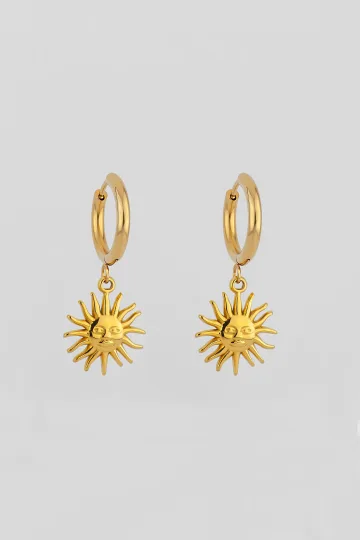
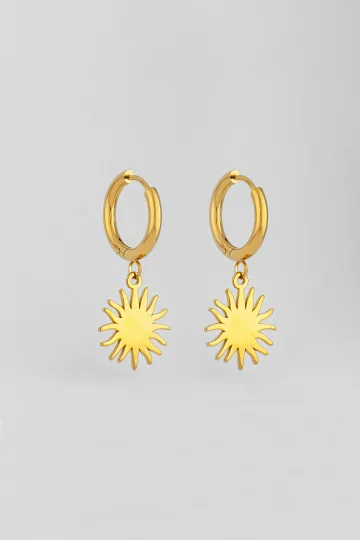
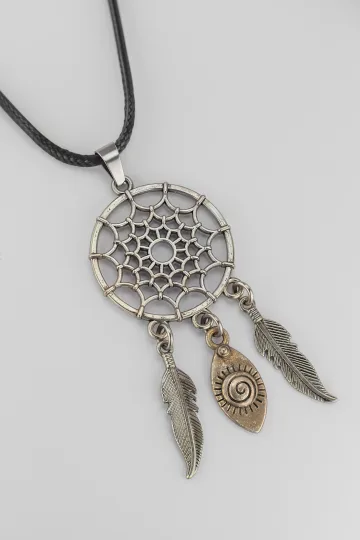
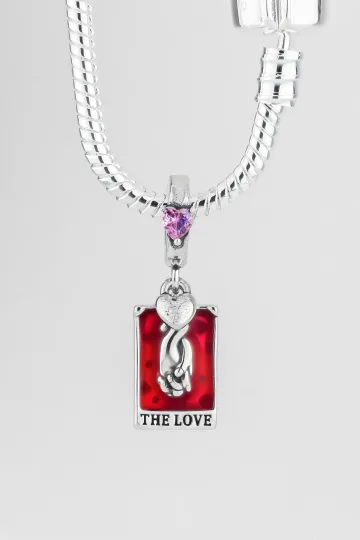
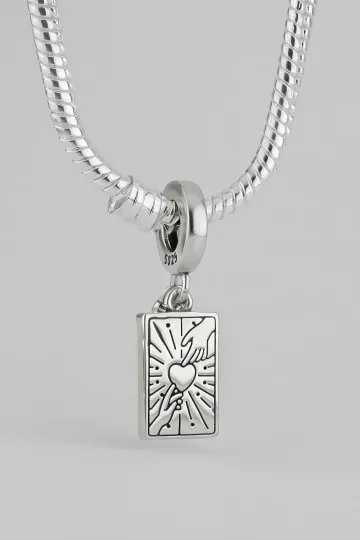
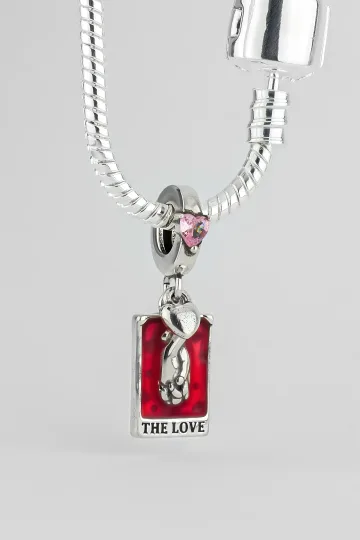
Wear the symbol, don't just read about it. These are in stock:
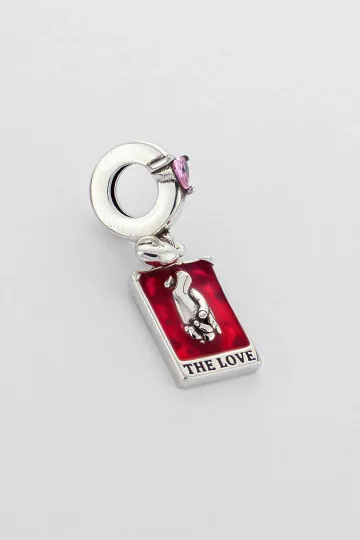
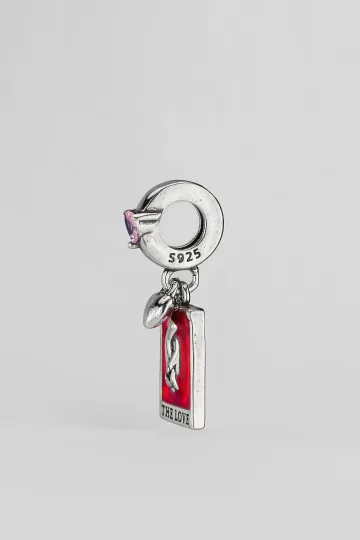
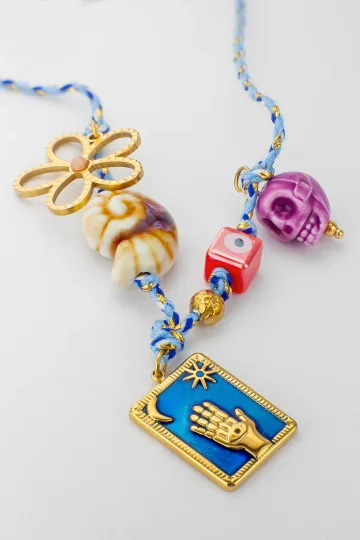
Modern types of memorial jewellery
Today's mourning jewellery is far more varied than its Victorian ancestor. Technology now allows what was impossible two hundred years ago. The aesthetic spans the whole range, from quiet minimalism to symbolically dense pieces.
The ash capsule: how it works
Cremation ash capsule pendants are closed pieces of jewellery with an inner compartment for a small amount of a loved one's ashes.
The construction. The inner volume of a typical capsule pendant runs from 0.3 to 1.5 cubic centimetres, roughly a quarter to half a thimble. That is enough for a symbolic amount of ash while the main part stays at home or at the place of burial. The lid closes in one of two ways: a threaded screw (it opens, contents can be added or taken out) or a soldered seam (sealed, permanent). Both have their supporters: some want flexibility, others prefer that the capsule never open by accident.
The materials. Sterling silver (925) remains the main metal: it does not react with the contents, it is durable, and it does not cause allergies in everyday wear. Gold 585 to 750 for those who want something more formal. Some workshops offer titanium or stainless steel as cheaper alternatives.
The form. Cylindrical, heart-shaped, teardrop, in the shape of a sprout or a leaf. The capsule mechanism can be hidden inside a more elaborate piece: a pendant with open wings where the base of the mount holds the capsule, or a locket that has both a compartment for a photo and a small capsule in the base.
This is not exotic. According to jewellery associations, this format has become one of the most popular memorial pieces in Western Europe over the past five years.
How the capsule is filled. The ashes returned to the family after cremation are usually fine grey-white particles. A capsule takes literally a pinch, a small fraction of the whole. The main part stays in the urn at home or at the place of burial. The filling itself is simple: the capsule is opened, a little ash is placed inside with a rolled sheet of paper or a small funnel, and the capsule is closed. With a sealed design the filling is done by the jeweller before the seam is soldered. This is worth confirming when you order.
A similar procedure works for a lock of hair: a small strand is set into the capsule or fixed in resin. Modern jewellers offer an optically clear resin that does not yellow, keeping the natural colour of the hair unchanged for decades.
The photo locket
A locket that opens to show a photograph of the deceased is the oldest of the surviving forms of mourning jewellery. We cover how to choose a locket, the opening mechanisms and which photo fits the size in our guide to silver lockets.
Here, something else matters: a locket for a memorial purpose is chosen differently from a purely decorative one. The usual preference is a more restrained outer design, without excess ornament, with the option of engraving on the back. A standard photo size of 30 to 40 mm holds a portrait with a recognisable face. The heart-shaped locket is popular but not the only choice: an oval or a circle often looks more restrained and wears better over years.
A traditional gesture: giving a child who has lost a parent a locket with a photograph of that parent. A gesture that needs no explanation, and that stays with a person for years.
How to prepare a photograph for a locket. The image is trimmed to the size of the locket, usually a circle 25 to 40 mm across, or an oval of similar proportions. Close-up portraits where the face fills most of the frame work best. Full-length or group photos lose their detail at that small size. Print services today reproduce micro-portraits at any size for very little. Many workshops accept a digital file and prepare the image themselves. If the photograph has value in itself, keep the original and use a copy for the locket.
A double locket holds two images. For a widower carrying portraits of his late wife and of the children, this is a common solution. For a child who has lost one parent, a double locket can hold both parents, which carries particular weight.
The fingerprint pendant
Fingerprint jewellery appeared as a mass phenomenon in the early 2010s and has held its place since. The idea is simple: the fingerprint of the deceased becomes a permanent element of a piece.
The technology. The print can be taken in several ways. First, a special silicone impression material pressed to the finger to take a negative. Second, a scan of a print made on paper, turned into a digital model. Third, and the most precise, a 3D scan of the finger. The resulting model becomes the basis for engraving or casting.
The result. A pendant or locket whose surface carries the real ridge pattern of a particular person. Every print is unique: no two people share one. That makes the piece entirely personal.
An important detail. A fingerprint can be taken after death, in the first hours and days, before the funeral arrangements are complete. Some mortuaries and crematoria offer the service. A number of workshops will also accept an impression already taken.
There is another route: taking the print during life, while the person is still here, for instance during a serious illness. Some families choose this deliberately, ordering the piece while it is still possible, so that the person can see it themselves. For someone who is dying, the gesture sometimes matters as much as it does for those who will remain.
A print on metal is the trace of a real touch, not an abstract ornament. That literalness is what makes a fingerprint piece particular: it holds physical information about a specific body. The ridge pattern forms between the tenth and twenty-fourth week of foetal development and stays unchanged for life. No two people share a print, identical twins included.
The hair pendant
A nineteenth-century tradition returning in a new form. The Victorians arranged hair into intricate designs under glass. Today's makers set a strand in clear resin or in a capsule.
Several formats. A pendant with a clear resin inset where the strand is visible: the resin is transparent or lightly tinted, the strand fixed inside. A closed capsule with the strand inside, like an ash capsule. A braided bracelet or cord made of the hair itself, combined with a metal part.
The hair is cut during life or kept after death. Most often it is taken during life, while there is still time, for instance during a serious illness. But cutting a strand at the time of farewell or during the care of the body is also common practice.
A few details about storing it before the piece is made. Keep the strand in a paper envelope or a small cloth pouch, not in plastic: paper lets the hair breathe and avoids a damp environment. Direct sunlight and heat can change the colour over time, so a cool dark place is preferable. In those conditions hair keeps for decades with no visible change. That means there is no need to rush the order: keep the strand first, and come to the piece later, when your state allows such decisions.
The tradition of hair jewellery has a long history in Victorian England. In Japanese culture there are Buddhist practices of keeping a lock of the deceased's hair with the memorial tablet. In a number of African cultures hair is kept as part of the bond with ancestors. The European nineteenth-century tradition is only one of many parallel paths of the same human wish.
Engraving: coordinates, name, date, message
Engraving is a separate kind of memorial language in jewellery. Text that means something only to the owner and those close to them is placed on a pendant, ring or bracelet.
What is engraved:
- A name and the years of a life: the most common choice. Plain, with no ambiguity.
- GPS coordinates. A place of birth, of a life, of burial. The coordinates read as a code: a stranger sees numbers, the wearer knows what they mean.
- A personal message. A quotation, words of the deceased that stayed with you. The first line of a beloved poem. Something that was between two people.
- Just a date. With no name: the one who wears it knows what date it is.
Laser engraving allows very small text, including full coordinates or an extended message on the inside of a piece. That makes the object two-sided: a neutral outer surface, a personal inner one.
Coordinates as a memorial language. An entry in the form 51.5074° N, 0.1278° W means a specific place to the wearer. To everyone else, just numbers. The code creates privacy inside a visible piece: the information is open, the meaning is closed. The coordinates of a place of burial, of the home where a childhood with the deceased was spent, of a last meeting, of any place that mattered. Many choose the coordinates of the deceased's birthplace rather than the burial site: not an end, but a beginning.
A personal message on the back. The practice of placing text on the inner surface of jewellery is several centuries old. Wedding rings have been engraved inside with a name and date since the medieval period. For a memorial piece the tradition carries particular weight: a neutral object on the outside, on the inside something that belongs only to you and to the one you remember. A laser engraving can reach several sentences on a piece as small as 2 centimetres across if the typeface is fine enough. A jeweller will help match the length of the text to the particular piece.
Symbolic jewellery for expressing grief
Literal memorial objects help hold memory. Symbolic jewellery, with meaning tied to life, death and transformation, does the same work through an image.
The difference between a literal memorial piece and a symbolic one matters. A pendant with an ash capsule, or a locket with a photograph, carries a specific person. A symbolic piece carries an idea that resonates with the experience of grief. Both routes are valid, and people often choose something in between: a symbolic piece engraved with the name of the deceased, a locket with a phoenix on the outside and a photograph within.
For some people the symbolic piece is preferable because it does not announce grief openly. A butterfly on a chain is simply a pretty butterfly to a stranger. The wearer knows what it means. It is a space for private meaning inside a public object.
The locket as a vessel
The locket is a vessel-piece. Inside there can be a photo, a lock of hair, a note, a small object. It closes and opens at the wearer's wish, and that matters psychologically. The physical act of opening a locket is a small ritual of access to memory. Our full guide to silver lockets will help you choose the right size and mechanism.
The sacred heart: pain as an honest image
The sacred heart in the Western tradition is an image of love shot through with pain: a heart with a wound, with thorns, with fire. It is one of the few symbols that does not pretend pain can be pushed away. It names pain plainly. That is exactly why the sacred heart turns out to be an accurate piece in grief: it does not say "this will pass," it says "I know that it hurts."
The phoenix: rising from ash as an image, not a promise
The phoenix burns and is reborn. For someone in grief it is an ambiguous image: a premature "you will rise again" can sound like a demand to stop grieving sooner. But the phoenix can be worn differently: as an acknowledgement that grief is not the end, that the person who has suffered the loss is not destroyed forever. Not a promise, but an image of a possible future.
The butterfly: passage
The butterfly in most cultures is a symbol of transformation and of passage from one state to another. In the context of loss it carries the idea that death is a passage rather than an end. For those who find the image meaningful, a butterfly piece is a way to say so without words.
The ouroboros: the cycle
The ouroboros, a snake eating its own tail, is a symbol of cycle: end and beginning coincide. The image is close to those who think of death as part of a continuous cycle rather than a rupture. A ring or pendant with an ouroboros can carry, for someone in grief, the thought that the person lost was part of a cycle that continues.
The tree of life: roots and branches
The tree of life is one of the most enduring symbols of family memory. Roots in the earth, branches reaching up. In the context of loss it is an image of connection: the deceased became the root from which what remains has grown. Especially apt for those who have lost a parent.
The anchor: a hold in the storm
The anchor holds a ship in the storm. In grief the image works literally: something that keeps you from being carried away. An anchor piece, for someone in the acute phase of grief, can serve as a reminder that there are points of hold.
Memento mori: the skull as an honest symbol
The skull in the memento mori tradition is not a symbol of death as an enemy but a reminder of its reality. "Remember death" not as a threat but as an invitation to value the living. For those who wear it after a loss it is an honest symbol without varnish: death happened, and there is no sense in denying it. That honesty is what makes it fitting.
The Death card of the Tarot: transformation
The thirteenth Major Arcanum of the Tarot in the symbolic tradition means not literal death but radical change: the end of one state and the beginning of another. In jewellery the symbol carries the idea of a transformation that is inevitable and does not always look the way one expects.
How to choose a symbol for a memorial piece
If you are choosing a symbolic piece for yourself or as a gift, a few markers.
Think about what resonates with the experience of the particular person, not about what is customary. The butterfly is a lovely and legible symbol, but if a person never felt a connection to that image, it will not become a meaningful object. The anchor may mean more to someone who needs a hold than to someone looking for an image of transformation.
Literal or metaphor. Some people prefer to wear something tied directly to the deceased: their name, their print, their photograph. Others find the literal painful and prefer a symbolic distance. This is not a hierarchy: the second choice is no less honest than the first.
Combining the literal and the symbolic. A phoenix engraved with the name of the deceased on the back. A locket with two compartments: a tree of life outside, a photograph within. An anchor with a name and a date. Such combinations give both image and specificity at once.
The long view. Symbolic pieces work well over time: when acute grief recedes the symbol does not lose meaning, it gains a new one. A butterfly that meant "passage" in the first year after a death may, ten years on, mean simply "she loved butterflies," or "I remember her through this image."
Grief psychology and jewellery as ritual
Kubler-Ross and the limits of the five-stage model
Elisabeth Kubler-Ross described five stages of grief in 1969: denial, anger, bargaining, depression, acceptance. The model became the best known in popular culture and one of the most often misunderstood.
Kubler-Ross worked with the dying, not with those who survive a loss. The stages are not sequential: a person can return to anger after a period of acceptance, hold several states at once, skip stages, or move through them in a different order. The model described possible states, not a required route. Later research showed that most people do not pass through all five stages in the classic sequence.
More important still: the Kubler-Ross model was often used to ask "which stage are you at now?", which created pressure. A person in grief is under no obligation to move on a schedule.
George Bonanno: resilience as the norm
The psychologist George Bonanno ran years of research into responses to serious loss and found something that ran against the prevailing assumptions. Most people who lose someone close show a trajectory of resilience rather than deep, drawn-out grief. This does not mean they are not in pain. It means that the ability to keep functioning within months of a loss is the norm, not a sign that a person did not love the deceased enough.
Bonanno set out several typical trajectories of grief: resilience (most), recovery (a substantial share), chronic grief (a minority), improvement after chronic difficulty. Forcing everyone into a single model that assumes a long, destructive period creates problems: those who do not feel destroyed begin to think something is wrong with them.
Bonanno's findings also showed that expressing emotion and holding it back produce similar results over the long run. That overturns the popular idea that grief must be "let out." Some people handle a loss more quietly, and this is not a sign of suppression or disorder. It is simply a different style. A memorial piece worn in silence, with no explanation to anyone, fits that restrained style entirely.
A great deal of received wisdom has gathered around grief and mourning jewellery, and much of it turns out, on a closer look, to be wrong. The most common of it is unpacked below.
Pauline Boss: ambiguous loss
Pauline Boss introduced the idea of ambiguous loss: a situation where a person is physically present but psychologically absent, or the reverse, physically gone but psychologically still part of the family. The second case is the death of someone close.
Boss's concept helps explain why grief for the dead continues for years: the person is gone, yet keeps a presence in thoughts, in habits, in memories. This is not pathology. It is a normal human response to losing someone who was part of your living system.
Continuing bonds theory
The theory most important for understanding memorial jewellery belongs to the continuing bonds direction, developed by Dennis Klass, Phyllis Silverman and Steven Nickman in the 1990s.
Before it, Freud's "grief work" idea held sway: you had to detach gradually from the deceased, invest energy in other relationships, let go. The goal of therapy was held to be reaching that break.
Klass, Silverman and Nickman studied how people who lose someone actually live. Most do not detach. They reset the connection: the deceased stays part of psychological life, but in a changed capacity. They move from the category of "alive, alongside" to "inner interlocutor," "source of values," "part of identity."
This is not pathology and not a delay in grief. It is a normal and healthy adaptation. People who keep a bond with the dead often adapt better than those who try to detach completely.
A memorial piece in this context is a tool for maintaining the bond. Not in a mystical sense, but in a very concrete one: a physical object activates a memory, creates a ritual of touch, gives grief a shape and a weight. The piece makes the bond tangible in the plain sense of the word.
Jewellery as a ritual of attention
Ritual helps grief. This is not an opinion but a well-documented psychological fact. Ritual builds structure where there is chaos. It gives grief a particular place and time, which helps regulate the intensity of the experience.
A memorial piece can serve as a daily micro-ritual. Putting it on in the morning: a moment of deliberate turning toward memory. Touching a pendant in a hard moment: a small gesture of self-soothing. Taking it off in the evening: another point of contact. None of it needs words, none of it takes more than a few seconds. But those seconds have structure and intent, unlike the random waves of grief that arrive without warning.
Research on ritual behaviour in the context of loss has shown that people who keep some regular practice of memory (visiting a grave, lighting a candle on a particular day, keeping a photograph in sight) adapt to a loss better on average than those who avoid any reminder. Jewellery is a wearable ritual: it is with you everywhere, not tied to a place or a date.
What "resetting the bond" means in practice
Continuing bonds theory sounds like an academic concept. In practice it describes very concrete things that people do.
Talking to the dead. Many people talk to the dead, aloud or to themselves. They tell them what happened during the day. They ask their opinion. They describe grandchildren the person never got to see. This is normal and far more common than is publicly admitted.
Jewellery as an intermediary. For some people, touching a pendant accompanies that inner conversation. The object is not a necessary condition for the conversation, but it creates something like a point of focus. It is the same mechanism by which people talk at a grave, knowing the person is not there: a place or an object serves as a point where memory gathers.
Making decisions "on their behalf." A slightly different practice: "What would he have said about this?" or "She would have approved of this." A dead parent, friend or partner keeps taking part in life as an inner voice. This is not a hallucination and not a symptom: it is an internalised image the mind uses to navigate situations where there used to be a living adviser.
All of this is the reset bond. A piece worn every day physically supports the process: it keeps the image from fading, holds it in the space of daily life.
Customer reviews
Zevira is a real jewellery shop. Genuine payments, deliveries and customer thank-yous.
🥰🥰🥰 gracias
Ok, ¡gracias! 🙂
When to give memorial jewellery
This is one of the most important and one of the most awkward questions.
The first days after a death are, as a rule, not the time for this gift. The person is in acute shock, faces a load of practical tasks, and is surrounded by people. A piece at that moment, especially one that calls for reflection and choice, can be an excess. The exception: if the bereaved person asks for it.
The first weeks are a hard stretch. Acute pain is still intense. Almost anything can feel wrong. Here you have to read the particular situation.
In Christian tradition the month's mind, the commemoration about a month after a death, is one customary point for marking the passage; for those who keep it, a quiet gesture around that date may be received. It is not that the gift belongs at the gathering itself, but rather a marker: by that time the acute phase has usually softened a little.
In Jewish tradition shiva, the seven days of mourning, ends, and after it the mourner begins returning to life. A few weeks after shiva, a gift may already be appropriate.
In Hindu tradition the shraddha rites are often performed on the thirteenth day and after a year. Orienting the timing of a gift around those dates is respectful to those who follow the tradition.
The general rule: better to give after a month or three, when the acute phase has passed and the person is beginning to look for ways to weave the loss into their life. At that point a physical object of memory can be received with gratitude rather than as an intrusion into pain.
A piece for yourself in memory of someone close: how to choose
Most memorial pieces are ordered not as a gift but for oneself. This is normal and logical: no one knows better than you what will help you specifically.
A few questions that help arrive at a choice. First: do I want to wear something that holds a physical particle of the deceased, or is the image what matters to me? That splits the choice into two large categories: capsules, prints, a strand, against lockets, symbols, engraving.
Second: how visible do I want it to be? Under clothing, in plain sight, or something seen only up close? The answer sets the length of the chain, the size of the piece, its form.
Third: do I want it to look like a mourning piece, or to look ordinary and carry a personal meaning known only to me? This is a question of how ready you are for conversations about it.
Fourth, the most practical: in what form do I have something from the deceased? If there was a cremation and there are ashes, a capsule is the obvious choice. If photographs remain, a locket. If a fingerprint was taken in the first days, a print. Sometimes there is nothing but a name and dates, and then a plain engraving on a modest piece works better than an elaborate pendant.
Fifth: is there something that mattered to this particular person? Their favourite symbol, their name in a particular spelling, their favourite place as coordinates. A piece that carries something personal from the deceased, alongside the abstract memory of them, often turns out to be more meaningful.
You do not have to answer all of these at once. Some people know what they want immediately. Others cannot reach a decision for months. That is normal too: a piece has no deadline.
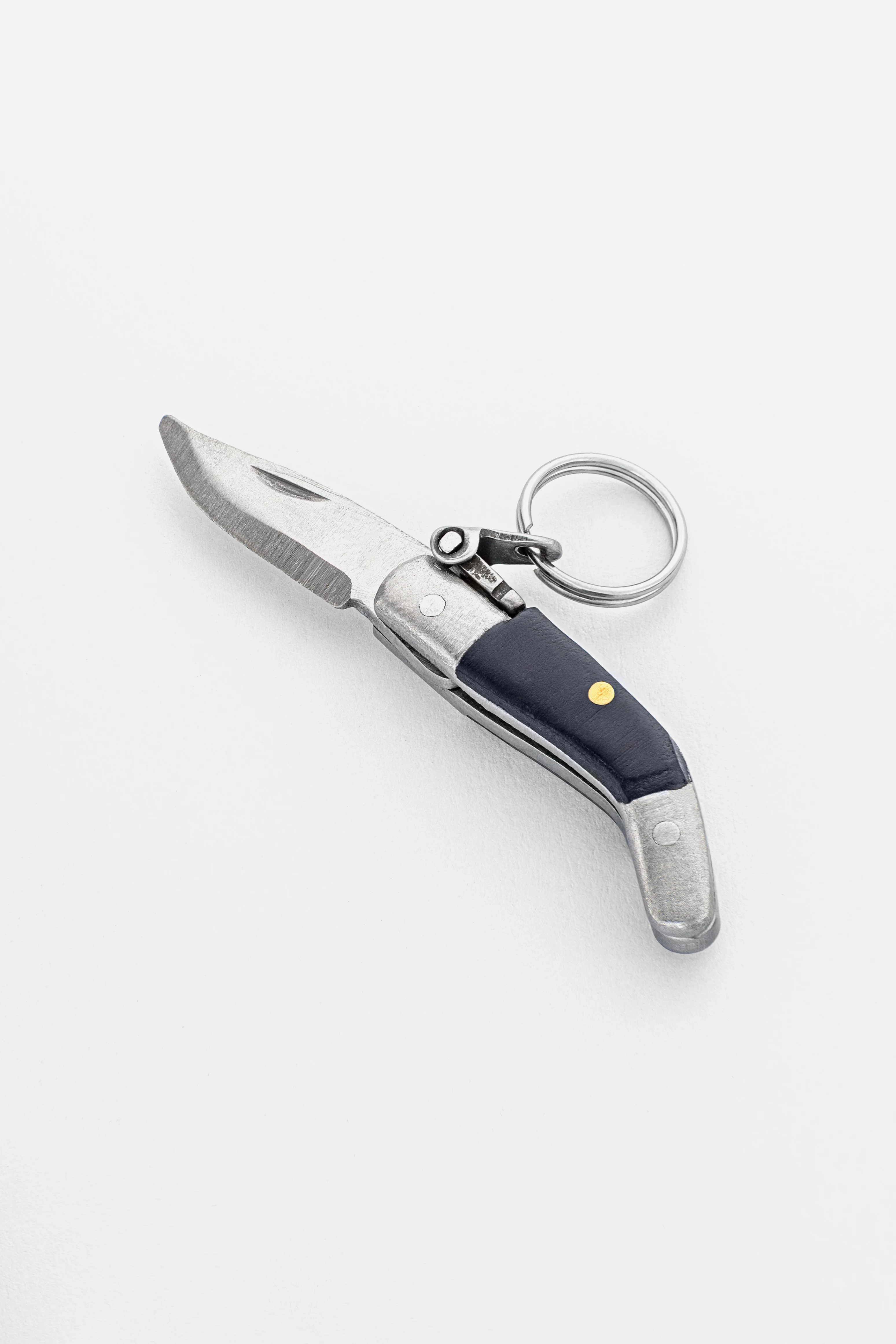
Artisan-crafted CAPAORA navaja pendant
A 40 mm stainless-steel navaja with a real folding mechanism and Palanquilla lock. An affordable gift to remember.
A code for blog readers:
10% off your first order
Authentic · Maker's guarantee · Ships from Spain
How to give: ethics and practice
Giving a memorial piece is a delicate situation that calls for care.
Whom you can give to. Someone close, whom you know well. Not a distant acquaintance, where it merely seems the gesture would be appreciated: the risk is too high. If in doubt, ask plainly. A person in grief values directness more than a guessed-at surprise.
What to choose. The more neutral the piece, the better. A piece without engraving and without an overloaded symbolic meaning leaves the person free to decide what to do with it: wear it, add engraving later, or not wear it at all. A piece with a name or date chosen by the giver is not always a good choice unless you know exactly what the bereaved person needs.
How to present it. Without excess words, without promises, without interpretations. Simply: "I was thinking of you. This is for you, if you want to wear it." What follows is the recipient's to decide.
To a widow or widower from the children. A locket with the late spouse's photo, a pendant engraved with their name, a piece with the deceased's birthstone: from children or close family this gesture can be received as a sign that they too remember, and that the memory is shared.
To a child who has lost a parent. A particular situation that calls for care. For a child a locket with a parent's photo is not decoration, it is an object of connection. Clinical psychologists who work with childhood grief note that physical objects tied to a dead parent help a child keep an inner image of that person. A photo locket, a bracelet with the parent's name, a pendant with their favourite symbol: all are fitting gifts. It matters to explain to the child in your own words, without grand phrases, what it is and why you are giving it.
What not to give
Not every keepsake gesture is fitting. A few things to avoid:
Anything with the slogan "they are always with you in your heart." These words are heard too often and too soon. On a piece, as an engraving, or on a card with a gift, they read as a cliché. If you want to convey the meaning, find other words, more specific ones. A name and a date are more exact than any slogan.
Too decorative and bright. A piece with huge sparkling stones and a floral pattern, for a person in the acute phase of grief, is the wrong moment. Restraint in design is more fitting. This does not mean the piece has to be black or sombre: a minimalist silver piece simply reads as a delicate gesture, while an ornate, dressed-up thing creates a cognitive dissonance.
Anything with a call to "let go" or "move forward." If you have found a piece with such an engraving, or you mean to write those words on a card, stop. This is not support, it is pressure. A grieving person does not need a reminder to stop grieving. Modern psychology has dropped that command entirely as unhealthy.
A piece with a name you chose. Names in jewellery carry great weight. If you want to order a piece with the name of the deceased as a gift, make sure you know the exact spelling: a shortened form and a full name can mean different things to different people, and an error in the name will feel like an error in the memory of the deceased.
The wrong occasions. A floral arrangement on the anniversary of a death, a set of scented candles, a bulky souvenir with "themed" imagery: all of it can feel formal. A memorial piece is a different level: personal, long-term.
The deceased's wedding ring, on someone's behalf. Do not make the decision about what to do with a deceased person's ring for the bereaved. Whether to wear it, keep it in a box, pass it to the children, melt it down: that is their decision, and theirs alone. The wedding ring question deserves its own section.
Leave your email, we'll send your discount code. No spam, unsubscribe anytime.
The code arrives by email, valid on your first order.
A memorial piece and a second marriage or a new relationship
This question is rarely asked aloud, but it comes up. What do you do with a memorial piece when a new relationship begins?
There is no single rule. Some take the piece off when a new relationship starts and put it away in a box. Others keep wearing it and explain its meaning to the partner. Others move it from a chain to a bracelet, making it less visible. Others pass the piece to the children, who keep it as a family object.
What matters: this is not a question of loyalty to the dead against loyalty to the living. A new relationship does not cancel a past love, and a memorial piece is not a sign that a person is not ready for another. Mature partners understand this. If a new partner demands that the memory of the deceased be put away as a condition of the relationship, that is grounds for a serious conversation about boundaries.
Children often want a memorial piece to stay with a parent who is entering a new relationship: for them it is an important bond with the dead parent. Passing the piece to the children at the moment of a new marriage can be a gesture that satisfies both the adult and the children.
The wedding ring question
A question asked often: "Is it right to wear the wedding ring of a deceased spouse?"
The short answer: yes, it is normal, if it helps the person. The long answer is a little more complicated.
Wearing your own wedding ring after a spouse's death. Many widows and widowers go on wearing their own wedding ring for years. That is their choice. There is no rule prescribing its removal after a set time. Cultural expectations on this vary, but in the end it is a personal decision.
Wearing the deceased spouse's ring. On a chain at the chest, for example. This too is normal practice. The ring becomes an object of memory, losing its former meaning as ornament. Wearing it on a finger or on a chain, keeping it in a box, or making it the basis of a new piece by melting: all of these are valid.
Some widows and widowers wear the ring of the deceased next to their own on one finger. Two rings together is a story understood only by themselves. Others wear it on the other hand, marking a passage: a different ring, a different time, a different meaning. All of it is normal.
Children inheriting the ring. Passing a deceased parent's wedding ring to a child is a complex symbolic gesture: to keep, to wear as memory, to prepare for a wedding. Families do it differently and at different times. Sometimes the ring is melted into a new piece, joining the metal of the past with the form of the present. This is not the destruction of memory: it is its transformation.
Wearing another's ring and other less obvious cases
A few situations that do not fit the standard options but occur in real life.
Melting a wedding ring into a new piece. Some widows and widowers, several years after a partner's death, choose to melt their ring into something new: a smaller ring, a pendant, a bracelet. The metal stays the same, the form changes. To some this is sacrilege, to others a way to give the metal a new life and a new form, matching what has changed. There is no rule here: the decision belongs only to the one who wears it.
A piece with the deceased's birthstone. The deceased's birthstone as the central stone of a piece is a delicate choice that does not look like mourning yet carries a personal meaning. An emerald if the person was born in May. An amethyst for February. A topaz for November. To a stranger it looks simply like a choice of stone. The wearer knows what stone it is.
Several memorial pieces from different losses. People who have lost several loved ones in different years sometimes wear several memorial objects at once. A pendant with a mother's name, a ring with a father's birthstone, a bracelet with a best friend's date. This is not excess and not compulsion. It is a chronicle of those who were loved.
Long-term wearing and passing to the next generation
Memorial jewellery is unique in one respect: its meaning changes over time.
In the first months after a loss the piece is acute memory, a daily anchor in pain. Touching it can bring tears. It is worn as a necessity.
After a year or two the piece becomes part of the habitual body. You notice it less, but taking it off feels wrong. The meaning shifts from acute to chronic: not pain, but a constant presence.
After five or ten years a memorial piece turns into part of identity. "This was my mother's locket." "This carries my son's name." Grief has transformed, but the object remains. It carries now both the memory of the deceased and the memory of that period of grief, of the path travelled.
Passing to the next generation. Memorial pieces become family relics. A grandmother's locket with her photograph, passed to a granddaughter. A grandfather's ring, gone to a son. Family history reads itself in that transfer. A piece carrying a particular person's name and dates becomes a physical archive.
This chimes with what continuing bonds theory describes: the deceased stays part of the family system even when they are gone. A passed-on piece is one of the ways that happens.
There is a particular kind of transfer too: a piece that remembers two or more people. A locket with photographs of dead spouses, passed to their children as an image of the parental pair. A strand from two heads, woven together in one piece. A pendant with two capsules for the ashes of two people whose lives were joined. These solutions seem complex, but they reflect how people in real life think of their dead: not one by one, but together, in the order in which they lived side by side.
When a child grows up and receives a piece their mother wore in memory of her own mother, the layers of meaning accumulate. The piece already remembers several generations of grief. There is something valuable in that, which words do not carry: an embodied family history you can hold in your hand.
When grief needs something else: about professional help
Memorial jewellery helps maintain a bond and hold grief in a form you can wear. But it does not replace a specialist's help when grief turns destructive.
Chronic, or complicated, grief affects roughly 10 to 15% of those who suffer a serious loss. Its signs: an inability to function more than a year after a death, intense longing, a failure to accept the reality of the loss, social isolation.
If you recognise yourself or someone close in that description, it is worth turning to a psychologist or therapist. Grief support groups also work well: many people find that talking with others who have been through something similar helps in a way that differs from talking with an unfamiliar specialist.
A piece can be part of the ritual of grief, but not a substitute for working through it.
Grief that goes unacknowledged. A separate case worth a mention. Some losses a culture does not fully acknowledge: the death of a former partner, the death of a friend (not "a relative"), the death of a pet, the loss of a pregnancy. A person in such grief is often left without support, because their pain is not deemed "serious enough." Memorial pieces matter especially in such cases: they give grief a form and a visibility, even when society does not acknowledge it. A piece in memory of a pet, the subject of our separate article on memorial paw jewellery, works by the same logic: any grief is real, and it deserves its place.
How to choose a workshop for a memorial piece
A memorial piece is an object held to higher standards, because the cost of an error here is different from that of ordinary costume jewellery.
A few practical criteria. A workshop should have real experience with memorial pieces, not merely an advertised ability. Look at examples of their work: how does the engraving look? Is the text legible? How neatly is the capsule seam made?
For ash capsules a hermetic seal is essential. Ask directly: how is the seal of a particular piece tested? A good workshop gives a guarantee and an explanation. A poor one either evades the question or answers vaguely.
The lead time. A memorial piece with a fingerprint or an individual impression takes time: taking the impression, building the 3D model, casting, finishing. A normal lead time is 2 to 6 weeks. Anyone promising it very fast is working with standard blanks without real personalisation.
Contact with the maker. A good workshop asks questions: who died, how you want to use the piece, whether you have wishes for the engraved text. An impersonal order through a website with no dialogue at all is fine for standard pieces, but for a memorial object a human contact is better.
Practical questions: caring for a memorial piece
A memorial piece is worn every day and on special occasions. That changes the demands of care.
Sterling silver 925 suits daily wear. It does not cause allergies and does not oxidise from skin contact under normal conditions. Darkening is possible from perfume and chlorinated water. Wipe with a soft cloth as needed. Ultrasonic cleaning is not recommended when a capsule with contents is inside.
The hermetic capsule. Check before buying that the capsule is genuinely sealed. The workshop should guarantee the solder. Do not take a cheap piece with an unclear closure method for storing ashes.
The chain wears. Even with gentle care, fine chains worn without removal thin at the flex points. Replacing a chain every few years is normal, and it does not require replacing the pendant itself.
Engraving can wear slightly on raised surfaces over the years. If it matters, a jeweller can refresh it.
A piece in resin needs protection from direct sun. Ultraviolet light can yellow clear resin over time. Keep a piece with a clear inset away from constant direct sun, though in ordinary wear this is usually not a problem.
What to do if a piece is lost or broken. This is a separate matter, and people sometimes feel it very keenly. The loss of a memorial object is felt differently from the loss of an ordinary one. It is not a catastrophe and not the loss of the person themselves: memory does not vanish with the object. If a strand or ash was inside a lost capsule, and you still have a part, you can order a new piece. If not, the piece can be remade through a print, a photo, an engraving. The object is replaceable; what it stood for is not.
One locket, on bare silver, under the collar. Five chains piled over a memory is not mourning, it is a jumble sale. Don't argue.
What to wear a memorial piece with
A memorial piece lives inside a wardrobe, not apart from it, and most people wear it daily. I treat it like any fine piece: I recommend what sits with the clothes and asks for no explanation. Here is how I suggest wearing it, by occasion.
How do I wear it every day? For every day I recommend a fine chain and a pendant under the clothes. A deep V-neck or a shirt undone a couple of buttons shows exactly as much as you want shown; under a T-shirt or a jumper the piece stays against the body and out of sight. Sterling silver holds neutral and does not quarrel with black, grey, or a warm beige.
Does it work at the office? It does, if you keep it restrained. I suggest a minimalist pendant or an engraved ring with no sparkling stones, on a medium chain around 45 centimetres: under a collared shirt the pendant drops just below the neckline and never gets lost in the fabric. For a locket I choose an oval or round shape in a calm design, so it reads as ordinary jewellery.
How do I bring it out for the evening? For the evening I choose a dark plain background, a dress or a suit, and a shorter chain around 40 centimetres so the pendant sits at the collarbones. Against a clean background silver or gold looks finished, and the meaning of the piece stays yours.
Can I wear several keepsakes at once? Yes, and it looks natural once you give it order. I space them by length: a pendant, a locket and a fine name element on chains of different lengths settle into a calm line rather than a heap. I keep the metals in one register, silver with silver, gold with gold.
What chain length should I pick? Length decides more than it seems. A short one, around 40 centimetres, I suggest for bringing the piece into view; a long one for carrying memory in silence, closer to the body and under the clothes. The middle 45 centimetres is the everyday all-rounder.
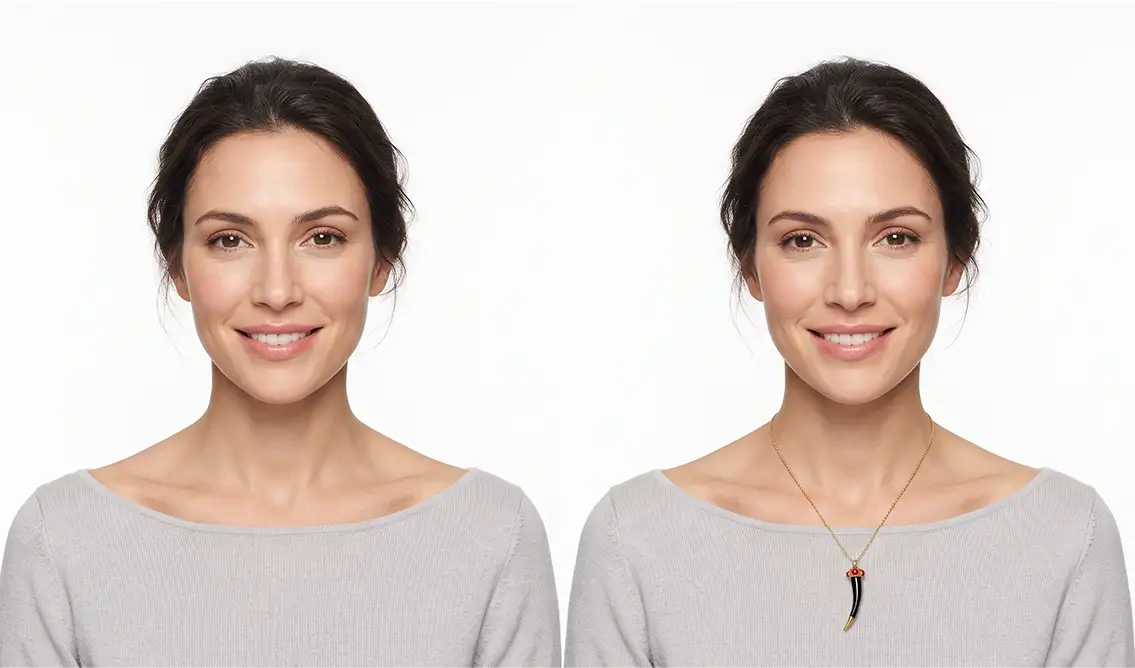
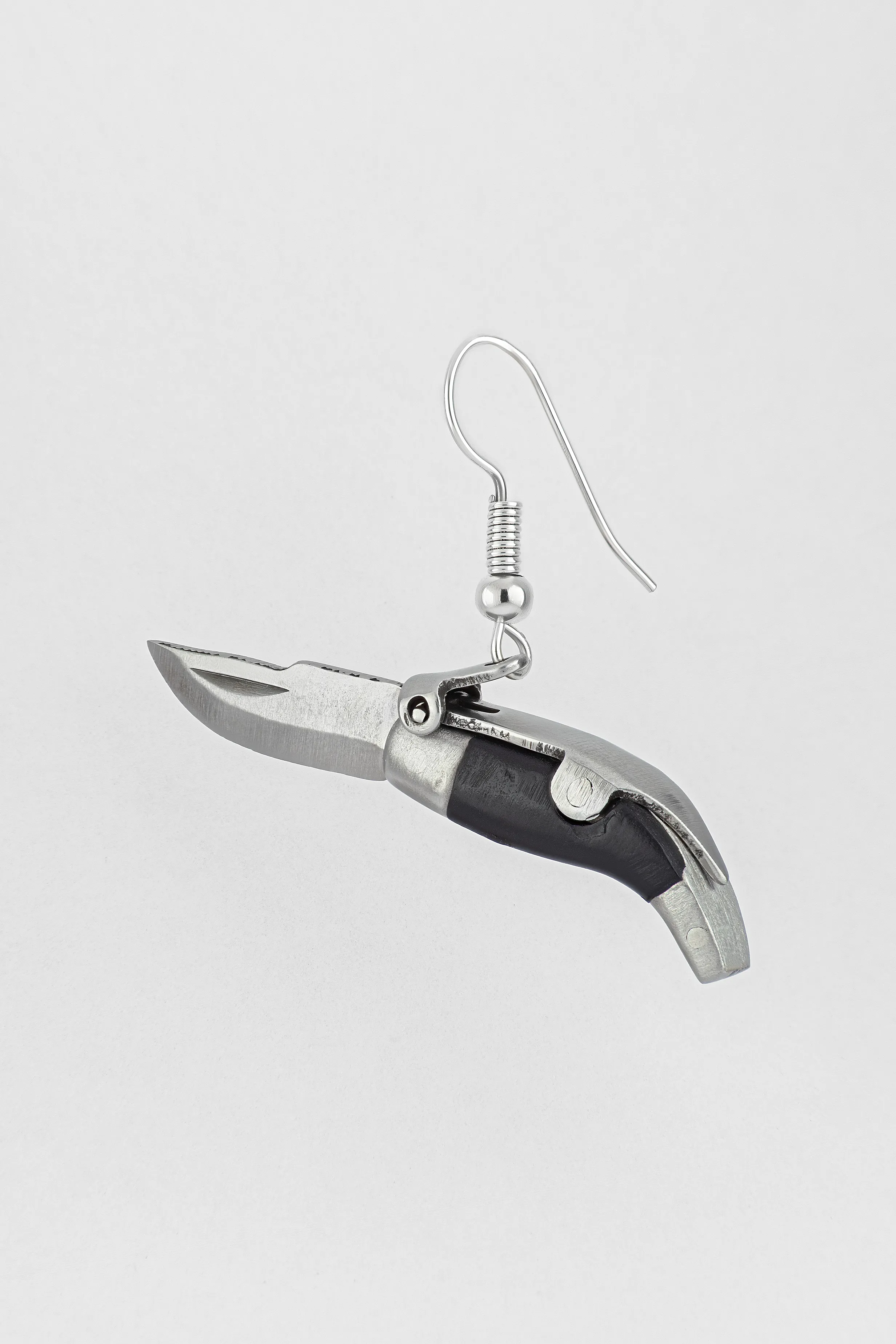
Turn on your camera, pick earrings, a pendant or a ring, and see the piece on yourself in real time.
Switch items in one tap.
Everything runs in your browser: no photo or video is ever uploaded.
Send a friend a discount code, they save on their first order.
Frequently asked questions
Is it right to wear a deceased spouse's wedding ring on a chain? Yes. It is a common and understandable practice. The ring becomes an object of memory and stops being ordinary jewellery. There is no rule about how exactly to wear it: on a chain, in a box, on a finger, with one of the children. The decision belongs to the one who suffered the loss.
When should you take off a mourning piece? You do not have to, ever. Many wear memorial pieces for the rest of their lives. Others take them off after a few years, when they feel ready. Others remove them at particular moments, such as a remarriage, and keep them in a special place. No mandatory timeline exists.
Can you inherit someone else's mourning piece? Yes. Memorial pieces are often passed within a family. A mother's pendant with a grandfather's name, gone to a grandchild, is normal practice. The meaning of the piece can transform along the way: from personal grief to shared family memory.
How do you explain to a child what a pendant with the name of someone who died is? Honestly and simply: "This is a piece with your dad's name. When I wear it, I think of him." Children accept that explanation without extra questions. There is no need to invent metaphors about stars and angels unless the child asks about them.
Is it normal to order a pendant with ashes? Yes. Ash after cremation is an inert mineral residue with no biological hazard. The practice of keeping part of a loved one's ashes near you exists in many cultures. In Europe it is a fully legal and widespread service.
What to give a child who has lost a parent? A locket with a photograph of the dead parent is one of the most accepted and legible gifts in this situation. A piece with the name or the initial of the parent's name also works. It matters that the piece be sturdy enough for a child: no fragile enamel, no small parts that break easily.
When should you give a memorial piece? As a rule, not in the first days or the first weeks. A month to three after a death, when the acute phase has softened somewhat, is a more fitting time. Read the state of the particular person.
How do you wear a pendant with ashes so it does not open by accident? Choose pendants with a soldered seam if a guarantee of a hermetic seal matters to you. If you prefer an openable capsule, check the thread every few months. A good workshop guarantees the solder and will explain the mechanism of the particular piece.
Conclusion
Jewellery after the loss of someone close is not a way to replace the person or to pretend they did not die. It is a way to give memory a form. Memory exists in any case, with a piece or without. But when it has a physical embodiment, something you can carry on the body, it does not dissolve into the flow of days so easily.
Grief does not require a single right answer. Some keep a strand of the deceased's hair in a sealed capsule and never open it: what matters is that it is there. Others wear a locket and open it every day to look at a photograph. Others prefer a symbol with no literal trace. Others wear nothing and hold memory differently: in rituals, in words, in an inner conversation. All of it is normal.
This tradition is older than Victorian England. It is older than Christianity. People have always found ways to keep something of those they lost close at hand. A person holding a silver pendant with a mother's name does the same thing their ancestors did with a reliquary, with hair under glass, with a ring engraved with a date. The form changes, the meaning is one.
The modern version of this tradition offers more choices, better technology and a more honest conversation about grief. Psychology has stopped demanding that the bereaved "let go." Jewellery has stopped hiding. Both shifts move in the same direction: respect for the fact that loss is a real part of life and that the memory of those who are gone deserves its place.
The dignity of memory does not require jewellery. A piece is only one of the possible answers to the question of how to keep close someone who is no longer here. Some find that answer fits them. Some do not. Both are fine.
The choice of a piece is a personal matter. There is no right and wrong object, no right and wrong timing. There is only what helps a particular person carry what they carry.
More questions
Can you wear a pendant with ashes in the shower and in a pool?
In the shower, sterling silver takes water calmly; afterwards it is enough to wipe it with a soft cloth. But chlorinated pool water and sea salt speed up the darkening of the metal and over time can weaken the solder of a capsule, so it is better to take the piece off for water. If there is a strand or ash inside, the risk is not worth it.
How do you clean a memorial piece without damaging the capsule?
Wipe the surface with a soft silver cloth, and if needed go over it with a slightly damp wipe, then dry it at once. Do not use ultrasonic or steam cleaning on a piece with a capsule, strand or photograph inside: vibration and steam can break the seal or spoil the contents. Leave stubborn dirt to a jeweller.
Is it safe to keep ashes in a piece of jewellery?
Yes. Ash after cremation is an inert mineral residue with no biological hazard, and carrying a small part of it near you is acceptable. Literally a pinch is taken; the main part stays in the urn or at the place of burial. In Europe this is a legal and widespread practice.
What chain length should you choose?
It all depends on whether you want to show the piece or carry it close. A chain of around 40 centimetres brings a pendant to the level of the collarbones, in view. Around 45 centimetres sets it just below the shirt neckline. A long one hides the piece under clothing, closer to the body, and that is the choice of those for whom remembering in silence matters.
Is it true that a memorial piece gets in the way of grieving?
This is a persistent myth. Modern psychology has dropped the idea that the bereaved must "let go" of the dead. Continuing bonds theory shows the opposite: memory in a tangible form helps adaptation rather than getting stuck. The object becomes a problem only in rare cases, and then it is worth talking it over with a specialist.
What can replace a piece if nothing remains of the person?
A plain engraving of a name and dates on a modest pendant or ring will do, or the coordinates of a meaningful place, or a symbol that meant something to the person. A literal particle is not required: an image and a personal meaning hold memory no worse than a strand or a print.
Photo lockets, engraved pendants, sacred heart, phoenix, tree of life, butterfly. Sterling silver 925 and 14K gold. Engraving from your own text.
About Zevira
Zevira makes jewellery by hand in Albacete, Spain. Our catalog has several lines that suit the memory of someone close:
Lockets with space for a photo. Engraved jewellery: names, dates, coordinates, personal text. Symbolic jewellery: sacred heart, phoenix, butterfly, tree of life. If you are grieving the loss of a pet, our article on memorial paw jewellery may help.
We work with sterling silver 925 and 14 to 18K gold. Engraving is made to order from your own text.