Jewelry After Burnout: How to Choose a Symbol of Return to Yourself
Introduction
Burnout is not cured by a holiday. Specialists are clear: rest eases fatigue, but it does not rebuild the motivational system. Cristina Maslach named three components of burnout: exhaustion, cynicism, and a lost sense of efficacy. Recovery from serious burnout, researchers note, often takes months. This is not weakness, and it is not a whim.
This article is about why jewelry after burnout is not a frivolous indulgence. It is a way to fix the transition in place. An explanation to yourself: something important happened, and it ended. You went through it. You are here.
We will look at what burnout is from the standpoint of psychology and neuroscience, how recovery actually works, why objects with private meaning function as tactile anchors, which symbols fit, and what to do with them. No moralising, and no triumphalism.
What Professional Burnout Is: Maslach's Three Components
Cristina Maslach, an American psychologist, built a working model of burnout at the end of the 1970s. Working at the University of California, Berkeley, she studied how people in caring professions described their experience. Her concept took hold and became the standard because it is precise and operational: three components that together describe something very hard to put into words.
One clarification. Burnout in Maslach's sense is not a personality trait. It is the result of a chronic mismatch between a person and their work environment across six dimensions: workload, control, reward, community, fairness, and values. It is a structural problem, not a private failing.
Emotional Exhaustion
The first and most obvious component. This is not the tiredness that follows a long day. It is a state where the resource does not recharge over a night or a weekend. A person arrives at work already empty. Emotional reactions that used to be automatic now demand effort. A colleague's "how are you?" provokes quiet irritation, because the brain has to manufacture a standard answer from an almost empty reservoir.
There is a particular marker for this state: the inability to take pleasure in things that once gave pleasure. A person listens to a beloved album and it plays like wallpaper. Watches a film they once loved and cannot get inside it. Walks in a place they always liked and feels nothing. This is not depression in the clinical sense. It is a reservoir that has been pumped dry.
Exhaustion in burnout is context-bound: away from the work setting a person can feel better. The first days of a holiday are easier. Then returning to the work environment brings the emptiness back. That contextual quality is one of the diagnostic signs of burnout specifically, rather than depression as such.
Depersonalization and Cynicism
The second component is harder to recognise from the inside. Maslach describes it as detachment: a distancing from the work and from the people you work with. A doctor starts seeing patients as "cases". A teacher stops seeing the human being behind each student. A manager treats the team as instruments of a task.
This is not anger or indifference in themselves. It is a protective mechanism of the psyche: if I distance myself emotionally, I spend less resource. The mechanism fires automatically, without a conscious decision. The cost of that protection is the loss of meaning. A person does work they once loved with the sense that they are doing something that belongs to someone else. The motions are correct, the result is there, but the sense of actually doing it is almost gone.
Cynicism is depersonalization aimed at the work itself and at its meaning. "Why all of this? Nothing will change anyway." "I have already been through this, and there is nothing new again." It is especially painful in people who once genuinely believed in their calling. A doctor who became a doctor out of vocation. A teacher who remembers why they chose the profession. Losing that belief cuts deepest.
A Reduced Sense of Professional Efficacy
The third component is the paradoxical one. A person can keep working and keep producing results. Tasks close, deadlines hold, no one upstairs complains. But the sense that you are doing something meaningful, and doing it well, disappears. A doctor successfully treats patients yet is privately convinced they could have done better, that they missed something. A designer ships projects on time but stops seeing the difference between good work and mediocre work.
This is especially corrosive precisely because the drop in subjective efficacy happens while objective results stay normal. From the outside everything is fine. Inside, the person is convinced they are handling it badly, that it is all going wrong. That sets up an ugly loop: a sense of inadequacy fuels perfectionism, perfectionism demands extra resource, and the resource drains faster still.
An Epidemic After 2020
The pandemic created a scale that made burnout visible as never before. Gallup survey data across 2021 to 2023 show that more than half of workers polled in developed countries report symptoms of burnout. The World Health Organization had added it to the International Classification of Diseases in 2019, right on the eve, as if it sensed what was coming.
What changed after 2020: the physical and temporal boundaries between work and home dissolved for millions of people. The working day became endless. A laptop in the bedroom. Messages at eleven at night. A meeting on Saturday "because everyone is home anyway". Meanwhile the load grew and the meaning of it all became far less obvious. Uncertainty is one of the most powerful stress factors there is.
The hardest blow landed on the caring professions. Healthcare workers, teachers, social workers, psychologists, and therapists went through several years where demand for their labour rose many times over while the system's resources did not follow. But burnout is not the privilege of those professions. It happens in any field where a person truly invests themselves and does not get enough back, in several senses at once: material, meaningful, emotional.
Neurobiological Effects: What Happens in the Body
Research over recent years has given a concrete neurobiological picture. The chronic stress of burnout leaves measurable biological traces.
The hypothalamic-pituitary-adrenal axis is the body's stress-response system. Under an acute threat it works cleanly: a surge of cortisol, mobilisation of resources, a reaction, a recovery. Under chronic stress with no completion of the cycle it starts to misfire. People with burnout show altered cortisol patterns: the overall level is raised while the daily rhythm is disrupted. In the morning cortisol does not climb as it should, so there is no energy to start the day. In the evening it does not fall as it should, so it becomes impossible to relax and switch off.
Neuroimaging shows changes in the structure and function of the brain. The prefrontal cortex, responsible for regulating emotion, making decisions, and long-term planning, works differently. The amygdala, the threat-response centre, becomes hyperactive. A human brain that has lived through prolonged burnout is literally organised differently. This is physiology, not a metaphor for weakness.
One consequence is a weakened immune system. Another is disrupted sleep. A third is chronic physical symptoms with no organic cause: headaches, back pain, digestive problems. The body signals what the mind ignores or cannot yet admit.
Recovery as a Process: What Happens and How to Tell
Understanding the mechanics of recovery matters for one concrete reason: many people after burnout do not know whether they have "come back" or not. There is no clear line. No single moment when you can say "done, it is finished". But there are markers, and it helps to tell them apart.
Neuroplasticity: The Brain Can Rebuild
The good news about the neurobiological changes of burnout is that the brain is plastic. This is one of the key findings of recent decades of neuroscience: the brain is not static. When conditions change and chronic stress eases, the prefrontal cortex regains volume and function. Changes in the amygdala are reversible too.
This process takes anywhere from several months to several years, depending on how long and how intense the burnout was. Not days, not weeks. That is exactly why recovery from serious burnout takes real time, and "just take a couple of weeks off" does not work.
Neuroplasticity means recovery is not a "return to normal". It is a rebuild. New neural connections, new patterns of response. People who have been through serious burnout and recovered often describe functioning differently afterwards: with a clearer grasp of their limits, with different priorities, sometimes with greater emotional precision.
This "differently" is neither worse nor better. Just different. And jewelry chosen in that moment carries exactly that meaning: not "I went back to who I was before", but "I am me again, with new knowledge about myself".
Work in positive psychology shows that people who find meaning in a hard experience they have lived through, not by explaining or justifying it but simply by finding something of their own in it, recover better and more durably than those who aim only to "get back to normal". A symbolic piece of jewelry is one way to make that kind of meaning physical.
Polyvagal Theory: A Nervous System on the Way Back to Safety
Stephen Porges developed polyvagal theory in the 1990s, and it changed how we understand the nervous system under stress. The theory describes three states of the autonomic nervous system: social engagement (safety, openness, presence), sympathetic activation (fight or flight), and dorsal vagal shutdown (a complete switching off).
Under chronic stress the system can get "stuck" in fight-or-flight, where any stimulus reads as a potential threat. In extreme cases, with especially severe burnout, the system drops into freeze: words run out in the middle of a sentence, there is no energy left to finish. This is not a reluctance to speak. It is a nervous system in shutdown.
Recovery, in Porges' terms, is the gradual return of the nervous system to social engagement: the ability to feel safe near other people, to be in relationships without constant vigilance, to take in the fine nuance of a situation rather than threats alone.
One important marker of recovery is the return of the ability to take pleasure in small things. Simple things. A walk on a quiet morning. The smell of coffee. A good book. A beautiful object in the hand. This is exactly why many people in this period find tactile practices close to them, including the habit of holding an object with private meaning. It occupies the hands and engages bodily sensation as well as the cognitive layer. For someone who has lived a long time in alarm mode, it can feel like a footing.
Bessel van der Kolk: The Body Keeps the Score
Bessel van der Kolk, a psychiatrist and researcher working with the aftermath of trauma, wrote a book that reshaped the approach to recovery across several neighbouring fields. His central claim: traumatic experience is stored in the body, not only in memory. This is not a metaphor. It is neurophysiology.
Although his work centres on post-traumatic stress, many of his observations apply to prolonged burnout. Under chronic stress the body accumulates a tension that does not release simply because the source of stress has gone. A person quits or goes on leave, and the body stays in mobilisation. Shoulders up. Breathing shallow. Stomach clenched.
Many who go through recovery report that bodily practices help them: touch, movement, rhythm, and temperature return the sense of being present. A piece of jewelry that a person reaches for in a moment of stress becomes, for many, exactly that familiar gesture. Warm metal in the hand. The texture of a stone. The specific weight of a pendant. These sensations are real, bodily, and for many they feel like a footing.
Why this works, subjectively: touching a familiar object with private meaning is bound up with the feeling of the known and the one's own. The object is familiar. A story is attached to it, a story that ended well. The hand has touched it many times in calm moments, and the person associates it with calm.
This is not magic and not a promise of an effect. It is a personal gesture that helps many people occupy their hands and come back to the present moment.
A Gift to Yourself as a Marker of "I Am Me Again"
We have written in detail about the psychology of self-gifting in our guide to buying jewelry for yourself. Here we will look at what makes the gesture particular in the context of recovery from burnout.
One of the less obvious symptoms of burnout is a lost ability to notice and meet your own needs. Not in the sense of "forgot to book a check-up". In a deeper sense: a person stops treating their own wants and needs as important. Under chronic stress the brain reorganises its priorities: survive, cope, do not break, deliver the result. Care for oneself, especially the kind tied to beauty and pleasure, slides to the very bottom of the list. Or drops off it entirely.
Buying yourself jewelry after burnout is a concrete act with the reverse meaning: I notice again that I want something beautiful. I believe again that I deserve something beautiful. It is a small act of returning to yourself, expressed in a form you can hold.
There is an important difference between jewelry and other ways of "treating yourself". A holiday ends, and the memory slowly fades. A new project creates new obligations and takes resource again. A spa day is a few hours. A piece of jewelry stays. It is on the wrist on a working Tuesday. It is at the neck on the morning commute. Every day. It is a physical reminder: you went through this, you are here.
On top of that, choosing jewelry requires being present in the moment. You have to notice what you like. You have to decide on the one. You have to touch it and feel it. For a person who has long lived on the autopilot of survival, that is a step forward in itself.
There is one more aspect that often goes underrated: jewelry bought for yourself is an act of deciding in your own favour. Not in favour of the task, not in favour of someone else, not in favour of the system. In your own. After burnout, when the capacity to decide in your own favour has been suppressed, that is a restorative practice on its own.
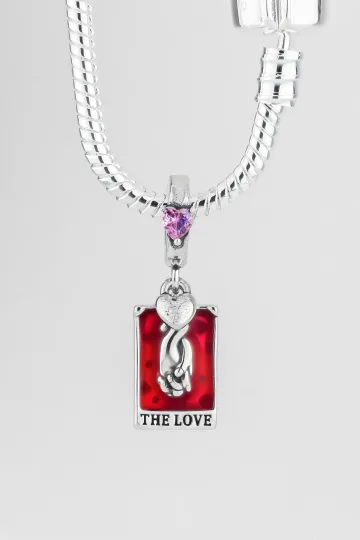
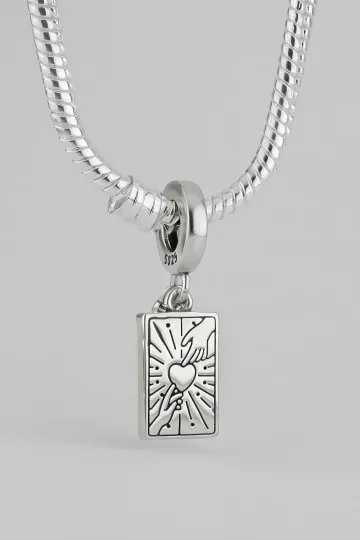
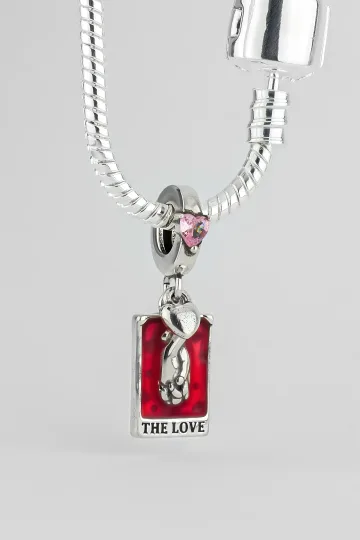
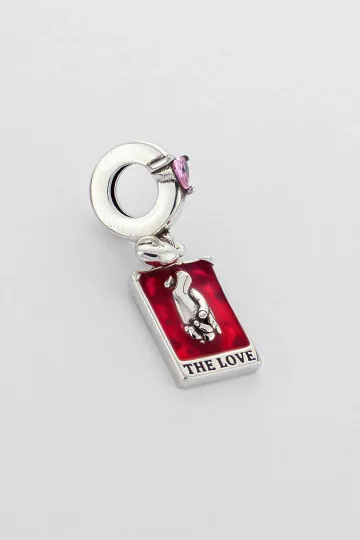
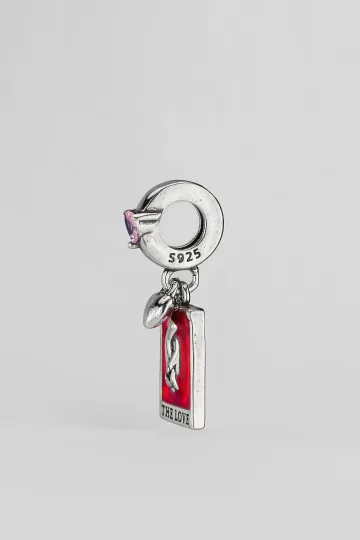
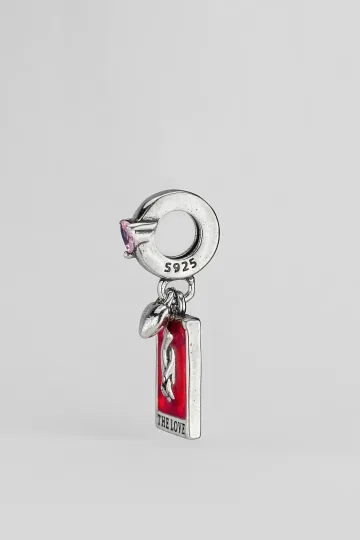
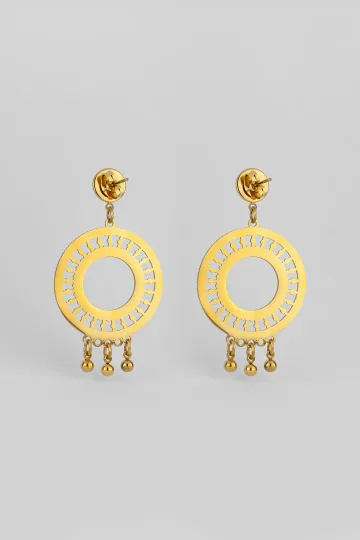
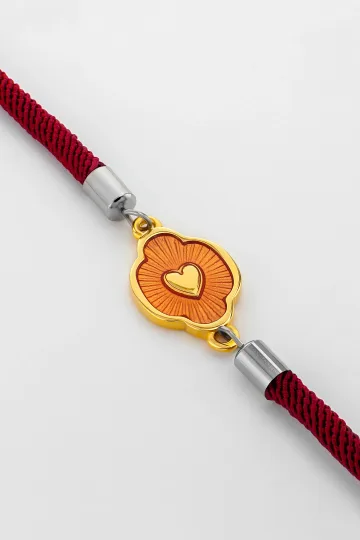
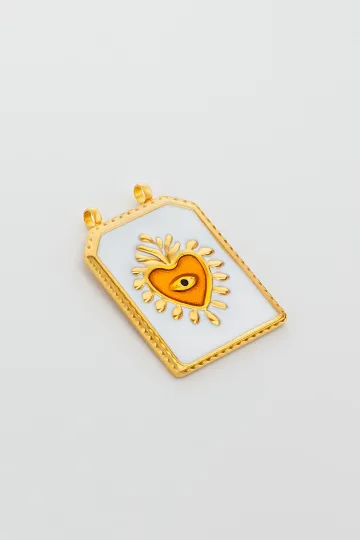
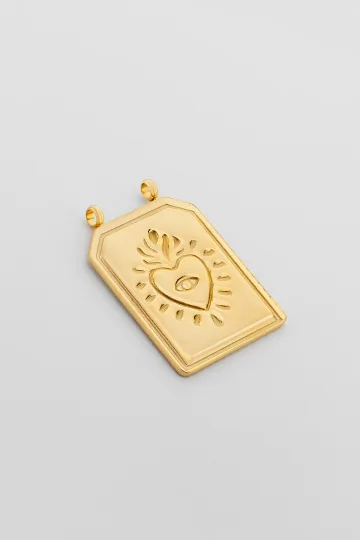
Wear the symbol, don't just read about it. These are in stock:
A Gift to a Loved One After Their Recovery
If someone close to you has lived through burnout, their return also deserves acknowledgement. Not a ceremonious one. Not a loud one. Something quiet, private, and precise.
A few things worth keeping in mind when choosing a gift for someone who has come out of burnout.
First: they are most likely tired of conversations about how they "coped" or "overcame" it. Burnout is not a contest that gets won. It is something you go through. The word "overcame" carries an undertone of strength and victory that the person may not feel at all. They simply came back. That is enough.
Second: many people who have lived through burnout carry a component of shame. A sense of weakness, of failure, of "not handling what others handle". A gift that highlights that, even with the best intentions, causes pain. The best gift is not about "you were broken". It is about "I saw how it was, and I see that you came back".
Third: they may not be ready for a lot of attention. Burnout sometimes leaves a heightened sensitivity to intense stimuli. A noisy celebration of the return can be too much. A modest, private gesture will land better.
Fourth: it makes sense to choose the gift together, if that is possible. Not a surprise for the sake of surprise, but a joint choice of symbol. "I want to give you something that marks this moment. What resonates with you?" That is a conversation that matters in itself. A conversation in which you both acknowledge: something happened, and now it is different.
Fifth: keep in mind that "return" after burnout does not always look like a return to the old self. A person may come back changed. Someone who takes on less. Someone who says "no" more often. Someone who works differently. Accept this new "return" as it is.
A pendant with a lighthouse, a phoenix in silver, a butterfly, a labyrinth, the Tarot Star: jewelry with symbolic meaning gives a person a concrete image to agree with or to set aside. That is better than simply beautiful. Although sometimes simply beautiful, chosen with intention, is also exactly right.
What Not to Give: An Honest List
A few categories of gift work poorly, or do not work at all, on the way out of burnout.
Another holiday. Rest is necessary during recovery, but not as a closing gesture after the return. Once a person has come back, offering them to "rest" again sounds like doubt that they really came back. Or like an attempt to postpone acknowledging the transition. Besides, a holiday ends and leaves exactly the same situation as before.
Books on how not to burn out again. This one is especially awkward, even when given with the best intentions. The person has just been through months or years that taught them more about themselves than any book could. They already know. Such a gift says: "I think you will step on the same rake again, here is the manual." That is not support.
Anti-stress gadgets and accessories. Fidget spinners, squishy toys, scented candles stamped "Breathe" or "Relax", boxes of "self-care kits". All of these are fine during recovery. After a person has come out, they sound like a reminder that there is still something to "cope" with. The moment has changed, and the gift does not match it.
Something from the company, if the burnout was work-related. A corporate gift acknowledging "recovery" carries a particular awkward subtext, even when chosen with good intentions. All the more so if the work environment was part of the cause.
Public attention, if the person does not want it. A loud celebration, a social media post about their "return", a public acknowledgement in front of the whole team. Many people after burnout want quiet and private recognition, not a show.
Something that points to the future rather than acknowledging the past. Enrolment in a course, a gym membership, a new planner or productivity tools. All of this is about what comes next. The moment of return does not call for a look ahead, but for an acknowledgement of what happened.
The best gift on the way out of burnout: small, personal, durable, and with a reason for why this one specifically.
Customer reviews
Zevira is a real jewellery shop. Genuine payments, deliveries and customer thank-yous.
🥰🥰🥰 gracias
Ok, ¡gracias! 🙂
What to Give: A Symbol That Recalls What Was Done
Jewelry after burnout works as a marker that a chapter has closed. A few criteria make it the right choice.
Durability. Burnout is a serious experience, and its marker should last as long as the memory of it does. Jewelry in quality metal will not tarnish away or break within a year. It will be there as long as the memory is.
Something you can wear every day. The point is not that the piece sits in a box for special occasions. The point is that it is present in ordinary life. On a working day. On the commute. In the shop. It reminds you not because you deliberately think about it, but because it is simply there.
Minimalism. For many people, recovery from burnout comes with a shift towards the simpler and the more essential. A piece that matches that is already a statement in itself. Small, clean, wearable. Without overload.
Private meaning, not public. A phoenix on a thin silver chain under a shirt is known only to the wearer. That is right. Recovery does not need to explain itself to everyone you pass.
A symbol that matches the path that was walked. This is the most important one. Not following a fashionable symbol, and not choosing on looks alone in a vacuum. What matters is that the symbol resonates inside. Phoenix, butterfly, lighthouse, labyrinth, star: each has its own story, and one of them will be the right one for this particular person.
Engraving: A Date That Needs No Explanation
Engraving turns a beautiful object into a personal document. In the context of burnout and recovery this works with special precision, because the transition really did happen, and it has dates.
The start date of recovery. The first day of a sabbatical. The day a person quit. The date a diagnosis was given and things were finally called by their names. The date of a first therapy session. Not "the date of the failure". The date when a person looked honestly at what was happening and decided to change something. That is the one that earns a place on the metal.
The date of return. The first day in a new role. The day of coming back from sick leave. The date a person felt present in their own life again. This date is sometimes hard to pin down exactly: there is no single clear moment. But more often a person does know when it happened.
One word. "Back." "Breathing." "Again." A short personal statement, legible only to the one who chose it. It works like a mantra written not on paper but on metal.
Coordinates. A place where something important happened during recovery. The town where a person spent several months of a sabbatical. The park where the first sense of coming back arrived. A mountain or a shore.
Initials. Sometimes simply your own. Because this piece is about yourself.
What not to engrave: banal motivational phrases, quotes from self-development books, anything that looks good on a feed but says nothing specific to this particular person. If a line could fit anyone, it does not carry the meaning you need.
Technically, engraving goes on the inside of a ring, the back of a pendant, the inner surface of a bracelet. Visible only to someone who knows to look. That is part of the idea: the private does not need a shop window.
Jewelry Symbols: What Carries the Right Meaning
Not every beautiful piece fits. Here the symbol matters. Not because it is magic, but because a symbol builds a narrative. By putting on a piece with a particular image, a person formulates something for themselves: this is what I lived through, this is who I became. That is a cognitive act, not an esoteric one.
Here are the symbols that land squarely in the theme of recovery from burnout.
The Phoenix: The Central Symbol of Burnout and Rebirth
The phoenix is the one symbol in world mythology that literally describes burnout as part of its own process. Not in spite of the fire. Through the fire.
In most versions of the myth the bird does not die by accident and does not die of illness. It burns deliberately, as part of its cycle. From the ash a young phoenix appears. That differs fundamentally from the image of "clearing an obstacle". An obstacle gets gone around or stepped over. The phoenix passes through the fire all the way. That is exactly why it is so precise for burnout: something in a person genuinely breaks down in the process. Old behaviour patterns. The habitual way of working. Illusions about one's own capacity. The belief that "you can carry anything if you try hard enough". And then from that ash, something new.
The symbolism of the phoenix is covered in depth in our guide to the meaning of the phoenix. It is worth reading before choosing.
A phoenix in silver with a dark patina: worked feather detail, a sense of upward movement, nothing ceremonious. A phoenix with opal or labradorite: shifting, different in every light. A phoenix as a small pendant on a thin chain: under a shirt, seen only by you.
One important nuance: the phoenix works when a person genuinely feels a connection to the image. If it seems too theatrical, if it gives off the feeling of a motivational poster, that is a signal. Another symbol will fit better. The piece should resonate, not impress.
The Tarot Star: Hope After the Tower
In the structure of the Tarot deck the cards run in a set order. The seventeenth card, the Star, comes directly after the sixteenth, the Tower. That is not coincidence. The Tower is the most destructive card in the deck: a sudden collapse of illusions, the end of the familiar order, the crumbling of what seemed reliable. That is exactly what many people going through burnout describe: no longer tiredness, but the end of a whole way of living.
The Star gives the first point of orientation after the collapse. Not victory, not a new beginning. Just a light by which a direction can be found. That state describes the start of recovery well: the dust has settled, the ruins are visible, and somewhere ahead there is something like a marker to steer by.
More on the symbolism of the card and jewelry built on its imagery: The Star Tarot: meaning and jewelry.
An eight-pointed star with labradorite or moonstone. Celestial motifs. A piece that carries hope without extra noise. Good for anyone who experiences their exit from burnout as the appearance of a first marker after total collapse.
The Butterfly: Metamorphosis Through the Chrysalis
The butterfly as a symbol of transformation works on a biologically exact level. The caterpillar does not "grow into" a butterfly through gradual change. Inside the chrysalis something far more radical happens: the caterpillar dissolves almost entirely into raw biological material, from which a fundamentally different creature is reassembled. This is not evolution. It is disassembly and reassembly.
That precision makes the butterfly an especially fitting symbol for people who, after burnout, did not so much "recover" as feel they became someone different. Different priorities. A different understanding of their limits. A different quality of presence in their own life. "Different" does not mean "better" or "worse". Different.
On the symbolism of the butterfly: The butterfly: the meaning of a symbol of transformation.
A butterfly in silver with minimal detail. Perhaps with opal, a little different each time in different light. Grace without fuss.
The Lighthouse: A Marker in the Dark
The lighthouse works on several meanings at once. It stays in place while the storm rages and nothing else can be seen. It shines not because it wants to be noticed but because that is its function. It says: here is the shore, here is where the land lies. It works in conditions where navigating by any other means is impossible.
For a person who has lived through burnout, the lighthouse carries the meaning of an inner reference point. The thing that held while everything else fell apart. The values that stayed untouched. The relationships that held. The parts of yourself that did not vanish.
The lighthouse is also precise as a gift from someone close: "you were a reference point for me while you went through this yourself." Or: "I saw you looking for the shore. You found it."
On the lighthouse as a symbol: The lighthouse in jewelry: the meaning of a symbol.
The Labyrinth: The Path That Did Not Look Like a Path
The labyrinth is interesting because it is built differently from how it looks from the outside. A classical labyrinth is not a puzzle full of dead ends. It leads to the centre and back along a single path that simply is not straight. There are no dead ends. There is a path. It just does not look like a path when you are inside it.
Many people describe burnout exactly that way: months when every step felt like a step into nowhere. No visible logic. No legible path. The sense of moving blind through a labyrinth without a map. But the path was there. And the person walked it. They came out.
More on the symbolism of the labyrinth: The labyrinth: the meaning of a symbol in jewelry.
A pendant with a labyrinth: small, fine, with a sense of precise geometry. Everyday. A reminder that a path which did not look like a path still led where it needed to.
The Ten of Wands Reversed: Laying Down the Burden
In the Tarot deck the upright Ten of Wands shows a person carrying an enormous bundle of staves. They are bent under the weight. They are plainly carrying more than they can. The card is about overload, about taking on beyond measure, about the inability or unwillingness to say "enough". Looked at honestly, that is how most burnouts begin.
Reversed, the card takes on a different meaning: the burden has finally been set down. An admission that you cannot carry this much. Letting go of part of the obligations, part of the responsibility, part of the tasks that were never yours to begin with.
A piece with this image is for those who came through burnout with a sense of release: the point is not that the tiredness passed, but that the person let something go. Something they had held too long and too tightly.
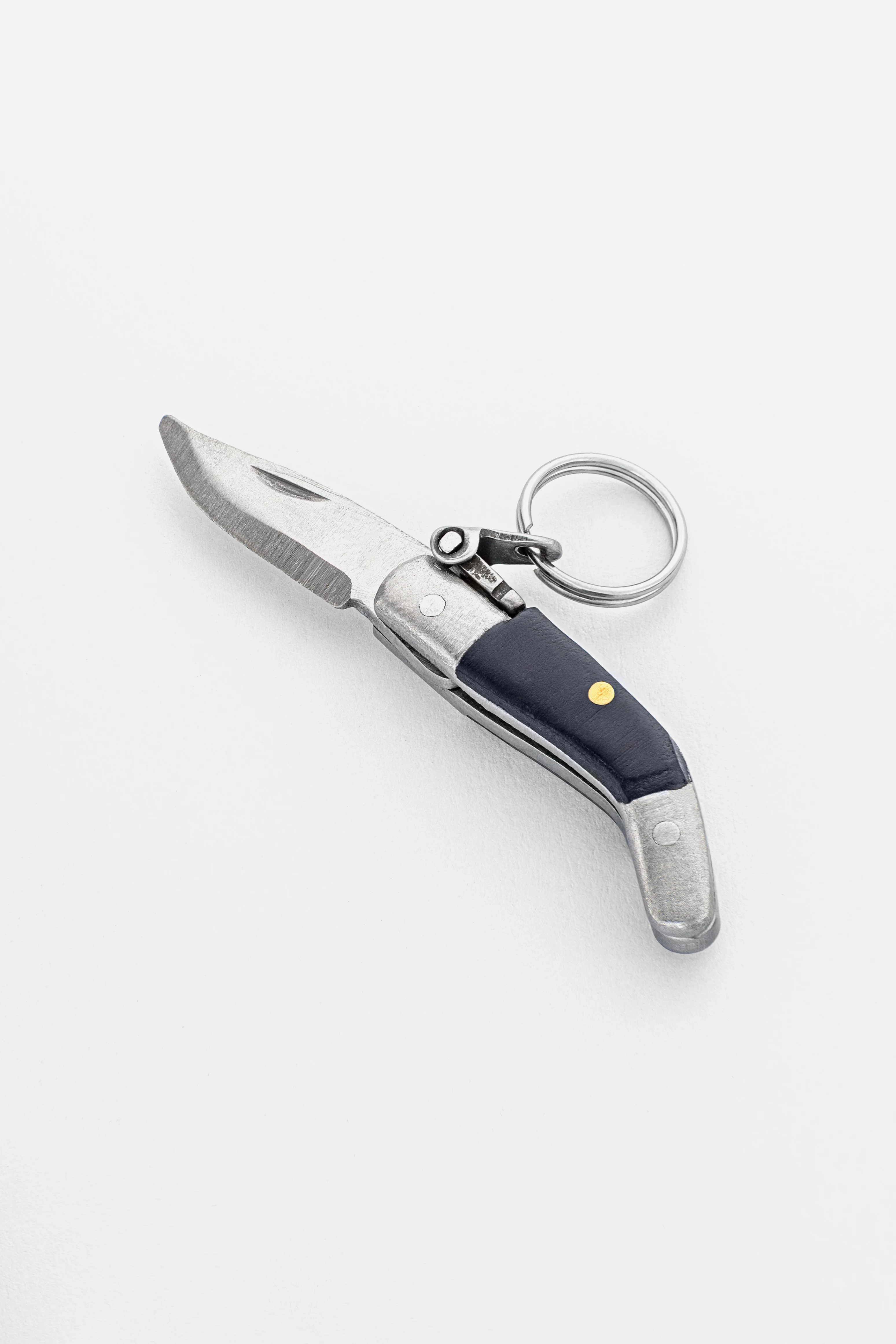
Artisan-crafted CAPAORA navaja pendant
A 40 mm stainless-steel navaja with a real folding mechanism and Palanquilla lock. An affordable gift to remember.
A code for blog readers:
10% off your first order
Authentic · Maker's guarantee · Ships from Spain
The Phoenix and Burnout: Why This Symbol Is More Precise Than the Others
The phoenix deserves a section of its own, because its link to burnout is not metaphorical. It is structural.
In the Greco-Roman tradition the phoenix is a bird that lives a long time, five hundred or a thousand years in different versions, and then burns itself on a nest of aromatic resins and herbs and is reborn young from the ash. This is not an accident. It is a cycle.
It is precisely that cyclical quality that makes the phoenix an exact symbol for burnout. Burnout is not a failure. It is what happens to people who truly burn. Who invested themselves without remainder. Who worked with a fire inside. Precisely because they burned, they burned out. That is not weakness. It is a consequence of intensity.
The Egyptian bird Bennu, a likely prototype of the phoenix, was tied to the sun and its daily rebirth: the sun "dies" each evening and is reborn each morning. In that version there is no catastrophe. There is a cycle: day, night, day. Burning, rest, burning. Going out and coming back.
The Chinese Fenghuang, often called the Chinese phoenix, is a different bird with a different meaning. It carries five virtues: virtue, duty, ritual propriety, reliability, and wisdom. It is a bird that signals the presence of high qualities, not a bird of rebirth through destruction. For recovery from burnout, the Greco-Roman phoenix with its fire and ash is the more precise figure.
The Christian tradition used the phoenix as a symbol of resurrection from the fourth century onward. That works in one direction: resurrection is a return. Burnout and recovery are exactly that. A person was there. It was as if they were not. And then they are again.
Wearing a phoenix after burnout is not a declaration of victory. It is a quiet acknowledgement: I went through the fire, and here I am. There was ash. Then something new appeared. That is enough.
One more detail about the phoenix in jewelry: the form carries meaning. A phoenix with open wings in upward movement carries one sense. A seated phoenix with a lifted head carries another: not flight, but presence after the return. Both are true, in different ways. The first is about the moment of taking off. The second is about being here again, standing on the ground, looking ahead. For burnout the second is often more precise: not flight, but simply presence.
In practice: a phoenix in oxidised silver, small, on a thin chain. The dark metal brings out the feather detail. A sense of upward movement in the form. Good under clothing, as a private symbol. A phoenix with opal or labradorite: a living, shifting effect that changes with the light. Like recovery itself: a little different every day.
A Tactile Anchor: Reaching for It as Fatigue Builds
This is a section about a practice many people discover by accident. A hand goes to a pendant during a hard meeting. Fingers close around a ring in a moment of conflict. A person touches a bracelet as stress rises. This is not superstition. It is a simple gesture that helps many occupy their hands, and it is worth making conscious.
In mindfulness practice an anchor is a sensory stimulus that brings attention back to the present moment. Touching something concrete halts the autopilot of anxiety or automatic reaction. The brain receives a tactile signal: I am here, now, this is concrete. It is one of the simplest and most reliable ways to interrupt a building spiral of stress.
A piece of jewelry with private meaning works as an anchor on several levels at once.
The first level is tactile. Touching metal or stone engages the body in itself. Warm metal, the texture of the surface, the specific weight of the piece. These are physical sensations in the present moment.
The second level is cognitive. The private meaning of the object adds a narrative layer: this pendant I bought on the day I came back from sick leave after burnout. I have already handled worse. It is a concrete story about a concrete past experience, and it says: I can.
The third level is associative. Touching a familiar personal object is bound up with the feeling of the known and the one's own. Something familiar, something mine, something unchanged. The person feels: this is familiar, this is mine.
A concrete practice: in the moment when the familiar fatigue or irritation builds, touch the piece. Do not think about the symbol, do not recall the story, do not meditate. Just make physical contact. A few seconds. The hands are occupied, attention returns to the present.
An important condition: the anchor works only if the piece is worn regularly. Not in a box for special occasions. On the body every day. That is the principled difference between a relic piece and a practice piece. A relic waits for an occasion. A practice works on a weekday.
Also: there is no need to attach the touch to any special ritual. It is simply an object with private meaning that is always near. It does not need ceremony.
The practice becomes most valuable at transitional moments: when the load piles up, when the first familiar signs of exhaustion appear, when something starts to resemble a past hard period. A hand goes to the pendant. Fingers touch the ring. And the person reminds themselves: you have handled this before. This is different, but you have the resource.
Leave your email, we'll send your discount code. No spam, unsubscribe anytime.
The code arrives by email, valid on your first order.
Styling: What to Wear Every Day
Jewelry after burnout should be built into ordinary life. Not into a formal wardrobe. Not into "special occasions". Into a working day, a trip to the shop, an evening with friends.
Size. Small. A pendant of two or three centimetres, a thin ring, a small stud earring. Not a piece that announces itself first. A piece that is present. There is a difference between "look at my symbol" and "I carry this with me".
Minimalism as a choice. For many people, recovery from burnout is accompanied by a rethink of values towards the simpler and the more essential. A piece with clean lines and private meaning matches that better than something loaded with detail.
Metal. Sterling silver, especially with a dark oxidation, gives tactile depth and brings out the detail of the form. It feels good in the hand. Fourteen-carat gold if you want a sense of permanence and something that will not darken. Rose gold if you want it softer. Each choice is valid.
Under clothing or on view. A genuine personal choice. Under clothing it is mine, not for the public. I carry it, but I do not display it. On view is a different statement: I do not hide my story, I wear it with me openly. Both versions are right and both are legitimate.
Stones. Moonstone carries the image of recovery, of tenderness, of an inner light. Labradorite is dark with a flash, transformation and depth. Opal is a little different every time in different light, like the road of recovery. Amethyst is clarity after the fog, a soberness of perception. Topaz is the energy of return. Black tourmaline is protection, a boundary. Blue topaz or aquamarine is clarity, the ability to see further. Citrine is the return of joy, morning light.
How not to overload. If a piece carries a lot of private meaning, it should be fairly simple in form. A complex decorative object with stones and engraving and a symbol all at once will be overloaded. Choose one: either the symbol, or the stone, or the engraving. All three together rarely work.
Combinations. You can wear several pieces, each carrying its own meaning. A phoenix as the main symbol, a lighthouse as a secondary marker. A ring with a date and a pendant with an image. It is a personal narrative assembled from several elements. The one condition for combining: a single metal, so as not to create visual noise.
Myths About Recovery and Celebration
How Burnout Changes the Relationship to Things and to Jewelry
One of the less noticed but important effects of burnout is a change in the relationship to the things around you. At the height of exhaustion a person often becomes indifferent to their appearance, to what they wear, to how the space around them looks. This is not laziness or carelessness. It is a consequence of all available resource going into survival in the functional sense. The brain simply has no capacity left to maintain the aesthetic side of life.
On the way out of burnout, interest in things returns among the first signs, and that is a good marker of recovery. A person suddenly notices they want to buy something beautiful. Or that an item they wore for a year without noticing has started to irritate them. Or that, for the first time in a long while, they walked into a shop not out of necessity but just to look.
This is not superficial. It is a marker of return. The ability to want something beautiful for yourself is a sign that the "I" is present again. That there is an "I" with taste, with preferences, with a sense of what fits and what does not.
In that context the purchase of jewelry is especially precise. Jewelry is something you choose not out of necessity. It is a pure choice of aesthetics and meaning. And that choice requires presence. You cannot choose jewelry on autopilot. You have to feel what resonates.
Therapists who work with the aftermath of burnout often note that when a client starts taking an interest in how they look and present themselves, it is a good sign. Not because appearance matters in itself, but because it signals a return to oneself as a subject, and not only as a function.
Jewelry in the Context of Therapy and Professional Support
Burnout is a serious experience, and for many people getting through it involves professional help: psychotherapy, coaching, body work, and in severe cases medication. Jewelry as a marker of recovery works well inside that context, but it does not replace it.
A few points worth keeping in mind.
Jewelry as an artefact in work with a therapist. If a person is working with a psychotherapist during recovery, choosing a piece can become part of a session. "I bought a pendant with a phoenix after our conversation about what exactly burned in me and what appeared that is new." An object with private meaning becomes a concrete anchor for an abstract inner experience.
Some therapists working in EMDR or somatic approaches deliberately use objects like this: a client holds one in the hand during a difficult session. A physical object with personal significance helps maintain the link to a resourced state while harder material is being worked through.
The moment of choosing as a therapeutic event. The very process of choosing a piece, a walk through a shop or a scroll through a catalogue, touching different items, settling on a particular one, can be a practice of attention to oneself. What resonates? What does not? Why this one? In the context of recovery, those questions carry weight.
Jewelry does not replace therapy. Let us say it plainly. A silver phoenix is a beautiful object with private meaning. It does not cure burnout and is not, on its own, a tool of therapy. It is a marker and an anchor, not a treatment. Professional help with serious burnout is necessary, and jewelry naturally complements that path rather than replacing it.
There is a separate article on the overlap of jewelry with the therapeutic journey: Jewelry after therapy.
Burnout in Different Contexts: Where It Comes From and How It Shows
Burnout is not uniform. The experience depends heavily on the context it arose in and the reasons behind it. That, in turn, affects which symbol for recovery will be precise.
Medical and caring burnout. Doctors, nurses, social workers, psychologists, teachers. These are people whose work by its nature demands a high emotional charge and a constant giving of oneself. Burnout here is often accompanied by a painful cynicism: someone who became a doctor out of a genuine vocation finds themselves seeing patients as nuisances who get in the way of paperwork. Someone who became a teacher for the sake of children suddenly realises the children irritate them. This is one of the hardest aspects: not so much tiredness as the loss of the very meaning that mattered most. The loss of the reason the profession was chosen.
For this type of burnout the phoenix is especially precise: something that burned, burned out, and now on the ash there is something new. But without false optimism: the new is not necessarily the old meaning. It is a different attitude, different boundaries, a different quality of engagement.
Burnout in the corporate environment. Often tied to a rising workload without a rise in resources, to a lack of visible meaning in the work, to a sense that effort does not affect the result. Here depersonalization often comes with cynicism towards the organisation itself. "Nothing changes anyway." "No one notices the effort."
Recovery frequently involves a change of context: a new place of work, a new format of employment, sometimes a complete change of field. Jewelry here can mark exactly that transition: both "I came back" and "I came back somewhere different". A labyrinth as a symbol of a path with no obvious direction that still led where it needed to. Or a lighthouse as an acknowledgement that the inner reference point held even when everything external changed.
Parental burnout. A less acknowledged but no less real type. A single parent, or both parents, carrying the full load without support. Chronic sleep deprivation. The sense that every need of the child matters more than your own. The gradual disappearance of the self.
Recovery here is often tied to the arrival of support, to delegating, to a return to what was personal. Jewelry as a marker of "I exist again as a separate person, not only as a mother or a father" is especially precise in this context. A ring or a bracelet chosen for oneself, not for the family, not for anyone else. For oneself.
Burnout in a creative profession. Artists, designers, musicians, writers. The particular feature: the work demands both time and inner resource in the literal sense. When the resource runs out, both the ability to make and the desire to make disappear. This is especially traumatic because the creative work was part of the identity.
Recovery often includes a period when a person deliberately does not try to create. They simply live. And then at some point the desire returns. Jewelry chosen in that moment can carry the image of that "I want to again": a butterfly as reassembly, a star as the first marker after the dark.
Talking About Burnout: How to Speak and How Not To
If someone close to you has lived through burnout, the moment of their return calls for care in what you say and how you say it.
What works. "I am glad you are here again." No explanations, no qualifications. "I saw how it was. You came through." Without "well done" and without advice. A quiet acknowledgement that the experience was real and that it ended.
What does not work. "Well, good thing you got some rest!" The person did not rest. They recovered. Those are fundamentally different processes. "Now you know how not to work." That is moralising. The person knows already. "The main thing is, do not forget this lesson." People who have been through burnout tend to remember it well. The reminder sounds like doubt about their ability to learn from experience.
Jewelry as a conversation. If you are giving a piece in acknowledgement of a return, explain why this one. Not at length. Simply: "I saw a lighthouse and thought of you. You found the shore." Or: "a phoenix, because you went through the fire." A short, personal explanation makes the gift meaningful.
One thing matters: do not ask the person to confirm that they are "back to normal". Recovery is not linear. It has no moment of "normality restored". There is a gradual process, with good days and hard ones. Acknowledge the return without demanding confirmation that it is final.
Long-Term Recovery: What Jewelry Means After a Year
A year after coming out of burnout, a piece of jewelry starts to mean something in addition to what it meant at the moment of choosing.
In the first months after the return, the piece was an active anchor. A person touched it often, consciously. In hard moments. When the familiar feeling built. It reminded them: you have been through worse. After a year the relationship to it changes.
It becomes part of the self. Part of the look. Part of habit. A person notices it only when they take it off, or when someone asks. The anchor becomes less active once recovery has stabilised. That is a normal dynamic. That is how it should be.
But it stays. And in the moments when something starts to pile up again, when the familiar fatigue builds, when a person notices the first signs that the boundary is making itself felt, the piece becomes an anchor again. The hand goes to it on its own. Without a special decision.
After a year the piece also becomes a story that can be told. Not to everyone. Only to those who ask and whom you trust. "This I bought when I came out of burnout." A few words that carry everything. Those who understand will understand. Those who need more explanation are unlikely to be helped by it.
Some people, after a year, add a second piece. The first was about the return. The second is about who they became afterwards. That is right too. Pieces with private meaning can gather into a story a person tells themselves in material form.
The link to other transitions: the theme of jewelry as a marker of recovery overlaps with what we explore in our guide to jewelry for a sobriety anniversary, in the article on jewelry after therapy, and in the theme of jewelry as a gift to oneself for a personal milestone. Burnout, work with a therapist, recovery from dependence are different paths, but they share one logic of the marker: something important passed, it is worth acknowledging, and an object with private meaning performs that function more precisely than words.
An important nuance about the "third piece": some people, having come through several hard periods, gather several pieces with different meanings on themselves. Each is a separate story. They do not explain them to outsiders. It is their private chronicle in silver and gold. That is a practice too, and it works.
Send a friend a discount code, they save on their first order.
Materials and Formats: A Practical Guide to Choosing
Once the symbol is settled, the practical question arises: what exactly to choose, and in which material. A few points to steer by.
The Pendant: The Most Precise Format
A pendant at the neck is a piece that is present with you everywhere but asks for no interaction. The hands are free. It is simply there. That makes it an especially precise format for a tactile anchor: you can touch it at any moment, but you do not have to.
A small pendant of two or three centimetres on a thin chain under clothing: maximally private, invisible to others. A medium pendant of three or four centimetres over clothing: visible, but not loud. Both versions work, the only question being whether the person wants the piece to be seen.
The chain matters. A thin chain of forty to forty-five centimetres places the pendant at the base of the neck. A chain of fifty to fifty-five centimetres drops it lower, where it shows less in a neckline. For wearing under clothing, both are fine. For open wear, a shorter chain gives a clearer reading.
The Ring: An Anchor for the Hands
A ring works especially well as a tactile anchor precisely because the hands are always at work. Pressing keys, holding a phone, gesturing. In any of those moments the ring is in view. That creates a constant, unobtrusive presence.
A thin ring with a small symbol or stone: everyday, versatile, undistracting. A ring with more pronounced relief: more tactile, where touching the texture is felt in itself. A ring with a date or a letter on the inner side: seen only by you.
The Bracelet: An Anchor at the Wrist
The wrist is a particular place: the pulse. Touching the wrist, the spot where the beat is felt, is a bodily experience of presence. A bracelet at the wrist reinforces that.
A thin bracelet with a single symbol or charm: minimalist, everyday. A chain bracelet with several small elements: a narrative across a few symbols. A braided bracelet with a charm: less formal, good for those who prefer a softer style.
Earrings: A Symbol in a Pair
Stud earrings with a small phoenix, butterfly, or star: everyday, almost unnoticed. They work well paired with a pendant on the same theme. Or on their own, if a pendant is for some reason inconvenient. Studs are practical: they do not catch, do not get in the way, are always in place.
Sterling Silver With Oxidation: Why It Works
Oxidised silver is silver with a deliberately applied patina. The dark surface brings out all the detail of the relief: each feather of the phoenix, the texture of the butterfly's wings, the vertical lines of the lighthouse. That matters especially for symbolic pieces, where the form carries the meaning.
On top of that, the dark metal gives a sense of a certain seriousness. A phoenix in oxidised silver is a different thing from a phoenix in bright silver. The first speaks of something that has passed. The second is more decorative. For a marker of burnout the first is more precise.
Care: the dark patina can wear at the points of frequent touch. For a tactile anchor that gets touched regularly, that is a normal dynamic. A jeweller can reapply the patina when needed.
To make it easier to compare formats, materials, and stones against one another, the main options are gathered below with their character and a note on who each suits.
A Few Stories: How It Happens in Practice
Abstract concepts work well alongside concrete stories. Here are a few scenarios of how jewelry after burnout shows up in people's lives.
A teacher after the pandemic years. Several years of online lessons, conflicts with parents, children behind screens with no way to teach them properly. By the end of the fourth year she realised she had stopped loving her work. She took a year off. She came back. On her first day in a new school she bought a small pendant with a lighthouse. "Because I have always been a reference point for the children, and I do not want to lose that. But now I also know where my own shore is."
An engineer after the startup. Three years at a startup, eighty-hour weeks, the funding round that never came, the team that fell apart. A year in a state he describes as "staring at the wall, unable to think of anything". Then, slowly, it came back. His wife gave him a ring with a labyrinth on the anniversary of when they met: "because you always found your way out, even when you could not see the path." He has worn it without taking it off for three years.
An HR manager during mass layoffs. A wave of redundancies that she had to process. Personal conversations with people losing their jobs. A year and a half of it. Then she asked for extended leave herself. She came back at a different company, in a different role. She bought herself a pendant with a butterfly: "not because I became better. Because I became different. And that is okay."
A paediatrician after the first hard year. She lost several patients. Six months in a state she describes as "functioning, but not present". Then therapy, then medication, then gradually. She bought the phoenix when, for the first time in a long while, she laughed genuinely at something funny a child said during an appointment. "I was laughing, and then I realised: I am here again."
These stories are different, but they share something: the piece appears not at the hardest point and not in a moment of loud triumph. It appears in a quiet moment of return. Often unexpectedly, even for the person themselves.
A comeback phoenix rides a weekday tee in dark silver, never gold under the spotlights. You came back, you did not win a medal, and don't argue.
What to wear the symbol of return with
Over the years I have put these pieces together for many clients, and it is almost always a quiet everyday thing rather than an occasion piece. Here is how I suggest wearing it.
How do you wear the symbol on a working day? I recommend a small pendant under a shirt or sweater, on a thin chain of forty to forty-five centimetres at the base of the neck. Light knitwear, a turtleneck, a shirt with a modest neckline: the symbol stays hidden, but you know it is there. A ring with the image on the inner side works just as quietly, seen only by you.
And for a relaxed weekend look? Here I suggest a pendant over a plain T-shirt or a linen shirt. Against a calm, unprinted background, dark silver with a patina reads clearly and the symbol does not argue with the clothes. A thin bracelet sits well alongside: easy to touch through the day.
What do you choose for the evening? For an evening out I choose a slightly deeper neckline and an open neck. A medium pendant of fifty to fifty-five centimetres on a dark or plain dress sits precisely. You do not need a second bright element next to it; one symbol on a clean background beats a handful of pieces. A stone with a flash, moonstone or labradorite, comes alive on its own in evening light.
How do you combine several symbols? I keep them in one metal: silver with silver, gold with gold, so several pieces read as one story. I wear them together only when each means something: a phoenix as the main image, a lighthouse or a date as a quiet addition. If a piece is already rich in detail, I leave space beside it rather than adding shine.
Who does it suit, and at what length? It suits those who value restraint and dislike jewelry that shouts first. A calm palette, simple textures, minimal decoration. The rule on length is simple: the more private the symbol, the closer to the body it should sit. And on quantity: one meaningful piece is almost always stronger than three merely pretty ones.

Turn on your camera, pick earrings, a pendant or a ring, and see the piece on yourself in real time.
Switch items in one tap.
Everything runs in your browser: no photo or video is ever uploaded.
Frequently Asked Questions
Is it worth marking the exit from burnout as a celebration?
Not necessarily a loud one. Burnout is a serious experience, and its ending calls for acknowledgement rather than festivity. Jewelry fits precisely because it is a quiet, private act. You can mark the moment without a banquet and congratulations. It is enough: I went through this, I am here, here is the symbol.
How do I know recovery is far enough along to choose a piece?
There is no clear "done" moment. There are markers: the return of the ability to enjoy small things, the capacity to think about the future without a tightness in the chest, less irritability, the return of a sense of humour. Many people choose a piece not at the point of completion but at the point of "I can see I am coming out". That is right too. A piece can accompany the last stage of the exit, or it can mark something already finished.
Should I give it to myself, or let someone else give it?
Both work, with different meanings. A gift to yourself is an act of self-acknowledgement: I decide for myself that this moment matters. A gift from someone close is acknowledgement from the outside: your experience was seen. You can do both: a close person offers to give it, and the person chooses the symbol themselves or together.
Do I have to choose a symbol, or will a simply beautiful piece do?
A symbol strengthens the function of anchor and narrative. But if "simply beautiful" carries private meaning for the person, that is enough. The point is not the symbol on the object but the intention with which it is chosen. If a person tells themselves "I chose this piece because I am coming back", that already creates a narrative.
Which metal should I choose?
There is no rule. Sterling silver, especially oxidised, gives tactile richness. Fourteen-carat gold gives a more permanent feel and does not tarnish. Steer by what the person usually wears. Recovery is a return to yourself. The piece should match the familiar style, not a prescribed symbol.
What should I do if fatigue starts to return after six months?
Touch the piece. It is a tactile anchor, and it works in exactly that moment. Seriously: not as a superstition but as a reminder. You have been through worse. The current fatigue, even if it builds, is a different story. At the same time: assess honestly whether this is ordinary tiredness or the start of something more serious. Ordinary tiredness passes after rest. Burnout does not. The piece reminds you that there is a difference between them, and that the difference matters. If the buildup continues and rest does not help, that is a signal to seek professional support, and there is nothing shameful in that.
Does the phoenix suit people who dislike grand gestures?
The phoenix can look grand if chosen badly. Large, decorative, with a grand engraving like "rising from the ashes", yes. A small silver phoenix with a dark patina on a thin chain is a different story. It announces nothing. It is simply there. The form sets the register.
What is the right budget?
The value is symbolic, not material, and the piece does not need to be expensive to carry the meaning you want. Sterling silver with good work and the right symbol does its job. If you want something for many years, or to pass on later, gold withstands time better. Think in terms of what the piece will mean over time rather than what it costs on the day.
Conclusion: The Quiet Dignity of Return
Burnout does not make a person weak. It happens to those who invested themselves. Genuinely, for a long time, with a fire inside. Sometimes too long and too much, without the return they needed. This is not a moral failure. It is a physiological limit that intensity led to.
Recovery from burnout is not a triumph in the usual sense. No one walks out of it with a flag. People come out quietly. Sometimes it is simply a morning when you notice you are thinking about the future again, without the weight in your chest. Or a conversation in which you finally heard another person again, rather than only the noise inside. Or a pendant in a window that turned out to be yours.
Burnout changes you. Not necessarily for the worse. Many describe it: after coming out they have different priorities, a different precision in understanding their limits, a different quality of presence in what truly matters. Not "better" and not "worse". Just different. And that different self deserves dignity.
Often it is described as the shedding of illusions. Before burnout a person might have thought that endless self-investment was how you were supposed to live. That a boundary was a sign of weakness. That "you can do anything if you try hard enough". Burnout destroys those illusions. Harshly. Without ceremony. But after the destruction something more honest appears: the understanding that you are finite. That body and psyche have limits. That the quality of presence matters more than the count of tasks. That knowledge is costly, but it is real.
People who have been through burnout and recovered often say they became better at hearing others. That they became more exact about where to invest their energy. That they became less inclined to say "yes" where "no" was needed. These are not achievements to be praised for. They are simply the results of what was walked through.
A piece of jewelry that marks this return carries all of that story. Without words. Simply: I am here. I went through this. I am me again.
That is enough.
Silver, gold, engagement rings, symbolic jewellery, paired sets.
About Zevira
Zevira makes symbolic jewelry for people who choose objects with intention. We work from Albacete, Spain.
Our collection holds symbols that work as markers for getting through the chapters that matter.
The Phoenix in silver with dark oxidation and in gold. Several formats: a pendant on a thin chain for everyday wear, a ring, stud earrings. Small, wearable every day, with detailing you can actually feel.
The Butterfly in a few versions: a slim pendant for daily wear, stud earrings, and a bracelet with the butterfly as the accent.
The Lighthouse in silver. Pendant and ring. Engraving on the back is an option: a date, a word, initials.
The Tarot Star as an eight-pointed star with labradorite or moonstone. Celestial motifs for anyone looking for a reference point after the Tower.
We engrave most pieces. Inside of a ring, the back of a pendant, the inner surface of a bracelet. Visible only to the person who knows where to look.
We work in 925 silver and 14-18K gold.