Sobriety Milestone Jewelry: How to Choose a Meaningful Gift
One year. Or three months. Or ten years.
A friend called on a Saturday morning. Her closest friend had been sober for a year. She wanted to mark it with something real. Not a card. Not flowers. Something that would last.
She asked: "What do you give someone who has done the hardest work of their life, but doesn't want to talk about it out loud?"
That is exactly the right question. And an answer exists, though finding it takes some thought.
Recovery traditions have long carried their own symbolic objects. AA chips, medallions stamped with numbers, tokens with dates. Many people, though, want nothing so explicit. They are not in a program. They are not ready for public acknowledgment of a milestone. And yet they want to mark it. Quietly, for themselves, in metal or stone, in something wearable they can touch in a difficult moment.
This guide is for anyone looking for that kind of piece. For a partner, a sponsor, a close friend, a family member. Or for yourself. Because giving yourself jewelry on a sobriety birthday is not vanity. It is acknowledgment of work that no one else did for you.
What a sobriety milestone is and why it matters
The AA tradition of chips
In Alcoholics Anonymous since the 1940s there has been a tradition of "chips": metal tokens awarded for specific periods of sobriety. Twenty-four hours, one month, three months, six months, a year, and then by the year after that. Each chip has its own color and meaning. The first, the desire chip or 24-hour chip, is often considered the most important of all, because it is the one that says you have decided to begin.
The tradition came through the Oxford Group movement into early AA. A physical object that could be kept in a pocket and taken out in difficult moments turned out to be a surprisingly effective tool. Not a metaphor but actual weight in the hand at the moment when everything pulls toward giving up.
Over time the tradition spread well beyond AA. Narcotics Anonymous, Gamblers Anonymous, eating disorder groups, smart recovery circles, and ordinary treatment programs adopted the same idea. The word "chip" itself has moved beyond its original context. Today a chip can mark sobriety from alcohol, from any other substance, or from a behavior a person decided to leave behind.
One day at a time: the arithmetic of recovery
In recovery language people often say "one day at a time." This is not a platitude. It is a working method.
Long-term sobriety cannot be held as an abstraction. The brain of someone in early recovery does not respond well to "ten years from now." It responds to today's concrete decision. This is why sobriety is counted in days, not years. Three hundred and sixty-five days is not "one year." It is 365 separate choices.
When someone says "I have a year," this is exactly what stands behind those words. Not an abstract victory over the self. Three hundred and sixty-five individual decisions, each of which could have gone differently.
A piece of jewelry that marks that date carries all of this inside it.
Leaving rehabilitation and stepping back into life
Leaving residential treatment is its own milestone. A person has spent a month, two months, six months in a structured environment where every hour is scheduled and support is always close. Now they walk back into ordinary life with its triggers, old social circles, and habitual routes home that pass the same shops and the same pubs.
Jewelry at this moment works differently than a one-year anniversary piece. It is not about a finish. It is about the start of a new phase. About an orienting point.
If you are looking for a gift for someone leaving treatment, keep this in mind. Not "congratulations on finishing" but "an anchor for a new beginning." The tone of the gift should match the fragility of a fresh start, not the triumph of a completed race.
The psychology of grounding objects
Why an object works where words cannot reach
Addiction psychology has carefully described the phenomenon of triggered states. In a moment of acute craving, the prefrontal cortex temporarily loses ground to older, faster brain structures. Rational thought slows. The ability to recall consequences drops away.
In that moment a word works less well than an object. Reading through a mental list of reasons is hard. Reaching into a pocket and feeling something heavy and cold, metal or stone, is available at the level of the body.
This is what makes AA chips effective for many people: not the symbolism but the tactility. A hand in a pocket finds the token, and that small shift of attention buys a few seconds. A few seconds is sometimes the whole difference.
Jewelry worn continuously works on the same principle. A ring that can be turned on the finger. A pendant that can be pressed through a layer of clothing. A quiet marker that is always present, asking nothing, answering when needed.
Neuroplasticity and small victories
The brain of someone in recovery undergoes real physical change. Neuroplasticity, the brain's capacity to rebuild its own connections, is not a figure of speech. Addiction research shows how long-term sobriety helps restore functions of the prefrontal cortex that chronic use had disrupted.
This is a slow process. It is measured in months and years, not weeks. That is why the first year of sobriety is so physically demanding. The brain has not yet finished its rebuilding work.
Small daily victories add up to something large. Many people find that rituals help: a repeated action or a familiar object becomes a personal marker linked to the new choice. Put the piece on in the morning. Take it off at night. Touch it during a hard decision. Notice the day a friend notices it for the first time.
Jewelry can become part of such a ritual. The repetition matters as much as the object. The object simply makes the repetition easy to keep.
Grounding objects: traditions wider than AA
The habit of carrying an anchoring object through a difficult period is far wider than any anonymous program.
In military psychology personal talismans are well documented: medallions with children's names, wedding rings removed before dangerous missions and replaced afterward as a return ritual. In palliative care, patients are often encouraged to keep physical objects connected to "normal life." In trauma therapy, grounding objects are part of established processing protocols, a tangible cue that says you are here, now, safe.
The idea that a physical object can hold something important on your behalf, in the moment when you cannot hold it yourself, is a human practice with a very long history. Sobriety jewelry settles into that history naturally.
Who gives and why: several scenarios
A partner or spouse
When someone moves through recovery, their partner moves through it too, in a different way. A year of sobriety is their year as well. Marking it with jewelry is a way of saying: "I saw each of those 365 days."
One thing for a partner to keep in mind. The piece should not speak on the person's behalf. It is worn privately. Without any required explanation. The choice of who to tell, and when, about the meaning of the piece must stay with the wearer.
So the best piece from a partner is a symbol that works on two levels: beautiful on its own, and carrying a private meaning known only to the two of you.
A sponsor in a recovery program
In AA and similar programs, a sponsor is someone who has been through recovery themselves and now walks beside another person. The relationship is very specific: phone calls, meetings, honest conversation, the late call answered without complaint.
A gift from a sponsor on an anniversary carries particular weight. It is acknowledgment from someone who has seen the work from the inside. A piece with personal meaning, the date the journey began or a chosen symbol, will be worn differently than any other gift, because of who gave it.
A close friend
A friend who is not in a program is often in an awkward spot. They want to acknowledge the importance of the moment without knowing how openly they are allowed to bring it up.
Jewelry sidesteps that awkwardness. It says "I remember and I value this" without moralizing, and without turning the moment into a review of the person's choices. Just a gift that carries meaning without speeches.
Family
Parents, siblings, grown children. Dependency breaks families and then families stitch themselves back together. A family gift on a sobriety anniversary is among the most complicated, because so much is folded into it: relief, guilt, joy, the residue of old fear.
The best family gift does not try to hold all of that at once. It says something simple: "we are here." Minimalism is the right approach. A small pendant with a date. A plain ring. Not ceremony, just presence in a form that can be carried.
A gift to yourself
This is a special case, and it deserves its own attention, because many people feel awkward at the thought of it.
Giving yourself jewelry on a sobriety birthday is not vanity and not self-congratulation. It is a ritual of self-acknowledgment. Nobody else did this work. It is fair to mark it on your own.
There is nothing new in the culture of self-gifting. Many people find that a deliberate gift to oneself helps lock in the decision behind it. Jewelry worn every day quietly confirms the choice each morning it goes on.
If you are reading this for yourself: you can give yourself this piece. It is not strange. It is exact.
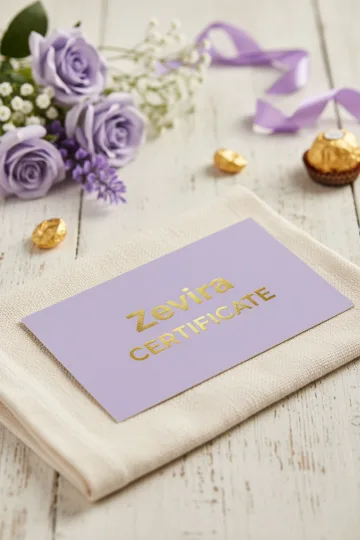
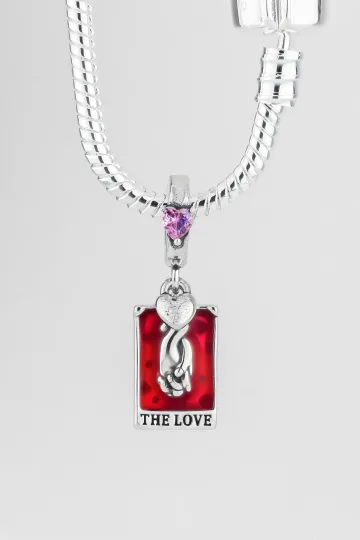
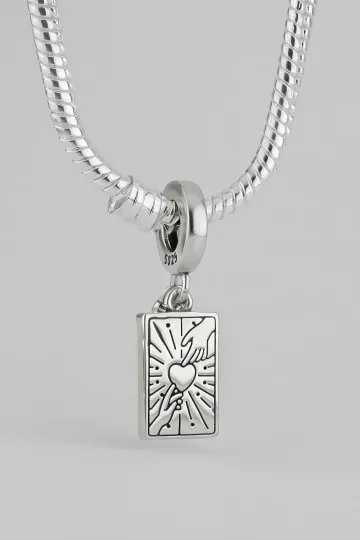
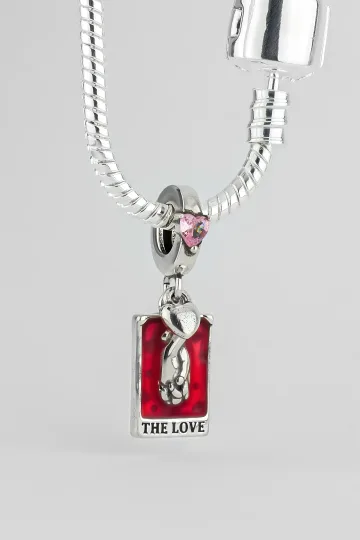
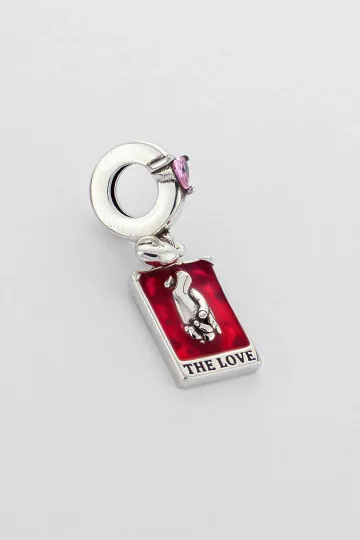
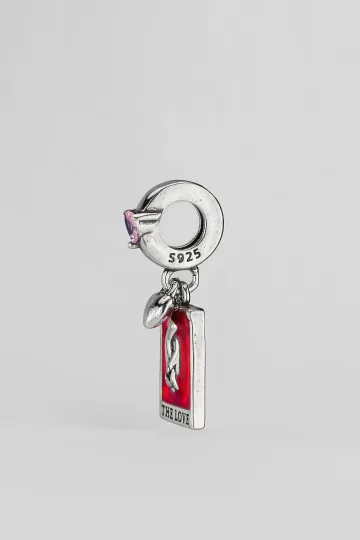
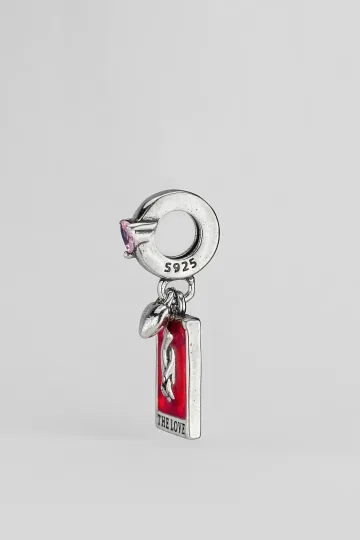
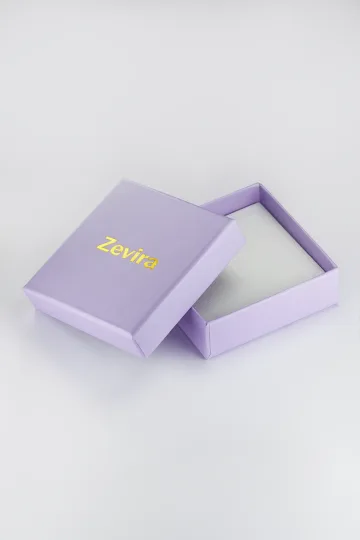
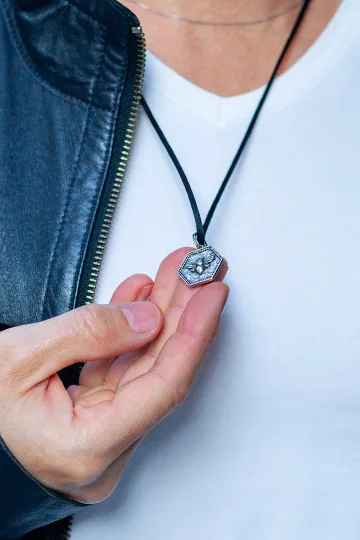
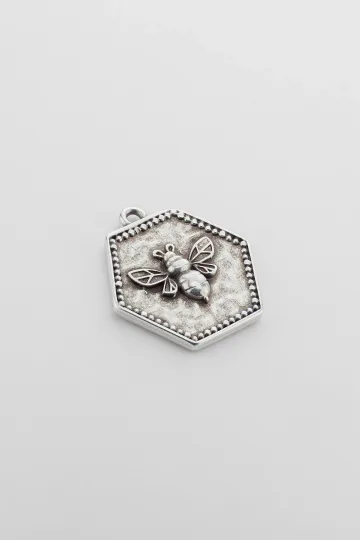
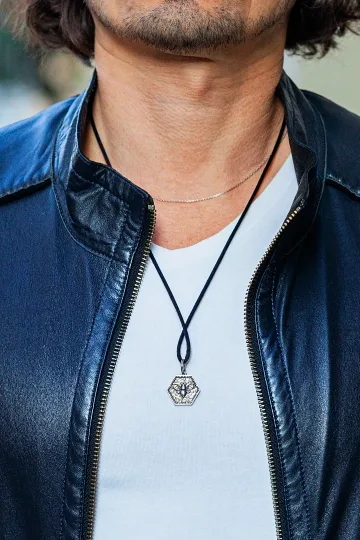
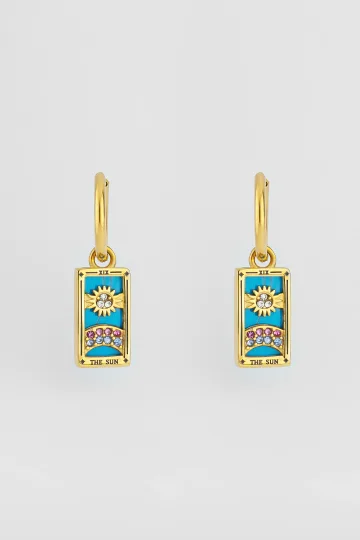
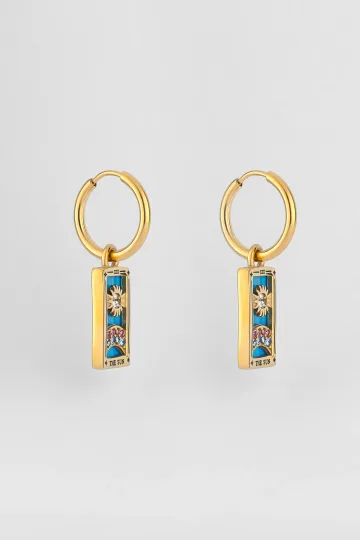
Wear the symbol, don't just read about it. These are in stock:
What not to give: an honest list
Before we talk about what works well, it helps to name what does not, or what can cause pain even when the giver meant only kindness.
Alcohol-related gifts. A bottle of wine "as a symbol that the occasional drink is fine now." A hand-thrown beer mug. A cocktail kit. These are the most common errors, and they come from good intentions. People think, "But everything is fine now, surely?" Please do not. Simply do not.
Clocks and watches. Many people give a watch as a symbol of a "new countdown." The trouble is that in recovery culture time is counted differently, day by day. A watch can read, without anyone meaning it to, as "now count how long you can hold out." That is not what the moment calls for.
Anything too public. A large cake reading "One Year Sober!" at a gathering where people did not know. A loud toast "to Sarah, who quit drinking!" The person chooses who to tell and when. Deciding that for them is an intrusion, however warmly meant.
Recovery books with your annotations. "I underlined the important bits for you." This lands as a hint that there is still something they need to learn from you. What a person reads in recovery is their choice to make.
Something very expensive that carries the feeling of "now you deserve this." It creates a pressure no one needs. The gift should not weigh on the wearer like a reminder of what was off-limits before.
What works well: principles for choosing
Personal meaning without a public statement
The best jewelry for this situation is the kind the wearer can explain or not explain, entirely on their own terms. A phoenix? A beautiful bird. An anchor? I like nautical things. A date on the inside of a ring? Personal, thank you.
The piece should not look like a sobriety badge. It should look like jewelry. The meaning lives inside, not on the surface.
An object, not a certificate
This distinction matters. Plaques, framed texts "in honor of your struggle," printed certificates tend to work poorly, because they turn a private experience into a public award. Jewelry works the other way. It is quiet, wearable, present with you, and it does not put you on display.
Under the clothes, not over them
This is not a rule, just a sound default. A long chain that slips under a collar. A ring on the finger with no explanation offered. A pendant on a cord that nobody sees. Something reachable at any moment without drawing a single glance.
People who have been in programs for years often wear their chips exactly this way: in a pocket or under a shirt. It is cultural practice, not shame.
Symbolic jewelry: what carries the right meaning
Phoenix: rebirth, not victory
Phoenix jewelry holds one of the most precise images for this situation, but it pays to read it correctly.
The phoenix is not about defeating an enemy. It is about emerging from its own ashes. The bird does not overcome something outside itself; it rebuilds itself from what it was. That is exactly what happens in recovery.
Phoenix jewelry is worn not as a trophy but as a reminder of a process that keeps going. The phoenix is always being reborn, never once and for all.
In silver the phoenix is especially fitting. The metal shifts color over the years, takes on character, which is a small metaphor of its own.
Ouroboros: cycle, not trap
The ouroboros, the snake consuming its own tail, symbolizes infinity in the Western tradition. Not empty repetition but a cycle that carries movement inside it.
For someone in recovery the ouroboros can mean something very concrete: day by day the circle closes and opens again. Each day resembles yesterday, and in that there is strength rather than weakness.
The ouroboros also stands for wholeness. Not a self transformed into something else, but a self returned. The beginning is joined to the end. That is the same idea recovery rests on: it does not build a new person from nothing; it returns a person to who they were before.
Lighthouse: a fixed point in dark moments
The lighthouse in jewelry symbolism does not simply mean "light in the dark." A lighthouse is a precise navigational instrument. It shows where the shore is and where the dangerous rocks lie. A ship does not sail toward the lighthouse; it checks its course against it.
For someone in recovery that is an exact metaphor. Sobriety is not a destination you sail to. It is the reference point you keep checking your heading against. The lighthouse does not promise calm water. It promises that you know where you are.
A lighthouse pendant, especially a small minimalist one, has the advantage of reading as a piece for someone who simply loves the sea. The double meaning works in both directions.
Anchor: hold, not weight
Anchor jewelry is often misread as "the thing that drags you down." It is the opposite. An anchor is what holds through a storm. It does not pull you under; it stops you from drifting into danger.
In recovery, grounding is one of the core skills: the ability to return to something stable in a moment of acute distress. The anchor as an image lands directly on that idea.
Worn under clothing on a long chain, an anchor becomes a reminder that grounding is always available. A quiet symbol, unreadable to strangers, exact to the one who wears it.
Algiz rune: protection of the living
The Algiz rune is one of the few runes that carries an exclusively protective meaning. Its shape suggests a raised palm, a fork of lightning, or branching roots. The protection here is not aggressive; it is guardianship, the keeping of life force.
In recovery, Algiz works as a symbol of protecting what has been restored. Not "I am fighting" but "I am guarding what I got back."
The rune is compact in jewelry: a small pendant, an engraving on the inside of a ring, a line cut into a disc. It reads as Norse symbolism, which lets it be worn without explanation.
Infinity: a path with no final point
The infinity symbol in jewelry is often used as a romantic sign. It has another dimension too: the continuity of a process.
For someone in recovery, infinity is a reminder that sobriety has no finish line where the work is over and you can relax. It is a daily choice that keeps going. Not in a frightening way but a freeing one. Each day is a separate choice, never a life sentence.
An infinity bracelet or an infinity ring reads as completely neutral. Wearing one in public asks for no explanation at all.
Customer reviews
Zevira is a real jewellery shop. Genuine payments, deliveries and customer thank-yous.
🥰🥰🥰 gracias
Ok, ¡gracias! 🙂
Stones for the piece: what to choose and why
Moonstone: intuition and softness
Moonstone, with its shimmering milky-blue glow, carries the idea of intuitive knowing. The light is not bright or hard. It is soft and inward.
In recovery, intuition is often blunted or buried. A person learns again to trust their own sensations, to tell a genuine impulse apart from a triggered one. Moonstone quietly accompanies that relearning, without any words at all.
In practice, moonstone pairs well with sterling silver. A small cabochon in a pendant or ring reads as gentle and unaggressive, which matters in this context.
Labradorite: deep work and hidden light
Labradorite looks dark and unremarkable from the outside. Then at a certain angle the light inside it ignites: blue, green, gold. The effect is called labradorescence.
It is a precise metaphor for recovery. From the outside nothing seems to be happening. The work is internal, invisible to anyone watching. But the light is in there.
Labradorite in a sobriety-birthday piece carries that whole idea: I know what is happening in there, even if you cannot see it from outside.
In practice, labradorite is less common as a setting stone than moonstone, but a good jeweler will source it without difficulty. It sits better in silver than in gold, where the cool metal deepens the stone's mystery. A cabochon beats a faceted cut here, because labradorescence shows best across a flat or gently domed surface.
A closer look at each symbol
Since the choice of symbol decides how a piece will read, the main images are worth taking apart: where they come from, what they actually mean, and why they fit recovery so closely.
Phoenix: what really happens in the myth
The phoenix legend survives in many versions. The Greek phoenix burns itself every five hundred years and rises young from the ash. The Egyptian Bennu, a bird of first creation, appears out of flame. The Chinese fenghuang stands for union and harmony. Each tradition weights the story a little differently.
For recovery, one detail matters above the rest: the phoenix sets the fire itself. Not by accident, not at the hands of an outside force. The fire is its own fire. And out of that fire it comes back changed, not destroyed.
That is the exact shape of it. Dependency is not an outside enemy to be fought. It is an internal process, and the way out of it is internal too. The phoenix is speaking about precisely that.
In jewelry the phoenix appears in many forms. A realistic bird with spread wings is a more open, more visible symbol. A stylized small phoenix on a thin chain is the more private version. For sobriety the second is often the better fit, though everything depends on the person.
Ouroboros: the symbol's history and why it is so apt
The ouroboros, a snake or dragon swallowing its own tail, appears in Egyptian texts as early as around 1600 BCE. In alchemy it is the symbol of dissolution and renewal of matter. In gnostic thought it is the cycle of existence. In analytical psychology it stands for the wholeness of the psyche.
There is a quieter reading, less famous but exact for recovery: the ouroboros as a self-sufficient cycle. The snake does not consume something from outside. It returns to itself. The beginning meets the end and they turn out to be the same point.
Recovery holds a parallel idea. In the end a person returns to themselves, to who they were before dependency reshaped them. It is not always literal; people genuinely change. But the sense of returning to a true version of oneself stays intact.
An ouroboros ring is one of the most compact and beautiful ways to wear the symbol. An ouroboros pendant is a touch more visible.
Anchor: the Christian and seafaring tradition
The anchor as a sign of hope appears already in the letters of the apostle Paul, where hope is described as an anchor of the soul, sure and steadfast. Early Christians under persecution used the image of an anchor in place of the cross, precisely because it looked neutral to outsiders while carrying its meaning for those who knew.
There is a direct line from that to why people wear sobriety jewelry under their clothes today. A meaning of one's own, unreadable from outside.
The seafaring tradition of the anchor is a separate story. Nineteenth-century sailors tattooed anchors to mark having crossed the Atlantic. The anchor meant stability and experience. Someone wearing an anchor had been through something hard and come out the other side.
That, too, is an exact metaphor.
Lighthouse: navigation as a psychological image
In modern psychology the idea of a "lighthouse" is used in work with anxiety and panic. Therapists sometimes ask a person to picture a lighthouse as a stable point of reference in a moment of acute fear.
The reason the image works is that the lighthouse does not move. In a storm, when everything around is shifting and threatening, the lighthouse stands. It does not promise the storm will end. It is simply there, and you can check your position against it.
For someone in recovery the lighthouse can stand for something very concrete: a value that stays fixed while everything else lurches. Sobriety as a reference point rather than a cage.
In jewelry, lighthouses come in a few styles: a realistic striped tower, a stylized silhouette, a geometric version with the detail pared away. For a private symbol the minimalist versions suit best.
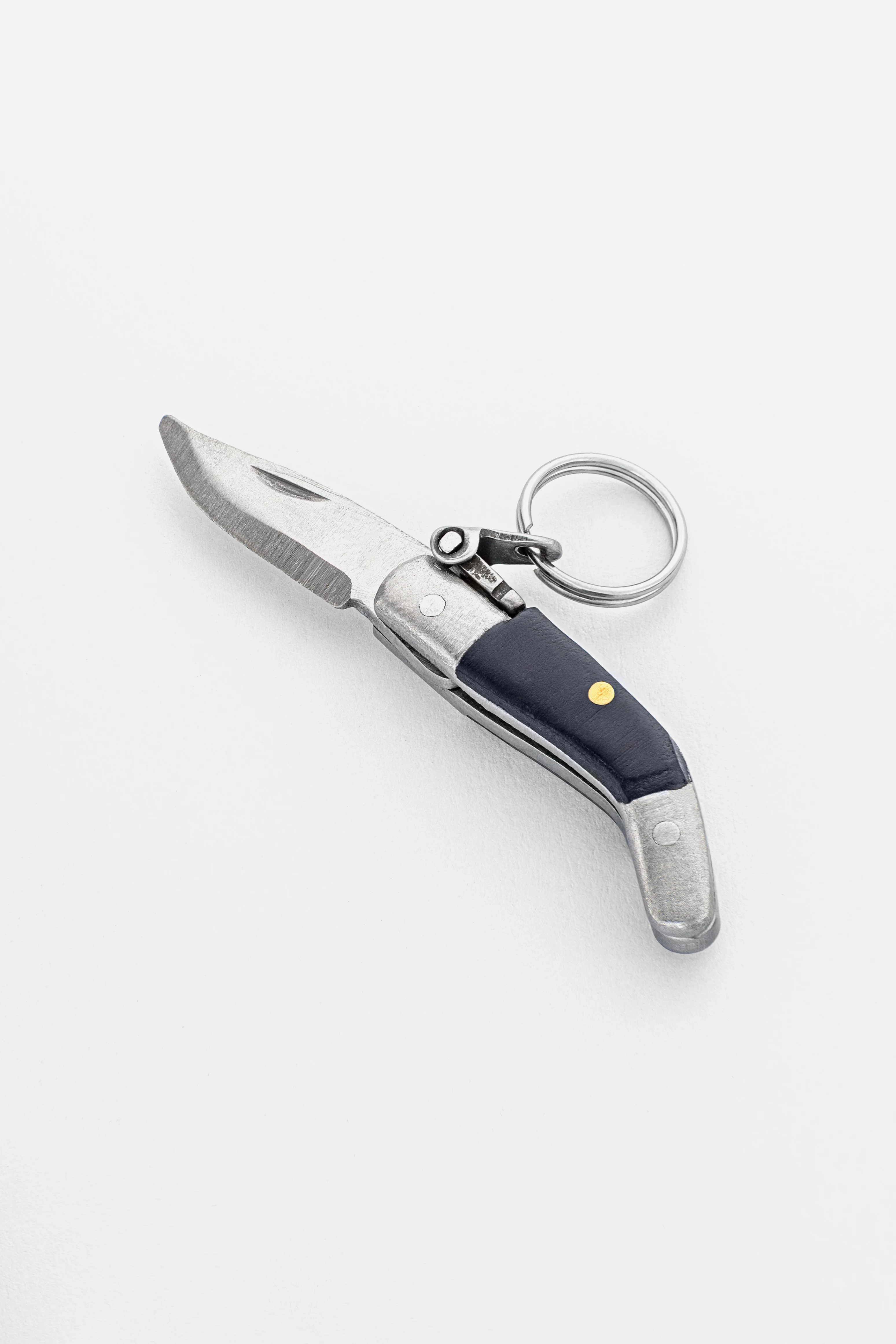
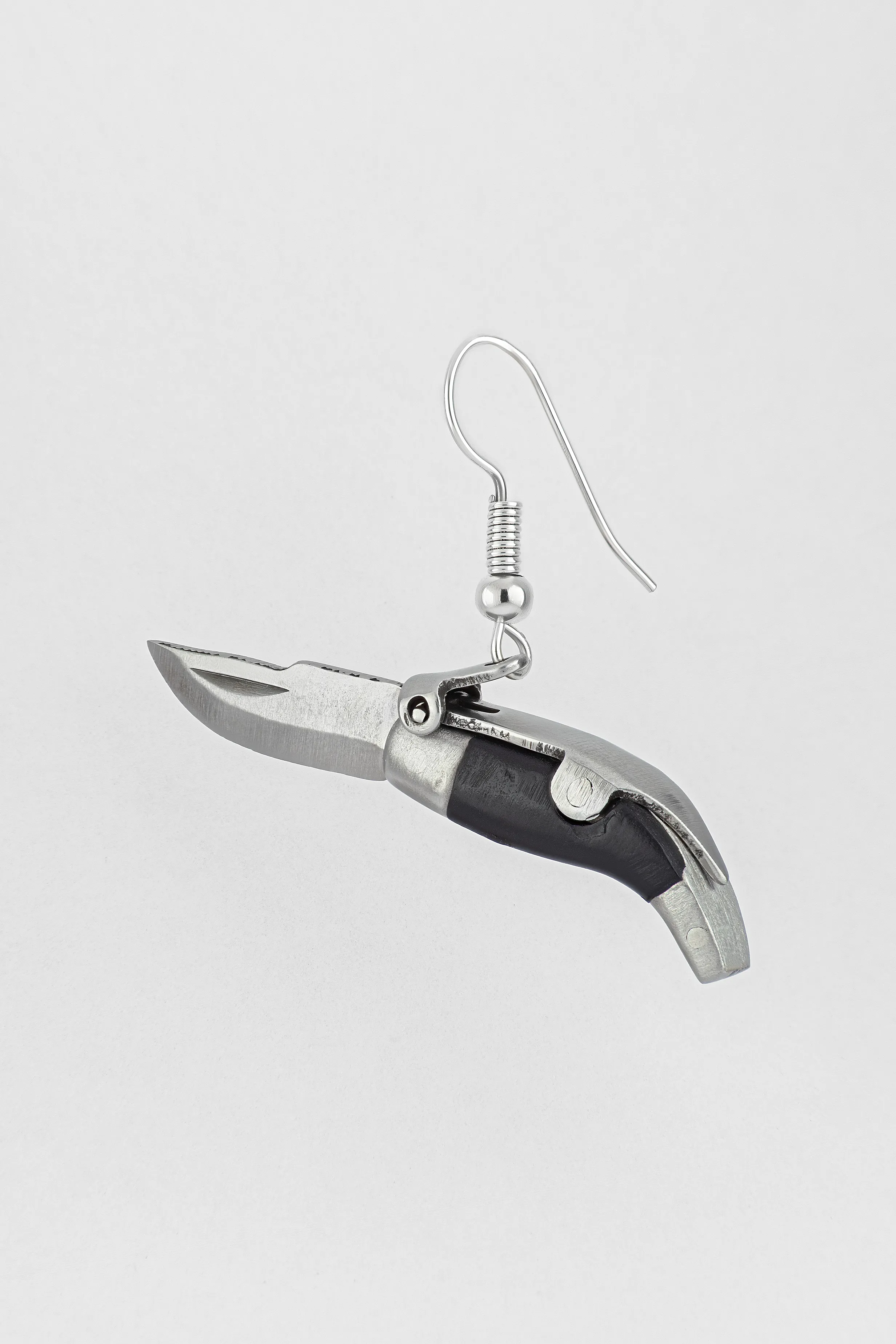
Artisan-crafted CAPAORA navaja pendant
A 40 mm stainless-steel navaja with a real folding mechanism and Palanquilla lock. An affordable gift to remember.
A code for blog readers:
10% off your first order
Authentic · Maker's guarantee · Ships from Spain
What happens to the body and mind in the first year
Understanding the physiology helps you pick the right moment for a gift, and read the person's state without misjudging it.
The first three months
The first three months are the most physically intense. The body is literally rebuilding. It differs from person to person, but it usually shows up as disrupted sleep, mood swings, raised irritability, and sometimes stretches of acute craving.
In these first months a person often looks "worse" than the people around them expect. Relatives sometimes wonder, "They're not drinking, so why are they so on edge?" That is exactly why. The nervous system is restructuring, and that process hurts.
Jewelry in this window, if it fits at all, belongs as a very quiet, very private object. Not a celebration. An anchor.
Six months: the first stabilization
By six months, sleep starts to settle for most people. Mood becomes more predictable. The brain is physically reclaiming lost ground. This is the first point when a person can begin to look forward rather than simply hold on against a slip.
A six-month gift goes to someone already on their feet, not to someone who has only just stood up. That difference shapes the tone of the gift.
One year: the real date
A year of sobriety is a genuine landmark by any measure. Physiologically, many brain functions have recovered considerably by then. Psychologically, the person has been through every season, every holiday, every situation that used to come paired with a drink.
The first New Year sober. The first birthday without alcohol. The first holiday away. The first crisis at work handled without reaching for relief. All of it happened across this single year. An anniversary piece marks all of it at once.
Two years and on: a different rung
After two years, recovery moves into a different phase. The acute physical symptoms are long behind. The main work now is psychological: rebuilding relationships, finding new meaning, constructing a life with no room for use, not because it is forbidden but because it is no longer wanted.
A piece for the second year and beyond carries a different message. Not "I survived the crisis" but "I am building something else." It is a subtle shift, but it matters when you choose the symbol.
A short history of object symbolism in recovery
From tokens to fine jewelry
The history of physical sobriety symbols runs longer than most people assume. Long before AA, monastic traditions used beads and medallions as daily reminders of a chosen path. Working a string of beads in a moment of temptation was not superstition but a practical way to switch the focus of attention.
In the 1930s and 1940s, when the founders of AA were shaping its principles, the idea of a physical token as a support tool arrived quite naturally. The earliest chips were literally coins from a member's pocket. No special design, no symbolism. Just an object you could hold.
Color standards came later: white for twenty-four hours, yellow for thirty days, red for ninety, blue for six months, and a gold or bronze chip for a year. Different fellowships vary the colors, but the principle of color-coded time has proven durable.
The move from a utilitarian token to a piece of jewelry happened gradually and informally. People began ordering chips in better metal. Then came engraved medallions. Then independent jewelers started making pieces with recovery symbolism that read, to anyone outside, simply as jewelry.
The market for sobriety-related objects today is broad. Most of it, though, is made for people already inside the community and comfortable with open symbolism. Pieces that work for those who want to carry the meaning privately are less obvious. Those are the pieces this guide is about.
Symbolism outside the programs
Not everyone moving through dependency and recovery is in AA or a similar fellowship. Many work with a private therapist. Many go through medical treatment. Many do it largely alone, with family support or without.
For these people the traditional chip symbolism says nothing. They need different signs. Symbols that speak of recovery and of returning to oneself, not through one program's lens but in a more universal human language.
Phoenix, anchor, lighthouse, ouroboros, infinity: these work precisely because they belong to no single tradition. They speak of something everyone understands. Coming out of a dark stretch. Finding a fixed point. The turning of cycles. The continuity of a path.
Metal and form: practical decisions
The ring
A ring on the finger is worn differently than a pendant on a chain. It is visible. It can be turned. It stays in your field of view all day.
For sobriety, a ring works in a few ways.
The first: a date engraved on the inside band. From outside the ring looks ordinary. Only the wearer knows what is written there. No questions, no explanations.
The second: a ring with a symbol on the outside. A phoenix, a lighthouse, an anchor, an ouroboros. That is a conversation in waiting, if someone notices and asks. People differ in how ready they are for that conversation.
The third: a plain ring with no engraving and no symbol, bought or commissioned on a specific day. The value is not in the image but in the fact. This ring was bought on the day it all began, or on the anniversary day. The meaning is internal, not on the surface.
Sterling silver suits a ring well. It is durable, hypoallergenic for most people, takes engraving cleanly, and gains character over time, darkening in the recesses and brightening on the raised edges.
The pendant on a chain
A pendant on a long chain that disappears under the clothes is the classic format for a private symbol.
Chain length matters. A chain of forty-five to fifty centimeters rests at the collarbone, leaving the pendant visible. A chain of sixty to seventy centimeters tucks the pendant deep under clothing, out of sight but within easy reach of the hand.
For sobriety, the longer chain is usually preferred. Not from shame, but because that is how the object is meant to work. With you, not on show for anyone else.
The style of chain matters too. A fine snake chain in sterling silver is nearly invisible and holds up well. An anchor link is a touch heavier and more noticeable. A Singapore chain lies softly against the skin. The choice of chain is practical, not symbolic.
The bracelet
A bracelet holds a special place. It is always on the wrist, always at least visible to the wearer. In the moment a hand reaches toward a glass, or as tension climbs, the bracelet is right there.
A thin bracelet in sterling silver or 14K gold, no charms, with or without an engraving inside. You put it on and forget it. It stays. That is the work it does.
A bracelet with a charm, an anchor or an infinity symbol, is a little more visible. That moves it into a semi-public format.
A leather cord with a small metal symbol is a popular choice for men in recovery. Informal, easy to wear every day, simple to fit into different looks.
Earrings
Earrings are a less common choice for a sobriety piece, but they make sense. Small studs with a symbol: a phoenix, an anchor, an infinity sign. They are seen only at a direct angle, and only with short hair or hair pulled back.
Their main advantage is that they are not slipped off as easily as a ring or a bracelet. Worn continuously, they become part of the look that requires no daily decision to put on.
Leave your email, we'll send your discount code. No spam, unsubscribe anytime.
The code arrives by email, valid on your first order.
How to talk to a jeweler
If you are commissioning a piece specifically for this gift, the conversation with the jeweler benefits from a little preparation.
You do not need to explain the full context. It is enough to say, "I need a piece with a personal engraving for an important date." A professional jeweler will not pry.
If you want a specific symbol, describe it precisely. "A minimalist phoenix, no extra detail, around two centimeters," or "an anchor, not nautical but more geometric." Reference photographs help more than any verbal description.
Think the engraving through separately. Bring the text in writing, even if it is a single date. A mistake in the date is the worst thing that can happen to a piece like this.
If the piece is meant to be worn under clothing, say so. The jeweler will choose a clasp and chain length to suit.
The lead time for a personalized engraved piece is usually two to four weeks. If the gift is needed for a specific date, plan ahead.
What to do when you don't know the person's taste
This is a very common situation. You want to give something meaningful, but you cannot tell whether the person wears jewelry at all, or what style they prefer.
A few practical solutions.
Universal sterling silver. Silver is neutral. It does not read as strongly masculine or feminine, and it sits comfortably between cheap and extravagant. If you know nothing else, start with silver.
Minimalist design. The simplest possible form, no extra detail, no fuss. A thin ring or a small pendant on a fine chain fits most styles and most looks.
A gift receipt. If you buy from a studio or a maker, ask for a gift receipt or voucher that lets the piece be exchanged for another size or version. That removes the risk of a mismatch.
Just ask. If the relationship is close enough, you can ask gently: "If you were choosing something for this anniversary, would you want a ring or a pendant?" A direct question often beats a wrong guess.
Not jewelry. If you have no confidence at all, it is more honest to give something else: an evening together, a meal, a trip. A gift that gets the format wrong is worse than a gift that gets the meaning right.
How to choose by style
Minimalism: the tendency of the period
People in recovery often gravitate toward minimalism in their jewelry. It is not random. When there is a lot that is complicated inside, the outside is where simplicity feels good.
A minimalist piece, a thin chain, a small pendant, a plain ring, fits best for several reasons.
First: it adds nothing to the weight of outward presentation during a stretch when a person may feel exposed.
Second: it is easy to wear continuously without noticing, which is exactly what a grounding object needs.
Third: it asks no questions and needs no answers.
Symbolism without overload
Layered symbolism can be lovely, but not here. One idea, one image. A phoenix. Or an anchor. Or a date. Not all of them stacked together.
When a piece is overloaded with meanings it turns into a manifesto. A manifesto is the last thing someone wants when they simply wish to remember their path quietly.
Engraving: what to write and what not to
The engraving is one of the most personal choices on the whole piece. A few guides.
What works: the date the journey began. Just the numbers: 15.03.2025. No explanation. Only the date. That is all it needs. Also good: initials, a single chosen word, a place name for where it started.
What does not work: "for beating the bottle," "strong one," "you made it," "my hero." These are ceremonial inscriptions, and they turn the object from an anchor into an award. That is a meaningful difference.
Why just the date: because a date does not judge. It simply is. The wearer already knows what it means.
If the engraving comes from another person, a good formula is: "With you. [name]." Or just the name. Or nothing.
A technical note. An engraving inside a ring is read only by someone who has slipped the ring off and looked. An engraving on the back of a pendant is read only by someone who has turned it over. That difference matters for privacy. The inside of a ring is the most protected place for text. The back of a pendant is slightly more exposed, since a person nearby may catch it if you happen to hold the pendant up.
Font size matters too. Very small lettering can be unreadable once engraved. Ask the jeweler to show real-size samples before you sign off on the wording.
The date goes inside the ring, the symbol under the collar. Shouting your sobriety in loud gold is vulgar, and I won't hear otherwise.
What to wear it with
Pieces like this pass through my hands all the time, and the question is almost always the same: how do you wear it so it lives inside real outfits instead of sitting apart as a "symbol"? Here is what actually works, by occasion.
What do I wear it with day to day? For everyday I recommend a fine sterling silver chain under a tee or a shirt, a ring on the middle or ring finger, a slim bracelet under a cuff. A light top (white, sand, grey) keeps the metal quiet; a dark one (charcoal, khaki, denim) turns it into a soft accent. One rule holds: the less you see it, the better it does its job.
Is it right for the office? Perfectly, as long as you keep it restrained. I suggest a pendant on a longer chain, sixty to seventy centimeters, so it tucks under a blouse or shirt collar and stays unread in meetings. A ring engraved on the inside looks ordinary from outside, so it breaks no dress code. For a strict look I choose one piece, no stacks, no layers.
How do I take it into the evening? This is where you can bring the symbol to the surface. I recommend a phoenix or an anchor on a chain over a plain dress or an open-collared shirt, where the metal becomes the single accent. Contrast of texture works well: smooth silver against velvet or silk, the soft flash of moonstone under warm light. Dark fabric deepens labradorite; warm tones get along with 14K gold.
One piece or layered? For layering the rule is simple: one anchor symbol leads, everything else supports. I suggest two chains of different lengths (forty-five and sixty centimeters) so they do not tangle, or a thin band next to the dated ring. I mix silver and gold only when I hold a single minimalist tone; otherwise the look falls apart.
Who does it suit, and how long a chain? It suits anyone who values restraint and private meaning over outward effect. Two notes that never fail. First, for private wear I choose a longer chain (sixty centimeters and up); for a visible piece, shorter. Second, I keep to one metal in a look, and then even several pieces read as one whole rather than a scatter of unrelated things.
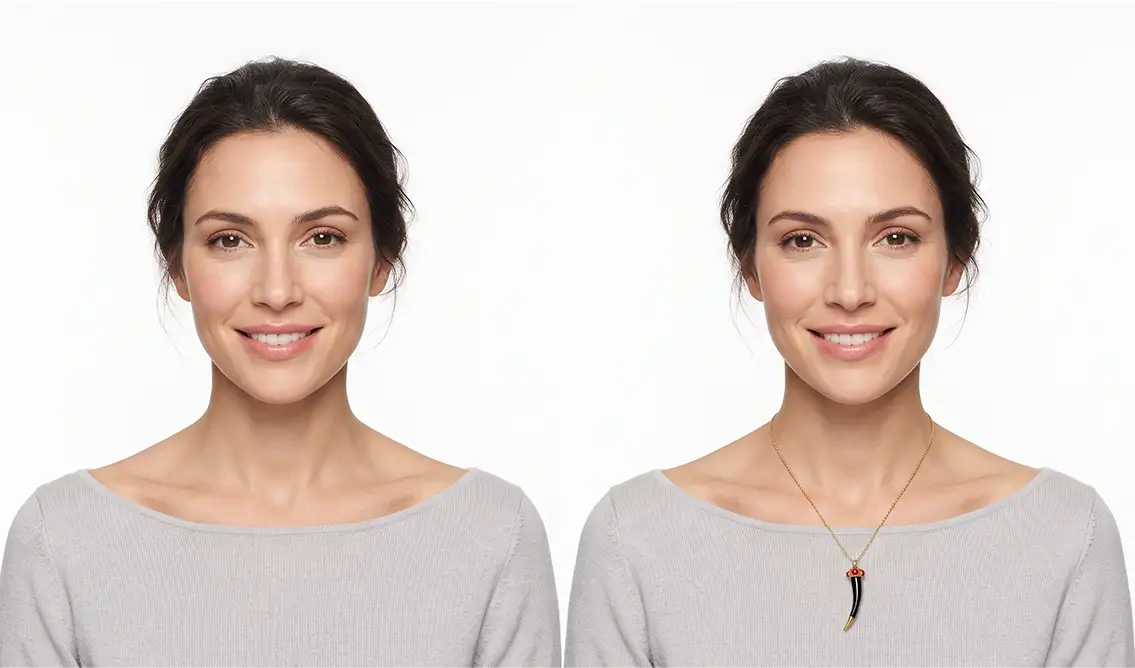
Turn on your camera, pick earrings, a pendant or a ring, and see the piece on yourself in real time.
Switch items in one tap.
Everything runs in your browser: no photo or video is ever uploaded.
Anglo-American and UK recovery culture
The sober-birthday and sober-curious world
The English-speaking world has the deepest culture around this topic anywhere. Sobriety birthdays, where people count years the way others count age, are an established tradition in the United States, the United Kingdom, Ireland, Canada and Australia. People mark "five years sober" the way they mark a fortieth birthday, and increasingly they do it openly.
Alongside it has grown the sober-curious movement and the rise of "Dry January," low- and no-alcohol bars, and a generation choosing to drink less without ever hitting a crisis. The language is shifting. "Sober" no longer reads only as a recovery word; it can simply mean a chosen way of living. This widens the field of who might wear a quiet symbol of the choice, and it lowers the old stigma around saying so.
For jewelry this matters. A symbol that once needed deep cover can now be worn a touch more openly, depending on the person. The phoenix, the lighthouse and the anchor read comfortably across this whole spectrum, from someone deep in a twelve-step program to someone who simply decided drinking was no longer for them.
Secular and spiritual recovery
Twelve-step programs traditionally carry a spiritual dimension, the "higher power" of the language, even where it is left deliberately undefined. For many people that framing is the heart of their recovery. For others it is a barrier, and the past two decades have seen secular alternatives grow quickly: recovery built on cognitive tools, peer support, and self-direction without religious language.
For jewelry the principle holds either way: personal, under the clothes, with a specific date. Someone whose recovery is spiritual may want a symbol that carries that current quietly. Someone secular will usually prefer the phoenix or the ouroboros to any overtly religious sign. The giver's job is not to assume which camp the person sits in, and not to nudge them toward one through the choice of symbol. That is the wearer's call, never the giver's.
Men in recovery
This is its own context, and an important one. Men in recovery meet a particular set of cultural pressures: that a man should handle things alone, that needing help is weakness, that drinking is normal and sobriety is the odd choice. These messages run deep and they make open symbols harder to carry.
A piece for a man in recovery should work especially well under cover. Men's jewelry tends to read as neutral anyway. A chain or a ring is simply an accessory, with no obvious symbolic charge. The anchor, the lighthouse, the phoenix, the Algiz rune and the ouroboros all read as distinctly strong symbols with long histories behind them. None of them reads as soft or fragile.
For materials, oxidized silver or sterling silver with a rugged finish works well, as does a leather cord with a metal symbol or a wider band with the engraving hidden inside. The point is the same as always: something he can wear every day, that asks nothing of him, and that is there in his hand when he needs it.
What people wear in AA and similar programs
The culture of wearing commemorative objects in AA and Narcotics Anonymous is not uniform. A few habits are worth knowing about before you choose a gift.
The chip in a pocket
The most common format. The token sits in a trouser or jacket pocket. Nothing is visible from outside. In a moment of temptation a hand in the pocket finds it. That tactile contact works as a short pause.
People with years behind them describe the same thing: "I haven't used in a long time, but the chip is still in my pocket. It's like my keys. I don't think about them, but if they were gone I'd feel it."
The medallion under the clothes
On a long chain that tucks under a shirt, the medallion rests against the chest. Some long-standing members carry several at once, one year, three years, five years. That whole collection is invisible from outside, but the wearer knows it is there.
Giving a piece that fits naturally into this habit means giving something the person will wear the way they wear their chips. Beside them, or instead of them if the chip tradition is not for them.
Tattoos
A separate category, not jewelry, but worth the context. In recovery communities tattoos of dates or symbols are common. A sobriety date on the wrist or forearm. An anchor. A phoenix. It is a more permanent and more public format than jewelry, and it asks for firmer certainty.
Jewelry is more flexible by comparison. It can be removed, swapped, tucked away. That flexibility is a real advantage in a situation that calls for flexibility in the first place.
Sobriety periods and the logic of the gift
Not every milestone calls for jewelry. And the gift should match the moment.
24 hours and the first week. The hardest and most tender time. Jewelry is too ceremonial here. Presence, a conversation, being reachable are worth far more. If you want to give an object, let it be something simple and practical: a notebook, a warm drink, a soft scarf.
One month. The first real milestone. Something small is fine. Not jewelry unless the relationship is close. If it is close, a small pendant, with no fuss.
Three months. A meaningful milestone in most programs. The brain is beginning to recover physically. A good moment for a small, personal piece.
Six months. A quiet, important date. Many people speak of this one with more feeling than the year mark. A piece with a date lands precisely here.
One year. The headline milestone in recovery culture. 365 days. Something weightier than at three months is appropriate. A more considered symbol, a better material. Gold or sterling silver, not an alloy.
Two years and beyond. Each year is its own event. A gift is not required every time, but when the person wants to add to or renew their pieces, that is a deeply personal choice. Some people build a small collection, adding one piece per year.
Five and ten years. Genuinely significant dates. A five- or ten-year sobriety birthday is its own level. Something serious fits here. A ring. A bracelet. A piece that will last decades.
How the piece works in key moments
The theory of grounding objects is fine, but it gets sharper in the concrete: in which moments does a piece of jewelry actually help?
Celebrations and gatherings
The first sober year includes every social event that used to come attached to a drink. New Year. Birthdays. Office parties. Weddings.
At events like these a person is often alone with their choice in a room full of people who are drinking and have no idea of the effort being made. This is exactly where a quiet piece under the clothes works as a fixed point. A hand touches the pendant through a shirt. One beat of awareness. Then the person goes back to the conversation.
It is not magic. It is the interruption of an automatic reach. One second of conscious choice.
Stress at work
A clash with a manager. A presentation that went badly. Criticism out of nowhere. In the past these were the days that ended at the bar.
Now the hand reaches for the ring instead. Turns it. The person remembers there is another way through. It is no guarantee. It is one more tool.
Jewelry does not replace work with a therapist or a sponsor. It supports it. A small object inside a larger system of support.
The hard nights
Recovery includes the nights when, at three in the morning, a person lies awake and is pulled toward anything that would bring immediate relief. Phoning a sponsor at three is hard. Getting up and driving to the shop is easy.
In that moment the hand finds the ring on the finger. The cool metal. Its weight. The date that only the wearer knows. It is not a solution. It is a pause. And a pause is sometimes enough.
How to give it
The piece can be chosen perfectly, and still the way it is handed over carries just as much weight.
Without ceremony
Most people in recovery do not want a ceremonial handover with speeches and applause. This is not a retirement plaque. It is a personal moment.
The best version: ordinary surroundings, a one-to-one conversation, the piece appearing in an envelope or a small box without an announcement. "I wanted to mark this date. Here."
If the piece is engraved, present it so the person can read what is written in their own time. Do not read it aloud. Allow a moment of quiet.
Do not wait for a reaction
The person may not know straight away what to say. A piece with this kind of meaning can bring an unexpected wave of feeling: tears, silence, a flush of awkwardness. That is normal. Do not read the silence as displeasure.
A good line: "You don't have to say anything. I just wanted to mark it."
If they already have an AA chip
Your piece does not compete with the chip. They are different objects with different histories. There is nothing to explain and nothing to apologize for. Simply give it.
Many people wear both. The chip in the pocket and the piece on a chain. That is not a contradiction; it is a complement.
If you have been through it yourself
If you have come through dependency and recovery yourself, your gift carries an extra weight. You are giving a beautiful object, and you are saying: "I know what this is. I have seen the work from inside."
In that case a short note alongside the piece can fit. Not a long letter, not an instruction. One line: "I remember my own first year. It is real work."
Send a friend a discount code, they save on their first order.
The long view: the piece across the years
When the meaning shifts
A piece bought for one year of sobriety takes on a new meaning over time. In five years it is "the piece from the first year." It is the thing that has been with you all the way through.
People often describe it like this: "In the first year I put it on every day, as a reminder. By year three I wore it just because I liked how it looked. But I always knew why I had it."
That is a good outcome. The piece stopped being "sobriety jewelry" and became simply jewelry. The meaning did not leave; it just stopped demanding constant attention.
Replacement and renewal
Jewelry wears out, gets lost, breaks. None of that is a catastrophe. A chain snaps. A pendant scratches. A ring loses its shape over years.
If a piece is lost or broken, it is not a "bad sign." It is the physics of materials.
A new piece for the next anniversary, or as a replacement for one that is gone, is a normal practice. The meaning was never in the particular object but in the act of acknowledgment. The object can be replaced; the acknowledgment remains.
When a piece is passed on
Some people, years into a program, become sponsors themselves. And then a rare but powerful tradition can appear: passing on your own first piece, or first chip, to someone you sponsor when they reach their own first anniversary.
It is not required. It is not a rule. But it is a gesture that says more than any words could.
Special cases: when the standard gift does not fit
If the person has relapsed
What do you do if the person you gave a piece to has had a relapse? The question is painful but real.
A relapse does not erase the time that came before. Every sober day that happened was real. A piece engraved with the start date of that first stretch is still an honest object.
There is no need to take it back. There is no need to rush a new piece in right after a slip. If the person begins again and wants to mark a new start, that is their decision.
Sometimes people put the old piece away for a while, then bring it back out. Sometimes they keep it as a memory. Sometimes they let it go. That is their choice to make.
Your part in this is to stay close, to draw no conclusions, and to keep your regard for the person unchanged.
If the person does not see themselves as dependent
Some people go through stretches of abstinence without ever calling themselves "dependent." "I just decided not to drink for a year." "I'm taking a break." "I'm experimenting."
For them the language of "sobriety" and "recovery" may feel foreign or unwelcome. In that case a piece, if it fits at all, should speak to their personal choice rather than to any clinical label. The start date of the break. A symbol of a new chapter. No mention of "sobriety" in the engraving.
If the person does not want the date marked
Some people simply do not mark dates, either because it feels like tempting fate, or because it brings a pressure they would rather avoid ("what if I don't reach the next one?"). That is a legitimate stance.
If a person clearly does not want the date marked, respect it. Your gift may find another moment, or the best gift may turn out to be your steady presence rather than any object.
Facts that surprise
A few things about this tradition that catch most people off guard.
The very first AA chips were ordinary pocket change. There was no design and no symbolism at the start. A member would hand over a coin from their own pocket, simply because a thing you can hold turned out to help. The polished engraved medallions came much later.
The colors are a code. White for twenty-four hours, yellow for thirty days, red for ninety, and gold or bronze for a year. The exact palette shifts between fellowships, but the idea of reading time off a color has held for decades.
Early Christians used the anchor as a secret sign. Under persecution they carved anchors in place of the cross precisely because the symbol looked harmless to outsiders while meaning everything to those who knew. The same logic, a private meaning hidden in plain view, is why people tuck sobriety pieces under their collars today.
The phoenix lights its own fire. In the myth the bird is not destroyed by an outside force; it burns itself and rises changed. That single detail is what makes it such an exact image for recovery, an internal process with an internal way out.
Sailors wore the anchor as a badge of experience. A nineteenth-century anchor tattoo announced that the wearer had crossed the Atlantic, that they had come through something hard. The meaning carried straight into recovery without anyone needing to reinvent it.
Long-timers keep the chip even when they no longer need it. Many people years into sobriety still carry the token, comparing it to a set of keys: unnoticed until it is missing, and then immediately felt.
The 24-hour chip is often the one people treasure most. Not the five-year medallion but the first small token, the one that marked the decision to begin at all.
Frequently asked questions
Is it appropriate to give jewelry if I have not been through addiction myself?
Yes. Anyone close to the person can give this gift, as long as they choose with an understanding of the context: something quiet, personal, and free of moralizing. Your own experience is not a requirement. What matters is that you choose with care.
How do I know whether the person wears jewelry at all?
If you do not know their taste, the safest choice is a neutral, minimalist piece: a thin chain with a small pendant, or a plain ring. Minimalism covers most cases. You can also give the piece with a gift receipt from the maker, so the person can adjust the size or style to their own preference.
Should the piece obviously reference sobriety?
No. Most people in recovery prefer that their jewelry not work as an obvious badge. A phoenix looks like a phoenix. An anchor looks like an anchor. The personal meaning exists only for the wearer, which is exactly the point.
Which metal is best?
Sterling silver works for most situations. It is durable, hypoallergenic, and engraves cleanly. Gold 14K suits the more significant dates, five years or ten. Bronze and copper can work for everyday pieces, though they ask for more upkeep.
Can I add an engraving after purchase?
Yes. Most jewelers offer engraving separately. Sometimes it is better to buy the piece first and add the engraving later, so the wording can be chosen calmly. Do not rush the inscription; a date is permanent.
What if the person does not want to accept the gift?
That is their right. Some people in recovery deliberately do not mark dates, because for them it creates pressure ("what if I don't reach the next milestone?"). Respect it. Offer, and step back without offense.
Which symbol works for someone who is neither religious nor interested in mythology?
Geometric pieces work for everyone: a ring with a thin engraved date, a bracelet with a minimalist knot, a plain pendant with no symbolism. A date inside a ring explains nothing to a stranger and says everything to the wearer.
What if the person already wears an AA chip and does not want jewelry on top of it?
Then they have already found their grounding object. In that case the best gift is not another physical symbol but something else: a meal together, a shared outing, simply a conversation. Do not crowd the moment with objects.
Is there a difference between a gift for alcohol versus other-substance recovery?
For choosing the jewelry, no. The principles are the same: quiet, personal, free of moralizing. The cultural symbols differ a little, since the chip tradition runs deeper in AA than in some other programs, but the logic of a gift from one person to another does not change.
When is the best time to give it: on the day or before?
On the day itself, if you can. A sobriety anniversary is a specific date, and the gift carries different weight on it. If the day is impossible, then within the next few days. Not a week early, and not a month late.
Phoenix, ouroboros, lighthouse, anchor, Algiz rune, infinity. Handmade, sterling silver and 14K gold, engraving available on request.
About Zevira
Zevira makes jewelry by hand in Albacete, Spain. Our catalog includes symbols that work well for significant personal dates.
For sobriety and recovery milestones we recommend:
- Phoenix: rebirth from one's own ashes, a precise metaphor for recovery
- Ouroboros: cyclicity, wholeness, one day at a time
- Lighthouse: a reference point in difficult moments, not a destination
- Anchor: grounding and stability through the storm
- Algiz rune: protection of life force
- Infinity symbol: a continuous path without a final point
All pieces are available with personal engraving. We work in sterling silver and 14K gold.