Mother-of-Pearl in Jewelry: Iridescence from the Ocean Depths
Mother-of-pearl is five times tougher than the mineral it is made of, yet soft enough that ordinary dust can scratch it. Engineers try to copy that trick in laboratories; a mollusk grows it over a few years, lining the inside of its shell layer by layer. It is the very surface on which a pearl is born.
The shifting sheen that changes colour with the angle of light is not a coating or a treatment. It is the physics of the thinnest aragonite platelets. Below we look at what mother-of-pearl is made of, how the marine kind differs from freshwater, how to tell the real thing from an imitation, and how to care for it so a piece lasts for decades.
What Is Mother-of-Pearl: Structure and Origins
What Mother-of-Pearl Is: Definition and Names
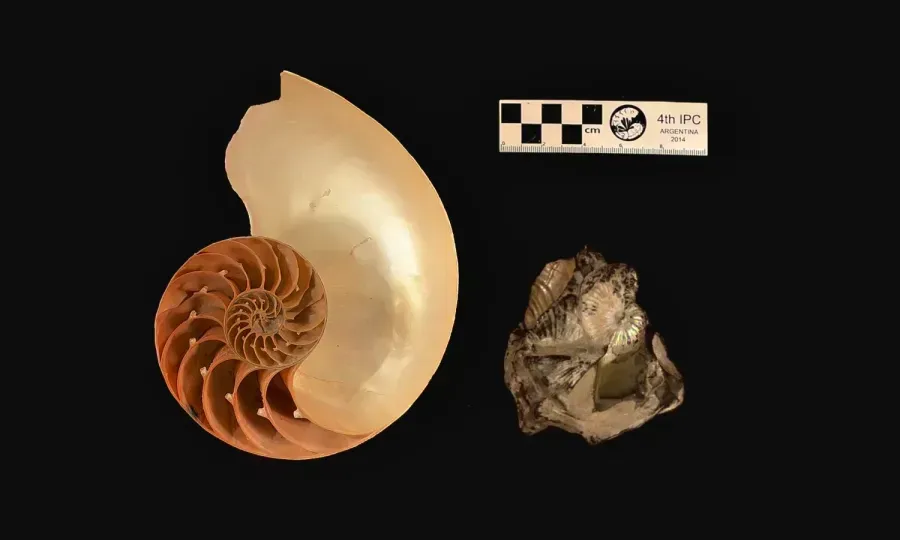
Mother-of-pearl is neither a mineral nor a stone in the usual sense. It is an organic composite built by a living organism. Its foundation is calcium carbonate in the form of aragonite crystals, stacked in layers with the protein conchiolin. Microscopically thin sheets of mineral alternate with an organic matrix, producing a structure rather like brickwork. This is nanoscale architecture that human industry has only recently begun to imitate in its own materials.
The names for the material tell their own story. English uses both "mother-of-pearl" and the more technical "nacre," borrowed from the French nacre, which in turn traces back to an Arabic word for shell. Italian says madreperla and Spanish nácar, German Perlmutter, all of them carrying the idea of a "mother of pearl." The Arabic umm al-lu'lu means exactly that. Across almost every language the word for "mother" surfaces, a reflection of the old understanding that nacre is the source and the substrate from which a pearl is made.
How Mother-of-Pearl Forms
Mother-of-pearl forms inside a mollusk's shell throughout the animal's life. The process begins with a specialised organ, the mantle, an epithelial layer that lines the inner surface of the shell and secretes the building blocks of nacre.
The aragonite layers are astonishingly thin, each about half a micron, roughly two hundred times thinner than a human hair. Yet these microscopic layers are exactly what make nacre one of the toughest organic materials on Earth. Its resistance to fracture is higher than that of ceramic or glass, even though any single layer on its own is quite brittle.
That layered architecture creates the magic we see. When light reaches the surface, it enters each microscopic sheet, reflects from the boundaries between them, and scatters in many directions. The light waves interfere with one another, reinforcing some wavelengths and cancelling others. The result is the shifting rainbow glow called iridescence, the same effect visible on butterfly wings, peacock feathers, and thin soap bubbles.
A single mollusk produces nacre for its entire life. A ten-year-old oyster carries thicker, richer-coloured mother-of-pearl than a young one. The comparison with wine improving with age is not far off.
Where Mother-of-Pearl Is Harvested
Mother-of-pearl comes from the shells of mollusks. There are two main sources: marine oysters and pearl oysters, most of which are now farmed, and freshwater mussels and shells. Marine nacre is generally the more prized because of its brighter play of colour and its greater layer depth.
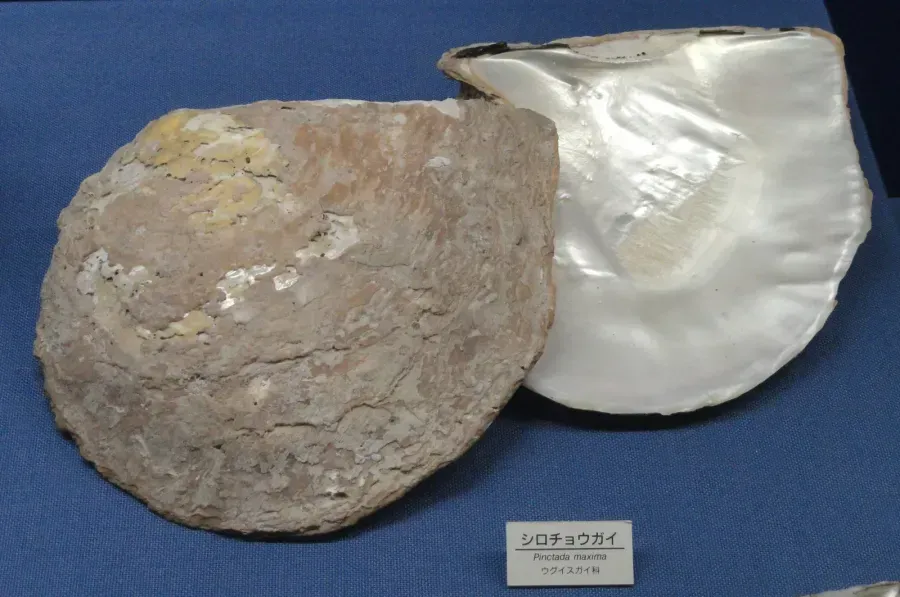
Marine sources. Pearl oysters are gathered in warm seas off Australia, the Philippines, Thailand, Japan, and the Persian Gulf. Australian marine nacre, harvested off Broom on the country's western coast, is widely considered the finest in the world. Pacific pearl oysters of the species Pinctada maxima can grow to the size of a fist and lay down nacre up to six millimetres thick.
Freshwater sources. Freshwater nacre is harvested from rivers and lakes in China, in parts of Europe such as Scotland, Ireland, and the Bavarian lakes, and in North America along the Mississippi. Freshwater mussels are far more productive; a single mussel can yield several pearls in a year, while a marine oyster usually produces one pearl over several years.
Special sources. Abalone, the sea ear, is taken from cold waters off California, New Zealand, Australia, and South Africa. Abalone shells grow up to twenty-five centimetres across, large enough to cut sizeable jewellery pieces from a single shell.
The key difference between the kinds is plain. Marine nacre from Pinctada oysters runs two to four millimetres thick, sometimes more, with steadier, deeper colours and a smoother finish. Freshwater nacre is thinner, around half a millimetre to two millimetres, but cheaper, available in a wider palette, and less costly to gather. Abalone sits in between: dearer than freshwater, but below the best grades of marine nacre.
Colours and Characteristics
The colour of nacre depends on the species of mollusk and the conditions where it lives. Marine nacre from the black-lipped oysters of Tahiti shows deep black and grey tones shot through with green and blue. Australian oysters often produce cream, silver, or slightly golden shades. Philippine oysters can give white, silver, or a brownish cast.
Freshwater nacre offers a broader range: beyond white, silver, and black, you find pink, lavender, peach, green, and even mottled multicoloured specimens. Abalone is famous for its intense iridescence, its surface flashing blue, green, orange, and red all at once.
The shine of nacre is called lustre, a measure of how well the surface reflects light. High lustre makes a piece look lit from inside. Low lustre leaves it matte, almost waxy. Good nacre should have a deep, saturated lustre reminiscent of moonlight.
Physical Properties
Translate the beauty of nacre into numbers and you get a material with curious traits that explain both its strength and its fussiness.
Composition. Nacre is roughly ninety-five percent aragonite, the mineral form of calcium carbonate, and about five percent organics: conchiolin protein, enzymes, and lipids that the mollusk synthesises from seawater. That organic fraction is what makes nacre a living material, one that slowly oxidises, dries out, and darkens over time. Stone does not behave that way; nacre does, because there is organic matter inside it.
Hardness on the Mohs scale: 4 to 4.5. Below quartz at 7 and far below the hard gems, but above calcite at 3. In practice that means sand, sharp-edged metal, or even household dust carrying tiny quartz particles can scratch it. The same softness, however, lets light enter the upper layers more deeply and refract more beautifully.
Density: 2.8 to 2.9 grams per cubic centimetre. Nacre is noticeably lighter than most gemstones, so a large pendant feels almost weightless in the hand. That suits earrings and pendants, where the ear and neck stay comfortable even under a bold piece.
Refractive index: 1.53 to 1.68. High for an organic material. Combined with the layered structure, it is what produces the depth and the "wet" shine.
Translucency. Thinly polished nacre becomes semi-transparent. Hold a slim inlay up to a light source and it glows from within, much like Venetian Murano glass jewellery, which plays with light through its coloured layers. Designers exploit this with thin pendants that let light pass through.
That same layering gives one more practical effect: nacre is about five times tougher than pure calcite. Nature built a composite in which brittle mineral platelets are glued together by flexible protein, the same principle behind modern impact-resistant materials.
History of Mother-of-Pearl in Jewelry
Mother-of-pearl is one of the oldest decorative materials on Earth. Its history is tangled up with the history of trade, fashion, technology, and the human longing for beauty. People loved nacre before they learned to work iron: African excavation sites have turned up sawn and polished fragments tens of thousands of years old. Even the earliest people saw its shine and understood it was rare and beautiful.
The Phoenicians, masters of the sea, traded mother-of-pearl almost as a currency, alongside gold. Archaeologists have found entire shell-working workshops in the ruins of their cities. In ancient India nacre was linked with Lakshmi, the goddess of wealth and abundance, and believed to draw prosperity to merchants. Persian poets and Sufi mystics built a whole philosophy around it: a hard core of pain, the grain of sand caught in the shell, is wrapped in layers of grace until beauty is born. Pain turns into a pearl. That metaphor of transformation remains one of the strongest in the culture of nacre.
From Ancient Civilizations to the Middle Ages
Mother-of-pearl appeared in jewellery and decoration in deep antiquity. The ancient Egyptians treated it as a symbol of the moon and fertility. At Abydos, one of the most sacred cities of the pharaohs, archaeologists found nacre amulets dating to around 3200 BCE, which makes the material one of the oldest decorative substances ever used by humans.
The ancient Greeks called nacre "the mother of pearls" (mater margaritarum) and tied it to Aphrodite, goddess of beauty and love, to sea foam and rebirth. In the myth, Aphrodite rose from the foam and the shell, so nacre was held sacred. The Greeks valued it highly and used it to inlay weapons, shields, and luxury objects. Aristocratic women wore nacre brooches as a mark of nobility. Excavations at sanctuaries of Aphrodite, especially at Paphos on Cyprus, have produced nacre ornaments from the fifth and fourth centuries BCE.
The Romans expanded the nacre trade through the Red Sea and the Indian Ocean. Roman matrons displayed their wealth with mother-of-pearl, often paired with gold and pearls. It also went into domestic decoration, set into mosaics and used to adorn caskets and mirrors.
In medieval Europe nacre served less in personal jewellery than in religious objects. Mother-of-pearl inlays decorated chalices, reliquaries, and the covers of holy books. Medieval craftsmen, seeing it born from the sea, read it as a symbol of holy water and purity, and white nacre stood for the innocence of the Virgin in Christian tradition. Kings and princes commissioned brooches of nacre inlaid with gold and gemstones for court ceremony. Meanwhile, in the Islamic lands of Persia and Arabia, the material was used more freely in personal ornament, often inlaid into wood and metal.
Mother-of-Pearl in the Age of Exploration (16th-18th Centuries)
When Portuguese, Spanish, and Dutch sailors began trading actively with the East, mother-of-pearl became one of the most valuable cargoes, on a par with spices. Portuguese ships carried pendants and brooches of nacre from India, the Philippines, and Indonesia to Europe, where they could be worth more than gold by weight.
In the sixteenth century nacre was a material of monarchs. Elizabeth I of England, famous for her splendour, kept a large collection of mother-of-pearl ornaments. French kings wore nacre medallions and pendants as a sign of their command over the seas and trade.
In the seventeenth century Dutch goldsmiths developed an elaborate technique for inlaying nacre into gold settings. These pieces were so costly that families passed them down as heirlooms.
In the eighteenth century, the age of Enlightenment, nacre turned up in finer, less massive jewellery. Marchionesses and duchesses wore slim nacre pendants on white-gold chains. The material embodied an idea of natural beauty and rational restraint that the philosophers of the period prized.
The Victorian Era and the Golden Age of Nacre (19th Century)
The nineteenth century was a golden age for mother-of-pearl. The Victorian era, from 1837 to 1901, loved natural materials, romance, and the exotic, and nacre sat at the centre of that taste.
Women of the period wore nacre brooches shaped as flowers, animals, and symbols. Mother-of-pearl pendants were often paired with black enamel for a sombre, romantic effect, a style known as mourning jewellery, worn in memory of family members who had died.
Queen Victoria herself was a great admirer of pearl and nacre. After the death of Prince Albert in 1861 she entered deep mourning and barely set aside her dark nacre ornaments for the rest of her life. Her example pushed the whole aristocracy of Europe toward similar pieces.
The Industrial Revolution let nacre jewellery be made on a larger scale. Factories specialising in carving nacre appeared, and the material reached both the aristocracy and the growing middle class. For a time it rivalled diamonds in popularity.
Decline and Revival (20th Century)
In the early twentieth century, in the age of modernism, nacre lost some of its standing. Synthetic materials arrived: celluloid, bakelite, plastic, all cheaper and more practical. Art Nouveau and Art Deco experimented with new materials and forms, sometimes leaving nacre behind.
But the early twentieth century also saw an event that changed the market for good. The Japanese entrepreneur Kokichi Mikimoto launched the cultured-pearl industry and realised that the nacre from his oysters was a material in its own right, not just a by-product. The offcuts, the leftover pieces of shell, he turned into jewellery, boxes, buttons, and household objects. That lowered the price and put nacre within reach of the middle class: Victorian luxury became Japanese practicality with an emphasis on quality and affordability. After the Second World War, with Europe in ruins, Japan exported nacre, and soldiers carried home ornaments made from it as keepsakes, giving the material a second wave of popularity in the United States and Europe.
By the 1960s, interest returned with new force. A young generation of designers, moved by the counterculture and a growing ecological awareness, turned back to natural materials. Nacre became a symbol of authenticity and a link to nature.
In the 1980s and 1990s Japanese designers gave nacre a modern, minimalist treatment in their collections, and it came to be seen again as a refined, thoughtful material for buyers who cared about substance.
The Modern Revival (21st Century)
Today mother-of-pearl is in demand again, lifted by a taste for natural materials and more conscious shopping. Nacre is alive; it is not synthesised in a laboratory in a few hours, and that authenticity is valued.
The growth of aquaculture has made it more affordable. What was a luxury for the few in the early twentieth century is now within reach: a good piece of marine nacre is attainable for an average buyer, and freshwater is cheaper still. Nacre jewellery tends to be quiet and season-proof, so it is bought for the long term, worn for decades without dating. For many buyers there is a further argument: farmed nacre is seen as more ethical than gems dug from the ground, since the shells are used as a by-product of pearl farming.
Wear the symbol, don't just read about it. These are in stock:
Types of Mother-of-Pearl in Jewelry
By Source Origin
Marine nacre is the dearest, the rarest, and the most beautiful. It comes from marine pearl oysters of the Pinctada genus that live in warm seas, and it divides into several kinds by region.
- Australian, or South Sea, taken off Western Australia, especially around Broom. Colours run from white and cream to yellow and pink. This is reckoned the finest marine nacre. The shells are very large, the oysters live ten to fifteen years, and the layer reaches two to four millimetres or more.
- Tahitian, harvested in French Polynesia, known for dark, almost black tones with green, blue, and purple flashes. Its colour is less stable, but its deep blacks are especially prized.
- Japanese, from the waters of Japan, known for a pronounced shine. Colours range from white to black, and the material is favoured for its steadiness and fine polish.
- Persian Gulf nacre, historically one of the most important sources. Output has fallen because of pollution and political factors, but the quality remains high.
Freshwater nacre comes from freshwater mussels in rivers and lakes. It costs roughly two to three times less than marine, yet is no less lovely. Its main advantages:
- More colours. Besides classic silver and black, you find lavender, pink, peach, cream, and even green, thanks to the genetic variety of freshwater mussels.
- Higher yield. One mussel can give several pearls a year, against one pearl over several years for a marine oyster.
- A softer feel. Freshwater nacre often has a gentler, almost waxy lustre.
- Better value. At equal quality it costs markedly less.
The main source of freshwater nacre is China, especially the provinces of Zhejiang and Jiangxi, which supply most of the world's freshwater pearl and nacre.
Abalone is nacre from the shells of sea ears (Haliotis), which live in cold water. The main regions:
- California, the loveliest and dearest abalone, with intense rainbow iridescence.
- Australia and New Zealand, slightly less vivid but with large shells.
- South Africa, rarer finds.
Abalone stands apart for several reasons: its iridescence is intense, flashing blue, green, orange, red, and yellow at once, the most "rainbow" of all nacres; its shells are large, up to twenty-five centimetres across; and its price sits above freshwater but below the best marine grades. It is a premium variety, especially popular in North American and Australian design. Its beauty so struck European designers in the nineteenth century that it was exported as a luxury material alongside gemstones.
Low-grade nacre, the economy class. Some budget pieces use nacre offcuts, small fragments, and flawed scraps bonded into a single sheet with epoxy or natural glue. It looks like nacre but is weaker and less beautiful. It is an honest compromise between natural origin and price: not solid nacre, but not a full imitation either.
By Colour and Rare Varieties
The colour of nacre comes not from any dye but from the species of mollusk, the temperature of the water, and the plankton it feeds on. A few varieties are rare and therefore especially valued.
White and silver nacre. The commonest and the most versatile. It is born in cool seas, in the northern Atlantic and the colder oceans where the water is cold and sunny days are few. The iridescence is delicate, bluish-green, "like breath on a mirror." These plates hold their quality longest, which is why white nacre is the usual choice for everyday jewellery. As a rule of thumb, a visible layer over three millimetres is premium, two to three is a good standard, and under one is not worth attention.
Black nacre. A rarity. Only the Tahitian black-lipped oysters (Pinctada margaritifera) of French Polynesia produce it. It is never pure black: deep inside live green, blue, and violet flashes, like a night sky full of stars. These oyster populations are shrinking from overharvesting and climate change, so a piece with genuine black Tahitian nacre comes close to a collector's item.
Pink and peach nacre. The soft pink glow comes from the shell of the large Caribbean conch (Strombus gigas). The nacre inside is thick, soft, almost translucent with a pink cast, but brittle and hard to work. The conch is a protected species and its harvest is limited, so pink nacre is rare and suited to special-occasion pieces rather than daily wear.
Green nacre. A greenish play appears in Pacific oysters off British Columbia, Australia, and New Zealand. The green is the reflection of algae and phytoplankton the mollusk filters from the water, so such nacre is an indirect sign of a rich, healthy marine ecosystem.
Golden and brown nacre. A warm golden glow forms in oysters from waters richer in iron and trace elements. Brown is rare, found in very old shells where the organic matter has almost fully oxidised. Golden tones look especially good in yellow and rose settings.
Geographic Origin and Character
Different regions yield nacre with different traits.
Australia (Western Australia, Broom): large, high-grade marine nacre, often three to four millimetres thick, in cream and silver with a faint golden cast, the steadiest in quality and lustre, and the dearest.
Philippines (Palawan): medium-sized marine nacre, silver and sometimes brownish, with a good but less deep lustre, at a mid-range price.
Tahiti (French Polynesia): black nacre from black-lipped oysters, deep grey-black with green, blue, and silver play, more sensitive to growing conditions than the Australian, at a mid-to-high price.
Japan: medium-sized marine nacre with a pronounced, very "wet" lustre, white or silver and sometimes faintly pink, finely finished, at a high price.
China (Zhejiang and Jiangxi): freshwater nacre, the most varied in colour, usually half a millimetre to one and a half thick, in white, black, pink, lavender, peach, and green, with natural variation bead to bead, at the lowest price.
California (USA): abalone, intense rainbow iridescence, all the colours of the spectrum at once, large shells up to twenty-five centimetres, at a high price but below premium marine grades.
By Processing and Form
The nacre inlay is a flat, smoothly polished slice of mother-of-pearl, around 0.8 to two millimetres thick, set into metal, silver, gold, or platinum. It is the most popular and practical way to use nacre. The setting protects the edges from chips and delamination, hides those edges so the piece looks finished, and lets a thinner, rarer, and more valuable slice be used safely, because the metal spreads any pressure. Inlays suit stud earrings, rings, bracelets, and brooches, and they hold up well to daily wear.
The nacre pendant is a solid piece of nacre, cut and polished into a shape. It may be a shell segment, roughly the natural curve of the shell, a geometric form such as a rectangle or circle, or a designer's free shape. It needs gentler handling than an inlay and should not bear heavy mechanical pressure, but it reads as more expensive and gives a piece more presence. Pendants are usually two to four millimetres thick to avoid splitting.
Nacre strands and beads are small beads, two to ten millimetres across, or thin slices, strung on nylon or silk. They make multi-strand bracelets, necklaces of forty to sixty centimetres, and mixed pieces that combine nacre with stone, wood, or metal. Price depends on bead size, origin, and the quality of the finish.
Nacre inlay-work is a more complex technique in which nacre is set together with other materials into an object: into gold or silver jewellery, often combined with enamel, black onyx, or red coral to build intricate patterns; into wooden objects, historically into weapons, caskets, and panels; and, less often in jewellery, into ceramic or glass. Such pieces demand more skill and cost more, but they look genuinely unique.
Nacre veneer is a thin layer of nacre, usually freshwater, bonded to a base of another material such as glass, ceramic, or plastic. It is used in inexpensive jewellery to imitate solid nacre. The drawback is that it wears out and loses its shine faster than the real thing.
Customer reviews
Zevira is a real jewellery shop. Genuine payments, deliveries and customer thank-yous.
🥰🥰🥰 gracias
Ok, ¡gracias! 🙂
How to Choose Quality Mother-of-Pearl Jewelry
What to Look For When Buying
Lustre, the shine, is the single most important sign of quality. Good nacre has a deep, "wet" glow like moonlight; turn it and it seems lit from inside. To check it, ask to see the piece in daylight rather than under shop lamps alone, since lamps can hide a matte surface; tilt it to about forty-five degrees and watch the light move in different directions; and compare it with other pieces. A flat, pale, or dead look points to low quality, age, or imitation. Freshwater nacre has a slightly softer lustre than marine, and that is normal.
Iridescence, the rainbow play. Good nacre shifts through the colours of the rainbow as the angle changes. It is most obvious on abalone, where blue, green, red, and yellow appear together, while on marine nacre the play is subtler, seen as a drift from white to cream. If the piece stays one colour under any light, it is either low-grade nacre or an imitation in plastic or ceramic.
Layer thickness. For pendants and large inlays it should be at least two millimetres. A layer of one and a half millimetres already risks splitting within a few years. Inlays in earrings and rings can be thinner, 0.8 to 1.5 millimetres, because the setting protects them on all sides.
Edges and polish. The edges should be perfectly smooth, with no chips, cracks, or burrs. Run a finger over them and you should feel no ridges or unevenness. Poor polishing means the maker rushed or used poor tools. Well-finished nacre feels as smooth as glass.
Colour uniformity. Natural nacre has slight, natural variation in colour, a sign that the material is real, but it should not be blotchy with abrupt transitions. The exception is abalone, which by nature carries striped, more contrasting rainbow zones. A perfectly even, machine-printed colour can be a sign of dyeing or imitation.
Sound when tapped. An old test. Tap natural nacre lightly and it gives a dull, muted, wooden sound. Plastic rings brighter and clearer, like ceramic. The difference is audible even to an untrained ear.
Weight. Nacre is lighter than stone but heavier than plastic. A quality piece should feel present but not heavy. If it is too light for its size, suspect plastic or ceramic.
Telling the Types Apart and Choosing
Marine or freshwater. Marine nacre is steadier in colour and holds its lustre longer; choose it for an "eternal" piece that will not dull in five years. Freshwater offers more colours and suits playing with style; if you want pink or lavender, look to freshwater. Freshwater is two to three times cheaper, which makes it friendlier to a budget, while marine is rarer and more exotic if having something special matters to you.
Abalone. If you want the maximum rainbow play that catches the eye at once, choose abalone. It suits bold, avant-garde pieces and people who do not mind standing out. It costs more than freshwater but often less than the best marine grades.
Thickness when choosing. For everyday wear in earrings and rings, look for at least one millimetre of nacre. For pieces worn rarely, 0.8 millimetres is acceptable, but only if the nacre is protected by a setting. For a solid pendant, never go below two millimetres.
Suspicious cheapness. If a nacre piece costs strikingly little, less than a coffee, you may be offered an imitation rather than nacre: a nacre paste of ground shell and resin that shimmers but does not last; plastic coloured to look like nacre, which gives itself away up close; or ceramic with a nacre veneer that rubs off easily. To check authenticity before buying, view the piece at several angles, since real nacre changes tone; look at the edge for the layered structure, which plastic lacks; tap it gently for the dull sound; and ask the seller about origin, since an honest one will name Australia, Tahiti, the Philippines, or China.

Turn on your camera, pick earrings, a pendant or a ring, and see the piece on yourself in real time.
Switch items in one tap.
Everything runs in your browser: no photo or video is ever uploaded.
Meaning and Symbolism of Mother-of-Pearl
Historical and Cultural Meaning
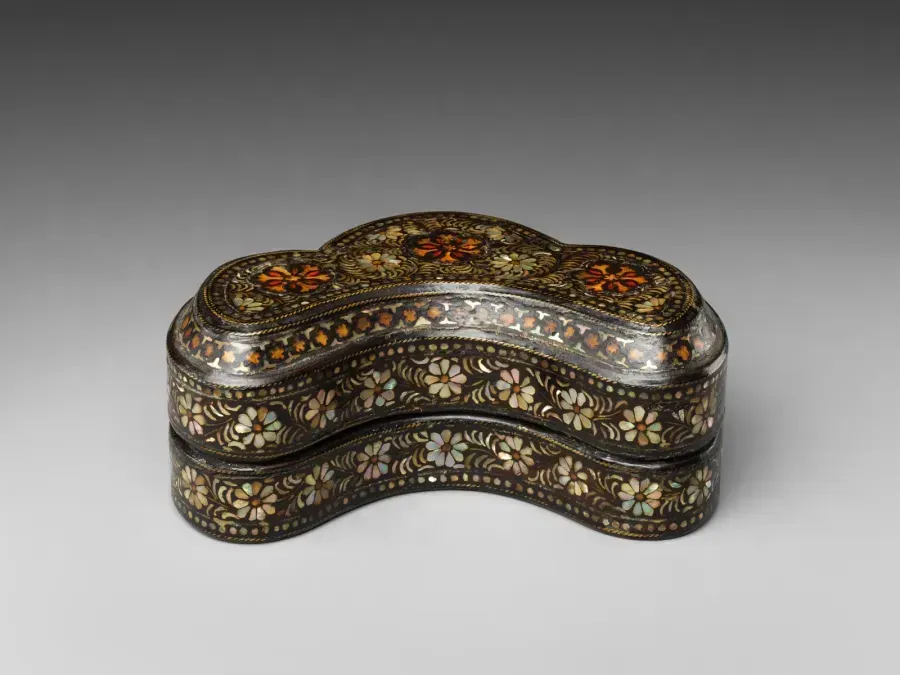
Across millennia nacre stood for different ideas in different cultures.
In ancient Egypt it was tied to the moon, fertility, and rebirth. Egyptians believed that, born in the depths of the sea, it was linked to the underworld and the divine, and nacre amulets served as protection from harm and as help in the afterlife.
In ancient Greece it belonged to the sea and to Aphrodite, goddess of beauty. The Greeks called it "the mother of pearls" and held that it carried a fragment of the sea foam from which Aphrodite was born, which made it a symbol of beauty, love, and immortality.
In medieval Europe nacre stood for holiness and purity. It was linked to holy water and used in religious objects, and white nacre symbolised the innocence and purity of the Virgin in Christian tradition.
In Asian cultures, Chinese, Japanese, and Indian, nacre was seen as a material of water, change, and balance, used in interiors and ornament as a sign of prosperity and protection.
In the Victorian era nacre, paired with black enamel, became a symbol of noble grief and refined sorrow, bound up with the mourning aesthetic so popular then.
What Mother-of-Pearl Means Today
The cultural trail behind nacre is rich, but it is best not to take the old beliefs literally. Nacre does not heal, does not affect health, and does not "charge from the moon." It is a beautiful natural material with a history, and it is the history that gives it meaning as a gift or a personal object.
The link with the moon, attributed to nacre across cultures, has a plain explanation. White and silver nacre is born in cold northern seas, its soft glow really does recall moonlight, and the shell grows in layers, a gradual build that the ancients compared with the changing phases of the moon. From there came the lasting image of a material of the moon and the night.
The most durable of all the stories around nacre is the one about the pearl: an irritating grain becomes a thing of beauty. That metaphor, "from a flaw, beauty is born," is often read into a gift for a meaningful occasion. It is a strong image, and it works as an image, not as a promise.
Cultural Traditions
The Mediterranean tradition. Around the coasts of Spain, Italy, and Greece nacre was carved into devotional objects, rosary beads, and small medallions for pilgrims, the shell of the sea standing for the journey and for protection on the water. In coastal Spain in particular, shell and nacre work has a long artisanal life.
The Persian and Ottoman tradition. Nacre was set into amulets and talismans, combined with enamel and semi-precious stones. Large nacre brooches were a mark of status and means among the nobility.
The ancient Egyptian tradition. Papyri called nacre "the liquid light of the moon." Pharaohs wore diadems set with it, and tombs hold necklaces and bracelets of nacre more than three thousand years old, placed there in the belief that it would protect the dead in the afterlife.
The Japanese tradition. After Kokichi Mikimoto's work, nacre in Japan became a material of high craft, used in inlay, in furniture, and in the lacquer technique of maki-e, which takes years to learn.
The Jewish and Christian traditions. Nacre was used in rosaries and prayer objects, on the belief that a material of the sea, a symbol of the infinite, helps concentration. Such beads were often handed down as family heirlooms.
Mother-of-Pearl and Pearl: A Full Comparison
Differences in Origin
Pearl and nacre are often confused, but they are two different things with different properties, and knowing the difference helps you choose the right piece. For a deeper look at the gem itself, see our complete guide to pearls.
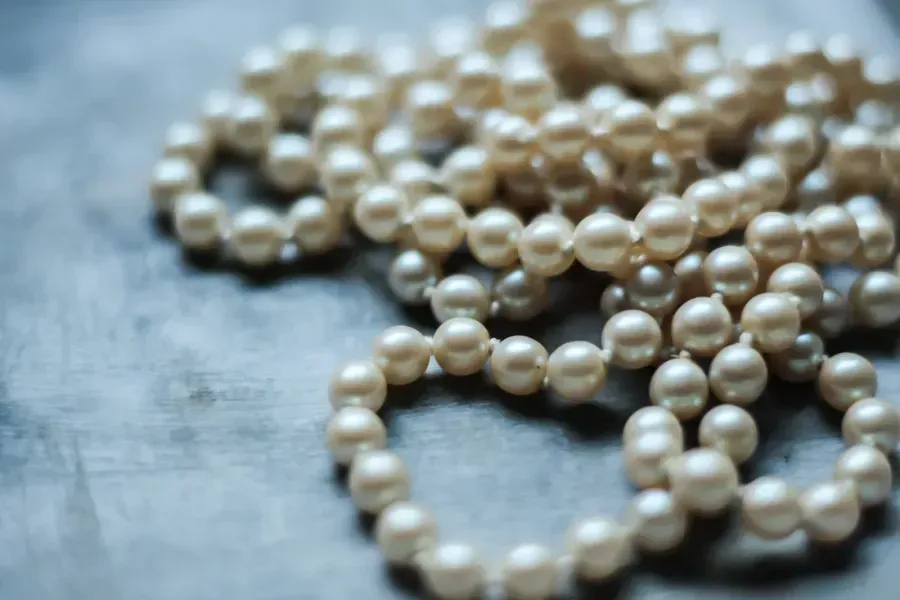
A pearl is a finished biomineral product. When a foreign object, a grain of sand, a parasite, a fragment of shell, enters a mollusk and cannot be expelled, the oyster wraps it in layers of nacre, the same material as its own shell. Year after year the layers build up into a pearl. A normal pearl grows for three to five years before it can be harvested.
Nacre is the lining, not a separate product. It is the inner surface of the shell, existing independently of any pearl. If a pearl is the result of a defensive reaction, nacre is the permanent coating of the shell, laid down over the animal's whole life.
Structural Differences
A pearl consists entirely of nacre layers wrapped around a central nucleus, is usually round or irregular (baroque), may show its layers when cut, and is used whole, needing no setting. Nacre is a flat layer on the inner shell surface, varying from half a millimetre to six millimetres thick, needs a setting for protection once removed, and keeps the natural curve of the shell.
Durability
A pearl looks fragile but, being spherical, spreads pressure evenly and can last centuries with gentle storage; it fears moisture even more than nacre, because of the organic matrix inside. Nacre in flat form is vulnerable to point impacts and pressure, but protected by a setting it lasts a very long time; marine nacre two or more millimetres thick can serve fifty to a hundred years with proper care.
Price and Rarity
A pearl runs roughly two to three times the price of nacre of equal quality, because of the long growing period, the more complex formation, the historical prestige of pearls as a royal symbol, and the lower yield. Nacre is cheaper, but that does not make it low quality; it is simply easier to produce.
How to Choose What to Wear
Choose a pearl for a more classic, conservative look, if you will pay more for a sense of luxury, if you prefer a smoother, more uniform surface, or if you want a piece that looks finished on its own. Choose nacre for something brighter and more iridescent, on a tighter budget, if you like the movement of colour and the play of rainbow light. Many pieces combine the two: a nacre inlay in an earring with a pearl drop creates a fine contrast of texture and lustre.
Mother-of-Pearl with Other Stones
Nacre is rarely worn alone; more often it is paired with other stones for harmony of colour and texture. A few combinations work especially well.
Nacre and moonstone. The most natural pairing: both have a soft, shifting glow. The cool bluish flashes of adularia echo the iridescence of nacre for a cool, monochrome look.
Nacre and rose quartz. Warm rose quartz softens the coolness of white nacre. The pairing reads as gentle and romantic, especially in a rose or silver setting.
Nacre and labradorite. The deep blue-green play of labradorite contrasts with pale nacre and strengthens the "marine" mood, a choice for those who like expressive combinations.
Nacre and apatite. Sea-coloured apatite and nacre fold into a marine theme of water and longing for the ocean, a good choice for anyone who lives far from the sea.
Nacre and black tourmaline. Pale nacre against graphite-black tourmaline gives a strong graphic contrast that suits clean, modern pieces.
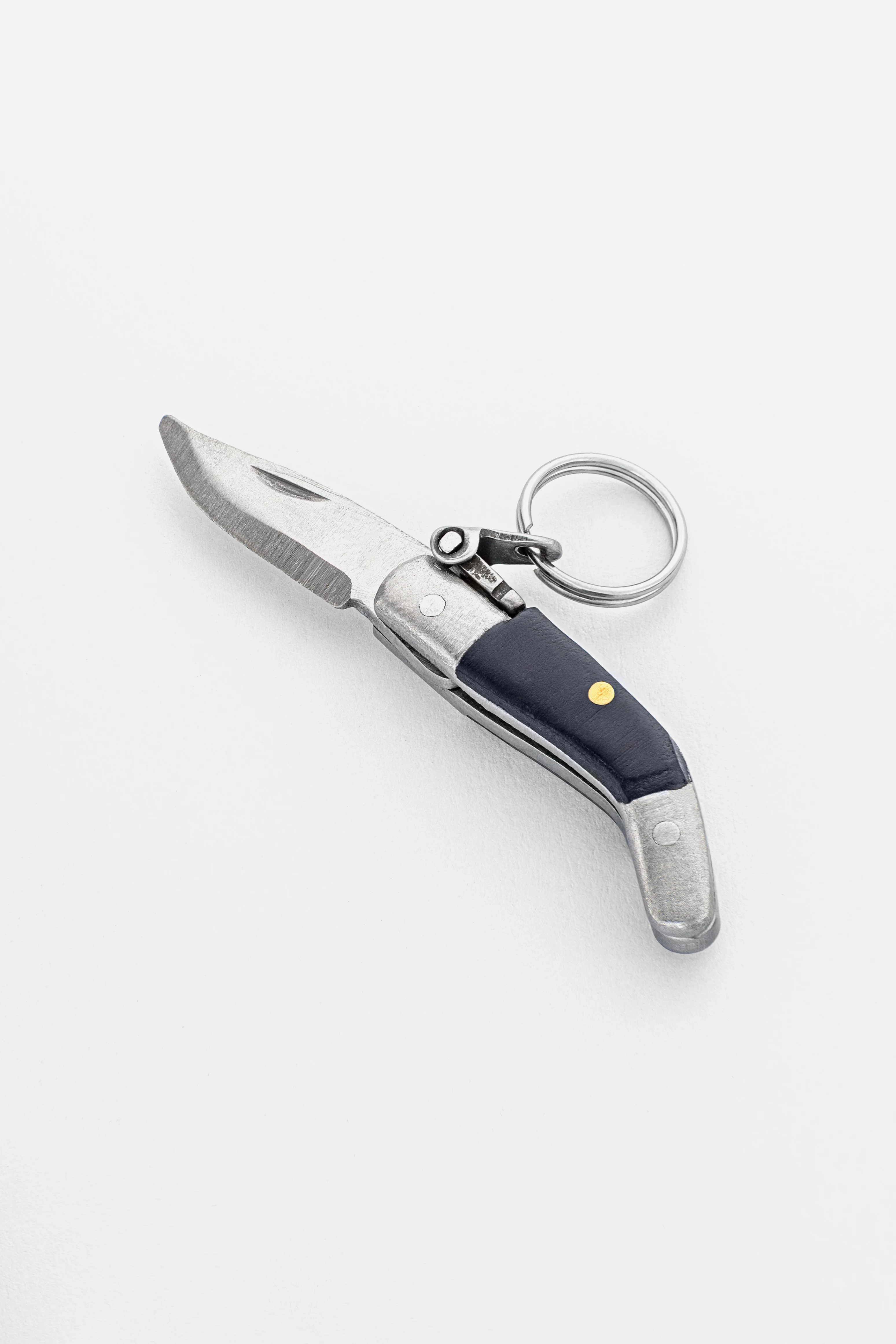
Artisan-crafted CAPAORA navaja pendant
A 40 mm stainless-steel navaja with a real folding mechanism and Palanquilla lock. An affordable gift to remember.
A code for blog readers:
10% off your first order
Authentic · Maker's guarantee · Ships from Spain
Settings for Mother-of-Pearl
Nacre is most often set in 925 silver: the cool tone supports the white and bluish play, and the price is friendlier than gold. Warm nacre and abalone look good in yellow and rose gold, while strict whites suit white gold. Platinum is used less often because of cost. The main thing is that the setting hold the soft shell securely (nacre is only about 2.5 to 4.5 on the Mohs scale) without scratching it. More on metals: 925 silver and white, yellow, and red gold.
Leave your email, we'll send your discount code. No spam, unsubscribe anytime.
The code arrives by email, valid on your first order.
Modern Applications of Mother-of-Pearl in Jewelry
The Main Jewellery Formats
1. Earrings, the most popular format. Studs are the most classic and everyday choice; drop earrings carry a nacre pendant; hoops take a nacre inlay; and large abalone drops make a bolder statement. Nacre earrings work in both minimalist and maximalist styles, and they are one of the few formats that look equally right with a business suit and on the beach.
2. Pendants, the second most popular format. They are often geometric, rectangles, squares, circles, diamonds, triangles, or shell segments that follow the natural curve, or abalone pendants with a vivid rainbow play, or the asymmetric, signature shapes of modern designers. A large nacre pendant naturally draws the eye to the neck and face when you want to be the centre of attention.
3. Bracelets and necklaces from nacre beads, a more relaxed, summery style. Single-strand bracelets of matched beads, multi-strand bracelets in different shades, necklaces of forty to sixty centimetres, longer necklaces of seventy centimetres and up, and mixed bracelets that blend nacre with stone and wood. These suit the beach, holidays, casual clothes, and travel; they feel more relaxed than strict earrings or pendants.
4. Brooches, rarer but elegant. Inlaid brooches of nacre with gold or silver, brooches shaped as animals, plants, or abstract forms, and vintage brooches, often very beautiful but in need of gentle handling. A brooch is a good way to add a piece without earrings or a pendant, pinned to a jacket, a dress, a cardigan, or a bag.
5. Rings, a rarer format that needs special care. Simple rings with a nacre inlay, vintage rings, and modern signature rings with large nacre stones. Rings meet water and impact often, so they call for extra caution and are best kept for special occasions.
Pairing with Metals
Silver and platinum, the classic pairing. The cool metal underlines the cool shades of nacre, white, silver, black, for a modern, minimalist look.
White gold gives a softer pairing than silver. Its slightly warmer cast suits freshwater nacre in pink or peach.
Yellow gold can look too warm and compete with the nacre. It works when the nacre has golden or cream tones; check the combination before buying.
Rose gold, a newer direction, pairs well with freshwater nacre in pink and lavender for a romantic, modern look.
Copper and bronze, an interesting choice when the nacre has a peach or pink cast, giving an earthier, boho feel that suits the bold and the experimental.
Sterling silver (925), the most practical choice, hard enough to hold the nacre securely and handsome enough to set it off. It is the standard choice for most jewellers.
How to Care for Mother-of-Pearl Jewelry
The Golden Rule: Minimal Water, Maximum Dryness
Nacre is an organic biomaterial, and moisture is what it fears most. Water seeps into the microscopic layers between the aragonite crystals and the conchiolin matrix, making them swell, split, and lose lustre, and it encourages microbes and mould. So the golden rule:
- Do not wear nacre jewellery in the shower, the sauna, the pool, or any damp place.
- Do not wash it under running water. A few seconds with a damp cloth at most.
- Avoid seawater and chlorinated water. Sea salt crystallises on the surface; chlorine attacks the organic matrix.
- Store it dry, not in the bathroom and not next to a radiator, since extreme dryness harms it too.
The ideal storage humidity is forty to fifty percent. Air that is too dry leads to brittleness; air that is too damp leads to splitting. In a very dry climate, a desert or a home with heavy winter heating, keep the piece in a sealed container with a small piece of natural material that slowly absorbs moisture, such as felt or cotton. In a very damp climate, near the sea or in the subtropics, check the piece regularly for mould or wetting, store it in a sealed container with a silica gel sachet of the kind found in electronics boxes, and replace it every three to six months.
Cleaning
Daily cleaning. Use a soft cloth, flannel, microfibre, or silk, and simply wipe the piece dry after taking it off. That is enough to remove dust and traces of perspiration.
A deeper clean. Lightly dampen a soft cloth with clean, room-temperature water, never hot, wipe the piece very gently with two or three strokes, and dry it at once. The whole thing should take no more than ten seconds.
A soap solution for heavier soiling. Take a mild soap, such as a detergent for delicate silk or wool; ordinary hand soap works too, provided it has no exfoliating particles. Dissolve a single drop in a cup of warm, not hot, water. Wipe the piece gently with a soft cloth dipped in the solution. Be sure to rinse it in clean, soap-free water. Dry it with a soft cloth. Leave it in the air for an hour or two to dry fully.
Never use acids such as vinegar or lemon juice, which dissolve calcium carbonate; alkalis such as soda or washing powder, which dissolve the organic matrix; abrasives such as sand, sandpaper, stiff brushes, or ultrasonic cleaners, which scratch and wear the surface; bleach and chlorine, which break down the structure; or alcohol and acetone, which drive out water and make nacre brittle. Nacre is a fine microstructure built by a living organism, not a uniform hard surface. Handle it like delicate fabric or skin, not like stone.
Storage
Store nacre dry, at room temperature, away from radiators and air conditioners. Avoid direct sunlight, which can bleach the material over time. Not in the bathroom (too damp) and not in an attic or cellar (swings in humidity and temperature). Wrap each piece in soft cloth, ideally silk or microfibre, and keep it in a soft pouch or box. If you own several pieces, wrap each separately so they do not touch. Keep nacre away from harder jewellery, sharp-edged metal, quartz, or diamonds, that could scratch it. If the piece has a metal setting, make sure the metal does not stay in long contact with the nacre in humid conditions, since it can oxidise and leave dark marks. Check the piece about once a month for any sign of mould, moisture, or damage.
Protecting Against Damage
Direct sunlight. Long exposure to strong sun can gradually bleach nacre, especially the dark grades. If you spend a lot of time on the beach, take nacre jewellery off or shield it.
Perfume and cosmetics. Do not put on nacre before applying make-up, perfume, lotion, or cream. Let them dry on the skin for at least ten minutes. Alcohol in perfume and abrasive particles in cosmetics can damage the surface.
Extreme temperatures. Nacre can crack or split with a sharp temperature change. Do not wear it from a hot room into the frost or the reverse, and keep it away from radiators and air conditioners.
Mechanical pressure. Two heavy rings on one finger press on each other constantly, and the nacre in such a ring can split over time. Put jewellery on gently and do not squeeze it.
Sport and active leisure. Take nacre off before sport, swimming, or dancing, where there is a risk of impact or contact with water.
Household chemistry. Take nacre off when cleaning, doing laundry, or working in the kitchen, since detergents, bleach, food acids, and alkalis can all harm the surface.
Restoring Dulled Nacre
If nacre has lost its lustre, restoring it is harder than preserving it, but usually possible. From the gentlest method upward:
Hand polishing. Take a piece of chamois or soft microfibre and polish in slow circles with no pressure, patiently. It may take half an hour to an hour, but the shine returns by sixty to eighty percent. The safest method.
Baking soda. Mix a little soda with water into a paste, apply it gently, rub lightly, and rinse at once with clean water. Soda is milder than many ready polishes but still calls for care and a thorough rinse.
A dedicated nacre paste. Softer than metal polishes. Apply a thin layer, buff with a soft cloth, and rinse. One tube lasts years.
What not to do. Never use ultrasonic cleaning: the vibration breaks the bonds between the aragonite layers and the nacre eventually splits. Avoid acids, abrasive powders, and stiff brushes.
Care by Climate
Dry climate (desert, highland, winter heating). The organics dry out and the nacre turns brittle. Keep the piece in a box with a gentle source of humidity, a separate closed dish of water that does not touch the piece, and away from air conditioners and radiators.
Damp climate (coast, tropics). The main risks are swelling and mould. Keep nacre in a dry, ventilated box, wipe it with a soft cloth once a month even if you do not wear it, and use a moisture absorber.
Temperate climate. Standard care is enough: dry storage, a wipe after wear, and a light polish every few months.
Which Mother-of-Pearl Suits You
Nacre Colour and Skin Undertone
Nacre flatters almost everyone, but the shade is worth matching to the skin's undertone so the piece looks brighter rather than fighting the face.
Cool undertone (porcelain, rosy skin). Cool colours sit best: white and silver marine nacre, black Tahitian with green flashes, abalone with blue and violet play. They give a contrast that lifts the skin.
Warm undertone (golden, olive, bronze skin). Warm shades belong here: pink, lavender, peach, and cream freshwater nacre, and golden Australian marine. Avoid cool silver and pure black, and a rose or yellow setting will warm the skin further.
Neutral undertone (beige, neutral-olive skin). Almost any nacre works, so choose by your clothes and mood rather than by rules.
Very dark skin. Dark nacre gets lost, so bright white marine, abalone with saturated iridescence, and large pendants rather than small inlays win out, since the movement of colour shows more.
Nacre and the Colour of Your Clothes
White and grey. Any nacre works. White and silver give a calm monochrome, black Tahitian adds contrast, and abalone becomes the single point of colour in a neutral look.
Black. Pale nacre, white or silver, flashes on black as an accent; abalone reads like fireworks. Black nacre on black fabric, by contrast, disappears.
Blue. White and silver underline the blue, abalone with blue and green play gives a harmonious monochrome, and pink or lavender freshwater adds a soft contrast.
Earth tones (brown, sand, olive, mustard). Warm and neutral shades suit best: peach and cream freshwater, golden Australian. Cool silver and black give a sharp, not always fitting contrast.
Pink and red. White and silver visually cool a warm outfit. Pink nacre on pink clothing risks blending in, so reach for white or abalone instead.
What to Wear Mother-of-Pearl With
Nacre lives on light and movement, so it needs a background where the play of colour shows. The easiest approach is to start from the occasion and pick the setting and companions afterwards.
Everyday. Studs or a slim white-nacre pendant in silver go with a plain T-shirt, light knitwear, and jeans. Here nacre works as a soft highlight by the face rather than a statement. Choose a clean shape and no more than two pieces at once.
The office. Minimalism wins: studs, a fine chain with a small inlay, a neat brooch on a lapel. Cool white and silver tones echo a shirt and a neutral suit without distracting. An open or V-neck gives a pendant room and leads the eye to the face.
An evening out. In the evening you can let nacre off the leash. A large abalone or Tahitian pendant on a plain, unprinted dress becomes the main accent. Dark or solid fabric, black, navy, graphite, strengthens the iridescence, and a simple neckline does not compete with the play. Drop earrings that swing and catch the light belong here too.
A special occasion. For a wedding, an anniversary, or an important meeting, nacre in a gold setting or paired with pearl and moonstone gives a soft, glowing look. Warm cream or golden nacre sits beautifully on silk and satin in ivory, powder, or champagne.
Nacre takes well to layering: a fine chain with a small inlay plus studs, or several nacre bracelets in different shades for summer. To stack metals, keep to a cool palette, silver, white gold, platinum, with white and black nacre, or a warm one, yellow and rose gold, with cream, pink, and golden nacre. Two practical tips: match the length to the neckline, a short pendant under forty-five centimetres for an open neck and a V-neck, a longer one for a closed top and layered looks; and for everyday wear keep white nacre in a cool metal as the most versatile option, saving bright abalone and dark Tahitian for occasions where it can take the lead.
Send a friend a discount code, they save on their first order.
Frequently Asked Questions
Q: Can I wear mother-of-pearl to the beach or the pool?
A: Technically, if the piece has a solid setting protecting the nacre on all sides and you can guarantee it will not get wet or pick up sand, then yes. In practice I strongly advise against it. Seawater carries salt that crystallises on the surface and damages it; sand can slip under the setting and scratch the nacre; chlorine in pools breaks down the organic matrix; and a piece lost in the water is gone. Leave nacre safely at home and choose more robust materials for the beach, such as plastic, rubber, or plain thick silver.
Q: Why did my mother-of-pearl darken in a few months?
A: There are several possible causes. A silver-coloured metal setting nearby may have oxidised and left a dark mark, so keep the piece apart from other metal jewellery. Moisture may have led to mould or a bacterial film, so wipe the piece with a cloth dampened in barely warm water and dry it, and see a jeweller if it persists. The nacre itself may be oxidising as the conchiolin matrix reacts with air, a normal part of ageing that affects appearance but not wear. Or cosmetics and perspiration may have built up a film, which regular dry wiping removes. If a few minutes of rubbing with a soft flannel does not help, ask a jeweller to check the piece.
Q: Can nacre split, and can it be repaired?
A: Yes, nacre can split if it is very thin (under a millimetre) in a solid pendant, if it takes heavy mechanical pressure from a fall or a knock, if it is wetted and dried repeatedly, or if it meets a sharp temperature change. Good marine nacre two or more millimetres thick, properly worked and gently stored, rarely splits without cause. Once it has split, a professional jeweller can try to glue the lifted part with a special adhesive, but full recovery is not guaranteed, and it is often simpler to commission a new piece.
Q: What is the difference between pearl and nacre?
A: They are often confused but are different things. A pearl is a round or irregular bead that grows inside a mollusk: when a foreign object enters, the animal wraps it in layers of the same material its shell is made of, and over several years a pearl forms, consisting entirely of nacre layers around a centre. Nacre is the inner surface of the shell, of the same nature as a pearl but wrapping nothing; it is simply the protective lining. In jewellery, pearls are used as whole beads on a thread, while nacre is used as slices and inlays cut from the shell. Pearls are reckoned more valuable, rarer and slower to grow, but both share the same play of colour.
Q: Which is dearer, marine or freshwater nacre?
A: Marine, by roughly two to three times. Marine pearl oysters are less productive, one oyster giving one pearl over several years while a freshwater mussel gives several a year. Marine nacre also has a more even colour, a thicker layer (two to four millimetres against half a millimetre to two), and a steadier lustre. History plays a part too: marine nacre was long seen as the "real," luxurious choice. And harvesting at sea, with boats and equipment, costs more than raising mussels in inland ponds.
Q: Is Tahitian nacre really black?
A: Not quite. Nacre from the Tahitian black-lipped oyster (Pinctada margaritifera) is very dark, a deep grey, dark green, or dark brown, but not truly black. Tahitian black pearls look almost black because of intense colour reflections on the surface, gold, green, and silver flashes over a dark ground, that create an illusion of total blackness. Seen from the side or in shade, the colour is more a deep grey-green. The dark tones and contrasting play are exactly what make Tahitian nacre so prized.
Q: How do I tell real nacre from a fake?
A: Look at the edge from the side: real nacre is layered, and you can see the microscopic crystal layers even with the naked eye, while fakes in plastic, ceramic, or synthetic look uniform. Check the lustre and iridescence: real nacre has a deep "wet" shine and shifts colour as the angle changes, while a matte or single-colour look points to a fake. Tap it: natural nacre gives a dull, muted sound, plastic and ceramic ring brighter. Weigh it: nacre is heavier than plastic but lighter than glass or ceramic, so a piece that feels too light is probably plastic. Very old nacre (a century or more) may smell faintly of vanilla or sea air from oxidised organics, while plastic may carry a chemical odour. And a strikingly low price, less than a coffee, almost always means an imitation or a very thin layer.
Q: Is nacre a vegan material?
A: This is debatable. Technically it comes from a marine animal, so it is not a strictly vegan material. That said, on modern farms mollusks are raised for pearls and the oyster is often returned alive after the pearl is taken (in some countries by law); nacre is a by-product of pearl farming, so the shells are used rather than discarded, which is more ecological; and toward animals it is less harmful than synthetic materials made from petroleum. If ethics matter to you, look for marine nacre from farms that raise oysters sustainably and release them alive, rather than freshwater, which is often linked to more intensive harvesting.
Q: Does nacre lose its shine over time?
A: Good marine nacre rarely loses its shine with proper care. Freshwater can dull faster, especially with frequent contact with moisture. Dulling usually comes from three things: surface oxidation, as the conchiolin matrix reacts with air over time, a normal ageing like patina on silver that shifts the tone slightly without affecting wear; a film from perspiration, cosmetics, perfume, and dust that makes the surface matte, removed by regular wiping with a soft cloth; and oxidation of a metal setting that leaves dark marks, avoided by storing the piece wrapped in cloth. If a piece has dulled, wipe it very gently with a cloth dampened in barely warm water, which often restores seventy to eighty percent of the lustre; if not, see a jeweller.
Q: How long does mother-of-pearl jewellery last?
A: With ordinary care, marine nacre two or more millimetres thick lasts ten to twenty years. With gentle care, stored properly and never worn in water, it can reach fifty years and more. Without care, worn in the bath, never cleaned, left in the sun, nacre can dull and split within a year or two. The lifespan depends far more on handling than on the original price.
Mother-of-Pearl as a Gift
Who to Give Nacre Jewellery To
A nacre piece is not a universal gift, but for certain people and moments it is ideal. It suits those who value the natural and the sustainable (nacre is a living material), those who already wear jewellery (you complement their style rather than impose one), those who ignore trends and prefer timeless things, those with a cool or neutral skin tone, and those who value things meant for the long term. Good occasions include an engagement (an unusual alternative to a diamond), a new job, an anniversary, or the birth of a child. It is a weaker choice for people who do not wear jewellery at all, those with a very active lifestyle, those unwilling to care for a piece, and those with a very warm skin tone, where the shade must be chosen carefully.
How to Give It
Presentation matters. Nacre looks best in the right light, so give the gift in daylight or under soft lamps rather than harsh LEDs, and invite the person to view it from several angles so they see the rainbow play. Explain the origin, where the nacre came from and why it is special, since the story of a natural material makes the gift more meaningful. Wrap it properly in a soft pouch or a padded box, which shows you respect the fragility of the material. Include care notes, which are useful even for the experienced and show you have thought it through.
About Zevira
At Zevira we treat mother-of-pearl as a living material with its own character and history. Every piece of nacre came from the deep, from the slow, years-long life of a shell where layer grew upon layer. We handle it accordingly: we polish slowly, without rushing, because haste breaks down its structure, and we choose settings so that light passes through thin slices and the material glows from within.
The Zevira catalogue has mother-of-pearl jewellery for every taste, from simple everyday studs to expressive pendants in abalone and Tahitian nacre for special occasions. We state the origin of the material honestly and never pass off an imitation as natural nacre, because we believe a buyer has the right to know exactly what they are holding.
Mother-of-pearl asks for gentle care, and we do not pretend otherwise. In return it rewards that care with a long life: a piece chosen today can be worn for decades and passed on. That is the kind of slow beauty worth choosing a natural material for.
Conclusion
Nacre is interesting for a combination rarely found in one material: it is organic, tougher than the pure mineral thanks to its layered aragonite structure, and yet soft enough that dust can scratch it. From there come both its beauty and its fussiness in care.
There is not much to remember. Quality shows in the lustre, the iridescence, the layer thickness, and the cleanness of the edges. Marine nacre is steadier and dearer, freshwater is richer in colour and more affordable, and abalone gives the brightest rainbow play. A fake gives itself away with a perfectly even colour, a bright ring when tapped, and too little weight. And all the care comes down to a simple rule: keep it dry, protect it from impact, from sharp temperature changes, and from aggressive chemistry. Treated that way, a piece serves for decades and passes calmly to the next generation.
On other natural materials in jewellery: pearls, coral, and moonstone. Or return to the Zevira home page.