Jewelry for Developers and IT Professionals: Minimalism, Symbols and Meaning
Introduction: 02:47, green lines in the log
The first production deploy goes out at 02:47. You stare at the terminal and it is real now, not a staging environment, not a feature branch. Somewhere in a data centre, your code is running. There is no champagne, no colleagues nearby. You send a screenshot to the team chat and that is the whole ceremony.
Nobody sees this moment. That is exactly why it deserves something tangible.
A profession where the major milestones happen inside a screen has no tradition of outward markers. A soldier wears a medal. A doctor wears a white coat. A developer gets an email from HR and a Slack thread with three thumbs-up reactions. First production release, senior promotion, company anniversary, startup IPO, dissertation defence: all of it lands as text on a screen, then scrolls away.
This article is about closing that gap. What an IT professional actually wears, which symbols work in a technical environment, and what to give a developer so that it does not become one more device gathering dust in a desk drawer. A ring engraved with the git hash of your first release never goes obsolete. A certificate for a gadget is obsolete in eighteen months.
The IT profession: why the question is not obvious
First, the context. The world of IT is not uniform, and what fits one specialist can be completely off for another. A backend developer, an interface designer and a product manager all live in one ecosystem but inside different professional cultures. A piece of jewelry that reads as natural in a design studio can feel like a global variable in a tightly structured codebase elsewhere.
The minimalism code
Tech culture has an unspoken dress code. Not a prohibition on jewelry, but a philosophy. The closer to the engineering core (backend, systems programming, devops), the stricter the informal minimalism. Everything superfluous is removed. This mirrors the same principle that drives clean code: not one unnecessary line.
In this culture, a piece of jewelry that is "too much" reads roughly the way a global variable reads in a well-structured project. It technically works, but why is it there. The default question is not "is it pretty" but "does it earn its place".
Designers and product managers sit closer to the visual and communication layer, so they have a more intuitive relationship with self-expression through objects. A UX designer with a golden-ratio ring, a product manager with a Mobius strip on a chain: this fits naturally into the aesthetic of people who think about form for a living. But even they work in an environment where form is always justified by function. Decoration for its own sake is a weak position. Decoration with a story is a different thing entirely.
This cultural code is not a barrier, it is a guide. Jewelry for a tech audience must speak for itself, without explanation. It should be the kind of thing that a person wearing headphones behind a dual monitor either does not notice at all, or, if they do notice, understands immediately.
Remote workers: no constraints except the camera frame
Most modern developers work remotely, fully or partially. The shift that the year 2020 accelerated was already gathering pace, and for many tech companies the hybrid or fully remote format is now the norm. This changes the context for jewelry in a fundamental way.
A video call is the only public context, and only a narrow frame is visible: face, shoulders, sometimes the neck. Earrings land in frame. A thin chain on the neck does too. A ring does not, unless the other person specifically looks at your hands.
For a remote worker, jewelry is almost entirely a personal matter. You can wear a substantial Mobius strip pendant at your desk and nobody will see it except you. You can wear a bracelet that you feel on your wrist while typing. You can wear nothing.
But precisely this context makes the choice more meaningful: if you chose something, it is for yourself, not for an audience. That is the cleanest version of personal meaning there is.
Tech office: the rules of the game
Open-plan spaces, casual dress code, trainers in the all-hands meeting with leadership: this is the reality of the modern tech office. The founder in worn-out flip-flops discussing strategy with the board is not a caricature, it is a Tuesday. In tech companies the outward appearance is deliberately flattened, hierarchical markers softened.
But there is a nuance: freedom in tech assumes not display but functionality. Jewelry that interferes with typing, dangling earrings that catch headphone cables, a wide bracelet knocking against a mechanical keyboard, automatically enters the inconvenient category. Practicality here is not a concession, it is respect for your own tools.
What works in a tech office:
- Thin chains that stay clear of a laptop when you lean forward
- Plain rings without protruding elements
- Stud earrings: minimal, no drops
- Thin, close-fitting, non-jangling bracelets
- Compact pendants that do not swing when you move
This is not about choosing boring things. A well-made piece of jewelry requires no compromises.
How different roles change the answer
Jewelry for different IT roles works differently, and this is not a matter of taste but a matter of context.
Backend developer, systems programmer. Fewer public interactions, more remote work or a quiet corner of the office. Here jewelry is the most personal kind of story. A thin ring with an internal engraving. A pendant worn under the shirt. A stud earring visible only in the mirror.
Frontend developer, UX/UI designer. More presentations, more interaction with clients and other teams. Jewelry works as part of visual communication. Geometric forms, the golden ratio, the Mobius strip, a minimal symbol all fit the professional aesthetic.
Product manager. The most communication-heavy of all IT roles. Many meetings, many people to align with. Here a pendant with a symbol that says something about your approach to work can easily become a conversation opener.
DevOps and SRE. Often in the "everything must work, I have no time for jewelry" mode. But precisely here a quiet symbol, the Mobius strip as an image of endless monitoring or the owl as an image of on-call duty, hits the target.
Data scientist, ML engineer. Academic culture plus engineering. Symbols from mathematics and information theory work exactly. Fibonacci numbers, the infinity symbol, a mathematical knot.
Wearing jewelry while working at a keyboard
A practical question rarely asked out loud. Most developers spend six to ten hours a day in headphones, and this fundamentally shapes earring choices. This is not about taste, it is about physics.
Earrings: the headphone question. Studs are the clear answer for anyone who works in headphones all day. A small geometric element sitting flush against the ear does not catch the band of over-ear headphones, creates no pressure under the headband, does not fall out with a fast head movement. Small-diameter hoops also work if the wire is thin: they pass under the headphone band without friction. Drop earrings create real problems: they snag on the band, and during a quick movement they can catch on a cable or microphone. With in-ear monitors, long earrings simply get in the way of inserting and removing the earpiece. Before buying earrings for daily desk wear, ask yourself which headphones you use. Full-size over-ear, studs only. In-ear, studs or small hoops. Open-back over-ear, a little more freedom, but still nothing dangling.
Rings: thinness versus relief. When typing actively, a ring with a protruding stone or sharp element will inevitably catch the keys. It is an irritating sound, the protruding element gradually scratches the zone around the keys, and on some keyboards it can catch a switch. A plain, thin ring is barely perceptible while typing; the hand gets used to it within a few days. A wide ring with engraving or relief is a compromise: wearable, but the keyboard will collect faint marks. A ring engraved on the inside rather than the outside is a good option: the symbol is hidden from the keyboard and visible only to the owner. Which finger? The little finger and ring finger barely participate in typing. The middle and index fingers are used the most. A ring on the little or ring finger is the least noticeable during work.
Bracelets: right hand and left hand. The right hand holds the mouse. A bracelet there creates additional friction on the pad, can catch the edge of a laptop, and is constantly felt while moving the mouse. Many developers remove the bracelet from the right hand while working and put it back afterward. The left hand presses modifiers (Ctrl, Alt, Shift, Command) and some shortcuts. Worn together with a watch, a bracelet can produce a quiet metallic click on contact. A thin silver bracelet is practically imperceptible. The general principle: one thin bracelet or one thin ring, yes. Several bracelets at once, probably not, they begin to interfere with each other as the hand moves.
Chains and pendants: length matters. When you lean toward a laptop screen, a chain can fall onto the keyboard. A thin chain 40-45 cm long (roughly to the collarbone) sits above keyboard level and does not interfere. A chain 50-60 cm long (to the upper chest) touches the keys when you lean and can scrape the laptop screen. A chain longer than 60 cm at a seated laptop almost certainly causes problems. For a desktop monitor that stands upright, length is less critical, because you do not lean toward the screen.
The engineer's ring: a tradition few know about
In Canada there is a formal ceremony that every graduate of an engineering programme goes through, called the Ritual of the Calling of an Engineer. At it, each graduate receives an iron ring worn on the little finger of the working hand.
The legend ties the ring to the Quebec Bridge disaster of 1907, when the initial collapse killed 75 workers. The bridge failed because of design miscalculations: the structure was overloaded and the load-bearing members could not hold. A ring of metal from that bridge, worn on the hand that draws plans, is a constant reminder of responsibility to the people who will stand under the structures you design.
This is legend. Historically the ring appeared later and from a different steel, and the link to the Quebec Bridge is symbolic rather than literal. But the meaning is precise: a ring as a sign of professional responsibility and career achievement. The ceremony itself is held privately, students are not told the details in advance, and each graduate makes an obligation of professional integrity. The ring is deliberately made of a base metal, iron rather than silver or gold, to underline that it is not a reward but an obligation. Similar traditions exist in South Korea (also a ring) and partly in the United States (a professional engineering licence comes with a pin), but nowhere is the ritual as consistent and symbolically loaded as in Canada.
What the ring means for a developer today
In software development there is no equivalent single tradition, and that is exactly why its place is taken by personal choice. A ring that a developer chooses for themselves as a sign of a specific moment carries more meaning than a corporate certificate handover.
Many programmers acquire a specific ring for a specific moment: the first offer, the move to senior, the start of working for themselves. You do not have to tell anyone; knowing yourself is enough. The meaning of a worn piece is not in being noticed. The meaning is that you feel it, on the hand that writes the code.
A woman developer who put on a thin gold ring the day her pull request was merged into the main branch of an open-source project with fifty thousand stars knows what that ring means. Probably nobody else does. And nobody else needs to.
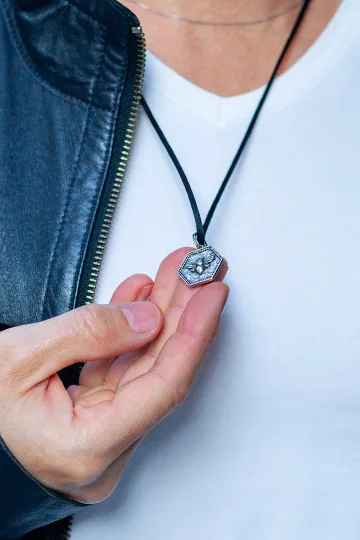
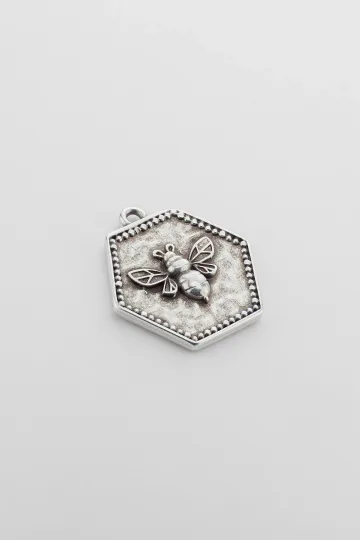
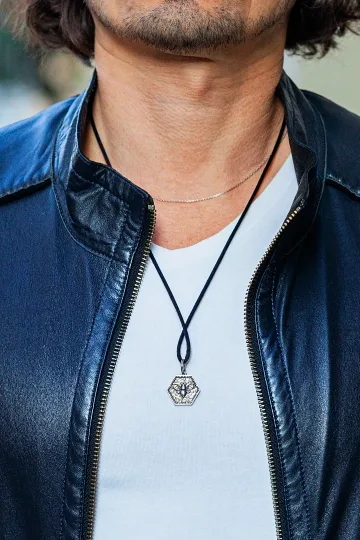
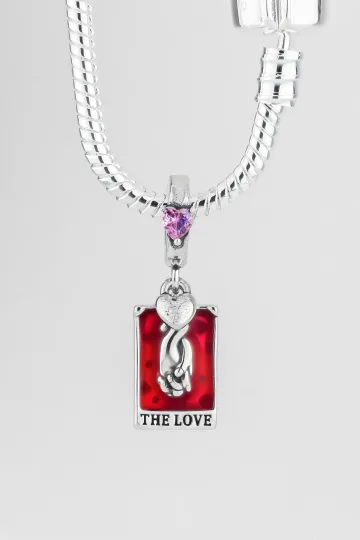
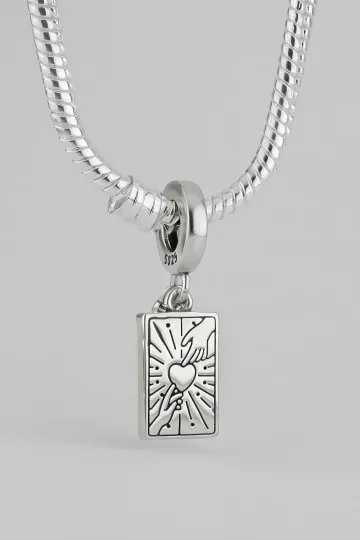
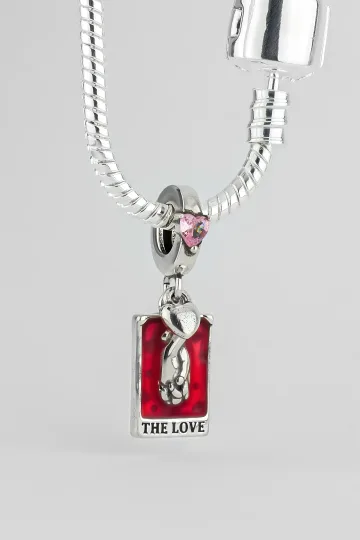
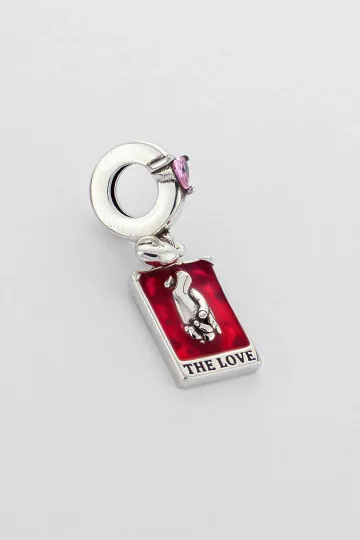
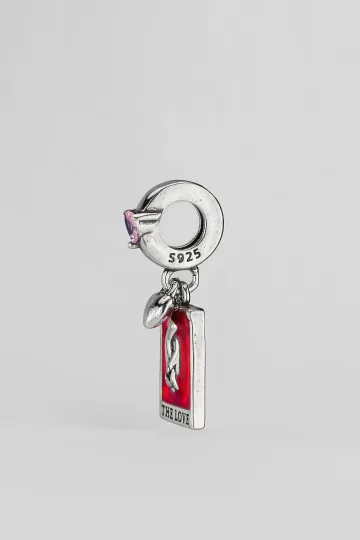
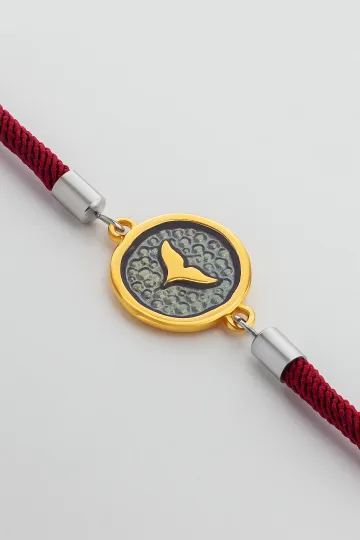
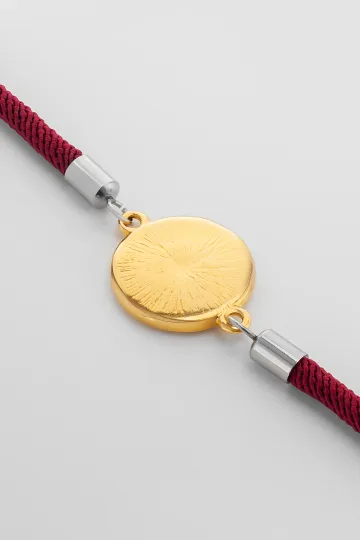
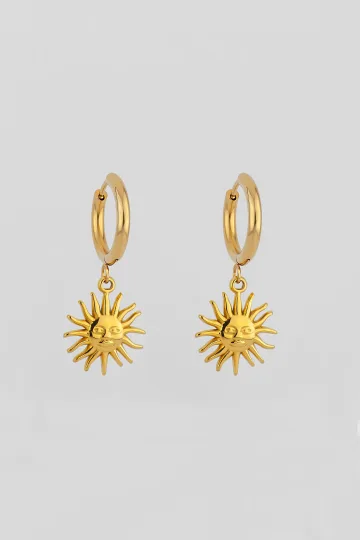
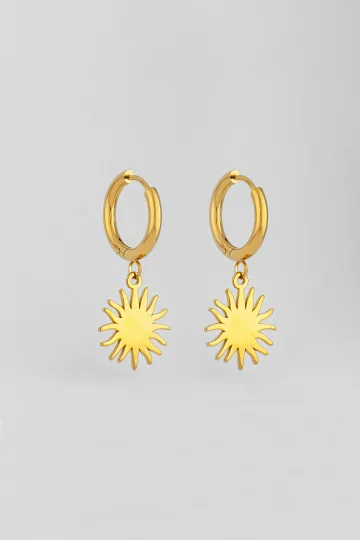
Wear the symbol, don't just read about it. These are in stock:
Technical symbols in jewelry: a language for insiders
One of the appealing ideas for those deep in the profession is jewelry with elements understood only by colleagues. A quiet mark of belonging that needs no explanation from those who understand, and needs no explanation from those who do not. Both ways the piece works in your favour.
Binary code and ASCII
Binary engraving is one of the most common ideas for a personal piece with a technical meaning. A name, a first commit date, a project name, any significant string is converted into a sequence of zeros and ones and engraved on the inside of a ring or bracelet.
What works well in this type of engraving:
- Inside a ring: visible only to you
- Short strings: a name (5-6 characters, roughly 40-48 binary digits), a date (8 digits, 64 bits)
- Font: monospaced, with a clear distinction between 0 and 1
A few concrete examples:
- "Love" in binary: 01001100 01101111 01110110 01100101, 32 characters
- "2026" in binary: 00110010 00110000 00110010 00110110, 32 characters
- "root" in binary: 01110010 01101111 01101111 01110100, 32 characters
ASCII symbols are another option. Characters like { and }, </>, /**/ or // are visually recognisable markers of belonging. They read fast, and in a jewelry design they can look unexpectedly elegant. A pendant with </> is not kitsch, it is clean graphics that happen to be HTML syntax. Terminal symbols work the same way. $ as the Unix shell prompt. # as the superuser prompt. >_ as the classic image of a terminal cursor. For someone who lives on the command line, these signs are so familiar that in jewelry they read as a personal crest rather than a technical detail.
The Mobius strip: an endless loop without beginning or end
Mathematically: a surface with one side and one edge. Visually: a strip twisted 180 degrees and joined into a loop. You can verify it physically: trace a finger along the surface and you return to your starting point, having traversed what appear to be both sides.
The mathematician August Ferdinand Mobius described this surface in 1858. Johann Benedict Listing made the same discovery independently around the same time, but the name went to Mobius.
For a developer, this shape has a direct meaning: the infinite loop of iterations. Write, test, fix, write again. Release, monitor, patch, release again. Sprint after sprint. This is not a curse but the nature of the craft. Programming is not construction, where a building is finished once. It is a continuous process with no final state.
The ouroboros, the snake eating its tail, carries the same idea from a different tradition, but with greater mythological weight. If the Mobius strip is mathematics, the ouroboros is history and philosophy. Both say the same thing: beginning and end coincide. A Mobius pendant or ring is one of the most intellectually honest symbols an IT professional can wear. It does not claim something beyond the profession. It does not say "I am special", it says "I understand the nature of my work". Those are different statements.
The infinity symbol: continuity of iteration
The infinity symbol (the lemniscate) carries a similar idea to the Mobius strip but in a softer, less specifically technical register. John Wallis introduced the symbol to mathematics in 1655, and it has worked in many contexts since.
The lemniscate is widely known outside IT, which makes it less of an insider code but more universal. People wear it around the world in many senses: eternal love, friendship without end, spiritual continuity. For a developer, infinity means continuity: the development cycle does not end with a release. There is the next version, the next bug, the next refactor. In a world where software is never truly "done", that is an honest metaphor. One more layer: in programming, while (true) or for (;;) is an infinite loop. An endless loop on a ring is not an accidental metaphor but a literal reference to a language construct.
The labyrinth: complex logic with a way out
The labyrinth as a symbol in tradition is a path to the centre and a path out of it. There is a subtlety here: a classical labyrinth (unicursal, single-route), unlike a maze with dead ends, always has a single continuous path. No forks, no dead ends. You cannot get lost, you simply walk the one path that sooner or later leads to the centre and back.
This is a precise metaphor for a complex but solvable algorithm. A debugging session that took three days is not a dead end, it is a labyrinth. You keep following the thread, you do not panic, you do not quit. A solution exists, it just has not been found yet. The Cretan labyrinth of Greek mythology, the house of the Minotaur from which Theseus escaped with Ariadne's thread, adds another layer. Ariadne gave the thread that lets you find your way back. In development that thread is good logs, a stack trace, unit tests that show exactly what broke. Jewelry with a labyrinth, pendants and rings engraved with a labyrinthine pattern, carries this idea without many words.
The owl: night work on code
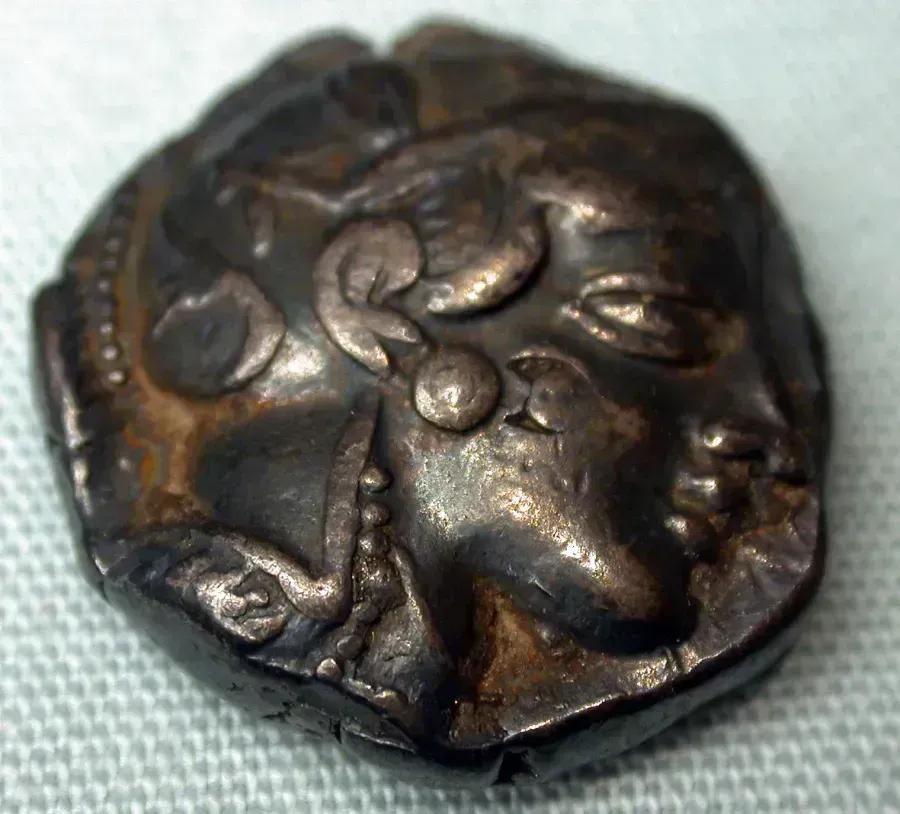
The owl in jewelry carries several meanings at once. First and foremost, Athena's wisdom, three thousand years of academic tradition, an intellectual symbol. The little owl (Athene noctua) appears on the Athenian tetradrachm, a fifth-century BC coin that served as a standard of international trade across the Mediterranean.
Hegel wrote in the preface to his Philosophy of Right (1820) that the owl of Minerva takes flight only at dusk. The meaning: understanding comes after the event. That is a precise description of the postmortem analysis every developer runs after a serious incident. For a programmer a second layer operates: the bird that is productive at night, when the rest of the world is asleep. "I work when others sleep" is a legitimate identity for a certain type of developer. Night deployments, hotfixes at 2 am, a deadline across eight time zones, a work session until dawn before an important demo: the owl expresses this state without romanticising or complaining. Owls are also built differently: asymmetric ears let them triangulate sound in three dimensions with a precision unavailable to other vertebrates. They literally hear what others miss. A specific sensitivity to signals others overlook is a professional quality of a good developer and engineer.
The hourglass: deadlines and the finitude of time
The hourglass is one of the oldest symbols of the finitude of time. It appeared in Europe in the thirteenth and fourteenth centuries as a shipboard instrument for measuring watch time. The "bells" were struck every half hour: the signal to change watch and turn the glass.
For a developer the hourglass takes on a practical meaning: the sprint ends on Friday, technical debt accumulates, the deadline shifts left on the Gantt chart. Turning the glass over does not reset time, it starts a new count. This is not a depressive symbol, it is a symbol of resourcefulness. Wearing one is a way to keep in view that a project's time is not infinite. Professional awareness of a resource, not anxiety.
Which jewelry to choose and why: matching form to symbol
Each of the symbols above works differently depending on the type of piece. The same symbol as a ring, a pendant and stud earrings is three different pieces by function and meaning.
Mobius strip:
- A ring in Mobius form is the most direct option. A ring can literally be made with a half-twist, so it works in the most literal way: when you put it on, the band turns 180 degrees. That is the Mobius strip in metal.
- A pendant is also popular. Small, in silver, on a thin 40-45 cm chain. A compact pendant does not catch the keyboard and reads well on a video call.
- A bracelet is rarer in this form but possible.
Infinity:
- A ring with the infinity symbol instead of a stone: classic. The symbol replaces a stone or shapes the band itself.
- A pendant: small, clean. Silver or gold. Works well with a thin chain.
- Earrings: studs or small drops, if you are not in headphones all day.
Labyrinth:
- A pendant with an engraved pattern is the main form. The Cretan seven-circuit labyrinth inside a circle looks like a coin, compact and serious.
- A ring with a labyrinth in relief on the outer surface.
- An engraving inside the ring: a more intimate version, visible only to the owner.
Owl:
- Studs with small owls: discreet and precise. An academic symbol in minimal form.
- A pendant: a wide range from a small owl silhouette to a detailed piece with stones for eyes.
- A ring with a raised owl: more expressive, but it needs the right size and attention to comfort while typing.
Ouroboros:
- A ring in ouroboros form is the most logical shape. A ring is already a closed circle; the ouroboros adds a layer of meaning.
- An ouroboros pendant: a popular form. A snake closed into a circle, visually recognisable.
- A bracelet, rarer, but it exists.
The general principle for a tech context: less works better. One piece with a strong symbol carries more weight than three pieces with lighter ones. Focus, not quantity.
Gifts for developers: matching the occasion
Jewelry is an unusual gift for someone in tech. Precisely why it is remembered. A gadget goes obsolete, the book already exists as an ebook, the course is finished and forgotten. A piece engraved with a specific date or symbol stays for years. The trick is getting the occasion right, so the piece lands rather than ending up in a drawer.
First production release
The shift from development to result. For a junior developer, the first code running in real conditions. For any experience level, the first release of a new project is always particular.
A gift for this occasion should be clean and personal. A thin silver ring with the release date engraved inside (in YYYY-MM-DD format). A pendant with the infinity symbol, first of countless future ones. Small owl studs, because there are more late nights ahead, but now with a story. Not lavish, not expensive, precise.
Senior promotion
A longer, harder road. The move from mid to senior takes several years on average in serious companies. It is not about the set of skills but about how a person thinks about code, architecture, and the people around them. A senior writes themselves and at the same time thinks about how others will write.
This calls for something more substantial. A ring is a good choice. The Mobius strip as an image of the continuous cycle, now seen differently: not as "I write" but as "the system evolves". Or a plain gold ring with a fine engraving, the year of the transition and initials. As a gift to yourself this is one of the most significant moments in a career, and many developers mark it exactly this way: not with a party but with a personal object that carries a precise meaning.
Company anniversary
The first, third, fifth, tenth year, each with its own weight. The first year means you survived and stayed. The third, that you are already part of the culture. The fifth, that you remember how things were before everything changed. The tenth, that you are part of the company's history.
A piece with a chronological sign works well here. An engraving with the date of the first working day on the inside of a ring. A labyrinth pendant, the path that took N years and turned out to be the right one. A thin chain with a tiny logo-shaped pendant, if it does not break the rules.
Startup IPO
Rare but very significant. For founders and early employees, those who were with the project from idea to the exchange, this is the point that validates years of work, often without a normal salary and with high uncertainty.
Jewelry for this occasion can be more visible and more expensive. Gold. Possibly with a small stone, not as decoration but as an accent. Or matching pieces for the founding team. The moment is collective but the piece is personal.
CS degree or dissertation defence
The academic finish line. This is one of the few moments in a developer's career with public solemnity: an audience, a committee, an official procedure.
For this occasion the owl is an obvious and historically grounded choice. Athena's symbol has a three-thousand-year link to academic tradition. The little owl on the coin of Athens is the first academic logo in history. An owl pendant for a computer science graduation is jewelry that works at every level, from a parent to a thesis advisor. A graduation ring works too in this context, if it has a personal engraving: not "graduate of such-and-such university" (a certificate does that), but something more personal. A date. A word. A symbol.
Bootcamp graduation
A different kind of finish: faster, more practically oriented. A bootcamp over three to six months is a concentrated transition from one life to another: not an academic degree but a change of profession. Something small and precise fits. A simple silver ring or a pendant with a code symbol. The date of the last day inside. Not "I finished the programme", but "I started the next chapter".
First major open-source contribution
The moment when work done for free, in spare time, without obligation, turned out to matter for a thousand or more other developers. A thousand stars on a project. The first merge into a major project. The first issue that turned out to be critical and was fixed by your pull request. For some developers this matters more than any commercial achievement. Jewelry for this occasion is personal, quiet, without explanation. All the more so.
Customer reviews
Zevira is a real jewellery shop. Genuine payments, deliveries and customer thank-yous.
🥰🥰🥰 gracias
Ok, ¡gracias! 🙂
Engraving for a technical person
Engraving makes a piece specific: from a beautiful object it becomes a document of a moment. For an IT professional there are several unconventional options that carry precise technical meaning.
First commit date
If you track your repository history, there is the date of the very first commit. This date can be engraved in ISO format (YYYY-MM-DD), short and unambiguous, technically correct. Or as digits without hyphens if space is tight. Or in binary, if you want to encode it for the uninitiated. The first commit date is special. It is not the account creation date, not the date you joined a company, not the public release date. It is the moment you wrote the first line that started everything. For long-running projects that is almost always more than five years ago, and that is exactly why it works as an engraving.
Git hash of an important commit
The first seven or eight characters of a commit hash form a short alphanumeric string that addresses a specific moment in code history. a3f7b2c could be the first working build, the commit that fixed a critical bug, or the moment after which everything changed. Engraved on the inside of a ring, almost no one will understand it without explanation. But the person who does will understand it precisely. It is one of the most niche engravings possible, and that is exactly why it works: it is not for the public. If you choose this, make sure the repository will survive. For a private project, save the full hash and commit in a personal archive in case the repository is ever deleted.
Project name or code name
If the project is public or finished, use its name or code name. This works especially well for projects with unusual code names (companies often name projects after animals, planets, characters). "Hydra", "Phobos", "Nomad", "Atlas": these names carry a history only the team knows.
Binary name or word
A name in ASCII converted to binary fills the inside circumference of a ring. For example, "code" = 01100011 01101111 01100100 01100101, 32 characters. A standard size-7 ring fits roughly 30-40 characters in a small font. It looks like a personal barcode, and that is how it reads. Confirm the technical limits with the jeweller: the font must be small but legible, and the zero must clearly differ from the letter O.
Coordinates of where important code was written
Sometimes the place matters more than the date. GPS coordinates in decimal format: 40.7128, -74.0060. It could be the office where the first investor pitch happened, the cafe where the first line was written, the meeting room of the first client call. Coordinates look like numbers and do not immediately read as "a place", which adds a layer of privacy.
Materials and care: a practical view
Jewelry for an active keyboard and screen user lives in conditions of constant use. The practical questions about materials matter.
Sterling silver 925: the main everyday choice
Sterling silver (the 925 hallmark, that is 92.5% pure silver and 7.5% copper) is the most common material for everyday pieces in a tech context. The reasons are simple: it is strong enough for daily wear, it takes precise engraving well (important for technical symbols), it is not so expensive that you worry about intensive use, it looks good with everyday clothes (hoodies, jeans, a plain sweater), and it polishes back when it tarnishes.
Silver darkens on contact with air and sweat, and that is a normal oxidation process. For an engraved or relief piece, a light patina emphasises the detail. A polishing cloth removes the tarnish in seconds. You can keep silver on during work; on contact with the keyboard a plain ring acquires a slight matte finish where it touches, but that is natural wear, not damage.
14K gold: for significant occasions
Fourteen-carat gold (58.3% pure gold) is the optimal choice for a piece meant to last decades with no maintenance. Gold does not darken, needs no polishing, does not react to sweat. For a piece bought for an important moment and worn for years, it is the most practical option despite the higher initial price. Eighteen-carat gold (75% gold) is softer and more prone to scratches under active use, so for someone who works hard with their hands and keyboard, 14K is more practical.
Stainless steel and titanium: for special conditions
If you work with chemical reagents in a lab setting, or your conditions involve regular contact with aggressive substances, stainless steel or titanium is more practical than precious metals. Surgical steel 316L practically never causes allergic reactions and withstands disinfectants. It costs significantly less than silver and gold. It engraves less well and the relief is less crisp, which is a real consideration for technical symbols. Titanium is very light (almost weightless compared to gold), hypoallergenic and strong. A matte finish looks good on titanium. The main downside: anodised coloured titanium fades over time, while the natural grey does not.
How engraving holds up over time
A technical question that matters to anyone who wants to keep a git hash or a commit date for decades. On silver, laser engraving lasts very long, practically permanently under normal conditions; mechanical engraving (with a diamond burin) is slightly deeper and potentially even more durable. Both methods work well. On gold it is the same: gold does not oxidise or darken, the engraving stays crisp. The inside of a ring is protected from wear, so engraving there barely fades even under active use. The outer surface is subject to friction (keyboard, desk, other rings), so over time a fine outer engraving can become less crisp. Recommendation: the inside of the ring for text (hash, date, name), the outer surface for relief symbols (Mobius strip, labyrinth, ouroboros) that read by touch even with slight wear.
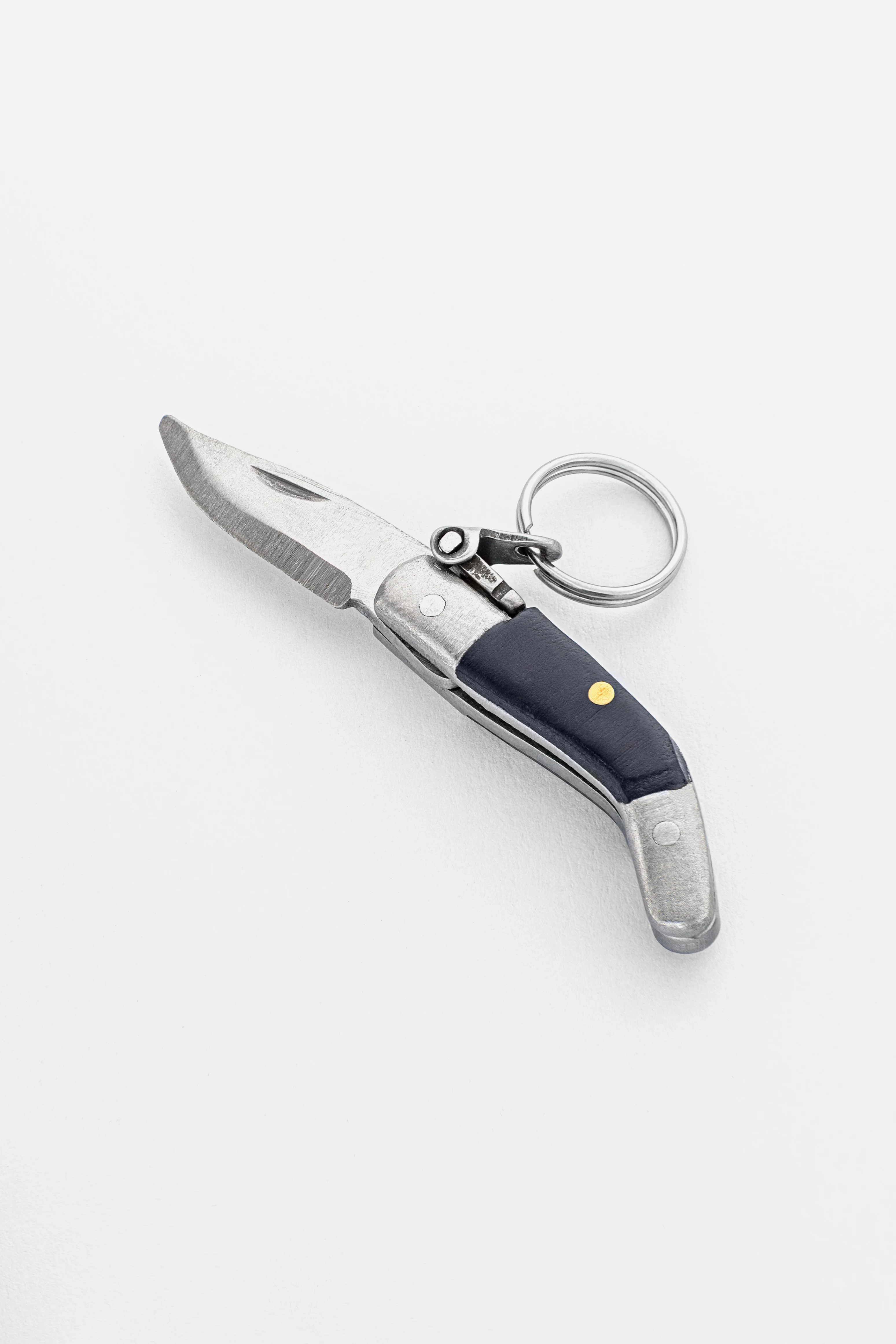
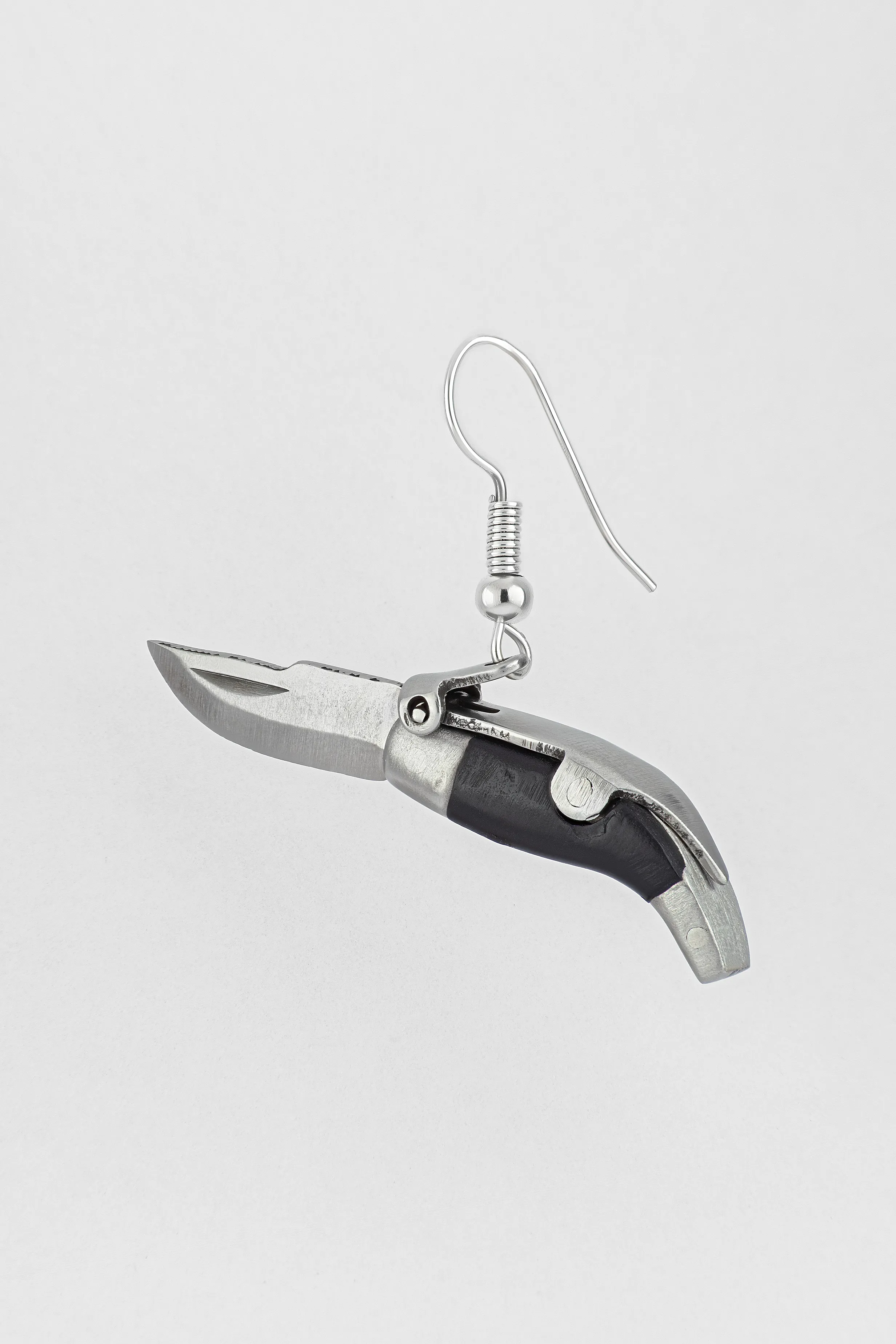
Artisan-crafted CAPAORA navaja pendant
A 40 mm stainless-steel navaja with a real folding mechanism and Palanquilla lock. An affordable gift to remember.
A code for blog readers:
10% off your first order
Authentic · Maker's guarantee · Ships from Spain
Jewelry for different situations in an IT career
A developer's career includes several categories of situations, and the logic of choosing a piece is slightly different for each.
Interviewing at a tech company
An interview is a public space with a first impression. Jewelry here should not distract attention or raise unnecessary questions. A thin ring or small studs read neutrally or positively. A large decorative pendant can distract, although it will not directly hurt. If you are interviewing at a company with a strong technical culture, a small piece with an abstract mathematical symbol can gently open a conversation if the interviewer happens to glance at it. But that is a pleasant detail, not a strategy.
Online course or study
A study context is maximally personal. For someone sitting at home in front of a computer with course materials, jewelry is purely for themselves. This is exactly where it makes sense to wear something that reminds you of the goal: a piece bought at the start of a course as a motivational anchor.
First client call as a freelancer
For freelancers the first serious client conversation carries particular weight. Jewelry here can be part of a deliberate shift into a more professional public image. Not for the client (who only sees face and shoulders) but for yourself: putting on something intentional before an important call.
Onboarding at a new company
The first days at a new company, many new people, much uncertainty, many attempts to read the culture. A modest piece with a personal symbol can be a quiet anchor, a reminder of yourself in the flow of adaptation.
Choosing jewelry for different work and life styles
Jewelry for an IT professional does not exist in a vacuum, it fits into a specific way of life. Different lifestyles create different priorities.
The travelling developer (digital nomad)
More and more developers work from different countries, changing location every few months. Coworking in Bali, a cafe in Lisbon, a rented flat in Berlin: there is no permanent home context. For this lifestyle a piece should be culturally neutral (carrying no symbolism that could be misread in a specific country), light and compact to carry, and not so valuable that you worry during moves. A thin silver ring or a small silver pendant fits. It passes through customs without trouble, fits in carry-on, and attracts no extra attention in any culture.
The developer with a child
Small children and jewelry coexist with practical limits. A child can pull at a chain, and dangling earrings create a risk. For an active parent who wears jewelry and interacts with a small child at the same time, minimalist studs and a plain ring are the optimal choice. This is not a restriction, just a different context. A piece that is safe and needs no removal during play is the right choice.
The developer in sport
Many technical specialists are active in sport: running, cycling, strength training, climbing. Jewelry in a sporting context has its own rules. A ring comes off during strength training: risk of deformation or a pinched finger. Studs stay during any activity. A thin chain is fine while running or cycling; for contact sports it is better removed. Titanium or surgical steel is more practical than silver and gold in a sporting context: they do not deform and do not react to sweat.
The developer with a metal allergy
Nickel allergy is common, and it shows up most clearly with low-quality stainless steel jewelry. For sensitive skin it is important to choose silver 925 (a small copper content, usually no reaction), 14K or 18K gold (reactions are extremely rare), surgical steel 316L (designed for medical implants), or titanium (entirely hypoallergenic). An important nuance: gold-plated pieces wear through over time and the metal underneath can cause a reaction. For sensitive skin, solid metal only.
A Mobius ring lives on bare skin and a plain chain. Bury it under three pendants and you have missed the whole point.
What to wear it with, from a stylist
Over the years I have styled backend engineers and startup founders alike. Here is what actually holds up against a keyboard, headphones and a video call, by occasion.
What can you wear right at the desk? I recommend one plain thin ring and studs you keep on for weeks. Wear the ring on the little or ring finger, those barely touch the keys, so the metal does not tap the keyboard. I choose a short chain, 40-45 cm, so the pendant sits above the keys and does not fall onto them when you lean toward the screen.
What actually lands on a video call? The frame shows only your face, neck and shoulders. I suggest studs with a small symbol and a thin chain with a compact pendant in the neckline, they read on screen without pulling focus from what you are saying. Large pendants start to compete with your words, so I keep those for offline.
Which symbol should you choose? I choose it by how the person thinks about the work. For those who keep the meaning to themselves, I recommend a hidden engraving inside the ring: the date of the first commit, a git hash, binary code. For those who think in process, I suggest a Mobius strip or infinity. An owl or a labyrinth suits people who work at night and enjoy untangling the hard cases.
How do you dress for a tech office? Under a shirt, or a jumper over a tee, I recommend matte silver: on smooth fabric it reads restrained and precise. One accent, no more. If you wear a watch on the left hand, I suggest keeping the ring on the right so metal does not clink against metal.
And for a thesis defence or a big moment? For a formal moment I choose 14K gold as an accent and a more expressive symbol. For a computer science defence I recommend the owl, it carries three thousand years of academic history. Dark clothes (black, graphite, navy) let the metal show at its brightest.

Turn on your camera, pick earrings, a pendant or a ring, and see the piece on yourself in real time.
Switch items in one tap.
Everything runs in your browser: no photo or video is ever uploaded.
Where the minimalist aesthetic in tech comes from
Minimalism in design and in IT culture is not an accident. It has a history that explains why certain types of jewelry resonate with this environment.
Bauhaus and functional design
The Bauhaus school (Germany, 1919-1933) formulated the principle that later became the foundation of industrial and technological design: form follows function. Nothing superfluous. If something carries no function, it is superfluous. This thinking influenced the design of computers, interfaces and tools directly. Jonathan Ive at Apple openly cited Bauhaus as an influence. The minimalism of macOS and iOS is Bauhaus fifty years on. For a developer raised on this aesthetic, a piece of jewelry that is "too much" feels exactly like an overloaded interface. It irritates. It distracts. It is not needed.
Japanese minimalism and wabi-sabi
The Japanese aesthetic of wabi-sabi, the beauty of the imperfect, the temporary, the incomplete, gave technological culture another layer of meaning. Japanese influence in tech is significant: many company founders were drawn to Zen Buddhism and Japanese design. A piece with a minimal symbol, nothing superfluous, a single object, is aesthetically close to the Japanese approach. No more than needed. Every element intentional.
The desk as a reflection of thinking
There is an informal theory in tech: the way a developer organises their desk says something about how they think. A cluttered desk, cluttered thinking. A clean desk with one considered detail, structured thinking. Jewelry in this metaphor is that one considered detail. It is not there by accident. It is there because it is needed.
Leave your email, we'll send your discount code. No spam, unsubscribe anytime.
The code arrives by email, valid on your first order.
Facts that surprise
The history behind these symbols is full of details that are not obvious even to people who wear them every day.
- The metal in a Canadian engineer's ring is, by the strict version of the legend, supposed to come from a collapsed bridge, but in practice it has been ordinary steel since the start. The myth survives because the meaning does not depend on the metal.
- The Mobius strip was discovered twice, independently, within months. Listing published first, in 1861, but Mobius got the name. A reminder that in engineering, as in open source, attribution and priority are not always the same thing.
- The owl on the silver coin of Athens is arguably the first logo in history with global reach. The coins were so trusted across the Mediterranean that the word "owls" became slang for money itself.
- A classical unicursal labyrinth has exactly one path and zero decisions. The thing most people picture as a "labyrinth", with forks and dead ends, is technically a maze. The distinction is the whole point of the symbol for an engineer.
- The infinity symbol predates the modern concept of infinity in mathematics. John Wallis drew the lemniscate in 1655, almost two centuries before infinity was put on rigorous footing.
- The hourglass measured "watches" at sea, and the ship's bell rang each time the glass was turned. Eight bells meant the end of a four-hour watch. The phrase "the sands of time" comes straight from this instrument.
- Binary engraving is not new to jewelry: telegraph operators in the nineteenth century wore Morse-code monograms, the same idea of a private alphabet hidden in plain sight, a full century before the first ASCII pendant.
Jewelry versus other developer gifts
When you are choosing between jewelry and a familiar gift from the world of IT, it helps to compare both on the same criteria: lifespan, personal meaning, risk of obsolescence. Below the typical gifts to a developer are reduced to these parameters.
The psychology of jewelry in tech culture
There is a characteristic feature of tech culture: scepticism toward conspicuous consumption. Buying an expensive branded watch strap is not in the spirit of the engineering world. But engraving a git hash on a silver ring is something different. The difference is fundamental, and it explains why jewelry works in this environment at all.
Branded jewelry says: "I belong to a certain consumption bracket." It is a signal about money, status, membership in a particular group of buyers. In a tech culture where external hierarchy markers are deliberately softened, such a signal reads as neutral at best and irritating at worst. Personal jewelry with a symbol says: "There was a specific moment I want to carry with me." It is a signal about values, about a history, about what matters to you. It is a non-hierarchical statement, and it does not place itself above others.
This is exactly why mathematical symbols, technical motifs and abstract forms work better in a tech context than expensive classics. Not because programmers cannot afford gold. Because gold engraved with a git hash says something different from plain gold.
A quiet mark of a type of thinking
Someone wearing a Mobius pendant does not explain it to everyone they meet. But a fellow developer at a conference sees it and recognises the form. It is not a password and not a secret handshake, but close to it. A signal without words: we think in similar categories. In tech, where external hierarchy markers are deliberately flattened (trainers on the CEO, hoodies on everyone), jewelry with niche symbolism performs a different function: it marks belonging to a type of thinking, not to an income level. Minimalist jewelry here is an aesthetic choice that precisely matches a value system where the superfluous is removed and what remains must mean something. The same philosophy that drives refactoring: strip everything unnecessary down to a clean expression of function.
Jewelry as the antithesis of corporate merch
Tech companies have a strong merch culture: logo hoodies, mugs, caps, sometimes even watches with a corporate symbol. That is branding from the inside; the company hands the employee its symbols. Personal jewelry is the antithesis. The company does not brand you, you choose the symbol you wear. It is a reversal of the relationship: not "I am part of company X", but "I have a story I chose to carry". This works especially for freelancers and independent developers who have no externally imposed corporate identity. A piece with a personal symbol fills that space.
Hacker jewelry trend: ASCII, code and technical symbols
Recent years have seen steady growth in interest in jewelry with overtly technical motifs. Pendants with </> symbols, rings with binary engraving, silver charms in the shape of a circuit board or microchip, earrings in the shape of logic gates (AND, OR, NOT). This is not a mass trend, and it should not be. But in a specific niche, among people professionally connected with code, circuits and protocols, it lands precisely.
What works in this direction
Real code engraving: not a decorative imitation but real syntax. Even one symbol from a language. {} in JavaScript. def in Python. fn in Rust. :: in Haskell. People who work with these languages every day recognise the symbol instantly, and it works as recognition of one of their own.
Mathematical symbols: infinity, pi, the golden ratio, Fibonacci numbers in a spiral, the Mobius strip. Mathematics is a language every engineer understands, regardless of specialisation.
Topological forms: the Mobius strip, the torus, knots from knot theory. Objects from mathematics that look beautiful and carry a precise meaning.
Terminal symbols: $, #, >_, &&, ||. For anyone who works on the command line every day, these symbols are so familiar that in jewelry they read as native.
Abstract circuitry: transistor silhouettes, simplified schematics. More niche, but for hardware and embedded engineers it lands exactly.
What does not work and why
Jewelry featuring logos of specific programming languages or technologies is a risk over the long term. The industry moves fast. A language that dominates today may hold the same share in ten years or be displaced by something still being designed now. A piece with a technology's logo ties you to the technology, not to a value. Abstract symbols (mathematical, topological, terminal) outlast specific technologies. The mathematics of the Mobius strip does not depend on which language is currently in fashion.
How technical jewelry reads in different contexts
At a conference among technical people: instant recognition, a conversation starter. In a meeting with a non-technical client: a neutral, beautiful object. At an interview with a tech company: a quiet signal of professional identity. At a family dinner: a pretty thing, no questions. This is an ideal property for jewelry: it reads on different levels depending on the context and the competence of the observer.
How to build a minimal jewelry capsule for an IT professional
If you approach jewelry systematically, the way you approach organising a workspace or choosing tools, it makes sense to build a capsule: a small set of pieces that work in different contexts and complement each other. The principle is the same as in development: do not make more than you need. Start with an MVP that covers the main cases. Add only what adds value.
Base capsule (three pieces)
One ring. Plain, thin, silver or gold. Possibly with an internal engraving. No protruding stones. Put it on and leave it for weeks. Works in any context from a video call to the office.
One pair of studs. A small geometric symbol or simply a silver dot. Keep them in under headphones. They add a visual accent in the video-call frame and raise no questions.
One pendant. Small, on a thin 40-45 cm chain. With a symbol that means something to you specifically: Mobius strip, owl, labyrinth, infinity. Worn under or over clothes depending on context.
Three pieces is a complete capsule that covers all professional contexts. More by desire, not by necessity.
Extended capsule (add as needed)
A bracelet. Thin, on the non-working hand. Either with a symbol or simply textured. Adds a layer without visual noise.
A second ring. For another finger. Paired rings with different complementary symbols: for example, infinity and ouroboros, or labyrinth and owl.
A ring for a different occasion. Some developers wear different rings depending on the stage of a career or the task: the "work ring" and "non-work ring" practice exists. Different metals for different modes.
The rotation principle
Rotating jewelry is not a required practice, but some find meaning in it. One piece for a period of intensive work. Another for a period of study. A third for important meetings. This is not superstition but a way to switch context with a physical object. In psychology this is called anchoring: a specific sensory stimulus (the feel of a ring on the finger) becomes linked to a particular state or intention. Putting on an anchor ring before a hard interview is a way to activate the state you need.
Jewelry in pairs and teams
Collaboration is the foundation of development. Pair programming, team sprints, co-founder relationships, long-term partnership in a startup, all of it creates a context for paired or group jewelry.
Paired pieces for startup partners
Two founders who went from idea to first investment round share a partnership of particular intensity. Paired pieces with one symbol (both wear an ouroboros pendant) or with complementary symbols (one wears infinity, the other a Mobius strip) are a way to mark this without ceremonial speeches. Paired pieces in this kind of relationship are not necessarily romantic; they are about a professional partnership that carries its own weight.
A team symbol
For teams that went through something significant together, a difficult release, a full architecture rewrite, surviving a crisis period, a group symbol makes sense. Small identical pendants for the whole team, engraved with one hash or the date of the event. This is not corporate merch but something the team chooses for itself.
Paired pieces for a developer couple
A couple where both work in IT is a common reality in tech cities. In such a couple, pieces with complementary symbols (Mobius strip and infinity, or labyrinth and ouroboros) carry a meaning that both understand without explanation.
What a symbol says about your approach to work
Choosing a symbol is an indirect statement about values. Not a statement out loud, but in a tech environment where people read symbols, it works.
The Mobius strip and the ouroboros say: "I understand that development is a continuous process, not a final product." The view of an engineer who grasps the nature of complex systems.
The infinity symbol says: "I work for the long term." It distinguishes people who think about stability and scalability from those who think only about the next deadline.
The labyrinth says: "I believe complex problems have a solution, even if the path is not visible at first." The optimism of an engineer, not naive but grounded in understanding structure.
The owl says several things at once: "I work whenever it is needed." "I value deep knowledge over a quick answer." "I observe more closely than it looks." Three statements, compatible in one symbol.
Mathematical symbols (pi, the golden ratio, Fibonacci numbers) say: "I care about the mathematical beauty of a solution, not only that it works." A signal about taste, about thinking of the elegance of code as well as its function. None of these statements needs words. The jewelry carries them on its own.
Send a friend a discount code, they save on their first order.
Jewelry for IT professionals at conferences
A conference is one of the few public contexts where an IT professional is in a physical space with a large number of peers. These are dense social events with badges, lunches and informal conversations between talks. In this context jewelry works differently than in the office or at home. It can become a conversation topic. It signals a type of personality. It easily becomes a reason to talk to a stranger wearing something similar.
For a trip to a conference jewelry should meet several practical conditions. Comfort on the road: a flight, a hotel, several days in a row in conference clothes, the piece should add no extra stress, and thin silver pieces travel well. Metal detectors: thin silver or gold pieces practically never trigger airport detectors, while massive pieces or a large amount at once sometimes need removing. Several days of wear: at a conference there is no time or desire to choose jewelry every morning, so one piece that works with any outfit beats a set. Loss: it is easy to leave something in a hotel or lose it in a crowd, so bring the less valuable and sentimentally significant pieces. A thin silver ring or a small silver pendant is the ideal conference choice: significant enough to be remembered, unobtrusive enough to raise no questions.
Myths about jewelry in tech culture
A set of stubborn beliefs has grown up around jewelry in a technical environment: that engineers as a rule do not wear it, that any accessory reads as showing off, that a symbol on a ring looks unserious. Most of these assumptions do not survive contact with actual practice.
FAQ
Is it true that programmers do not need jewelry?
That is an assumption, not a fact. Jewelry exists in a tech context, just in a specific form: minimalist, with niche symbolism, often with a personal engraving. The question is not "is it needed" but "which kind fits a specific person and context". Many developers wear jewelry without talking about it publicly.
What jewelry works for all-day keyboard use?
Thin rings without protruding elements, studs instead of drop earrings, compact pendants on a thin chain 40-45 cm long. The key criterion: the piece must not create difficulty while typing or under headphones. Form matters more than material.
What is the best gift for a developer at an important career moment?
It depends on the occasion. For a first production release, a thin silver ring or pendant with a personally engraved date. For a senior promotion, something more substantial: a ring with a cycle symbol. For a company anniversary, a piece with the start date. For a CS degree defence, the owl (three thousand years of academic tradition). For a startup IPO, gold.
Can you engrave a git hash on a ring?
Technically, yes. The first seven or eight characters of the hash can be engraved on the inside of a ring. Confirm two parameters with the jeweller: the minimum font size they offer, and how many characters fit on the specific ring size. A standard size-7 ring fits roughly 30-40 characters in a small font.
What does the Mobius strip mean for a programmer?
An endless closed loop without beginning or end, a precise metaphor for iterative development. Write, test, fix, write again. Sprint after sprint. Release, monitor, patch, release again. The cycle does not end, and that is the nature of the craft, not a flaw.
Which metal is best for everyday wear?
Sterling silver 925 is the universal choice. Reliable, accessible, looks good with any style, polishes back when needed. 14K gold for important occasions and as a long-term piece: it does not darken and needs no care. Stainless steel is the practical option for those who work with chemical reagents or in conditions where jewelry metals might suffer. Titanium is light, hypoallergenic, and looks good in a matte finish.
Does jewelry suit male programmers?
Yes. Minimalist jewelry has long moved beyond gender restrictions, especially in tech. A thin ring, a chain with a small pendant, a single stud in one ear: all worn by men in technical professions. This is especially common in the western tech environment, where cultural barriers are minimal.
What is the engineer's ring, and does it exist in Europe?
A Canadian tradition for engineering graduates: an iron ring on the little finger of the working hand as a sign of professional responsibility. In the United Kingdom, Germany, Spain, France and most European countries there is no equivalent formal tradition. But the idea of jewelry as a personally chosen marker of professional identity works in exactly the same way and needs no one's permission.
How do you explain the meaning of a piece if someone asks?
You do not have to explain fully. "It is a Mobius strip, a mathematical object" is enough for most contexts. "It is an owl, the symbol of Athena" is equally enough. "It is a date in binary" is clear to those who need it to be. If you want to explain more precisely, you can. If not, the form speaks for itself at whatever level is needed.
Can you wear a piece with a programming-language symbol?
Technically, yes. But consider: a language symbol ties you to a specific technology that may go obsolete or out of fashion. Abstract mathematical or topological symbols outlive specific technologies. If you do want a language symbol, choose something you have a personal history with, not something fashionable right now.
Which jewelry suits video calls?
Studs with a small symbol land in frame and add visual interest without distraction. A thin chain with a small pendant on the neck also reads well on screen. Massive pieces work worse on video calls, they pull attention from the conversation. For regular calls, something modest but noticeable is optimal.
One piece or several?
One piece with a strong meaning outweighs several with lighter ones. It is more practical (fewer problems while typing and under headphones) and aesthetically cleaner. If you want more, build a capsule of three pieces that complement each other rather than competing for attention.
Conclusion
Jewelry for developers and IT professionals is neither a paradox nor an exception. It is the precise choice of a specific symbol for a specific moment. First production release, senior promotion, degree defence, company anniversary, startup IPO, first major open-source contribution: all these events deserve a tangible marker that outlasts a screenshot in Slack and an email from HR.
The minimalism code in tech does not prohibit jewelry, it requires meaning. And that is exactly what makes the choice more interesting than in most other environments: a piece should be earned not with money but with a story. A random gift does not work. A precise symbol does.
A Mobius ring. Owl studs. A labyrinth pendant. A name in binary on the inside. A git hash where only you can see it. An infinity symbol instead of a souvenir. These are pieces that need no explanation to those who understand, and raise no questions for those who do not.
Minimalism, labyrinth, infinity, ouroboros, owl, symbols that work without words.
About Zevira
Zevira makes jewelry by hand in Albacete, Spain. The range includes symbols that resonate with tech culture: minimalist forms, precise engraving, 925 silver and 14-18K gold.
What suits an IT professional from the Zevira catalogue:
- Mobius rings and plain thin rings for everyday wear without interfering with typing
- Pendants with the infinity symbol, continuity of iteration, continuity of process
- Jewelry with the ouroboros, the closed cycle where beginning and end coincide
- Pendants and studs with the owl, wisdom and night work on code
- Pieces with the labyrinth, complex logic with a single right path
- Personal engraving to order: first commit date, git hash, binary code, coordinates
Every piece is made by hand. Engraving is discussed individually, and you can engrave any text, number or symbol, including non-standard technical formats.