Minimalist Jewelry: Why Less Is the Whole Point
The quiet revolution
Somewhere between 2018 and now, something shifted. The chunky statement necklaces disappeared. The layered bracelets went quiet. The oversized hoop earrings shrank. And the people who used to wear the most jewellery started wearing the least.
Minimalism in jewellery is not a trend. Trends come and go. This has been growing steadily for years, and it shows no signs of stopping. The reason is simple: people are tired of noise. Visual noise, social noise, consumer noise. A single thin chain with a small pendant says "I chose this" in a way that a pile of accessories never can.
But minimalist jewellery is harder to get right than maximalist jewellery. When you wear ten pieces, nobody notices if one is off. When you wear one piece, that piece IS your style. It has to be perfect. Not expensive. Perfect.
This guide is about finding that perfection. Not by spending more, but by choosing better.
What minimalist jewellery actually is (and what it is not)
It is not "cheap." Minimalist does not mean inexpensive. A single sterling silver pendant on a fine chain can represent more thought and quality than a box full of costume jewellery. Minimalism is about intentionality, not austerity.
It is not "boring." A thin gold band on the right finger, catching light as you gesture during a conversation, is anything but boring. It is quiet confidence. The person who wears one thing well is more memorable than the person who wears everything available.
It is not "empty." Minimalism is not the absence of jewellery. It is the presence of the right jewellery. An empty neck is just an empty neck. A neck with a single, perfectly chosen pendant is a statement.
It is: one or two pieces, carefully selected, that complement rather than compete. Pieces that work with your body, your wardrobe, and your daily life without requiring adjustment, maintenance, or thought.
The psychology of less
There is a reason minimalist jewellery resonates so strongly right now. We are overwhelmed. By choices, by information, by stuff. The average person makes 35,000 decisions a day. The last thing anyone needs is another decision about which bracelet matches which earring.
Minimalist jewellery removes decisions. You put on the same pendant every morning. You wear the same ring every day. It becomes part of you, like your fingerprint. Nobody thinks about their fingerprint. But everyone has one, and it is unique.
The psychological relief of not choosing is underrated. When Steve Jobs wore the same black turtleneck every day, it was not because he had no taste. It was because he had too many other decisions to make. Minimalist jewellery works the same way. One piece, every day, no thought required.
The capsule jewellery collection
Capsule wardrobes are a well-known concept: a small set of versatile clothing pieces that combine into many outfits. The same principle applies to jewellery.
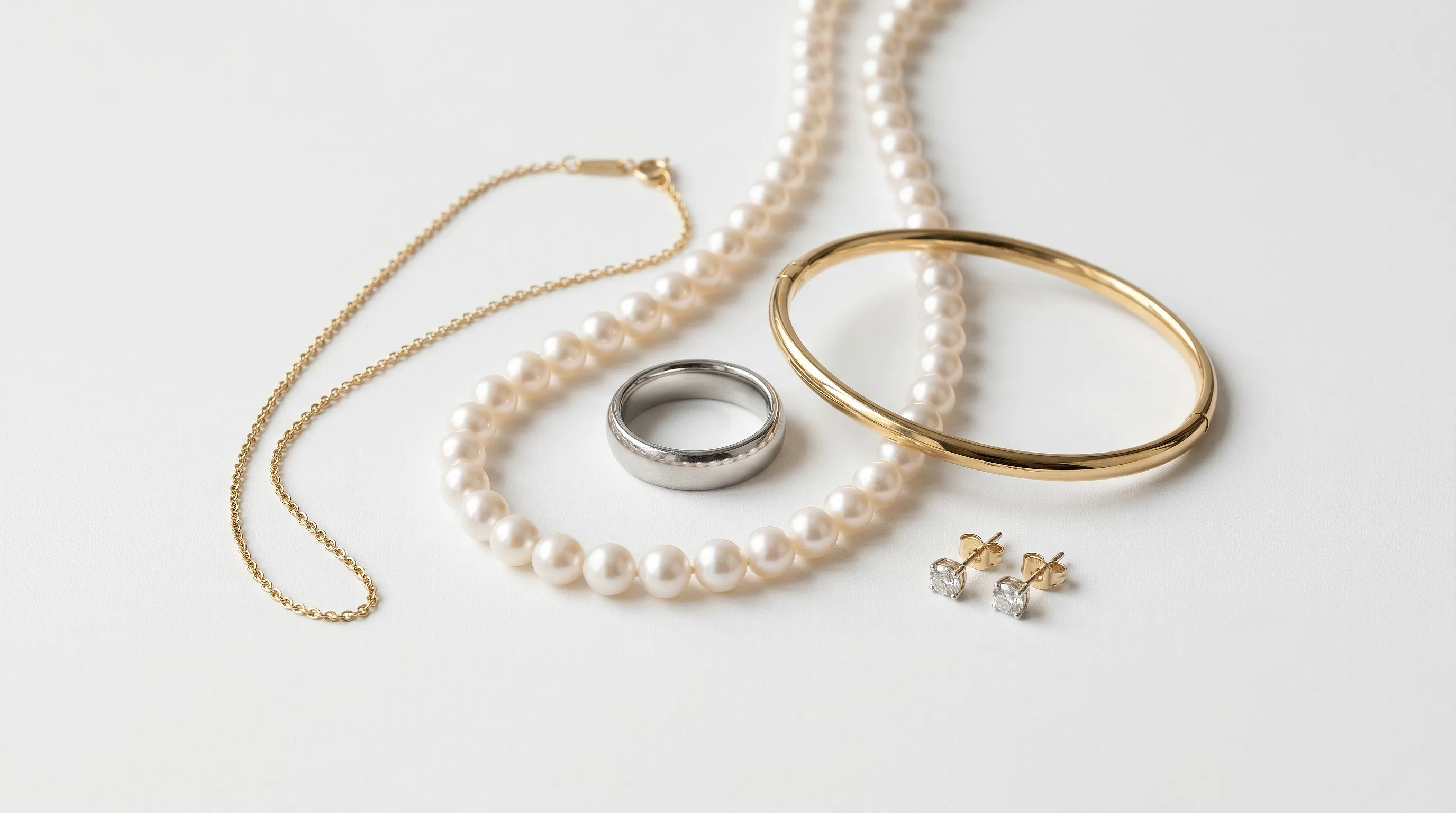
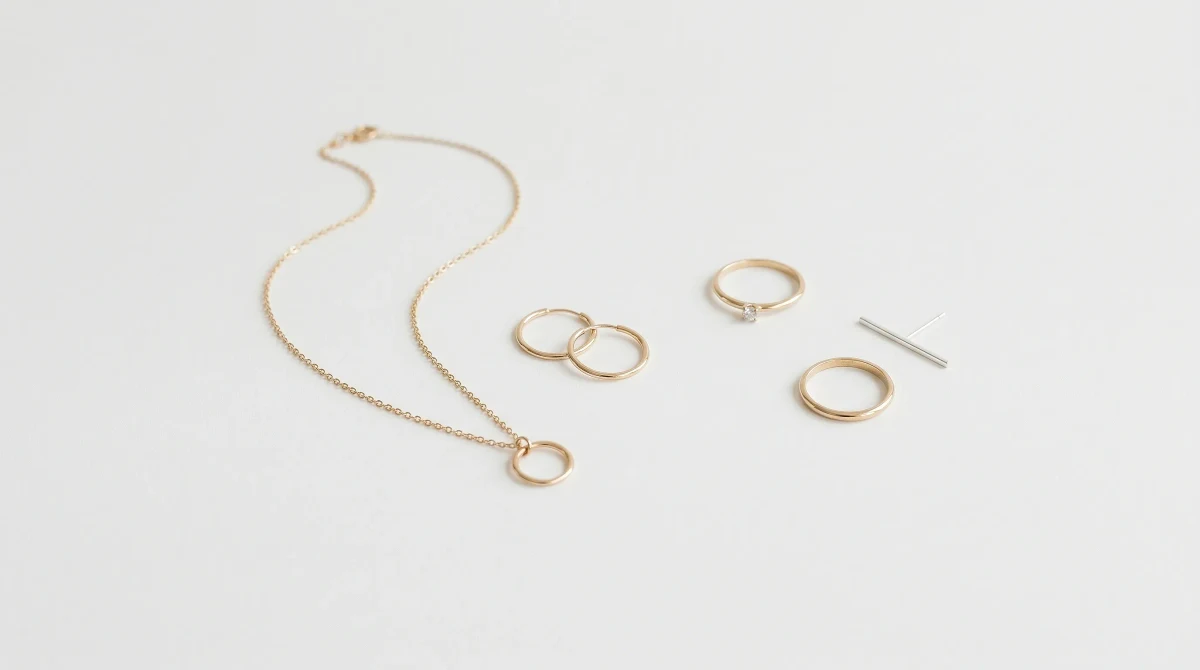
A complete minimalist jewellery collection has three to five pieces:
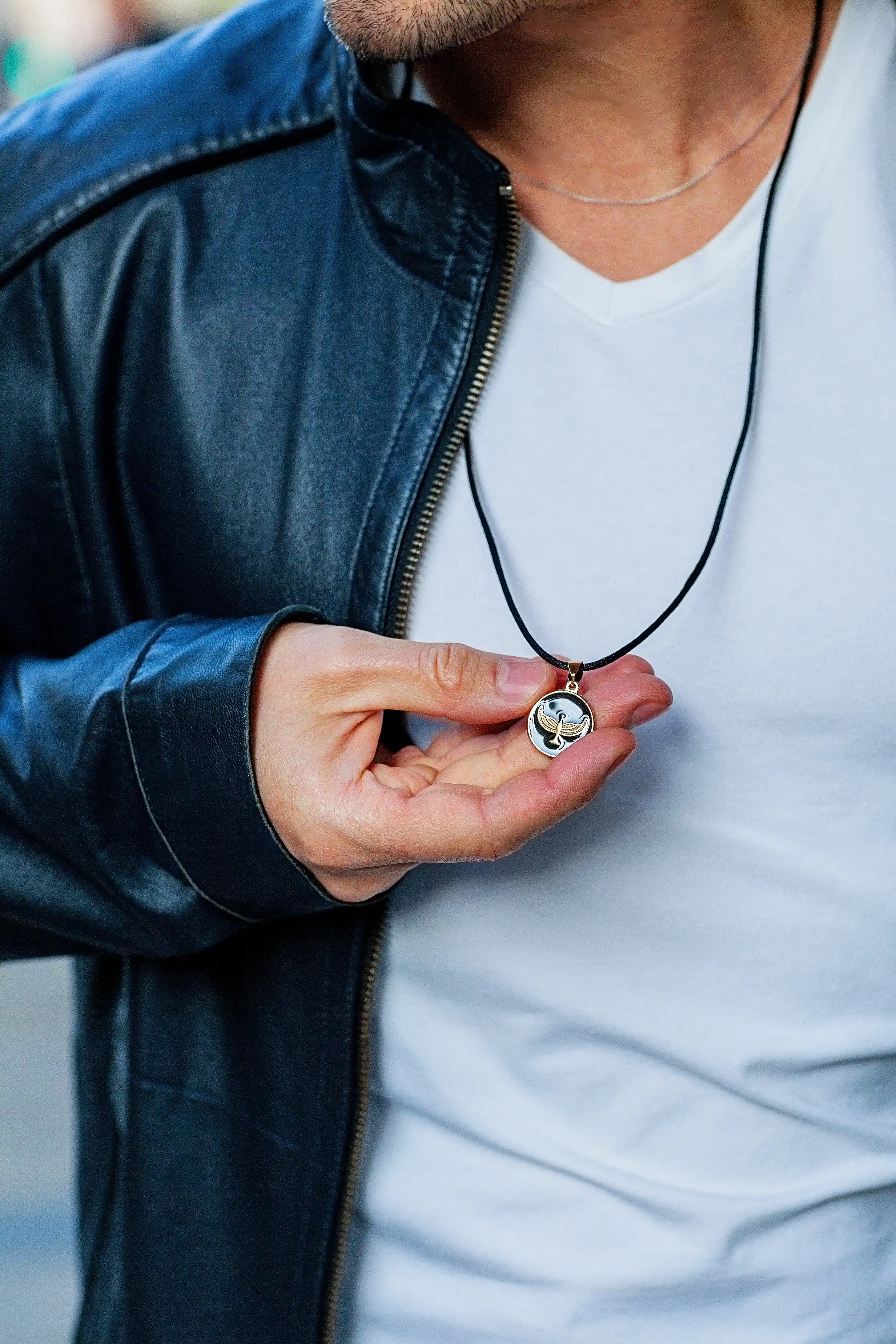
1. The daily pendant. A small symbol on a fine chain, 45-50 cm. This is your signature piece. It goes on in the morning and comes off at night. It should mean something to you, even if that meaning is private. A compass for direction. An evil eye for protection. A lotus for growth. Or a simple geometric shape if symbolism is not your thing. The pendant should be small enough to sit under a blouse but visible enough to be noticed in an open neckline.
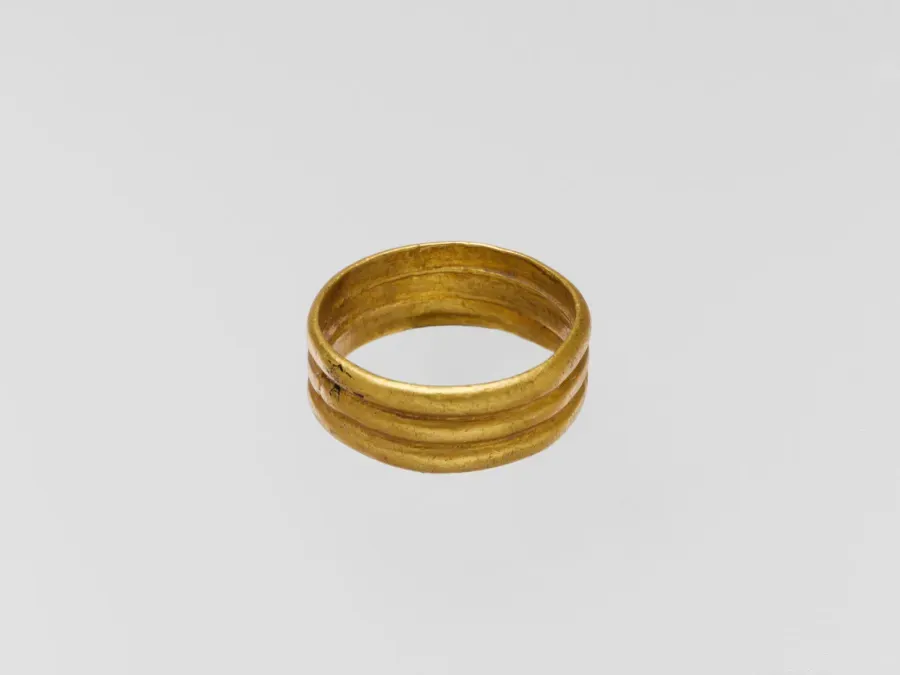
2. The everyday ring. One ring. Not a stack, not a set. One band on one finger. Index finger for a statement. Middle finger for balance. Ring finger speaks for itself. A plain band in silver or steel, 3-5 mm wide. No stones, no engravings, no complications. It should feel like it grew there.
3. The stud earrings. Small, round, flush to the earlobe. Silver, gold, or a simple stone (moonstone, onyx, tiny CZ). These are the punctuation of your face. Not the sentence, just the period at the end. Barely visible, but the face looks different without them.
4. (Optional) The bracelet. A thin chain or bangle. Not a watch replacement, not a statement. Just a subtle line on the wrist that catches light when you move your hand. Some minimalists skip the bracelet entirely. That is fine too.
5. (Optional) The second necklace. For layering. A shorter or longer chain than your daily pendant, worn without a pendant. Just the chain. This adds dimension to the neckline without adding noise.
That is it. Three to five pieces. Everything else is noise.
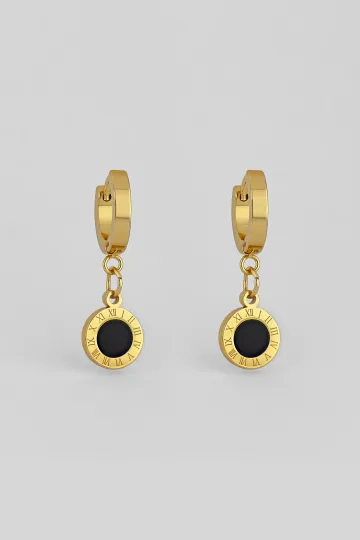
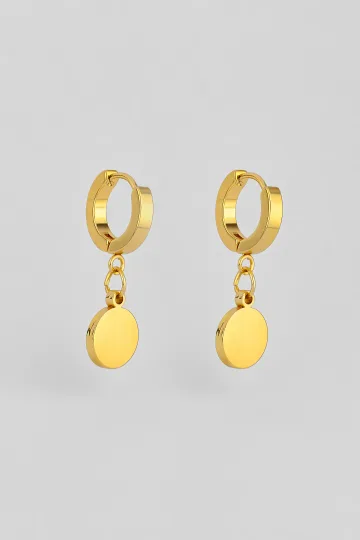
Wear the symbol, don't just read about it. These are in stock:
Materials for minimalism
Not all metals are equally minimalist. The material needs to match the philosophy.
Sterling silver 925. The quintessential minimalist metal. Cool, clean, understated. Silver does not shout. It reflects light without demanding attention. The slight warmth of a hand-polished surface, the way it develops character over time. Silver ages like a good leather jacket: it gets better. More in our silver guide.
Stainless steel 316L. The practical minimalist's choice. Maintenance-free, scratch-resistant, affordable. Slightly darker than silver, slightly less lustrous, but it never tarnishes and never needs cleaning. For the person who wants to put on a pendant and literally never think about it again. That is peak minimalism.
Gold (yellow, white, rose). Gold is minimalist when used sparingly. A single thin gold chain, a slim gold band. The warmth of gold adds life to neutral-toned wardrobes. But gold demands more from the rest of your outfit. Silver works with everything. Gold works best with intentional colour palettes.
What to avoid. Brass (tarnishes too quickly for low-maintenance minimalism). Multi-metal combinations (defeats the purpose of simplicity). Anything plated (the coating wears off and reveals a different colour underneath, which is the opposite of quiet consistency).
How to choose your one piece
If you currently own zero jewellery and want to start with one piece, here is the decision framework.
Ask yourself: what do I want to communicate?
Nothing specific, just want to look polished: plain chain, no pendant. The simplest possible start.
A value or belief: symbolic pendant. Choose the symbol that resonates. Not the one that looks best, the one that means most.
Identity and style: a ring. Rings are more visible in daily interactions (handshakes, gestures, typing) and say more about personal style than necklaces.
Ask yourself: what is my tolerance for maintenance?
Zero: stainless steel. Put it on, forget it exists.
Minimal: sterling silver. Wipe with a cloth weekly, deep clean monthly.
I enjoy the ritual: gold. Polish, store properly, rotate with outfits.
Ask yourself: what do I wear every day?
Black and neutrals: silver or steel. Cool metals disappear into dark wardrobes.
Warm tones (beige, brown, olive): gold. Warm metal complements warm fabric.
Everything: silver. It is the universal match.
Minimalism by gender
For women. The minimalist movement hit women's jewellery first and hardest. After years of layering and stacking, the pendulum swung. Current minimalist women's jewellery centres on a single pendant, single studs, single ring. Rose gold and silver dominate. Stones are small and few (one tiny CZ, one moonstone). The trend is away from charm bracelets and toward clean wrist chains or bare wrists entirely.
For men. Men's minimalist jewellery is even simpler because the starting point was already minimal. Most men who wear jewellery wear one piece. The shift is from "no jewellery" to "one intentional piece" rather than from "lots of jewellery" to "one piece." Our first jewellery for men guide covers this in detail. A single pendant on a chain, a single ring, or a single bracelet. Men tend to prefer steel and leather over silver and gold, and symbols over abstraction.
Customer reviews
Zevira is a real jewellery shop. Genuine payments, deliveries and customer thank-yous.
🥰🥰🥰 gracias
Ok, ¡gracias! 🙂
Minimalism and fast fashion: the conflict
Here is the uncomfortable truth: fast fashion jewellery and minimalism are incompatible.
Fast fashion jewellery is designed to be replaced. Cheap materials, quick plating, trendy shapes. Buy it for the season, toss it when the plating peels or the trend changes. This model produces waste, rewards low quality, and creates a cycle of constant purchasing that is the opposite of minimalism.
Minimalist jewellery is designed to be kept. One piece, worn for years. It needs to survive daily wear, sweat, showers, sleep. It needs to look the same in year three as it did on day one. That requires better materials, better construction, and a higher upfront cost that pays for itself by lasting.
The minimalist approach to jewellery spending: spend once, spend wisely, do not spend again. The total cost over five years is often less than five years of fast fashion replacements. And the environmental cost is incomparably lower.
The art of wearing nothing
Sometimes the most minimalist choice is no jewellery at all. And that is fine. Not everyone needs metal on their skin to feel complete. Some days, bare is best.
The difference between "I forgot my jewellery" and "I chose not to wear jewellery today" is confidence. Both look the same from outside. But one feels accidental and the other feels deliberate. Minimalism includes zero as a valid number.
If you own a few good pieces and choose when to wear them and when to go bare, you have mastered minimalist jewellery. The pieces enhance by their absence as much as by their presence. The neck that usually has a pendant looks different when it does not. People notice. They do not say anything, but they notice.
Care for minimalist pieces
The irony of minimalist jewellery: fewer pieces means each one matters more. If you own three pieces and one tarnishes, one third of your collection looks bad. If you own thirty and one tarnishes, nobody notices.
Daily: take off before showering (silver and gold). Leave on (stainless steel). The reasoning matters: silver tarnishes from the minerals and chlorine in water. Gold can be affected by soap and shampoo building up in settings. Stainless steel is genuinely impervious to water, so the inconvenience of removing it outweighs any benefit.
Weekly: wipe with a soft cloth. Ten seconds per piece. Removes body oils and prevents buildup. Body oil is the primary accelerant of tarnish on silver. Wiping it away after each week of wear slows the process significantly. Do this before putting the piece away for the night.
Monthly: deep clean silver with the foil-soda method (details in our tarnish guide). Inspect clasps for wear. Check chains for stretched links. A stretched link will not snap immediately, but it will eventually, always at the worst moment. If you see a link that looks elongated compared to its neighbours, take it to a jeweller before it fails.
Yearly: take to a jeweller for professional check and polish if the piece is precious metal. Not necessary for steel. A professional polish removes surface scratches and restores the original finish. On a piece worn daily for a year, the difference before and after is significant. Think of it as maintenance, the same category as servicing a watch.
Storage: separately. Each piece in its own compartment or pouch. Minimalist pieces are often fine and delicate. A thin silver chain tangled around a steel ring will scratch. Keep them apart. A small linen pouch per piece costs nothing and prevents everything.
The storage environment matters too. Silver tarnishes faster in humid conditions. If you live in a humid climate or store jewellery in a bathroom, add a small silica gel packet to the storage container. These cost almost nothing and substantially slow tarnish formation. Anti-tarnish strips (small treated paper squares placed inside the storage box) are the jeweller's professional version of the same principle.
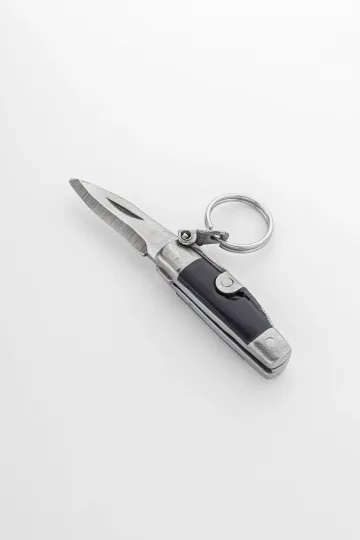
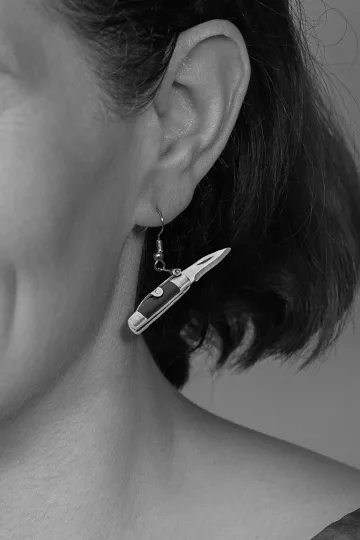
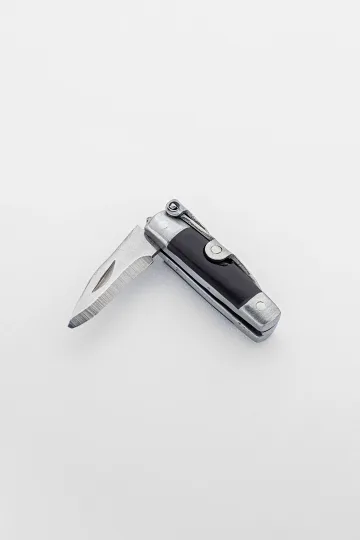
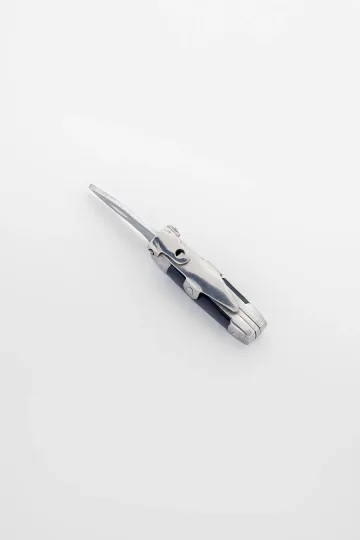
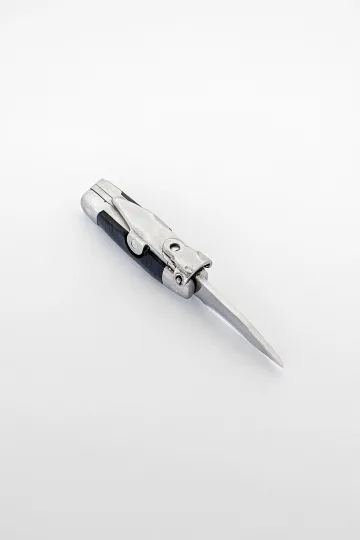
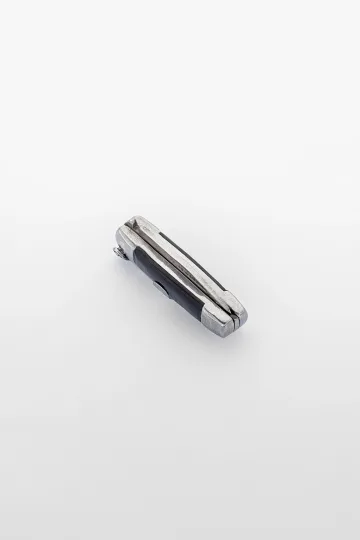
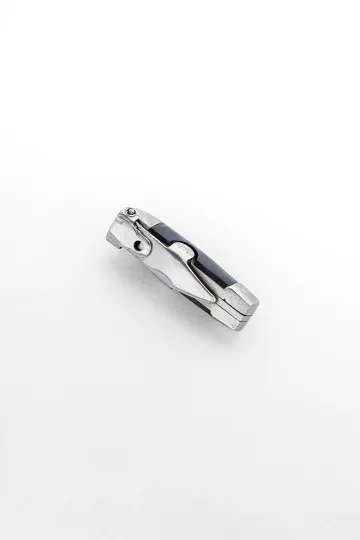
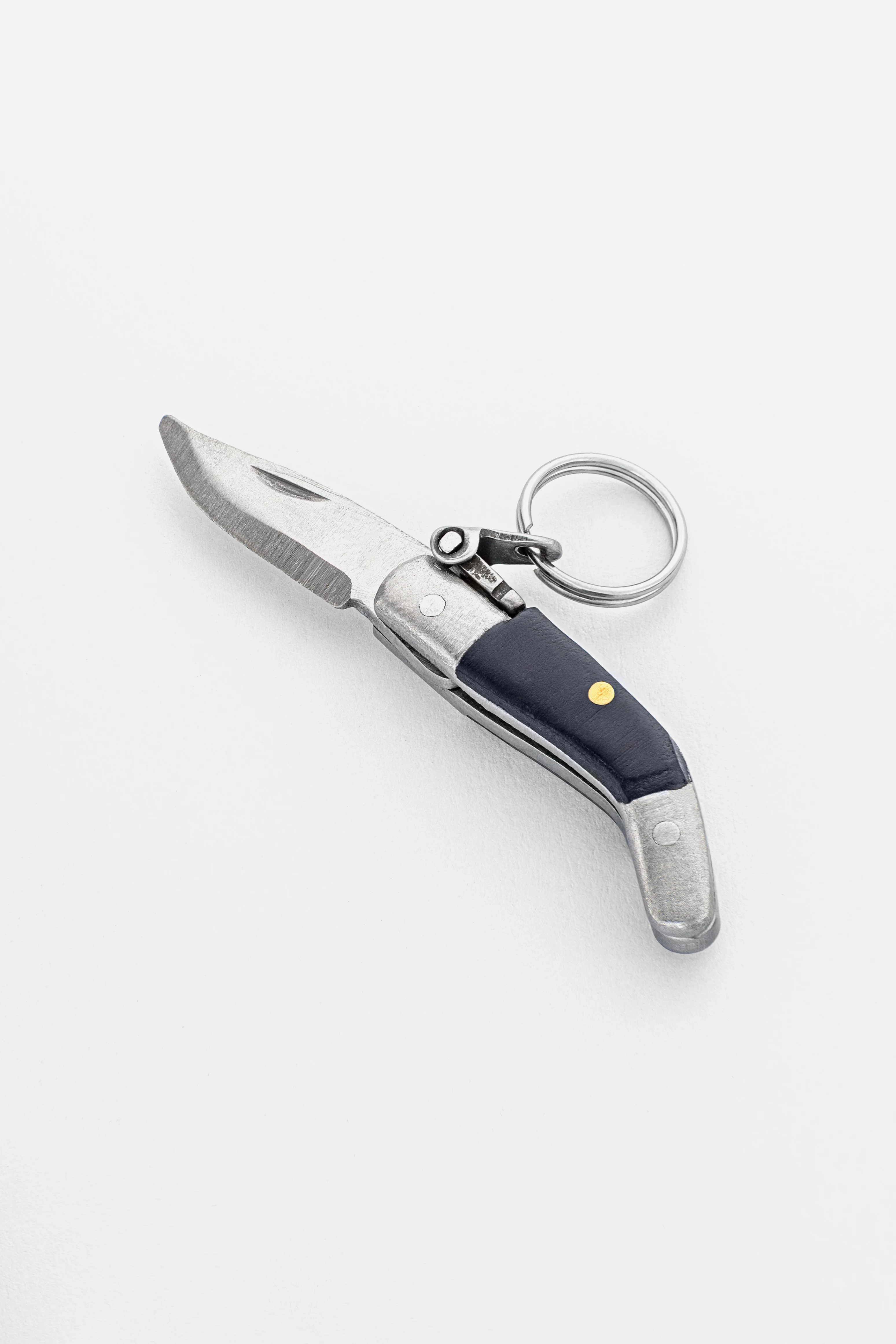
Artisan-crafted CAPAORA navaja pendant
A 40 mm stainless-steel navaja with a real folding mechanism and Palanquilla lock. An affordable gift to remember.
A code for blog readers:
10% off your first order
Authentic · Maker's guarantee · Ships from Spain
FAQ
Is minimalist jewellery just for women? No. The concept is gender-neutral. Men's minimalist jewellery is a growing market precisely because men tend toward fewer, simpler pieces naturally.
Can I still layer with minimalist jewellery? Yes, but with discipline. Two chains at different lengths. Maximum. If you are adding a third, you are leaving minimalism territory.
What is the one piece I should buy if I can only buy one? A pendant on a chain. Specifically: a small symbolic pendant (10-15mm) on a 1.5mm chain at 45-50cm, in stainless steel or sterling silver. This single combination covers casual, formal, work, and evening.
Is minimalist jewellery boring? Only if you choose boring pieces. A knife pendant is minimalist (it is one piece) but absolutely not boring. Minimalism is about quantity, not personality.
How do I transition from lots of jewellery to minimalist? Gradually. Next week, wear one less piece than usual. The week after, one less again. Within a month, you will find your comfort level. Most people land at two or three pieces and wonder why they ever wore more.
Does minimalist jewellery go with formal outfits? Better than statement jewellery in most cases. A formal dress with a single pendant looks intentional. The same dress with five necklaces looks like a costume. Minimalism and formality share DNA: restraint, precision, letting one element speak at a time.
What chain length should I use for a minimalist pendant? For most people, 45-50 cm is the starting point. This length places the pendant at the collarbone or just below, which is the most flattering position for the majority of necklines. Longer chains (55-60 cm) work better for turtlenecks or when you want the pendant to fall between the collarbones. Shorter chains (40-42 cm) create a choker-adjacent effect and work well on longer necks. When in doubt, 45 cm is the right default.
Does sterling silver turn your skin green? No, not if it is genuine 925 sterling. The green discolouration comes from copper-based alloys and plated jewellery where the base metal shows through. Sterling silver is 92.5% pure silver and 7.5% copper. The copper content is low enough that skin reactions are rare. If a piece labelled as silver turns your skin, it is likely not sterling silver. Check for the 925 hallmark. More detail in the silver guide.
Can I wear minimalist jewellery while exercising? Stainless steel, yes. Silver and gold, it depends. Sweat is mildly acidic and accelerates tarnish on silver. For gold, frequent exposure to sweat dulls the surface over time. For a daily run or gym session, remove silver and gold, leave stainless. For swimming, remove all precious metals: chlorine in pools attacks silver and can damage gold over time. Stainless steel is pool-safe.
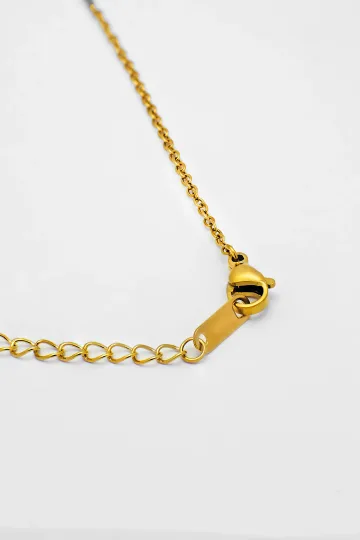
How do I know if a minimalist piece is good quality? Three things to check. First, the finish: a quality piece has consistent surface treatment with no rough patches, file marks, or uneven polishing visible. Second, the clasp: spring ring clasps are functional but basic; lobster clasps are more secure; toggle clasps are the most elegant but require more care. Third, the weight: a piece that feels lighter than expected for its size is often thin-walled or poorly made. A quality minimalist piece has substance proportional to its dimensions.
Layering minimalism: how to do it without defeating the purpose
Layering jewellery is the one area where minimalists get into trouble. Done correctly, it adds depth without adding noise. Done carelessly, it becomes the maximalism you were trying to escape.
The rules for minimalist layering are strict because they have to be:
Necklaces. Two chains maximum, always at different lengths. The gap between them should be at least 5 cm, otherwise the eye reads them as one cluttered object rather than two intentional elements. No matching pendants on both chains. If one chain has a pendant, the other is bare. The bare chain provides context and proportion; the pendant chain carries the meaning. Both chains should be in the same metal family. A silver pendant chain with a gold bare chain creates a tension that looks unresolved rather than considered.
Rings. One ring per hand. Two rings on the same finger is stacking, not minimalism. One ring on each hand is an acceptable minimalist position, provided the rings are stylistically similar. A thin plain band on the left and a thin plain band on the right. Not a plain band on the left and a large statement ring on the right.
Bracelets. One, and only one, alongside a watch if you wear one. The watch and bracelet should be on opposite wrists or, if on the same wrist, should not compete visually. A thin chain bracelet on the same wrist as a heavy sport watch is a proportional mismatch. A thin chain bracelet on the opposite wrist from a dress watch works.
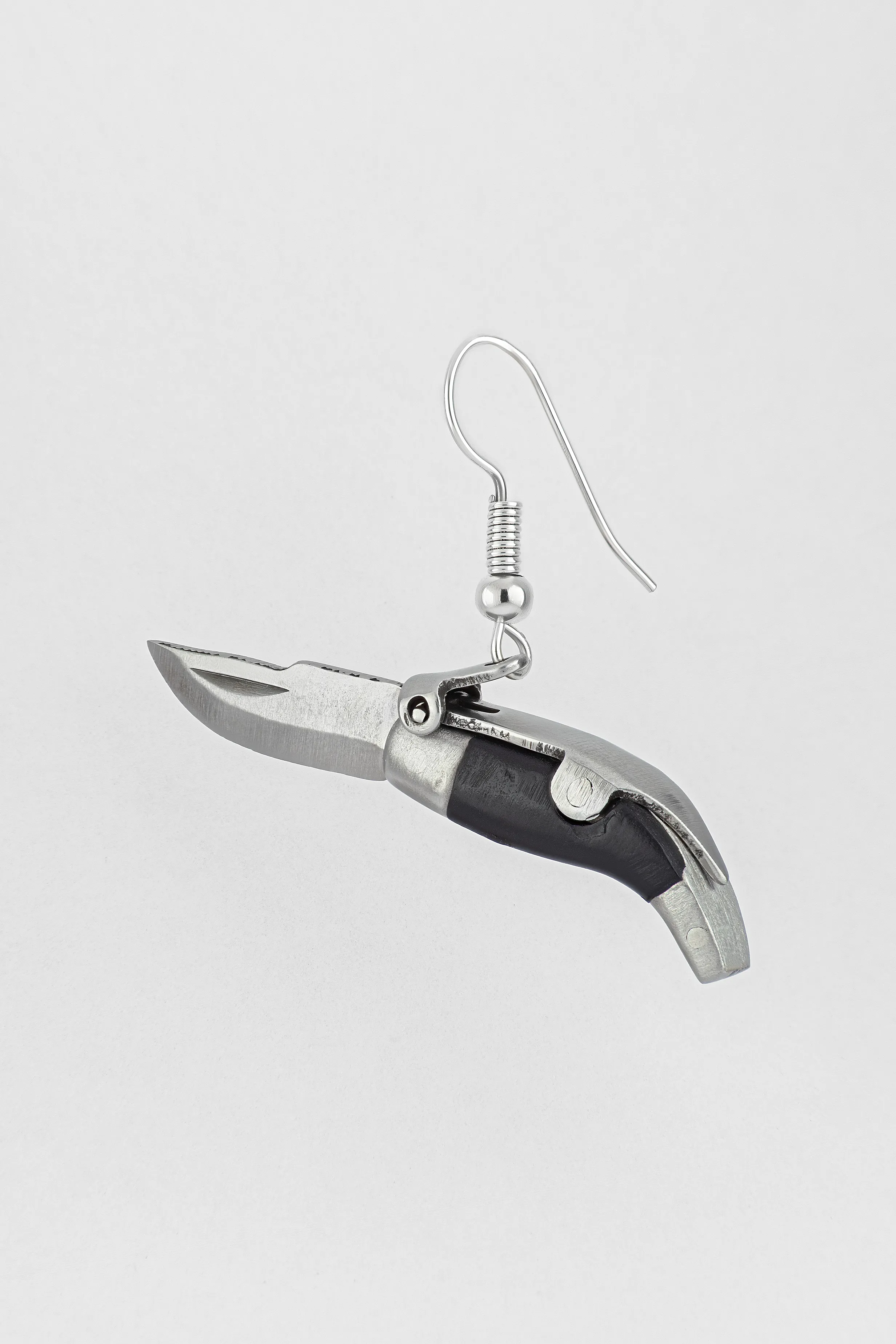
Earrings. If you have multiple piercings, the minimalist approach is: one earring per ear per position. One stud in the lobe, possibly one small hoop or stud in the helix if you have a second piercing. Not four earrings distributed across one ear. The ear has a visual limit for minimalism, and it is lower than most people think.
The test for any layering choice: does the combination still look quiet? Can you describe it without using the word "stacked"? If you are layering and the word "stacked" comes naturally, you are no longer in minimalist territory.
One fine chain on a bare neck reads as money. Three necklaces at once reads as panic. Wear one.
How to style minimalist jewellery
I have built dozens of minimalist looks on set, and the lesson is simple: one considered piece carries a whole outfit once you know where to place it. Here is how I break it down by occasion.
How do I wear minimalism every day? With a tee, jeans, or a chunky knit I recommend a fine chain and a small pendant sitting on the collarbone. Under a round or V-neck it shows at once; under a high neck I suggest a shorter chain so it rests on the fabric. I let silver and steel dissolve into a grey-black-navy palette, and I put gold on warm tones: beige, ochre, olive.
What should I wear to the office? This is where minimalism belongs. I choose studs, one plain ring, and a pendant under the collar that appears when the top button opens. I suggest a cool metal, a 45-50 cm length, and nothing that rattles on the desk. The look reads as composure, not as decoration.
How do I put an evening look together? For the evening I take an open neckline and a solid, rich fabric. The same pendant that worked all day gets more room on a bare neck and reads differently. I recommend adding one second bare chain at another length for a light layer, and stopping there.
Gold or silver for my skin? A warm undertone wants gold; a cool one wants silver or steel. If both work, I choose by wardrobe: silver with a cool palette, gold with a warm one. The rule that never fails is to keep your metals in one family, because gold and silver jumbled together always looks messier.
Who does minimalism actually suit? Almost everyone, and especially anyone who does not want to spend the morning deciding. Over a busy wardrobe it is a deliberate choice, not a compromise: strong clothing and a quiet piece do not fight. If you want layers, give each piece its own length and stop at three.
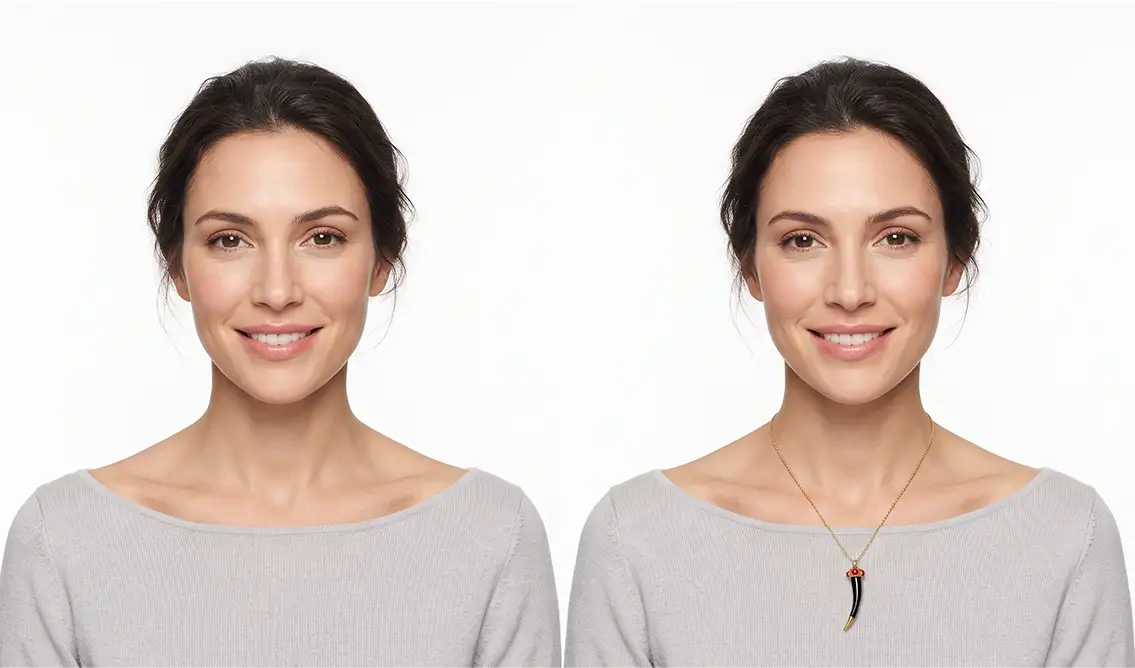
Turn on your camera, pick earrings, a pendant or a ring, and see the piece on yourself in real time.
Switch items in one tap.
Everything runs in your browser: no photo or video is ever uploaded.
Who minimalist jewellery suits
The honest answer is: everyone, but with different approaches.
People who dislike jewellery. The person who finds jewellery fussy or uncomfortable is often a natural minimalist without knowing it. The discomfort usually comes from wearing the wrong thing: too heavy, too loose, too decorative, requiring constant attention. One correctly sized, lightweight pendant on a fine chain is likely to change the experience entirely.
People with very busy wardrobes. If your clothing is already doing a lot of work (strong colours, bold prints, layered textures), minimalist jewellery is not a concession. It is a strategic choice. Strong clothing and minimal jewellery do not compete. They let each other breathe.
People in client-facing professions. Teachers, doctors, lawyers, salespeople, consultants: any role where the other person's attention should be on the content, not on what you are wearing. Minimalist jewellery is present enough to signal care and intention, unobtrusive enough to never become a distraction.
People who travel constantly. See the travel section. Minimalist jewellery and travel are natural partners. Three pieces that cover everything, fit in a pocket, and require no special handling.
People who change their style frequently. This sounds counterintuitive but it is true. A simple silver pendant or a plain ring works with almost any style. It does not belong to maximalist fashion, or minimalist fashion, or any specific aesthetic. It exists outside trends. If your clothing style shifts every few years, your minimalist jewellery does not need to.
People who are starting. If you have never really worn jewellery and want to start, minimalism is the correct entry point. One piece. Try it for a month. Add a second only if the first feels incomplete without it. Build slowly, with intention.
Leave your email, we'll send your discount code. No spam, unsubscribe anytime.
The code arrives by email, valid on your first order.
Minimalism and travel
Travelling with minimalist jewellery is one of its greatest advantages. Three pieces in a small pouch versus a full jewellery roll with thirty items and constant worry about theft or loss.
Pack your daily pendant, your ring, and studs. That is your entire travel jewellery kit. It fits in a jacket pocket. It does not trigger extra security screening. It does not tempt theft in a hostel. And it covers every outfit from beach day to nice dinner.
The best travel jewellery material is stainless steel. No maintenance in changing climates. No tarnishing in tropical humidity. No worry about swimming, sweating, or getting caught in the rain. You wear it from the airport to the beach to the restaurant without ever taking it off.
Silver works for travel too but needs more attention in humid or salty environments. Gold plating is the worst travel companion because sweat and sunscreen accelerate plating wear.
The design history of minimalism in jewellery
Minimalist jewellery did not appear from nowhere. It has a lineage, and understanding it makes the choices easier.
Bauhaus, 1919-1933. The Bauhaus school in Weimar Germany did not set out to revolutionise jewellery. It set out to strip all design of unnecessary decoration. Adolf Loos had already argued in 1908 that ornament is waste. The Bauhaus turned that argument into a curriculum. Students in the metalwork workshops learned to think about objects as they actually are: material, form, function. A ring is a band of metal around a finger. Anything added to that description needs to justify its existence. If it cannot justify itself, it goes. This principle filtered into jewellery and never fully left.
Scandinavian design, 1950s-1970s. Georg Jensen, founded in Denmark in 1904, showed that simplicity could be luxury. After Jensen came a generation of Danish and Swedish silversmiths who took the idea further. Sigurd Persson in Sweden, Bent Gabrielsen in Denmark: craftspeople who believed a single perfect curve was worth more than a hundred decorative details. The international design magazines of the 1950s and 1960s spread this aesthetic worldwide. By the time Scandinavian Modern became a recognised movement in furniture and architecture, its principles had already been in jewellery for decades.
Mid-century modernism. The postwar period in Western Europe and America produced a rejection of ornament that went beyond design philosophy. People emerging from wartime austerity did not want fussy things. They wanted clean lines, honest materials, and objects that worked. Jewellery responded: thinner chains, smaller stones, plainer settings. The cocktail ring and the chandelier earring survived, but they moved to occasions. Everyday jewellery contracted.
The minimalist revival since 2015. What we call the minimalist jewellery movement today is partly a reaction to the maximalism of the early 2000s, partly a response to social media aesthetics, and partly something older reasserting itself. The clean photograph works better with one pendant than with seven. The personal brand, so important in the age of the visible self, is more legible in a single chosen symbol than in an accumulation of trinkets. The design history and the social moment arrived at the same point simultaneously.
Minimalism across cultures
Japan. The birthplace of modern minimalism. Japanese jewellery tradition values empty space (ma) as much as the object itself. A single pearl on an invisible thread. A plain gold band with no embellishment. Japanese minimalism is not about less is more. It is about less is enough.
Scandinavia. Clean lines, natural materials, functional beauty. Scandinavian jewellery design influenced the global minimalist movement. Georg Jensen, founded in 1904, pioneered the idea that jewellery should be sculptural and simple, not ornamental and busy.
Germany. Bauhaus principles applied to jewellery: form follows function. German minimalist jewellery tends toward geometric shapes, industrial materials, and an honesty about what the object is. No pretence, no unnecessary decoration. Pforzheim, Germany's historic jewellery capital since the 18th century, produces work that demonstrates this: a Niessing ring is an industrial object elevated to wearable art, with perfect geometry and not one redundant element.
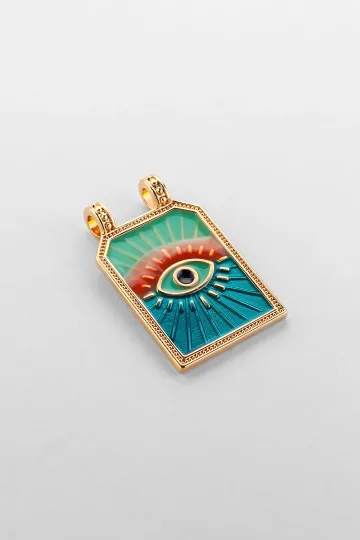
Mediterranean. This is where it gets interesting. Mediterranean cultures (Spain, Italy, Greece) traditionally favour bold, expressive jewellery. But the new Mediterranean minimalism keeps the warmth and the symbolism while stripping away the excess. A single gold evil eye on a fine chain. One cornicello on leather. The meaning stays. The noise goes.
The minimalist buying checklist
Before you buy any piece of jewellery, run it through these five questions:
Will I wear this tomorrow? Not "could I wear this to a special event someday." Tomorrow. With what I am actually wearing tomorrow. If the answer is no, put it back.
Does it replace something or add to the pile? Minimalism means replacement, not accumulation. If you are buying a new pendant, which old pendant is leaving? If the answer is "none, I will just add it," you are not being minimalist. You are shopping.
Will it look the same in a year? Cheap plating will not. Trendy shapes will not. Quality materials and timeless designs will. Buy the one that ages.
Can I forget I am wearing it? The best minimalist jewellery is the jewellery you do not feel. No snags, no weight pulling, no constant adjustment. If a piece requires attention throughout the day, it is not working.
Does it pass the silence test? Put it on, look in the mirror, and say nothing. Does the piece speak for itself? Or does it need an explanation? ("Oh this? It is from a limited collection by..."). Minimalist jewellery does not need context. It just exists, and it is enough.
If a piece passes all five, buy it. Wear it every day. Stop looking.
Minimalism and the workplace
Jewellery in professional settings is a minefield. Too much and you look like you dressed for a party. Too little and you look like you did not care. Minimalism solves this perfectly. One piece, worn consistently, projects professionalism and personality without distraction.
For corporate environments, a single pendant inside or just outside a shirt collar. Nothing that clinks during presentations. Nothing that catches the webcam light during video calls. A simple silver chain that sits flat against fabric. That is the professional minimalist standard.
For creative industries, you have more room. A bolder ring, a more visible pendant, an unusual chain style. The creative workplace rewards individuality, and a single well-chosen piece communicates taste more effectively than an armful of accessories.
For client-facing roles, minimalist jewellery tends to read as composed and considered. In our experience, moderate and consistent accessories often come across as more put together than either nothing at all or an overload of pieces. One piece says "I pay attention to details but I do not overdo it." That is exactly the message you want a client to receive.
The work-from-home era has actually strengthened the case for minimalist jewellery. In a Zoom frame, only your neckline and perhaps your hands are visible. A single pendant in the right position catches the camera beautifully. A stack of necklaces creates visual confusion on a small screen. Minimalism is photogenic. Maximalism is not.
Minimalism and body type
Different body types relate to different scales of jewellery. Minimalism does not mean "tiny" for everyone.
Petite frame. Smaller pendants (8-12 mm), thinner chains (1-1.5 mm), narrower rings (2-3 mm). Pieces should be proportional. An oversized pendant on a small frame is not minimalist, it is a pendulum.
Average frame. The standard sweet spot. Pendants 10-15 mm, chains 1.5-2 mm, rings 3-5 mm. Most jewellery is designed for this range, so finding minimalist pieces is straightforward.
Larger frame. Scale up slightly. Pendants 15-20 mm, chains 2-3 mm, rings 5-7 mm. On a broader chest, a tiny pendant disappears. Minimalism is about wearing less, not about wearing invisible. The piece should be visible and proportional.
Long neck. Lucky you. Virtually any pendant length works. Shorter chains (40-45 cm) sit high and create an elegant line. Longer chains (50-55 cm) draw the eye down. Either works for minimalism.
Shorter neck. Longer chains work better (50 cm+). Short chains bunch at the base of the neck and create a crowded look. Drop the pendant below the collarbone where it has space to breathe.
The final paradox
Here is the thing about minimalist jewellery that nobody tells you: it takes more time to choose one perfect piece than to choose ten okay pieces. The decision is harder because it matters more. You cannot hide behind volume. Every choice is visible.
But once the choice is made, everything becomes easier. The morning gets simpler. The outfit looks better. The mirror requires less time. And the one thing you chose, the pendant or the ring or the chain, stops being something you wear and starts being something you are.
That is the whole point. Not less for the sake of less. Less for the sake of more. More clarity, more intention, more you.
Minimalism mistakes to avoid
Buying "minimalist-looking" fast fashion. A thin chain from a fast fashion brand is not minimalist. It is cheap. It will break, tarnish, or discolour within months. Then you buy another. Then another. That is consumption disguised as minimalism. True minimalism is buying once and buying right.
Confusing minimalism with deprivation. Minimalism is not about denying yourself jewellery. It is about choosing what earns a place on your body. If you love earrings and rings and necklaces, you can be minimalist with all three. Just choose one of each and make each one count.
Overthinking it. Paradoxically, some people spend more time agonising over one minimalist pendant than they would choosing an entire set. Set a deadline. Pick the piece that feels right within a week. Wear it for a month. If it is wrong, swap it. Do not let the search for perfection prevent you from starting.
Copying someone else's minimalism. What works on a fashion blogger does not necessarily work on you. Different bodies, different skin tones, different wardrobes, different lives. Your minimalism is yours. It should feel natural, not performed.
Keeping the old stuff "just in case." If you have transitioned to three pieces, the thirty pieces in the drawer are not a safety net. They are clutter. Sell them, gift them, donate them. The psychological weight of "I might need that someday" defeats the entire purpose of owning less. Let go. You will not miss them. Nobody ever does.
Send a friend a discount code, they save on their first order.
Minimalism at different life stages
In your twenties. You are figuring out your style. Minimalism at this stage means buying one good piece instead of ten disposable ones. That single sterling silver pendant you buy at 22 becomes your signature. People start associating it with you. By the time you hit 25, it is not jewellery anymore. It is identity.
The temptation in your twenties is to follow trends. Every year brings a new "must-have." Resist. The piece you choose now should be the piece you still wear in your thirties. If it cannot survive a decade, it cannot survive minimalism.
In your thirties and forties. Your wardrobe is more defined. You know what you like. Minimalist jewellery at this stage often means upgrading materials rather than adding pieces. That stainless steel pendant might become a sterling silver one. The fashion ring might become a proper band. Same concept, better execution.
This is also when jewellery starts carrying meaning beyond style. A pendant from a partner. A ring from a milestone birthday. The pieces earn their place through significance, not appearance. That is minimalism at its most authentic.
In your fifties and beyond. By now, the collection has curated itself. The pieces that survived decades of wear are the ones that matter. Everything else has been gifted away, donated, or forgotten. What remains is pure: a few things that work, that feel right, that carry a lifetime of context.
Older minimalists often return to precious metals. A single gold band that has been worn for thirty years looks fundamentally different from a new one. It carries weight not because of the metal, but because of the time.
Minimalism and sustainability
There is a direct line between minimalist jewellery and sustainable consumption. Fewer pieces means less mining, less manufacturing, less shipping, and less waste. One pendant worn for a decade produces less environmental impact than ten pendants worn for a year each.
The fast fashion jewellery industry generates massive waste. Pieces break, tarnish, or go out of style within months. They end up in landfill. The materials (often base metals with thin plating) do not decompose quickly and cannot be easily recycled.
Minimalist jewellery inverts this model. Buying quality means buying less. Sterling silver is recyclable. Stainless steel lasts essentially forever. A single well-made piece replaces the entire cycle of buy-wear-discard that drives the throwaway economy.
Some brands are now explicitly positioning themselves as sustainable through minimalism. The message is not "buy our sustainable jewellery." It is "buy one piece and stop buying." That is sustainability through reduction, which is the only kind that actually works at scale.
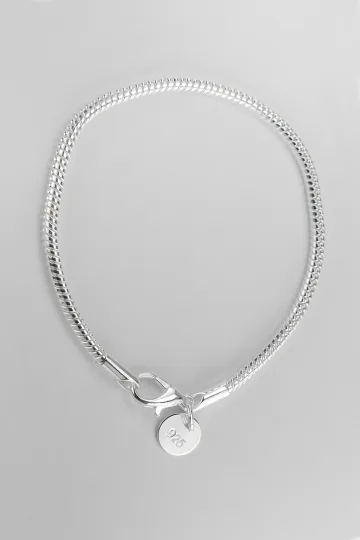
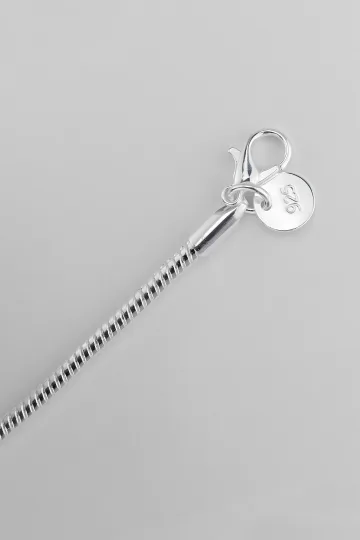
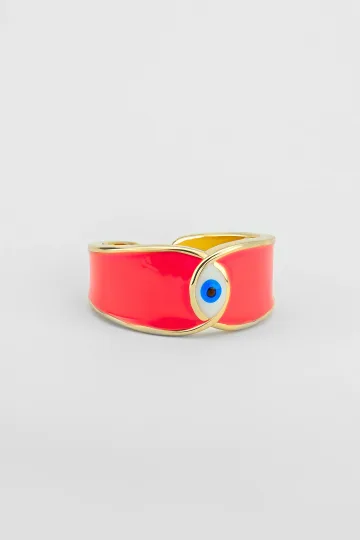
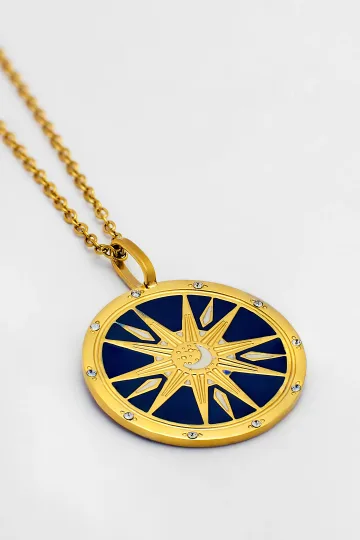
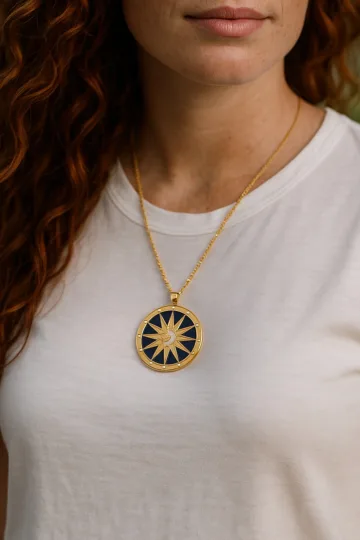
Wear the symbol, don't just read about it. These are in stock:
Minimalism and gifting
Giving minimalist jewellery as a gift is both easier and harder than conventional jewellery gifting. Easier because you are choosing one thing, not assembling a set. Harder because that one thing has to be right.
The safest minimalist gift: a small pendant on a chain in stainless steel or sterling silver. Choose a symbol that means something to the recipient. An evil eye for a friend who believes in protection. A compass for someone starting a new chapter. An infinity symbol for a partner. A tree of life for a parent.
The risky minimalist gift: a ring. Sizing is hard enough. But a minimalist ring for someone who does not wear rings is a gamble. It will either become their favourite thing or sit in a drawer. Ask first. Subtlety in jewellery is admirable. Subtlety in gift-giving just means the person gets the wrong thing.
For full gift ideas by relationship, see our gift guide for girlfriends or boyfriend gift guide.
Silver and gold jewellery, wedding bands, symbolic pendants, paired sets.
Seasonal minimalism
Even within a minimal collection, you can rotate.
Summer. Stainless steel or rubber cord. A pendant that works with bare skin and light fabrics. Smaller scale because summer necklines are lower and more skin is visible, so the pendant does not need to fight for attention.
Winter. Sterling silver gains visual weight against dark, heavy fabrics. A pendant can be slightly larger because it competes with scarves, turtlenecks, and layers. The chain can sit longer because the pendant falls against a sweater, not bare skin.
Transitions. Spring and autumn are layering seasons in fashion and can be in jewellery too. Your daily pendant plus a bare chain at a different length. Two pieces, two layers, still minimal.
The beauty of owning few pieces is that each season gives them a different context. The same silver pendant looks different on a tanned neck in July and on a black wool sweater in December. It is the same piece but it tells a different story. When you own one good thing, it becomes many things.
About Zevira
Zevira makes jewellery by hand in Albacete, Spain. We build pieces that fit the minimalist logic: one right detail on the neck or the finger, worn for years, not one of thirty.
What you can find with us for a minimalist capsule:
- Fine chains with small symbolic pendants
- Plain bands without stones, 2-5 mm wide
- Stud earrings with no dangling parts
- Simple chains without a pendant for layering
- One pendant, one character, from a compass to an evil eye
Every piece is made by a craftsman by hand, with the option of personal engraving. We work in sterling silver 925 and 14-18K gold.