Opal: the rainbow stone with water locked inside
A rainbow trapped in stone
Turn an opal toward the light and the whole rainbow runs across it: green flares up, dies away, gives way to blue, then orange. Tilt it another millimetre and the stone goes dark. This is not fading and not a flaw, it is the nature of the stone. Opal does not behave like an ordinary gem.
Here is why. Ruby, sapphire and emerald are crystals: their atoms sit in a strict lattice, the stone is hard and almost eternal. Opal is built differently. It is hardened silica with water inside and no proper crystal lattice, a set gel that is really a cousin of glass. That rainbow play, opalescence, comes not from the chemistry of colour but from physics: light bends on microscopic spheres of silica.
This guide covers what opal is made of, how it grows in the ground, where it is mined, which types exist and how to tell a real stone from a fake. And separately, why opal asks for caution on the hand: the water inside makes it both beautiful and brittle at once.
If you like gemstones with a story, look at the guides to emerald, ruby, sapphire and moonstone.
What opal is: the chemistry and physics of the stone
Not a crystal, but set silica with water
Most gemstones are crystals with an ordered lattice of atoms. Opal does not belong to that club. It is called a mineraloid: a substance of mineral origin, but without a proper crystal structure. The atoms in opal are not arranged strictly, the way they are in quartz, but more the way they sit in glass.
The formula of opal is SiO₂·nH₂O: silicon dioxide with a variable amount of water. The water share is usually between 3 and 10 percent, though it can reach 20. The water is not a liquid drop inside; it is chemically bound to the silica structure and fills the microscopic gaps between its particles. This water is exactly what separates opal from ordinary quartz, and it is exactly why the stone is fussy in storage.
By structure there are two groups. Opal-AG and opal-AN are amorphous kinds with no order at all. Opal-CT and opal-C carry the beginnings of crystalline phases, cristobalite and tridymite. For a buyer one thing matters: the precious, colour-playing opal usually belongs to the amorphous kinds, where the silica spheres are stacked in even layers.
Hardness, density, optics
Opal sits at 5.5 to 6.5 on the Mohs scale. For comparison: quartz is 7, amethyst 7, emerald 7.5 to 8, sapphire and ruby 9, diamond 10. Opal is noticeably softer than most jewellery stones, easy to scratch with sand, dust or the abrasive in a cleaning product. That is the main reason it is treated gently.
The density is low, 1.9 to 2.3 g/cm³, below quartz (2.65) and far below garnet (around 3.5 to 4.3). Because of this, opal jewellery feels light in the hand.
The optics are unusual too. Being amorphous, opal has no birefringence and no pleochroism, the traits typical of crystals: it is optically isotropic. The refractive index is low, roughly 1.37 to 1.47, less than in most gems. Dispersion in the usual sense, the fire you see flashing off the facets of a diamond, does not exist in opal. Instead it has something almost nothing else has: opalescence, a play of colour produced by the diffraction of light.
Opalescence: where the rainbow comes from
The colour of opal is not a pigment but an optical effect. Inside precious opal the silica gathers into tiny spheres of equal size, stacked in even layers like balls in a box. A sphere measures roughly 150 to 400 nanometres, which is comparable to the wavelength of visible light. When light passes through such an orderly grid it diffracts: the waves overlap, some reinforce each other and some cancel out.
The same principle works on a compact disc, where even micro-grooves split light into a rainbow. You see something similar in a soap bubble and on the wing of a morpho butterfly. In opal the grid is played by spheres of silica.
Which colour you see depends on the size of the spheres and the angle. Large spheres give reds and oranges, the long waves; small spheres give blues and violets, the short ones. That is why red play is the rarest and most prized: it needs large, perfectly stacked spheres. And because the picture depends on the angle, the colours travel and replace one another as you turn the stone. In common opal the spheres lie in disorder, there is no diffraction, and the stone stays one flat tone with no play at all.
Why opal is brittle
The water inside makes opal vulnerable to sudden change. Under fast heating or in very dry air the water leaves, the volume of the stone shifts a little, and a web of fine cracks appears. There is even a name for it: crazing, or in plain words the stone has spidered. The process is irreversible.
The low hardness adds to the trouble: opal scratches easily. So it is worn carefully and kept apart from harder stones. More on care below.
How much water is really inside the stone
A figure of three, five or ten percent sounds small, but for a stone it is a lot. Water in opal lives in three states at once. Part of it is firmly bound to the surface of the silica spheres, water the stone holds tightly and does not release under normal conditions. Part fills the tiny pores between the spheres and is held more loosely. And a small share sits very loosely indeed, and that is the first to go under heat. When people say an opal is drying out, they mean this loose and pore water above all.
It is striking that the water content itself can be estimated from density and refractive index: the more water, the lighter the stone and the lower these values. So two opals that look alike can behave very differently: one lies quietly for decades, the other spiders within a year. This is not pure lottery but a consequence of how the water is distributed inside the particular stone.
Why opal glows under ultraviolet
Many opals react to an ultraviolet lamp with a soft greenish, bluish or milky glow, and some keep glowing faintly after the lamp is switched off. This is luminescence, caused by trace impurities, mainly compounds of uranium and a few other elements that arrived in the silica with the groundwater. The glow by itself makes the stone neither better nor worse, but it helps gemmologists: different opal sources and some imitations glow differently, and the lamp becomes a quick reference point.
Play of colour and ordinary opalescence are two different things
In casual talk the words get mixed up, yet these are two separate effects. Play of colour is that rainbow of flashes born from diffraction on an orderly grid of spheres. Ordinary opalescence in the strict sense is the soft milky-bluish sheen that comes from light scattering on small irregularities, and it appears even in plain opal with no play. The milky glow of moonstone is closer in nature to this second effect. When a seller says opalescent, it helps to ask what is meant: a rainbow of flashes or just a misty sheen. The price of these two properties is very different.
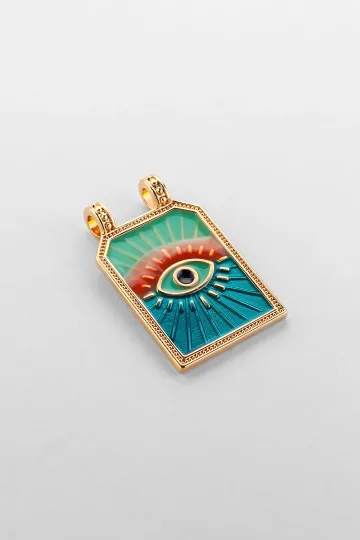
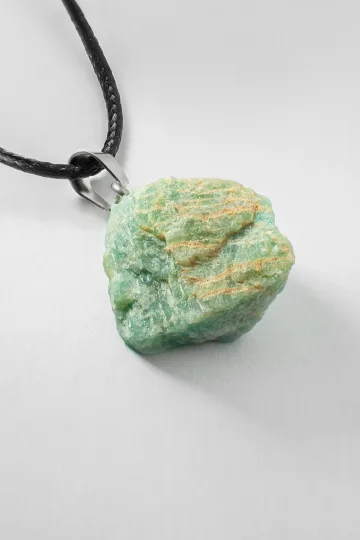
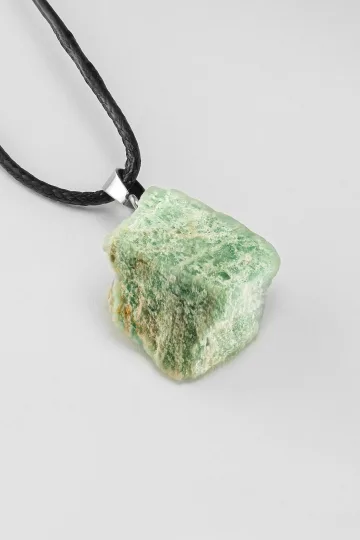
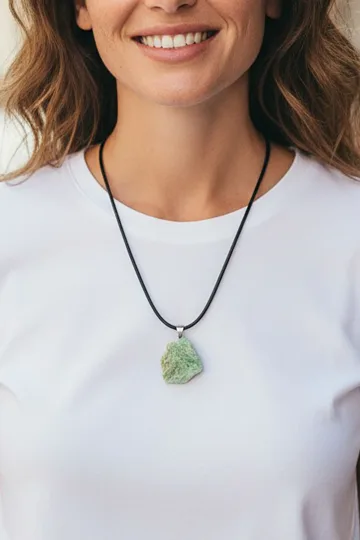
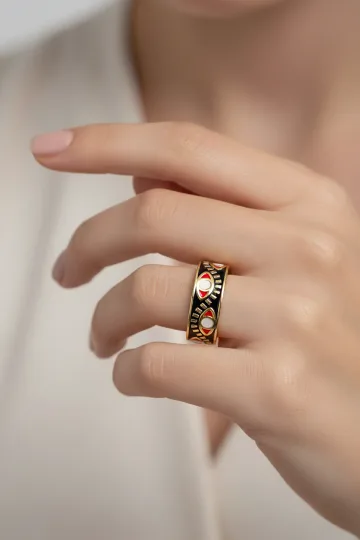
Wear the symbol, don't just read about it. These are in stock:
The history of opal
Antiquity
The name most likely goes back to the Sanskrit upala, a precious stone, by way of the Greek opallios and the Latin opalus. Opal was known in antiquity. The Roman writer Pliny the Elder, in the first century, described it with delight in his Natural History: in it, he wrote, the merits of many stones gather at once, the fire of ruby, the green of emerald, the purple of amethyst. He also retold the famous story of the senator Nonius, who supposedly chose exile over parting with his beloved opal. The truth of that tale cannot be guaranteed, but it shows how highly the stone was valued in Rome.
In antiquity opal was held to be the stone of October, and the tradition has reached our day: in the English-speaking world opal is still called the birthstone of those born in October.
The Middle Ages and the unlucky reputation
In medieval Europe attitudes to opal soured. Stones in collections cracked and clouded because they were kept dry, with no knowledge of the stone's quirks. A cracked stone was easy to link with a bad omen, and so opal earned its name as an unlucky stone.
It is often said that the reputation was finished off by Walter Scott's novel Anne of Geierstein (1829), where the heroine's opal changes its sheen and brings misfortune. After the book appeared, demand for opal in Europe did genuinely drop. That is a literary coincidence, not a property of the stone, but the residue lingered for a long time.
The Victorian era and Australia
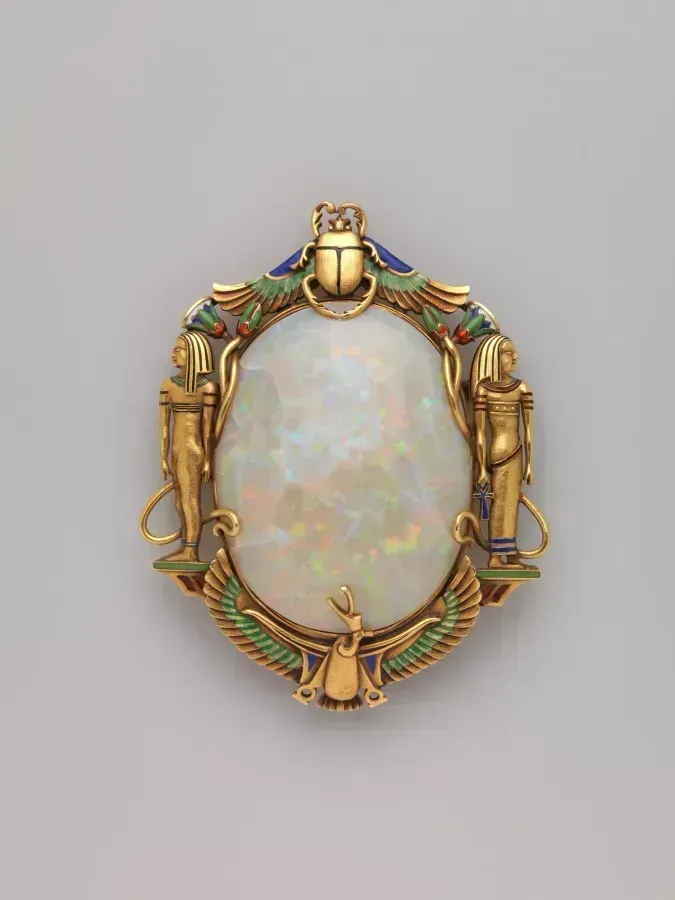
Opal's reputation was turned around in the nineteenth century. Queen Victoria loved opals, wore them herself and gave them as gifts. A monarch openly wearing the unlucky stone was the best rebuttal of the superstition, and the fashion for opal in Britain climbed.
The greater change happened in geology. In the 1870s and 1880s rich deposits were found in Australia, including the black opals of Lightning Ridge in New South Wales. The Australian stones turned out brighter and larger than anything known before, and in time Australia became the world's chief supplier of opal. The jewellers of the turn of the century, the Art Nouveau masters, gladly set opal into gold and enamel, making its play the heart of the design, as on the brooches of that period.
Opal in Central America and the East
Europe was not the only place that prized opal. In pre-Columbian Mesoamerica fire opal from the Mexican deposits was known and used for ritual and ornament long before the Europeans arrived. In the ancient East opal was known and loved too, and part of the eastern lore tied it to lightning and heavenly fire, which fits the very nature of a stone with its sudden flashes. Against these traditions the European reputation of an unlucky stone looks more like a local episode than a general verdict.
The return of fashion in the twentieth century
Once the Australian finds flooded the market with bright and fairly affordable stones, opal slowly regained its good name. Science played its part too: by the middle of the century gemmologists already understood the nature of the play of colour and the cause of crazing, and it became clear that cracks were a matter of storage, not of an evil fate. The arrival of a convincing synthetic opal in the 1970s also stoked interest: people talked about the stone again, now in connection with how to tell a grown stone from a natural one.
Famous opals and finds
Record-breaking stones
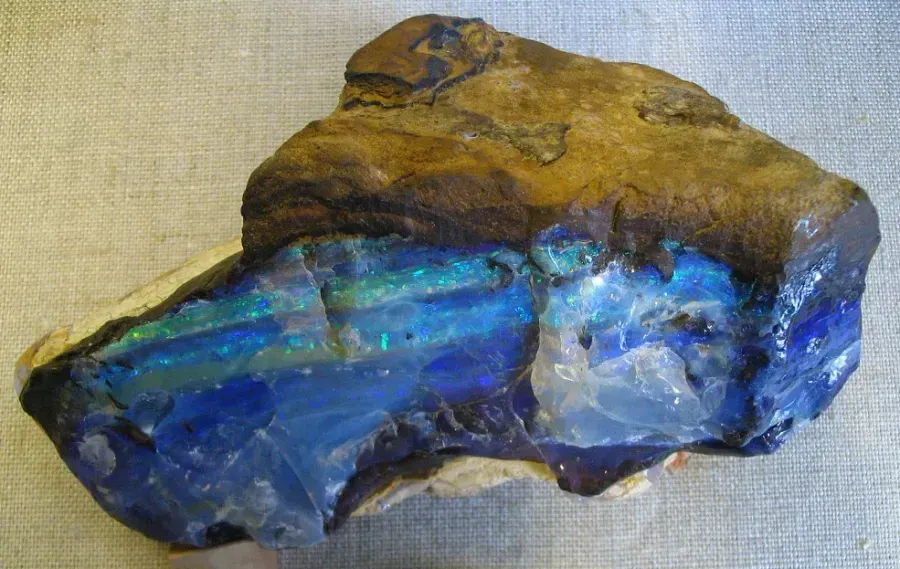
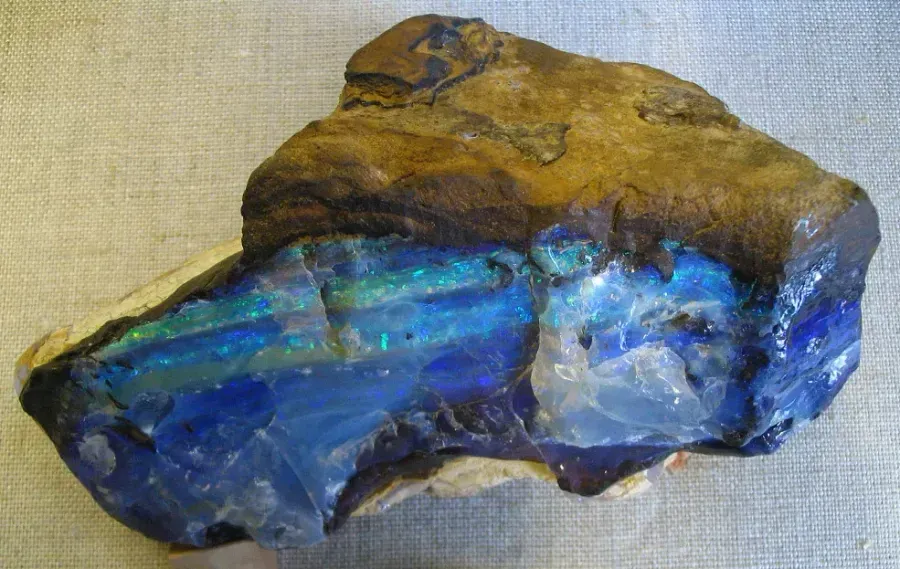
Opal, like large diamonds, has its celebrated examples, and the stories around them show how varied a stone's value can be. Among the Australian finds there are large black opals with names of their own, which became the pride of collections and museums. A category apart is the huge chunks of opalised rock in which thin veins of playing stone run through a pale matrix: such blocks are prized not for clarity but for spectacle and rarity.
Opalised bones and shells
The most astonishing finds are not the stones themselves but what the opal turned into. The Australian deposits have yielded opalised shells of ancient molluscs, fragments of wood and even the bones of extinct animals, where silica took the place of the original material and at the same time gave the fossil a rainbow play. The result is a double rarity: palaeontological value and opal beauty in one object. Such finds settle in museums more often than in jewellery, but they explain better than anything how the stone is born by filling the voids in rock.
Customer reviews
Zevira is a real jewellery shop. Genuine payments, deliveries and customer thank-yous.
🥰🥰🥰 gracias
Ok, ¡gracias! 🙂
Opal in art and culture
The stone of Art Nouveau
No style befriended opal the way Art Nouveau did at the turn of the nineteenth and twentieth centuries. The masters of that movement loved flowing lines, natural motifs and shimmering materials, and opal fitted the aesthetic perfectly: its play of colour changed the piece with every movement, making the object feel alive. Opal sat beside enamel, soft gold and translucent inlays, and the design was built so that the stone was the heart of the jewel and not one shiny detail among many. That was when opal finally stopped being a stone of suspicion and became a stone of artists.
In literature and language
Literature did opal a double service. On one hand, Walter Scott's novel undermined its reputation in the nineteenth century. On the other, poets and writers reached for opal for centuries as an image of changeability, of many faces, of an elusive beauty. A comparison to opal became a settled way of saying that something shimmers with meanings and cannot be reduced to one. In that sense the bad name and the poetic charm of the stone grew from a single root: from the fact that opal never looks the same twice.
Geology: how and where opal forms
How it forms
Opal is born from water rich in silica. Such water seeps through rock and fills voids, cracks and the cavities left by shells and bones. Gradually the water leaves and the silica settles in layers. If the silica particles happen to be of equal size and stack evenly, the result is precious opal with a play of colour. If they stack at random, you get common opal.
The process is very slow, thousands to millions of years. The colour of the background depends on impurities: iron gives brown and reddish tones, manganese oxides and carbon give a dark, almost black ground. Opal often copies the shape of whatever it filled, hence opalised shells, wood and even bone, where silica took the place of the original material.
The main deposits
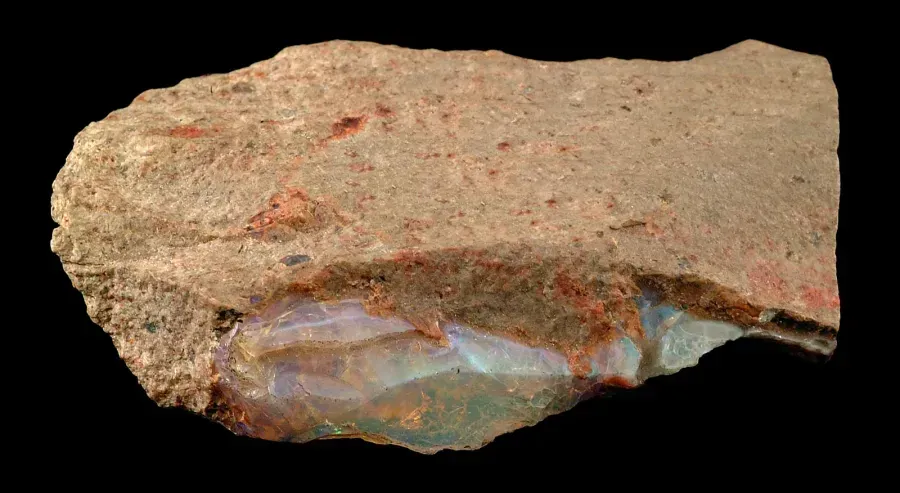
Australia supplies the bulk of the world's precious opal. Lightning Ridge in New South Wales is famous for black opals; Coober Pedy and Andamooka in South Australia for light ones; Queensland for the so-called boulder opals set in ironstone.
Ethiopia, from the 1990s and especially after the 2008 finds in the Wollo province, became a major source of bright opal. Ethiopian stones are often hydrophane: they absorb water, cloud and clear up temporarily, which calls for special care around moisture.
Mexico is known for fire opal, a transparent stone with a rich orange-to-red ground mined in the state of Querétaro. Fire opal is prized for its colour; the play of colour is not always present.
Brazil, Peru and the United States round out the picture. Brazil gives a light opal, Peru an opaque blue-green and pink opal without play, and the United States (Nevada, Idaho) various kinds, including the rare Virgin Valley material with wood replaced by opal.

Turn on your camera, pick earrings, a pendant or a ring, and see the piece on yourself in real time.
Switch items in one tap.
Everything runs in your browser: no photo or video is ever uploaded.
Types of opal
Black opal
The rarest and most expensive type. "Black" here is not about the colour of the whole stone but about a dark background, against which the play of colour reads more sharply and brightly than on a pale one. The chief source is Lightning Ridge in Australia. The brighter and more multicoloured the play on the dark ground, especially if there are red flashes, the higher the value.
White (light) opal
Opal with a light, milky or greyish background. The most common type of precious opal, plentiful in South Australia. The play of colour on a light ground is gentler than on black, and the stones are usually larger. This is the most affordable way into the world of playing opal.
Fire opal
Transparent or translucent opal with a warm ground from yellow to deep red, coming mostly from Mexico. It is prized for the purity and depth of colour. It can show play of colour, but does not have to. Anyone caught by that warm fire should read the separate guide to fire opal.
Boulder opal
An Australian opal that is not separated from the brown ironstone host rock but cut together with it. The dark rock serves as a natural background and backing, making the thin layer of opal stronger. The result lasts longer than many other types.
Crystal opal
Transparent or translucent opal with a bright play of colour inside a clear body. It can sit on either a dark or a light background. It is prized for depth: the play seems to hang in the thickness of the stone.
Hydrophane opal
Usually Ethiopian. When dry it can be cloudy, and when wet it becomes temporarily transparent and changes its play. The effect is reversible, but that is exactly why such stones are especially afraid of water and cleaning agents.
To keep in mind how the types differ and where they sit on the price ladder, here is a comparison table.
In short: at the top are black opal from Lightning Ridge and bright crystal opal, then fire and white, then the less stable kinds. Synthetic opal and composite stones stand apart, and they are covered in the section on fakes. For more on the most expensive type there is a guide to black opal.
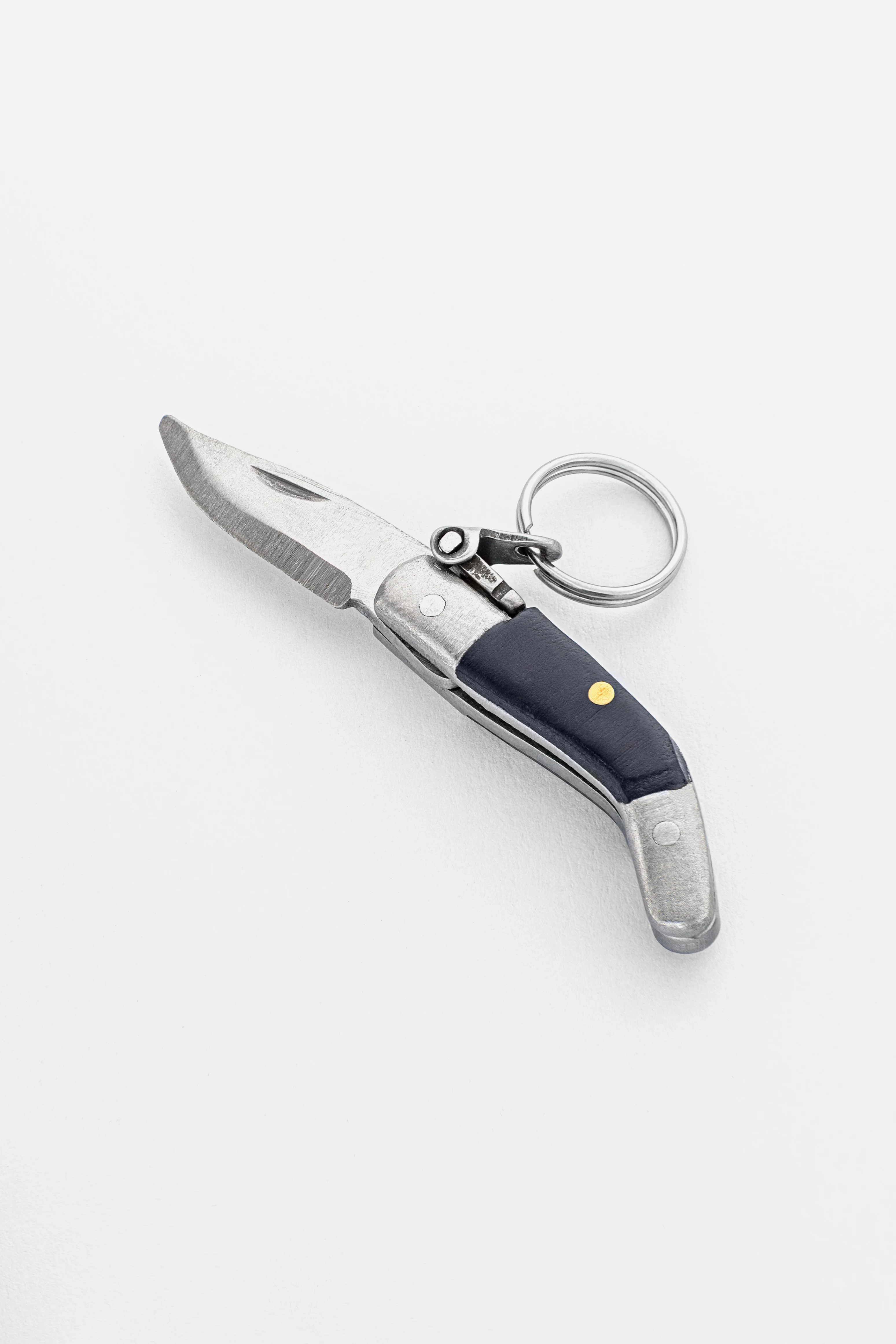
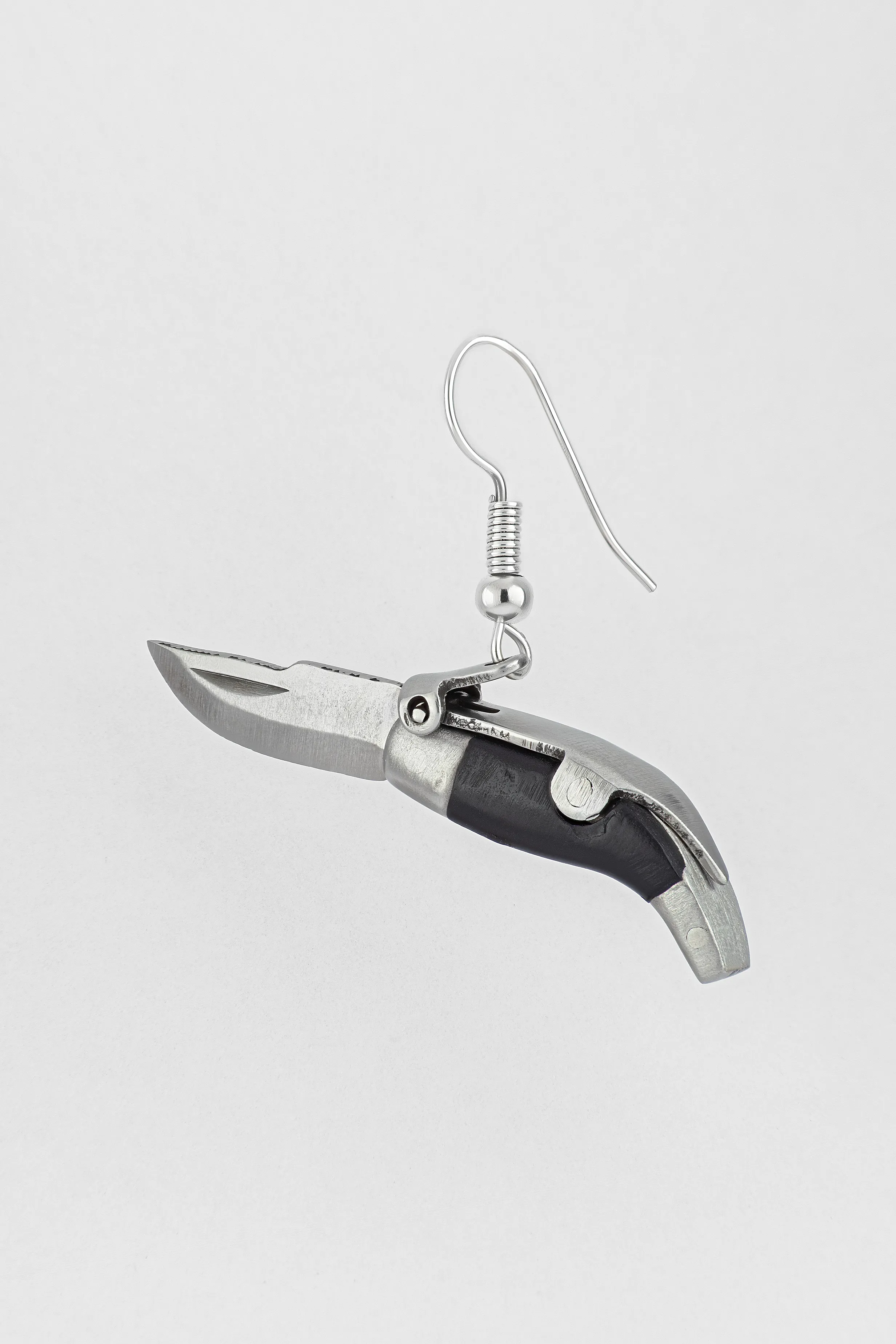
Artisan-crafted CAPAORA navaja pendant
A 40 mm stainless-steel navaja with a real folding mechanism and Palanquilla lock. An affordable gift to remember.
A code for blog readers:
10% off your first order
Authentic · Maker's guarantee · Ships from Spain
How to choose an opal: what sets the price
The price of opal is built not from carat weight, as with transparent stones, but from several factors of the play. Knowing them helps you understand what the money is for.
Brightness of play. The main parameter. Opal has a rough brightness scale from B1 (the brightest, visible from a metre away in daylight) to B7 (dull, noticeable only under a direct beam). A dull stone with a rich pattern is worth less than a bright one with a simple pattern. Brightness is read first, the rest after.
Tone of the background. Australian opals are sorted by a body-tone scale from N1 to N9: N1 to N4 are black and dark opals, N5 to N6 semi-dark, N7 to N9 light and white. The darker the ground at the same brightness of play, the sharper the flashes and the dearer the stone.
The colours in the play and the pattern. Red is the rarest, then orange, then green, with blue the most common. A stone that carries red is prized above a single-colour blue one. The pattern is valued separately: broad flat patches (broad flash), a mosaic of large fields (harlequin, the rarest and most expensive pattern), or a fine scale (pinfire, the cheapest). True harlequin with even diamond shapes barely occurs in nature, so the word is used loosely on the market.
Directionality. A good opal plays when turned in every direction. A stone that flares only at one angle and dies at others is rated lower: in a piece of jewellery it will often look dead.
Integrity. Held to the light, the stone is checked for internal cracks and clouding. The crazing already mentioned, the web of fine cracks, sharply lowers value and says the stone has begun to dry out.
The practical takeaway: a small bright opal with a lively many-coloured play beats a large but dull, single-colour one. Size in opal is secondary.
Treatment of opal: what is done honestly and not
Opal is often brought up to a saleable look, and it is worth knowing this, because the treatment affects durability and price.
Smoke and sugar-acid treatment. Light, porous Ethiopian opals are artificially darkened to imitate a pricey dark ground. In smoke treatment the stone is wrapped and heated, and soot works into the pores. In the sugar-acid method the opal is soaked in a sugar solution and then in acid, which deposits carbon inside. The ground darkens and the play grows sharper, but this is not natural black opal, and it should cost accordingly.
Impregnation. Porous opals are impregnated with oil, wax or colourless resin to remove cloudiness and temporarily boost the shine. The effect does not last: in time the filler works out and the stone clouds again.
Dyeing. Cheap porous material is sometimes tinted to add a background colour. The dye gives itself away by pooling in cracks and pores under magnification.
An honest seller states the treatment. Natural black Australian opal and smoked Ethiopian opal are different goods, and the gap in price between them is substantial.
Leave your email, we'll send your discount code. No spam, unsubscribe anytime.
The code arrives by email, valid on your first order.
How to tell opal from fakes and look-alikes
There are plenty of imitations and composite stones on the opal market, so a couple of reference points come in handy.
Natural, synthetic and imitation. Synthetic opal, grown in a laboratory, is close in composition to the real thing but usually gives itself away by a play pattern that is too regular, sometimes with a columnar "snakeskin" structure seen from the side. Imitations made of plastic or special glass give a characteristic scaly play and feel warmer to the touch than a real stone.
Composite stones. A doublet is a thin layer of opal glued to a dark backing. A triplet adds a clear dome of quartz or glass on top. From the side these stones show an even glue line, and the play is only in the upper layer. They cost less than solid opal, which is fine as long as the seller honestly calls the stone a composite.
Look-alikes. Opal is sometimes confused with labradorite and moonstone, but those have a different mechanism of glow (not diffraction but reflection off internal layers), and their typical blue or rainbow sheen rolls across in a continuous wave rather than a mosaic of flashes. Labradorite is also harder and heavier.
What to watch for when buying. The play of colour should travel as the stone is turned and under different light sources. A solid opal has no even glue line on the side. Hydrophane opals react to water; solid stable ones do not. With a doubtful expensive stone it is sensible to ask for a report from a gemmological laboratory.
Gilson opal: the best-known synthetic
The most recognisable synthetic opal is tied to the name of the French chemist Pierre Gilson, whose laboratory began producing it in the 1970s. In composition it is genuine silica, its spheres precipitated and stacked into an orderly grid, which is why the play of colour in such a stone is bright and convincing. What gives it away is exactly that excess of perfection: the play pattern is too even and repetitive, the fields are of equal shape, and from the side under magnification you can sometimes see the columnar structure that collectors call snakeskin or lizard mosaic. In natural opal the pattern is always a touch irregular, alive, without machine regularity. Synthetic opal also usually holds less water and so is less prone to cracking, which is no fault in itself, but an honest seller is bound to call the stone grown.
Opalite and glass imitations
Opalite is not opal at all but milk glass or plastic with a rainbow sheen, sold under a pretty name. It has no diffraction play of flashes: instead of a mosaic of coloured fields it gives an even bluish-milky glow that shifts smoothly rather than breaking up when turned. Held to the light, opalite often takes on an orangey or amber cast, and in reflected light a blue one, and that pair of signs gives away the glass almost for sure. Inside glass imitations a loupe often shows small round air bubbles, which never occur in natural opal. Glass and plastic also behave differently to the touch from stone: plastic is noticeably warmer, and glass rings more.
The water test and simple home checks
A few tricks help you get your bearings, though they do not replace a laboratory. A touch of the tongue or a wet finger: porous hydrophane opal noticeably sticks, because it starts to absorb moisture, while a dense stone, glass or plastic does not. Examining the side edge in the light reveals the glue line of doublets and triplets. A loupe shows the bubbles in glass and the too-regular pattern of a synthetic. And the main rule of caution: a costly stone, a black opal above all, is best bought with a gemmological laboratory report rather than on home tests alone.
Caring for opal
Opal is soft (5.5 to 6.5 on Mohs) and holds water, so the rules of care are stricter than for hard stones.
Protect it from knocks and scratches. Take opal jewellery off for cleaning, sport and work with your hands. A ring with opal is the most vulnerable; a pendant and earrings are in a lower-risk zone. Keep opal apart from harder stones, ideally in a soft pouch or a separate compartment, so its neighbours do not scratch it.
Avoid sharp changes of temperature and dryness. Do not leave opal in the sun, by a radiator or in a car that bakes in summer. Dry heat drives out the water and leads to cracks.
Clean it gently. Warm (not hot) water, a soft cloth or brush, and if needed a drop of mild soap. No ultrasound and no steam cleaners: vibration and steam are dangerous for the stone and especially for composite doublets and triplets, whose glue can part. Hydrophane opals are better not soaked for long at all.
Take it off before cosmetics and chemicals. Perfume, hairspray and household chemicals settle on the porous surface and dull the stone. The jewellery goes on last, after make-up and scent.
The low hardness directly affects wearability: opal is a stone for an occasion, not for daily wear in an active mode. With reasonable handling it serves quietly for decades.
The setting does half the job
How long an opal lasts in a piece depends on how it is set. This matters most for rings, which take the knocks.
Bezel setting. Opal likes a closed setting, where a rim of metal surrounds the stone around the edge and rises above its surface. That lip takes the knocks on itself and protects the girdle, the edge of the stone, from chipping. For a ring with opal this is the preferred option.
Prong setting. Open claws are pretty and let in more light, but they leave the edges of the stone defenceless. For earrings and a pendant, where the risk of knocks is small, this is acceptable; for an everyday ring it is worse.
Boulder opal and composites. Boulder opal with its natural ironstone backing is stronger than a thin solid layer and takes setting more calmly. Doublets and triplets call for separate caution: water and steam can part the glue, so they must not be soaked for long and must not be steam-cleaned, even if the setting looks secure.
A cabochon, not facets. Opal is almost always cut as a cabochon, a smooth dome with no facets. A faceted cut does not suit opal: diffraction works on a smooth curved surface, while facets only increase the area of chipping. A high dome also shows the play deeper in the body of the stone.
Symbolism: briefly and honestly
In various traditions opal was credited with a link to creativity, inspiration and changeability, partly because of the play of colour itself. In antiquity it was held to be the stone of October and a sign of hope; in the Middle Ages, on the contrary, an unlucky one. All these meanings are cultural, not physical: there is no proven effect of the stone on health, mood or events, and symbolism is best treated as a fine tradition, not as a working tool.
Send a friend a discount code, they save on their first order.
The psychology of the choice: who is drawn to opal
Opal is rarely chosen by accident, and here it differs from stones everyone understands, such as the diamond or the sapphire. Opal tends to draw those who are bored by predictability: a stone that looks different with every movement of the hand answers a wish to own something with character rather than a smooth, single tone of shine. There is a logic to this. A one-tone stone is read at a glance and surprises no more, while opal asks for attention and rewards it with a flash of a new colour, so the relationship with it builds longer and warmer.
There is a flip side. The fussiness of opal puts off those who want to put a piece on and forget it: the thought that the stone must be kept from dryness and knocks outweighs its beauty for some. The result is a natural selection: opal stays with people who are willing to fuss over it and who enjoy that very care. Often opal is not a first piece of jewellery but a deliberate one, chosen after simpler stones, when someone wants something alive. It is a stone for a second, more personal choice.
Facts that surprise
Opal can grow within a human lifetime, not over millions of years
It is natural to think any gem takes millions of years to be born. Natural opal does grow slowly, but silica opal-like films with a rainbow play can form surprisingly fast in the right conditions, and synthetic opal is grown in a laboratory in a matter of months. This is a rare case where a beautiful stone need not be ancient.
Water was found on Mars through opal
Orbital and ground studies of Mars have found deposits of silica close in character to opal. Since water is needed to form opal, these finds became one of the arguments that liquid water once existed on Mars. So a modest ornamental stone turned out to be an indirect witness to Martian history.
Red play is rare because it needs large spheres
Of all the colours in opal's play, red occurs the least and is prized the most. The reason is purely physical: red light is made of long waves, and for diffraction to deliver them you need the largest and yet perfectly stacked silica spheres. Nature assembles such a grid rarely, so a stone with genuine red flashes climbs in price at once.
A faceted opal loses its point
Almost all valuable stones are faceted to catch the sparkle. Opal, by contrast, is almost always cut as a smooth cabochon dome. Facets do not suit it: the play of colour works on a smooth curved surface, while facets only break it up and add brittle edges. This is one of the few gems that a cut tends to harm.
Hydrophane literally turns transparent from water
Ethiopian hydrophane opal can do a trick no other stone manages: when dry it can be cloudy and plain, and lowered into water it lightens before your eyes and reveals its play, because the pores fill with moisture. The effect is reversible, but that is exactly why such a stone is especially afraid of accidental wetting: along with water it can absorb dye and dirt.
One stone holds a whole spectrum of the rainbow
In a good opal, turning it lets you see the entire visible range in turn: from red through orange, yellow, green and blue to violet. This is not a set of pigments but one and the same white light, split by the microstructure of the stone. In effect opal works as a natural diffraction grating, hidden inside a pebble that looks opaque.
What to wear opal with
Opal is one of those stones that choose for themselves when to come into the light. One piece plays completely differently depending on what surrounds it.
For everyday wear, the small format works best. Stud earrings with fire opal or a thin pendant in a simple setting live easily with a chunky-knit sweater, a light shirt, a linen dress. The stone works as a warm point noticed in close conversation. For the office the logic is the same: better one restrained piece than a scatter. Fire opal in gold reads more businesslike than cold black.
The evening reveals opal fully. A black opal in a ring asks for a dark backdrop: deep blue, wine, graphite silk or velvet, an open neck and pinned-up hair so the light reaches the stone. White and Ethiopian opals like pastels, soft fabrics, a V-shaped or rounded neckline that leaves room for a pendant at the collarbone. For a special occasion opal is set at the centre and the rest is pared back: if there is a ring with opal on the hand, the earrings are kept quiet, and the other way round.
By metal, opal gets on with the cool palette. White gold, platinum and silver underline the shimmer and do not argue with the colour. Yellow gold takes the tenderness onto itself, so it is kept for warm fire opals. Several pieces at once are worn carefully: one opal plus smooth single-tone chains or a thin line of small stones, without a second bright gem nearby, or they pull attention away from each other. Pearl and moonstone sit beside opal softly.
Opal suits those who like a piece that changes with the light and who value an object with character. By length: a pendant on a thin chain of 42 to 45 cm brings the stone up to the collarbone, where it catches more light than one hidden in a neckline. And the rule of a single accent holds almost always: let opal be the soloist and let everything else stay in the background.
Frequently asked questions about opal
Does opal really bring bad luck?
No. This is a medieval superstition, reinforced by nineteenth-century literature. Opals cracked not from a curse but from improper dry storage. With normal care the stone serves for decades.
Why does opal shimmer with every colour?
It is the diffraction of light on orderly silica spheres inside the stone. The size of the spheres sets the colour, the angle of view changes the picture, so the colours travel as you turn it. There is no pigment here in the usual sense.
What is opal's hardness and can it be worn every day?
On Mohs it is 5.5 to 6.5, soft for a jewellery stone. Earrings and a pendant can be worn often; a ring is better protected and taken off for work with the hands, sport and cleaning. Opal is more for an occasion than for daily active wear.
How does black opal differ from fire opal?
Black opal has a dark background on which colour plays brightly; it is the rarest and dearest, mostly from Australia. Fire opal is transparent, with a warm yellow-red body colour, usually from Mexico, and does not always show play of colour. Choosing between them is a matter of taste.
Is synthetic opal the same as natural?
Close in composition, but it is a laboratory stone. It usually gives itself away by a play pattern that is too regular and sometimes by a columnar structure. It costs far less, and an honest seller always states that the stone is synthetic.
How do I tell a solid opal from a doublet or triplet?
Look at the stone from the side: composites show an even glue line, and the play is only in the upper layer. A solid opal has no such line, and the play runs through the body of the stone.
Can opal be wetted and cleaned with ultrasound?
Warm water and a soft cloth are fine; ultrasound and steam are not. Be especially careful with hydrophane (often Ethiopian) opals and composite stones: water and vibration can harm them.
Is opal more expensive than diamond?
Usually not, but it all depends on quality. The finest black opals with a bright many-coloured play can, per carat, overtake average diamonds. Most white and fire opals are noticeably more affordable.
How does opalite differ from opal?
Opalite is not opal at all but milk glass or plastic with a rainbow sheen. It has no diffraction play of flashes: instead of a mosaic of coloured fields there is an even bluish-milky glow, often with an orangey cast against the light. A loupe sometimes shows round air bubbles inside, which a natural stone never has. It is a cheap material for costume jewellery, and selling it as opal is dishonest.
Can hydrophane opal really change transparency from water?
Yes. Ethiopian hydrophane can be cloudy when dry, and when wet it lightens temporarily and reveals its play, because the pores fill with moisture. The effect is reversible. But that porosity makes the stone soak up water, dye, oils and dirt easily, so it is kept especially safe from accidental wetting and cleaning agents.
Is it true that opal was found on Mars?
Studies of Mars have found deposits of silica close in character to opal. Since water is needed to form opal, the finds became one of the arguments that liquid water once existed on the planet. The point is a mineral of the same family, not gem-ready stones for cutting.
Silver, gold, wedding rings, symbolic jewellery, paired sets.
About Zevira
Zevira makes jewellery by hand in Albacete, Spain. Opal is a stone of shimmer and character, and that idea is close to us: every piece here is born from the hand of a maker rather than coming off a conveyor, so it keeps the same one-of-a-kind quality as the rainbow play of the stone.
What you can find with us on the theme of opal and shimmering stones:
- rings with cabochons and coloured inlays in silver and gold settings
- pendants in which the stone catches light at every movement
- stud and drop earrings with a gentle play of colour
- pieces with moonstone and labradorite for those who love opalescence
- jewellery for personal engraving
- gift formats with instructions for the care of fragile stones
Every piece is made by hand by a maker, with the option of personal engraving. Sterling silver 925 and 14 to 18K gold.