Ruby in Jewellery: Meaning of the Red Stone, Types and How to Choose
Introduction: the king of gemstones
In 2015, a ring called "Sunrise" sold for a record-breaking sum at a major international auction in Geneva. Twenty-five carats of Burmese ruby in a setting by one of the leading Paris haute joaillerie houses. It set a world record price per carat for any ruby and for any coloured gemstone.
Why does it fetch such prices? Because a quality specimen is rarer than a diamond of the same size. Gemologists call it the king of gemstones for good reason. Within the "big four" (diamond, ruby, sapphire, emerald), red corundum is the only one that can exceed the price per carat of the finest diamond. That rarity is not a slogan: a fine ruby above two carats is a genuinely scarce object on the global market.
This is despite the fact that the ruby and the sapphire are exactly the same mineral: corundum. The difference lies solely in trace elements that give colour. Red means chromium; everything else is sapphire. Those 1-2% of chromium transform ordinary corundum into a legendary gem that has been hunted for millennia. Chromium is also what gives a Mogok ruby its red fluorescence under ultraviolet light, the physical explanation of what merchants spent centuries describing as an inner fire.
This guide covers what the stone is, how to choose one, why "pigeon's blood" is a gemological standard rather than marketing, with measurable thresholds of saturation and fluorescence, and why a red corundum in jewellery always carries three thousand years of history with it.
Ruby jewellery: what to choose
Ruby ring
The most significant form.
- Solitaire ring, 1-2 carats one centre stone in a simple setting. An engagement ring alternative. Premium-luxury (Burmese) or mid-premium (Mozambican).
- Halo ring centre stone surrounded by diamonds. Vintage romance. Luxury segment.
- Three-stone ring red stone flanked by two diamonds. Victorian classic. Luxury.
- Bold bezel-set ring large specimen in a yellow-gold bezel. 2026 trend. Premium-luxury.
- Eternity ring with alternating stones red and diamonds for anniversaries. Luxury.
- Signet ring masculine version with monogram and centre stone. Premium-luxury.
Earrings
- Studs, 0.5-1 carat each paired. Premium (synthetic) or luxury (natural).
- Drop chandelier earrings for evening wear. Luxury.
- Single-stone drop earrings long teardrop. Premium-luxury.
- Hoops with small stone accents modern minimalism. Mid-premium.
Pendant
- Single-stone pendant on a fine 18K gold chain. Premium-luxury.
- Heart-shaped red heart, a romantic classic. Premium-luxury.
- Victorian locket with red accent vintage. Mid-premium.
- Plain bezel-set pendant minimalist, contemporary. Premium.
Bracelet
- Tennis bracelet a classic. Luxury.
- Bangle with single red accent minimalism. Premium-luxury.
- Alternating diamonds and red stones in pairs. Luxury.
Brooch
A vintage category. Art Deco, Victorian and Edwardian brooches set with these stones frequently appear at auction. Collectible value.
Types of ruby by origin and the character of each region
Burmese (Myanmar): the king of gemstones
The benchmark for quality, especially from the Mogok Valley. Mogok sits at about 1,000 metres of elevation in the Mandalay region, in a place where, by legend, the gods once descended to earth.
Characteristics:
- Deep red with a slight blue undertone
- "Pigeon's blood" the legendary colour (not violet, not orange, but dark red with a hint of blue)
- Internal "silk" fine rutile inclusions that create a glow
- High transparency
- Luxury investment segment
Character: hold a Mogok ruby up to the light, particularly in daylight, and the stone seems to burn from inside. Behind that effect is physics: the marble rock of the valley is unusually low in iron and rich in chromium. For the person wearing it, though, the effect reads as an inner fire. The Mogok ruby is a stone of authority, of grandeur, of deep and ancient legend. It is the stone of kings and prophets.
Burmese specimens certified by a leading independent gemological laboratory achieve record prices at auction. As of 2026, however, the political situation in Myanmar makes ethical provenance difficult to verify.
Mozambican: the stone of renewal
The modern alternative. The main mines lie in Cabo Delgado province in the southeast of the country, a region of red earth where systematic extraction began in 2011. That operation lifted the region out of obscurity and turned Mozambique into the largest ruby supplier in the world.
Characteristics:
- Vivid red, occasionally with a slight orange or violet undertone
- Good transparency
- Greater availability
- Colour often improved by heating
- Traceable, ethical sourcing
- Premium segment (with certification)
Character: the Mozambican ruby is a stone of youth and possibility. It is young in the geological sense, formed long after the Burmese material. Look at it and you see brightness, almost cheerfulness, a lightness of spirit. It is lighter in feel than the deep Mogok stone, and that is a feature rather than a flaw. The Mozambican ruby suits those choosing a fresh start, those who want beauty without the weight of history. It is the stone of a new era in jewellery.
Stones from Mozambique became the primary alternative to Burmese material throughout the 2010s and 2020s. Their clean, traceable origin makes them the choice of the conscientious buyer.
Thai (Siamese): the stone of craftsmanship
Historically important. The Chanthaburi mines have long been worked out, but the town remains a corundum-cutting and treatment centre of world standing.
Characteristics:
- Dark red with a violet undertone
- Less "silk"
- Moderate transparency
- Often heated (Thailand has been the historic centre of heat treatment)
- Mid-premium segment
Character: the Thai ruby is a stone of craftsmanship. Thailand gave the world the art of heat treatment, the ability to turn a raw stone into a glowing gem. In a Thai ruby you can feel the work of human hands, the knowledge of old methods. The stone is dark, like evening light, and it keeps the secrets of the Chanthaburi masters. It is for those who value skill over natural luck.
Ceylonese (Sri Lanka): the stone of light
The island of Ceylon, now Sri Lanka, was known as a source of clear, light-toned gems even in antiquity.
Characteristics:
- Light red, slightly pinkish
- High transparency
- Often a blue undertone
- Some specimens sit on the boundary between "pink sapphire" and "ruby"
- Mid-premium segment
Character: the Ceylon ruby is a stone of light, an almost transparent glow inside a red body. It is lighter in feel than the Burmese stone, and that is a deliberate quality. It suits those who wear red not as power but as joy. It is the stone of an island of spice and sun, and its character is warm, radiant, open.
Afghan and Tajik: stones of the mountains
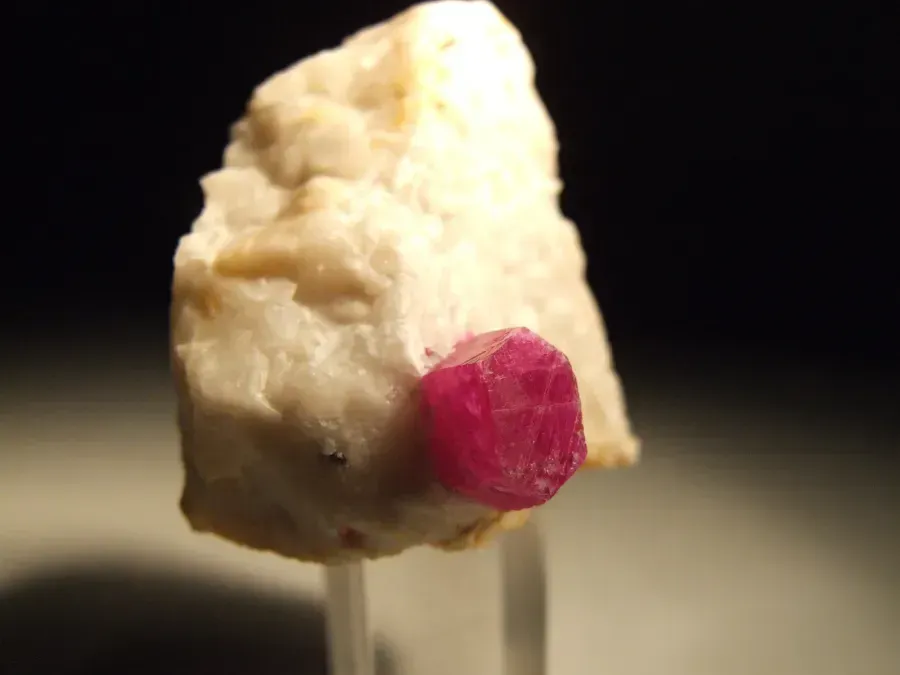
Rare but high quality. The deposits in Afghanistan (Nuristan province) and Tajikistan are high-altitude, in the Hindu Kush and the Pamirs, at elevations above 3,000 metres.
Characteristics:
- Often comparable in quality to Burmese material
- Deep red
- Untreated specimens do occur
- Scarce on the market
- Luxury investment segment
Character: the Afghan ruby is a stone of the spirit of the mountains. It formed under the extreme pressure of high-altitude tectonics, and that registers in its presence. It is a stone for mystics and philosophers. The specimens are rare, and each one carries the story of one of the most dangerous and beautiful places on earth.
Madagascar: the stone of beauty
A modern, developing source. Madagascar is rich in gems, and rubies are mined in the Maninji and Andapa regions.
Characteristics:
- Average quality, but improving
- Vivid red
- Accessible prices
- Good transparency for the mid-range
Character: the Madagascar ruby is the stone of an island, and that island is among the most exotic on earth. Its character is young, not yet entirely settled in the collective imagination. It is a stone for those who choose beauty over reputation, who do not depend on the opinion of investors.
Other deposits
Tanzania, Kenya, Greenland. Small deposits with specific characteristics. Tanzanian ruby sometimes carries a slight blue cast; Kenyan material is more affordable and suits mid-range jewellery; Greenlandic ruby rarely reaches the commercial market.
The geology behind the colour
Ruby belongs to the mineral group of corundum, which is aluminium oxide (Al₂O₃). In chemically pure form, corundum is colourless. Colour appears only when trace elements are present. Chromium at 1-2% produces the characteristic red. Vanadium adds a violet undertone, which explains the "impure" violet cast seen in some material, particularly Thai stones.
What makes the Mogok Valley so distinctive is the presence of chromium together with its chemical context. Mogok rubies form in marble deposits that are unusually low in iron. Iron suppresses fluorescence, so Mogok stones, with minimal iron, exhibit a vivid red fluorescence under ultraviolet light. In daylight they appear to glow from within. This is the physical origin of what traders have always described as an inner fire.
Mozambican rubies, by contrast, form in amphibolite-type metamorphic rock. They contain slightly more iron, which slightly dampens their UV fluorescence. Side by side with a Mogok stone under daylight, the Mozambican often appears vivid but less luminous. Under artificial light the difference narrows considerably. For most everyday settings, both look magnificent.
Chromium also does something unusual at the atomic level: it causes the stone to emit light in the deep red spectrum when exposed to ultraviolet radiation. This strong red fluorescence is one of the diagnostic tools gemologists use to separate ruby from red garnet and red spinel, neither of which fluoresces the same way.
Hardness and toughness: why rubies wear better than expected
Corundum has a Mohs hardness of 9, second only to diamond at 10. In practical terms, this means nothing in daily life will scratch a ruby except another corundum or a diamond. Quartz, which makes up the bulk of common dust and grit, has a hardness of 7, so ruby surfaces stay pristine through years of everyday contact while softer stones gradually abrade.
What matters equally is the absence of cleavage. Diamond, despite being the hardest mineral, has perfect cleavage along four planes, meaning a sharp blow at the right angle can split a diamond cleanly. Corundum has no significant cleavage. Its toughness, the resistance to fracture under mechanical stress, is excellent. This combination of extreme hardness and good toughness makes ruby one of the most practical stones for daily jewellery wear.
The exception is glass-filled material. When lead glass has been forced into fractures, the composite is no longer purely corundum. The glass has different thermal expansion behaviour and chemical resistance. Ultrasonic cleaning vibrations, steam heat, or contact with acids (including some household cleaners) can degrade the fill. This is the primary argument against buying glass-filled rubies.
The 4Cs for ruby
Colour
The most important factor. The finest shades:
Pigeon's blood. The gemological term for deep red with a slight blue undertone. Typically Burmese. Luxury investment segment.
The term "pigeon's blood" originates in the Mogok trade but has since been formalised by leading gemological laboratories, including the Gübelin Gem Lab and GRS (Gem Research Swisslab), as a specific quality designation. To qualify, a stone must reach a defined threshold of saturation, tone, and red fluorescence. It is not a marketing phrase: laboratories issue certificates explicitly stating "pigeon's blood" when the criteria are met, which makes it a measurable standard.
Vivid red. Saturated red without undertones. High premium category.
Moderately saturated red. Mid-tone, standard. Mid-premium.
Undertones:
- Pure red: no undertone at all, the ideal
- Orangey red: the undertone reduces value
- Violetish red: typically Thai material
- Pinkish red: approaches "pink sapphire"
The boundary between ruby and pink sapphire is the subject of ongoing gemological debate. Both are chromium-bearing corundum. The convention, agreed by most laboratories, is that if the dominant impression of the stone is red, it is a ruby; if the dominant impression is pink, it is a pink sapphire. The dividing line is partly subjective, which is why two respected laboratories can sometimes classify the same stone differently. For a buyer, this matters most when acquiring a stone as an investment: the same classification difference can mean a substantial price gap on resale.
Clarity
These stones normally contain "silk", fine rutile crystals that create a characteristic inner glow. This is a mark of naturalness, and when even it is considered a desirable trait rather than a flaw.
Large visible inclusions, however, especially cracks or dark crystals at the centre, reduce value. The ideal is "eye-clean" with minimal, even silk.
Unlike diamonds, where even minute inclusions visible under magnification affect grading, rubies are traditionally assessed for eye-clean clarity. The reason is practical: virtually all natural rubies contain some silk, and demanding diamond-level clarity would eliminate almost the entire natural supply. The silk itself, when evenly distributed and fine, is not a defect but a feature, contributing to the luminous, living character that distinguishes a natural stone from a synthetic one.
Cut
Oval the most common, optimally preserving weight and colour. Cushion classic for engagement rings, soft corners that hold light well. Round for studs, even distribution of brilliance. Heart for romantic pendants. Emerald cut for modernist minimalist rings, emphasising clarity. Cabochon for star rubies (see below), the only practical form for asterism.
Cutters prioritise colour over geometric perfection. A ruby cutter will sacrifice an ideal proportion to keep more of the deep red zone in the finished stone. This is why rubies are often slightly asymmetric or deeper than the "ideal" proportions of a diamond. For a buyer, this means judging a ruby primarily by colour, not by cut grade, unlike diamonds, where cut is the key value parameter.
Carats
Specimens above 2 carats of fine quality are rare. 1-1.5 carats is the engagement standard. 0.3-0.5 carats for studs.
The price-per-carat for rubies increases sharply at certain size thresholds: around 1 carat, around 2 carats, and above 3 carats, the price jumps disproportionately. A 2-carat ruby of the same quality costs more than four 0.5-carat stones combined. This non-linear pricing reflects the real rarity of larger clean material.
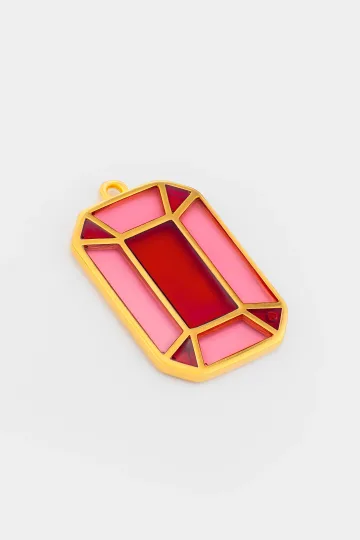
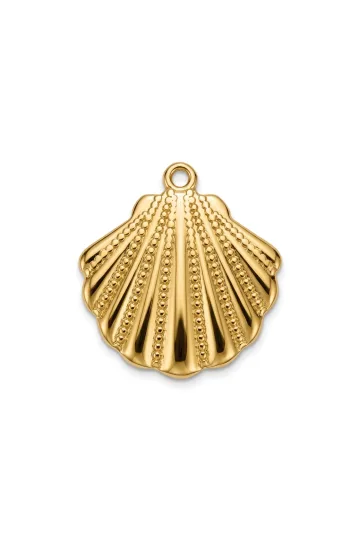
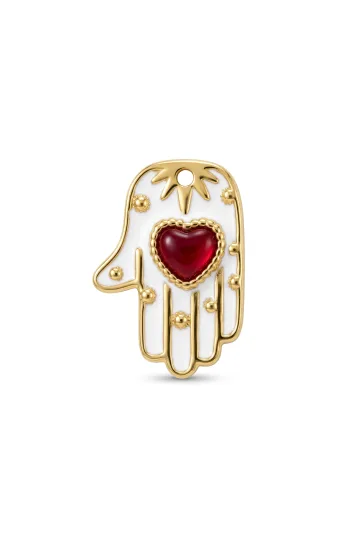
Wear the symbol, don't just read about it. These are in stock:
Star ruby
A distinct category. A stone exhibiting asterism, the optical effect of a "star" on the surface under a point light source.
The cause is the same rutile silk that creates the glow in faceted rubies, but in higher concentration and with precise crystallographic orientation. The rutile needles align along the crystal's hexagonal axes at 120-degree angles to each other. Under a point of light they reflect simultaneously to produce a six-rayed star that appears to float across the surface as the stone is tilted.
Characteristics:
- Opaque, with a silky texture
- Cut exclusively as a cabochon
- Six-rayed star (sometimes twelve-rayed in exceptional specimens)
- High collectible value
Star rubies are worn as pendants or as the focal element in vintage rings. The quality of a star is judged by three things: sharpness of the rays, symmetry of the star, and the evenness with which the star sits centred on the dome. The finest examples come from Burma and Sri Lanka. A twelve-rayed star, caused by two overlapping star systems from different rutile orientations, is exceptionally rare and commands a significant premium among collectors.
Ruby treatment
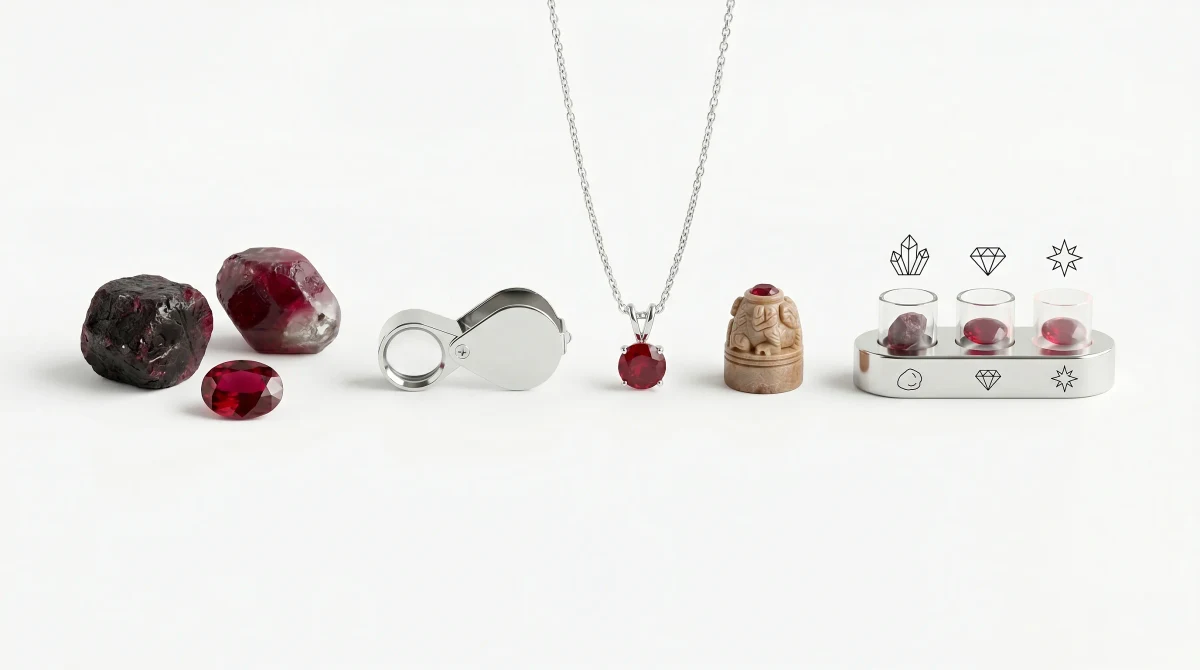
Almost all rubies on the mass market have been heat-treated. This is standard practice: heating to approximately 1800°C improves colour and clarity.
Types:
- Untreated (no heat) rare, investment grade, requires certificate
- Heat only (no filler) the accepted standard
- Heat plus glass filling cheap enhancement, significantly reduces value
- Heat plus borax moderate enhancement
- Heat plus beryllium diffusion aggressive treatment that alters structure
Untreated with certificate: luxury investment. Heat-only treated: mainstream market.
Avoid: glass-filled stones (cheap imitations) and beryllium-diffused material (too much intervention).
How heat treatment works and what labs detect
Standard heat treatment dissolves some of the rutile silk and allows chromium atoms to distribute more evenly, resulting in better colour saturation and fewer visible inclusions. The process was perfected by craftsmen in Thailand's Chanthaburi region from the 17th century onward, long before it had a scientific explanation. The Chanthaburi masters developed sophisticated wood-fire kiln techniques and turned their region into the world capital of corundum heat treatment well before science formally described what was happening.
Modern laboratory detection relies on microscopy and spectroscopy. Untreated rubies retain their original "silk" network intact: sharp rutile needles with defined edges and characteristic stress halos. Heated rubies show partly dissolved needles with blurred edges. Gemologists can detect this under darkfield illumination.
Glass filling is identified under the microscope by its lower relief, its distinctive flash effect under polarised light, and by gas bubbles trapped in the filler. Beryllium diffusion is more insidious: the element penetrates the corundum lattice itself and cannot be detected without laser ablation ICP-MS analysis, which only a handful of top laboratories can perform. This is the central argument for a certificate from an accredited lab (GIA, Gübelin, GRS, SSEF) on any significant ruby purchase.
What the ruby symbolises
Love and passion. The primary meaning. The red stone of the heart, of passion, of life force.
The blood of life and vitality. Ancients called it "congealed blood". A symbol of health, energy and longevity.
Royal power. Used in coronation regalia across many nations. A symbol of authority and might.
Protection in battle. In medieval Europe, rubies were set into swords and armour. The stone was believed to protect the warrior and heal wounds.
Pigeon's blood. The colour of blood is itself a symbol of vitality. In China, "pigeon's blood" carries the meaning of life.
July (birthstone). The classic July stone in the Western tradition.
15th and 40th anniversary stones. Traditional anniversary gemstones. The ruby anniversary is 40 years.
Solar plexus chakra (Manipura). In Hindu tradition, linked to the solar plexus. Personal power and will.
The Sun (planet). In Vedic astrology, the Manik is the stone of the Sun. It is traditionally believed to bring success, fame and leadership.
Protection from poison. A medieval belief: red corundum grows dull in the presence of poison. Hence the tradition of setting it in the cups and tableware of noble households.
Immortality. Burmese tradition: the stone is buried with warriors to ensure awakening in the next life.
Symbolism across cultures
The Sanskrit texts of ancient India are the oldest written source for the ruby's symbolic status. The Ratnaraja, the "king of gems", appears in Sanskrit literature with detailed descriptions of its qualities and its association with the Sun deity Surya. The text describes the finest rubies as resembling the inside of a pomegranate seed, a comparison that captures both colour and internal luminosity. The Indian tradition of ruby grading is so developed that the colour categories described in Sanskrit treatises anticipate modern gemological classification by some fifteen centuries.
In Chinese court culture, red stones (a category that included ruby, spinel, and other red minerals before modern mineralogical distinction) were used as marks of rank. First-grade Mandarin officials wore red stones in their hat-button insignia. The association of red with good fortune, prosperity, and longevity in Chinese culture meant that ruby-type stones were among the most sought-after gems in the imperial court for over a thousand years.
The Arab scholar Abu Rayhan al-Biruni (973-1048) described the ruby in detail in his treatise on minerals, noting its hardness, its places of origin, and the belief that it protected its wearer from melancholy and bodily illness. The trade routes from India through Persia to the Mediterranean made ruby one of the most culturally significant stones across the Islamic world. Al-Biruni distinguished true corundum from spinel by hardness, a remarkable achievement for 11th-century mineralogy.
In medieval European alchemy, red stones were associated with the philosopher's stone and with the transmutation of base metals. The ruby's red colour, read as the colour of fire and of blood, placed it at the centre of alchemical symbolism long before modern gemology existed. This is reflected in the number of historical "rubies" in European royal regalia that turned out to be spinels: the symbolism mattered more than mineral identity. Colour meant power, blood, vital force, and that was reason enough.
Customer reviews
Zevira is a real jewellery shop. Genuine payments, deliveries and customer thank-yous.
🥰🥰🥰 gracias
Ok, ¡gracias! 🙂
History of the ruby: a millennium of power, passion and legend
Antiquity and the earliest history
Sumerian literature (3000 BC) mentions a "red stone" that scholars associate with red corundum, though firm gemological identification is impossible. Archaeological finds in Assyria and Babylon show red minerals in jewellery, used as symbols of power and divinity. In this period red meant blood, vital force, and a direct link to the gods of war and fertility. Sumerian kings set red stones into their armour, believing them to protect in battle.
In India the red corundum is known as "ratnaraja", "king of precious stones" in Sanskrit. Vedic texts dated to 1500-1000 BC describe it as a symbol of the Sun and a stone of the gods. The Atharvaveda and the Brahmanas give the first formal descriptions of quality: colour, lustre, internal luminous structure. The Indian tradition of ruby grading is so developed that its descriptions anticipate modern gemological classification by fifteen centuries.
In ancient Egypt, red gems (often, by modern knowledge, garnets or spinels rather than rubies) were used in sacred jewellery and funerary masks. The Egyptian tradition treated the red stone as the "eye of Ra", an embodiment of the solar deity.
Rome and Byzantium: a confusion of identity
In Rome red minerals were prized, but they were more often garnets or spinels, confused with true corundum until the 18th century. The absence of modern mineralogy meant that visual similarity and supposed magical properties grouped many different stones into one category. The "red stones" of royal crowns, including the famous Black Prince's Ruby in the British crown, turned out to be spinels. Pliny the Elder (1st century AD) describes gemstones in his "Natural History" with precision but without a gemologist's instruments, so his descriptions sweep red corundum, garnets, spinels, and even red tourmalines into one category of "carmine stones".
The Byzantine Empire preserved the Roman tradition of seeing red stones as symbols of imperial power. Red stones were set into sceptres, rings and diadems. The symbolism was clear: red could only be the attribute of the supreme ruler, the earthly representative of God.
From the 6th century BC to the 13th century: the rise of Burma
Mining in the Mogok Valley (Myanmar) is documented from the 6th century BC, more than 2,500 years of continuous activity. It is the longest continuously worked gem deposit in world history. Mogok sits at about 1,000 metres in the Mandalay region, in a green valley ringed by limestone mountains. The marble host rock, exceptionally low in iron, creates a particular chemistry: it is exactly what produces the fluorescent glow that became the world standard for high quality.
Mogok miners traditionally worked by artisan methods, following gem-bearing veins through the marble. Each family held its own plot, passed down across generations. Knowledge of where stones lay, the best mining seasons, the methods for extracting crystals without damage, all of it passed on as family capital. By the 6th century AD Mogok was known across the Asian world. Traders from India, China, Persia and Central Asia converged on the valley. The ruby became the single most valuable item of trade on the Silk Road.
From the 13th to the 19th century, Mogok held an absolute monopoly on fine ruby. Every high-quality ruby that reached the European royal collections came from Burma. The stones travelled from the valley to China and India, then through Persian traders to Constantinople and on west, into European palaces and cathedrals.
The 13th to 15th centuries: the European fascination
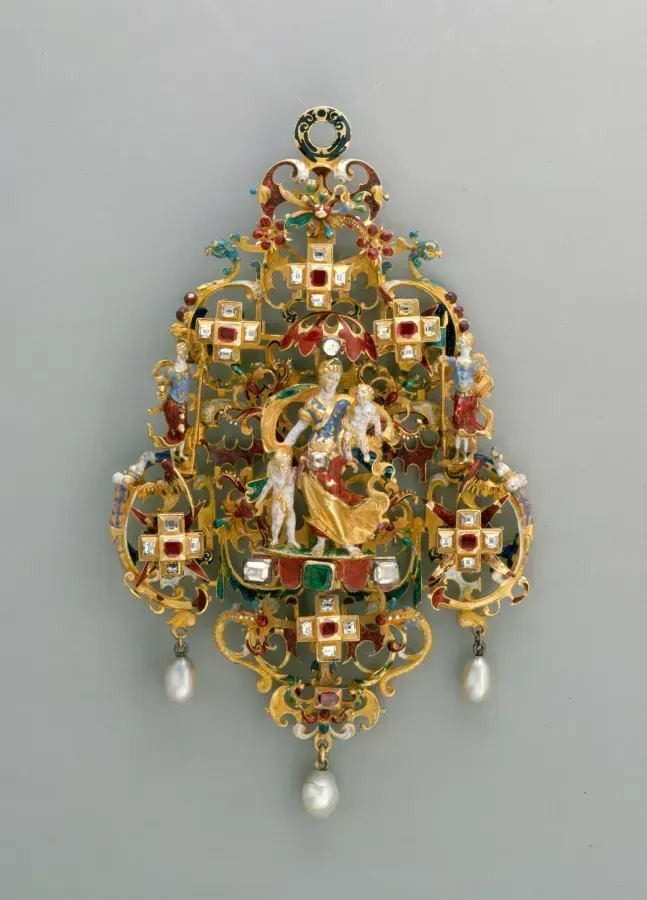
In medieval Europe red corundum (genuine or misidentified) became a central figure in royal regalia. The symbolism was simple and powerful: red was the colour of the blood of Christ, the red stone a drop of holy blood, protection in battle, the embodiment of royal power. European kings set red stones into swords, shields and armour. At the Battle of Agincourt in 1415, Henry V wore a red stone (historically named the Black Prince's Ruby), believing it would bring victory.
The Black Prince's Ruby: a British royal story
The stone known as the Black Prince's Ruby, set into the British Imperial State Crown and on display at the Tower of London, is one of the clearest examples of this historic confusion. A vivid red cabochon weighing around 170 carats, it has accompanied the English crown since the Battle of Agincourt in 1415, when it was worn by Henry V (at the time still a royal prince, not yet king). The stone passed between English kings, each adding a chapter to its story. Scientific analysis in the 20th century established that it is not red corundum but red spinel.
The story shows how deeply the image of the red royal stone is rooted in British history, regardless of mineralogical accuracy. The symbolism mattered more than the identification: red colour, hardness and lustre meant strength, blood and power. The Tower of London collection remains one of the finest places to study the tradition of royal gems. The stone is still in the crown, but now correctly classified: visitors and researchers know it is a spinel, not a ruby, and that does not diminish its historical significance.
The 16th to 18th centuries: the Mughals and the height of the Mogok ruby
The Mughal Empire (1526-1857) was the peak of the ruby cult in history. The Mughals did not merely buy rubies; they turned them into a political and religious symbol.
Shah Jahan (1592-1666), the fifth Mughal emperor, is known as the greatest patron of the jeweller's art in India. He built the Taj Mahal (1632-1652) and set red stones into the carved white marble. His famous pavilion in the Red Fort of Delhi (the Diwan-i-Khas palace) is decorated with inlays of red gems, gold and lapis lazuli.
But the defining feature of the Mughal style was the engraving of the stones themselves. Red rubies were engraved with names, dates and prayers. Mughal court records show the stones used as portable chronicles of power. The date of a coronation, the name of a ruler, the memorial date of a battle, all of it was cut into a ruby that was then set into a weapon, a garment or a piece of jewellery. It was a way of making history portable, literally in the pockets and ornaments of the ruling elite.
Shah Jahan was so concerned with the quality of his rubies that he sent special expeditions to the Mogok Valley and assembled one of the greatest personal collections of red stones in history. His advisers reported on the quality of each specimen in terms that align strikingly well with modern gemology: colour, transparency, size, the presence of cracks.
After the fall of the Mughal Empire the tradition was interrupted, but its memory lingers in Indian jewellery culture and in the Western image of "oriental luxury".
The 17th century: Thailand and Chanthaburi
In parallel with Burma, which remained the source of raw material, Thailand (then Siam) developed a powerful cutting and treatment industry. The town of Chanthaburi in eastern Thailand became the world capital of corundum heat treatment. Thai masters developed sophisticated wood-fire kiln methods to improve the colour and transparency of rubies. The practice was refined over centuries, long before science formally described the process.
Chanthaburi remains a treatment centre to this day, though modern methods include electric kilns. The old wood-fire techniques survive in family workshops where masters work to recipes passed down across generations.
The 18th century: the European Enlightenment and mineralogy
In the 18th century, with the development of scientific mineralogy, European scholars began to separate the ruby (red corundum) from spinel and garnet. The German naturalist Christian Wolff gave some of the first more or less accurate descriptions of the differences in his writings on minerals. The French mineralogist Jean-Baptiste Romé de l'Isle developed methods for distinguishing red corundum by hardness.
It was a turning point: royal collections began to be reassessed. Many "rubies" in European crowns turned out to be spinels. This caused no panic, the historical and symbolic weight of the stones remained unchanged, but scientific understanding of ruby quality advanced sharply.
The 19th century: the Victorian era and engagement rings
Red engagement rings were popular in Victorian England. The "you and me" style was especially fashionable (a red stone beside a diamond): two stones placed side by side in a single shank symbolised two people joined as a couple.
This tradition of pairing red and white stones has deep roots that reach back into Mughal jewellery. The "you and me" ring formalised it as an engagement symbol, uniting passion (the ruby) and clarity (the diamond) in one setting. It is this tradition, not a mid-20th-century invention, that underpins the revival of red engagement rings in the 2010s and 2020s.
The Victorian era was also the peak of Burmese mining. In the 1870s and 1890s, ruby output from the Mogok Valley reached record levels. European jewellers bought the material in bulk and produced jewellery in vast quantities. Most of the antique ruby jewellery still available at auction today dates from the Victorian era.
The 20th century: scientific progress and synthetics
In 1902 the French chemist Auguste Verneuil developed a method for synthesising ruby. The Verneuil synthetic ruby marked the start of a new era: for the first time, humanity could create red corundum in a laboratory. This had enormous significance for industry (rubies are used in lasers and bearings) and for the jewellery trade.
The arrival of synthetics sharpened interest in mineralogical precision. If a perfect corundum could be created in a lab, then the natural stone, with its imperfections, demanded new criteria of evaluation. Modern gemology was born.
Through the 20th century Burma remained the main source of fine ruby, but output gradually declined. Political events (the independence movement, changes of regime) made export difficult. New deposits opened in Thailand, Mozambique and Kenya, but nothing replaced the reputation of the Burmese stone.
1947-2000: the age of the diamond
From 1947, when a major marketing campaign cemented the idea of "a diamond is forever" in Western markets, the ruby retreated into the background. The engagement ring tradition shifted toward diamonds, and the ruby remained a stone for investors and collectors.
This period saw the first modern gemological laboratories (GIA was founded in 1931 but developed actively from the 1950s). They established objective criteria for assessing ruby.
2000-2020: the Mozambican boom and renewed interest
The discovery of a major deposit in Mozambique (Cabo Delgado province, with systematic extraction from 2011) changed the market. Mozambican ruby offered an alternative to the scarce and politically complicated Burmese material. By 2020 Mozambique had become the largest ruby supplier in the world.
The same period saw a renaissance of interest in coloured stones among younger generations. Engagement rings with red stones returned as a deliberate alternative to diamonds.
2015: "Sunrise"
A haute joaillerie ring set with a 25-carat Burmese stone, named "Sunrise", sold at auction in Geneva for a record sum. It set a world record price per carat for any coloured gemstone, diamonds included. Made by one of Europe's leading houses, the ring was a peak of craftsmanship: the stone here was closer to an object of art.
2021 to the present: ethics and the return of stability
After the 2021 military coup in Myanmar, a number of major haute joaillerie houses formally stopped buying Burmese raw material because of the uncertain situation in the country. The market shifted further toward Mozambican and other "ethical" sources.
At the same time a trend began of red stones returning to engagement rings. Generation Z and younger millennials actively choose red stones as a way of stepping away from the standard diamond. It is a return to the Victorian and Mughal tradition, but with a modern awareness of ethics and choice.
2026: red in fashion
The bezel-set ring is the leading 2026 engagement trend. Rose gold with red stones is especially popular with Generation Z and millennial brides. It is a full circle: from the Victorian era, through a 20th century of neglect, and back to the restoration of the tradition.
Ruby in Vedic astrology
The Manik is the stone of the Sun (Surya) in jyotish, the traditional Indian astrology. In the Vedic system the Sun governs the soul, self-expression and vital force.
Beneficial for:
- Those whose horoscope is governed by the Sun (Leos, certain Scorpios)
- Building authority and leadership qualities
- Career and public-life success
- Heart health and strengthening immunity (in the tradition)
Important caveats:
- Not suitable for everyone without consultation with an astrologer: certain Sun positions in a horoscope are incompatible with wearing the Manik
- Some Sun placements call for avoiding the stone
- Quality (untreated or standard heat, naturalness, absence of cracks) matters for the intended effect according to this tradition
In India the ruby is traditionally worn as a ring on the ring finger of the right hand, in gold, after an appropriate ceremony of dedication.
Ruby as an engagement ring: the historical argument
Before 1947, when a major marketing campaign established "a diamond is forever" as the standard for engagement rings in Western markets, the tradition was far more varied. In Victorian England red stones with diamonds (the "you and me") were a popular engagement symbol: the ruby as passion, the diamond as fidelity and clarity. Red meant love and vital force, which made red corundum a logical choice for betrothal long before industrial advertising standardised taste.
The tradition was interrupted in the mid-20th century, but it has been returning since the 2010s. The ruby as the central stone of an engagement ring is now seen as a deliberate alternative to the standard: a choice with a historical foundation, not a random extravagance. For a generation that consciously rejects the mass template, this turns out to be particularly meaningful.
For a 2026 purchase, the ethical dimension matters. The situation in Myanmar since the 2021 military coup has made Burmese material through legitimate channels effectively unavailable to responsible buyers. A number of major haute joaillerie houses have formally stopped sourcing Burmese material. A certified Mozambican stone offers both visual quality and supply-chain transparency. The Montepuez Ruby Mining operation, which began systematic extraction in Cabo Delgado province in 2011, became the world's largest ruby producer and built a reliable, certified supply chain.
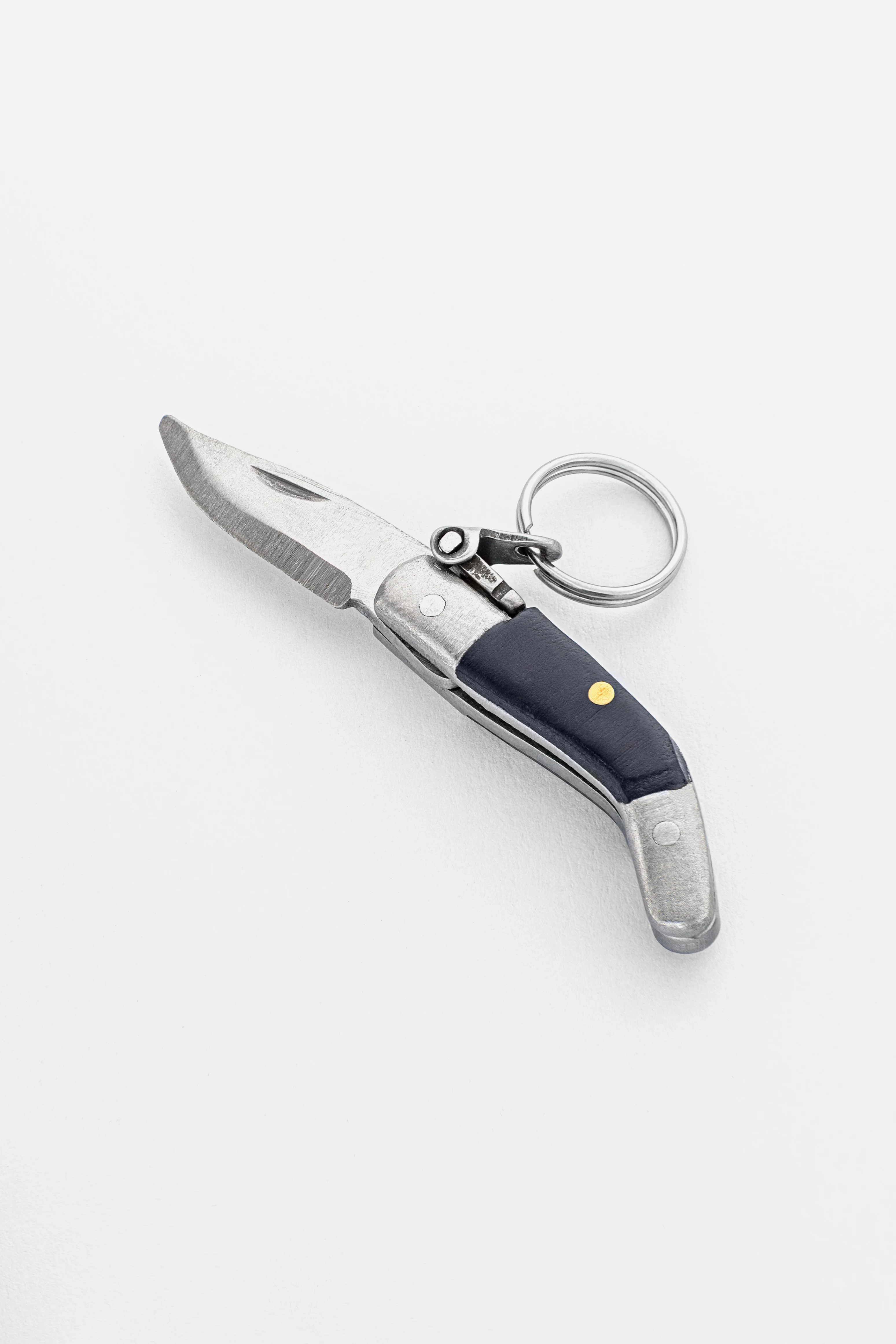
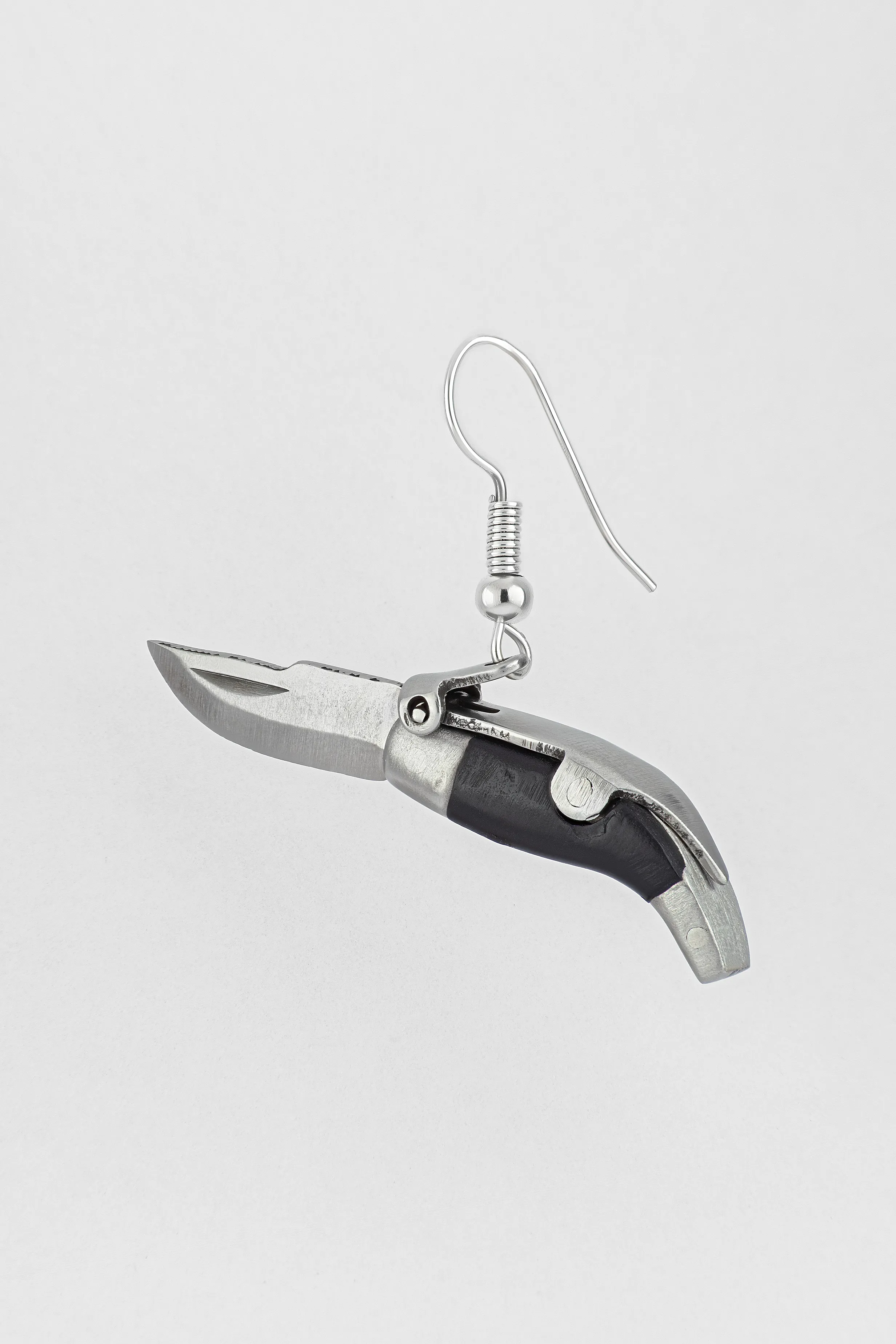
Artisan-crafted CAPAORA navaja pendant
A 40 mm stainless-steel navaja with a real folding mechanism and Palanquilla lock. An affordable gift to remember.
A code for blog readers:
10% off your first order
Authentic · Maker's guarantee · Ships from Spain
Ruby and the birth month
In the Western tradition, descended from Greek and Roman astrological texts, the ruby is fixed to July. It is one of the oldest stable attributes of the stone. The modern standardised list of birthstones (the American National Association of Jewelers, 1912) confirmed the match, and in the general list of birthstones by month the ruby remains the principal July gem.
Besides July, the ruby is linked to the 40th wedding anniversary, the "ruby anniversary". In some traditions it also appears at the 15th anniversary.
Treatment and authentication of rubies
Types of treatment
Heat treatment is the universal industry standard. It is applied to roughly 95% of all ruby reaching the market. A temperature of around 1,800 degrees Celsius improves colour and dissolves part of the silk inclusions, increasing transparency. It is a recognised and acceptable treatment that does not harm the stone's reputation provided it is disclosed.
Glass filling (lead glass filling) is a fundamentally different story. Lead glass with a high refractive index is introduced into the stone's fractures. Visually the stone looks cleaner and brighter, but it becomes unstable: ultrasonic cleaning, steam, acids and even ordinary jewellery solvents can degrade the filler. The value of such a stone is orders of magnitude lower than an untouched one.
Beryllium diffusion is an aggressive technique in which beryllium penetrates the structure of the stone at high temperature, changing the colour to a considerable depth. It requires full disclosure at sale; it is not used in the high jewellery segment.
An untreated ruby with a certificate is the highest investment category. The certifying laboratory records the absence of heat-treatment indicators, which adds a significant premium, sometimes 30-50% for the same visual result.
Synthetic ruby
The first artificial corundum was produced by the French chemist Auguste Verneuil in 1902 by flame fusion (the Verneuil method). Synthetic ruby is chemically identical to natural: the same aluminium oxide with chromium. The differences lie in the inclusions: a natural stone has characteristic rutile needles and other mineral inclusions, while a synthetic shows gas bubbles and curved growth lines, clearly visible under the microscope.
A later method, flux growth, allows rubies to be grown more slowly in a molten flux. Flux rubies develop inclusions that look closer to natural ones, which makes them harder to identify without specialist equipment. Connoisseurs often describe flux rubies as more "natural" in character.
For a gemologist, telling a synthetic from a natural stone is straightforward. For a layperson it is practically impossible without equipment. This is why a certificate from an independent laboratory is essential for any significant purchase.
How to distinguish a genuine ruby
From glass
- Hardness: corundum is 9 on the Mohs scale, glass is 5. Glass can be scratched with a nail.
- Temperature: the mineral warms slowly in the hand; glass heats quickly.
- Inclusions: natural stones have "silk"; glass does not.
- Under magnification: glass often shows bubbles; corundum never does.
From spinel
Spinel was historically confused with red corundum. Differences:
- Spectroscopy: different refractive indices.
- Asterism: corundum can show a six-rayed star; spinel shows four rays.
- Double refraction: corundum is doubly refractive; spinel is not.
- Price: spinel is less expensive at comparable quality.
Red spinel is itself a beautiful stone that has recently attracted serious collector attention. A well-cut red spinel from Tajikistan or Burma can rival a mid-grade ruby in appearance at a noticeably lower price. The historical confusion with ruby is not evidence of low quality but a consequence of genuine visual similarity, which in the pre-modern era no diagnostic could resolve.
From garnet
- Hardness: corundum 9, garnet 7-7.5.
- Colour: genuine ruby is pure red; garnet often has brownish tones.
- Brilliance: corundum has more life.
Certificate
For any significant purchase, always obtain a certificate from an independent international gemological laboratory. It specifies:
- Natural or synthetic
- Origin (where determinable)
- Treatment
- Quality (colour, clarity, cut, carat weight)
The leading laboratories for ruby certification are GIA (USA), Gübelin Gem Lab (Switzerland), GRS (Switzerland), and SSEF (Switzerland).
Leave your email, we'll send your discount code. No spam, unsubscribe anytime.
The code arrives by email, valid on your first order.
Laboratory-grown versus natural rubies
Laboratory-grown
Created by these methods:
- Verneuil method (from 1902) the oldest method, flame-fusion of corundum
- Flux method slow growth in a melt, more "natural" in character
- Hydrothermal rarely used
Advantages: price, ethical origin, predictable quality. Disadvantages: no investment value, sometimes "too perfect" for connoisseurs.
Simulants
Commonly sold under the ruby name:
- Garnet red but with brown
- Spinel closer, but less valuable
- Red tourmaline (rubellite) a different mineral
- Dyed glass a counterfeit
How to tell the difference
- A certificate is essential
- Natural stones have "silk"
- Laboratory-grown are often too clean
- Different luminescence under ultraviolet
Ruby care
This is one of the hardest stones (9 on the Mohs scale). It withstands a great deal.
What you can do
- Warm water, mild soap and a soft brush
- Ultrasonic cleaning acceptable for natural stones without heavy inclusions
- Steam cleaning acceptable for untreated material (also for heated, but worth checking for glass filling first)
- Daily wear
What to avoid
- For glass-filled stones: no ultrasonic, no steam, caution with chemicals
- Sudden temperature changes (for glass-filled stones)
- Aggressive chemicals
Long-term care
A ruby in a ring setting will need professional inspection roughly every five to ten years, primarily to check the prongs or setting claws rather than the stone itself. Corundum does not degrade over time, but gold and platinum prongs gradually wear thin. A loose stone is at risk of being lost from a slackened setting, not of breaking from any fragility of the corundum. With no glass filling, the stone will look the same in a century as it does today.
For antique and vintage pieces, avoid commercial jewellery cleaners with ammonia or acids unless you are certain no glass filling and no gilded setting elements are present. Warm soapy water and a soft brush remain the safest universal method for jewellery whose treatment history is unknown.
Combinations
Red corundum pairs beautifully with:
- Diamonds (classic)
- Yellow gold (classic)
- Rose gold (romantic)
- Platinum (cool contrast)
Silver, gold, engagement rings, symbolic jewellery, paired sets.
Who suits a ruby
July birthdays. The birthstone of the month, and the boldest entry in the classical birthstone year.
Leos. The solar stone for a solar sign.
As an engagement ring alternative. A Burmese or Mozambican stone with a halo setting is a magnificent alternative to diamond.
For a 40th wedding anniversary. The ruby anniversary.
Red lovers. If there is a red dress in your wardrobe and red lipstick on your lips, this is your stone.
Entrepreneurs and leaders. The Indian astrological tradition.
As a first meaningful gift for a teenage girl. A small red stone in studs is a classic "first significant" jewellery gift.
For Valentine's Day. Ideal.
As a protective talisman. An ancient tradition.
For the woman who refuses a standard diamond. The ruby engagement ring is a choice with centuries of precedent, and it says something specific: passion, not convention.
For a man who wears jewellery with intention. The signet ring or cufflinks with red stone accents carry aristocratic weight, from the Indian Mughals to Victorian gentlemen.
For a Leo woman on a decade birthday. A ruby as a gift for a 30th or 40th birthday: a pendant or ring with red corundum marks a significant date with colour and symbolism a diamond cannot convey the same way. A solar sign receives a solar stone.
Five illustrative stories of people and their rubies
These stories are composite and offered as examples of different relationships with the stone, not as documented cases.
Story 1: Catherine, an investor in Lyon
In 2008 Catherine, a young doctor, received an engagement ring set with a natural Burmese ruby of 1.2 carats. The stone had been bought by her future husband with his last savings, a sum comparable at the time to a used car. The ring was simple: 18K white gold, a central ruby framed by small diamonds.
Eighteen years passed. The marriage ended in divorce in 2015, but Catherine kept the ring. In 2024 she took the piece to a jeweller to have it valued. The gemologist confirmed it was a quality natural stone with a certificate. Catherine decided to keep the ring for her daughter.
Lesson: a high-quality natural ruby is a durable thing worth keeping and passing on as an heirloom.
Story 2: a maharaja of Jaipur
In the 1950s the Indian raja Mohan Singh of Jaipur owned a collection of 47 natural rubies from the Mogok Valley, each 2-5 carats. The stones had been gathered by his father over thirty years of the spice trade. It was not a jewellery collection but an investment in status and security.
After Indian independence in 1947 the political standing of the rajas fell, and in 1960 the raja was forced to sell 15 stones to pay taxes. The remaining 32 he hid in the cellar of his fort.
Decades later his great-granddaughter found the hidden stones in the fort. They were consigned to a major international auction. After their long storage, the fine untreated stones were still highly desirable to collectors.
Lesson: ruby is a durable material that survives time well and needs little care in storage. It is one reason such stones have been kept for centuries as family wealth.
Story 3: Elena, a bride in Barcelona
In 2020 Elena, a Spanish architect, declined the traditional engagement diamond and asked her partner for a ruby. Her logic was simple: "I want a stone with a history, and the hardest mineral on earth."
They bought a natural Mozambican ruby of 1.5 carats with an independent laboratory certificate. The price was comparable to a good 2-carat diamond, but the stone was, in her view, more beautiful and carried different associations.
Over time Elena noticed that the red read differently depending on the light: more saturated in sunlight, softer under lamps. This was not a change in the stone but the way corundum behaves under different light. The mineral itself remained physically the same.
Elena decided the ring had become part of her everyday life, and her attachment to it only grew stronger with time.
Lesson: a ruby lives with its owner for decades and easily becomes a personal object with a history, even though the stone itself barely changes.
Story 4: Peter, a collector in London
Peter, a dentist in London, began collecting star rubies in 1990. His first stone was bought from a local antique dealer for the price of a month's salary: a tiny star ruby in a Victorian ring.
Over thirty years Peter assembled a collection of 23 star rubies of different sizes and origins. He travelled to auction houses, attended exhibitions and talked to gemologists. His home is decorated with display cases of star stones.
In 2022, moving to a new house, Peter decided to organise his collection. Over three decades it had become a curated assembly of rare star stones of varied origin.
Peter is not an investor in the classic sense. He is a collector who took pleasure in the beauty of the stones.
Lesson: collecting rubies is above all a passion. Choose good stones, look after them, and you assemble a collection to be proud of and to pass on.
Story 5: Maria, a master jeweller in Albacete
Maria works as a jeweller in Spain and over 25 years has made more than 500 pieces with rubies. Her signature style pairs a red stone with white gold and a minimum of diamonds.
In 2015 a client asked her to remake an old Victorian-era ring that had belonged to her grandmother. The ring was broken, the stone had fallen out and spent years in a little box. Maria examined the stone and said at once that it was a high-quality natural ruby, but without a certificate. The client did not believe it: "My grandmother was not wealthy."
Maria sent the stone to an independent laboratory. The result: a natural, untreated Burmese ruby of 2.4 carats. The certificate confirmed its high quality. The client was stunned: a real treasure had been sitting in her little box for years.
The story showed Maria the value of her own work in a different light. She makes jewellery and works with stones that will outlast her, her clients and their children.
Lesson: rubies are family heirlooms worth passing from generation to generation. Old ruby rings are worth having valued, even when they look plain.
Combining the ruby: where and how to create harmony
Ruby with diamond: the classic
The classic "you and me" pairing: a red stone at the centre, white diamonds around it. The combination appeared in the Victorian era and remains unsurpassed for harmony.
Why it works: the white of the diamond emphasises the redness of the ruby. The cool sparkle of the diamonds contrasts with the warmth the ruby radiates. They are opposites that meet.
Proportions: roughly 0.5-1 carat of diamonds around each carat of ruby (depending on the style). Too much white dilutes the red; too little leaves the accent unbalanced.
Ruby with rose gold: romance
Rose gold makes the red stone warmer and softer. The pairing suits rings with romantic themes.
Why it works: rose gold contains copper, which gives it a warm undertone. That undertone harmonises with the warmth of the red stone, creating not a contrast but an accord.
Variant: 14K rose gold (paler, gentler) or 18K (richer, brighter).
Ruby with yellow gold: classic luxury
Yellow gold is the traditional choice for gemstones. The pairing feels more conservative, but it works.
Why it works: yellow gold is a neutral backdrop. It does not compete with the stone but lets the stone be the star. It is the style of kings and of classical jewellery houses.
Variant: 18K for luxury, 14K for everyday wear (more durable, less yellow).
Ruby with platinum: cool contrast
Platinum is a cool, silvery metal. With a red ruby it creates a contrast similar to that of a diamond, but more refined.
Why it works: platinum emphasises the cool undertone of the ruby (where it has one). It is the choice for minimalists.
Note: platinum costs more than gold, and a platinum ring will cost considerably more.
Ruby with other coloured stones
Ruby and sapphire: red and blue, a regal pairing. It symbolises the union of opposites. Seen rarely, because it demands good taste.
Ruby and emerald: red and green, very bold. A festive look. It works only for very specific, usually vintage, styles.
Ruby and aquamarine: red and pale blue, softer than ruby and sapphire. More romantic.
Ruby as an accent
Small rubies (0.1-0.3 carats) can be used as accents in bracelets or rings where the central stone is a diamond or another gem. They give the piece colour and life without making the ruby the main star.
Form: brilliant cut, cushion or oval, depending on the style.
Luxury combinations for investment
The "Orient" ring: a large cushion ruby (2+ carats) framed by oriental ornament in 18K yellow gold. A style in the spirit of the Mughal courts. Such a ring can be both an ornament and an investment object. The top investment segment.
The "Queen" bracelet: alternating rubies (1-2 carats each) and diamonds in the tennis style on 950 platinum. One of the most expensive forms of the jeweller's art. It needs annual care and re-polishing. The top investment segment.
The "Secret" ring: a central star ruby in cushion form, framed by small diamonds, 18K white gold. Star rubies are rare, and such a ring is a collector's piece. The high luxury segment, depending on the quality of the star.
The "2026 Fashion" pendant: a minimalist pendant, an oval ruby of 1-1.5 carats in a bezel of 18K rose gold, with no other stones. Simplicity that demands expensive material. This taste for minimalism is especially popular in Spanish and Italian jewellery. The luxury segment.
The selection process in detail
Step 1: define the budget. Entry segment: a laboratory ruby, synthetic, or a very small natural stone (0.3-0.5 carats). Mid segment: a natural Mozambican of 0.5-1 carat, heat-treated. Premium segment: a natural Mozambican of 1-2 carats, untreated, or a heat-treated Burmese. Luxury investment segment: natural Burmese or investment stones in luxury settings.
Step 2: choose the origin. For investment: only natural, certified, untreated if possible. For wearing: Mozambican is often the best choice on price and ethics. For history: antique rubies with documented ownership.
Step 3: examine the stone. In daylight (outdoors, not in the shop). Under artificial light. Under a loupe (checking the silk and clarity). Ask for the laboratory certificate before buying.
Step 4: choose the setting. 18K white gold: luxury, classic. 14K rose gold: practicality plus beauty. Platinum: only if the budget is unlimited. Silver: the economical option, needs polishing.
Step 5: insurance and documentation. Photograph the piece. Keep the laboratory certificate. Insure it. Have a valuation from an independent gemologist every 5-10 years.
A ruby with an emerald is not daring, it is a Christmas tree. Red keeps company with bare skin and a diamond, nothing else.
How to wear a ruby
I always place a red stone as the one strong accent in a look. Here is what actually holds together, sorted by occasion and shade.
How do I wear a ruby every day? For everyday I suggest small studs or a fine pendant. A red point at the earlobe or collarbone lifts a calm base: grey knitwear, a white shirt, blue denim. The quieter the clothing, the louder the stone reads, so one accent beats a scatter of small pieces.
Does it work at the office? It does, as long as you keep it restrained. I recommend one ring or a pair of studs, no pile-up. A deep dark red of the Burmese type reads more serious and grown-up, a light Ceylon red softer and warmer. For a strict dress code I choose the darker shade.
How do I build an evening look? For the evening I choose a black dress, an open neckline and a smooth fabric such as silk or satin. Against that backdrop the red stone reads as a dramatic accent. I suggest drop earrings with a single teardrop or a pendant on a bare neck, which works better than a dozen small details.
Which metal should I pick for a ruby? Yellow and rose gold emphasise the warmth of the red and give a soft, romantic register. Platinum and white gold add a cool contrast and turn the look more serious and modern. If you wear several pieces at once, I recommend staying within one metal palette and leaving the ruby the only spot of colour.
Who does a ruby suit most? Those who already keep red in the wardrobe: a dress, a lipstick, a scarf. Then the stone reads as a continuation rather than an accident. It suits confident, warm-toned people and anyone who likes one strong accent. On length my advice is simple: a pendant on a short chain holds attention near the face, a long chain draws the accent down to the chest under a deep neckline.

Turn on your camera, pick earrings, a pendant or a ring, and see the piece on yourself in real time.
Switch items in one tap.
Everything runs in your browser: no photo or video is ever uploaded.
FAQ
Why are rubies so expensive?
A quality specimen is rarer than a fine diamond of the same size. Supply is declining. Demand, particularly for Burmese material, outstrips supply. The rarity increases sharply with size: stones above 2 carats of fine quality are genuinely scarce globally.
Is ruby the same mineral as sapphire?
Chemically yes. The difference is the proportion of chromium. The accepted gemological standard sets more than 0.5% chromium as ruby; less is pink sapphire. The boundary is subjective in some cases, and two respected labs can sometimes classify the same border-case stone differently.
What is "pigeon's blood"?
A gemological term for deep red with a slight blue undertone. Traditionally Burmese, from Mogok. Formally defined by major gemological laboratories as a specific quality threshold involving colour saturation, tone, and the presence of red fluorescence. Not a marketing phrase.
Which is better: Burmese or Mozambican?
Burmese is more prestigious as an investment. Mozambican is ethically sound and often visually indistinguishable to a non-specialist. For a 2026 purchase, Mozambican is recommended on both ethical and practical grounds: similar visual quality, an established supply chain, no sanctions complications.
How much should a good ring cost?
A laboratory-grown 1 carat in silver: mid-range. A natural Mozambican 1 carat in 18K gold: premium-luxury. A certified Burmese 1+ carats: luxury investment. The price difference between a heat-treated and an untreated natural stone of the same quality can be 30-50%.
Is a glass-filled stone a fake?
Not a fake, but a significantly degraded stone. Glass fills cracks and visually improves the appearance. The problem: it can break down under heat, ultrasound or aggressive chemicals. Avoid buying such stones: they require special care and their long-term appearance is unreliable.
Can it be worn every day?
Yes. Hardness 9 withstands almost anything. The only caution is with glass-filled stones, which are best avoided entirely. A quality heat-treated natural ruby in a well-made setting needs no special daily handling.
What about garnet as a budget option?
Garnet is far less expensive and visually similar. It will not replace ruby for investment or prestige, but for stylish everyday wear it is a legitimate option. Almandite garnet is the closest in colour; pyrope garnet is a vivid red; rhodolite garnet has a pleasing violet-red tone. None fluoresces the way ruby does.
Is ruby appropriate for a man?
Yes. The male tradition is a signet ring or cufflinks with red stone accents. Not feminine, but aristocratic. The signet ring with a carved ruby or a cab-set red stone has precedent from ancient Rome through the Indian Mughal court to Victorian England.
Does fluorescence affect how the stone looks?
Yes, visibly. Under daylight and in natural outdoor light, a strongly fluorescent Mogok ruby will appear more intensely red than the same stone under indoor artificial light. The sun's UV component activates the chromium fluorescence and makes the stone glow. This is why experienced buyers always view rubies outdoors before committing to a purchase.
How do labs determine origin?
Through a combination of chemical fingerprinting (trace element ratios measured by laser ablation), spectroscopic analysis, and microscopic examination of inclusions. Each origin leaves a characteristic chemical and structural signature. Burma and Mozambique are usually distinguishable, though stones from certain new deposits can be ambiguous. The certificate states the origin with whatever degree of confidence the laboratory can support.
Museum collections of the world's rubies
Many of the greatest rubies are kept in museums and open to visitors. These are museums of mineralogy and at the same time of history, power and art.
American Museum of Natural History (New York)
One of the largest collections of red corundum in the world. Here is the famous DeLong Star Ruby (100 carats), a huge star ruby stolen in 1964 and later recovered. The collection also holds crystals from Myanmar, from 10 to 50 carats, and rough material from various deposits. A permanent display lets you see what a raw stone looks like and how it is cut.
Natural History Museum, London
Home to the Edwardes Ruby, a 167-carat rough crystal from Burma, one of the largest specimens in the world. The museum's rubies have been documented since the Victorian era, when English geologists and collectors were expanding the understanding of mineralogy.
Smithsonian Institution (Washington)
The collection includes specimens from various deposits, clear examples of the differences between Burmese, Mozambican and Thai material. There are synthetic rubies for comparison.
Topkapı Palace (Istanbul)
The treasury of the Ottoman sultans holds spectacular jewelled objects set with red stones, including the famous jewelled dagger. The collection shows how the Islamic world set and displayed red gems at the height of imperial power.
Famous rubies of history
"Sunrise Ruby": a pricing record
A 25-carat Burmese ruby in a haute joaillerie ring. Sold on 12 May 2015 at a major international auction in Geneva for a record sum. It set a world record price per carat for any coloured gemstone, higher than any diamond of the same size and quality had ever fetched. The ring was created in the 1960s and represented a peak of high jewellery: here the stone was closer to an object of art. It was independently re-graded by four gemological laboratories (GIA, Gübelin, GRS, SSEF) and given the status of "untreated natural ruby", which added around 30% to its price.
DeLong Star Ruby: stolen and recovered
A 100-carat star ruby from Burma, with the rare asterism (the star effect). It was stolen in 1964 from a New York museum but later recovered after a remarkable search. It now sits in the American Museum of Natural History and is one of the most famous star rubies in the world. Its six-rayed star is exceptionally sharp.
Black Prince's Ruby: a symbol of British power
A stone weighing around 170 carats, set into the British Imperial State Crown and on display at the Tower of London. It is in fact a spinel, not a ruby, but that does not diminish its historical significance. It was worn by Henry V at the Battle of Agincourt in 1415. Engravings on its surface tell the story of the stone's passage between kings.
Timur Ruby: a chronicle in stone
A 361-carat red spinel (also not a ruby in modern gemology). It is in the British Royal Collection. The names and dates of its owners are carved into its surface, marking five centuries of ownership. It is a portable chronicle of Eastern history, literally written on the stone.
Liberty Bell Ruby: a giant of the mineral world
An enormous star specimen of 8,500 carats, carved in the shape of the Liberty Bell. It is one of the largest star rubies in the world and has been shown in museum display. Its size lets the asterism be seen with the naked eye even from a distance.
Anne Cox Chambers ruby: the investment of a century
A 6.04-carat natural Burmese ruby of "pigeon's blood" classification. Sold at a major international auction in Geneva in the top luxury category. Its story is notable: it was in the collection of a member of a well-known American family, and its investment value rose fivefold over 40 years. It is a stone that returns a profit even under a conservative approach to keeping.
Edwardes Ruby: a record of rough beauty
A 167-carat natural crystal from Burma, one of the largest rough specimens in the world. Held in the collection of the Natural History Museum in London. The stone has not been cut and shows what a natural ruby looks like straight from the earth. Across centuries of unknown owners the stone remains untouched, which makes it valuable to science and to connoisseurs.
Send a friend a discount code, they save on their first order.
Ruby prices at auction and on the market
Record auction prices
- "Sunrise" (2015): the absolute world record price per carat for any coloured stone
- Anne Cox Chambers ruby: one of the most expensive rubies of its size at auction
- Burmese "pigeon's blood" 5+ carats: the top investment segment
- Mozambican natural 2+ carats: the premium-luxury segment
- Laboratory-grown 1 carat: the accessible entry segment
Factors that affect the price
- Origin: Burmese is 5-10 times more expensive than Mozambican at the same quality
- Size: the price per carat rises sharply at the thresholds (1, 2, 3+ carats)
- No heat: a natural untreated stone is 30-50% more expensive
- History: a stone with documented history (a collection, a known owner) can be 20-30% more
Investment potential
So-called investment-grade rubies (natural, untreated, certified, 1+ carat) have traditionally been seen as a purchase for the long term. It is a rare and durable material that survives across generations, but the specific value depends on the state of the market and is not guaranteed. Any purchase made with the future in mind is worth accompanying with a certificate and periodic re-valuation by an independent gemologist.
Myths about luxury rubies and the truth
Myth: "an old ruby is worth more than a new one"
Reality: the age of the stone does not affect its value. A natural ruby that formed 100 million years ago in Burma is worth the same as a natural stone from a brand-new deposit if the quality is equal. The exception is when a ruby has a documented ownership history (it belonged to kings, was in a famous collection). Then the historical context adds 20-30% to the price.
Myth: "Burmese is always better than Mozambican"
Reality: Burmese is on average more of an investment and more prestigious. But a good Mozambican is indistinguishable from a mid-grade Burmese to the naked eye. For a piece of jewellery you cannot say that one is "better"; it is a matter of taste.
Myth: "an untreated ruby glows brighter"
Reality: heating does not affect fluorescence. If a ruby fluoresces (glows under ultraviolet), it will glow the same whether heated or not. Heating affects colour and transparency, not fluorescence.
Myth: "3 carats is the minimum for investment"
Reality: the investment minimum is a 1-carat natural untreated stone with a certificate. A 1-carat ruby also rises in value, only more slowly than a 2-3 carat stone. Stones above 3 carats rise fast but are in an extremely rare category.
Myth: "a star ruby is a spoiled ruby"
Reality: a star ruby is a separate category of beauty. A stone with asterism requires a cabochon cut and has its own collectible value. Star rubies are often cheaper than faceted ones, not because they are inferior but because they have a different market.
Regional perceptions of the ruby
Eastern perception (India, Thailand, Sri Lanka)
In the Eastern tradition the ruby is a stone of power, of the sage and the king. It is worn as a mark of status, as protection, as a form of spiritual practice. In India the ruby is set into a ring and worn on the ring finger of the right hand after a ceremony of dedication. In Vedic astrology this is a serious act that calls for consultation with an astrologer. The Eastern view is more mystical: the stone is seen as a conductor of energy and a symbol of personal power, its beauty secondary.
European perception (Spain, France, England)
In the European tradition the ruby is a stone of romance and royal power. The Victorian "you and me" symbolism remains influential. Here the ruby is a choice of the heart, an alternative to the standard. In contemporary Europe, particularly in Spain, the ruby is returning to fashion as a deliberate choice of a younger generation that rejects the impersonal diamond.
American perception
In the United States the ruby long stood in the shadow of "a diamond is forever". But since the 2010s a revival of interest has arrived, and major jewellery houses have begun creating lines with red stones. The American view is more practical: the ruby is seen as an investment and an alternative store of value.
Practical advice for the non-expert
Before buying online
- Ask for photographs in daylight
- Ask for photographs under a loupe (30x magnification)
- Ask for a copy of the laboratory certificate before buying
- Check the laboratory's standing (GIA, Gübelin, GRS, SSEF are reliable)
- Do not buy without a return guarantee (at least 7 days)
When buying in a shop
- View the stone under different light sources
- Ask for the certificate and confirm it matches the stone in the setting
- Get a receipt describing the stone, its origin and treatment
- Ask for a 2-3 year guarantee on the setting
- Ask about a maintenance plan for the piece
Long-term storage and care
- Keep it in a safe or bank box
- Have a jeweller check the setting every 5-10 years
- Update the valuation every 10 years (for insurance and investment purposes)
- Wear an everyday piece regularly rather than leaving it untouched for over a year (long neglect can let the setting deteriorate)
- When passing it on as an inheritance, update the documentation and certificates
Conclusion
Red corundum is a symbol of love, passion, power and life force, prized for millennia. Indian maharajas collected it. British monarchs set it in crowns. Mughal rulers engraved names and dates on it, turning the stones into chronicles of power.
The red stone has one quality that words struggle to convey and a photograph cannot capture: in daylight, especially under direct sun, a fluorescent Burmese ruby seems to glow from within. It is not a metaphor but the physics of chromium. View it outdoors before deciding on a purchase, a rule experienced buyers always keep.
For an engagement ring it is a bold choice, not the standard diamond, but one with immense historical resonance and a clear symbolism. For daily wear it is an exceptionally durable stone that will last decades. For investment, a certified untreated Burmese stone has long been among the most consistently valued of all coloured gemstones.
Even without an investment calculation, red corundum in a good setting says something specific: passion, intention, a choice with a history. It is a stone for those who are not afraid to be different. It is a stone for heroes, for kings, and for people who choose beauty over the standard.
About Zevira
Zevira is based in Albacete, Spain. The ruby is a classic engagement ring stone in the Spanish tradition (alongside diamond), particularly for the 40th anniversary, the ruby anniversary.
What you can find at Zevira with ruby:
- Engagement rings with ruby in gold settings
- Classic stud earrings and pendants
- Star rubies as a rare option
- Laboratory rubies for everyday wear
- Natural Mozambican and Burmese stones for significant gifts
- Ruby paired with diamonds for contrast
Every piece is handcrafted by a master goldsmith, with personal engraving available. We work with 925 silver and 14-18K gold.